14 Bedroom Ideas for Small Rooms That Will Change How You See Your Space Forever
There’s a particular kind of morning frustration that only small bedroom owners truly understand. You wake up, swing your legs out of bed, and immediately make contact with the wardrobe. You reach for your phone charger and knock something off the nightstand. You try to get dressed and spend thirty seconds navigating around the bed like it’s an obstacle course. And somewhere between all of that, you think — why does this room feel so impossible?
Here’s what I want you to hear clearly: it’s not the room. It’s the approach. I’ve designed and redesigned small bedrooms more times than I can count — my own, friends’, family members’ — and the transformation that happens when bedroom ideas for small rooms cozy design principles are applied correctly is genuinely startling. The room doesn’t get bigger. Everything about the experience of being in it does. These 14 ideas will show you exactly how.
The Truth About Small Bedroom Design That Nobody Tells You
Before a single idea, here’s the mindset shift that makes everything else work: a small bedroom that’s been designed with real intention will always outperform a large bedroom that hasn’t been thought about properly. Size is one variable. Intention is another. And intention, applied correctly, wins almost every time.
Small bedroom designs that genuinely succeed don’t try to disguise the room’s dimensions or trick the eye into seeing something that isn’t there. They work with the space — embracing the intimacy, exploiting the proximity, and using the enforced constraints as creative parameters rather than limitations to overcome. With that perspective firmly in place, let’s build something genuinely beautiful.
1. Before Anything Else — Rethink Your Small Bedroom Layout Ideas
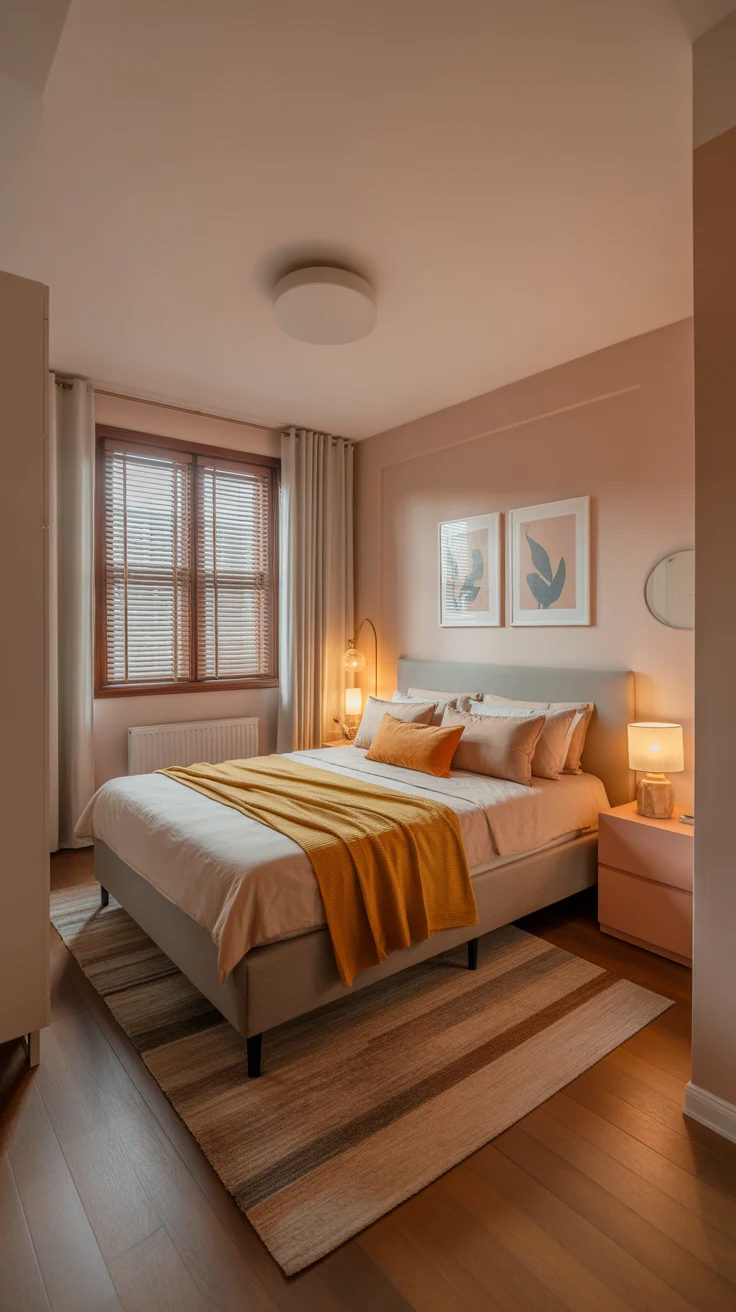
The most impactful change available in any small bedroom layout ideas project costs absolutely nothing: it’s reconsidering where the bed is positioned. Most people place the bed where it fits most obviously and never revisit that decision. But in a small room, a different bed position can transform everything — the circulation, the storage options, the natural light, and the overall feeling of spaciousness.
Push the bed fully into a corner so walls meet on two sides. Position it along the longest wall to maximize open floor area in front. Try it under the window for a dramatic light effect. Each configuration creates a completely different room without changing a single piece of furniture. Before spending a single penny on your small room makeover, try every possible bed position first.
Bed placement principles for small bedrooms:
- Longest wall placement — maximizes floor space, most common effective configuration
- Corner placement — creates an enveloping nest effect, two walls provide natural structure
- Under the window — beautiful in light, frames the bed as a natural focal point
- Away from the door — placing the bed further from the entrance creates visual depth
- Diagonal placement — unconventional but occasionally unlocks surprising spatial benefits
2. Bedroom Ideas for Small Rooms Cozy — Lean Into the Intimacy
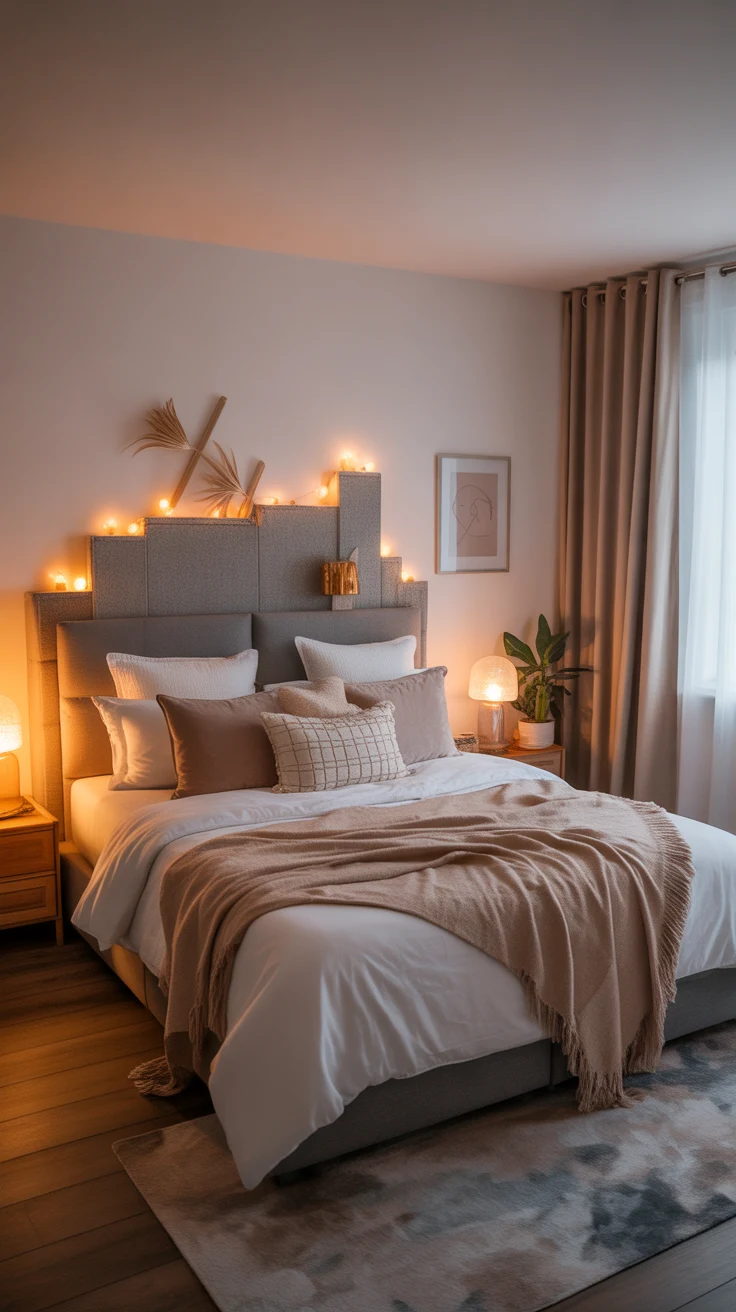
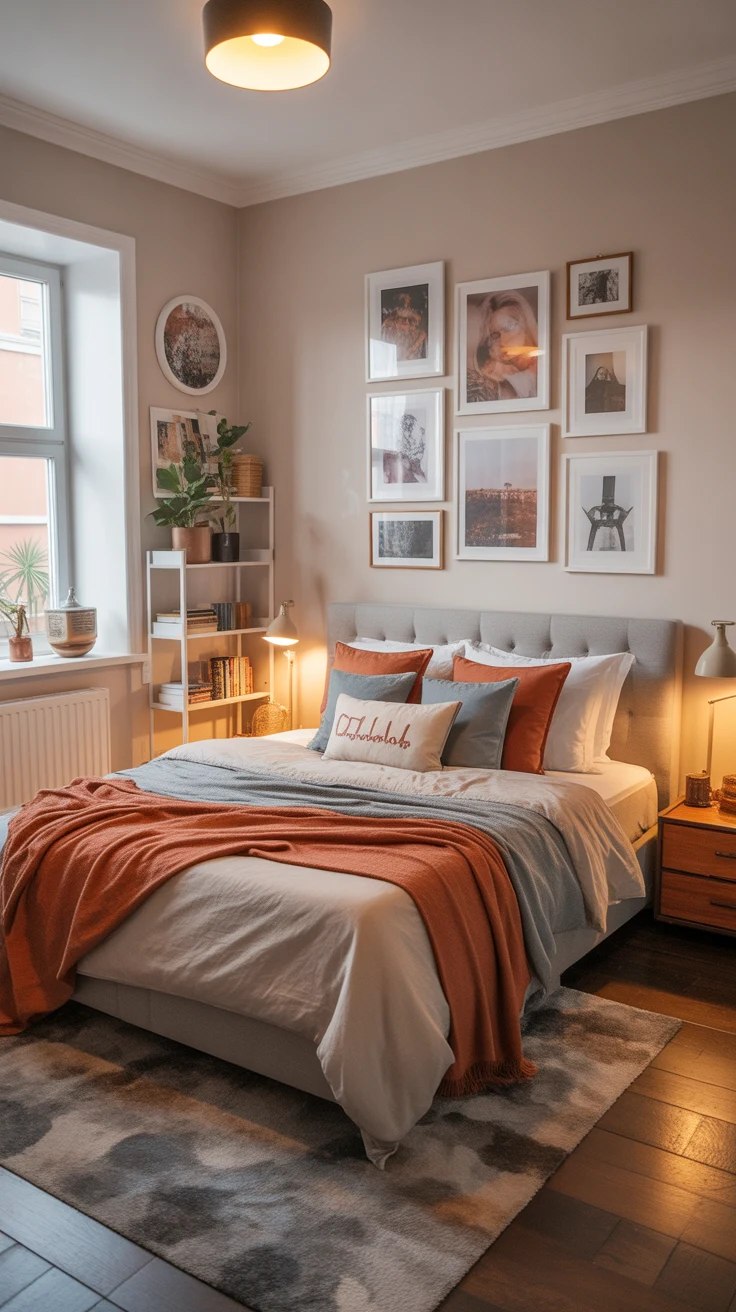
Here’s the design direction that transforms bedroom ideas for small rooms cozy from a practical necessity into a genuine aesthetic strength: stop trying to make the room feel larger and start making it feel so intentionally warm and intimate that the size becomes irrelevant. Commit to coziness completely. Embrace the enclosure. Let the room wrap around you.
Coziness is created through specific, stackable elements that work together to create an atmosphere rather than just a look. Layered textiles — bedding, throws, and cushions in varying textures — make the bed irresistible. Warm lighting in amber tones creates soft pools of glow rather than flat illumination. A warm, slightly saturated wall color makes the room feel enveloping rather than exposed. Together, these elements create a bedroom where the smallness feels like a feature rather than a flaw.
3. Aesthetic Bedroom Ideas for Small Rooms — Build One Visual Identity
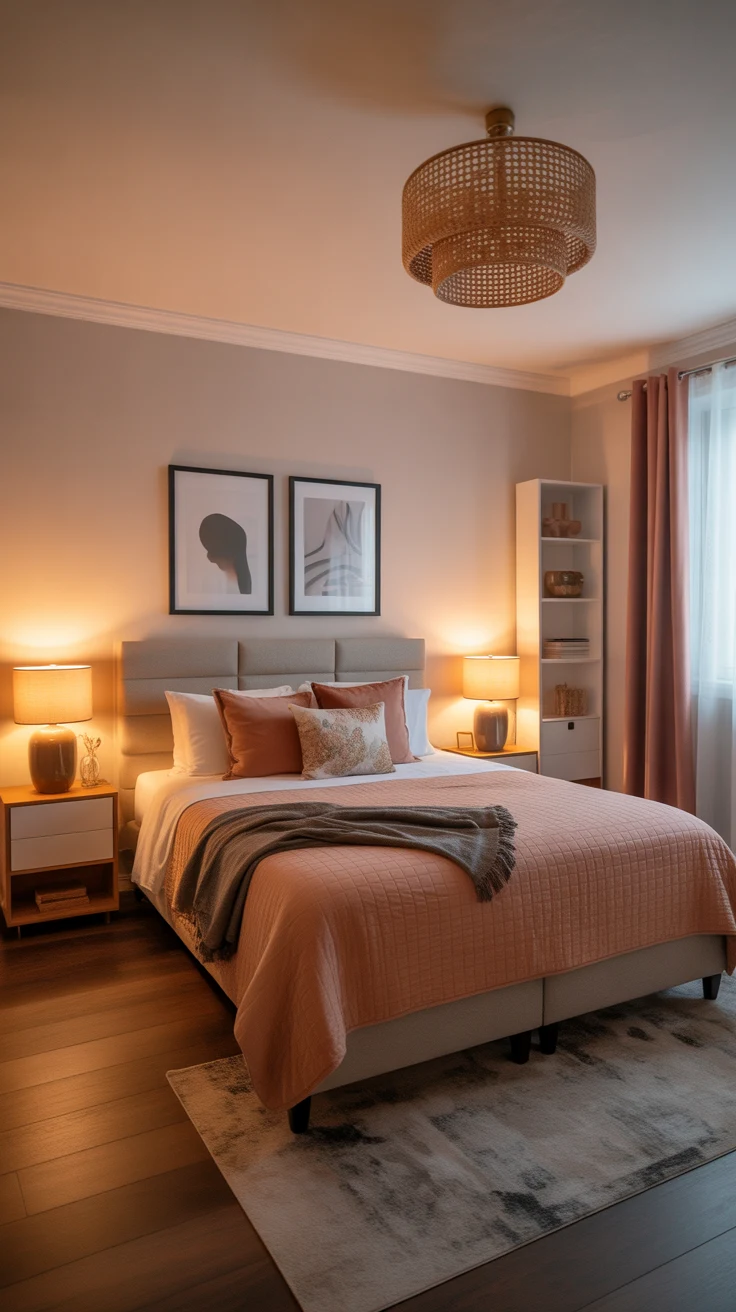
Here’s where aesthetic bedroom ideas for small rooms get genuinely exciting: a small bedroom with a clear, committed aesthetic identity always looks more beautiful and more intentional than a larger room without one. In a compact space where every element is close and visible, visual consistency carries extraordinary weight.
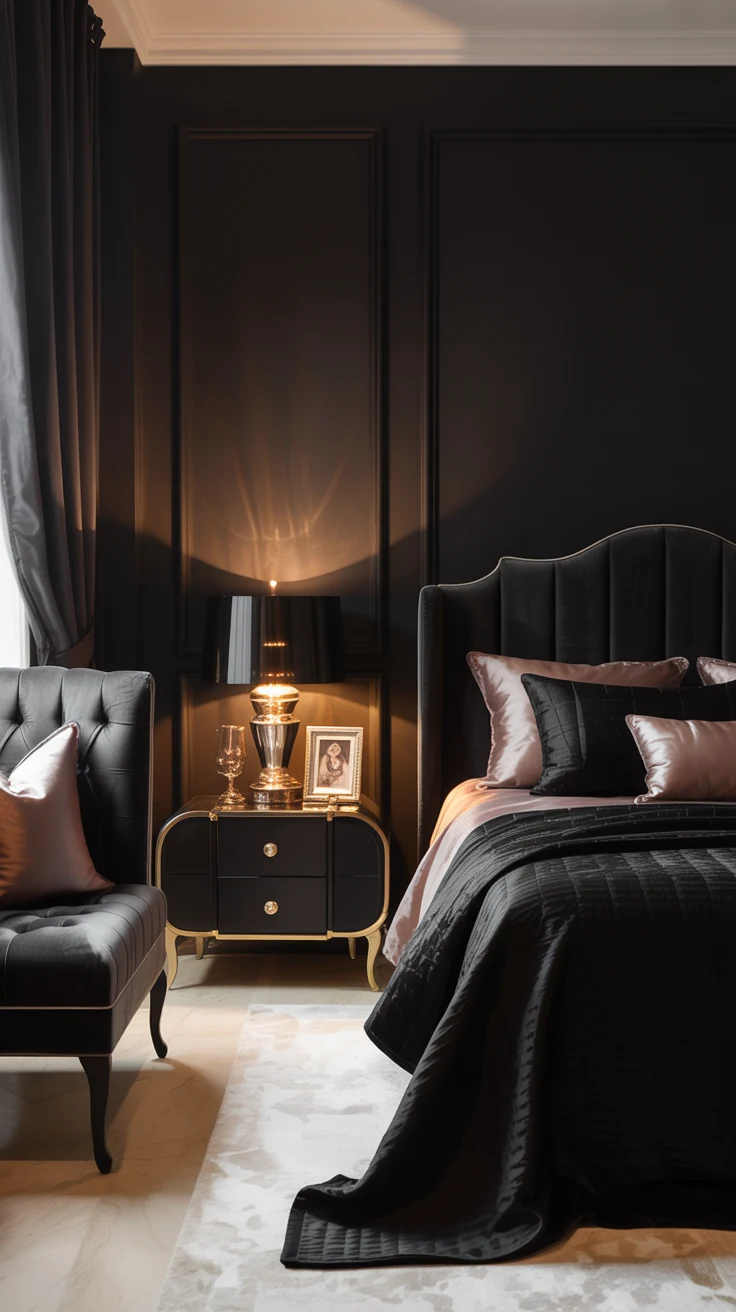
Choose one aesthetic direction that resonates authentically with your personality and use it as a filter for every subsequent decision. Japandi — warm natural materials, muted palette, total calm. Dark and moody — deep tones, rich textures, dramatic atmosphere. Cottagecore — soft florals, warm light, organic imperfection. Modern minimal — clean lines, quality materials, edited surfaces. Whichever direction you choose, commit to it fully. A small bedroom that knows what it is will always impress more than one that contains multiple competing identities.
4. Small Bedroom Layout Ideas — The Vertical Space Nobody Uses
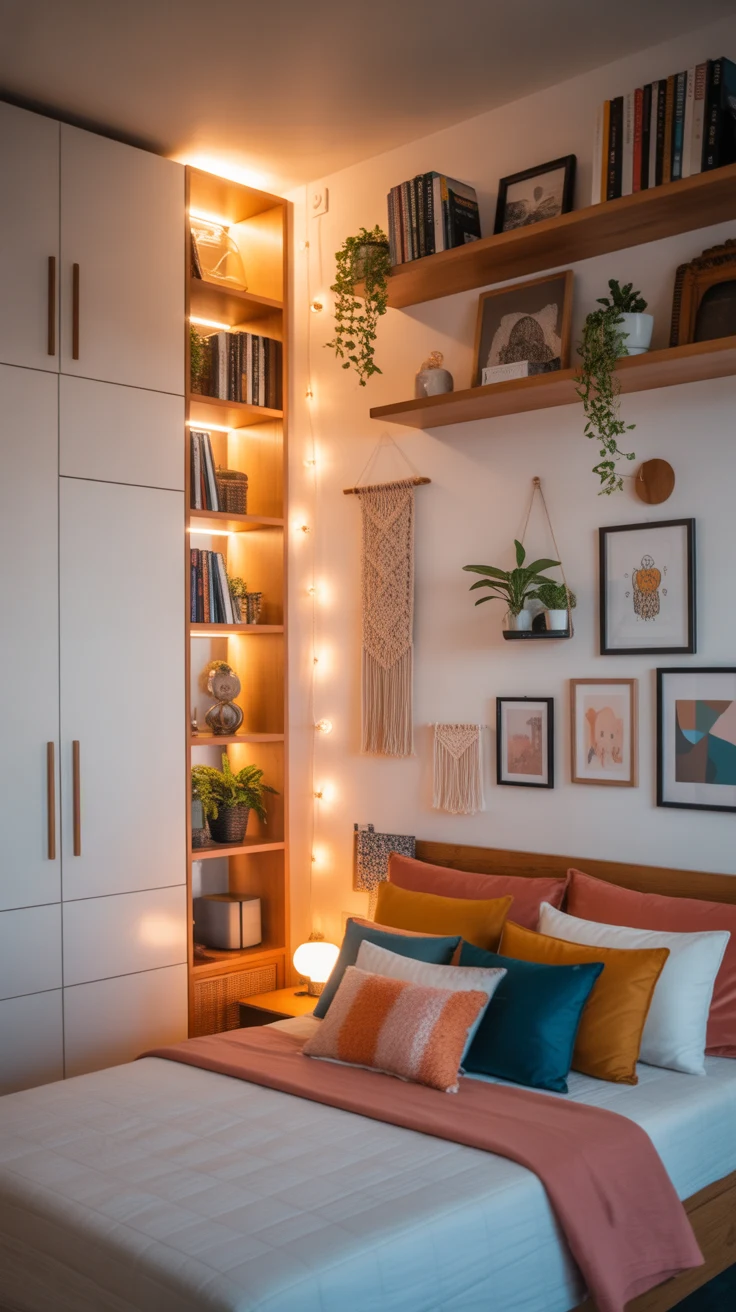
Every small room design bedroom has one consistently underused resource: the vertical space above eye level. While the floor plan might be genuinely limited, the wall space from the top of the furniture to the ceiling is typically completely empty — and that’s essentially free real estate waiting to be claimed.
Floating shelves installed above the headboard at ceiling height provide storage and display space without touching the floor plan at all. A floor-to-ceiling wardrobe maximizes every cubic centimeter of clothing storage while reading as a single architectural element rather than a piece of furniture sitting in the room. And wall-mounted bedside shelves — replacing bulky nightstands — free up floor area while keeping everything you need close to the bed. Going vertical consistently delivers the most significant functional improvement per dollar spent in any small bedroom project.
FYI: Painting the inside back of shelving in a deeper tone than the wall creates a beautiful shadow-box effect that makes displays look more intentional and the shelving itself more architectural. It costs the price of a small paint tester and makes a genuinely noticeable difference.
5. Small Room Decor — Color Strategy That Works for Compact Spaces
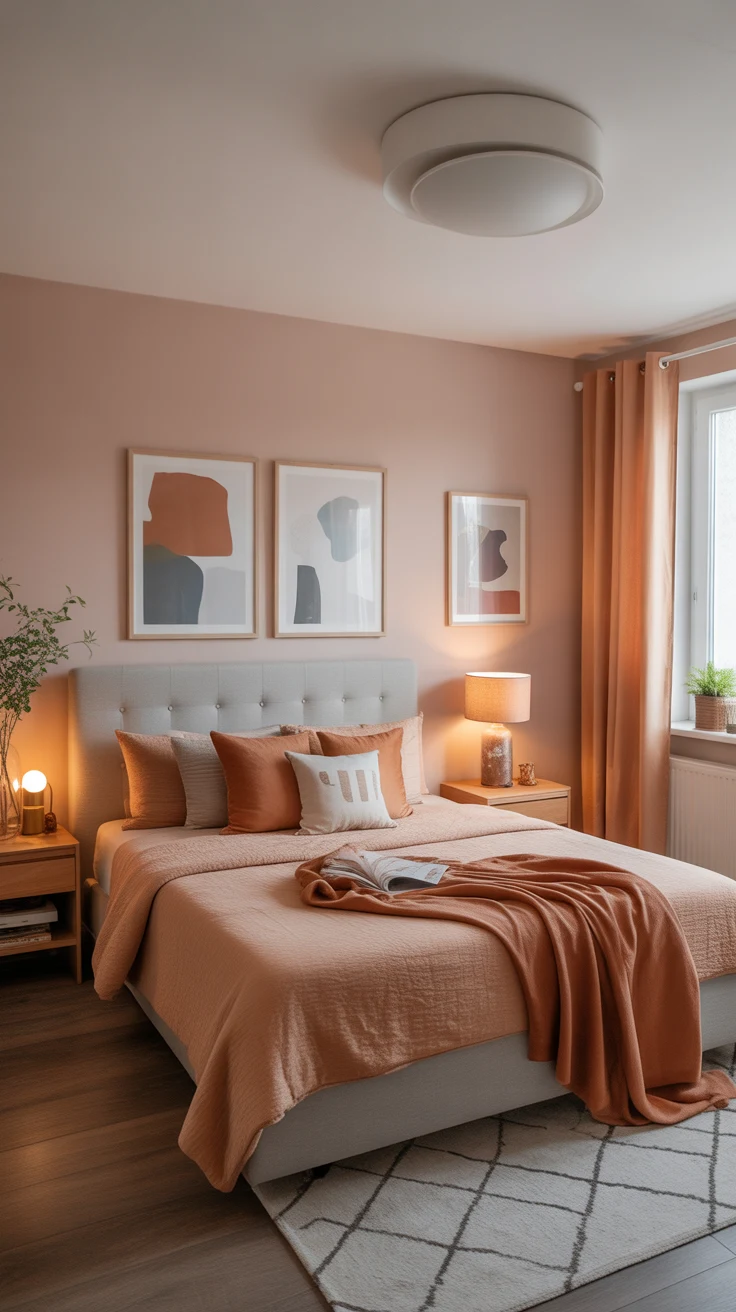
Color in a small bedroom is genuinely the most powerful and most affordable transformation available — and the approach that works most consistently is warmer, more personal, and more nuanced than the standard “use light colors to make it feel bigger” advice suggests.
Small room decor works best when color creates one of two specific effects. The first is the expansive effect — pale, warm neutrals that reflect light and make the room feel airy and open. The second is the cocooning effect — deeper, more saturated tones that make the room feel deliberately intimate and enveloping. Both work brilliantly in small bedrooms. The critical thing is choosing one direction and executing it with complete commitment rather than landing somewhere in the uncertain middle ground that achieves neither effect.
Color directions and the feelings they create:
- Warm white — clean, expansive, suits minimalist and modern aesthetics
- Soft cream or ivory — warmer than white, suits organic and natural styles
- Pale sage or dusty green — fresh, organic, works with almost any furniture tone
- Warm terracotta or clay — enveloping, cozy, the most immediately intimate effect
- Deep charcoal or navy — moody and dramatic, makes the room feel intentionally cocoon-like
6. Small Bedroom Ideas for Girls — Feminine Without Being Juvenile
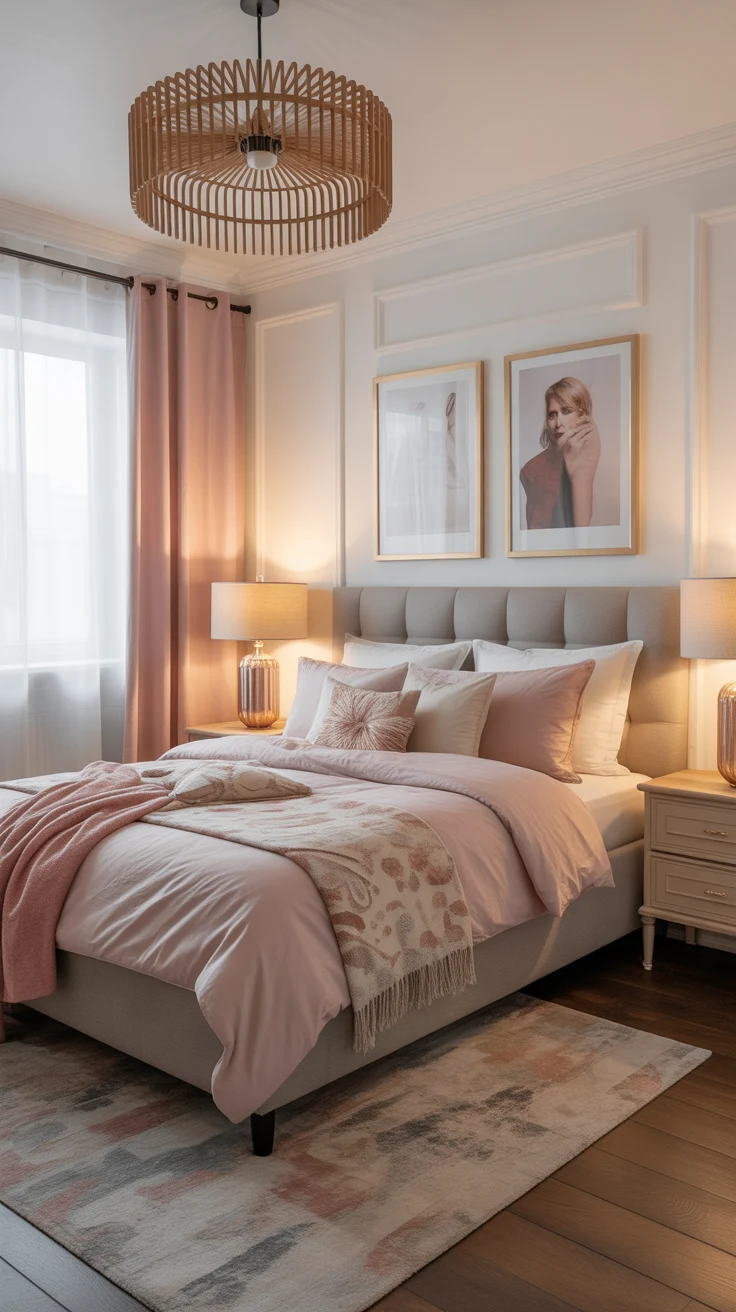
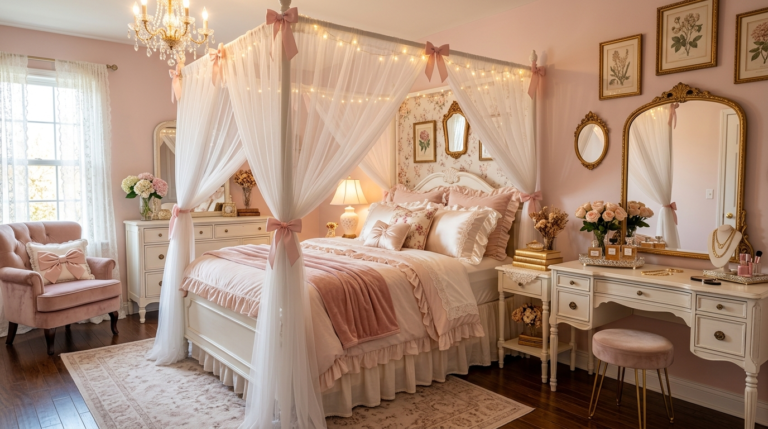
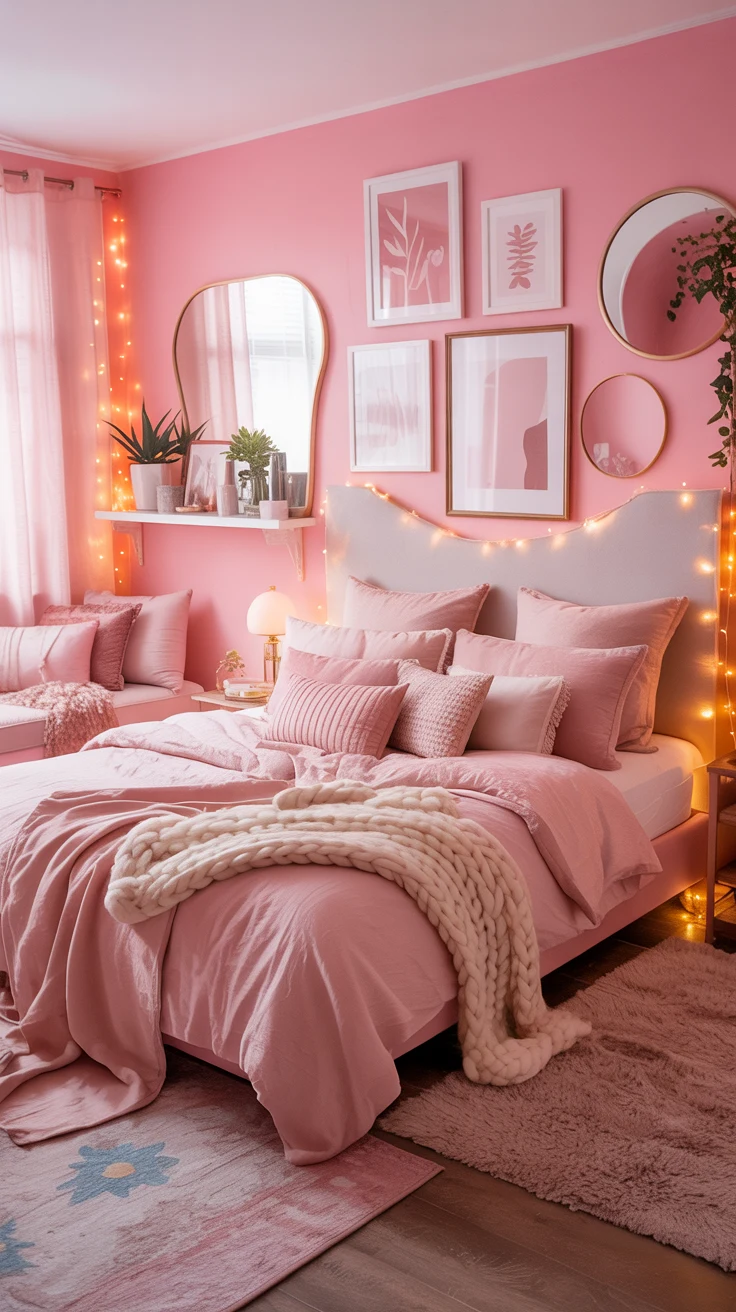
Here’s a direction worth dedicating specific attention to: small bedroom ideas girls that feel genuinely sophisticated and personal rather than defaulting to pink-everything or a theme that gets outgrown within eighteen months. The most beautiful feminine small bedrooms are built on timeless principles — quality materials, personal expression, and a palette that has real depth rather than surface sweetness.
Dusty rose rather than bubblegum pink. Botanical prints rather than cartoon patterns. Warm rattan rather than plastic storage. Linen bedding rather than polyester novelty prints. These material and tone choices create a bedroom that feels genuinely beautiful and personally resonant rather than commercially assembled — and that quality is what makes a small bedroom feel like a real space rather than a temporary arrangement waiting to be outgrown.
7. Room Ideas Bedroom Small Spaces — Storage as a Design Strategy
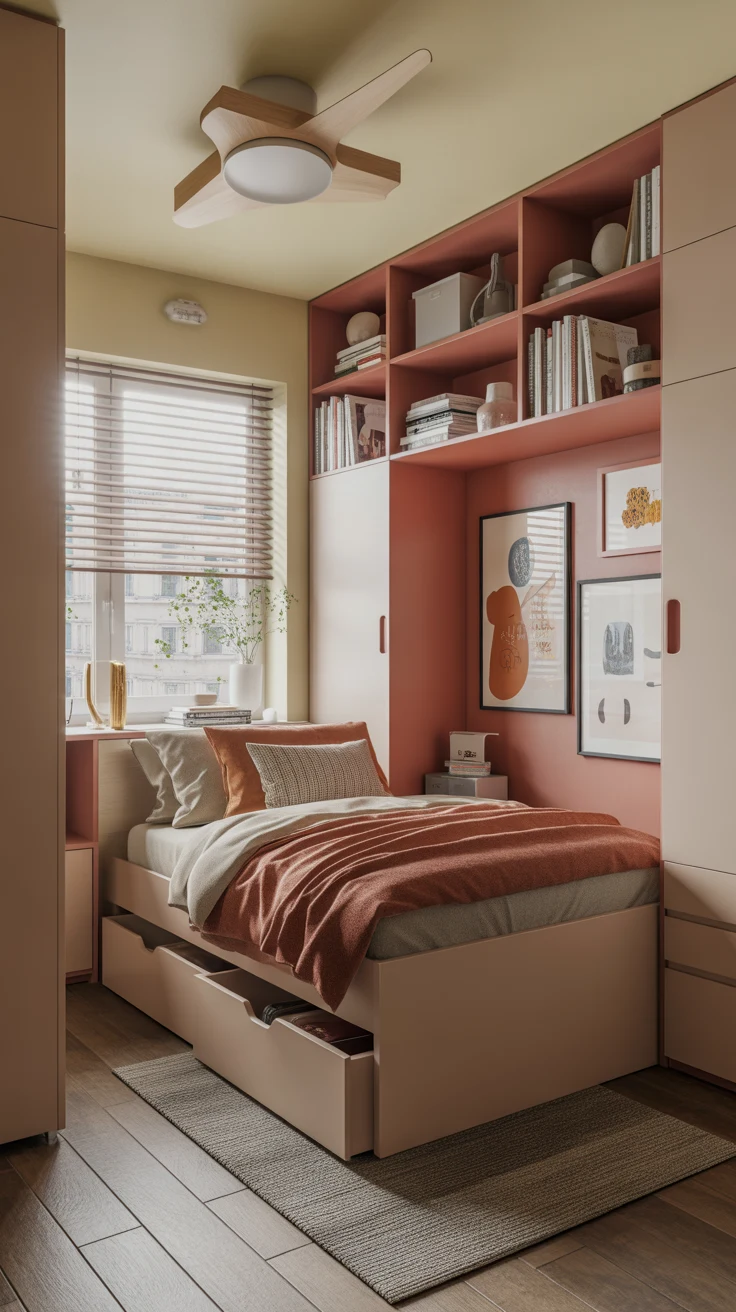
Here’s the truth at the heart of every room ideas bedroom small spaces challenge: the biggest functional problem in a small bedroom is almost always insufficient or poorly organized storage. A small bedroom without proper storage cannot look or feel settled regardless of how beautiful its other elements are. Clutter in a compact space is amplified. Organization is equally amplified. Get the storage right and everything else becomes easier.
The under-bed zone is the single most valuable storage real estate in any small bedroom — and most people leave it completely unused or pile things there without organization. A platform bed with integrated drawers, or a set of rolling bins beneath a bed with sufficient clearance, turns the room’s largest footprint into a genuine storage asset. Seasonal clothing, spare bedding, extra pillows — all concealed completely and accessed easily without consuming a centimeter of visible space.
Storage solutions ranked by space efficiency:
- Under-bed drawers — highest capacity, completely concealed, uses dead space
- Floor-to-ceiling wardrobe — maximizes vertical capacity, keeps clothing organized
- Floating bedside shelf — replaces nightstand, zero floor contact
- Headboard with built-in storage — cubbies or shelving integrated into the headboard structure
- Ottoman at bed foot — seating and concealed storage in one compact piece
- Over-door organizer — uses completely dead space on the door’s back face
8. Small Bedroom Decor — Mirrors as Space Multipliers
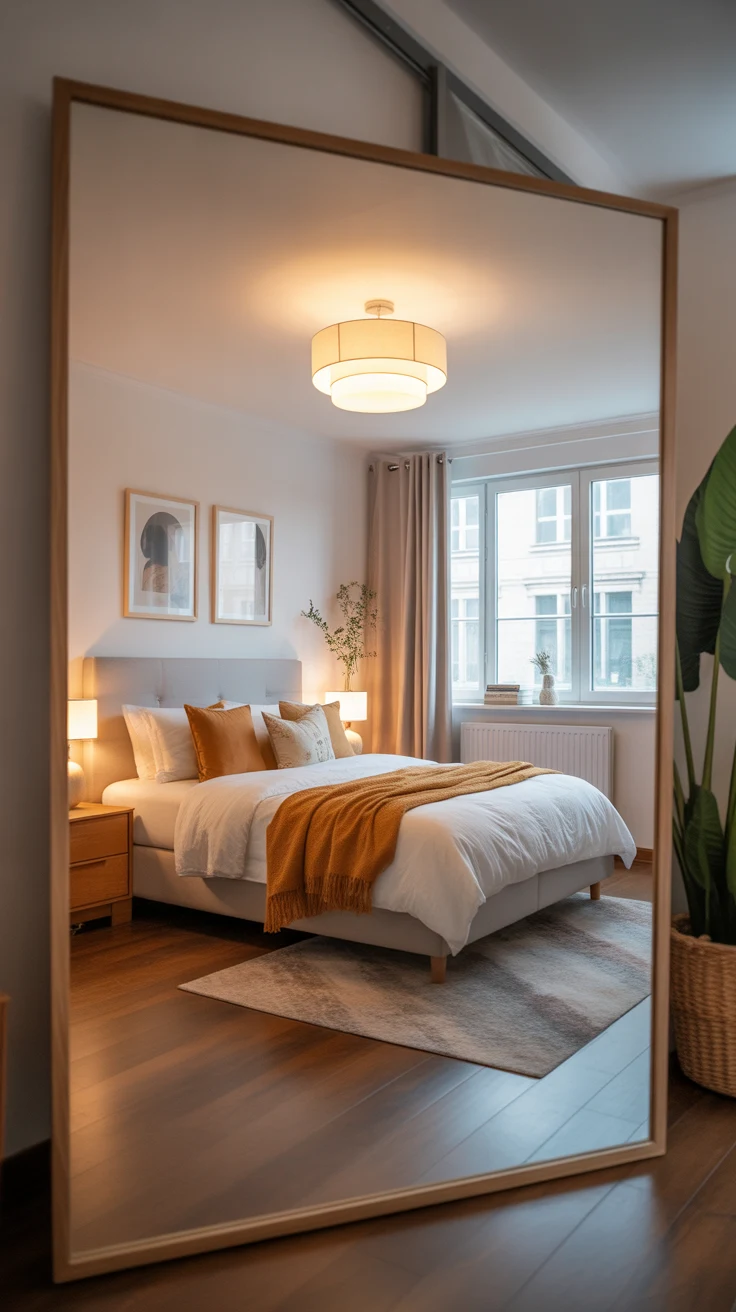
Mirrors are one of the most consistently effective tools in small bedroom decor — and one of the most consistently underused. A well-positioned mirror visually doubles the depth of a room, reflects light to make the space feel brighter, and adds a decorative element to walls that might otherwise feel bare and untreated.
Go significantly larger than feels instinctively right. A floor-length mirror leaning against a wall reads as stylishly intentional while reflecting the full room behind it. A large mirror above the dresser — spanning its full width — creates a visual depth that makes the wall behind it appear to recede. And a mirrored wardrobe door bounces natural light continuously throughout the day, making a small bedroom feel perpetually sun-filled even when the window is modest in size.
9. Small Room Makeover — Curtain Positioning That Changes Everything
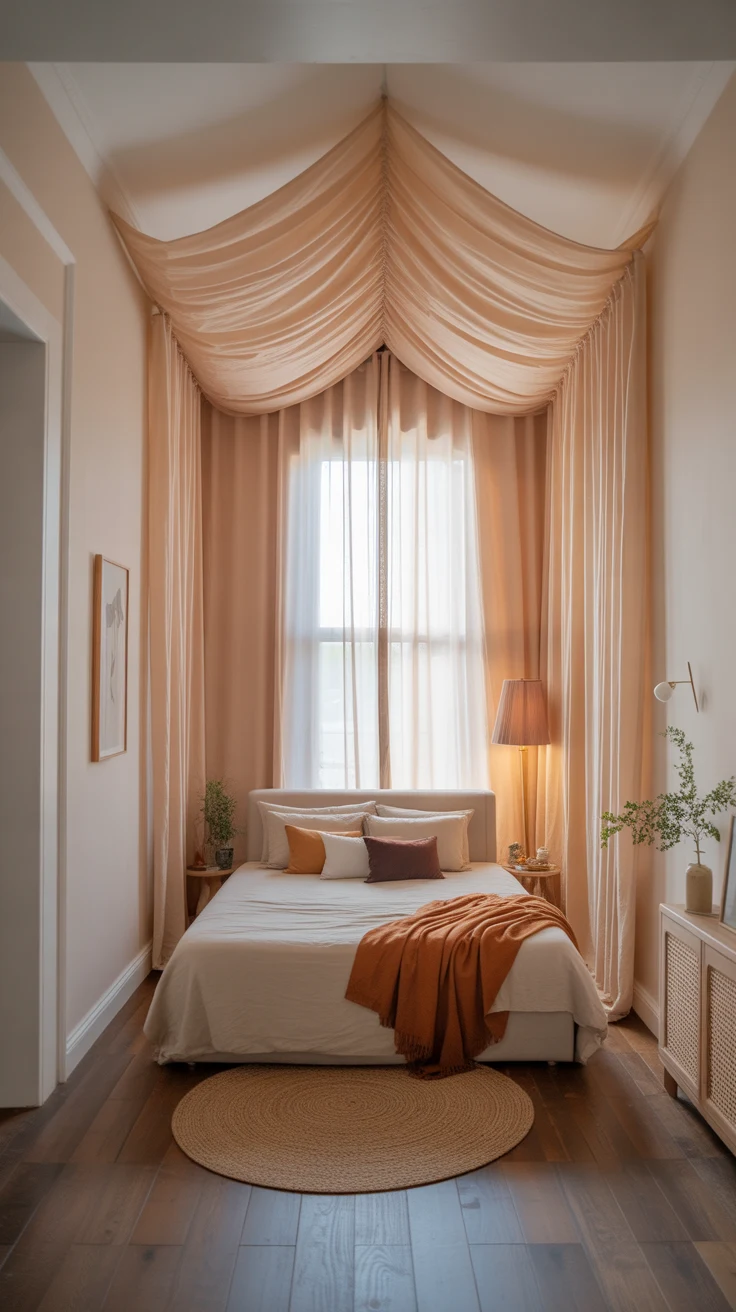
Here’s the small room makeover move that consistently surprises people with its dramatic impact: repositioning the curtains. Not replacing them. Not buying new ones. Simply moving the rod to ceiling height and extending it well beyond the window frame on each side. This single adjustment — costing nothing if you already have the right hardware — transforms the proportions of the entire room.
Curtains hung close to the ceiling with floor-length panels make the window appear dramatically larger, the ceiling appear significantly higher, and the room feel more generous and more designed. The difference between a curtain hung above the window frame and one hung at ceiling height in the same room is extraordinary — and once you see it, you’ll wonder how you ever lived with the lower position.
10. Lighting Layers That Transform the Atmosphere
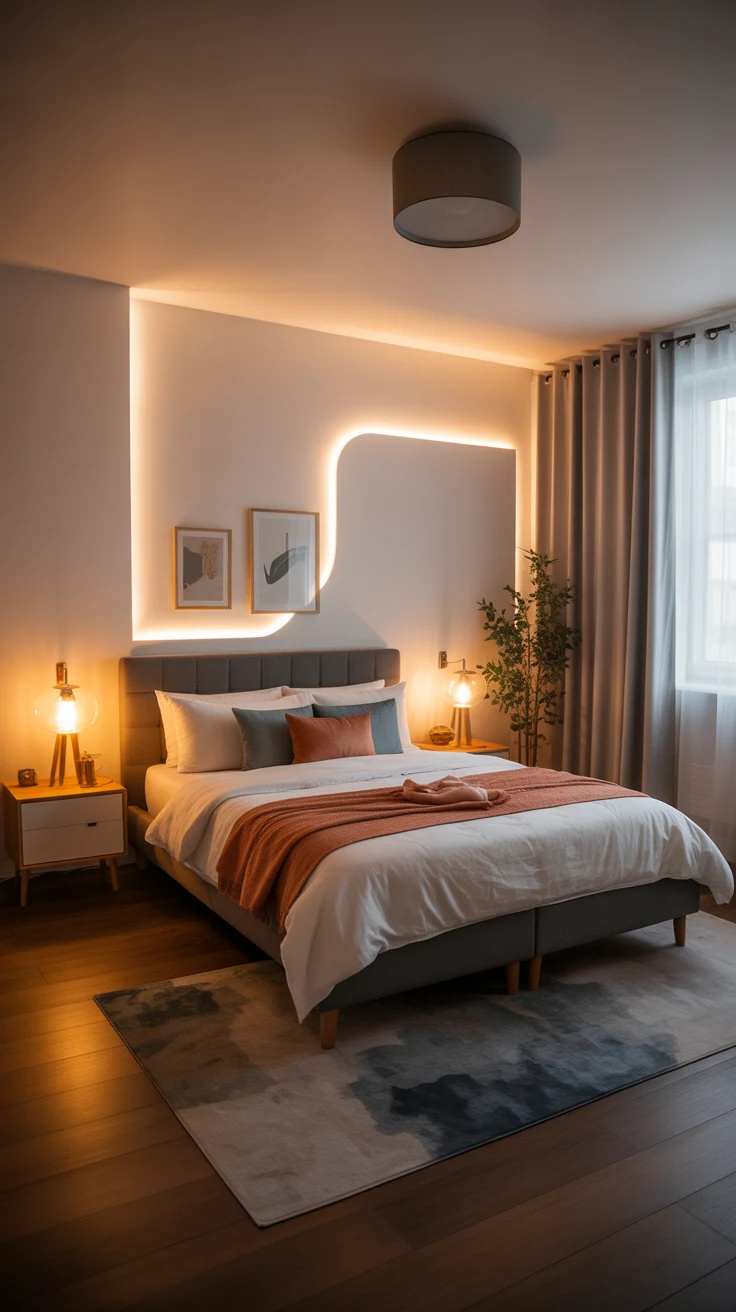
Here’s a small room design bedroom secret that consistently separates rooms that feel genuinely beautiful from those that merely function: layered lighting. Most small bedrooms rely on a single overhead light — and that single decision is quietly responsible for the flat, slightly deflating quality that makes many compact bedrooms feel less inviting than they should be.
Three layers working together create the atmosphere that a single source never can. Ambient lighting — a ceiling pendant or recessed spots — for general illumination. Task lighting — a bedside lamp or wall sconce at reading height — for practical use. And accent lighting — fairy lights, an LED strip behind the headboard, or a floor lamp in a corner — for evening atmosphere that makes the room feel genuinely warm and considered after dark. Every layer should be warm white and on a dimmer for maximum flexibility.
11. Small Bedroom Designs — Furniture That Earns Its Place
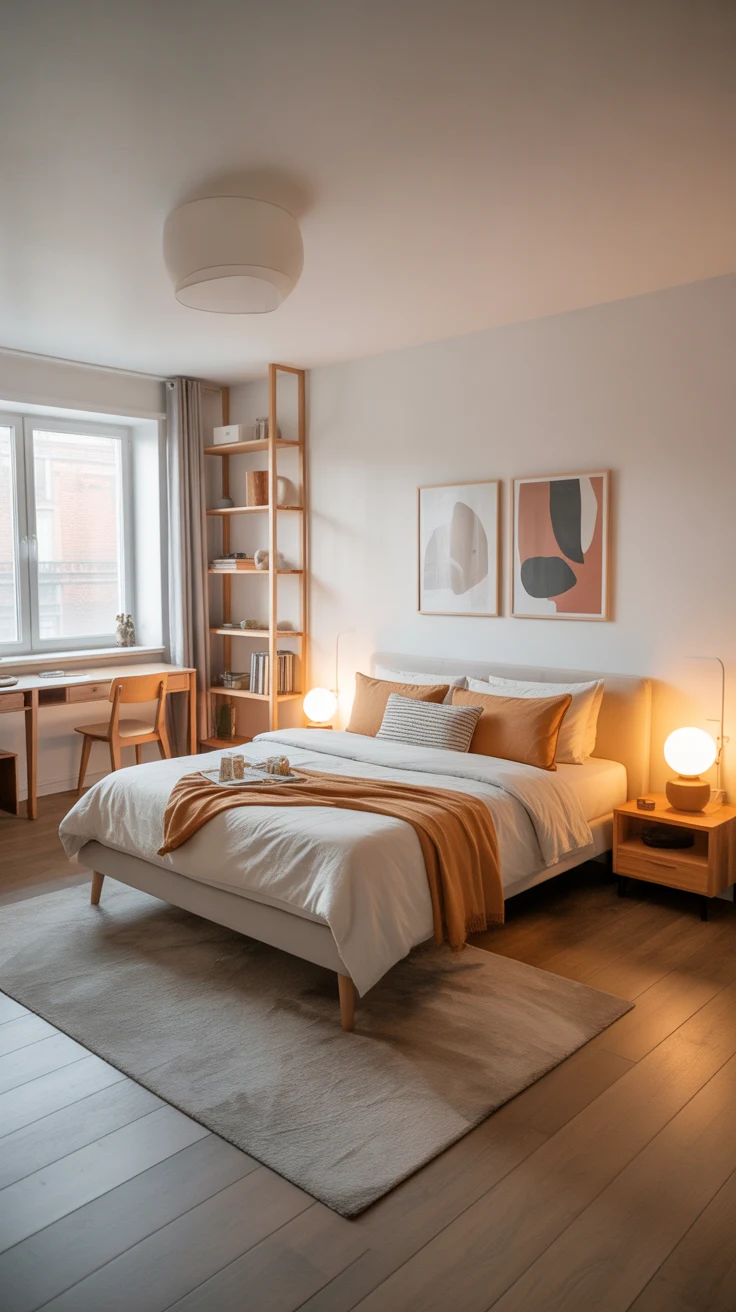
In a small bedroom designs context, furniture must be chosen with a different calculus than in a larger room. Every piece must perform multiple functions, maintain a visually light profile, and fit the room’s proportions precisely. A piece that’s beautiful in isolation but wrong for the room’s scale undermines the entire composition.
The visual weight of furniture matters enormously in a small room. Pieces with legs that reveal the floor beneath — rather than sitting flush on the floor — allow the eye to travel through the space rather than stopping at each piece. A bedside table with slim legs reads as lighter than a solid cube of identical dimensions. A desk with an open frame reads as less bulky than a solid-sided cabinet. Choose furniture that sits lightly in the room and the room will feel significantly more spacious as a result.
IMO, the single most impactful furniture upgrade in any small bedroom is replacing a floor-standing bedside table with a wall-mounted floating shelf. It frees the floor, keeps the surface accessible, and makes the room feel immediately more open — often by more than the physical change would suggest.
12. Aesthetic Bedroom Ideas for Small Rooms — The Accent Wall
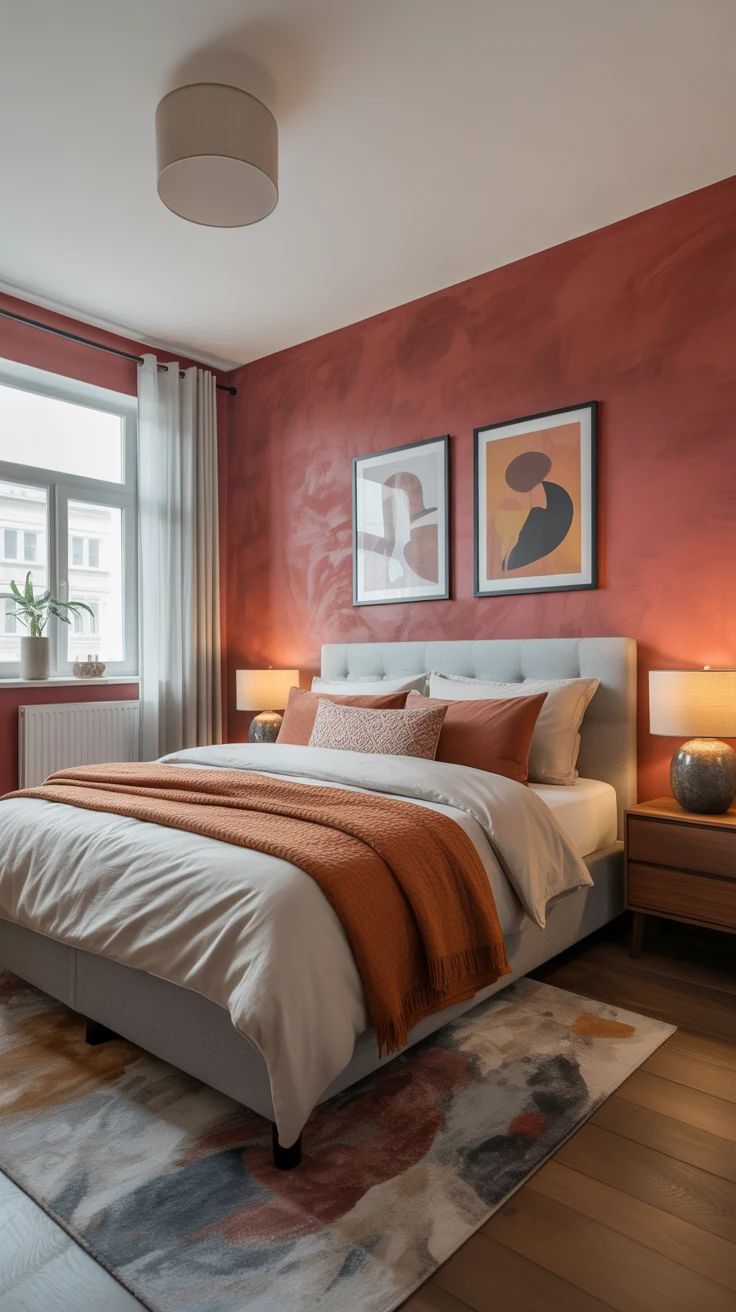
An accent wall in a small bedroom is one of those design moves that people hesitate over and then immediately love once they’ve committed to it. The wall behind the headboard — the room’s most prominent vertical surface — is the natural location for a design statement that gives the room a clear visual identity and makes the bed feel intentionally framed.
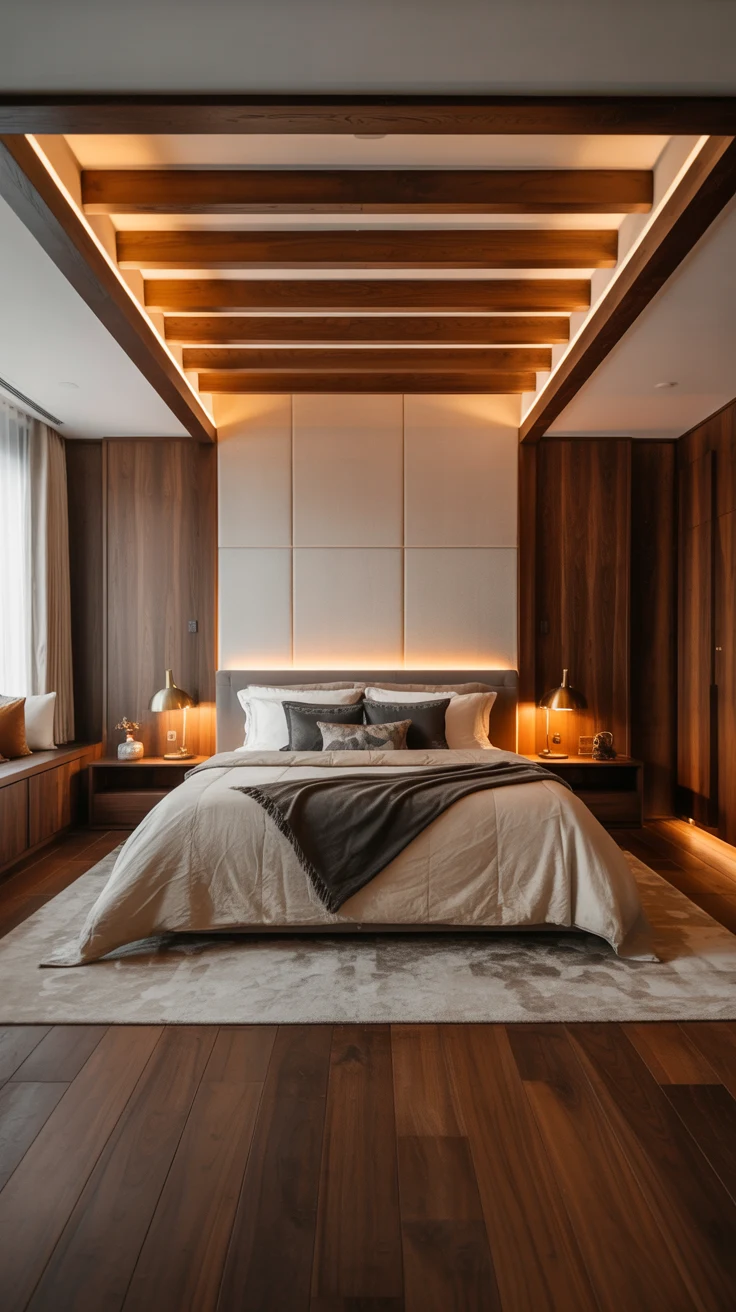
Options range enormously in effort and investment. A bold paint color costs almost nothing and makes an immediate, dramatic impact. Textured wallpaper on the headboard wall adds pattern and depth without commitment to a full repaint. Fluted wood panelling creates architectural interest that elevates the room’s perceived quality significantly. And a limewash or plaster finish brings organic texture that adds richness without introducing pattern. Any of these approaches, applied to the headboard wall alone, transforms the room’s character completely.
13. Small Bedroom Layout Ideas — The Reading Nook That Maximizes a Corner
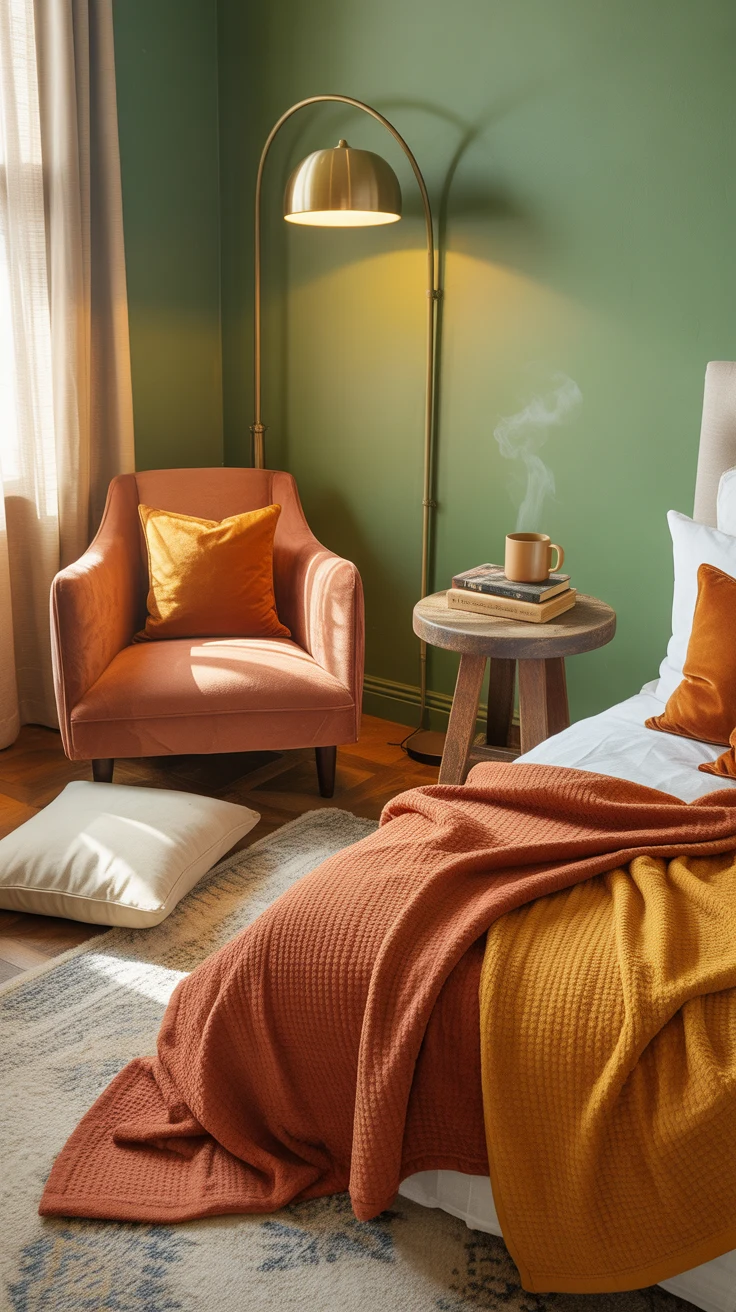
Here’s a small bedroom layout ideas move that unlocks one of the most consistently underused zones in a compact bedroom: the awkward corner that doesn’t fit standard furniture but feels too prominent to leave empty. Turn it into a reading nook. A compact chair, a floor lamp, and a small side table create a secondary functional zone that makes the bedroom feel like a room with distinct areas rather than a single-purpose space.
In a very small bedroom where a chair isn’t viable, a floor cushion with a wall-mounted shelf above it achieves the same effect in a far smaller footprint. The reading nook doesn’t need to be large — it needs to be intentional. And a corner of the room that has been deliberately designed as a specific zone communicates thoughtfulness that makes the entire bedroom feel more considered and more complete.
14. The Final Edit — Less Is Always More in Small Spaces
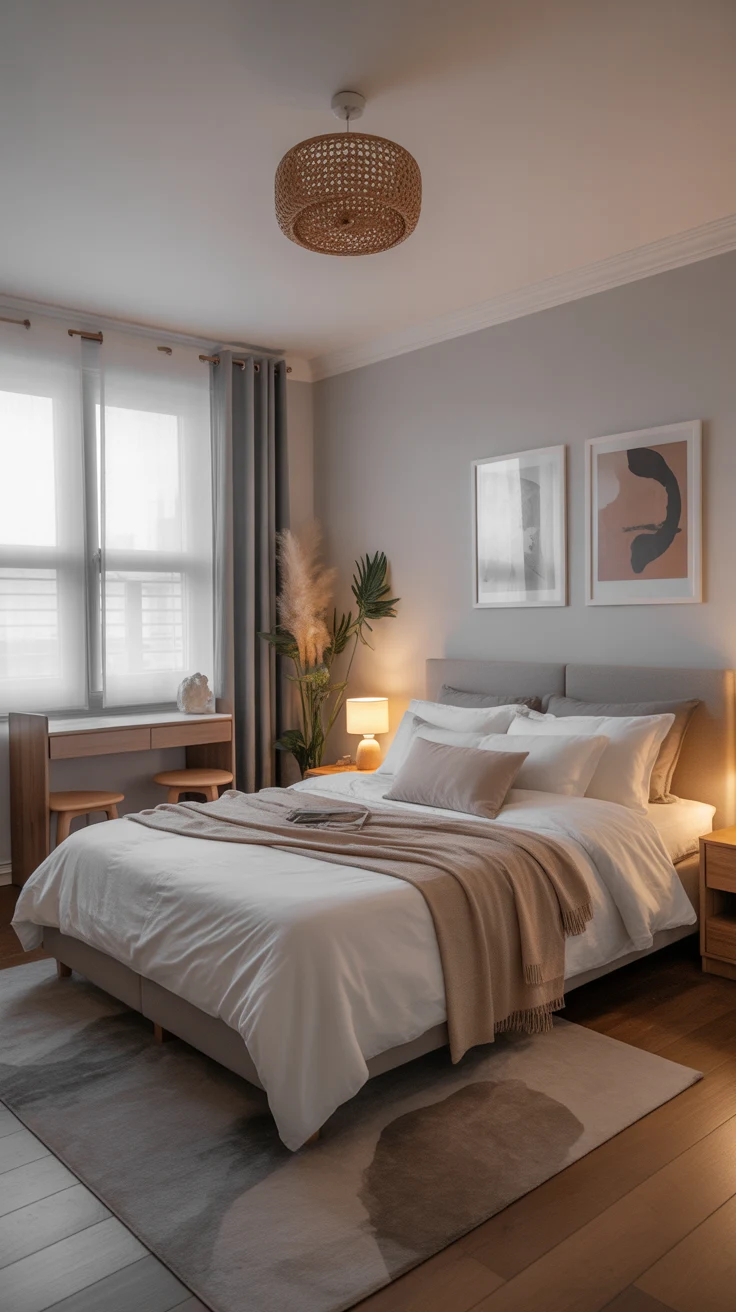
Here’s the last and most honest of all 14 bedroom ideas for small rooms: the most impactful thing you can do after applying every other idea on this list is edit ruthlessly. Remove anything that doesn’t genuinely belong. Clear the surfaces of everything except what’s intentional and beautiful. Return the room to the clarity that your design work has created — and then maintain that clarity with the discipline it deserves.
A small bedroom with ten perfectly chosen, well-positioned elements will always outperform one with thirty items competing for attention in the same footprint. The edit is the final design decision — and it’s the one that determines whether your beautiful design work is visible or buried. Do it honestly, do it completely, and do it again every few months when the inevitable accumulation begins.
Your Small Bedroom Is Already Enough — It Just Needs the Right Approach
Every idea in this list shares one foundational conviction: the small bedroom you have right now, with its current dimensions and current challenges, is more than sufficient to create something genuinely beautiful and genuinely wonderful to spend time in.
From rethinking the layout before spending anything, to committing to a clear aesthetic identity, to layering lighting that transforms the atmosphere after dark, to the final edit that keeps everything looking as intentional as the day you designed it — these 14 bedroom ideas for small rooms give you a complete, practical roadmap for a space you’ll actually love.
Pick two or three ideas that resonated most strongly and act on them this week. Not someday. This week. Because the small bedroom that you’ve been managing around and apologizing for has the potential to become the room you’re most proud of in your entire home. It just needs the right ideas applied with the right intention. And now you have both.