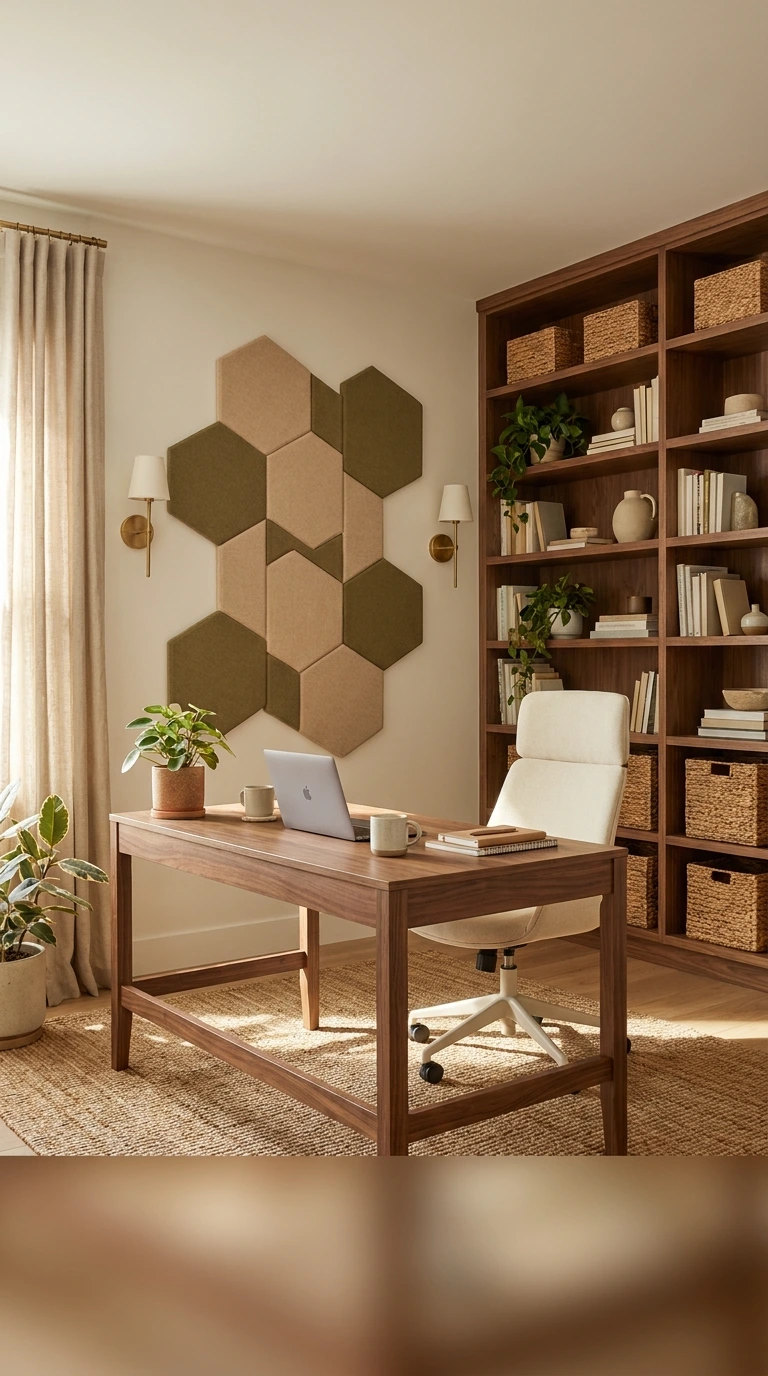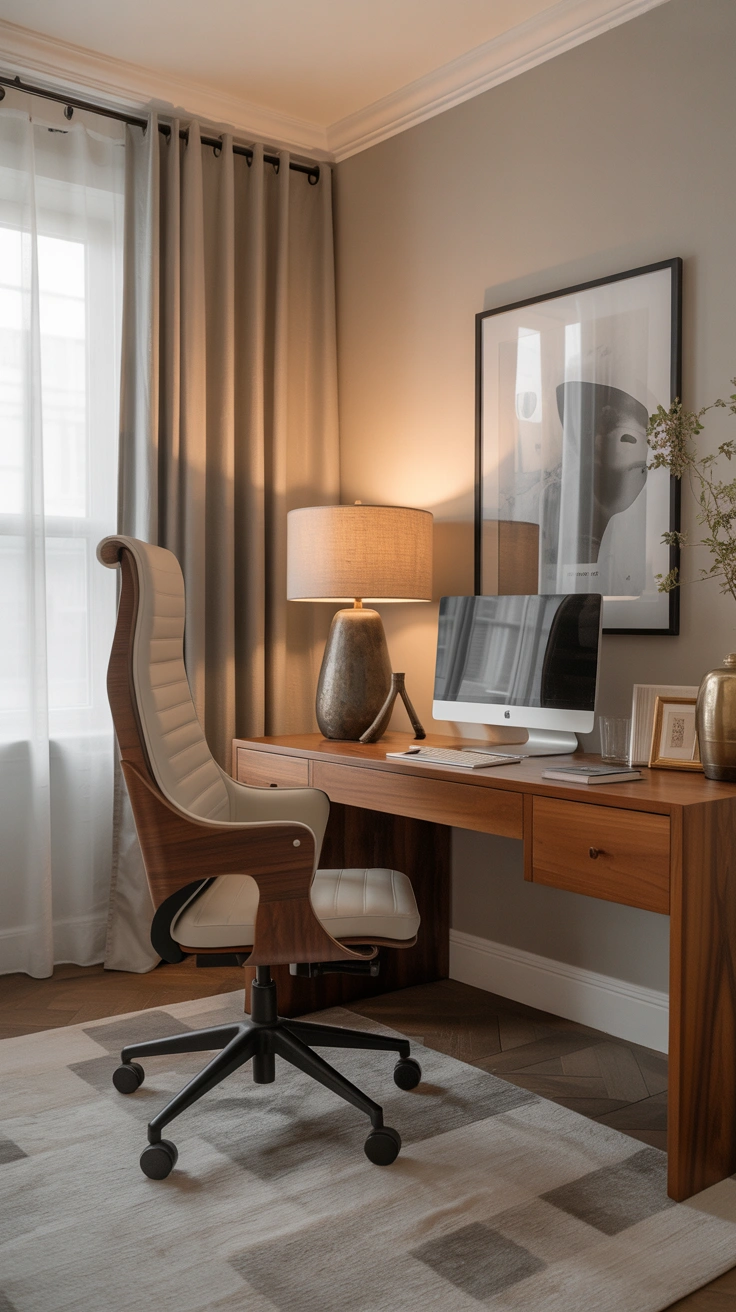
13 Cozy Home Office Decor Ideas That Make Working From Home Feel So Much Better
There is a version of working from home that feels genuinely good — where the space around you makes the work easier, where you actually want to sit down at your desk in the morning, and where the end of the day feels earned rather than just survived. And then there is the version most people are living: a setup that is functional at best, uncomfortable at worst, and so devoid of personality that staying focused feels like a daily act of willpower.
The difference between those two versions is almost never about square footage or budget. It is about intention — specifically, the intention to make the space cozy. Not precious, not over-decorated, not trying to look like a Pinterest board. Just genuinely warm, considered, and comfortable in a way that supports the work rather than fighting against it.
I redesigned my home office three times before I understood what was actually missing. The desk was fine. The chair was fine. But the room felt like a waiting room — neutral, forgettable, and completely disconnected from the rest of the home I had spent years making feel like mine. The moment I started treating the office as a room that deserved the same warmth and care as any other, everything changed. These 13 cozy home office decor ideas are everything I learned along the way.
1. Warm Up the Walls With Paint or Wallpaper
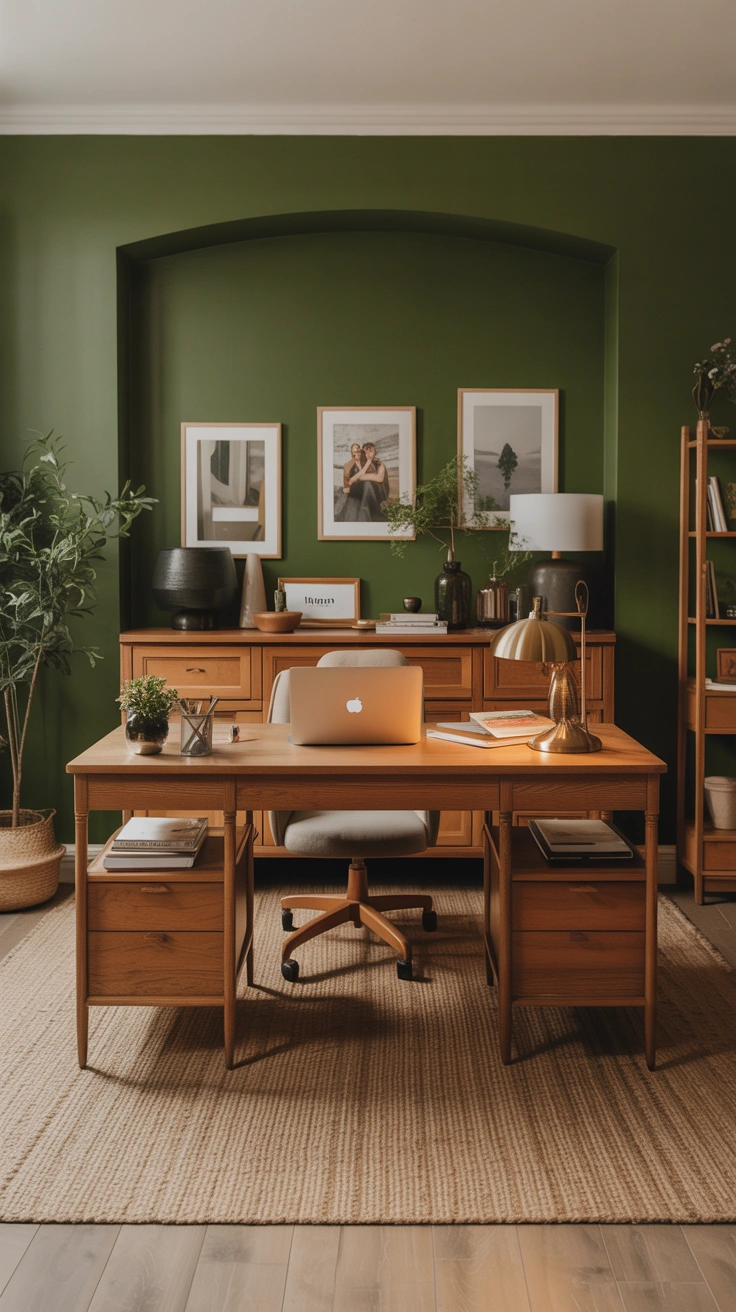
A white or off-white office wall is the single biggest missed opportunity in most home workspaces. White reads as clean and neutral — but in a room where you spend eight or more hours a day, neutral quickly becomes cold, and cold is the enemy of cozy. One deliberate wall color or a panel of carefully chosen wallpaper changes the entire psychological experience of the room.
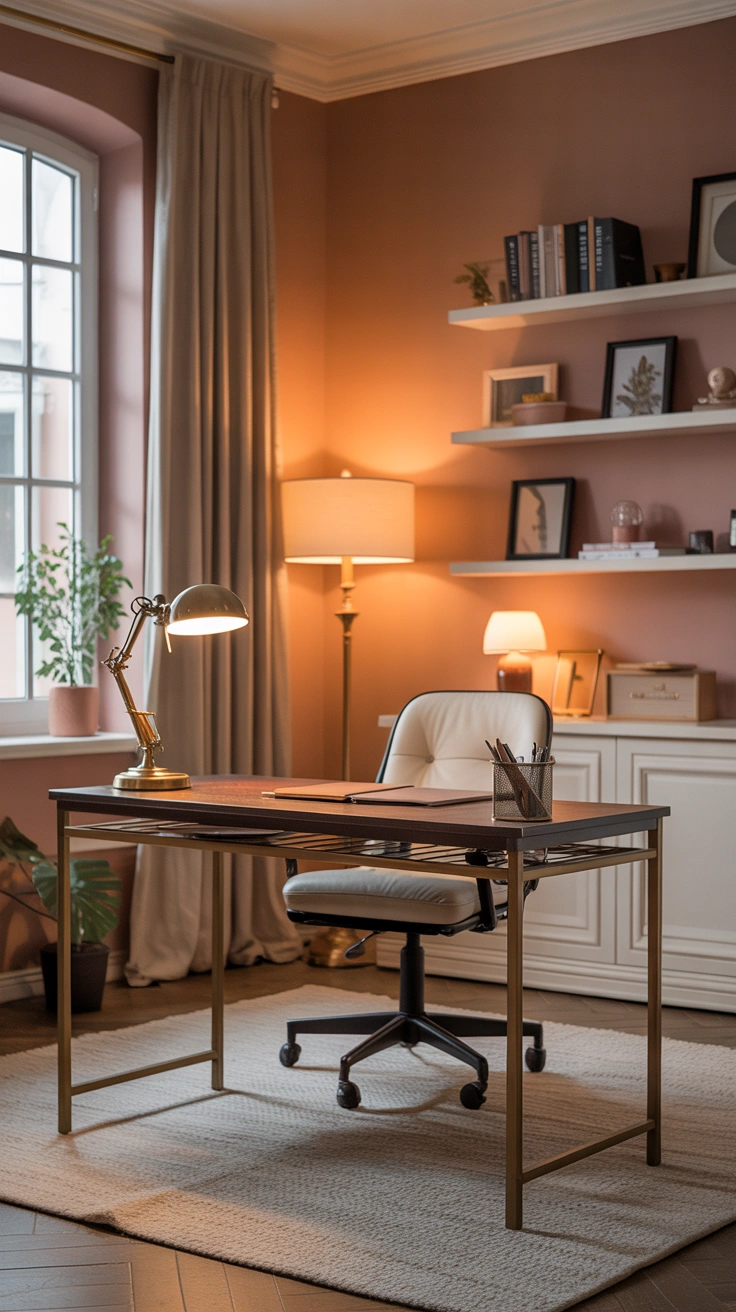
Warm terracotta on the wall behind the desk creates an earthy, grounded quality that makes the office feel settled and intentional. A deep warm green transforms the room into something that feels like a study — serious and cocooning simultaneously. A botanical or textured wallpaper on a single feature wall introduces pattern, organic warmth, and visual richness without requiring the commitment of painting every surface.
Wall Treatments That Create Warmth
- Warm terracotta or clay tones for an earthy, grounded quality
- Deep olive or forest green for something serious and cocooning
- Textured limewash in warm white or sand for organic depth without strong color
- A botanical or vintage-inspired wallpaper panel behind the desk as a feature wall
The wall color sets the emotional temperature of the room before a single piece of furniture or accessory is added. Choose a tone that makes you feel something good when you walk through the door.
2. Layer Rugs for Warmth Underfoot and Visual Texture
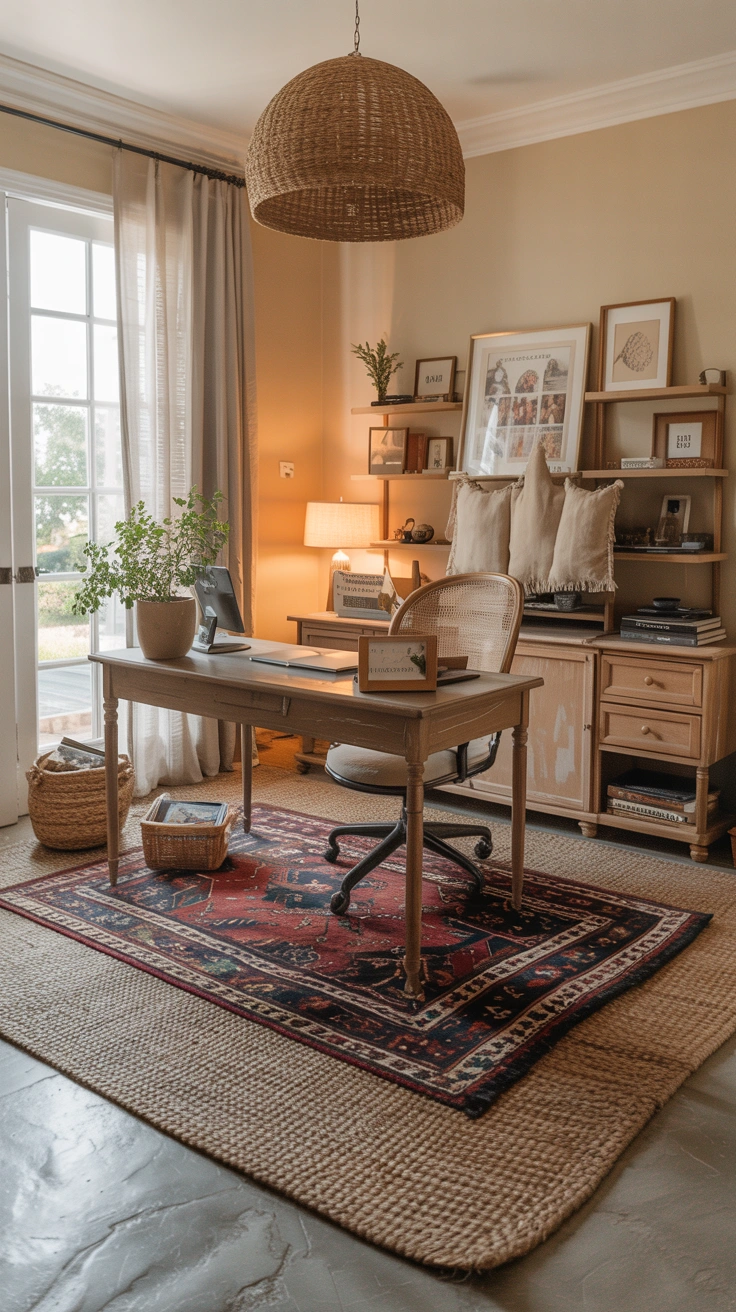
Hard floors in a home office — whether timber, tile, or laminate — contribute to the cold, clinical quality that makes so many workspaces feel uncomfortable to spend extended time in. A rug solves this immediately, adding warmth underfoot, acoustic softness, and a layer of visual texture that the room almost always needs.
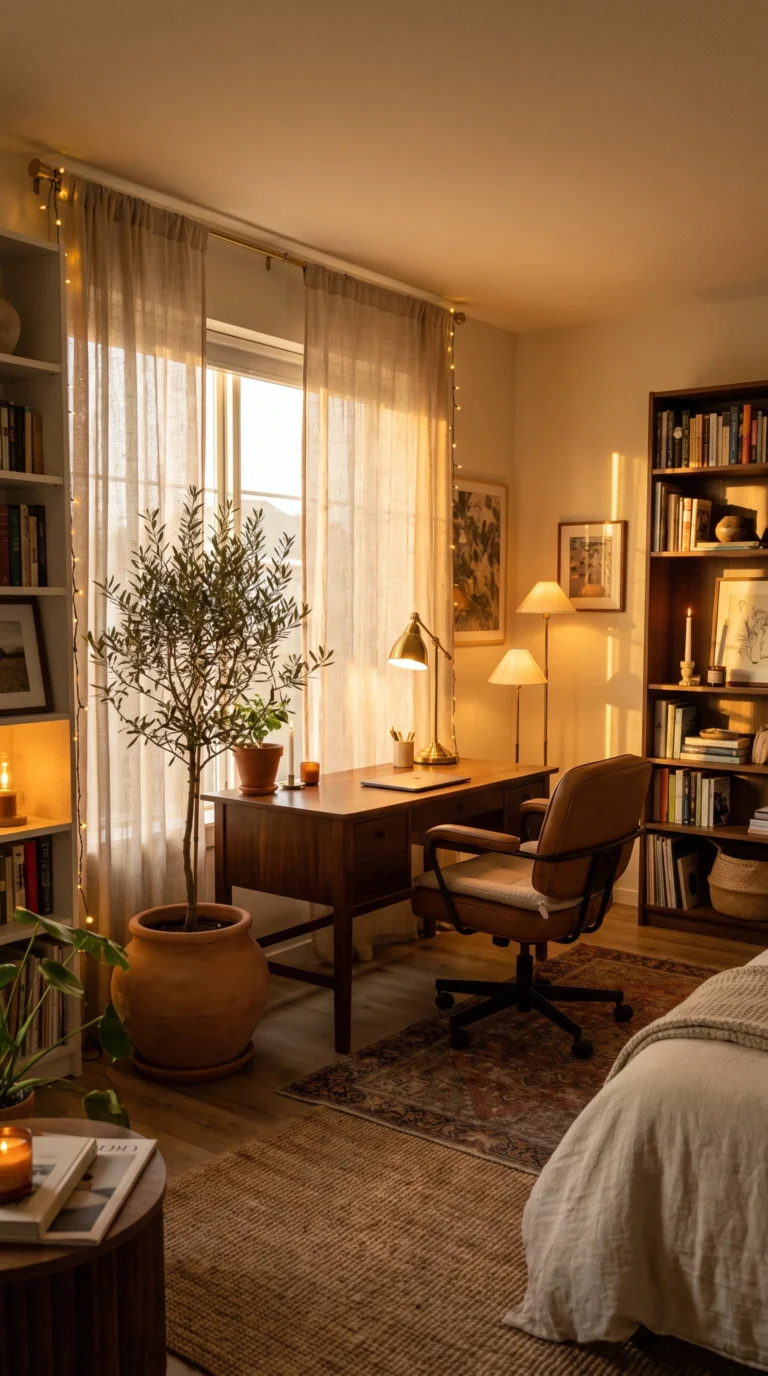
A large jute or sisal rug as the base layer for something natural and grounding. A smaller vintage-style or Persian rug layered over it under the desk for pattern, color, and a sense of history that new rugs rarely provide. The layered approach creates a richness and depth that a single rug — however beautiful — cannot fully achieve on its own.
Size matters as much as style. A rug that is too small for the desk and chair area looks provisional and disconnected from the room. A rug large enough to sit under the front legs of the desk at minimum, and ideally under the chair when it is pushed in, creates a defined, anchored work zone that feels genuinely considered.
3. Choose a Desk Lamp That Doubles as Decor
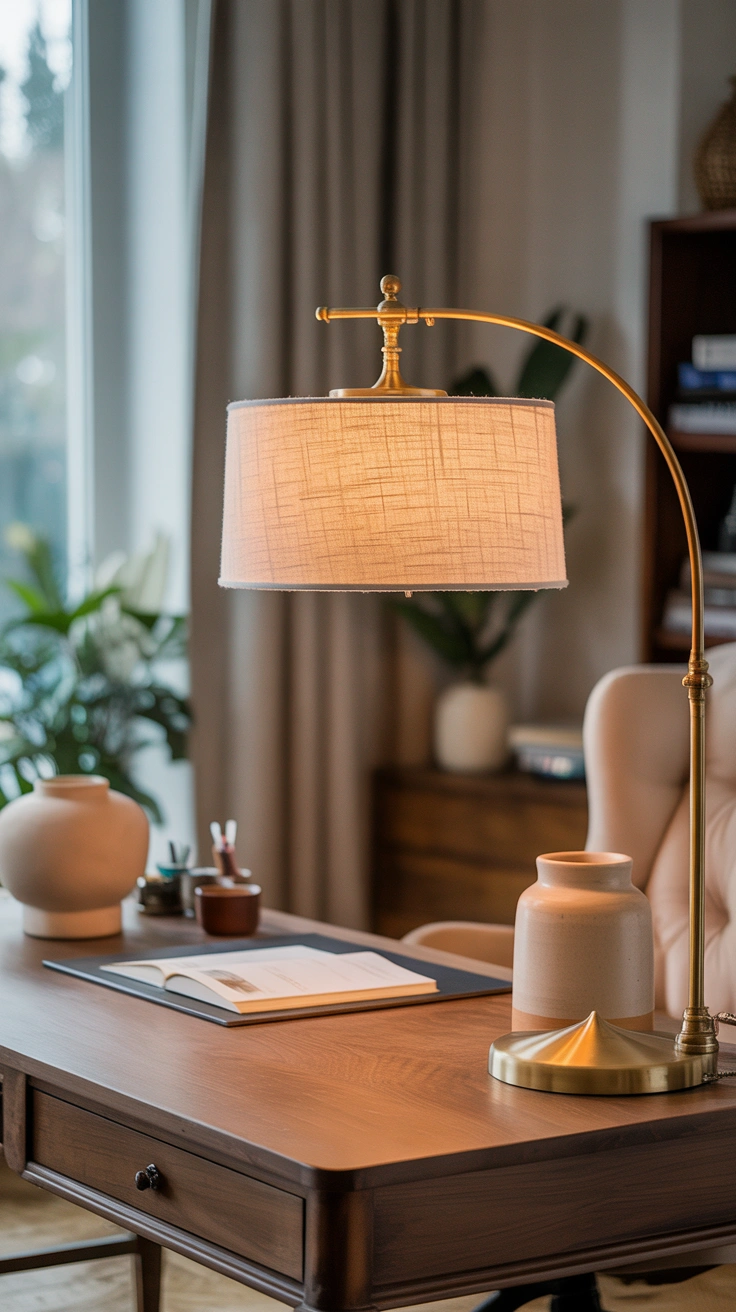
Most desk lamps are chosen for their function and tolerated for their appearance. The cozy home office takes the opposite approach — choosing a desk lamp that is beautiful first and functional second, understanding that a lamp you love looking at changes the quality of the entire desk surface and the room around it.
An arched brass lamp with a cream linen shade for warmth and a slightly vintage quality. A ceramic base lamp in a warm terracotta or sage glaze for something more sculptural and earthy. A vintage-inspired adjustable lamp in unlacquered brass that develops a patina over time and looks more beautiful with age. Each of these directions turns the desk lamp from a utility item into a decorative anchor that the rest of the desk styling can build around.
FYI — the bulb color temperature inside the lamp matters as much as the lamp itself. A warm 2700K bulb creates the soft, golden quality that makes a workspace feel cozy. A cool white or daylight bulb in a beautiful lamp still makes the room feel clinical. Get the bulb right and the lamp does everything it is supposed to do.
4. Bring In a Reading or Thinking Chair
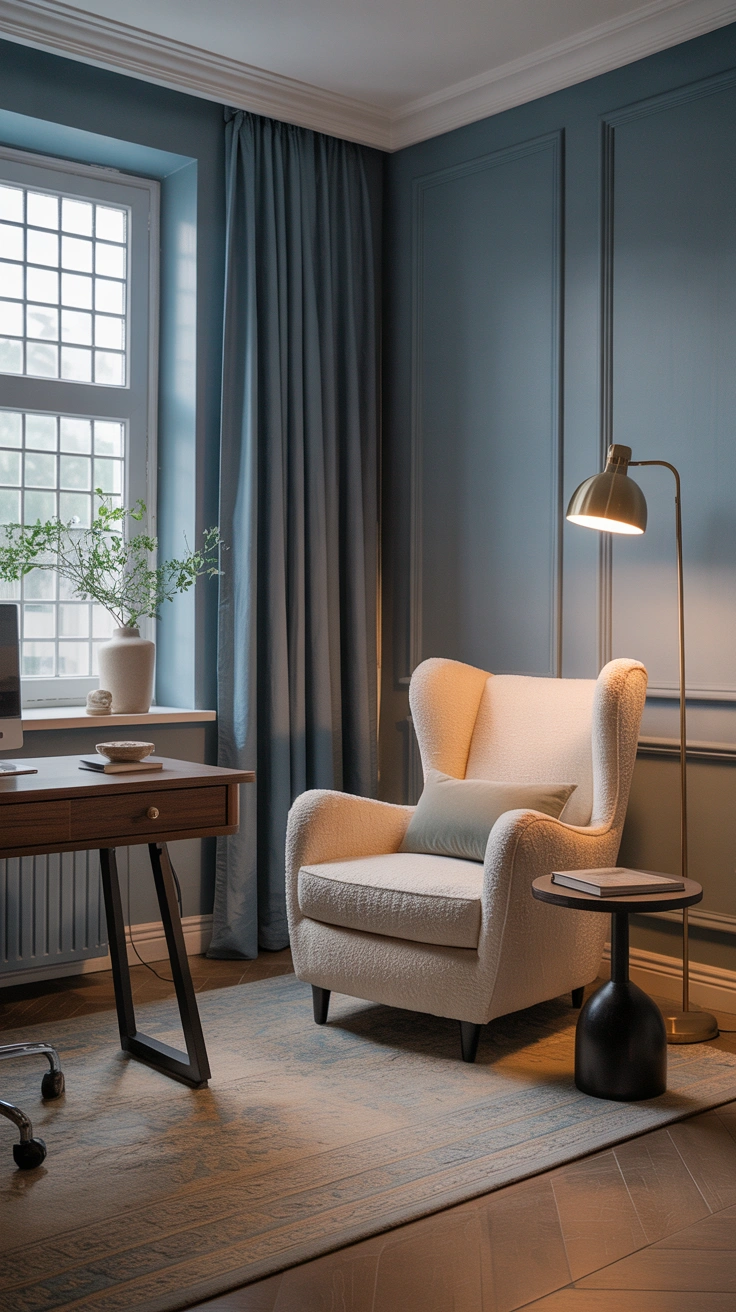
The most cozy home offices are not rooms that contain only a desk and a chair. They are rooms that contain a full range of spaces for the full range of activities that deep work actually involves — including the ones that happen away from the screen. A reading chair positioned in the office changes how the room feels and how you work within it.
A small armchair in a textured fabric — boucle, velvet, or a warm wool blend — placed beside a floor lamp in the corner of the office creates a dedicated zone for reading, thinking, planning, and the kind of unfocused ideation that produces the best ideas. It also makes the office feel like a room that was designed for a whole person rather than just for a workstation.
The chair does not need to be large. In a small office, even a compact accent chair in a warm fabric beside a small side table creates this effect entirely. What matters is that it is there — deliberate, comfortable, and positioned to invite use.
5. Style Your Shelves Like You Mean It
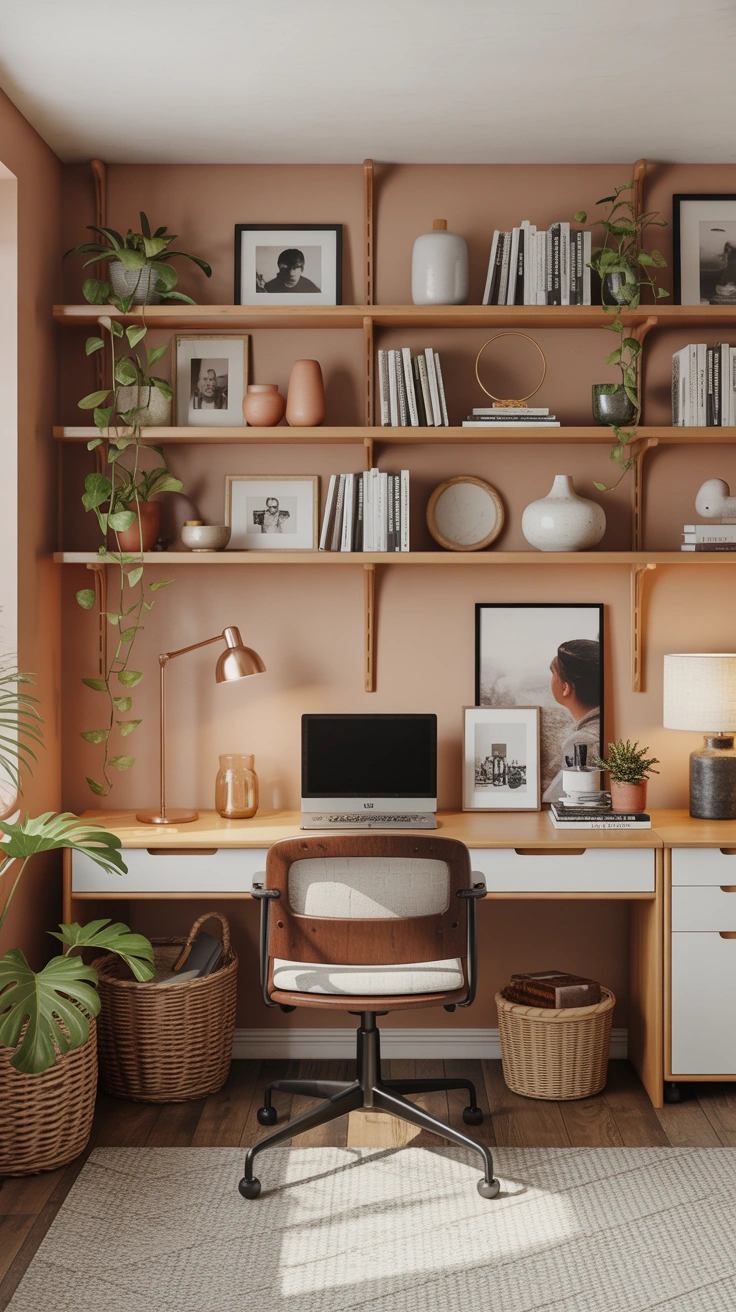
Open shelving in a home office has the potential to be either the room’s most beautiful feature or its most chaotic one — and the difference is entirely about how intentionally the shelves are styled. Shelves loaded with random items communicate disorder. Shelves curated with genuine care communicate character, warmth, and a sense of the person who works within the room.
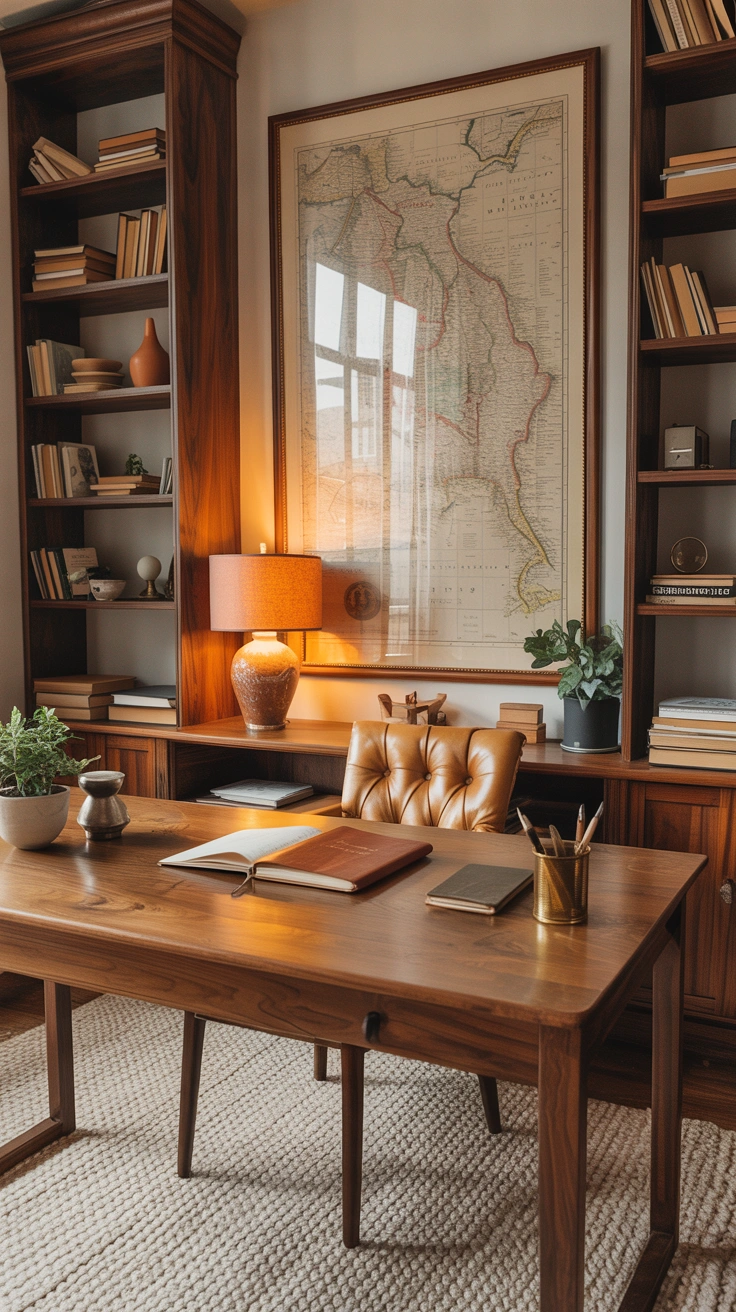
Books grouped by color or size rather than simply alphabetically. A small plant or trailing vine at the end of a shelf. A ceramic vessel or small sculpture as a visual anchor. A framed photograph or small piece of art leaning against the back of a shelf rather than hung on the wall. These details turn shelving from storage into storytelling.
A Simple Shelf Styling Formula
- Books — grouped intentionally, not randomly arranged
- One plant — trailing or upright, providing organic form and life
- One decorative object — ceramic, sculptural, or meaningful
- One personal item — a photograph, a souvenir, something with a story
- Negative space — at least one empty section per shelf to let the eye rest
Resist the urge to fill every available inch. The restraint is what makes the styling look intentional.
6. Add Curtains to Soften the Room
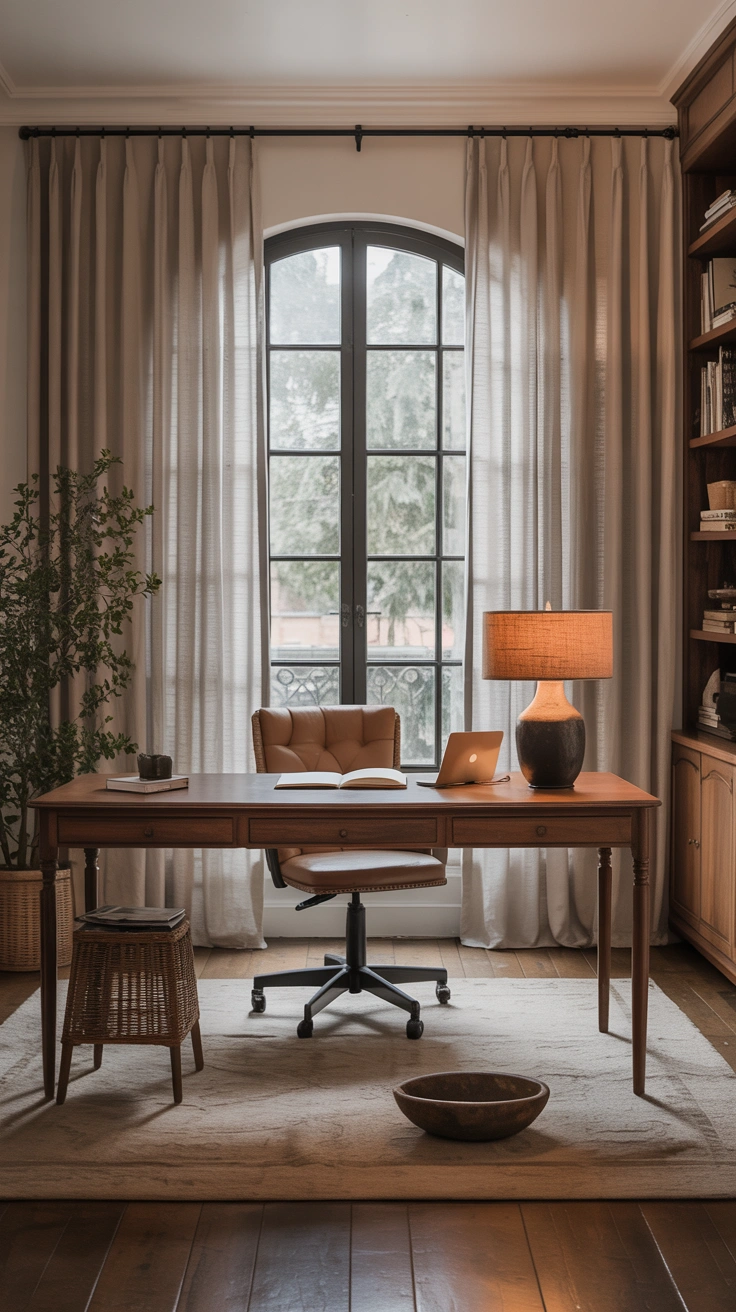
Windows in a home office almost always have a treatment that is either purely functional — a roller blind that blocks light and does nothing else — or completely absent. Curtains change the quality of the room in a way that goes beyond light control. They add softness, height, color, and a layer of warmth that hard window treatments and bare windows cannot provide.
Floor-length linen curtains in a warm ivory, oat, or warm stone tone. A textured cotton curtain in a gentle stripe or subtle pattern for something with slightly more visual interest. A velvet curtain in a deep, rich tone for a dramatic, cocooning quality that suits offices designed for evening work or rooms with limited natural light.
Hang curtains as close to the ceiling as possible and extend the rod well beyond the window frame on each side. This makes the window look larger, the ceiling look higher, and the room look more professionally designed than any other single curtain decision available.
7. Introduce Candlelight as a Working Companion
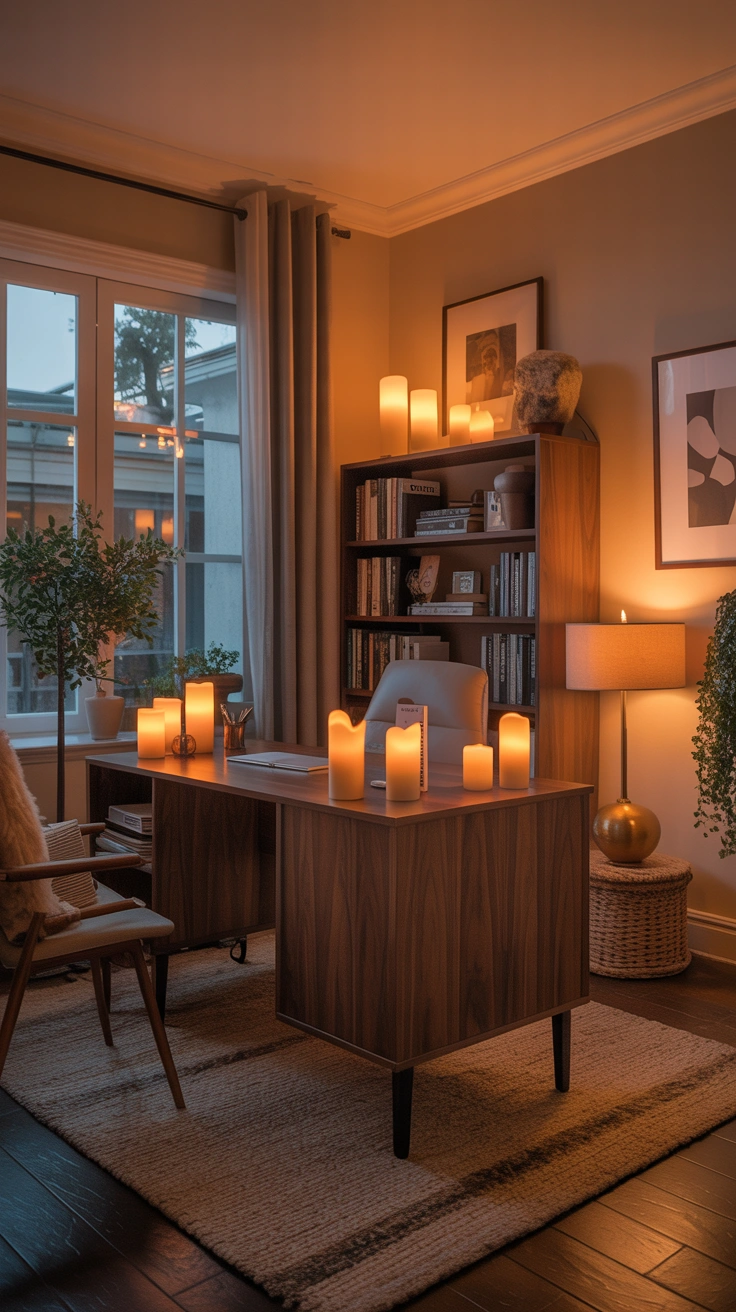
Candles in a home office might sound impractical — an open flame near papers and textiles during a concentrated work session. In reality, a well-placed candle on a non-combustible surface away from the immediate work area changes the atmosphere of the room more immediately and more effectively than almost any other single addition.
The warm, flickering quality of candlelight creates a psychological shift from the flat, static quality of screen light that is felt rather than consciously noticed. It signals that this is a considered space — that someone created an environment here rather than simply placed furniture. A beautiful ceramic candle in a warm fragrance on the bookshelf or credenza contributes scent, warmth, and visual beauty simultaneously.
IMO, lighting a candle at the start of the work day and extinguishing it at the end is one of the simplest and most effective rituals available for creating a psychological boundary between work time and personal time — and it costs almost nothing to build into the daily routine.
8. Use Textiles Generously Throughout the Space
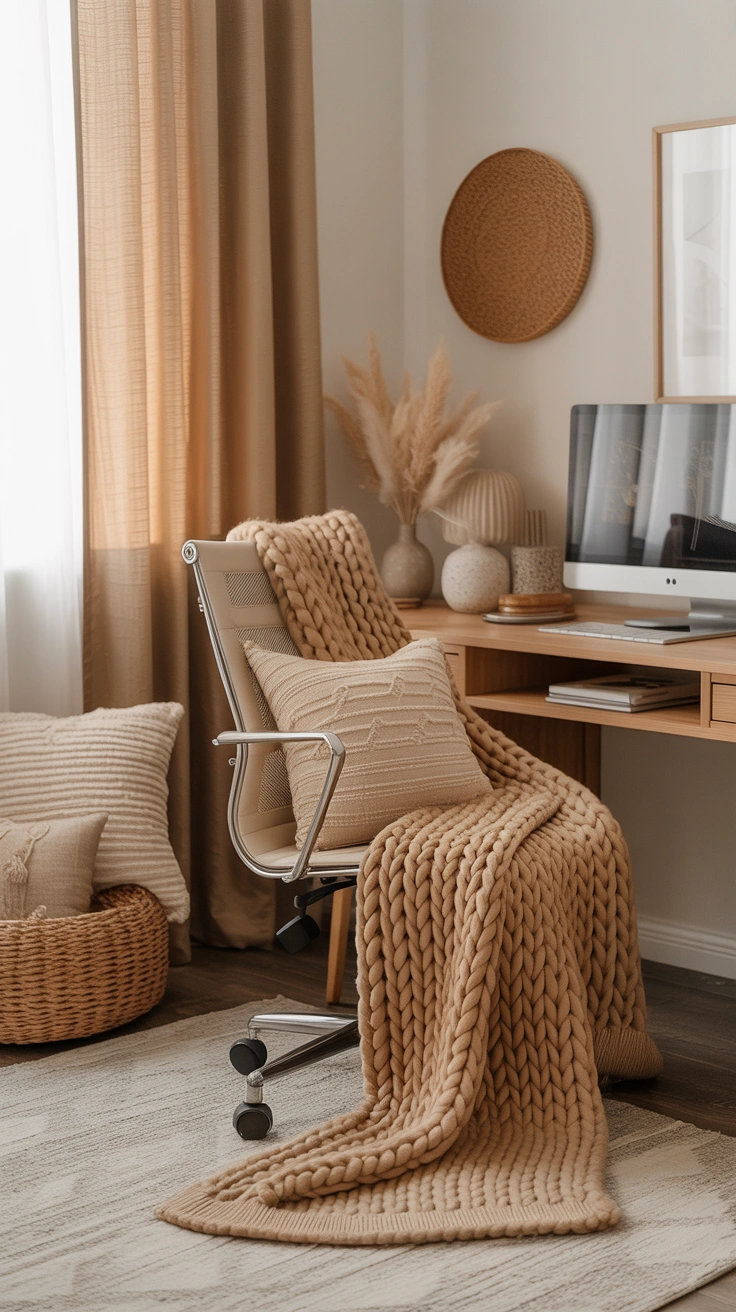
The fastest way to make any room feel cozy is to introduce textiles — and the home office is no exception. Most workspaces are dominated by hard surfaces: the desk, the chair, the shelving, the floor. Softening those surfaces with carefully chosen textiles changes the acoustic quality, the visual warmth, and the tactile experience of the room simultaneously.
A chunky knit throw draped over the back of the desk chair for the inevitable afternoon chill. A cushion on the reading chair in a warm, textured fabric. A small woven wall hanging above the desk for organic texture at eye level. A fabric desk organizer rather than a plastic or metal one. Each textile introduces a layer of warmth that the room accumulates gradually until it feels genuinely soft and considered.
The colors of these textiles should connect to each other and to the room’s overall palette rather than being chosen independently. Warm neutrals — oat, camel, warm ivory, dusty sage — layered together create a cohesive warmth that competing colors undermine.
9. Position the Desk to Maximize Natural Light
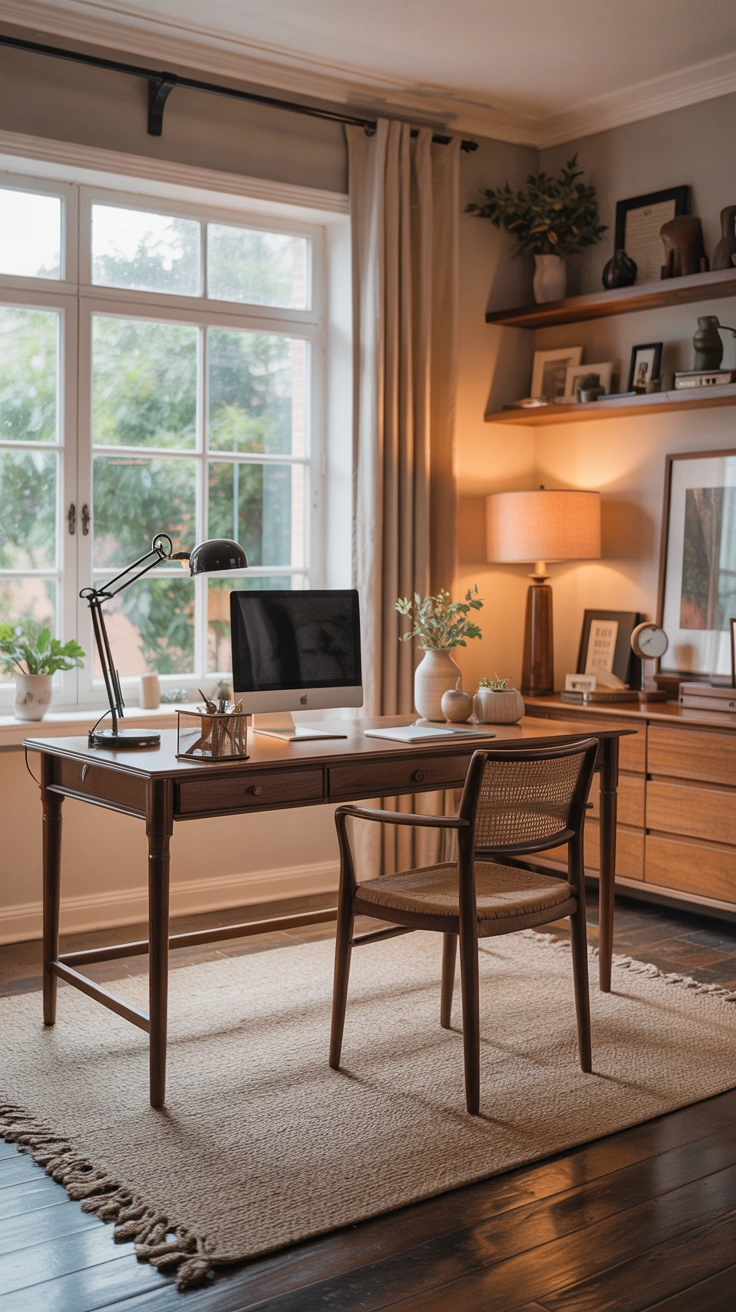
The single most impactful cozy home office decor decision that costs nothing to implement is the placement of the desk in relation to the room’s natural light. A desk positioned to receive good natural light without screen glare creates a workspace that is more pleasant, more energizing, and more visually beautiful than any amount of artificial lighting can compensate for.
Position the desk perpendicular to the window rather than directly facing it or with your back to it. Facing the window creates glare on the screen. Having the window directly behind you creates glare on the screen from the opposite direction. Perpendicular placement puts the light on the face and the work surface without creating screen problems.
Natural light also makes everything in the office look better — the plants, the art, the textiles, the desk surface. It is the most flattering and most energizing light source available, and positioning the workspace to take full advantage of it costs nothing beyond the willingness to rearrange the furniture.
10. Create a Small Coffee or Tea Station
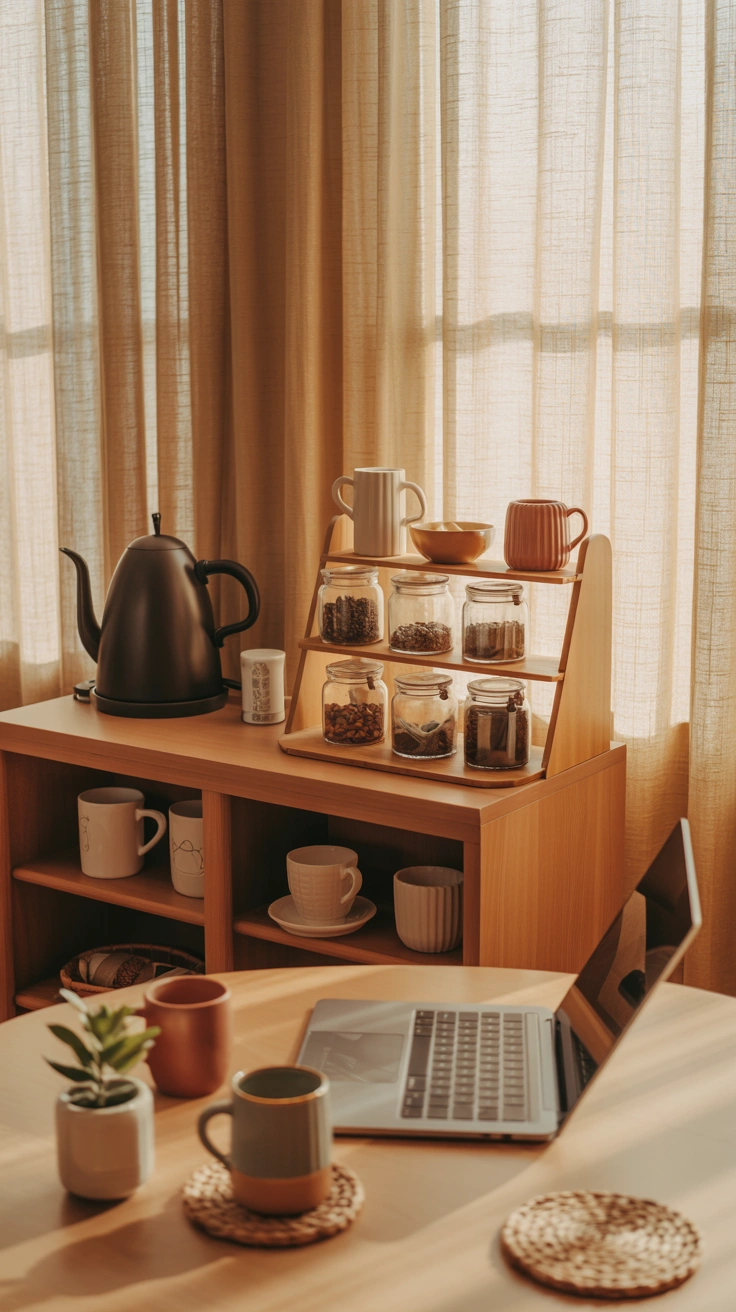
A dedicated coffee or tea station in the home office is one of those details that crosses the line between practical and genuinely cozy in the most satisfying possible way. It keeps you in the workspace during the short breaks that sustain concentration rather than pulling you into the kitchen — and it creates a moment of ritual that punctuates the work day beautifully.
A small tray on a credenza or side table with a kettle, a few mugs chosen for their appearance as much as their function, a small ceramic canister of tea or coffee, and a couple of beautiful spoons. This setup costs almost nothing to create and transforms the corner it occupies into a moment of genuine warmth and considered styling.
The mugs matter more than most people think. A beautiful ceramic mug on the desk beside you during a work session contributes to the atmosphere of the room in a small but consistently felt way. Choose ones you actually love looking at.
11. Hang Art That Creates the Right Feeling
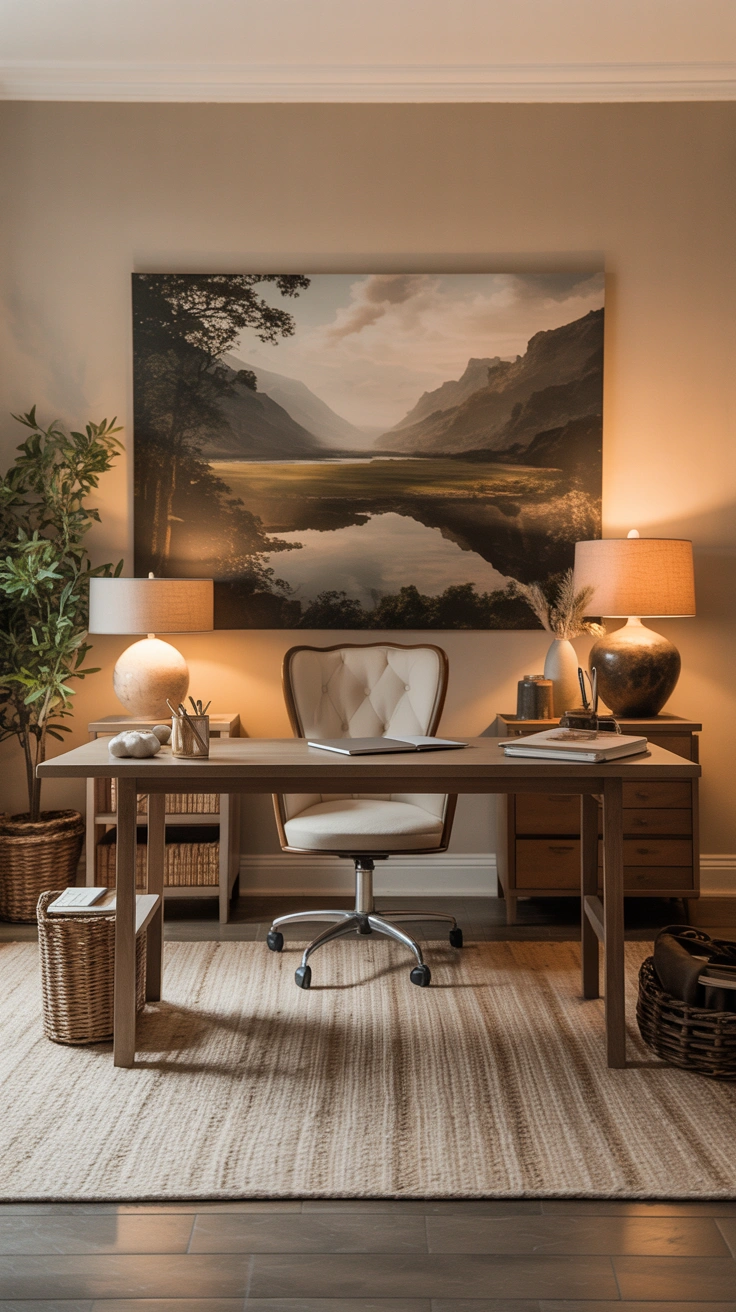
The art on the walls of a home office shapes the emotional environment of the workspace in a way that is constantly present but rarely consciously noticed. Art you find beautiful, calming, or energizing creates a background quality that affects concentration, creativity, and mood throughout the entire work day. Generic art, or no art, creates a background quality of nothing — which is the decorative equivalent of an empty office.
A large-format landscape print in warm, earthy tones for something that creates a sense of space and calm. A bold abstract in colors that complement the room’s palette for something with more visual energy. A collection of smaller botanical prints grouped together for organic warmth and a gallery quality that makes the wall feel designed. A single framed typographic piece with a phrase that matters for something more personal and directly motivating.
Choose art based on how it makes you feel rather than simply how it looks. The office wall you stare at for eight hours a day deserves that level of consideration.
12. Add a Scent That Signals Focus
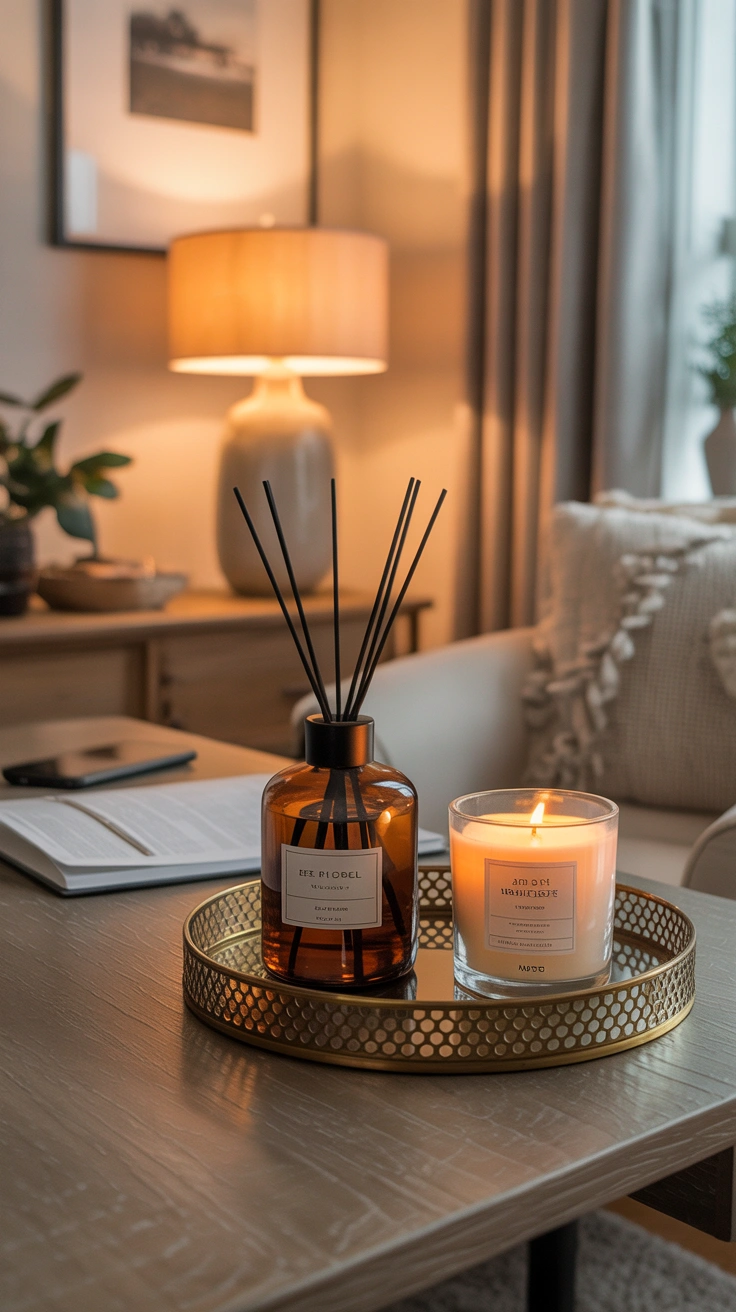
The scent of a home office is a cozy decor element that most people forget entirely — and yet it is one of the most psychologically effective tools available for making the workspace feel like a specific, intentional place. A room that smells good feels good to spend time in. A room with no particular scent, or a scent that is simply the neutral smell of the house, misses an opportunity to create a genuine atmosphere.
A reed diffuser in a clean, focused fragrance — cedarwood, bergamot, eucalyptus, or green tea — creates a continuous ambient quality that the nose stops noticing consciously after a few minutes but continues to respond to. Choose a fragrance used exclusively in the office and nowhere else in the home. Over time, the scent becomes a focus cue — the moment you enter the room and notice it, the brain begins to prepare for work.
This is the most subtle and most consistently underrated cozy home office decor detail on this entire list — and the one that takes the least effort to implement while delivering a daily return on that small investment.
13. Get the Clutter Under Control Before You Decorate
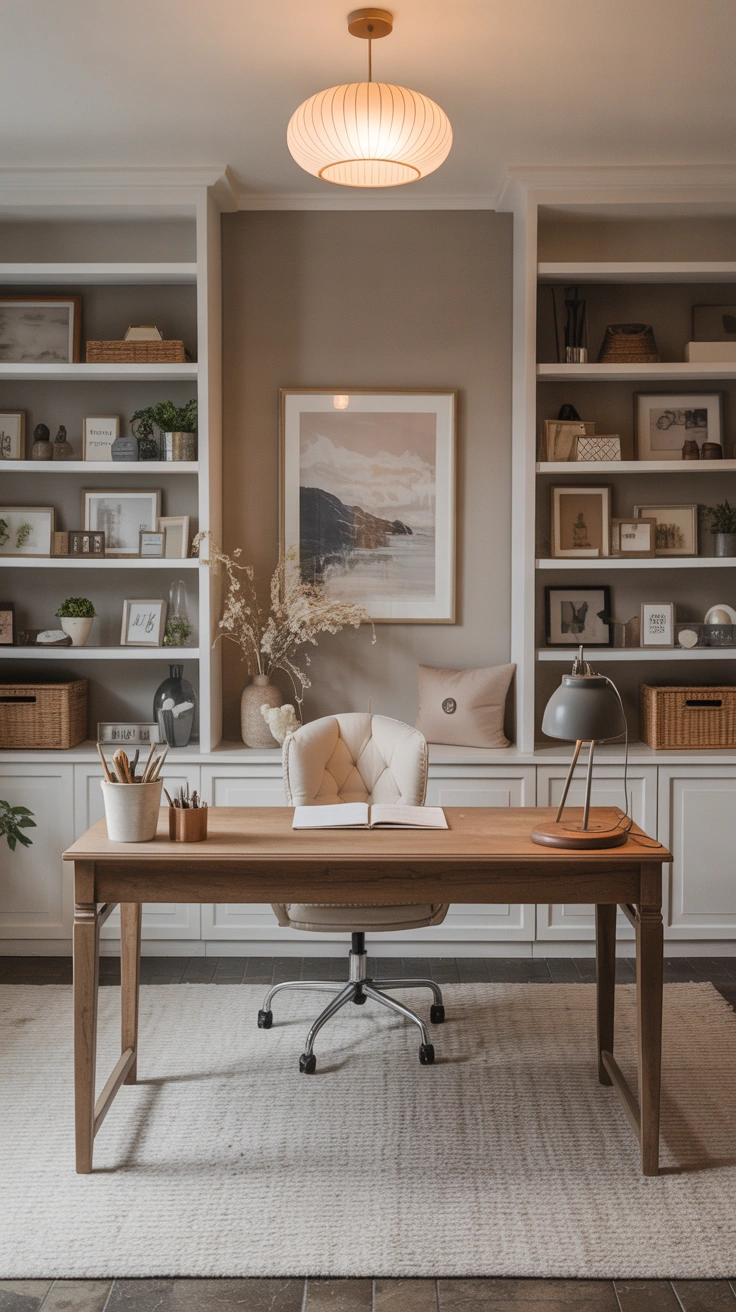
The final cozy home office decor idea is the foundational one that determines whether all the others succeed or are simply buried under the visual noise of an unresolved space — ruthless, honest clutter control before any decorating decisions are made. A cozy office is not a cluttered one. Warmth and clutter are not the same thing, and confusing the two produces a room that feels chaotic rather than considered.
Go through the office and remove everything that does not serve a clear purpose or contribute to the room’s atmosphere. Find a home for everything that stays — in a drawer, in a box, on a shelf, in a cabinet. Only once the space is genuinely clear does the styling of it become meaningful. Every beautiful object placed in a clutter-free room reads as a considered decision. The same object placed among accumulated disorder disappears into the noise.
A Practical Clutter Control Process
- Remove everything from all surfaces and start from zero
- Sort into three categories — keep in office, store elsewhere, remove entirely
- Assign a home for every item in the keep category before putting it back
- Return only what is used regularly to the desk surface itself
- Style what remains with the same intention you would bring to any other room
Clutter control is not a decorating step. It is the prerequisite for decorating — and doing it properly before anything else makes every subsequent decision easier, cheaper, and more effective.
Conclusion
Thirteen cozy home office decor ideas that build warmth, character, and genuine comfort into the workspace — warm wall color or wallpaper, layered rugs, a desk lamp chosen for beauty as much as function, a reading chair, intentionally styled shelves, curtains that soften the room, candlelight as a working companion, generous textiles, desk placement for natural light, a small coffee station, art chosen for feeling, scent used as a focus cue, and clutter controlled before everything else. Each idea contributes a different layer to the same result — a home office that feels genuinely good to work in rather than simply functional.
A cozy workspace is not an indulgence. It is a productivity tool — one that operates quietly in the background every hour you spend in it, making the work easier, the day more pleasant, and the end of it more satisfying. Treat it as such.
Now close this article, look at your office, pick the one idea that would make the biggest immediate difference, and go do that today. Your future self — the one who actually enjoys showing up to work every morning — will be glad you did.