Freestanding Tub vs. Built-In Tub: Which is Worth It for Your Bathroom?
Introduction
Few bathroom decisions change the feel of the room as much as the tub. It is the largest fixture in the space, the one your eye lands on first, and the one you will live with every single day. So when you are planning a remodel or building from scratch, the choice between a freestanding tub and a built-in tub deserves more than a quick glance at a showroom floor.
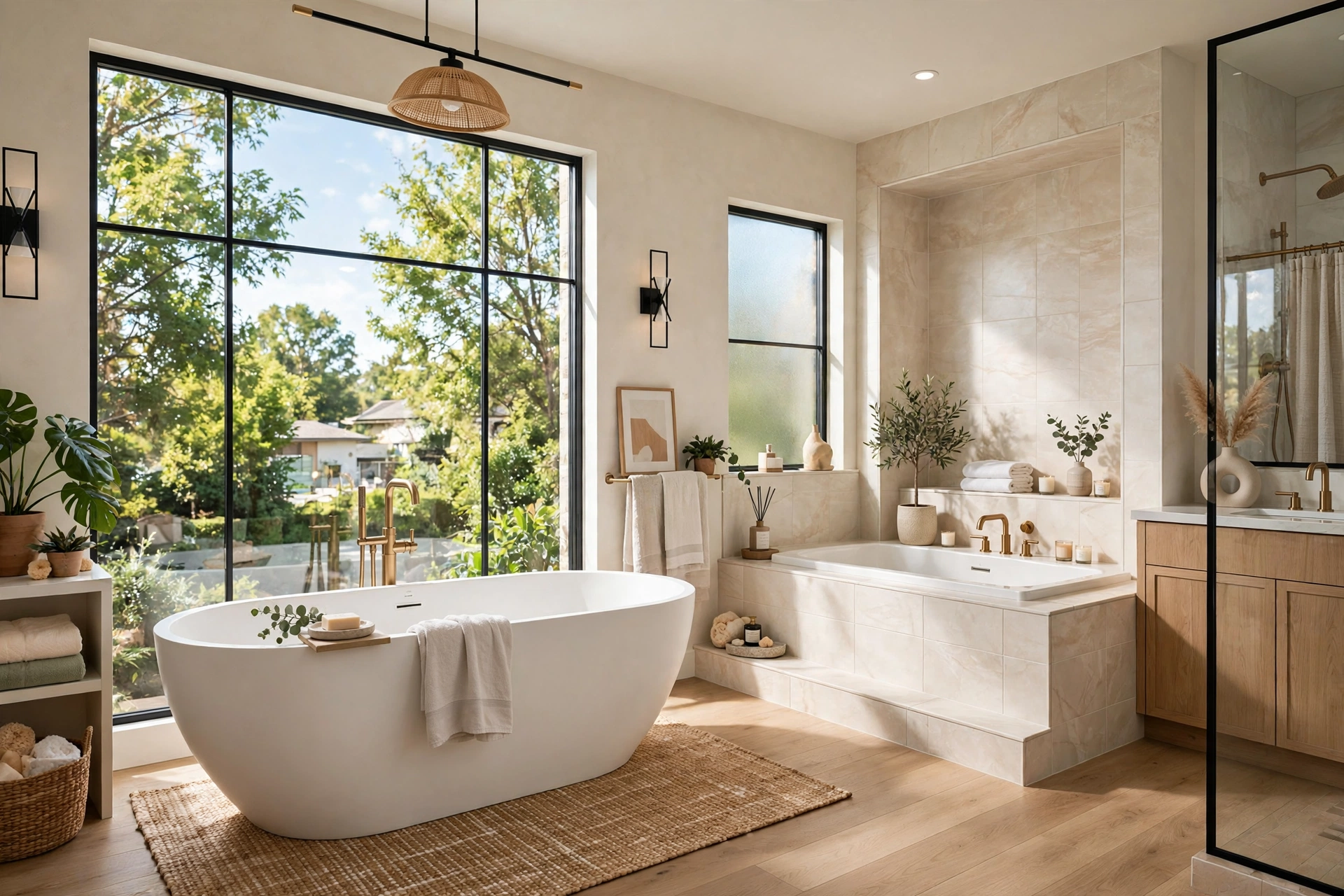
A freestanding tub stands alone like a piece of sculpture, open on all sides, and it instantly makes a bathroom feel like a spa retreat. A built-in tub sits inside a framed surround, tucked against one or more walls, and it brings practicality, storage, and a lower price tag. Both can be beautiful. Both can be comfortable. But they suit very different bathrooms, budgets, and lifestyles.
This guide compares the two side by side across the fifteen things that actually matter: looks, space, cost, installation, cleaning, comfort, and resale value. By the end, you will know exactly which tub belongs in your bathroom — and which one would be an expensive mistake.
1. The Visual Impact: Sculptural Statement vs Seamless Integration
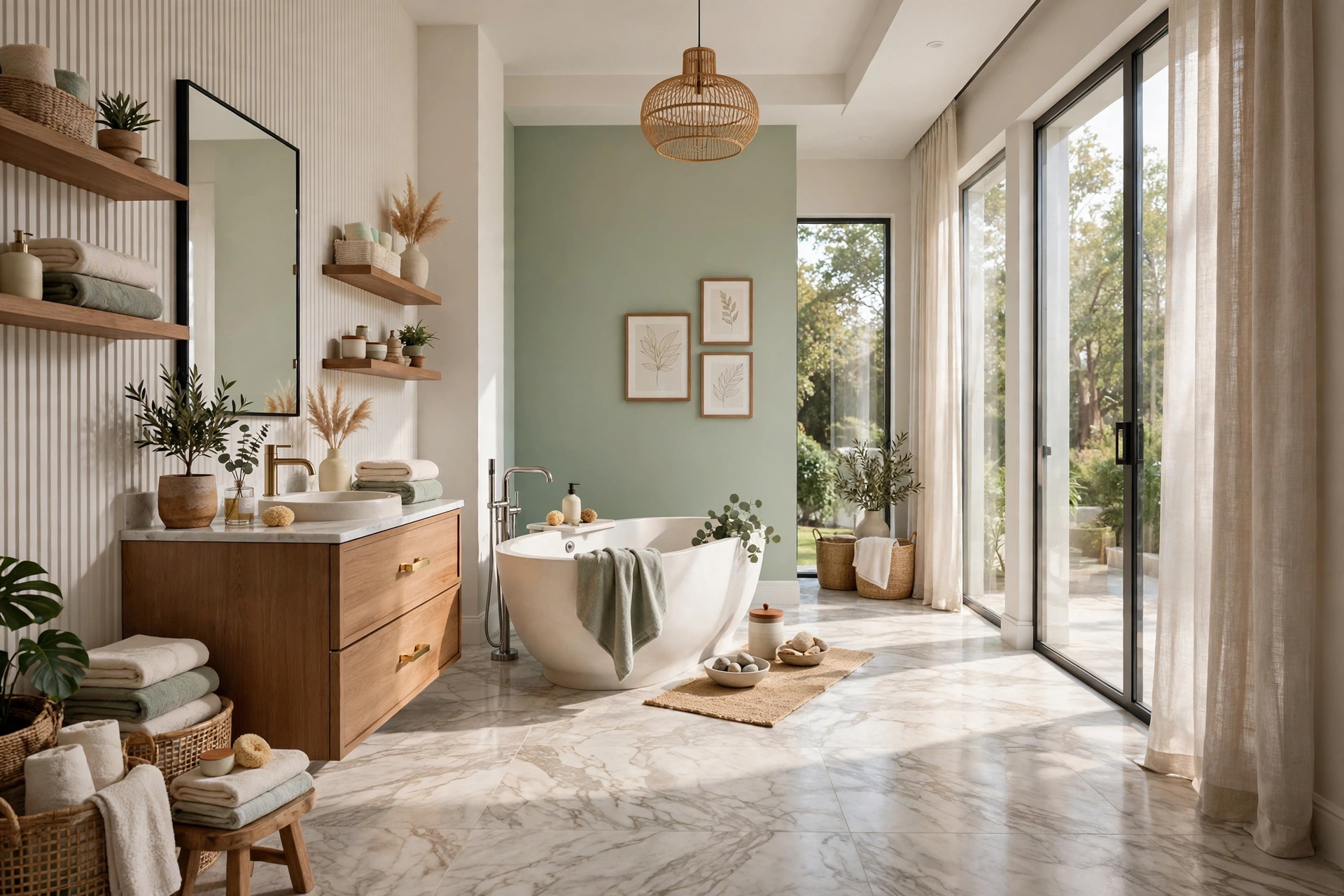
A freestanding tub is a showpiece. Because it stands alone with space around it, the tub itself becomes the focal point of the room, much like a statement sofa anchors a living room. Oval, rectangular, or slipper shapes in glossy acrylic or matte stone resin draw the eye immediately, and they make even a simple bathroom feel deliberately designed. If you want your bathroom to look like the ones in design magazines, a freestanding tub is the fastest way to get there.
A built-in tub takes the opposite approach. It disappears into the architecture. The tub deck and surround blend with the tile, the walls, and the rest of the room, so the bathroom reads as one calm, continuous space rather than a gallery for a single fixture. That quiet integration suits bathrooms where the vanity, the tilework, or a window view is meant to be the star instead.
Neither look is better in the abstract. The right choice depends on what you want the room to say. If the tub is the hero, go freestanding. If the room as a whole is the hero, a built-in tub lets everything else shine.
2. Space Requirements: What Each Tub Really Needs
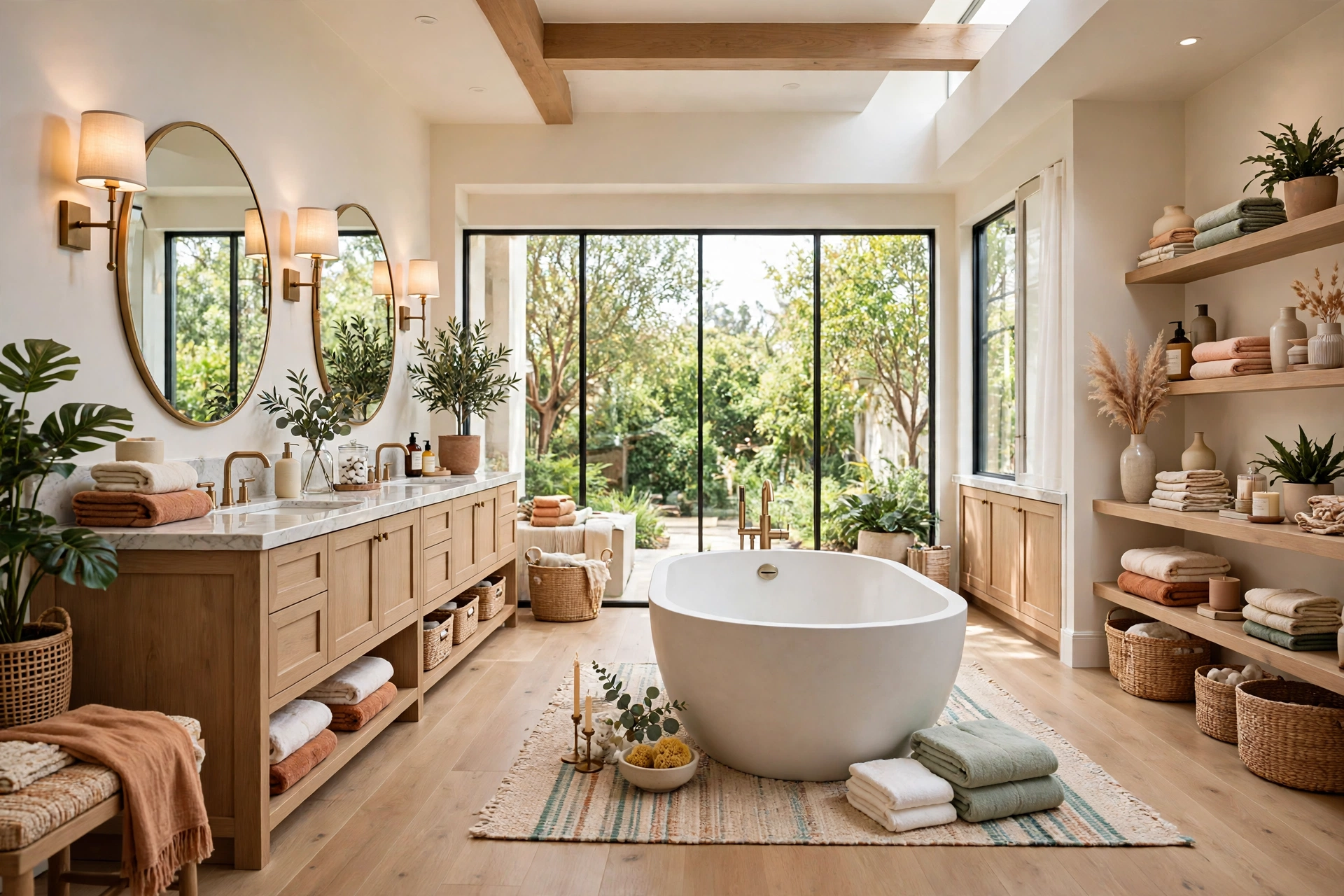
A freestanding tub needs breathing room. Plan on at least 15 to 30 centimetres of clearance on the sides and the ends, plus enough floor space to walk around it comfortably for cleaning. In practice, that means a freestanding tub asks for a bathroom of roughly 8 square metres or more to look intentional rather than cramped. Squeeze one into a tight room and it stops looking luxurious — it looks like furniture that does not fit.
A built-in tub is far more forgiving. Because it tucks against walls and uses the room’s edges, it fits comfortably in bathrooms as small as 4 to 5 square metres. The surround can even be sized to the exact alcove, so no floor space is wasted. For compact homes, apartments, and older houses with modest bathrooms, this is often the deciding factor before any other consideration.
Measure your room honestly before falling in love with either option. A beautiful tub that blocks the door swing or leaves you no room to dry off is not a luxury — it is a daily annoyance.
3. Installation: Plumbing, Floor Support, and Timelines
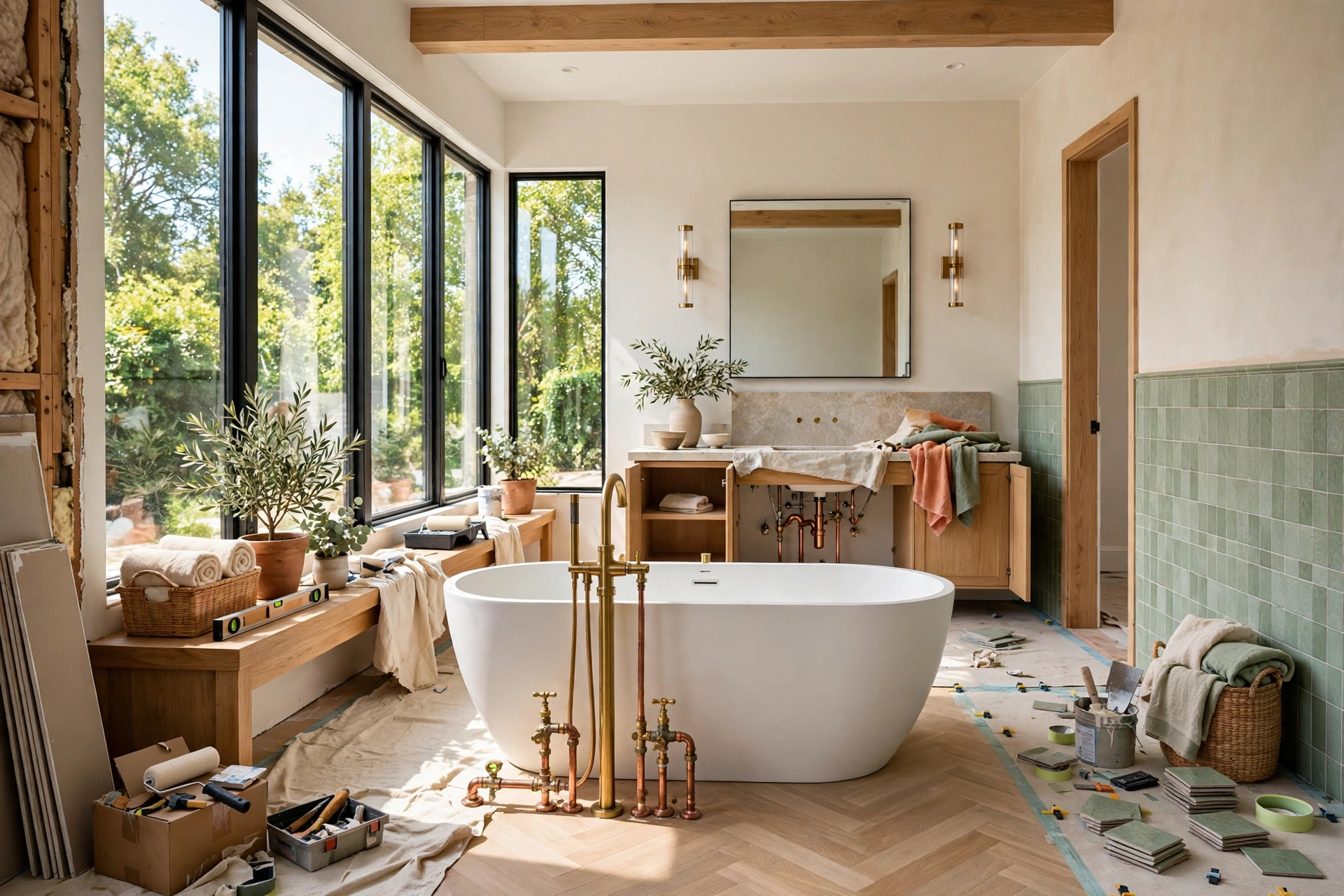
Installing a freestanding tub is usually simpler on the plumbing side but trickier on the structure side. The drain and the floor-mounted or freestanding faucet need to be positioned precisely before the tub arrives, because there is no surround to hide a mistake. The floor must also support the weight: a filled stone or cast-iron freestanding tub can weigh 300 kilograms or more, so older joists sometimes need reinforcement.
A built-in tub involves more construction. The frame, the surround, the waterproofing, and the tile work all have to be built in sequence, which means more tradespeople and a longer timeline — often an extra week or two compared with dropping in a freestanding model. On the other hand, the plumbing is forgiving: pipes hide inside the surround, and small alignment errors disappear behind tile.
If your remodel timeline is tight and your floor is solid, freestanding wins on speed. If your bathroom is a full gut renovation anyway, the extra construction of a built-in tub is barely noticeable in the overall schedule.
Freestanding vs Built-In Tub Quick-Start Checklist
- ✅ Measure your bathroom and confirm at least 15–30 cm of clearance around a freestanding tub
- ✅ Check the floor structure can carry a filled tub’s weight, especially for stone or cast iron
- ✅ Decide where the faucet goes: floor-mounted, wall-mounted, or deck-mounted
- ✅ Confirm the drain position matches the tub you want before ordering anything
- ✅ Get quotes for both options, including surround tiling for the built-in
- ✅ Test-sit both tub styles in a showroom if you can, checking depth and back angle
- ✅ Plan cleaning access around all sides of a freestanding tub
4. Cost Breakdown: Tub, Materials, and Labor
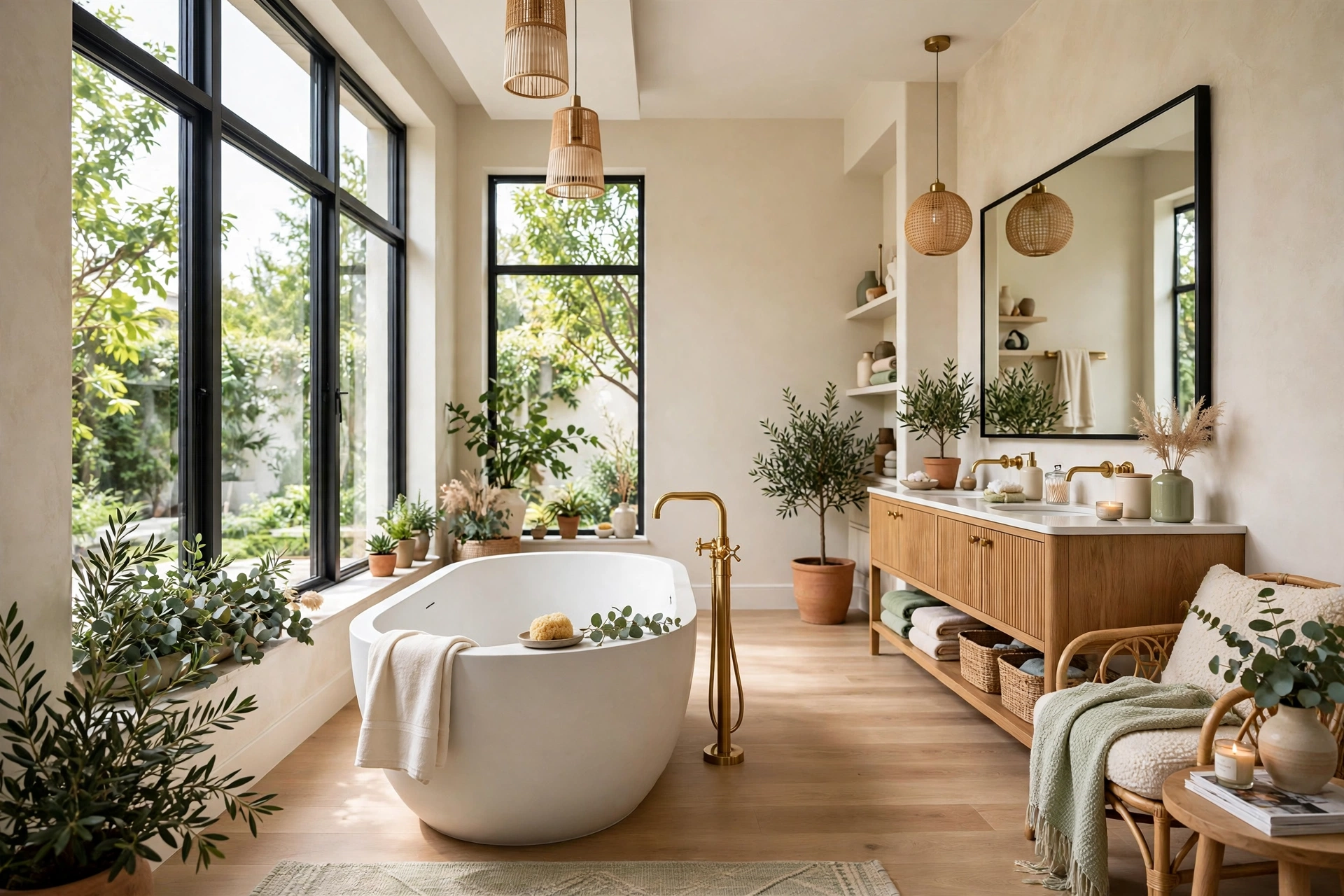
A freestanding tub usually costs more at every step. The tub itself often runs higher than a comparable built-in model, and a floor-mounted faucet can add hundreds to the bill. Installation is simpler, but the tub’s price and the statement faucet tend to push the total up. Expect a mid-range freestanding setup to land noticeably above a built-in one of similar quality.
A built-in tub is the budget-friendly option. The tub shell itself is inexpensive, and the money goes instead into the surround — framing, cement board, waterproofing, and tile. That surround work is real labor, but the total still usually comes in lower than a freestanding tub with a designer faucet. It is also easier to control costs by choosing simpler tile.
The gap narrows at the high end. A luxury built-in tub with stone surround and custom tile can cost as much as a freestanding tub, and a budget freestanding acrylic tub can undercut a tiled alcove build. Compare complete quotes, not tub prices alone, and include the faucet, the surround, and the finishing in both numbers.
💡 Pro Tip: Always ask for a quote that includes the tub, faucet, surround or tiling, plumbing, and finishing. Comparing tub-only prices makes a built-in tub look cheaper than it is and a freestanding tub look more expensive than it is.
5. Cleaning and Everyday Maintenance

Cleaning is where the two tubs diverge most in daily life. A freestanding tub exposes every side, including the narrow gap between the tub and the wall behind it. Dust, hair, and splashed water collect in that gap, and reaching it means crouching and stretching. The floor around the tub also gets wet more easily, since there is no surround to contain splashes.
A built-in tub is easier to keep clean. The surround gives you a ledge to rest cleaning supplies on, the tile wipes down quickly, and splashes stay inside the tub area. The trade-off is grout: tiled surrounds need regular grout cleaning and occasional resealing, or they start to look tired and can trap moisture.
If you hate cleaning, weigh these honestly. A freestanding tub demands more floor mopping and awkward reaching. A built-in tub demands grout care. Neither is maintenance-free, but the built-in tub’s chores are more familiar and easier to fit into a normal routine.
Quick Comparison: Freestanding vs Built-In Tub by Cost and Effort
6. Soaking Comfort: Depth, Shape, and Ergonomics
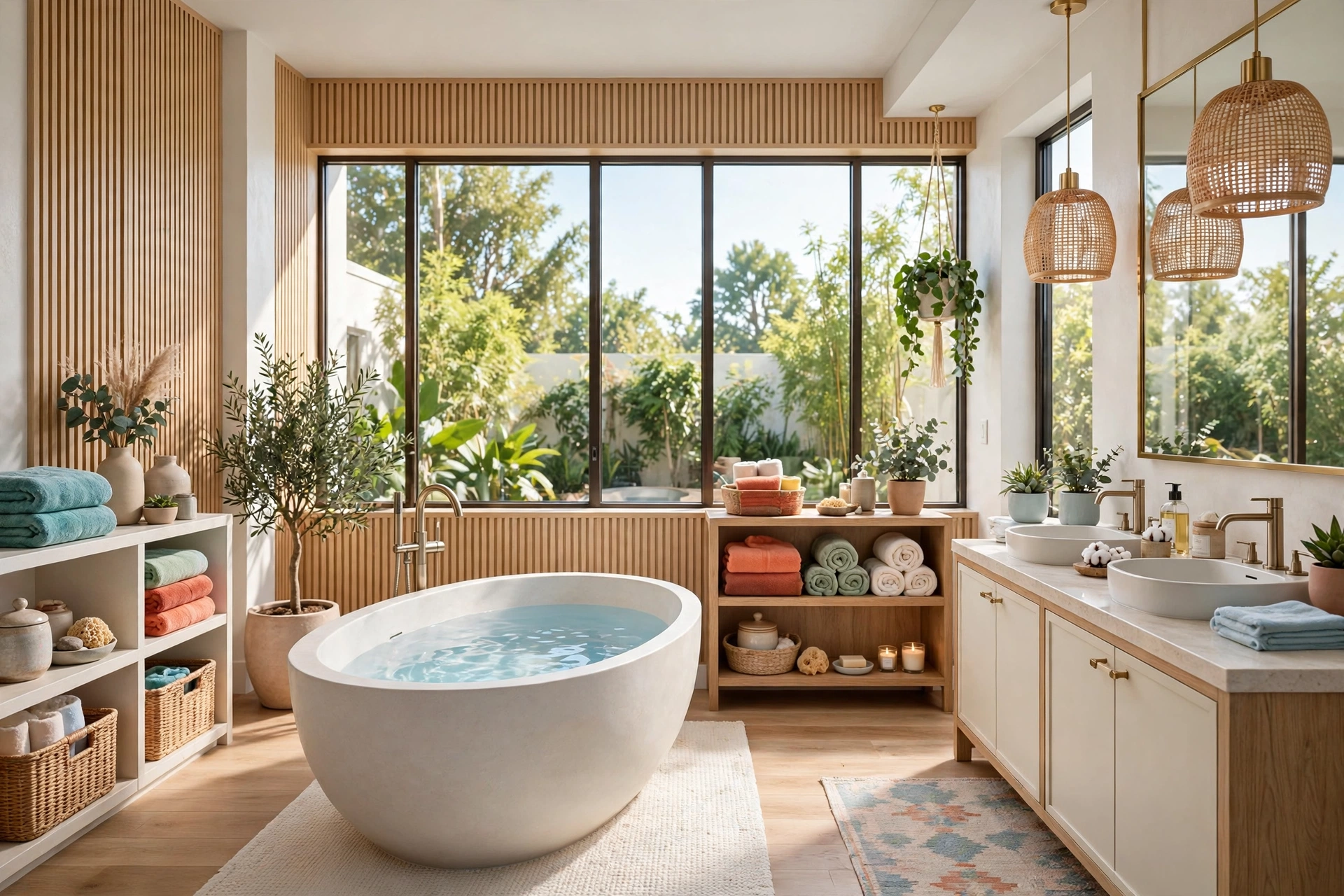
Comfort depends on the individual tub, not the category — but the shapes available differ. Freestanding tubs come in deep, sculptural forms with generous soaking depth and sloped backs that cradle the body. Many are designed first for the bather and second for the room, so a good freestanding tub can feel like a private spa pool, with room to stretch out and water up to the shoulders.
Built-in tubs are often shallower and more rectangular, shaped to fit a standard alcove. That does not mean they are uncomfortable — many have well-designed lumbar support and generous length — but the average built-in tub holds less water depth than the average freestanding one. If long, deep soaks are the whole point of the tub for you, check the interior depth and the water capacity on the spec sheet, not just the outside dimensions.
The best test is a showroom sit. Bring your height and your habits with you: lie back, check where your knees land, and see whether the back angle supports your shoulders. A tub you cannot relax in is the wrong tub, whatever it looks like.
7. Small Bathroom Fit: Which Works in Tight Layouts
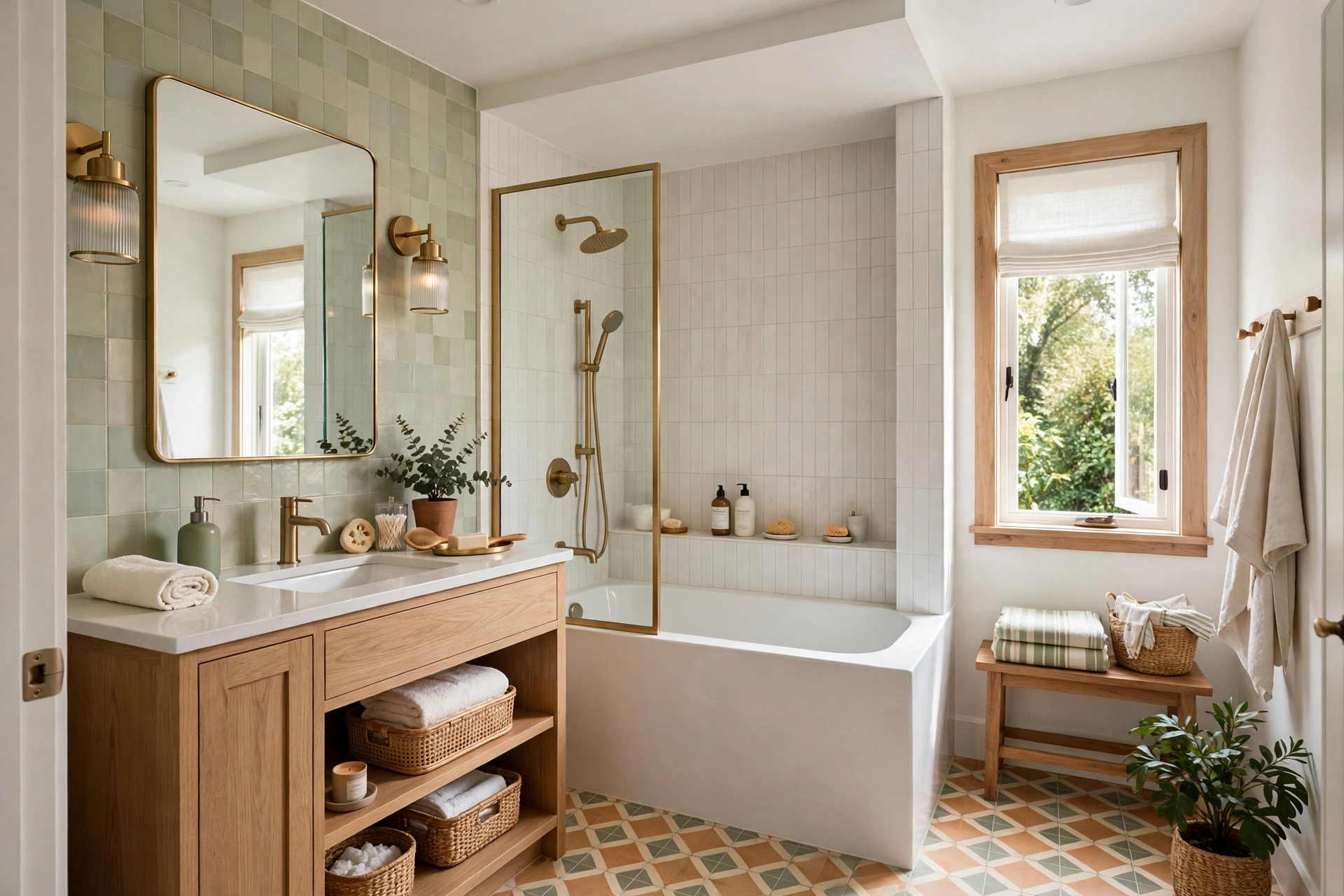
Small bathrooms almost always favour the built-in tub. An alcove tub uses the room’s edges, leaves the centre of the floor open, and can double as a shower with a curtain or screen — which matters enormously when the bathroom has to do two jobs in one footprint. The surround ledge also adds a surface for shampoo and soap where there is no room for a separate shelf.
A freestanding tub in a small bathroom is possible only when the layout is generous in at least one direction, and even then it usually means giving up the shower-tub combination. If the household needs a shower every day and a bath only sometimes, a freestanding tub forces a separate shower into a room that may not have space for one.
This is where small bathroom decor ideas matter most: every centimetre has a job. If your bathroom is compact, the built-in tub is almost always the practical winner, and the design energy is better spent on the tile, the bathroom vanity mirrors, and the lighting around it.
📌 Important: If your bathroom has only one bathing spot, a built-in tub with a shower above it is the only option that gives you both. A freestanding tub cannot safely double as a shower without soaking the floor.
8. Storage and Surrounding Surfaces
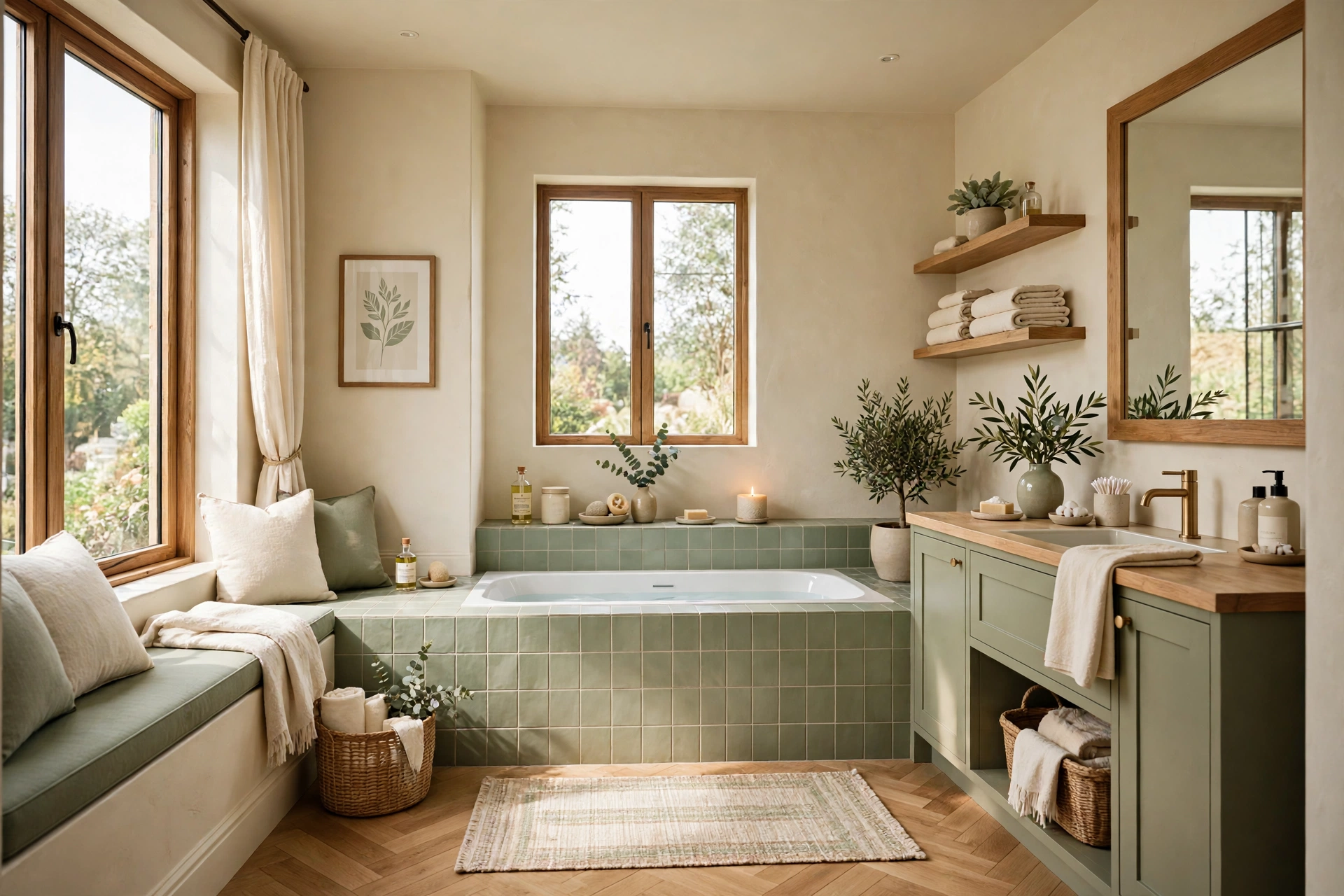
A built-in tub comes with free storage: the surround deck. Bottles, candles, a book, a bath tray — all of it has a natural home on the wide tiled ledge. Some surrounds even include a recessed niche or a small shelf built into the wall above the tub. For families and anyone with a collection of bath products, that ledge is genuinely useful every day.
A freestanding tub offers no ledge at all. Everything needs a separate solution: a bath caddy across the rim, a small stool beside the tub, or a wall niche. Those solutions can look beautiful — a wooden bath tray across a freestanding tub is a classic spa image — but they are extra purchases and extra objects to manage.
If you love a clean, empty tub edge, freestanding wins on looks. If you want your shampoo within arm’s reach without buying accessories, the built-in surround is the practical choice.
9. Durability and Long-Term Repairs
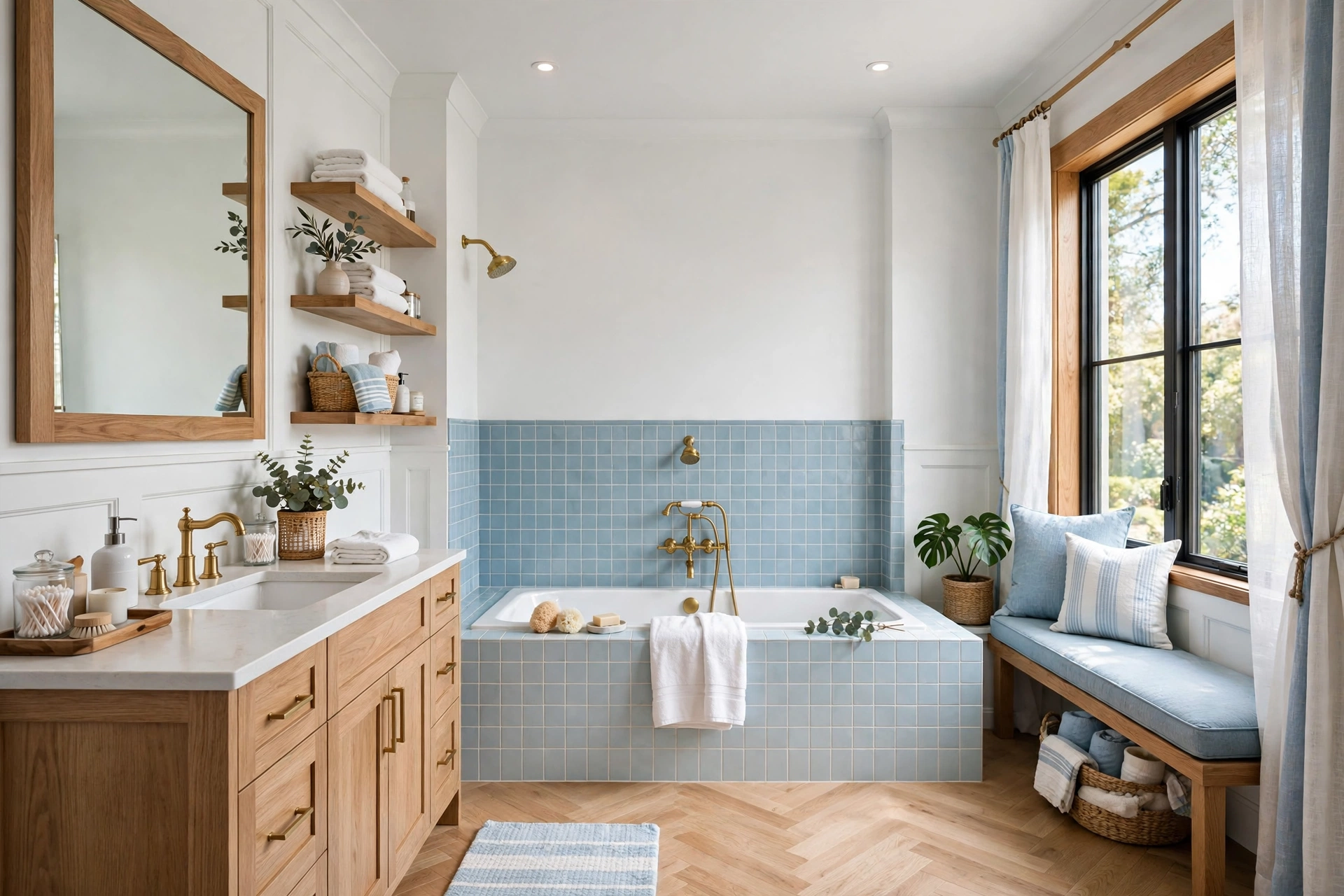
Both tub types last decades when they are installed well, but they fail in different ways. A freestanding tub’s weak points are its exposed plumbing and its finish. A floor-mounted faucet can develop a slow leak at its base, and a chipped acrylic or stone-resin surface is visible from every angle. Repairs are usually simple, though, because everything is accessible — a plumber can reach the drain and the faucet without opening a wall.
A built-in tub hides its problems. A slow leak behind the surround can go unnoticed until it stains the ceiling below or softens the framing. Replacing a built-in tub means demolishing tile and rebuilding the surround, which is a far bigger job than swapping a freestanding tub. The tub shell itself, though, is protected by the surround and tends to look new for longer.
For long-term peace of mind, the built-in tub needs excellent waterproofing at installation and an access panel for the plumbing. The freestanding tub needs a good floor and visible, accessible connections. Get those right and either tub will serve for twenty years or more.
10. Resale Value: What Buyers Actually Notice
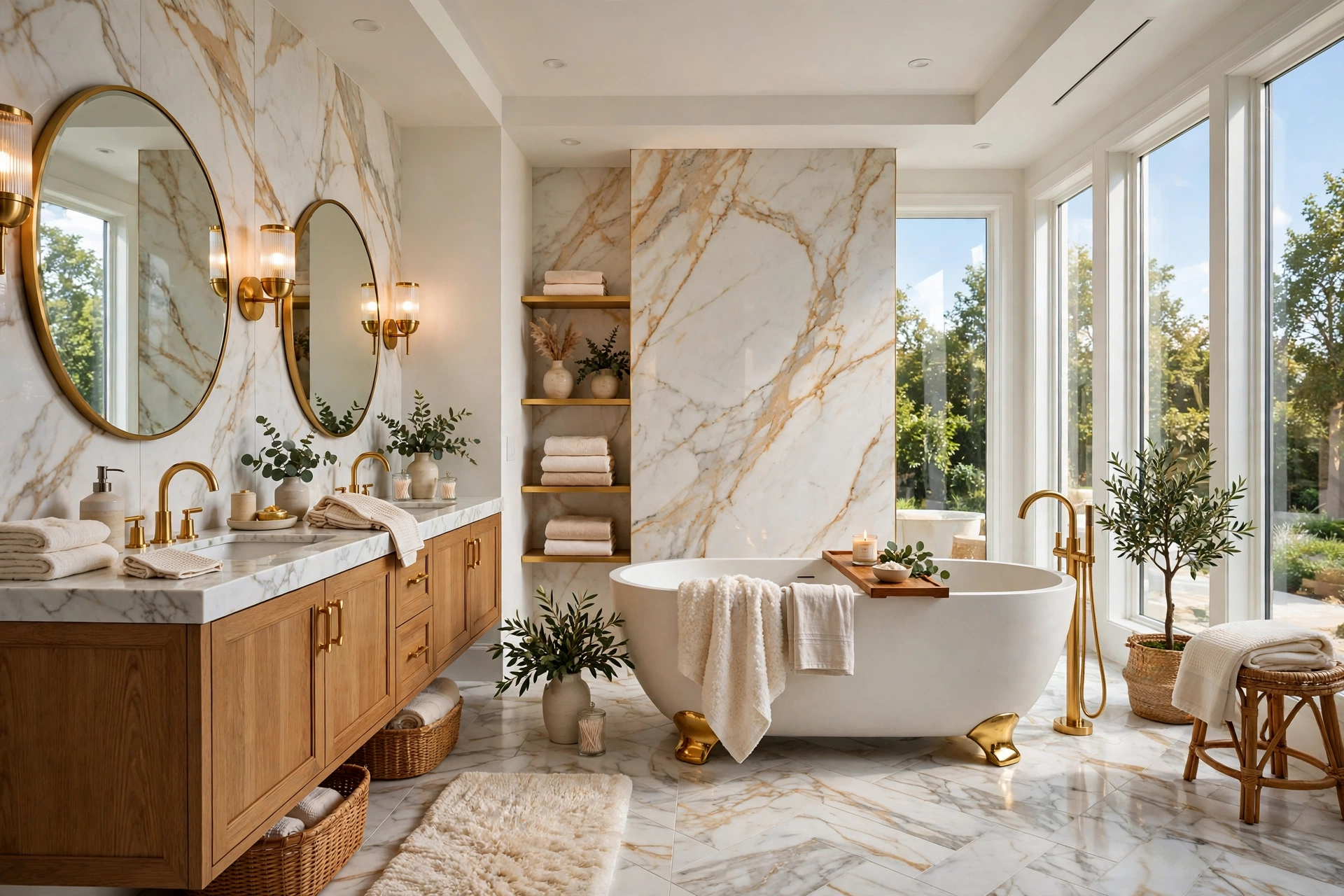
A freestanding tub photographs beautifully, and in a listing it signals luxury. Buyers touring a home remember the spa-like bathroom with the sculptural tub, and in higher-end homes that impression can genuinely support the asking price. In a primary bathroom of a larger home, a freestanding tub is a selling feature.
A built-in tub does not excite buyers the same way, but it never hurts a sale either. Families with small children, older buyers, and anyone who values a shower-tub combination will prefer it — and those buyers are the majority in most markets. A well-tiled built-in tub in a clean, bright bathroom reads as practical and move-in ready.
The resale answer depends on your market. In a luxury home, freestanding adds wow. In a family home, a built-in tub with a shower is the safer, more broadly appealing choice. If you plan to sell within a few years, choose the tub your likely buyer would choose, not just the one you love.
11. Style Pairings: Modern, Traditional, and Spa Looks

Freestanding tubs suit modern, minimalist, and spa-inspired bathrooms best. Their clean curves and open floor space pair naturally with large-format tile, matte black or brushed brass fixtures, and a calm, uncluttered palette. They also anchor a transitional bathroom where one strong contemporary piece balances traditional cabinetry.
Built-in tubs are the chameleons. A tiled surround can be traditional with subway tile and a marble deck, rustic with handmade-look tile, or ultra-modern with the same large-format tile as the floor. Because the surround takes on the room’s style, a built-in tub can match almost any design direction — and it can be updated later with new tile without replacing the tub.
Think about the rest of your bathroom first. If you are planning a bathroom refresh for under $100 in accessories and styling, the tub surround is the backdrop your styling sits against. A built-in tub gives you a tiled canvas; a freestanding tub is the artwork itself.
12. Accessibility and Getting In and Out

Getting in and out of the tub matters more as households age or include small children. A built-in tub has a fixed rim height, usually around 45 to 50 centimetres, and the surround provides a ledge to sit on and swing your legs over. Grab bars can be mounted on the surround walls, and the step-over is predictable and low.
A freestanding tub is harder to enter gracefully. The rim can be higher, there is no ledge to sit on, and there is nothing to hold except a freestanding faucet — which is not a grab bar. For older adults or anyone with limited mobility, that makes a freestanding tub a real safety concern, and a fall in a wet bathroom is a serious risk.
If accessibility matters now or might matter in the next decade, the built-in tub is the clear winner. It is also the better choice for bathing small children, since a parent can sit on the surround edge and stay close. Style should never outrank safety in a bathroom.
⚠️ Warning: Floor-mounted tub fillers look sturdy, but they are not designed to bear weight. If anyone in the household needs help getting in and out of the tub, a built-in tub with proper grab bars is the safe choice.
13. Water Usage and Filling Time
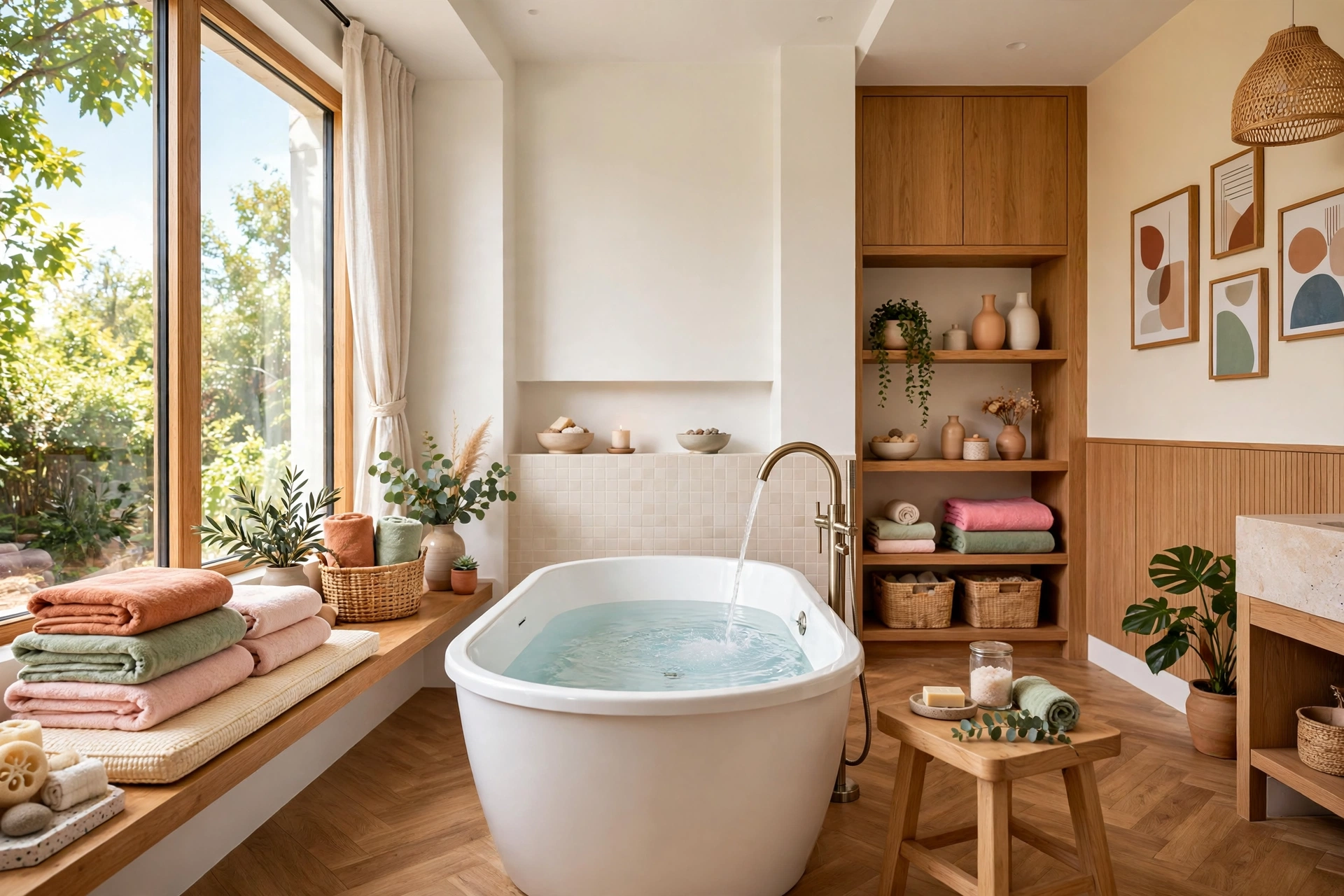
Freestanding tubs are usually deeper and wider, so they hold more water — often 250 to 350 litres to fill, compared with 150 to 220 litres for a standard built-in tub. That means longer fill times, higher water bills, and a bigger demand on your water heater. In a home with a small water heater, a deep freestanding tub can drain the hot water before it is even full.
Built-in tubs are more modest in capacity, so they fill faster and cost less to run. They are also kinder to the water heater, leaving hot water for the next person. Over years of regular baths, the difference in water and energy use adds up to real money.
If you take baths often, this is worth calculating honestly. A beautiful deep tub you can only fill halfway because the water runs cold is not a luxury. Check your water heater’s capacity against the tub’s volume before you buy.
14. Noise, Splash, and Everyday Practicality

Daily life with a freestanding tub is a little messier. Water splashes over the rim onto the floor when you move, children splash more, and the open design means steam spreads freely around the room. The floor needs to be water-resistant well beyond the tub’s footprint, and you will mop more often.
A built-in tub contains the mess. The surround catches splashes, the shower curtain or screen keeps water inside, and the tiled deck wipes clean in seconds. The room stays drier, the floor stays safer, and the bathroom feels tidier after every bath.
This practical gap is biggest in family bathrooms. In a quiet primary bathroom used only by adults, the freestanding tub’s splash is a minor chore. In a shared family bathroom, the built-in tub’s containment saves time every single day. Know your household before you choose.
15. The Verdict: How to Choose for Your Bathroom
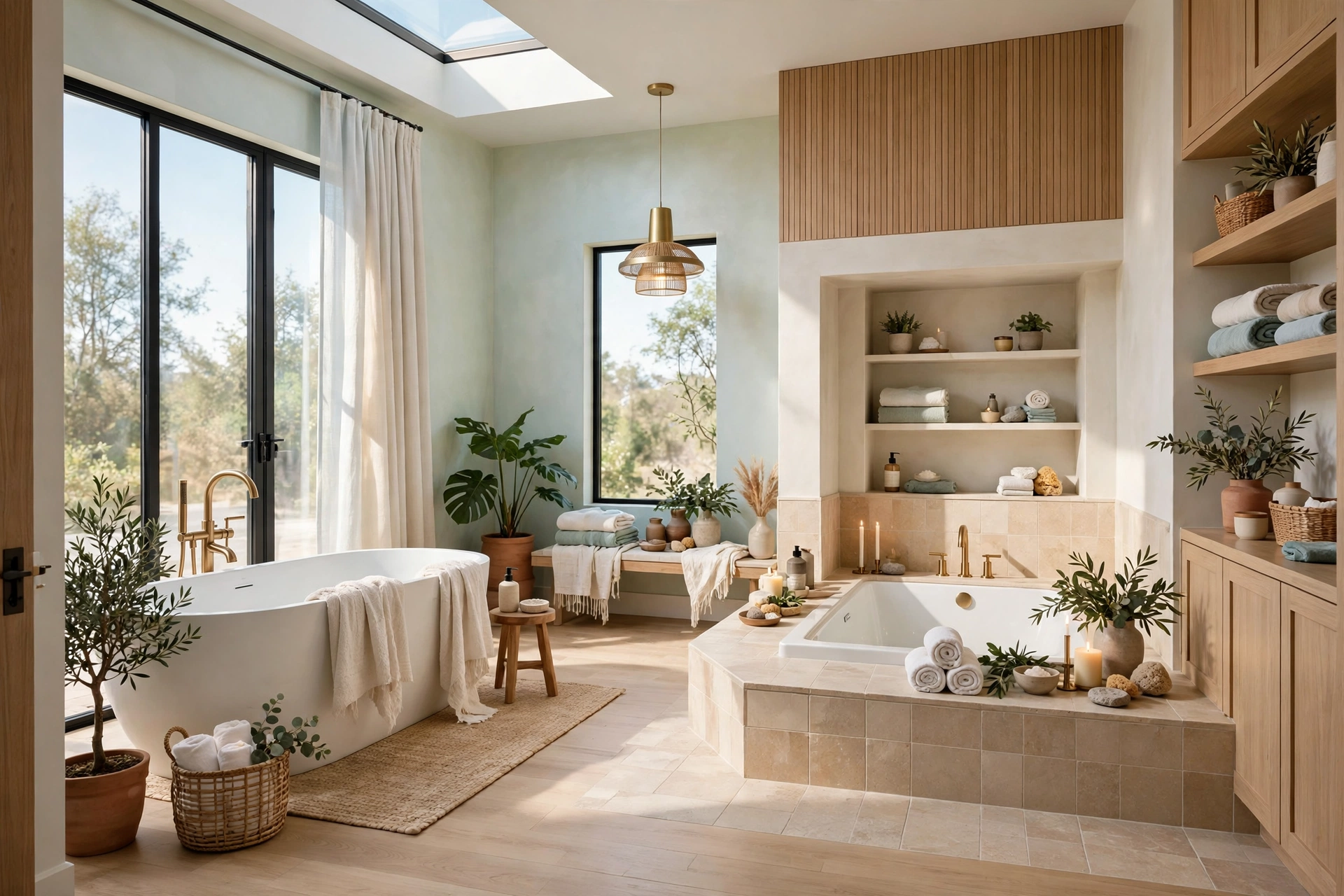
Here is the simplest way to decide. Choose a freestanding tub if your bathroom is large, you want the tub to be the visual centrepiece, you take baths to relax rather than to get clean quickly, and no one in the household needs grab bars or a shower-tub combination. You will pay more and clean more, and you will love looking at it every day.
Choose a built-in tub if your bathroom is compact, you need a shower and a tub in one spot, you want storage on the surround ledge, you prefer lower cost and easier cleaning, or accessibility matters. You give up the sculptural statement, but you gain a bathroom that works harder for everyone who uses it.
If you are still torn, think about the bathroom zones in your home: the primary bathroom can carry the drama of a freestanding tub, while the family or guest bathroom is usually better served by a practical built-in. Many homes end up with one of each — and that is often the smartest answer of all.
💡 Pro Tip: Sit in both tub styles at a showroom, check the depth and the back angle, and imagine your daily routine around each one. Ten minutes of testing prevents years of regret, and it costs nothing.
Common Freestanding vs Built-In Tub Mistakes
Mistake 1: Choosing the tub before measuring the room
Falling in love with a freestanding tub and then discovering it leaves no room to walk around it is the most common regret in bathroom remodels. Measure the room, mark the tub’s footprint on the floor with tape, and live with the outline for a day before ordering.
Mistake 2: Forgetting the faucet cost
A freestanding tub needs a floor-mounted or wall-mounted filler, and those faucets cost far more than a standard deck-mounted set. Budget for the faucet from the start, not as an afterthought when the tub is already delivered.
Mistake 3: Skipping the floor-strength check
A filled stone or cast-iron freestanding tub can weigh as much as a small car. Older floors may need reinforcement, and discovering that after the tub arrives means delays and extra cost. Have a contractor confirm the floor can carry the load.
Mistake 4: No access panel on a built-in tub
A built-in tub without an access panel turns a simple plumbing fix into a demolition job. Always include a discreet access panel in the surround or the adjoining wall so a plumber can reach the drain and the valves.
Mistake 5: Ignoring the water heater
A deep freestanding tub can empty a standard water heater before it fills. Check the tub’s capacity against your heater’s output, and upgrade the heater first if the numbers do not work — it is far cheaper than a cold bath every evening.
Frequently Asked Questions
1. Which is cheaper, a freestanding tub or a built-in tub?
A built-in tub is usually cheaper overall. The tub shell costs less, and although the surround tiling adds labor, the total — tub, faucet, surround, and installation — typically comes in below a freestanding tub with a floor-mounted faucet.
2. Can you put a freestanding tub in a small bathroom?
It is possible only if the room is generous in at least one direction, and you will usually have to give up a shower-tub combination. In most small bathrooms, a built-in alcove tub is the better fit because it uses the room’s edges and leaves the centre floor open.
3. Are freestanding tubs hard to clean?
They take more effort than built-in tubs. The gap between the tub and the wall collects dust and splashed water, and the floor around the tub needs mopping more often. Built-in tubs are easier day to day, though their grout needs regular care.
4. Do freestanding tubs add resale value?
In higher-end homes, a freestanding tub in the primary bathroom can impress buyers and support the listing. In family homes, most buyers prefer a built-in tub with a shower. The resale benefit depends on your market and your likely buyer.
5. Can a freestanding tub be used as a shower?
Not safely. Without a surround or screen, shower water soaks the floor and the walls. If the bathroom needs both a shower and a bath in one spot, a built-in tub is the right choice.
6. How much water does a freestanding tub use?
A freestanding tub typically holds 250 to 350 litres, compared with 150 to 220 litres for a standard built-in tub. That means longer fill times, higher water bills, and more demand on your water heater.
7. Which tub is better for older adults?
A built-in tub is safer and easier to use. Its rim height is lower and predictable, the surround provides a ledge to sit on, and grab bars can be mounted on the surrounding walls. A freestanding tub offers nothing to hold onto and a higher step-over.
8. How long does each type last?
Both last twenty years or more when installed well. A freestanding tub’s plumbing is accessible, so repairs are simple. A built-in tub’s shell is protected by its surround, but hidden leaks are a risk — which is why waterproofing and an access panel matter so much at installation.
Conclusion
The freestanding tub versus built-in tub debate has no single winner — it has a right answer for your bathroom. A freestanding tub brings drama, deep soaking, and spa-like beauty to a large primary bathroom, and it rewards you every time you walk into the room. A built-in tub brings practicality, storage, easier cleaning, and a lower price to any bathroom, especially smaller ones and family bathrooms.
Start with your room, not your wish list. Measure the space, check the floor and the water heater, and be honest about how your household actually bathes. Then choose the tub that fits that reality — and enjoy it for the next twenty years. A well-chosen tub, whichever style it is, turns an ordinary bathroom into a room you genuinely love using.