17 Minimalist Bathroom Ideas That Turn Less Into So Much More
There’s a moment that happens in every great minimalist bathroom — a moment of genuine stillness. You walk in, and instead of your eye bouncing around from object to object, surface to surface, clutter to chaos, it just… settles. The space feels calm. Intentional. Almost meditative. And you realize that what you’re experiencing isn’t emptiness — it’s clarity.
I discovered minimalist bathroom design almost by accident. After years of accumulating products, decorative pieces, mismatched towels, and enough bathroom clutter to stock a small pharmacy, I cleared everything out during a move and temporarily lived with just the absolute basics. The transformation in how the bathroom felt — and honestly, how I felt in it — was so dramatic that I never went back. Less really is more. And these 17 ideas will show you exactly how to get there.
What Minimalist Bathroom Design Actually Means
Before we dive into the ideas, let’s clear something up — because minimalist bathroom design is one of the most misunderstood aesthetic directions in interior design. Minimalism isn’t about having an empty, cold, sterile room that looks like a hospital corridor. That’s not minimalism. That’s just a room that hasn’t been designed yet.
True minimalist bathroom interior design is about intention. Every element that makes it into the room is there because it genuinely belongs — because it serves a function, contributes to the aesthetic, or both. The materials are beautiful and quality. The storage is generous and completely hidden. And the result is a space that feels calm and considered in a way that genuinely affects your wellbeing every time you use it.
1. Start With a Palette That Does One Thing Brilliantly
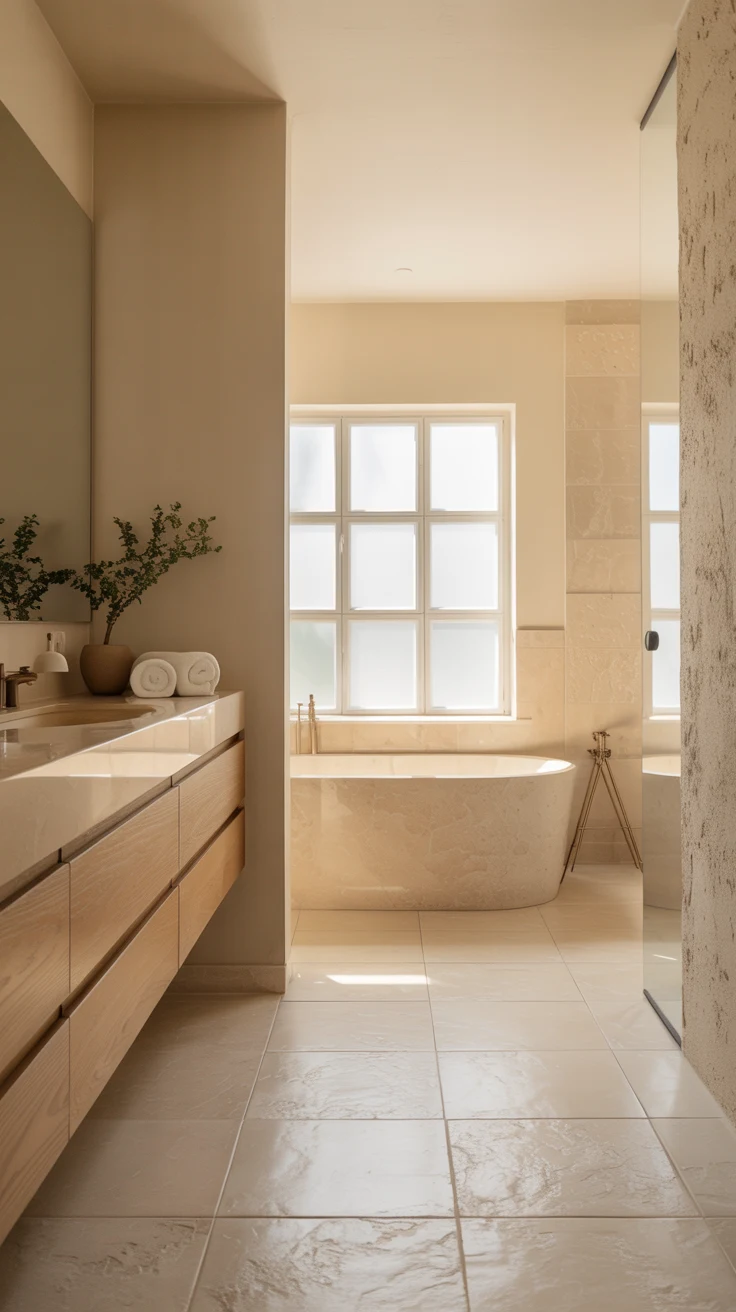
The foundation of every successful minimalist bathroom design is color — or more specifically, the disciplined restraint of it. A minimalist bathroom works with one, maximum two tones, applied consistently throughout every surface. No competing colors. No accent walls fighting for attention. Just a single, beautifully chosen palette executed with total commitment.
Warm white is the classic choice — and it remains popular for good reason. It reflects light, feels clean, and creates the perfect neutral backdrop for quality materials. But warm greige, soft clay, deep charcoal, and even a single consistent stone tone all work beautifully in a minimalist context. The key is consistency. When every surface speaks the same color language, the room becomes a cohesive whole rather than a collection of competing decisions.
2. The Power of the Frameless Glass Shower
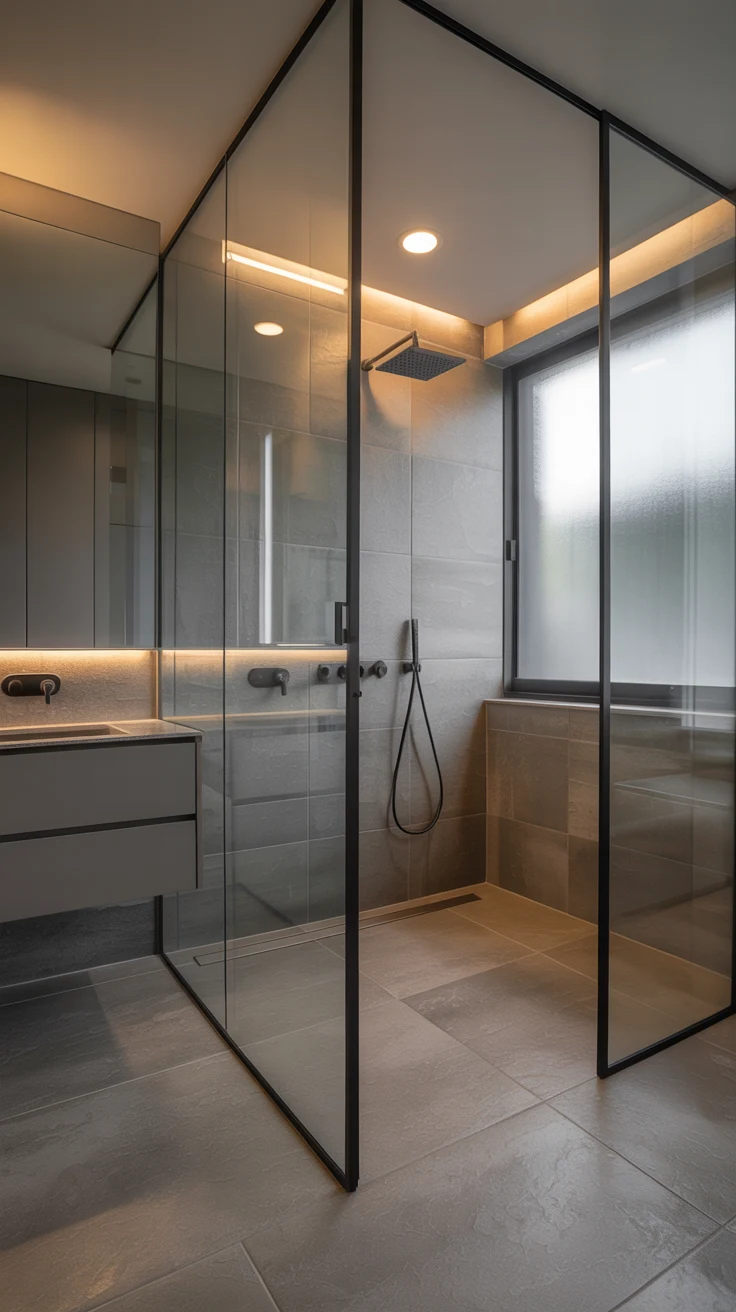
If there’s one feature that defines minimalist bathroom with glass shower design more than any other, it’s the frameless glass enclosure. No bulky metal frame. No visible hardware beyond the most minimal fittings. Just clear glass that allows the eye to travel through the shower zone without interruption — making the entire bathroom feel significantly larger and more open than it actually is.
A minimalist clear glass shower panel — whether a single fixed screen or a full enclosure — performs a remarkable visual trick. It defines the wet zone clearly without blocking sightlines or light. The shower exists as part of the room rather than as a separate box within it. And the overall effect is a bathroom that breathes and flows in a way that framed or frosted alternatives simply cannot replicate.
Why frameless glass works so well in minimalist bathrooms:
- Visual continuity — the eye travels through the glass uninterrupted
- Light flow — natural and artificial light moves freely through the space
- Size perception — the bathroom reads as one unified space rather than divided zones
- Cleaning simplicity — no frame channels or tracks to collect grime
- Timeless appearance — frameless glass never dates the way frame styles can
3. Walk-In Shower Without a Door — The Ultimate Minimalist Move
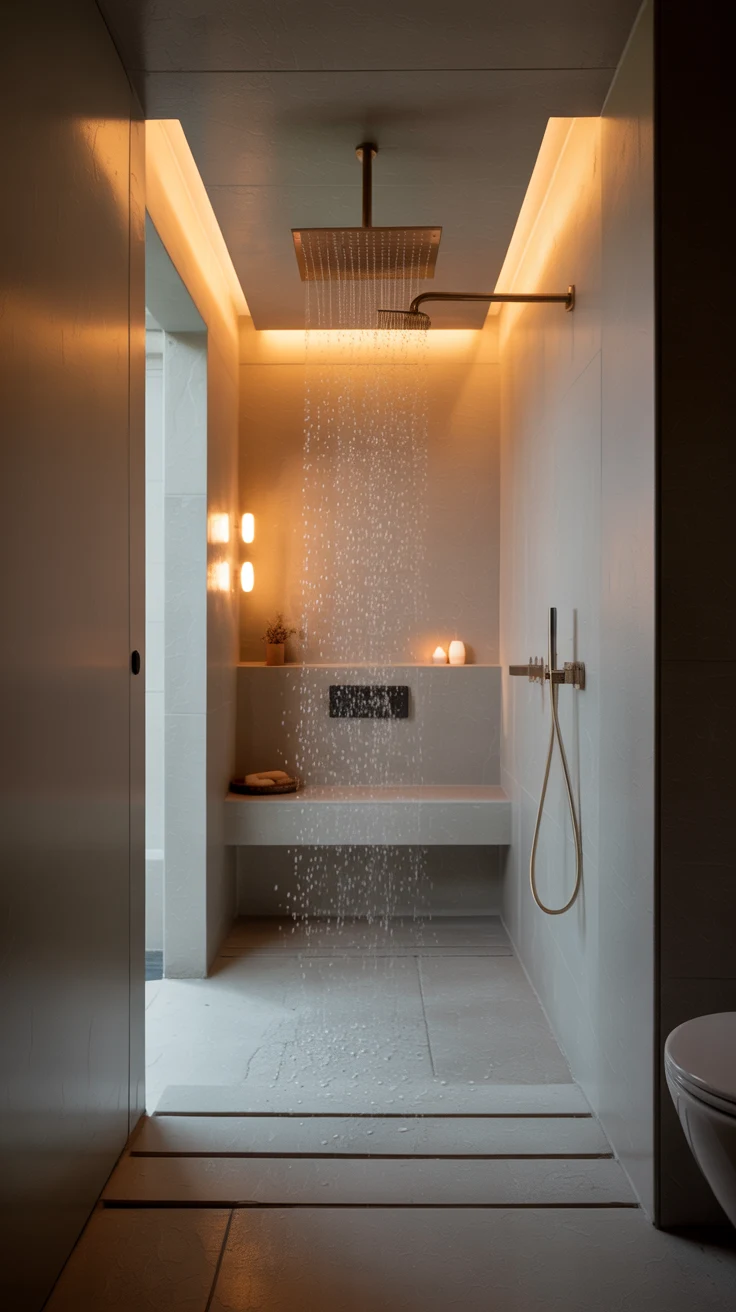
Taking the glass shower concept even further, a minimalist bathroom with walk-in shower that requires no door at all is the pinnacle of minimalist bathroom thinking. A carefully designed doorless walk-in shower — where the layout and a subtle floor slope to a linear drain prevent water from escaping — removes every last visual interruption from the shower zone.
No hinges. No handles. No door track. No seal to maintain. Just open space, beautiful tile, and a rainfall shower head. The result is a shower experience that feels extraordinary and a bathroom that achieves a level of visual purity that no door — however minimal — can quite match. This works best in bathrooms with sufficient space to create a proper buffer zone between the shower and the dry areas.
4. Floating Fixtures — The Foundation of the Modern Minimalist Look
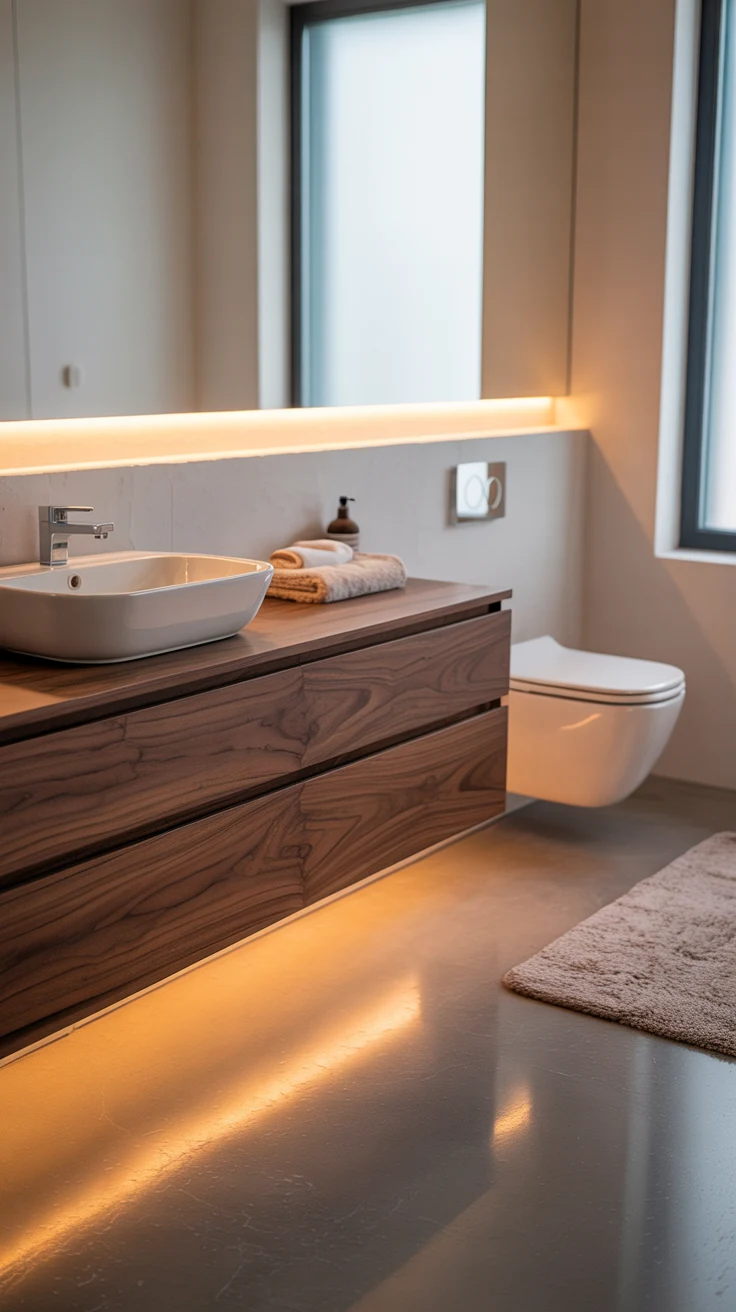
Here’s a principle that underlies virtually every modern minimalist bathroom: if it can float, it should float. Wall-hung toilets, floating vanities, wall-mounted taps, and cantilevered shelves all share one quality — they reveal the floor beneath them. And revealed floor space, even in a small bathroom, creates an immediate and significant sense of openness.
A floating vanity in particular transforms the feel of a bathroom dramatically. The floor runs continuously beneath it, which makes the room feel wider and more spacious. The clean line of the vanity base — with nothing touching the floor — reads as architecturally considered and deliberately designed. Pair it with a wall-hung toilet and the entire lower half of the bathroom becomes clear floor, which is exactly the visual breathing room that minimalism depends on.
5. Bathroom Ideas Minimalist Small Spaces — Every Centimeter Counts
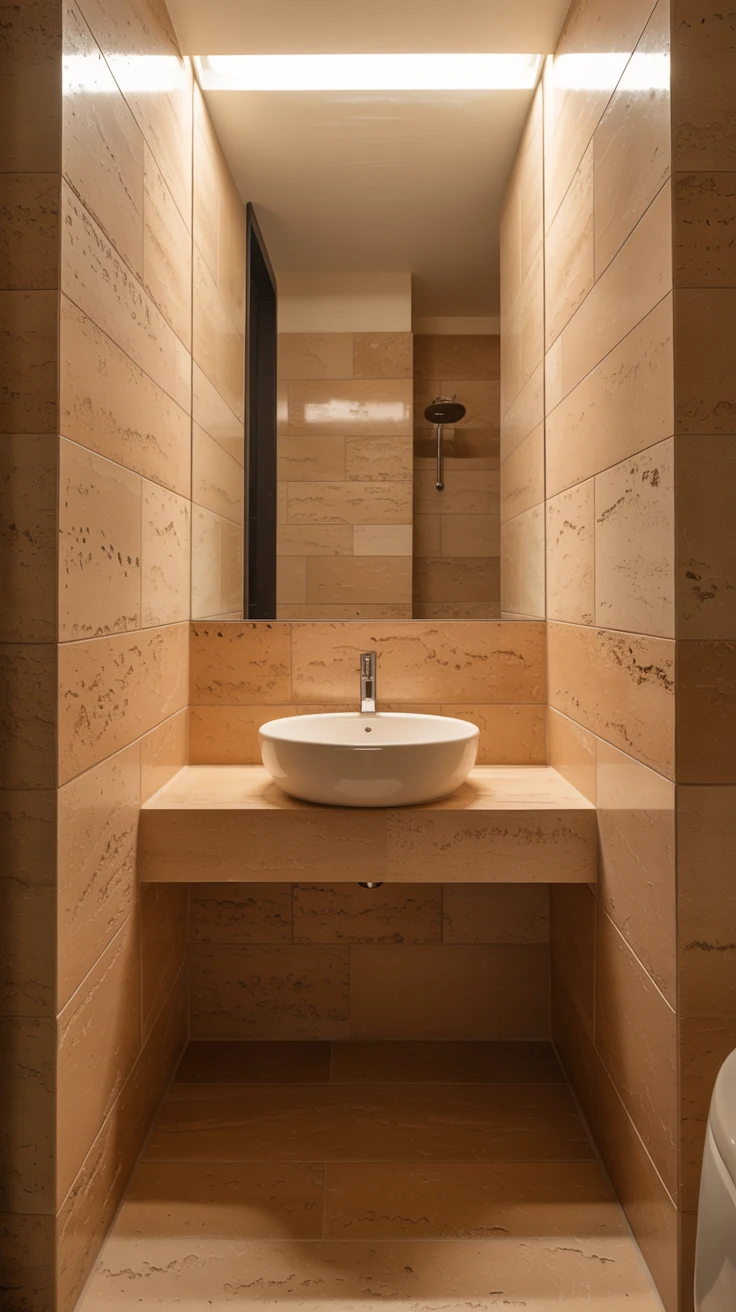
Working with a tight footprint? Bathroom ideas minimalist small spaces design requires a slightly intensified version of the core minimalist principles — because in a small bathroom, every design decision is amplified. There’s nowhere for a mistake to hide and no surplus space to absorb a poor choice.
The single most impactful move in a small bathroom ideas minimalist approach is using one material consistently from floor to wall. The same large-format tile running from the floor up the walls — especially in the shower zone — eliminates the visual break of a material change and creates a seamless, cocoon-like effect that makes the room feel significantly larger. No grout line colour change. No different wall tile. One material, one colour, total continuity.
Small minimalist bathroom essentials:
- Large-format tile floor to wall — eliminates material breaks that visually fragment space
- Recessed shower niche — built-in storage flush with the wall, zero protrusion
- Wall-mounted mirror cabinet — storage hidden behind the most-used surface in the room
- Linear drain — sleek, minimal, and far less visually disruptive than a standard drain
- Pocket or sliding door — eliminates the floor space consumed by a swinging door
- Single-lever wall-mounted tap — cleaner look than a deck-mounted version on a small basin
6. Minimal Small Bathroom Ideas: The Recessed Niche
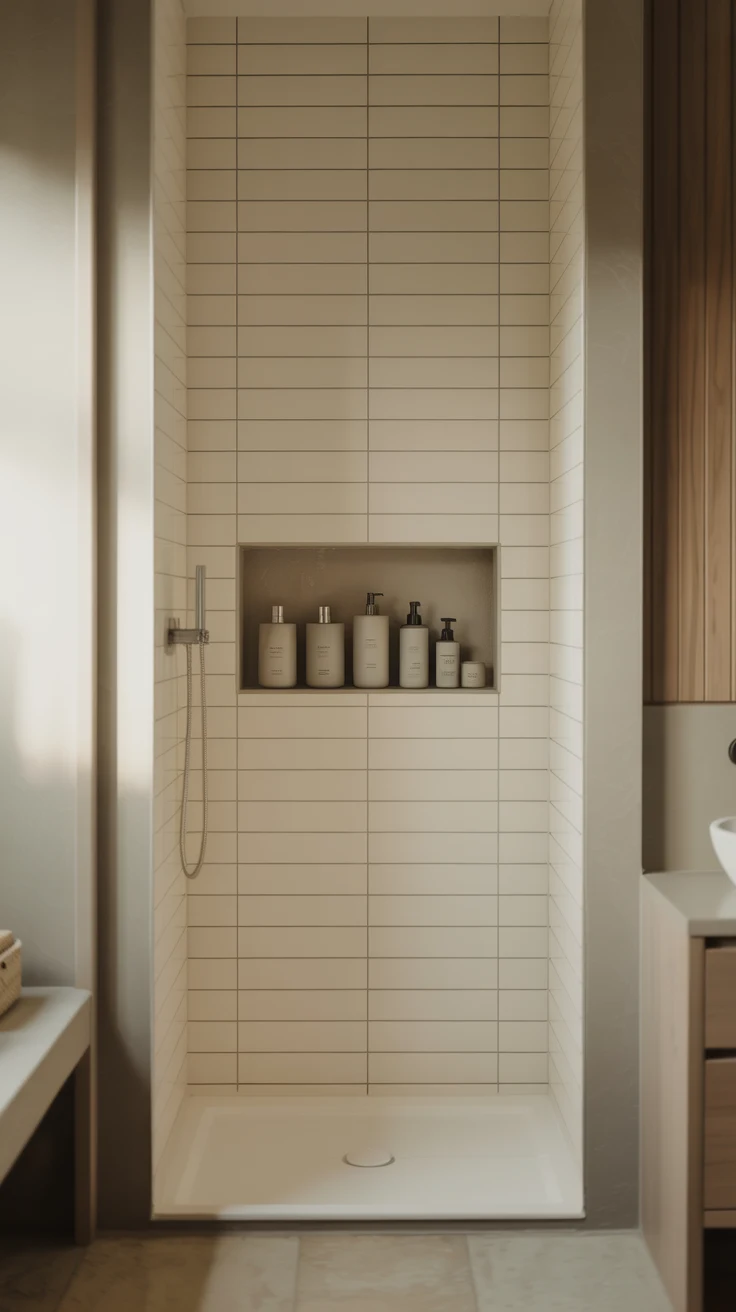
Nothing undermines a minimalist bathroom faster than a shelf caddy in the shower corner, a collection of product bottles lined along the bath edge, or a cluster of toiletries crowding the vanity surface. Minimal small bathroom ideas solve this problem at the architectural level rather than the organizational one — by building storage directly into the walls.
A recessed shower niche — a shelf cut directly into the wall, flush with the tile surface — is the minimalist bathroom’s answer to shower storage. It holds products completely out of sight when not in active use, contributes nothing visually to the room beyond a subtle shadow line, and requires zero maintenance beyond an occasional wipe. It’s one of those design decisions that seems small in planning and proves invaluable in daily life.
7. The Vanity as a Design Statement
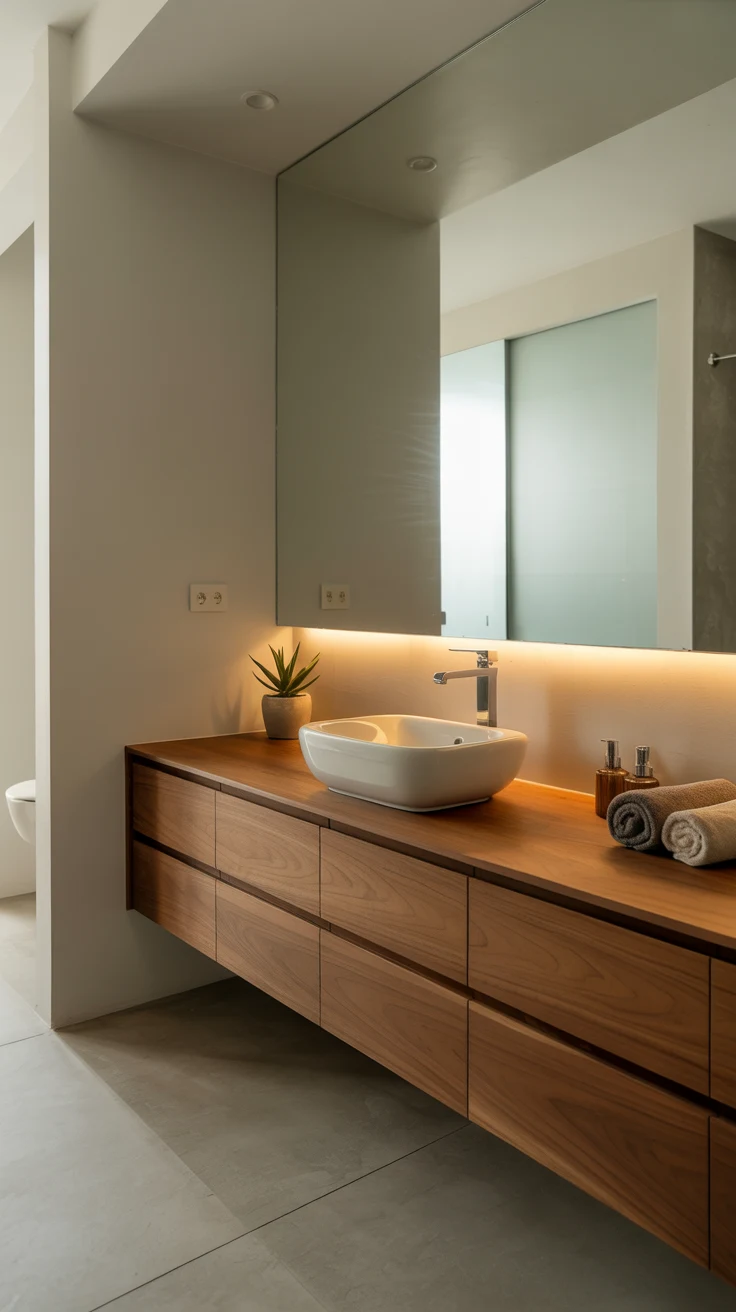
In a minimalist bathroom interior, the vanity isn’t just a functional unit — it’s the primary design statement of the room. With surfaces deliberately clear of most accessories and decoration reduced to its absolute minimum, the vanity and its accompanying mirror carry the aesthetic weight of the entire space. Choose it carefully.
A floating vanity in a warm wood finish — natural oak, walnut, or teak — brings organic warmth that pure white or concrete surfaces can’t achieve. A stone or concrete countertop integrated with the basin as a single poured unit creates a sculptural quality that feels genuinely extraordinary. And a long, uninterrupted mirror spanning the full width of the vanity wall eliminates the visual break of a frame edge while doubling the perceived depth of the room simultaneously.
8. Material Choices That Speak Volumes in Silence
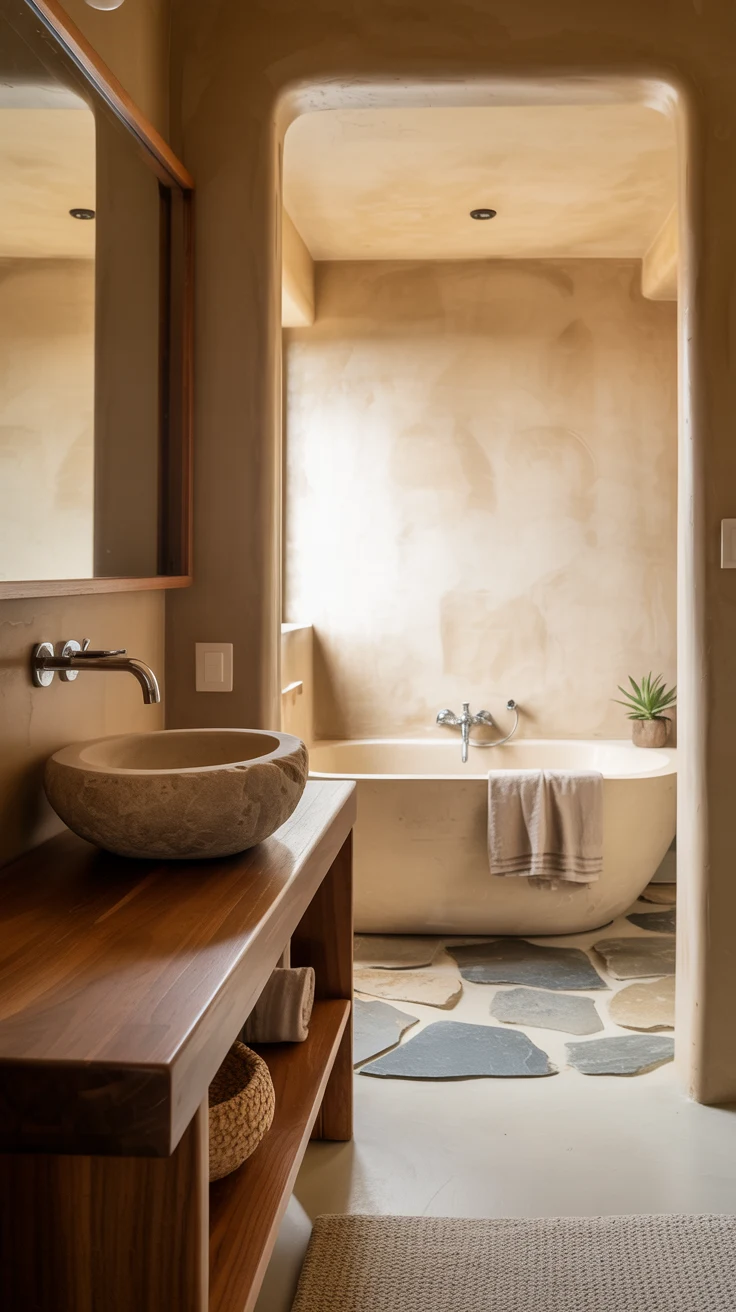
Here’s the truth about minimalist bathroom design that experienced designers understand deeply: when decoration is stripped away, materials become the decoration. The texture of the tile. The veining in the stone. The grain in the wood. The warmth of the plaster. These are the elements that give a minimalist bathroom its character — and getting them right is everything.
Honed stone rather than polished catches light differently and feels more organic. Matte tile rather than glossy reads as softer and more sophisticated. Concrete — whether poured in place or in a tile format — brings an industrial warmth that’s deeply compelling. And natural wood, used as an accent against stone or tile, introduces the organic quality that prevents a minimalist bathroom from ever feeling cold or clinical.
9. Lighting as the Invisible Architecture
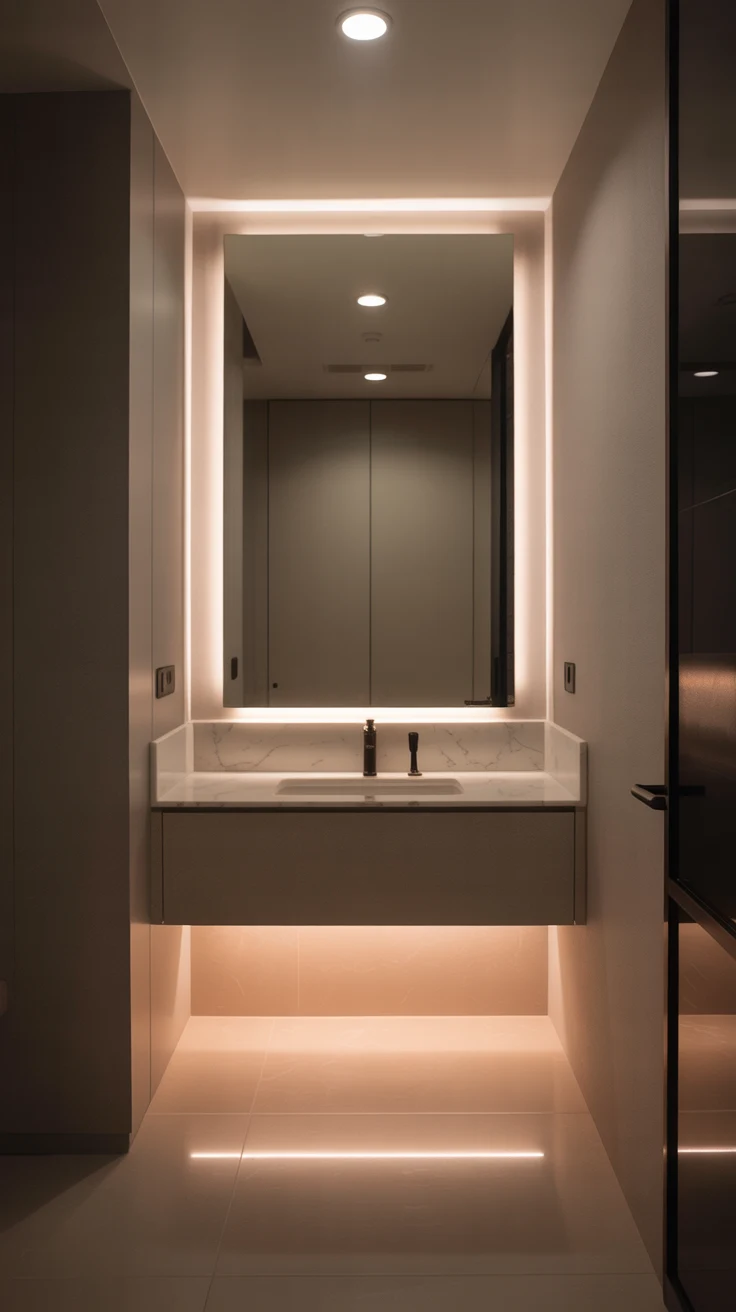
FYI: Lighting is the single most transformative element in a minimalist bathroom — and the one most often planned last when it should be planned first. In a room deliberately stripped of decorative elements, lighting becomes the atmosphere itself. Get it right, and the bathroom glows. Get it wrong, and no amount of beautiful tile will save it.
The minimalist bathroom lighting approach works in layers. Recessed ceiling spots on a dimmer provide ambient illumination without introducing any visible fixture into the room’s clean composition. A backlit mirror — where light emerges from behind the mirror perimeter — provides flattering, shadow-free task lighting at face level without a single visible fitting. And an LED strip along the base of a floating vanity creates a soft glow that makes the furniture appear to hover — a beautiful effect that costs very little and looks genuinely extraordinary.
Minimalist bathroom lighting by layer:
- Ambient: Recessed ceiling spots — flush with the ceiling, invisible in the composition
- Task: Backlit mirror — eliminates visible fittings while providing perfect face-level light
- Accent: Floating vanity base LED — creates a hovering effect and adds warmth at floor level
- Natural: Frosted or obscured glazing that maximises daylight without compromising privacy
- Control: Dimmer switches on every circuit — essential for shifting from functional to atmospheric
10. The Art of the Single Statement Object
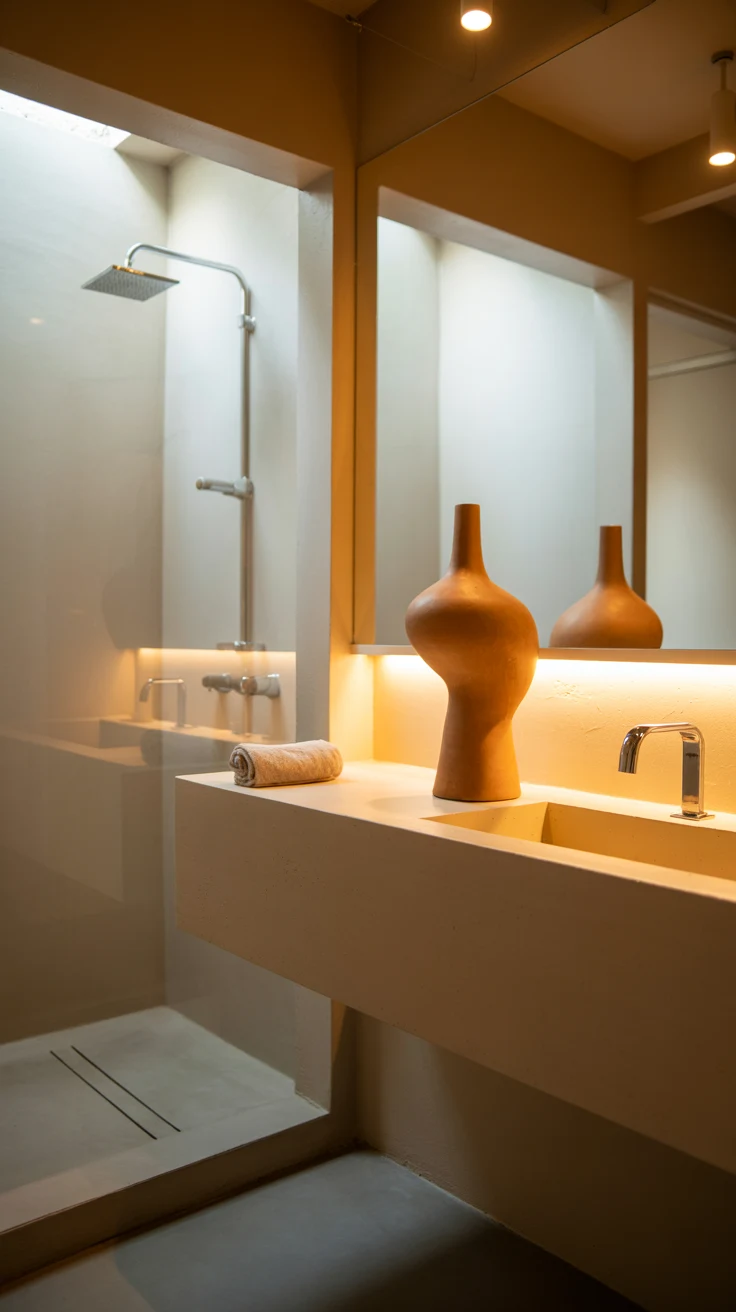
A minimalist bathroom doesn’t have to be completely devoid of decorative objects — it just needs to be ruthlessly selective about the ones it allows. One genuinely beautiful object, chosen with care and placed with intention, carries more design weight in a minimalist space than a dozen competing pieces ever could.
A single handthrown ceramic vessel on the vanity surface. One sculptural soap dish in a coordinating stone. A small potted plant — a compact succulent or a trailing pothos — on a floating shelf that’s otherwise clear. These singular gestures communicate personality and warmth without introducing visual noise. They show that the room was designed by a person, not assembled from a catalogue. And in a minimalist space, that human touch is everything.
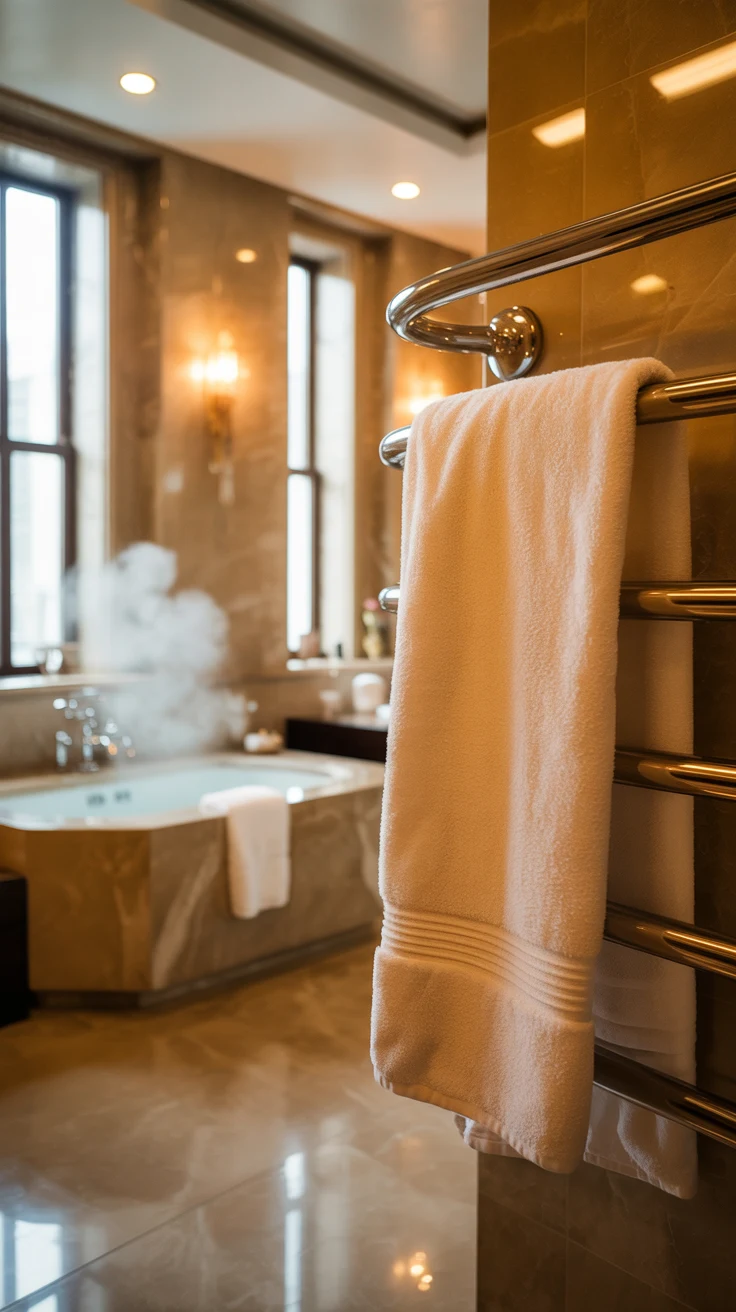
11. Towel Display as a Design Element
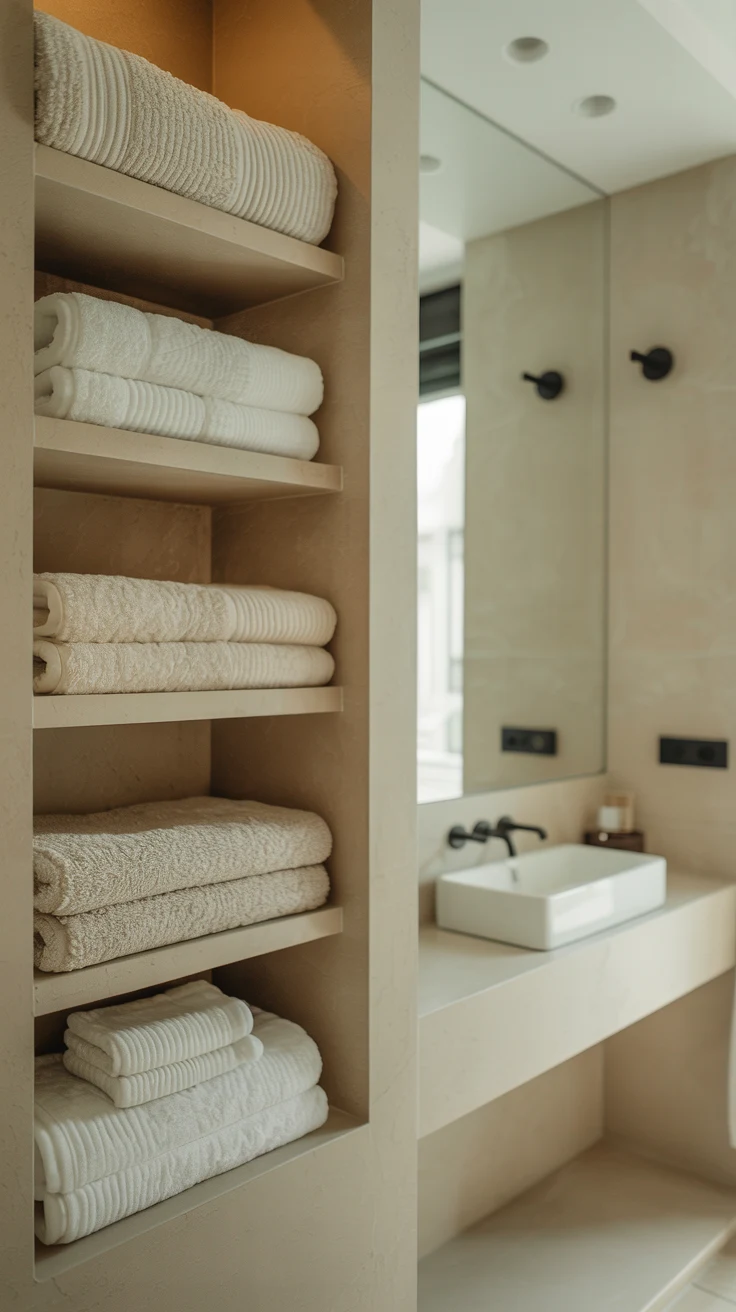
In a room with minimal decoration, even the towels become part of the aesthetic. And in a well-executed minimalist bathroom design, towel storage and display is handled with the same level of intention as every other design decision. A hotel-quality stack of folded towels in a warm neutral tone on an open shelf. A single towel per person hung precisely on a coordinating wall rail. These small organizational choices contribute significantly to whether the bathroom reads as calm and considered or chaotic and provisional.
Choose towels in coordinating neutral tones — warm white, oatmeal, soft gray, or a single accent color — and replace any mismatched survivors from previous years ruthlessly. The difference a coordinated set of quality towels makes to the overall feel of a minimalist bathroom is genuinely disproportionate to their cost.
12. Hardware Consistency — The Detail That Ties Everything Together
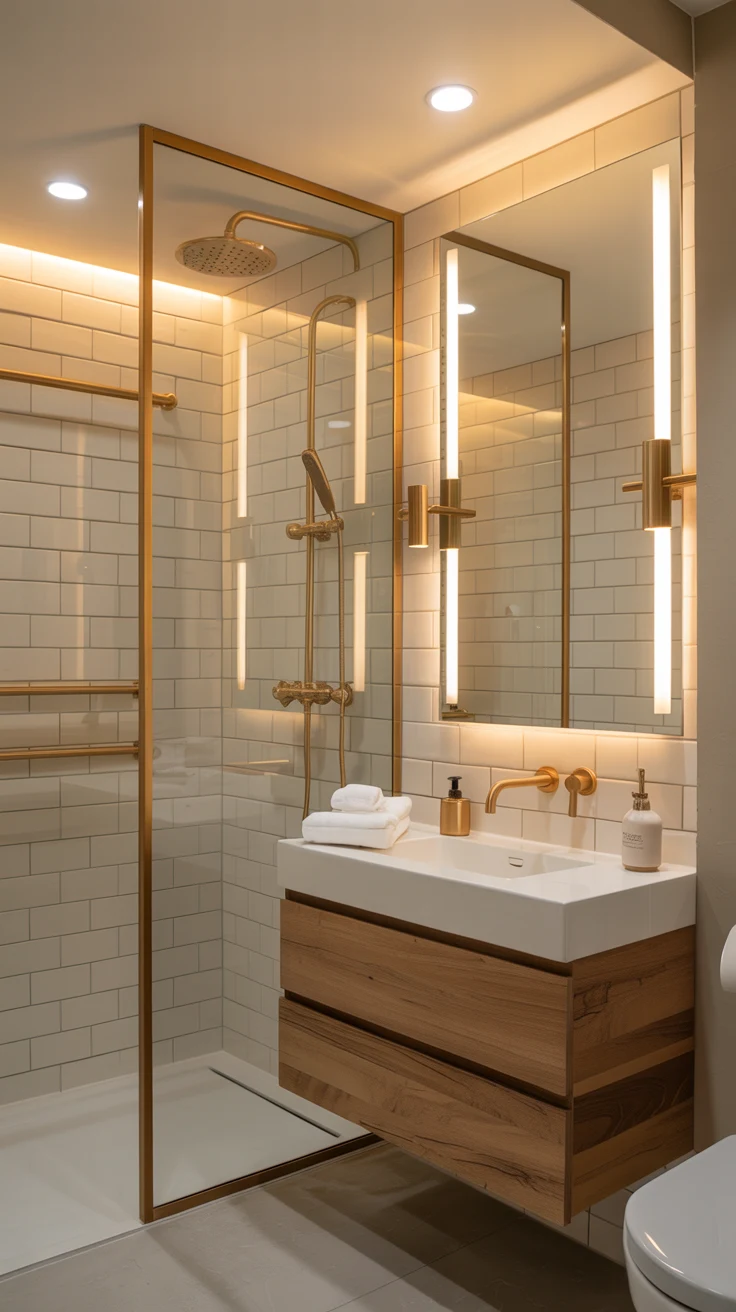
Every tap, every rail, every hook, every drain cover, every toilet roll holder — in a modern minimalist bathroom, all of these elements should share a single consistent metal finish. Not almost the same finish. Not similar finishes from different eras. Exactly the same finish, chosen once and applied everywhere.
This level of hardware consistency is what separates a bathroom that feels professionally designed from one that feels assembled over time from whatever was available. Matte black is the most striking choice — graphic, modern, and pairs beautifully with both light and dark palettes. Brushed brass adds warmth and a quality of considered luxury. Brushed nickel is cool, clean, and versatile. Choose one and apply it absolutely everywhere. The cohesion this creates is remarkable.
13. The Case for the Freestanding Bath in a Minimalist Bathroom
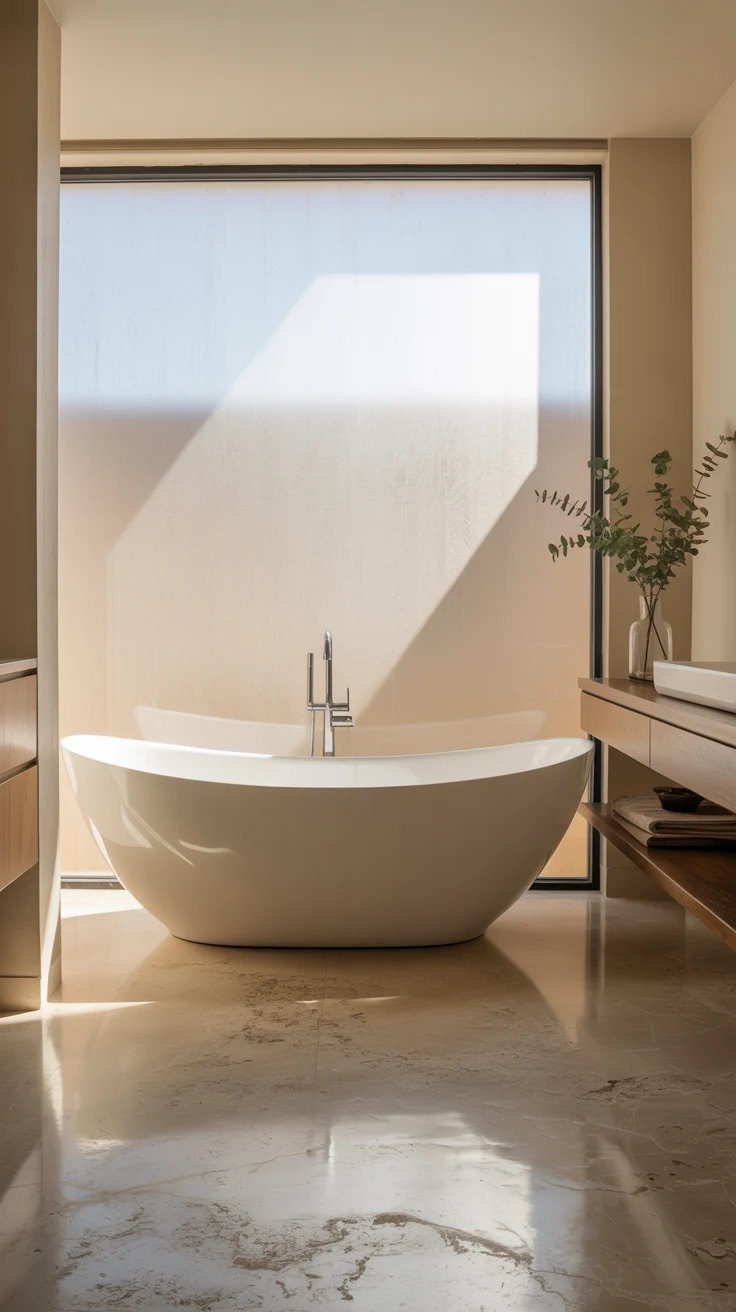
A freestanding bathtub in a minimalist bathroom is one of those design decisions that sounds counterintuitive — surely a freestanding tub adds visual weight rather than reducing it? But the opposite is true. A freestanding bath, positioned correctly, reads as a sculptural object — one beautiful form floating in a clear space — rather than as clutter.
The key is positioning. The tub needs space around it. It shouldn’t be crammed into a corner or pushed against a wall. It should occupy a zone of its own — ideally beneath a window or positioned as a genuine room centrepiece — with clear floor space on all sides. In this configuration, it doesn’t fight with the minimalist aesthetic. It becomes its most beautiful expression.
14. Greenery — The One Exception to the No-Decoration Rule
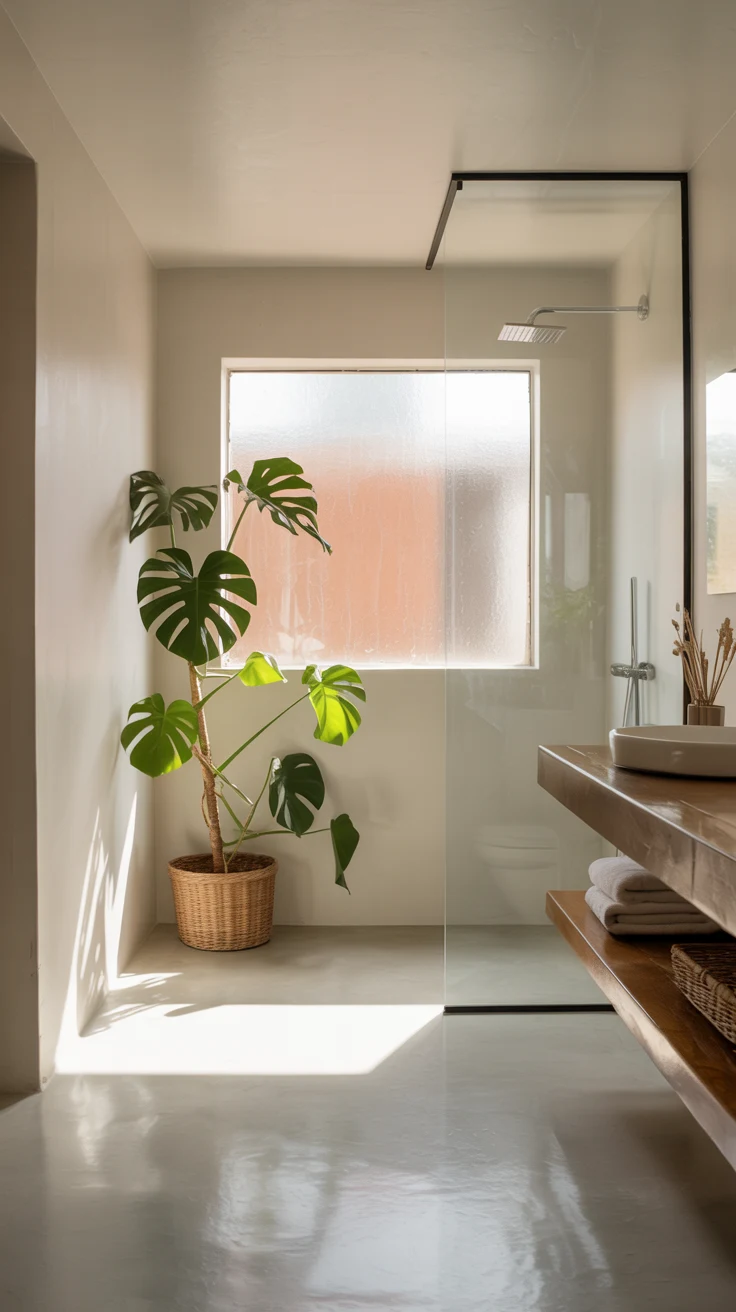
If there’s one category of decoration that minimalist bathrooms consistently welcome without reservation, it’s plants. A single well-chosen plant in a minimalist bathroom does something that no other decorative element can — it brings genuine life into the space. It moves. It breathes. It changes slowly over time. And it adds organic color and texture that makes the entire room feel warmer and more human without introducing any visual noise.
Choose a plant that suits the bathroom’s light conditions. Pothos thrives in low light and trails beautifully from a high shelf. Peace lilies enjoy the humidity and bring elegant white flowers. A small fiddle-leaf fig in a corner brings height and drama. Whatever you choose, keep it singular and keep it well-maintained. One thriving plant in a minimalist bathroom is everything. Six struggling ones are a contradiction in terms.
15. The Linear Drain — Minimalism at Floor Level
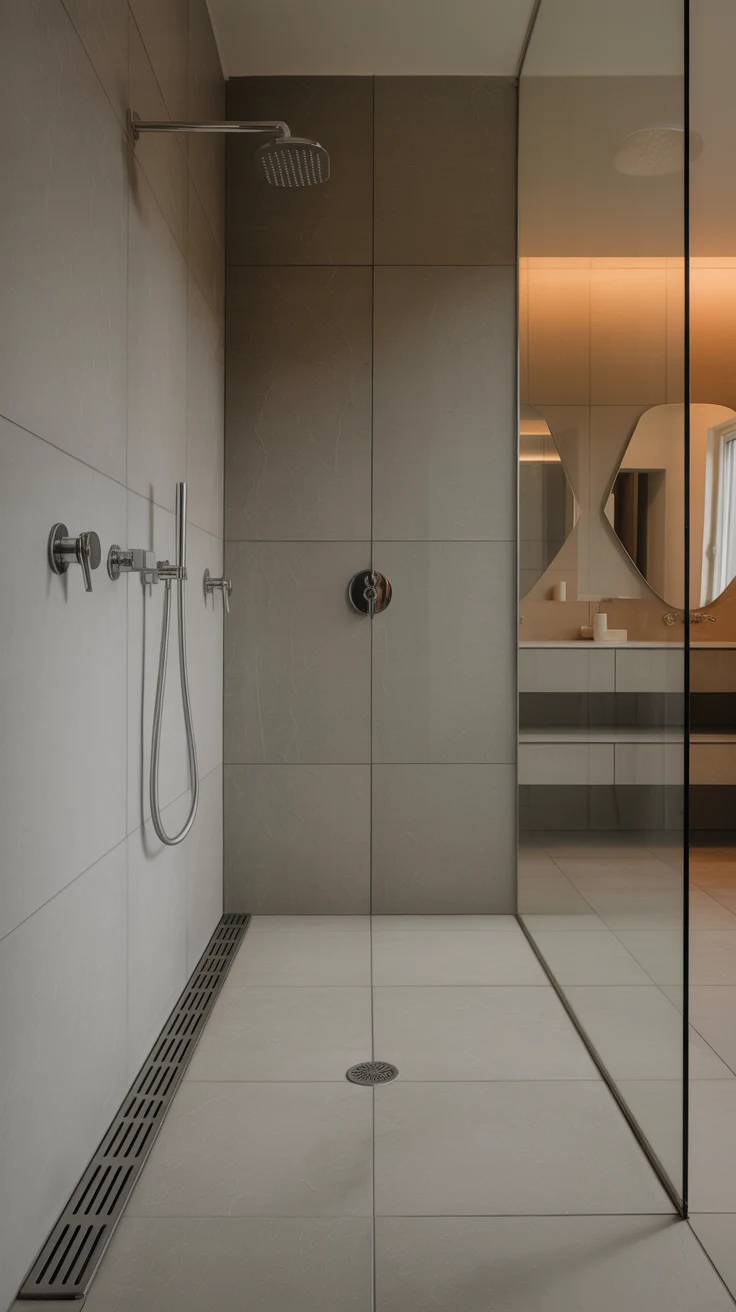
Here’s a detail that most people overlook in the planning phase and then immediately appreciate when they see it done well: the linear drain. A traditional circular drain in the center of a shower floor is a visual interruption — it sits in the middle of the tile and the eye goes to it. A linear drain, positioned along the wall edge of the shower floor, is almost invisible. The tile runs continuously from wall to wall, interrupted only by the thinnest of lines at the perimeter.
This small detail contributes significantly to the seamless, uninterrupted quality that defines the best minimalist bathroom interior design. It allows large-format tiles to run through the shower floor without needing to be cut around a central drain. And it simplifies cleaning — one long, accessible channel rather than a sunken circular trap. Form and function, perfectly aligned.
16. Mirror Strategy — Bigger, Simpler, Better
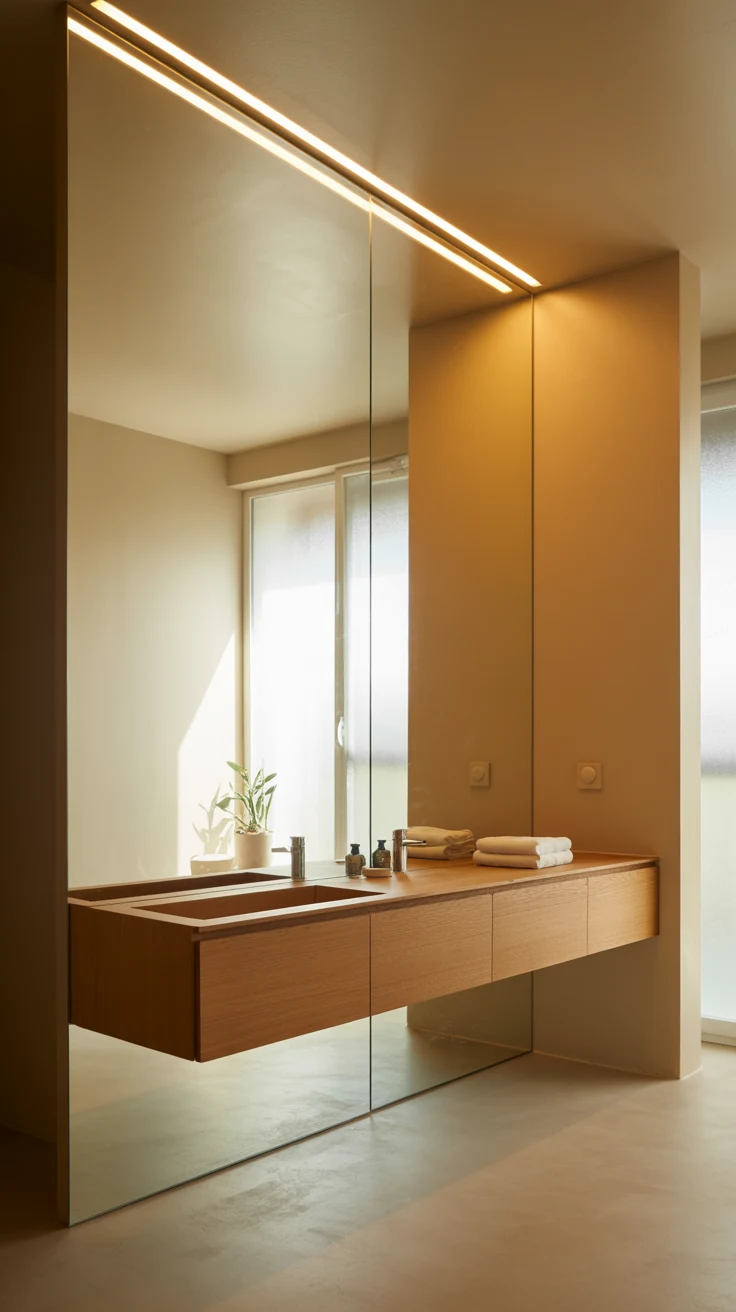
The mirror in a minimalist bathroom deserves more strategic thinking than most people give it. In a room with limited decorative elements, the mirror is one of the most prominent features — visible from everywhere, reflecting everything, and doubling the visual impact of every other design decision in the space.
Go larger than feels intuitive. A mirror that spans the entire width of the vanity wall — or even extends beyond it — makes a profound difference to how open and considered the room feels. Avoid ornate frames that introduce decorative complexity inconsistent with the minimalist approach. A frameless mirror, a slim floating frame in a coordinating metal finish, or a backlit version with no visible frame at all are all appropriate choices. Bigger, simpler, and better — that’s the minimalist mirror strategy in three words.
17. Edit, Edit, Edit — And Then Edit Again

The final and most essential minimalist bathroom idea isn’t a product recommendation or a design technique. It’s a practice. The practice of editing — regularly, honestly, and without sentimentality — everything that finds its way into your bathroom.
A minimalist bathroom isn’t something you achieve once and then maintain effortlessly. It’s something you actively curate. Products accumulate. Accessories multiply. Towels from different sets appear. The only thing standing between a genuinely minimalist bathroom and a cluttered one is the regular willingness to look at what’s there and ask honestly: does this belong? If the answer is no — or even maybe — out it goes. This habit, practiced consistently, is what keeps a minimalist bathroom feeling like the calm, beautiful sanctuary it was designed to be.
The Quiet Power of Choosing Less
Here’s what every great minimalist bathroom design ultimately teaches you: restraint isn’t deprivation. It’s curation. It’s the choice to have fewer things so that each thing matters more. To clear the surfaces so the materials can speak. To eliminate the noise so the silence becomes beautiful.
Whether you’re working with a compact minimal small bathroom or a more generous space, the principles in this list apply equally. Start with the palette. Float the fixtures. Choose one material and commit to it. Install the frameless glass. Edit everything that doesn’t belong. And then live in the result — which will be calmer, more beautiful, and more genuinely restorative than anything more decorative could ever achieve.
Your minimalist bathroom is waiting. And unlike most great things in life, it actually involves getting rid of stuff rather than acquiring more of it. Frankly, that’s the most refreshing design brief imaginable.