20 Small Space Furniture Ideas That Do Double Duty
Introduction
Small space furniture ideas are the secret weapon of anyone living in a studio, a tiny apartment, or a snug guest room. When every square foot has to earn its keep, single-purpose furniture is a luxury you cannot afford. A coffee table that is only a coffee table wastes space; a coffee table that stores blankets, charges your phone, and converts into a dining surface is practically a roommate that pays rent.
The good news is that furniture designers have spent the last decade solving exactly this problem. Today’s double-duty pieces are no longer the clunky futons and wobbly fold-outs of years past. Modern multi-functional furniture is genuinely beautiful, sturdy enough for daily use, and often indistinguishable from its single-purpose cousins. You do not have to sacrifice style to make a small room work harder.
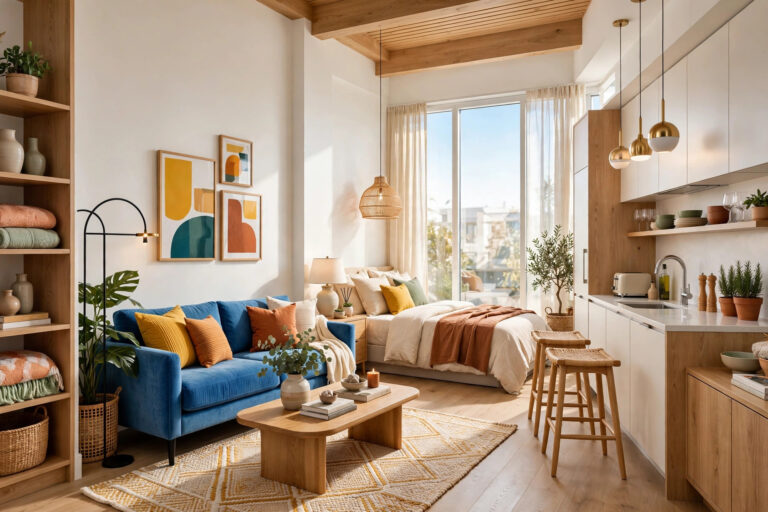
This guide rounds up twenty small space furniture ideas that each do at least two jobs, from storage ottomans and sleeper sofas to wall beds and transforming dining tables. If you are also rethinking your whole layout, pair these pieces with proven tiny apartment decorating ideas to make the entire space feel bigger. Most of the pieces below work in rentals, many arrive flat-packed and budget-friendly, and all of them prove that a small room can live large when every piece pulls double duty.
1. Storage Ottoman With a Lift-Off Top
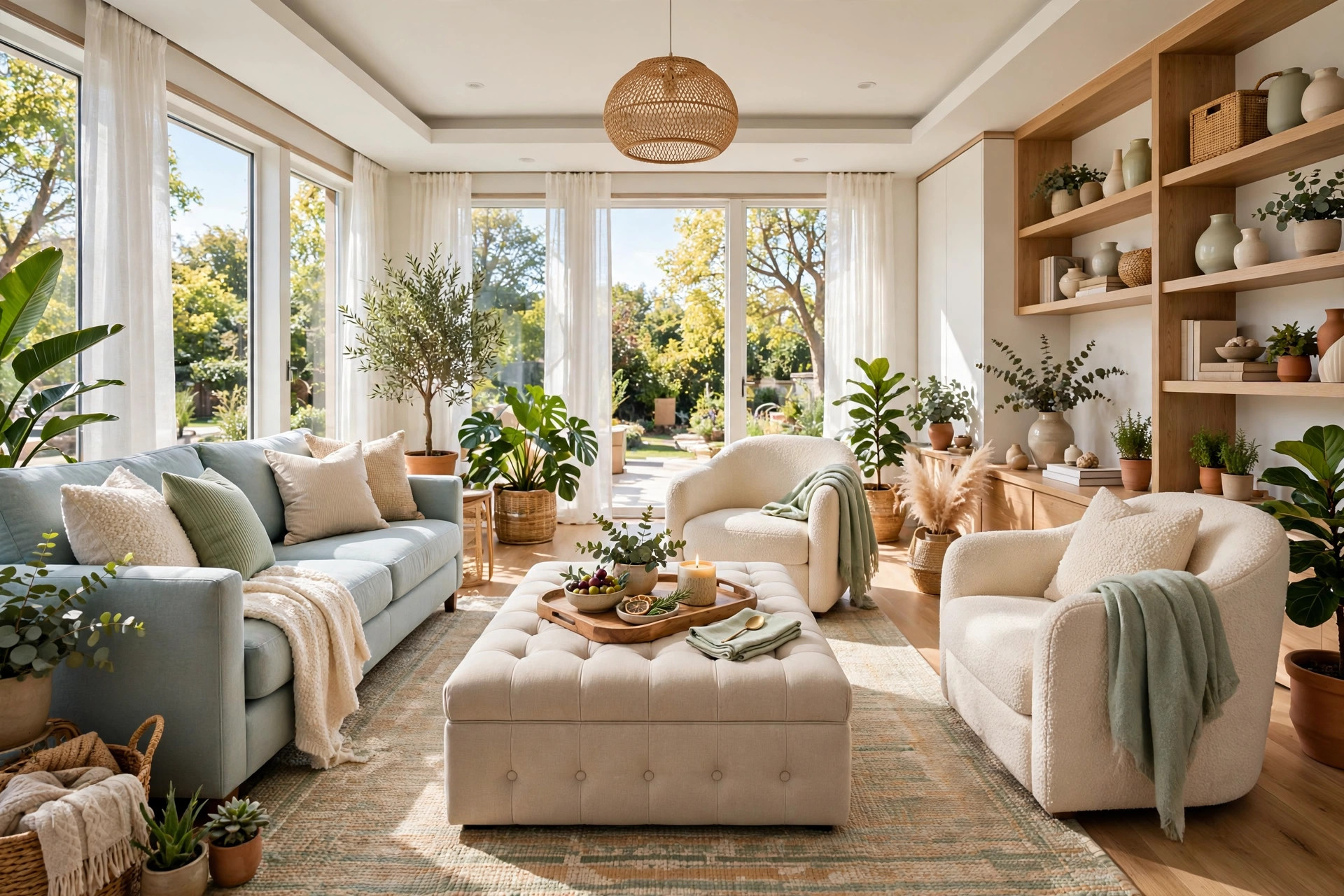
A storage ottoman is the hardest-working piece you can buy for a small space. By day it is a footrest, extra seating for guests, or a coffee table stand-in with a tray on top. Lift the lid and it swallows blankets, board games, out-of-season clothes, or the pile of remotes and chargers that otherwise colonizes your surfaces.
Choose an ottoman with a sturdy, flat top if you want it to double as a table, and look for one with interior dividers or a removable tray so small items do not disappear into the void. In a small living room, one large ottoman often serves better than a coffee table plus a separate storage piece, because it consolidates three functions into a single footprint.
2. Sleeper Sofa That Guests Actually Enjoy
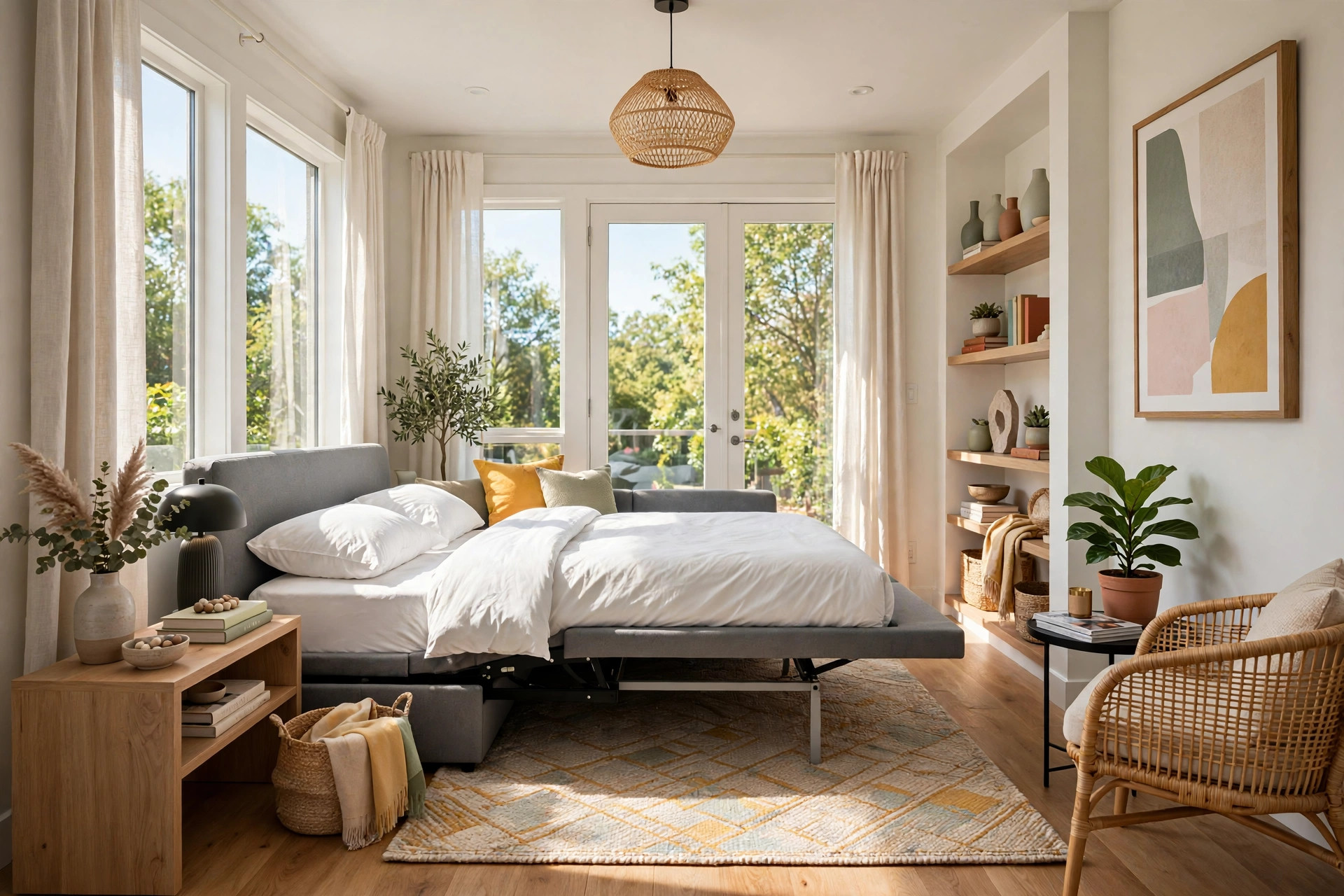
The modern sleeper sofa has quietly fixed everything people hated about the old pull-out: lumpy bars, paper-thin mattresses, and mechanisms that pinch fingers. Today’s versions use real foam or hybrid mattresses, smooth fold mechanisms, and sit as comfortably as a regular sofa. For a small apartment without a guest room, that means a real bed appears in the living room in under a minute and vanishes just as fast.
Measure twice before buying: a queen sleeper needs roughly seven feet of clear floor in front of it when open. Look for models with washable covers and storage in the chaise section for bedding, which eliminates the awkward hunt for sheets when guests arrive. If your studio doubles as the guest room, this is one of the most transformative small space furniture ideas you can invest in.
💡 Pro Tip: Open the sleeper fully in the showroom and lie down for five minutes. If the mattress feels thin in the store, it will feel thinner at 2 a.m. — and check that the folded mechanism clears your rug’s thickness when it swings out.
3. Drop-Leaf Dining Table for Weekdays and Weekends
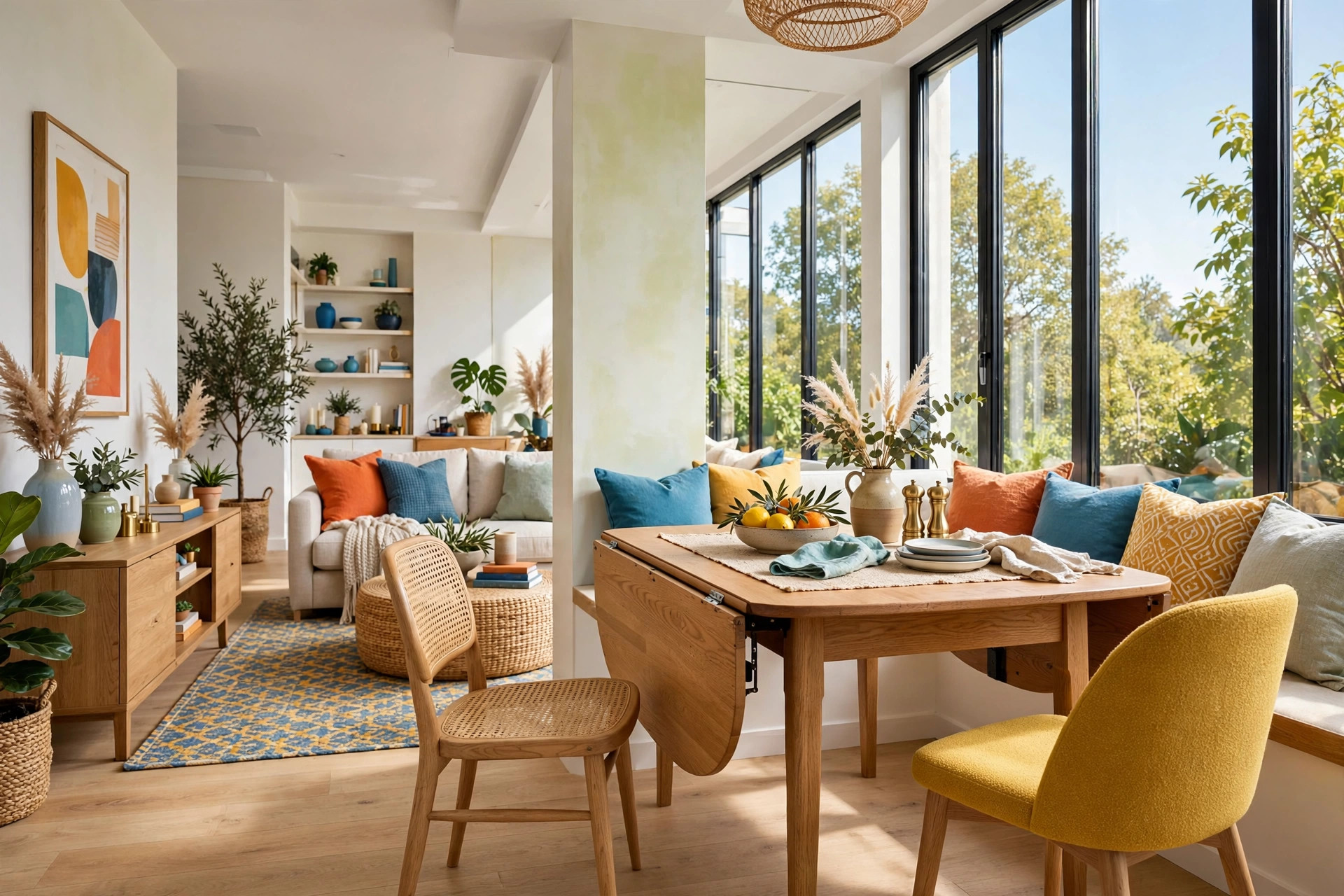
A drop-leaf table is two tables in one: folded down, it is a slim console or desk against the wall; leaves raised, it seats four to six for dinner. This shape-shifting quality makes it ideal for small dining nooks that also serve as workspaces, and for apartments where a permanent full-size table would devour the floor.
Mount one leaf version permanently against the wall for a breakfast-bar feel, or choose a freestanding gate-leg style that can move where needed. Pair it with stackable or folding chairs so the whole dining setup can shrink to a whisper when the meal is over. Solid wood versions last decades and survive countless fold cycles without wobbling.
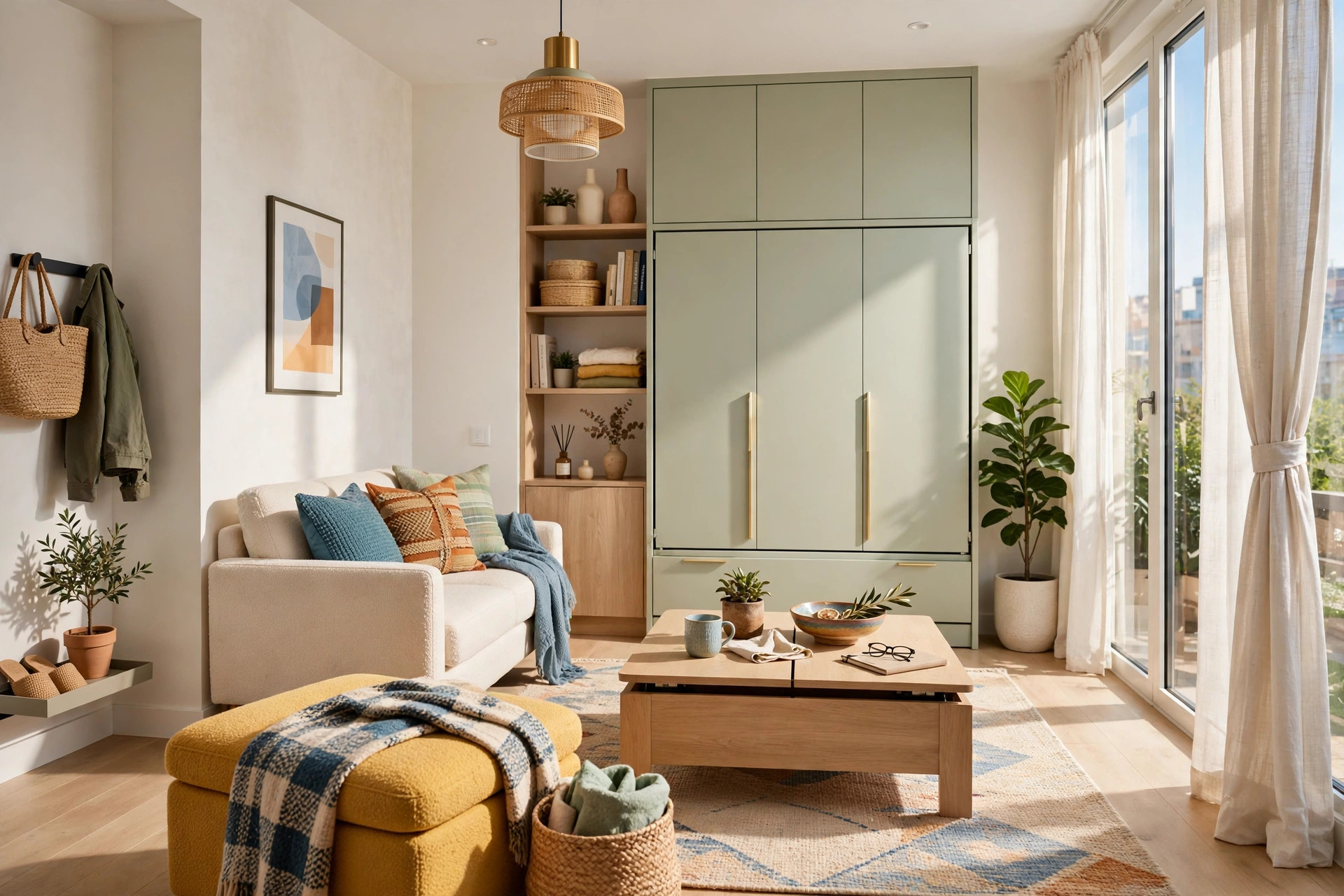
4. Murphy Bed That Folds Into a Wall Cabinet
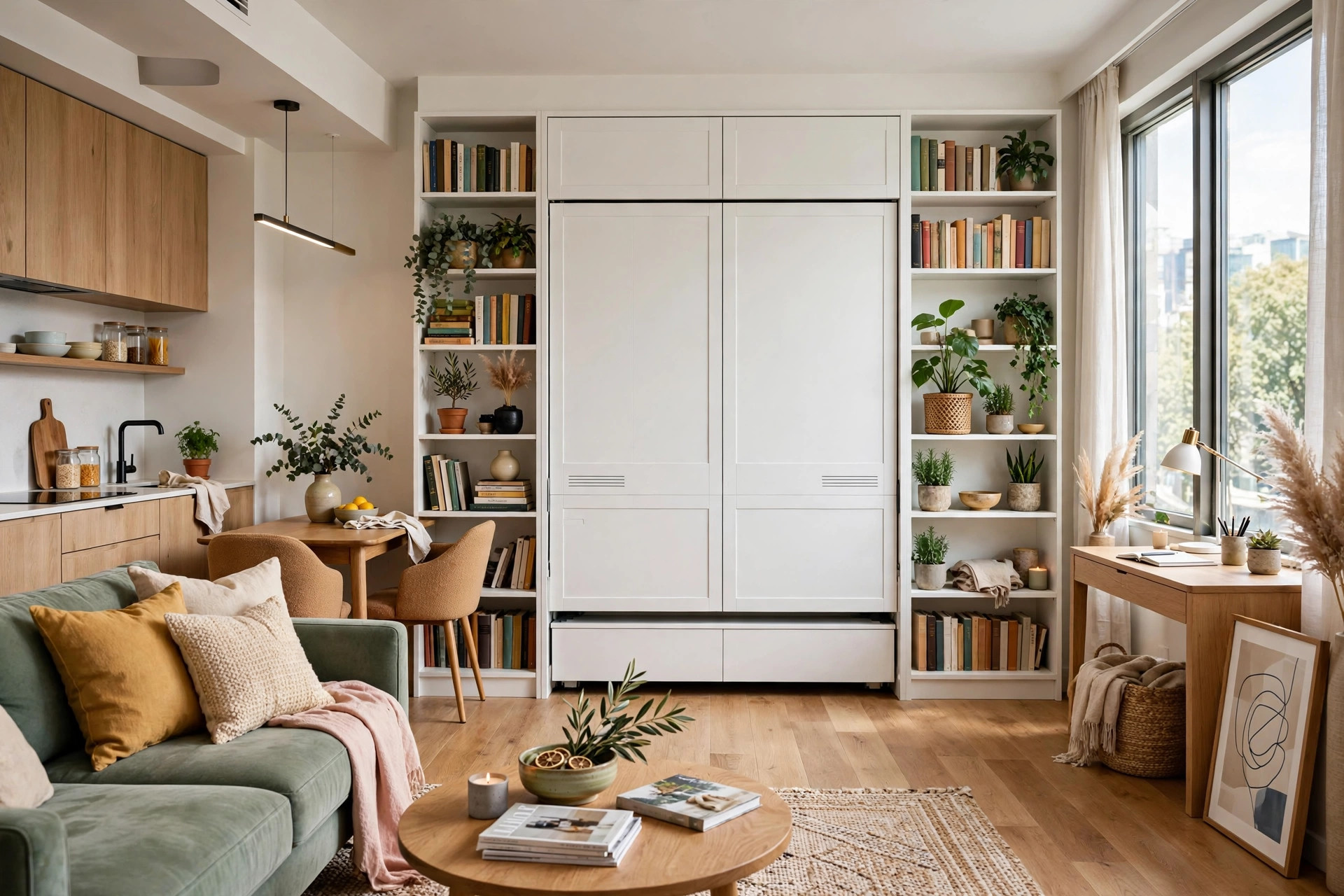
Few pieces reclaim as much floor as a wall bed. Folded up, a queen Murphy bed looks like a handsome cabinet or bookshelf; folded down, it is a real bed with a real mattress. That transformation hands back roughly twenty square feet every morning, space that becomes a home office, a yoga spot, or simply room to breathe in a studio.
Modern wall beds come in freestanding versions on lockable casters, which means renters can skip the wall mounting entirely. Look for models with side shelving or a fold-down desk on the cabinet face, so the closed bed contributes storage or workspace during the day. If you want the full playbook for single-room living, see these studio apartment decor inspiration setups built around exactly this kind of disappearing furniture.
⚠️ Warning: Wall-mounted Murphy beds must anchor into studs or solid masonry — drywall alone will not hold the load. If you are renting and drilling is off-limits, choose a freestanding cabinet-style unit instead of risking a wall-mount failure.
5. Platform Storage Bed With Deep Drawers
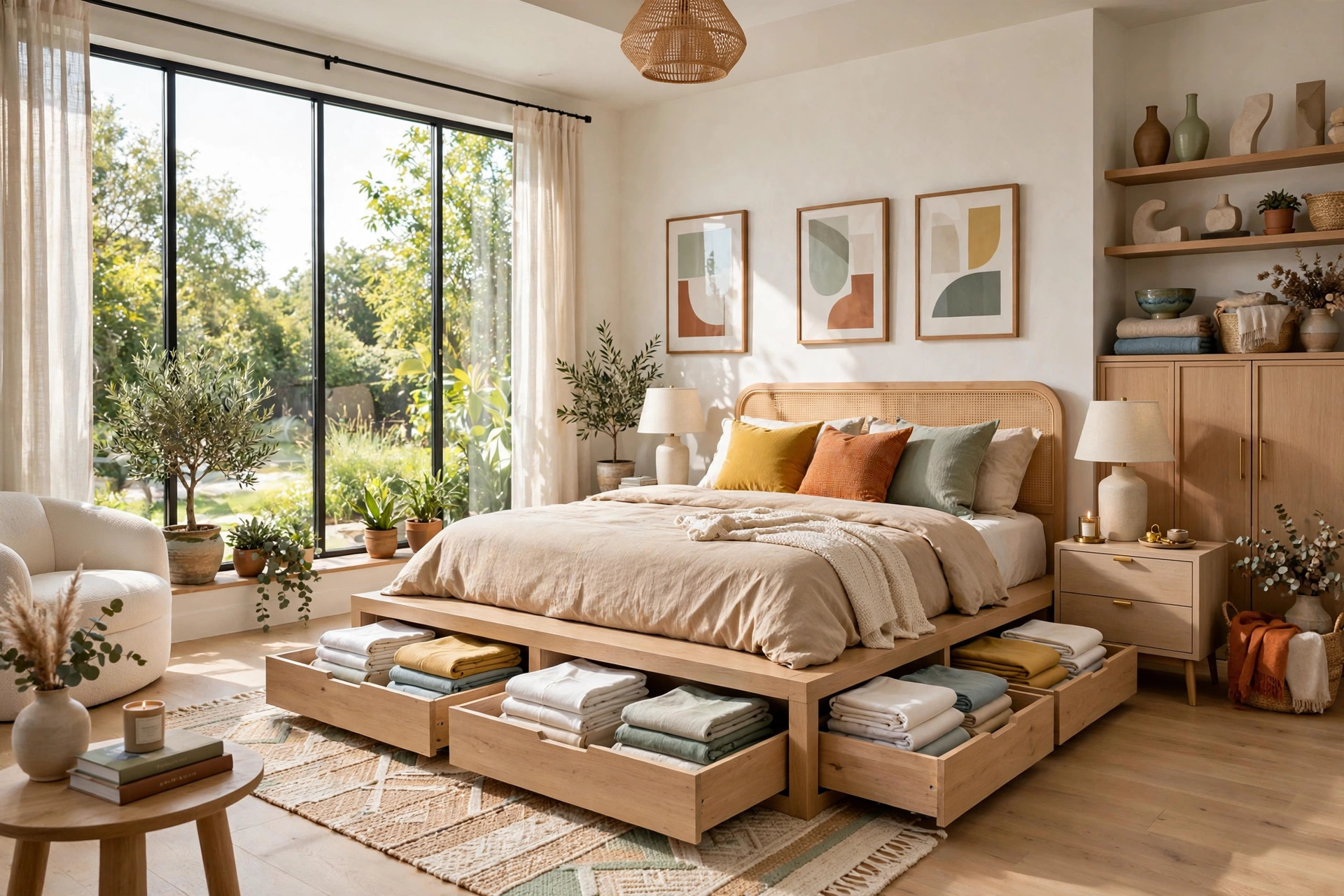
A bed occupies the largest single footprint in a bedroom, so making it store things is one of the highest-leverage small space furniture ideas available. Platform beds with built-in drawers replace a dresser entirely, holding clothes, linens, and luggage in the dead space under the mattress that most beds waste.
Choose drawers on smooth full-extension glides so you can actually reach the back, and look for solid side rails that keep the frame rigid when drawers are loaded. For guest rooms and kids’ rooms, the drawers handle overflow toys and spare bedding without adding a single extra piece of furniture to the room.
6. Fold-Down Wall Desk That Vanishes After Work
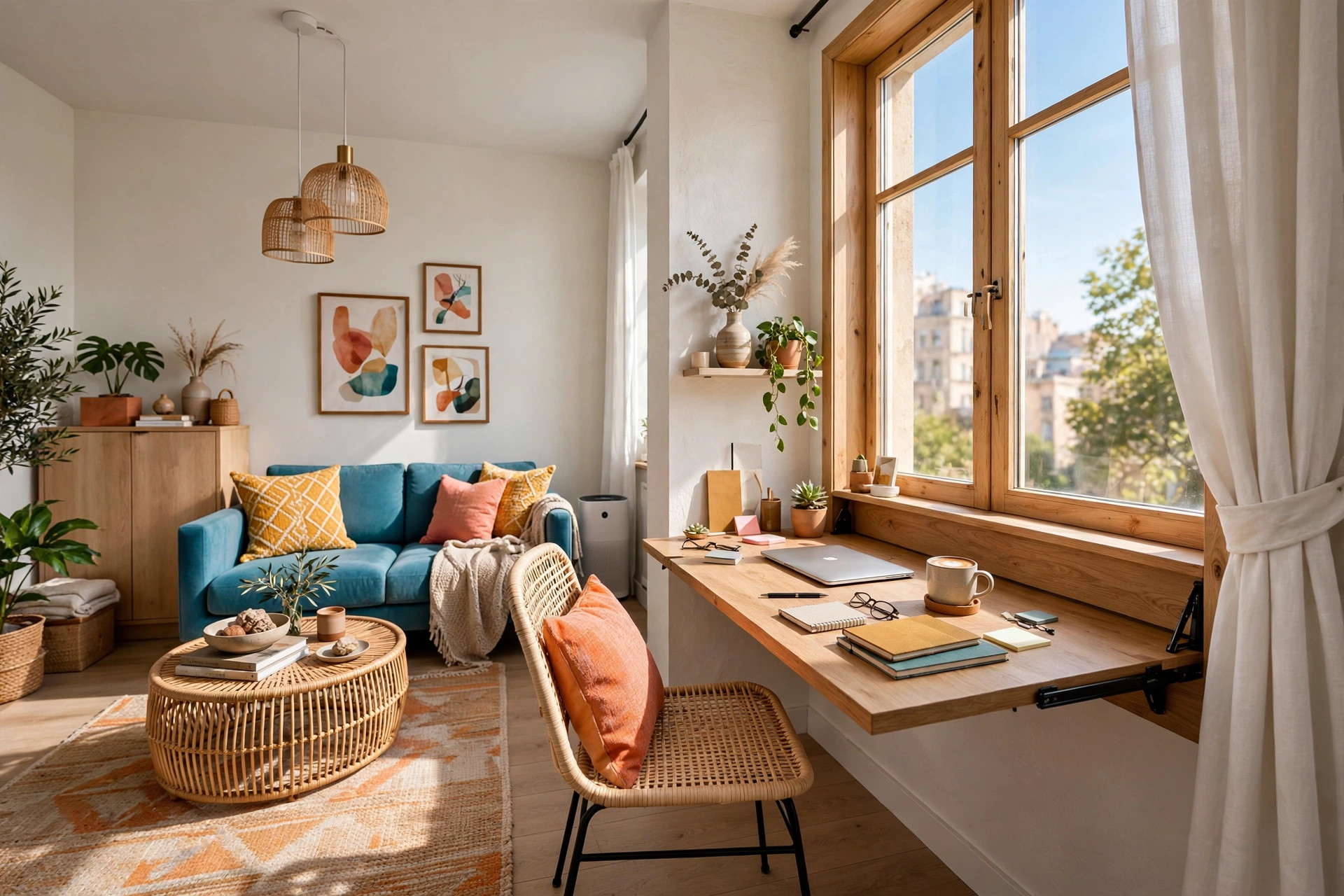
Working from a small apartment often means the office never clocks out, because the desk stares at you all evening. A fold-down wall desk solves this: open it for a full-depth workspace, then fold it flat against the wall when the laptop closes. The best versions include interior shelves and cable cutouts, so supplies stay organized even in the folded position.
Mount the desk at standard height near a window for daylight, and pair it with a chair that tucks fully underneath or folds flat. Some models fold down into what looks like a slim cabinet or a piece of art, which keeps the room feeling like a home rather than an office after hours.
7. Nesting Tables That Stack and Spread
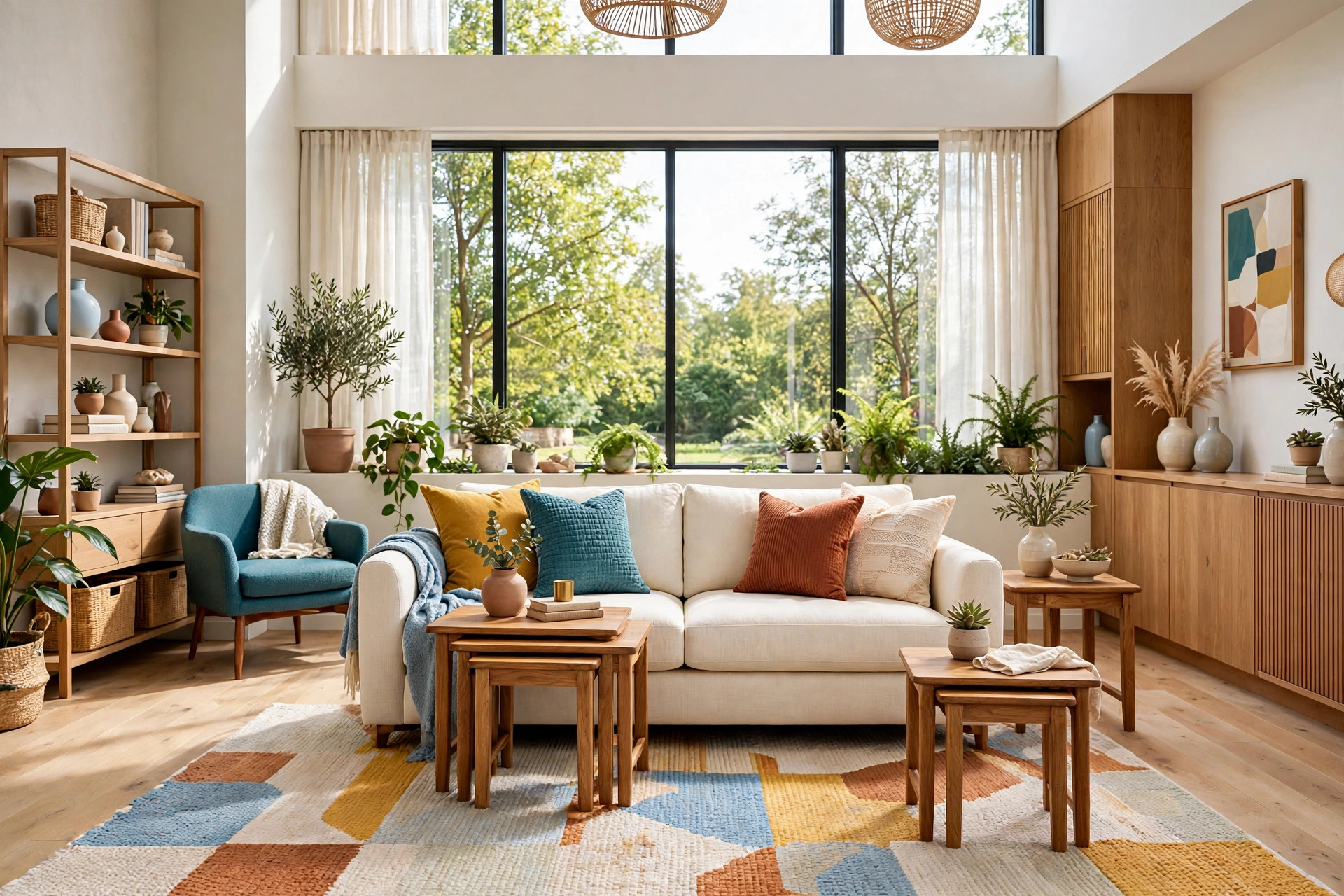
Nesting tables are the ultimate flexible surface: stacked, they occupy the footprint of a single side table; spread around the room, they become drink tables, laptop stands, and plant pedestals wherever you need one. In a small living room, a set of three nested tables replaces the need for multiple scattered side tables.
Look for sets with varied heights so the tallest can work as a side table and the smallest as a footstool or step for high shelves. Metal and wood combinations stay light enough to move one-handed, and many sets tuck completely under a console or sofa arm when guests are not around.
8. Lift-Top Coffee Table With Hidden Storage
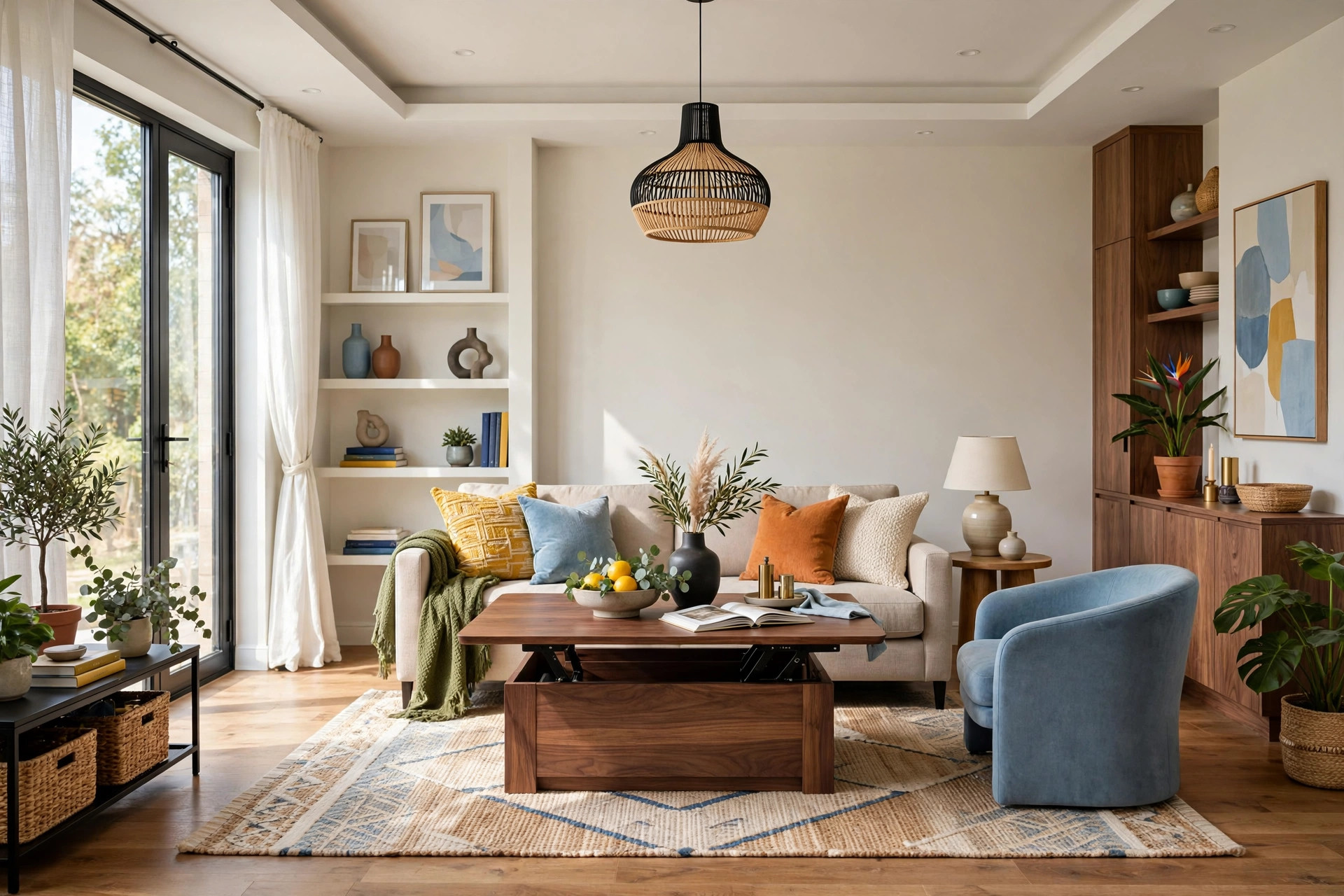
A lift-top coffee table raises its surface to dining height, turning the sofa into a comfortable spot for laptop work or dinner in front of a movie. Under the lifting top, a deep compartment stores blankets, remotes, and board games, while a lower shelf handles books and baskets.
Check the lift mechanism in person if you can: it should rise smoothly and lock firmly without wobbling, because a shaky tabletop ruins the whole concept. Rectangular versions suit most sofas, while round lift-tops work better in tight rooms where corners would snag shins and block walkways.
9. Open Bookcase Room Divider That Works Both Sides
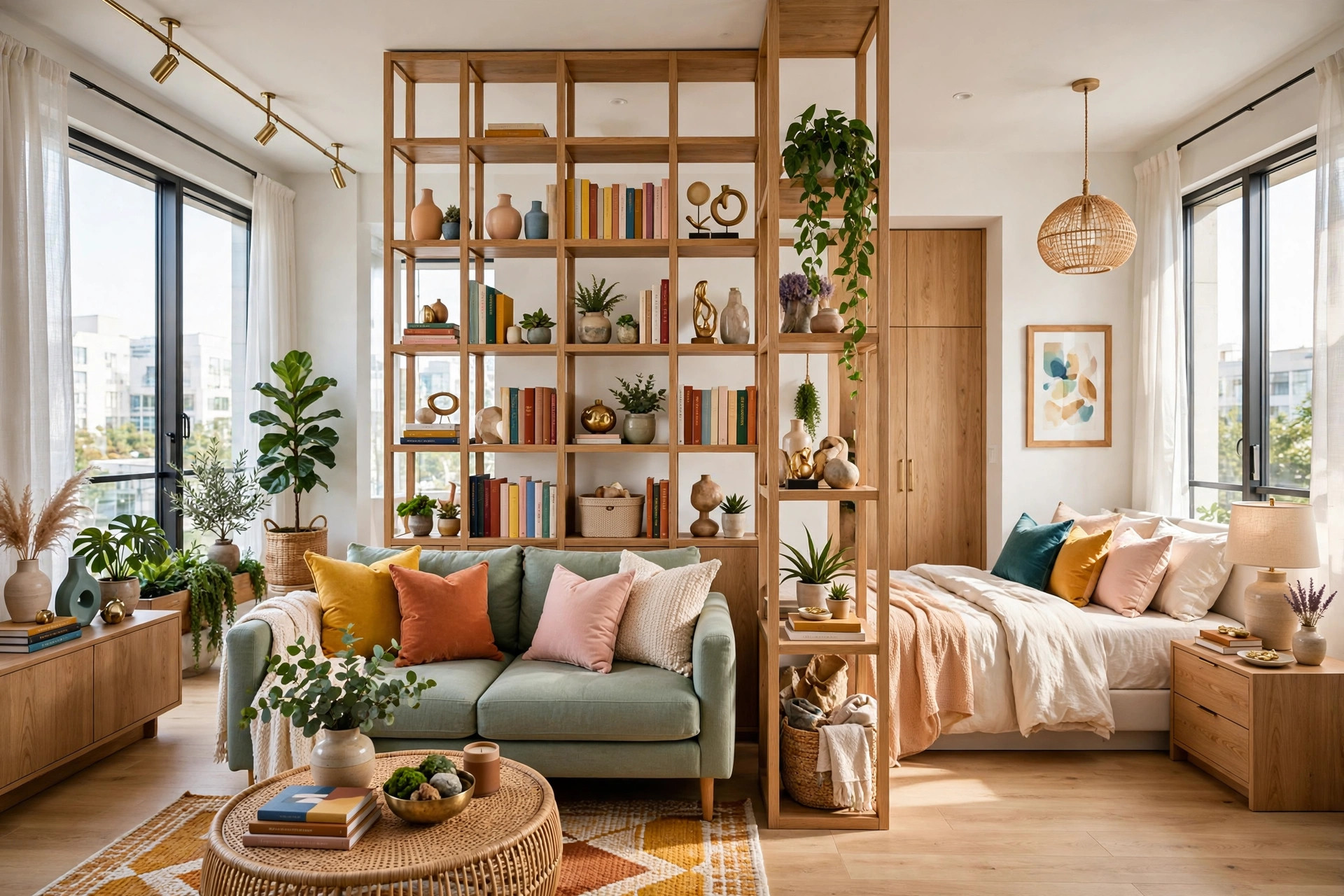
In a studio or open-plan small apartment, a tall open bookcase turned perpendicular to the wall divides the room into zones while storing books, baskets, and decor on both faces. Unlike a solid partition, light passes through the open back, so neither zone goes dark — and both sides of the shelf stay useful.
Style the shelves from both directions so the divider looks intentional from every angle, mixing closed baskets with open display to keep things calm. Anchor the unit to the wall for safety, since a freestanding divider loaded with books is top-heavy. This is one of those small space furniture ideas that defines rooms without building walls.
📌 Important: A room divider bookcase must be anchored to a stud, even if it feels stable empty. A toddler climbing it or an earthquake-prone shelf full of hardcovers can tip a freestanding unit in seconds — the two minutes of anchoring are non-negotiable.
10. Storage Bench for the Entryway or Foot of the Bed
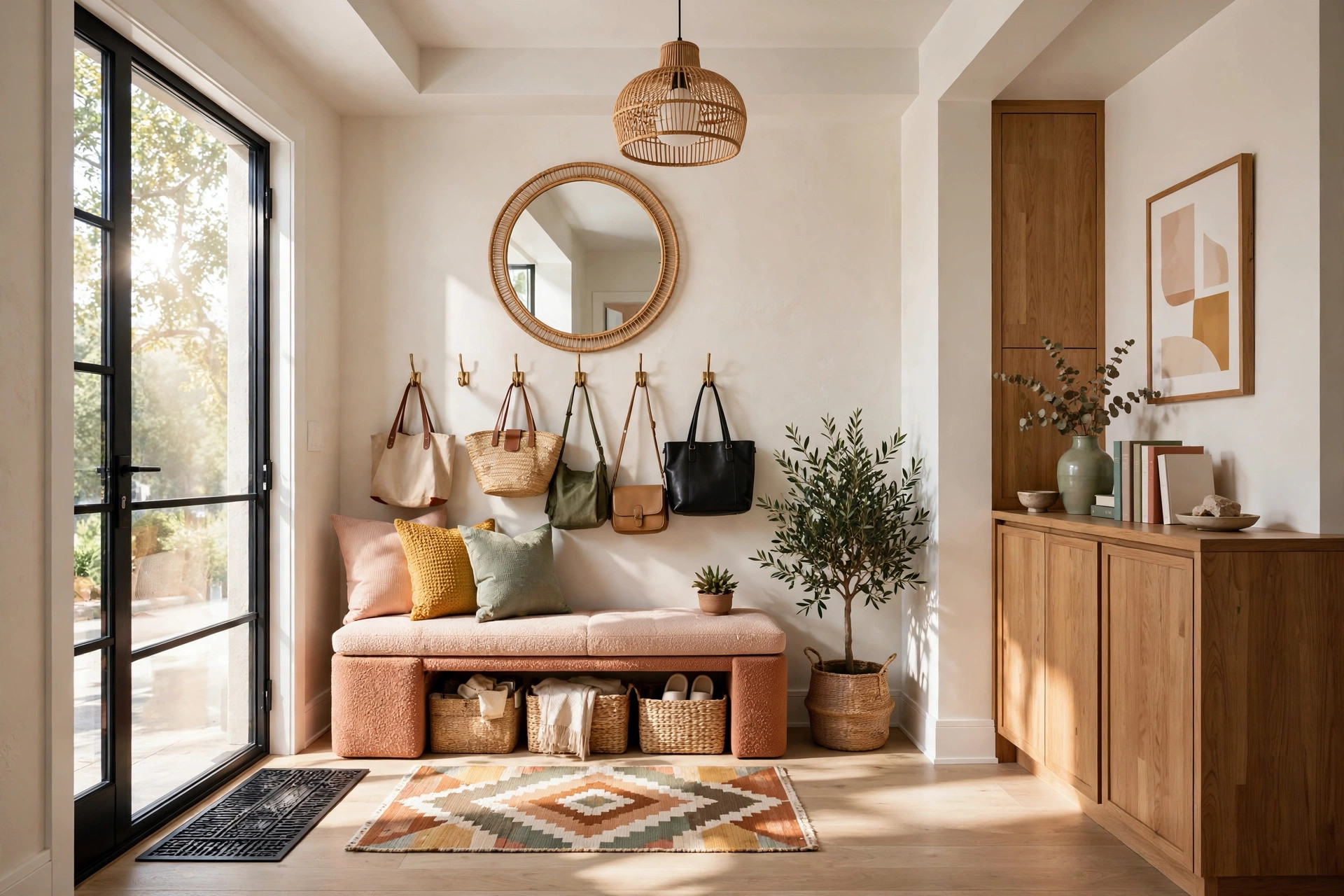
A storage bench earns its place in two of the hardest-working spots in a small home. In the entryway, it gives you somewhere to sit while putting on shoes, with space inside for bags, scarves, and the clutter that otherwise piles by the door. At the foot of the bed, it holds extra bedding and off-season clothes while giving the bedroom a finished look.
Choose a bench with a hinged top rather than drawers for entryway use, since a top-opening bench lets you toss things in without kneeling. Add a cushion or a folded throw on top and the bench becomes genuinely comfortable seating, not just a box you perch on.
11. Folding and Stacking Dining Chairs That Disappear
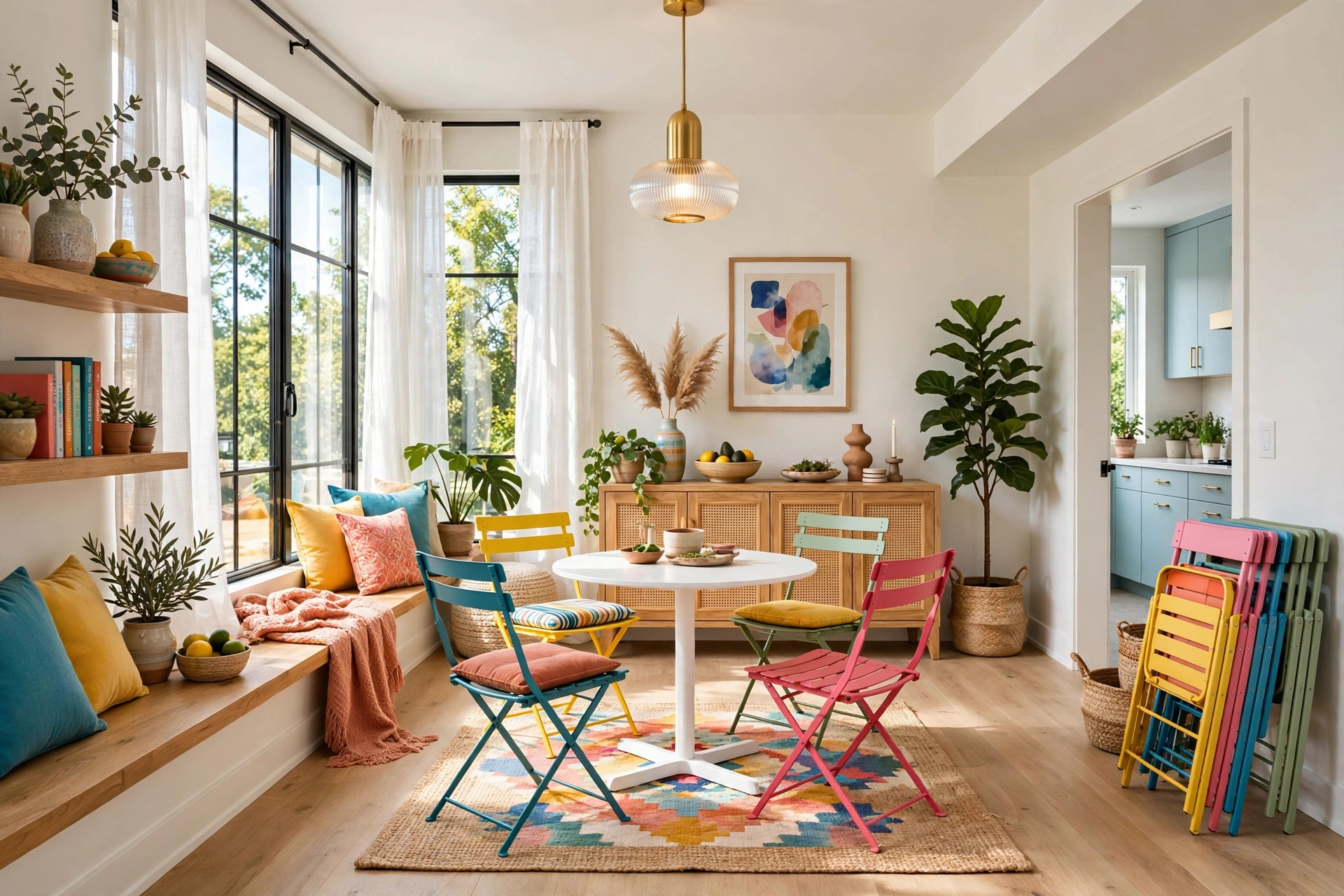
Extra seating is essential for hosting, but four spare dining chairs consume serious floor space in a small apartment. Folding chairs that hang on wall hooks and stacking chairs that nest into a single column solve the problem: the full set appears for dinner parties and vanishes into a closet or a corner afterward.
Modern folding chairs have come a long way from the metal institutional look — wood, molded plastic, and upholstered versions fold flat to just a few inches thick. Keep two everyday chairs out and store the rest; when guests arrive, the whole dining setup assembles in minutes.
12. Extending Console Table That Seats Eight
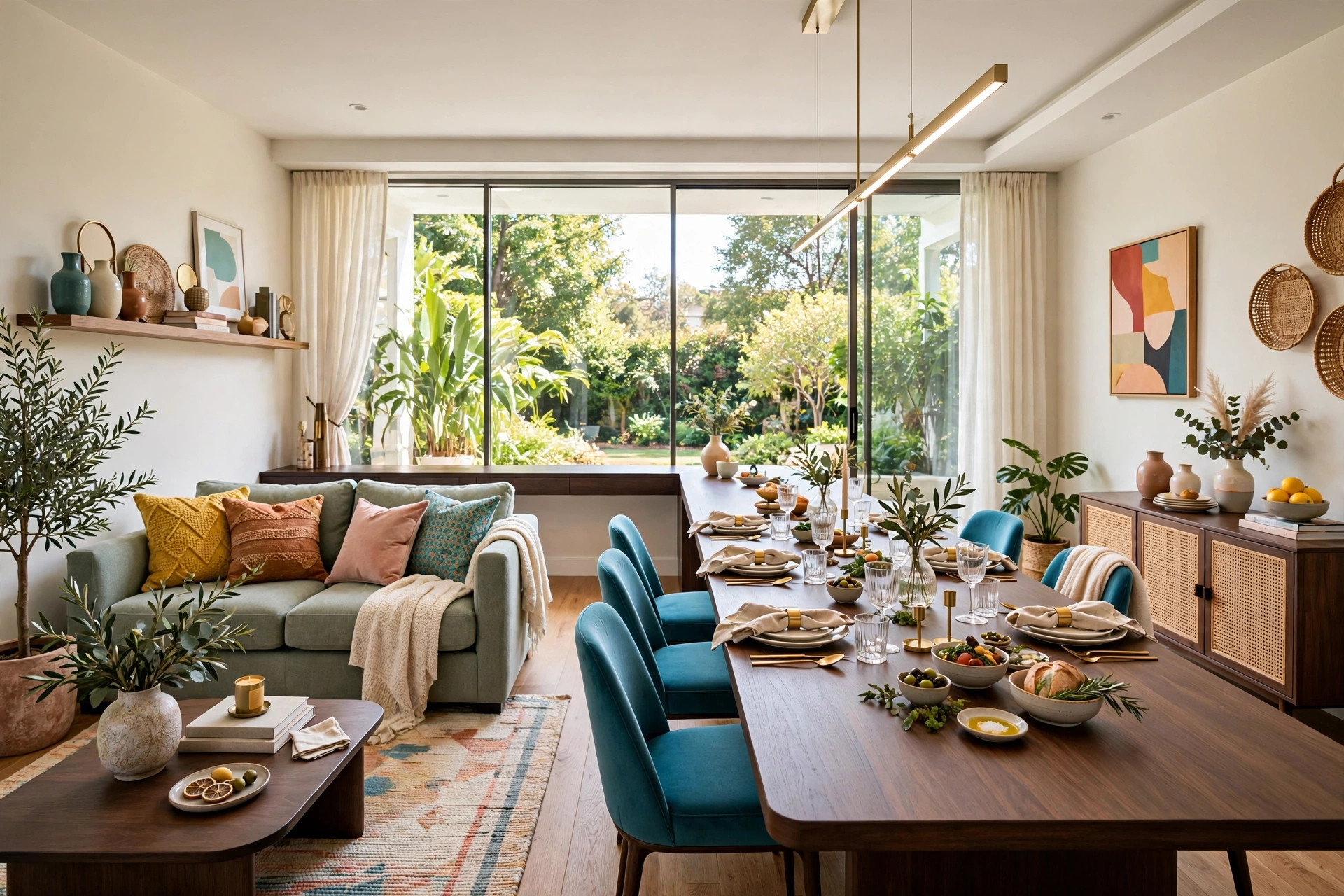
An extending console table looks like a slim entryway console most days, then unfolds — with butterfly leaves or extension panels — into a dining table that seats six to eight. It is the single best answer for small apartments that host holidays or dinner parties but cannot dedicate daily floor space to a full table.
Store the extension leaves inside the console itself so nothing gets lost in a closet, and choose a model whose legs stay stable at full extension. Pair it with the folding chairs from idea 11 and you have a complete dining room that hides inside an entryway console between gatherings.
13. C-Shaped Side Table That Slides Over the Sofa Arm
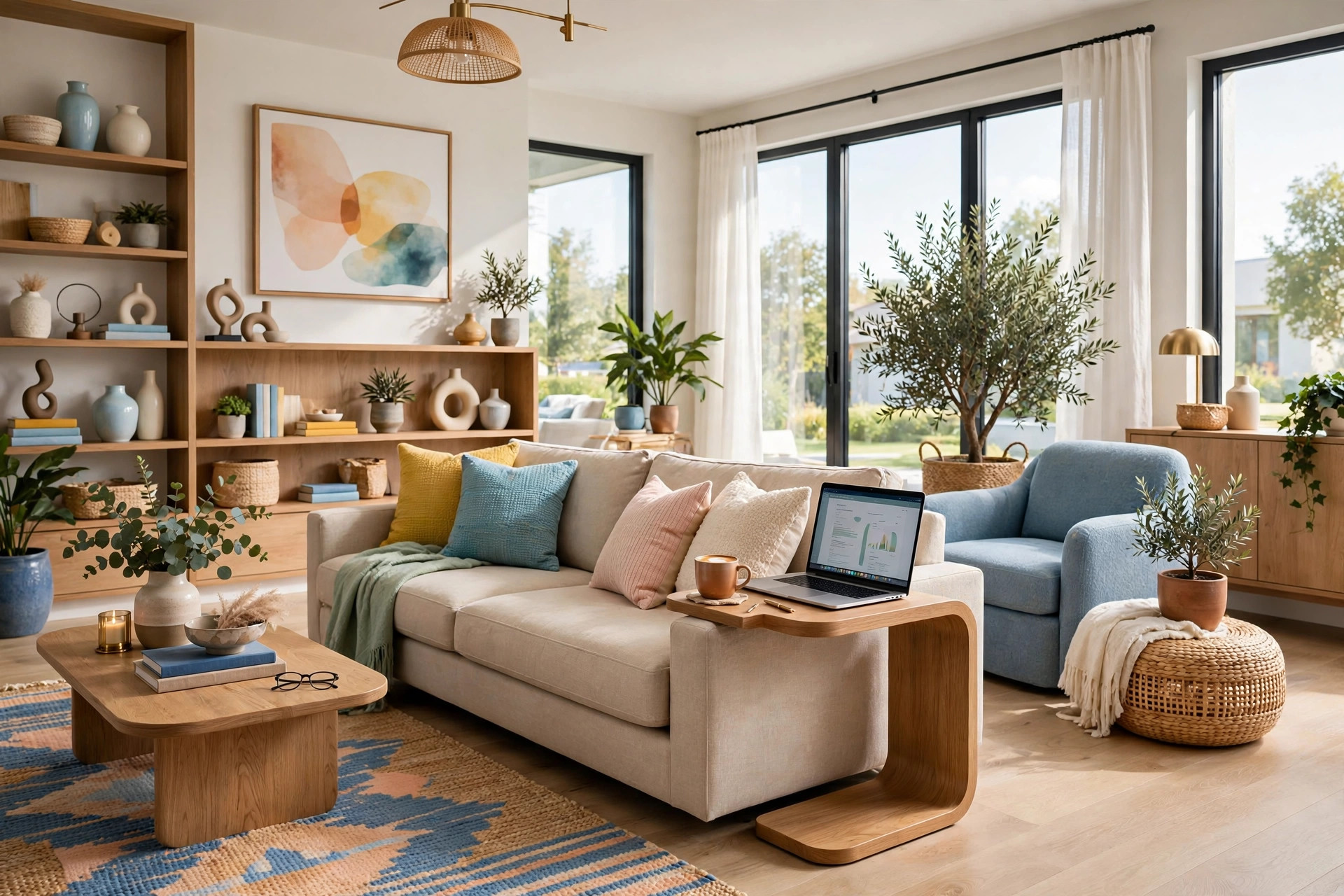
A C-shaped side table slides its base under the sofa or armchair, bringing the tabletop right over your lap. That simple shape turns any seat into a workstation, a dining spot, or a reading nook without a bulky side table crowding the floor beside the chair.
Because the base tucks under furniture, these tables add almost zero footprint to the room. Keep one by the sofa for laptops and coffee, and move it to the bedside when you need a nightstand that does not touch the floor. Metal versions are slim and modern; wood versions read warmer and more traditional.
14. Loft Bed With a Desk or Dresser Underneath
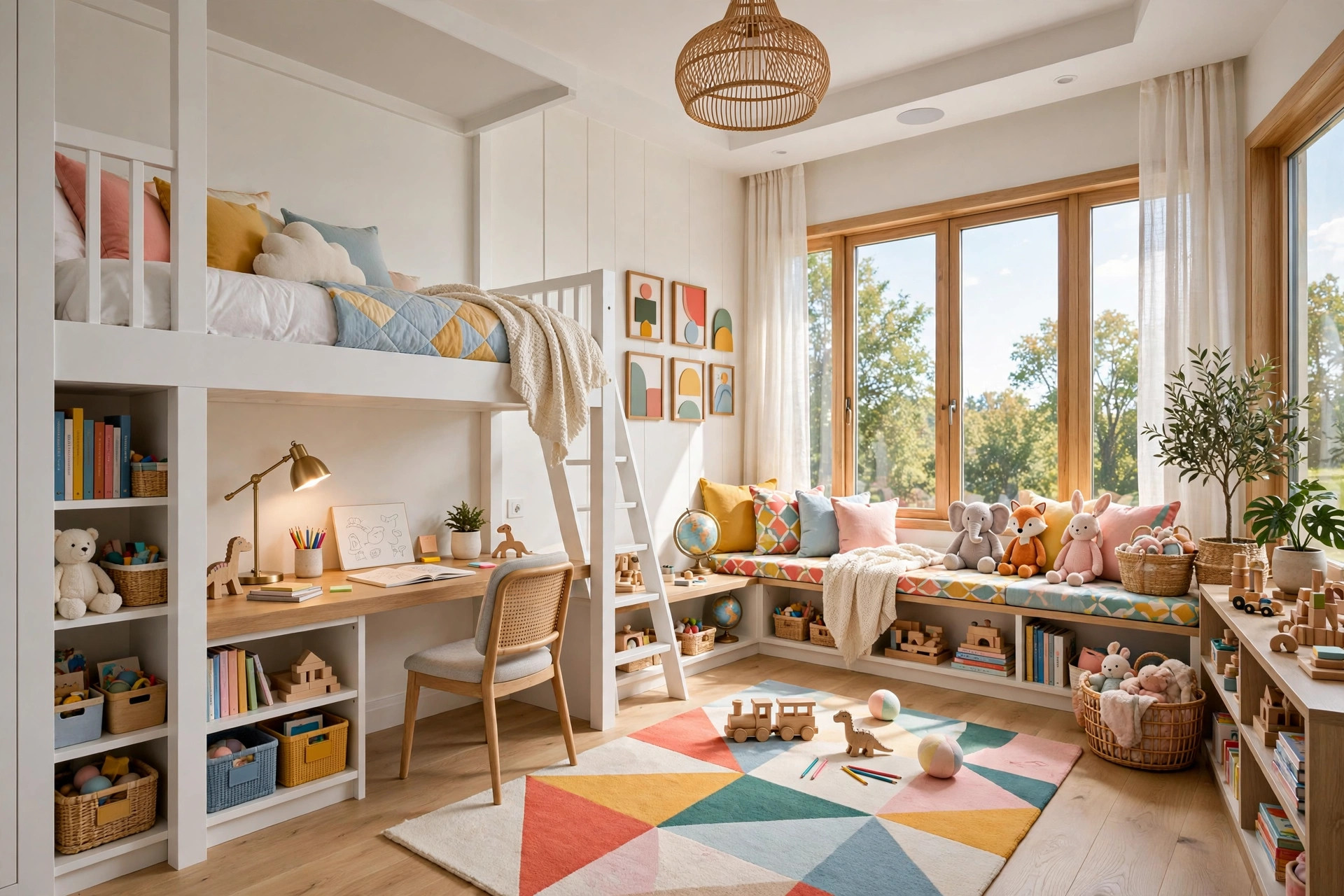
A loft bed stacks sleeping above and living below, effectively doubling the usable footprint of a bedroom. In kids’ rooms and teen rooms, the space underneath holds a desk, a dresser, or a cozy reading nook; in a studio, it can hide a wardrobe or a compact home office.
Check ceiling height first — you need enough clearance to sit up comfortably in the loft and to stand or sit under it. Sturdy wood or metal frames with full guardrails are essential, and a proper ladder or stair unit (with storage in the steps, if you can find one) makes the climb safe and adds even more function.
💡 Pro Tip: Staircase-style loft beds with built-in drawers in each step add the storage of a small dresser to the climb itself — measure your room first, though, since stairs need more floor than a vertical ladder.
15. Rolling Kitchen Cart With a Butcher-Block Top
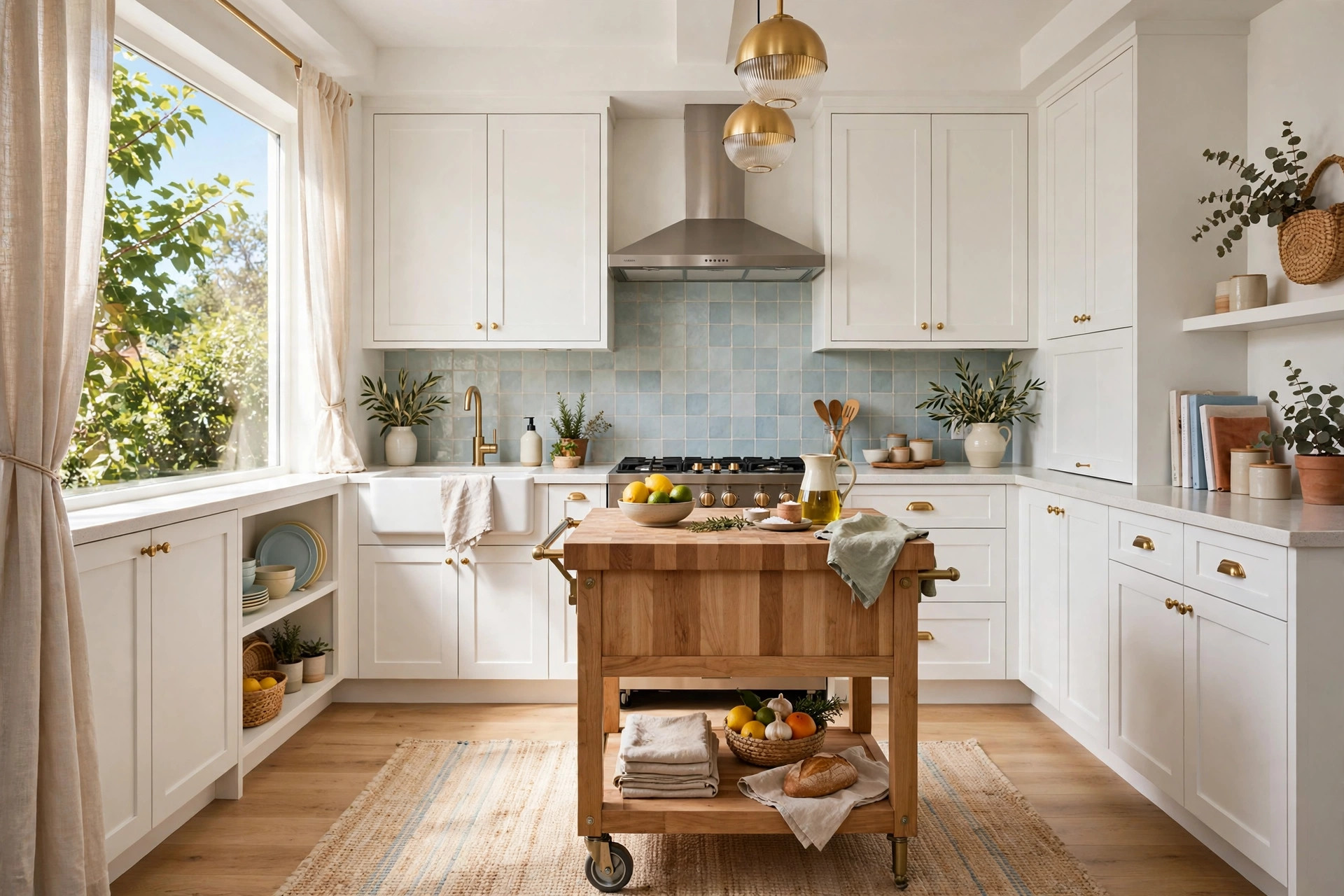
Small kitchens are always short on both counter space and storage, and a rolling kitchen cart delivers both in one mobile unit. The butcher-block top adds prep surface and doubles as a serving station; the shelves and drawers below swallow small appliances, pantry overflow, and cookware.
Lockable casters are the detail that makes or breaks this piece — the cart must roll smoothly to where you need it and then stay put while you chop. Choose a slim model, around 18 inches deep, so it can park against a wall or in a narrow gap when the cooking is done, and look for a towel bar or spice rack on the side for bonus function.
📌 Important: Always lock at least two casters before using the cart as a cutting surface. An unlocked cart that drifts mid-chop is a safety hazard, and even a small drift can send a knife or a hot pan somewhere it should not go.
16. Daybed as Sofa by Day, Bed by Night
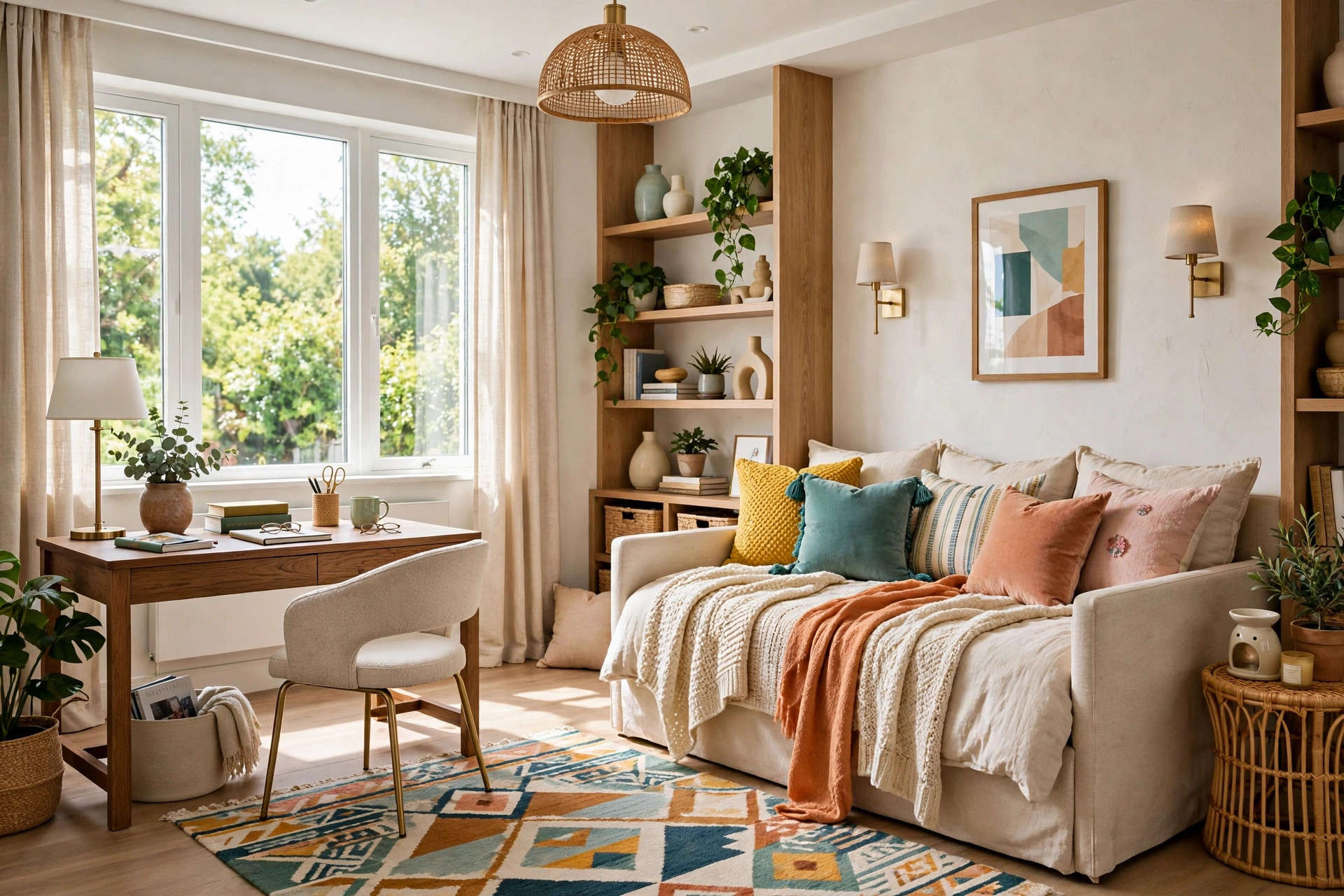
A daybed dressed in cushions and throws reads as a deep, inviting sofa during the day and becomes a twin bed at night — no mechanism, no folding, just a styling change. It is the simplest possible double-duty sleeper, which makes it perfect for home offices and guest rooms that need to look like living spaces.
Push the daybed against the longest wall and treat it like a sofa first: back cushions along the wall, lumbar pillows in front, a folded throw across one arm. Add a trundle or drawers underneath and the base gains storage too. For anyone furnishing one open room, daybeds are a cornerstone of good studio apartment decor inspiration, bridging the living and sleeping zones beautifully.
17. Trundle Bed for Kids’ Rooms and Guest Rooms
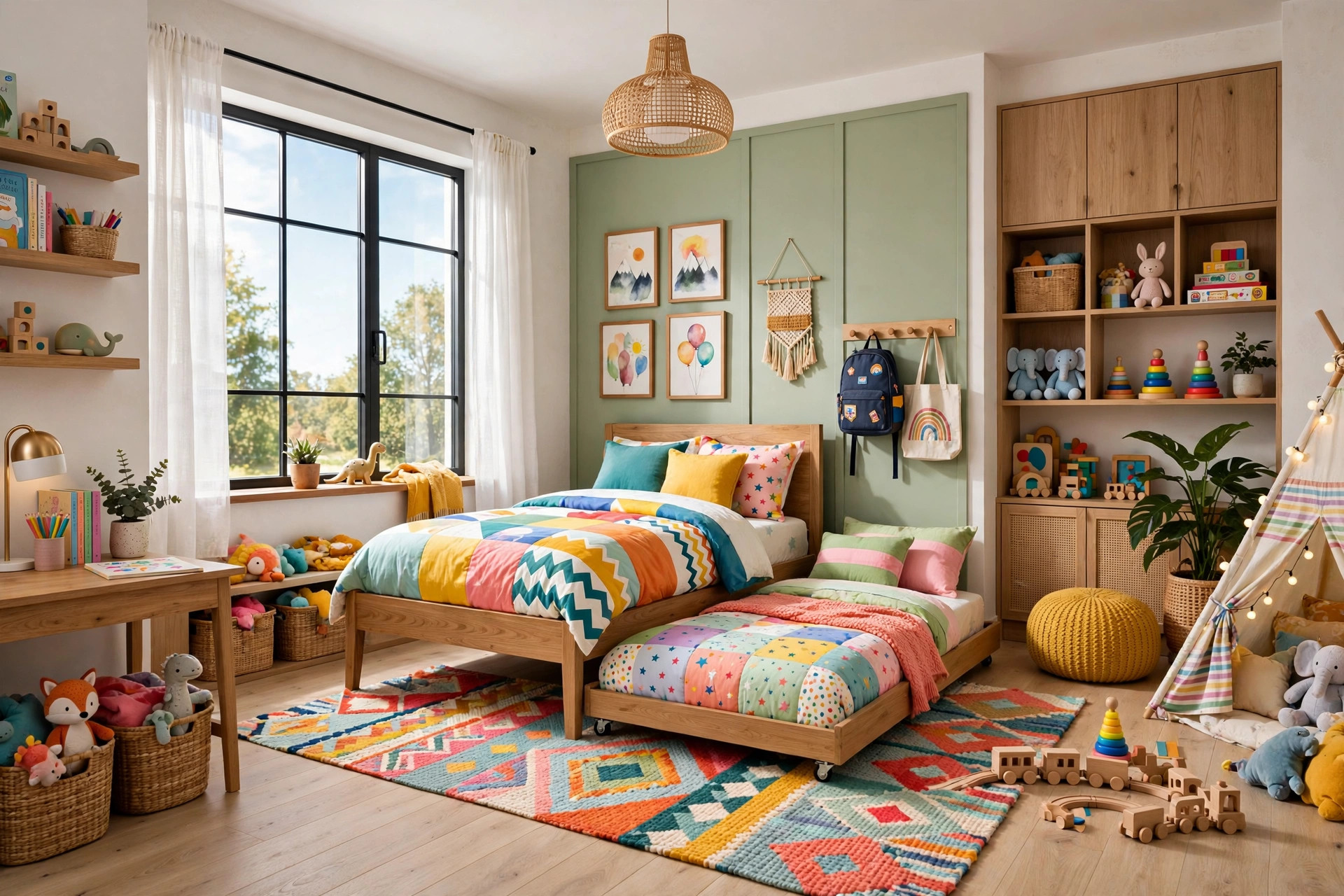
A trundle bed hides a second mattress on wheels beneath the main bed, rolling out for sleepovers and sliding away invisibly by morning. Kids’ rooms gain a guest bed without losing play space, and home offices with a daybed-plus-trundle setup can sleep two guests in a room that works as an office all week.
Look for trundles with smooth-rolling casters and a pop-up mechanism that raises the second mattress to full height, so the two beds can even join into a king for couples. Keep the trundle bedding stored inside the unit itself, and the whole guest setup deploys in under two minutes.
18. Leaning Ladder Shelf With a Fold-Out Desk
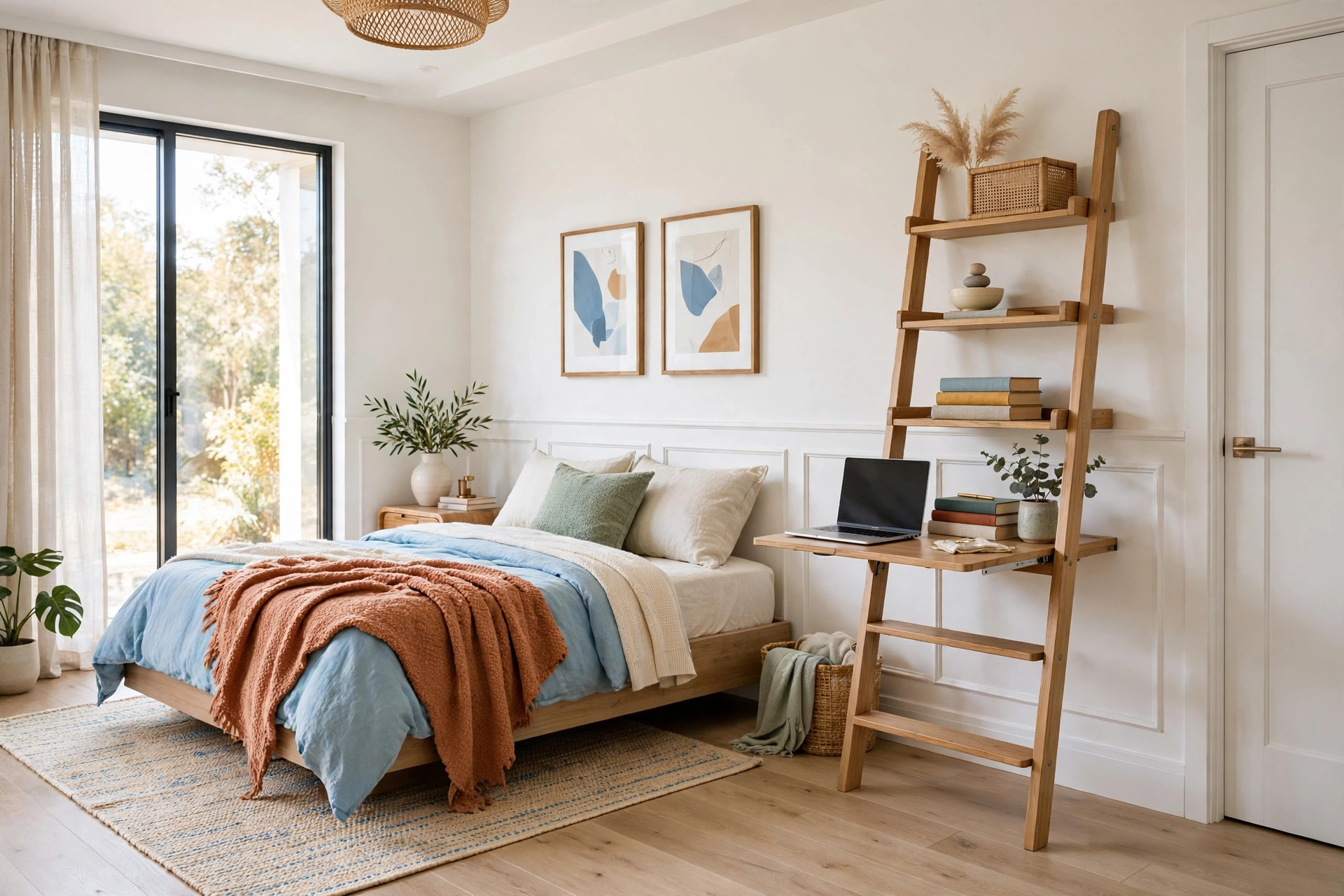
A leaning ladder shelf needs no mounting — it rests against the wall — and many designs now include a fold-out desk surface midway down. That combination gives you open display shelving plus a real workspace in a footprint barely wider than the shelf itself, ideal for corners that cannot fit a traditional desk.
Style the upper shelves with books and decor, keep the desk surface clear for work, and fold it away when the day ends. Because ladder shelves are narrow and open, they suit small bedrooms and living rooms where a bulky desk would dominate the wall.
19. Window Seat With Hidden Storage Inside
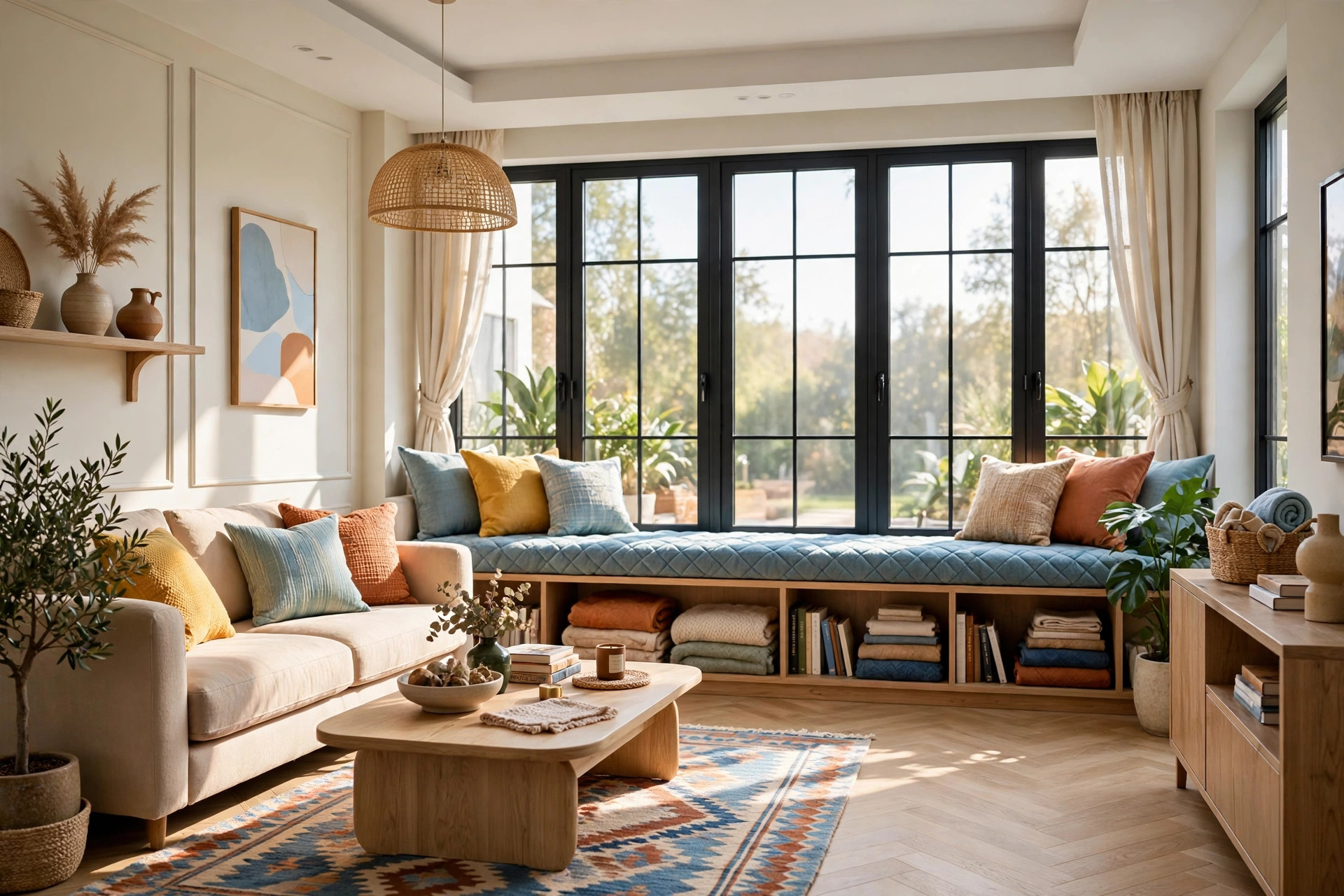
The space beneath a window is often dead space in a small room, and a window seat with storage turns it into seating, storage, and a favorite spot all at once. A simple bench with a hinged top holds board games, craft supplies, or extra linens; add a cushion and it becomes the best seat in the house for reading or morning coffee.
If built-in carpentry is not an option, a freestanding storage bench in the right width achieves nearly the same effect. Keep the seat depth around 18 inches for comfortable sitting, and choose a top that opens easily — a heavy lid that slams is a dealbreaker for daily use.
20. Banquette Bench With Under-Seat Storage
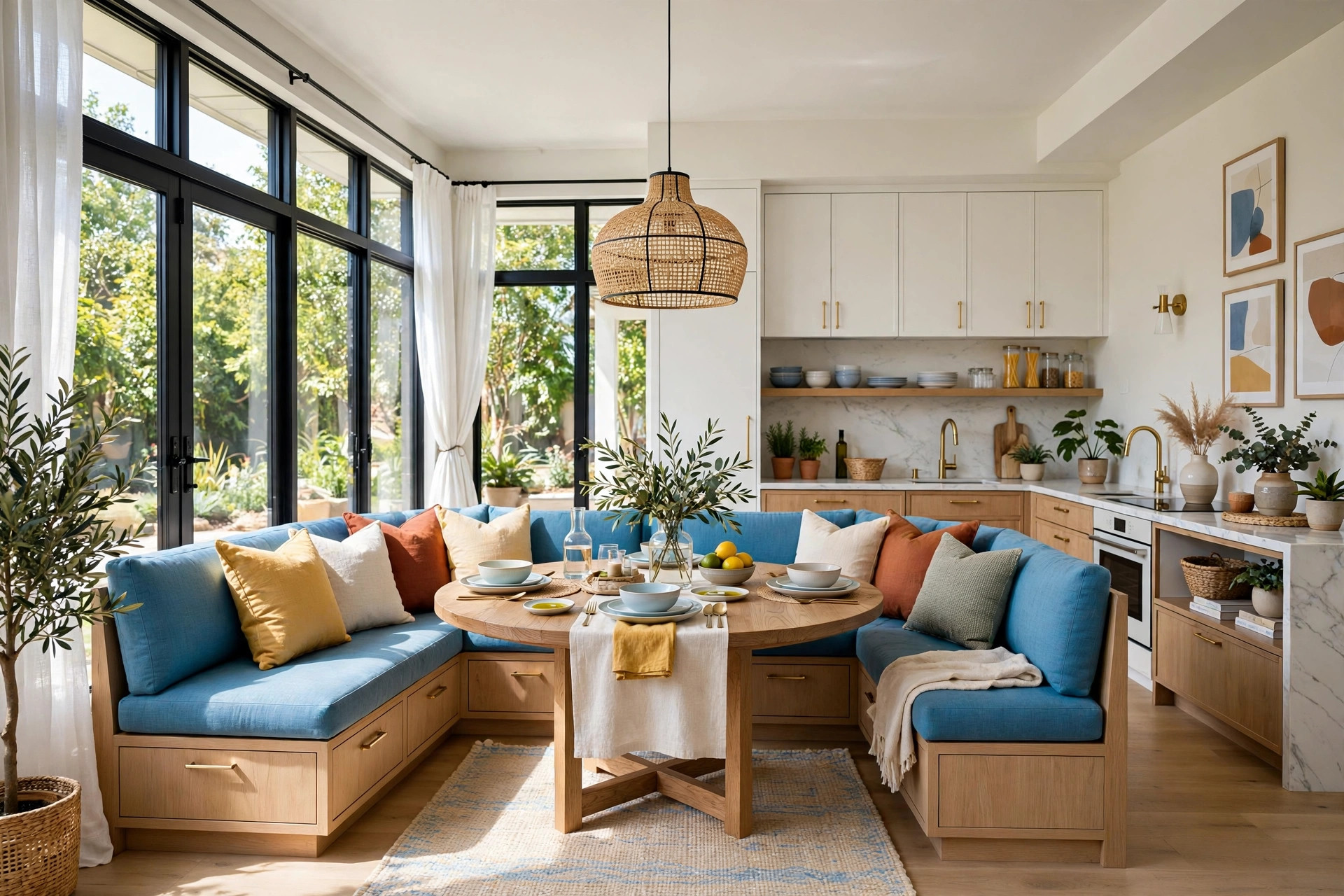
A banquette — a built-in or freestanding bench along the wall — turns a dining corner into a cozy booth while hiding storage under every seat. Paired with a small round or drop-leaf table, a banquette seats more people in less floor space than chairs ever could, because bench seating needs no pull-out room behind it.
Use the under-seat compartments for table linens, rarely used serveware, or kids’ art supplies. Add washable cushion covers and a couple of throw pillows, and the banquette becomes the spot everyone fights over at dinner — proof that the smartest small space furniture ideas are also the most inviting.
Quick Comparison: Double-Duty Furniture by Cost and Effort
Small Space Furniture Quick-Start Checklist
- ✅ List what each piece in the room already does — then spot the single-purpose items to upgrade first
- ✅ Measure doorways, stairwells, and the open positions of sleepers and leaves before ordering anything
- ✅ Choose pieces with interior storage over decorative-only versions at the same price
- ✅ Check your lease for drilling and wall-mounting rules before buying anchored pieces
- ✅ Pick furniture on legs or with visible floor underneath to keep the room feeling open
- ✅ Buy the guest-sleeping solution first — it is the hardest to improvise later
Common Small Space Furniture Mistakes
Mistake 1: Buying the Transformer Before Measuring the Room
The most common failure in small space furniture ideas is falling in love with a piece and skipping the tape measure. Sleeper sofas need clearance to open, drop-leaf tables need room for chairs, and Murphy beds need wall space plus swing room. Measure the piece in every position it will take — open, closed, and mid-transformation — and tape the footprint on the floor before you buy.
Mistake 2: Choosing Looks Over Mechanism Quality
A beautiful sleeper sofa with a flimsy mechanism becomes an ugly problem within a year. On any transforming piece, the mechanism is the product: test it repeatedly in the store, read reviews specifically about the moving parts, and favor established designs over clever-looking newcomers. A plain piece that transforms smoothly beats a stunning one that sticks.
Mistake 3: Forgetting the Storage Has to Be Reachable
Deep storage is only useful if you can get things in and out without a wrestling match. Drawers should glide fully open, ottoman lids should stay up on their own, and under-bed compartments need handles you can actually grip. If accessing the storage is annoying, it will become a junk drawer — test the reach, not just the volume.
Mistake 4: Overloading One Room With Transformers
Every piece doing double duty sounds efficient until the room feels like a puzzle box. Two or three hardworking pieces per room is the sweet spot; beyond that, the space starts to feel fussy and high-maintenance. Let some pieces be simple and beautiful — not everything needs a hidden compartment.
Mistake 5: Ignoring Weight Ratings and Anchor Requirements
Wall beds, loft beds, and ladder shelves all have weight limits and anchoring needs that are not suggestions. Exceeding them risks real injury, and in rentals, an unanchored tall piece can also mean liability. Read the ratings, anchor to studs, and when in doubt choose the freestanding version designed to stand on its own.
Frequently Asked Questions
1. What is the best double-duty furniture for a studio apartment?
A sleeper sofa or daybed for sleeping, a drop-leaf or lift-top table for dining and work, and a storage ottoman for seating and hidden storage cover the essentials. These three pieces give a studio a bed, a dining spot, a workspace, and seating without crowding the single room.
2. Are Murphy beds worth it in a rental?
Often yes, if you choose a freestanding cabinet-style unit that needs no wall mounting. You get a real bed plus roughly twenty square feet of daily floor space back, with zero lease violations. Just confirm the unit fits through your doorways and that your floor can handle the concentrated weight.
3. How do I make a sleeper sofa comfortable for guests?
Add a mattress topper made for sleeper sofas, keep real bedding (not a thin throw) stored in or near the sofa, and open it up before guests arrive so it airs out. A comfortable pillow and a bedside surface for a phone and water make the living-room bed feel like a proper guest setup.
4. What small space furniture ideas work best on a budget?
Storage ottomans, nesting tables, folding chairs, rolling carts, and C-shaped side tables all deliver double duty at low prices. Shop secondhand for solid-wood drop-leaf tables and storage benches, which are common thrift-store finds and last for decades.
5. Can double-duty furniture look high-end?
Absolutely — the category has matured. Wall beds now masquerade as built-in millwork, extending console tables look like designer entry pieces, and lift-top coffee tables come in walnut and marble finishes. The trick is choosing pieces where the mechanism is invisible when the piece is at rest.
6. How much clearance does a sleeper sofa need?
A queen sleeper needs about seven feet of clear floor in front of the sofa when open, plus room to walk around it. Measure from the wall to the farthest point of the extended bed, then add two feet of walking space. Tape the footprint on your floor before committing.
7. Is a loft bed safe for adults?
A well-built loft bed rated for adult weight is safe, provided it has full guardrails, a sturdy ladder or stairs, and enough ceiling clearance to sit up. Check the manufacturer’s weight rating, anchor the frame if recommended, and skip the loft if your ceiling is under eight feet — the sleeping space will feel cramped.
Conclusion
The best small space furniture ideas share one trait: they refuse to do only one job. A bed that stores your wardrobe, a table that seats two on Tuesday and eight on Saturday, a desk that disappears when work ends — these are the pieces that make a small home feel generous instead of cramped. Start with the piece that solves your biggest daily frustration, whether that is guest sleeping, dining, or simply somewhere to put things.
Choose well, measure twice, and let each piece earn its footprint twice over. If you want the room around your new furniture to feel just as spacious, explore these tiny apartment decorating ideas for layout and styling tricks that multiply the effect. A small space furnished with intention does not feel like a compromise — it feels like the smartest room in the house.