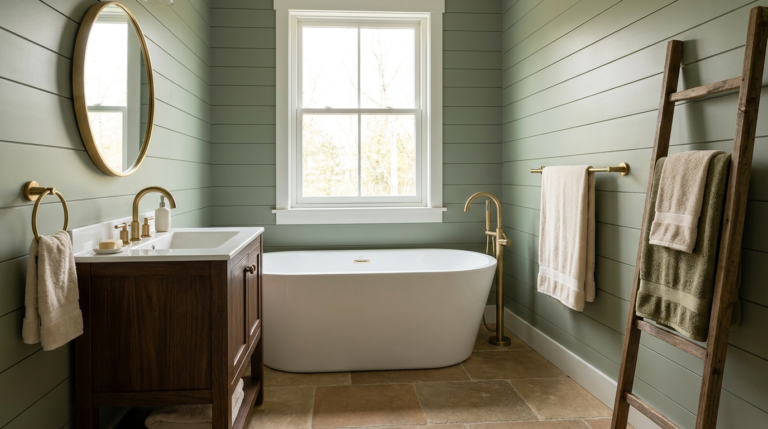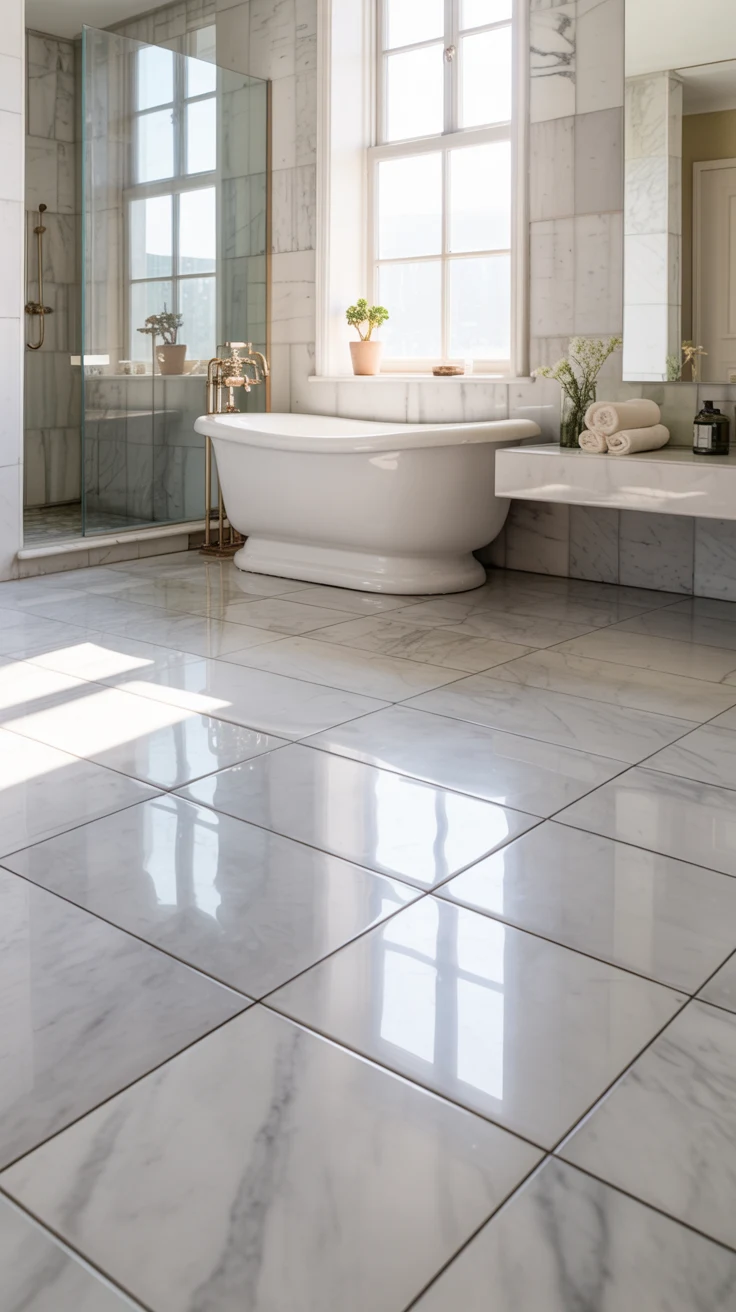
8 Modern Bathroom Design Ideas That Will Make You Rethink Everything
Here’s an uncomfortable truth: most people spend more time thinking about their sofa than their bathroom. And yet the bathroom is the room you walk into first thing every morning, the space where you decompress after a long day, and the environment that sets the tone for everything that follows. So why does it so often end up as an afterthought — functional but uninspiring, clean but completely forgettable?
I asked myself that exact question a few years ago while standing in a bathroom that worked perfectly fine and felt completely wrong. Everything was present. Nothing was considered. And the gap between those two things was significant enough to make the room feel deeply unsatisfying despite its apparent functionality. What followed was an obsession with modern bathroom design that I’ve never quite recovered from — and these 8 ideas are the most valuable things I’ve learned along the way.
What Makes a Bathroom Genuinely Modern?
Before we dive into the ideas, let’s establish what “modern” actually means in a bathroom context — because it’s one of the most misunderstood words in interior design. Modern bathroom design isn’t a specific style or a particular set of fixtures. It’s a design philosophy built around three core principles: function informing form, materials chosen for quality and authenticity, and details considered with precision.
A modern bathroom can be warm or cool, minimal or layered, light or dramatically dark. What it cannot be is accidental. Every element in a genuinely modern bathroom has been chosen deliberately — and that intentionality is what you feel when you walk in, even before you’ve consciously registered any individual design decision. That’s the quality we’re building toward. Let’s get started.
1. Get the Layout Right First
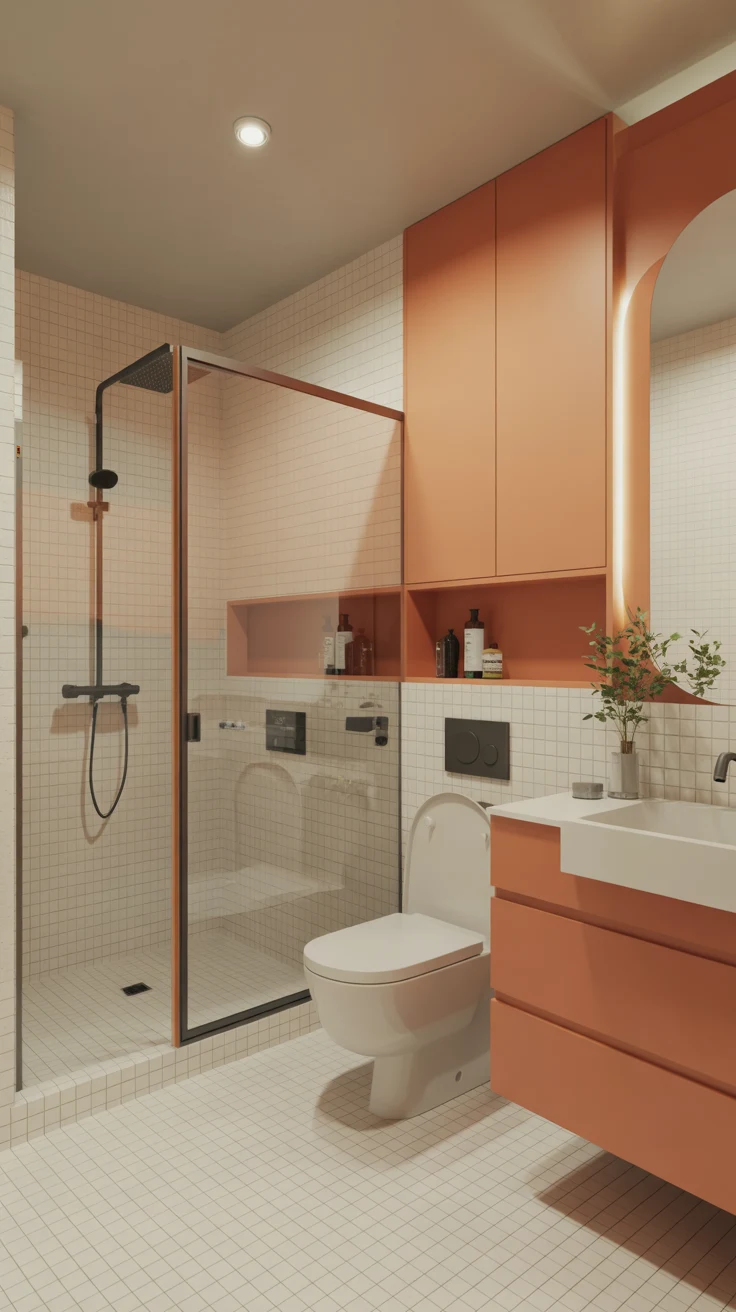
Every successful bathroom design layout begins before a single fixture is chosen or a single tile is selected. The position of the toilet, basin, and shower or bath in relation to each other — and in relation to the door, the window, and the plumbing wall — determines whether the room flows naturally or fights against itself every single day.
The most effective modern bathroom designs position the toilet as discreetly as possible — furthest from the door, where it’s least visually prominent when you enter. The basin goes adjacent to the most accessible wall, at a height that’s genuinely ergonomic rather than just standard. And the shower or bath occupies the position that makes the most of natural light, spatial flow, and visual impact simultaneously.
Layout principles that define great modern bathrooms:
- Toilet placement — furthest from the door, least visually prominent on entry
- Basin position — adjacent to natural light where possible, ergonomically correct height
- Shower zone — corner placement maximizes remaining floor area for movement
- Door type — pocket or sliding doors reclaim the floor space that swinging doors consume
- Plumbing wall — concentrating fixtures on one wall reduces costs and simplifies layout
Pro tip: Before committing to any layout, walk through your daily routine mentally — morning shower, evening bath, quick mid-day use — and test whether the layout serves each scenario without awkward movement or bottlenecks.
2. The Minimalist Approach Done Right
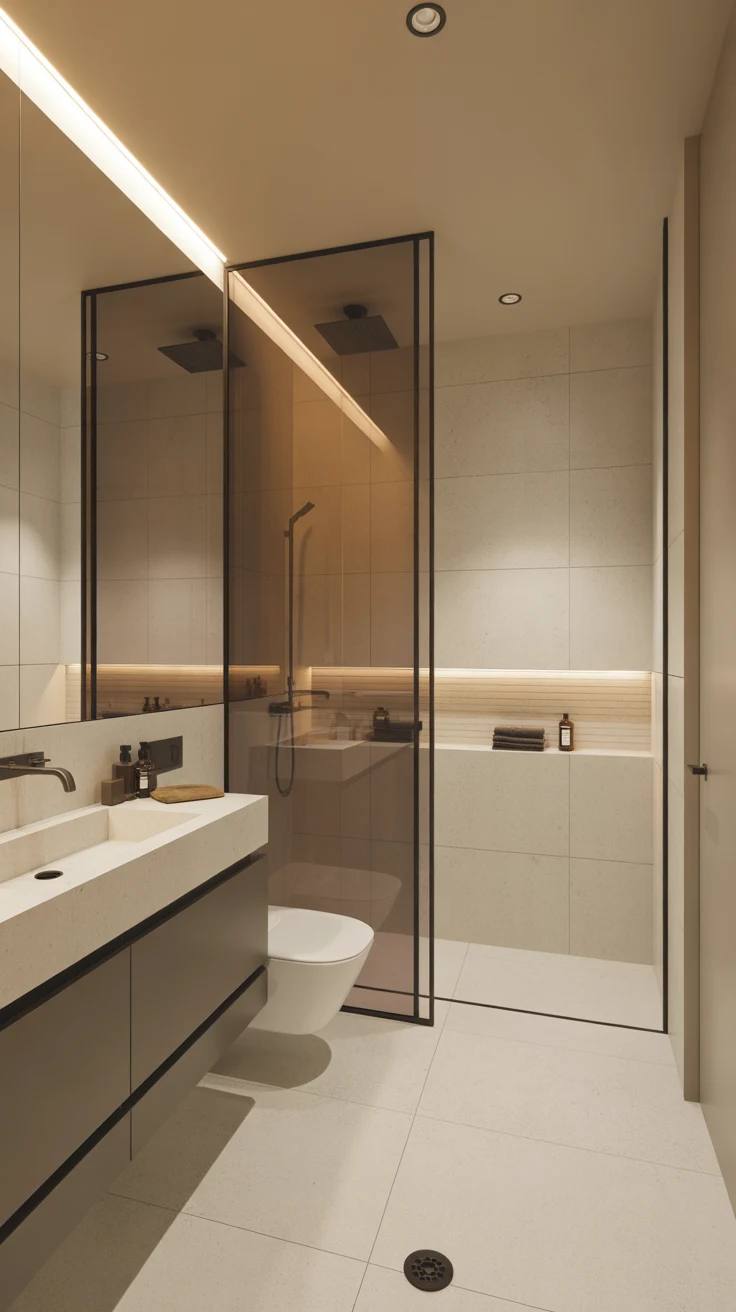
Minimalist bathroom design is simultaneously the most aspirational and the most misunderstood direction in modern bathroom design. People see minimal bathrooms in magazines and assume they’re cold, sterile, or impractical for daily living. They’re absolutely none of those things — when designed correctly.
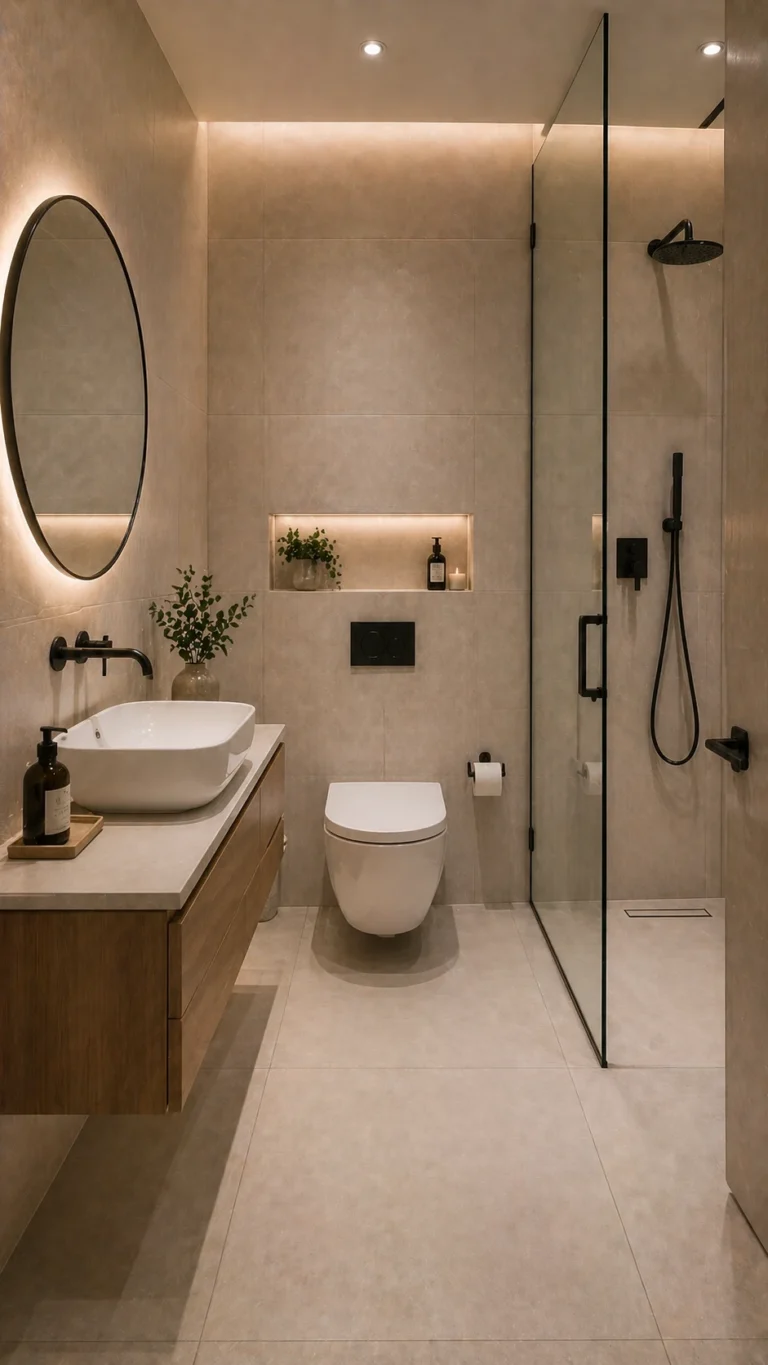
A genuinely minimalist modern bathroom decor approach isn’t about having less — it’s about storing everything so intelligently that the surfaces remain clear and the quality of the materials can actually be seen and appreciated. Recessed niches in the shower wall eliminate caddies. A floating vanity with deep drawers conceals every product completely. A mirror cabinet above the basin provides hidden storage behind the most-used surface in the room. The minimalist bathroom looks effortless because extraordinary planning went into making it so.
Elements that define a minimalist modern bathroom:
- Handle-free cabinetry — clean surfaces with no visual interruption
- Recessed shower niche — flush with the wall, zero visual clutter
- Floating vanity — reveals floor beneath, creates visual breathing room
- Frameless glass shower screen — defines zone without blocking sightlines
- Linear drain — flush with floor, far less visually disruptive than centered drains
- Single consistent tile — floor to wall in one material for seamless continuity
3. Small Modern Bathrooms — Maximum Style, Minimum Space
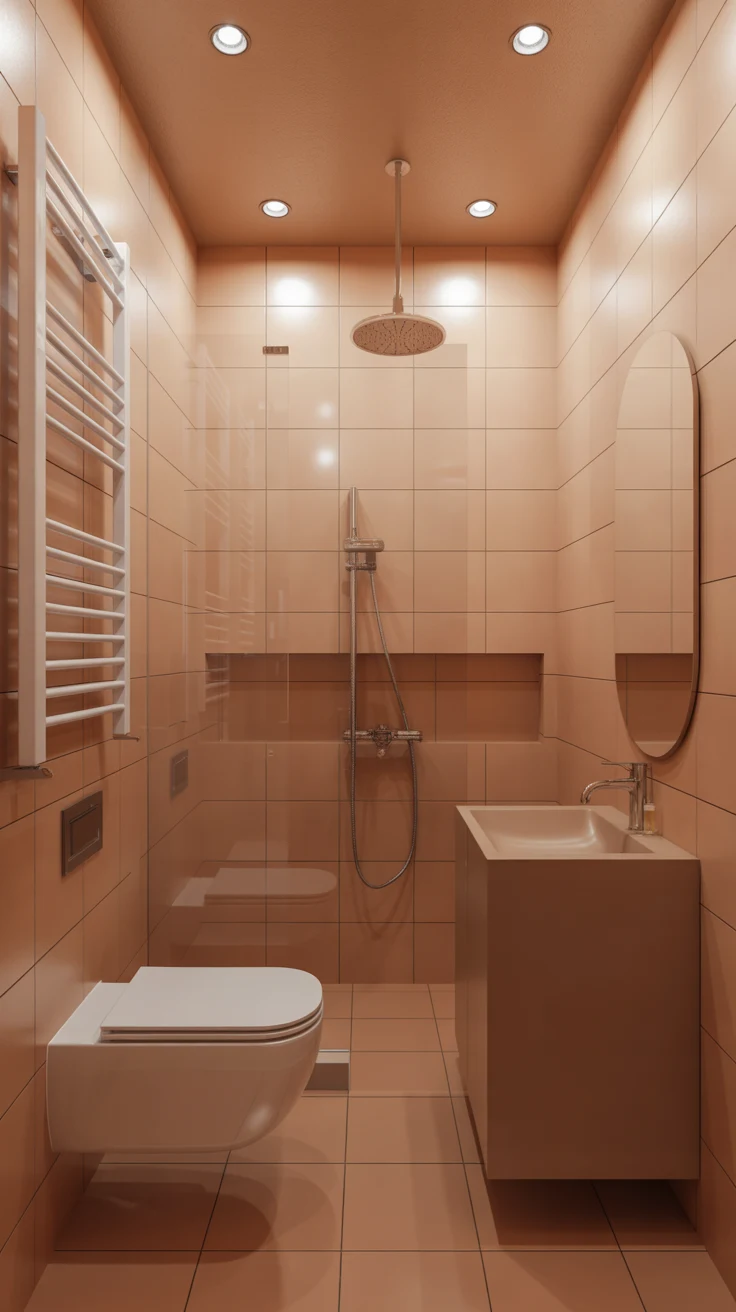
Here’s something that consistently surprises people: modern small bathrooms can look more impressive than large bathrooms that haven’t been properly designed. Why? Because in a small space, every design decision is visible at close range and carries disproportionate impact. One extraordinary tile choice. One frameless glass screen. One beautifully backlit mirror. Each transforms the entire room rather than just one corner of it.
Bathroom design small modern principles start with visual continuity — running one material from floor to wall without changing direction or tone creates a seamless surface that reads as more expansive than the same room with multiple competing materials. Large-format tiles reduce the grout grid that visually fragments a compact space. And wall-mounted fixtures — toilet, basin, and vanity — reveal the floor plane that makes the room feel genuinely open rather than cramped.
4. Contemporary Bathroom Design — Where Warmth Meets Precision
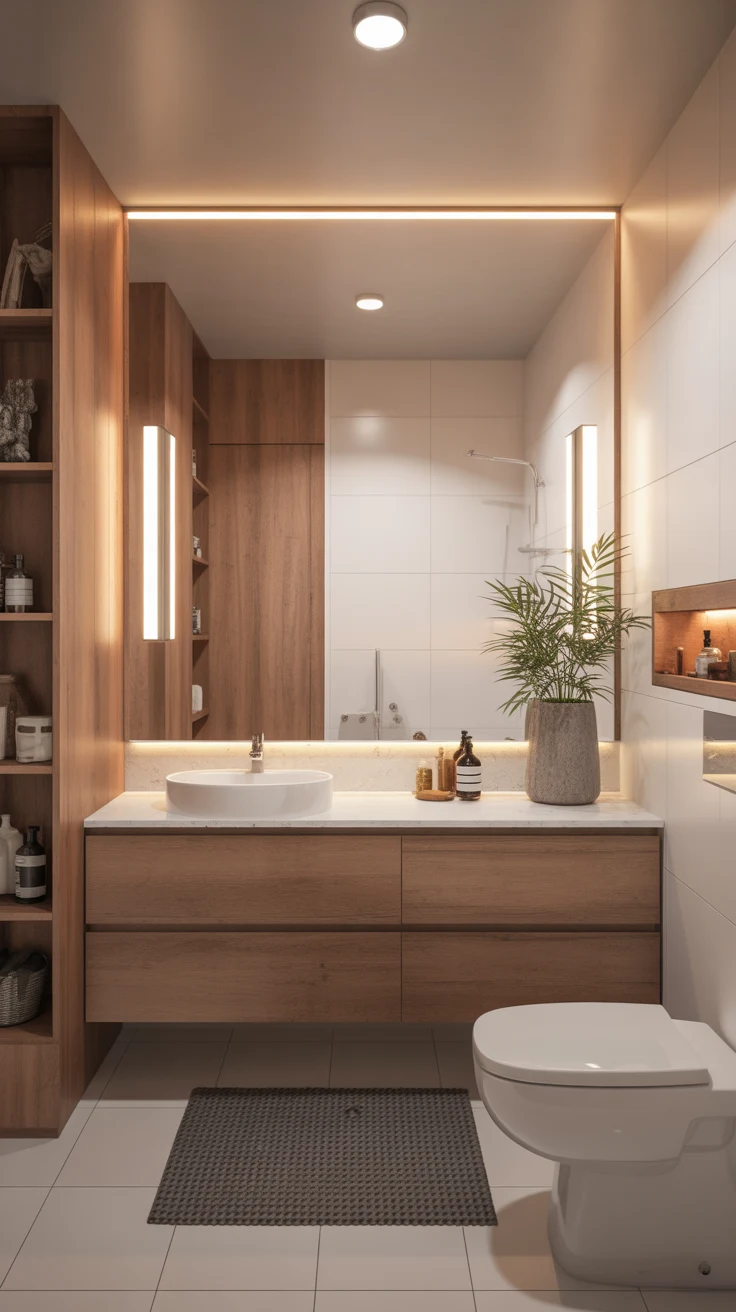
The most compelling contemporary bathroom design direction right now sits at the intersection of two qualities that were once considered opposites: warmth and precision. Clean lines and organic materials. Minimal clutter and rich texture. Modern geometry and natural variation. This tension — held in careful balance — creates bathrooms that feel simultaneously current and timeless.
In practice, this means a floating oak vanity against a large-format stone tile floor. A concrete basin sitting on a warm timber shelf. A frameless glass shower screen revealing a wall of handmade zellige tile behind it. Each combination pairs the architectural precision of modern design with materials that have genuine organic character — and the result is a bathroom that photographs beautifully and feels genuinely wonderful to use every single day.
FYI: The organic modern bathroom direction — warm natural materials within clean contemporary lines — is the single most enduring design trend in bathroom design right now. It’s not going anywhere because it solves the fundamental tension between beautiful and liveable in a way that pure minimalism never quite achieved.
5. Modern Bathroom Designs With Bathtub
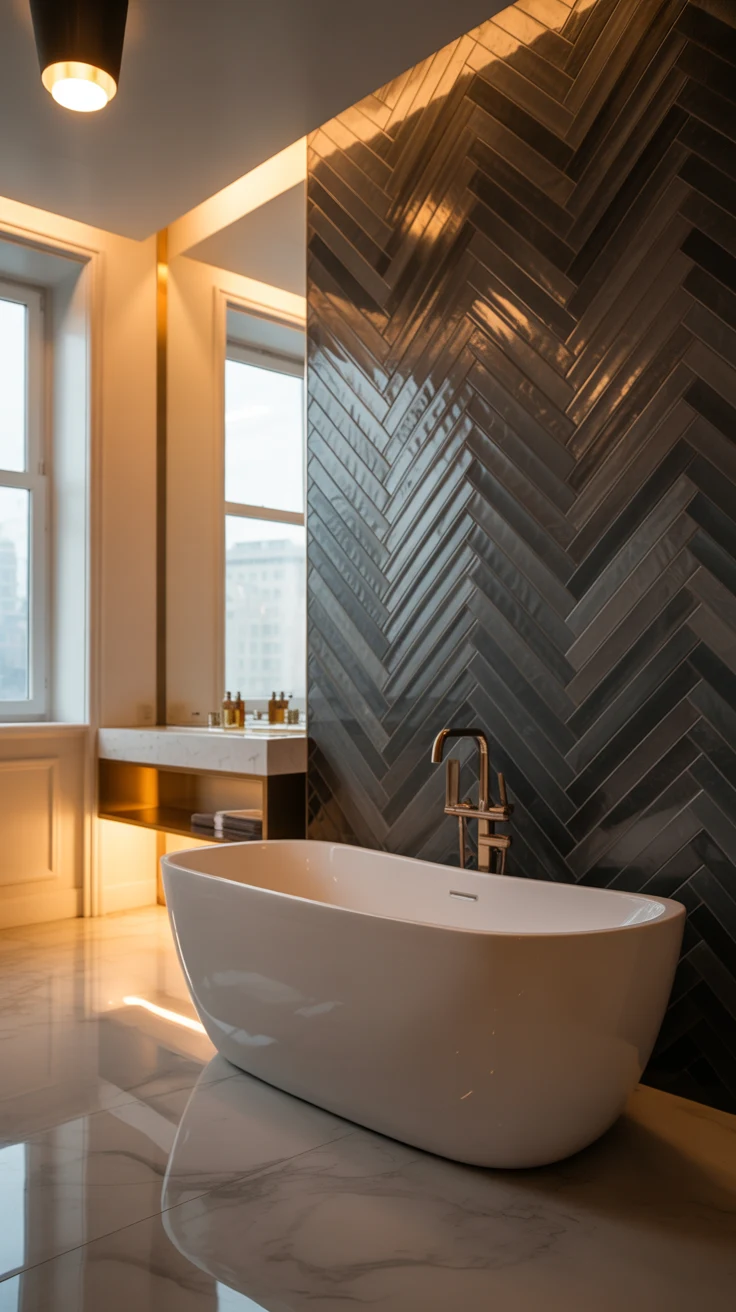
Let’s talk about one of the most searched and most aspirational modern bathroom designs with bathtub configurations — because the freestanding bath is experiencing a genuine renaissance, and the reasons are completely understandable. A freestanding tub doesn’t just provide a different bathing experience. It transforms the spatial character of the entire bathroom.
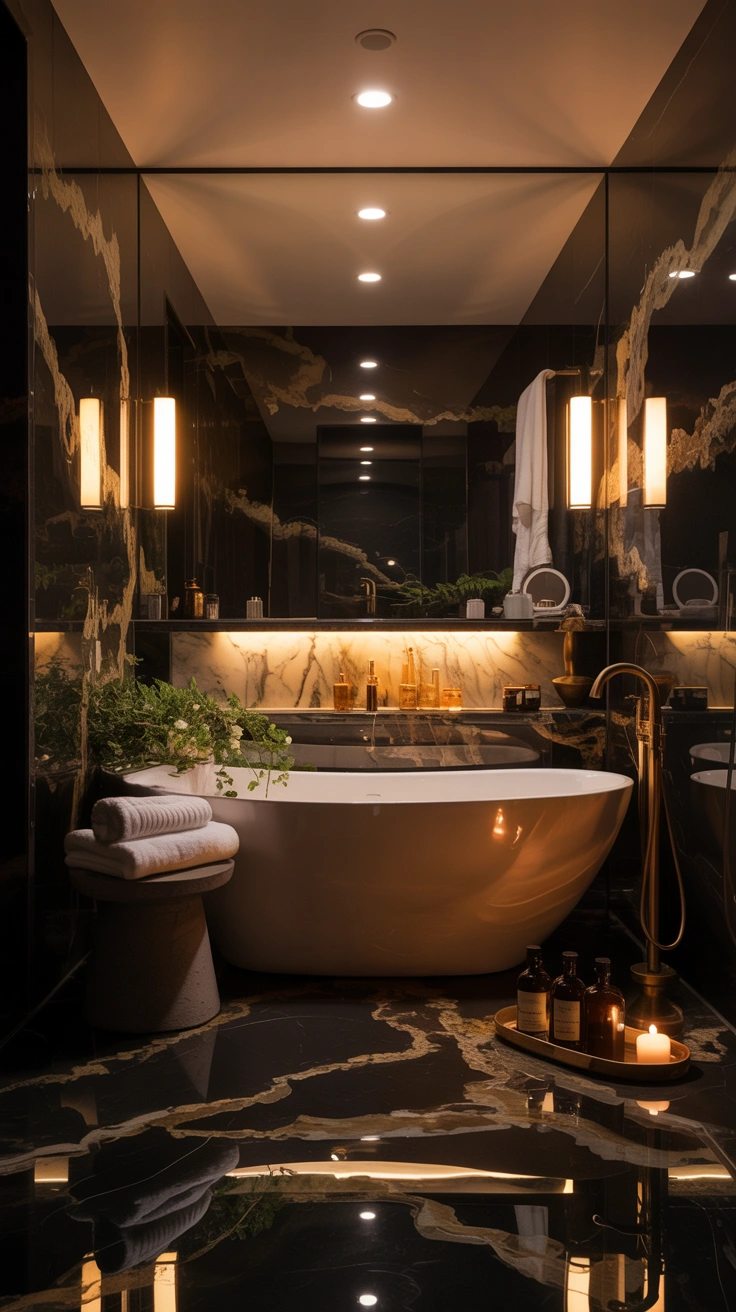
A freestanding bath is a sculptural object. It sits in a room the way significant furniture sits in a living room — with presence, authority, and visual weight. Position it correctly — beneath a window, centered on a feature wall, or placed where it captures the best natural light — and it becomes the room’s undisputed focal point. Everything else arranges itself around it.
Freestanding bath styles and their design signals:
- Stone resin oval — warm to the touch, organic form, genuinely luxurious feel
- Clean-lined rectangular — modern, architectural, suits minimal and contemporary spaces
- Classic roll-top — timeless elegance, suits transitional and traditional schemes
- Sculpted organic form — makes a bold artistic statement, requires visual space around it
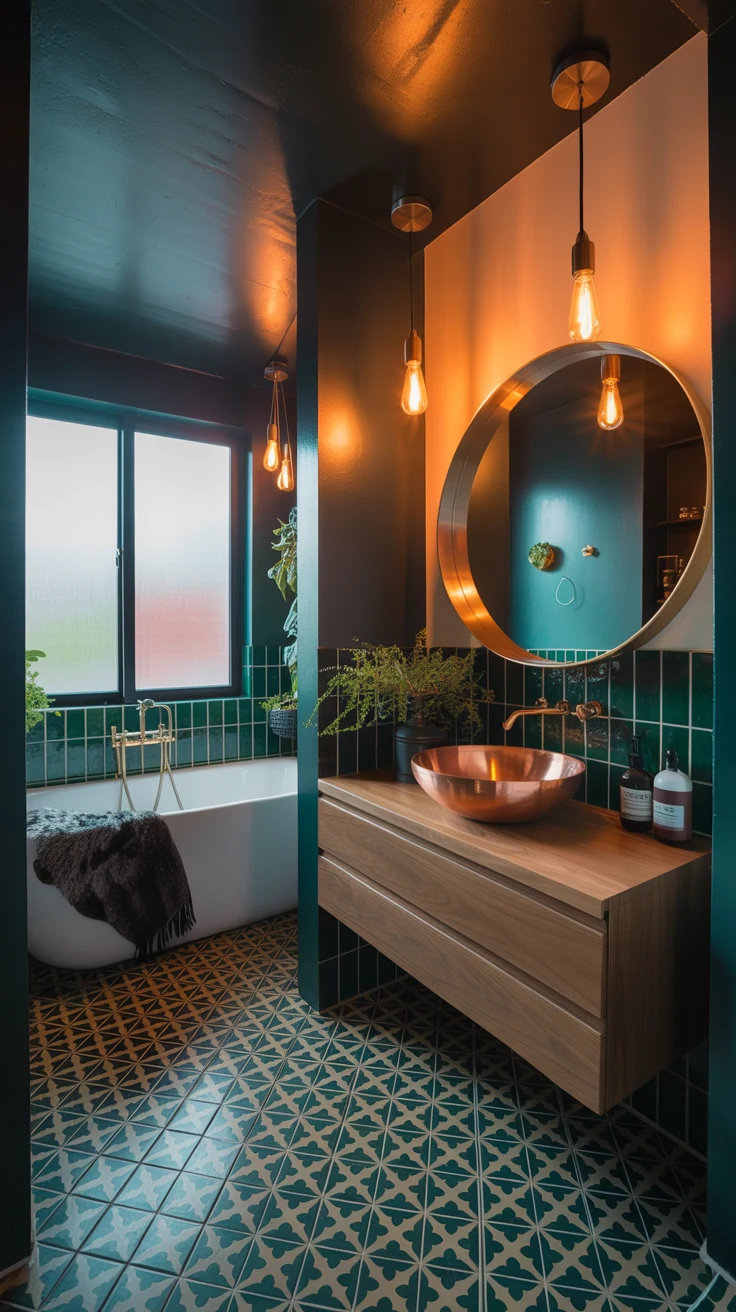
- Copper or brushed brass — extraordinary visual impact, the most daring choice available
6. Bathroom Interior Design Modern — Lighting as Architecture
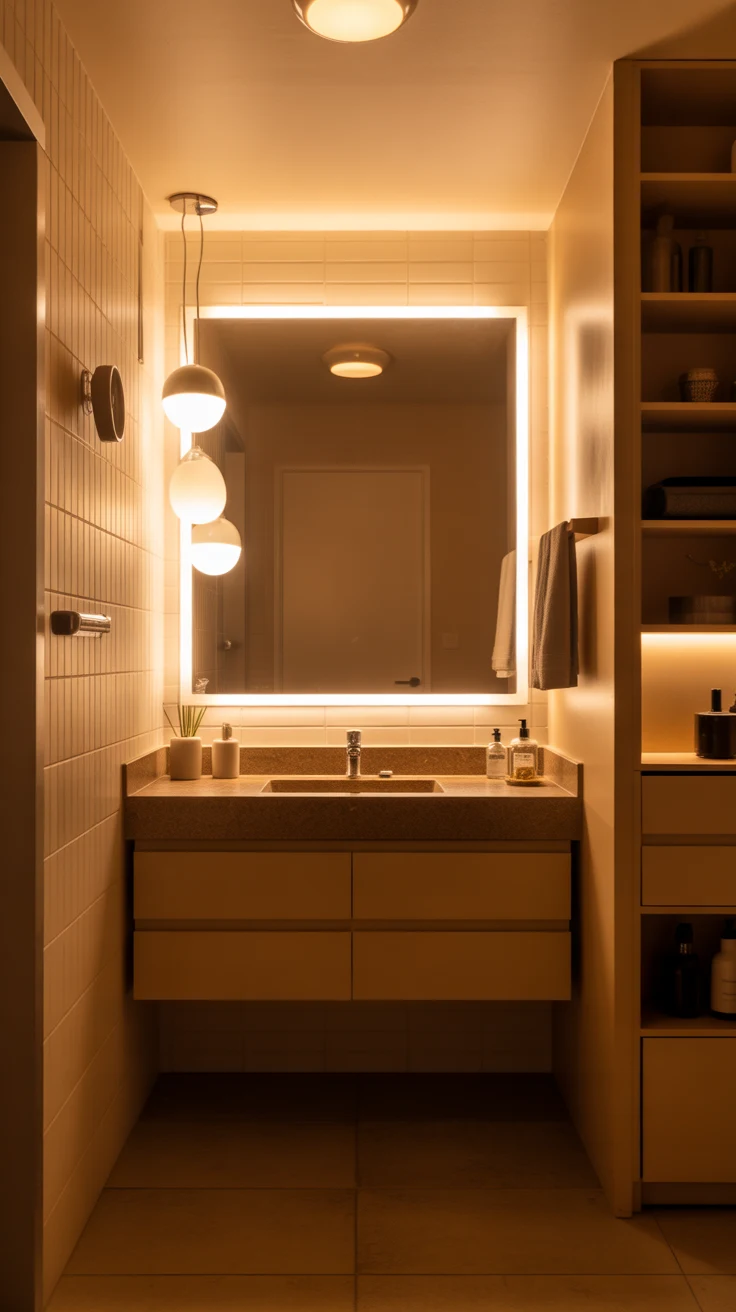
Here’s the bathroom interior design modern principle that separates rooms that look designed from those that merely look decorated: treating lighting as architecture rather than an afterthought. In a modern bathroom, lighting doesn’t just illuminate — it defines zones, creates atmosphere, and reveals the quality of materials in ways that no other single element can achieve.
The three-layer approach applies in bathrooms exactly as it does in every other room. Ambient lighting — recessed spots on dimmers — for general illumination that adjusts from bright morning light to soft evening atmosphere. Task lighting — backlit mirror or flanking sconces at face level — for the practical work of grooming without shadows. And accent lighting — an LED strip along the base of a floating vanity, internal cabinet lighting, or an uplighter above upper cabinets — for the atmospheric layer that makes the bathroom feel genuinely extraordinary after dark.
Modern bathroom lighting specifications:
- Color temperature — 2700–3000K throughout for warm, flattering, consistent light
- Backlit mirror — provides face-level illumination with no visible fitting
- Vanity base LED — creates a floating effect and warm ambient glow at floor level
- Recessed ceiling spots — flush with ceiling, no visible hardware
- Dimmers on every circuit — non-negotiable for atmosphere control
- CRI above 90 — ensures materials appear in their true colors
7. Material Choices That Define Modern Bathrooms
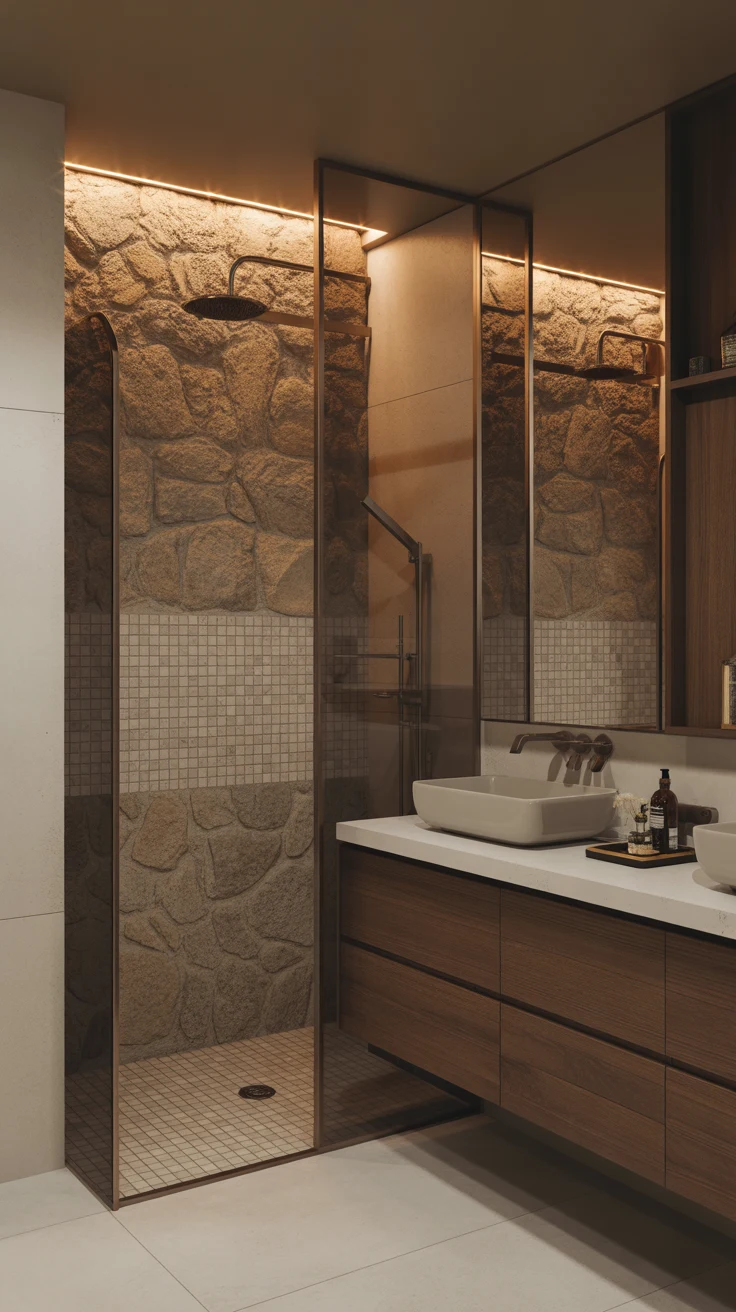
In a modern bathroom design, materials aren’t supporting characters — they’re the lead. When decoration is reduced and clutter is eliminated, the quality and character of the materials themselves carry the entire aesthetic weight of the room. Choosing them well is everything.
Natural stone — marble, travertine, limestone, quartzite — brings a quality of beauty and geological authenticity that no manufactured surface has convincingly replicated. The veining is unique. The depth is real. And the way natural stone ages — developing warmth and character through use — is genuinely priceless in a room you inhabit daily. For those working with tighter budgets, large-format sintered porcelain that convincingly mimics natural stone has reached a quality level that makes it a genuinely excellent alternative.
IMO, the single best material investment in any modern bathroom design ideas project is a honed rather than polished stone surface. Honed stone catches light differently, feels more organic to the touch, and ages more gracefully than polished equivalents — particularly on floors and countertops where surface wear is visible over time.
Material combinations that define modern bathrooms:
- Warm oak + honed marble — organic luxury at its most accessible
- Concrete + brushed brass — industrial warmth with considered detail
- Travertine + natural plaster — earthy, organic, timeless in every sense
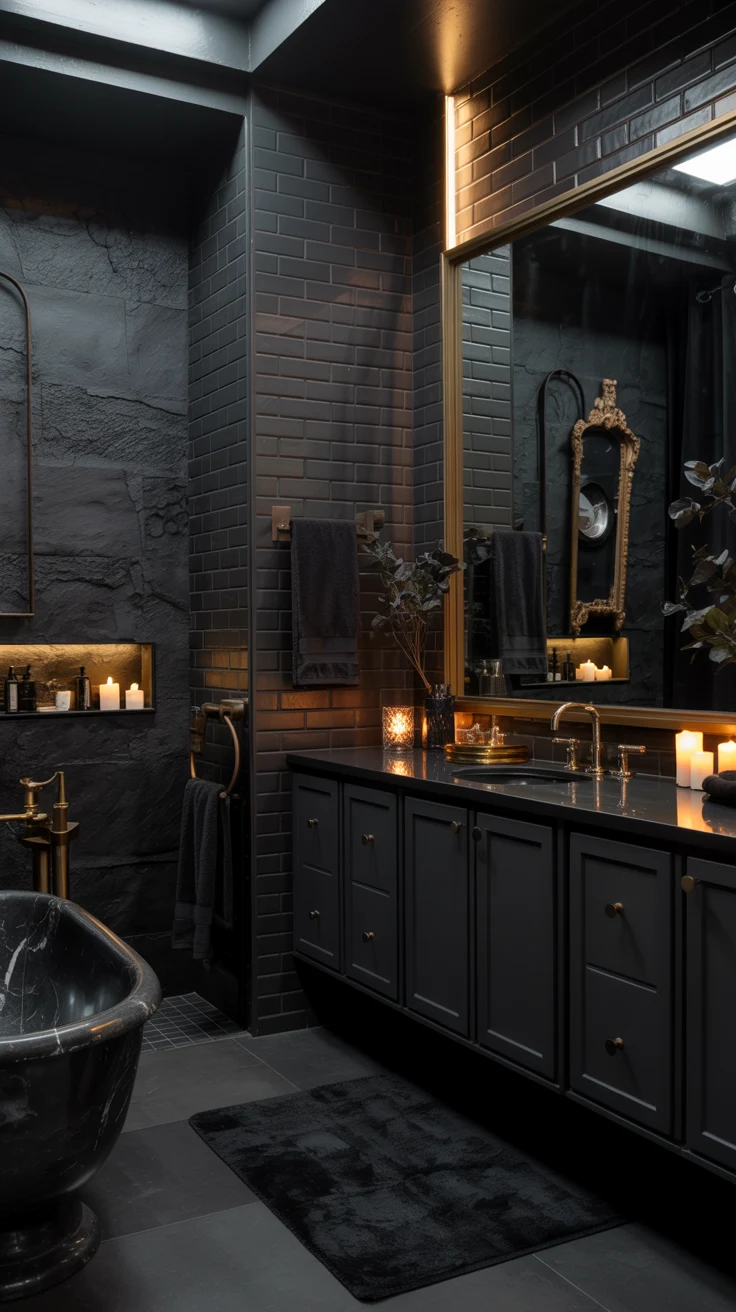
- Dark slate + chrome — graphic, precise, dramatically contemporary
- Limestone + aged bronze — warm, layered, deeply sophisticated
8. Hardware and the Final 5% That Changes Everything
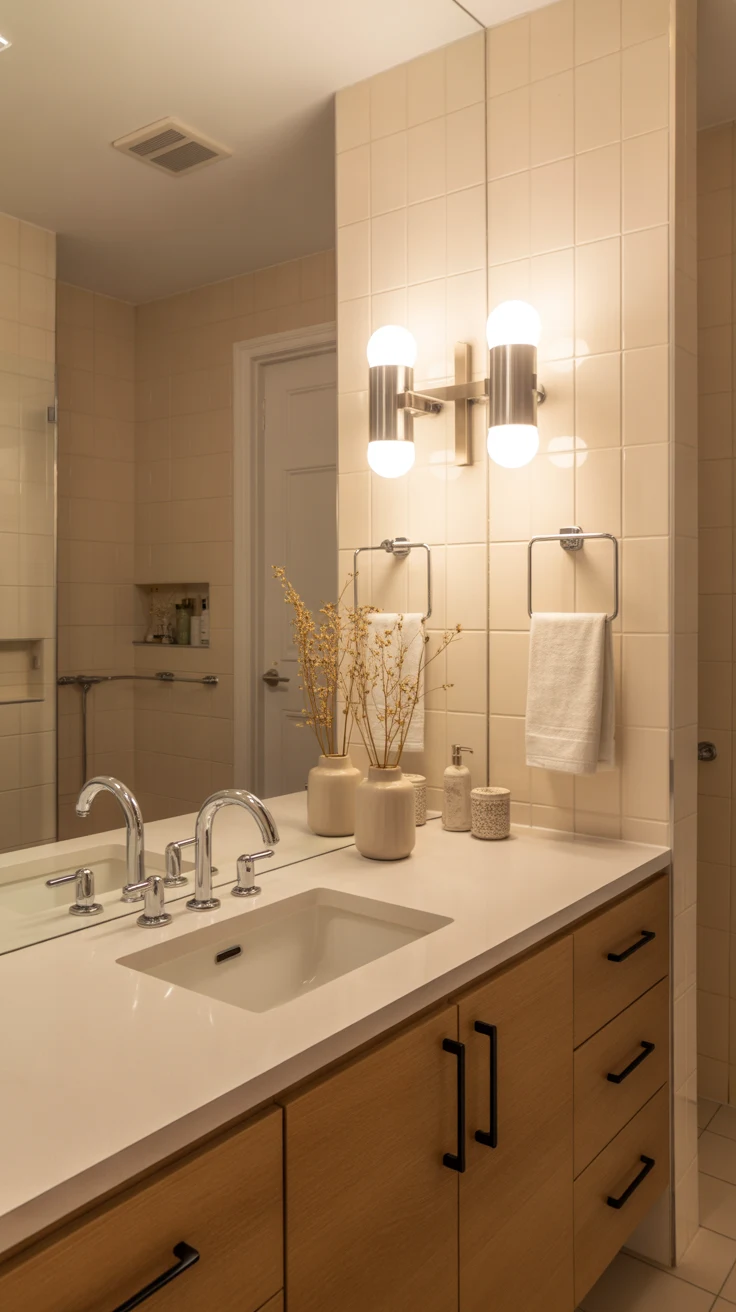
Here’s the final modern bathroom decor idea — and the one that most people underestimate until they experience the difference firsthand: hardware consistency. Every tap, every towel rail, every toilet roll holder, every hook, every cabinet handle — in a well-designed modern bathroom, all of these share a single consistent metal finish applied without exception or compromise.
This level of consistency is what separates a bathroom that looks professionally designed from one that looks assembled over time from whatever was available. Mismatched hardware from different eras communicates a lack of intention — regardless of how beautiful every individual piece might be. A fully coordinated hardware palette in a single quality finish communicates the opposite: that this room was designed as a complete, considered whole rather than accumulated piece by piece.
Choose one finish and apply it absolutely everywhere. Brushed brass adds warmth and quiet luxury that reads beautifully against both light and dark palettes. Matte black is graphic and modern, pairing powerfully with almost any color scheme. Brushed nickel is clean, versatile, and genuinely timeless. The finish matters less than the commitment — choose one and never waver from it, and the entire bathroom will feel dramatically more resolved as a result.
Conclusion
Here’s the honest summary: great modern bathroom design isn’t about spending the most money or installing the most impressive fixtures. It’s about approaching every single decision — from the layout that determines how the room flows, to the material that defines how it feels, to the hardware finish that ties everything together — with genuine intention and unwavering consistency.
Get the layout right before anything else. Choose a clear design direction and commit to it completely. Invest in quality materials in the places you’ll see and touch daily. Layer the lighting so the room transforms beautifully from morning to evening. And finish with hardware consistency that makes the whole room feel professionally designed.
These 8 modern bathroom design ideas give you a complete framework for a bathroom that doesn’t just function well but genuinely restores you every time you walk in. Start with the layout. Build from there. And remember — the bathroom you walk into every morning deserves the same level of care and intention as every other room in your home. Probably more. Because nobody ever had a bad day that started in a truly beautiful bathroom.