6 Bathroom Decorating Changes for Beginners That Make the Biggest Difference
Introduction
Walking into a bathroom that feels tired, cluttered, or just plain boring is one of those small daily frustrations that adds up. You use this room every single morning and every single night, yet it is often the last room in the house to get any decorating attention. The good news is that a bathroom is also the smallest room in most homes, which means it is the easiest and cheapest room to transform. A few smart changes, chosen in the right order, can make it feel like a completely different space by the weekend.
Bathroom decorating for beginners does not require a renovation budget, a contractor, or any design training. It requires a plan that starts with the changes your eyes notice first and ends with the small details that make the room feel finished. Most beginner decorators make the same mistake: they buy a dozen little accessories before fixing the big visual problems, and then wonder why the room still looks off. When you work in the right order, every dollar shows.
This guide walks you through six changes, in the order that makes the biggest visual difference. Each one is beginner-friendly, renter-friendly where it matters, and sized for a realistic budget. By the end, your bathroom will look intentional, feel calmer, and work better every day. Pick the changes that fit your space, start with number one, and enjoy watching the room come together.
1. Swap the Shower Curtain for a Statement Piece

The shower curtain is the single largest piece of fabric in most bathrooms, which means it sets the tone for the entire room. A faded, stained, or builder-grade curtain drags everything else down, no matter how nice your towels or accessories are. Replacing it is the fastest high-impact change a beginner can make, and it takes about five minutes.
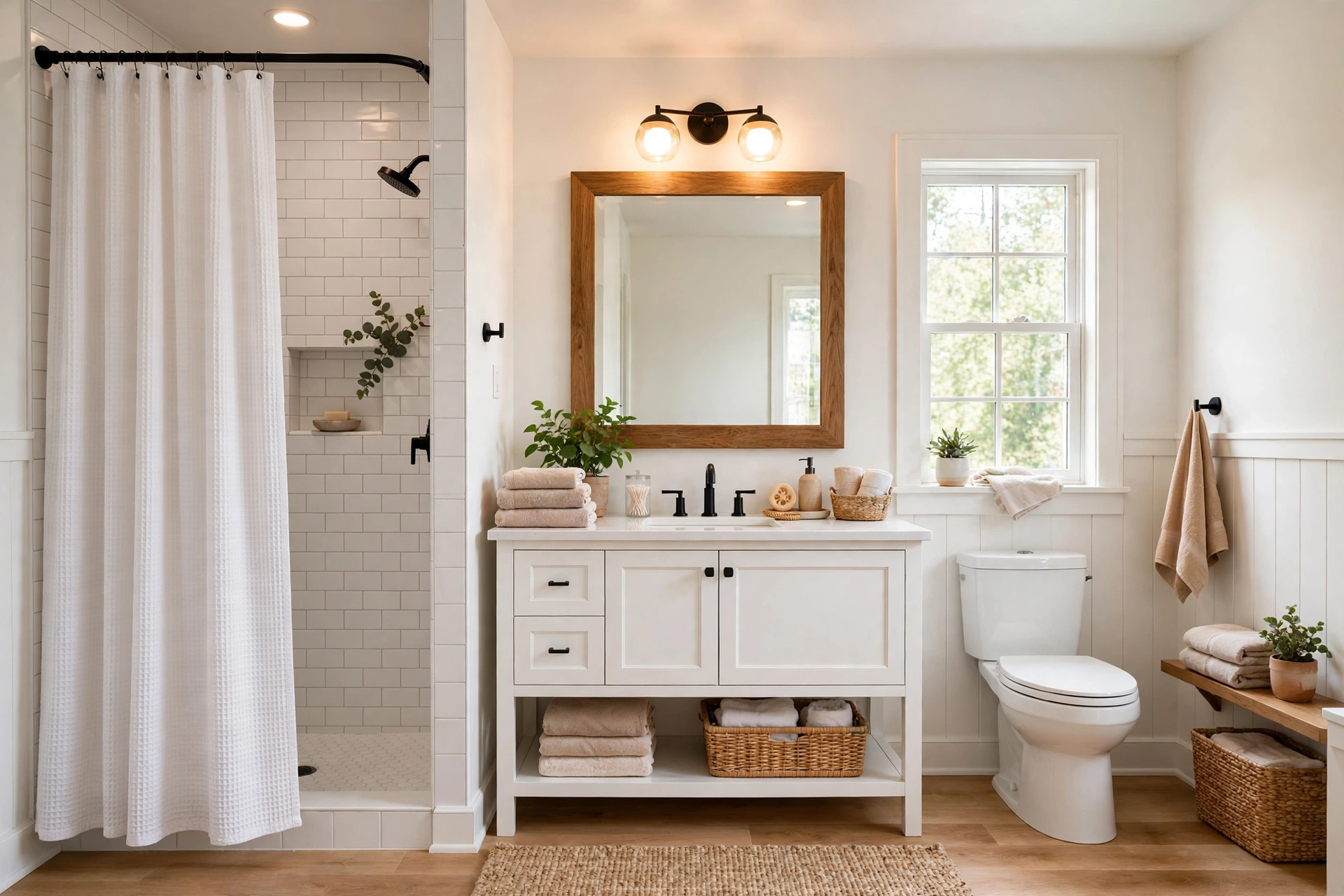
Choose a curtain that does real visual work. A crisp white waffle-weave curtain instantly makes a bathroom feel cleaner and more hotel-like, while a subtle pattern, like thin stripes or a soft botanical print, adds personality without overwhelming a small space. Avoid busy, dark prints in a tiny bathroom, since they close the room in. If your bathroom has no window and little natural light, a light-colored curtain keeps the space feeling open and bright. Look for fabric or heavyweight polyester rather than thin vinyl, because the way the material hangs changes the whole look.
Hang it properly and the effect doubles. Mount the rod as high as you can, close to the ceiling, and let the curtain fall all the way to just above the floor. That extra length makes the ceiling feel higher and the room feel taller, the same trick designers use with floor-length drapes in a living room. If you are choosing between styles, the best shower curtains for small bathrooms are the ones that combine a light color with a texture you can see, because texture reads as luxury even from across the room.
📌 Important
Measure before you shop: Standard shower curtains are 72 by 72 inches, but many tubs and stall showers need a different size. Measure your rod width and the distance from the rod to the floor first, so you buy once and hang it the same day.
2. Fix the Lighting Before You Buy Anything Else
Bad lighting is the reason so many bathrooms feel gloomy, no matter how much decor you add. A single harsh overhead bulb casts shadows on your face, washes out colors, and makes even a freshly painted room look tired. Before you spend anything on accessories, look at what your lights are actually doing, because this one change affects how every other change looks.
Start with the bulb itself. Swap a cool, bluish bulb for a warm white bulb in the 2700K to 3000K range, which flatters skin tones and makes tile, paint, and wood look richer. If your fixture takes a dimmable bulb, even better, because softer light in the evening turns an ordinary bathroom into a calm, spa-like space. Next, look at the fixture. A dated brass dome or a bare bulb can be replaced with a simple modern fixture in an afternoon with basic tools, and it is one of the cheapest upgrades that reads as a renovation.
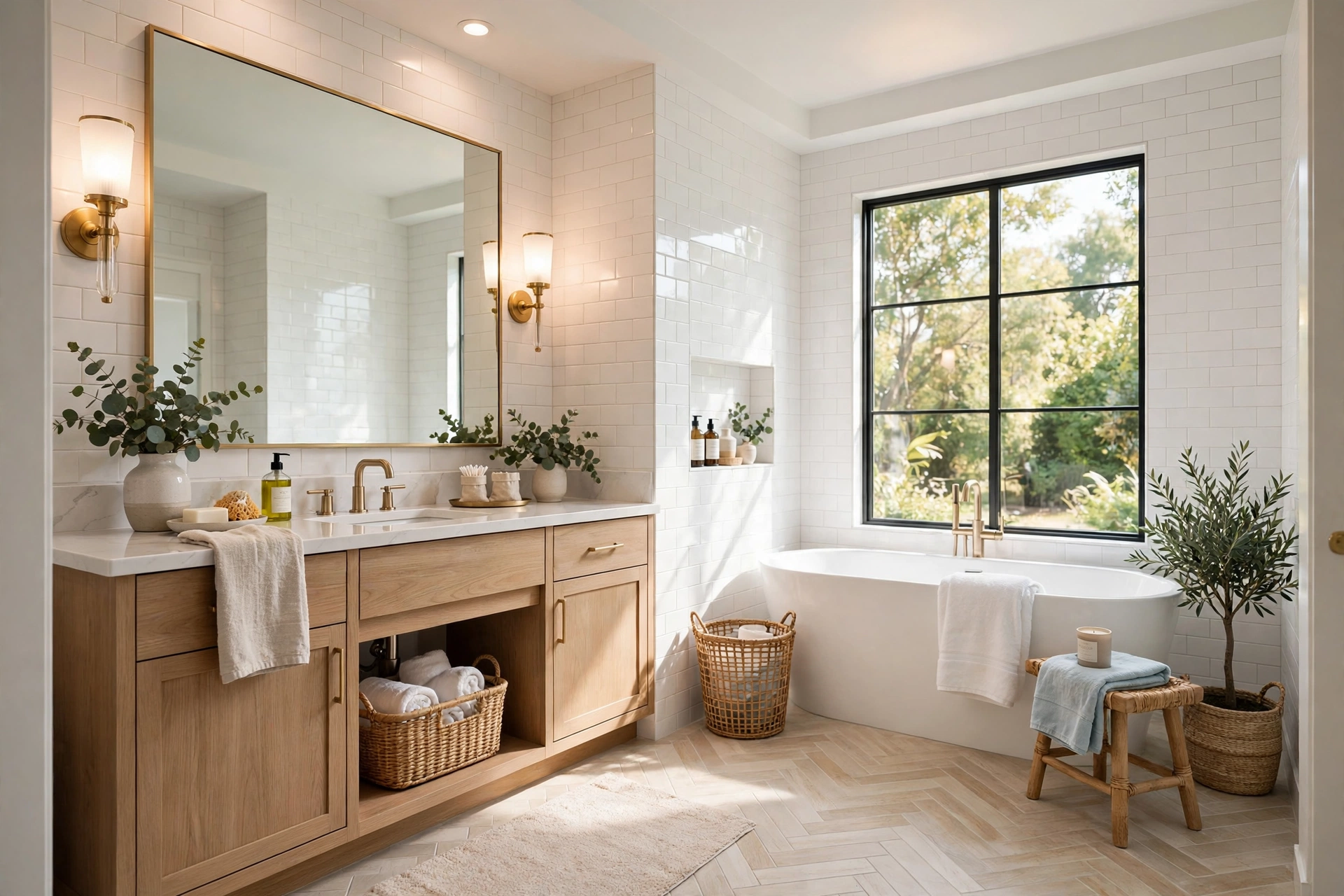
If you have a mirror, the light around it matters most. A pair of sconces at eye level on either side of the mirror eliminates the shadows a single overhead light creates, and it makes getting ready in the morning genuinely easier. No sconces? A lighted vanity mirror or a simple LED strip tucked behind the mirror gives you most of the same benefit for a fraction of the cost. Lighting is the change beginners skip and designers never do, because it quietly upgrades everything else in the room.
3. Add a Mirror That Makes the Room Feel Twice as Big

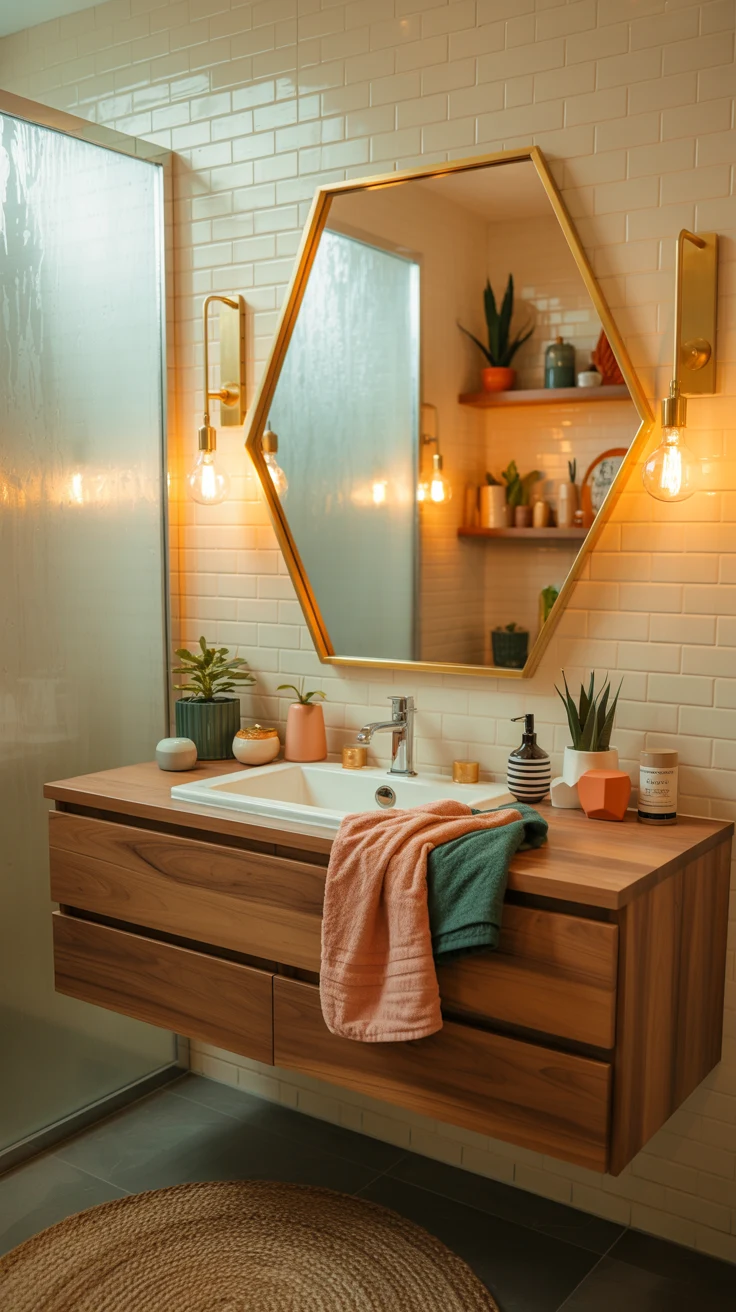
A bathroom mirror is not just a tool for brushing your teeth. It is the largest reflective surface in the room, and the right one can bounce light into dark corners and make a small bathroom feel dramatically larger. Most builder-grade bathrooms come with a flat, frameless slab of glass glued to the wall, and replacing it is one of the most satisfying beginner projects there is.
Pick a mirror with a frame, because the frame is what makes it look like a deliberate design choice instead of a leftover. A thin black metal frame suits a modern bathroom, a warm wood frame softens a stark white room, and an arched mirror adds an elegant curve that breaks up all the straight lines of tile and cabinetry. Go as large as your vanity allows, because a bigger mirror reflects more light and more of the room. The best bathroom vanity mirrors for small spaces are the ones that stretch nearly the full width of the vanity without crowding the light fixtures.
Hang it at the right height and the effect is immediate. The center of the mirror should sit roughly at eye level, around 57 to 60 inches from the floor for most adults, so you are not crouching or craning to see yourself. If you are renting and cannot remove the old mirror, a stick-on frame kit that adheres around the existing glass gives you the framed look without any damage. Either way, this is the change guests notice first, because a beautiful mirror reads as a finished room.
Bathroom Decorating Quick-Start Checklist
- ✅ Measure your shower curtain, mirror, and vanity before buying anything
- ✅ Swap in warm white bulbs (2700K–3000K) and test them at night
- ✅ Choose one color palette and stick to it for towels, curtain, and accessories
- ✅ Clear every countertop completely, then put back only what you use daily
- ✅ Hang the shower curtain high and let it fall to just above the floor
- ✅ Pick a framed mirror that spans most of the vanity width
- ✅ Add one living plant or one piece of art before buying more accessories
4. Give the Walls a Fresh Coat of Paint
Nothing transforms a bathroom faster per dollar than paint. A tired beige or a scuffed white makes the whole room feel neglected, while a fresh coat in the right color makes the tile, fixtures, and mirror all look newer. This is the change that scares beginners most and rewards them most, because a small bathroom takes only a couple of hours to paint.
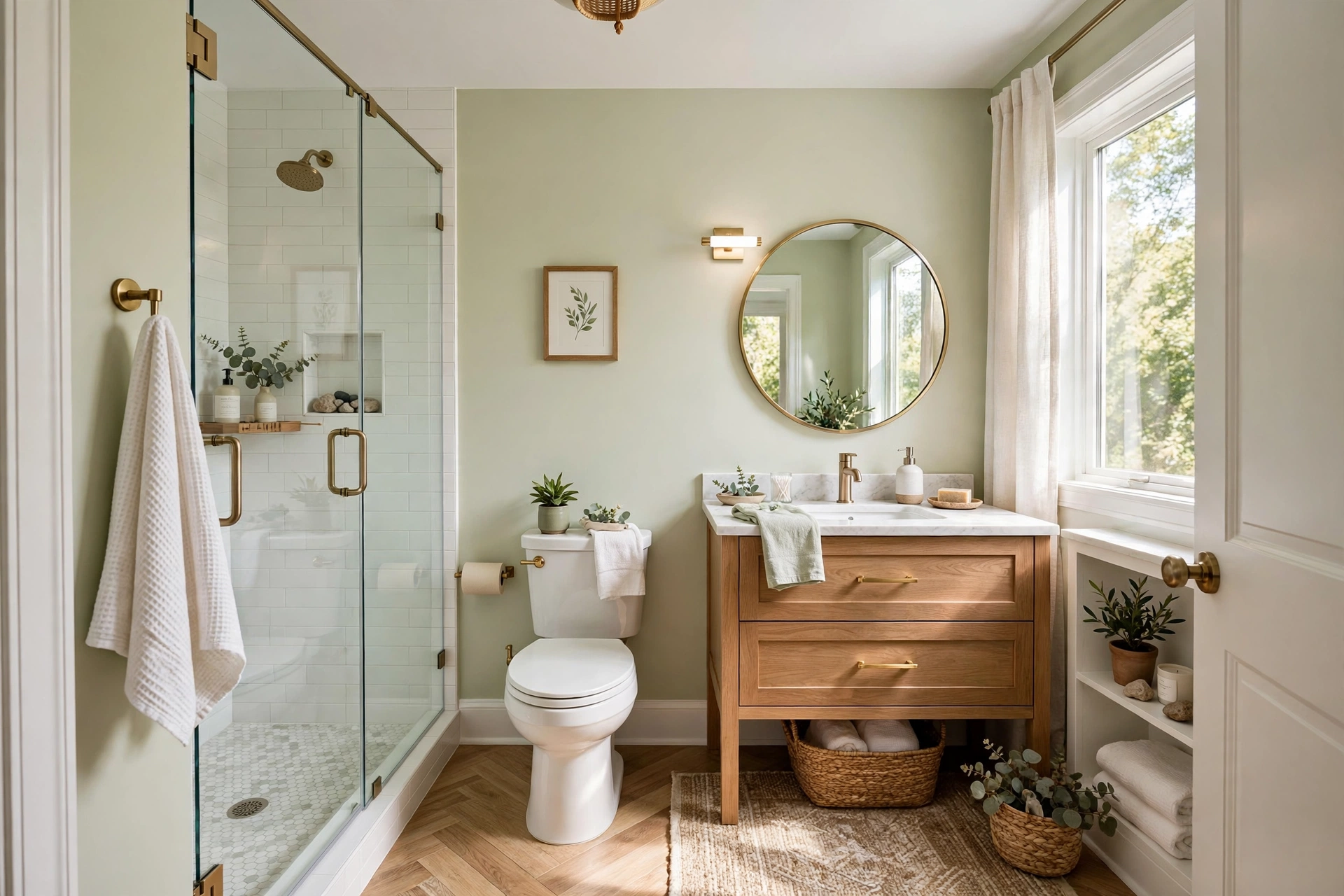
Choose your color with the room’s light in mind. A small bathroom with no window does best in a light, warm white or a pale sage, because those colors bounce what little light exists around the room. A bathroom with a good window can handle a deeper shade, like a soft navy on one accent wall or a moody green that turns the room into a jewel box. Whatever you pick, use a paint formulated for bathrooms or a satin finish, because both resist moisture and wipe clean when toothpaste splatters or steam fogs the walls.
Prep is the part beginners rush and regret skipping. Wash the walls with a mild cleaner, fill any small holes, and tape the edges neatly before you open the can. Two thin coats always look better than one thick coat, and a small foam roller leaves a smoother finish on a bathroom wall than a brush. Let each coat dry fully before judging the color, because wet paint always looks darker than the finished result. If painting the whole room feels like too much, paint just the wall behind the mirror or the vanity wall, because one strong accent wall still changes the whole feeling of the space.
💡 Pro Tip
Test the color in the room first: Paint a large swatch on the wall and look at it in the morning, at noon, and at night under your bathroom lights. A color that looks perfect in the store can turn gray or yellow under your bulbs, and a swatch costs far less than a repaint.
5. Declutter the Counters and Add Real Storage
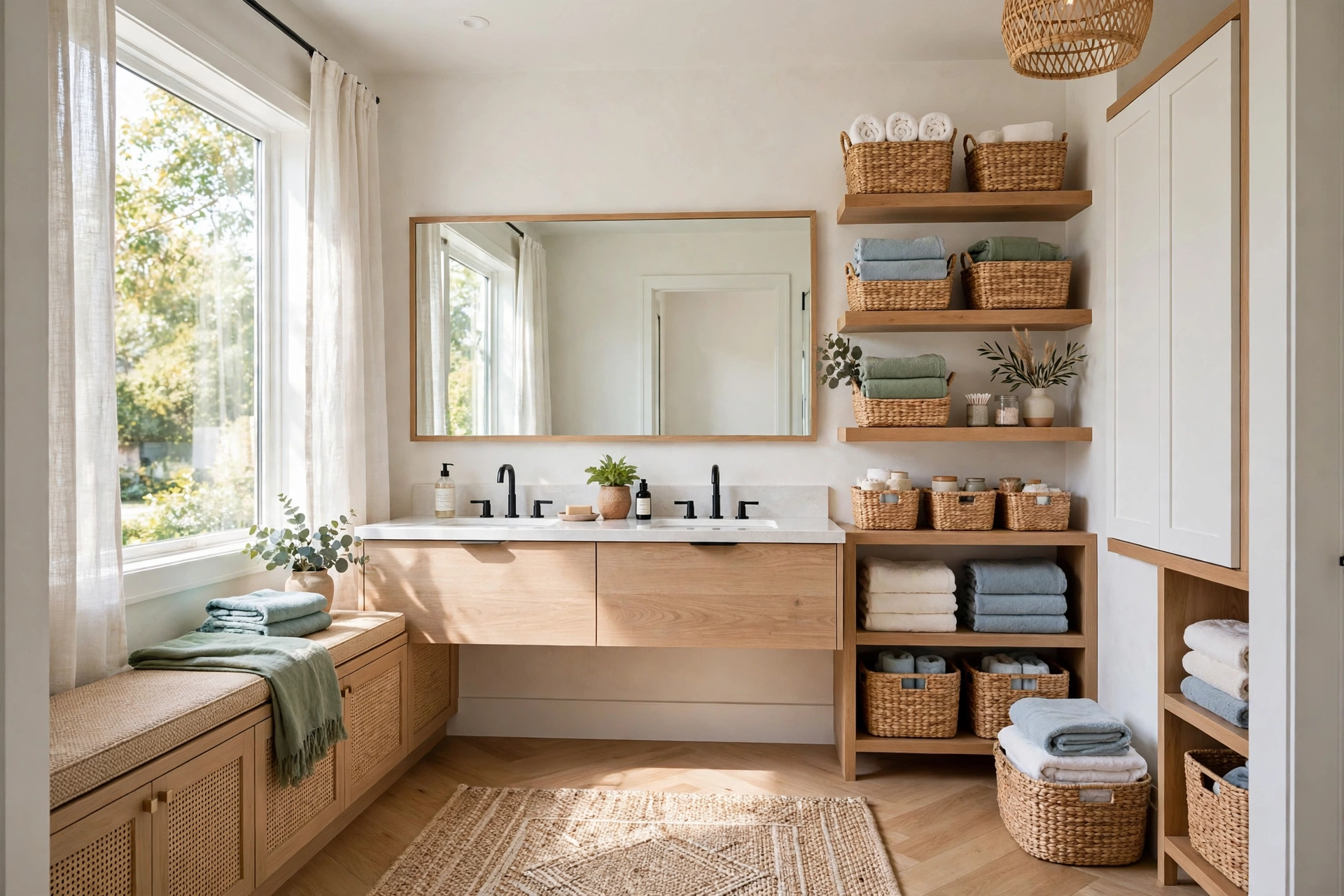
A bathroom with a clear countertop looks bigger, calmer, and more expensive than the same bathroom with every bottle and brush on display, even if nothing else changes. Clutter is the enemy of a decorated room, because your eye reads a crowded counter as mess no matter how pretty the individual items are. Before you buy a single decorative object, give everything on your counters a home somewhere else.
Start by emptying the counter completely and sorting everything into three groups: daily use, weekly use, and rarely used. Daily items earn a spot on the counter or in a small tray; weekly items move into a drawer or cabinet; rarely used items leave the bathroom entirely. This one sorting session usually frees up half the counter, and the room instantly feels larger. If your drawers are a jumble, small drawer organizers or a few labeled baskets turn chaos into a system you can actually keep up with.
Then add storage where it counts. A slim rolling cart tucks beside the vanity, a set of floating shelves turns an empty wall into display space, and a basket under the sink corrals cleaning supplies out of sight. The right bathroom organizers for a cluttered counter do more than hide things, they give every item a visible, obvious home, which is the only system that survives real daily use. When you organize a small bathroom with zero counter space, vertical storage is your best friend: use the walls, the back of the door, and the space above the toilet, because those are square feet you already own.
⚠️ Warning
Do not buy storage before you declutter: New baskets and trays feel like progress, but if you buy them first, you end up organizing things you do not need. Sort and purge first, measure what remains, and only then buy the containers that fit.
Quick Comparison: Bathroom Decorating Changes by Cost and Effort
6. Layer in Textiles, Art, and One Living Plant
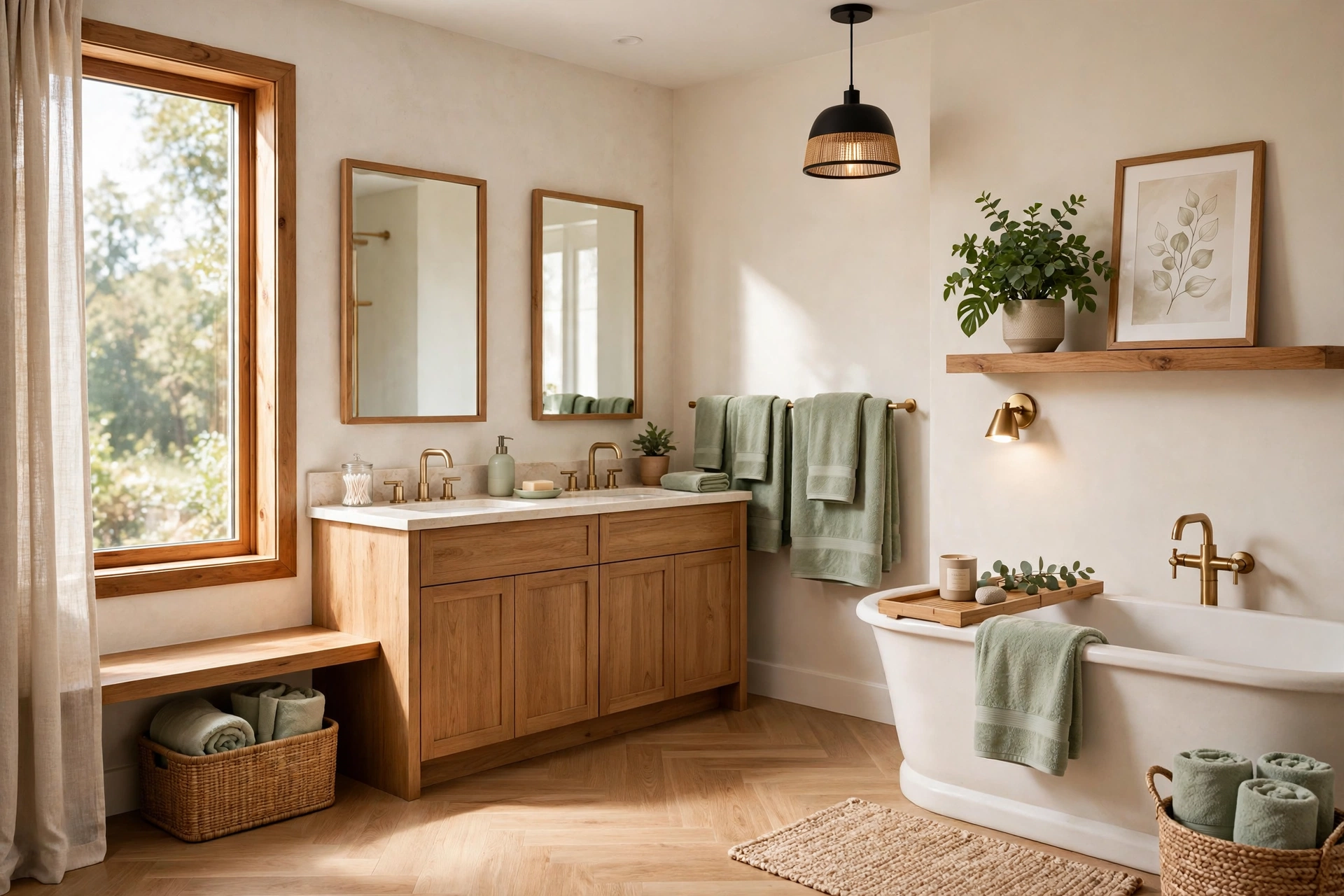
This is the finishing layer, and it only works because the first five changes are already done. Textiles, art, and greenery are what turn a clean, functional bathroom into a room that feels personal and inviting. The trick is restraint: one or two thoughtful pieces beat a shelf full of small objects every time.
Start with textiles, because they are the softest thing in a hard-tiled room. Matching towels in a single color, folded neatly or rolled in a basket, instantly look more intentional than a mixed set. A plush bath mat in a solid color grounds the floor, and a small hand towel with a simple pattern adds a touch of personality without competing with the shower curtain. Keep the palette tight, two or three colors at most, so the textiles tie the room together instead of fighting each other.
Then add one piece of art and one living plant. A framed print above the toilet or beside the mirror fills an empty wall and gives the room a focal point, and a bathroom is one of the few rooms where a small, inexpensive print looks completely at home. A plant loves the humidity in a bathroom, and a pothos or a small fern on a shelf adds life and color that no object can match. If your bathroom has no natural light, a high-quality faux plant gives you the same softness with zero maintenance. This final layer is where a bathroom stops looking like a showroom and starts looking like yours, and it is the easiest part of the whole project to enjoy.
💡 Pro Tip
One statement, not five small ones: A single large framed print beats three tiny ones, and one full plant beats a row of miniature succulents. Big, confident pieces make a small bathroom feel designed, while lots of tiny objects make it feel cluttered.
Common Bathroom Decorating Mistakes
Mistake 1: Buying accessories before fixing the big things
A new soap dispenser cannot save a room with a stained shower curtain and a bare bulb. Fix the curtain, the lighting, and the mirror first, because those are the things your eye actually registers. Accessories are the last step, not the first, and buying them early usually means buying them twice.
Mistake 2: Mixing too many colors and patterns
A bathroom is a small room, and every extra color competes for attention. Beginners often combine a patterned curtain, a patterned rug, patterned towels, and colorful accessories, and the result feels chaotic rather than cheerful. Pick one pattern and one or two solid colors, and let the rest of the room stay calm.
Mistake 3: Hanging the mirror or curtain too low
A mirror hung too high or a curtain that stops halfway down the wall makes the room feel squat and unfinished. Hang the mirror center at eye level and let the curtain fall to just above the floor. These two measurements cost nothing and change how tall the room feels.
Mistake 4: Ignoring the lighting color
Cool, blue-toned bulbs make skin look washed out and paint look gray, yet they are the default in many homes. Swapping to warm white bulbs is a five-minute job that makes every other change in the room look better. Always check the Kelvin rating on the box before you buy.
Mistake 5: Overfilling shelves and counters after decluttering
The urge to refill a clear counter is strong, especially after a shopping trip. Leave breathing room on every surface, because empty space is what makes a decorated bathroom feel calm and expensive. If a shelf looks bare, add one object, live with it for a week, and only then decide if it needs company.
Frequently Asked Questions
1. What is the first thing I should change when decorating a bathroom?
Start with the shower curtain and the lighting, because those two changes affect the largest visual area and the way every color in the room reads. A fresh curtain and warm bulbs can transform a bathroom in under an hour, before you spend anything on paint or accessories.
2. How can I decorate a bathroom on a very small budget?
Focus on the cheapest high-impact changes first: a new shower curtain, warm white bulbs, and a thorough declutter cost very little and change the room dramatically. A bathroom refresh under $100 is realistic if you skip paint and new fixtures and spend on textiles, a mirror frame kit, and one plant instead.
3. What colors work best in a small bathroom?
Light, warm whites and pale sage or soft blue make a small bathroom feel larger and brighter, especially without a window. If the room gets good natural light, a deeper accent color on one wall can add drama without closing the space in, as long as the rest of the room stays light.
4. Can I decorate a rental bathroom without losing my deposit?
Yes. Stick to changes you can reverse: a new shower curtain, warm bulbs, a framed mirror hung on existing hooks, freestanding shelves, and textiles. Skip paint unless your landlord approves it in writing, and use removable hooks and adhesive strips instead of drilling into tile.
5. How do I keep a decorated bathroom looking tidy every day?
Give every item a home and keep the counter mostly clear. A small tray for daily items, a basket for towels, and a five-minute nightly reset, putting bottles back and hanging towels straight, keep the room looking finished without much effort. The less that lives on the counter, the less there is to tidy.
6. Do I need real plants in a bathroom, or are faux plants okay?
Real plants thrive in bathroom humidity if the room gets any natural light, and a pothos or fern is nearly impossible to kill. If your bathroom has no window, a high-quality faux plant looks just as good and needs no care, so choose based on your light, not on a rule.
7. How big should a bathroom mirror be?
As large as your vanity allows. A mirror that spans most of the vanity width reflects more light and makes the room feel bigger, while a small mirror over a wide vanity looks lost. Measure the vanity first, then choose a mirror a few inches narrower on each side.
Conclusion
Bathroom decorating for beginners comes down to working in the right order. A statement shower curtain, warm lighting, and a framed mirror do the heavy lifting, a fresh coat of paint and clear counters make the room feel intentional, and textiles, art, and a plant add the personality that makes it yours. None of these changes requires a renovation, a contractor, or a large budget, and most of them can be finished in a single weekend.
Start with the first change today, even if it is only swapping a bulb or hanging a new curtain. Small rooms reward small efforts quickly, and once you see the difference one change makes, the rest of the list feels easy. Your bathroom is the room you visit first every morning, so it deserves to be a room you actually enjoy walking into.