
18 Cozy Fall Living Room Decor Ideas: Warm Tones and Textures
Introduction
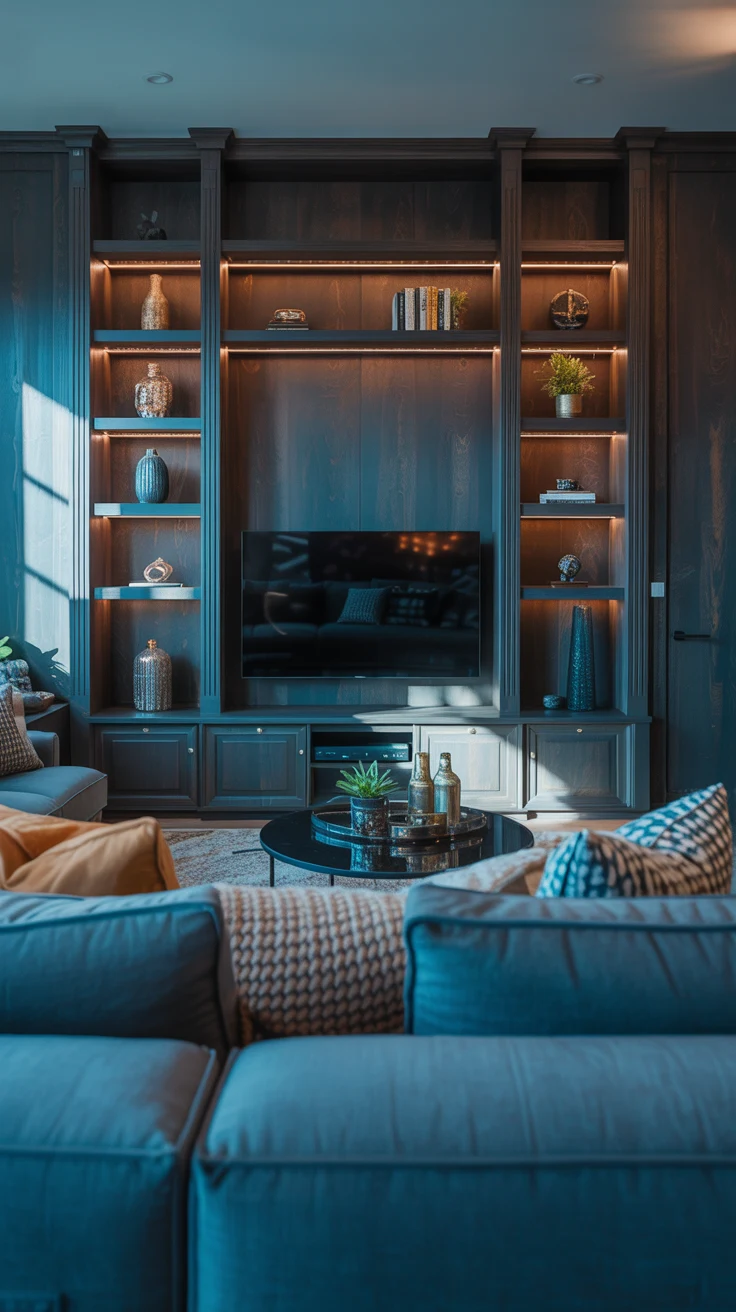
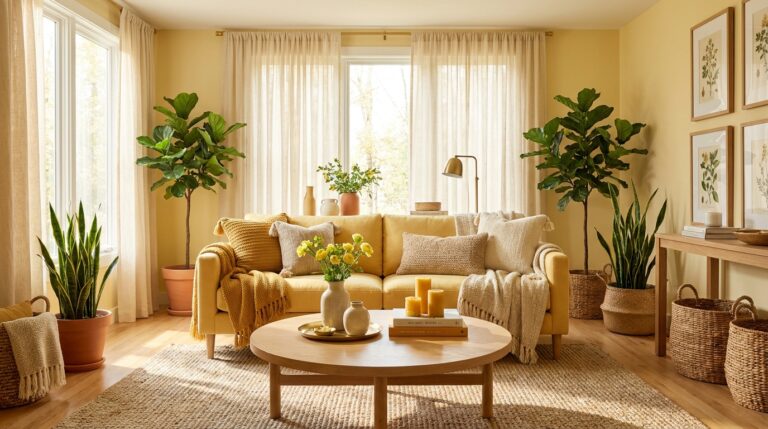
Fall changes the light before it changes anything else. The evenings arrive earlier, the sun drops lower and turns golden, and the living room you loved all summer suddenly asks for something different: warmth you can see, textures you can touch, corners that glow instead of glare. A cozy fall living room is not about buying a new room’s worth of decor. It is about retuning the one you have — shifting the palette warmer, softening the light, and layering in the textures that make autumn the most inviting season indoors.
The formula is simpler than it looks. Fall’s whole aesthetic runs on three things: warm color (rust, terracotta, mustard, amber, deep olive), honest texture (knits, velvet, wool, wood, dried botanicals), and low golden light (lamps, candles, fairy lights at 2700K). Get those three right and almost anything you add will feel seasonal. Get the palette wrong and even the prettiest pumpkin looks like a prop. If you have already worked through our broader roundup of cozy living room ideas, think of this as its autumn chapter — the same cozy grammar, tuned to the season.
Below are eighteen fall living room decor ideas, ordered from the highest-impact moves to the finishing touches. Most are afternoon projects, many cost almost nothing, and none require new furniture. Pick the five that fix your room’s weakest spots — too cool, too flat, too brightly lit — and start there. By the weekend, your living room can feel like the warmest room in the house.
1. Set the Palette: Rust, Terracotta, and Warm Neutrals

Every fall living room starts with color, because color is what tells the eye which season it is in. The fall palette is a family, not a single shade: rust, terracotta, burnt orange, mustard, amber, deep olive, and warm browns, all sitting on a base of warm neutrals like cream, oatmeal, and soft camel. When these tones show up in the textiles, the art, and one or two accent pieces, the room reads as autumn instantly — no themed objects required.
Keep the proportions disciplined, because fall color is saturated and a little goes a long way. Let warm neutrals carry the big pieces — the sofa, the rug, the curtains — and bring the rusts and mustards in through the swap layer: pillows, throws, art, candles. Two or three warm tones plus one neutral is the sweet spot; a rainbow of fall colors in one room reads as chaotic rather than cozy. Our guide to living room color schemes covers the full logic of building a palette that holds together, including how to test warm tones under your actual evening lighting before you commit.
💡 Pro Tip: Build your fall palette from one real object you love — a plaid throw, a favorite mug, even a photo of autumn leaves. Pulling two or three tones from a single source guarantees they harmonize, which is why designer rooms look effortless and DIY rooms sometimes look assembled from three different stores.
2. Swap In Velvet and Touch-Me Textured Pillows

Throw pillows are the fastest seasonal transformation in any living room, because they are the single biggest color signal on the sofa. Swapping cool summer covers for fall textures — velvet, corduroy, chunky knit, bouclé — changes the room’s entire temperature in about ten minutes, and you do not need new pillows, just new covers. Covers cost a fraction of full pillows and store flat in a drawer when the season ends.
Texture is what makes inexpensive covers look expensive. A velvet cover next to a chunky knit next to a smooth linen reads as curated; three flat cotton covers in fall colors read as a costume change. Mix the textures deliberately within your two-to-three-tone palette, keep the sizes generous (small flat pillows look lost on a full-size sofa), and karate-chop the velvets for that styled look. Two large squares in rust velvet and one lumbar in mustard knit will do more for the room than a pile of small novelty pillows ever could.
3. Drape a Chunky Knit Throw Over the Sofa Arm
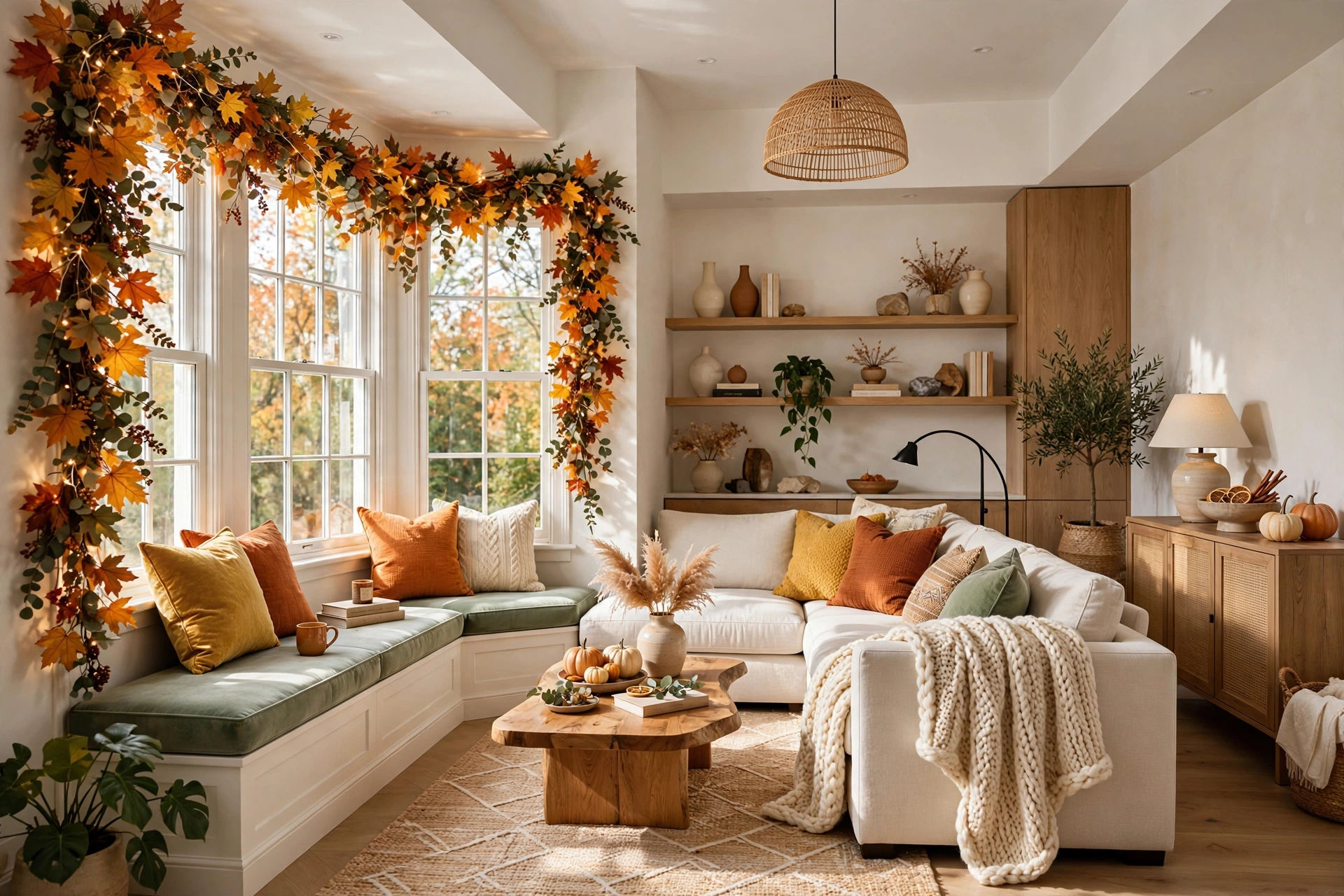
Nothing says fall like a thick, textured throw, and one good throw does the visual work of an entire seasonal display. Drape it over one sofa arm or fold it lengthwise across the back of the couch — one throw, one placement, done. The chunkier the knit, the better: cable knits, waffle weaves, and tassel-edged throws all catch light and shadow in a way that makes the whole seating area look warmer, even if nothing else in the room changed.
Placement matters more than people think. A throw crumpled in a heap looks like laundry; a throw folded in thirds and draped with the fold showing looks styled. Aim for the casual-but-deliberate fold: lay it flat, fold it into a long rectangle, and let it hang over the arm with one end longer than the other. Keep the throw’s color inside your fall palette so it coordinates with the new pillow covers instead of competing with them, and choose wool or a wool blend if you can — real fiber looks and feels richer than acrylic at close range.
4. Ground the Room With a Warm Rug
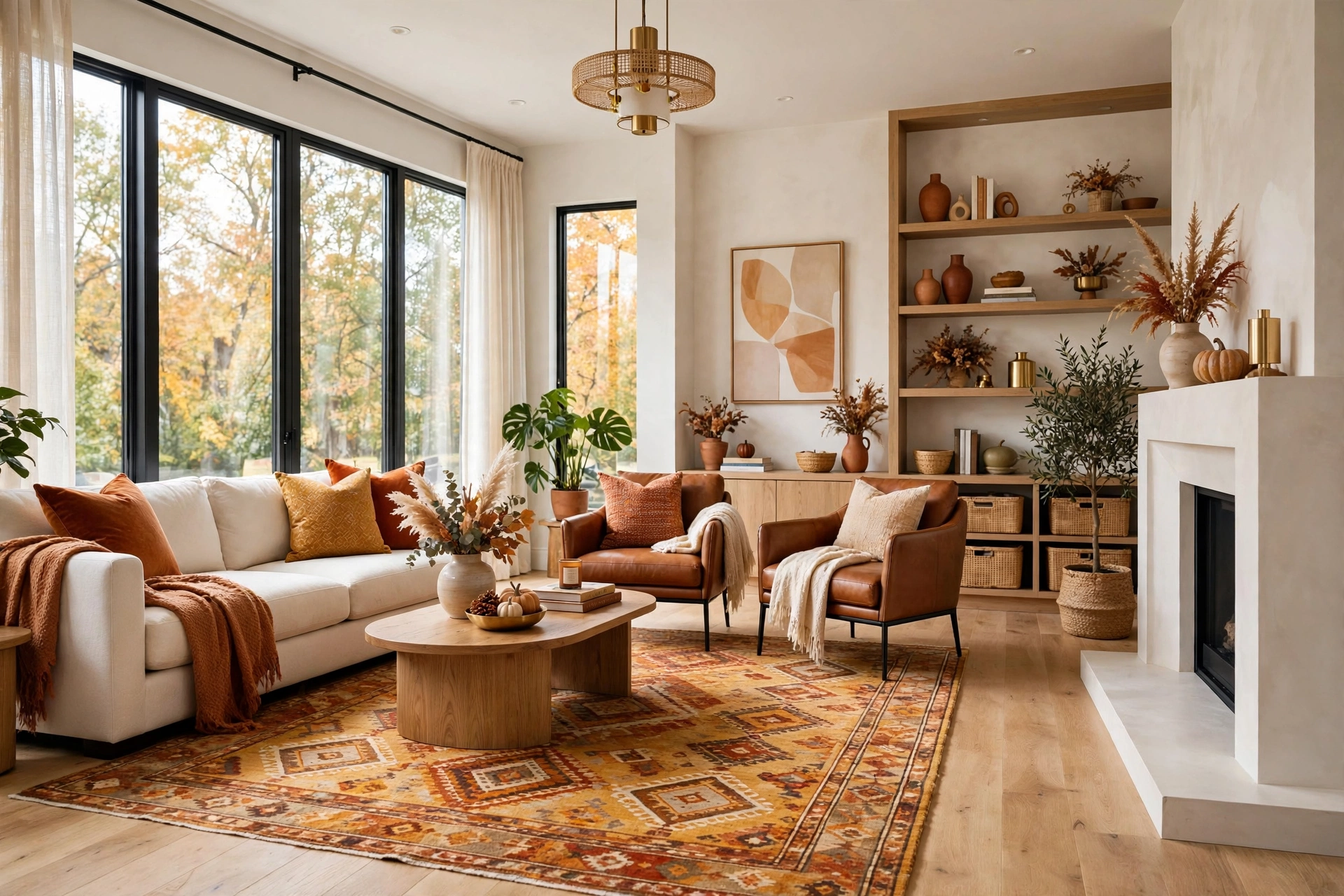
Bare floors that felt fresh in July feel cold by October, and the rug is the largest textile in the room — it sets the seasonal tone more than any pillow can. If your living room has been going rug-free, fall is the moment to add one: a jute or wool-look rug in honey, rust, or warm beige instantly makes the floor feel like autumn. Size it so the front legs of the sofa sit on it; a rug floating in the middle of the seating area shrinks the room instead of grounding it.
If you already have a rug, layer instead of replace. Lay a smaller textured rug — a sheepskin-style throw or a flat-weave runner in fall tones — at a slight angle over the existing one near the sofa. Layering adds the warmth and texture of the season without the cost or the storage problem of a second full-size rug. Keep the layered piece low-pile so doors still clear it and the vacuum still works, and make sure its colors relate to your pillow-and-throw palette so the layers read as one scheme.
5. Switch Every Bulb to Warm 2700K Light
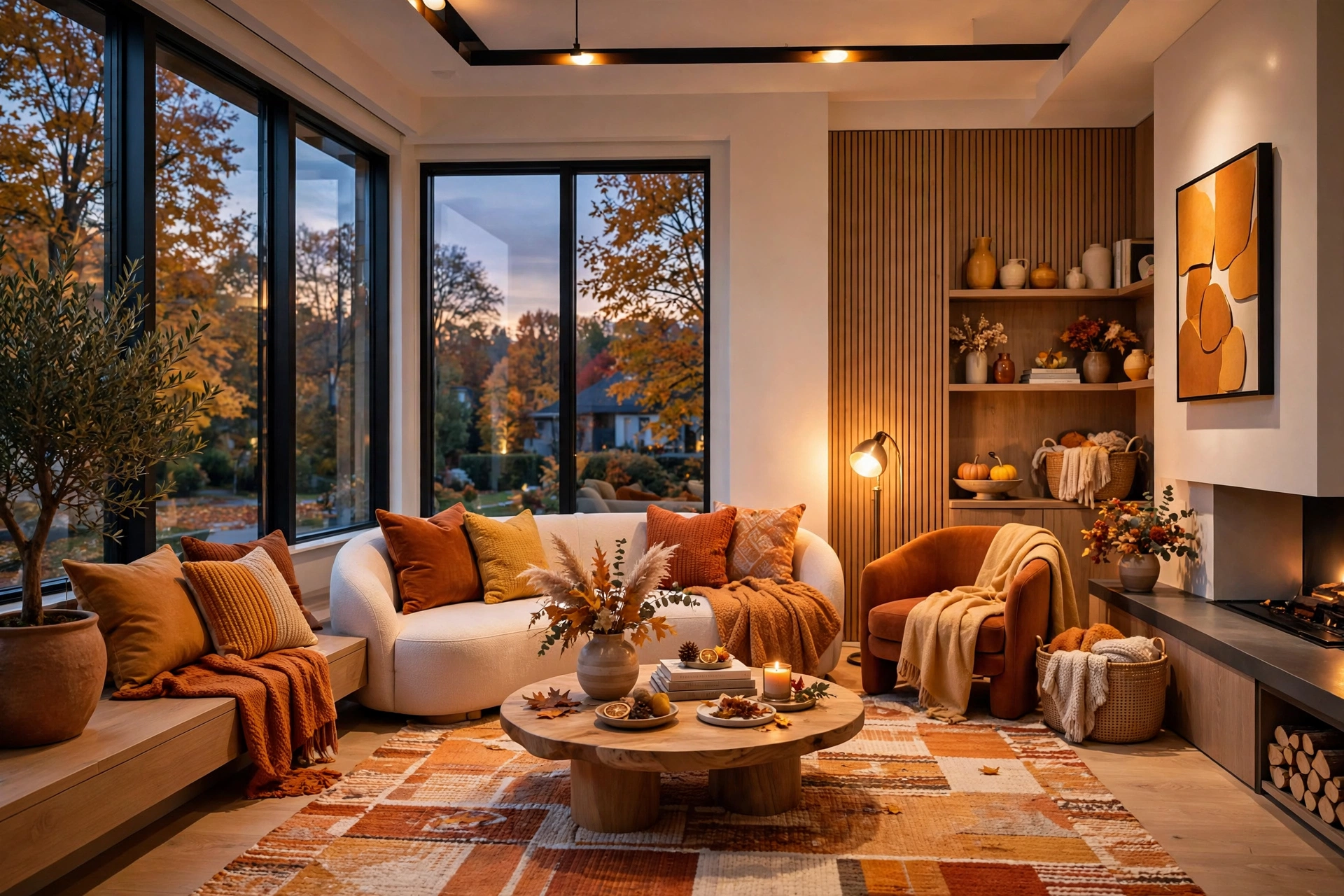
Summer light is bright and white; fall light should feel like golden hour that never ends. The cheapest high-impact move in this whole list is swapping any cool-white bulbs (4000K and up) for warm-white ones around 2700K. The room instantly feels cozier, and warm light flatters fall’s rusts and ambers instead of washing them out. Do this in every lamp you actually use in the evening, and keep the color temperature consistent across the room so the light feels like one warm envelope rather than a patchwork.
Then kill the overhead and let lamps do the work. Cozy rooms are lit in layers: a floor lamp in the corner, a table lamp at reading height, one small glow on a shelf or console. Each pool of light becomes its own destination, and the ceiling going dark is what makes the room feel intimate after sunset. Put the two main lamps on dimmers if you can — dimmed warm light is the entire mood of autumn evenings, and it costs less than one decorative pumpkin.
⚠️ Warning: Never leave real candles burning unattended, and keep every open flame at least a foot from curtains, throws, and dried arrangements — all of which are more flammable than they look. In rooms with pets, kids, or forgetful evenings, flameless LED candles with warm flicker give you the glow with zero risk, and the good ones are genuinely convincing inside frosted holders.
6. Add Brass and Warm Metal Accents

In a fall living room, warm metals are not decoration — they are lighting. Brass, aged gold, and warm bronze catch lamplight and throw it back: a brass floor lamp, gold picture frames, bronze drawer pulls, a copper tray on the coffee table. Against rust and amber textiles they glow like candlelight, and the effect multiplies after dark when the lamps come on. Cool chrome and nickel keep a room crisp and distant; warm metals pull it close.
Keep the metals consistent — one warm metal repeated at least three times around the room reads as a scheme, while three competing finishes read as leftovers. A brass lamp echoed by a brass frame echoed by a bronze mirror edge is the whole trick. You do not need to replace fixtures to get there: spray paint is the budget hero here, turning a black tray or an old frame brass in an afternoon. Repeat the finish, keep it warm, and let the lamplight do the rest.
7. Build a Fall Tray on the Coffee Table
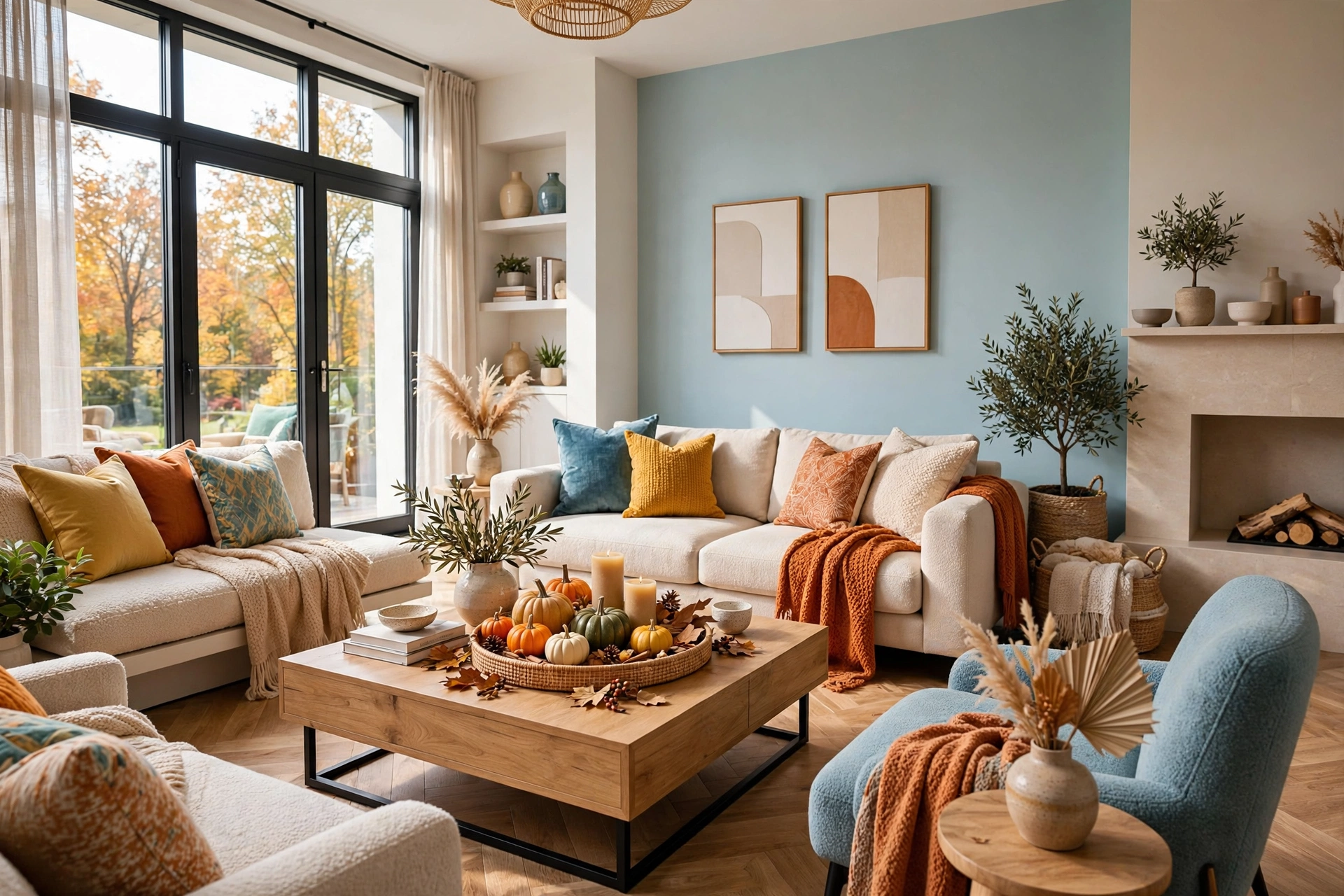
A coffee table centerpiece is the room’s focal point, so making it seasonal pays off far beyond its size. The rule is one tray, one composition: choose a tray or shallow basket you already own and build everything inside it. The tray corrals the items visually — without it, five small objects scattered across a coffee table look like clutter; inside a tray, the same five objects look like a styled vignette. This tray approach is the same thinking behind our favorite fall apartment decor ideas for tight spaces, where every surface has to earn its footprint.
Fill it with what the season gives you: a few small pumpkins or gourds, a sprig of dried wheat or eucalyptus in a small vase, a candle, maybe a pinecone or two. Keep the arrangement low — in a living room the coffee table sits in the main sightline, and nothing in the tray should rise more than about a foot above the surface or it blocks conversation. When the season ends, the tray stays and the contents swap. One container, rotating contents, zero storage headache.
📌 Important: Style the tray in odd numbers — three or five objects, not four. Odd groupings look collected and natural to the eye; even groupings look like a place setting. Vary the heights (one tall candle, two medium objects, a couple of low ones) and leave breathing room between pieces so each one can be seen.
8. Style the Mantel — Real Fireplace or Not
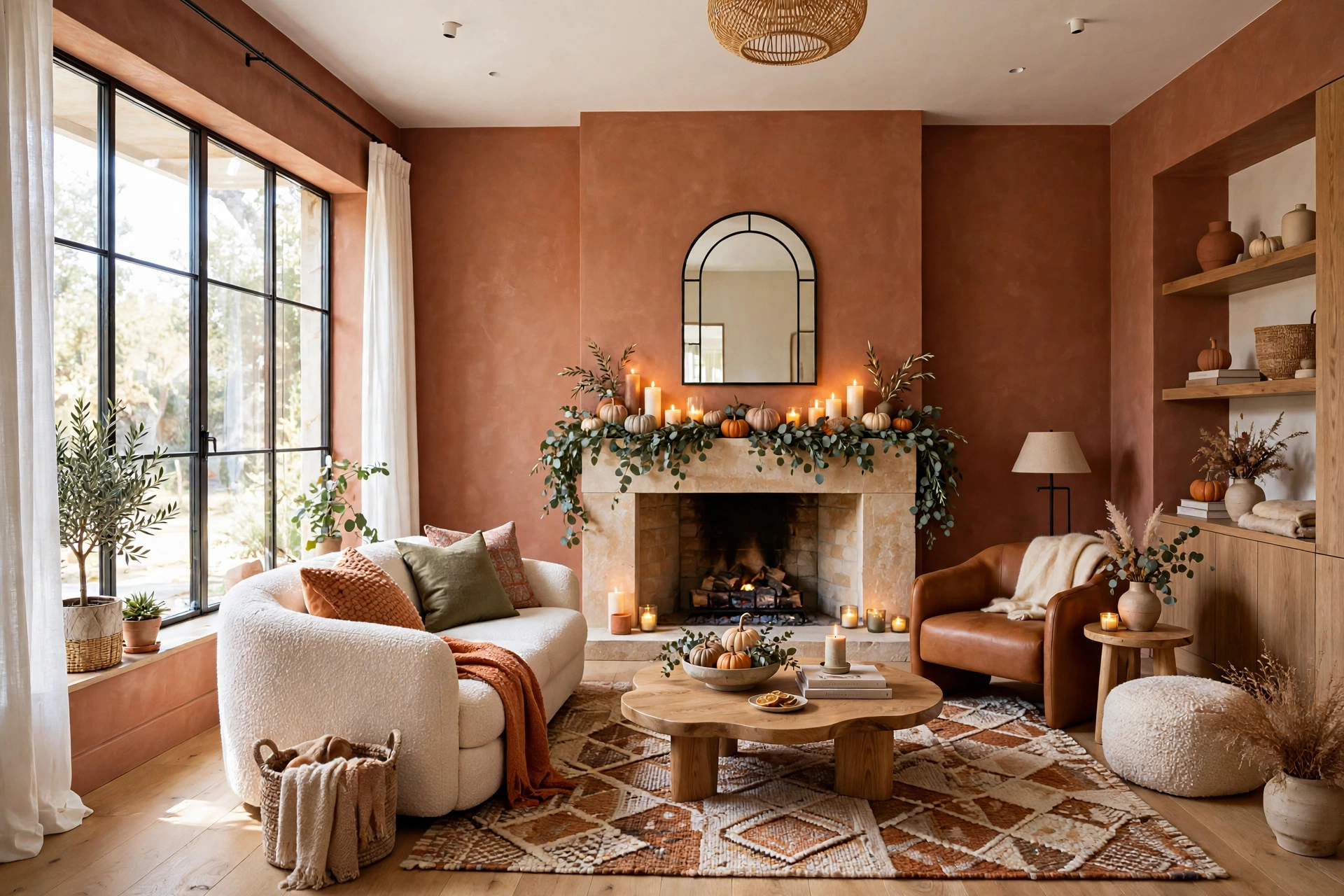
A fireplace is the original fall decor, and you do not need a working chimney to get the effect. A real mantel gets the full treatment: a garland or a row of small pumpkins along the shelf, candles at staggered heights on one side, a stack of books or a vase of dried branches on the other. An electric insert or a bundle of birch logs in an empty firebox gives you the hearth feeling without the flue. No fireplace at all? A console table styled like a mantel — garland, candles, art leaned above — creates the same focal point on any blank wall.
Style the mantel like a still life, not a storage shelf. Lean one confident piece of art or a mirror above it rather than a scatter of small frames — scale is everything, since tiny items on a big mantel look lost. Keep the palette in your fall family and repeat one material from the mantel elsewhere in the room (the brass candlesticks echoed in the floor lamp, the dried wheat echoed in the coffee table vase) so the whole room feels composed rather than decorated in isolated corners.
9. Hang Warm, Earthy Art Above the Sofa

Art sets a room’s emotional temperature, so for fall lean earthy — ochre, rust, amber, olive, deep gold. Landscapes, sun-washed photography, warm botanical prints, anything that glows when the lamps come on. One substantial piece above the sofa anchors the seating area and does more seasonal work than a dozen small accessories, because it is visible from every seat in the room and from the doorway.
Scale beats subject every time. One generous piece outperforms a scattered cluster of small frames: a confident focal point reads as a decision, while many small pieces read as hesitation. Center it 57 to 60 inches from the floor and hang it in real relationship with the sofa below — close enough that the two read as one composition, not as furniture with a picture floating somewhere above it. If buying new art is not in the budget, print a warm-toned photograph large and frame it simply; at arm’s length, nobody can tell the difference.
10. Bring In Dried Botanicals That Last All Season
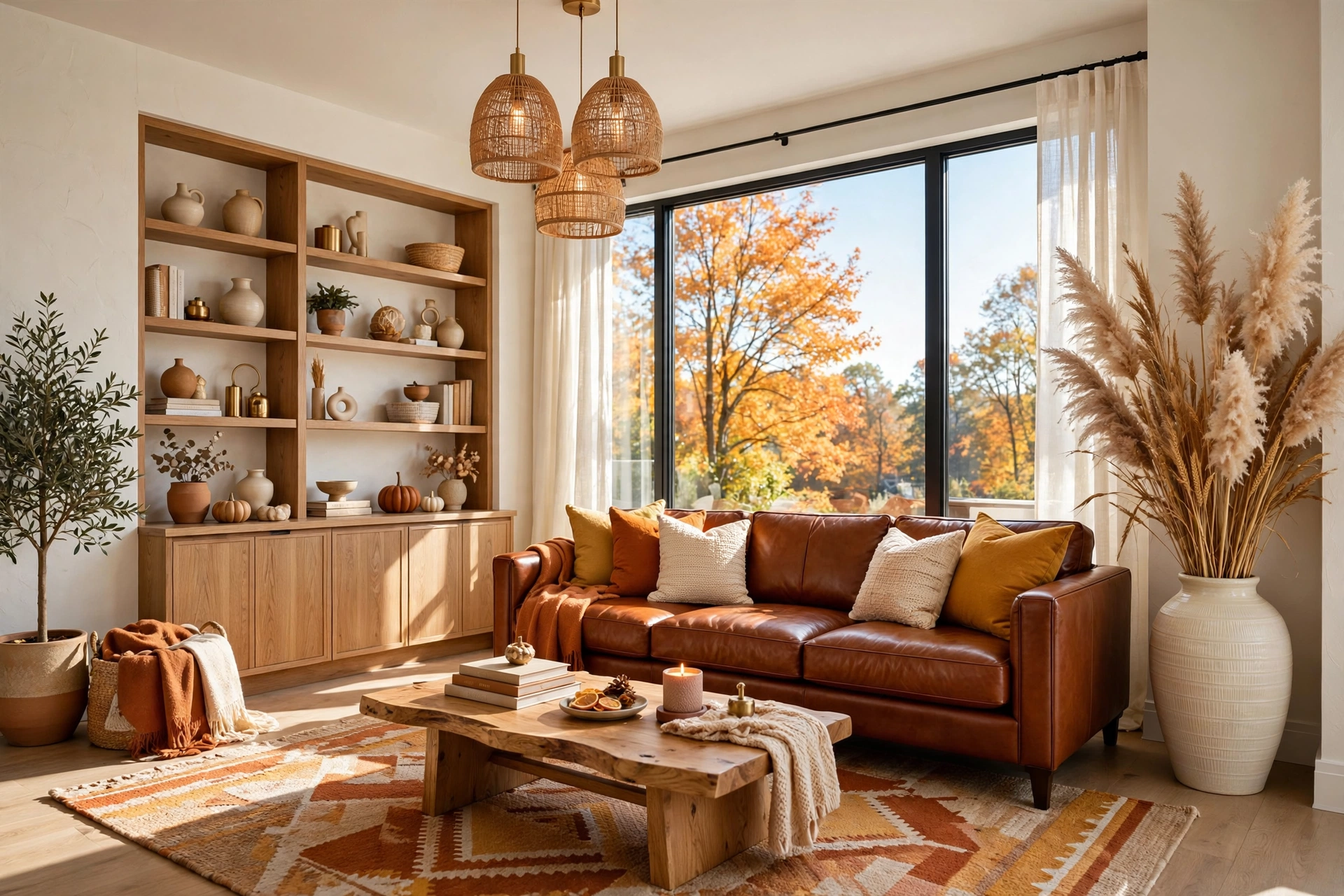
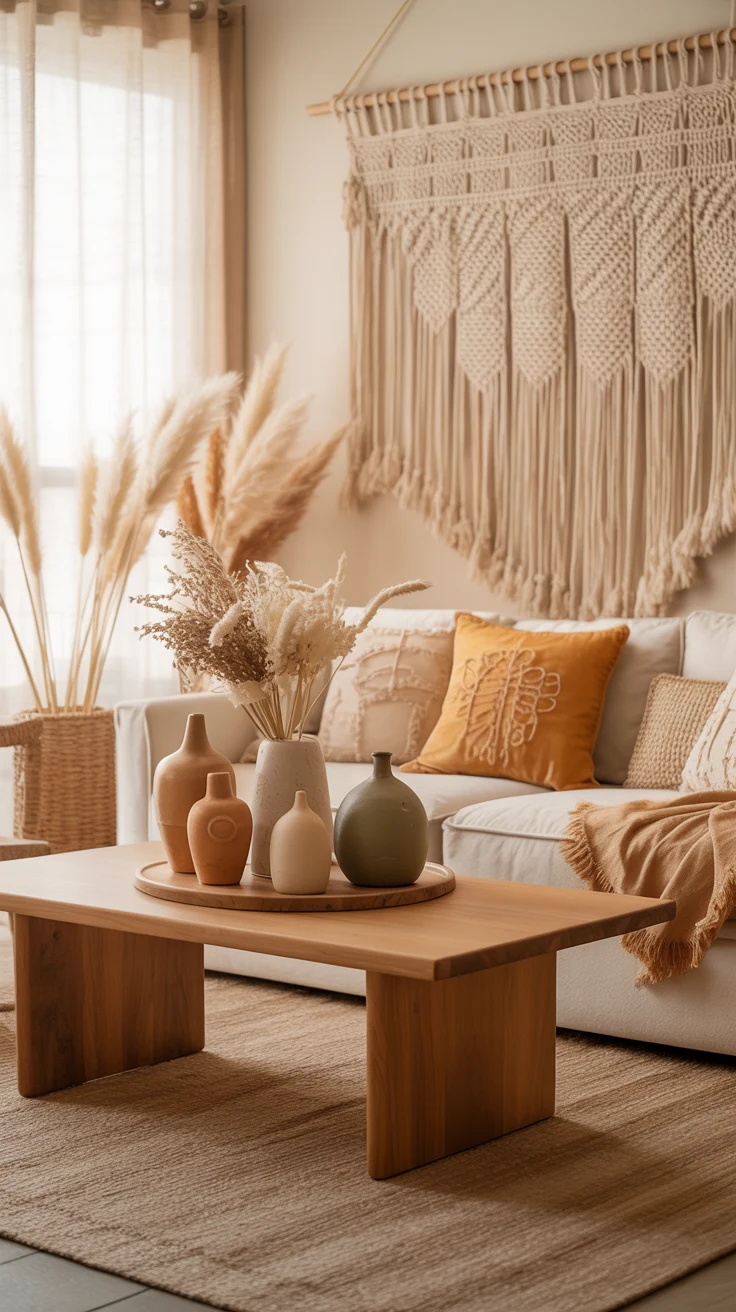
Fresh flowers are a summer habit; fall belongs to dried botanicals. Pampas grass, dried wheat stalks, preserved eucalyptus, bunches of bare branches — they bring the texture and movement of nature indoors, they cost little, and they last the entire season with zero care and zero dropped leaves on your rug. A tall arrangement in a floor vase fills vertical dead space with something sculptural; a small bundle in a bud vase finishes a shelf or the coffee table tray.
The styling rule is the same as for plants: one strong arrangement beats a scattered collection. Put the tall vase where the eye needs softness — the dead corner by the console, beside the reading chair, flanking the fireplace — and keep the materials in your palette (wheat gold, dried green eucalyptus, bleached pampas). Dried botanicals are also the budget hero of the season: one grocery-store bunch of wheat, split across two or three vases, decorates half the room for the price of a coffee.
💡 Pro Tip: Keep dried arrangements away from direct sun if you want the color to hold — bleached pampas yellows and dried greens fade faster in a bright south window. And give pampas a light mist of hairspray when you first arrange it; it dramatically cuts the shedding that gives pampas its messy reputation.
11. Drape a Fall Garland on the Mantel or Shelf

A garland is the fastest way to make any horizontal surface feel seasonal: one long line of eucalyptus, dried leaves, or faux autumn foliage turns a mantel, a bookshelf top, or a console into a fall moment in minutes. Drape it with a soft swag rather than laying it in a stiff straight line — the gentle dips are what make it look styled rather than placed. Let the ends trail slightly over the edges for that abundant, gathered look.
Layer the garland rather than leaving it bare. Weave in a string of warm fairy lights for evening glow, tuck in a few small pumpkins or pinecones at intervals, and let it be the one lush moment in the room. Because the garland is doing the heavy visual lifting, everything around it can stay calm — one rich garland plus quiet surfaces reads as expensive, while garlands plus scattered decor everywhere reads as a craft fair. When the season ends, a faux garland coils into a bag; a dried one composts.
12. Layer Curtains High, Wide, and Heavy
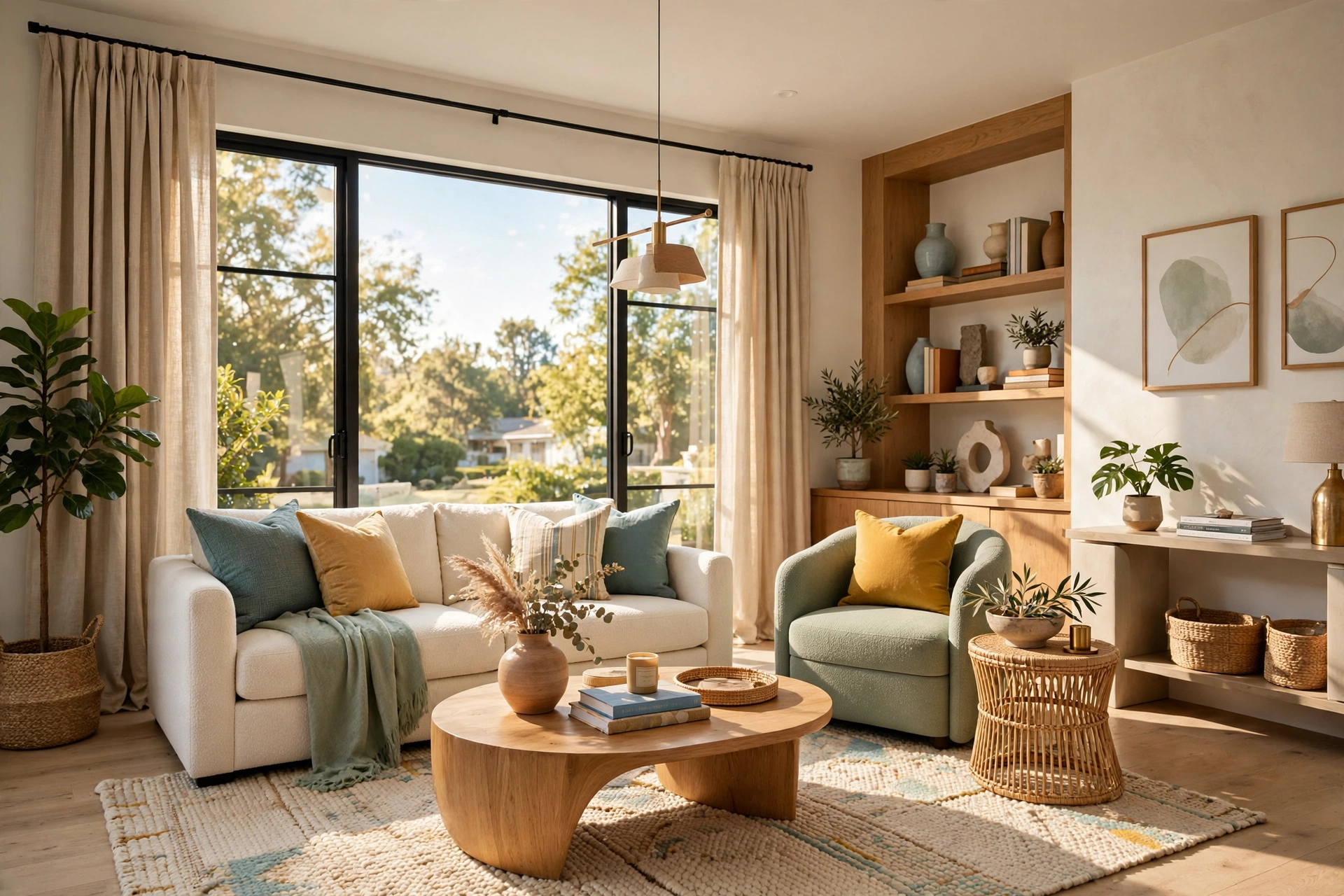
Curtains do more for fall coziness than almost any single move, because they soften the room’s hardest edges: glass, wall corners, right angles. Mount the rod high above the frame and extend it well past each side so the panels stack over the wall, and choose floor-length fabric with weight and texture — woven linen, velvet, a heavy cotton. Sheers alone read airy, not cozy, so if you love your sheers, layer them under heavier panels rather than replacing them.
Fabric and color are everything. Choose a color close to the walls for a seamless, enveloping feel, or pull one tone from your fall palette — warm camel, deep olive, rust — for a deliberate seasonal statement. Heavy curtains also do real work in autumn: they insulate drafty windows and hush street noise, which is coziness you can feel, not just see. Close them at dusk and the room wraps itself around you; that is the whole point of the season indoors.
📌 Important: Measure the rod before buying panels — it must extend past the window frame so open curtains never cover glass. Panels that narrow the window steal the daylight that makes the room glow, and in autumn’s shorter days every inch of glass counts. When in doubt, go wider and longer than you think; pooling slightly on the floor reads as luxury, not sloppiness.
13. Corral Throws in a Woven Basket

A cozy fall living room generates textiles: throws in use, throws waiting, the spare blanket for the cold guest. Homeless, they become floor clutter; housed, they become decor. A large woven basket beside the sofa — seagrass, rattan, jute — corrals them into one sculptural moment that is pure autumn texture. Roll the throws rather than folding them so the basket reads abundant, and let the knit and wool textures show.
Choose a basket with real presence, big enough to hold three or four throws, and place it where hands can reach it — beside the sofa or the reading chair, never across the room. The basket does triple duty: storage, decor, and invitation. Guests see throws within reach and understand they are welcome to get comfortable, which is the entire social function of a cozy room. One basket per zone is plenty; two baskets in one small living room starts to look like a storage strategy.
14. Carve Out a Lamplit Reading Corner

A reading corner is fall coziness distilled to one chair: a comfortable seat, a good lamp, and a surface for tea, and suddenly the living room has a destination inside it. Tuck it into an underused corner — the spot by the window that gets the last of the afternoon sun, or the dead zone beside the bookshelf — angled toward the room so it feels part of the space rather than exiled from it.
Three things are non-negotiable: comfort, light, and reach. The chair should be the most comfortable seat you own (this is where the bouclé accent chair or the deep armchair earns its keep). The lamp needs a warm bulb positioned over the reading shoulder — a pharmacy lamp or an arc from our floor lamps for living room picks is ideal, since task light and atmosphere light are different jobs. The side table must sit within arm’s reach for the mug. Get those three right and the corner will be fought over all season.
15. Bring In Warm Wood Tones

Warm wood — walnut, honeyed oak, rich teak — is coziness in material form, and it is fall’s natural partner. Cool metals and pale laminates keep rooms crisp and distant; wood with amber undertones pulls the eye in. Grain does the talking: a walnut coffee table, oak floating shelves, a turned-wood lamp base, even a wooden tray or a stack of vintage books with worn spines. The palette of the room shifts toward embrace without a single new textile.
You do not need to replace furniture to get there. Layer warm wood through small things and repeat the tone at least three times so it reads as a choice: the tray on the coffee table, a woven basket, a wooden frame, a serving board leaned on the mantel. Repetition is what separates decorating from accumulating. If your existing wood is cool-toned, a single warm wood piece — one honeyed oak side table — is often enough to tip the balance, since the eye registers the warmest tone as the room’s temperature.
16. Layer Candlelight and Fall Scents
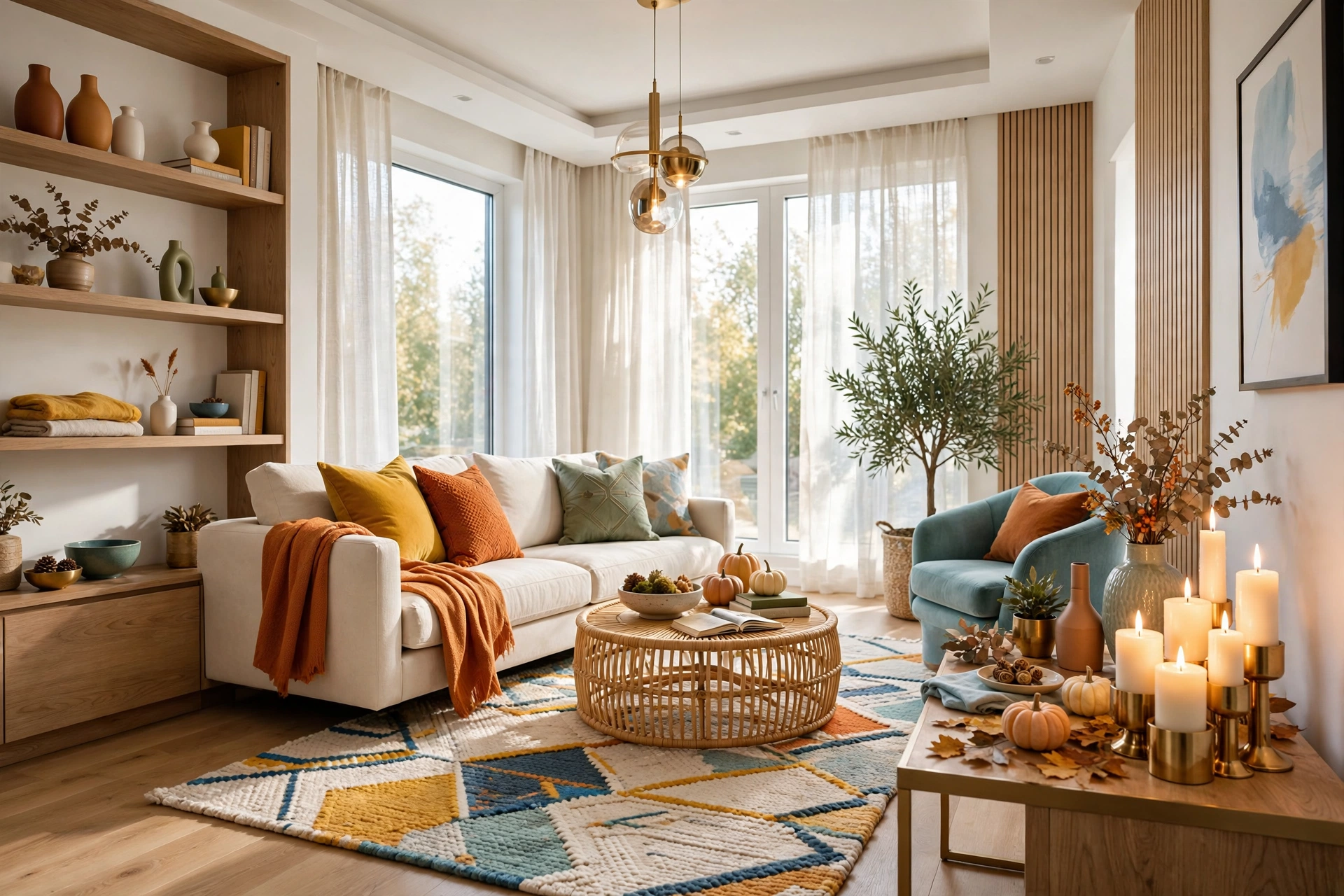
Coziness is not only visual — the room should smell like autumn too. Layer scent the way you layer light: a cinnamon, apple, cedar, or pumpkin-spice candle on the coffee table tray, a simmer pot of orange slices and cloves on the stove when guests come, a cedar diffuser in the corner. One good seasonal candle beats five unscented ones, because scent reaches the oldest part of the brain first — a familiar warm fragrance makes a room feel like home before you even sit down.
Keep to one scent family at a time. Vanilla plus citrus plus cinnamon is a candle shop, not a living room; pick the gourmand lane or the woodsy lane and stay in it. Go easy on strength — the room should smell like itself, subtly, not announce itself from the hallway. And with scent sensitivities, asthma, or allergies in the house, skip plugins and sprays entirely: one beeswax candle or a controlled simmer pot is enough, and unscented warmth carries the room just fine.
17. Try a Seasonal Accent Wall in a Warm Tone

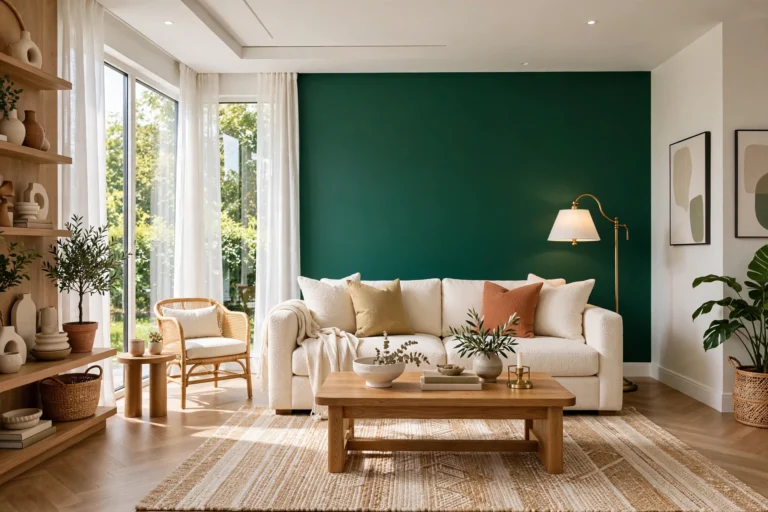
If you want one bold move, make it the wall behind the sofa. A warm accent wall — terracotta, clay, warm caramel, deep olive — wraps the seating area in color that does the seasonal work all by itself, and it is the highest-impact, lowest-commitment project in decorating: one wall, one weekend, one can of paint. For renters, peel-and-stick wallpaper or large leaned panels deliver the same drama with zero commitment.
Our full set of living room accent wall ideas covers the whole range, from limewash texture (which catches lamplight beautifully in fall) to wood slats to simple deep paint. Whichever route you take, keep the other three walls calm and repeat the accent color once or twice elsewhere — a cushion, a throw, one piece of art — so the wall reads as the head of a scheme rather than a lone experiment. And resist the second accent wall: one bold wall is a focal point, two are a competition that splits the room’s attention.
⚠️ Warning: Always test a saturated paint color under your real evening lighting before committing. A terracotta that looks rich in daylight can turn muddy or nearly brown under warm bulbs. Paint a full poster board, tape it to the wall, and live with it for two evenings before you open the roller tray — this one step prevents the most common accent-wall regret.
18. Plan the Fall-to-Holiday Transition Early
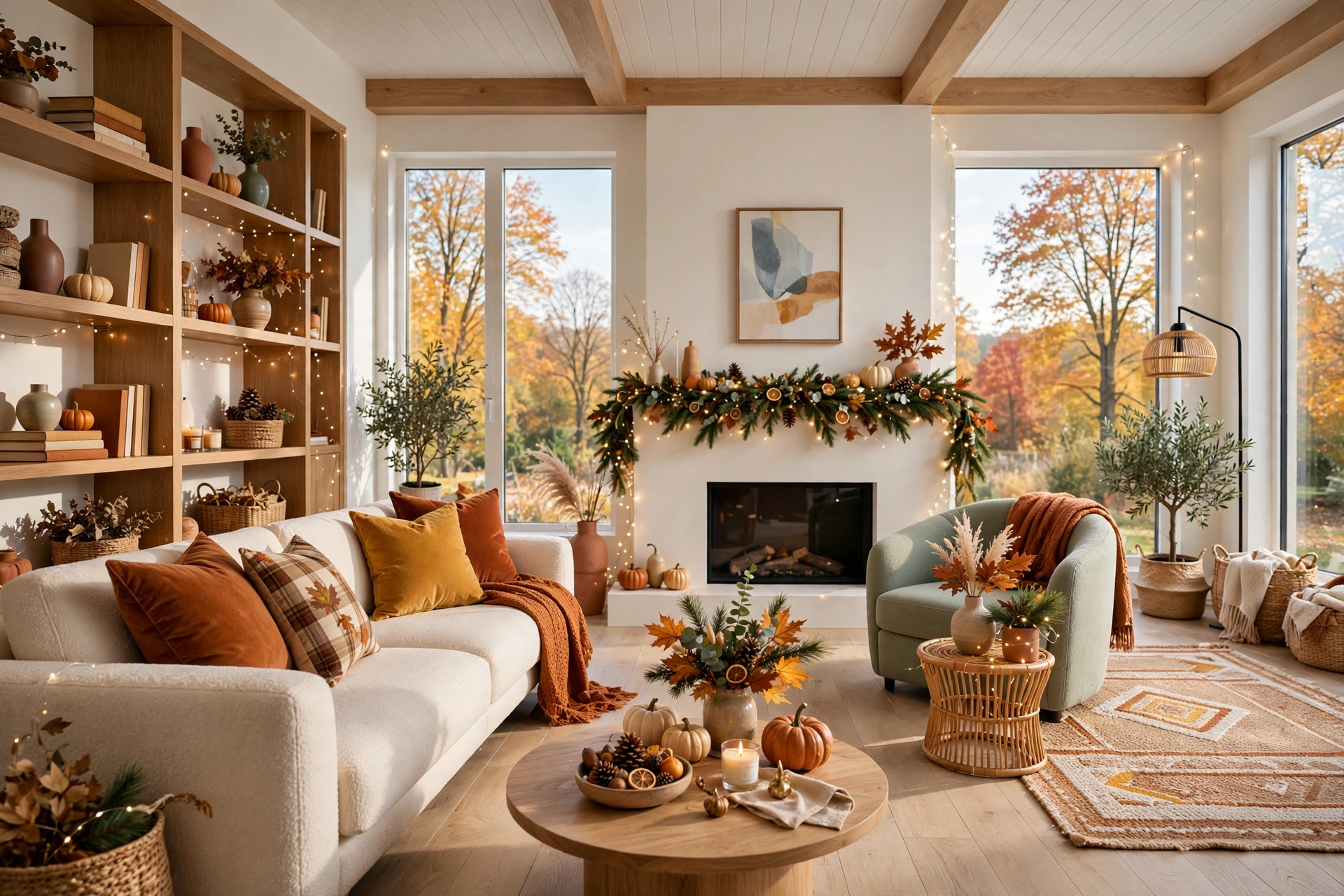
The smartest fall decorating is designed with December in mind. Choose a fall palette that transitions — rust, amber, deep green, warm gold, cream — and your holiday decorating becomes a swap of accents rather than a second full makeover. The garland on the mantel gets pine and fairy lights added; the pumpkins on the coffee table tray become pinecones and brass candlesticks; the amber candles become evergreen-scented ones. The warm base stays; only the seasonal layer changes.
This is also when restraint pays off. A fall living room styled with breathing room — one garland, one tray, one basket of throws — absorbs holiday additions gracefully. A room already packed with fall objects has nowhere for December to go except on top, and layered seasons read as clutter, not festivity. Decorate fall like someone who knows winter is coming: leave the room one beautiful vignette of space, and the holidays will slot right in.
Quick Comparison: Fall Living Room Ideas by Cost and Effort
Fall Living Room Quick-Start Checklist
- ✅ Pick two to three warm tones plus one neutral and commit — every purchase gets checked against the palette
- ✅ Swap all cool-white bulbs for warm 2700K before buying a single decoration
- ✅ Change the pillow covers and add one chunky throw — the ten-minute transformation
- ✅ Build one tray vignette on the coffee table with odd-numbered objects
- ✅ Add one layer of warm light: a floor lamp, fairy lights in the garland, or a candle cluster
- ✅ Bring in one natural element — dried wheat, pampas, or eucalyptus — for texture that lasts all season
- ✅ Leave breathing room: one beautiful vignette of empty space so the room (and December) can breathe
Common Fall Decorating Mistakes
Mistake 1: Decorating With Objects Instead of Palette
The classic error is buying a bag of pumpkin figurines and scattering them around a room that is still wearing summer colors. Objects do not make a season — palette, texture, and light do. A rust pillow and a warm bulb will make a room feel like fall with zero pumpkins in sight; a dozen pumpkins in a cool gray room just look like a store display. Fix the palette first, then add objects sparingly.
Mistake 2: Going Overboard on Themed Decor
Fall has a clutter threshold, and themed objects cross it fast. Five pumpkins are a vignette; fifteen pumpkins are a patch. Every themed item should replace something, not join it — the summer candle gives way to the cinnamon one, the light throw swaps for the chunky knit. The one-in, one-out rule keeps the room feeling curated instead of crowded, and it means January’s undecorating takes an afternoon instead of a weekend.
Mistake 3: Keeping Harsh Overhead Lighting
All the rust velvet in the world cannot survive a single cool-white ceiling light blasting down at 4000K. Overhead lighting flattens texture, washes out warm color, and makes evenings feel like an office. The fix costs less than one decorative pillow: warm bulbs in the lamps you already own, and the overhead switched off after sunset. Light is half the decoration — treat it that way.
Mistake 4: Ignoring Scale on the Walls
Tiny frames scattered above the sofa, a small wreath lost on a big blank wall, a garland that stops halfway across the mantel — fall decor fails most often at scale, not taste. One generous piece of art, one full-length garland, one substantial wreath: commit to sizes that match the wall and the furniture. Small decor on big surfaces always looks apologetic; the season deserves confidence.
Mistake 5: Forgetting the Room Has to Work in December
Decorating fall as a closed chapter — a palette that clashes with everything holiday — means doing the whole job twice. Browns and oranges that fight your Christmas reds, or a mantel so full of pumpkins there is no room for garland, create a November-to-December collision. Build fall on transition tones (amber, deep green, gold, cream) and leave one surface deliberately calm, and the holidays will feel like a continuation instead of a demolition.
Frequently Asked Questions
1. When should I start decorating my living room for fall?
Early to mid-September is the sweet spot in most climates — the light starts changing and the evenings cool down, which is your cue. Starting earlier means competing with late-summer brightness; starting in late October means you barely enjoy it before the holidays take over. Textile swaps (pillows, throws) can go up first since they are the least “themed,” with pumpkins and garlands following in late September.
2. How can I decorate for fall on a small budget?
Spend on the swap layer, not objects: pillow covers, one throw, and warm bulbs deliver 80 percent of the effect for very little. Nature is free — dried wheat, branches, and pinecones cost nothing and look expensive. One $5 bunch of dried stems split across two vases, a tray you already own, and candles from the dollar store will carry a whole living room. Save the budget for the one textile you will touch every day: the throw.
3. What colors make a living room feel like fall?
Rust, terracotta, burnt orange, mustard, amber, deep olive, and warm browns on a base of cream, oatmeal, or soft camel. The key is warmth with discipline: two to three saturated tones plus one neutral. Cool grays, stark whites, and icy blues fight the season — if your base is cool, warm it with textiles and light rather than repainting, since the swap layer does most of the work.
4. How do I make my living room cozy without a fireplace?
Layered warm lighting does what a fireplace does: pools of 2700K lamplight, candle clusters, and fairy lights create the glow and the gathering instinct. Add the tactile layer — chunky knits, velvet, a basket of throws within reach — and style one focal wall or console like a mantel with a garland and candles. An electric fireplace insert is also a genuine option now, with convincing flicker and zero venting.
5. Can I decorate for fall in a rental?
Absolutely — the best fall moves are all renter-friendly. Pillow covers, throws, rugs, baskets, trays, candles, and dried botanicals touch nothing permanent. For walls, use peel-and-stick wallpaper, leaned art, or removable-hooks garlands instead of paint and nails. Warm bulbs are the ultimate renter upgrade: they change the whole room and unscrew on moving day.
6. How do I transition fall decor into holiday decor?
Build fall on transition tones — amber, deep green, gold, cream — so December only requires accent swaps. Add pine and fairy lights to the existing garland, trade pumpkins for pinecones and brass candlesticks on the tray, and switch candle scents from cinnamon to evergreen. Keep one surface calm through fall so the holidays have somewhere to land without the room feeling crowded.
7. What is the biggest mistake people make with fall decorating?
Buying themed objects before fixing the palette and the light. A room with cool bulbs and summer colors will not feel like fall no matter how many pumpkins it holds. Swap the bulbs to warm 2700K, shift the textiles to rust and amber, and then — only then — add the seasonal objects. Palette and light are the season; objects are just the punctuation.
Conclusion
A cozy fall living room is not a shopping list — it is a retuning. Warm the palette, soften the light, layer in textures you want to touch, and bring in one or two natural elements that carry the season’s honesty. The eighteen ideas above share one principle: every move should make the room feel more like an embrace and less like a display. Start with the bulbs and the textiles, build one beautiful tray and one glowing corner, and let the rest follow.
And decorate like someone who knows winter is coming. A fall living room built on warm transition tones, with breathing room left on purpose, does not need to be dismantled in December — it simply grows into the holidays. That is the real luxury of seasonal decorating: not the objects, but a room that feels inevitable in every season it wears. Pour the tea, dim the lamps, and enjoy the golden months.