What is a Focal Point and Why Every Living Room Needs One
Introduction
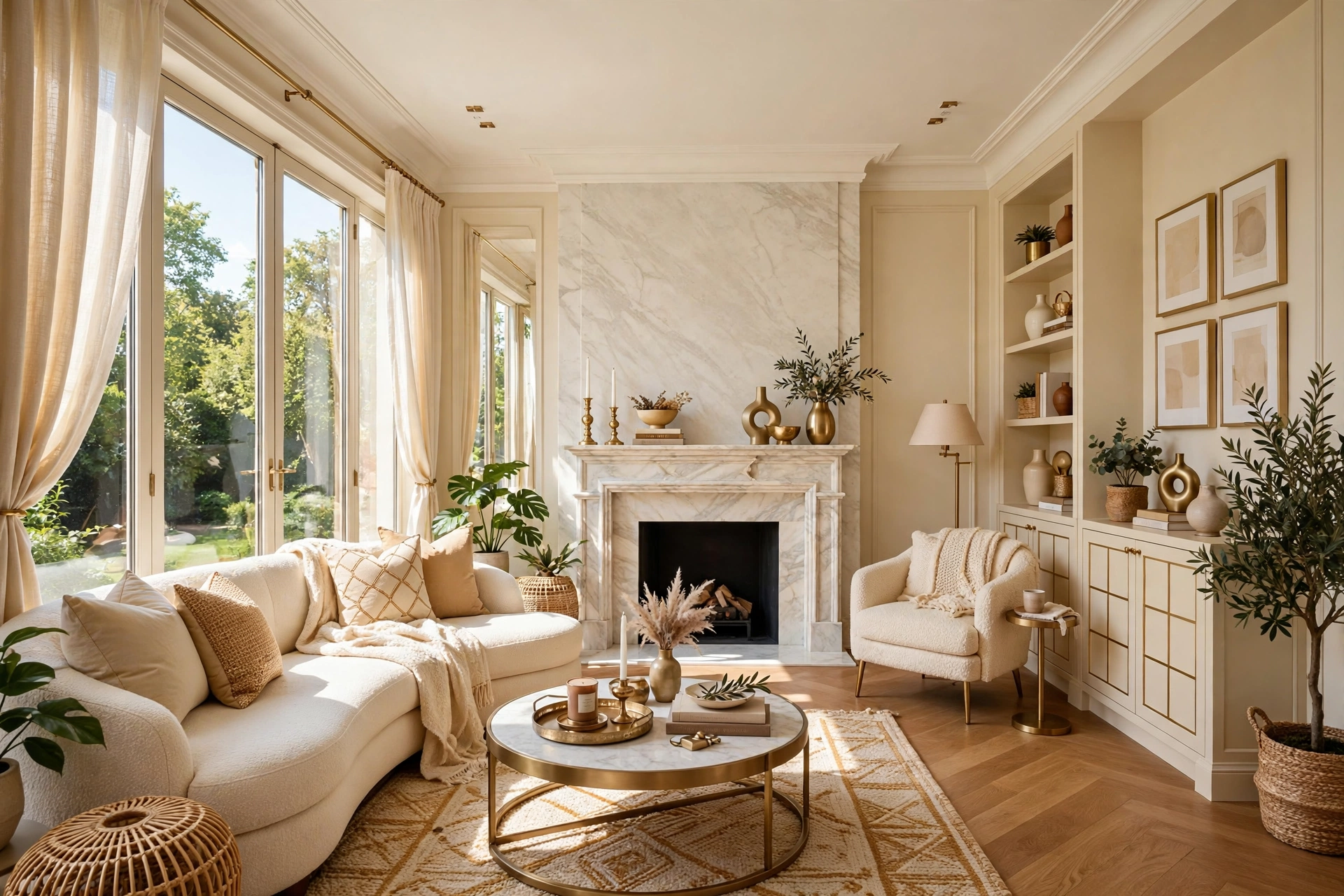
Walk into any living room that feels instantly put-together and you will notice something before you notice any single piece of furniture: your eyes land somewhere specific. They settle on the fireplace, drift to the big window, or lock onto one bold piece of art. That spot — the place your gaze goes first — is the room’s focal point. Every room has one, whether it was chosen on purpose or arrived by accident.
A focal point is simply the dominant visual anchor of a room. It is the spot that commands attention and gives every other element something to relate to. Without one, a living room feels restless: the eye wanders, nothing feels grounded, and the furniture seems to float without a purpose. With one, the same furniture suddenly looks arranged. The room gains an order, a hierarchy, and a sense of calm that no amount of shopping can buy.
The best news is that finding and styling your focal point is free, and it is the single fastest way to make a living room feel designed rather than assembled. This guide explains what a focal point actually is, how to identify the one you already have (or create one from scratch), and the designer rules for styling, lighting, and arranging furniture around it — including renter-friendly and budget options that cost next to nothing.
1. What Exactly Is a Focal Point (And Why Your Eye Craves One)
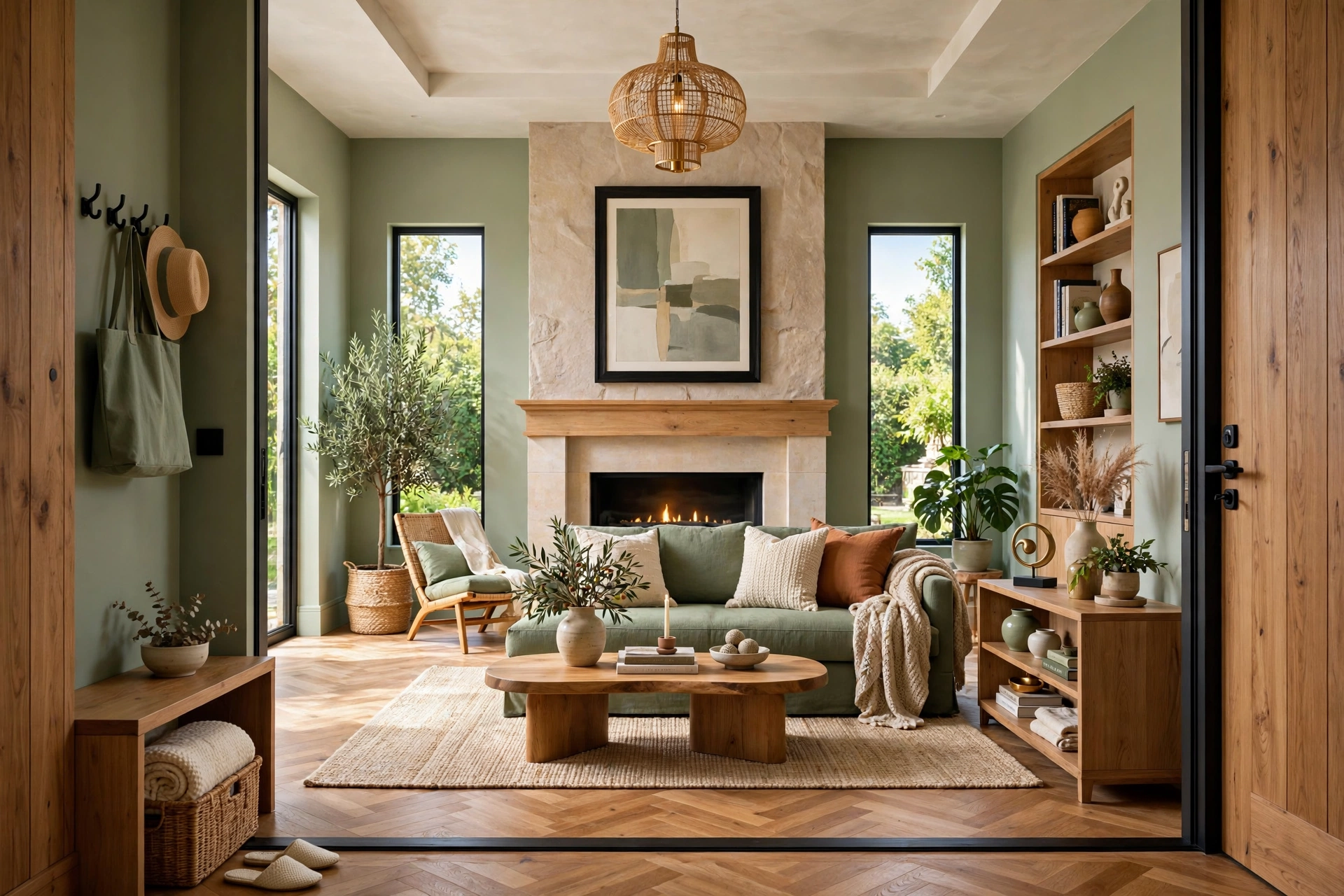
A focal point is the visual “home base” of a room — the element with the strongest presence, whether by size, contrast, texture, or meaning. Think of it as the period at the end of a sentence: it gives the room a place to land. Fireplaces, large windows, statement art, and accent walls are classic examples, but a focal point can be almost anything with enough visual weight to hold the room’s attention.
Your brain actually needs one. In any space, the eye instinctively searches for a dominant element to orient itself, and if nothing claims that role, the room feels subtly uneasy — the visual equivalent of a sentence with no punctuation. That is why rooms without a clear focal point often feel “unfinished” even when they are full of nice things. The eye keeps scanning, never satisfied.
2. Natural vs. Created Focal Points: Know the Difference
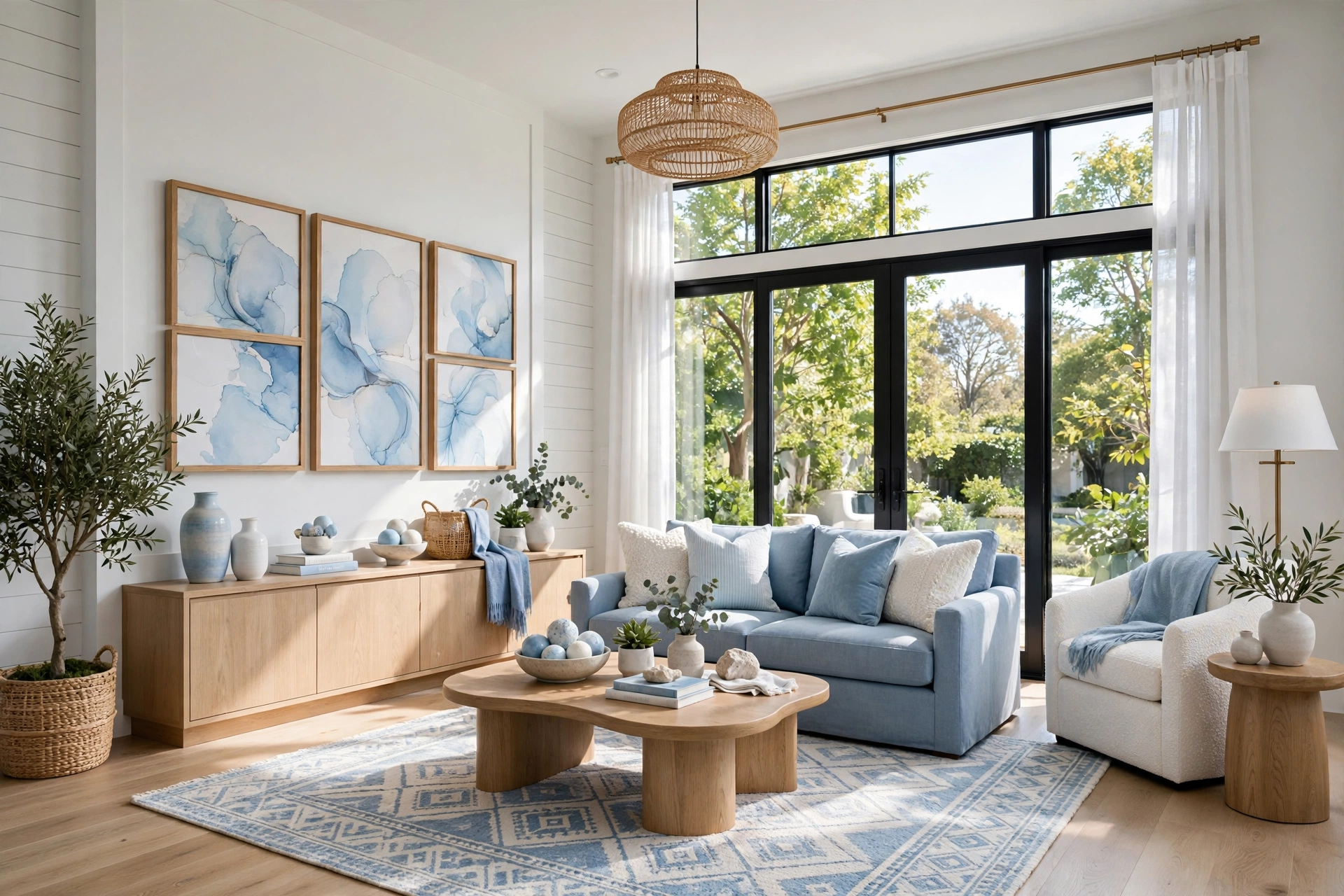
Focal points come in two flavors. Natural focal points are built into the room’s architecture: a fireplace, a floor-to-ceiling window, an exposed brick wall, a dramatic view. You don’t choose them — they choose you, and the smartest move is always to work with them rather than fight them. Fighting a fireplace to make the TV the star, for example, is a battle the fireplace will win every time.
Created focal points are the ones you build: an accent wall, a large piece of art, a styled bookshelf, a media wall. These are your answer when the room’s architecture gives you nothing to work with — four blank walls and nothing to anchor them. A bold painted wall or one oversized canvas can anchor a room with complete authority, and you get to decide exactly what the anchor is.
💡 Pro Tip: When in doubt, trust the architecture. A natural focal point that already exists will always be more convincing than a created one competing with it. If you have a fireplace, let it win — decorate around it instead of inventing a rival.
3. How to Spot the Focal Point Your Room Already Has
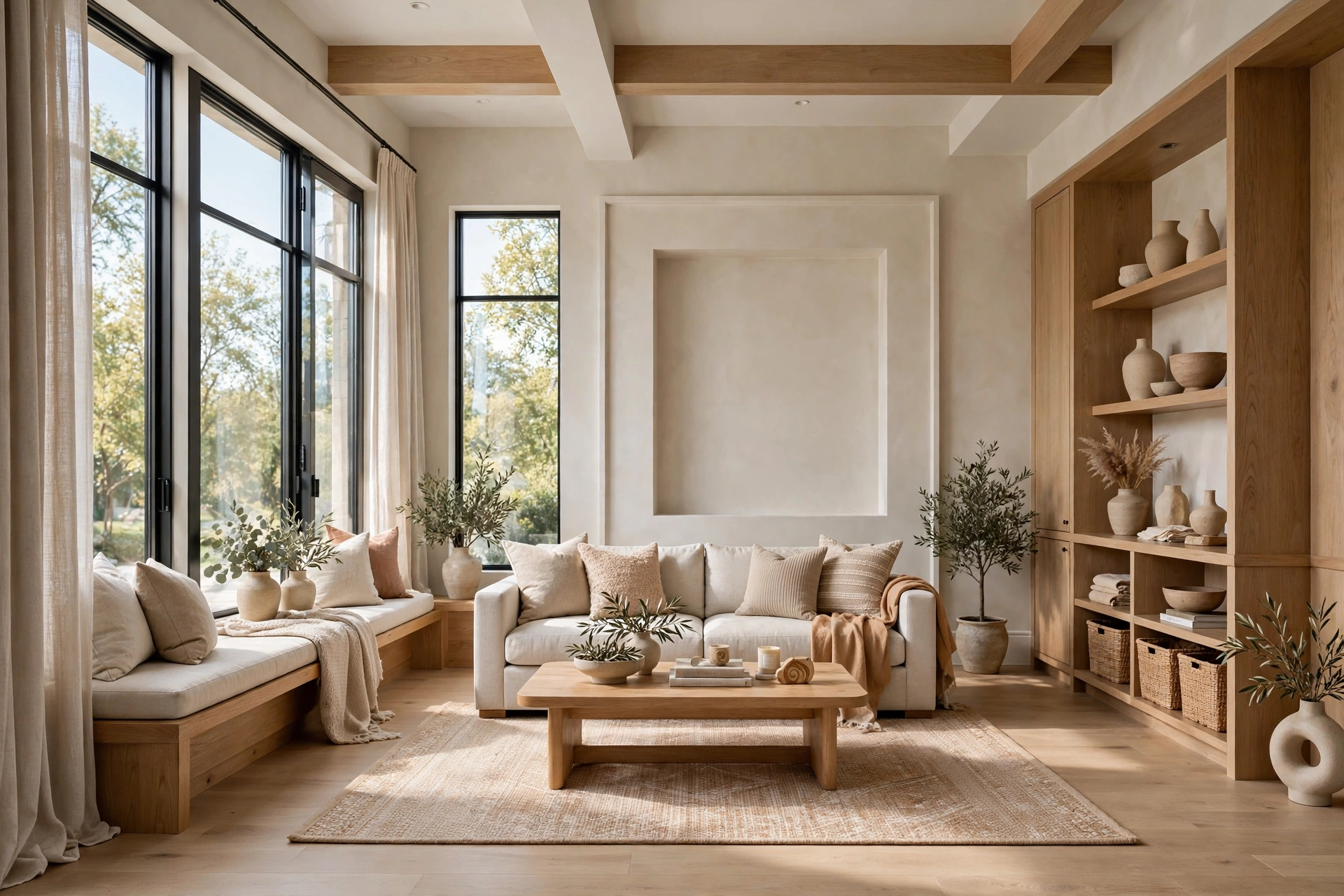
Finding your existing focal point takes about thirty seconds. Stand in the doorway — the spot guests see first — and notice where your eyes go without effort. That first, involuntary landing spot is almost always the room’s natural focal point. Whatever your gaze finds first, that is your starting point.
If your eyes wander and never settle, the room has competing candidates or none at all — and that is your diagnosis. Competing focal points (a fireplace on one wall, a TV glaring from another) split the room’s attention and make it feel divided. In that case, choose a winner and demote the runner-up: keep the fireplace as the visual anchor and quiet the TV, or vice versa. One clear winner always beats two fighting contenders.
4. Fireplaces: The Classic Built-In Anchor
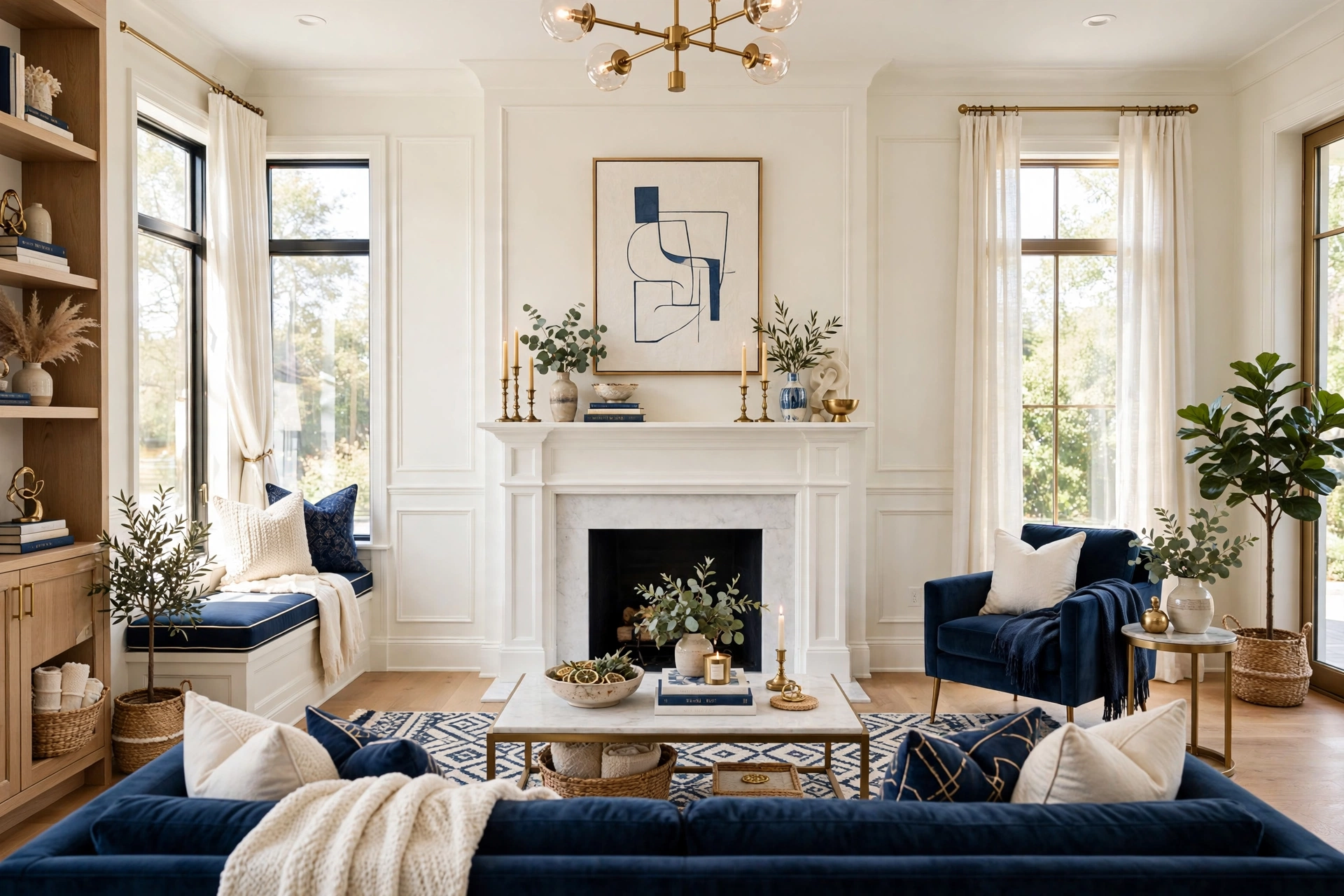
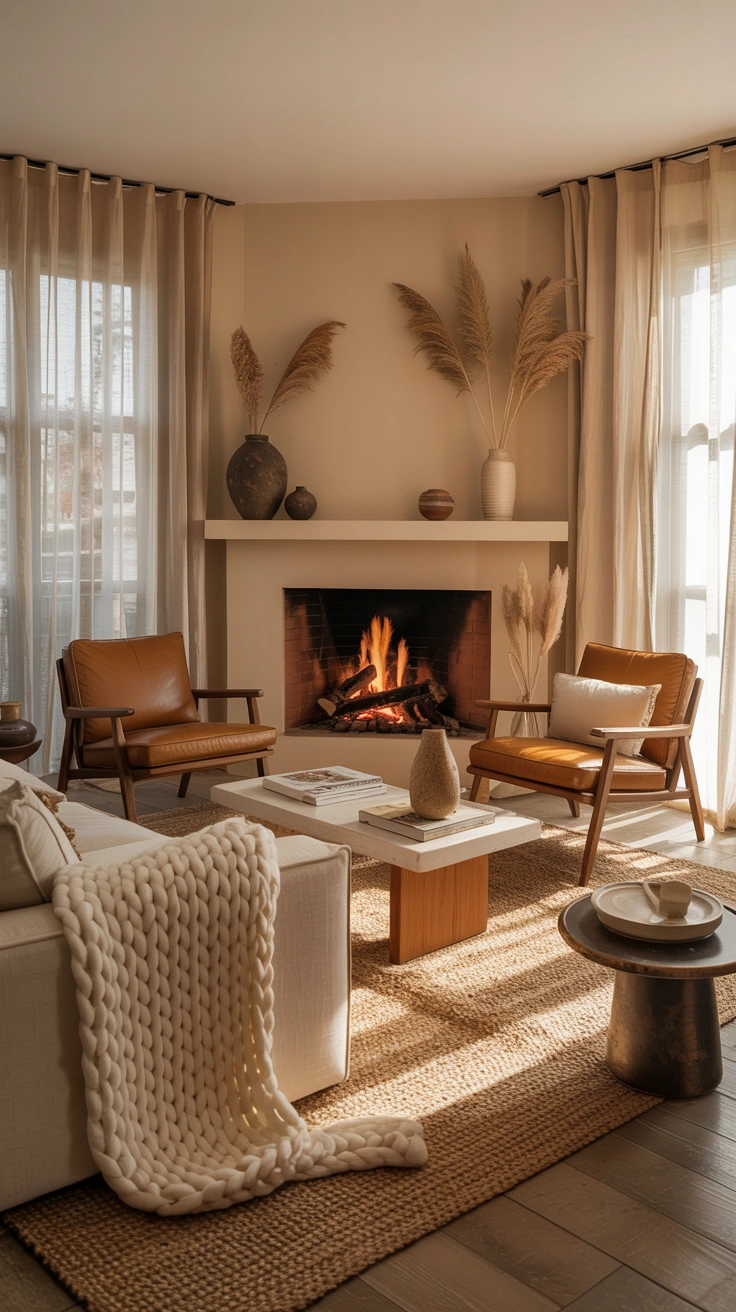
The fireplace is the undisputed champion of natural focal points. It is literally built to be the center of attention: centered on a wall, framed by a mantel, and associated with gathering. When your living room has one, decorating becomes simple — the fireplace is the anchor, full stop. Arrange your seating to face it, style the mantel with intention, and let everything else play a supporting role.
Styling a fireplace well means treating the whole wall as a composition, not just the mantel. Hang one confident piece of art or a mirror above the mantel rather than a scatter of small items — scale is everything here, since a tiny frame on a big chimney breast looks lost. Flank the fireplace with symmetry (matching sconces, matching bookshelves, a pair of chairs) for a traditional feel, or go asymmetrical with one tall plant on one side for something more relaxed.
5. The TV Wall: Making the Screen Look Intentional
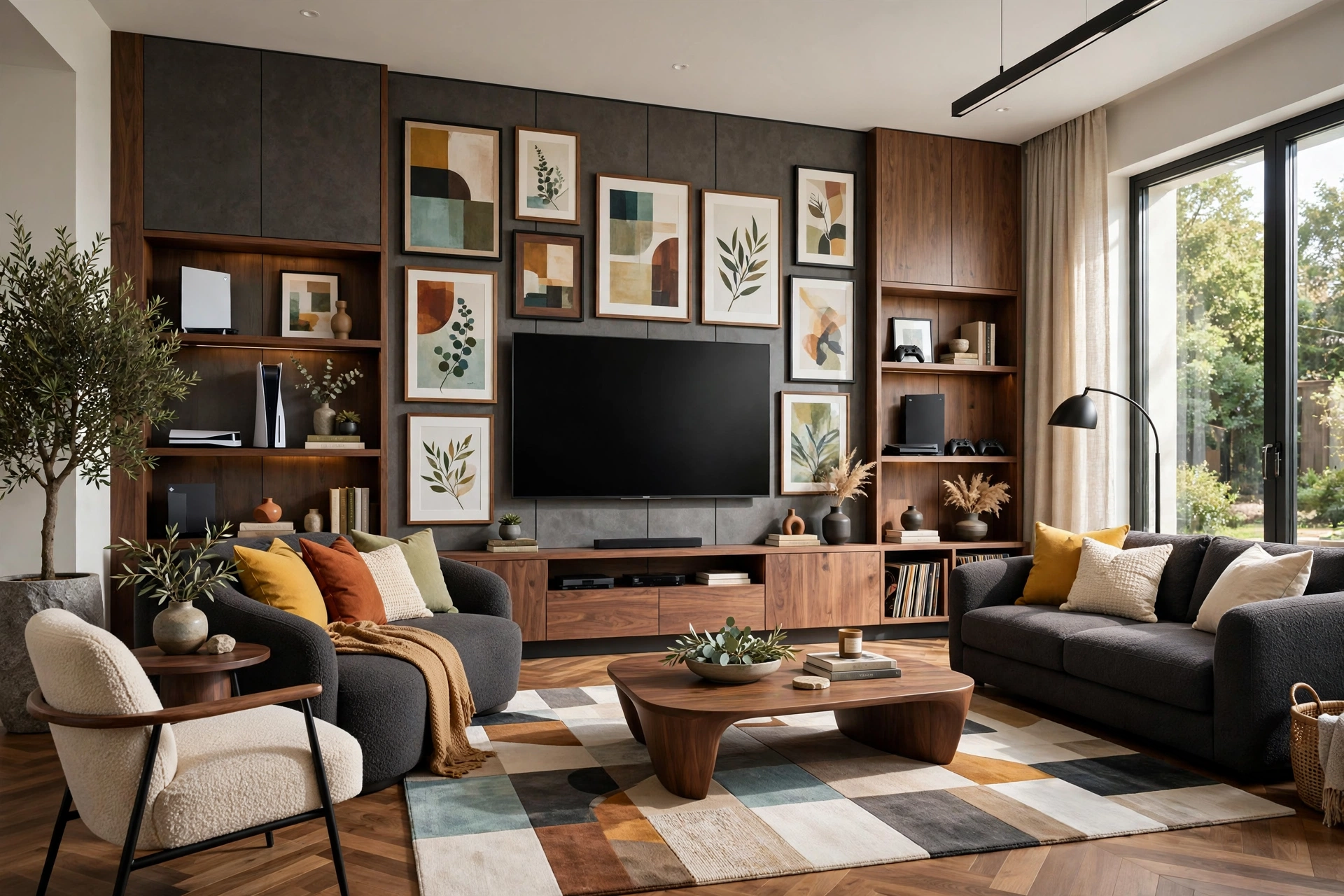
In many modern living rooms, the television is the de facto focal point, planned or not. The fix is to make the TV wall look designed rather than accidental, so the screen feels like part of a composition instead of a void in the middle of your furniture.
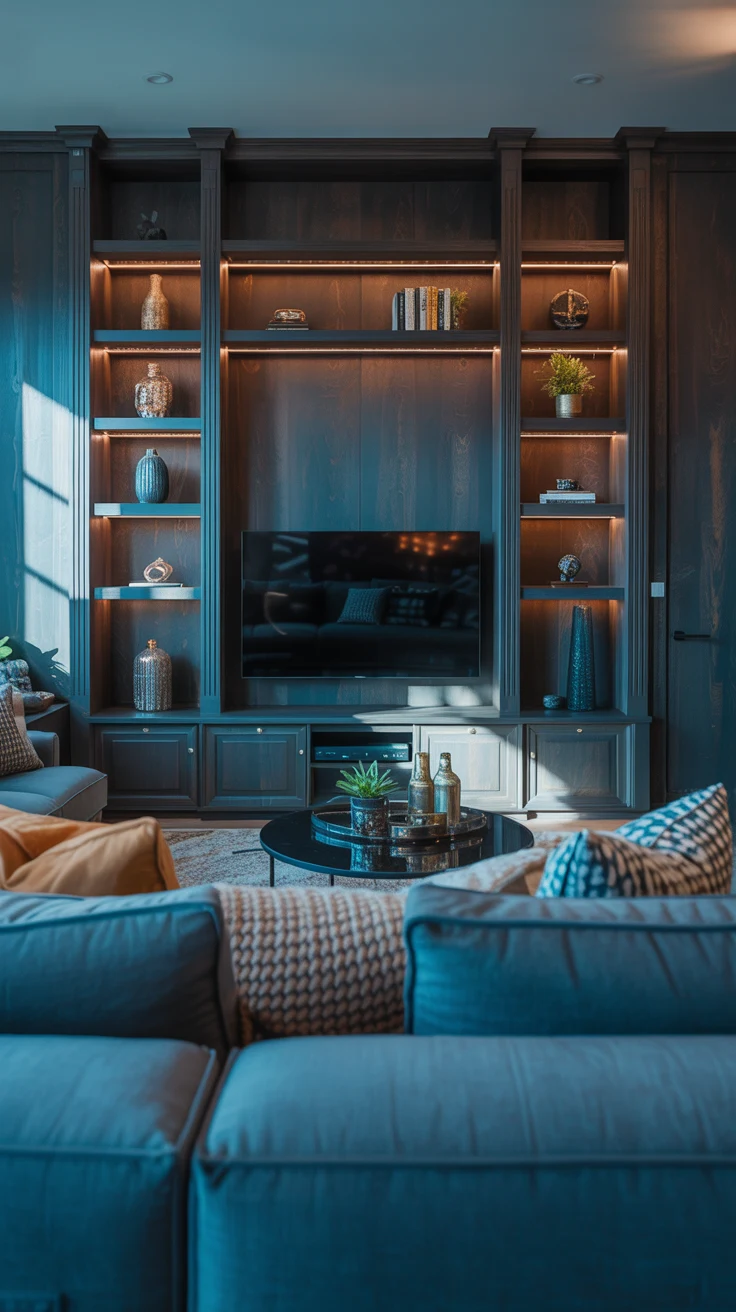
The simplest approach is to treat the TV as a secondary citizen within a larger styled wall. Frame it with a media console below and balanced shelving or art on either side, so the screen is one element in a gallery-like arrangement rather than a lone rectangle. If the room has a competing natural focal point, place the TV on an adjacent wall or a swivel mount, so the seating faces the true anchor while the screen stays viewable.
📌 Important: Never let the TV wall and the seating face each other across a void with nothing else on the wall. A screen floating alone on bare drywall is the least designed-looking focal point in any home — even a low console and two framed prints underneath transform it completely.
6. Large Windows and the View Beyond
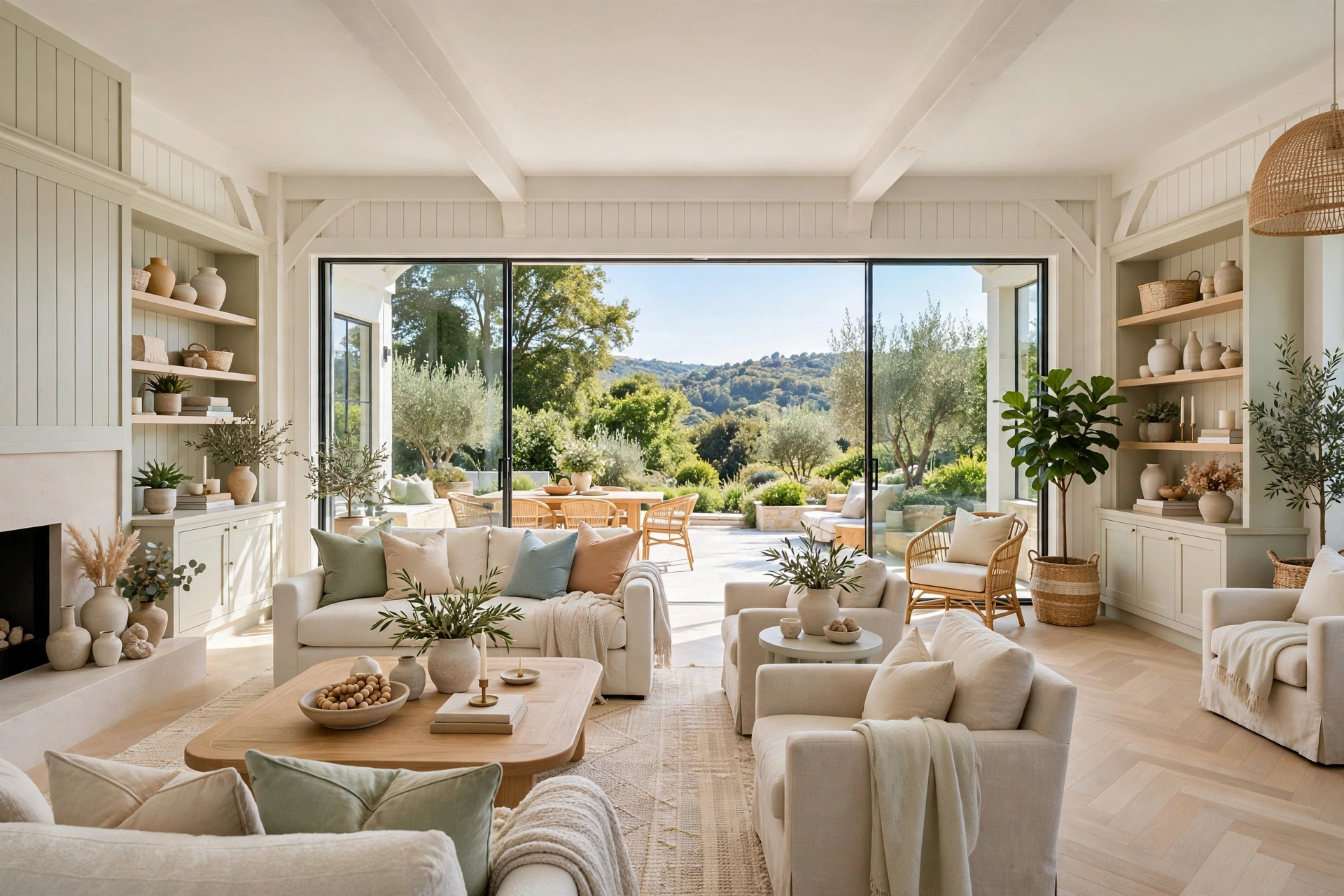
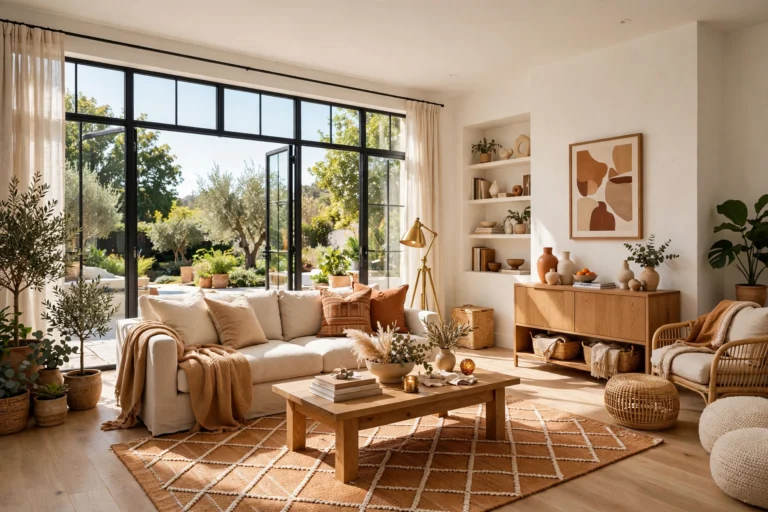
A great window is a gift of a focal point: daylight, depth, and movement that no object can match. When your living room has a large window or a genuinely good view, the window wall should be the anchor. Keep the sightline clear, and let the outdoors do the decorating work that art or paint would do on any other wall.
The styling rules for a window focal point are about restraint. Keep window treatments simple and mounted high and wide so the glass is fully exposed — heavy curtains that swallow the window defeat the purpose. Keep the furniture in front of it low: a low-profile sofa or a pair of low chairs preserves the view from seated height, while a tall bookcase parked in front of the best light in the room is a crime against the space.
7. Statement Art and Oversized Pieces
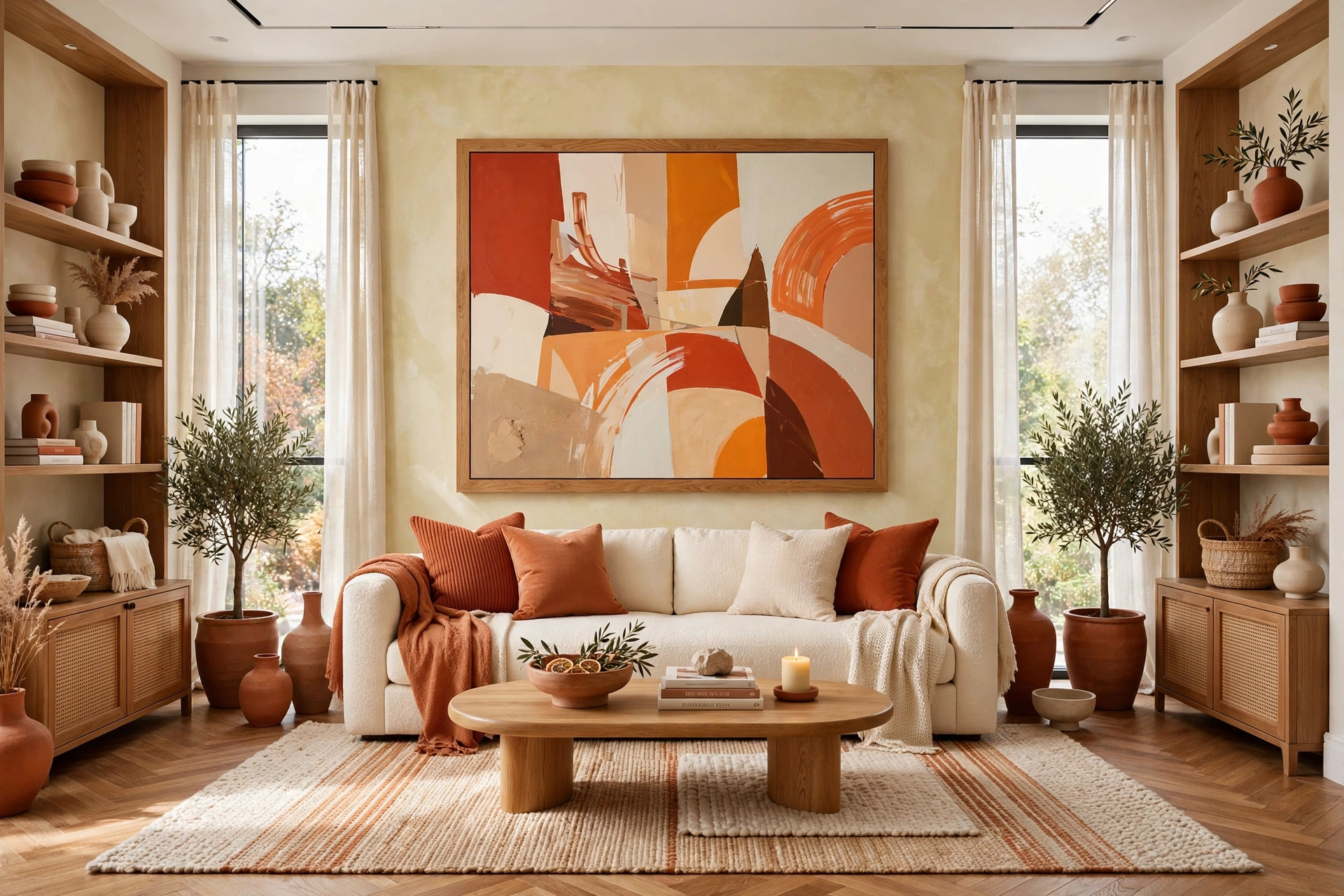
When the architecture gives you nothing, one large piece of art can create a focal point out of thin air. The key word is large: a single oversized canvas, textile, or framed print above the sofa commands the wall in a way that a scatter of small frames never will. Scale creates authority — one generous piece reads as a decision, while many small ones read as hesitation.
Choosing the right piece matters less than committing to the size. Pick art in colors drawn from your room’s palette so it feels inevitable rather than random, and hang it in real relationship with the furniture below — the center around 57 to 60 inches from the floor, close to the sofa so the two read as one composition. One confident gesture beats a dozen cautious ones every time.
8. Accent Walls That Steal the Show
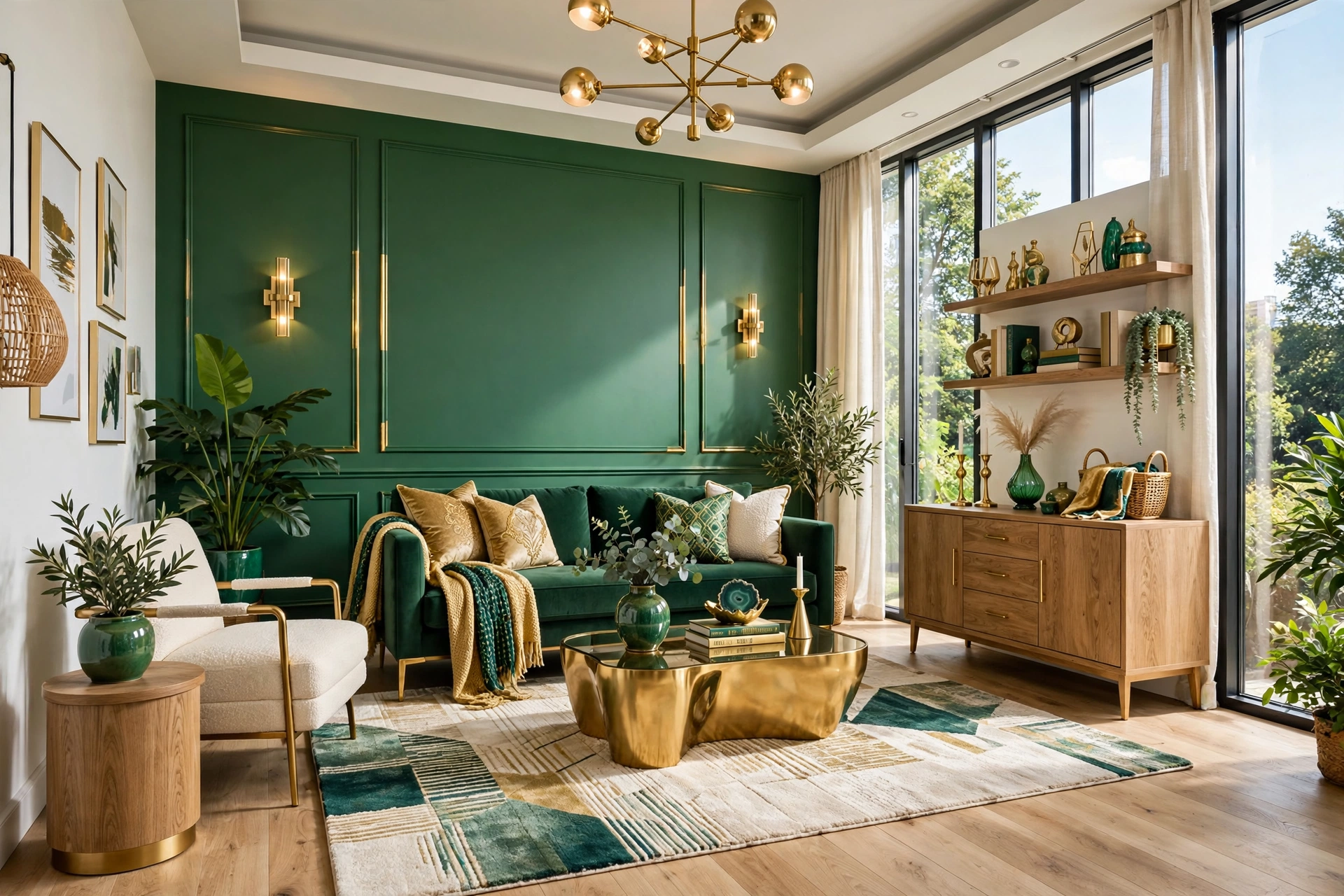
An accent wall is the fastest created focal point in decorating: one wall, treated boldly, becomes the room’s anchor in a single weekend. Deep paint color, wood slats, board-and-batten, limewash texture, or a bold wallpaper all work — the method matters less than the commitment to making one wall unmistakably the star. Browse our roundup of living room accent wall ideas for the full range of options, from a single can of paint to full statement paneling.
The accent wall must sit behind the room’s main seating to do its job — a bold wall that nobody faces is decoration, not a focal point. Keep the other three walls calm, and repeat the accent color once or twice elsewhere — a cushion, a throw, a frame — so the wall reads as the head of a scheme rather than a lone experiment.
⚠️ Warning: One accent wall is a focal point; two accent walls are a competition. Resist the urge to treat a second wall boldly “for balance” — it splits the room’s attention and destroys the hierarchy you just built. Let the other walls stay quiet and do their background job.
9. Architectural Features Worth Showing Off
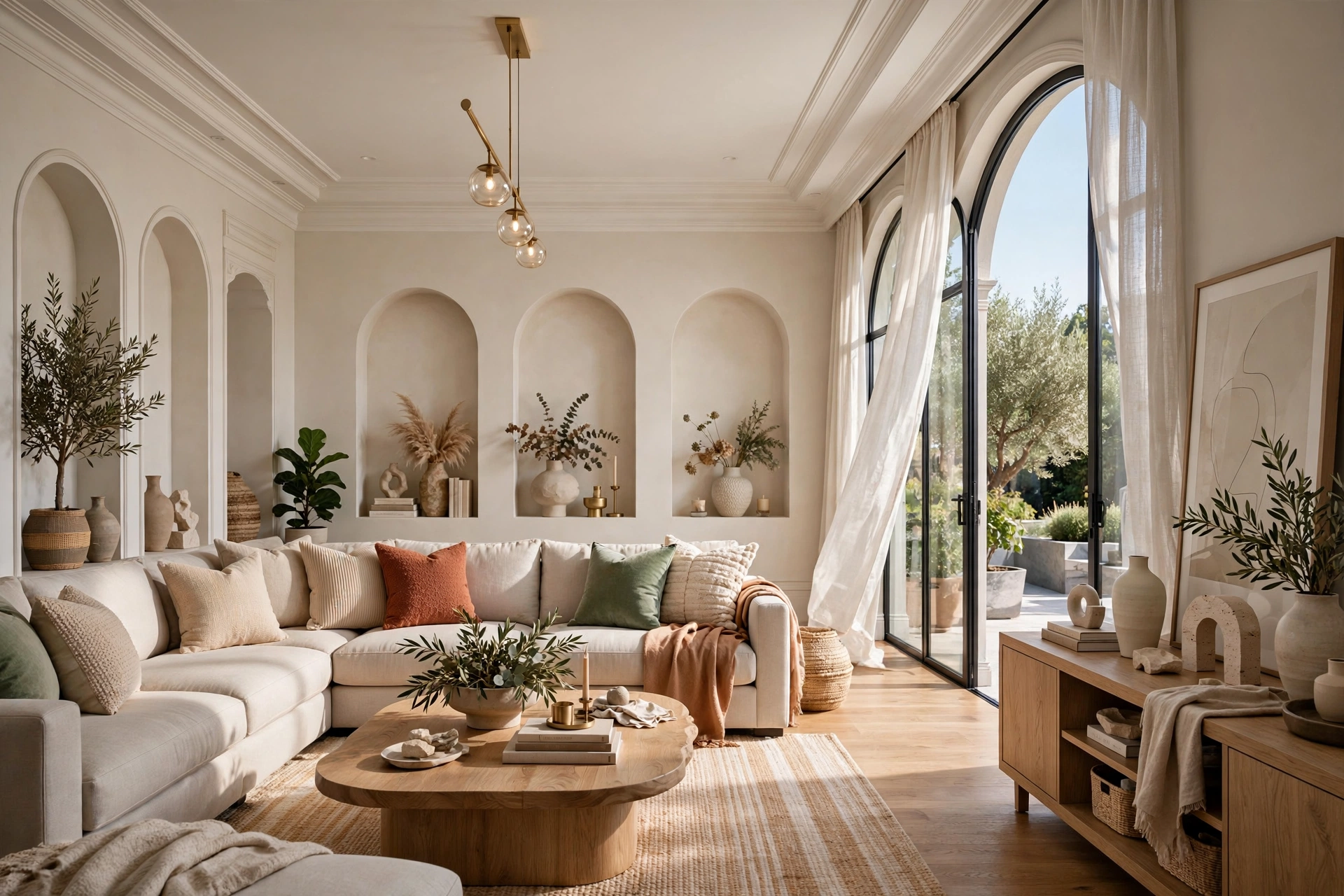
Some rooms come with built-in character begging to be the focal point: exposed brick, a dramatic ceiling beam, an arched doorway, a bay window, original molding, or a stone chimney breast. These features have a presence that manufactured decor struggles to match, because they are structural — they read as permanent and intentional in a way that styled objects don’t.
The designer’s move with architectural features is amplification, not competition. Exposed brick gets warm wood, black metal, and greenery — materials that love it — not a busy gallery wall fighting it for attention. Light the feature deliberately: a picture light over the brick, uplights washing the beams. When the architecture is the star, your job is to be its best supporting cast — frame it, light it, and keep the rest of the room quiet enough to let it sing.
10. Gallery Walls and Styled Bookshelves
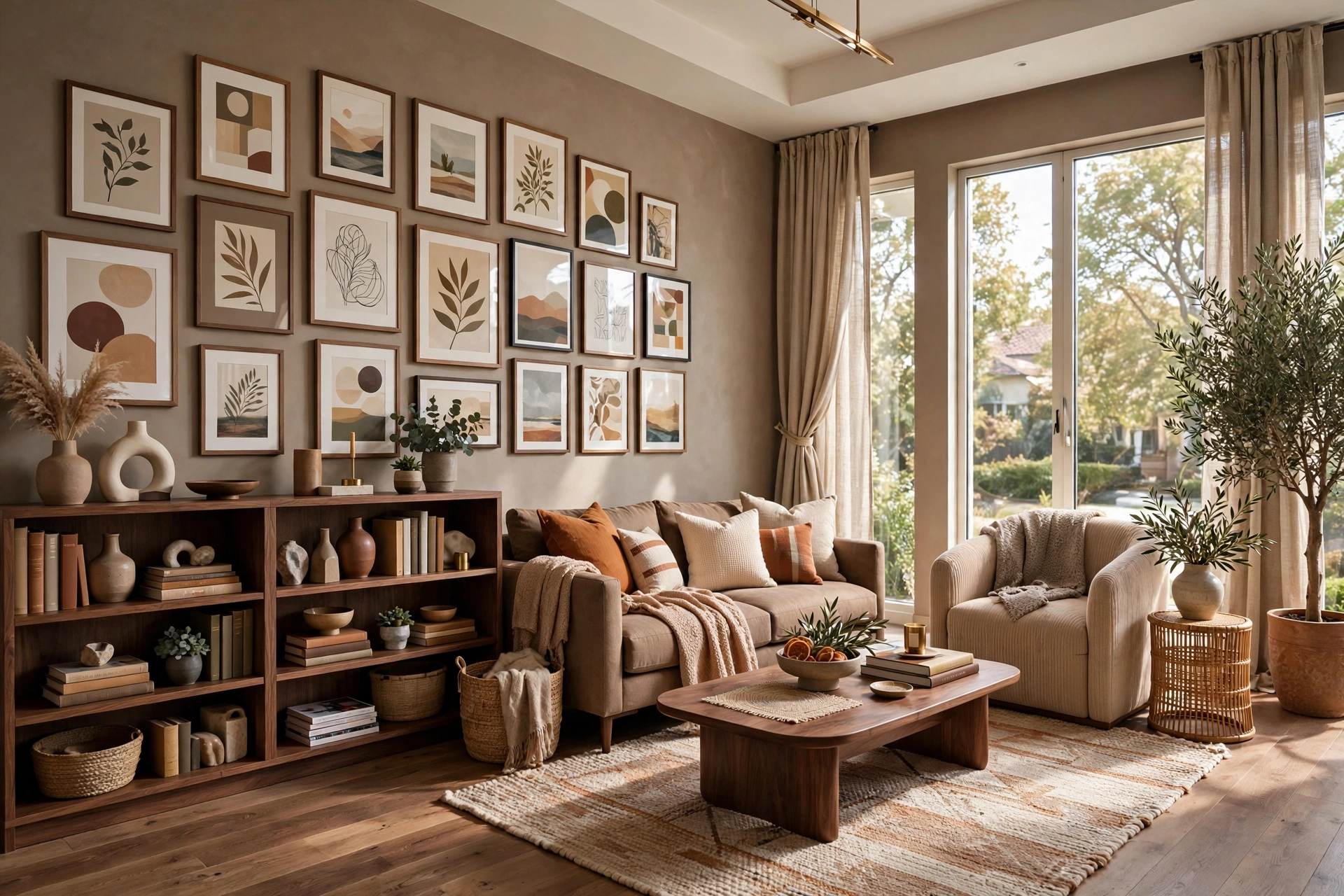
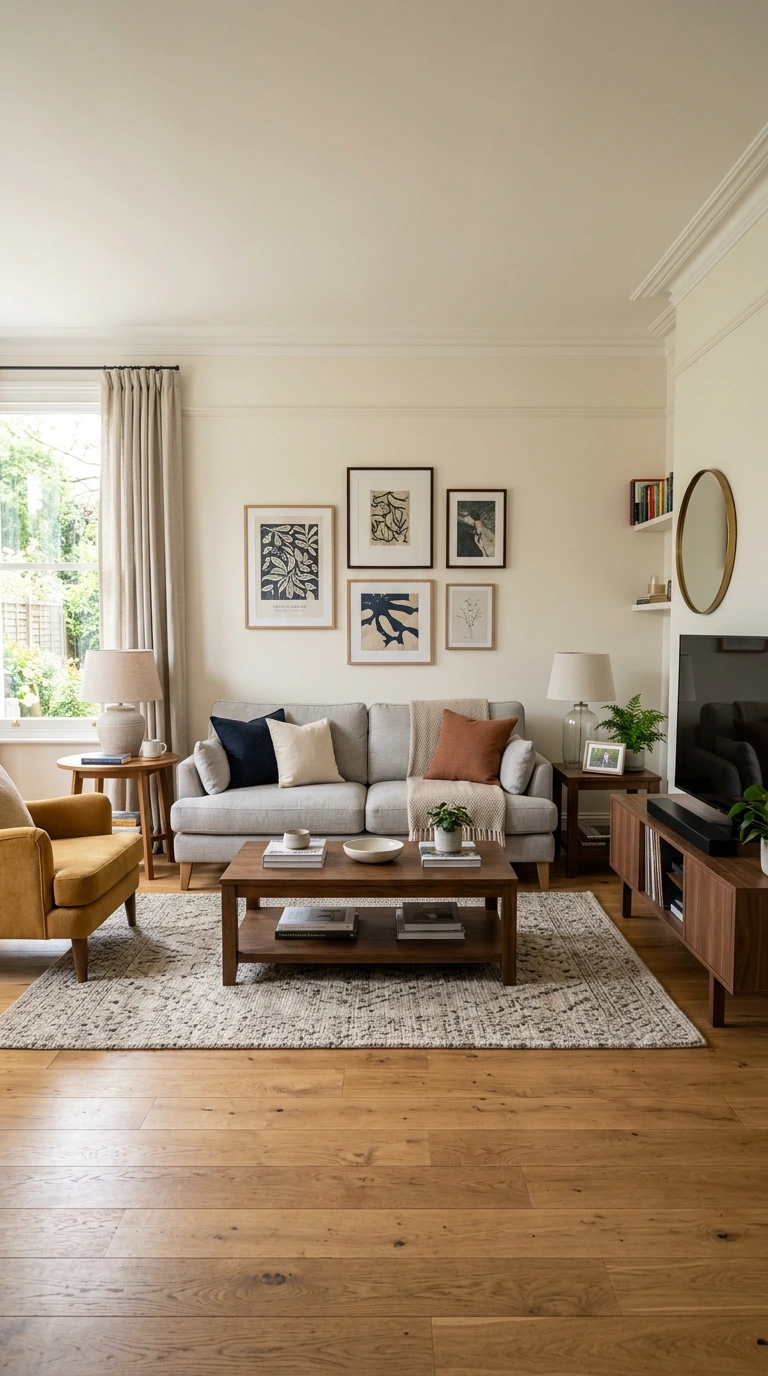
A gallery wall — a tight, intentional cluster of art, prints, and mirrors — can serve as a focal point when it is treated as a single installation rather than a random collection. The discipline is everything: commit to one wall, keep two-to-three-inch spacing consistent, lay the largest piece slightly off-center as the anchor, and center the whole arrangement at eye level. Matching simple frames do more work than expensive art — four prints in identical slim frames read as a collection, while four mismatched pieces read as leftovers.
A floor-to-ceiling bookshelf wall is the hardest-working focal point on this list, because it stores, displays, and decorates at once. You don’t need custom carpentry: painted stock bookcases, trimmed with crown molding at the top and a baseboard at the bottom, read as built-ins for a fraction of the price. Style the shelves like a real library, not a showroom — group books by height, stack some horizontally, leave breathing room for small objects — and anchor any bookcase taller than waist height to wall studs. Safety is not optional with a fully loaded tall shelf.
💡 Pro Tip: A gallery wall works best on the wall you face from the main seating, at the end of the room’s longest sightline from the door. Art hung where the eye travels naturally gets ten times the impact of art hung wherever there was empty space.
11. How to Arrange Furniture Around Your Focal Point
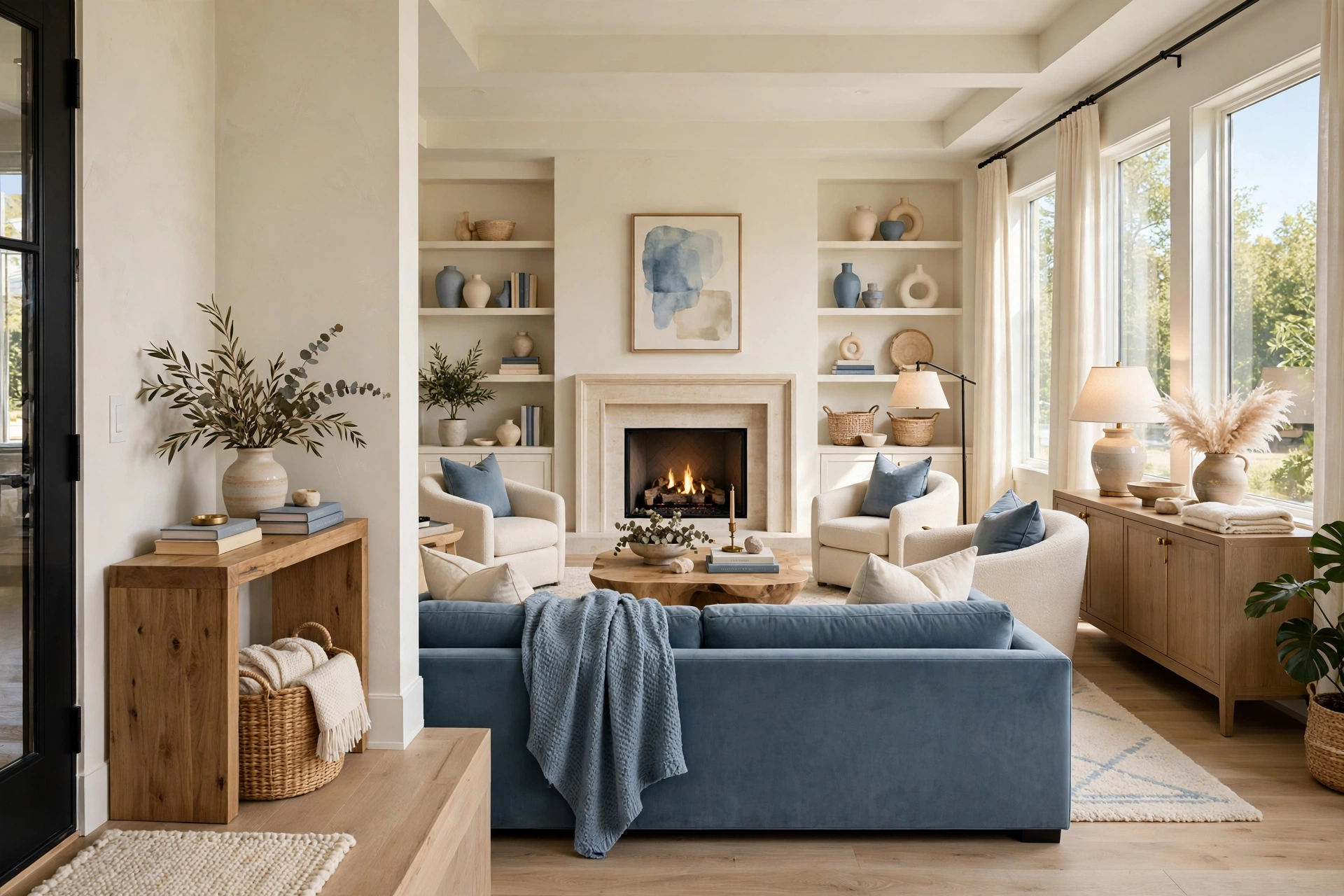
Once the focal point is chosen, furniture arrangement becomes almost mechanical: every large piece gets its orientation from the anchor. The sofa faces it or sits opposite it, chairs angle toward it, and the coffee table sits in the conversation zone that forms around it. This is the first principle of good living room furniture arrangement — the anchor is chosen first, and every seat relates to it. A room where every chair argues about which wall matters will never feel calm.
Leave the walking lanes out of the conversation zone. Paths should flow behind the sofa or around the seating group, never between the seats and the focal point — nothing kills a fireplace’s pull like a traffic lane cutting straight across it. Give the anchor breathing room: a clear zone before a fireplace, unblocked sightlines to a window, and enough empty floor to see a statement wall whole from the main seats.
12. Scale, Color, and Balance: The Three Styling Rules
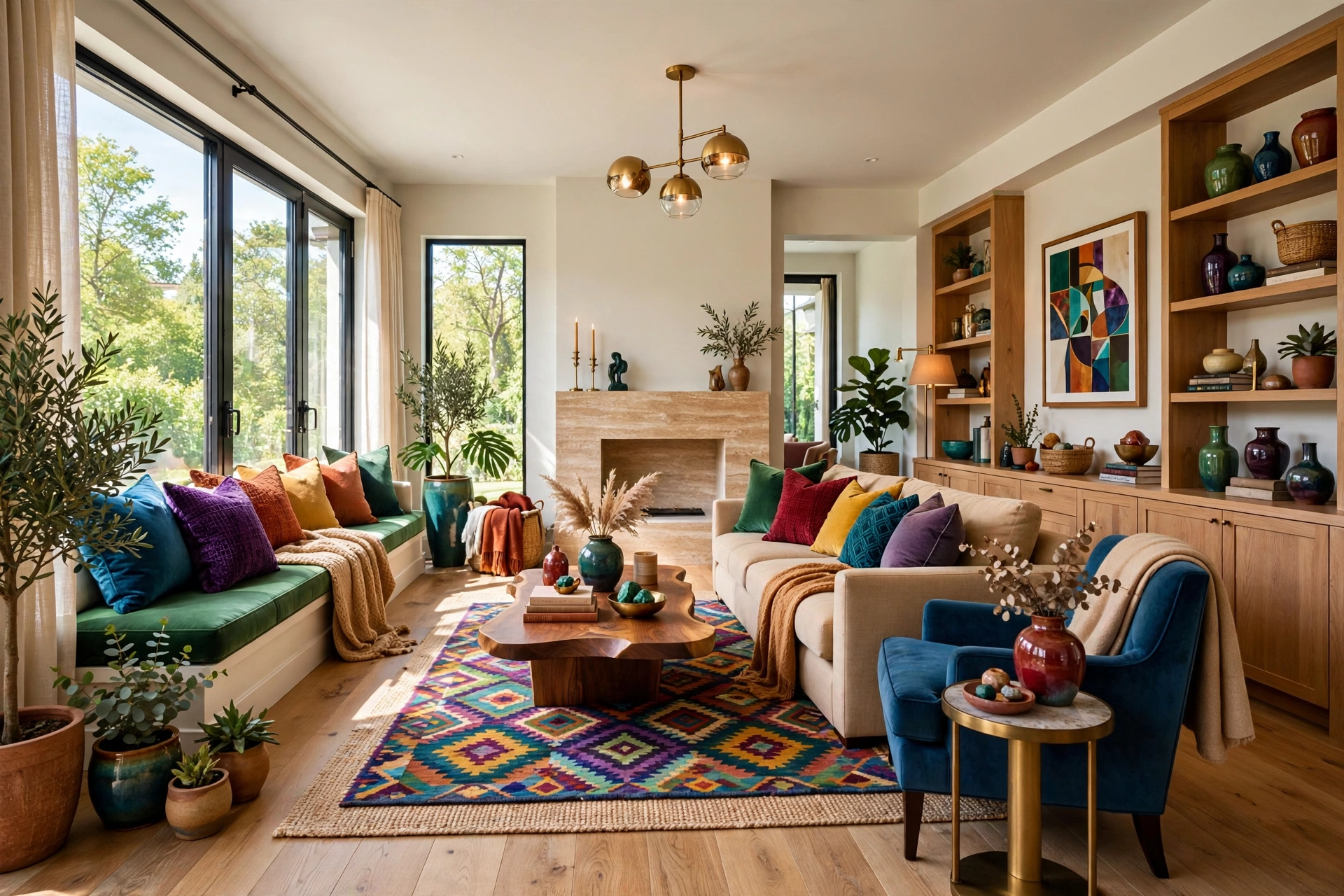
A focal point obeys three styling rules, and all three are about relationship, not decoration. Scale: the focal element must be big enough to hold the wall — a postage-stamp frame on a vast wall emphasizes the wall, not the art. Art over a sofa should span roughly two-thirds the sofa’s width, and a mantel display should read from the doorway, not just up close.
Color: the focal point should carry the room’s strongest color or contrast moment. If the rest of the room wears calm neutrals, the focal wall or piece is where the saturated color lives — that contrast is what tells the eye “look here.” Browse proven living room color schemes and notice how the strongest color always sits at the focal point. Balance: the visual weight around the anchor should feel even. A heavy fireplace on one side wants a tall bookcase or a substantial chair on the other, so no corner of the room hogs all the mass while another sits empty.
13. How to Light a Focal Point Like a Designer
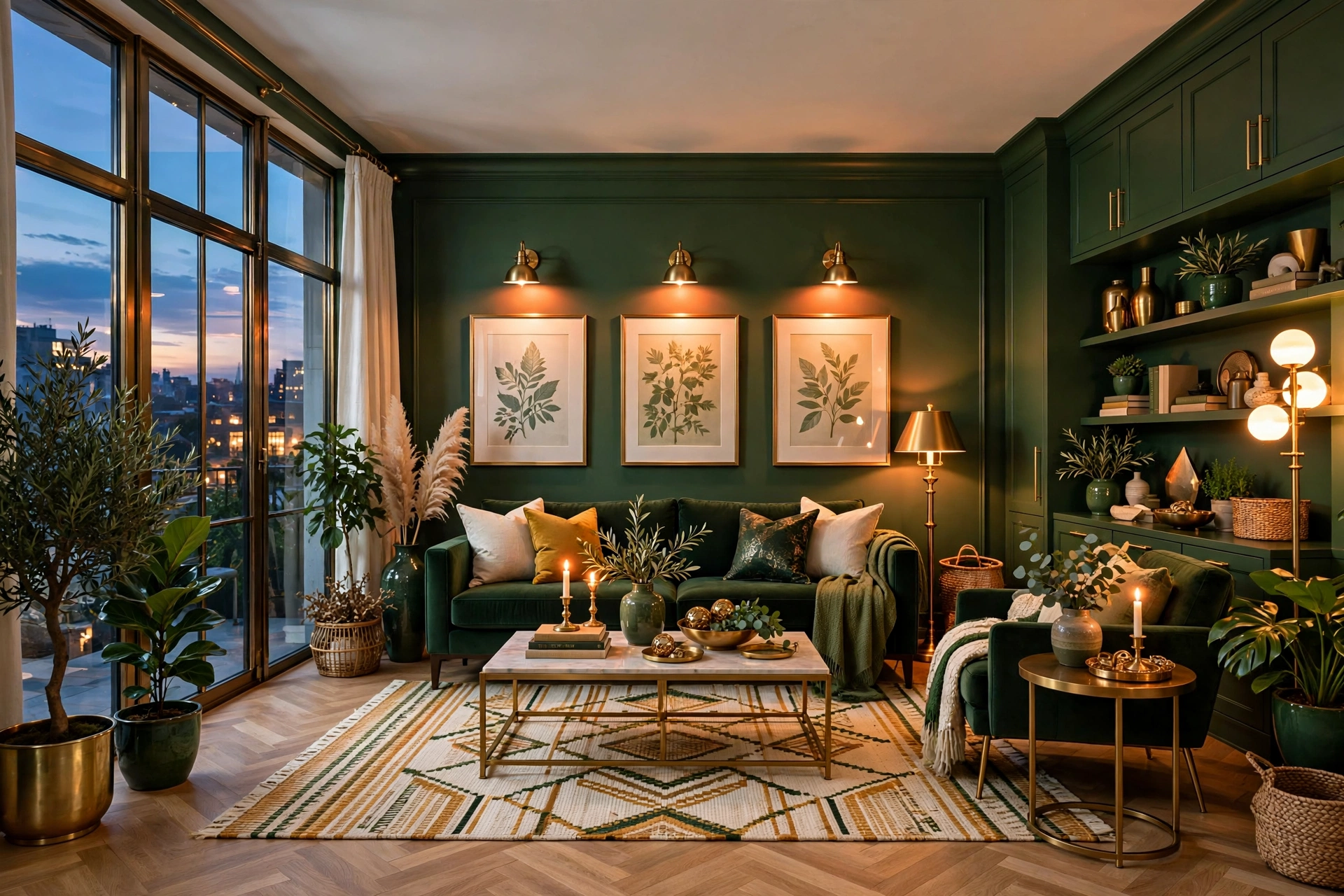
A focal point that disappears after dark was never really a focal point — it was a daytime accident. Designers light focal points deliberately: a picture light washing over the art, a pair of sconces flanking the fireplace, an uplight grazing brick or a slat wall. Dedicated accent light tells the eye exactly where to look, even in a dim room.
Build the light in layers around the anchor rather than blasting the whole room from one ceiling fixture. For options at every budget, our guide to the best floor lamps living room spaces can handle shows which styles work best where. And always match bulb temperatures — one cool daylight bulb in a sea of warm lamplight will undermine the mood faster than any furniture choice.
14. Two Focal Points? Handling Open-Plan Rooms
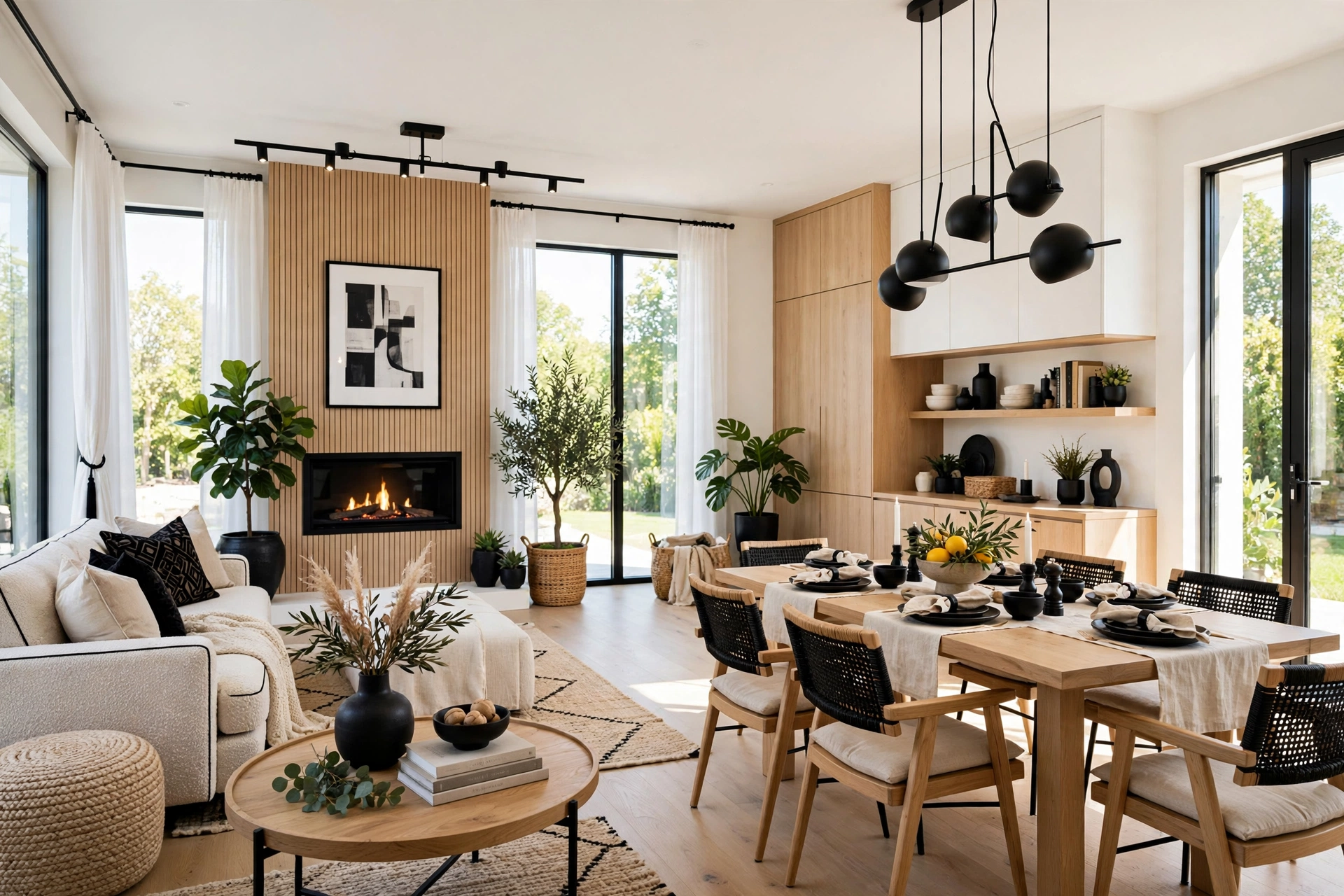
Open-plan living rooms often have a genuine two-anchor problem: the living zone has its fireplace or TV wall, and the dining or kitchen zone has its own contender. The solution is not to pick one winner for the whole space — it is to give each zone its own focal point and let a rug, a change in lighting, or a furniture arrangement define where one zone ends and the next begins.
Each zone follows the same rules as a standalone room: one anchor, seating oriented to it, clear walking lanes around it. The trick is keeping the two anchors in conversation rather than competition. Use one continuous color palette across both zones, vary the anchors’ intensity (one strong, one quiet), and make sure neither zone’s seating faces into the other’s back.
📌 Important: In an open plan, never give both zones equal-strength focal points. Two bold accent walls or two statement pieces of identical drama will fight across the open space. Make one the primary star and the other a confident supporting player.
15. Renter-Friendly and Budget Focal Points That Actually Work
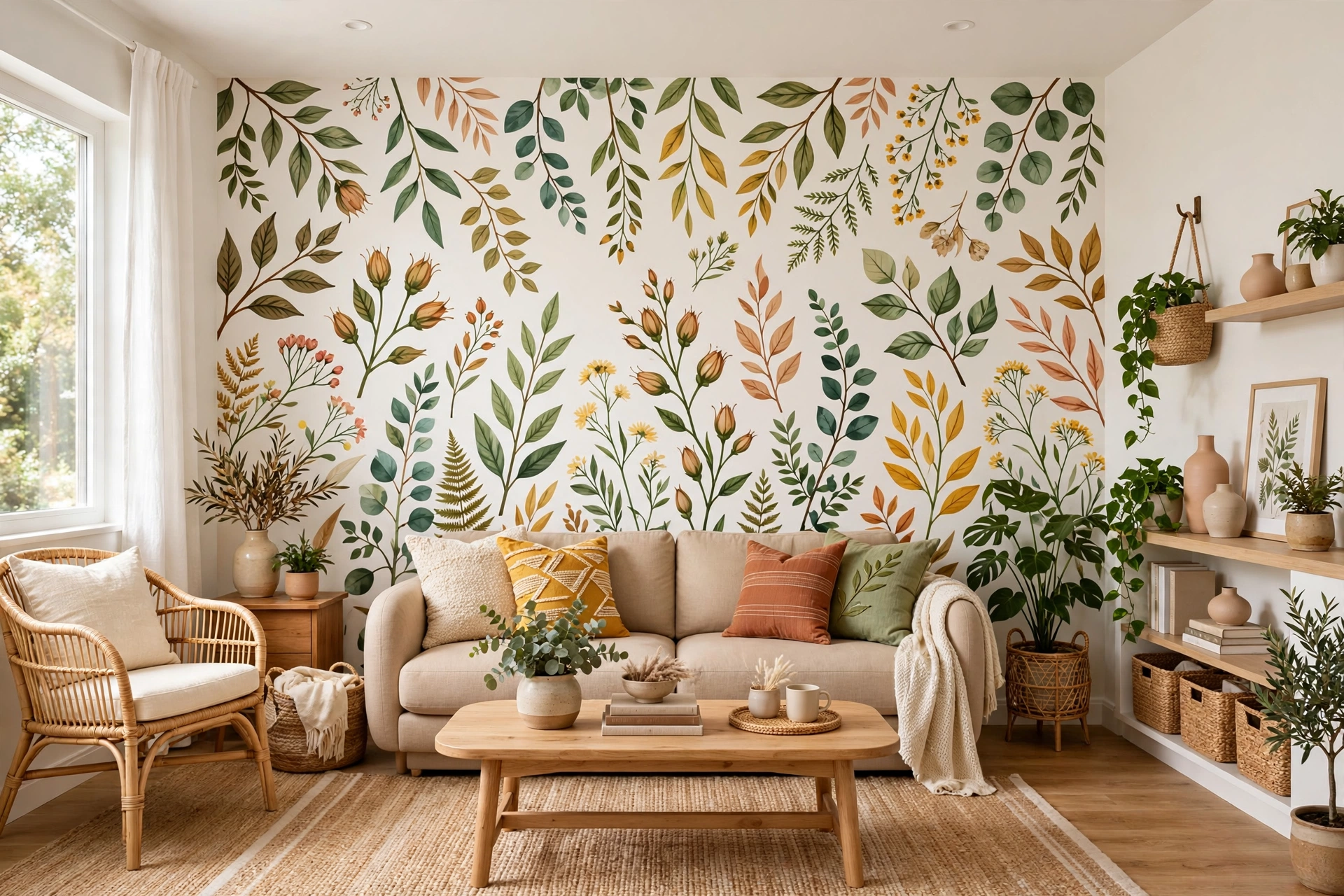
No drilling, no paint, no problem. Renters have excellent options: one oversized piece of art leaned on a console (leaning is renter gold — no holes, full drama), a large mirror that doubles the light, a tall plant in a statement pot, or peel-and-stick wallpaper behind the sofa that comes off cleanly. A floor-to-ceiling curtain wall — curtains hung wall-to-wall behind the seating — creates a soft, dramatic backdrop with nothing but a tension rod and fabric.
Budget focal points follow the same principle: spend where the eye lands first. One gallon of paint on a single wall or a thrifted large frame with a free printable inside — our living room makeover on a budget guide walks through the highest-impact moves in order. And in a compact space, a strong focal point actually helps: it gives a small room an order that makes it feel intentional rather than cramped, which pairs perfectly with our tricks for how to make a small room look bigger. The focal point is never about money — it is about decision.
Quick Comparison: Focal Point Options by Cost and Effort
Your Focal Point Quick-Start Checklist
- ✅ Stand in the doorway and note where your eyes land first — that is your natural focal point
- ✅ If two features compete, choose one winner and deliberately quiet the other
- ✅ Orient the sofa and chairs toward the anchor; angle every seat to face it
- ✅ Make the focal element large enough to hold its wall (art ~two-thirds the sofa width)
- ✅ Give the anchor the room’s strongest color or contrast moment
- ✅ Light it deliberately — a picture light, sconces, or flanking lamps for evenings
- ✅ Keep walking lanes behind the seating, never between the seats and the focal point
Common Focal Point Mistakes
Mistake 1: Letting the TV Win by Default
In most living rooms the television became the focal point through pure inertia — it was the biggest rectangle, so the sofa faced it. Unless movie nights are the room’s main purpose, demote the TV: style the wall around it or move it to an adjacent wall so the fireplace or window leads. A room designed around a screen feels like a theater; a room designed around people feels like a home.
Mistake 2: Creating Two Competing Focal Points
A bold accent wall plus a statement gallery wall, or a fireplace fighting a massive TV wall — two anchors of equal strength split the room’s attention and make it feel divided. The eye doesn’t know where to land, so it never rests, and the room feels restless. Choose one primary anchor per zone and let everything else support it. Supporting elements should be quieter, smaller, or calmer than the star.
Mistake 3: Choosing a Focal Point Nobody Faces
A beautiful accent wall behind the sofa, a stunning gallery wall in the corner nobody looks at — a focal point only works if the room’s seating actually engages with it. The anchor must sit in the sightline of the main seats, ideally on the wall the sofa faces. Before committing to any focal point, sit in the main seat and check: can you see it comfortably? If not, it is decoration, not an anchor.
Mistake 4: Going Too Small on the Anchor
The most common focal-point failure is timidity: a small frame on a big wall, a narrow console under a vast expanse of drywall, a single small plant expected to anchor a whole seating area. Small elements on large walls emphasize the wall’s emptiness rather than filling it. When in doubt, go bigger than feels comfortable — one generous piece always reads as more confident and more expensive than several cautious ones.
Mistake 5: Forgetting the Focal Point After Dark
A fireplace wall that glows by day and vanishes by night, art that is invisible after sunset — if the anchor isn’t lit, the room loses its hierarchy every evening. Dedicated accent lighting keeps the focal point in charge around the clock. Test every focal point at night: if your eye still lands there first, the lighting is doing its job.
Frequently Asked Questions
1. What is a focal point in a living room?
A focal point is the dominant visual anchor of the room — the spot your eyes land on first when you enter. It can be natural (a fireplace, a large window, an architectural feature) or created (an accent wall, statement art, a gallery wall). Every well-designed living room has exactly one per zone, and every other element relates to it.
2. Does every living room need a focal point?
Yes. Without one, the eye wanders with nowhere to land, and the room feels restless and unfinished even when it is full of nice furniture. A focal point gives the room hierarchy and calm — it is the single fastest, cheapest way to make a living room feel designed rather than assembled.
3. What if my living room has no natural focal point?
Create one. Paint an accent wall, hang one oversized piece of art, build a gallery wall, or style a bookshelf wall behind the main seating. Created focal points are just as effective as natural ones — what matters is committing to one anchor with enough scale and presence to hold the wall.
4. Should the TV be the focal point of the living room?
Only if watching is the room’s main purpose. Otherwise, treat the TV as a secondary element: style the wall around it, or place it on an adjacent wall so the seating faces the room’s true anchor. A room organized around a screen feels like a theater, not a home.
5. How do I arrange furniture around a focal point?
Orient every large piece toward the anchor: the sofa faces it or sits opposite it, chairs angle inward toward it, and the coffee table sits in the conversation zone that forms around it. Keep walking lanes behind the seating — never between the seats and the focal point — and leave the anchor breathing room so it can be seen whole from the main seats.
6. Can a small living room have a focal point?
Absolutely — small rooms benefit the most, because a clear anchor gives a compact space an order that makes it feel intentional rather than cramped. Choose one confident element (one large art piece, one bold wall, one styled shelf) and keep everything else calm. One strong anchor beats several small competing ones, especially in tight footprints.
7. How do I choose between a fireplace and a TV as the focal point?
The fireplace is almost always the more convincing anchor. Keep it as the visual anchor, arrange seating around it, and place the TV on an adjacent wall or a swivel mount where it is viewable without dominating the room.
8. How often should I refresh or change my focal point?
A good focal point can anchor a room for years — you don’t need a new one, just a refresh. Update the styling around it seasonally (new mantel decor, different cushions, a rotated gallery piece) for a twice-yearly lift that costs almost nothing. Only change the anchor itself when the room’s function changes or the current one genuinely stops working.
Conclusion
A focal point is not a decorating luxury — it is the organizing principle that makes everything else in the room make sense. Find the anchor your room already has or create one with conviction, orient your furniture toward it, give it scale and light, and the whole space snaps into focus. It costs nothing, takes an afternoon, and transforms the room more than any single purchase.
Start today: stand in your doorway, find where your eyes land, and commit to that spot. Arrange one chair toward it, clear one sightline to it, and light it tonight. By the weekend, your living room will have what every designed room shares — a place for the eye to land, and a reason to stay.