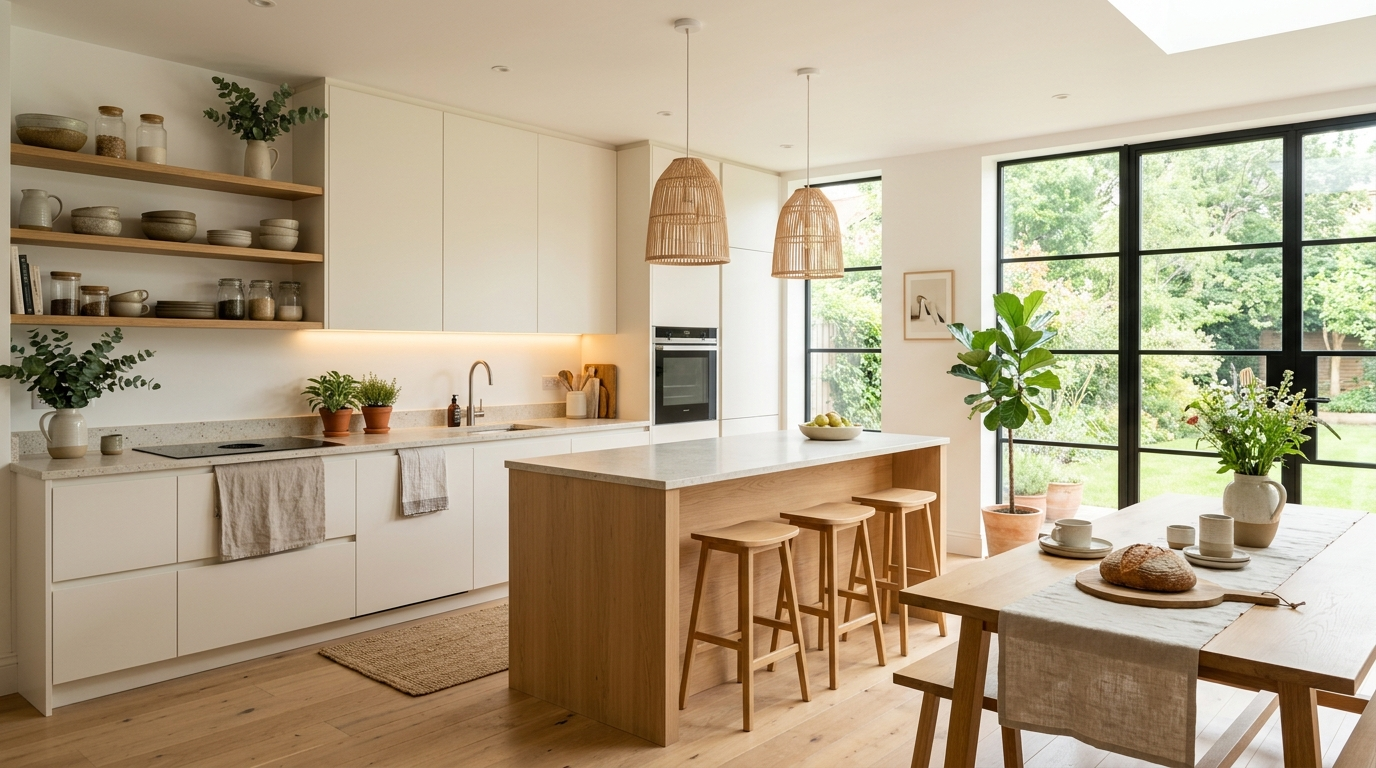
14 Scandinavian Kitchen Ideas That Make Simple Look Absolutely Stunning
There’s a specific quality that Scandinavian kitchens have that most other design directions spend years trying to replicate and never quite achieve. It’s not the white paint. It’s not the minimal cabinetry. It’s not even the natural timber — though all of these contribute. It’s something more elusive: the quality of genuine rightness. The sense that every element is exactly where it should be, in exactly the right proportion, making exactly the right contribution to the whole. Nothing added unnecessarily. Nothing removed carelessly. Just considered, functional, deeply beautiful design intelligence applied with consistency and care.
I’ve been obsessed with Scandinavian kitchen design for the better part of a decade — and the more I study it, the more convinced I become that it’s genuinely one of the most sophisticated design philosophies available in contemporary interiors. Not because it’s complicated. Because it’s difficult in exactly the right way: it demands that every decision be genuinely justified, every material be genuinely quality, and every element earn its place through both function and beauty simultaneously. These 14 ideas cover everything that makes a Scandinavian kitchen work at its highest level.
The Scandi Kitchen Philosophy
Before the specific ideas, here’s the foundational understanding that makes every subsequent Scandinavian kitchen decision coherent: Scandinavian design is not minimalism for minimalism’s sake. It’s the result of a specific cultural relationship with materials, function, and the natural world — one that values genuine quality over apparent abundance, honest materials over decorative ones, and lasting beauty over temporary impression. A Scandi style kitchen that understands this philosophy looks and feels completely different from one that simply applies white paint and calls it Scandinavian.
1. White — But Not Just Any White
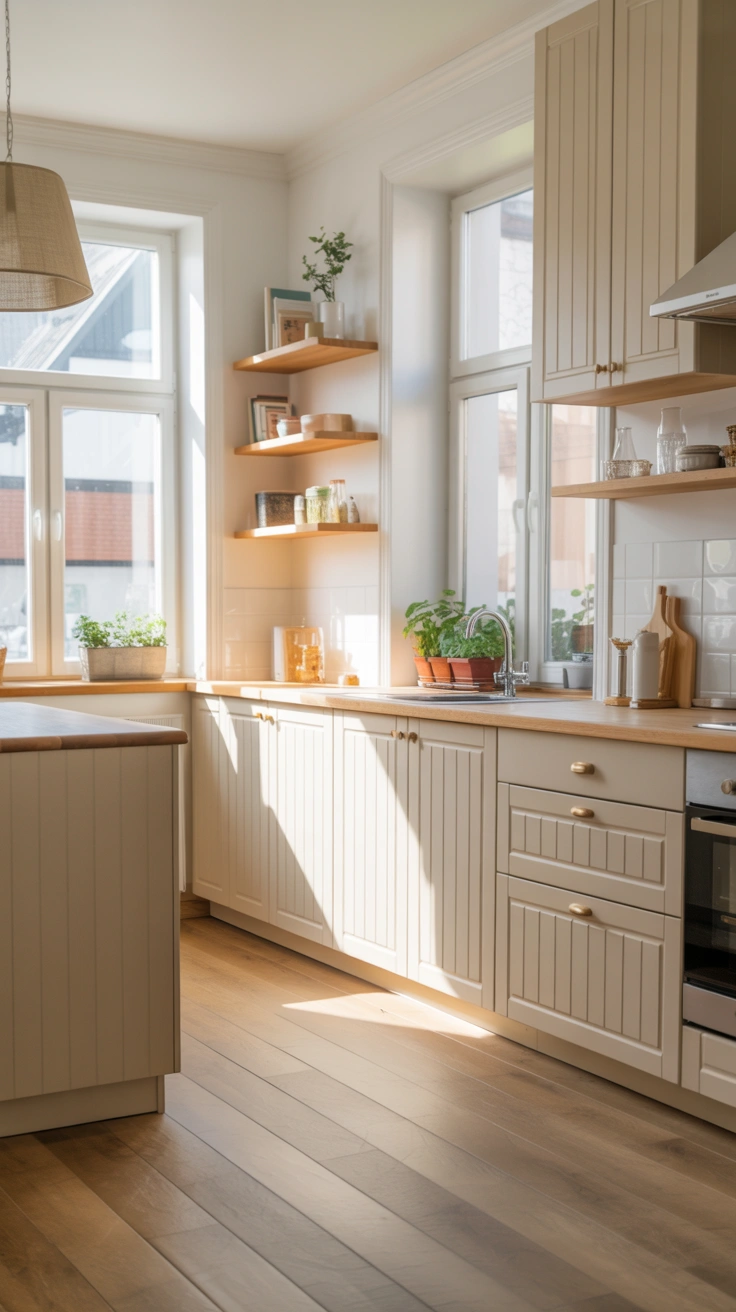
Here’s the Scandinavian kitchen ideas starting point that most people approach too casually: the specific white. Scandinavian kitchens are strongly associated with white — and for good reason. But the white that creates genuine Scandi beauty is not brilliant white, not cool white, not the flat, slightly clinical white of a generic kitchen. It’s a warm, slightly creamy white that has enough warmth in its undertone to feel human and inviting rather than institutional and cold.
Off-white, warm white, and barely-there cream are the Scandi kitchen whites that consistently produce the most beautiful results. They amplify natural light without the harshness of cool whites. They pair naturally with warm timber without creating jarring contrast. And they create the specific quality of bright-but-warm that characterizes the best Scandinavian interior spaces — kitchens where the light feels genuinely generous and genuinely welcoming rather than simply bright.
2. Natural Light — The Scandi Kitchen’s Non-Negotiable
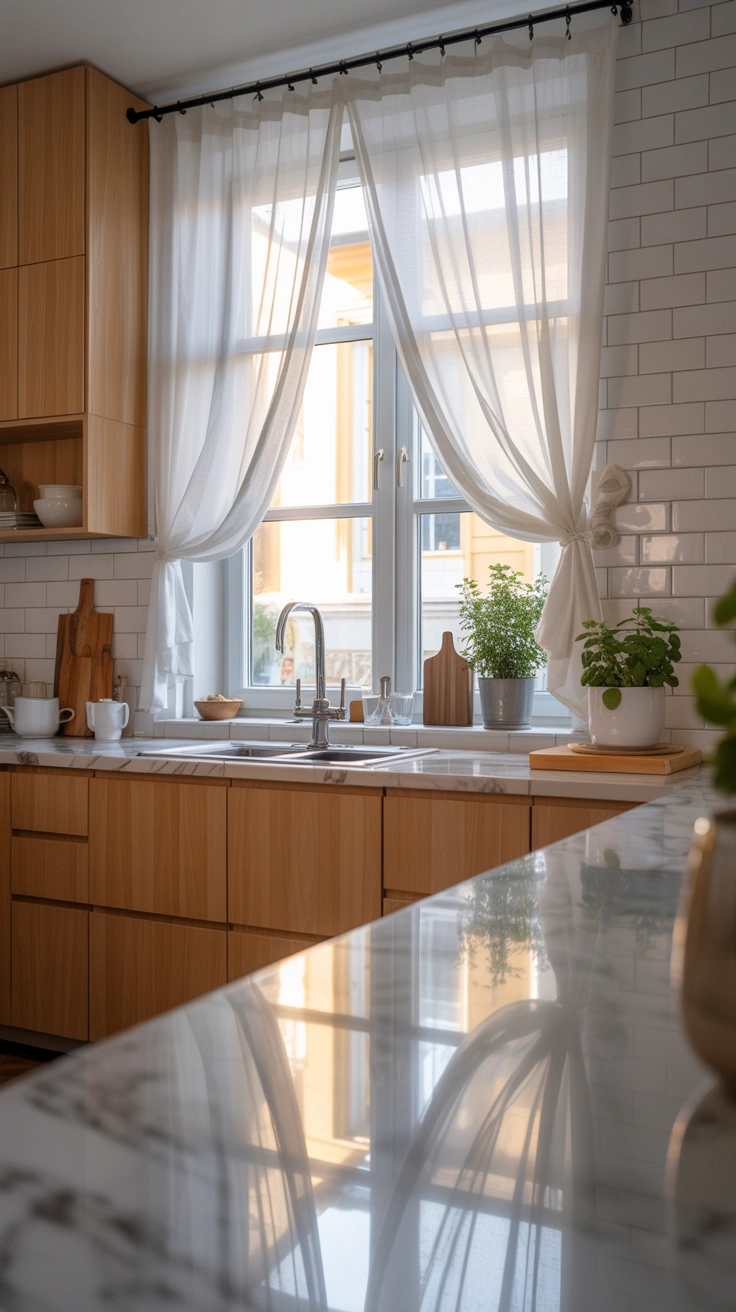
Here’s the Scandinavian kitchen design principle that reflects its geographic origins most directly: natural light is treated as a primary design material rather than a background condition. In the countries where Scandinavian design developed — where winter daylight is genuinely precious — maximizing, celebrating, and using natural light intelligently became a design priority of the highest order.
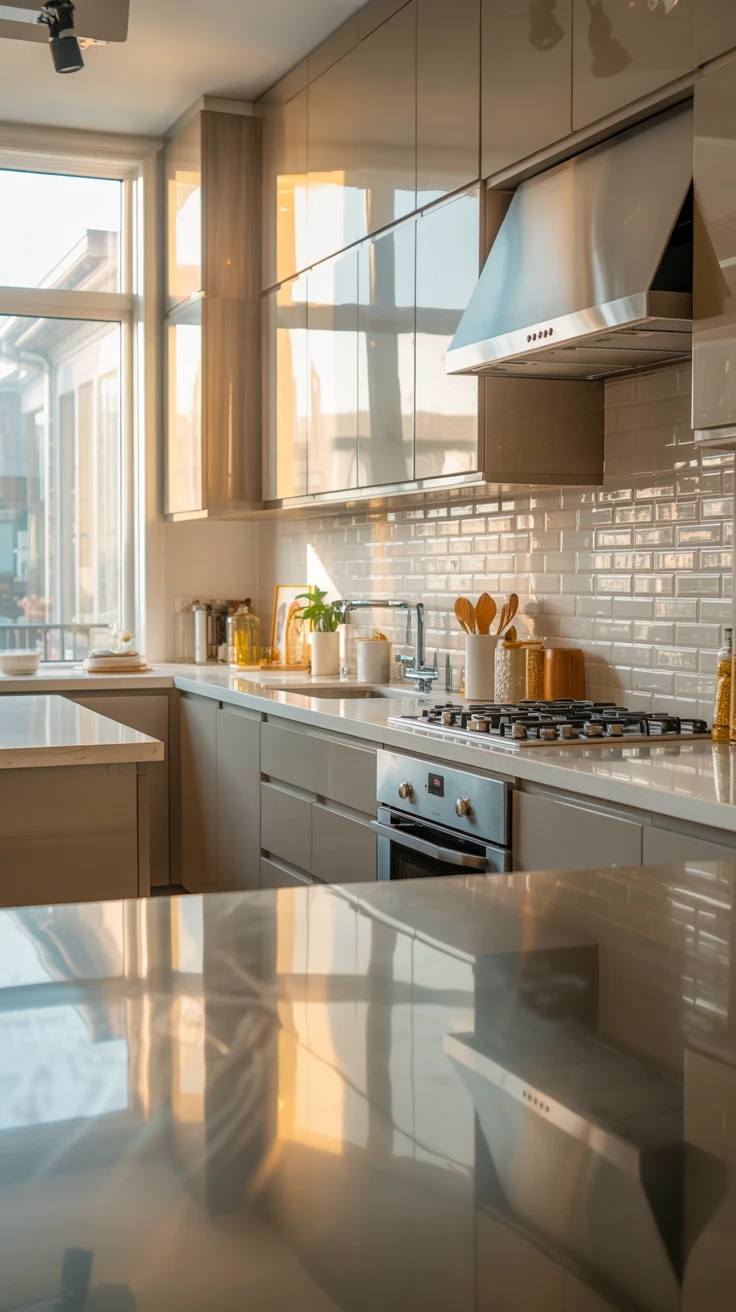
In a Scandi kitchen, this means window treatments that never obstruct daylight unnecessarily. White or very pale surfaces that reflect and amplify available light throughout the space. Mirrors or reflective surfaces positioned to bounce light into darker corners. And furniture arrangements that never place solid elements in ways that block the light path across the room. The Scandinavian kitchen design approach treats every photon of natural light as a resource worth protecting.
3. Warm Timber — The Heart of Scandi Design
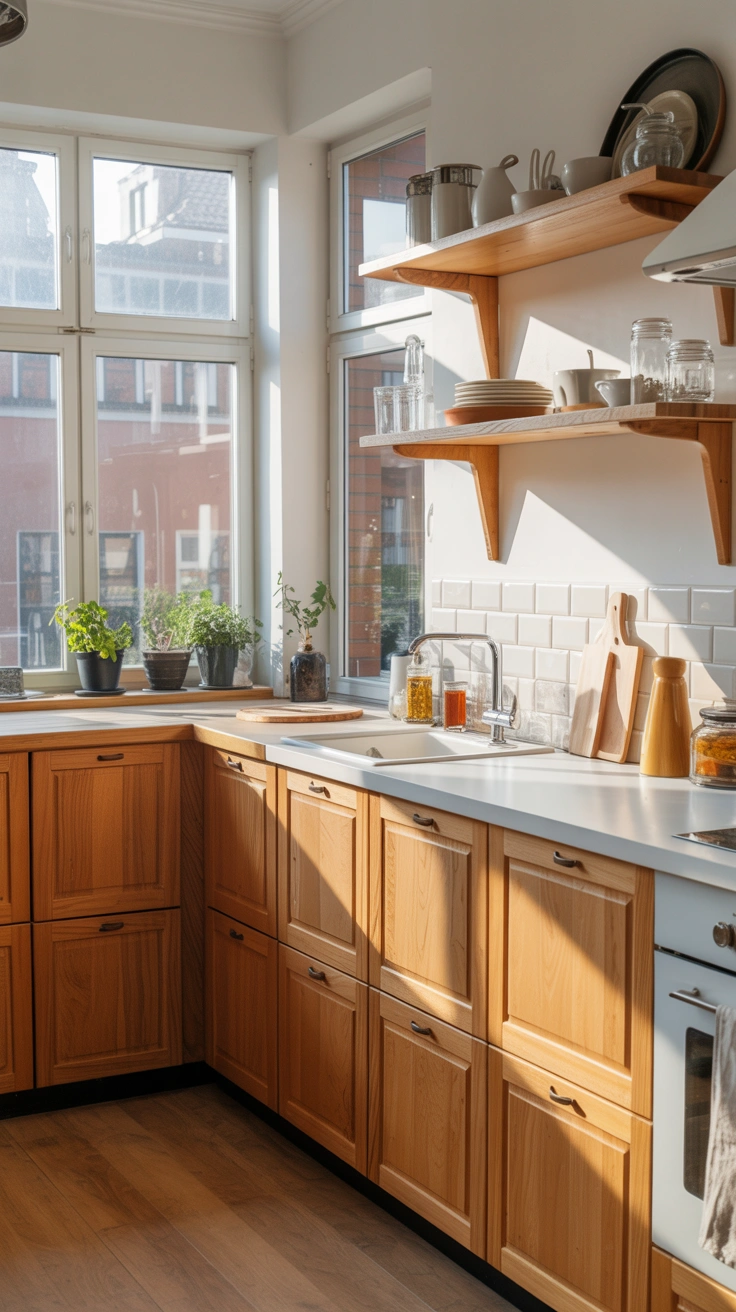
Here’s the Scandinavian kitchen inspiration element that does more to create genuine Scandi warmth than any other single material choice: natural timber. Pale, warm-toned timber — particularly light oak, ash, and birch — is the material most closely associated with Scandinavian kitchen design, and its presence is what most distinguishes genuine Scandi kitchens from the cold, clinical minimalism that superficially resembles them.
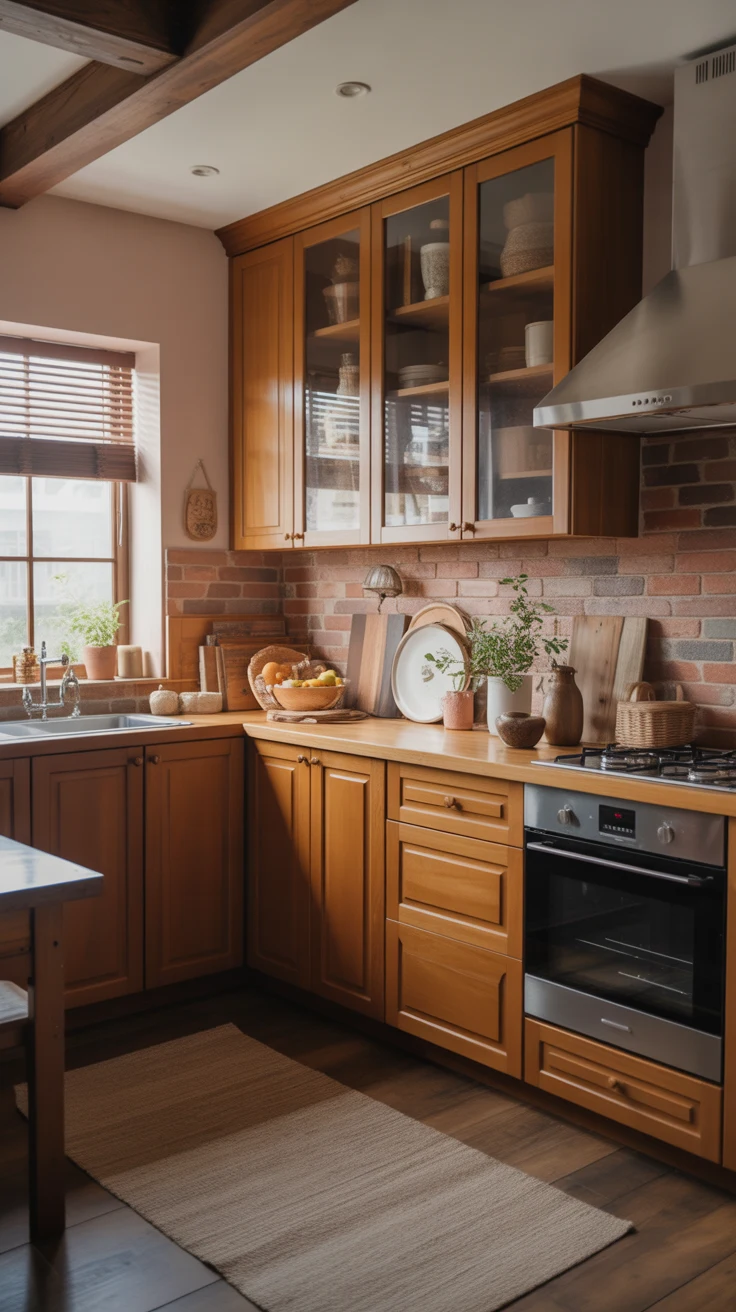
Natural light oak with visible grain and a minimal oil or wax finish is the definitive Scandi kitchen timber choice. Its pale golden tone with clearly visible grain creates immediate warmth and genuine organic authenticity without the heaviness of darker timber choices. Applied to cabinetry fronts, open shelving, butcher-block countertop sections, or ceiling elements, natural oak contributes a quality of warm organic richness that makes the Scandinavian kitchen feel genuinely human — designed by people who live in their homes rather than simply photograph them.
Scandi timber applications by impact:
- Cabinet fronts in natural oak veneer — the largest and most impactful application
- Open shelving in solid oak — warm, practical, beautifully displayed
- Butcher-block countertop section — adds warmth at the working surface level
- Timber bar stools at the island — organic warmth at the social zone
- Ceiling-mounted shelf or pot rail — distributes timber warmth to the upper zone
4. Minimalist Scandinavian Kitchen — The Edit Principle
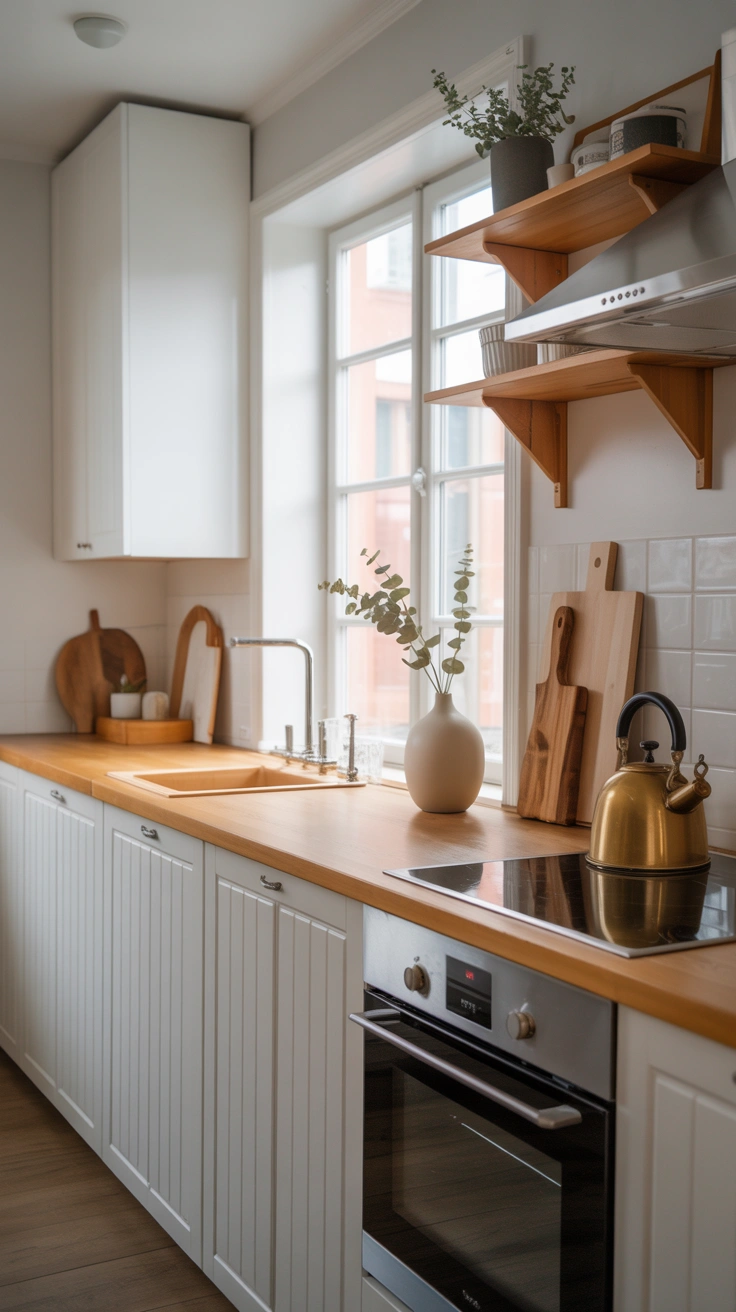
Here’s the minimalist Scandinavian kitchen approach that distinguishes genuine Scandi design from simply empty spaces: the disciplined edit applied to every visible element in the kitchen. Scandinavian design isn’t about having nothing — it’s about having only the right things, in the right place, contributing genuinely to the room’s overall quality. Everything superfluous removed. Everything retained genuinely earning its place.
In practice, this means countertops that are genuinely clear rather than merely tidier than usual. Open shelves styled with genuine restraint — a few quality pieces with breathing space between them rather than comprehensive displays of everything owned. Appliances integrated or concealed where possible. And a consistent material palette applied without exception throughout the room. This editorial discipline is the hardest part of Scandi kitchen design — and the most rewarding, because the result is a kitchen that looks extraordinary in every light and at every time of day.
5. Kitchen Design Scandinavian — The Flat-Panel Cabinet Standard
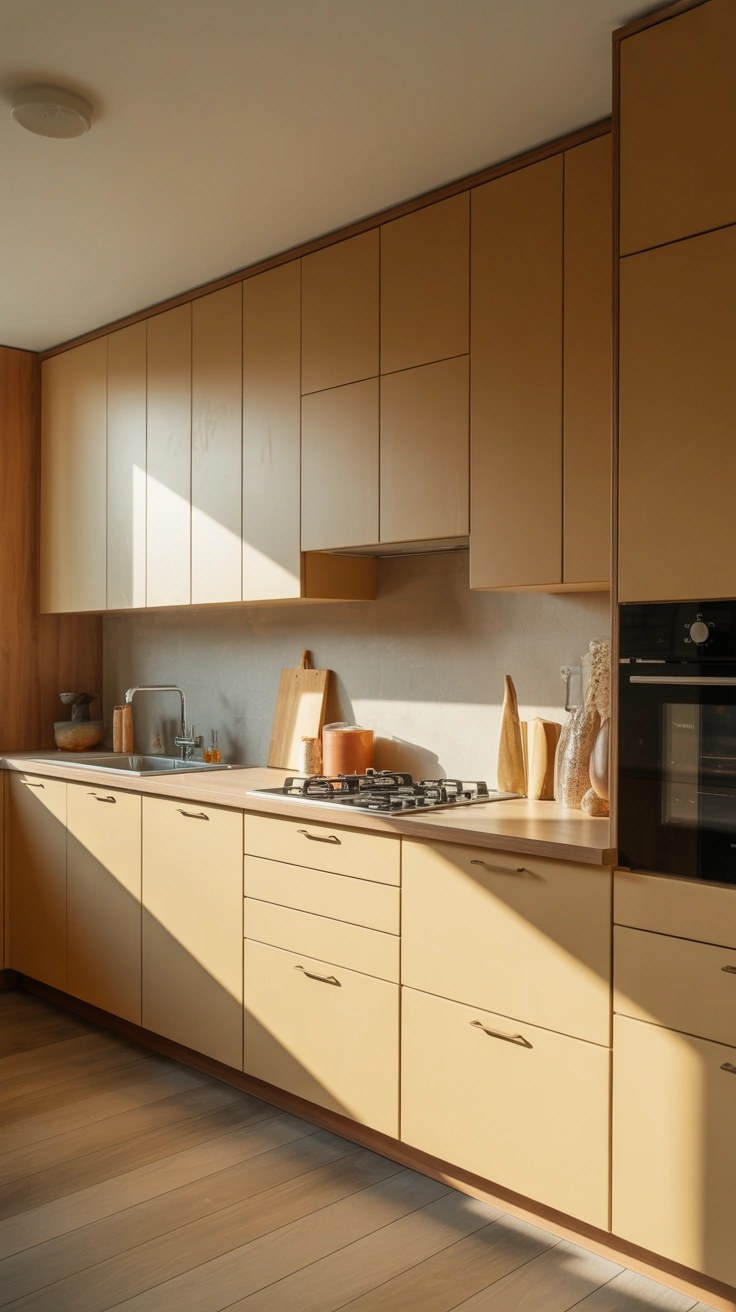
Here’s the kitchen design Scandinavian cabinetry principle that creates the clean, considered visual quality most characteristic of the style: flat-panel fronts in a quality paint or veneer finish, with either simple bar handles or no handles at all. No decorative molding. No raised panels. No ornamental detailing. Just clean, flat surfaces in quality materials, aligned with precision and installed with care.
Handleless cabinetry — whether push-to-open or J-pull style — creates the purest expression of the Scandi kitchen aesthetic. The absence of hardware means the cabinet surface reads as one continuous plane rather than a surface interrupted by protruding elements. When this clean surface is in warm white, natural oak, or a muted Scandinavian accent color — soft sage, dusty blue, muted forest green — the resulting cabinetry wall has a quality of calm architectural precision that is instantly recognizable as Scandinavian.
6. Modern Scandinavian Kitchen — The Color Accent
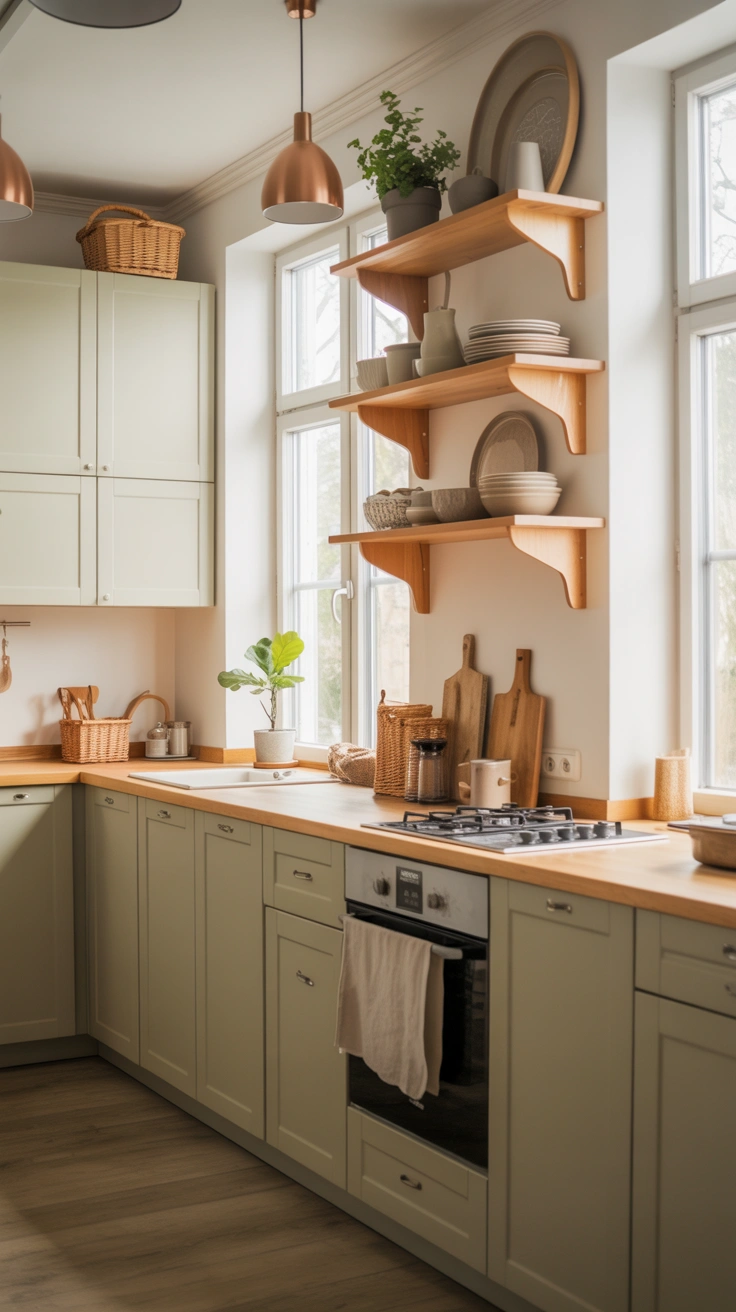
Here’s the modern Scandinavian kitchen color principle that distinguishes contemporary Scandi kitchens from their more purely white predecessors: the restrained introduction of one accent color that adds personality and character without disrupting the overall calm of the Scandinavian palette. This accent color is always muted, always desaturated, and always drawn from the natural world rather than a synthetic color palette.
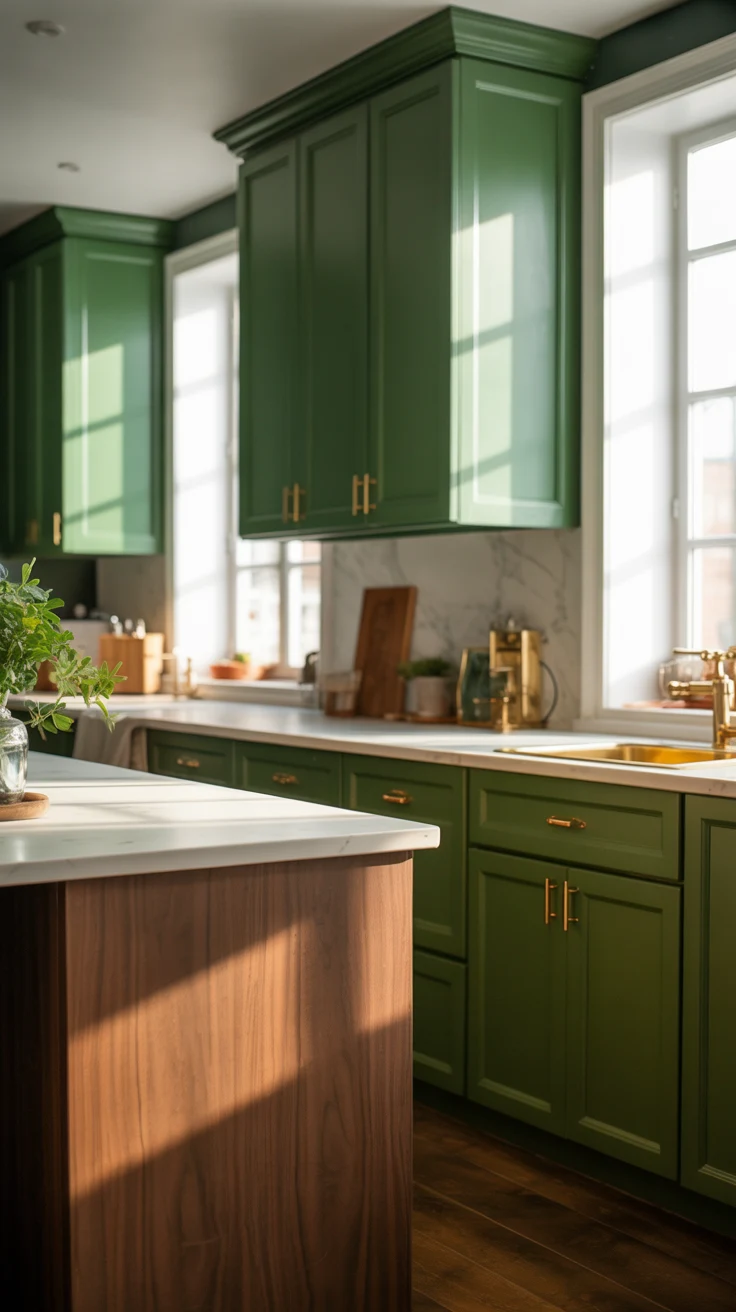
Dusty sage green. Soft slate blue. Muted forest green. Warm dusty rose. Pale terracotta. These Scandi-appropriate accent colors share a quality of natural, slightly faded character — as if they’ve been washed to their current tone by years of northern light. Applied to lower cabinets as a contrast to white upper cabinets, or to a single cabinetry wall as a feature element, these muted accents add genuine personality to the Scandi kitchen without compromising its fundamental commitment to calm, restrained design.
7. Scandinavian Kitchen — The Open Shelf Strategy
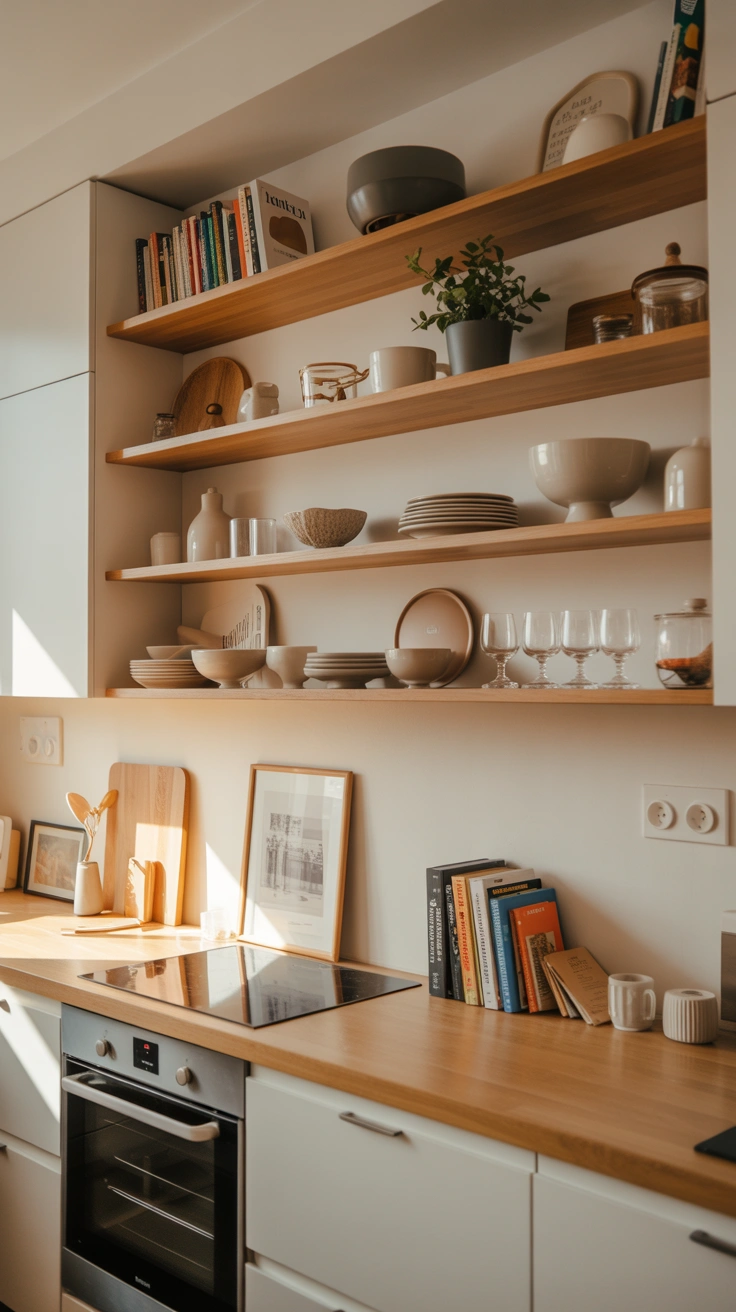
Here’s the Scandinavian kitchen open shelving approach that creates the most authentic and most beautiful result: treating shelves not as storage displays but as curated compositions of genuinely useful, genuinely beautiful objects. In a Scandi kitchen, open shelves are not for everything — they’re for the few things beautiful enough to be permanently visible.
Quality ceramic bowls in white or muted earth tones. A collection of glasses that earn display through genuine beauty. Two or three cookbooks with attractive covers. One small plant. A simple ceramic jug. These objects, arranged with genuine restraint and genuine space between them, create the specific quality of Scandinavian open shelving — considered, edited, personal without being decorative in the superficial sense.
FYI: The breathing space between objects on Scandi open shelves is not empty — it’s active. It’s the space that allows each object to be seen properly, that communicates design confidence, and that creates the quality of calm that Scandinavian interiors are designed around. Never fill it.
8. Scandi Kitchen — Pendant Lights as Functional Art
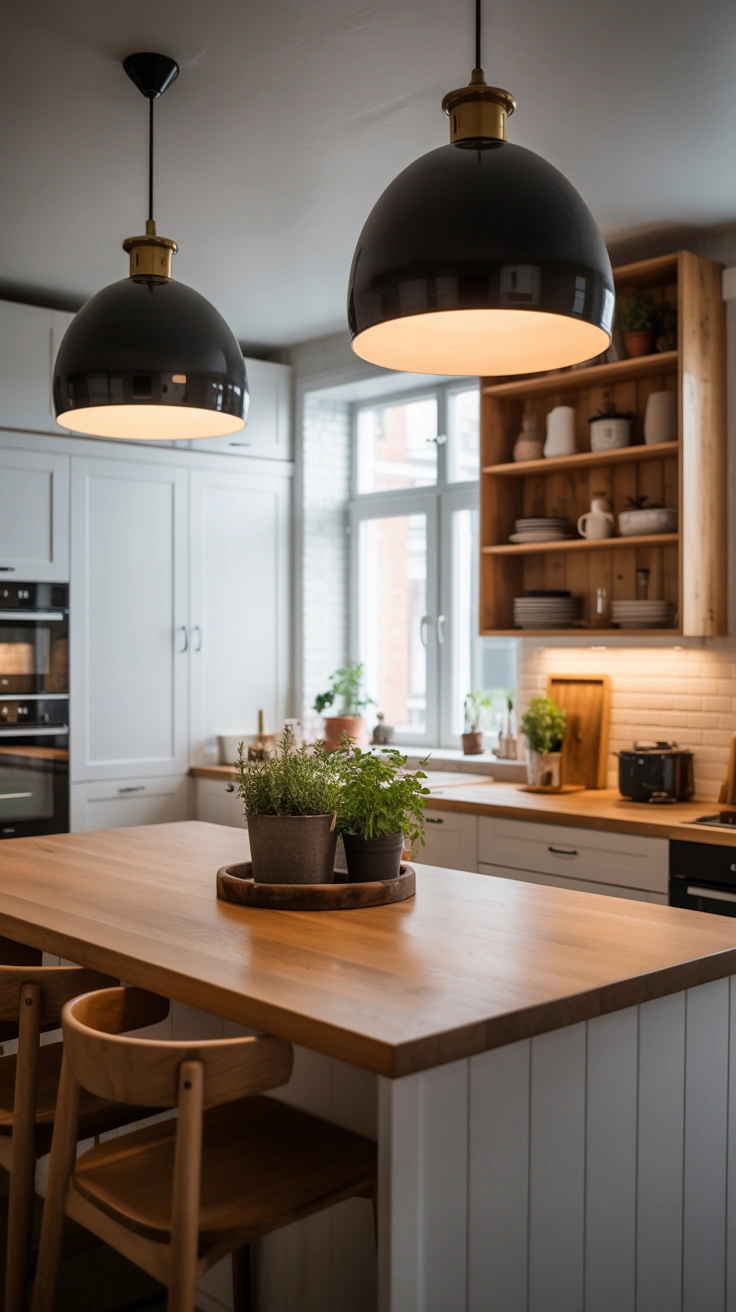
Here’s the Scandi style kitchen lighting approach that creates both practical illumination and genuine design impact: pendant lights chosen for their material quality and their proportional relationship to the space, positioned precisely where they’re functionally needed and aesthetically most impactful. In a Scandinavian kitchen, light fittings are not afterthoughts — they’re objects of genuine design quality that contribute to the room’s overall composition.
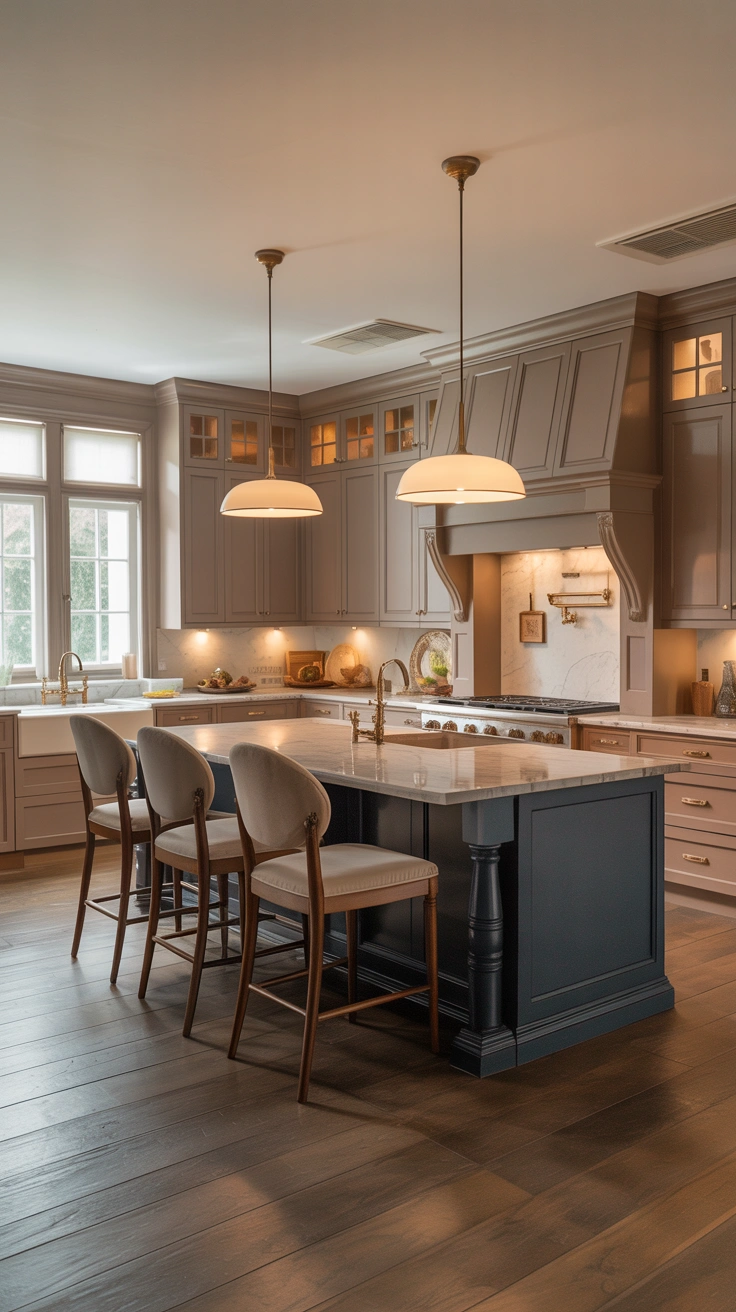
Pendant lights in natural materials — woven rattan, opaline glass, raw ceramic, hammered copper — have both the organic quality and the design integrity that Scandinavian kitchens require. Positioned above the island in a cluster of two or three, or above a kitchen dining table as a single significant piece, quality pendants create a warm, focused light that serves the functional needs of the kitchen while contributing genuine design character to the space above the working zone.
9. Kitchen Design Modern Scandinavian — Stone Countertops
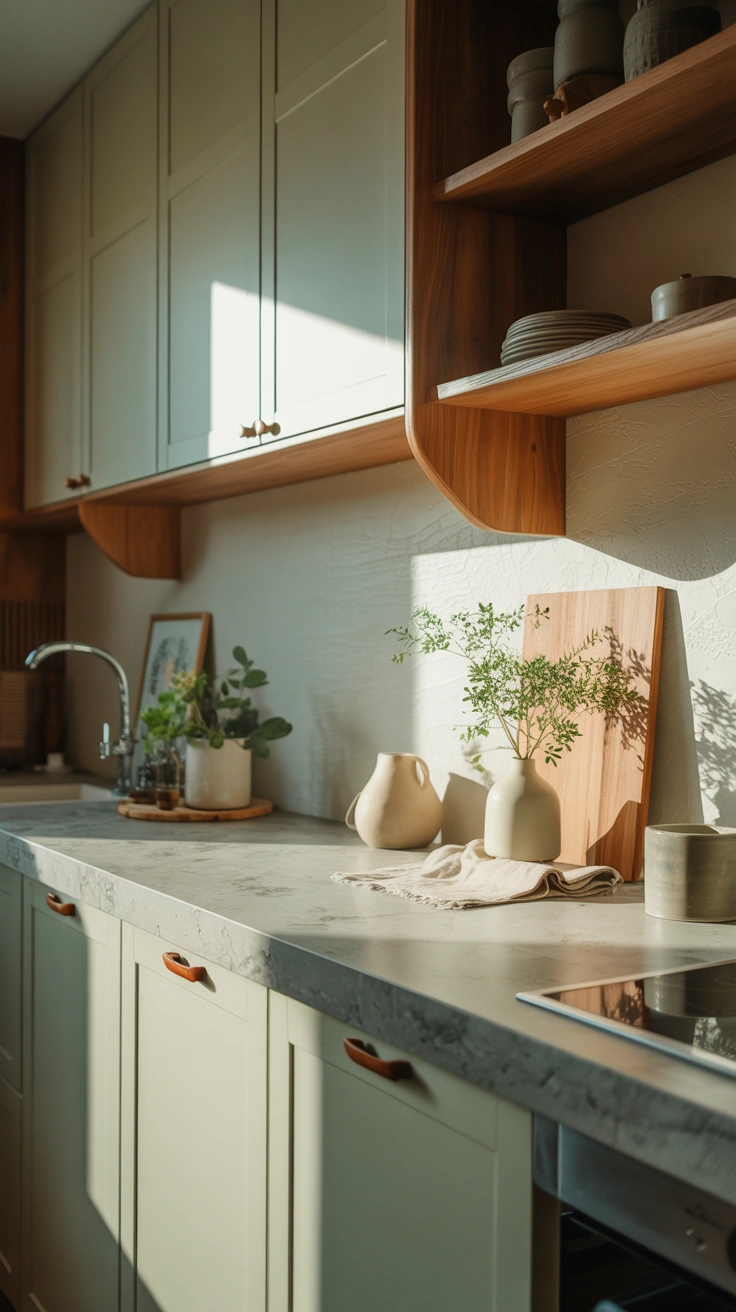
Here’s the kitchen design modern Scandinavian countertop approach that creates the most cohesive and most beautiful result within the Scandi palette: natural or high-quality stone in a pale, cool-to-neutral tone that complements the warm white cabinetry and natural timber without competing with either. The countertop in a modern Scandinavian kitchen is not the room’s design statement — it’s the functional surface that unifies the cabinetry and the open shelving into one coherent composition.
Honed white or light gray marble. Pale quartzite with subtle warm veining. White or warm cream quartz in a natural stone pattern. Each of these provides the clean, pale surface that Scandinavian kitchen design requires while adding the natural variation and material quality that distinguish genuine stone from the engineered composite alternatives. And honed rather than polished surfaces — matte rather than reflective — maintain the Scandi kitchen’s commitment to honest, unshowy material quality throughout.
10. The Scandi Kitchen Table — Gathering and Nourishment
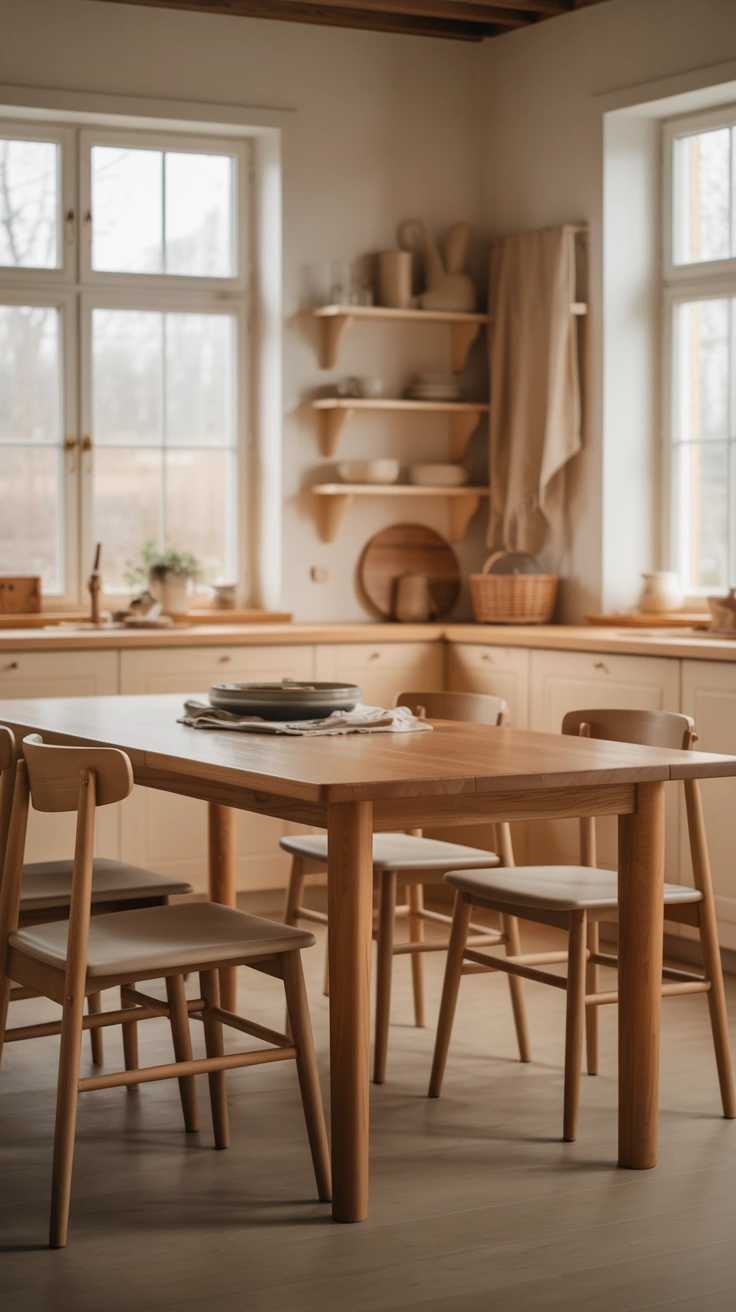
Here’s the Scandinavian kitchen inspiration approach to the kitchen table that reflects the culture’s deep relationship with food, gathering, and the warmth of domestic life: the kitchen table as the heart of the Scandi kitchen rather than a secondary element. In Scandinavian homes, the kitchen table is where life happens — where meals are prepared and eaten, where conversations extend far beyond the end of eating, where the kitchen’s warmth is most directly experienced.
A solid oak or pine dining table in natural, minimally treated timber creates the most authentically Scandi kitchen table presence. Simple, honest, beautifully proportioned — with the natural grain of the wood visible and celebrated rather than buried under paint or lacquer. Surrounded by chairs in natural timber or with natural fiber seats. And positioned in a zone with good natural light and proximity to both the cooking area and any outside access that the kitchen allows.
11. Scandinavian Kitchen Design — The Ceramic Accessory
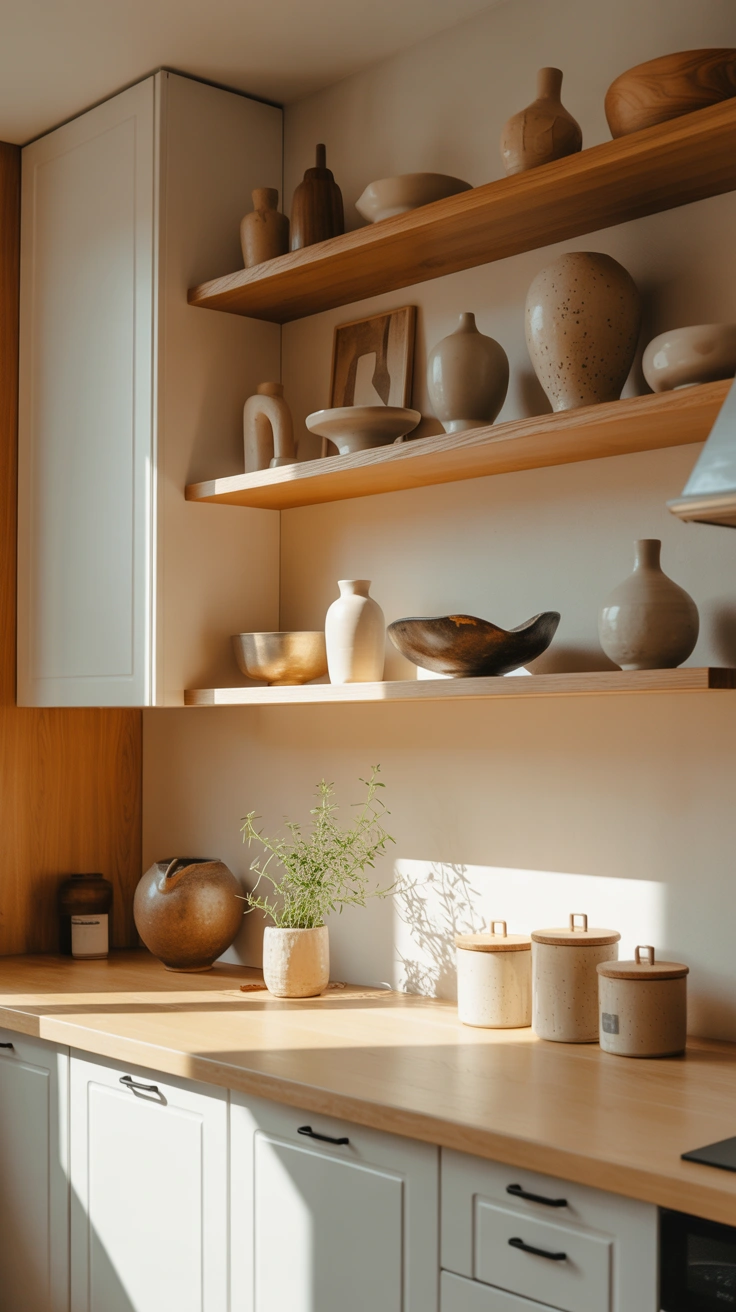
Here’s the Scandinavian kitchen design accessories principle that creates genuine Scandi character at the detail level: handthrown or quality ceramic objects in white, cream, or muted earth tones as the primary decorative element in the kitchen. Ceramics have a special place in Scandinavian design culture — there’s a tradition of genuinely beautiful functional ceramics that are designed to be used daily and displayed openly when not in use.
A quality ceramic jug for fresh flowers or dried stems. Ceramic canisters for frequently used dry goods. A handthrown ceramic bowl as the fruit bowl. A ceramic utensil holder beside the hob. Each of these ceramic elements adds genuine material character to the Scandi kitchen — the slight irregularity of a handthrown piece, the particular quality of a well-glazed surface, the specific tone of a ceramic that was chosen carefully. These objects contribute warmth and genuine personal expression without introducing the visual competition of more decorative accessories.
12. Hygge — The Scandi Kitchen’s Atmospheric Goal
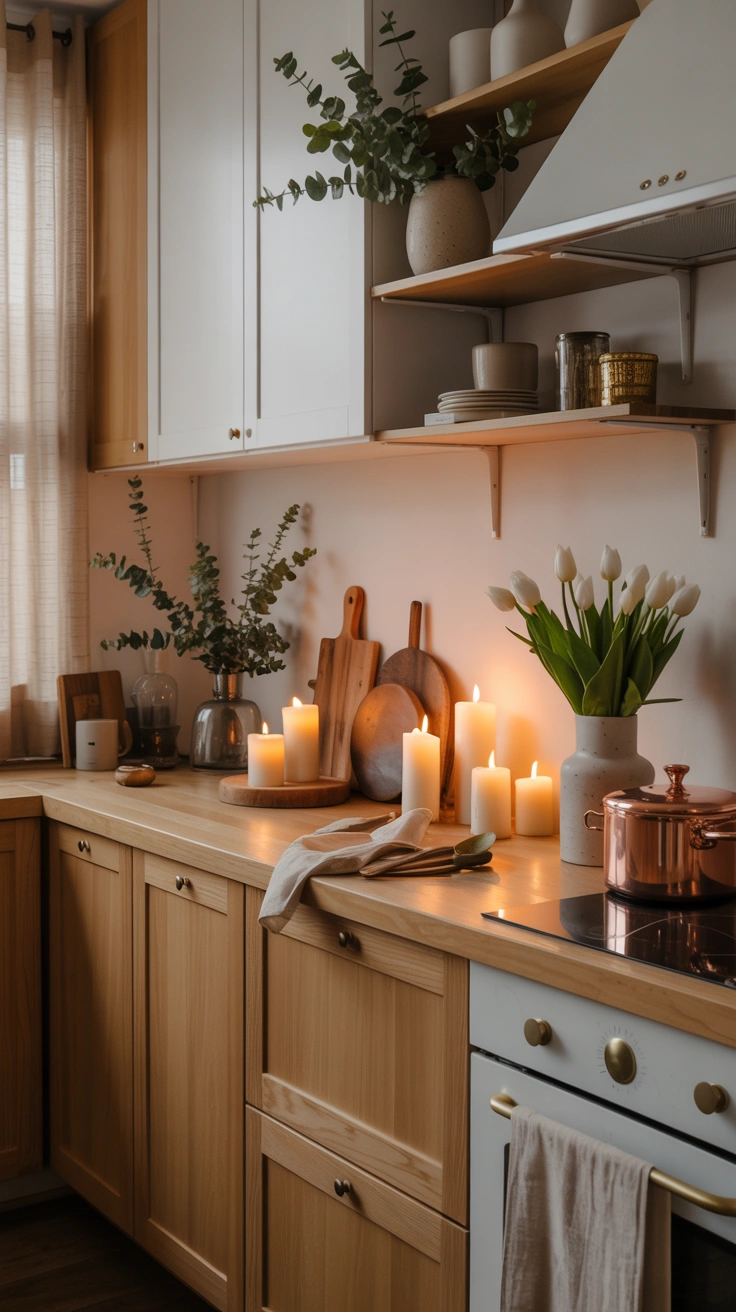
Here’s the Scandinavian kitchen ideas concept that ties every other element in this list together: hygge. This Danish word — roughly translating as a quality of cosiness, conviviality, and warm contentment — describes the atmospheric goal that Scandinavian interior design consistently pursues. Not just beautiful spaces. Spaces where people genuinely feel good. Where warmth is physical and psychological simultaneously. Where the room communicates that staying, relaxing, and genuinely inhabiting the space is both possible and encouraged.
A Scandi kitchen with hygge achieves it through specific sensory details. Warm lighting at 2700K that creates golden warmth rather than bright functionality. Candles on the windowsill and the shelf — real ones, used regularly, not stored for special occasions. A small vase of seasonal flowers or dried botanical stems. The smell of something baking or brewing that belongs completely to a kitchen designed for genuine domestic life. These sensory contributions to the Scandi kitchen’s atmosphere are as important as any structural or material decision — and they’re available immediately, at almost no cost.
13. Minimalist Scandinavian Kitchen — Storage as Design
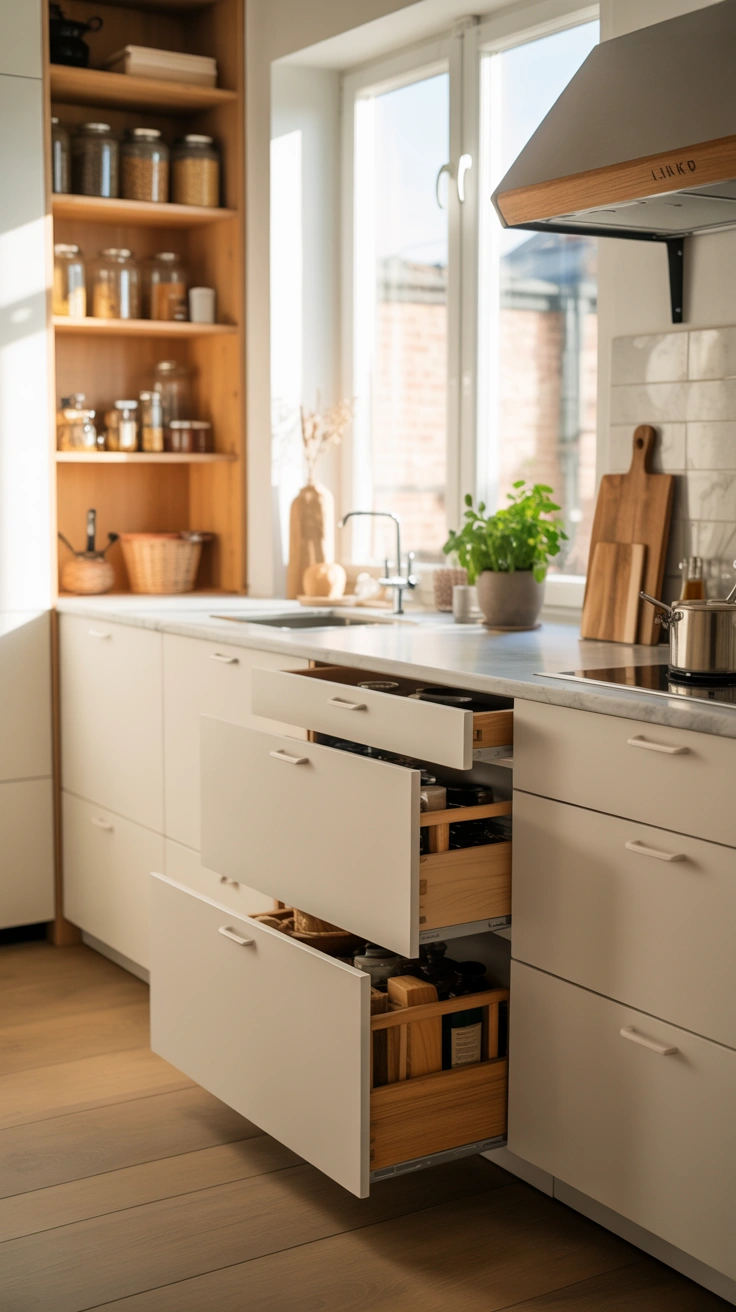
Here’s the minimalist Scandinavian kitchen storage approach that maintains the room’s calm, uncluttered quality while accommodating the genuine storage needs of a functional kitchen: concealed storage systems designed with the same precision and care as every visible element in the room. In a Scandi kitchen, the interior of every cabinet is as considered as the exterior — because the function of the storage directly determines whether the surfaces can be kept as clear as the aesthetic requires.
Deep drawers with internal organization systems. Pull-out shelves that make deep cabinets genuinely accessible. A well-organized pantry cabinet with dedicated zones for different categories of food and equipment. And sufficient storage capacity that every item in the kitchen has a designated, accessible home — because a kitchen that lacks adequate storage will always defeat the editing discipline that Scandi design depends on, regardless of how beautiful the cabinetry is.
14. The Scandi Kitchen Edit — An Ongoing Practice
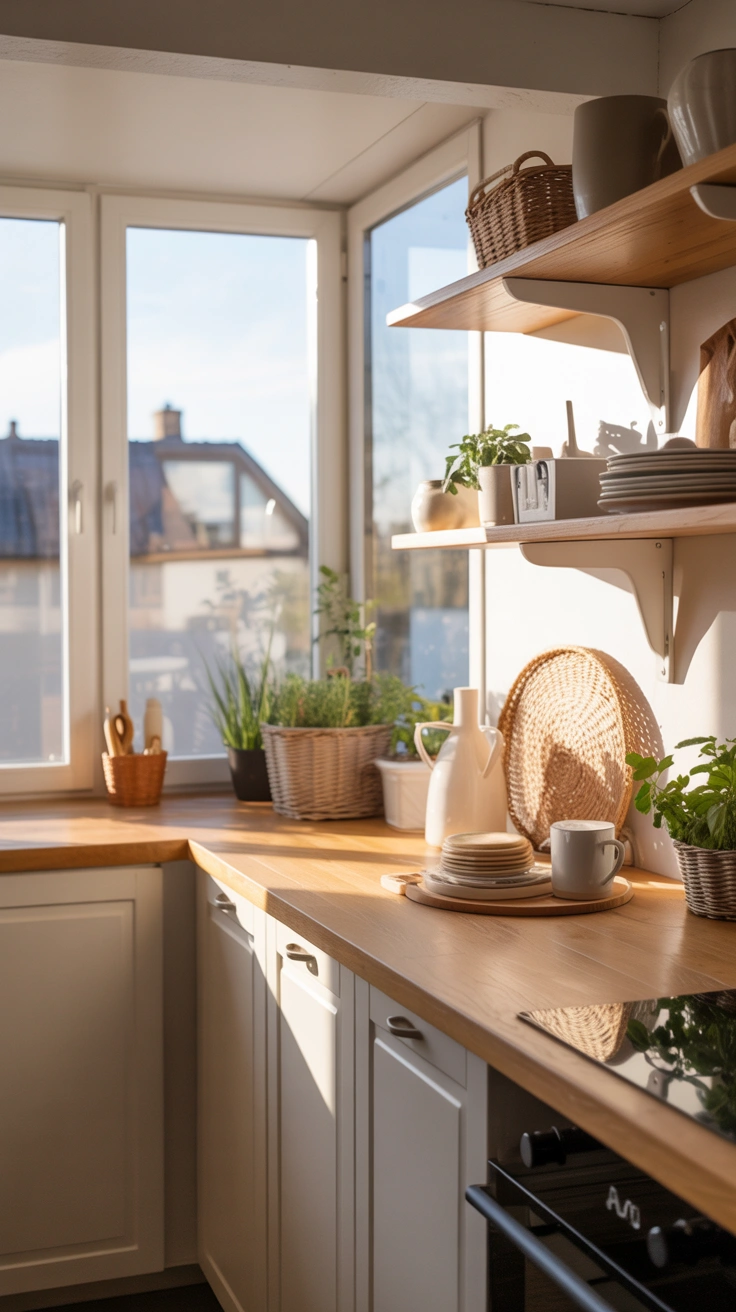
Here’s the final and most important Scandinavian kitchen idea: the edit is not a one-time renovation decision. It’s an ongoing practice — a daily and weekly commitment to maintaining the clarity, the calm, and the genuine quality that Scandinavian kitchen design creates and that daily kitchen life continuously challenges. Products accumulate. Objects migrate. Surfaces collect. And the Scandi kitchen that isn’t actively maintained gradually loses the specific quality that makes it extraordinary.
The weekly kitchen edit — returning objects to their designated homes, clearing surfaces to their intended state of restrained clarity, and removing items that have appeared without earning their place — is the practice that maintains the Scandi kitchen’s quality indefinitely. Not as a rigid, joyless discipline. As the ongoing expression of the same values that created the beautiful kitchen in the first place: that clarity is more valuable than abundance, that quality is more important than quantity, and that a kitchen designed with genuine intelligence deserves to be maintained with genuine care.
IMO, the Scandinavian kitchen that’s been lived in and cared for over several years has a quality that newly completed kitchens can’t achieve — a settled, personal, genuinely inhabited quality that combines the best of considered design with the best of genuine domestic life. That combination is what Scandinavian kitchen design has always been about. And it’s entirely achievable in any home willing to embrace both the philosophy and the practice.
Final Thoughts
Every Scandinavian kitchen idea in this list is built on one conviction: simple design executed with genuine intelligence and genuine quality is always more beautiful, more enduring, and more satisfying to live with than complex design executed with lesser intention. The Scandi kitchen philosophy doesn’t demand that you have a large kitchen, an expensive renovation budget, or a perfect space. It demands that you think clearly about what genuinely belongs in the room and what doesn’t — and then act on that thinking with consistency and care.
From the warm white that creates light and calm simultaneously, to the natural oak timber that provides organic warmth at every scale, to the ceramic accessories that contribute genuine material character at the detail level, to the ongoing edit that maintains the extraordinary quality — these 14 ideas give you a complete framework for a Scandinavian kitchen that genuinely delivers on the philosophy’s promise every single day you cook in it.
Start with the countertop edit. Remove everything that doesn’t belong on that surface and experience the immediate transformation. Then work through the remaining ideas at whatever pace your budget and your renovation appetite allow. Because the Scandinavian kitchen isn’t a single renovation project. It’s a way of thinking about the room you cook in — and once you think that way, you’ll never be able to unsee the possibilities it creates.
Frequently Asked Questions
1. What defines a Scandinavian kitchen?
A Scandinavian kitchen focuses on simplicity, functionality, and natural beauty. It typically features light colors, natural wood, clean lines, clutter-free surfaces, and practical design that creates a bright, welcoming atmosphere.
2. Which colors work best in a Scandinavian kitchen?
Warm white, soft cream, light gray, pale beige, muted sage, dusty blue, and natural wood tones are classic Scandinavian colors that keep the space light, calm, and timeless.
3. What type of wood is commonly used in Scandinavian kitchens?
Light oak, ash, and birch are the most popular choices because their natural grain and warm tones add organic texture without making the kitchen feel heavy.
4. Can a small kitchen be designed in the Scandinavian style?
Yes. Scandinavian design is ideal for small kitchens because it emphasizes natural light, simple layouts, smart storage, and minimal clutter, making the room feel larger and more open.
5. How do I make my kitchen feel more hygge?
Use warm lighting, natural materials, soft textiles, candles, handmade ceramics, fresh greenery, and keep the space organized to create the cozy, comfortable atmosphere associated with hygge.
6. Are open shelves necessary in a Scandinavian kitchen?
No. While open shelving is common, it’s not essential. Closed cabinetry can achieve the same Scandinavian look as long as the design remains simple, functional, and uncluttered.
7. What lighting is best for a Scandinavian kitchen?
Maximize natural daylight whenever possible and pair it with warm white lighting, minimalist pendant lights, under-cabinet lighting, and layered illumination to create a bright yet cozy environment.