15 Minimalist Kitchen Design Ideas That Prove Less Is So Much More
There’s a particular kind of calm that only exists in a truly well-designed minimalist kitchen — the absence of visual noise, the clarity of purpose, the sense that every single element in the room is there because it earns its place. If you’ve ever stood in a beautifully minimal kitchen and felt your shoulders drop and your breathing slow, you already know what I’m talking about. Modern minimalist kitchen design is not about deprivation or cold sterility — it’s about intentionality. It’s about creating a space where the cooking, the conversation, and the living can happen without constant visual interruption. I redesigned my own kitchen around minimalist principles a couple of years ago and the difference in how the room feels — and how I feel in it — has been genuinely transformative. Here are 15 ideas to help you achieve the same.
1. Embrace Handleless Cabinetry
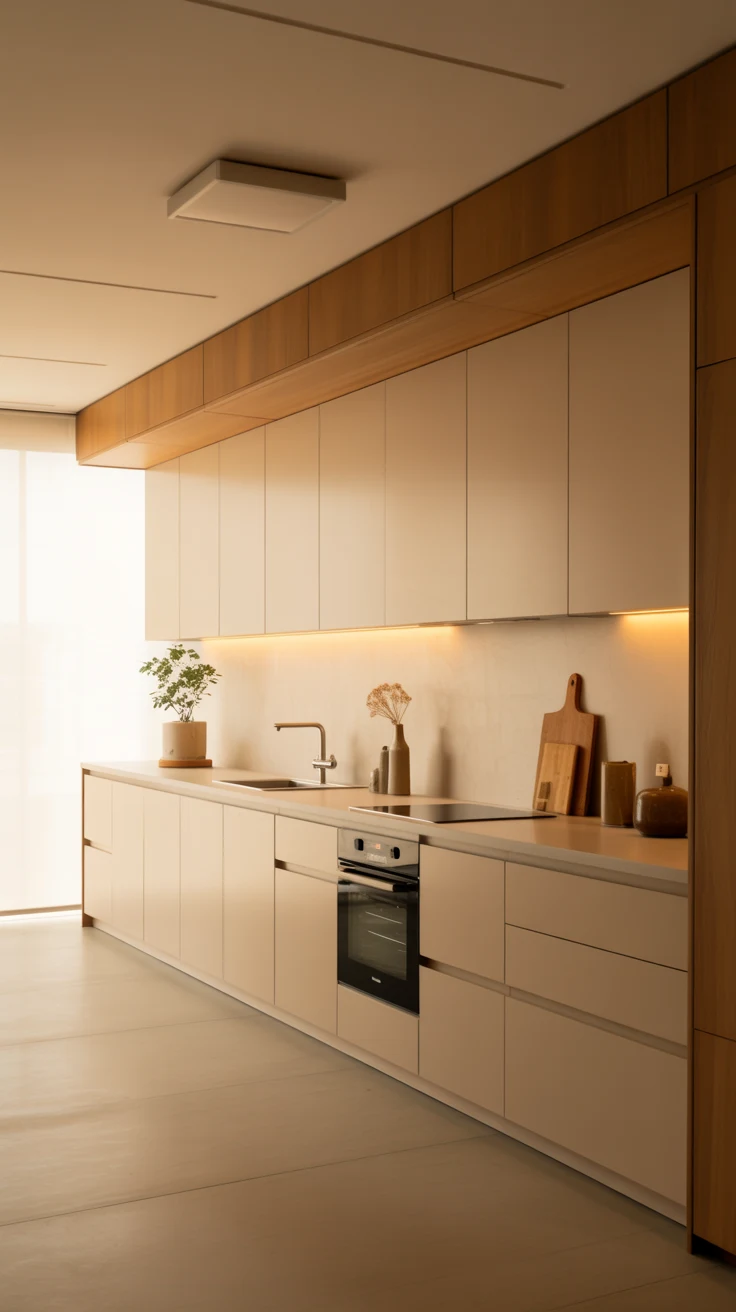
The single most instantly recognisable characteristic of minimalist kitchens is handleless cabinetry — and the effect it creates on a kitchen’s overall visual clarity is extraordinary. Remove handles from cabinet doors and drawer fronts and the entire cabinet run becomes a smooth, uninterrupted surface. The eye has nowhere to snag. The room breathes.
Handleless cabinets are achieved through push-to-open mechanisms, integrated J-pull or finger-pull recesses, or simple flat-bar handles in the same finish as the cabinet door. Each approach delivers a slightly different aesthetic — push-to-open being the most seamlessly minimal, integrated pulls offering a subtle functional detail that still respects the overall clean visual. This is the foundational decision in any minimal kitchen design that everything else builds upon.
2. Choose a Monochromatic Color Scheme
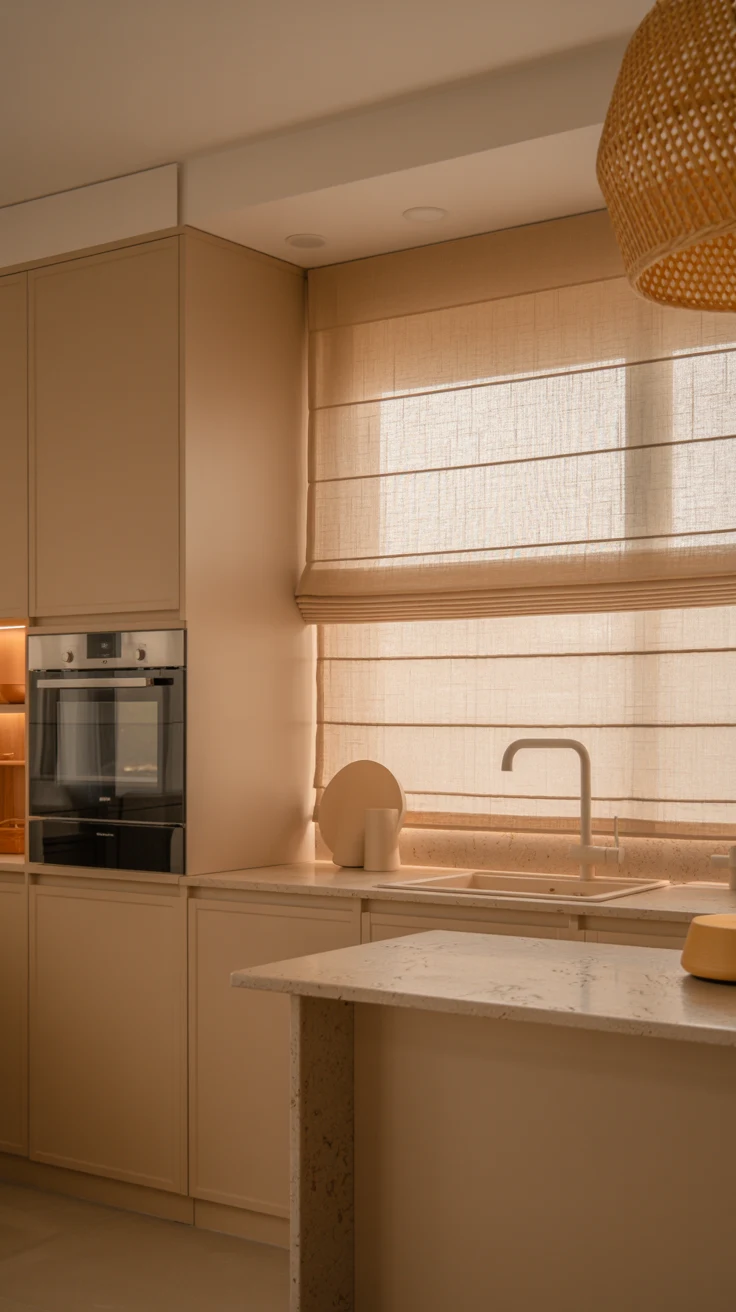
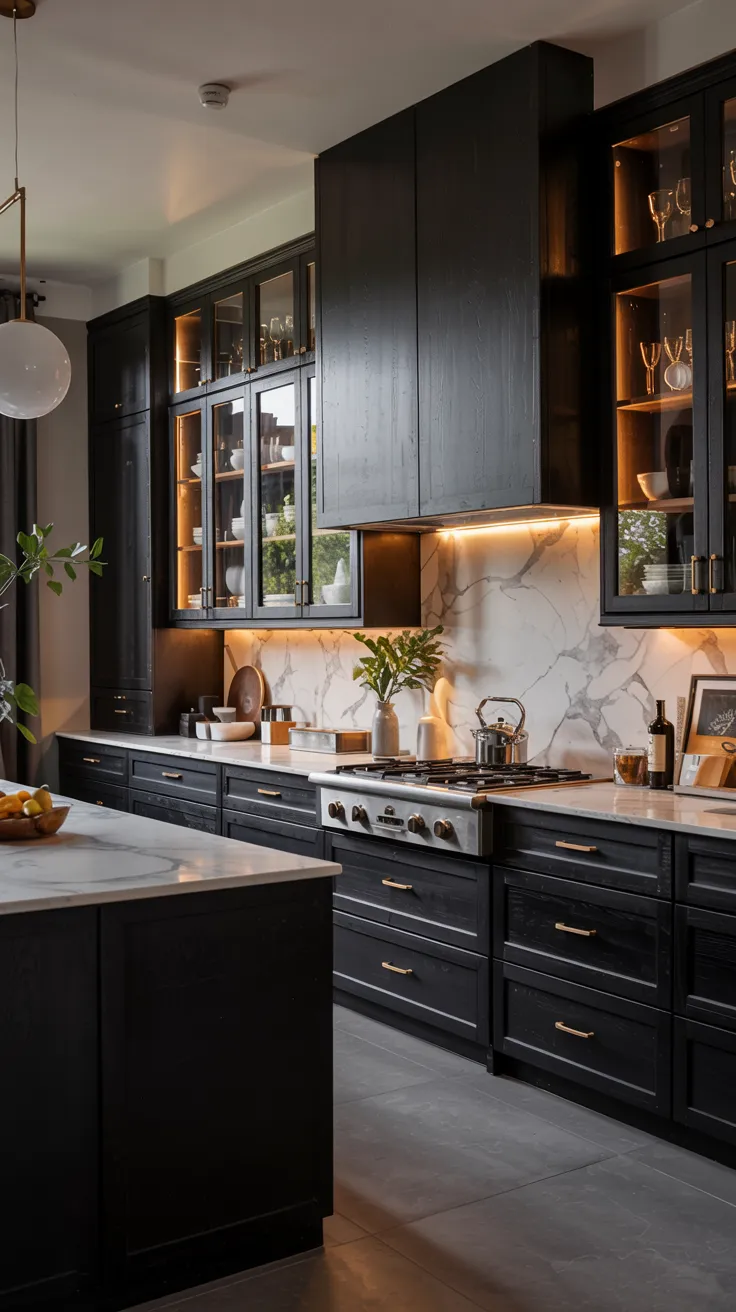
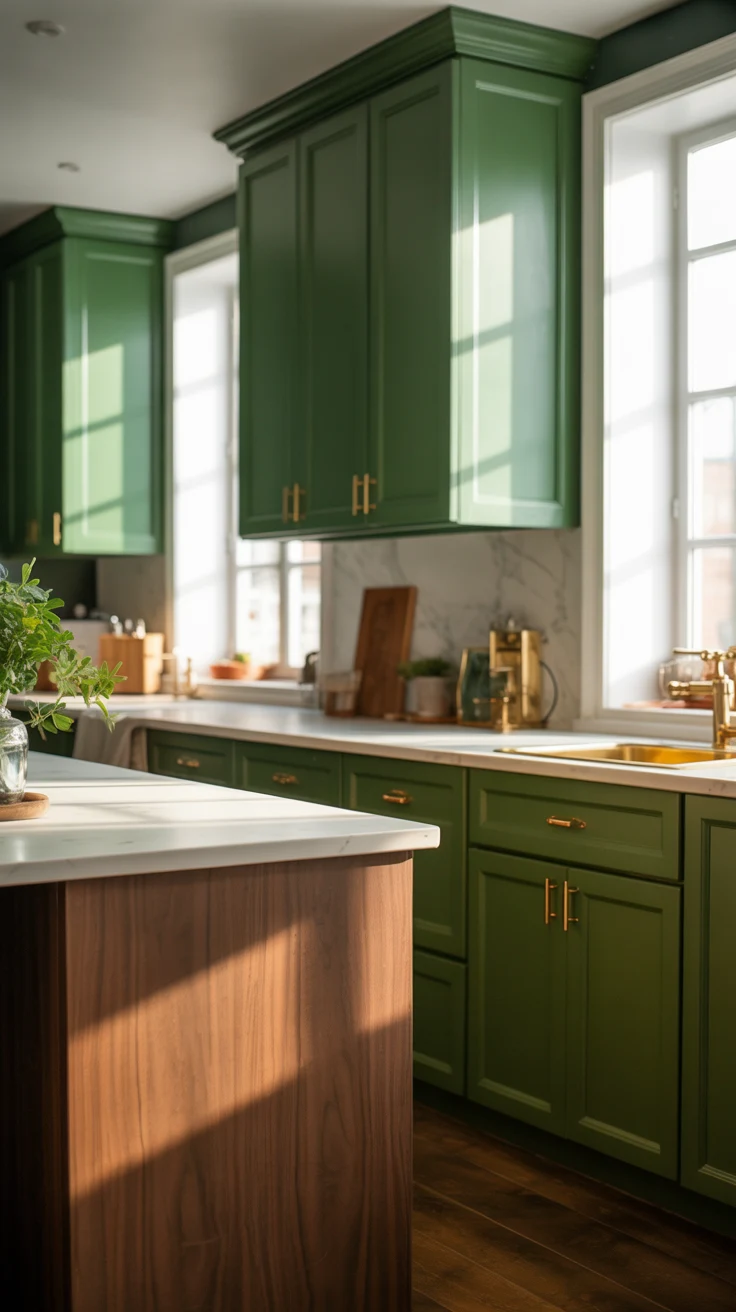
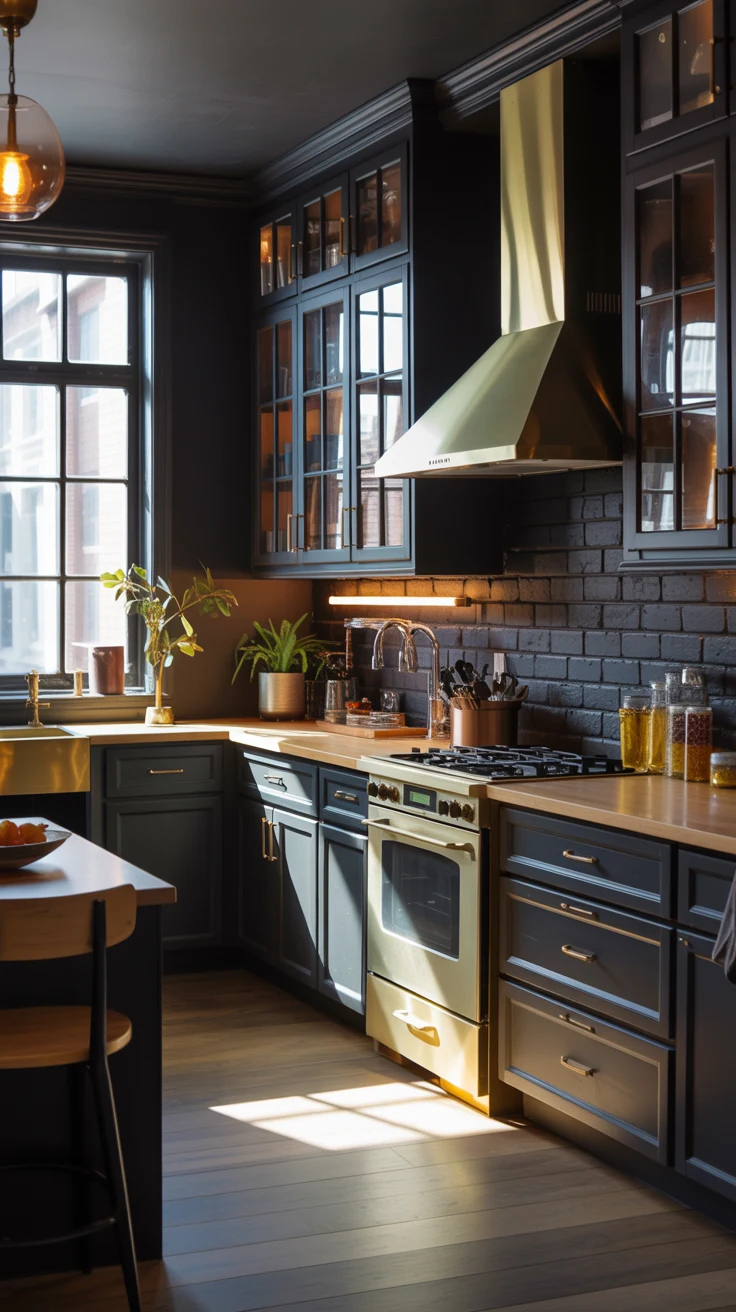
Minimalist kitchen designs consistently return to a monochromatic or near-monochromatic color approach — and the reason is simple. A single color, applied consistently across cabinets, walls, and ceiling, creates a visual continuity that makes the space feel dramatically larger, calmer, and more cohesive than a multi-color scheme ever could.
White is the classic choice — and it remains genuinely unbeatable for its light-amplifying, space-expanding qualities. But matte grey, warm taupe, deep charcoal, soft sage, or even all-black can all be executed beautifully in a minimalist kitchen interior context. Choose one dominant tone, apply it with consistency, and resist every temptation to break it up unnecessarily with contrasting elements. Restraint is the design skill here.
3. Integrate Your Appliances
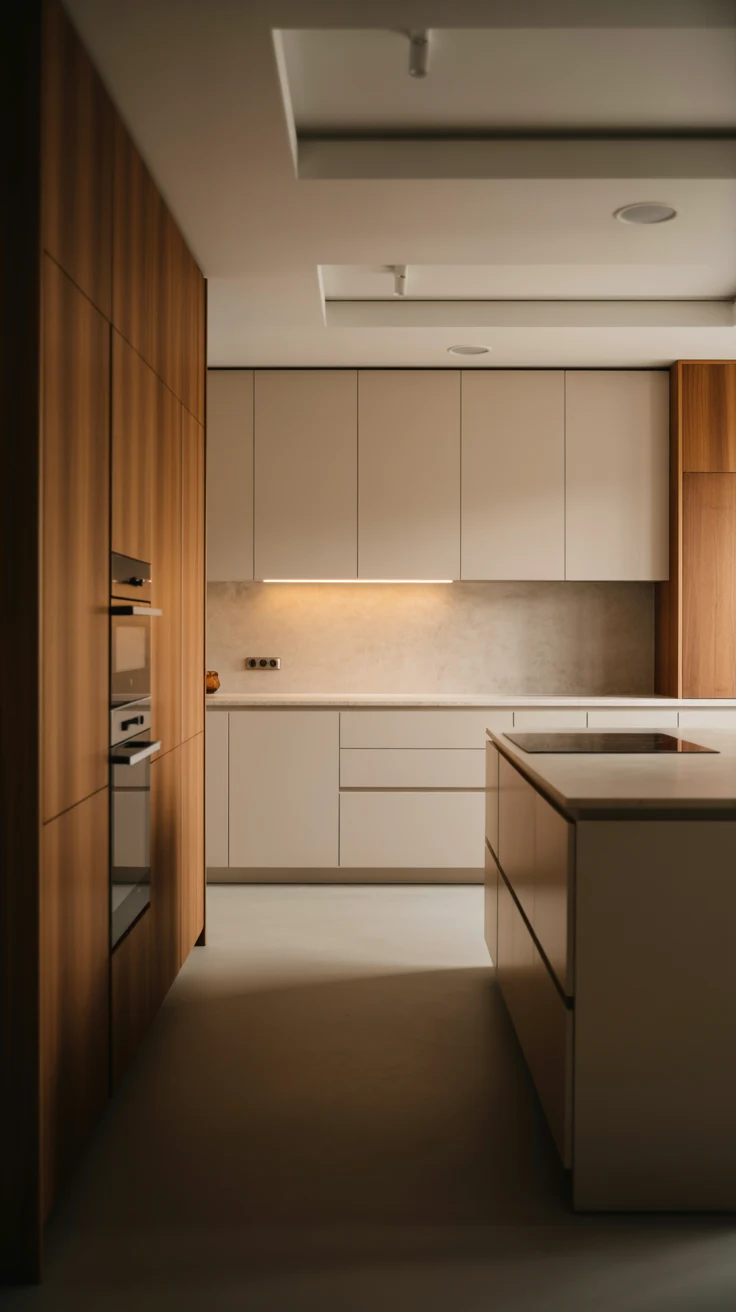
Nothing undermines the clean visual of a modern minimalist kitchen faster than a row of different-colored, different-styled appliances competing for attention across the countertop. Integrated appliances — dishwashers, fridges, ovens, and microwaves concealed behind matching cabinet doors — are one of the most impactful investments in any minimalist kitchen interior.
When all your appliances share the same facade as your cabinetry, the kitchen reads as a single, cohesive object rather than a collection of competing elements. The refrigerator disappears. The dishwasher becomes invisible. Only the cooking surface remains visible — and even that can be integrated into a flush countertop run for maximum visual continuity. This is modern minimalist kitchen design thinking at its most considered and effective.
4. Keep Countertops Clear
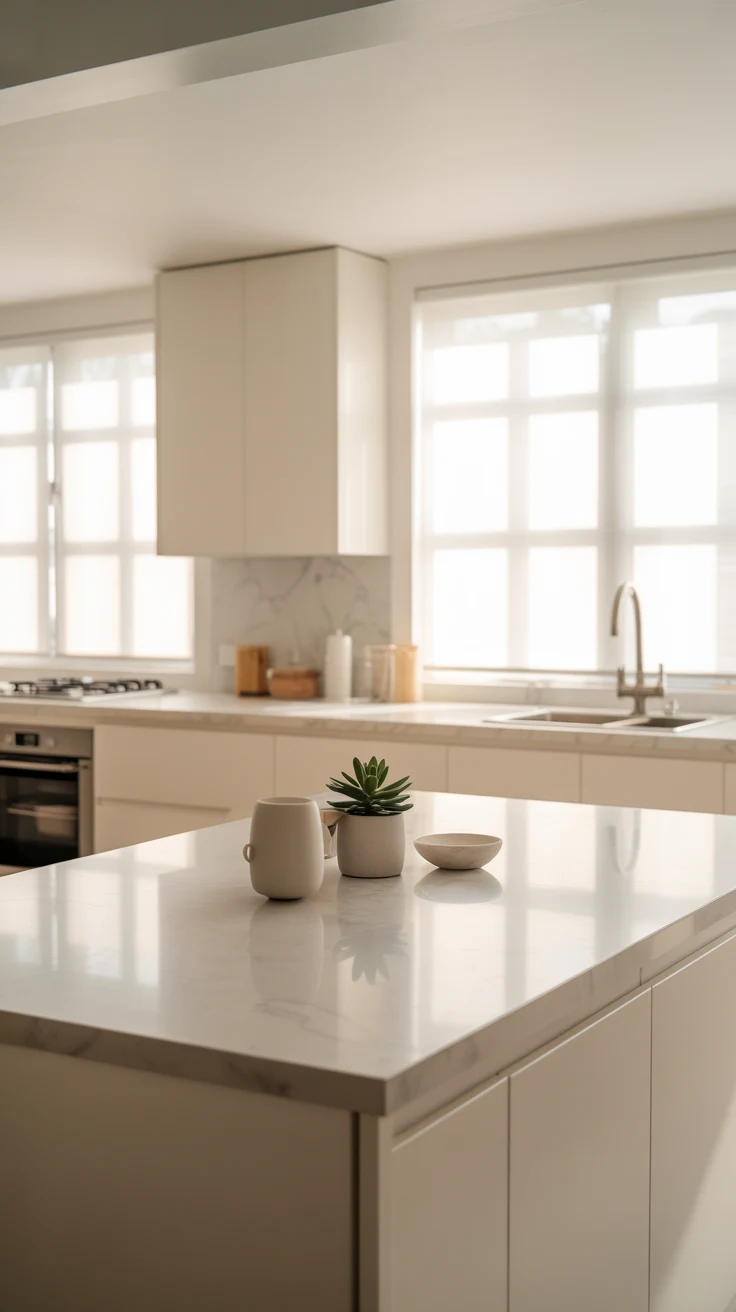
In a minimalist kitchen, the countertop is not a storage surface — it is a working surface, and it should be treated accordingly. Every object that lives permanently on the countertop becomes part of the room’s visual landscape, and every unnecessary object adds visual noise that works against the clean, calm aesthetic you’re building.
Store the toaster, the coffee machine, the knife block, and the fruit bowl inside cabinets or in a dedicated pantry when they’re not in use. Keep only what is genuinely beautiful or genuinely functional on permanent display — a single plant, a quality oil bottle, one beautiful chopping board. The discipline of a clear countertop is one of the most challenging and most rewarding practices in kitchen ideas minimalist design. It changes how the room feels every single day.
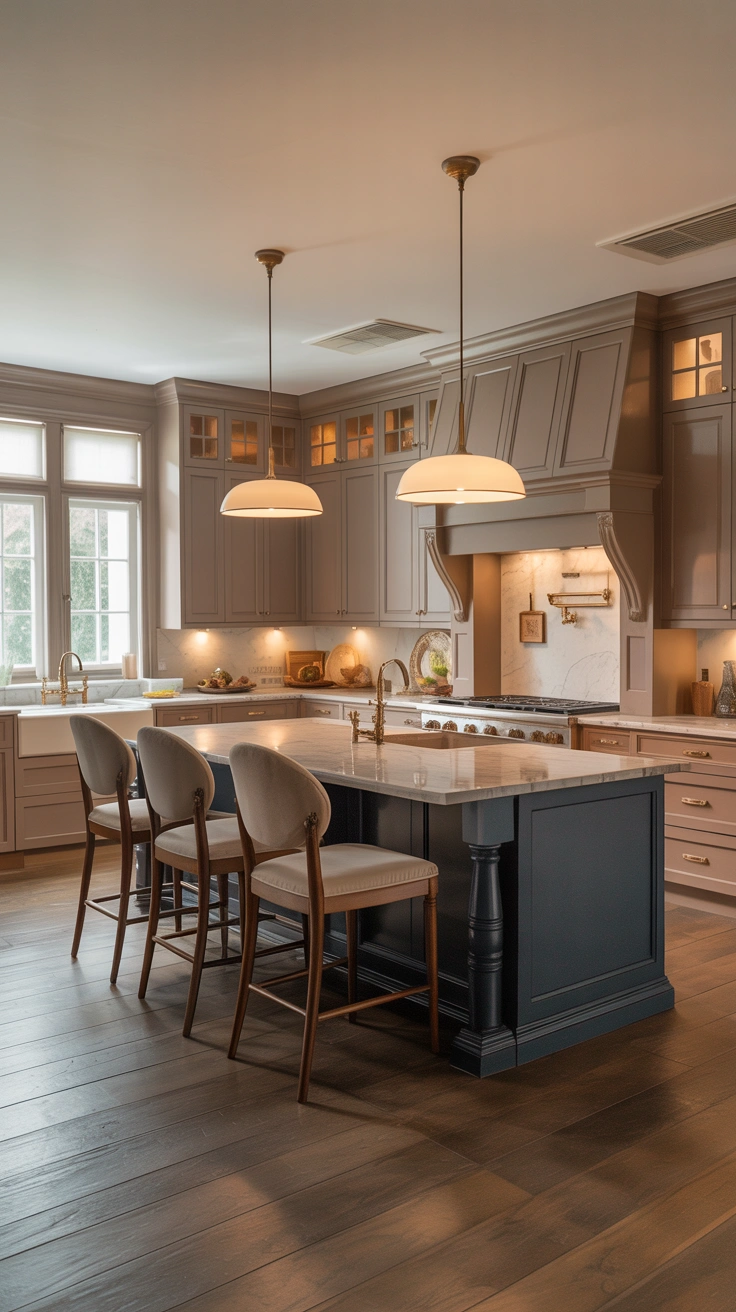
5. Install a Minimalist Kitchen With Island
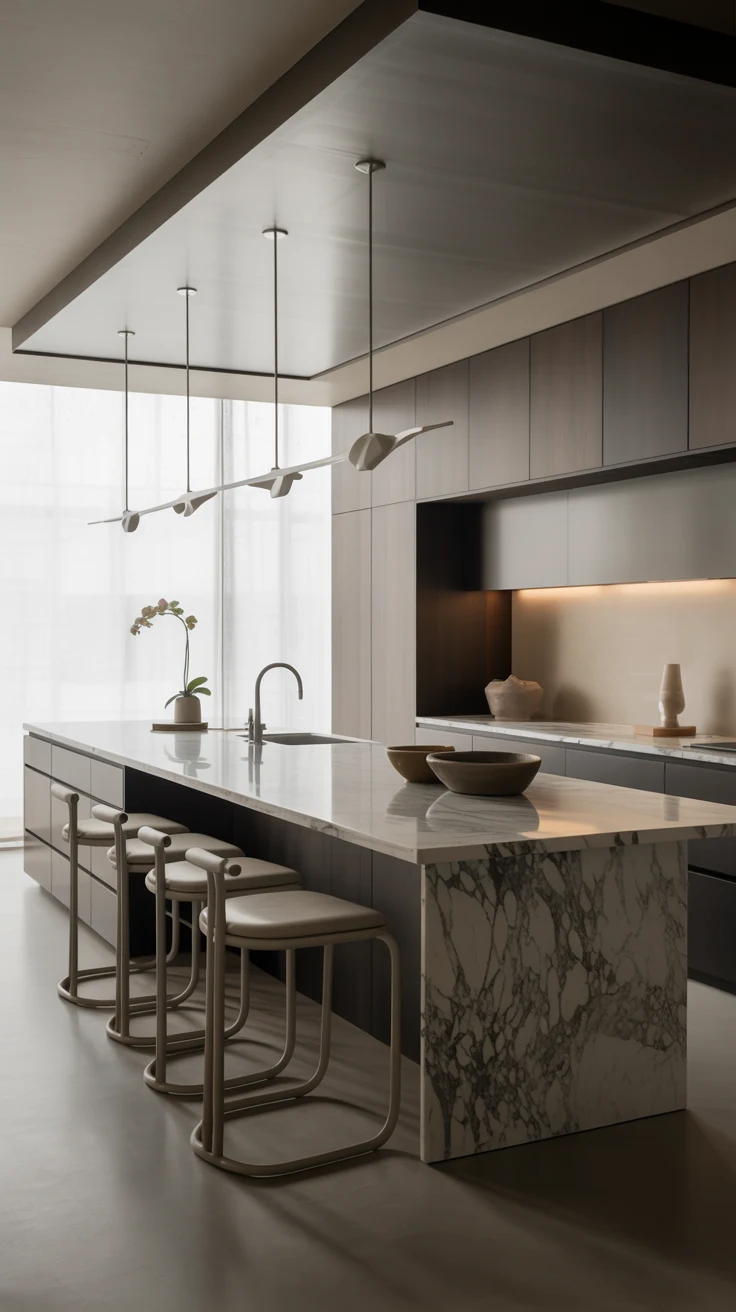
A well-designed minimalist kitchen with island combines the clean visual principles of minimal design with the practical and social benefits of a central island — and the result is one of the most beautiful and functional kitchen configurations available. The island becomes the room’s architectural centerpiece: a single, beautifully proportioned object surrounded by clear space.
Choose an island that shares the same material language as your perimeter cabinets — or deliberately contrast it with a different tone or material for a considered two-tone effect. A white cabinet kitchen with a warm wood or concrete island is a stunning and enduringly popular minimal kitchen design approach. Keep the island surface permanently clear except for one or two intentional objects — a small plant, a beautiful bowl — and it will look spectacular every time someone walks in.
6. Choose Quality Over Quantity
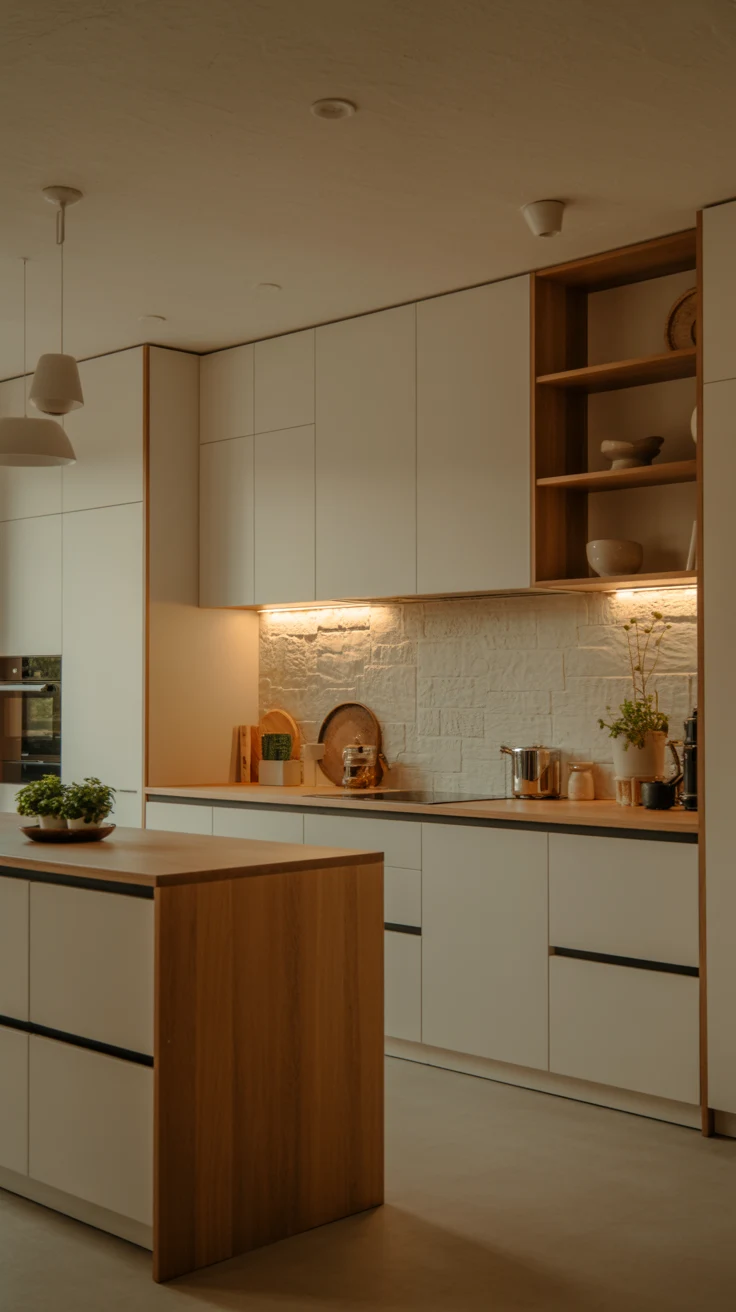
Minimalist kitchen decor operates on a fundamental principle: fewer things, better things. In a minimal kitchen, every element is visible and prominent — which means the quality of each individual element matters enormously. A cheap tap in a minimal kitchen looks cheap in a way it never would in a busier, more visually complex space.
Invest in the things that are seen and touched daily — the tap, the handles (if you have them), the sink, the lighting fixtures. Choose materials with genuine quality and longevity: solid brass, brushed stainless steel, matte ceramic, natural stone. These premium materials don’t just look better — they feel better to interact with every single day, and in a kitchen you use constantly, that tactile quality matters more than most people expect.
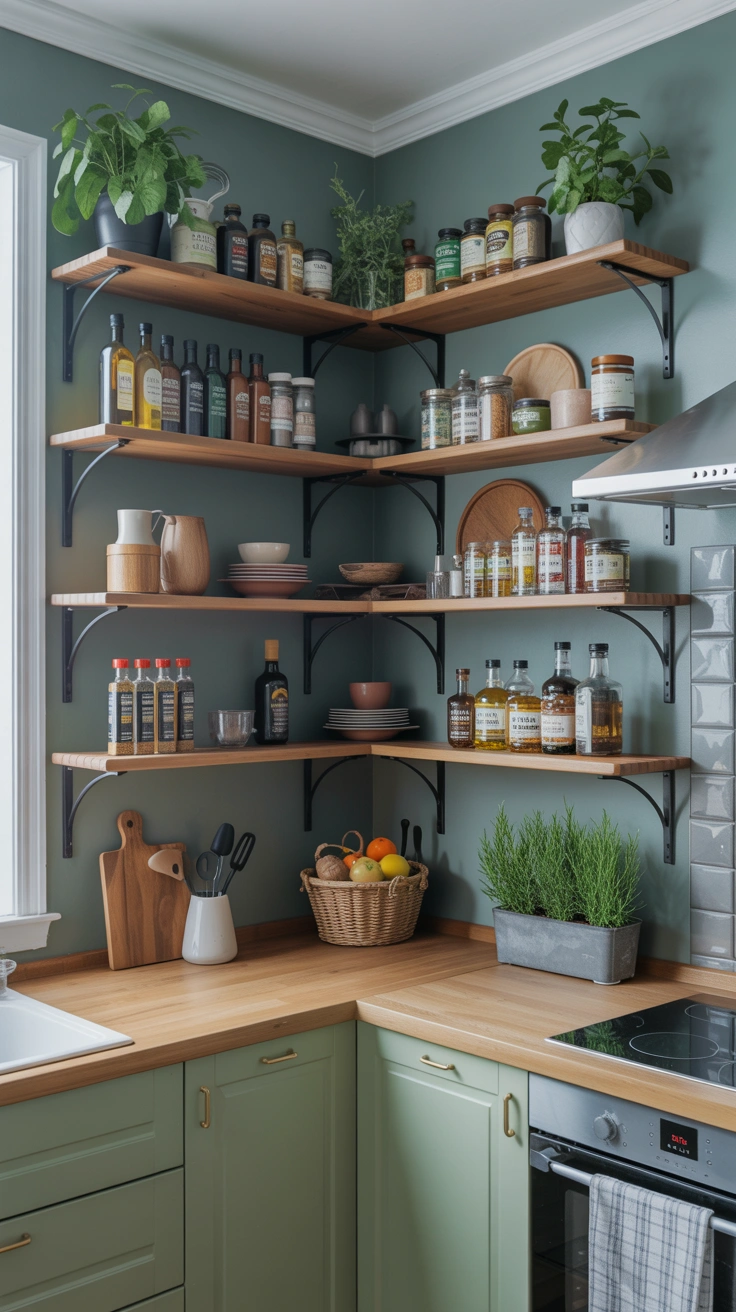
7. Use Open Shelving Sparingly
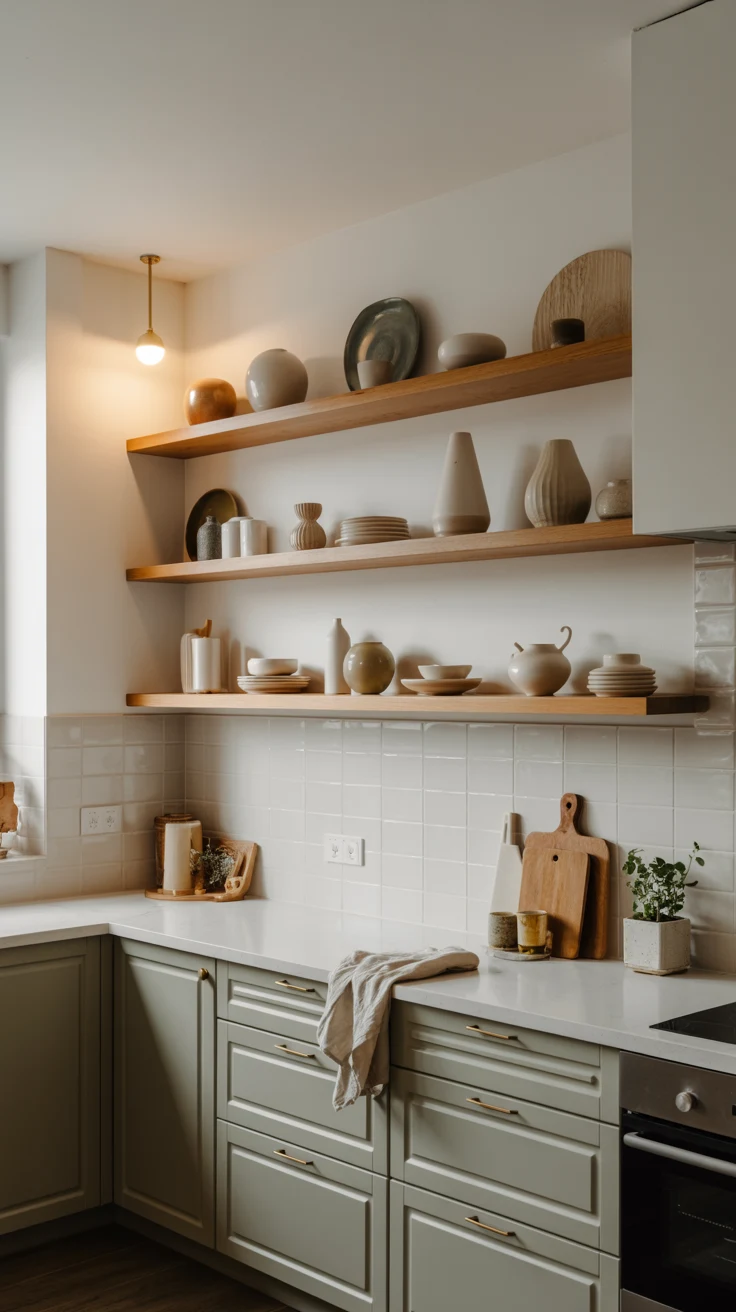
Open shelving in a minimalist kitchen is a double-edged design tool — used well, it adds warmth, accessibility, and a human quality that completely closed cabinetry can sometimes lack. Used carelessly, it creates visual clutter that directly undermines the clean aesthetic you’re working to achieve.
FYI — the key to successful open shelving in a modern minimalist kitchen is ruthless curation. One or two floating shelves displaying a small, carefully chosen collection of matching ceramics, a few cookbooks with beautiful spines, and one plant is visually cohesive and beautiful. The same shelves loaded with a random assortment of mismatched objects is the opposite. If you can’t commit to maintaining curated open shelves long-term, keep everything behind closed cabinet doors.
8. Invest in Quality Worksurfaces
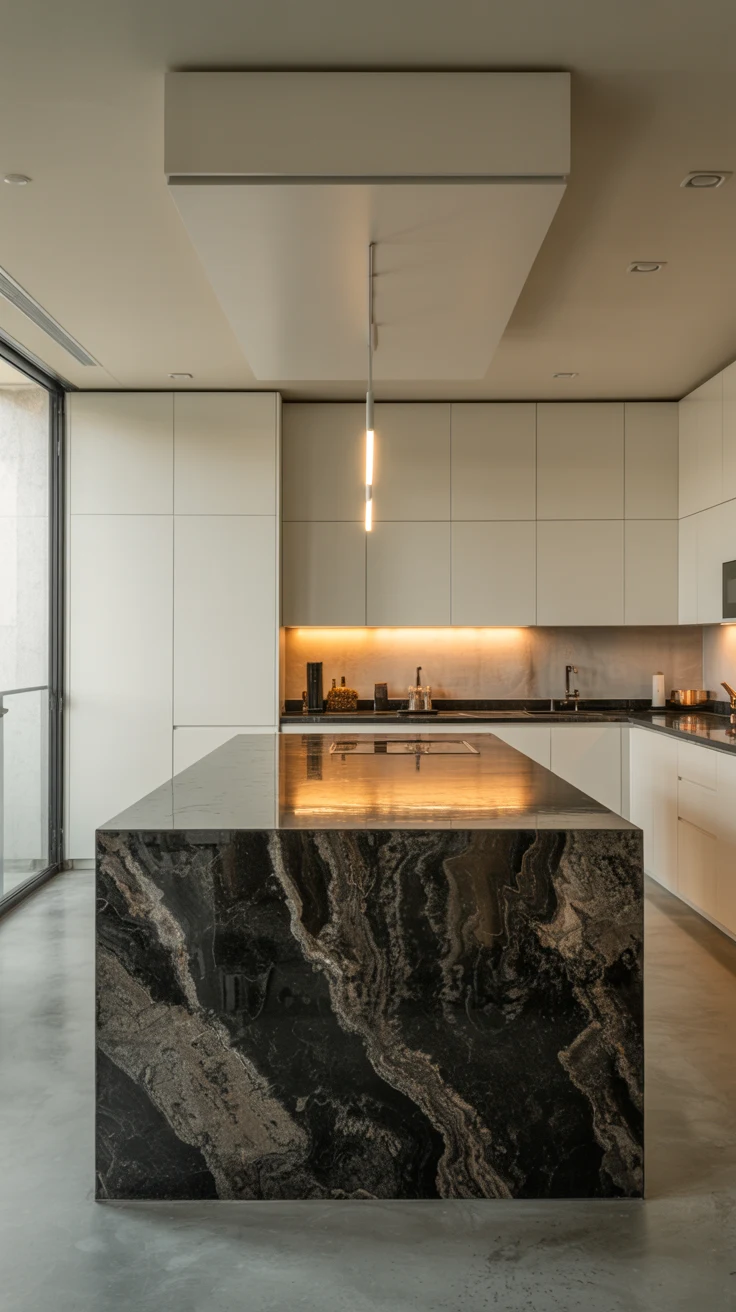
The worksurface in a minimal kitchen is one of the most visually prominent elements in the entire room — and it deserves to be treated as such. A beautifully specified countertop material in a minimal kitchen becomes the room’s primary textural and material statement, particularly when cabinets are handleless and surfaces are clear.
Worksurface Materials for Minimalist Kitchens:
- Honed marble — the most elegant and characterful option, requires care
- Quartz — durable, low-maintenance, available in stunning minimal tones
- Concrete — industrial warmth and distinctive texture, genuinely unique
- Dekton or sintered stone — ultra-durable with a beautifully modern aesthetic
- Solid wood or butcher block — warmth and organic character in an otherwise cool palette
Choose a material with the visual quality and durability to carry the room for years. In a minimal kitchen, the worksurface does a disproportionate amount of aesthetic work.
9. Get the Lighting Right
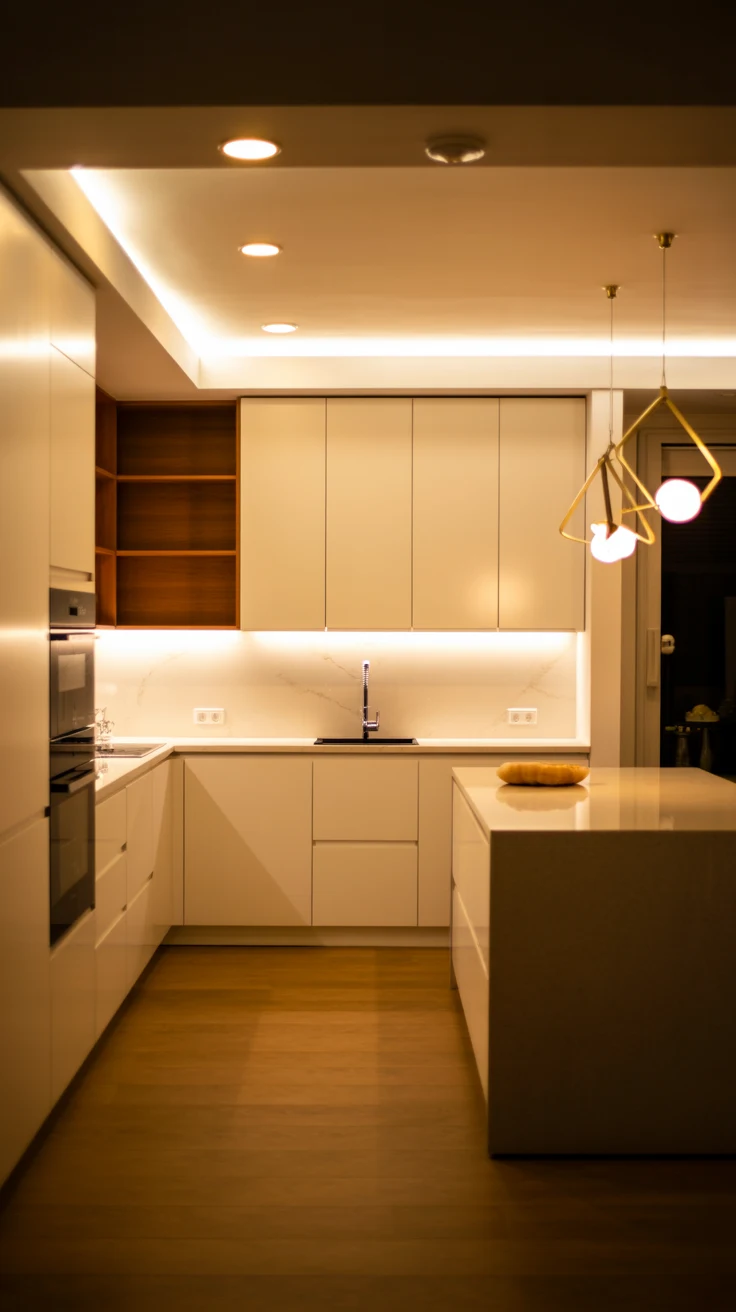
Lighting in a modern minimalist kitchen must serve two completely different functions simultaneously — bright, clear task lighting for cooking and preparation, and warm, atmospheric lighting for dining and living. Getting both right without cluttering the ceiling with multiple different fixture styles requires careful planning.
Recessed downlights on dimmers provide clean, unobtrusive ambient and task illumination. A single statement pendant above the island or dining area introduces a sculptural focal point that adds warmth and personality without visual complexity. Under-cabinet LED strips illuminate the countertop surface precisely where it’s needed most. In a minimalist kitchen interior, lighting is the one element where multiple sources are not only acceptable but essential — because each serves a distinct, irreplaceable purpose.
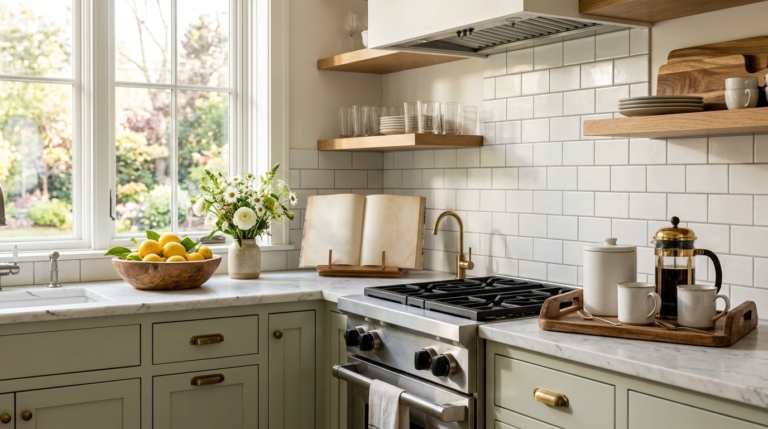
10. Choose a Minimal Splashback
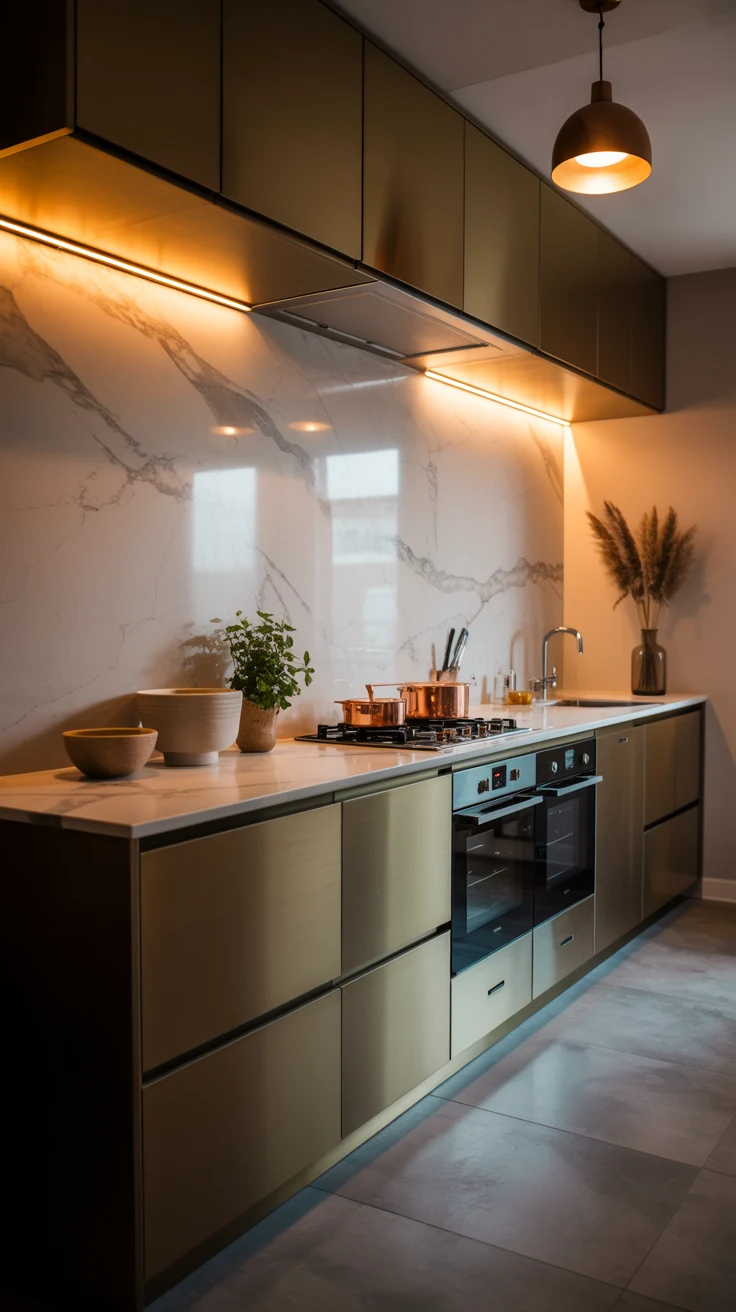
The splashback is one of the most visually prominent areas of any kitchen — and in a minimal kitchen design, it deserves the same disciplined attention as every other surface. The most effective minimalist splashback choices are those that extend the visual continuity of the surrounding surfaces rather than introducing a competing element.
A full-height slab of the same material as the worksurface is the ultimate minimal splashback — it creates a seamless, uninterrupted vertical surface that feels genuinely architectural. A plain, large-format tile in the same colour as the cabinet front creates a near-invisible splashback that disappears into the overall scheme. Glass splashbacks in a matching tone achieve a similar effect with the additional benefit of being exceptionally easy to clean.
11. Embrace Negative Space
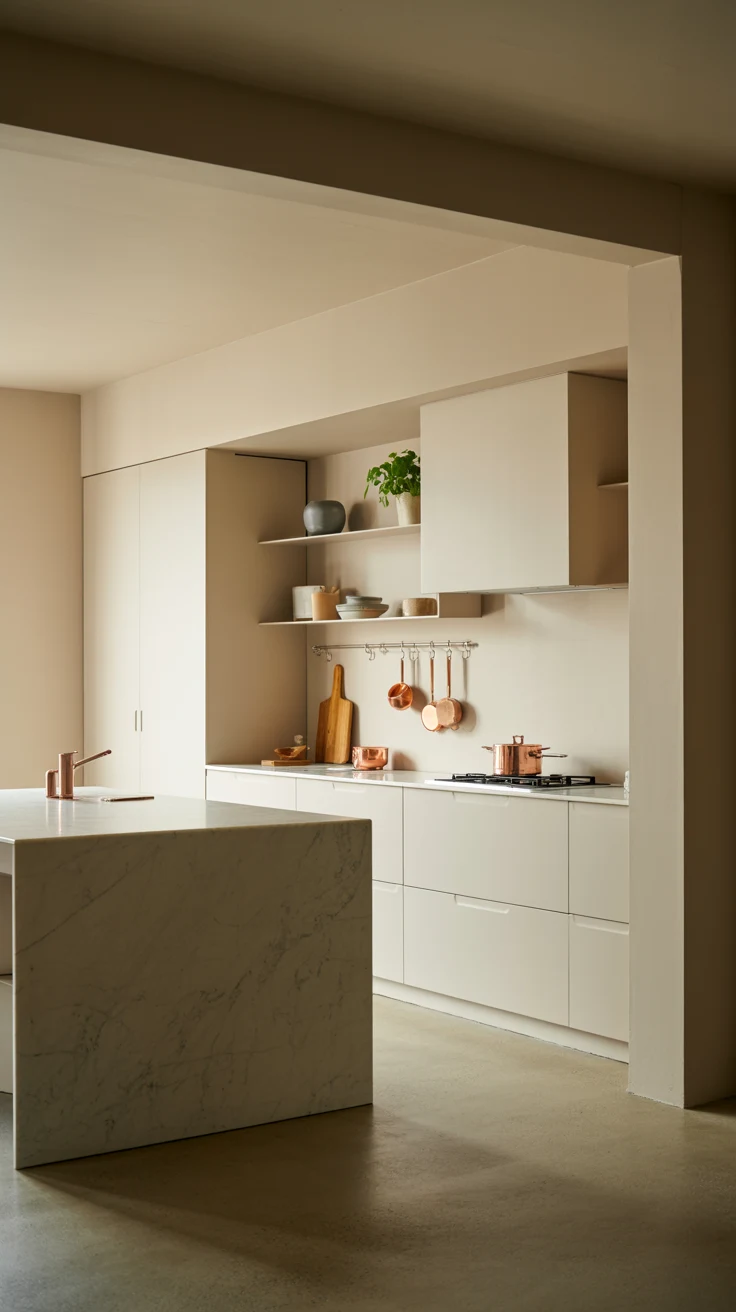
Here’s the design principle that separates amateur minimalism from genuinely great minimal kitchen design: the deliberate embrace of negative space. Empty space in a minimal kitchen is not a problem to be filled — it is an active design element that creates calm, focus, and the breathing room that makes everything else in the kitchen look better.
Resist every impulse to fill empty wall space with additional cabinetry, shelving, or decoration. Let the empty stretch of wall between two cabinet runs be exactly that — an empty stretch of wall. Appreciate the clear countertop run that contains nothing but the worksurface itself. These moments of emptiness are what give a minimal kitchen its distinctive, irreplaceable quality of visual rest.
12. Add Warmth Through Materials
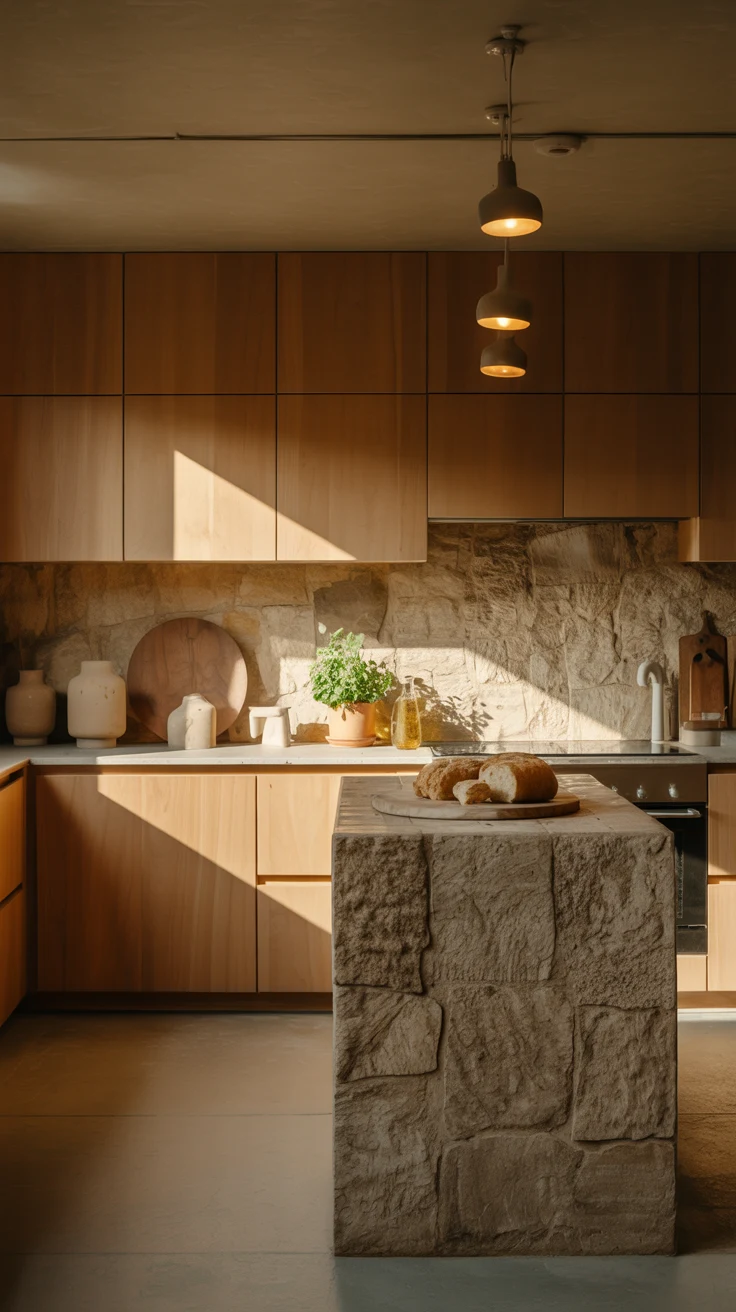
One of the most common concerns about modern minimalist kitchen ideas is that minimal equals cold — that a kitchen stripped of ornament and clutter will feel sterile and unwelcoming. The solution is warmth through materials rather than through decoration.
Warm wood tones in cabinet fronts, a wooden island, open shelving, or flooring introduce organic warmth that no accessory or decoration could achieve as effectively. Natural stone worksurfaces with visible veining add character and geological interest. Unlacquered brass hardware or taps develop a warm patina over time. Linen pendant lampshades diffuse light warmly. In a minimalist kitchen, material warmth does the work that color and decoration do in busier design styles.
13. Design Storage to Disappear
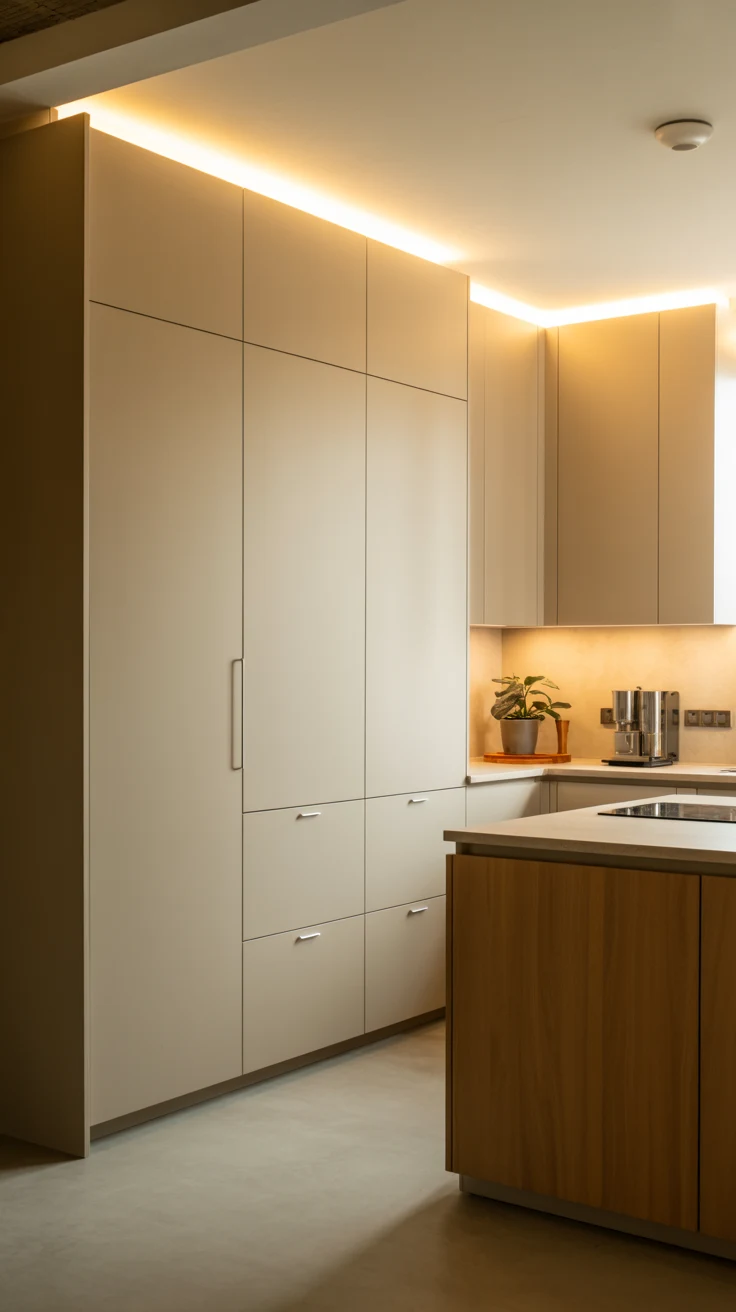
Exceptional storage is the invisible engine of any successful minimalist kitchen interior. A minimal kitchen only looks minimal when there is genuinely adequate storage to contain everything — because everything that doesn’t have a home inevitably ends up on a surface, and surface clutter is antithetical to the entire design philosophy.
Storage Features Worth Investing In:
- Tall pantry units concealing everything from appliances to dry goods
- Deep drawer systems with internal organizers keeping everything perfectly placed
- Pull-out waste and recycling units integrated into cabinetry
- Appliance garages with retractable doors concealing small appliances
- Corner carousel systems maximizing every cubic centimetre of storage
Design the storage first, exhaustively and generously — then design the aesthetic around it. A minimal kitchen without enough storage isn’t minimal. It’s just under-furnished.
14. Consider a Single Statement Material
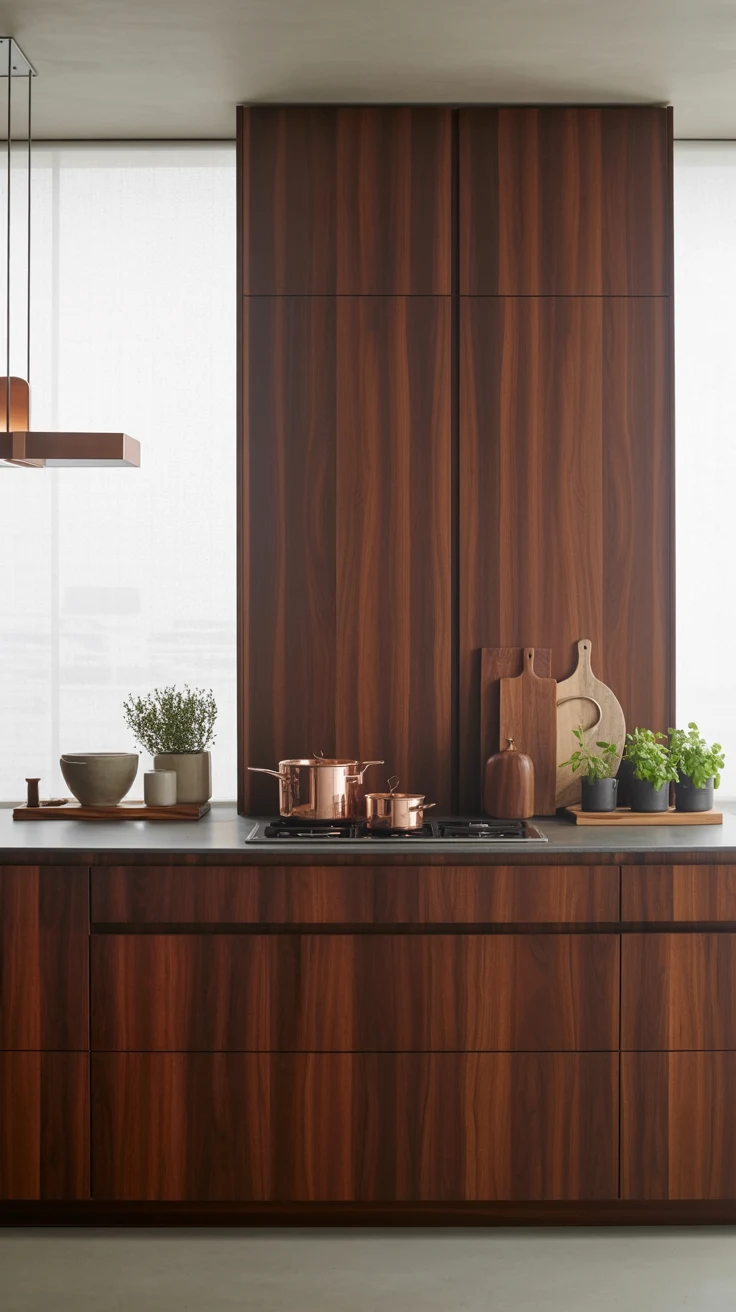
Modern minimal kitchen design frequently uses a single statement material as the room’s defining element — one beautiful material applied boldly and consistently that anchors the entire kitchen’s character. This approach creates visual identity and personality within a restrained framework that remains completely in keeping with minimalist principles.
IMO, the most striking and enduringly beautiful version of this approach is a full-height, floor-to-ceiling run of a single material — fluted oak cabinetry from floor to ceiling, a wall of honed black granite, an entire kitchen in aged concrete. The scale of the commitment creates something genuinely architectural — a kitchen that feels designed from the inside out rather than decorated from the outside in.
15. Edit, Then Edit Again
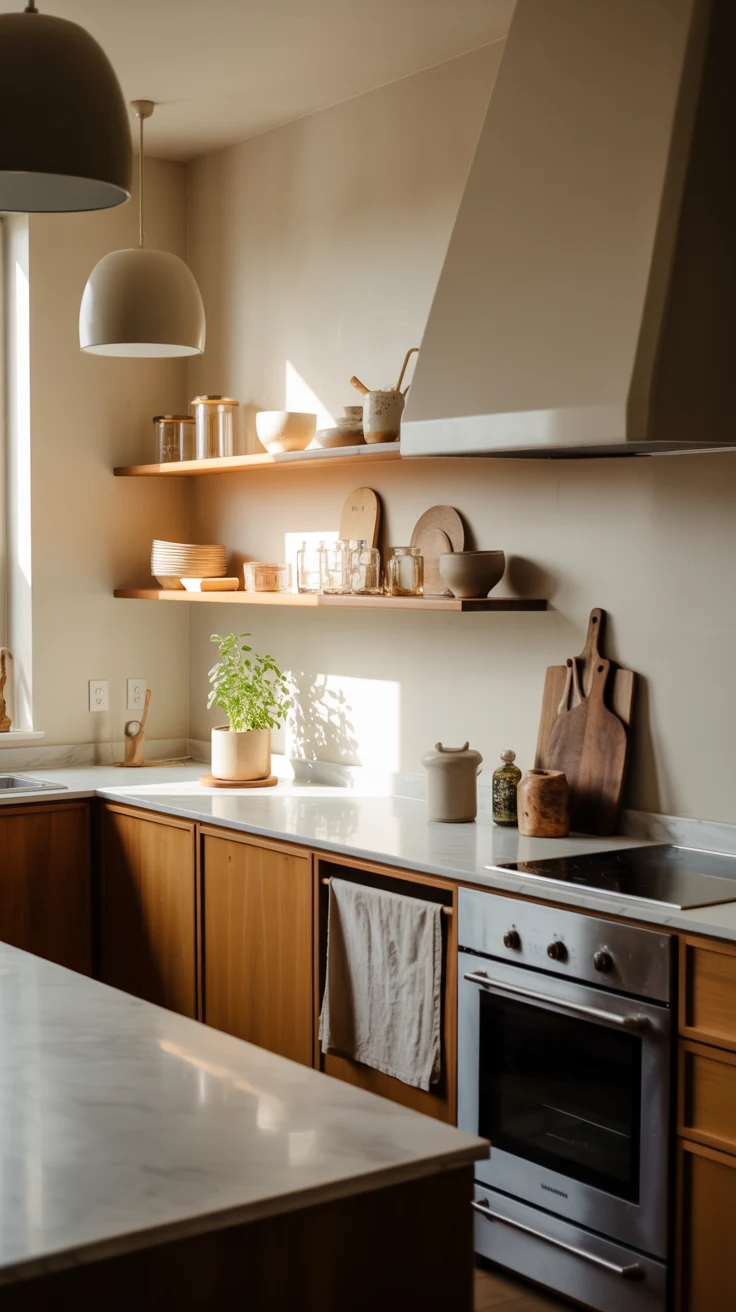
The final and most important minimalist kitchen design idea is not about what you add — it’s about what you remove. The true discipline of minimal kitchen design is editing: the ongoing, relentless practice of questioning whether every element in the kitchen genuinely earns its visible place.
Walk through your kitchen right now and look at every surface with fresh eyes. Does every visible object serve a clear purpose or provide genuine aesthetic pleasure? If not — remove it. Store it. Donate it. The kitchen that results from this editing practice will look more beautiful, feel more calm, and function more effectively than any amount of new purchases or additions could achieve. Less, in a minimalist kitchen, is always — always — more.
Final Editing Checklist:
- Clear countertops of everything not used daily
- Store appliances out of sight when not in use
- Replace mismatched containers with matching sets
- Remove decorative objects that don’t genuinely contribute
- Simplify the colour palette wherever possible
These edits cost nothing. Their impact on the kitchen is immediate and significant.
Wrapping Up
There you have it — 15 minimalist kitchen design ideas that cover every dimension of this clean, considered, and genuinely beautiful approach to kitchen design. From handleless cabinetry and integrated appliances to quality worksurfaces, thoughtful lighting, and the ongoing practice of editing — a minimalist kitchen is built through disciplined decision-making rather than abundant purchasing.
The most important principle of all is this: minimalism is not about having less. It’s about making room for what matters most. In a kitchen, that means cooking, connecting, and living without the constant background noise of visual clutter.
Choose one idea from this list and implement it this week. Just one. Then step back and notice how it changes the room. That small first step might just be the beginning of the most satisfying design journey you’ve ever undertaken.
After all — a kitchen this considered practically cooks dinner for you. Well, almost.