12 Warm Kitchen Ideas That Make Every Meal Feel Like a Special Occasion
There’s a kitchen quality that goes beyond good design and good materials — a quality you feel rather than simply see. You walk in and your shoulders drop slightly. The room seems to pull you toward it rather than simply accommodate you. Conversations naturally migrate there even when the living room is more comfortable. People lean against the counter and stay longer than they intended. That quality has a name: warmth. And it’s entirely designable.
I’ve cooked in kitchens that were technically impressive and thermally cold — all stainless steel and cool white cabinetry, beautiful in photographs and somehow slightly alienating in daily life. And I’ve cooked in kitchens that were objectively modest but so warm in their materials and their light that they became the gravitational center of every gathering. The difference was always the same: intention applied to warmth rather than to precision. These 12 warm kitchen ideas cover every element that creates that quality.
Warmth Is a Design Decision, Not an Accident
Here’s the foundational truth that makes everything else in a warm kitchen project work: warmth in kitchen design is not a byproduct of good choices — it’s the direct result of specific choices made with warmth as the primary goal. Material warmth. Color warmth. Light warmth. Texture warmth. Each of these dimensions contributes to the overall sensory atmosphere — and when all four are addressed simultaneously, the warm kitchen effect is cumulative rather than additive. It doesn’t just add warmth — it multiplies it.
1. The Earth Tone Kitchen — Palette as Foundation
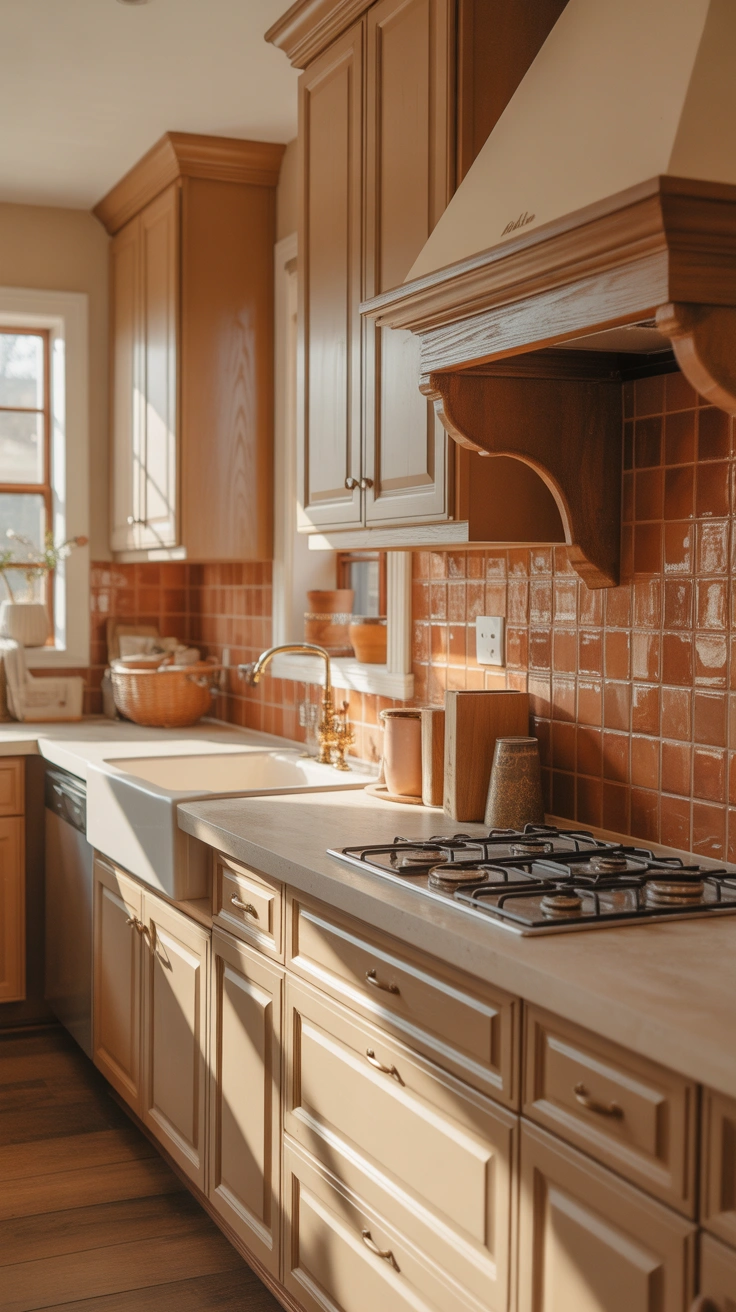
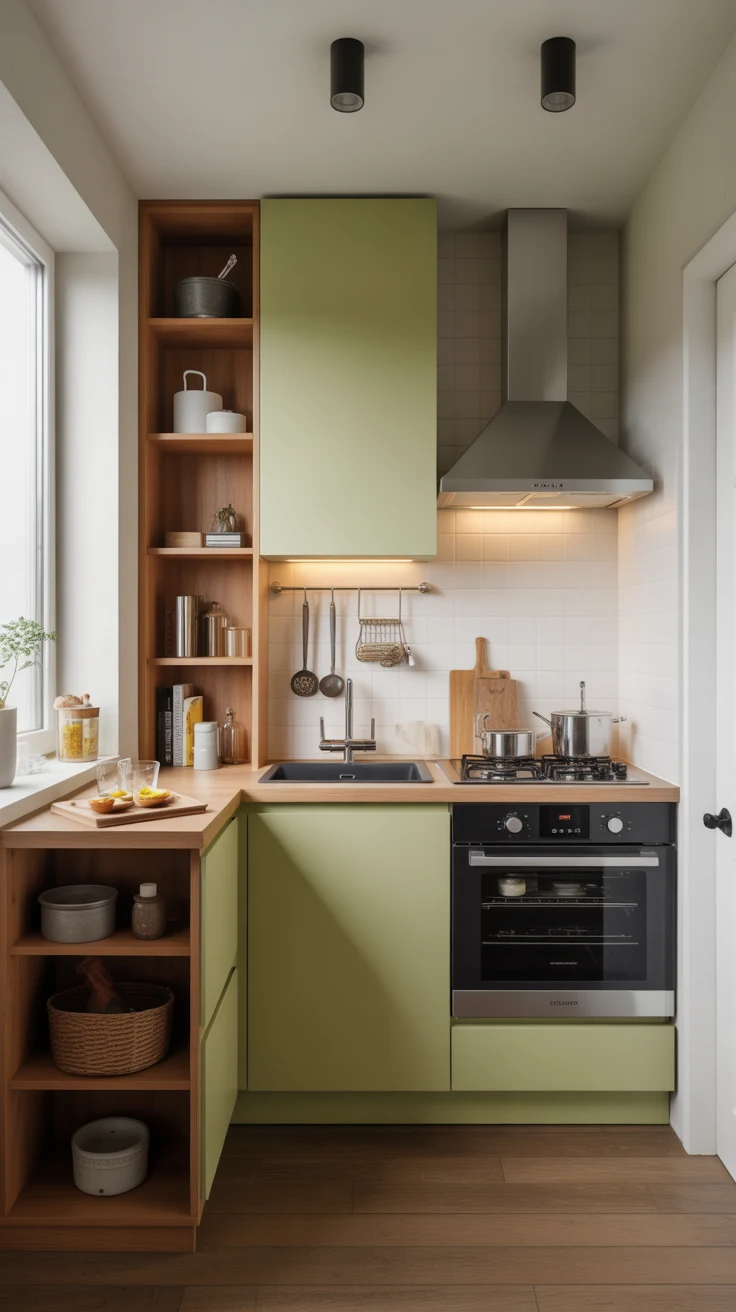
Every warm toned kitchen design begins with the color palette — and the earth tone kitchen palette is the most consistently reliable route to genuine kitchen warmth available. Earth tones reference the natural world directly: sandy cream, warm beige, terracotta, ochre, warm taupe, mushroom gray-brown, dusty sage. These tones share the same fundamental quality — they have warm undertones drawn from clay, sand, stone, and vegetation rather than from the cool, manufactured world.
The earth tone kitchen design palette works best when built in layers rather than applied as a single flat tone. Warmest and deepest at the floor level — the darkest expression of the earthy palette, grounding the room. Mid-warm on the walls and upper cabinetry — the primary palette tone. And palest at the ceiling — the most recessive, most light-reflective version of the same warm family. This graduated warmth approach mirrors how the natural world organizes itself and creates a room with inherent depth and visual interest.
Earth tone kitchen combinations that consistently work:
- Sandy cream cabinets + warm terracotta tile backsplash + warm walnut countertop
- Warm beige walls + natural oak cabinetry + honed limestone countertop
- Warm taupe + tan lower cabinets + cream upper cabinets + aged brass
- Warm mushroom + travertine tile + natural timber + antique bronze
- Ochre accent wall + warm cream cabinetry + natural stone + matte brass
2. Warm Neutral Kitchen Design — The Tan Cabinet Direction
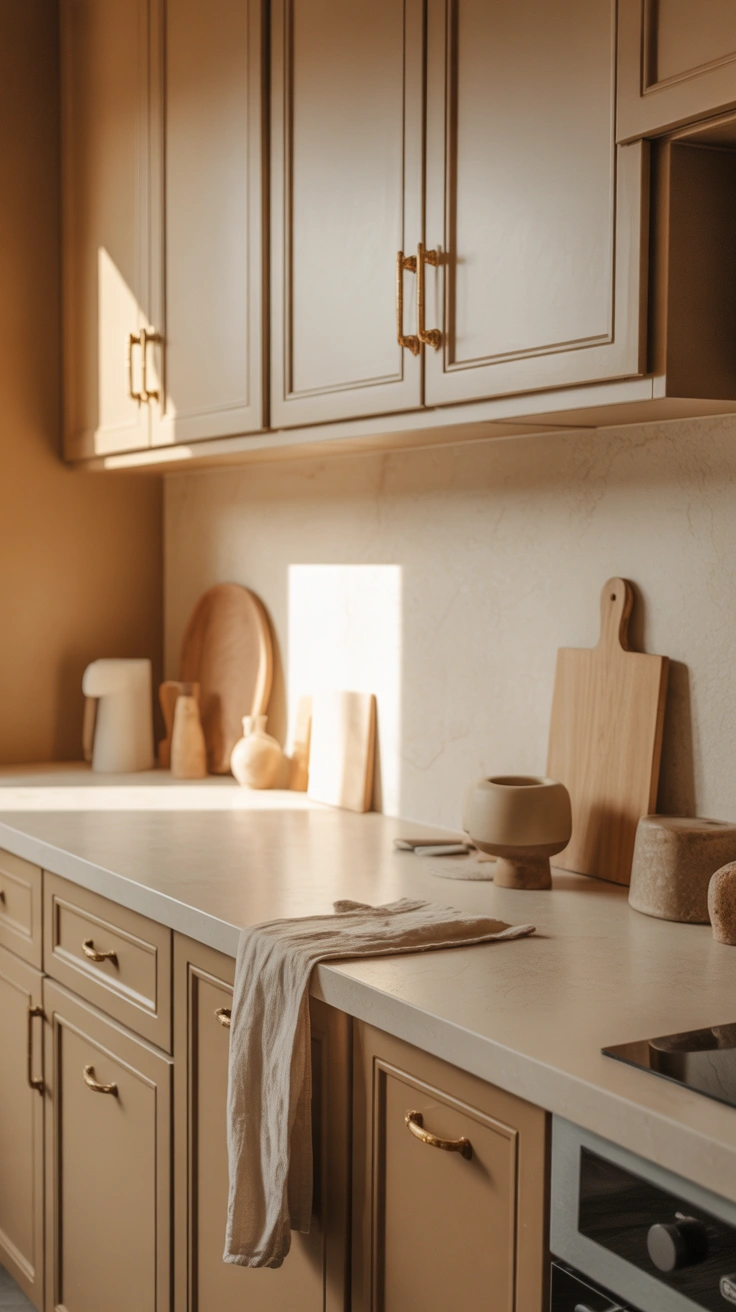
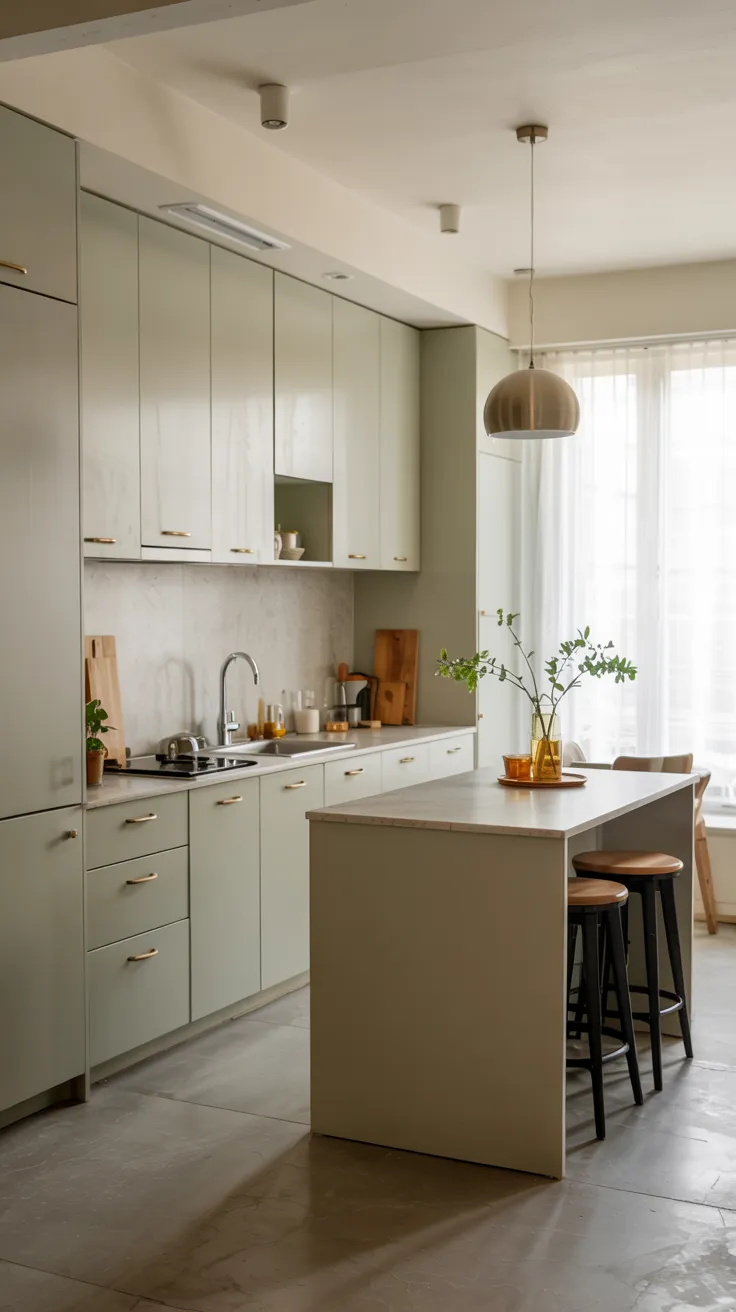
Here’s the warm neutral kitchen design direction that’s producing some of the most beautiful kitchen environments in contemporary design right now: tan cabinetry. Not the dated golden-yellow oak of previous decades. Not the cold, gray-taupe that’s been dominating kitchen design for years. But genuine, warm, sandy tan — the color of natural stone, warm sand, and aged linen — applied to flat-panel cabinetry with a matte or oil finish.
Tan kitchen ideas work because this specific tone sits at the intersection of warm and neutral — it has enough color to feel intentional and character-rich, and enough restraint to feel sophisticated rather than bold. It pairs beautifully with cream stone countertops, aged brass hardware, and natural timber accents. And it creates a kitchen that feels simultaneously modern and genuinely warm — which is the specific combination that most kitchen design directions struggle to achieve simultaneously.
3. Warm Light in Kitchen — The Atmosphere Architecture
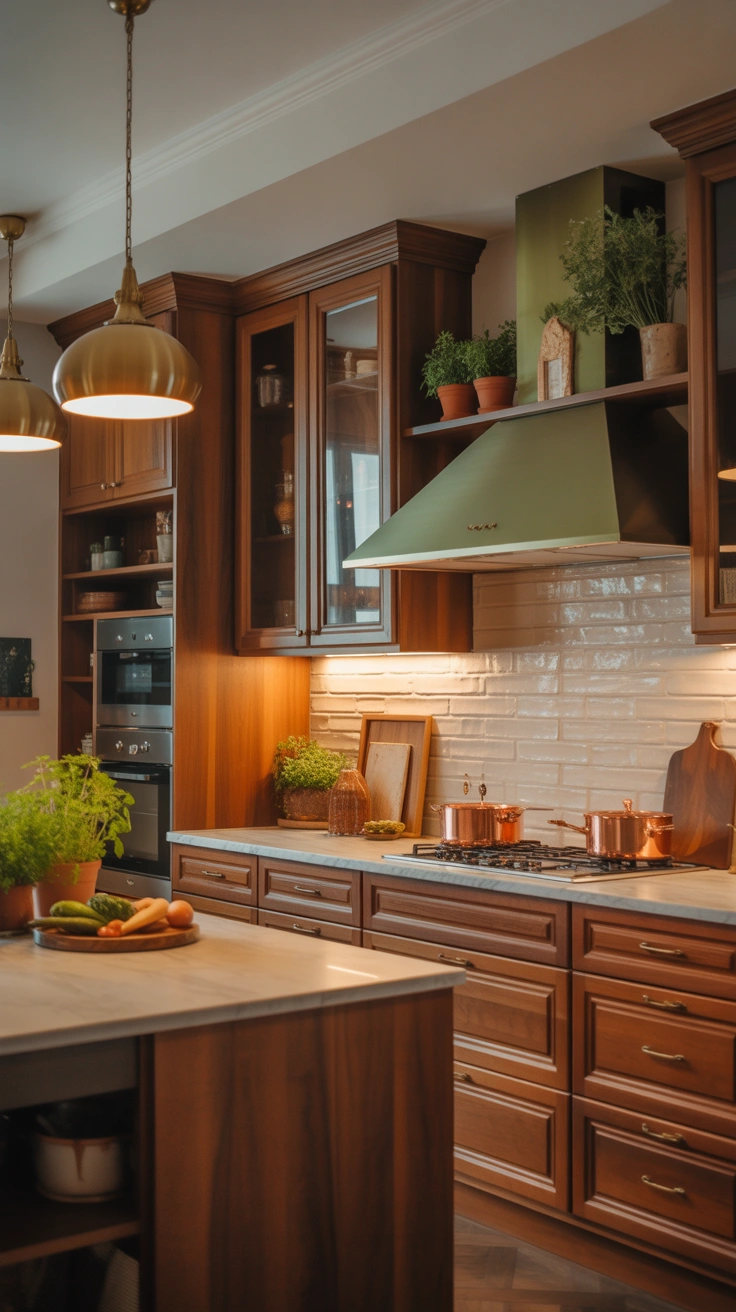
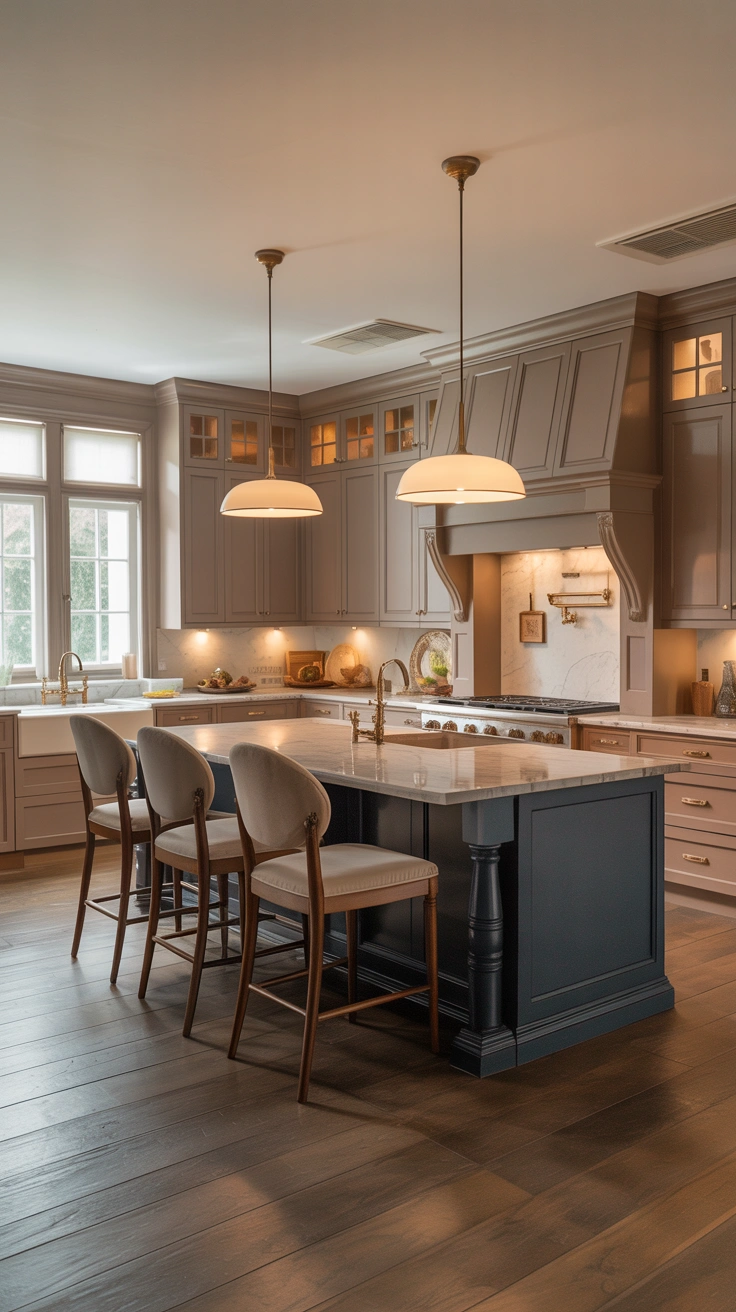
Here’s the warm light in kitchen principle that transforms the cooking and gathering experience more powerfully than any material or color choice: the quality, temperature, and layering of artificial light sources. A kitchen with extraordinary materials under poor lighting feels wrong. The same kitchen under correctly specified, properly layered warm lighting feels genuinely extraordinary — especially in the evenings when artificial light is the primary illumination.
Warm white bulbs at 2700K are completely non-negotiable in a warm kitchen. At this temperature, warm light amplifies the golden, earthy tones of warm materials — making cream cabinetry glow, making natural timber look richer, making stone countertops appear warmer and more organically beautiful. Cool or daylight bulbs do the precise opposite — they drain the warmth from every surface and make an earth tone kitchen look flat and slightly washed out regardless of how carefully the palette was chosen.
Warm kitchen lighting by layer:
- Ambient: Recessed ceiling spots at 2700K on dimmer — functional illumination
- Task: Under-cabinet LED strips at 2700K — counter illumination for prep work
- Accent: Pendant lights over island or table — warm focused downlight
- Atmosphere: Lamp or candle on open shelf — warm point source for evening ambiance
- Natural: Warm-toned window blind that filters rather than blocks morning light
4. Kitchen Ideas Earth Tones — Natural Timber Throughout
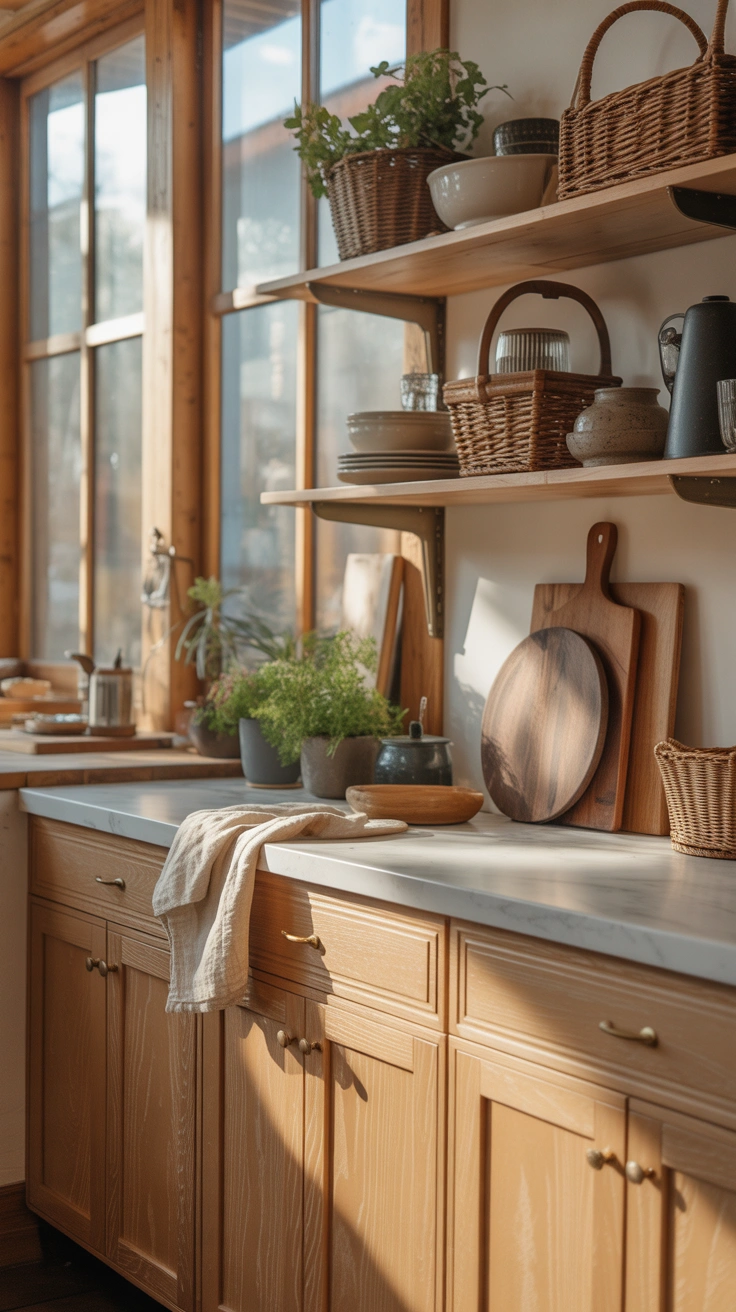
Here’s the kitchen ideas earth tones material choice that contributes more to kitchen warmth than any paint color or tile selection: genuine, naturally finished timber. Wood is the original warm kitchen material — it references the natural world directly, it has tactile warmth that no manufactured surface replicates, and it develops character and patina through use that makes it more beautiful over time rather than more worn.
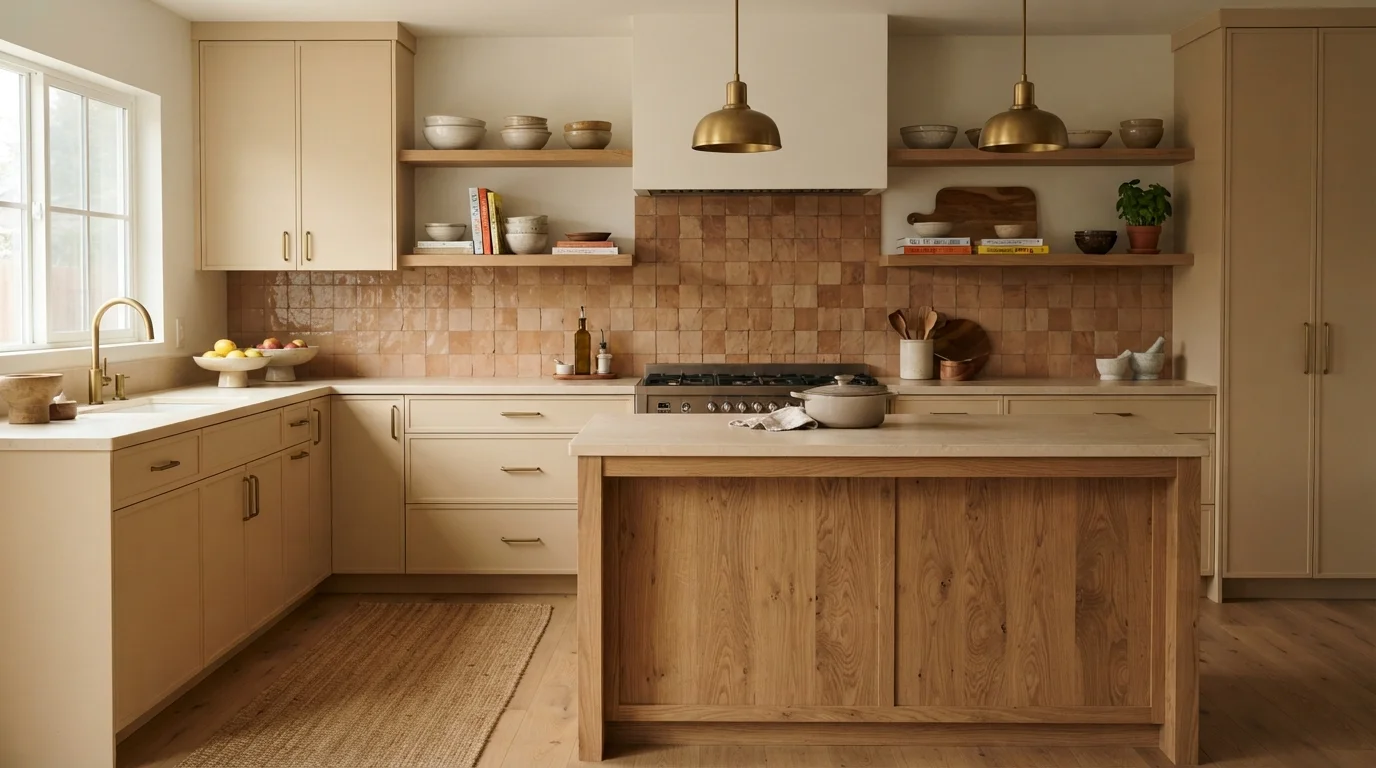
Natural oak in a wire-brushed or lightly oiled finish — where the grain is clearly visible and the wood’s natural character is celebrated rather than suppressed — is the definitive warm kitchen timber choice currently. Its warm golden tone with naturally visible grain creates immediate warmth and genuine organic authenticity. Applied to cabinetry fronts, open shelving, a butcher-block countertop section, or ceiling beams, natural oak contributes a quality of warmth to a kitchen that no other material matches at equivalent cost.
5. Earth Tone Interior Design Kitchen — Terracotta Tile
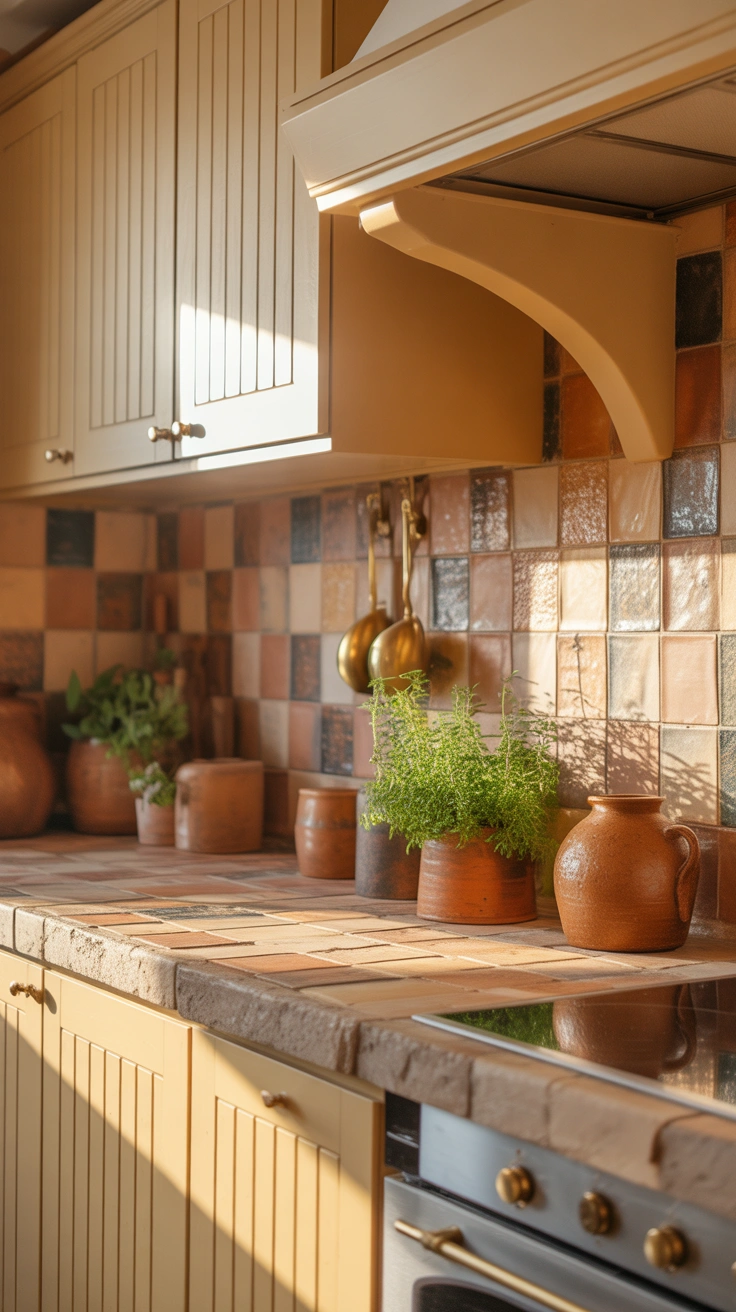
Here’s the earth tone interior design kitchen detail that creates more immediate and more impactful warmth than almost any other single material choice: terracotta tile. As a backsplash, as a floor tile, or as an accent element within a predominantly neutral kitchen — terracotta brings a warmth that’s simultaneously ancient and completely contemporary, earthy and genuinely beautiful.
Handmade terracotta tiles with their characteristic slight irregularity and natural color variation are the most authentic and most atmospherically warm option. Machine-made terracotta-look ceramic provides a more consistent and more practical alternative. And modern porcelain in a terracotta-inspired tone offers the durability and low maintenance of ceramic with the visual warmth of genuine terracotta. Whichever version you choose, the terracotta element in a warm kitchen does something remarkable — it makes the room feel like it has a history, even in a new build, because the color and material reference human habitation going back millennia.
6. Warm Color Kitchen — The Backsplash as Character
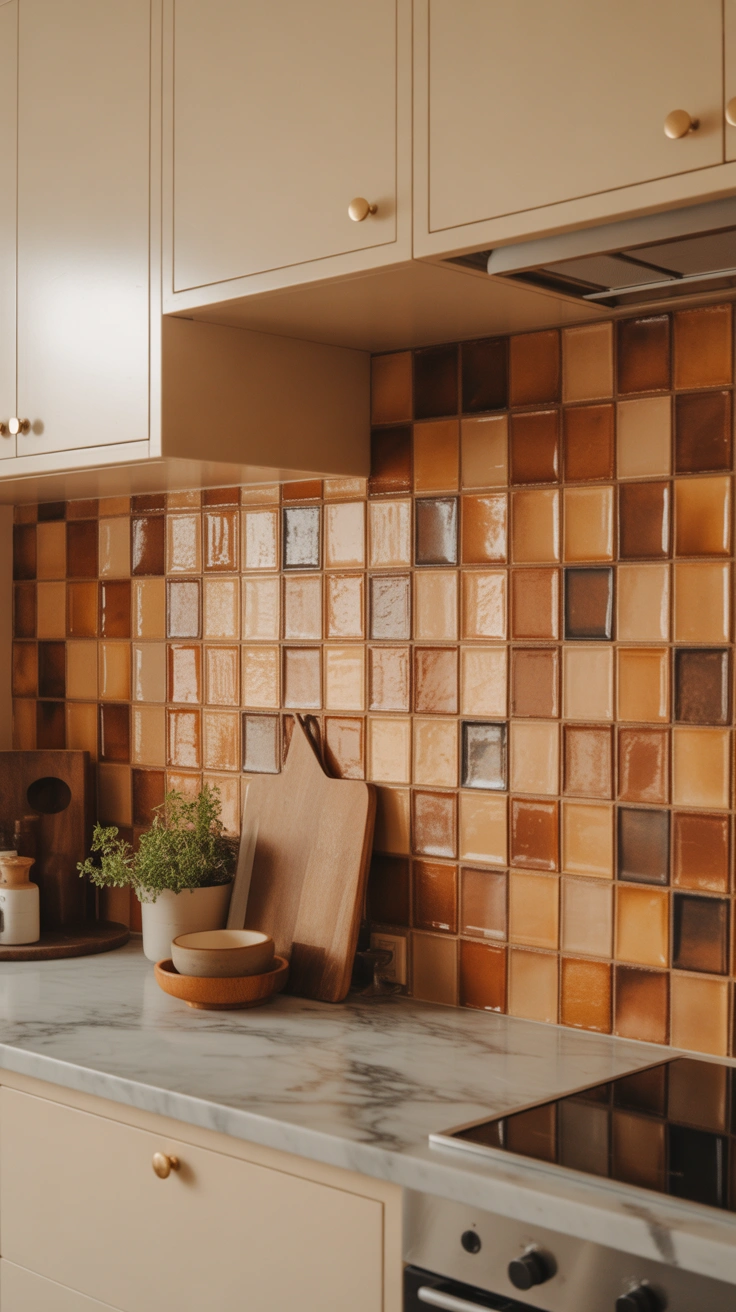
Here’s the warm color kitchen backsplash approach that creates the most character and the most concentrated warmth in the kitchen’s most visible vertical surface: treating the backsplash not as a practical splash guard but as the kitchen’s primary opportunity for warm material expression. The backsplash is the surface most visible when cooking, most visible from the adjacent living or dining area, and most prominently featured in any kitchen photograph — which makes it the highest-impact location for a warm material statement.
Zellige tile in a warm terracotta, honey, or sandy tone — with its handmade shimmer and irregular surface — creates a backsplash of extraordinary warmth and genuine artisanal beauty. Warm limestone or travertine in a honed finish brings geological warmth. Hand-painted encaustic cement tiles in an earthy geometric pattern create pattern and warmth simultaneously. Each of these choices creates a warm kitchen backsplash that becomes the room’s most photographed and most complimented element.
7. Earth Tone Kitchens — Stone Countertops With Character
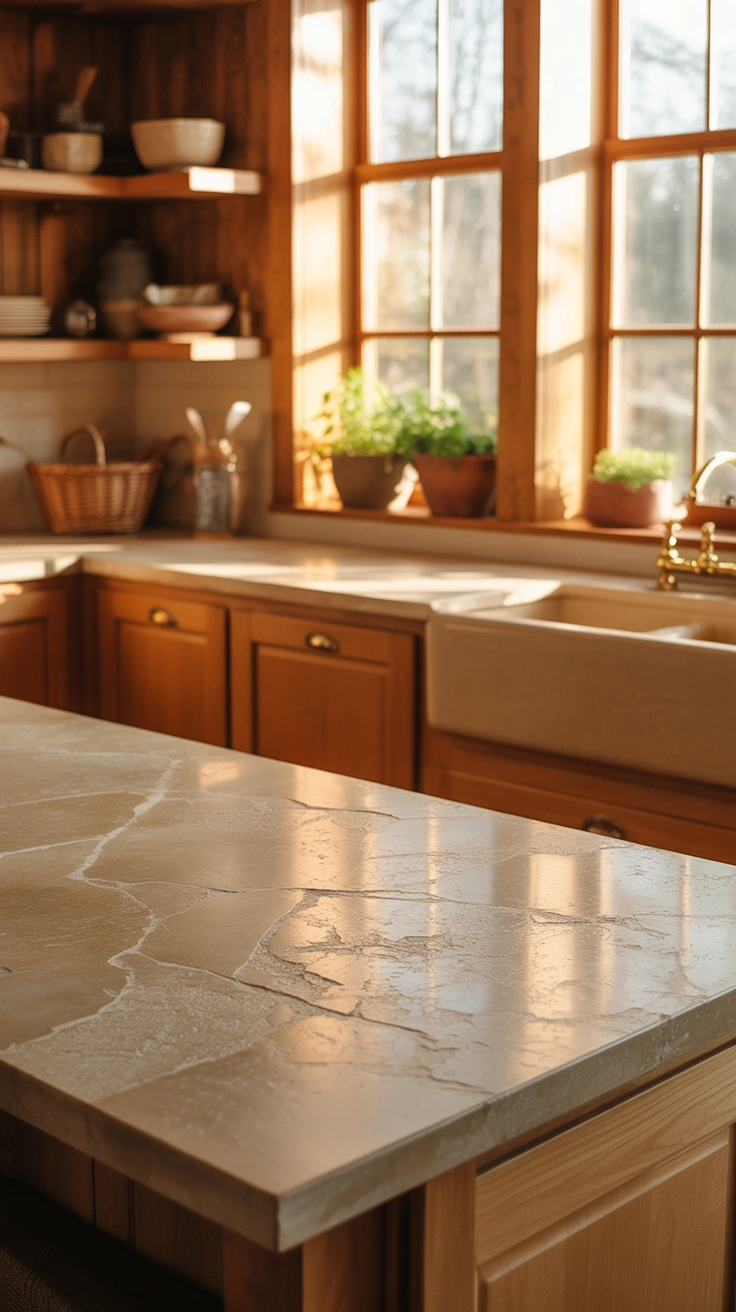
Here’s the earth tone kitchens countertop principle that contributes most directly to the kitchen’s overall warm atmosphere: choosing natural stone with warm undertones rather than the cool gray or stark white stone options that dominated kitchen design for the previous decade. Warm-toned stone — honed travertine, warm quartzite, sandy limestone, warm cream quartz with natural variation — creates countertop surfaces that contribute warmth rather than competing with it.
The finish matters as much as the tone. Honed stone has a matte, organic quality that polished stone’s high-reflective finish suppresses. In a warm kitchen, honed stone catches light in a softer, warmer way that amplifies the kitchen’s overall warmth rather than creating cool, mirror-like reflections that work against it. And natural stone variation — the subtle tone shifts, the occasional fossil mark in travertine, the natural movement in limestone — provides visual interest within the warm palette without introducing any competing color.
8. Kitchen Design Cozy — The Gathered Object Approach
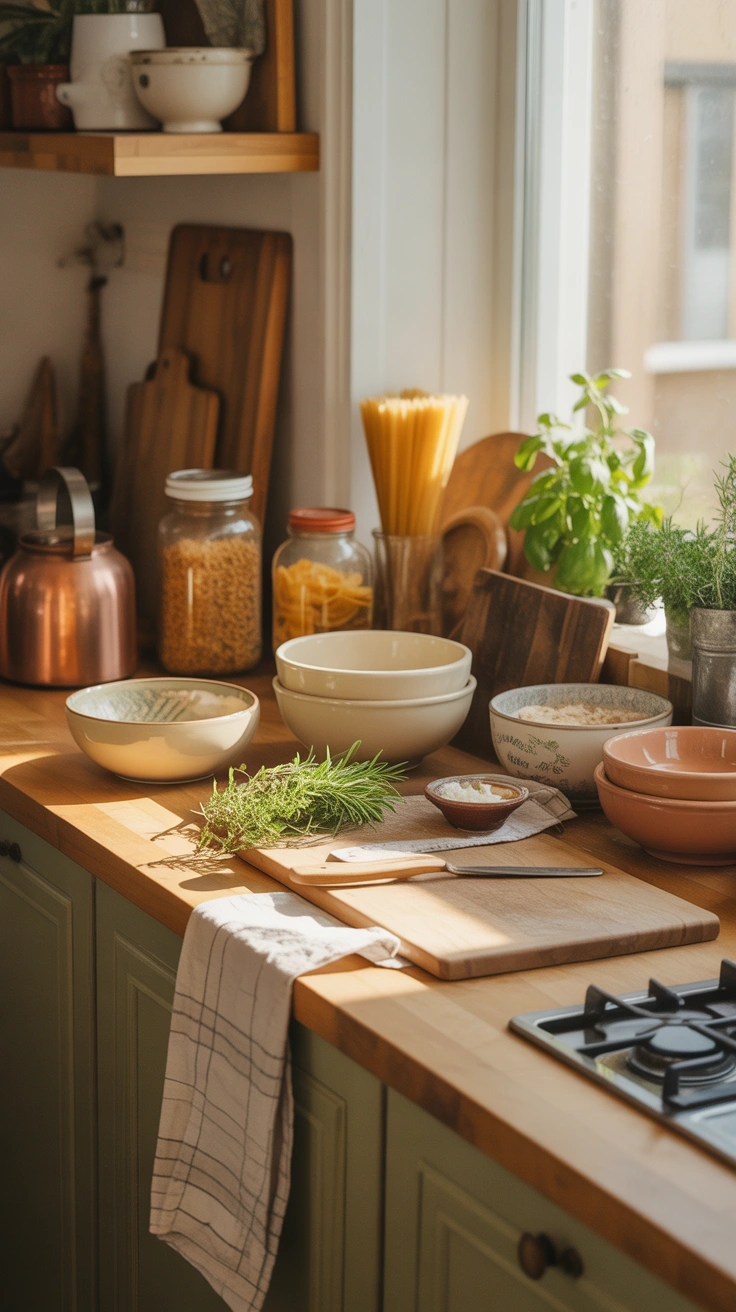
Here’s the kitchen design cozy principle that warm kitchens consistently embody and cold kitchens consistently lack: the presence of genuine, curated, personal objects that communicate that real life happens in this kitchen. Not a styled surface arranged for photographs. Objects that are genuinely used, genuinely loved, and genuinely present because they belong to the person who cooks there.
A collection of handthrown ceramic bowls that get used for fruit and bread daily. A wooden cutting board that’s been seasoned through use. A bunch of fresh herbs in a small ceramic pot. A vintage-style scale that works and gets used. A single cookbook that’s actually cooked from, spine cracked and pages slightly stained. These objects contribute a warmth and authenticity that staged styling can approximate but never fully replicate — because they’re evidence of genuine human habitation rather than decorative intention.
9. Warm Toned Kitchen Design — The Ceiling Treatment
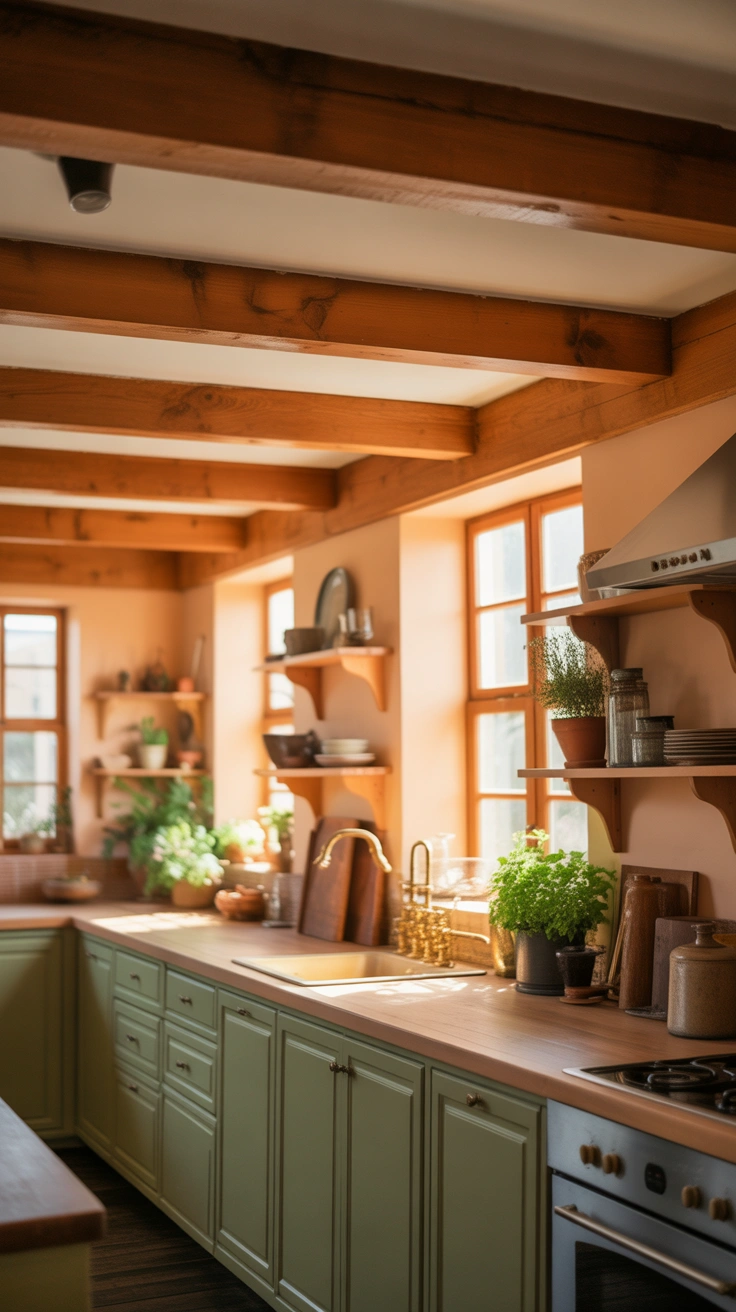
Here’s the warm toned kitchen design element that most people completely ignore but that has a significant impact on the room’s overall atmosphere: the ceiling. Kitchen ceilings are almost universally painted brilliant white and forgotten. But a kitchen ceiling in a warm, complementary tone — the same warm cream as the walls, a slightly warmer version of the cabinetry tone, or even a warm terracotta in a kitchen bold enough to carry it — creates an enveloping warmth that wraps around the room rather than sitting at the same level as the walls.
Exposed ceiling beams in natural timber are the most dramatic and most impact-generating warm kitchen ceiling treatment. Even applied decorative beams — properly proportioned, in genuine natural timber with an oil or wax finish — create extraordinary architectural warmth in a kitchen that genuinely transforms the room’s character. The scale and proportion of beams matters enormously: too heavy and they dominate, too delicate and they look unconvincing. Get the scale right and ceiling beams make a kitchen feel genuinely extraordinary.
FYI: Lining up ceiling beam placement with the kitchen island directly below creates the most visually satisfying and most architecturally resolved beam installation. The island and beam read as a unified element that anchors the kitchen’s entire composition.
10. Warm Kitchen — The Rug Runner
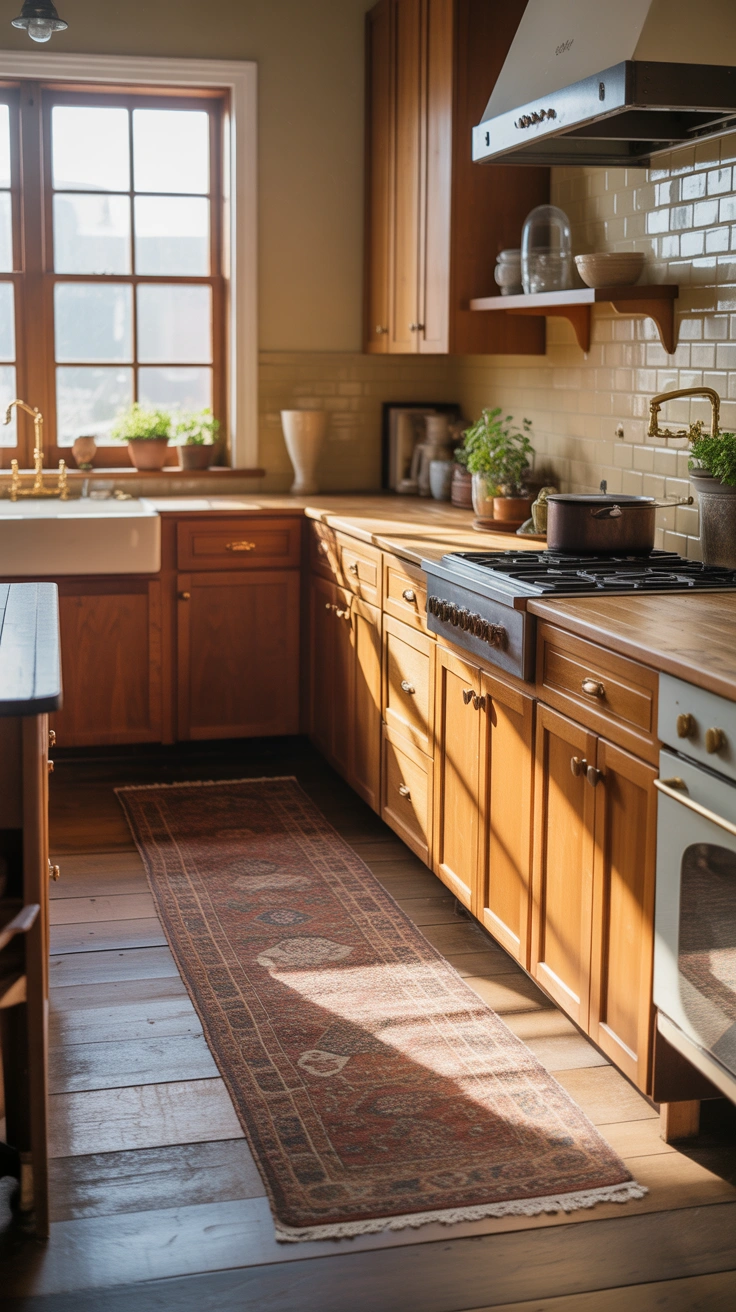
Here’s the warm kitchen idea that surprises people with how dramatically it changes the room’s atmosphere: a kitchen rug runner. In a kitchen dominated by hard, cool surfaces — tile, stone, metal — a genuine textile element on the floor introduces warmth, acoustic softness, and genuine organic texture that no other flooring addition can provide.
A natural fiber runner in jute, sisal, or wool — positioned in the main working zone in front of the primary counter run — adds warmth underfoot that is physically felt with every cooking session. It softens the acoustic quality of the kitchen, reducing the echo-chamber quality that hard surface kitchens create. And visually, it introduces the same organic, natural quality that the kitchen’s material choices are pursuing throughout — reinforcing the warm, earthy atmosphere at the floor level where it’s most directly experienced.
11. Earth Tone Kitchens — Aged Brass and Warm Metal
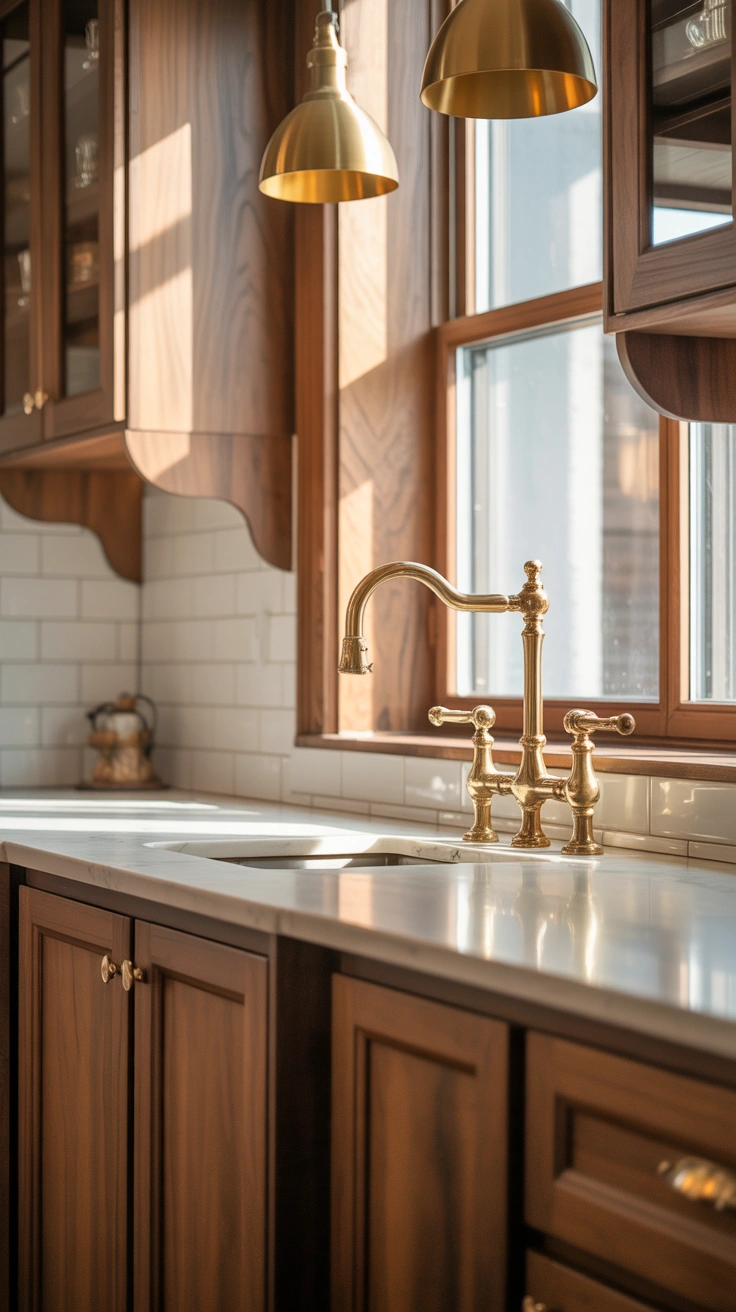
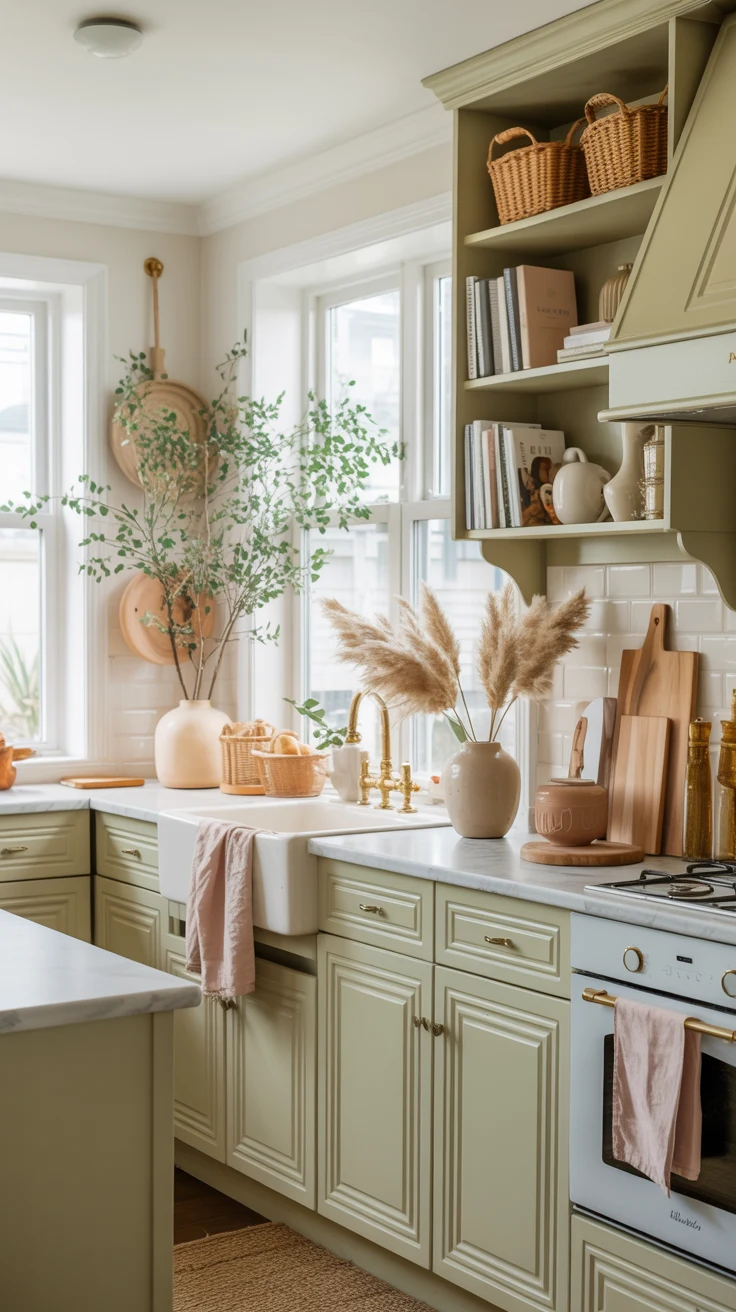
Here’s the earth tone kitchens hardware decision that most powerfully amplifies the warm quality of an earthy kitchen palette: aged brass throughout every metal element in the room. Taps, cabinet handles, drawer pulls, pendant lights, shelf brackets — all in a consistent aged brass finish that shares the kitchen’s fundamental warm undertone and adds the specific quality of considered luxury that cool metal finishes fundamentally cannot provide in a warm palette context.
Aged brass has a quality that polished brass and chrome both lack in a warm kitchen context: it looks as if it has been there for a while. It has the patina of something genuinely used and genuinely aged — even when new. This quality of apparent history is what gives warm kitchens their specific sense of depth and character that freshly installed kitchens in cooler palettes can struggle to achieve for years. Aged brass in a warm kitchen creates that sense of depth from day one.
12. The Warm Kitchen Edit — Maintaining the Atmosphere
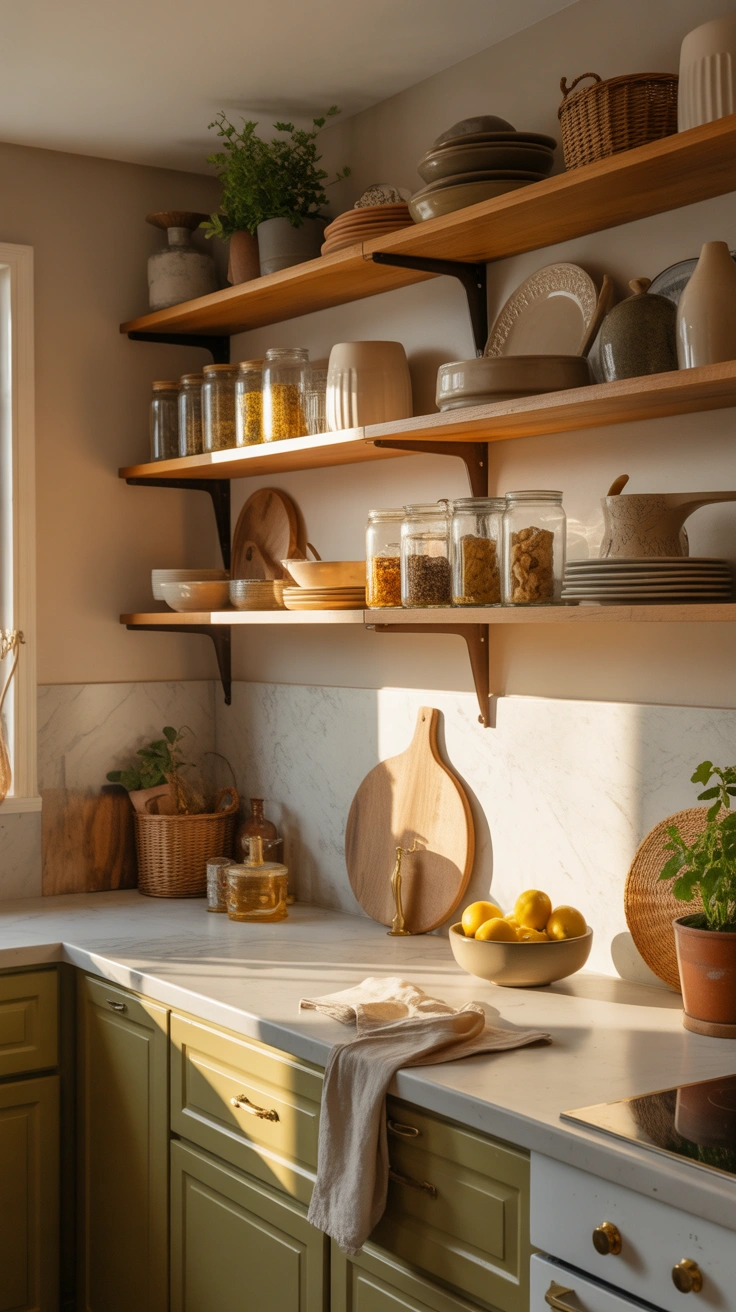
Here’s the final warm kitchen idea and the one that determines whether all the warmth created by thoughtful design decisions is maintained over time: the ongoing edit. Warm kitchens accumulate objects differently than cool kitchens — their inherent warmth and organic character make items want to live there. Products wander in from other rooms. Objects that don’t belong find their way onto the counter. And gradually, the curated warmth of a well-designed warm kitchen risks being buried under the evidence of daily life.
The discipline of a monthly kitchen edit — removing items that don’t belong, returning objects to their designated homes, and reassessing what’s earned its place on the counter or shelf — maintains the warm kitchen’s quality without requiring any design intervention. The materials stay warm. The lighting stays warm. The palette stays warm. The edit ensures that the warmth is visible rather than buried. And a warm kitchen that’s maintained with genuine care becomes more beautiful every year rather than gradually less impressive.
IMO, the warm kitchen that’s been genuinely lived in and genuinely cared for over several years — materials developing patina, objects accumulating meaning, the overall atmosphere deepening with time — is one of the most beautiful domestic environments imaginable. It’s the kitchen that guests remember and describe to other people. It’s the kitchen that makes cooking feel like a genuine pleasure rather than a chore. And it gets there not through expensive renovation cycles but through consistent warmth, consistent intention, and consistent care.
Wrapping Up
Every warm kitchen idea in this list is built on one conviction: a kitchen designed around warmth — in its materials, its palette, its light, and its personal objects — creates the most genuinely inviting, most thoroughly inhabited, and most enduringly beautiful kitchen environment available. Not the kitchen that impresses people with its precision. The kitchen that draws people in with its warmth and makes them stay longer than they planned.
From the earth tone palette that grounds the room in natural warmth, to the aged brass hardware that amplifies it, to the warm light in kitchen sources that make every surface glow, to the genuine objects that make the room feel authentically lived in — these 12 ideas give you a complete framework for a kitchen that genuinely becomes the heart of your home. Start with the palette. Add the timber. Warm the light. Edit the clutter. And then step back and watch what happens when people walk into a kitchen that’s genuinely, completely warm. They pull up a stool. They pour a drink. They stop thinking about leaving. That’s the warm kitchen effect — and it’s entirely worth building.
Frequently Asked Questions
1. What makes a kitchen feel warm and inviting?
Warmth comes from combining earthy colors, natural materials, soft layered lighting, tactile textures, and personal objects. Natural timber, warm stone, terracotta, aged brass, and warm-toned textiles can make a kitchen feel more welcoming and lived-in.
2. Which colors work best for a warm kitchen?
Sandy cream, warm beige, terracotta, ochre, warm taupe, mushroom brown, and muted sage are excellent choices. These earthy shades create a grounded palette without making the kitchen feel overly dark.
3. What type of wood is best for a warm kitchen?
Natural oak is an especially versatile choice because its visible grain and warm golden undertones add organic character. Walnut can also work beautifully when you want a deeper, richer wood tone.
4. What lighting should I use in a warm kitchen?
Use several layers of warm lighting rather than relying on one overhead fixture. Warm white bulbs around 2700K work especially well with earthy materials, while under-cabinet lighting, pendant lights, and small accent lamps create depth and atmosphere.
5. Does terracotta tile work in a modern kitchen?
Yes. Terracotta can add warmth and character to contemporary kitchens, especially when paired with simple cabinetry, natural stone, and restrained hardware. Handmade terracotta tiles also bring subtle variation that prevents the space from looking too uniform.
6. What countertop materials complement a warm kitchen?
Honed travertine, warm quartzite, sandy limestone, and warm cream quartz with natural variation are excellent options. Matte or honed finishes tend to reinforce the organic character of a warm kitchen better than highly polished surfaces.
7. How can I make my kitchen feel warmer without renovating?
Start with smaller changes such as adding warm lighting, a natural-fiber runner, wooden accessories, terracotta or ceramic pieces, fresh herbs, and aged-brass accents. Keeping visible surfaces intentionally edited can also make the existing kitchen feel more considered and inviting.