How To Organize Your Home Office So It Actually Stays That Way
Introduction
Ever sat down to work and spent the first ten minutes just digging through papers to find a single sticky note? Same. A cluttered desk doesn’t just look messy, it quietly drains your focus before you’ve even opened your laptop.
I’ve rebuilt my own home office setup more times than I’d like to admit, chasing that “everything has a place” feeling. Turns out it’s less about buying fancy organizers and more about building small systems that actually stick.
So here are 21 real, doable ideas to help you organize your home office in a way that holds up past week one. Let’s get into it!
1. Declutter Everything Before You Organize Anything
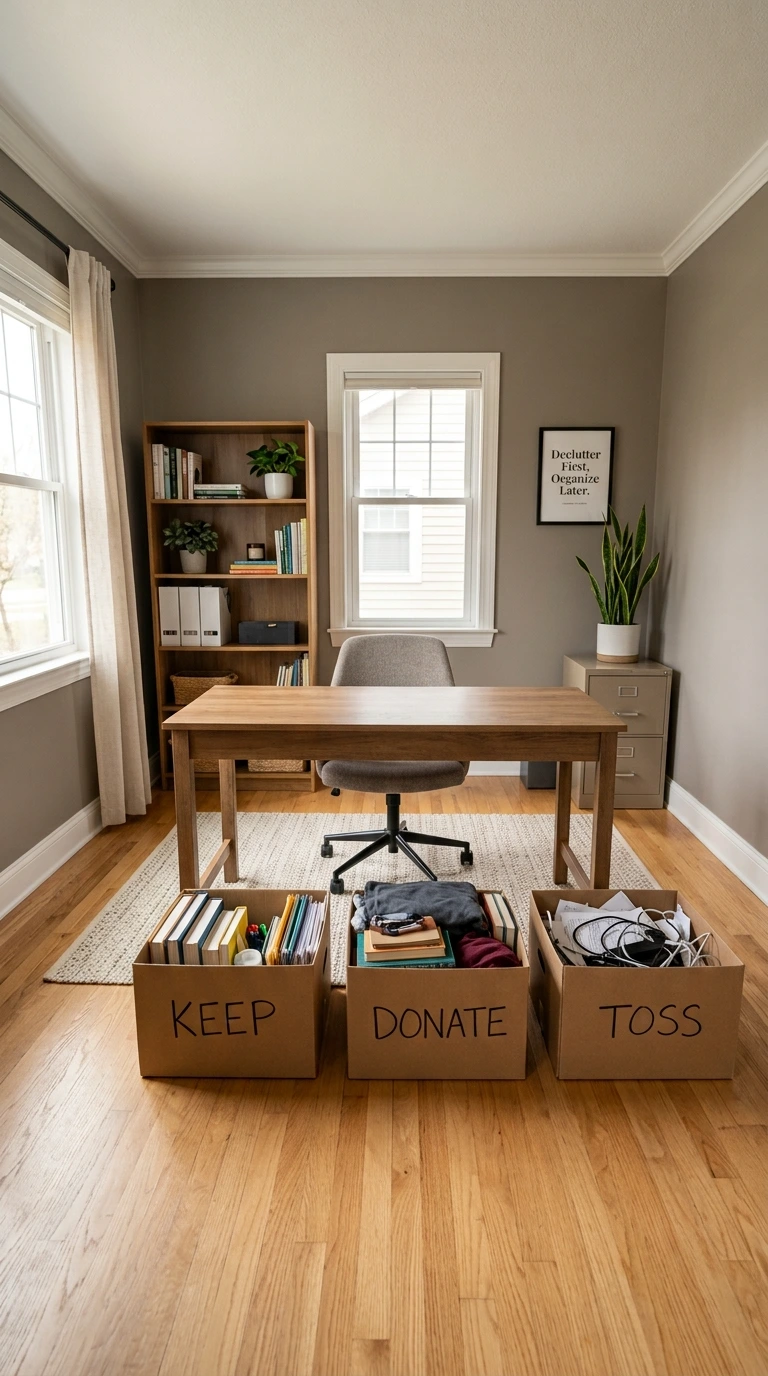
Before you buy a single bin or shelf, clear the whole space out first. Pull everything off the desk, out of the drawers, and off the floor, then sort it into keep, donate, and toss piles.
This step feels slow, but it saves you from organizing clutter you didn’t actually need in the first place. Once the space is empty, you’ll see exactly how much room you’re working with and what kind of storage will actually fit.
2. Create Zones For Different Tasks
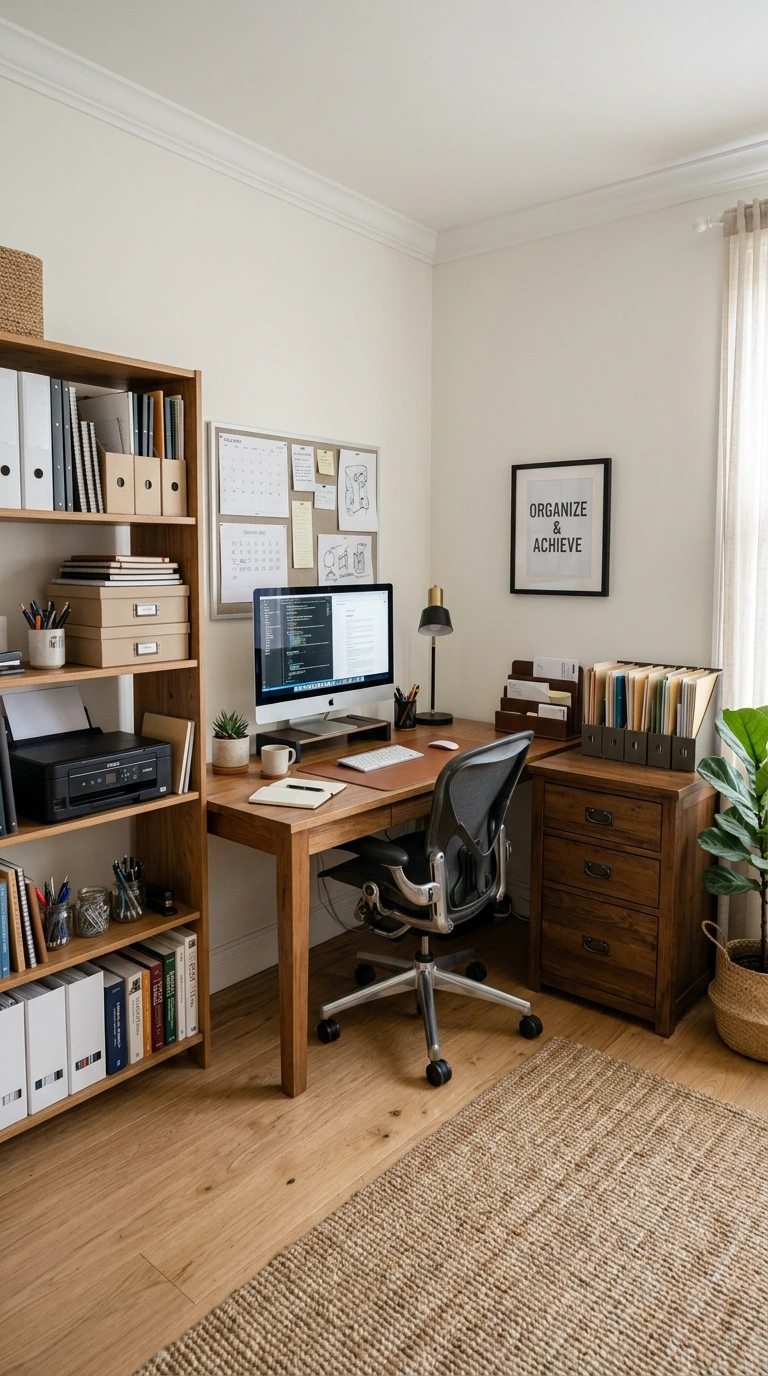
Rather than treating your office as one big blob of space, split it into zones based on what you actually do there. A desk zone for daily work, a filing zone for paperwork, and a supply zone for extras keeps everything predictable.
This structure also makes cleanup faster since every item has an obvious home to return to. If your office doubles as a hobby room or reading nook, give that its own corner too instead of letting it bleed into your work area.
- Desk zone: laptop, notepad, daily essentials
- Filing zone: cabinet, binders, folders
- Supply zone: extra paper, backup stock, mailing items
- Personal zone: reading nook, decor, plants
3. Use Vertical Wall Space With Shelves
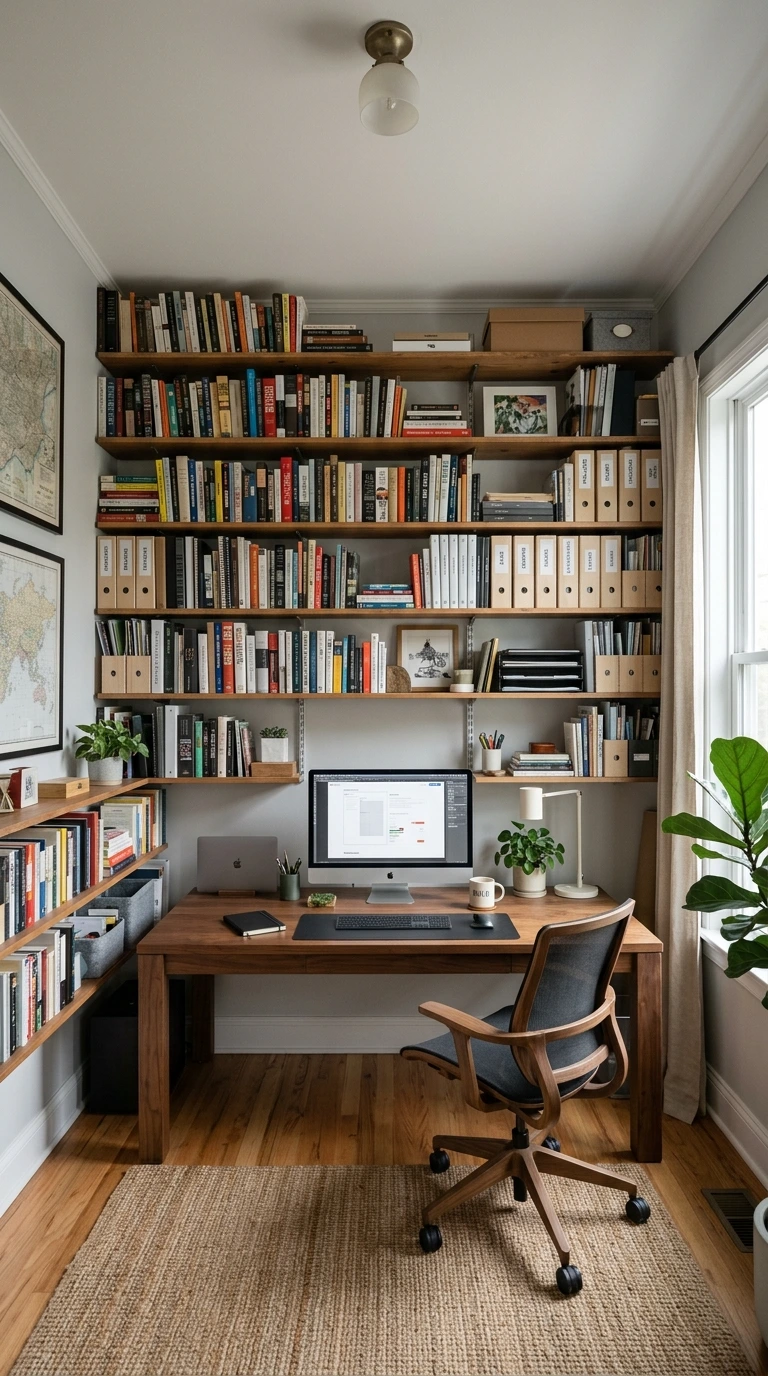
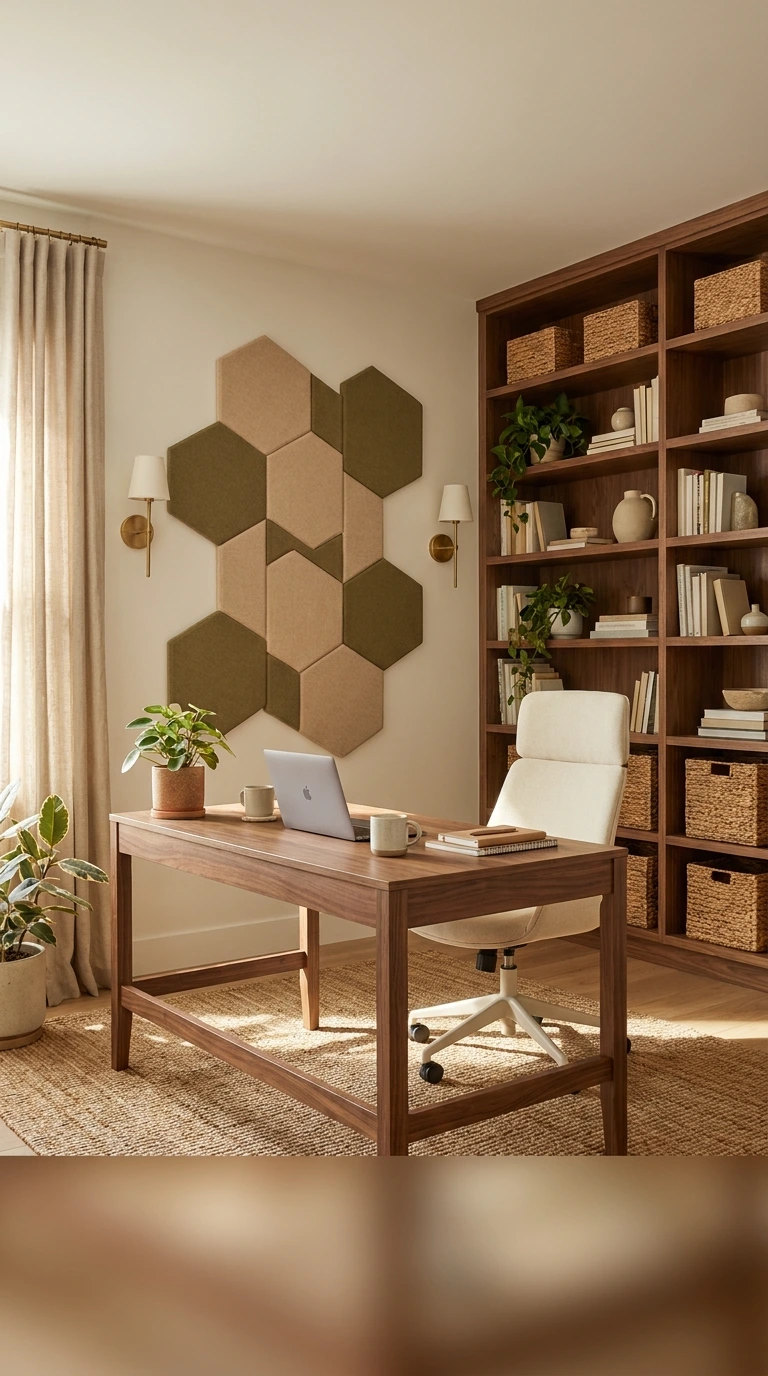
Floor space is limited, but most walls are wide open real estate. Adding shelving above or beside your desk gives you room for books, binders, and decor without eating into your workspace.
Mount shelves at different heights so lighter, frequently used items stay within easy reach while seasonal or rarely used pieces go higher up. This trick alone can free up an entire drawer’s worth of storage.
4. Install A Pegboard For Frequently Used Supplies
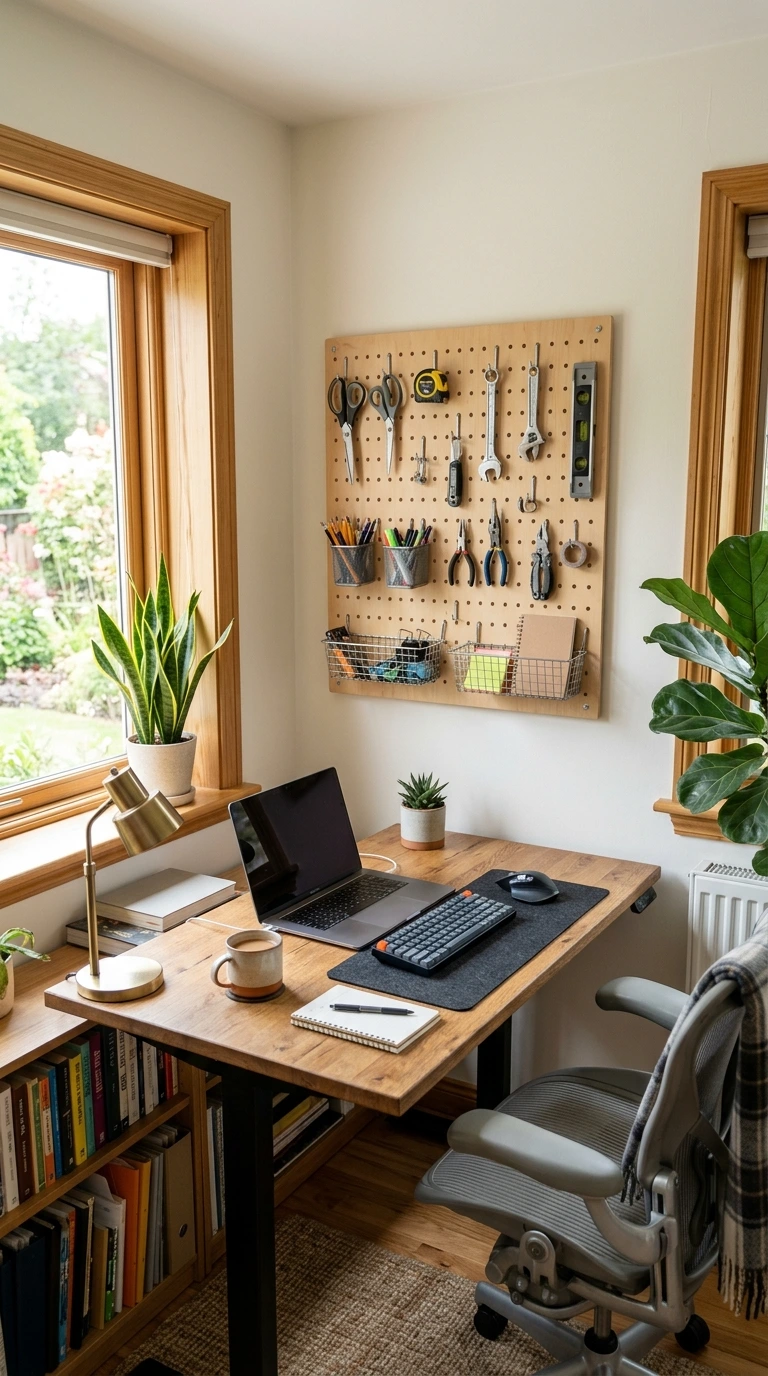
A pegboard mounted near your desk keeps small tools like scissors, headsets, chargers, and notepads visible and grabbable without digging through a drawer. You can rearrange the hooks and baskets anytime your needs shift.
This setup works especially well in small offices where every drawer counts. Plus, it adds a bit of personality to the wall instead of leaving it bare.
5. Add A Paper Tray For Incoming Documents
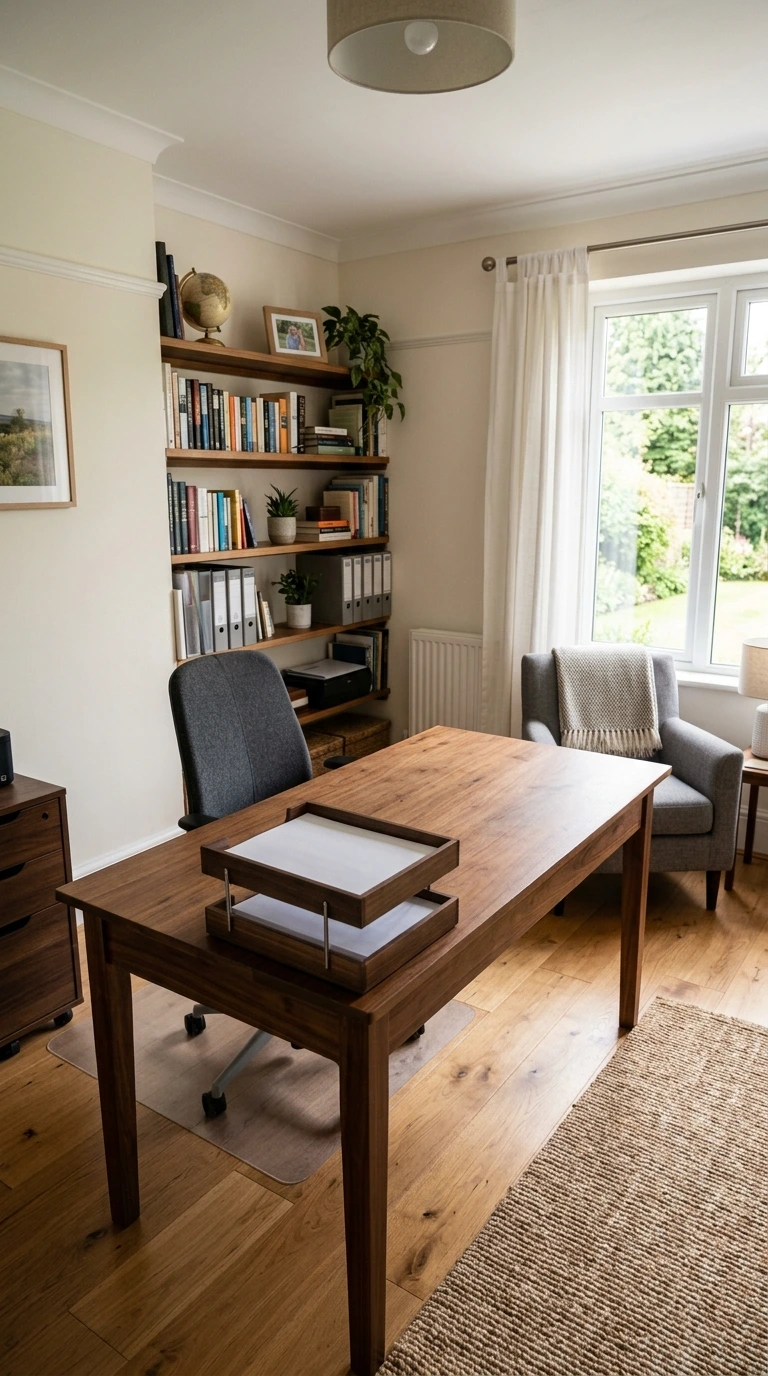
Loose papers are one of the biggest culprits behind desk clutter. A simple tray on your desk gives incoming mail, bills, and printed documents one designated landing spot instead of scattering across every surface.
Make it a habit to sort through the tray at the end of each week so it never turns into a permanent pile. If something’s been sitting there more than a few days, it’s time to file it or toss it.
6. Set Up A Dedicated Filing System
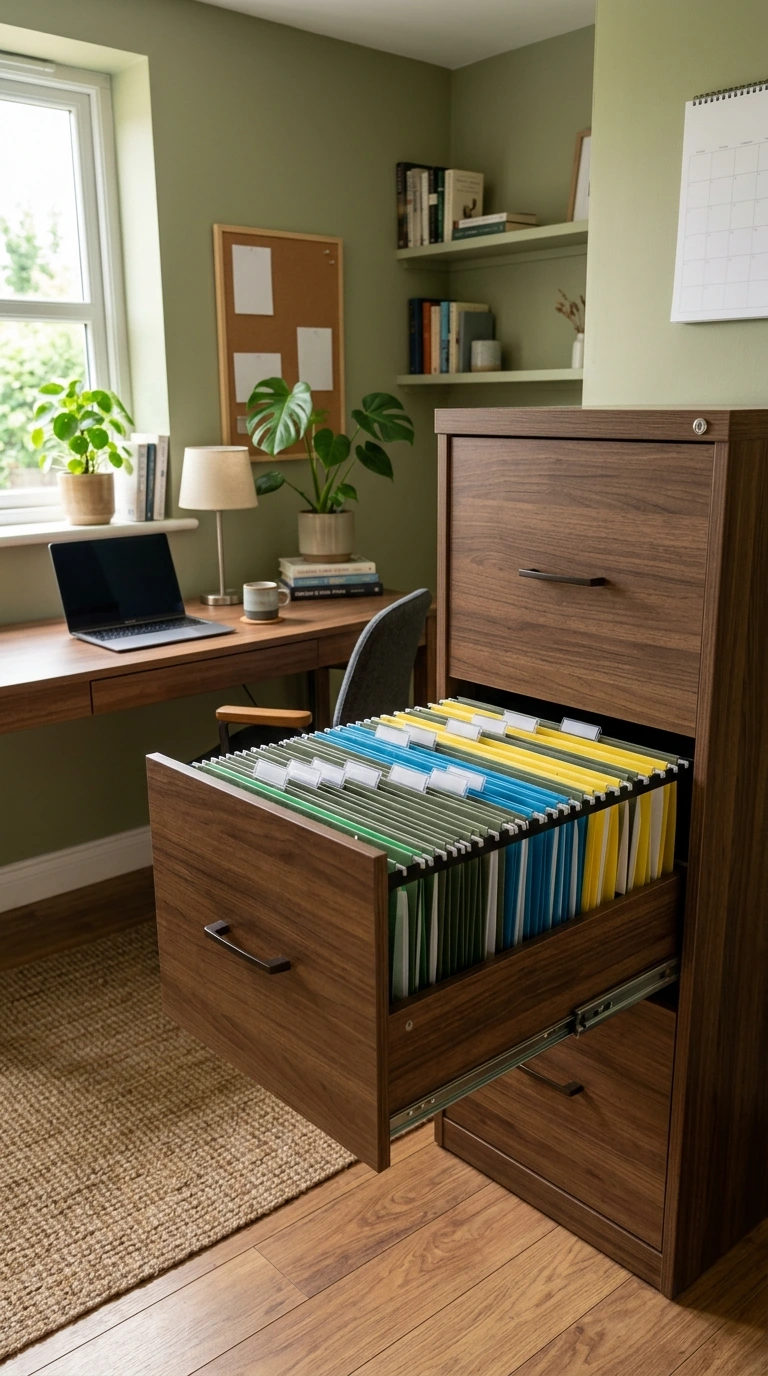
Whether it’s a filing cabinet or a set of labeled folders, a proper filing system keeps important documents like tax records and contracts easy to find. Group files by category first, then alphabetize within each group for extra speed.
Don’t overcomplicate it with too many subcategories, since an overly detailed system is harder to maintain long term. A handful of clear, broad categories will serve you better than twenty tiny ones.
7. Hide Cords With Cable Management
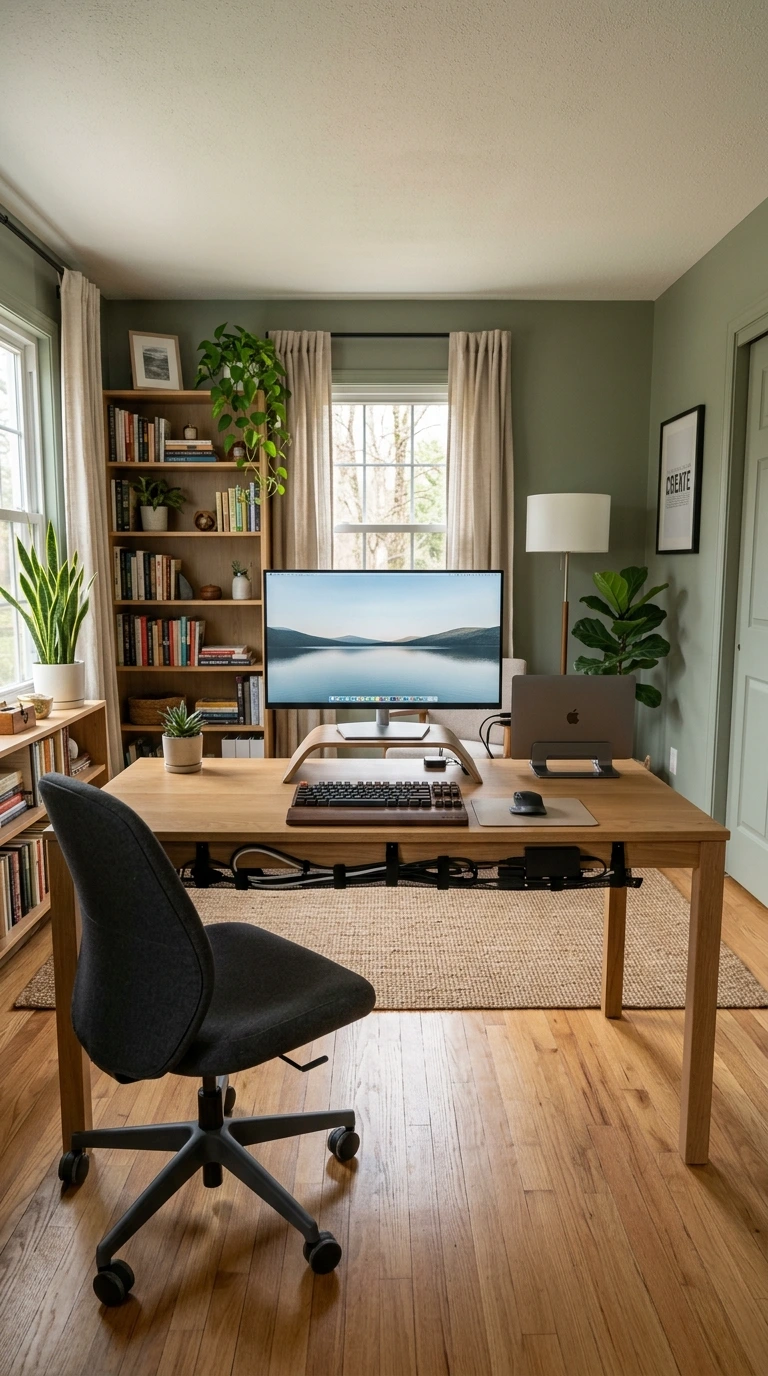
Tangled cords add visual clutter and make cleaning around your desk a hassle. Mount a surge-protector strip underneath the desktop to keep wires off the floor, and use cable clips or sleeves to bundle everything together.
Labeling each cord also saves you from the classic mystery-cable problem when you’re trying to unplug just one device. It’s a small step that makes the whole desk area look noticeably calmer.
8. Choose Multipurpose Furniture
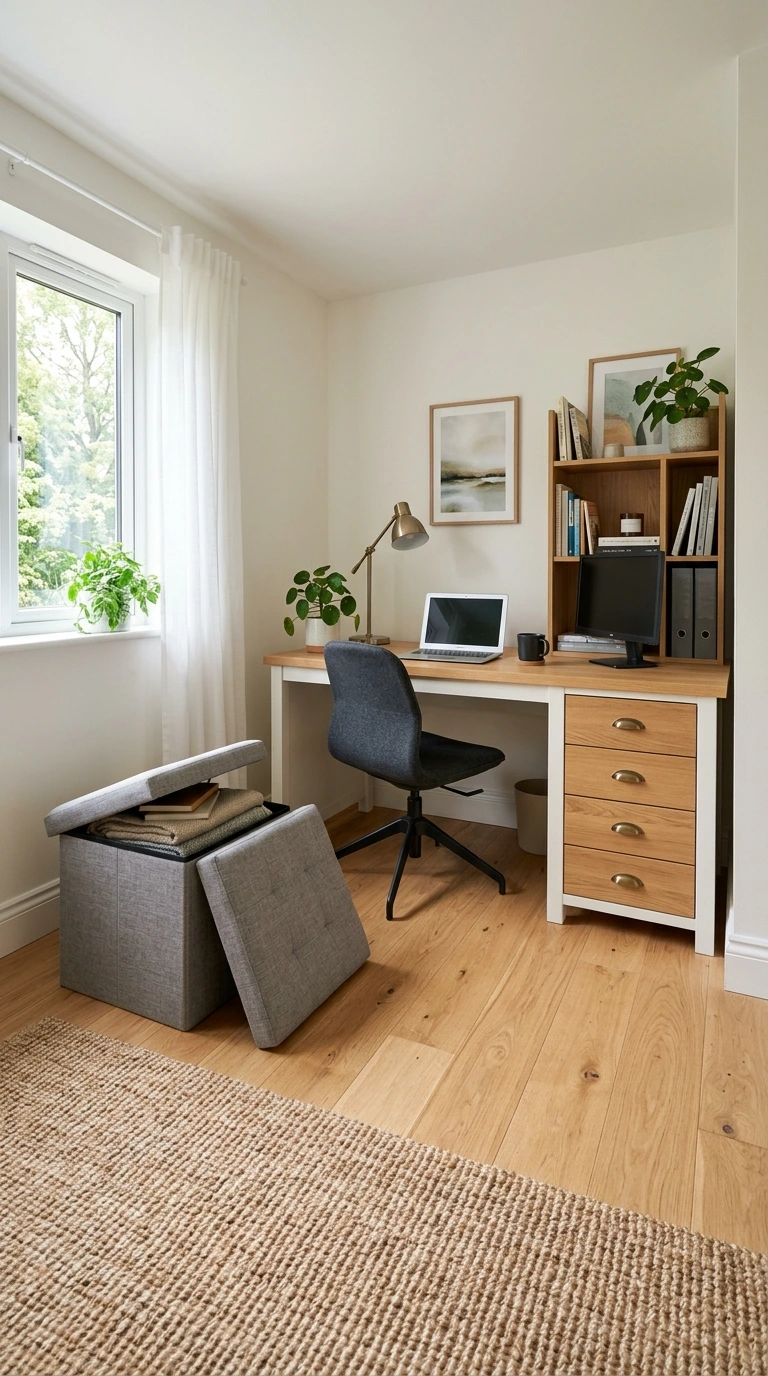
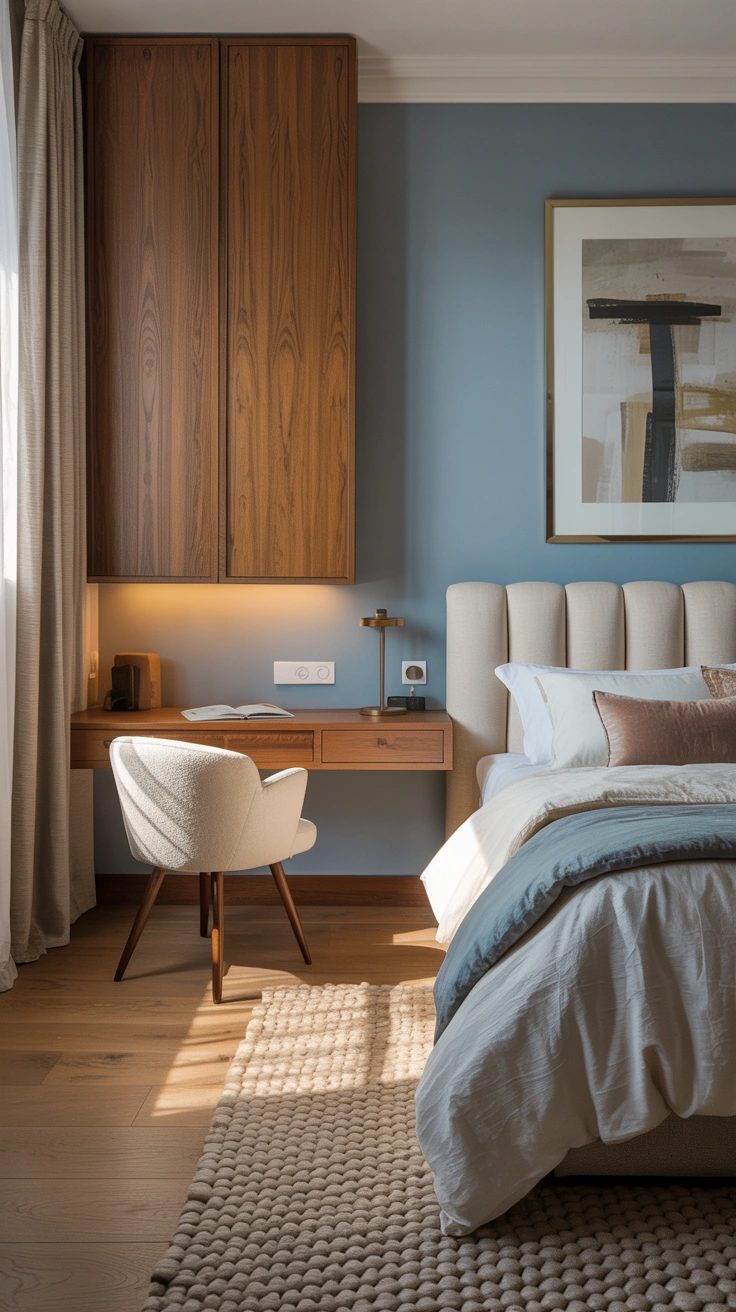
Furniture that pulls double duty helps a small office feel much bigger. A desk with built-in drawers, an ottoman with hidden storage, or a bookshelf that also divides the room all work harder than single-purpose pieces.
This is especially useful if your home office shares space with a guest room or playroom. Multipurpose pieces let the room shift function without looking cluttered or half-finished.
9. Use Drawer Dividers And Small Bins
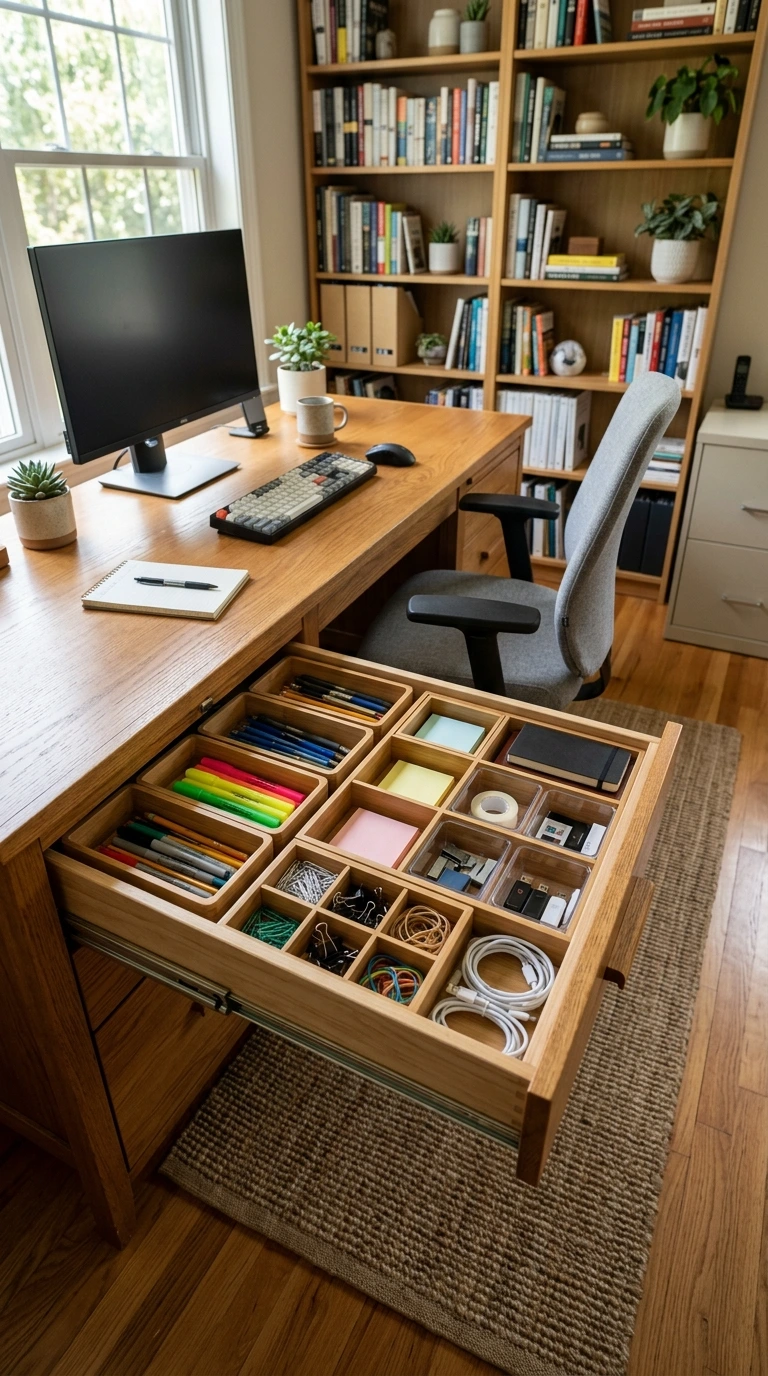
An open drawer full of loose pens, clips, and sticky notes turns into chaos fast. Adding small dividers or boxes inside each drawer keeps categories separated so you can find what you need without rummaging.
This works for dressers too if you’re repurposing one as office storage. A few dollar-store bins inside a drawer can completely change how usable that space feels.
10. Label Every Storage Container
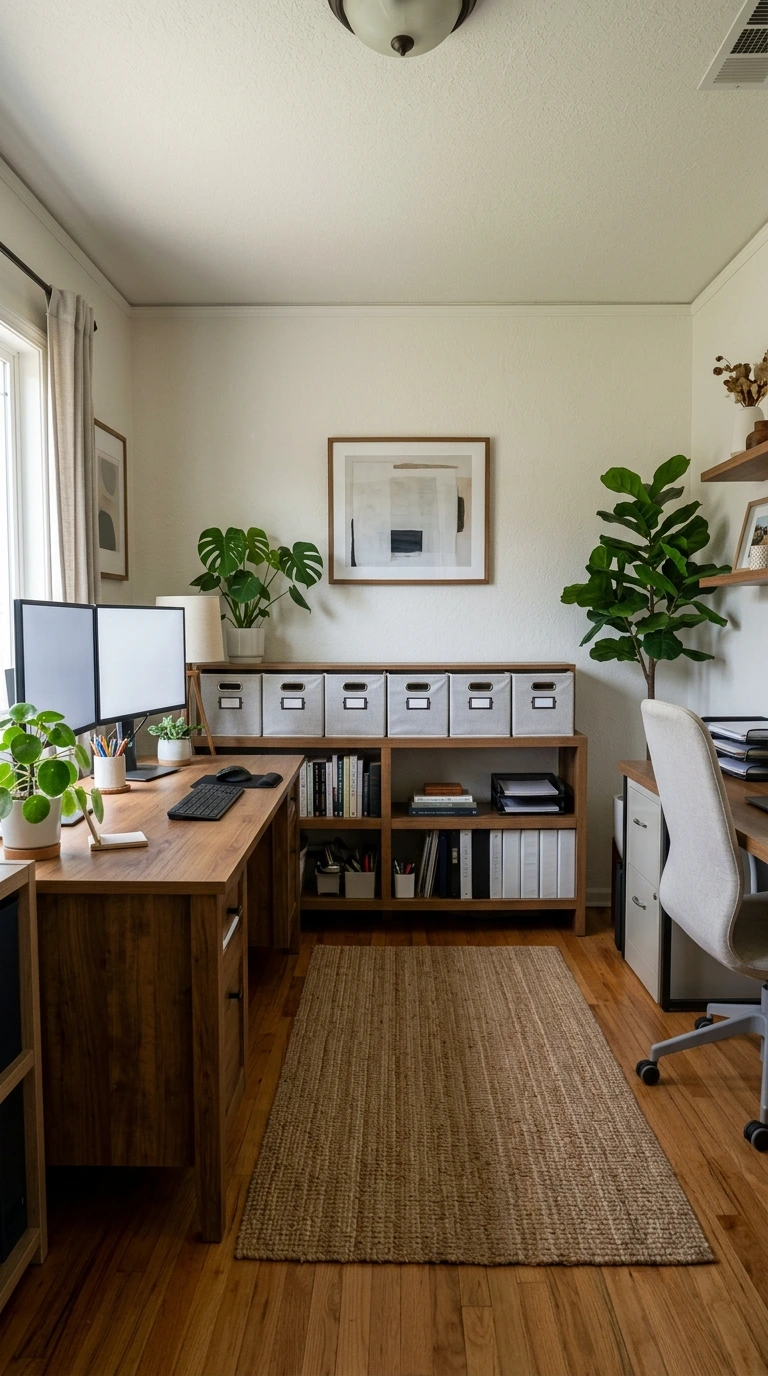
A bin without a label is just a mystery box waiting to become clutter again. Clear labels on bins, folders, and drawers make it obvious where everything belongs, which keeps the system easy to maintain over time.
Removable labels work well for bins that might get repurposed later, while printed labels give a cleaner, more polished look for permanent storage. Either way, labeling turns organizing from a one-time event into a lasting habit.
Storage Solution Comparison
11. Build A Mailing And Shipping Station
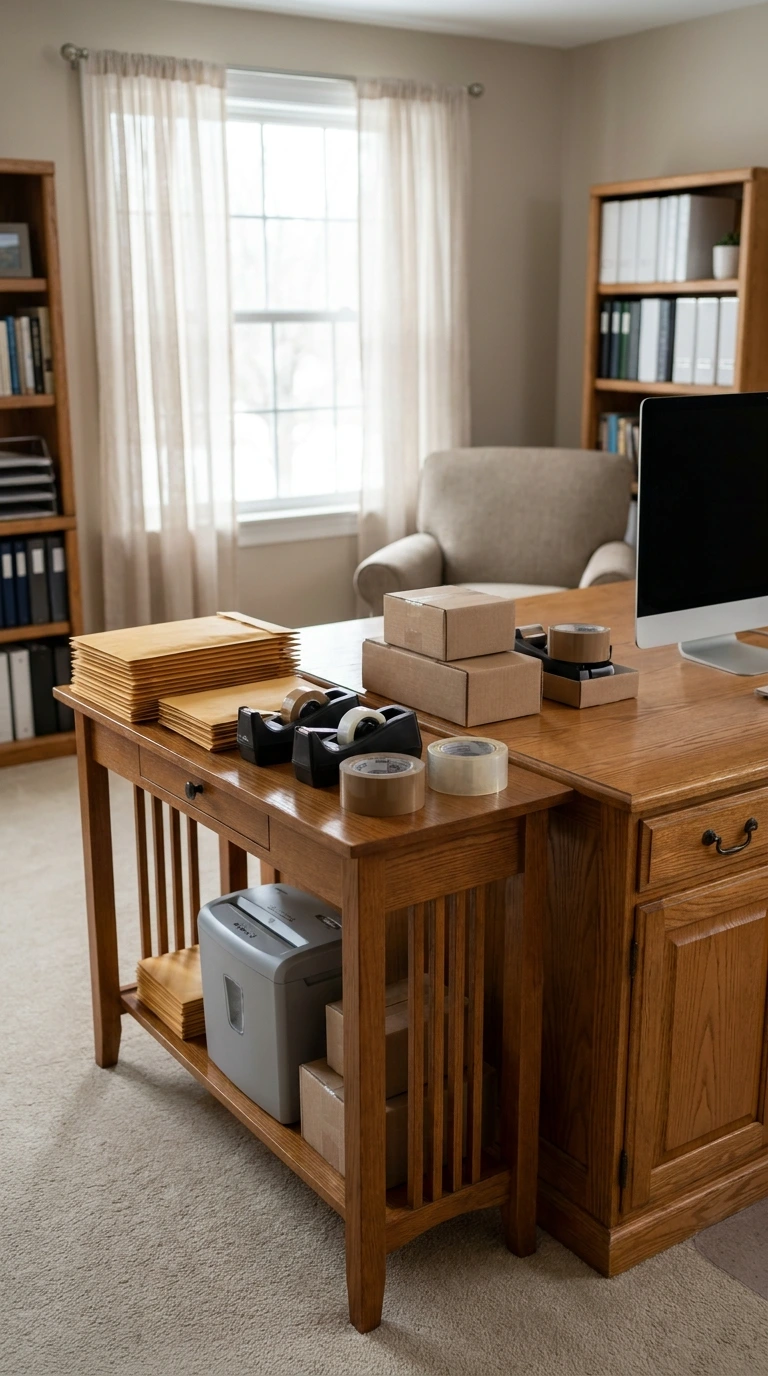
If you handle packages or mail regularly, gather envelopes, stamps, tape, and a shredder into one dedicated spot. This keeps mailing supplies from scattering across your desk drawers and other storage areas.
A small caddy or drawer near your printer works well for this. Having everything in one place means you’re not hunting for tape every time a package needs to go out.
12. Keep A Daily Five-Minute Tidy Routine
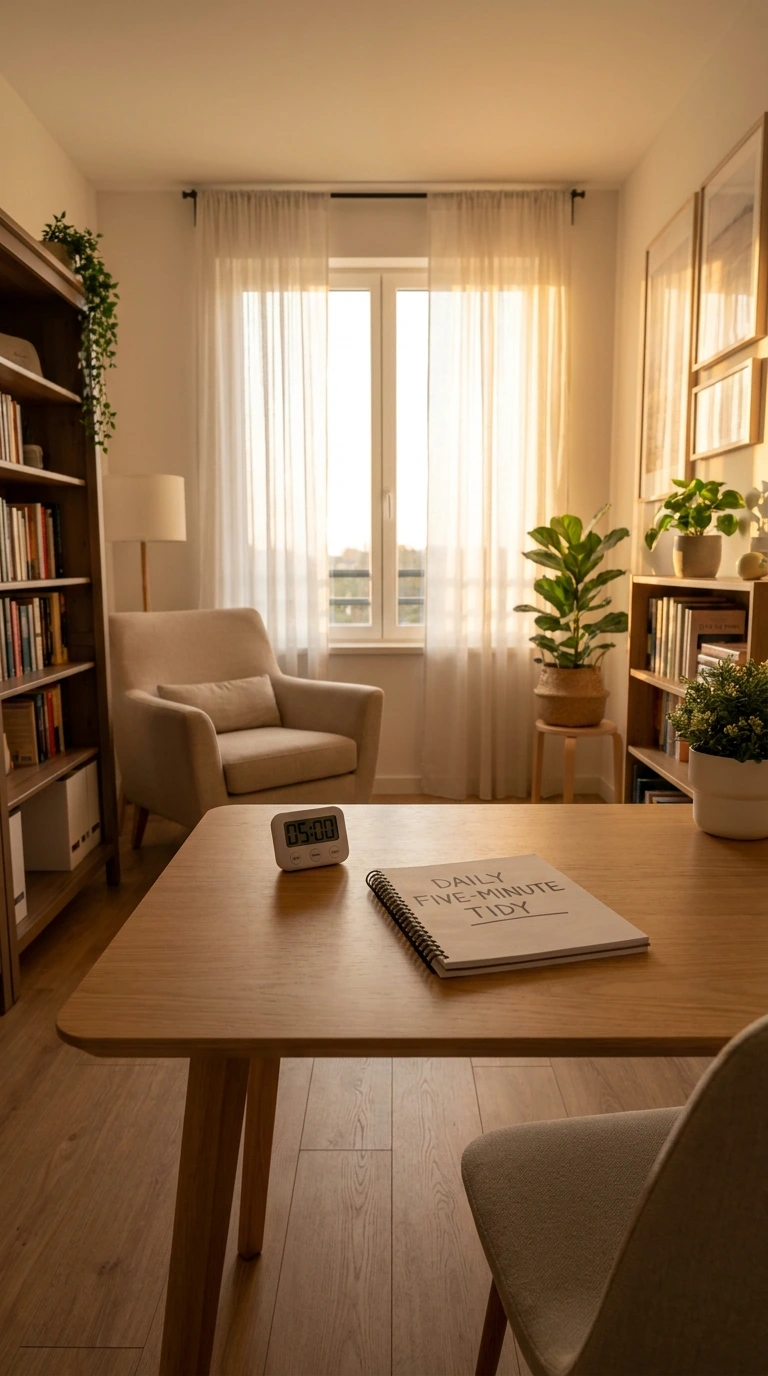
Big organizing projects are great, but daily maintenance is what actually keeps a space tidy. Set a timer for five or ten minutes at the end of each workday to clear stray papers, return items to their zones, and reset your desk.
This small habit prevents clutter from piling back up the way it did before you organized in the first place. IMO, this tiny daily reset matters more than any storage product you’ll buy.
13. Use A Rolling Cart For Flexible Storage
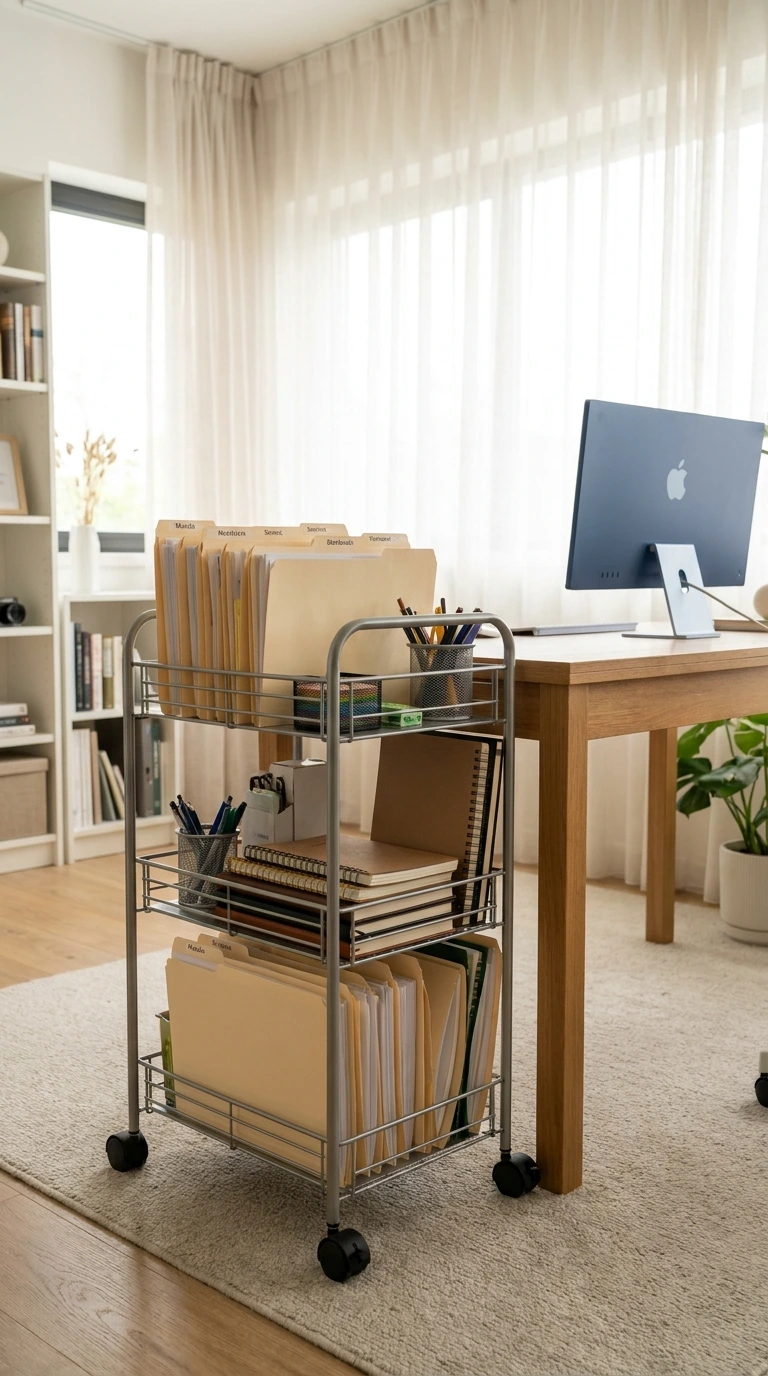
A rolling cart gives you extra storage that can move wherever you need it, whether that’s tucked beside your desk or wheeled out for a specific project. It’s especially handy in small offices where a fixed cabinet would eat up too much floor space.
Stack it with supplies, files, or even a printer to free up desktop space. Since it rolls, you can also tuck it out of the way entirely when it’s not in use.
14. Store Extra Supplies In A Closet Or Cabinet
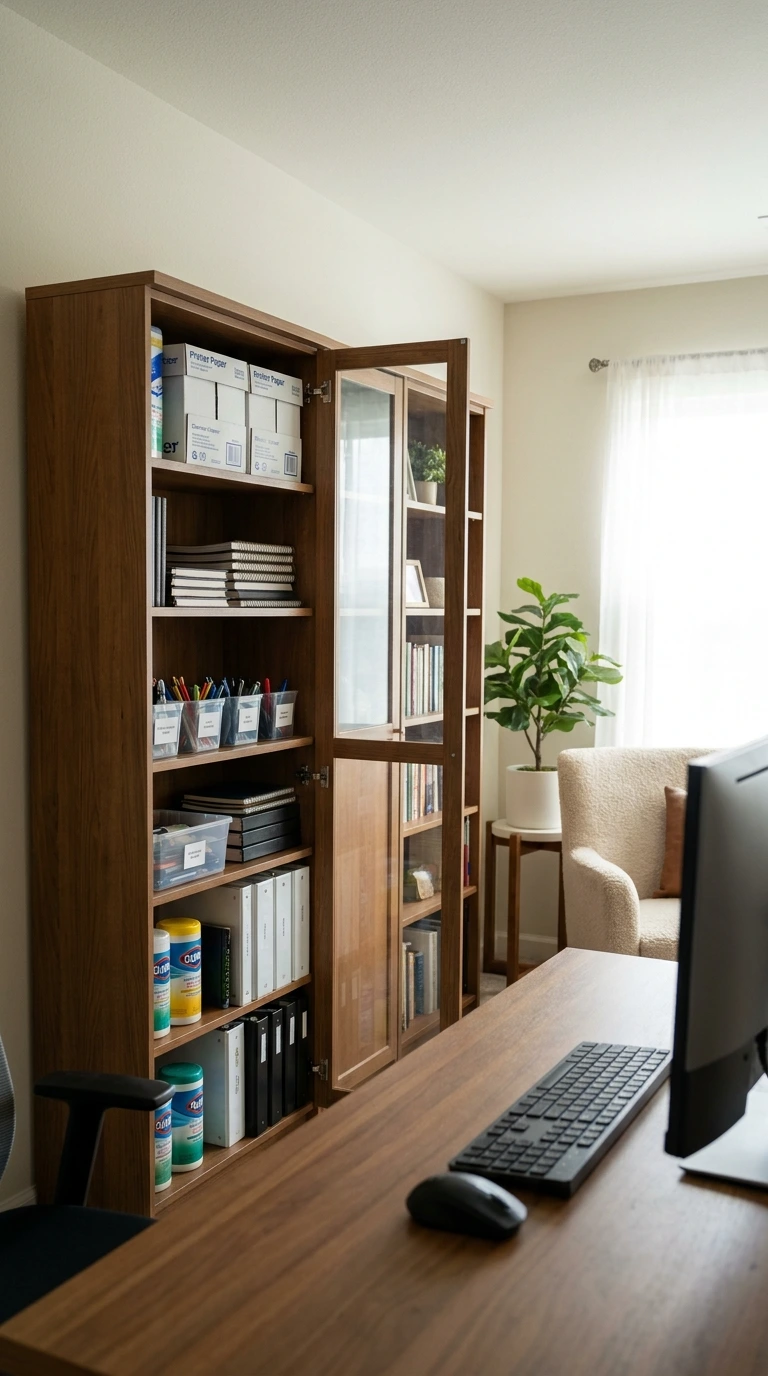
Not everything needs to live within arm’s reach. Extra paper, backup supplies, and seasonal items are better stored in a closet or cabinet a few steps away from your desk, keeping the main workspace lighter.
This also makes restocking easier since your backup supplies are already grouped together in one spot. Check that closet every few months to make sure it hasn’t quietly become a dumping ground again.
15. Add Floating Shelves Above The Desk
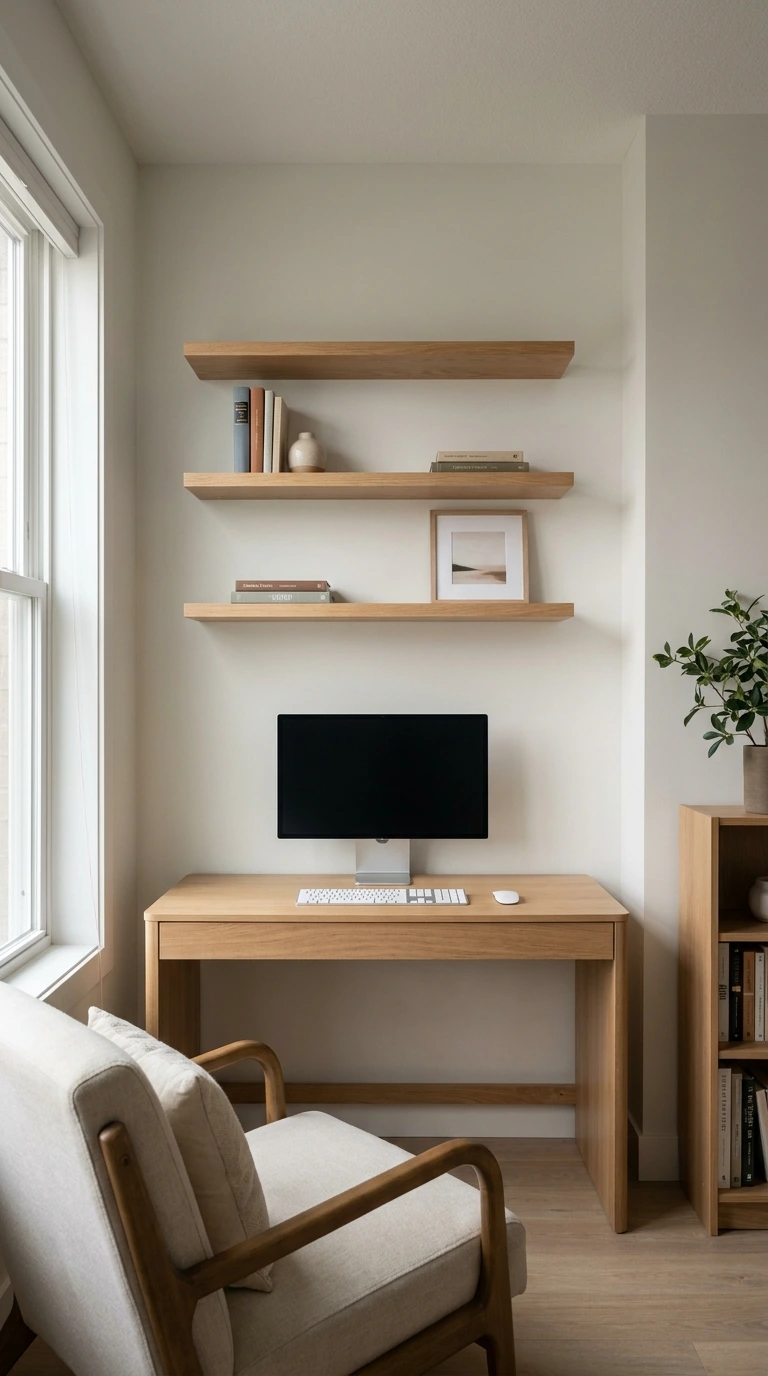
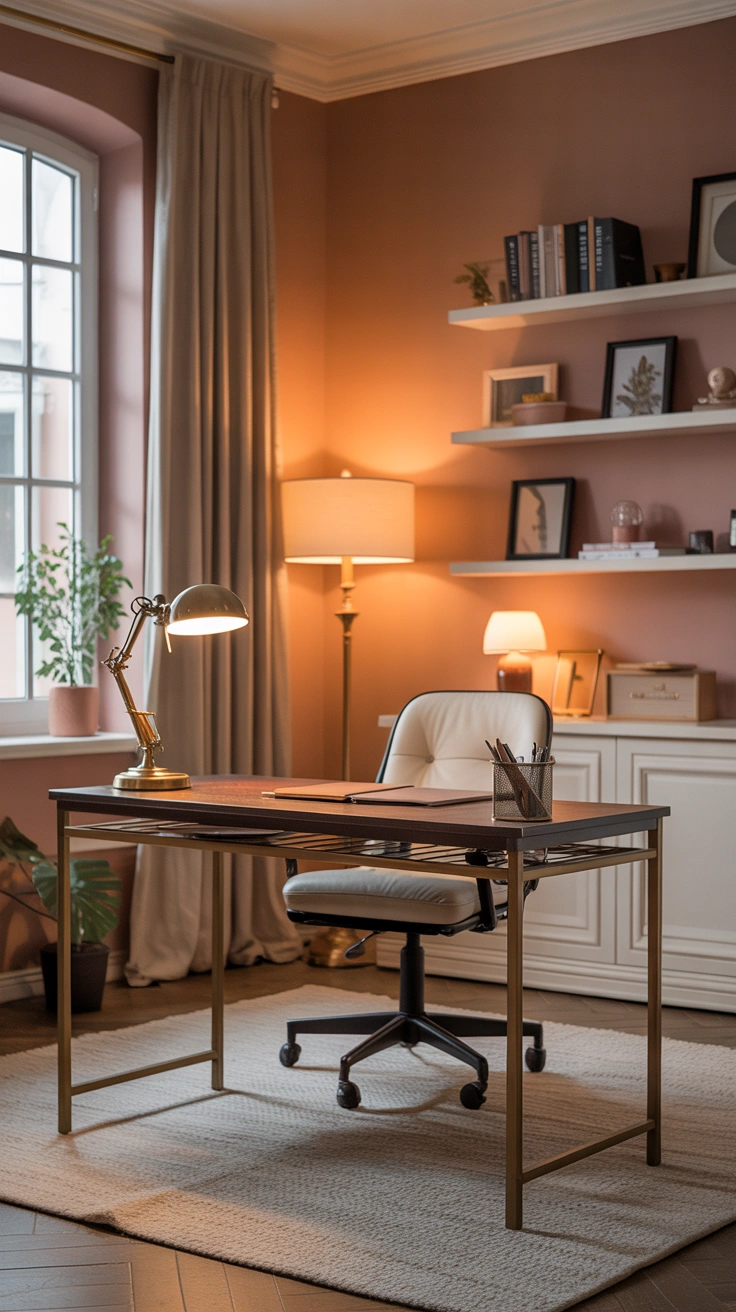
Floating shelves mounted directly above your desk put frequently used books, binders, or decor within easy reach without taking up any desk surface. They also draw the eye upward, which makes a small office feel more open.
Keep the shelf styling simple so it doesn’t compete visually with your work area. A few well-chosen items look far more organized than a shelf crammed with everything you own.
16. Create A Reading Or Reference Nook
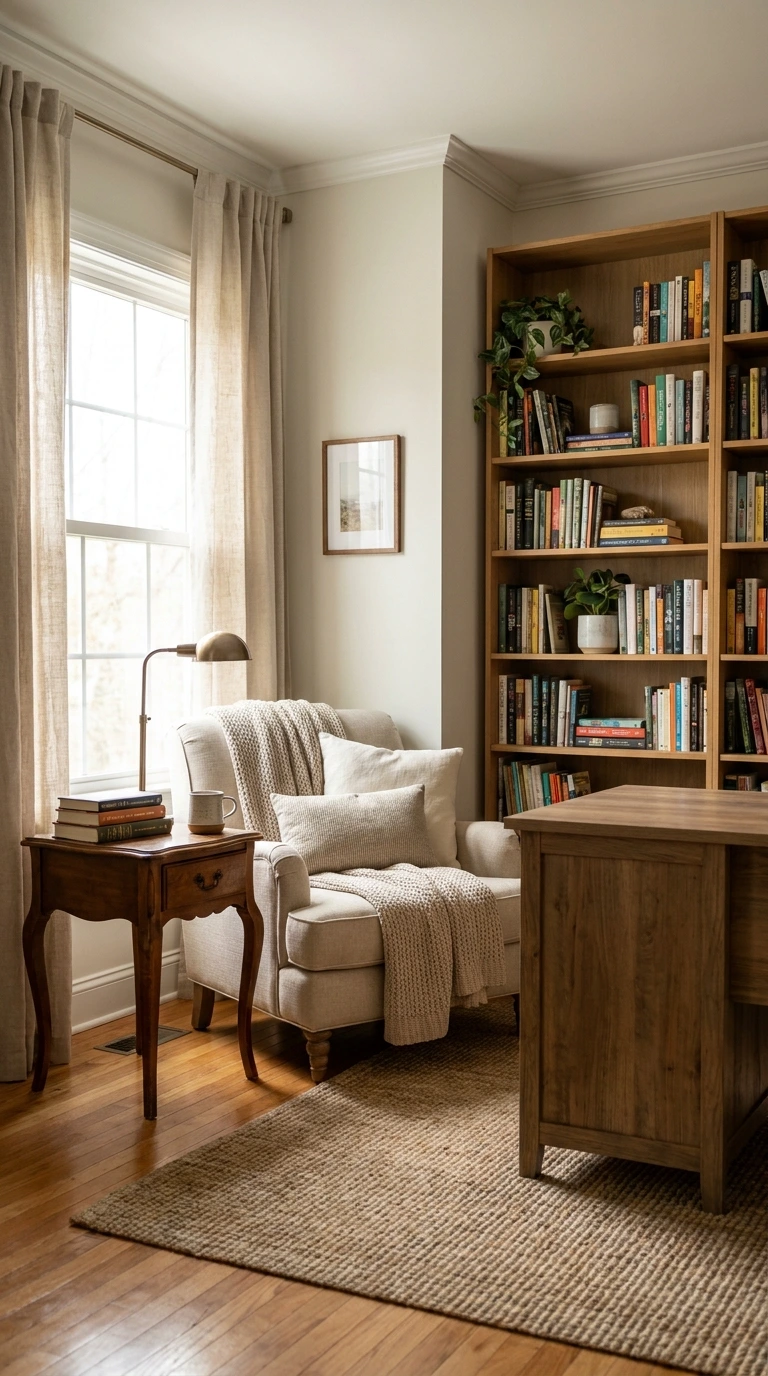
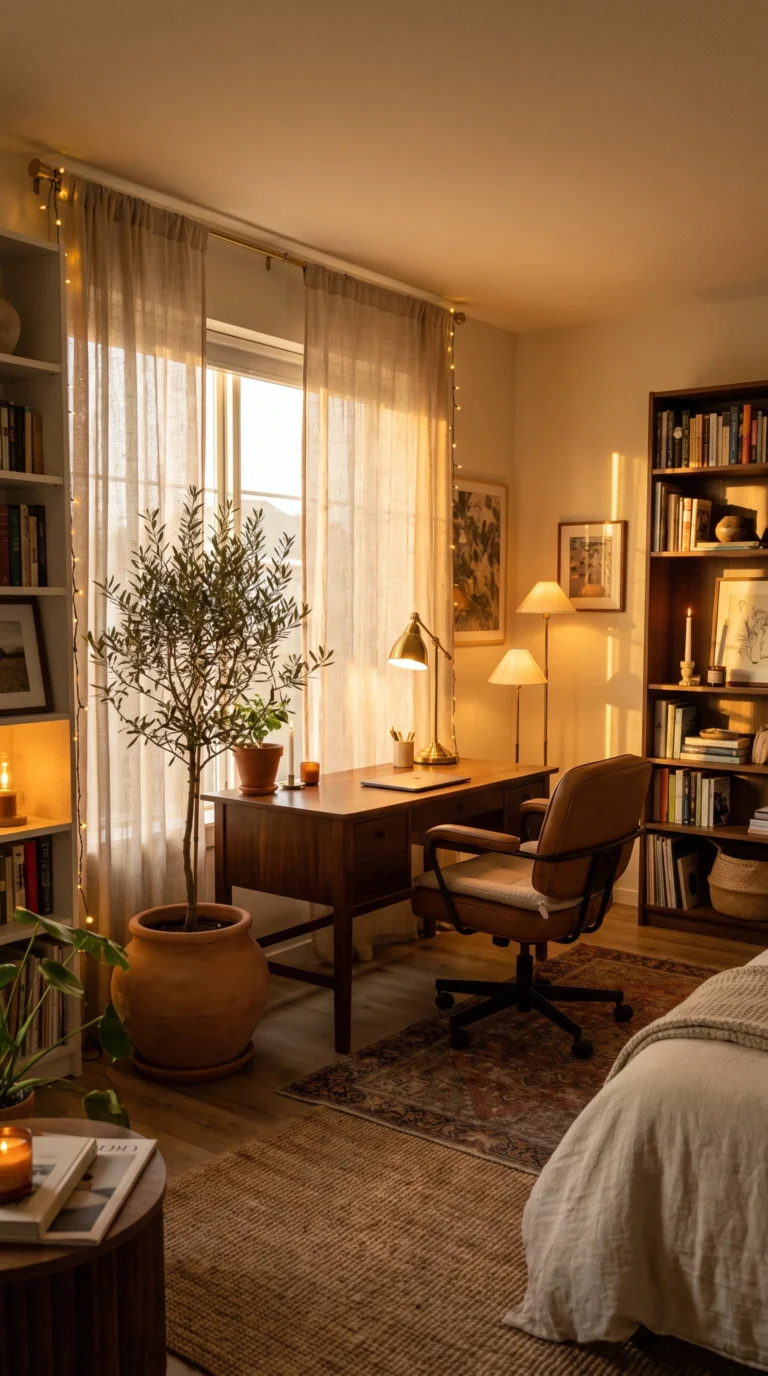
If your work involves research, reports, or reference materials, a small nook with a comfortable chair and nearby shelving keeps that material separate from your active desk clutter. This also gives you a spot to step away from the screen for focused reading.
Even a single armchair tucked in a corner with a side table can serve this purpose. It’s a simple way to add a second function to the room without sacrificing organization.
17. Use Baskets For Soft Storage
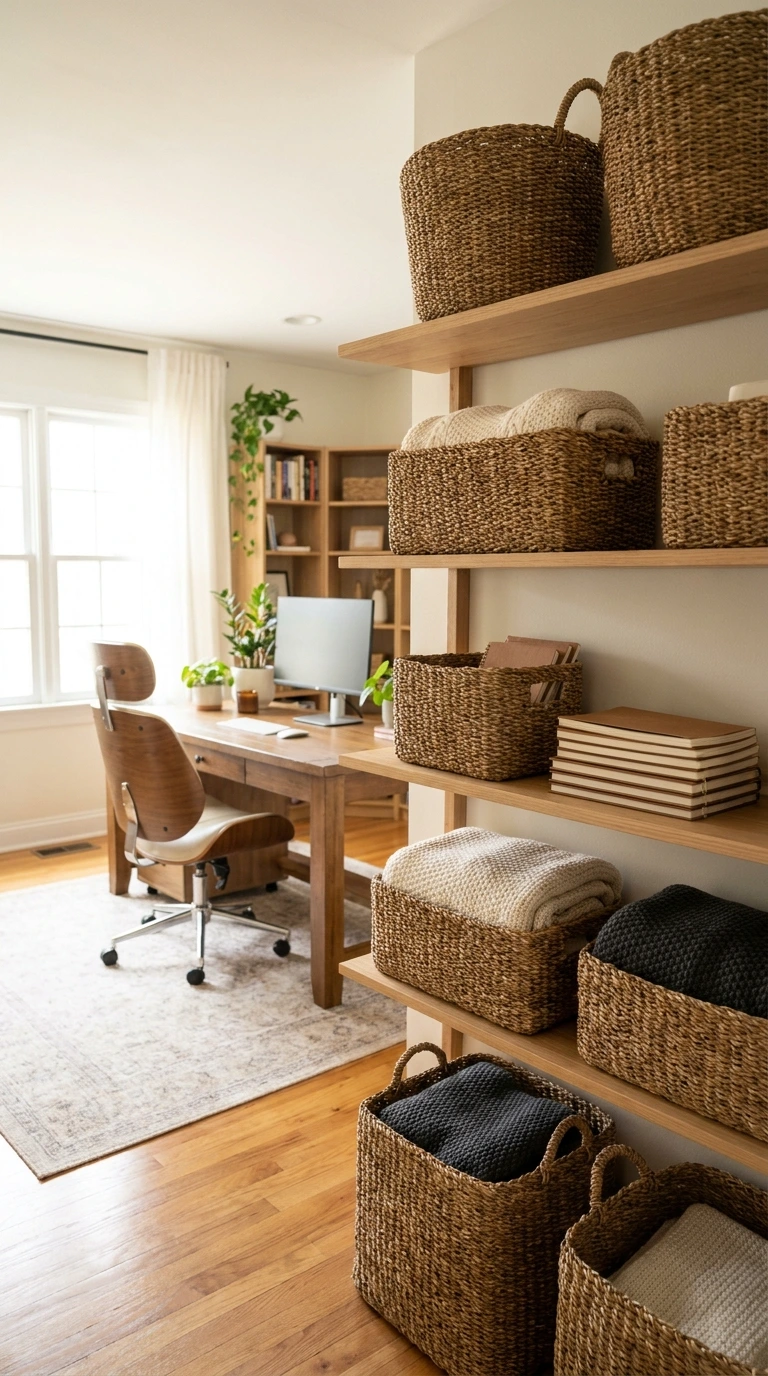
Baskets are perfect for items that don’t need rigid structure, like extra notebooks, throw blankets for chilly work sessions, or loose cables you’re not ready to sort yet. They add texture to the room while keeping loose items contained.
Choose a basket size that matches the shelf or floor spot it’s meant for so it doesn’t look like an afterthought. Woven baskets also blend well into almost any home office style, from modern to farmhouse.
18. Keep Only Weekly-Use Items On The Desk
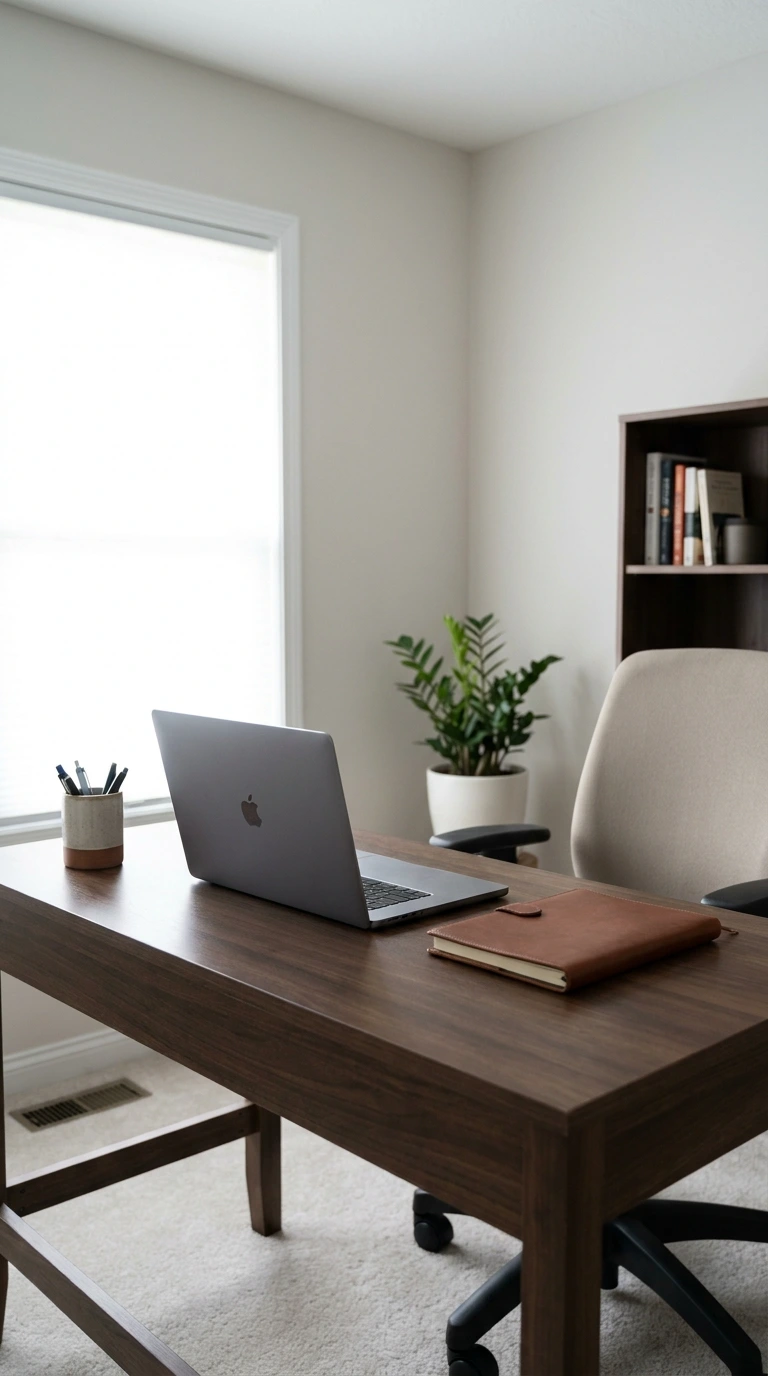
If you don’t use it at least once a week, it probably doesn’t belong on your desk. Relocate rarely used items to drawers, shelves, or closets, leaving only your computer, a notepad, and a few daily essentials within reach.
This keeps your primary work surface feeling spacious rather than crowded. Revisit this list every couple of months since your daily essentials can shift as your work does.
19. Add A Bulletin Or Vision Board
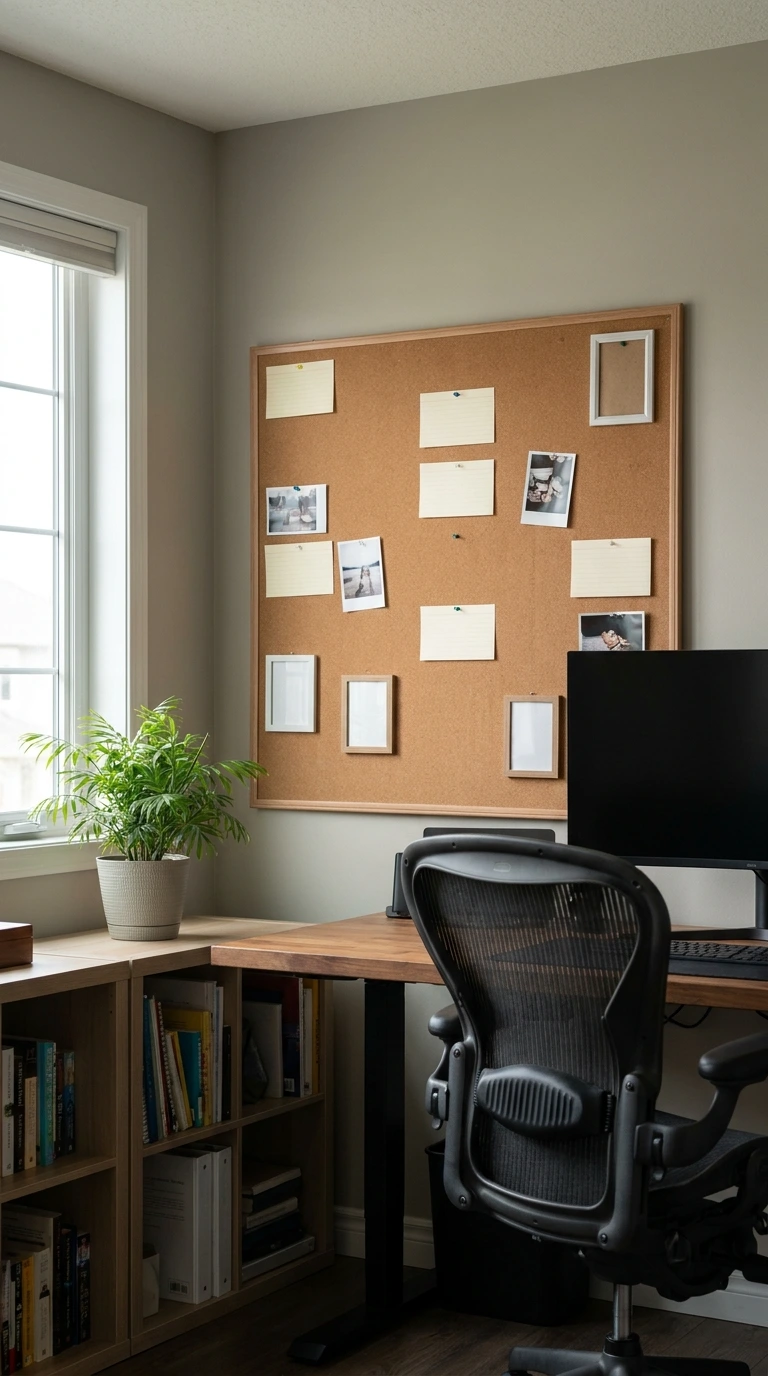
A bulletin board gives loose papers, reminders, and mementos a home off your desk entirely. It’s a low-effort way to declutter surfaces while keeping important notes visible and easy to reference.
Pin only what’s currently relevant and clear out old notes regularly so the board doesn’t turn into its own form of clutter. This spot can also double as a bit of personality and inspiration for the room.
20. Use A Closet As A Hidden Office
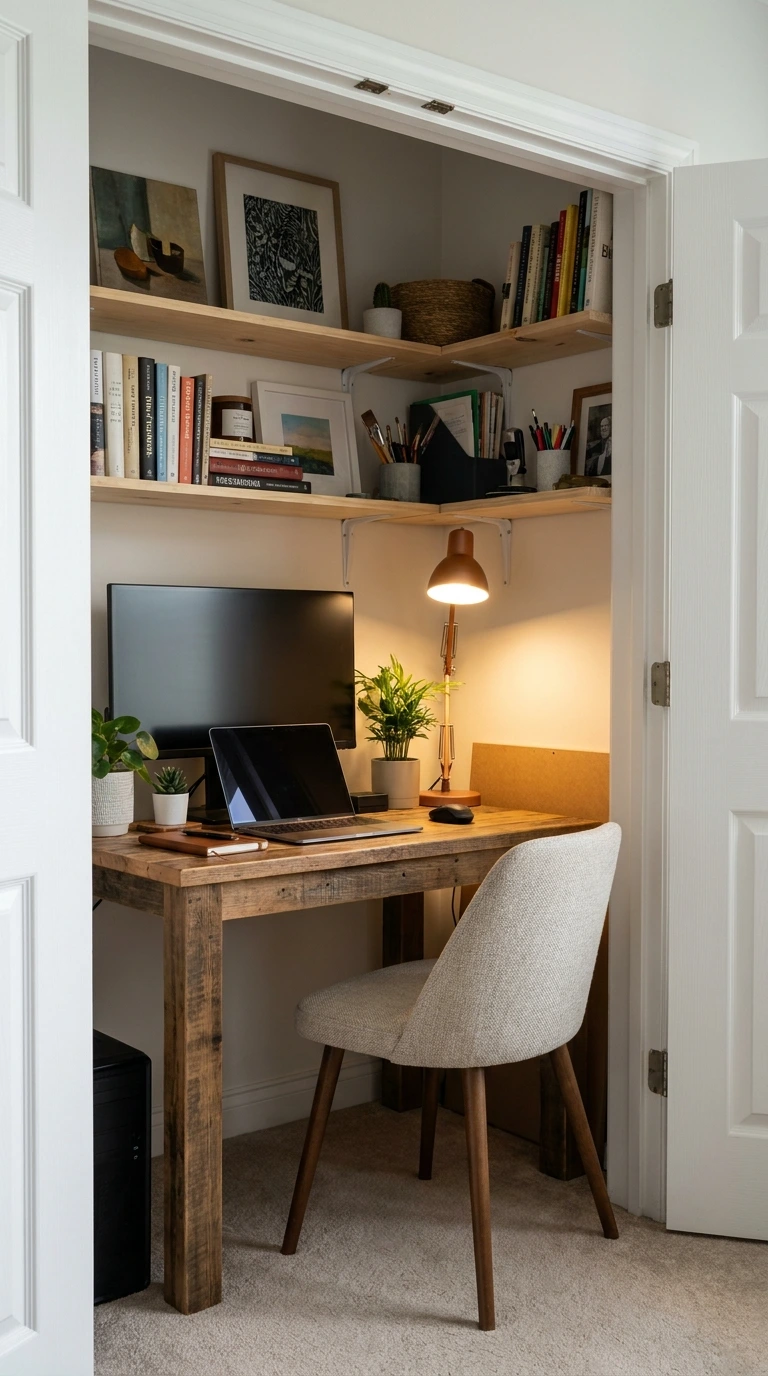
If you don’t have a spare room, a closet can become a compact, fully functional office. Install shelving, a small desk surface, and an outlet, then close the doors when you’re done for the day.
This setup works especially well for households that need the office to disappear during off-hours. It keeps work-related clutter contained to one closet instead of spreading across a shared living space.
21. Prioritize Ergonomics While You Organize
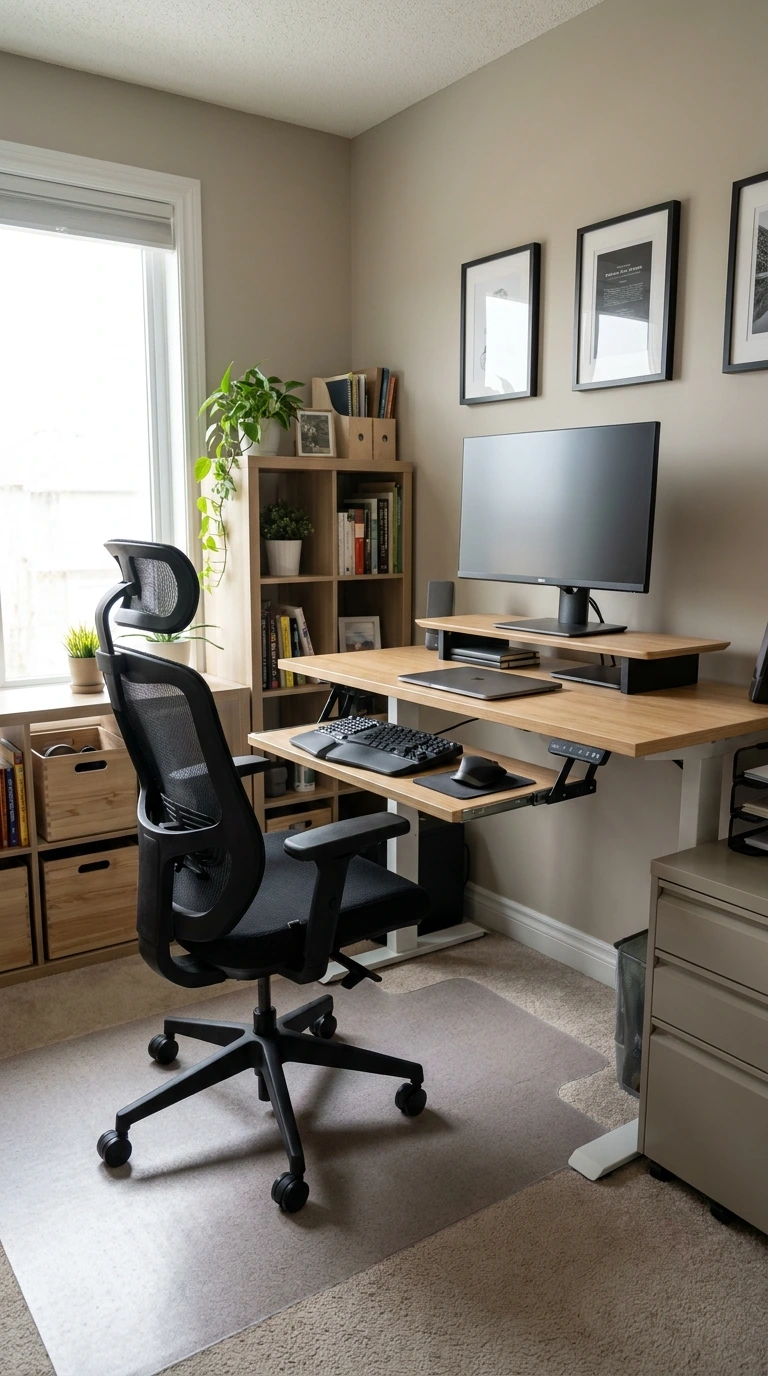
Organization isn’t just about looks, it’s also about how comfortable the space is to actually work in. Choose a chair with proper back support, position your screen at eye level, and add a keyboard tray if it helps your posture.
A well-organized office that hurts your back after two hours isn’t really working for you. Build comfort into the plan from the start rather than treating it as an afterthought once everything looks tidy.
Frequently Asked Questions
1. Where do I start when organizing a cluttered home office?
Start by clearing the entire space out and sorting everything into keep, donate, and toss piles. This gives you an accurate picture of what storage you actually need before buying anything new.
2. What’s the best way to organize a small home office?
Focus on vertical storage like wall shelves and pegboards, plus multipurpose furniture that pulls double duty. Keeping only weekly-use items on the desk also makes a small space feel much bigger.
3. How do I stop paper clutter from piling up again?
Use a paper tray for all incoming documents and set a weekly time to sort through it. Anything sitting there more than a few days should be filed or tossed right away.
4. How often should I maintain my home office organization?
A five to ten minute daily tidy routine at the end of each workday keeps clutter from building back up. Plan a deeper reset every few months to check closets and storage areas too.
5. Do I need expensive furniture to organize a home office?
No, simple tools like labeled bins, drawer dividers, and a rolling cart can go a long way without a big budget. Function matters more than price when it comes to lasting organization.
6. Can a closet work as a home office?
Yes, a closet with shelving, a small desk surface, and an outlet can become a fully functional hidden office. It’s a great option when you don’t have a spare room to dedicate.
Conclusion
An organized home office really comes down to giving every item a clear home, building zones around how you actually work, and maintaining the system with small daily habits. Skip the guesswork, declutter first, and let vertical storage do the heavy lifting.
A tidy desk means a clearer head, and honestly, that’s worth more than any fancy organizer could ever be. Go clear off that desk — your future self, mid-deadline, will thank you.