12 Reading Nook Ideas So Good You’ll Forget Every Book You Own Is Unread
Every person who loves books has the same secret fantasy: a dedicated space that exists purely for reading. Not the sofa where three other people also watch television. Not the bed where you always fall asleep by page twelve. A proper reading nook — a corner of the world that belongs entirely to you, a book, and a cup of something warm. The cozy reading nook is one of interior design’s most satisfying projects because its purpose is so singular and its requirements so human. You need good light, comfortable seating, your books within reach, warmth underfoot, and the feeling that the rest of the world has briefly agreed to leave you alone.
I built my first proper cozy reading corner three years ago — a window alcove with a built-in seat, a floor lamp, and a shelf of books I actually read — and it immediately became the most used and most loved spot in the entire house. If you’ve been putting this project off, these 12 ideas will get you moving.
1. Find Your Space First
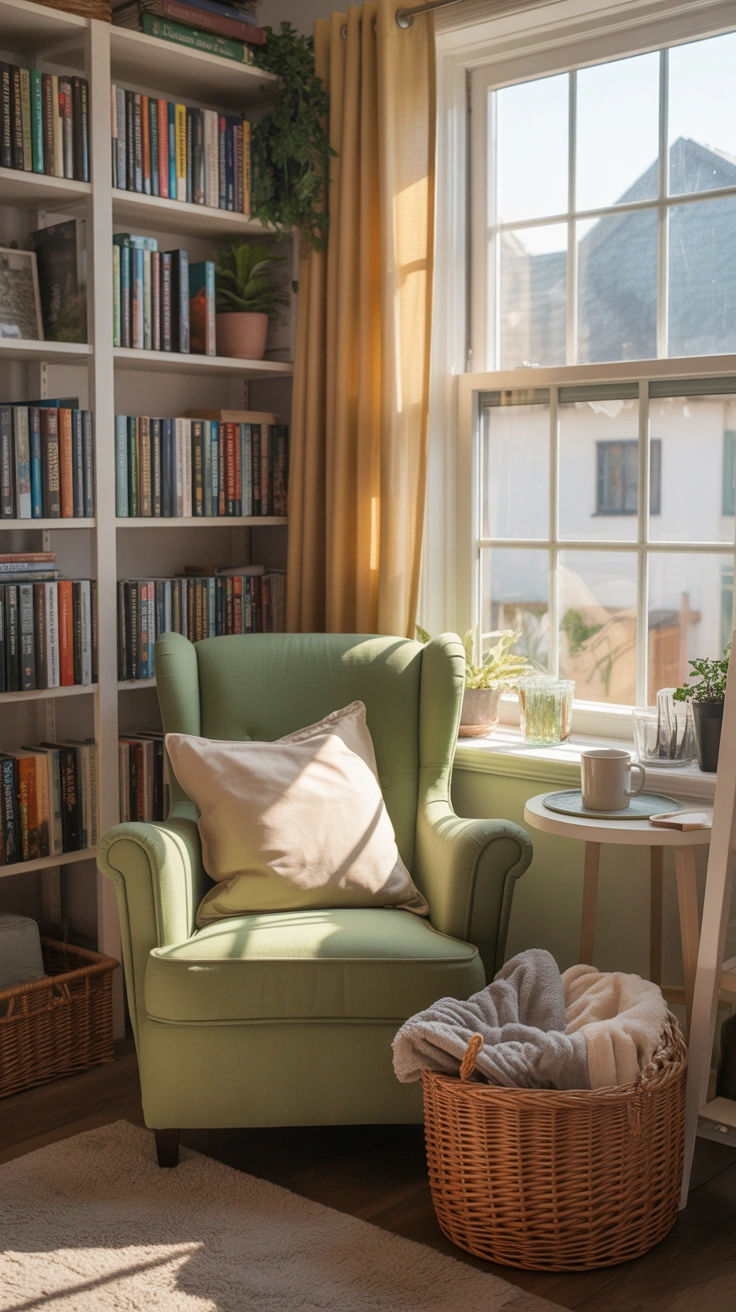
The most important step in any reading nook project is identifying the right spot — and the good news is that genuinely great cozy reading nook ideas exist for every floor plan, every room size, and every budget. You don’t need a dedicated room or a specific architectural feature. You need a corner, a window, an alcove, or even just a well-positioned chair with the right light.
Reading Nook Spaces Worth Considering:
- A bay window alcove with a built-in bench seat and cushion
- A bedroom corner with a single armchair, floor lamp, and small shelf
- An understairs alcove transformed with a fitted bench and floating shelves
- A spare bedroom dedicated fully to a cozy reading room aesthetic
- A living room corner defined by a bookshelf used as a partial room divider
- A landing or hallway wide enough for a narrow chair and a wall-mounted lamp
The space shapes the reading nook design — and working with the specific constraints of your space rather than against them always produces more interesting and more personal results.
2. Invest in a Chair Worth Sitting In
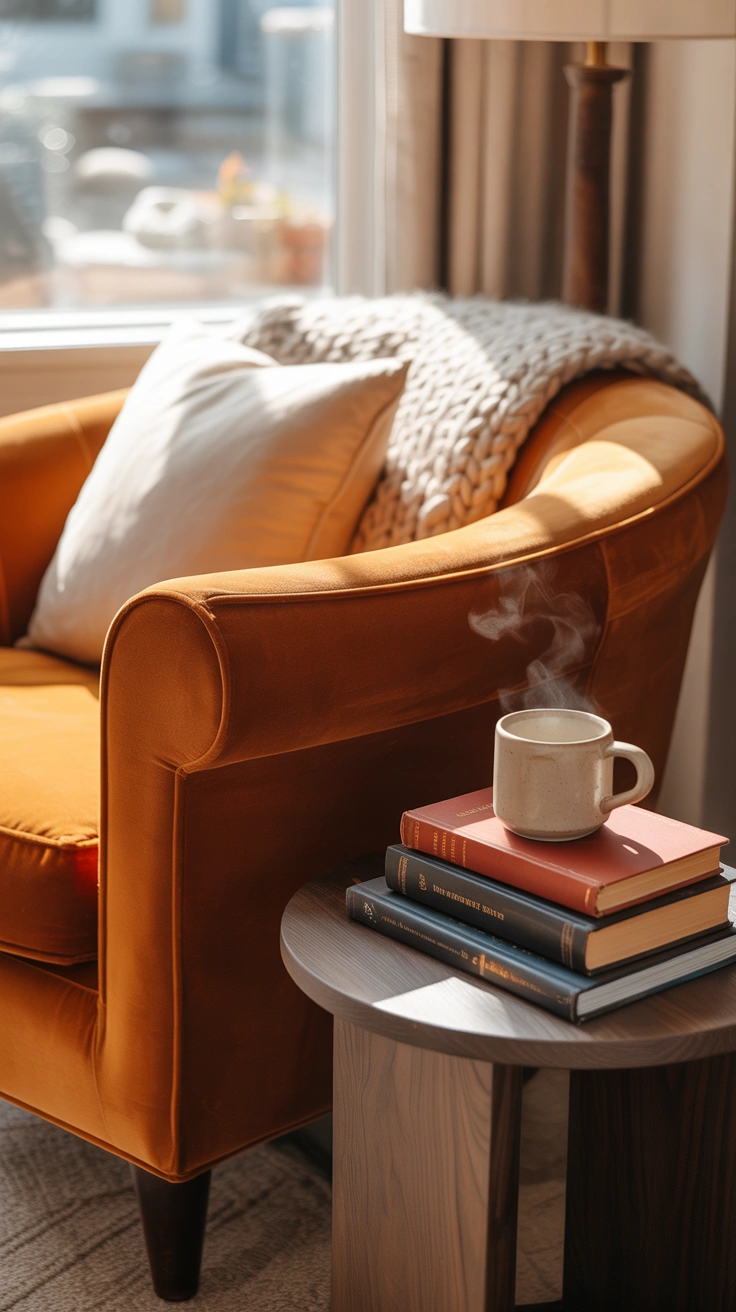
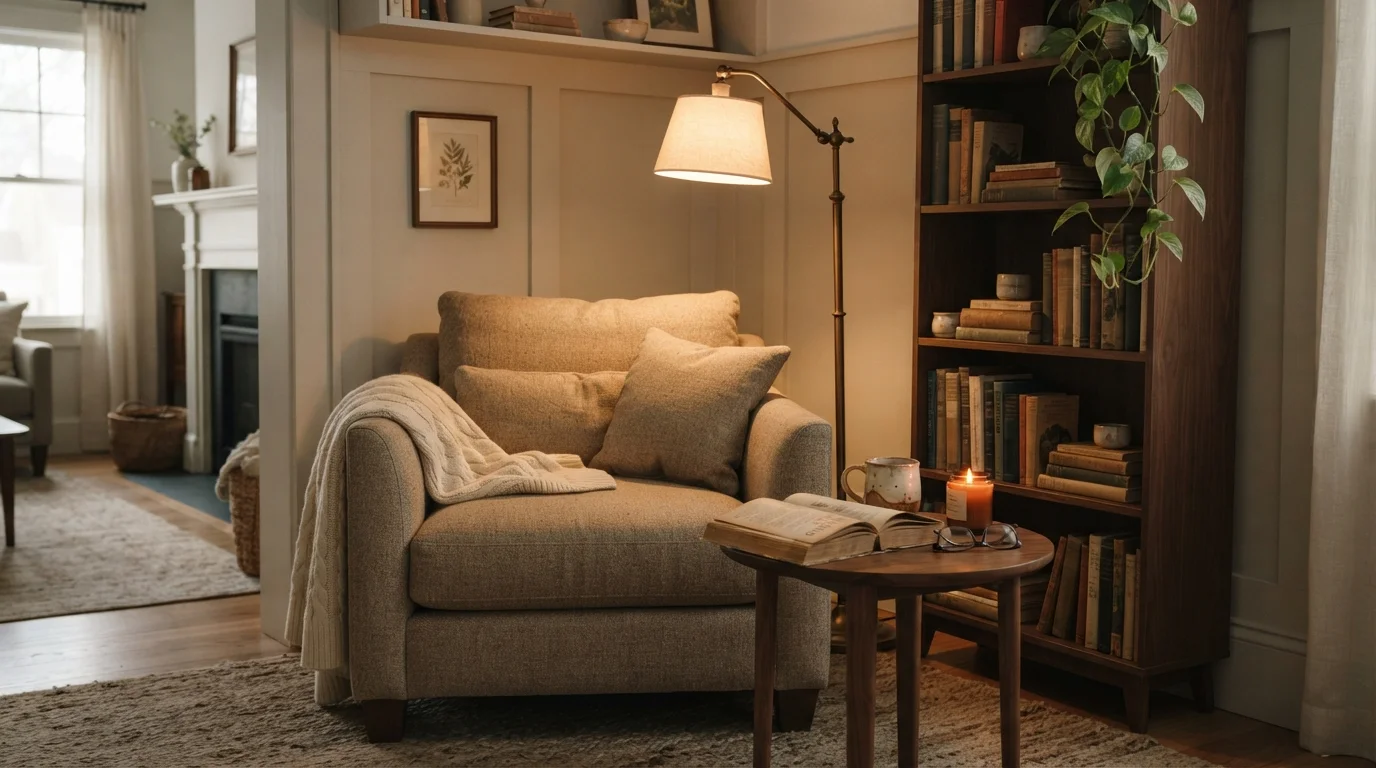
The reading nook with chair configuration is the most flexible and most universally achievable approach to the reading corner — and the chair itself is the single most important element in the entire setup. Everything else serves the chair. The chair serves you.
For a reading corner design that genuinely supports hours of comfortable reading, look for deep seats with supportive backs, generous cushioning, and armrests at the right height for a book-holding arm. A high-backed wing chair creates an enclosed, focused reading environment. A low, wide armchair with a wide seat and soft arms invites a more sprawling, relaxed reading position. An egg chair or papasan creates a cocoon-like enclosure that is deeply characteristic of the cozy reading nook aesthetic. Test chairs for actual seated comfort rather than simply for how they look — because the most beautiful reading chair that isn’t comfortable has already failed at its one job.
3. Get the Lighting Exactly Right
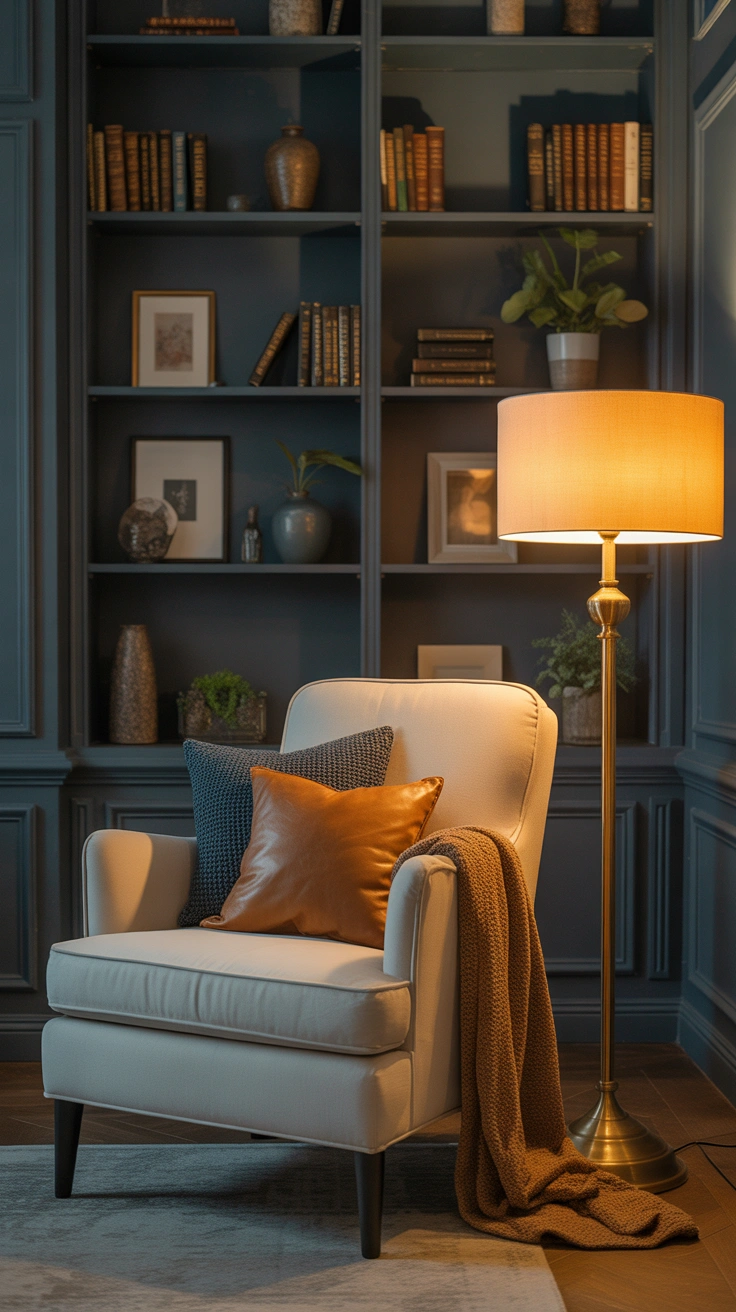
Lighting is where cozy reading corner design most frequently goes wrong — and the consequences are both aesthetic and physical. Poor reading light creates eye strain, breaks concentration, and makes long reading sessions uncomfortable. Great reading light does the opposite: it illuminates the page clearly, creates warm atmosphere, and makes the reading nook feel inviting from across the room.
The ideal reading nook lighting combines a warm ambient source — a table lamp or pendant nearby — with a focused task light positioned over the reader’s shoulder. A floor lamp with an adjustable arm and a focused directional shade is the most flexible and most effective reading nook light source available. Position the lamp over the shoulder of your reading arm so it illuminates the page without creating glare or casting your own shadow onto the text. FYI — a lamp that looks atmospheric but doesn’t actually illuminate the page well is a reading nook decoration, not a reading nook light. You need both qualities simultaneously.
4. Build a Window Reading Nook
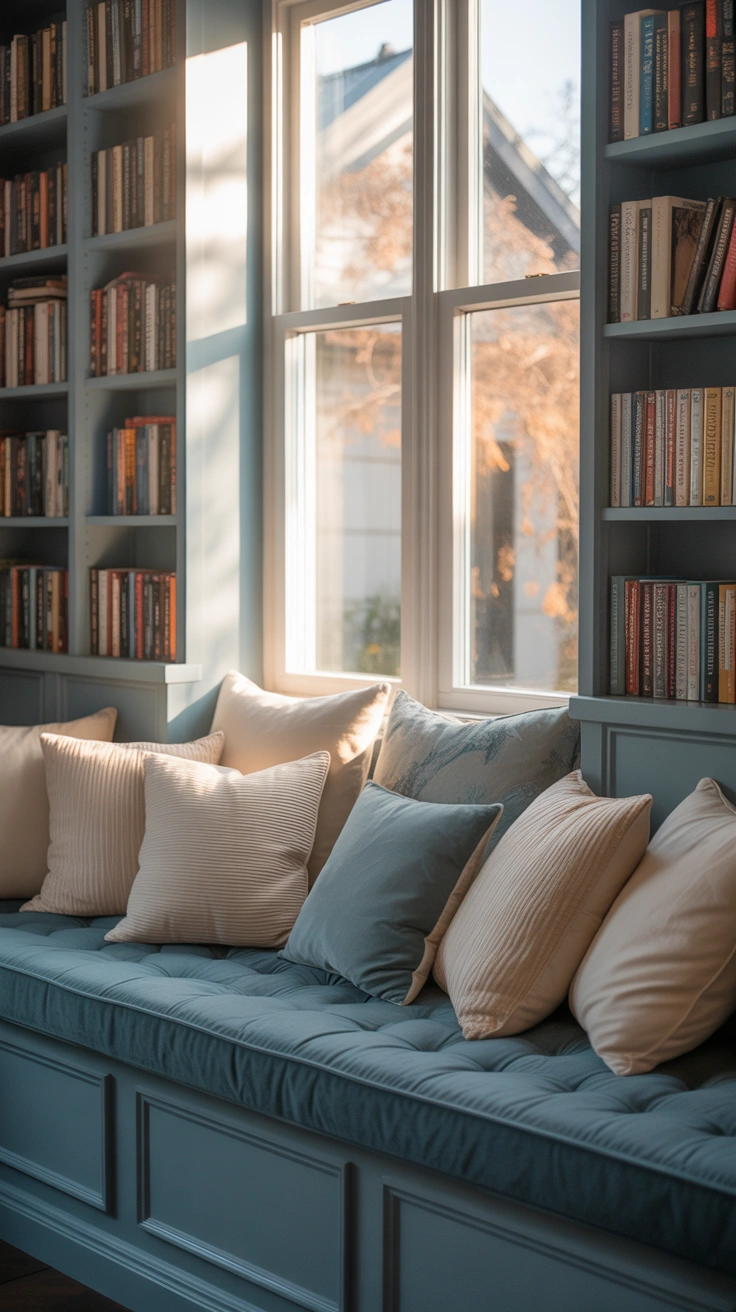
Window reading nooks are the most coveted and the most architecturally satisfying reading spaces available — and if your home has a bay window, a window alcove, or even a reasonably deep window sill, you have the foundation for one of the most beautiful reading corner design ideas possible. The combination of natural daylight, a view of the outside world, and a comfortable built-in seat creates a reading experience that is genuinely different from any interior alternative.
A built-in bench with storage drawers below, a thick upholstered cushion on top, and shelving on either side of the window creates a fully realized window seat reading nook. Keep the window treatment simple — sheer curtains that filter light without blocking it, or a simple roller blind for privacy when needed. Add cushions along the back and side walls of the alcove to make the seating deeply comfortable. Window reading nooks are one of those home additions that genuinely increase the quality of daily life in a measurable, felt way.
5. Design for Small Spaces
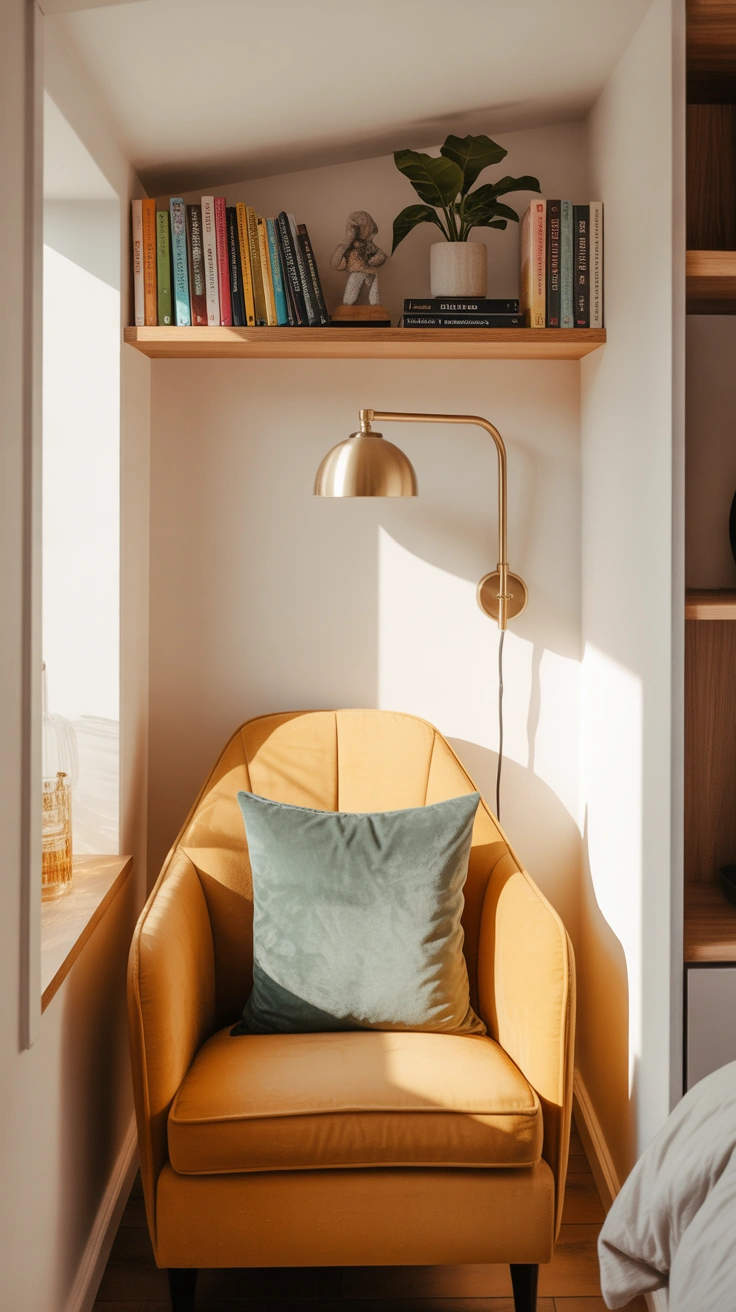
Not everyone has a bay window or a spare room — and some of the most creative and most satisfying cozy reading nook ideas emerge from the constraints of limited space. Reading nook ideas for adults in small spaces require lateral thinking about corners, alcoves, and underused wall areas rather than dedicated floor area.
An under-stairs alcove is one of the most exciting small-space reading nook opportunities in any house — and transforming it with a fitted bench, built-in shelving, and good lighting creates a private, enclosed reading space that feels genuinely special precisely because of its intimate scale. A bedroom corner with a small, low-profile chair, a floating shelf for current reading, and a wall-mounted swing-arm lamp uses almost no floor area but creates a clearly defined reading zone. In a small apartment, even the space between a bookshelf and a window can become a meaningful cozy reading corner with the right chair and light.
6. Create a Full Cozy Reading Room
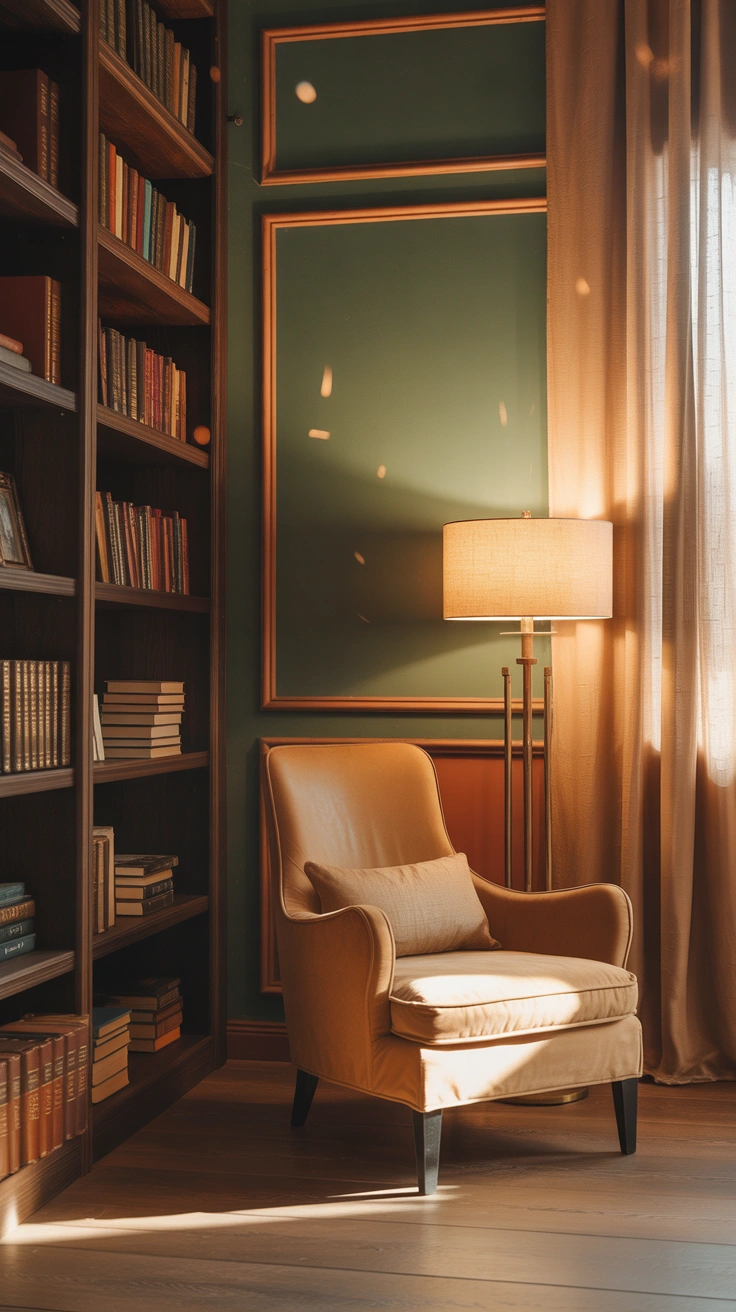
If you’re fortunate enough to have a spare room — or are prepared to repurpose one — a dedicated cozy reading room is one of the most rewarding domestic spaces you can create. Unlike a reading nook carved from a corner of a multipurpose room, a reading room gives the activity its own complete, uninterrupted environment.
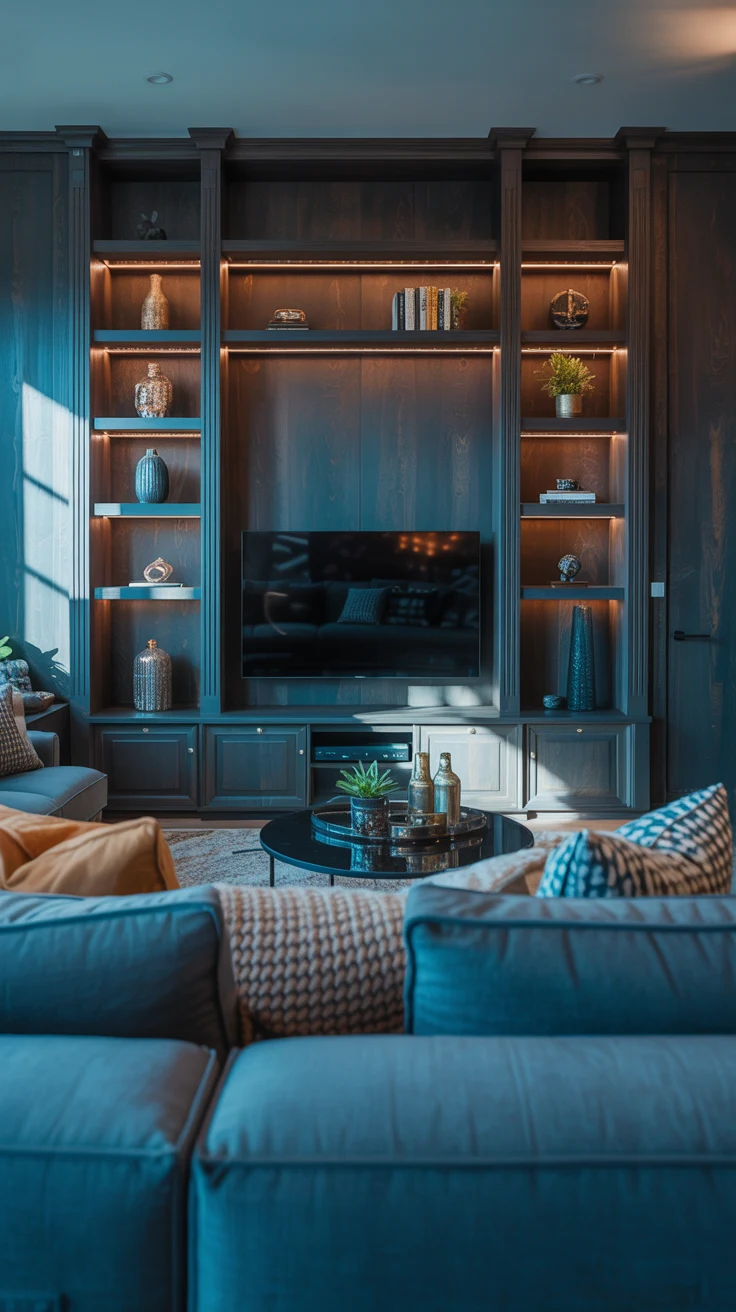
Paint the walls a warm, deep tone that creates an immersive, atmospheric quality — forest green, warm charcoal, or rich burgundy all work beautifully in a reading room context. Fill one entire wall with floor-to-ceiling bookshelves. Position the primary reading chair near the best natural light source. Add a secondary, more upright chair for variety. Include a small table at the right height for a lamp, a drink, and a notebook. A dedicated reading room is the ultimate expression of taking the activity of reading seriously — and everyone who enters immediately understands exactly what it’s for.
7. Add Books as Both Content and Decor
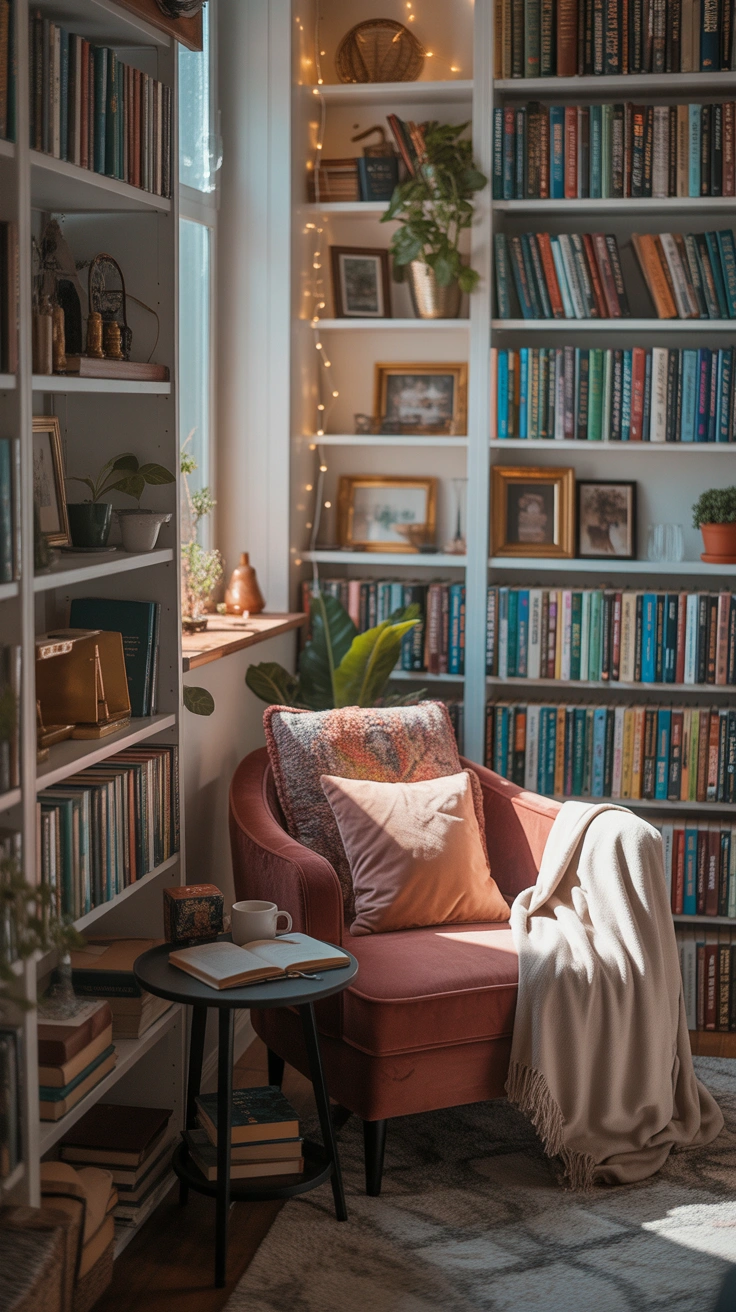
Books in a reading nook are simultaneously the purpose of the space and one of its most beautiful design elements — and styling the books thoughtfully contributes enormously to the overall cozy reading nook aesthetic. A reading nook surrounded by well-organized, visually pleasing books looks and feels completely different from the same nook with randomly stacked or cluttered shelving.
Keep current reading at immediate arm’s reach — a small shelf beside the chair, a stacked pile on the side table, or a magazine rack within leaning distance. Display the broader book collection on shelves with visual consideration — grouped by color spine for maximum visual impact, or arranged by author for maximum practical accessibility. Leave some shelf space for objects between book groupings: a small ceramic piece, a candle, a trailing plant. The books create the reading nook room’s specific character and personality in a way that no other element can replicate.
8. Bring in a Side Table
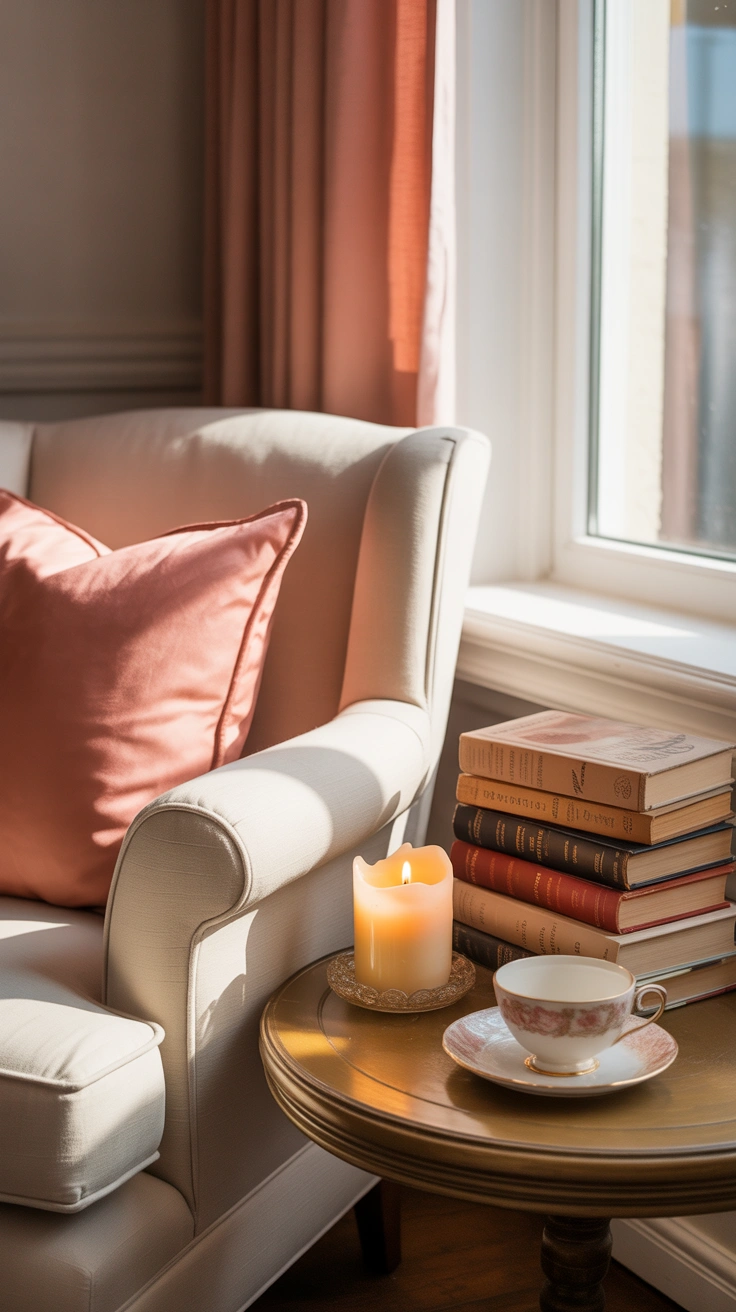
The side table is the reading nook element that most directly affects how comfortable and how practical the space is in daily use — and it’s frequently overlooked until the reading nook is already built and the cup of tea has nowhere to go. A good side table brings everything within reach without requiring you to leave the chair.
The ideal reading nook side table is at the same height as the chair’s armrest, has a surface large enough for a drink, a candle, and the current book, and fits within the footprint of the nook without restricting movement. A small marble-topped table on slender legs. A wooden drum table in natural timber. A rattan or wicker piece that adds organic texture. A C-shaped table that slides beneath the chair and frees the floor space around it entirely. The side table is a small investment with disproportionate impact on the nook’s daily usability.
9. Layer Textiles for Warmth
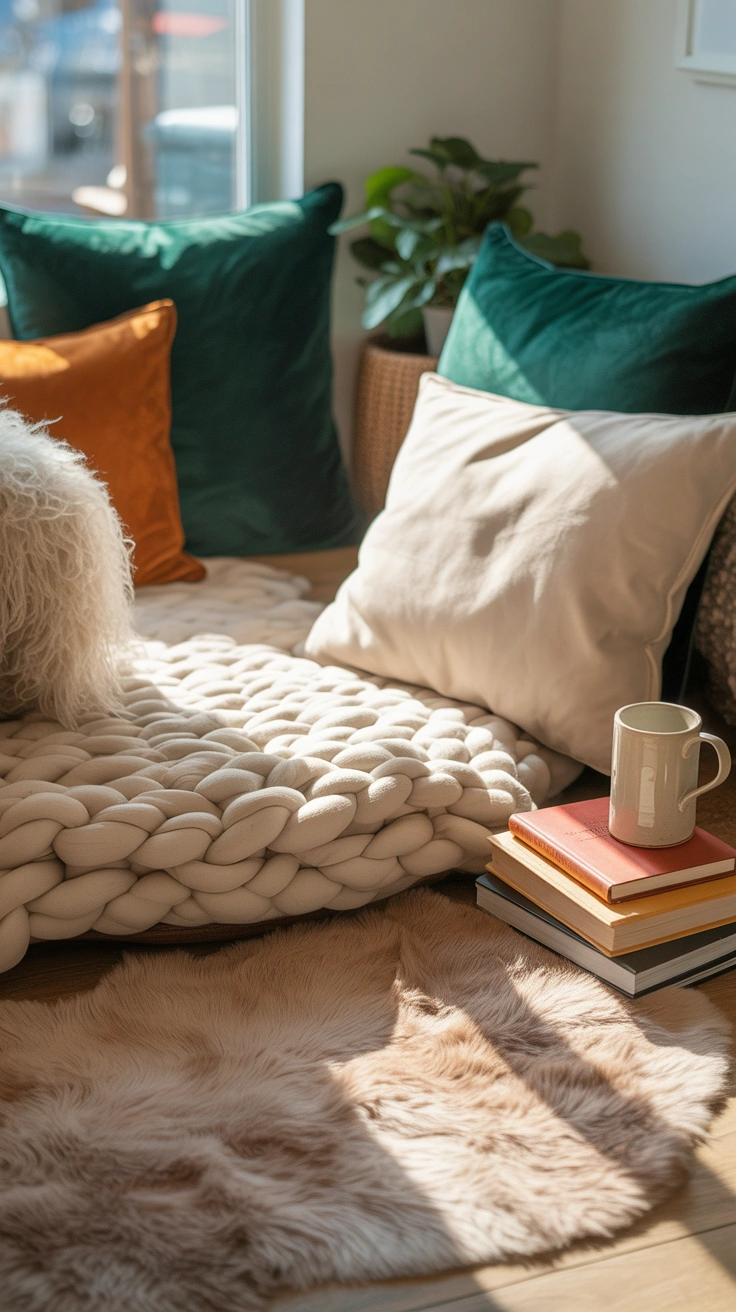
A reading nook without generous textiles is a seat near a bookshelf — not a reading nook. The layering of soft furnishings is what transforms the corner from functional to genuinely, physically cozy and what creates the specific warmth and invitation that defines the cozy reading nook aesthetic.
A thick, generously sized cushion on the chair seat. A back cushion that supports the lumbar. A throw draped over one arm of the chair ready for immediate use. A rug underfoot that defines the nook’s zone and adds warmth between bare feet and the floor. If the nook is a window seat, cushions along the back and sides of the alcove wall create a cushioned enclosure that makes the space feel cocooning rather than simply comfortable. IMO, the throw is the most important single textile in any reading nook — because reading and blankets have a relationship that dates back approximately as long as books have existed.
10. Create Architectural Enclosure
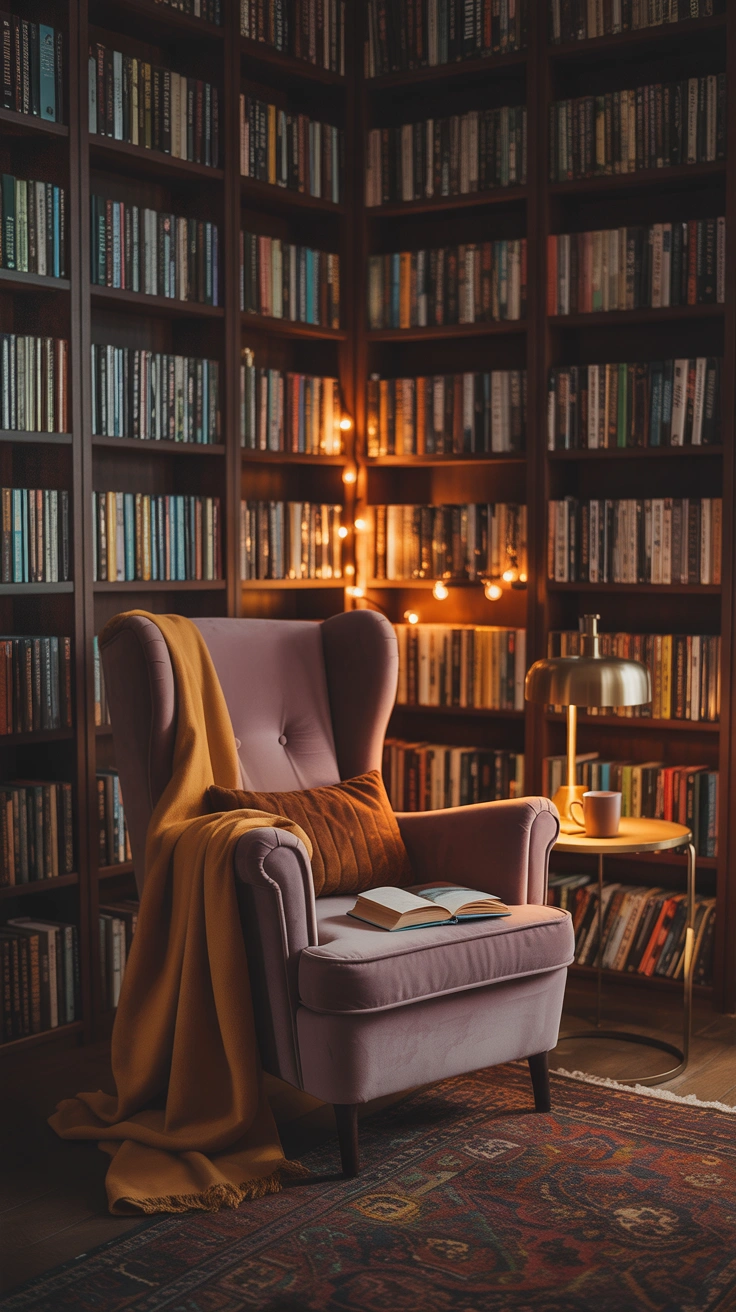
The best cozy reading corners share one quality: they feel enclosed. Not claustrophobically so, but enough to create the sense of a defined, private space within a larger room. This quality of enclosure — of having walls, partial walls, or implied boundaries — is what gives a reading nook its specific psychological character as a retreat within a retreat.
Create enclosure through bookshelves positioned on one or two sides of the reading chair. Use a curtain hung from the ceiling that can be partially drawn to partially enclose the nook when in use. Position the chair in an actual alcove or corner with walls on two sides. Drape a canopy of fabric above the chair for an overhead enclosure that creates a cocoon-like effect. The architectural enclosure of a reading nook communicates clearly that this space has a specific purpose and that purpose is the private, quiet act of reading.
11. Style With Personal Meaning
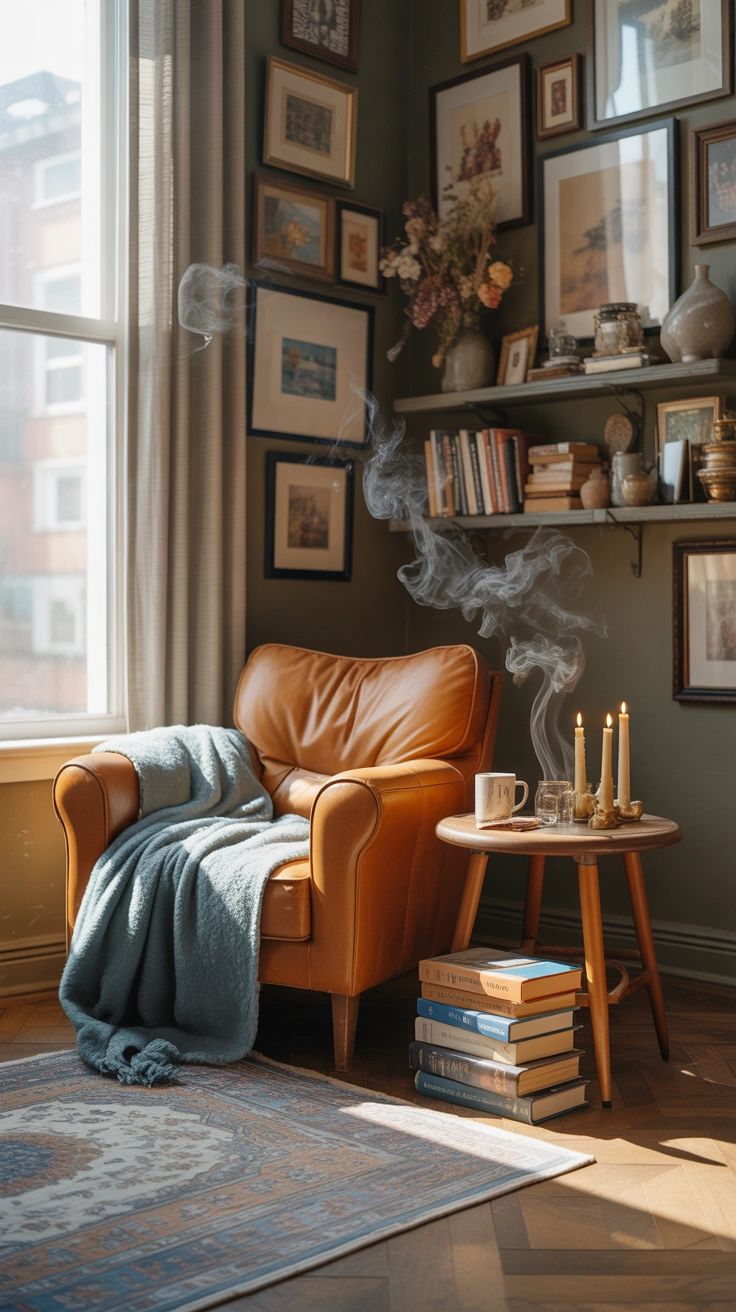
The reading nook is the most personal space in any home — and styling it with objects that have genuine personal meaning creates a space that is uniquely, unmistakably yours rather than simply aesthetically appropriate. This is the space that tells the most honest story about who you are when nobody is watching.
Display the books that matter most within immediate reach rather than the ones that look most impressive. Include one or two objects with genuine personal meaning — a found object from a meaningful place, a gift from someone important, a small memento of somewhere you’ve been. A candle in a fragrance that you associate with reading and concentration. A small plant that you actually care for. These personal elements create the reading nook’s soul — and a reading nook with soul is a completely different space from one without it.
12. Add Scent and Atmosphere
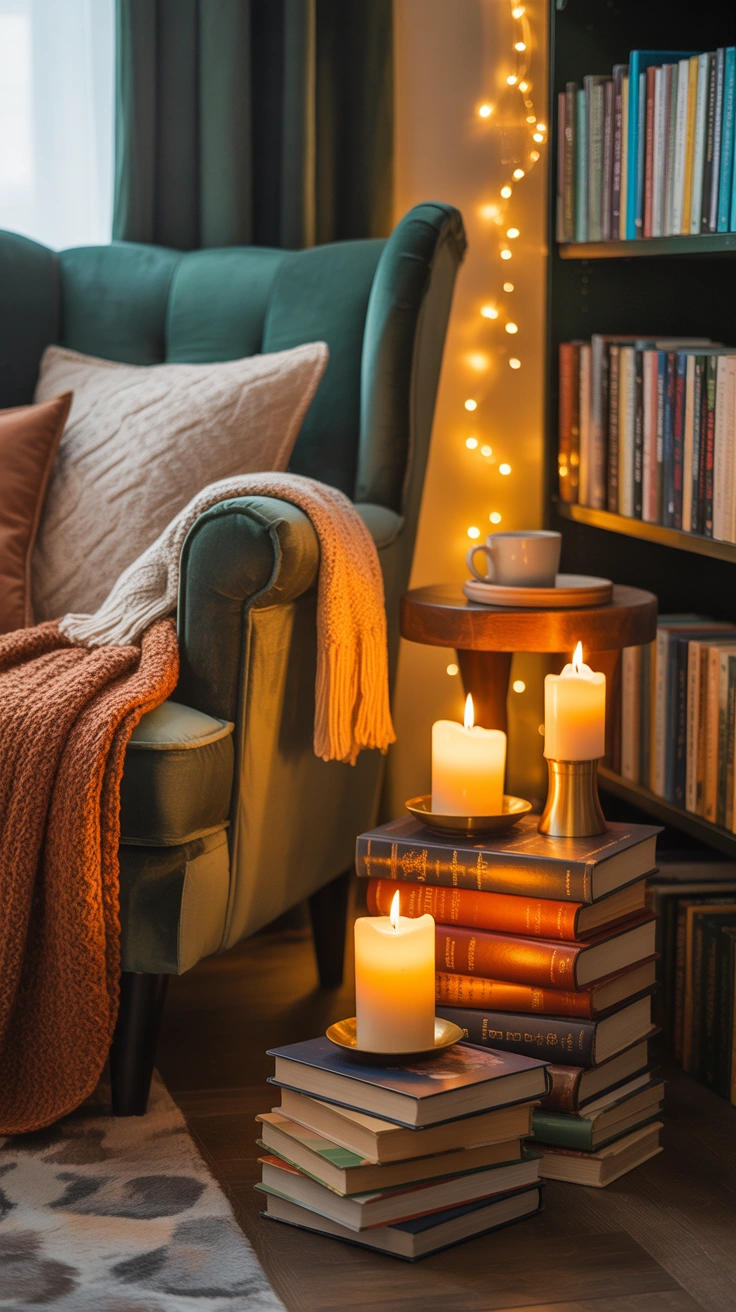
The reading nook is complete when it engages all the senses — and the addition of intentional scent and atmosphere creates the specific sensory signature that makes the space feel genuinely set apart from the rest of the home. Entering a beautifully scented reading nook with warm, amber lighting and a book already waiting is one of domestic life’s quiet pleasures.
A scented candle in a clean, focused fragrance — white tea, cedar, bergamot, or soft linen — that you light specifically when reading creates a Pavlovian association between the scent and the activity of focused, pleasurable reading. The scent becomes a signal: time to be here now. A reed diffuser for continuous background fragrance. Fresh air from an open window nearby. The sound of rain if you’re lucky. The reading nook fully realized is a complete sensory environment — and once you’ve built one that works at every level, reading anywhere else will feel like a slight disappointment.
Wrapping Up
Twelve ideas ranging from the transformative (a dedicated reading room, a fully realized window seat nook) to the immediately achievable (a chair, a floor lamp, a side table, a throw). The through-line across all of them is this: a reading nook works when it genuinely serves the activity of reading — comfortable seating, proper task lighting, books within reach, warmth underfoot, and enough enclosure to feel like a place apart.
The scale doesn’t matter. A bay window alcove with custom joinery and a ceiling-flush book light is not categorically better as a reading environment than a well-positioned armchair in a bedroom corner with a good floor lamp. What matters is whether the space makes you actually want to sit down and read — and whether, once you’re there, it makes you want to stay.
Frequently Asked Questions
1. What do you need to create a cozy reading nook?
A comfortable chair, good reading light, a small side table, books within easy reach, soft textiles, and some warmth underfoot are the essential elements of a functional reading nook. :contentReference[oaicite:1]{index=1}
2. Where is the best place to create a reading nook?
A reading nook can work in a bay window, bedroom corner, living room, understairs alcove, spare room, or even a wide hallway. The key is finding a spot where seating, lighting, and privacy can work together. :contentReference[oaicite:2]{index=2}
3. What type of chair is best for a reading nook?
Choose a chair with a deep seat, supportive back, comfortable cushioning, and properly positioned armrests. Wing chairs, wide armchairs, egg chairs, and papasan chairs can all work depending on the desired level of enclosure and relaxation. :contentReference[oaicite:3]{index=3}
4. What lighting is best for reading?
Combine warm ambient lighting with a focused task light. An adjustable floor lamp positioned slightly behind the reading shoulder can illuminate the pages clearly while reducing glare and shadows. :contentReference[oaicite:4]{index=4}
5. How can I create a reading nook in a small space?
Use under-stairs areas, bedroom corners, narrow wall spaces, or the area beside a bookshelf and window. A compact chair, floating shelf, and wall-mounted swing-arm lamp can create a functional nook while using very little floor space. :contentReference[oaicite:5]{index=5}
6. What makes a reading nook feel extra cozy?
Layer cushions, throws, rugs, warm lighting, books, and tactile materials. Creating some visual enclosure with bookshelves, alcoves, curtains, or surrounding walls can also make the nook feel more private and retreat-like. :contentReference[oaicite:6]{index=6}
7. How can I personalize my reading nook?
Display books that genuinely matter to you and add a few meaningful objects, favorite fragrances, personal keepsakes, or a plant you enjoy caring for. These details give the reading nook character that purely decorative styling cannot replicate.