15 Best Desk Chairs for Home Office: Comfort and Style Under $300
Introduction
Your desk chair is the one piece of home office furniture you touch every single workday, yet it is often the last thing people shop for. A good chair decides whether you finish the day feeling focused and comfortable or stiff, distracted, and ready to quit early. The best desk chairs home office setups share the same secret: they match the chair to the way you actually work, not just to the way the room looks in a photo. Whether you sit for eight hours or two, the right seat supports your back, keeps your feet grounded, and fits the style of the room around it.
The good news is that you do not need to spend a fortune to sit well. Under $300 there are genuinely good chairs in almost every style, from breathable mesh task chairs to velvet accent seats that look like they belong in a design magazine. The trick is knowing what each type does well and where it falls short, so you spend your money on the features that matter to you instead of paying for a brand name. If you are building a home office on a budget, the chair is the one item worth choosing carefully, because it affects your body every single day.
In this guide, we compare fifteen distinct desk chair styles that work in a home office for under $300. For each one, you will learn what it is best for, what to look for when you shop, and which kind of workspace it suits. No single chair wins for everyone, and that is the point. By the end, you will know exactly which style fits your body, your desk, and your room.
1. Ergonomic Mesh Task Chair
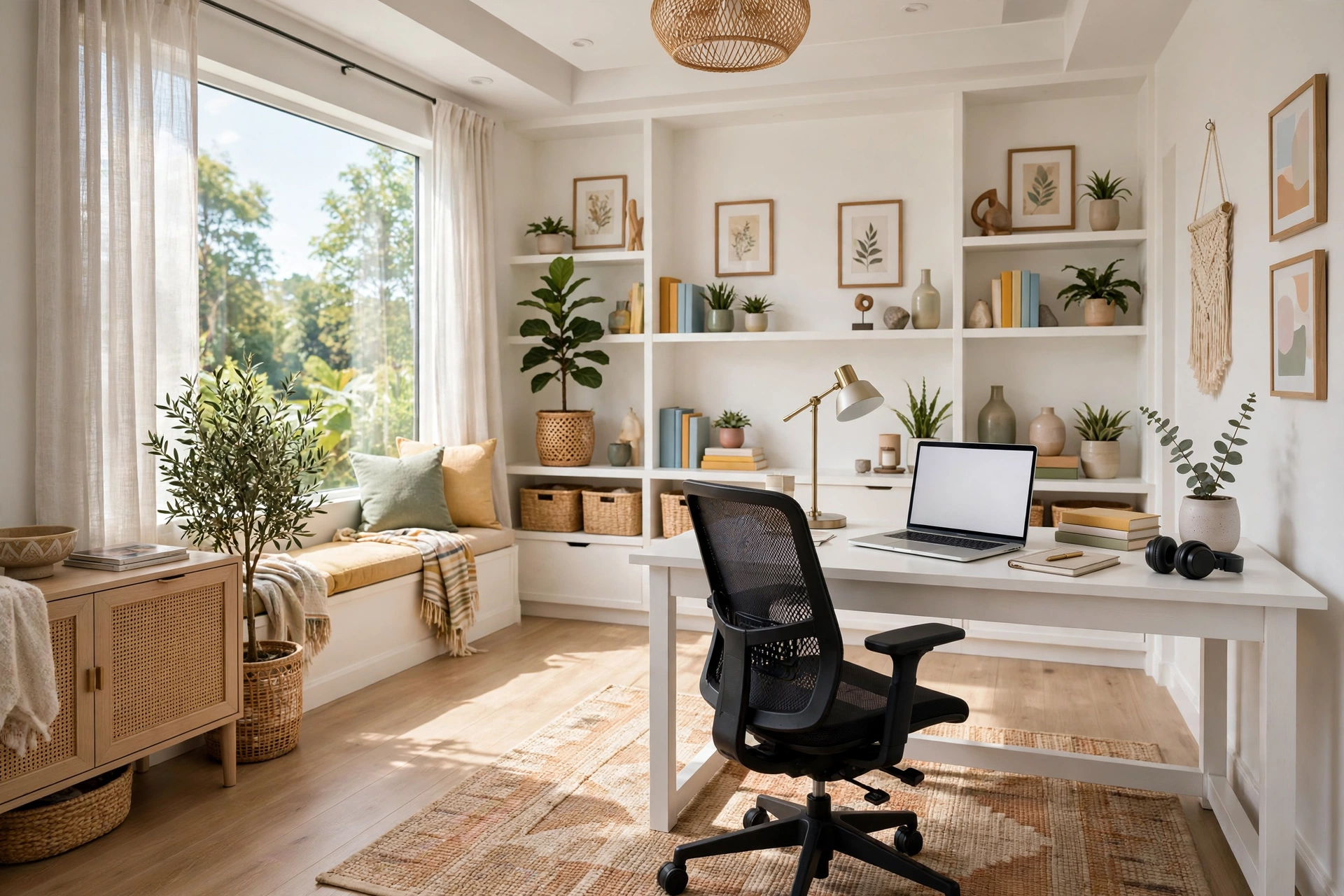
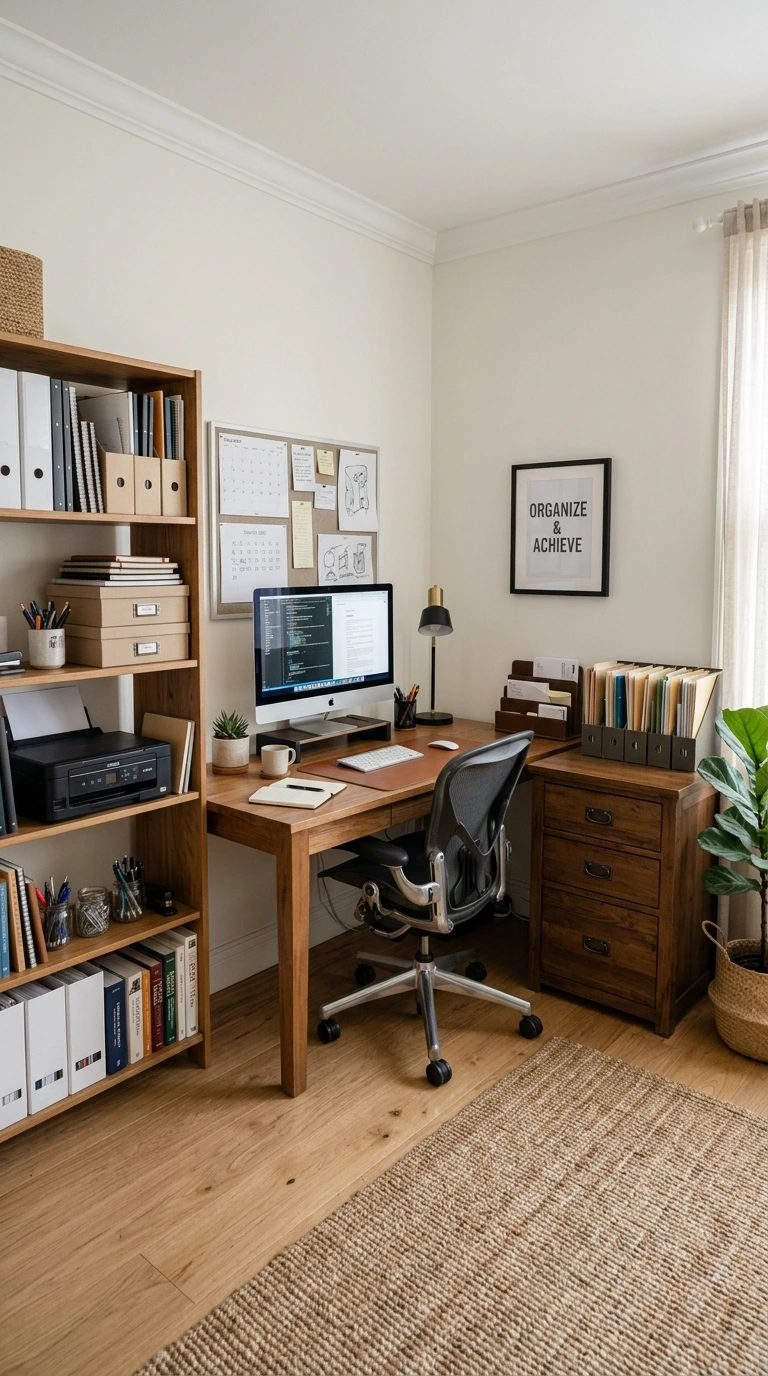
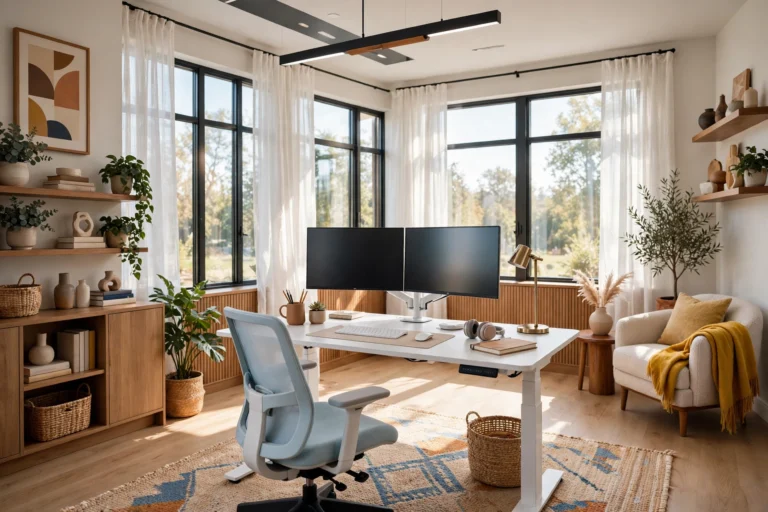
The ergonomic mesh task chair is the workhorse of the modern home office, and for good reason. Its breathable mesh back keeps air moving on long workdays, so you stay cool instead of sticking to a solid backrest. Most mesh task chairs in this price range offer adjustable seat height, a tilt function, and armrests that move up or down, which means you can tune the fit to your body rather than forcing your body to fit the chair.
Look for a mesh chair with a sturdy frame and a seat cushion that feels firm but not hard when you first sit down. A cushion that is too soft will flatten within months, while a very firm one needs a short break-in period before it feels right. Mesh chairs suit almost any desk style, from a plain white workstation to a warmer wood-toned room, and they pair well with a standing desk if you alternate between sitting and standing through the day.
2. Adjustable Lumbar-Support Chair
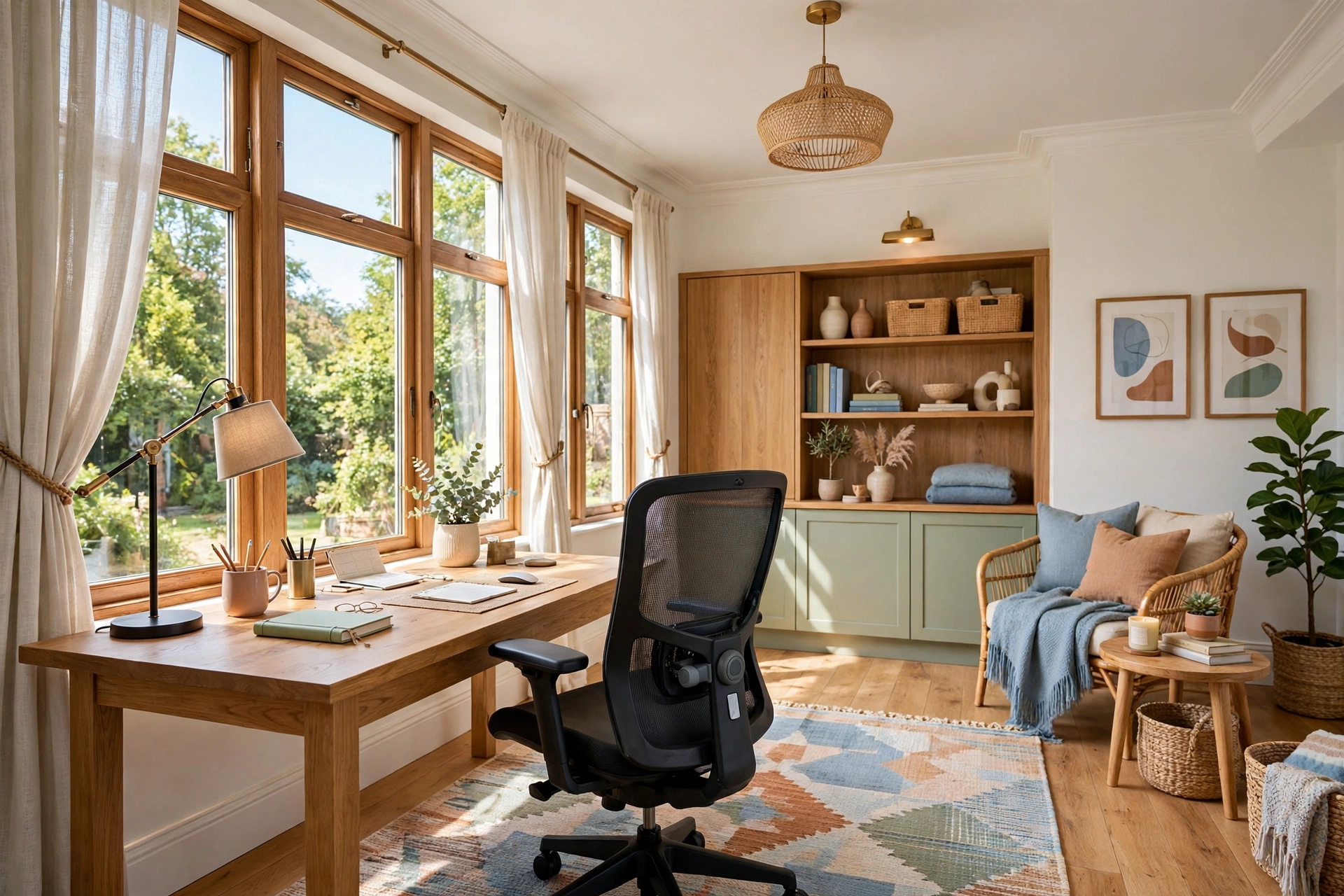
If your lower back complains by mid-afternoon, an adjustable lumbar-support chair is the style to look at first. These chairs build extra support into the lower curve of the backrest, and the best ones let you slide that support up or down to match the exact spot where your spine needs it. That adjustability matters, because a fixed lumbar bump that sits too high or too low can feel worse than no support at all.
When you test one, sit all the way back so your lower back touches the support, then adjust it until the pressure feels even and gentle, never sharp. Chairs in this category often combine lumbar support with a mesh or lightly padded back, so you get airflow plus targeted support. They are a strong choice if you sit for long stretches and want a chair that actively helps your posture instead of just holding you up.
💡 Pro Tip: sit in the chair for at least ten minutes with your feet flat on the floor. If the support feels comfortable at minute ten, it will usually feel comfortable at hour four.
3. Armless Drafting Chair
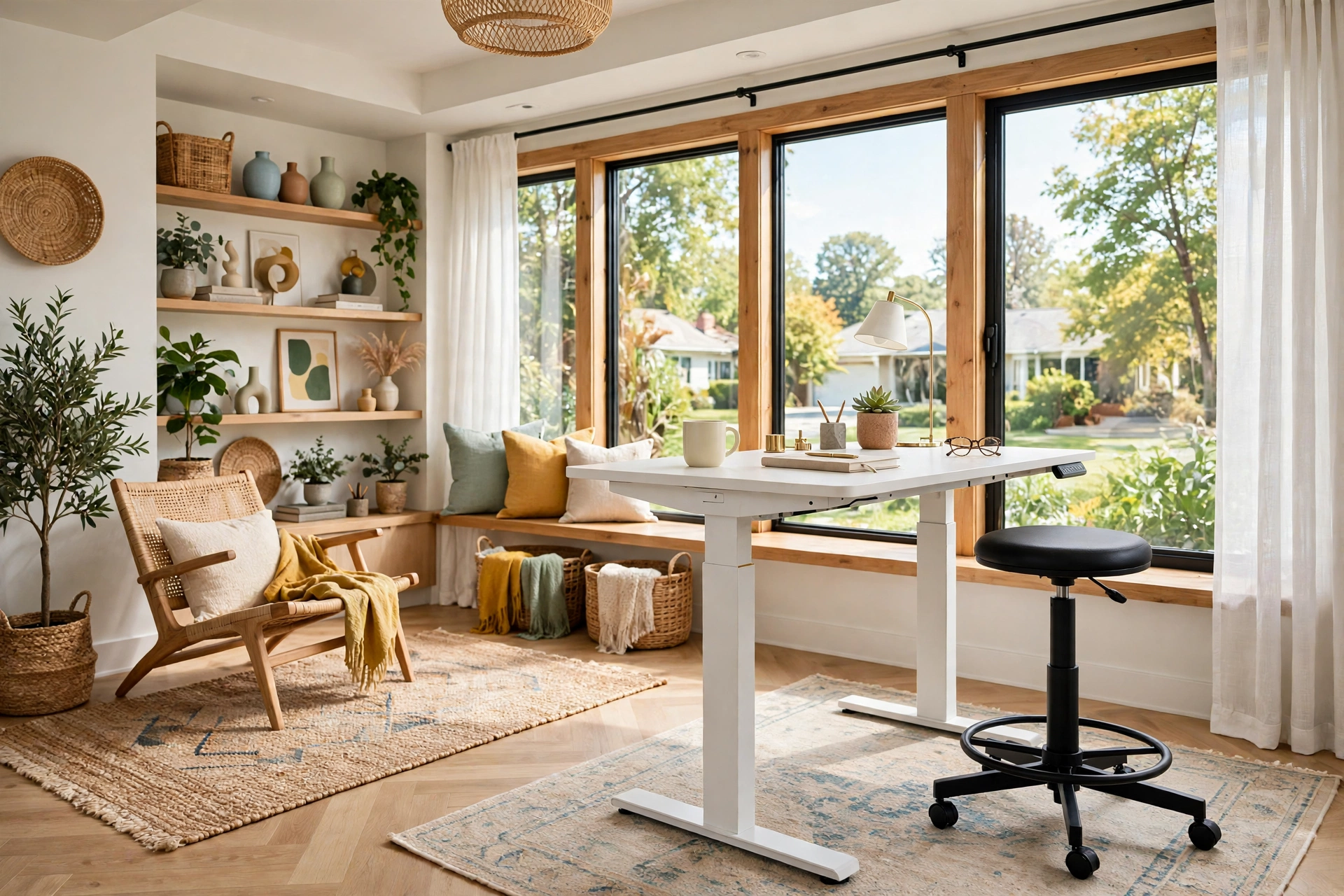
An armless drafting chair is the tall, slim option for high desks, standing desks set at counter height, and rooms where space is tight. It sits higher than a standard task chair and usually comes with a foot ring, so your feet have somewhere to rest instead of dangling. Without armrests, it slides neatly under a desk or tucks against a wall when you are done, which makes it a favorite for small rooms and shared spaces.
The trade-off is that you give up arm support, so this style suits shorter work sessions or tasks where your hands stay busy on a keyboard. Choose one with a comfortable seat cushion and a foot ring you can adjust, since the ring height decides whether your legs feel relaxed or cramped. For a drafting table, a craft corner, or a standing desk you only sit at part of the day, it is a smart and affordable pick.
Desk Chair Quick-Start Checklist
- ✅ Measure your desk height and your seated elbow height before choosing a chair
- ✅ Check that your feet can rest flat on the floor, or on a footrest, when seated
- ✅ Test the seat depth: two fingers should fit between the seat edge and your knees
- ✅ Make sure the chair fits under your desk and clears any drawers or modesty panels
- ✅ Look for adjustable height and tilt, even on budget chairs
- ✅ Sit in the chair for ten minutes before deciding, not just ten seconds
4. Faux-Leather Executive Chair
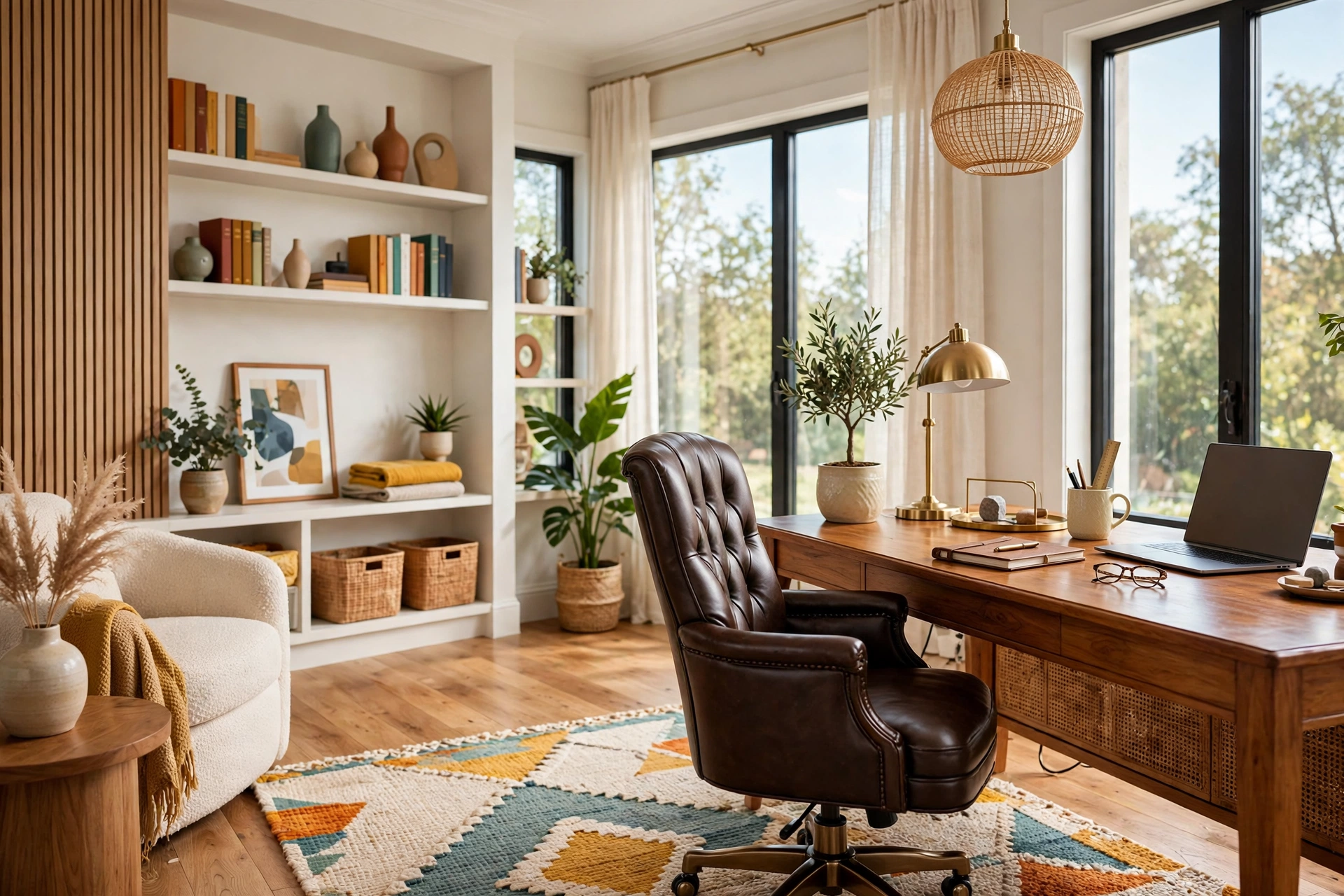
A faux-leather executive chair brings a polished, boardroom feel to a home office without the price of real leather. The smooth surface wipes clean easily, which is handy if you eat lunch at your desk, and the high back and padded armrests give it a substantial, comfortable presence. Under $300, you can find well-padded versions with tilt, height adjustment, and a swivel base that feel far more expensive than they are.
Faux leather does run warmer than mesh, so it suits air-conditioned rooms or cooler climates better than a sunny, south-facing office. Check the stitching and the thickness of the padding, since cheaper versions can look thin after a year of daily use. If your home office doubles as a video-call backdrop, this chair reads as professional on camera and pairs beautifully with a dark wood desk.
5. Wooden Accent Desk Chair
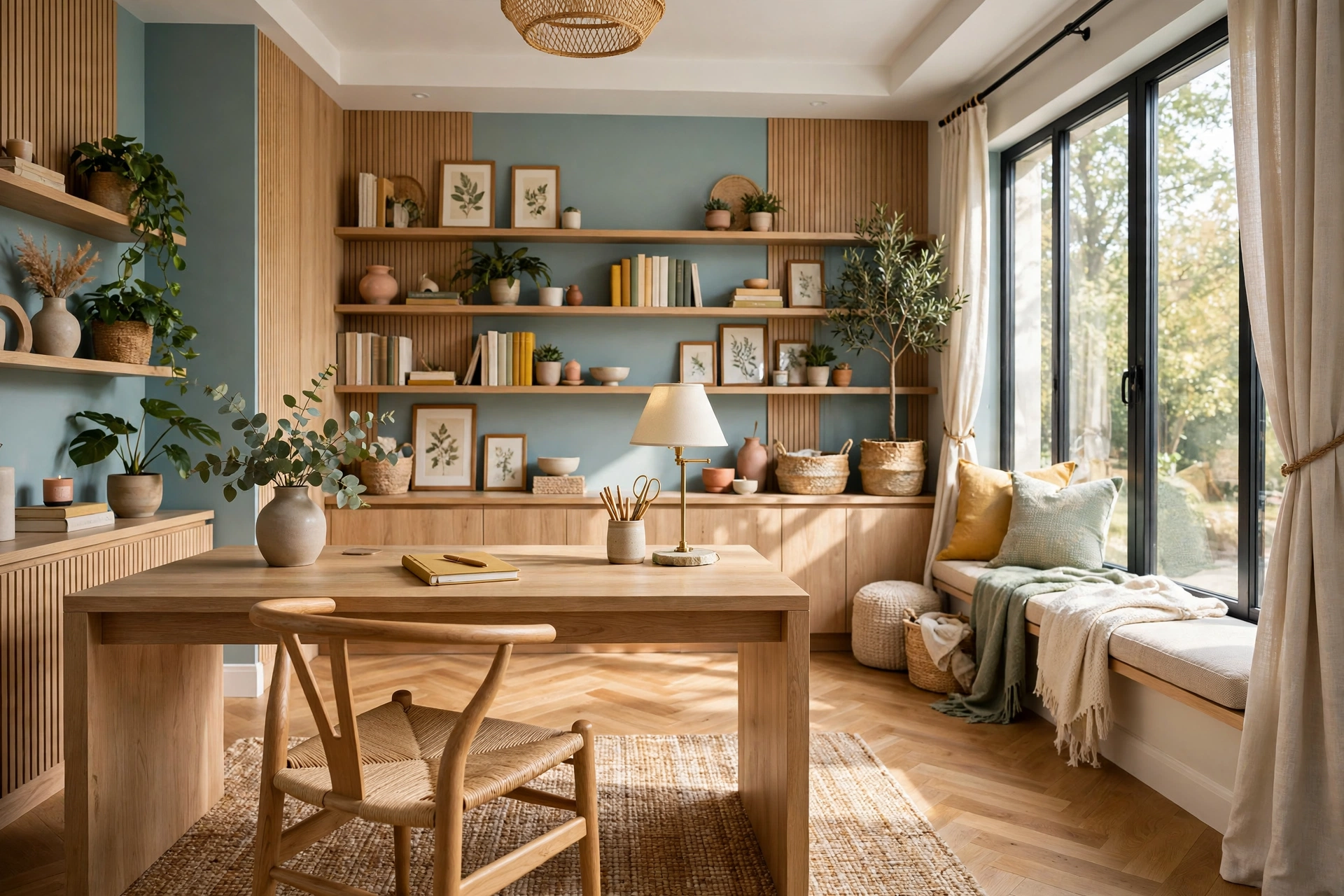
A wooden accent desk chair is the choice when your home office is also a living space and the chair needs to look like furniture, not equipment. Solid wood legs, a shaped wooden seat, and sometimes a curved backrest give it a warm, crafted feel that works with farmhouse, Scandinavian, and traditional rooms. Many versions add a small upholstered seat pad for comfort while keeping the wood visible.
Comfort is the compromise here, since a wooden chair rarely adjusts in height and offers less back support than a task chair. It suits shorter work sessions, a writing desk, or a secondary seat you use for an hour or two at a time. If you love the look, add a lumbar cushion and a seat pad to close the comfort gap. It is also the easiest style to move between rooms, since it looks at home at a dining table too.
Quick Comparison: Best Desk Chairs by Cost and Comfort
6. Rolling Accent Chair
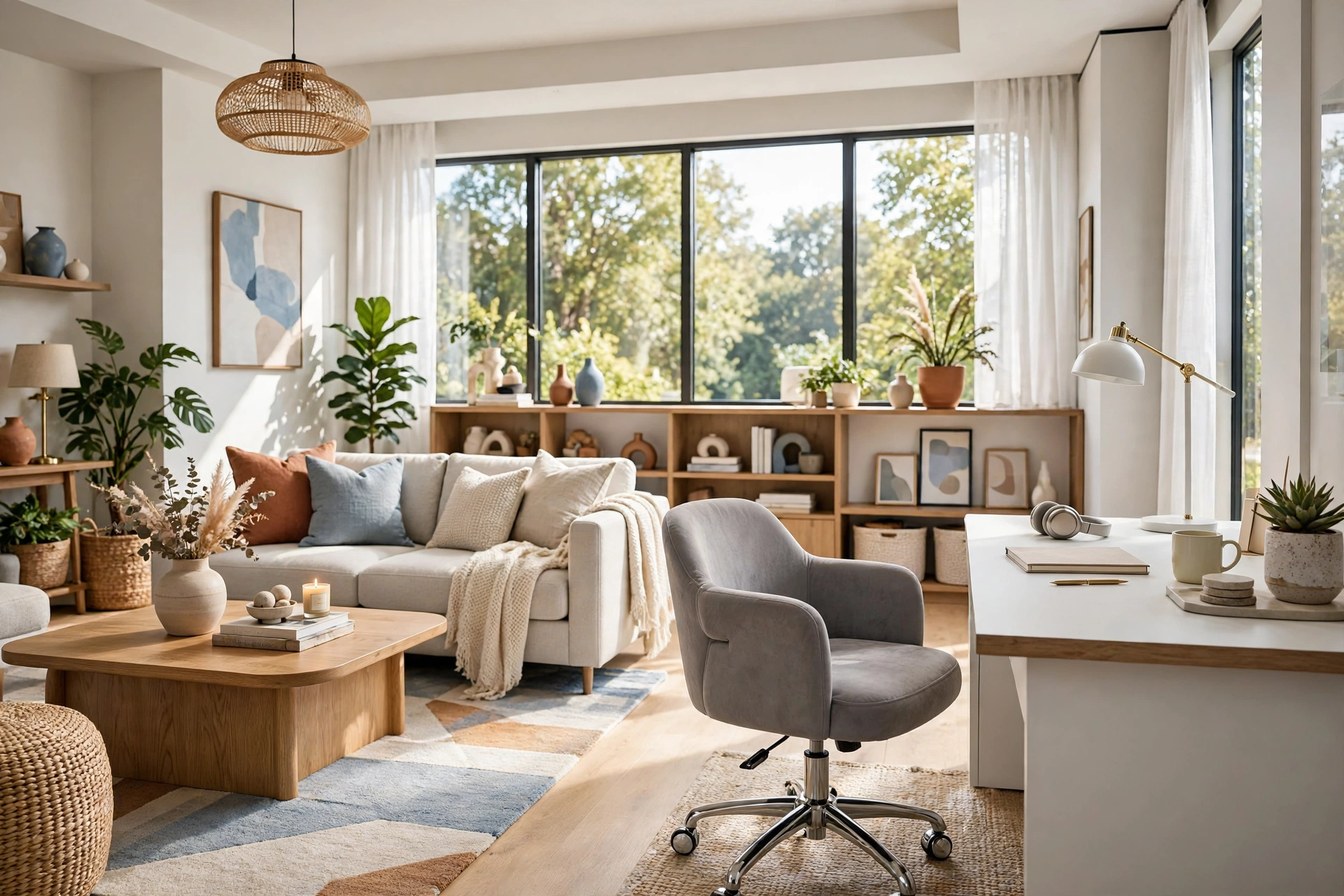
A rolling accent chair blends the look of a lounge chair with the mobility of an office chair. It usually has a wider, softer seat than a task chair, short armrests or none at all, and casters that let you glide from desk to bookshelf without standing up. Because it looks more like living-room furniture, it is a natural fit for a home office that shares space with a bedroom or living area.
The softer seat means less structured support, so this style is best for medium-length sessions rather than a full eight-hour day. Look for one with a stable five-star base, since a wide seat on a narrow base can feel tippy. If your workday mixes desk time with reading, phone calls, and moving around the room, a rolling accent chair keeps you comfortable without making the room feel like a corporate office.
📌 Important: hard casters roll well on carpet but can scratch wood floors, while soft rubber casters protect hard floors. A cheap rug under the chair solves both problems at once.
7. Kneeling Chair
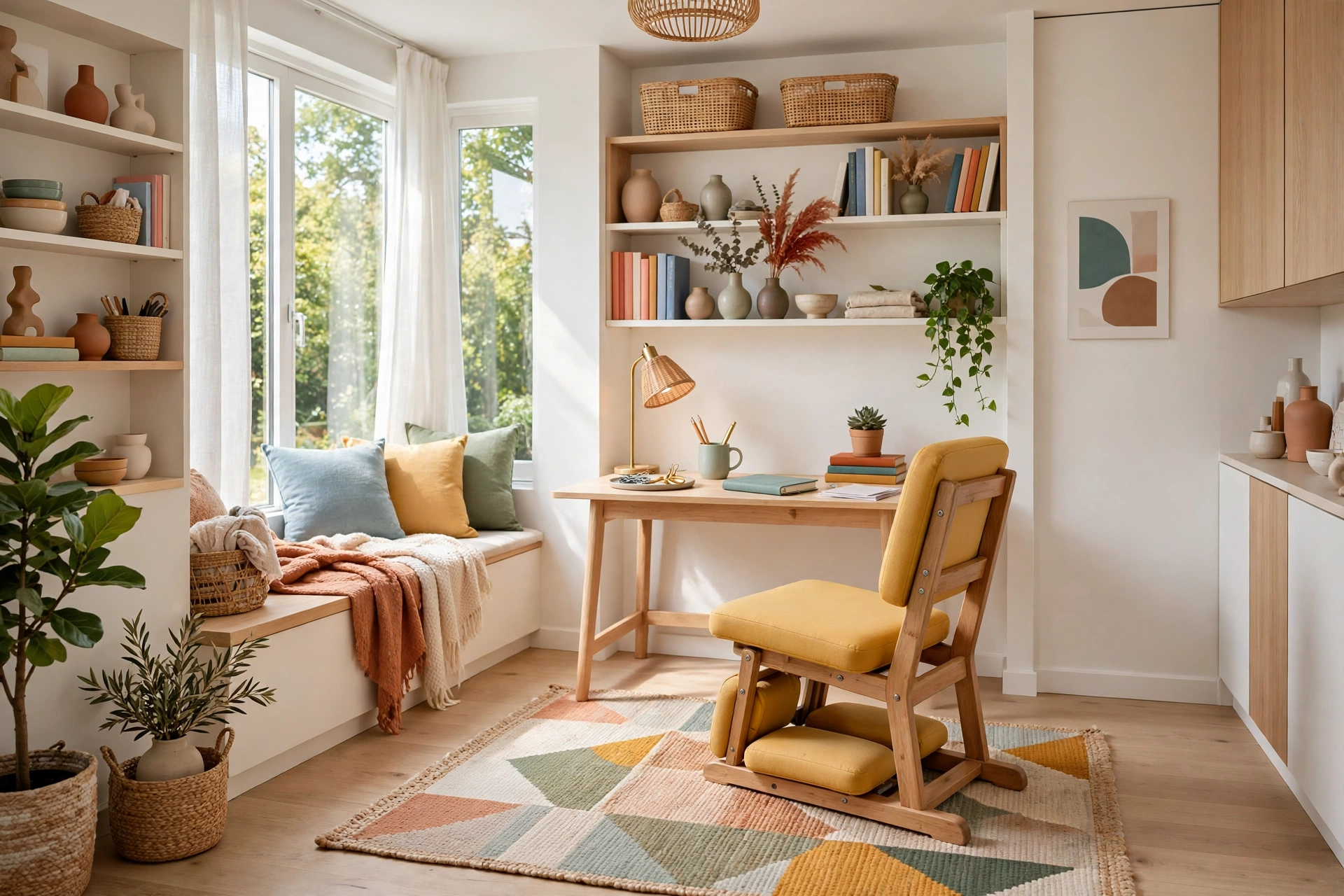
A kneeling chair takes a completely different approach to sitting. Instead of a flat seat and a backrest, it angles your hips forward and rests your shins on padded supports, which encourages an upright, open posture. Fans of kneeling chairs say they feel more alert and that their lower back hurts less, because the position naturally straightens the spine.
It is not a chair for everyone. Your knees and shins carry some of your weight, so most people use a kneeling chair for an hour or two at a time rather than all day. It works best as a second chair alongside a regular task chair, letting you switch positions through the day. If you pair it with a desk you can adjust, and you want to learn how to organize your home office desk around a more active way of sitting, a kneeling chair is an affordable experiment worth trying.
8. Saddle Stool
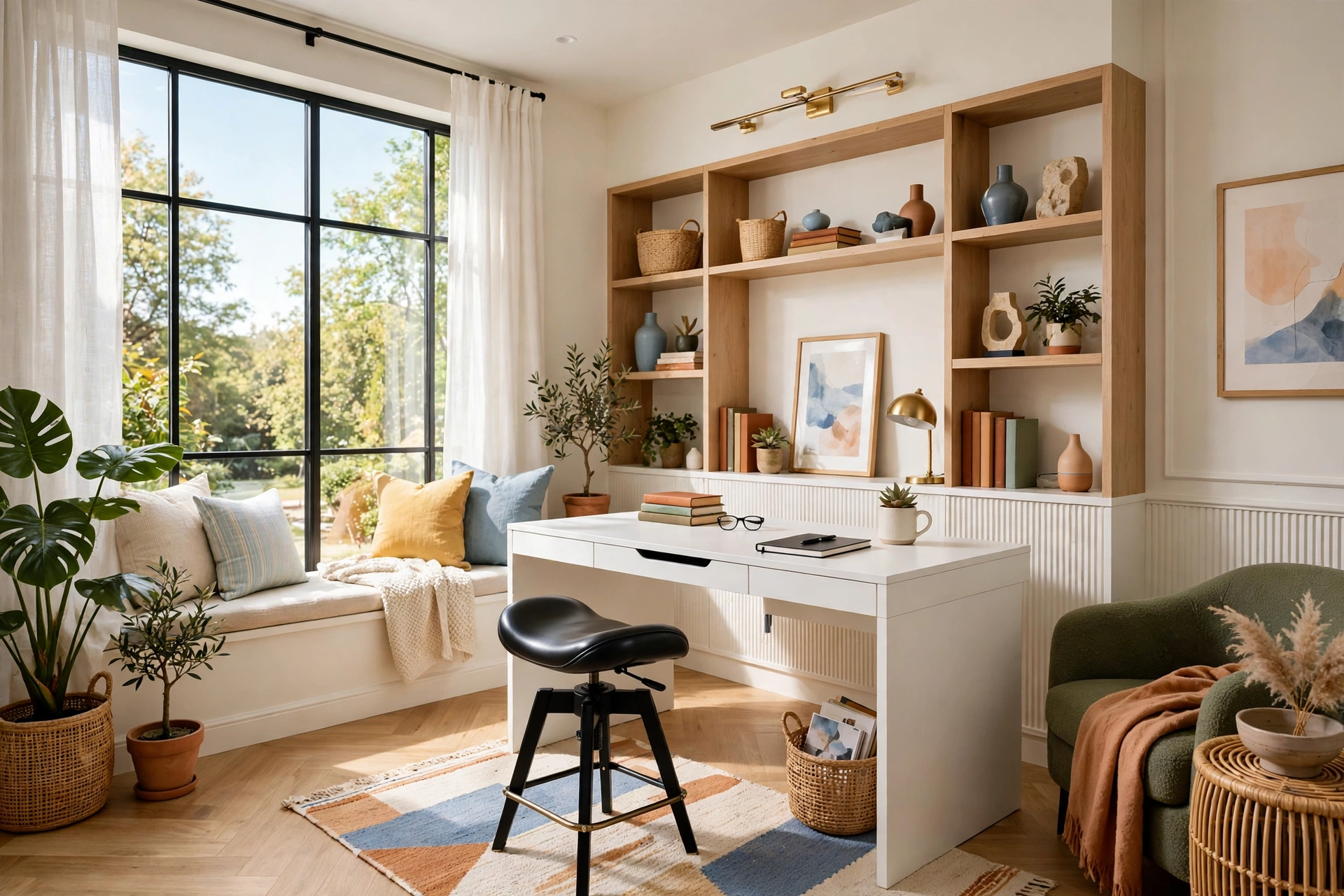
A saddle stool is shaped like a horse saddle, with a raised center that tilts your pelvis forward and opens up your hips. It is popular with people who want to sit actively, since the shape encourages small movements and keeps your core gently engaged. The compact size also makes it easy to tuck under a desk or roll into a corner when you need floor space.
Like the kneeling chair, a saddle stool is best used in rotation rather than as your only seat. Long sessions can tire your legs, and there is no backrest to lean on when you want to relax. Choose one with a height adjustment and a comfortable, slightly padded saddle top. It suits artists, crafters, and anyone whose work involves leaning forward over a desk or drawing table.
⚠️ Warning: your legs and core need time to adapt to the posture. Start with short sessions and keep your regular chair nearby for the first few weeks.
9. Velvet Upholstered Desk Chair
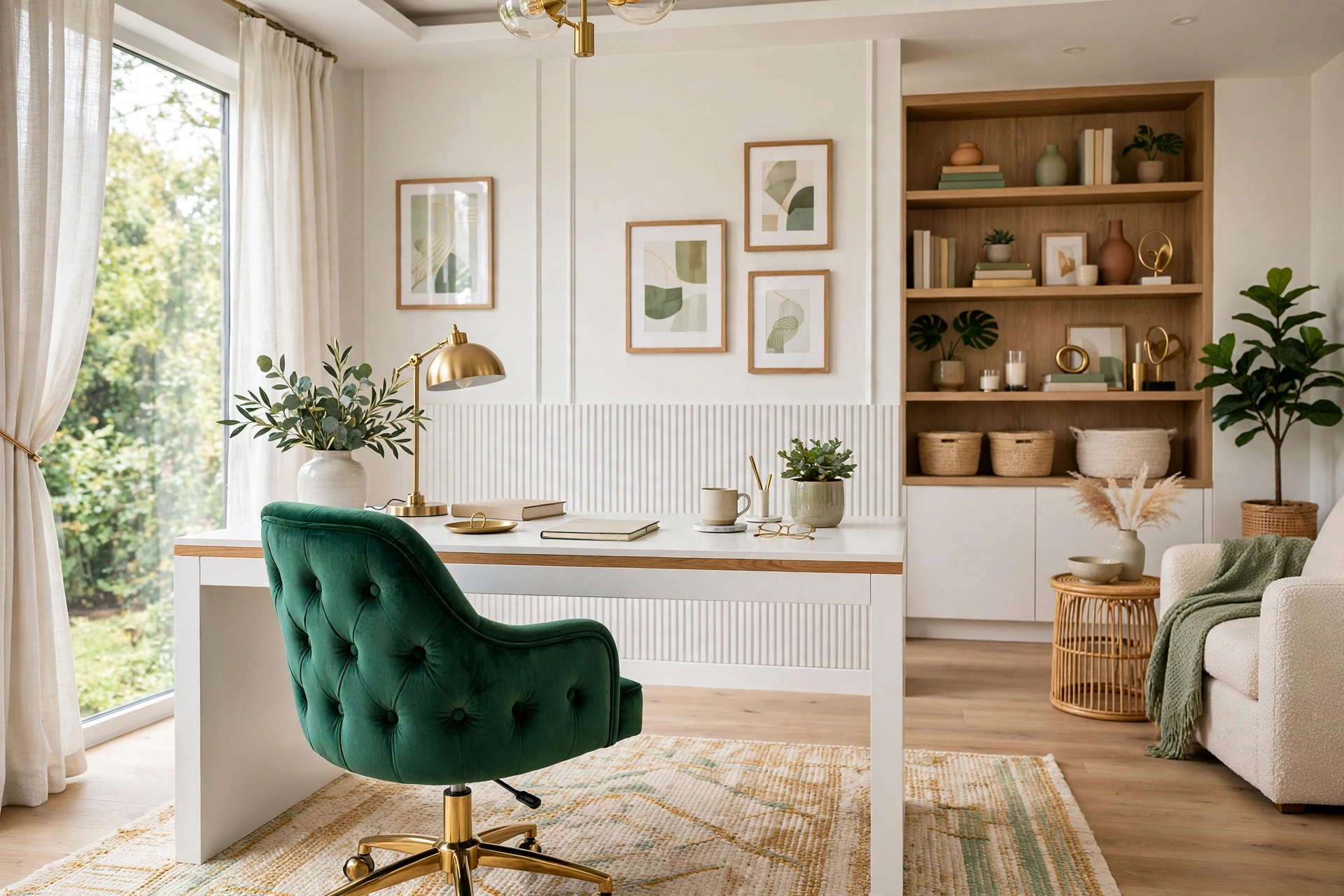
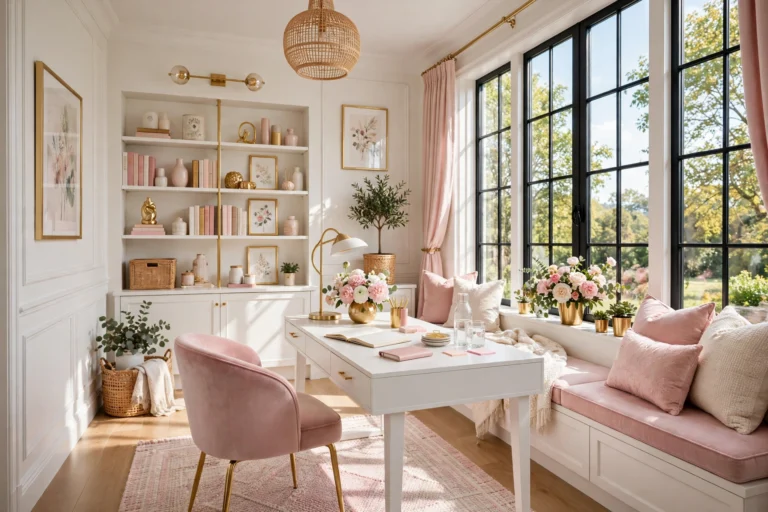
A velvet upholstered desk chair is the most glamorous option on this list, and it has become a favorite for home offices that appear on camera. The soft, rich fabric catches light beautifully, and deep colors like emerald, navy, or blush give the whole room a finished, intentional look. Under $300, you can find velvet chairs with a swivel base, adjustable height, and a generously padded seat.
Velvet needs a little more care than mesh or leather, since it shows dust and can mark where you sit. A quick brush or vacuum keeps it looking fresh. Comfort-wise, it sits between a task chair and an accent chair: supportive enough for a solid work session, but softer and less adjustable than a dedicated ergonomic chair. It is the right pick if your office is also your backdrop and you want the chair to earn compliments.
10. Molded Plastic Shell Chair
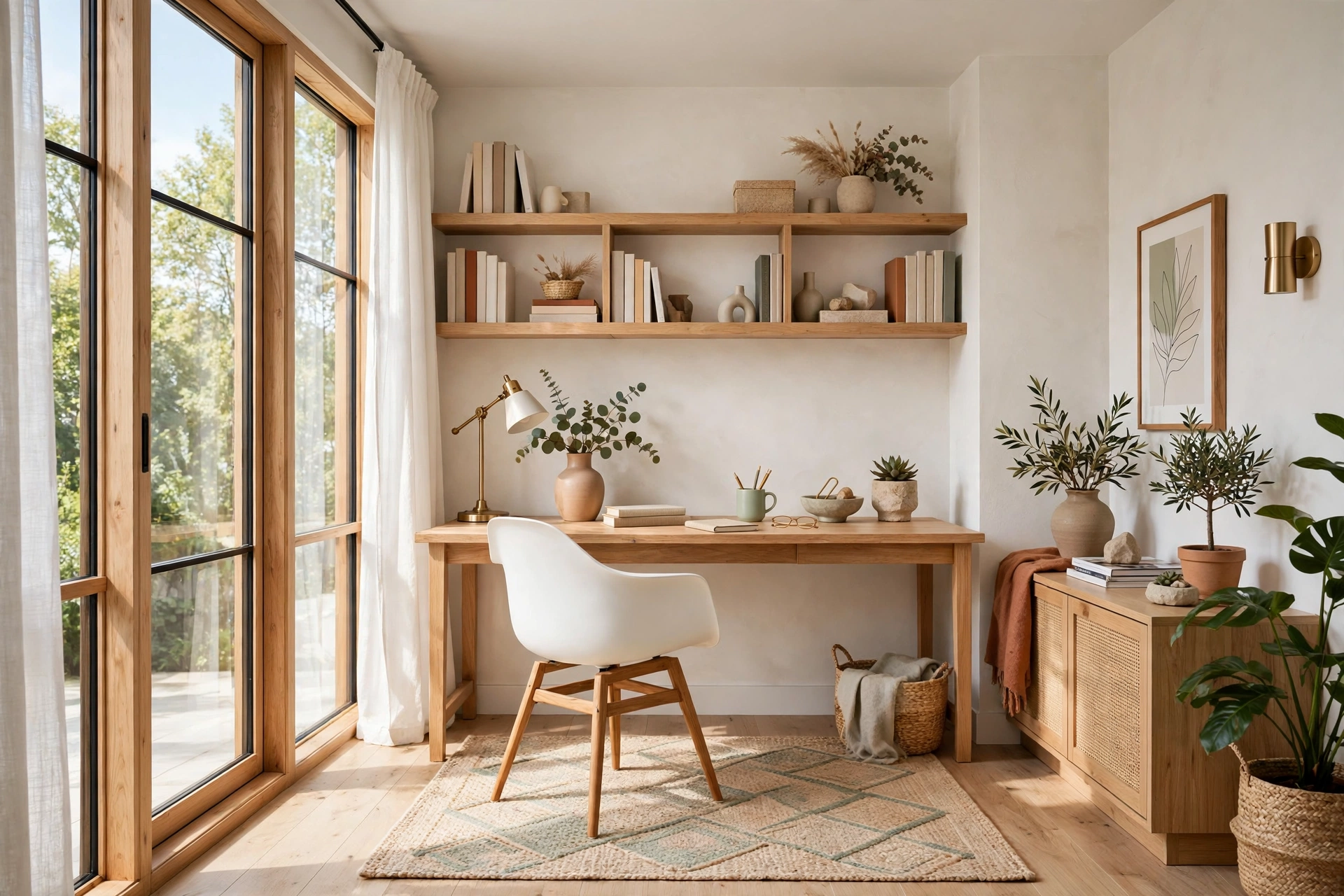
A molded plastic shell chair is the minimalist’s choice: one smooth, curved seat, four legs or a swivel base, and nothing extra. The curved shell cradles your body more than it looks like it would, and the simple shape works in almost any room, from a bright modern office to a small corner home office carved out of a living room. Because there are no cushions to sag or fabric to stain, it is also one of the easiest chairs to keep clean.
The catch is adjustability. Most shell chairs do not change height, and the fixed shape either fits your body or it does not, so try before you buy if you can. Add a thin seat cushion if you plan to sit for more than an hour at a stretch. For a secondary desk, a teenager’s study corner, or a room where you want the chair to disappear visually, it is hard to beat for the price.
11. High-Back Cushioned Task Chair
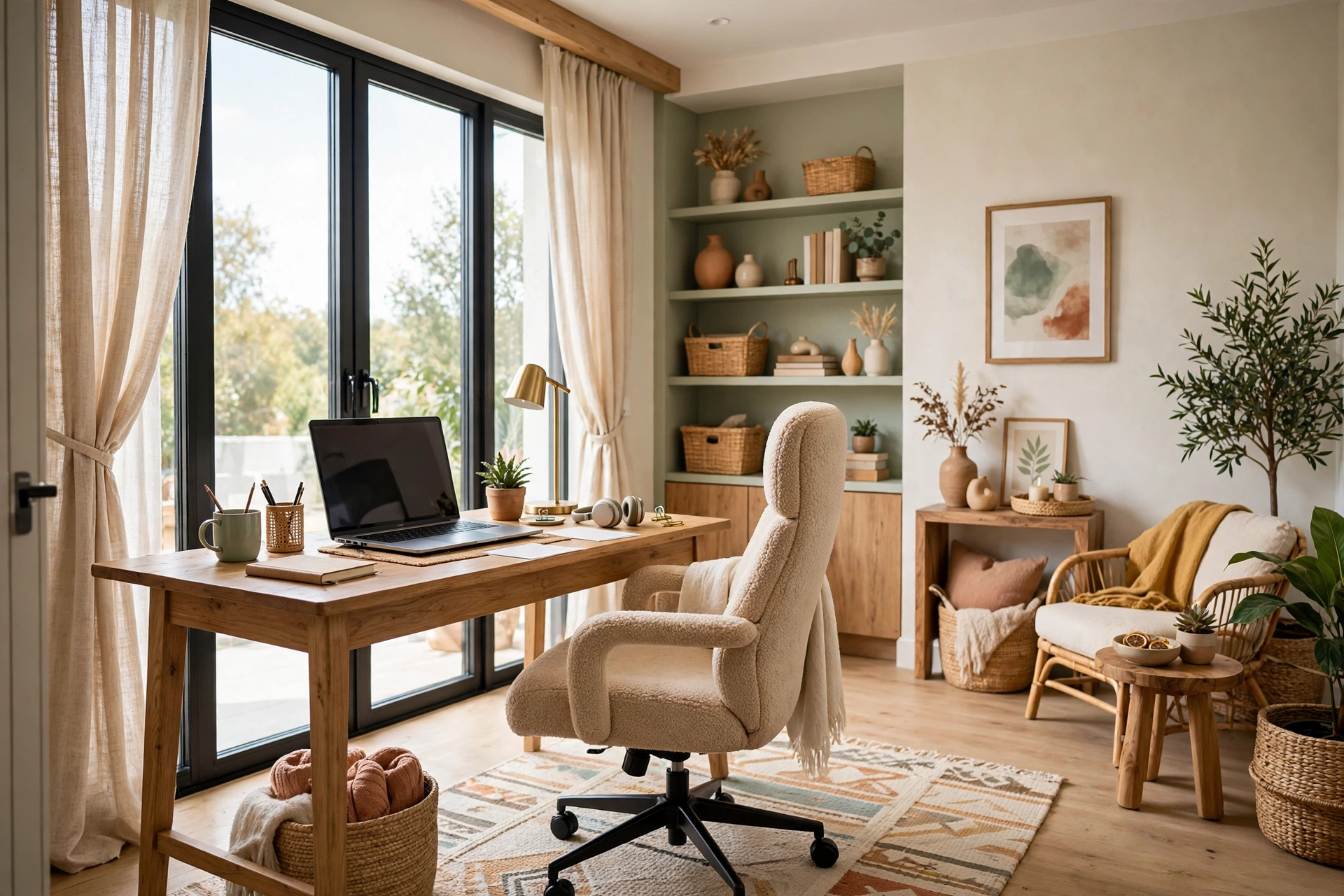
A high-back cushioned task chair is the cozy middle ground between a mesh task chair and an executive chair. The tall, padded backrest supports your shoulders and the back of your head, which makes it a good choice if you like to lean back during phone calls or while thinking through a problem. Most versions in this price range include adjustable height, tilt, and armrests, so you still get the practical features of a task chair.
The padding adds warmth, so it suits cooler rooms or people who run cold. Check that the headrest, if it has one, actually lines up with the back of your head rather than pushing it forward. If you spend long hours at your desk and want a chair that feels like a soft place to land at the end of a hard day, this is the style that delivers that feeling.
💡 Pro Tip: a high-back chair should support your shoulders without forcing your head forward. If the headrest pushes your chin down, the chair is the wrong size for you, not the wrong style.
12. Swivel Barrel Chair
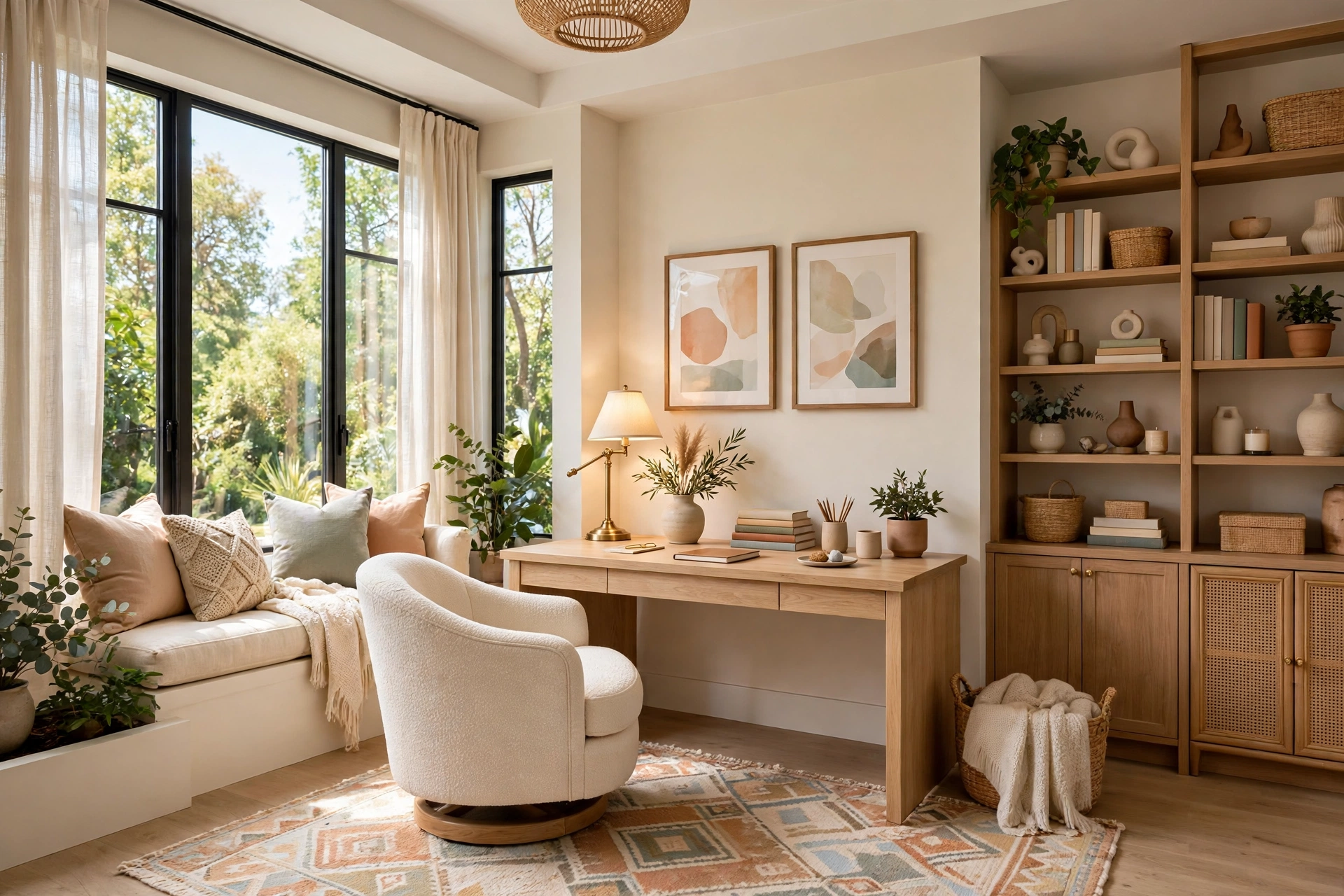
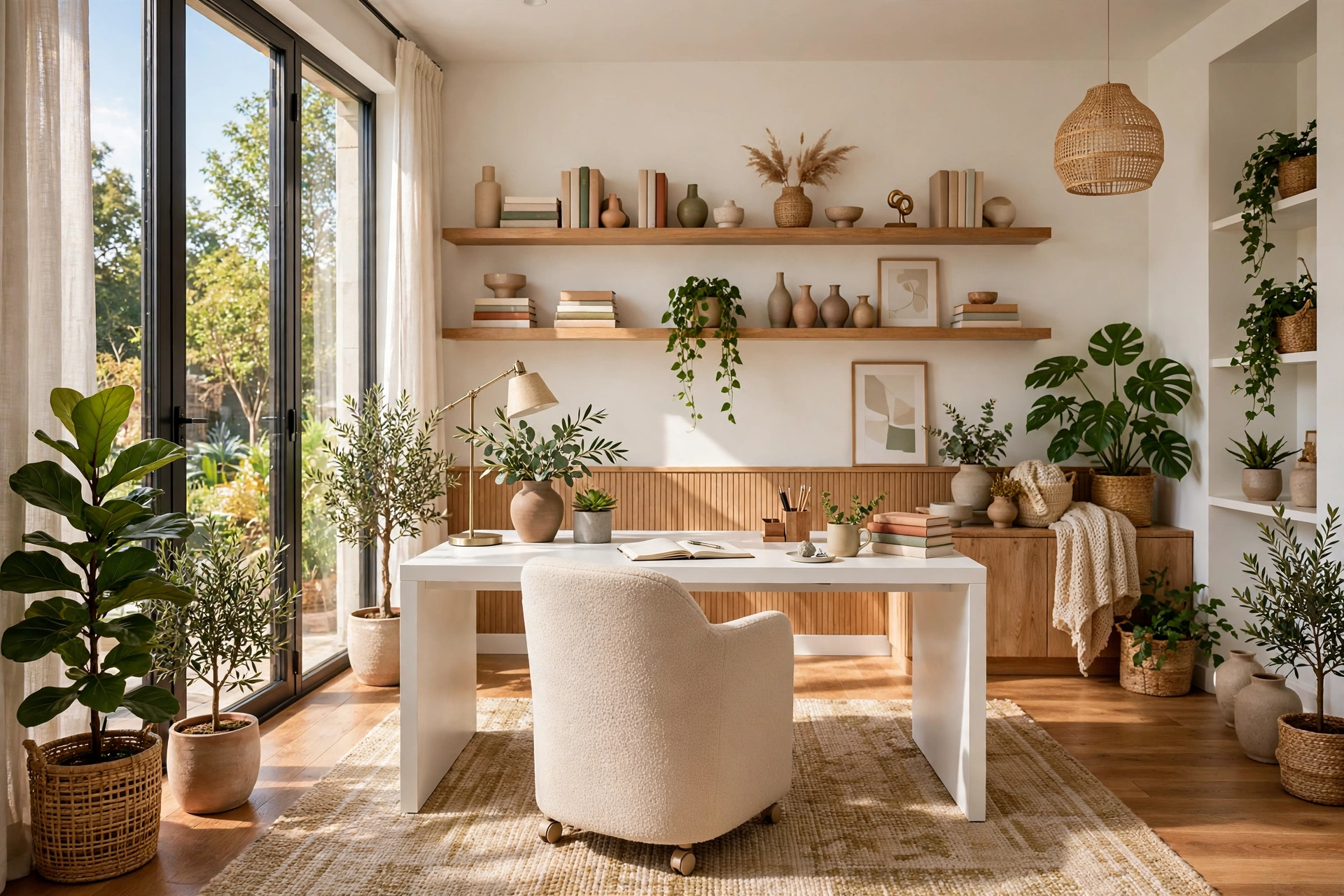
A swivel barrel chair wraps you in a curved, rounded back that feels a bit like sitting in a cozy cocoon. It turns smoothly on its base, so you can spin toward a window, a bookshelf, or a second screen without dragging the chair across the floor. The barrel shape looks soft and inviting, which makes it a lovely choice for a home office that should feel like a retreat rather than a workstation.
Support is gentle rather than structured, so a barrel chair suits shorter sessions, reading, and creative work more than marathon typing days. Look for one with a firm seat cushion, since a too-soft barrel seat can make it hard to sit upright at a desk. It pairs beautifully with a round side table and a warm lamp, and it brings a designer feel to the room for far less than a custom piece.
13. Mid-Century Modern Desk Chair
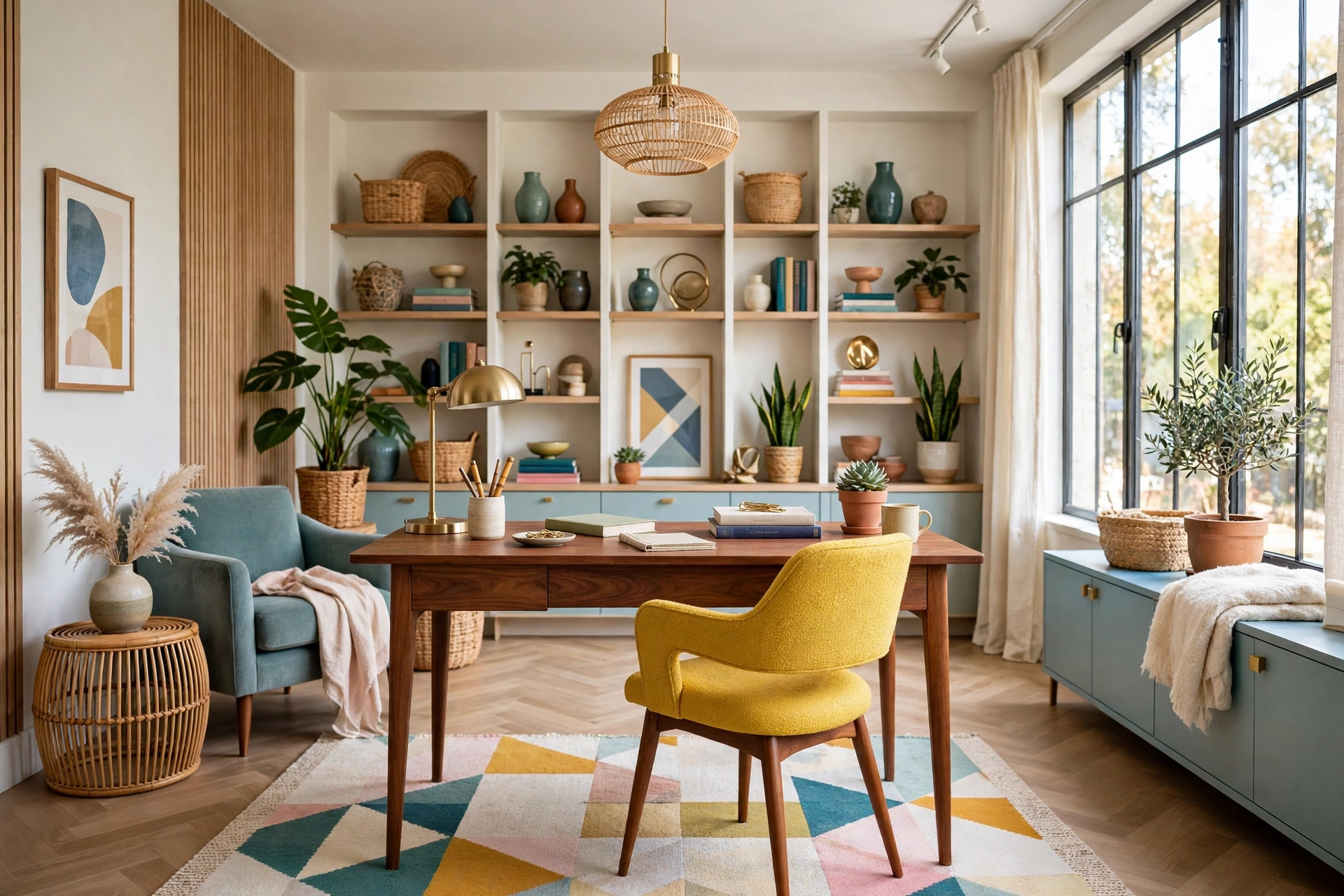
A mid-century modern desk chair is defined by clean lines, tapered wooden legs, and a simple upholstered seat, often in a muted fabric or leather-look material. It is the chair for people who want their home office to look like it belongs in a design magazine, and it works especially well in rooms with other mid-century pieces. A Japandi home office, with its mix of warm wood and calm neutrals, is a natural home for this style.
These chairs are usually fixed height with little adjustment, so measure carefully against your desk before buying. The seat tends to be firmer than a padded task chair, which some people prefer and others find tiring after a few hours. If your workday is broken up by meetings, errands, and time away from the desk, a mid-century chair gives you style and adequate comfort without turning the room into an office.
14. Fabric Task Chair with Flip-Up Arms
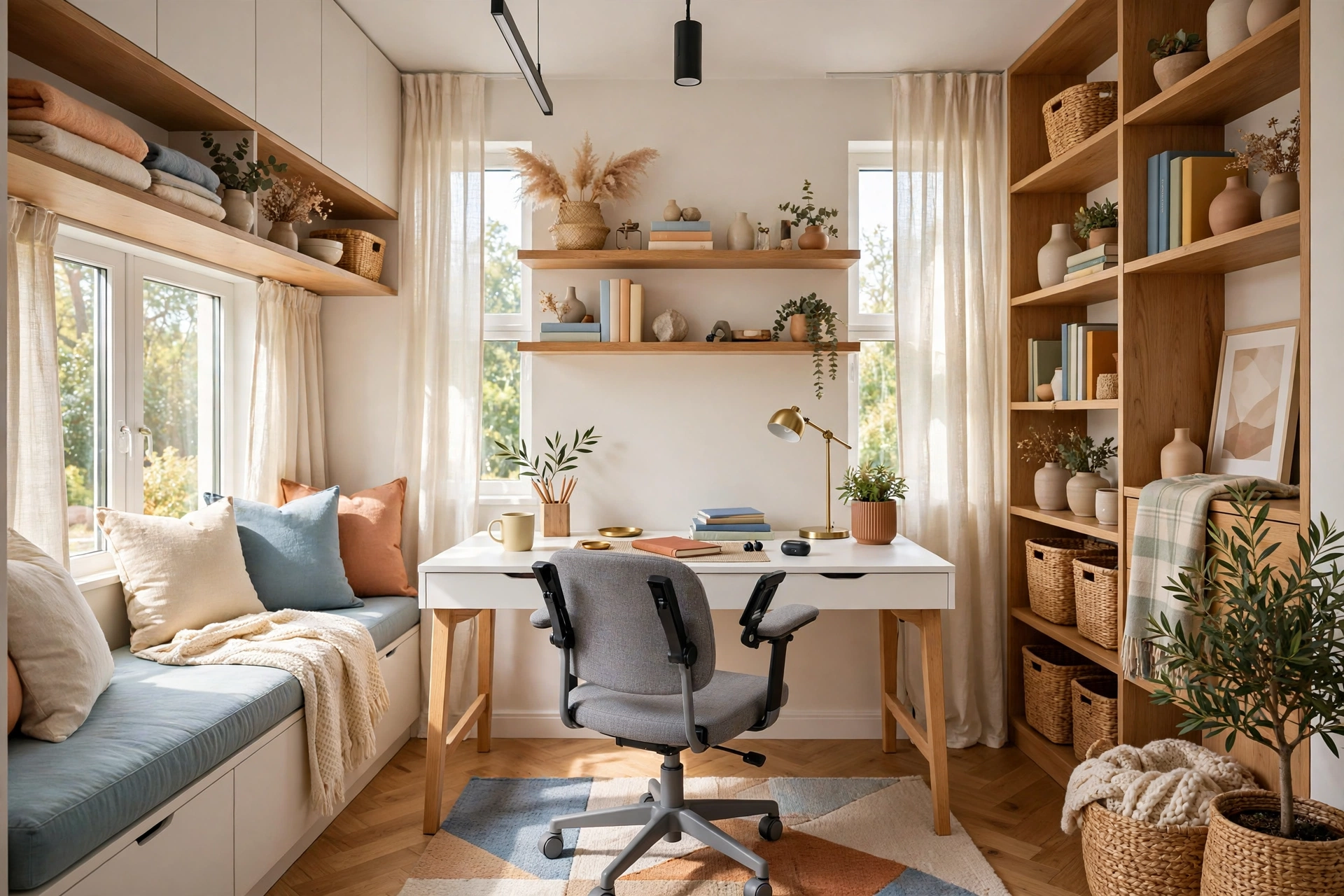
A fabric task chair with flip-up arms is one of the most practical styles for a small or shared home office. The fabric seat and back feel warmer and softer than mesh, while the flip-up arms solve a common problem: when you push the chair under the desk, the arms fold up and out of the way instead of catching on the desktop. That small feature makes a real difference in tight spaces.
Look for a version with a breathable fabric and a seat cushion thick enough to stay comfortable through a full workday. The flip-up arms also make the chair easier to slide in and out if you share the desk with someone else. It is a sensible, unglamorous pick that quietly solves more daily annoyances than almost any other chair on this list.
📌 Important: it keeps the arms from scraping the desk edge and lets the chair slide fully underneath, which makes a small office look noticeably tidier at the end of the day.
15. Balance Ball Chair
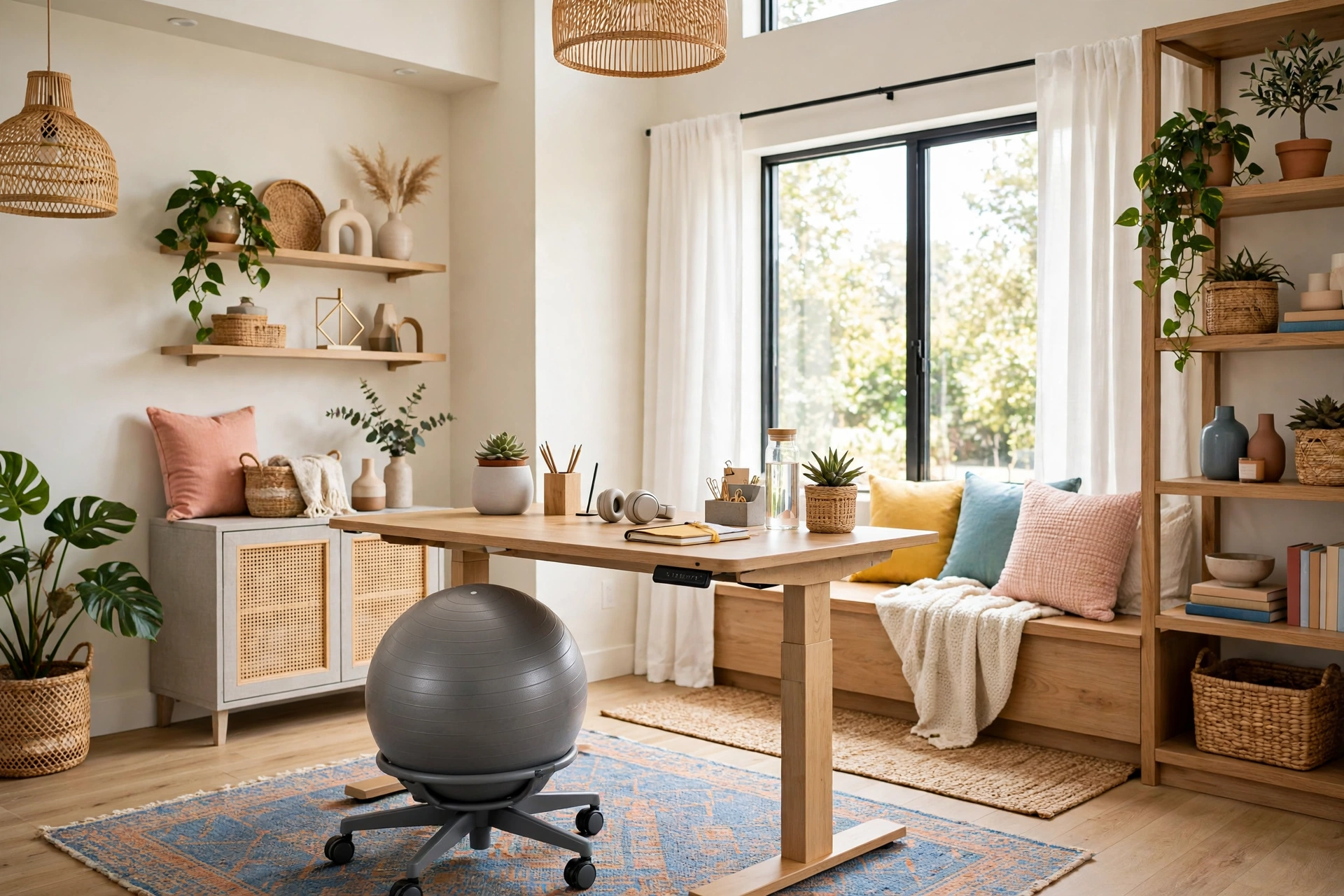
A balance ball chair replaces the traditional seat with a large exercise ball held in a frame or on a wheeled base. Sitting on it encourages small, constant movements that keep your core active, and many people find it helps them fidget less and focus more. It is the most affordable style on this list, and the ball itself is easy to replace if it ever loses firmness.
It is not a full-time chair for most people. Without a backrest, your core does the work of holding you upright, which gets tiring after an hour or two. Use it as a rotation chair alongside a regular task chair, switching in for part of the day. If you want to add movement to your workday without buying a standing desk, and you already have a solid setup with a dual monitor setup that keeps your screens at eye level, a balance ball chair is a fun, low-cost way to change how sitting feels.
Common Desk Chair Mistakes
Mistake 1: Buying a chair based on looks alone
A beautiful chair that hurts your back is a bad purchase, no matter how good it looks in photos. Always check the seat height, depth, and back support against your own body before falling in love with the style.
Mistake 2: Choosing the wrong seat height for your desk
If your chair is too low, your shoulders hunch up toward your ears. If it is too high, your feet dangle and your legs go numb. Measure your desk height first, then choose a chair whose adjustable range puts your elbows at desk level with your feet flat.
Mistake 3: Ignoring the seat depth
A seat that is too deep presses into the back of your knees and cuts off circulation, while a seat that is too shallow leaves your thighs unsupported. The right depth leaves a small gap between the seat edge and the back of your knees.
Mistake 4: Forgetting about the floor underneath
Hard casters on a wood floor will leave marks within weeks, and a heavy chair on a thin rug will sink and drag. Match your casters to your floor, or add a chair mat or low rug before the damage starts.
Mistake 5: Skipping the test sit
Ten seconds in a showroom tells you almost nothing. Sit for ten minutes, adjust everything, lean back, and type for a while if you can. A chair that feels fine for a moment can feel very different after an hour.
Frequently Asked Questions
1. What is the best desk chair for a home office under $300?
The best desk chairs home office shoppers can buy under $300 depend on how long you sit each day. For all-day work, an ergonomic mesh task chair or an adjustable lumbar-support chair is the safest choice. For shorter sessions or a style-first room, a velvet, wooden, or mid-century chair may suit you better.
2. How much should I spend on a home office chair?
You can get a genuinely comfortable chair for under $300 if you prioritize adjustability and fit over brand names. Spend the most on the features you will use daily, like height adjustment and lumbar support, and less on decorative extras.
3. Are mesh chairs comfortable for long workdays?
Yes, mesh chairs are comfortable for long days because the breathable back keeps you cool and the flexible material moves with your back. Look for one with a padded seat and adjustable lumbar support, since a mesh back alone does not guarantee good lower-back support.
4. Can I use a dining chair as a desk chair?
You can for short sessions, but most dining chairs sit at the wrong height for a desk and offer no adjustability or lumbar support. If you work at a desk for more than an hour or two a day, a proper desk chair will feel noticeably better.
5. What chair is best for a small home office?
An armless chair or one with flip-up arms works best in a small space, because it slides fully under the desk when you are done. A small home office setup ideas guide can also help you plan the whole room so the chair, desk, and storage fit without crowding each other.
6. Do I need armrests on my desk chair?
Armrests help if you spend long hours typing, since they take weight off your shoulders, but they are not essential for everyone. If your desk is small or you move around a lot, armless or flip-up arms give you more freedom.
7. How do I know if a chair fits me?
Sit with your feet flat on the floor, your knees at about a right angle, and your elbows level with the desk. There should be a small gap between the seat edge and the back of your knees, and the backrest should support the natural curve of your lower back without pushing you forward.
Conclusion
The best desk chair for your home office is the one that fits your body, your desk, and the way you actually spend your workday. An ergonomic mesh chair will serve you well for long hours, a velvet or wooden accent chair will make the room feel finished, and a kneeling chair or balance ball chair can add welcome variety to a day spent sitting. None of these styles requires a big budget, and each one has a clear strength that suits a different kind of worker.
Start by measuring your desk and your own seated height, then shortlist two or three styles from this guide that match how long you sit and how your room looks. Sit in them if you can, check the price band against your budget, and choose the chair that feels right after ten minutes, not ten seconds. Your back, your focus, and your home office will all be better for it.