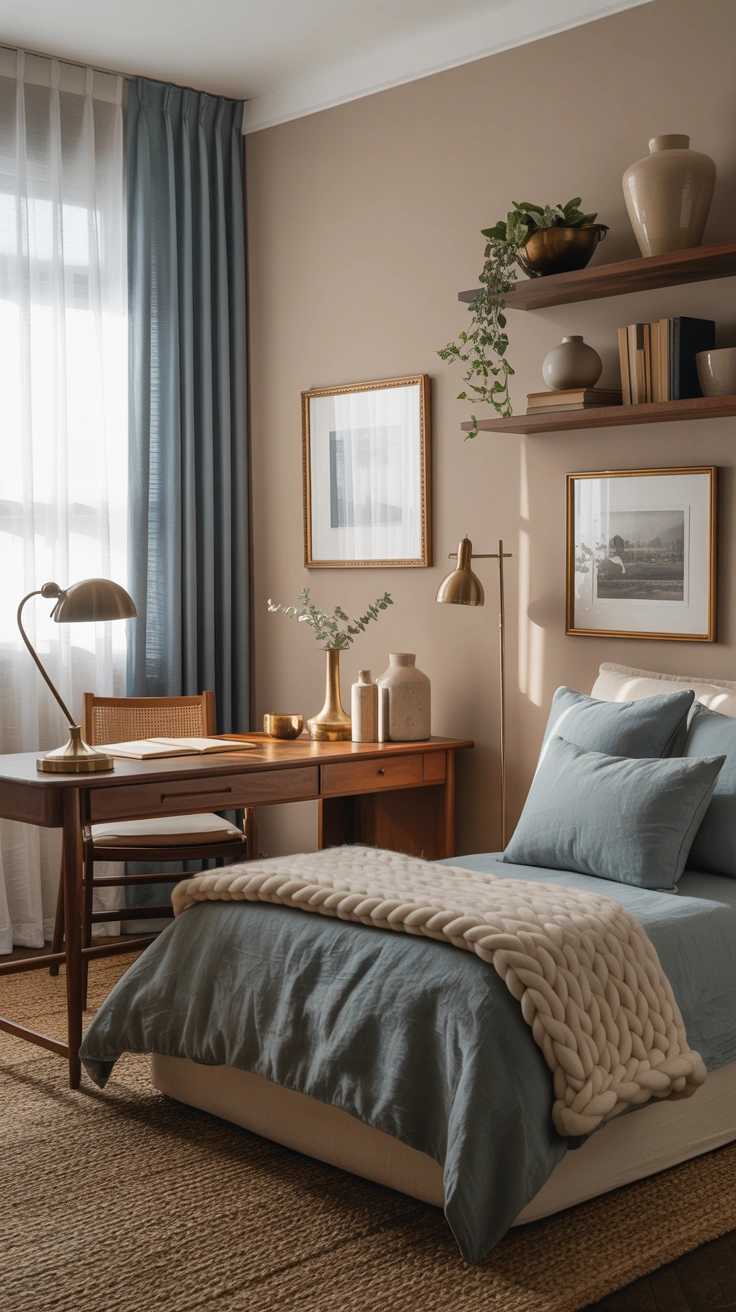
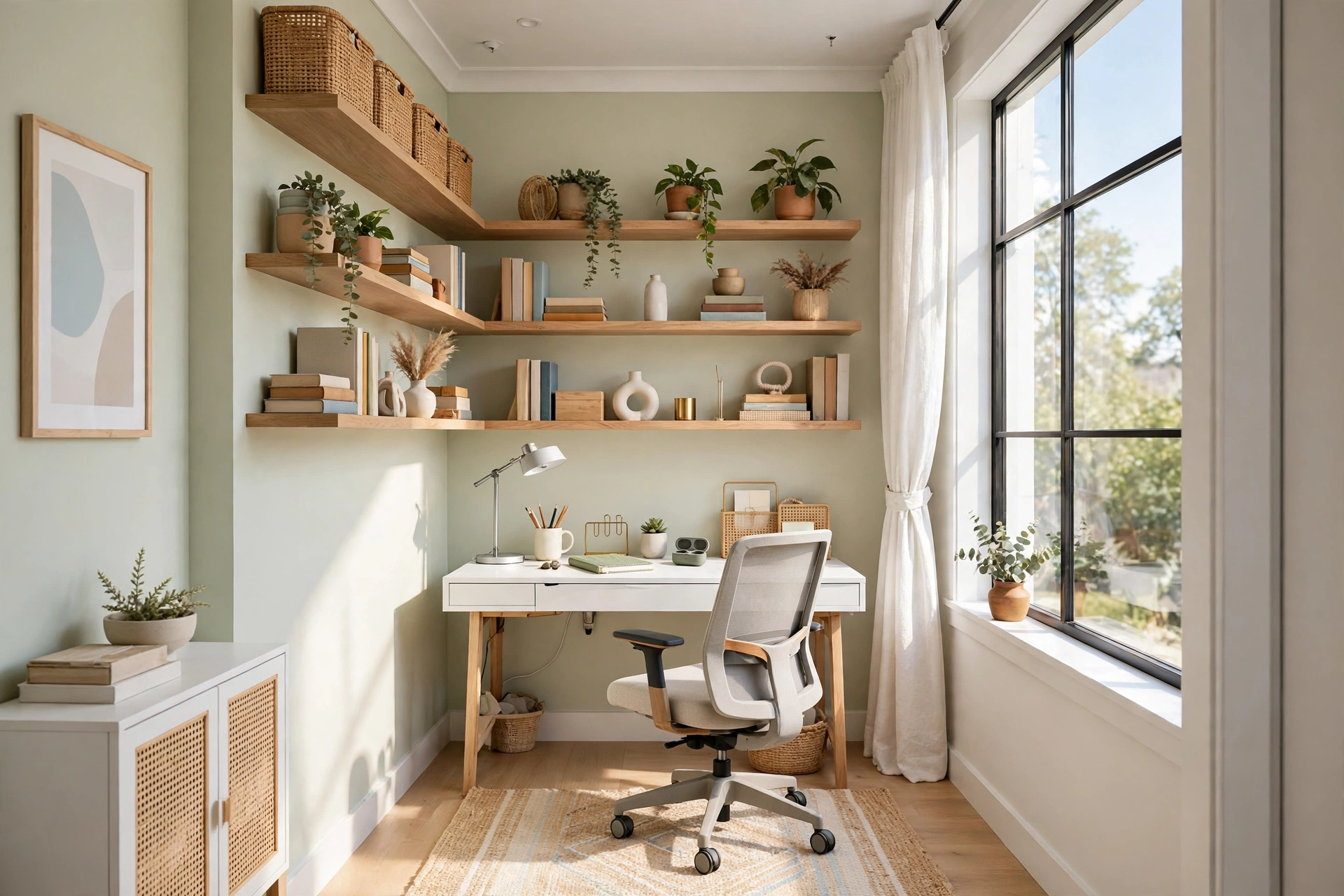
15 Small Home Office Setup Ideas for Spare Rooms and Corners
Introduction
A spare room or an empty corner is all you need for a home office that actually works. You do not need a dedicated study, a renovation, or a designer budget to carve out a productive workspace — you need a clear plan, the right furniture for the footprint you have, and a setup that respects how you really work. The best small home office setup ideas start with the space you already own: the guest room that sits empty eleven months a year, the hallway nook nobody uses, or the quiet corner of your bedroom that could hold a desk and a chair.
This guide walks through fifteen ideas that turn spare rooms and corners into workspaces you will want to sit in every morning. They are ordered from the biggest decisions — where to put the desk and how to claim the space — to the finishing touches that keep a small office calm and organized. If you have already explored general home office decor ideas, this list takes that foundation and applies it to tight footprints and shared rooms. Most of these ideas cost very little and can be done in a weekend, and together they turn an underused corner of your home into a workspace that earns its keep.
Below are fifteen small home office setup ideas, from corner desks and closet offices to floating shelves, cable management, and lighting that makes a tiny space feel bigger. The checklist after idea three will help you plan your setup before you spend anything, and the comparison table after idea five sums up cost and effort at a glance. Whether you work from home full time or just need a quiet corner for emails and planning, you will find a starting point here that fits your space and your budget.
1. Claim a Corner with a Compact Corner Desk
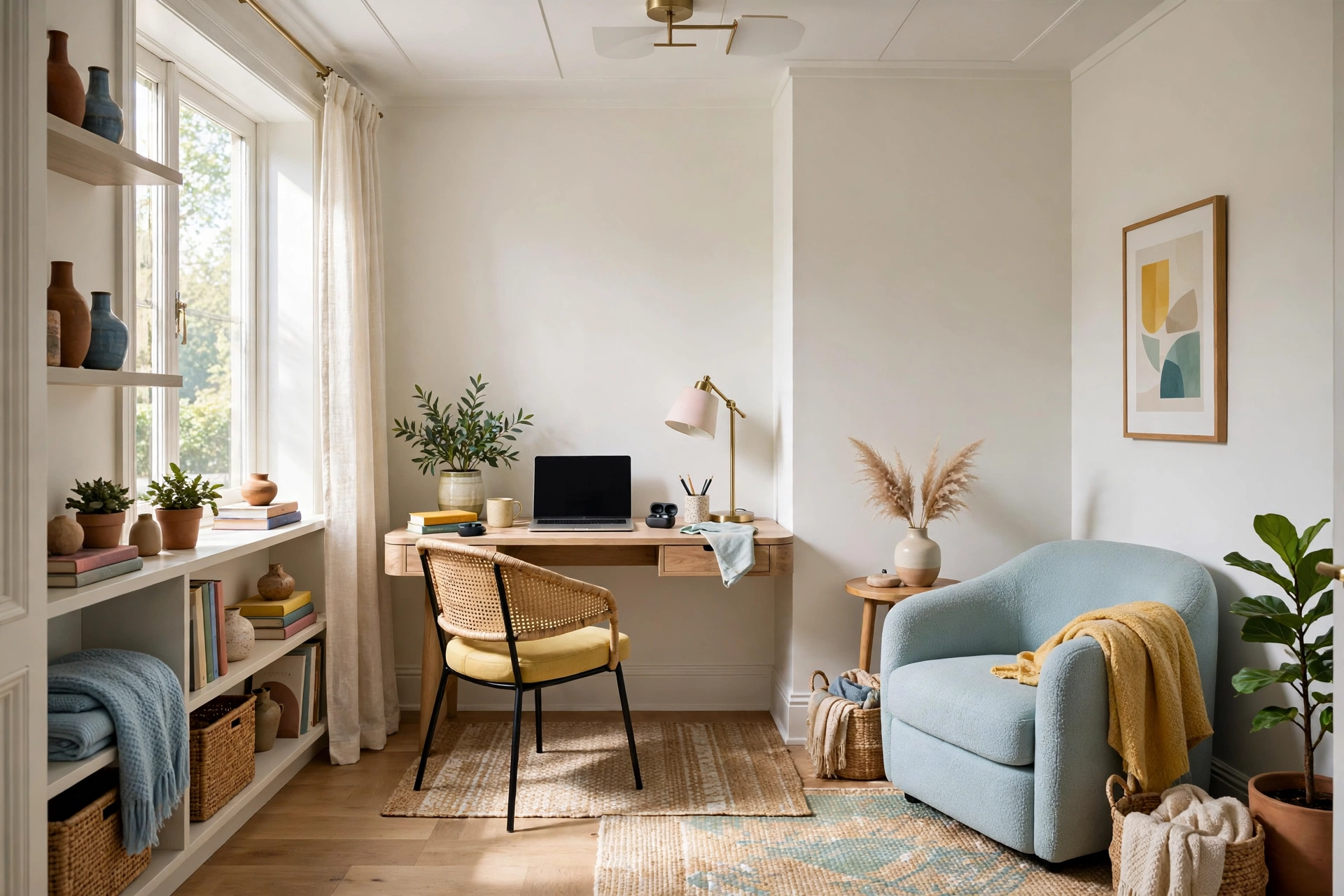
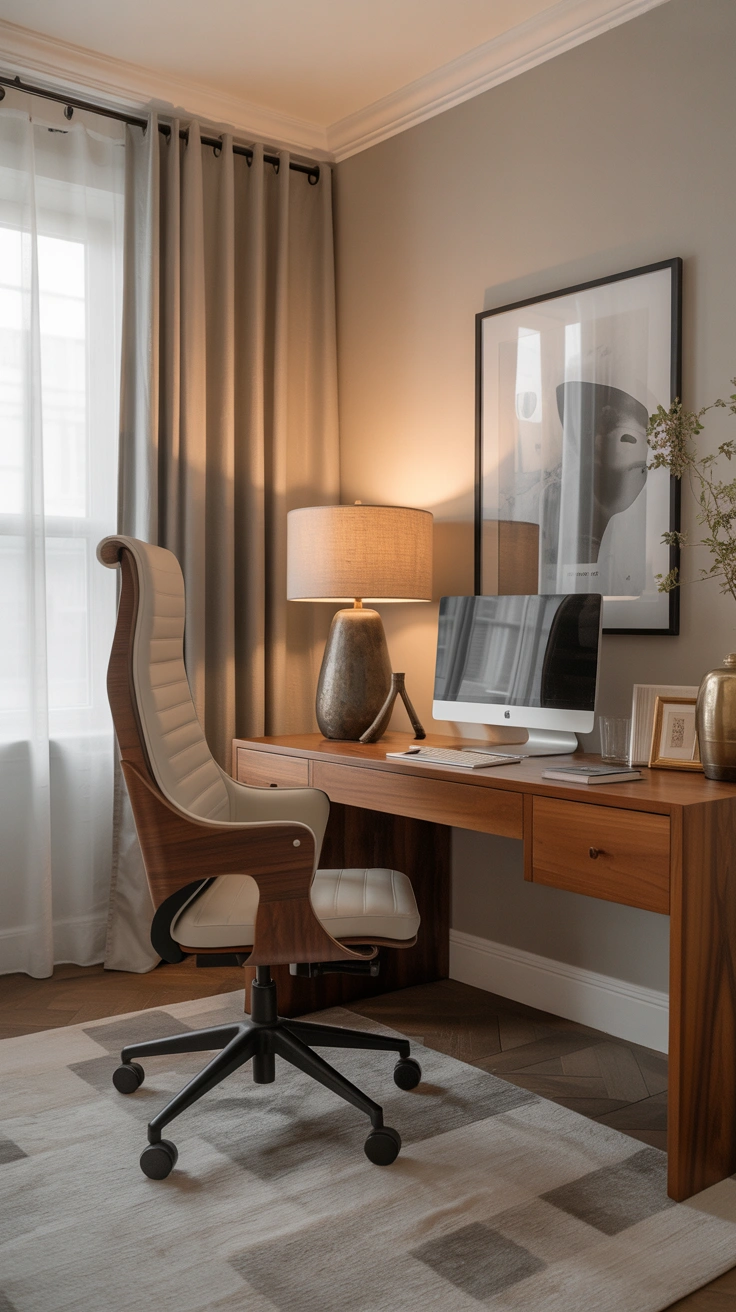
A corner is the most underused square footage in any room, and a corner desk is the single best way to claim it. A triangular or L-shaped desk tucks neatly into two walls at once, giving you a surprisingly generous work surface without blocking the walkway or swallowing the room. Look for a desk around 120 to 140 centimeters wide on each side, with a depth of 50 to 60 centimeters — deep enough for a laptop, a notebook, and a cup of tea, but shallow enough to keep the corner feeling open.
Style the corner so it reads as a deliberate workspace rather than a desk shoved into a gap. A small desk lamp, a plant in the far corner, and a framed print on one wall instantly signal that this spot has a purpose. Keep the second wall for a pinboard or a floating shelf rather than more furniture, so the corner feels layered instead of crowded. If the corner is in your bedroom, choose a desk finish that matches your existing furniture so the office blends in instead of announcing itself; the bedroom decorating for beginners rule — one palette, one clear surface — keeps it feeling like a bedroom. A corner desk costs less than a full workstation, takes an hour to assemble, and gives you a real office in space you were not using at all.
2. Turn a Spare Room into a Dual-Purpose Office
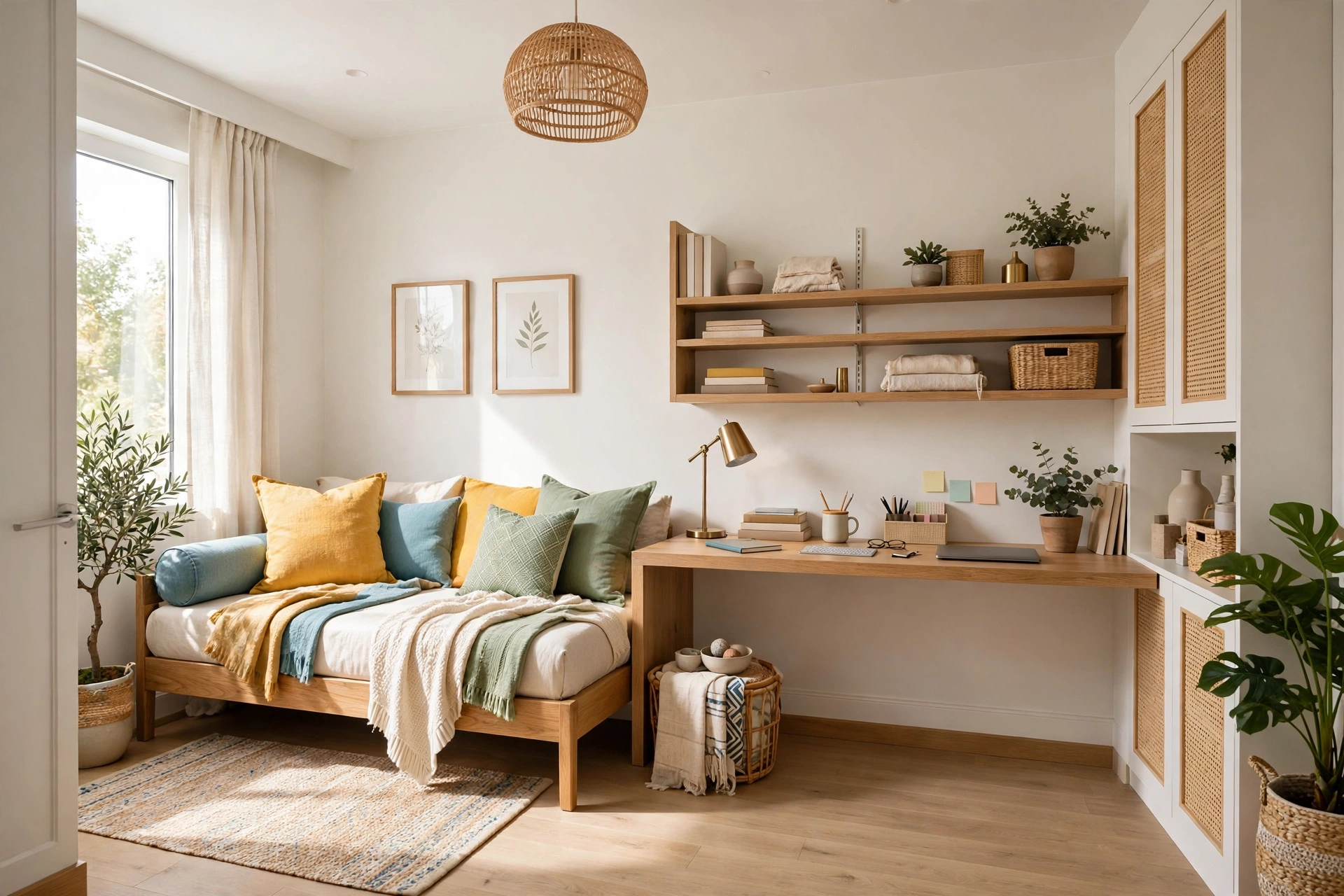
A spare room that only hosts guests a few times a year is wasted space, and a dual-purpose office is the fix. Keep the guest bed — a daybed or a sofa bed works best — and build the office around it. Place the desk against the longest wall, keep the bed dressed as a sofa during the day, and add a room divider or a tall bookshelf if you want the two zones to feel separate. The room stays guest-ready, and you get a proper office for the other 350 days of the year.
The trick is to let the office be the room’s everyday identity and the guest room be the occasional one. The same principles that make small space decorating for beginners work — measure first, zone clearly, keep one surface free — apply here too. Choose office furniture in the same palette as the bedding and curtains so the two functions feel like one calm room instead of a collision. A folding screen, a curtain on a ceiling track, or a bookshelf turned sideways can hide the bed on workdays and hide the desk when guests arrive. Add a small lockable drawer for work papers so the room can be handed over in ten minutes. When you arrange furniture with both uses in mind from the start, neither one feels like an afterthought.
3. Build a Closet Office (Cloffice) in an Unused Closet
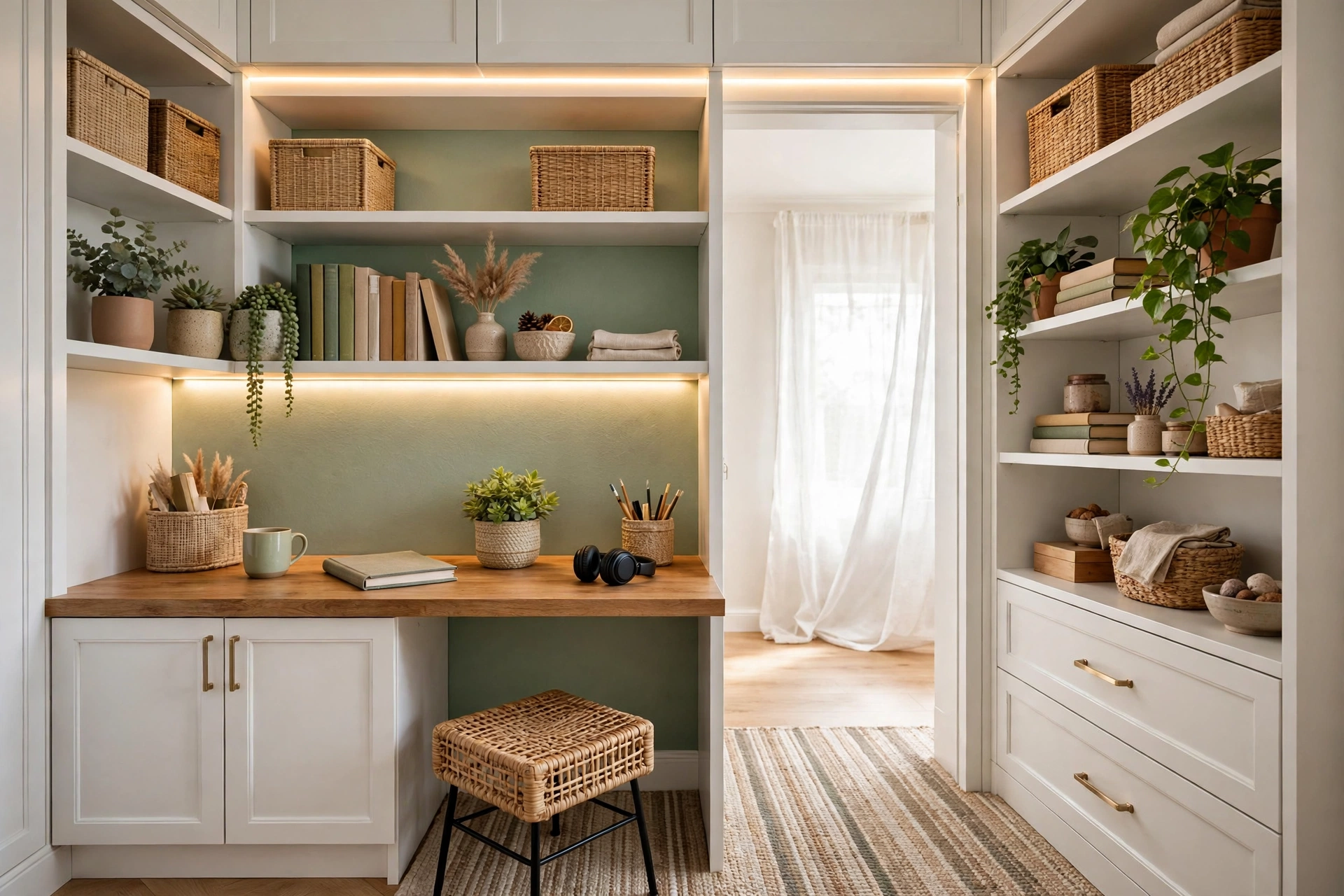
An unused closet is a ready-made office with walls, a door, and a surprising amount of depth. Remove the doors or replace them with a curtain, install a desktop across the closet at sitting height, add two shelves above it, and you have a cloffice that closes away at the end of the day. A standard closet is about 60 centimeters deep, which is exactly the depth a laptop setup needs, and the side walls are perfect for a small shelf, a task light, and a pinboard.
Light is the one thing a closet office needs help with, so plan it first. A battery-powered LED strip under the top shelf, a clip-on desk lamp, and a pale paint color inside the closet keep the space bright and workable. Paint the interior a light warm white or a soft sage so it feels like a room rather than a cupboard, and add a small mirror on one side wall to bounce light around. A stool that slides fully under the desk lets you close the curtain and hide the whole office in seconds. For renters, a cloffice is ideal: everything is removable, nothing is drilled into a structural wall, and the room returns to a closet when you move out.
Small Home Office Setup Quick-Start Checklist
- ✅ Measure your corner or spare room twice: wall length, door swing, and outlet positions.
- ✅ Choose the desk before anything else: it sets the size of every other decision.
- ✅ Put the desk side-on to a window when you can, for daylight without screen glare.
- ✅ Map your outlets and plan one cable-management solution before plugging anything in.
- ✅ Decide what the room must still do: host guests, store clothes, or stay a bedroom.
- ✅ Pick one calm color palette so a dual-purpose room feels like one room, not two.
- ✅ Leave one surface completely clear so clutter has nowhere to spread.
4. Use a Floating Desk to Save Floor Space
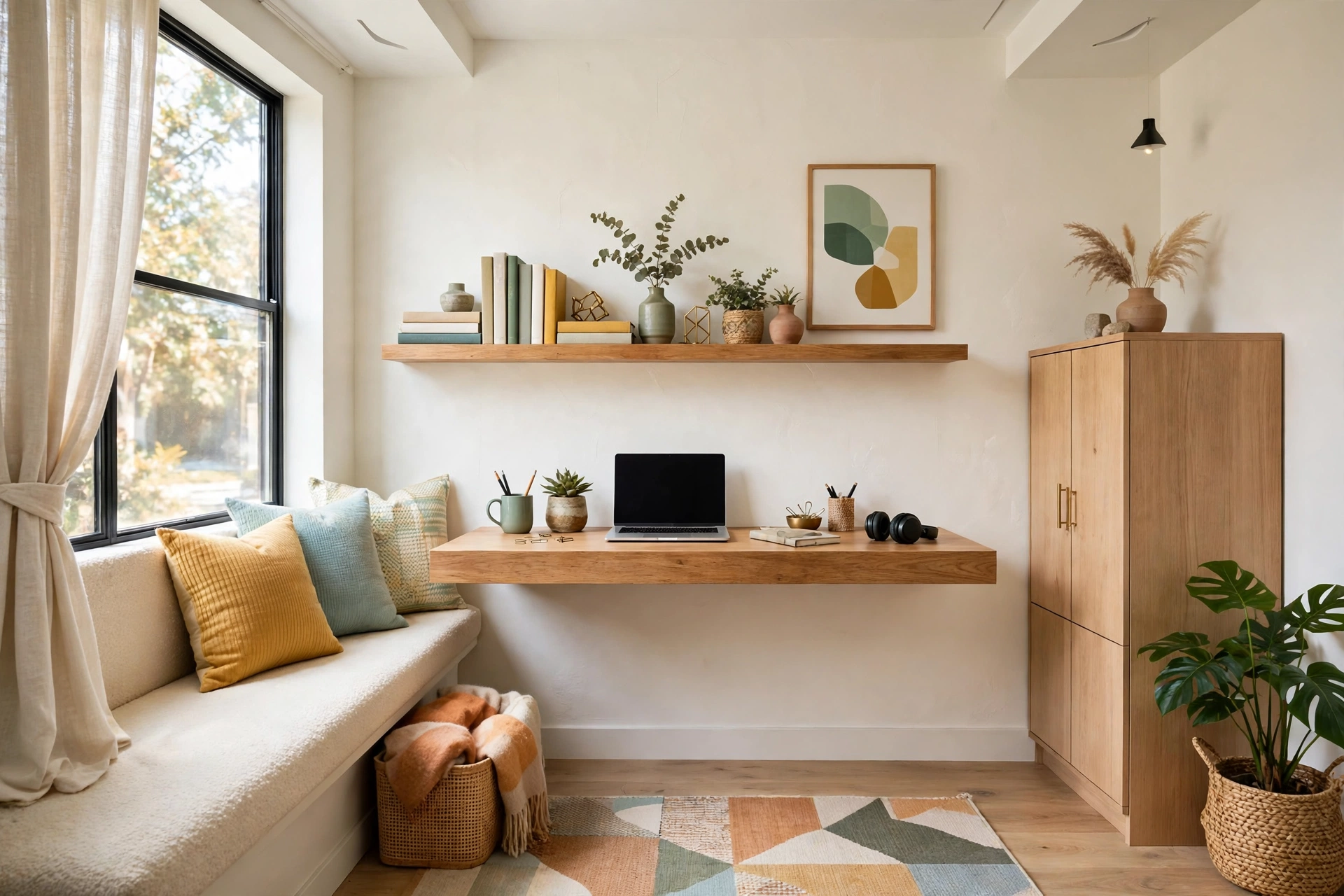
A floating desk — a desktop mounted directly to the wall with no legs — is the best friend of a tiny home office. It frees the entire floor underneath, which makes the room feel bigger and gives you somewhere to tuck a stool, a footrest, or a storage basket. A wall-mounted desk at standard desk height, around 74 centimeters, works for most people, and you can mount it at exactly the height that suits your chair and your body.
Installation is simpler than it looks: a sturdy desktop board, two or three heavy-duty wall brackets into studs, and a level. Choose brackets rated well above the weight of your equipment, and always anchor into studs rather than drywall alone. Add a small floating shelf above the desk for books and a plant, and a cable tray underneath to keep cords off the floor. The result is a workspace that looks built-in, costs less than most desks, and leaves your floor completely clear — which is the single biggest visual win in a small room.
5. Zone the Space with a Rug and Lighting
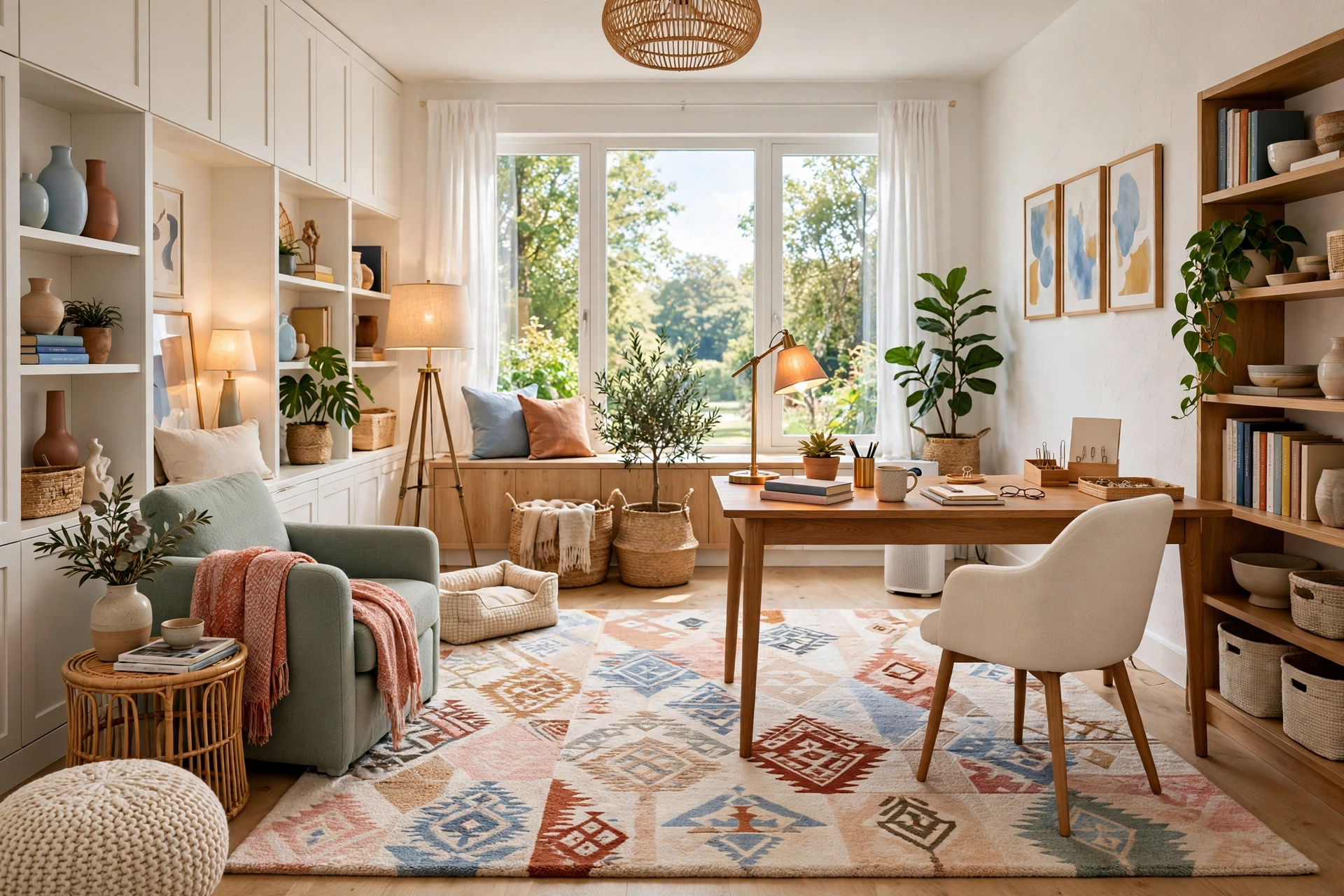
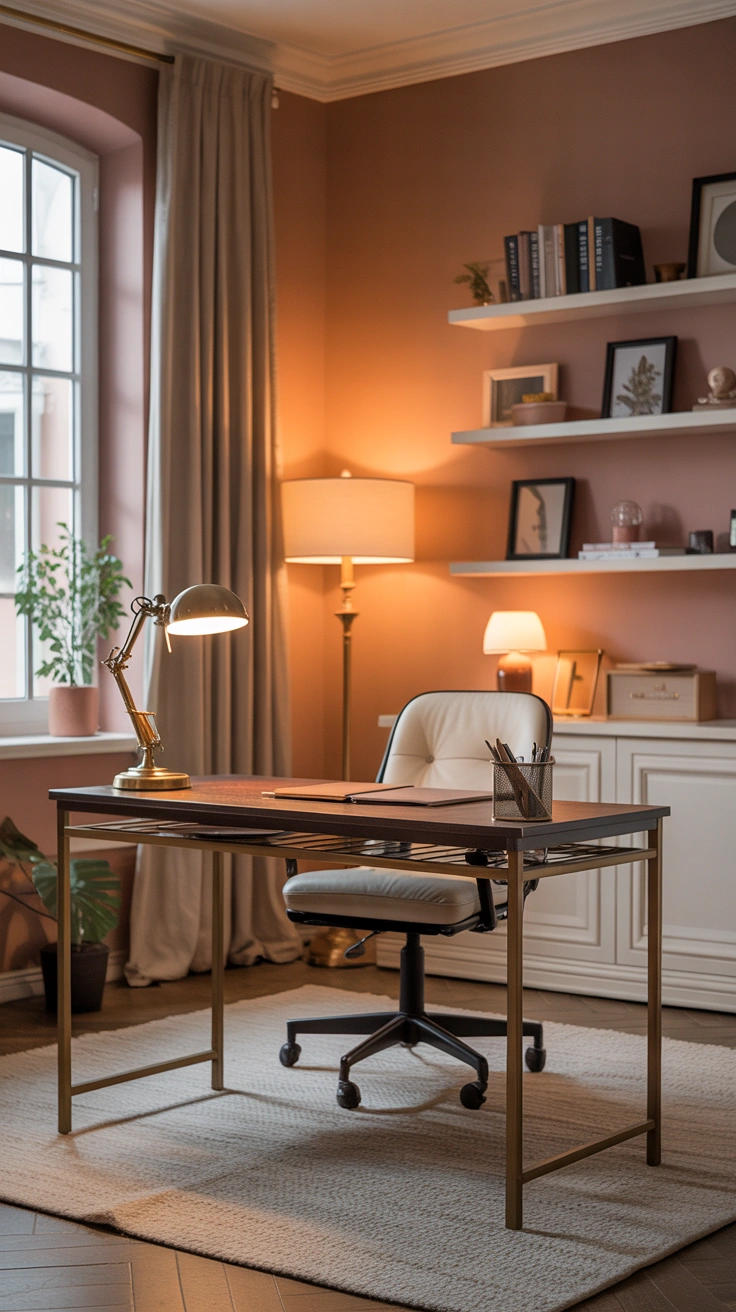
In a spare room or a shared corner, zoning is what tells your brain that this patch of floor is the office. A rug under the desk and chair does most of the work: it defines the boundary, softens the sound, and anchors the furniture so the setup looks intentional. Choose a rug large enough that the chair stays on it when you roll back — about 120 by 180 centimeters for a single desk — in a low-pile weave that a chair can roll over easily.
Lighting is the second half of the zone. A desk lamp with a warm bulb marks the workspace after dark, and a floor lamp or a wall sconce behind the desk creates a pool of light that separates the office from the rest of the room. Keep the color temperature consistent — warm white around 2700 to 3000 Kelvin feels calm and residential, while cool daylight bulbs feel clinical in a home office. When the rug and the light agree on where the office is, the rest of the room can stay a bedroom, a living room, or a guest room without any confusion.
Quick Comparison: Small Home Office Setup Ideas by Cost and Effort
6. Go Vertical with Shelves Above the Desk
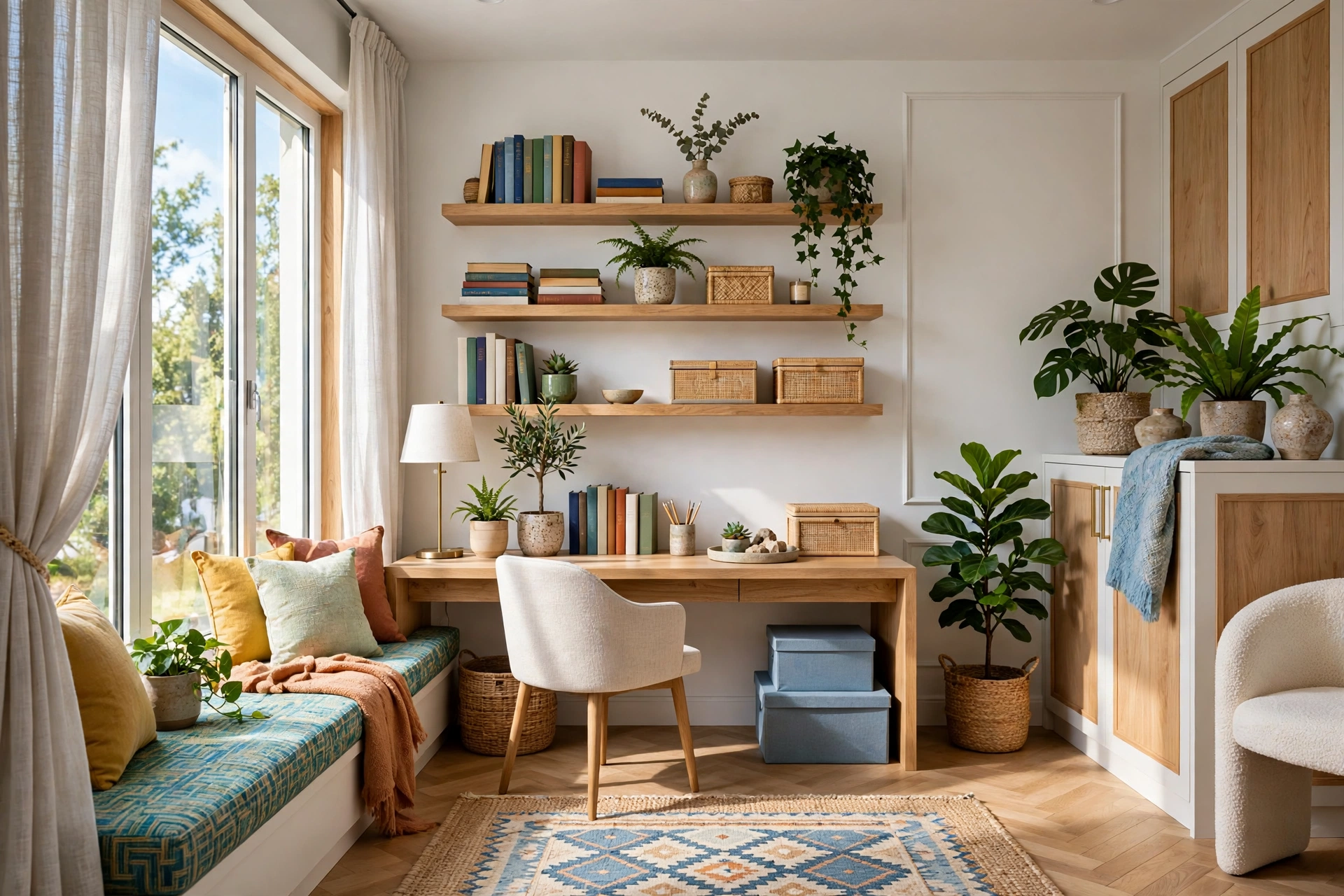
When floor space is scarce, the wall above your desk is free real estate. Two or three floating shelves above the desk hold books, files, plants, and pretty storage boxes without taking a single centimeter of floor. Keep the lowest shelf at least 45 centimeters above the desk surface so your monitor and your head have clearance, and keep the heaviest items on the lowest shelf where they are easiest to reach.
Style the shelves the way you would style a bookshelf: a mix of useful and beautiful, with books stacked horizontally, a small plant, and one or two closed boxes for the things you do not want to see. The classic 60-30-10 color rule works well here — sixty percent neutral, thirty percent your accent color, ten percent a deeper tone — so the shelves feel designed rather than cluttered. Leave one shelf partly empty on purpose; a little breathing room is what keeps a shelf wall from looking like a storage unit. Vertical storage is the cheapest way to double the capacity of a small office.
💡 Pro Tip: Mount shelves into wall studs or use heavy-duty wall anchors rated for the load. A shelf full of books is heavier than it looks, and a falling shelf is a disaster for both your laptop and your wall.
7. Choose a Chair That Slides Away Completely
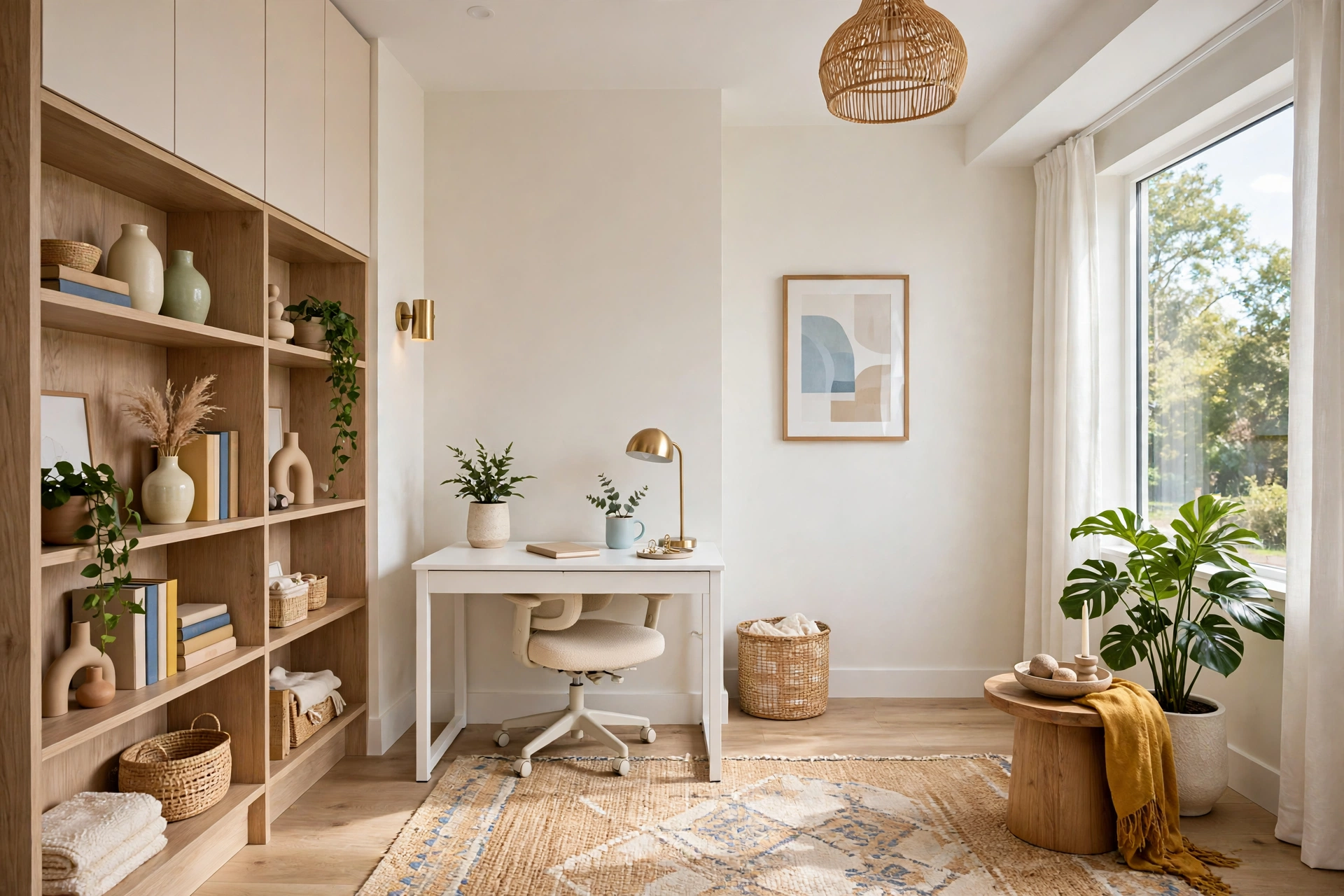
In a small office, the chair is the piece of furniture you see most — and the one that eats the most floor space when you are not using it. Choose a chair that slides fully under the desk or folds flat against the wall, so the room reverts to its other purpose in seconds. A compact task chair without armrests usually slides under a desk easily, while a folding chair or a stool can hang on a wall hook when the workday ends.
Comfort still matters, so do not trade your back for tidiness. Look for a chair with adjustable height, decent lumbar support, and a seat that lets your feet rest flat on the floor. If you work long hours, a compact ergonomic chair is worth the investment; if you work an hour or two a day, a well-chosen dining-style chair with a cushion does the job. The test is simple: sit, slide in, stand up, and push the chair away. If it disappears under the desk, your small office just gained a square meter of floor.
8. Hide Cables and Clutter in One Move
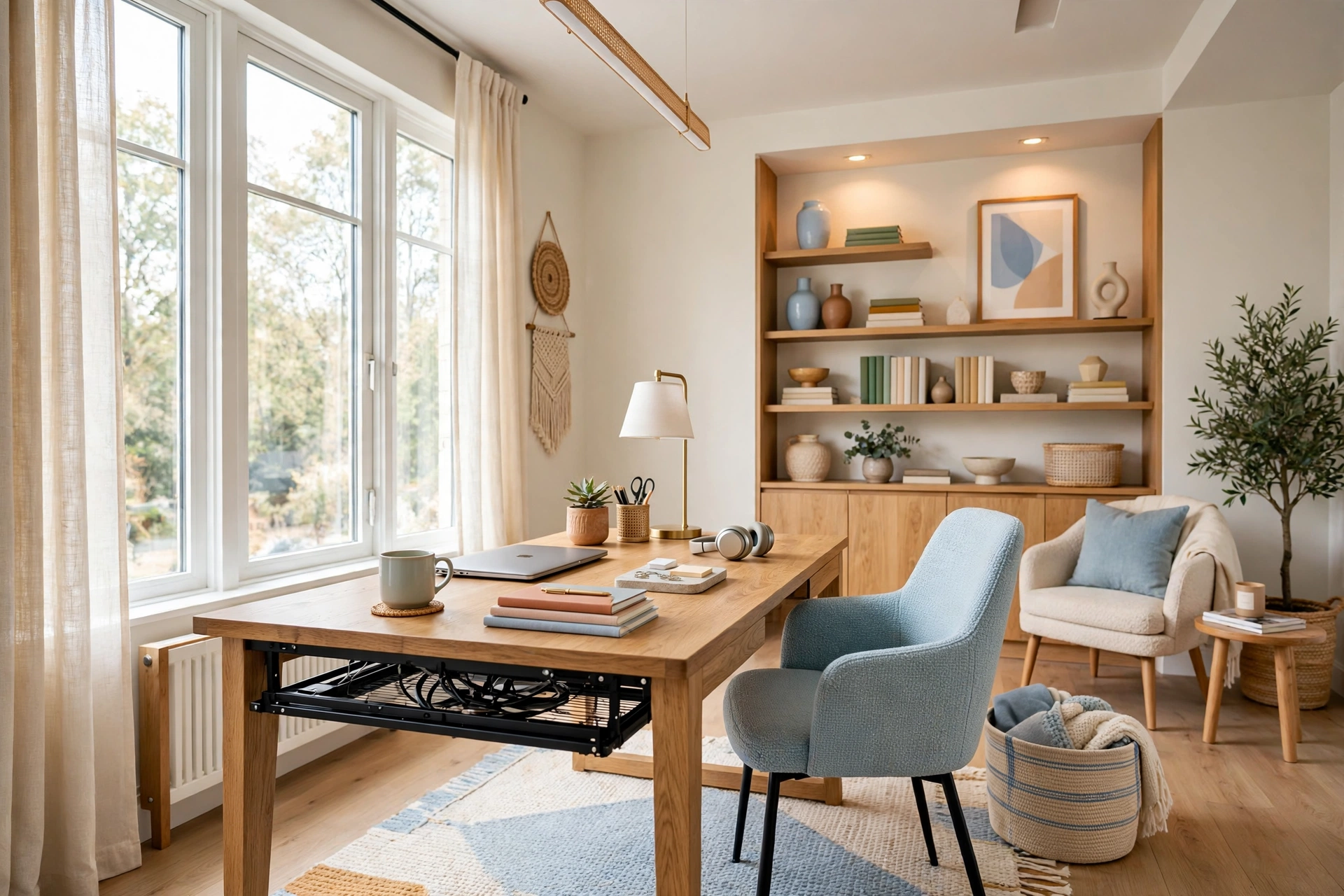
Cables are the fastest way to make a small office look messy, and they are also the easiest problem to solve. A cable tray or a simple adhesive cable channel under the desk gathers every cord into one neat run, and a power strip mounted under the desktop keeps plugs off the floor. Add a small basket or a fabric box beside the desk for chargers, notebooks, and the paper that accumulates during a workday, and the whole setup stays calm.
The rule is that everything has a home, and the home is closed or hidden. Open piles on a small desk read as chaos; the same items in a closed box read as organized. Run a weekly five-minute reset: clear the desk surface, return everything to its box or tray, and wipe the desktop. A small office cannot absorb clutter the way a big one can, so the systems matter more than the square footage. One cable tray, one power strip, and one closed box will transform how your office looks and feels.
9. Add a Room Divider for Privacy in Shared Rooms
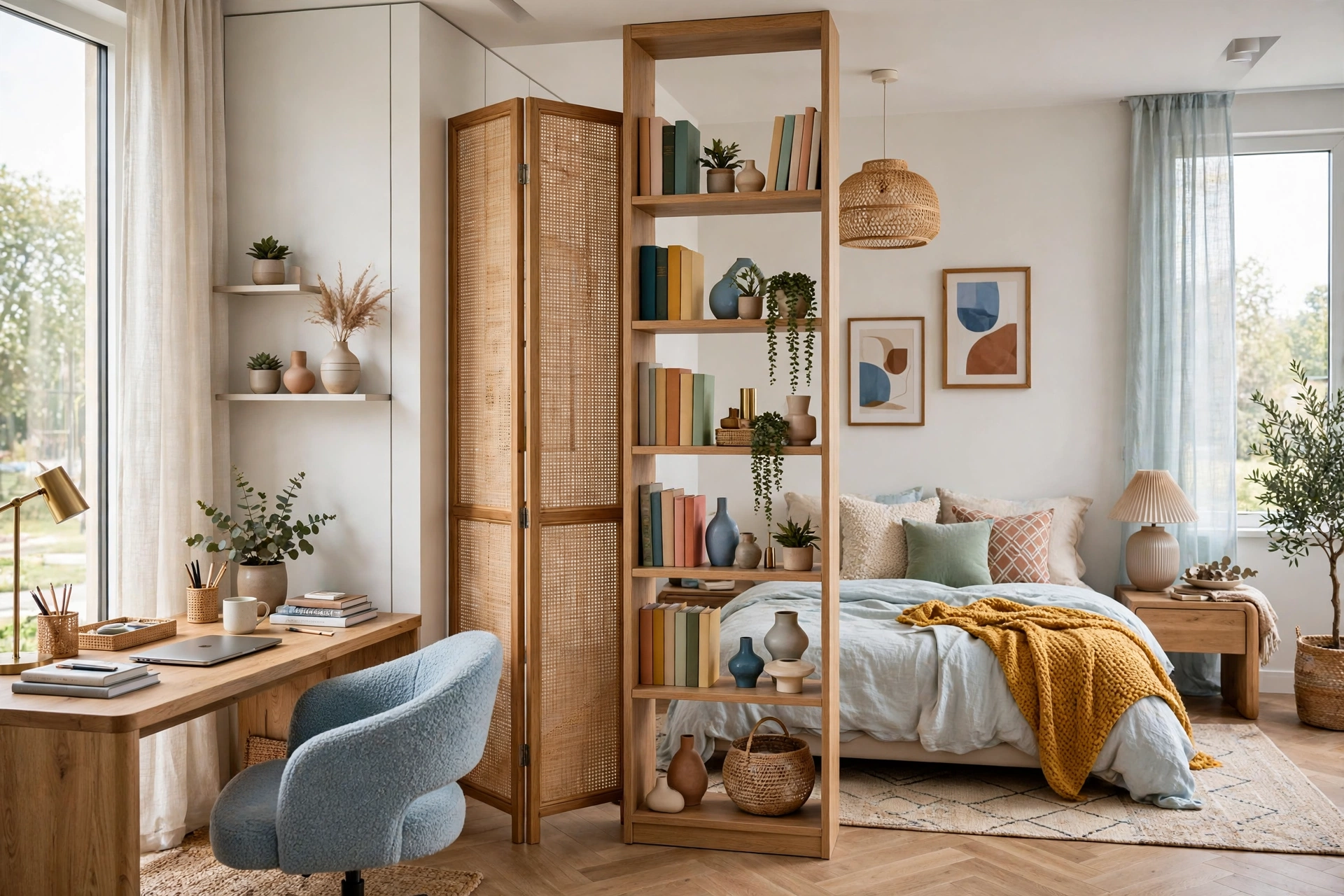
When your office shares a room with a bed or a sofa, a room divider gives you privacy without a renovation. A folding screen, a tall open bookshelf, or a curtain on a ceiling track creates a visual boundary that tells everyone — including you — that this corner is a workplace. A bookshelf divider is the hardest-working option because it stores things on both sides while dividing the space.
Choose a divider that lets light through if the room is small: an open-frame bookshelf, a screen with fabric panels, or a curtain in a light linen. A solid, heavy divider in a tiny room will make the space feel smaller and darker, which defeats the purpose. Position the divider so it blocks the view of the bed or the television from your desk, not so it blocks your window. The goal is a boundary you can see and feel, not a wall. When the workday ends, fold the screen away or draw the curtain back, and the room is whole again.
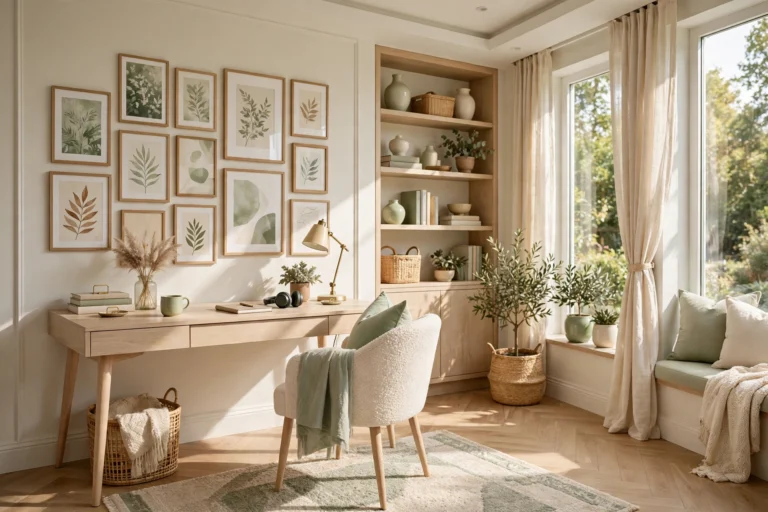
10. Make a Window Seat Desk for the Best Light
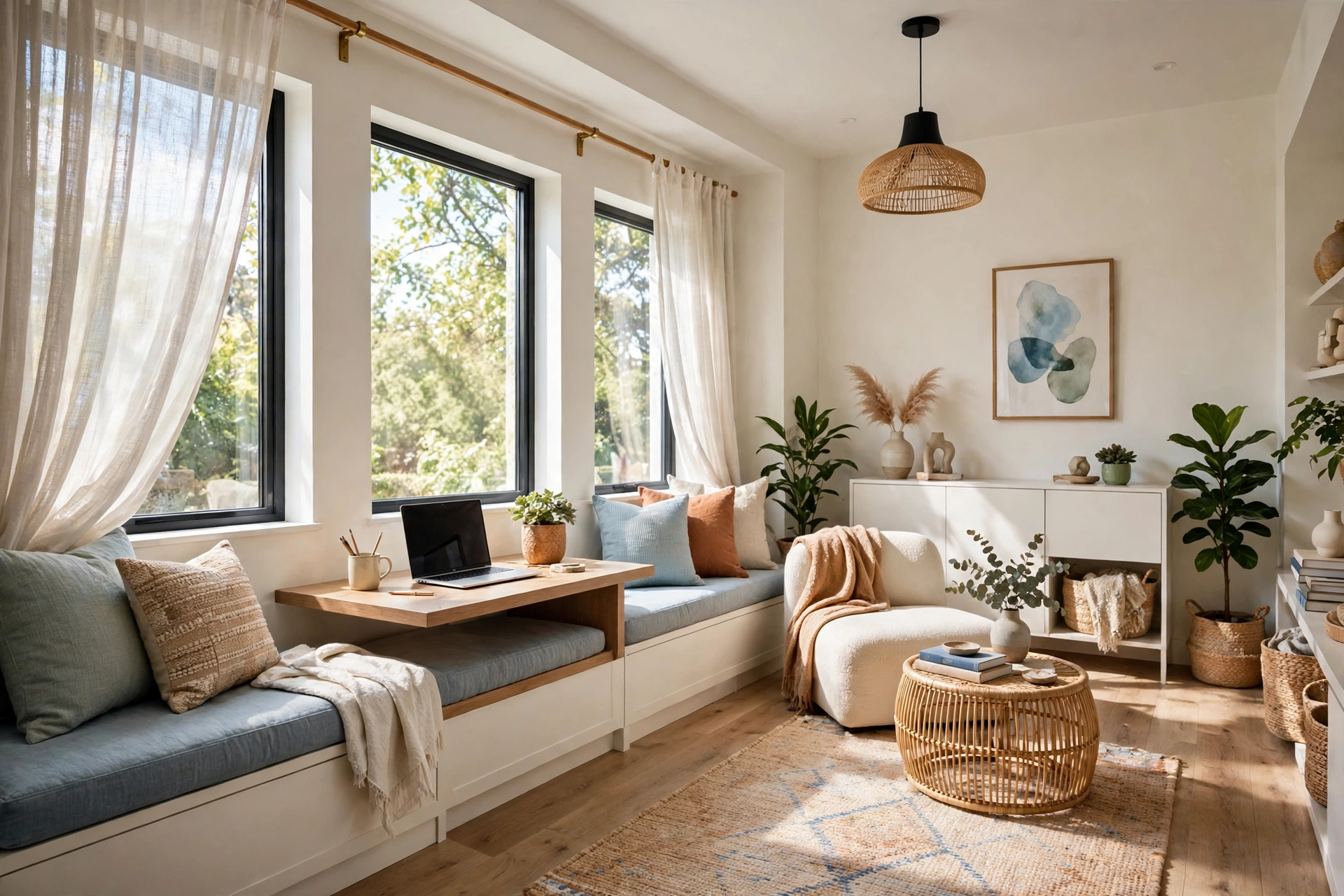
If your spare room has a window with a deep sill or a bay, a window seat desk is the brightest workspace in the house. Place a narrow desk or a custom board across the window wall, sit facing the view or side-on to it, and let natural light do the work that a lamp never can. A side-on position is the sweet spot: you get the brightness without glare on your screen, and your face is evenly lit on video calls.
Keep the window wall clear of tall shelves so nothing blocks the light, and choose sheer curtains or light linen panels that filter the sun instead of shutting it out. A small plant on the sill, a slim desk lamp for cloudy afternoons, and a chair with a light-colored seat complete the setup. If the window faces a busy street, a sheer panel gives you privacy without losing the light. The best light in your home is free, and a window desk is how you claim it for your workday.
⚠️ Warning: Never place your monitor directly facing a bright window. The backlight turns you into a silhouette on video calls and the glare strains your eyes. Side-on to the window is the position that works for both your screen and your camera.
11. Use a Rolling Cart as a Mobile Office Station
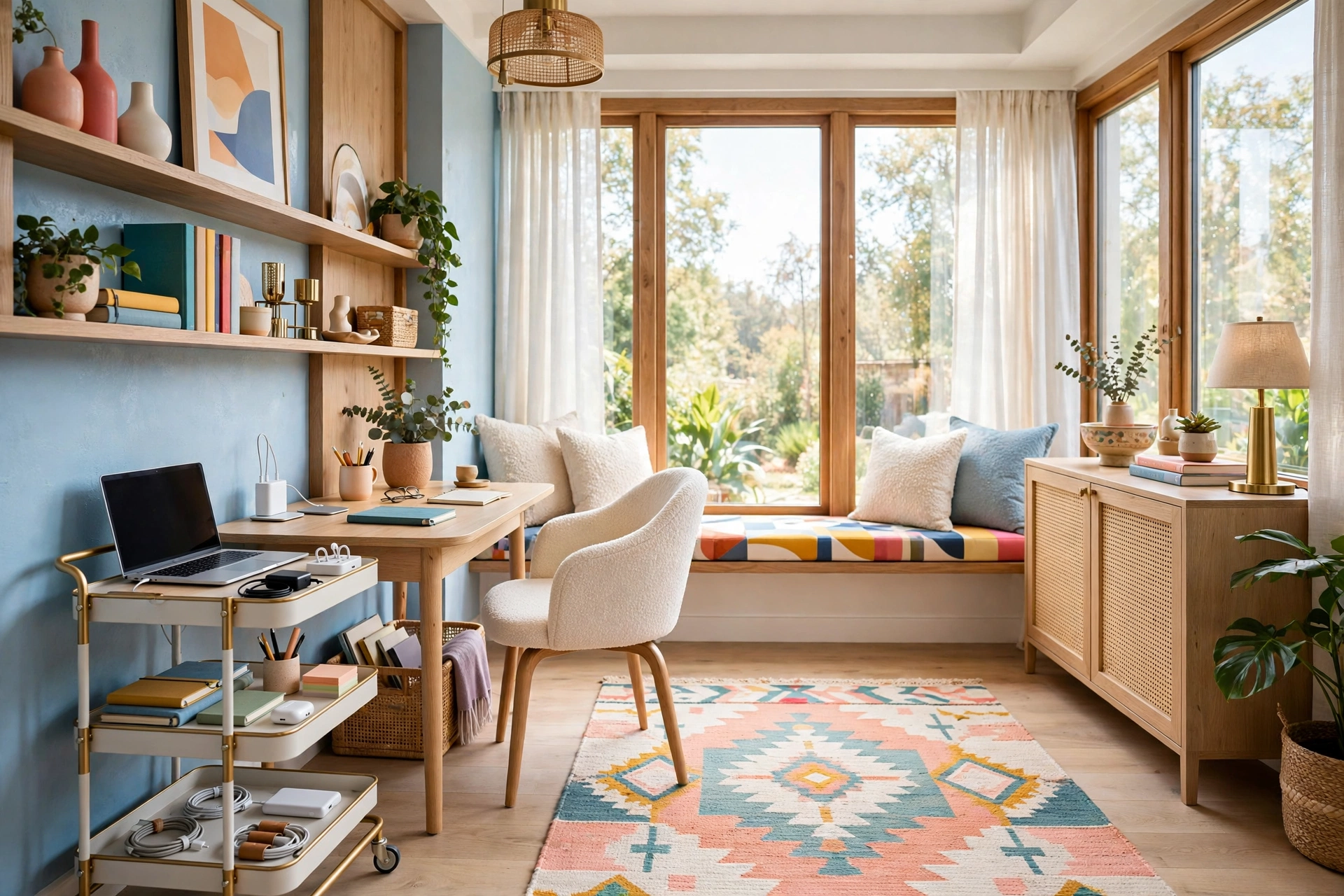
A rolling cart is a small office in a box: three tiers that hold your laptop, notebooks, chargers, and supplies, and wheels that let you move the whole workstation wherever the light or the quiet is best. Work at the kitchen table in the morning, roll the cart into the spare room for calls, and park it in a corner at night. For homes where no single corner can be permanently claimed, a cart is the most flexible setup there is.
Choose a cart with a flat top tier large enough for your laptop and a lower tier for a printer or files. Add small baskets or trays to each tier so nothing slides around when you move it, and keep a cable wrap on the side so the charger travels with the cart. The cart is also a great overflow station for a fixed desk: park it beside the desk as extra surface, then roll it away when guests arrive. Flexibility is the point — a rolling cart turns any room into an office for an hour and gives it back just as fast.
12. Paint an Accent Wall to Define the Office Zone
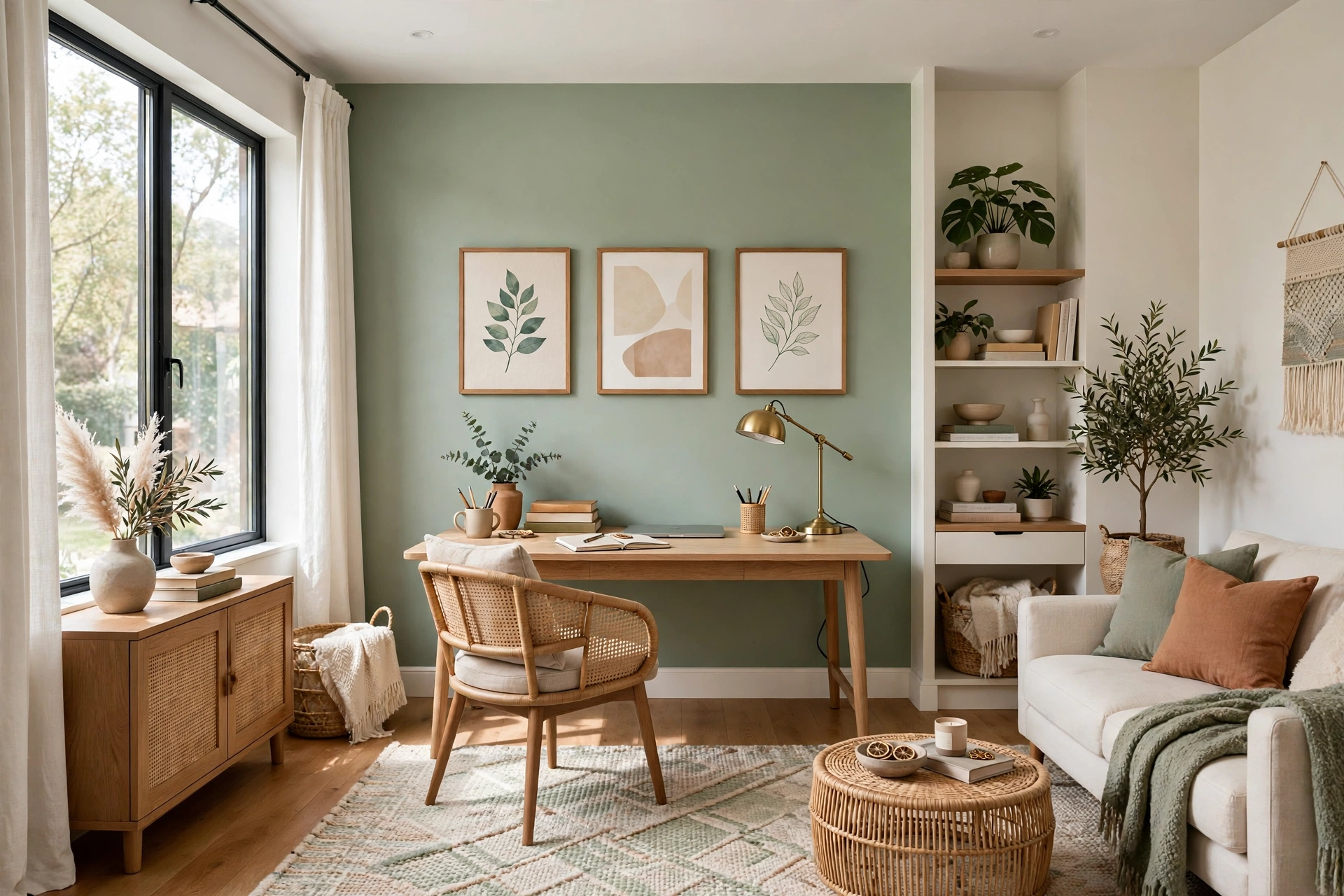
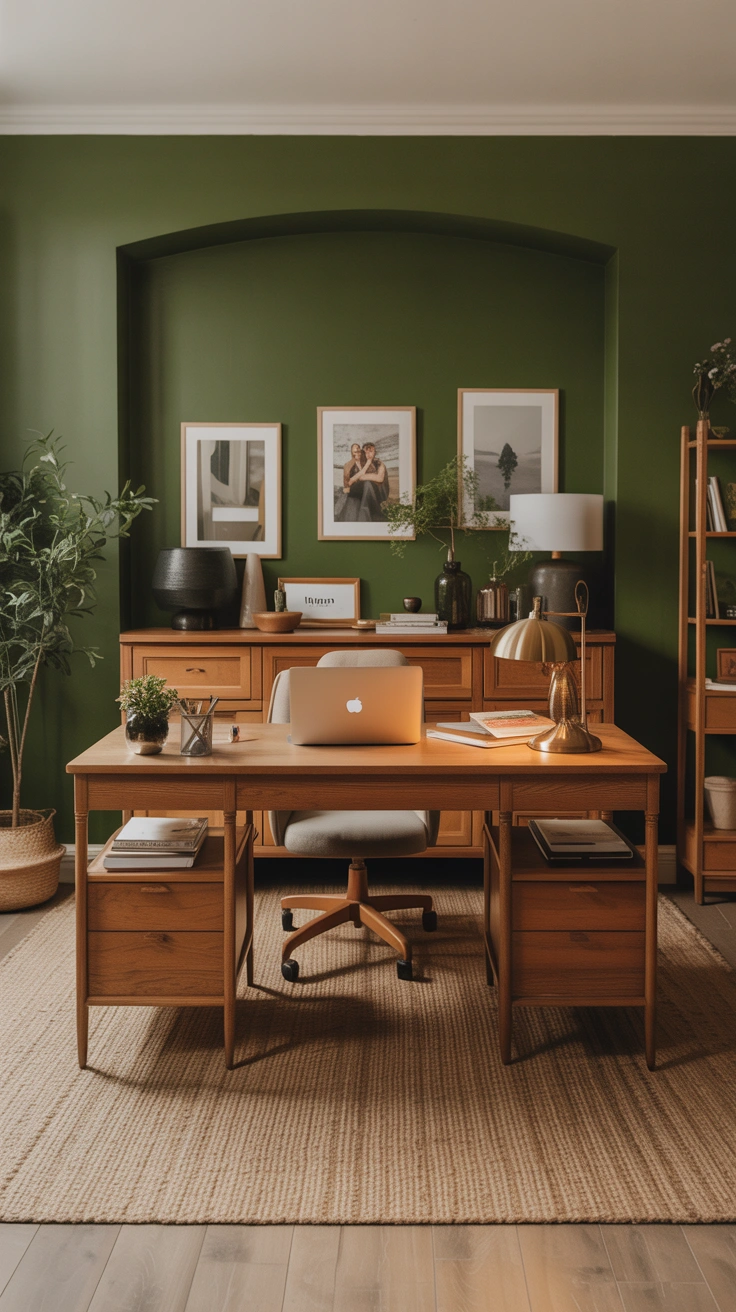
Paint is the cheapest room divider there is. One accent wall behind your desk — a soft sage, a warm terracotta, a deep navy, or a calm dusty blue — instantly marks the office zone and gives your video-call background a finished, intentional look. You do not need to paint the whole room; one wall, two coats, and a weekend afternoon are enough.
Pick a color that flatters both you and your camera. Mid-tone colors with some warmth photograph better than stark white, which can blow out on camera, or very dark colors, which can make a small room feel like a cave. The same one-wall trick powers a budget living room makeover, and it works just as well behind a desk. Test a sample on the wall and look at it in morning light, afternoon light, and on a video call before committing. If you rent, removable peel-and-stick wallpaper or a large fabric panel gives you the same effect without touching the paint. One wall of color turns a desk in a corner into a room with a purpose.
13. Add a Pegboard for Tools and Supplies
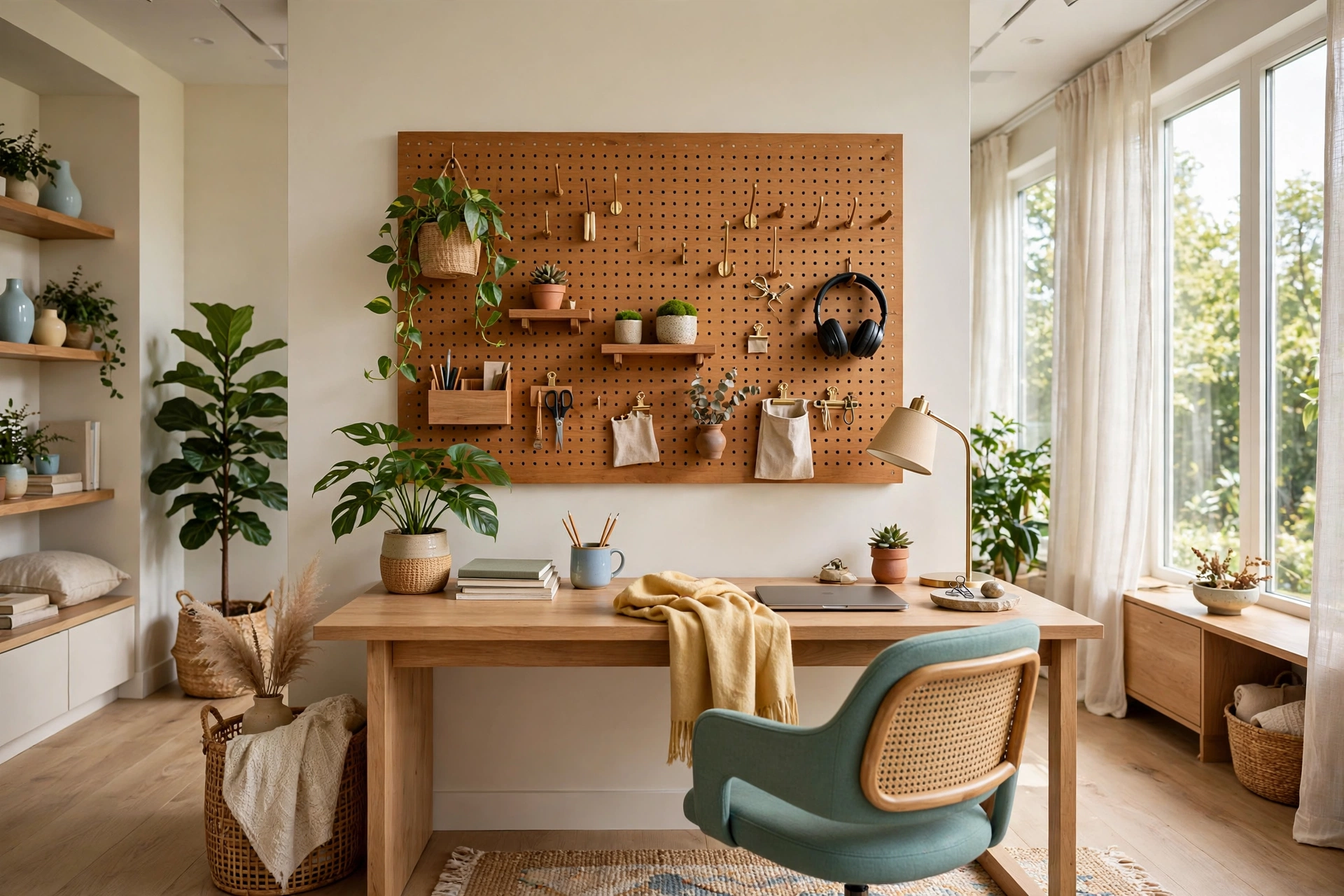
A pegboard above or beside your desk turns a blank wall into flexible storage that you can rearrange whenever your work changes. Hooks hold scissors, headphones, and cables; small shelves hold notebooks and plants; baskets hold pens and chargers. Everything is visible and within reach, which means you stop opening drawers and losing things in them.
Paint the pegboard the same color as the wall for a calm, built-in look, or a bold accent color if you want it to be a feature. Keep the layout simple: the things you use every day at arm’s height, the things you use weekly higher up, and nothing you never use at all. A pegboard is also easy to change — move a hook, add a shelf, and the storage grows with your work. In a small office where every centimeter counts, a wall that works this hard is worth its weight in gold.
📌 Important: Anchor a loaded pegboard into wall studs, not just drywall. Pegboards fail slowly — a hook at a time — until one overloaded evening brings the whole board down with your equipment on it.
14. Create a Video-Call-Ready Background
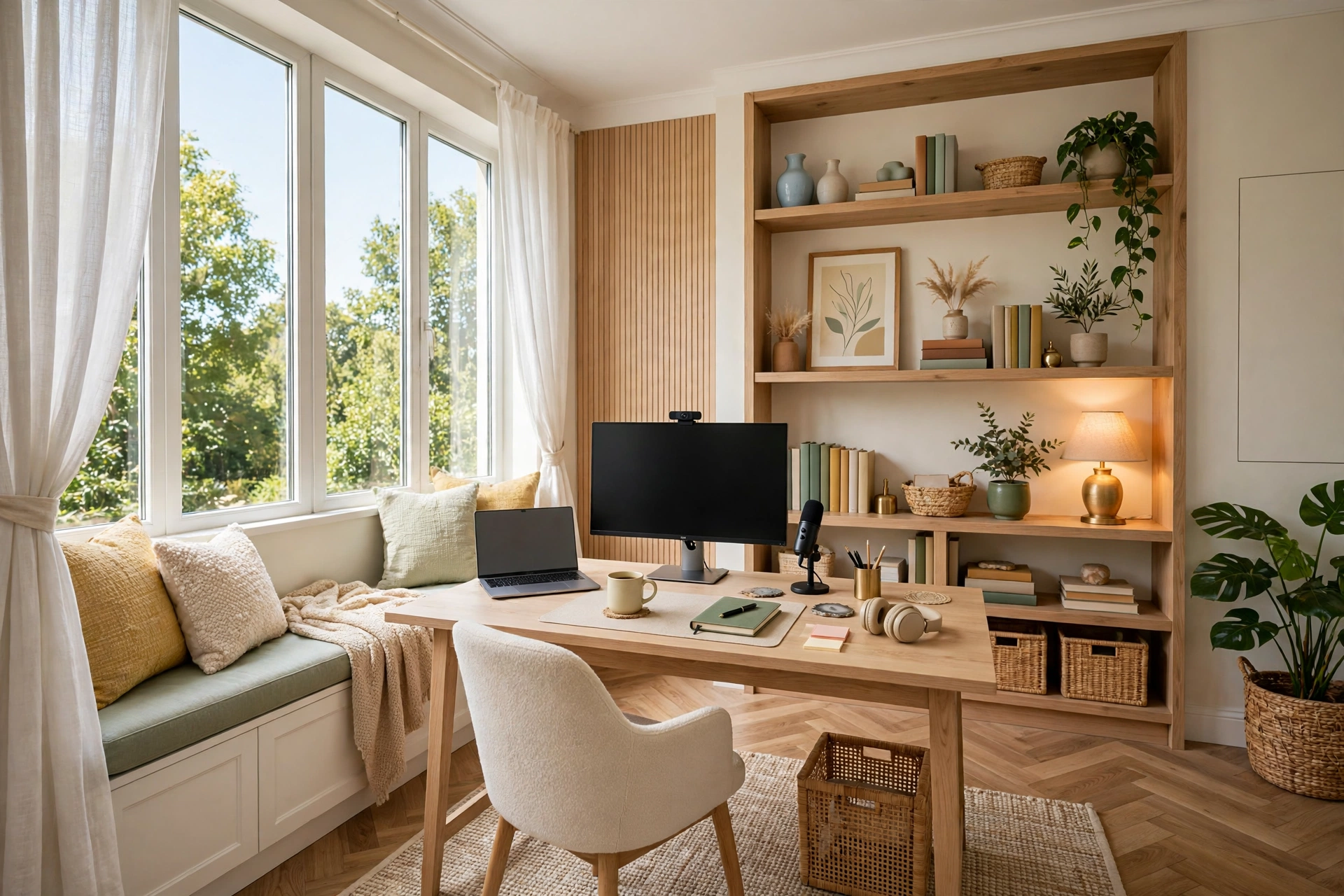
If your small office is where you take video calls, the background behind you is part of your professional image. You do not need a fake backdrop or a bookcase wall; you need one tidy, intentional view. A styled shelf, a framed print, a plant, and a lamp behind you read as a real, cared-for workspace — which is exactly what they are.
Keep the background simple and uncluttered: three to five objects, one plant, and nothing moving behind you. Check the camera view before every important call, not just once — a pile of laundry or an open drawer has a way of appearing at the worst moment. Good light matters more than expensive decor: face the window or put a lamp behind your camera so your face is lit and the background falls slightly darker. A small office actually photographs well on calls, because the background is close, controlled, and easy to keep tidy.
15. Keep a Five-Minute End-of-Day Reset Ritual
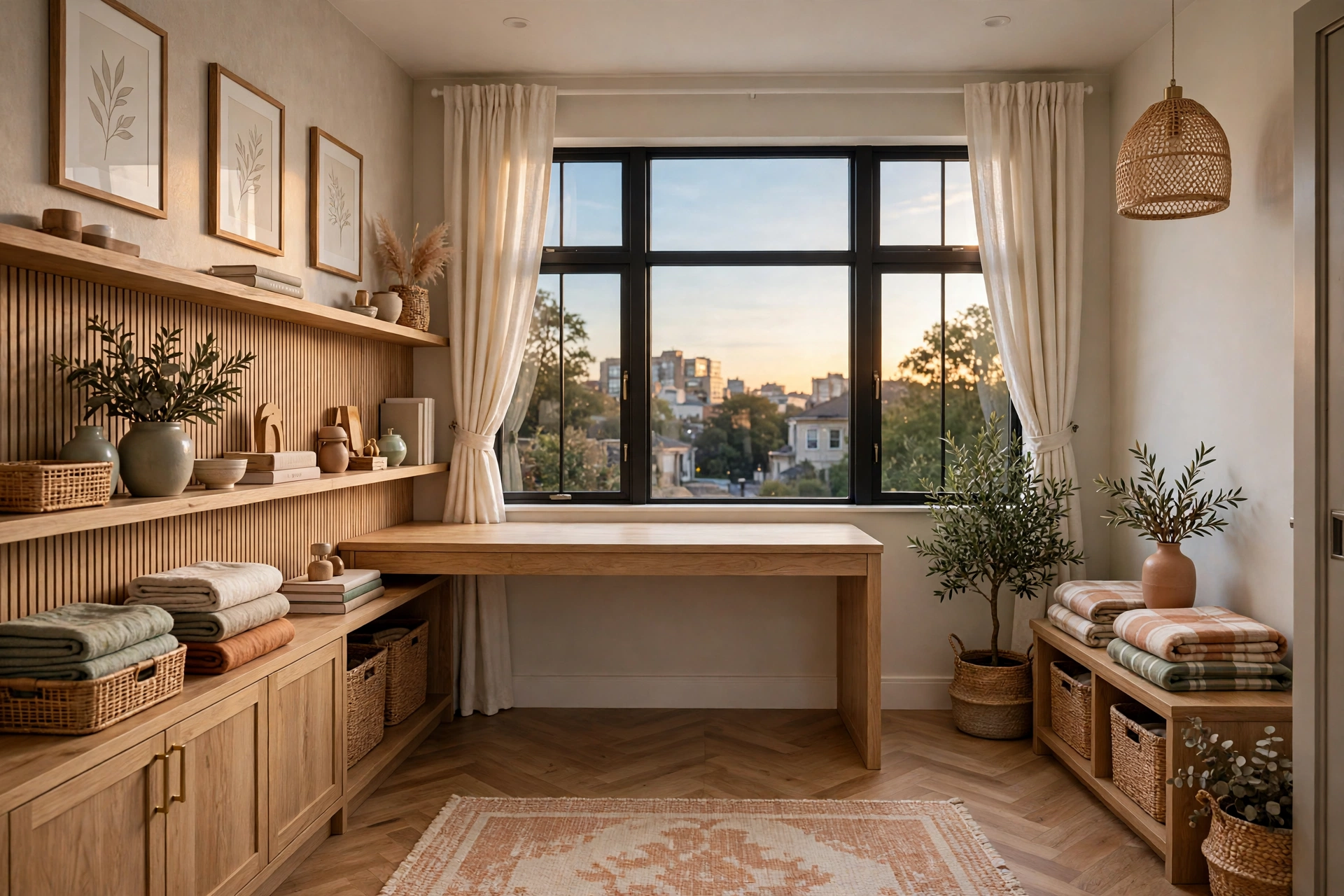
The best small office setup is not the one with the most furniture — it is the one that stays tidy, and tidiness in a small space is a habit, not a purchase. End every workday with a five-minute reset: clear the desk surface completely, file or recycle the day’s papers, coil the cables back into their tray, push the chair under the desk, and close the laptop. Five minutes, every day, and the office is ready for tomorrow morning.
The reset works because a small office has no room to absorb a mess. One day of clutter is manageable; a week of it makes the whole room feel unusable, and then the office stops being a place you want to sit. Pair the reset with a weekly ten-minute version: wipe the desk, water the plant, empty the pencil cup, and check that nothing has crept onto the floor. A tidy small office feels bigger than a messy large one, and the ritual is what keeps it that way.
Common Small Home Office Setup Mistakes
Mistake 1: Buying the Desk Before Measuring the Space
A desk that is two centimeters too wide turns a corner office into a daily annoyance. Measure the wall, the door swing, and the outlet positions before you buy anything, and write the numbers down. A tape measure costs less than a return courier, and it saves you from a desk that blocks a door or covers the only outlet in the room.
Mistake 2: Facing the Wall with Your Back to the Room
A desk pushed against the wall with your back to the door feels exposed and makes the room feel smaller than it is. If you can, angle the desk or place it perpendicular to the wall so you face into the room. You will feel more in control of the space, and the room will feel larger because you can see it.
Mistake 3: Ignoring Cable Management Until It Is Too Late
Cables multiply quietly. One charger becomes four, a lamp joins them, and suddenly there is a tangle under your desk that collects dust and trips you up. Plan the cable tray and the power strip on day one, before the first device is plugged in. Retrofitting cable management around a working setup is twice the work.
Mistake 4: Overfilling Shelves and Surfaces
A small office tempts you to use every surface, but a shelf crammed edge to edge reads as a storage unit, not a workspace. Leave breathing room on every shelf and keep at least one desk surface clear at all times. Empty space is not wasted space in a small office — it is what makes the room feel calm enough to work in.
Mistake 5: Choosing Style Over Ergonomics
A beautiful chair that hurts your back after two hours is a failed purchase, no matter how good it looks in photos. Test the chair height, the desk height, and the monitor position before you commit to a style. Your back, your neck, and your wrists will decide whether you actually use the office you built.
Frequently Asked Questions
1. How much space do I really need for a small home office?
A functional office fits in as little as 1.5 by 1.5 meters: a desk around 100 centimeters wide, a chair, and a shelf above. A corner desk or a floating desk makes even less space workable. What matters more than floor area is a clear boundary, good light, and a chair that fits your body.
2. Can I set up a home office in a bedroom without it feeling like an office?
Yes, if the office furniture matches the bedroom’s palette and the chair slides under the desk at night. The small master bedroom ideas that keep a bedroom feeling calm — one palette, closed storage, a clear surface — apply here too. A floating desk, a rug that zones the corner, and closed storage keep the bedroom feeling like a bedroom after work. The five-minute reset ritual matters most here, because a tidy desk disappears visually in a way a messy one never does.
3. What is the best desk for a spare room corner?
A corner desk or an L-shaped desk gives you the most surface for the footprint, and a floating desk is the best choice when floor space is extremely tight. Measure the corner first, then choose a desk that leaves at least 80 centimeters of clearance behind your chair so you can sit and stand comfortably.
4. How do I get good lighting in a closet office?
Layer it: an LED strip under the top shelf for general light, a small desk lamp for task light, and pale paint inside the closet to bounce light around. Daylight-temperature bulbs around 4000 Kelvin work well in a windowless closet, and a small mirror on one side wall helps the space feel brighter and bigger.
5. Do I need a separate room for a home office?
No. Most people work better in a well-zoned corner than in a spare room they never enter. A corner with a rug, a lamp, and a divider gives your brain the same “I am at work” signal as a separate room, and it is far easier to heat, light, and keep tidy.
6. What is the cheapest way to set up a small home office?
Start with a floating desk or a secondhand table, a chair you already own, a power strip, and a cable tray — often under the cost of a single new desk. Add a rug and a lamp from another room, and use shelves or a pegboard for storage. Paint one accent wall for the biggest visual change per dollar spent.
7. How can I make a small home office look bigger?
Use a floating desk to free the floor, keep the palette light and consistent, put a mirror opposite the window, and leave empty space on shelves and surfaces. A rug that is slightly larger than the desk area also helps, because it makes the zone feel generous rather than cramped.
Conclusion
A small home office setup is not about the size of the room — it is about the clarity of the plan. Claim a corner or a spare room, choose a desk that fits the footprint, zone the space with a rug and light, store things vertically, and keep the cables and the clutter under control. Each of these fifteen ideas works on its own, and together they turn the spare corners of your home into a workspace that supports real work every day.
Start with the biggest decision — where the desk goes — and then add one idea at a time. Measure twice, buy once, and give the setup a week before you judge it. The office that feels right on Monday morning, with the light falling across a clear desk and everything in its place, is the one you will keep using. Your spare room and your empty corner have been waiting for a purpose; now they have one.