13 Container Garden Ideas for Patio That Make Small Spaces Feel Lush
You do not need a sprawling backyard or a dedicated plot of soil to have a genuinely beautiful garden. A patio, a balcony, or even a small concrete slab outside your back door is more than enough space to grow something gorgeous, and container gardening is exactly the workaround that makes it possible. The trick is knowing which combinations, containers, and layouts actually turn a few scattered pots into something that looks intentional rather than accidental.
I started container gardening because my old apartment patio was barely big enough to fit two chairs, let alone a real garden bed. What I learned through a lot of trial and error is that container gardening is not a lesser version of a real garden — done well, it can look more curated and more personal than an in-ground plot ever does. The constraints actually force better decisions about color, height, and arrangement.
These 13 container garden ideas cover every direction a patio garden can take, whether you are working with a tiny balcony or a generously sized outdoor space that just needs the right plants and pots to come alive.
1. Group Pots in Odd Numbers for Visual Balance
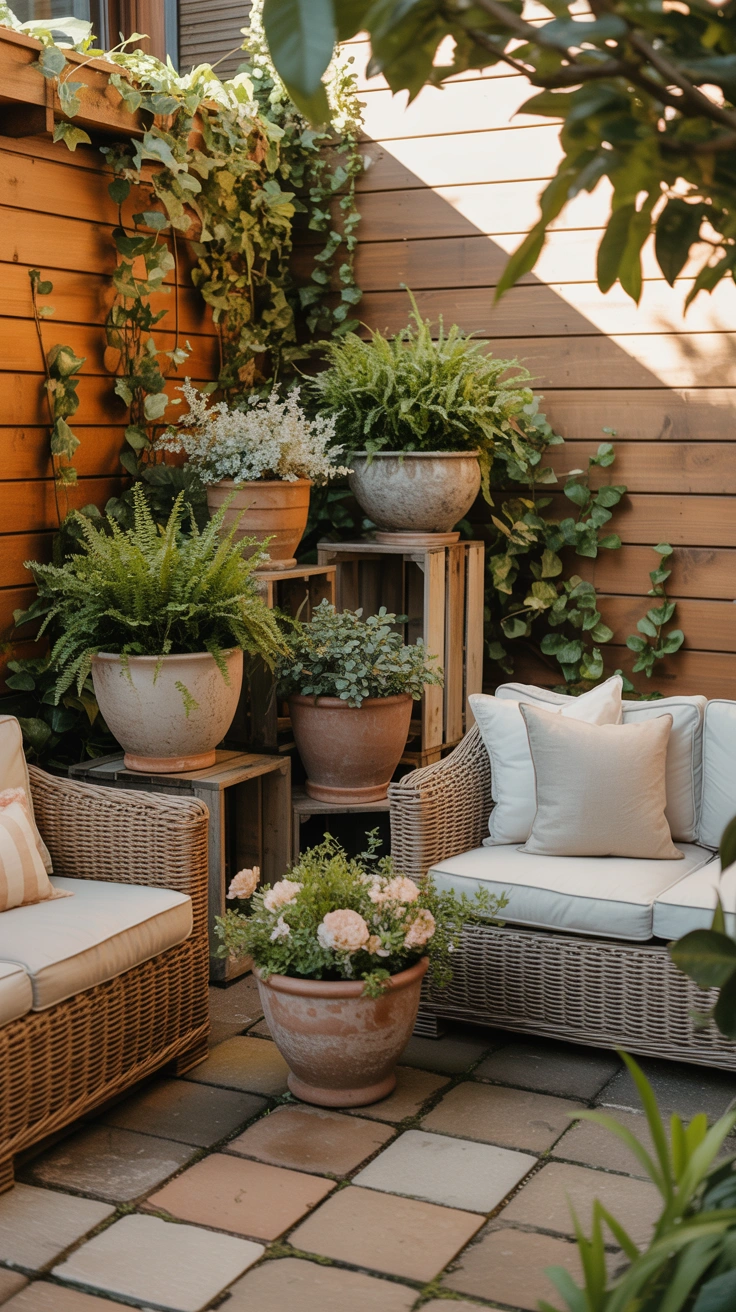
Grouping containers in clusters of three or five almost always looks more intentional and more visually balanced than pairs or single pots scattered around individually. Odd numbers create a natural asymmetry that the eye reads as organic rather than rigidly arranged, which is exactly the quality that separates a styled container garden from a random collection of plants someone picked up over time.
Vary the heights within each cluster rather than lining up pots of identical size next to each other. A tall planter at the back, a medium one slightly in front, and a low trailing pot at the edge creates the kind of layered depth that makes even a small grouping feel like a complete, considered garden moment rather than an afterthought.
2. Mix Terracotta With Glazed Ceramic for Texture
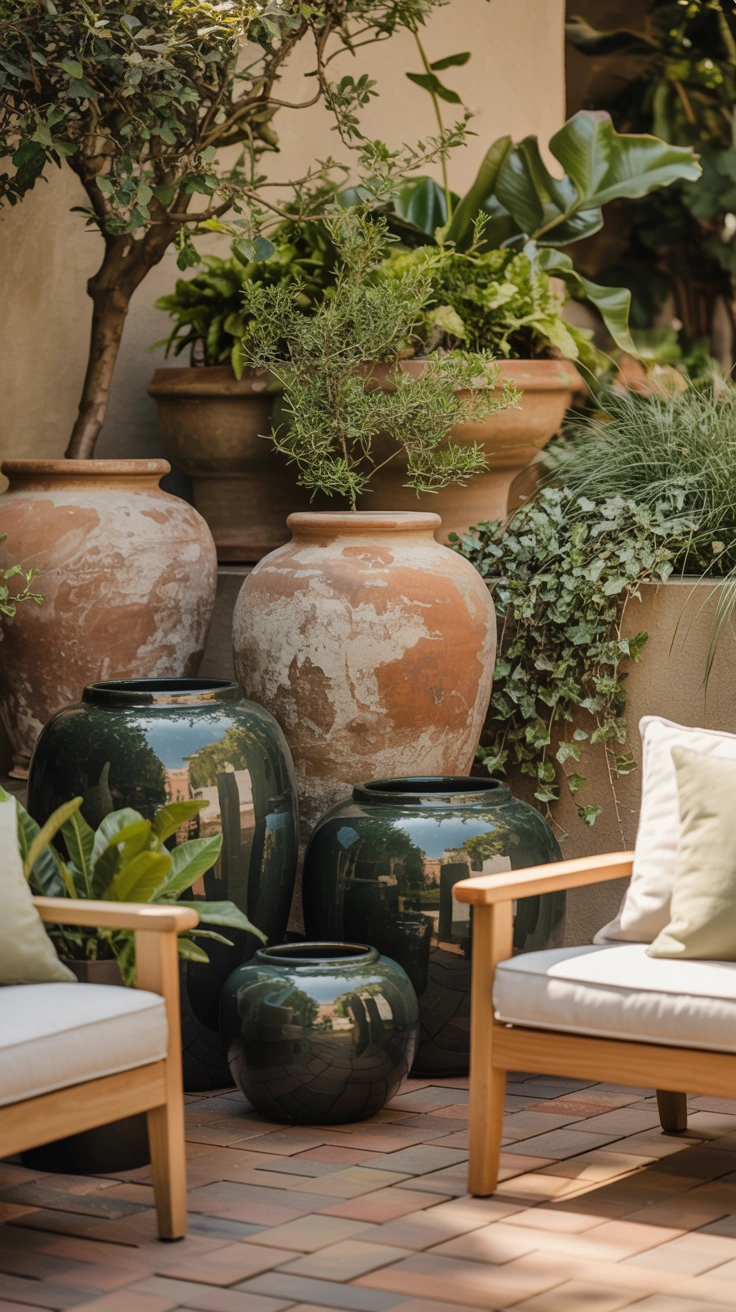
Sticking to a single pot material across your entire patio garden can start to feel flat after a while, even when the plants inside are thriving. Mixing unglazed terracotta with glazed ceramic in a complementary color introduces textural contrast that makes the whole collection feel considerably more curated and visually layered than uniform pots ever could.
Terracotta brings a warm, classic, slightly weathered quality that only improves with age as it develops a natural patina from sun and water exposure. Glazed ceramic in a deep green, warm cream, or rich blue adds a polished counterpoint that keeps the overall look from feeling too rustic or too uniform in either direction.
3. Build a Tiered Herb Garden Near the Kitchen Door
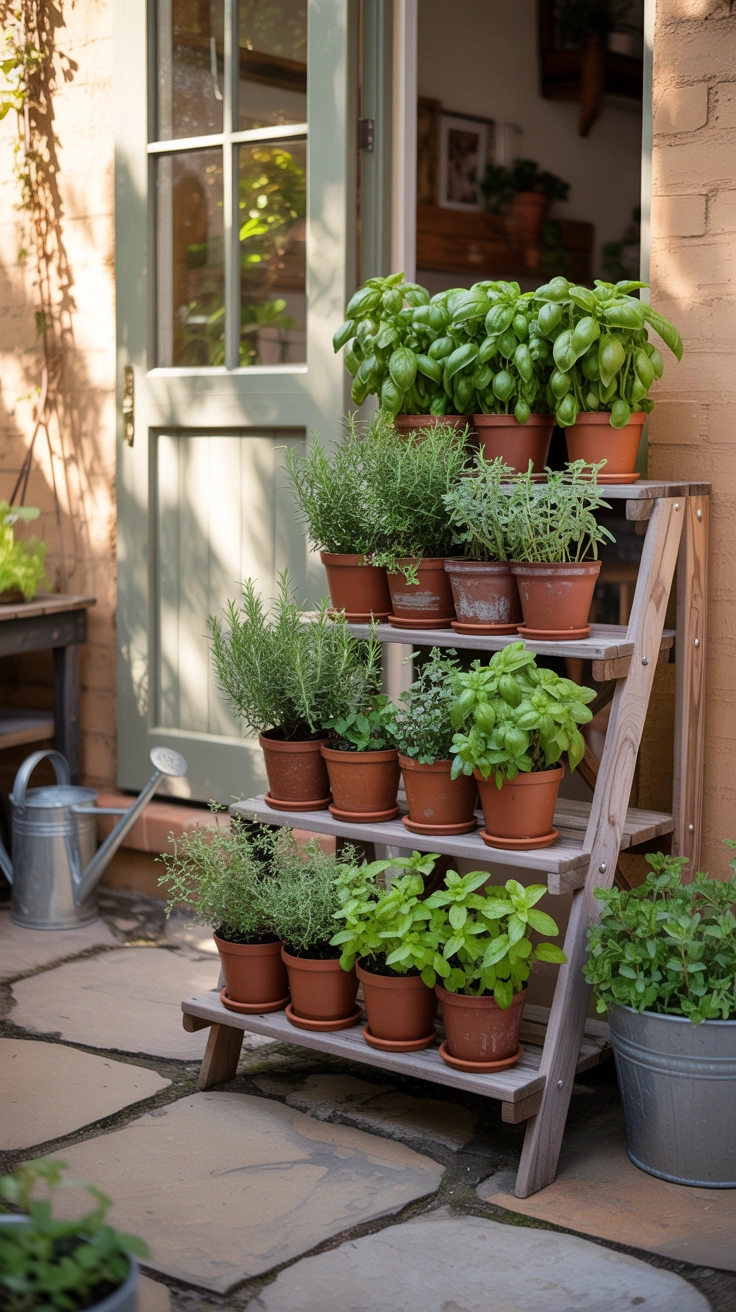
A small tiered plant stand positioned close to your kitchen door turns container gardening into something genuinely useful as well as decorative. Stack three or four levels of herbs — basil, thyme, rosemary, mint — within easy reach, and you will actually use them while cooking rather than letting a single neglected pot wither in some forgotten corner of the patio.
Herbs That Thrive in Patio Containers
- Basil for full sun and frequent watering, ideal for summer cooking
- Rosemary for drought tolerance and a woody, structural presence
- Mint, grown in its own contained pot since it spreads aggressively if mixed with others
- Thyme for low-maintenance ground cover in shallow containers
- Chives for early spring growth and a mild onion flavor in salads
Position the stand somewhere that gets at least four to six hours of sunlight daily, since most culinary herbs genuinely struggle in deep shade no matter how attractive their container happens to be.
4. Use a Single Large Statement Planter as a Focal Point
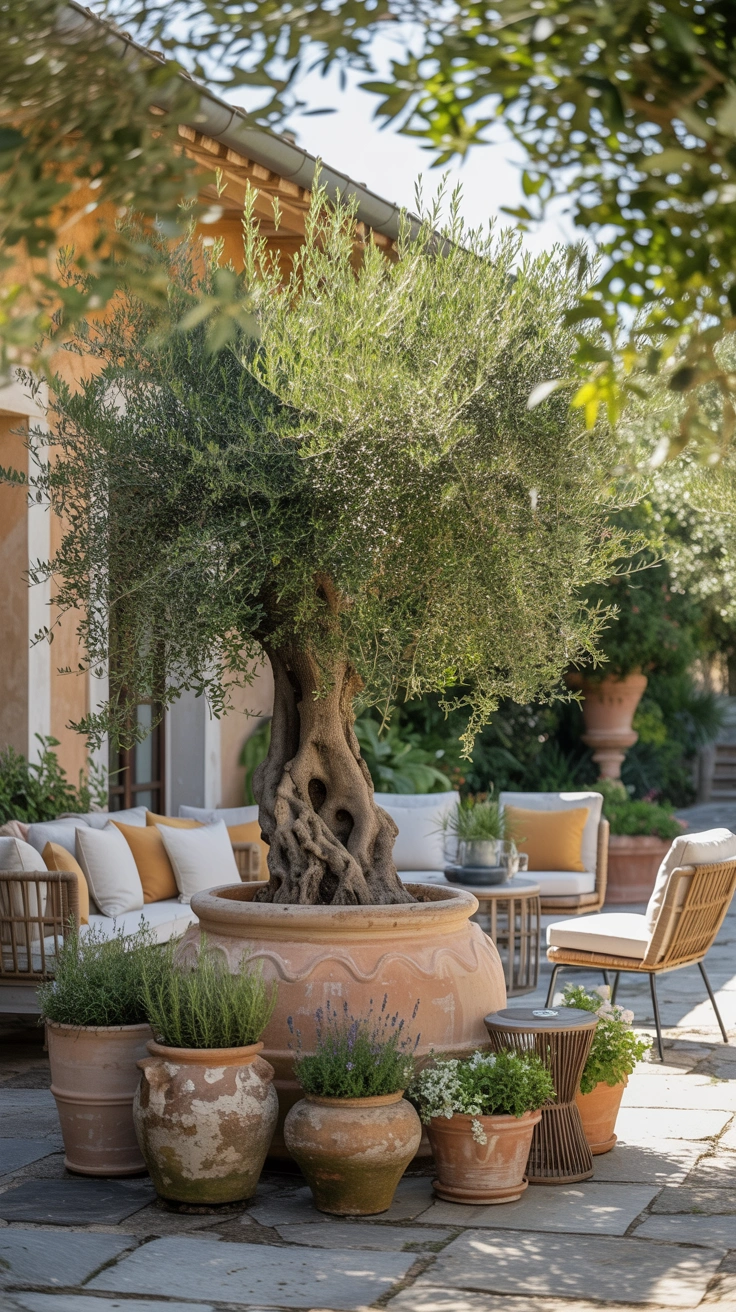
Sometimes less truly is more, and a single oversized planter filled with one dramatic plant creates more visual impact than a dozen scattered smaller pots competing for attention. A large terracotta or concrete planter with a structural plant like a fiddle-leaf fig, an olive tree, or a tall ornamental grass becomes the anchor that the rest of your patio styling can build around.
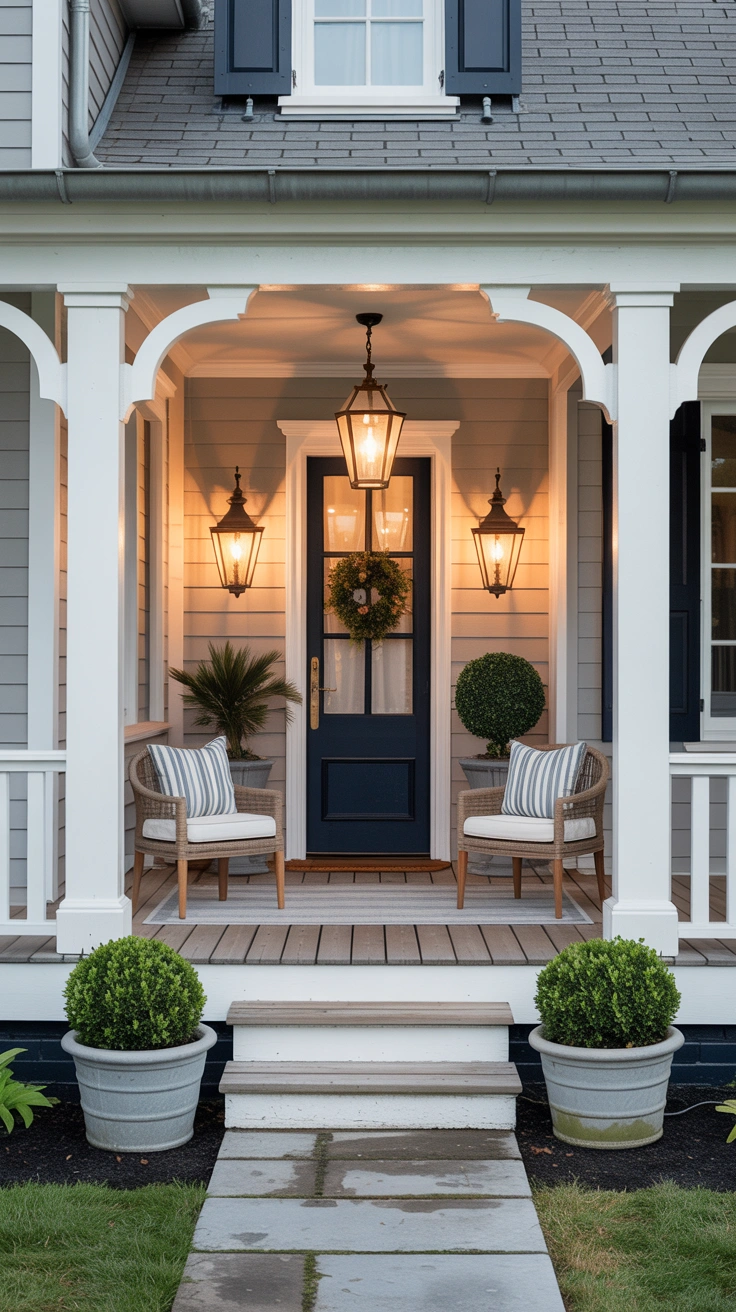
Position this statement piece somewhere it can genuinely be seen and appreciated, whether that means flanking your front door, marking the entrance to a seating area, or standing alone near a railing where it catches the eye from across the yard. One truly beautiful large container often does more for a patio’s overall design than several smaller ones combined.
5. Layer Trailing Plants Over Container Edges
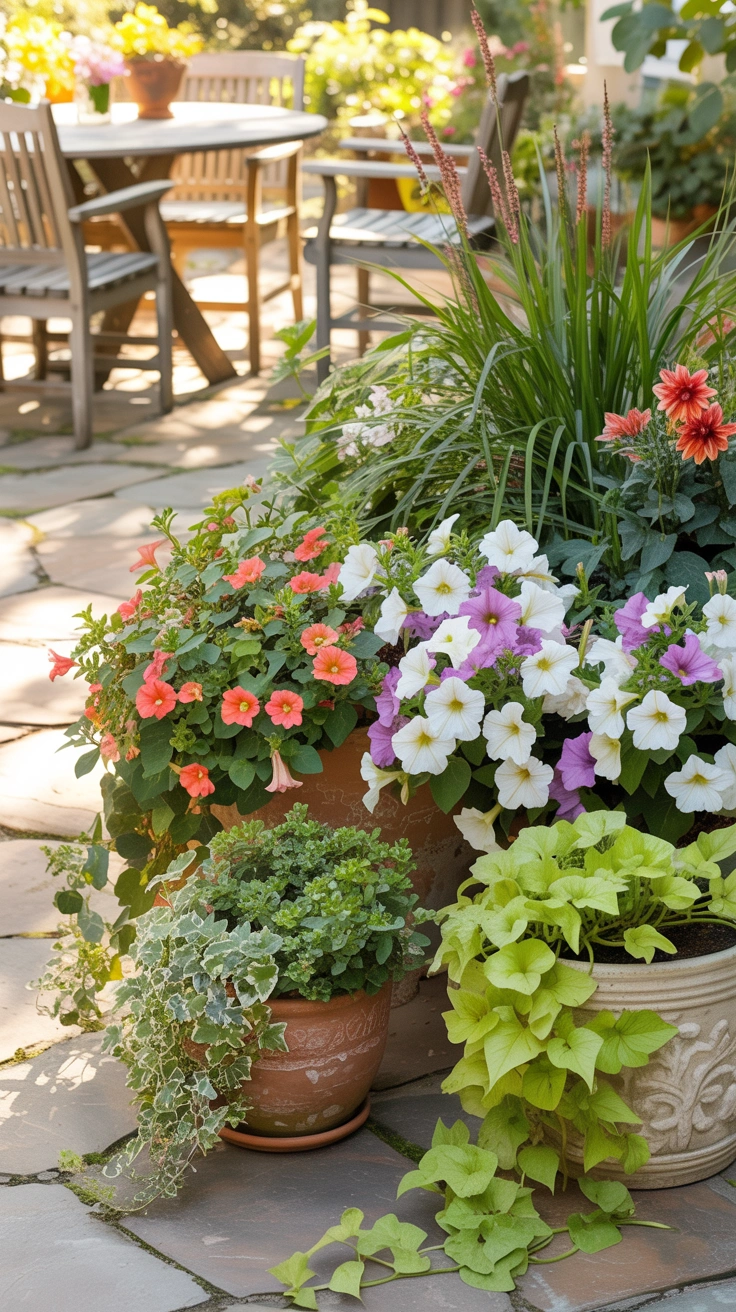
Trailing plants like sweet potato vine, ivy, or trailing petunias soften the hard edges of any container and create a cascading, lush effect that flat, upright-only arrangements simply cannot achieve on their own. Letting greenery spill over the rim of a pot makes even a basic plastic container look considerably more intentional and considerably more alive.
FYI — pairing a trailing variety with an upright centerpiece plant and a few filler plants around the base follows the classic thriller, filler, spiller formula that professional container gardeners rely on constantly. It is a simple structure, but it consistently produces arrangements that look far more polished than randomly combined plants ever do.
6. Create a Color-Themed Container Collection
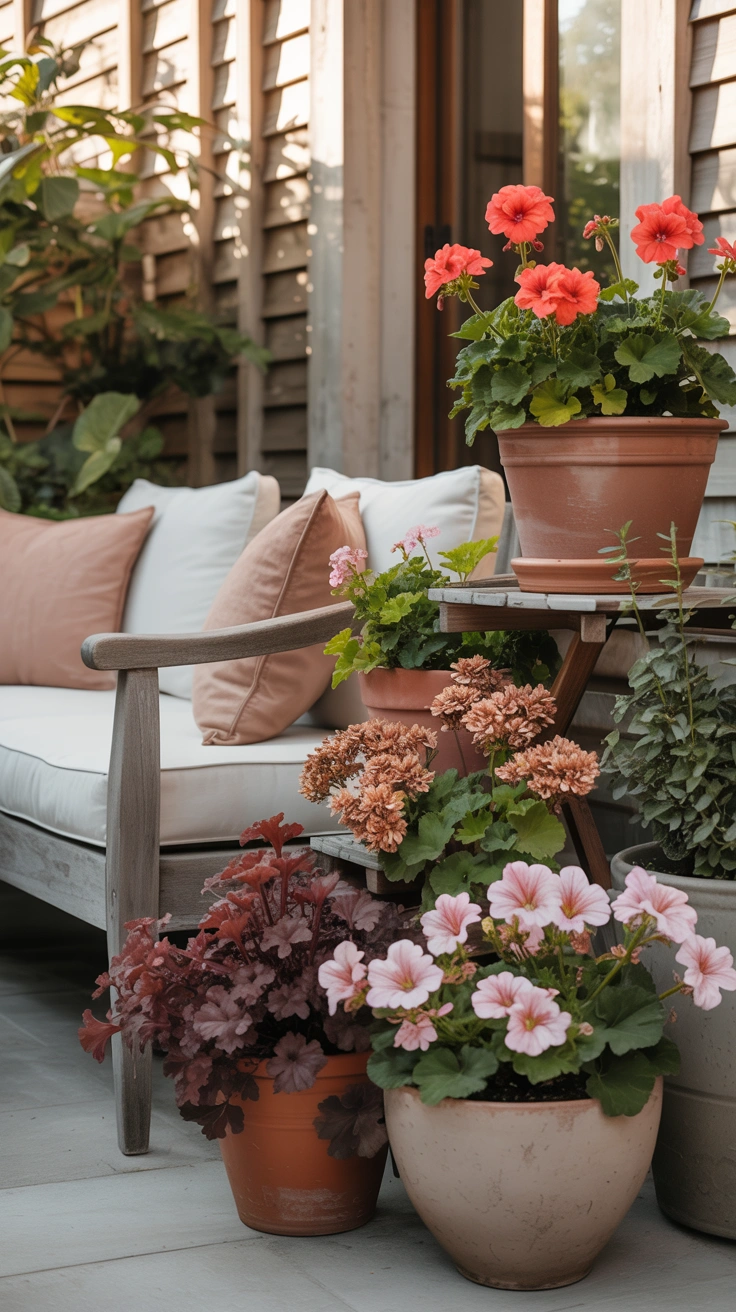
Choosing a specific color palette for your container garden — rather than letting it become a rainbow of whatever caught your eye at the nursery — instantly elevates the whole collection from random to curated. A palette of warm corals, soft pinks, and deep burgundy foliage reads as considerably more sophisticated than mixed, competing colors scattered across every pot.
Cool-toned gardens built around purples, blues, and silvery foliage create a calming, almost monochromatic effect that works beautifully in shaded patio areas where bright blooms tend to struggle anyway. Pick one direction and commit to it across every container, and the whole arrangement will read as a single cohesive design rather than a loose assortment of unrelated plants.
7. Add Vertical Interest With Hanging Baskets
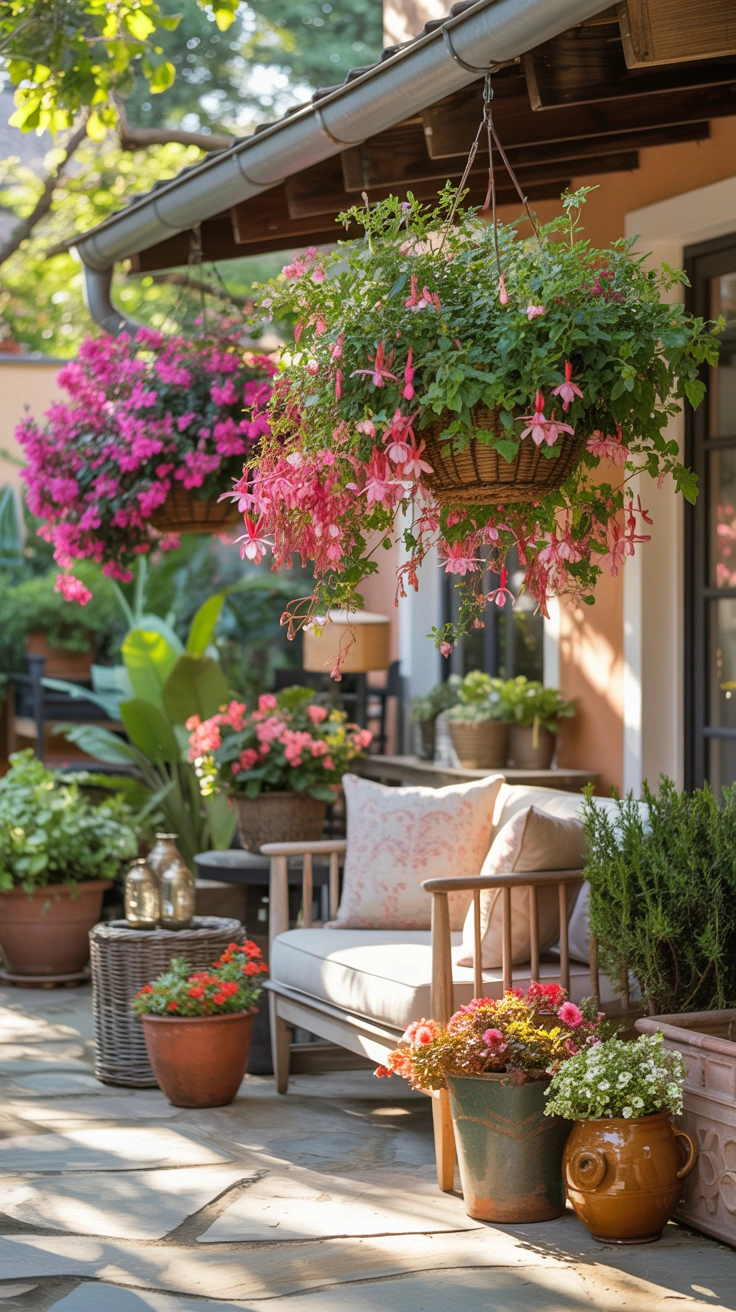
A patio garden that stays entirely at ground or table height misses an enormous amount of visual potential that hanging baskets can unlock immediately. Suspending baskets from a pergola beam, a hook mounted into an overhang, or even a simple shepherd’s hook planted in a large floor container adds height and movement that ground-level pots alone cannot provide.
Fuchsias, trailing begonias, and ferns all perform beautifully in hanging baskets and bring a softness at eye level that complements the structure of your floor-level container groupings below. This vertical layer is often the missing piece that makes an otherwise flat-looking patio garden suddenly feel three-dimensional and considerably more immersive.
8. Repurpose Unexpected Vessels as Planters
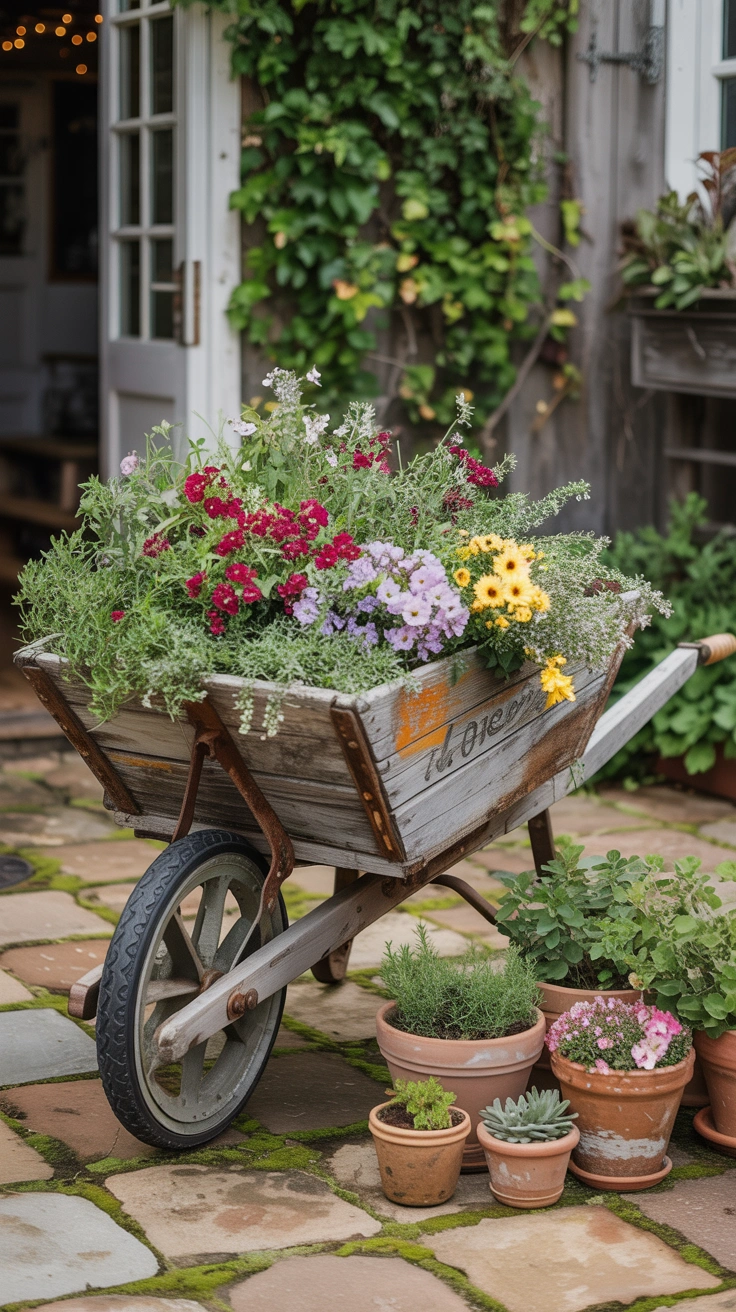
Some of the most charming container gardens incorporate at least one unexpected vessel repurposed as a planter rather than relying entirely on standard nursery pots. A vintage galvanized washtub, an old wooden crate lined with landscape fabric, or even a weathered wheelbarrow filled with trailing flowers brings genuine character and a sense of personal history to the patio.
IMO, this is one of the easiest ways to make a container garden feel like yours specifically rather than a generic assortment anyone could have purchased at a garden center. Just make sure whatever vessel you choose has adequate drainage, drilling holes into the bottom if it does not already have any, since standing water will kill most plants far faster than any other single mistake.
9. Choose Drought-Tolerant Succulents for Low-Maintenance Spots
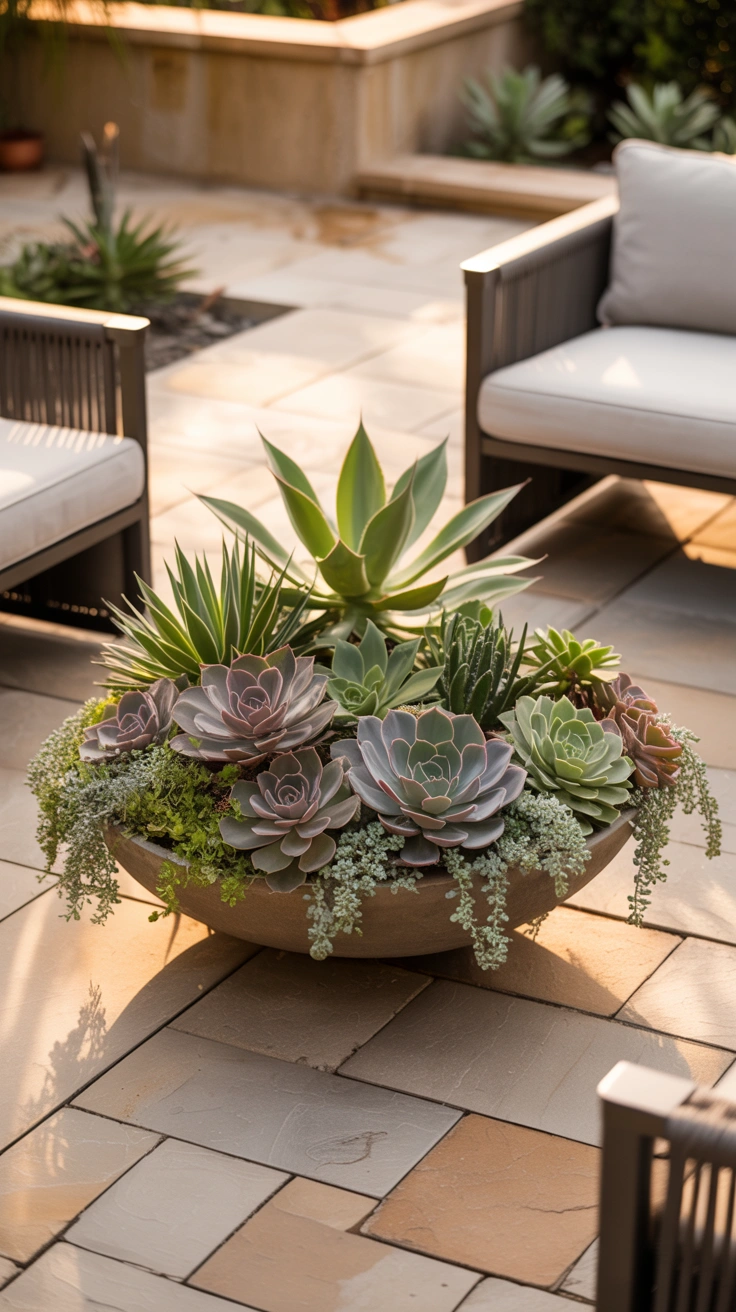
Not every patio gets consistent attention, and a container garden built entirely around plants that need daily watering sets you up for disappointment the moment life gets busy. Succulents and other drought-tolerant plants like sedum, echeveria, and various cacti varieties thrive on genuine neglect and still look architecturally striking arranged together in a shallow, wide container.
These plants work particularly well on hot, sun-baked patios where more delicate flowering plants tend to struggle and burn under intense afternoon exposure. Group several varieties with different textures and subtle color variations together in a single low bowl planter for a composition that looks deliberately curated despite requiring almost no ongoing care.
10. Build a Cottage-Style Mixed Container Garden
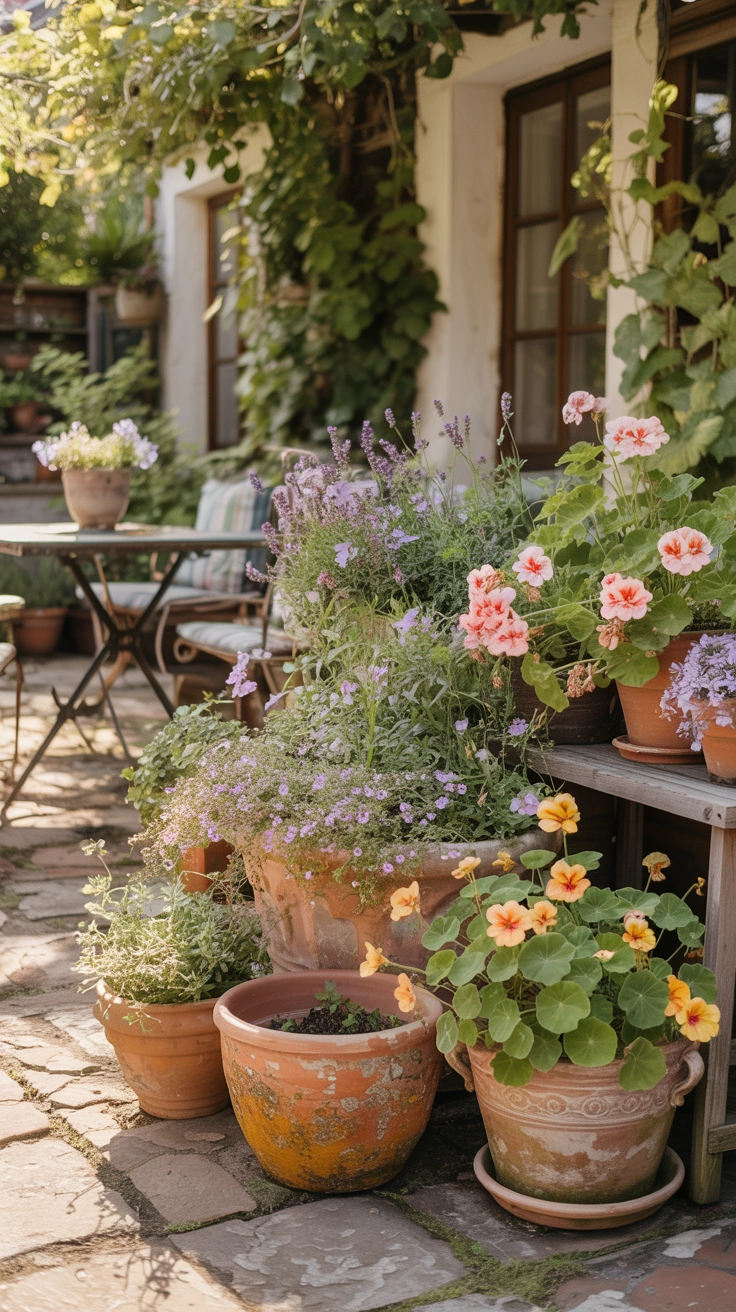
For a softer, more romantic patio aesthetic, mix cottage garden classics like geraniums, lavender, and trailing nasturtiums together within the same generously sized containers. This combination creates the relaxed, slightly wild abundance that defines the cottage garden look, even when every plant is actually growing within the controlled confines of a pot rather than an open garden bed.
Let the plants grow slightly looser and more overlapping than you might for a more formal arrangement, since cottage style specifically embraces a sense of natural abundance over strict, manicured order. This relaxed approach also tends to be more forgiving for beginners, since slight imperfections in spacing or symmetry simply read as part of the intended aesthetic rather than as mistakes.
11. Use Matching Saucers to Protect Your Patio Surface
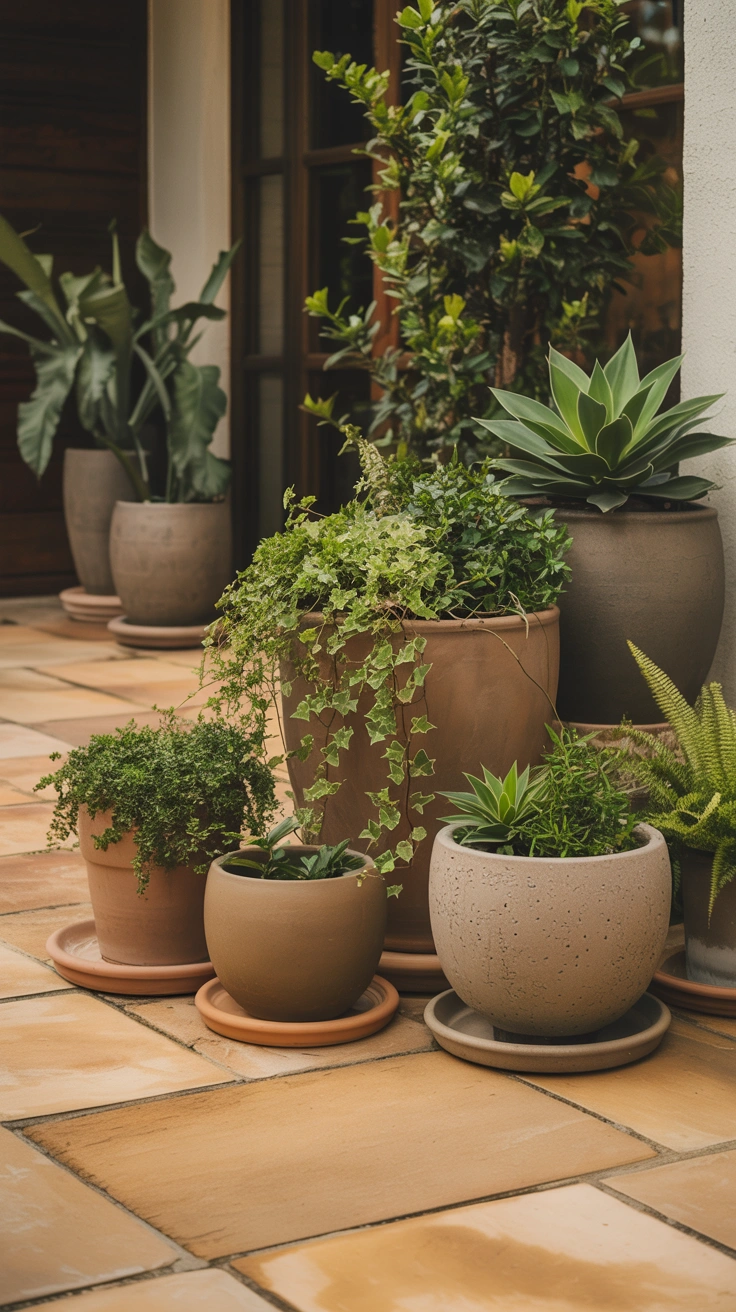
A practical detail that gets overlooked surprisingly often is the saucer beneath each container, which protects your patio surface from water staining, mineral buildup, and the kind of discoloration that accumulates over a full growing season. Choosing saucers that match or complement your pots rather than grabbing whatever generic plastic option is available makes a real difference to the finished look.
Terracotta saucers paired with terracotta pots disappear visually into the overall composition, while a contrasting glazed saucer beneath a matching glazed pot can actually become a subtle decorative detail in its own right. Either approach beats the visible mismatch of a bright plastic saucer peeking out beneath an otherwise beautifully chosen container.
12. Incorporate Edible Plants Alongside Ornamentals
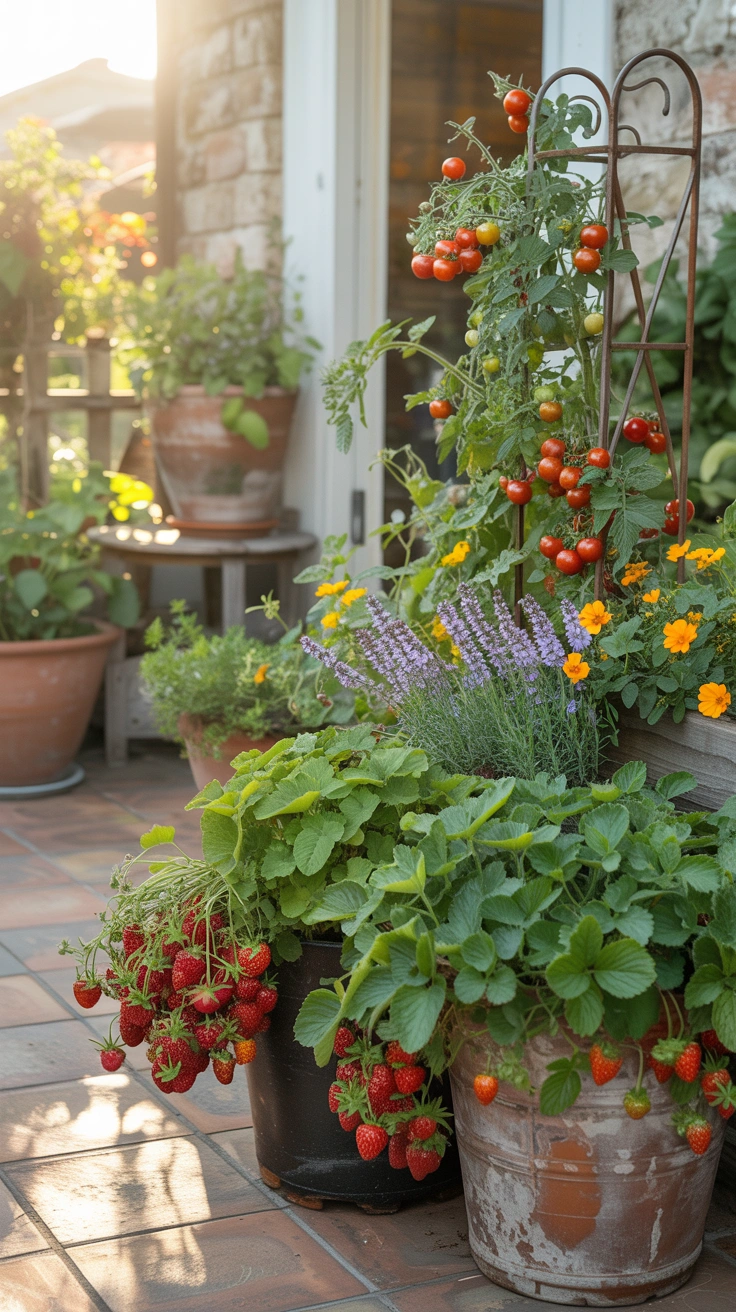
Container gardens do not need to choose strictly between purely decorative and purely productive. Tucking cherry tomatoes, peppers, or strawberries into the same containers as ornamental flowers creates a patio garden that is simultaneously beautiful and genuinely useful, giving you something to actually harvest throughout the growing season.
Cherry tomato plants trained up a small decorative trellis add height and structure while producing fruit you will actually use in the kitchen. Strawberry plants work beautifully as a trailing element at the edge of a mixed container, doing double duty as both a spiller plant and a snack waiting to be picked straight off the vine.
13. Refresh Containers Seasonally Rather Than Letting Them Fade
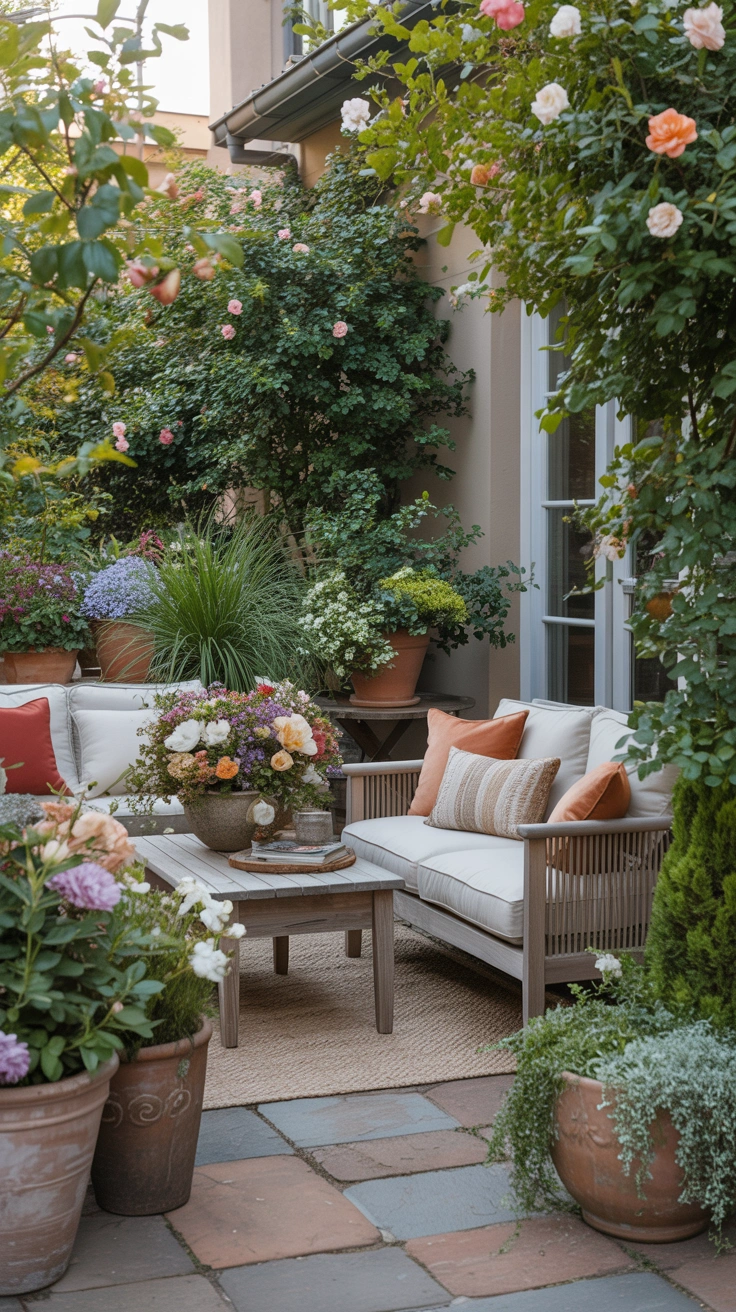
The most consistently beautiful patio container gardens are the ones that get refreshed as the seasons change, rather than being planted once in spring and then left to slowly decline through summer heat and into a sad, leggy autumn. Swapping out tired summer annuals for cooler-season pansies, ornamental kale, or mums keeps the patio looking intentional throughout the entire year instead of just for a few peak weeks.
This does require a bit more ongoing effort than a plant-it-and-forget-it approach, but the payoff is a patio that consistently looks cared for no matter when guests happen to stop by. Even just swapping two or three key statement containers seasonally, while leaving hardier perennial plantings untouched, captures most of this benefit without demanding a complete seasonal overhaul every few months.
Conclusion
Thirteen ideas, one small patio transformed into something that genuinely looks like a proper garden — odd-numbered groupings, mixed pot materials, a tiered herb stand, color-themed collections, and a healthy mix of both ornamental and edible plants working together throughout the space. None of these ideas require acres of land or a professional landscaping budget, just a thoughtful approach to the containers and plants you choose to bring together.
Container gardening rewards exactly the kind of small, considered decisions covered in this list. Pick a pot, pick a plant combination, and build outward from there one grouping at a time rather than trying to fill every available inch of space all at once.
Your patio has more potential than you probably realize. Go grab a few pots and put it to good use.