12 Patio Lighting Ideas That Make Your Outdoor Space Feel Magical
The sun goes down, the conversation is still going, and suddenly your beautiful patio turns into a dim, slightly awkward space lit by whatever single porch light happens to be installed near the door. If that scenario sounds painfully familiar, you are definitely not alone, because patio lighting is one of those details that gets completely overlooked until the exact moment you actually need it. By then, fixing it on the fly is a lot harder than planning for it ahead of time.
I learned this lesson during a backyard dinner that started beautifully in golden afternoon light and then slowly dissolved into everyone squinting at their plates by candlelight from two tea lights I had grabbed at the last minute. That night convinced me that lighting is not an afterthought you handle once the rest of the patio looks good. It is one of the foundational decisions that determines whether your outdoor space actually works once the sun disappears.
These 12 patio lighting ideas cover every layer of a well-lit outdoor space, from the big structural decisions down to the small, atmospheric touches that make a patio feel genuinely magical after dark.
1. Hang String Lights for Instant Ambient Warmth
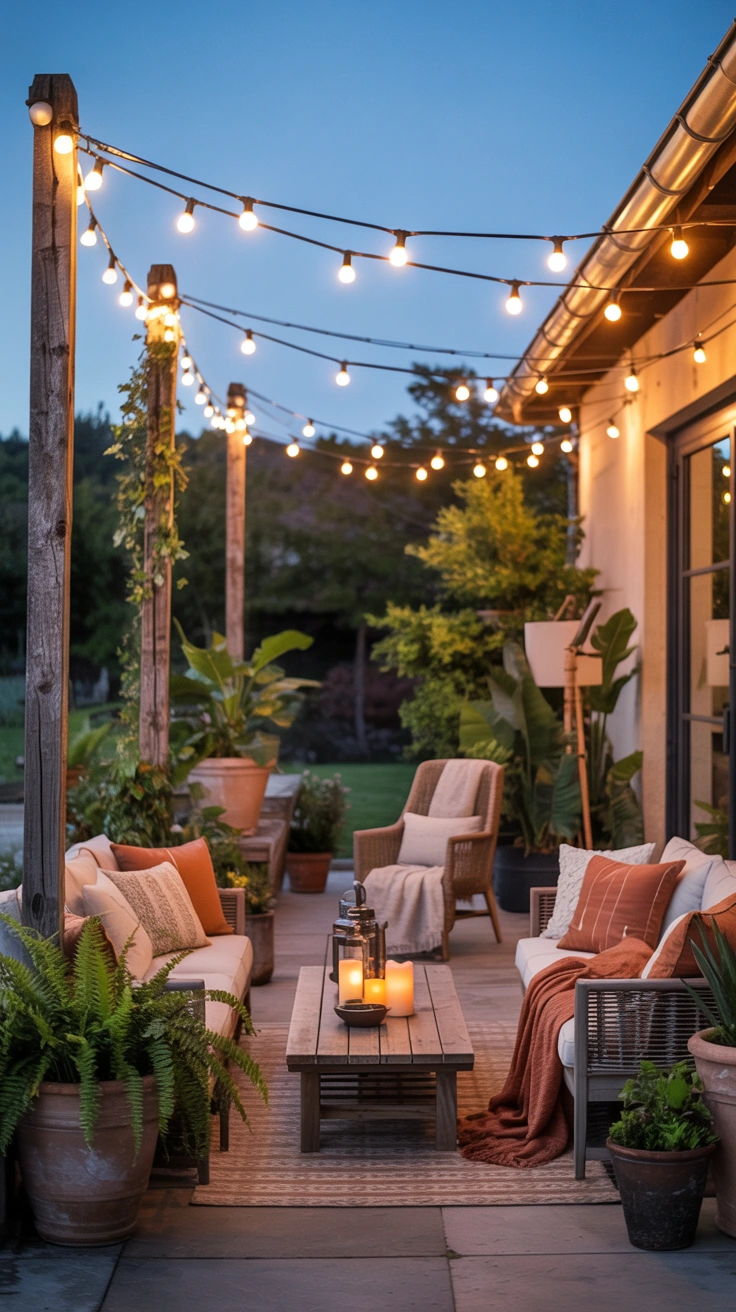
String lights remain the single most reliable patio lighting upgrade available, and for good reason. A well-placed strand of warm white bulbs transforms a plain concrete slab or wooden deck into something that feels intentional and inviting the moment the sun starts to set, without requiring any electrical work beyond plugging into an existing outlet.
Crisscross the lights overhead between two fixed points, whether that means porch posts, a pergola frame, or even temporary poles installed specifically for this purpose. The key to making string lights look professional rather than thrown together is consistent tension and spacing, so take a few extra minutes adjusting the hang before you call it finished.
2. Install Wall-Mounted Sconces Near Seating Areas
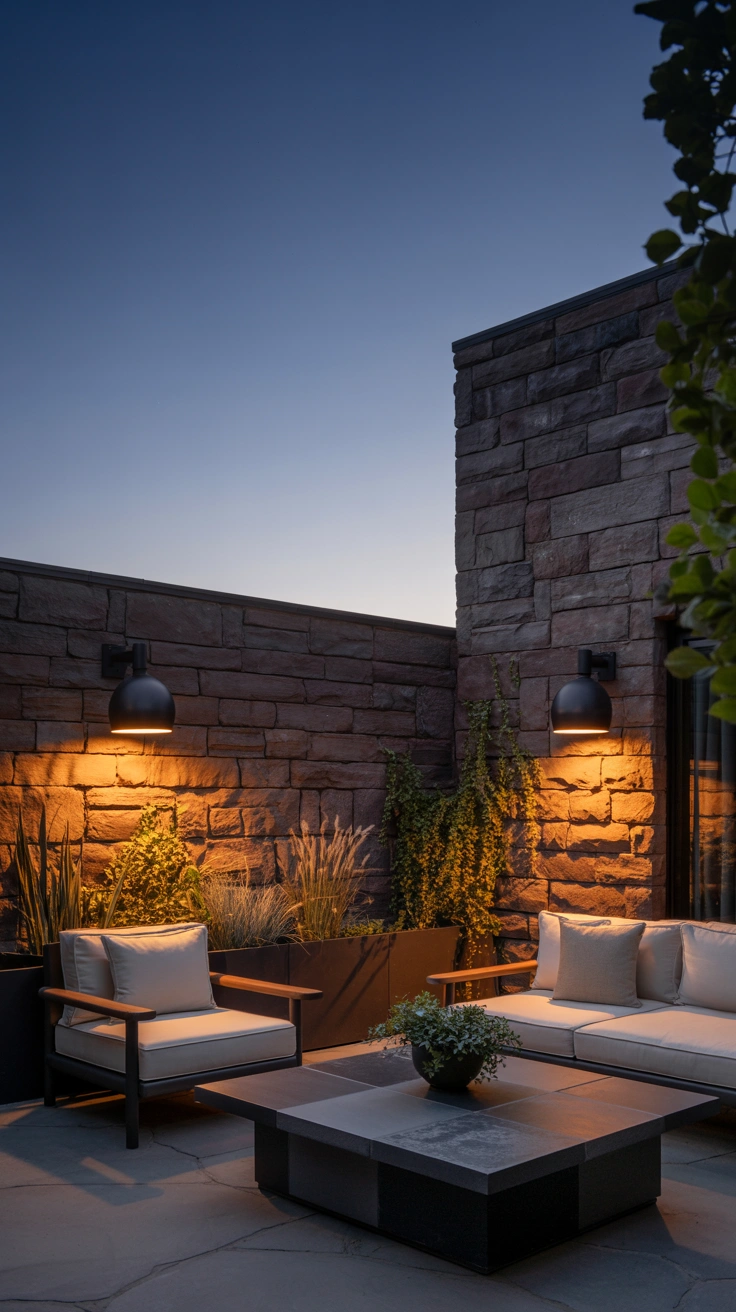
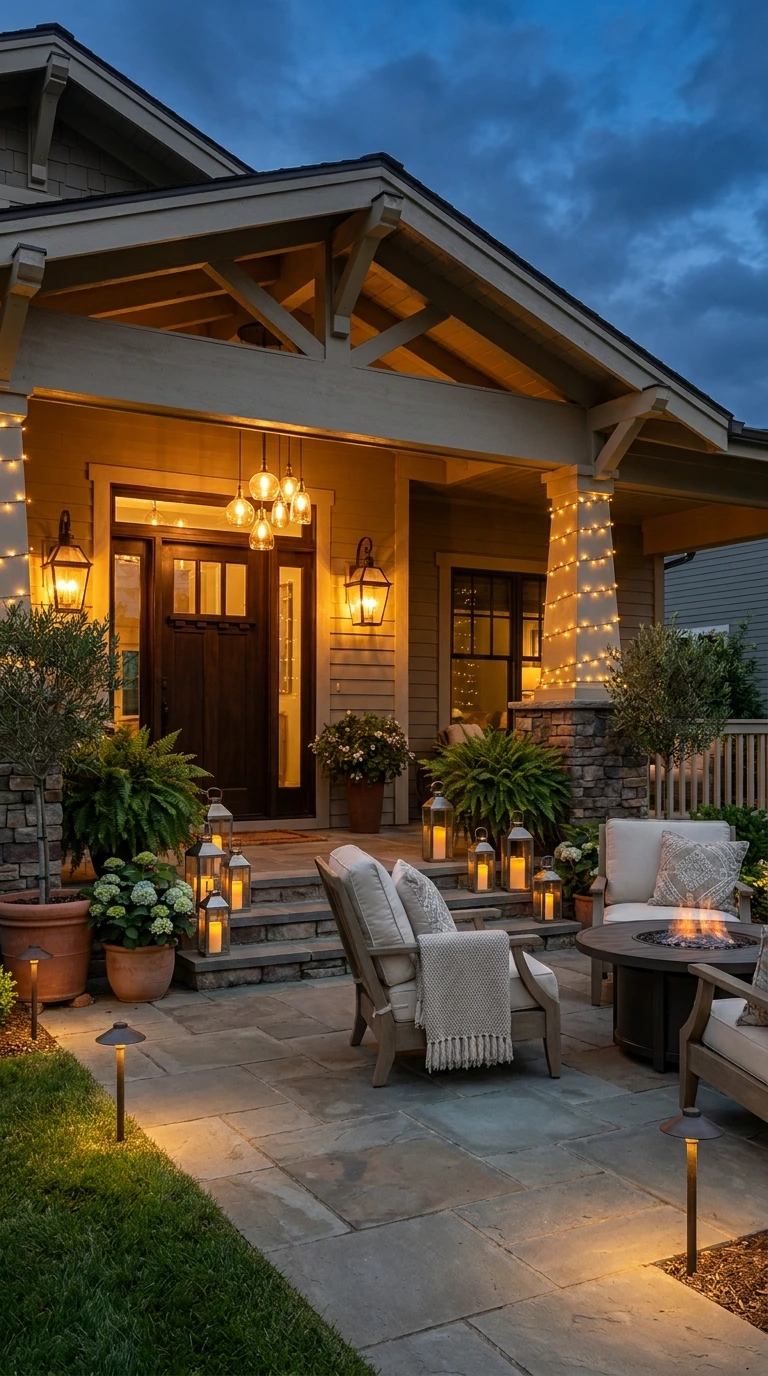
Wall-mounted sconces bring a more architectural, permanent quality to patio lighting than string lights or lanterns alone can achieve. Mounted at a height that casts light downward and outward without creating glare directly in anyone’s eyes, sconces provide consistent, reliable illumination exactly where people are sitting and talking.
Choose a finish that matches your home’s existing exterior hardware, whether that is aged brass, matte black, or a weathered bronze, so the sconces read as a deliberate extension of the house rather than an unrelated addition. FYI — many sconces designed for patios now come with built-in dusk-to-dawn sensors, which means you genuinely never have to remember to turn them on manually.
3. Add a Fire Feature for Light and Warmth Together
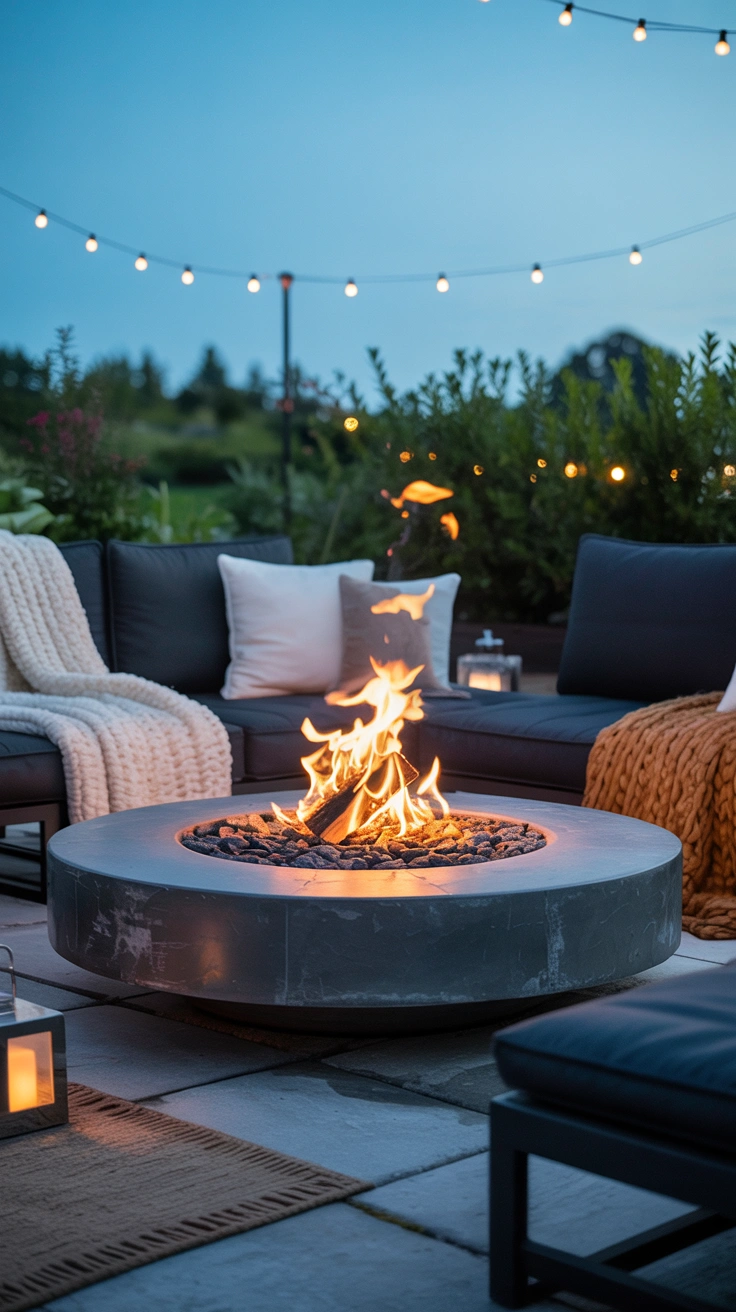
A fire pit or fire table does double duty as both a heat source and a genuinely beautiful, flickering light source that no electric fixture can quite replicate. The warm, moving quality of real flame creates an atmosphere that feels fundamentally different from any bulb, no matter how warm its color temperature happens to be.
Position seating around the fire feature in a loose circle or semicircle so everyone can both see and feel the warmth without anyone being stuck staring directly into smoke. A simple steel fire bowl works just as well visually as an elaborate built-in stone feature, so this idea scales easily regardless of your budget or the permanence of your current outdoor setup.
4. Use Lanterns at Varying Heights Throughout the Space
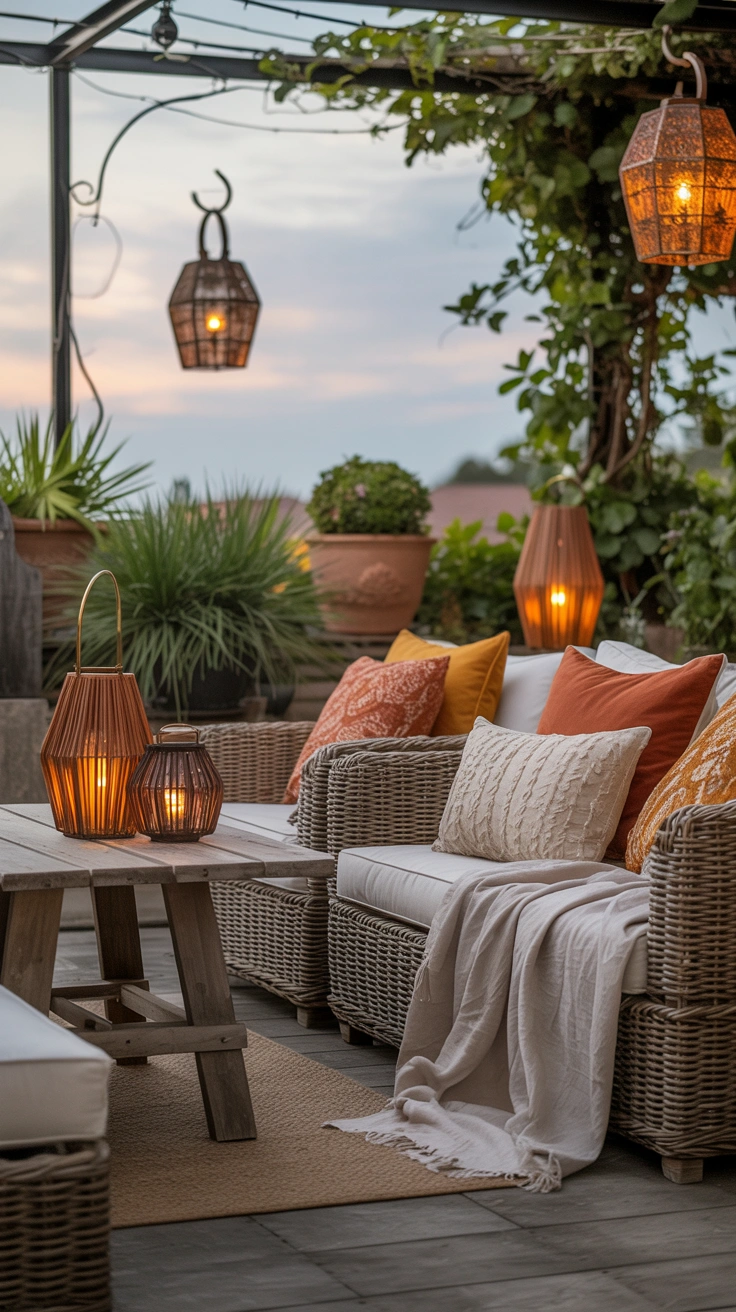
Lanterns scattered at different heights throughout a patio create a layered, textured quality of light that a single overhead source simply cannot replicate on its own. Hang a few from branches or hooks, set others directly on a side table, and place a few more along a pathway or step edge at ground level.
Lantern Placement Ideas Worth Trying
- Hanging from a tree branch or pergola beam at eye level for ambient glow
- Clustered on the dining table at varying heights for a centerpiece effect
- Lining a garden pathway at ankle height to guide movement safely after dark
- Tucked into corners or beside potted plants to fill in darker, forgotten spots
Battery-operated lanterns with flickering LED candles remove any worry about open flame near guests or pets, while still delivering nearly the same warm, romantic visual effect as a real candle.
5. Install Step and Pathway Lighting for Safety and Style
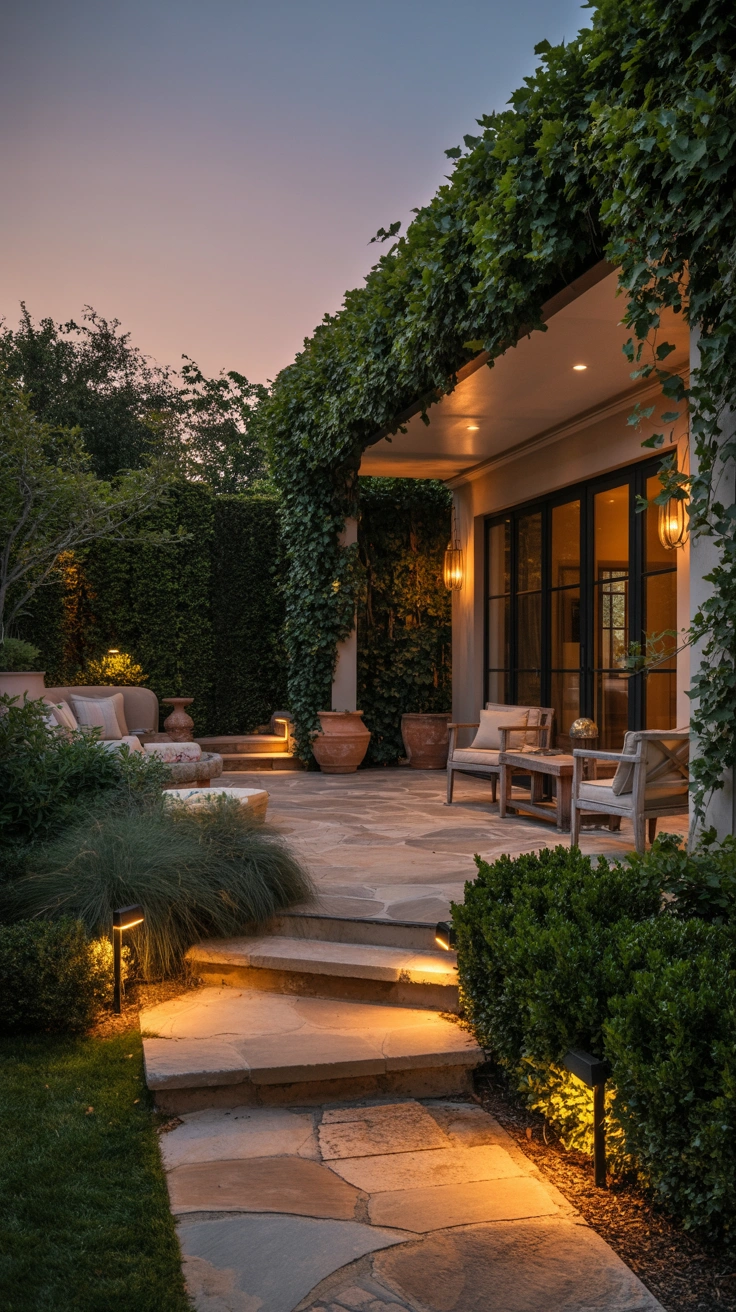
Pathway lighting solves a genuinely practical problem while simultaneously adding a beautiful, layered visual element to any patio that connects to a yard, garden, or driveway. Low-voltage solar or wired path lights installed along the edges of walkways prevent the kind of stumbling and uneven footing that happens easily once natural light fades.
Recessed step lights built directly into the riser of each patio step provide a sleeker, more architectural solution if you are already planning a renovation or new build. IMO, this is one of the most underrated patio lighting categories, since most people focus entirely on the seating and dining areas while completely forgetting that guests still need to safely walk to and from those spaces in the dark.
6. Layer in a Pendant Light Over the Dining Table
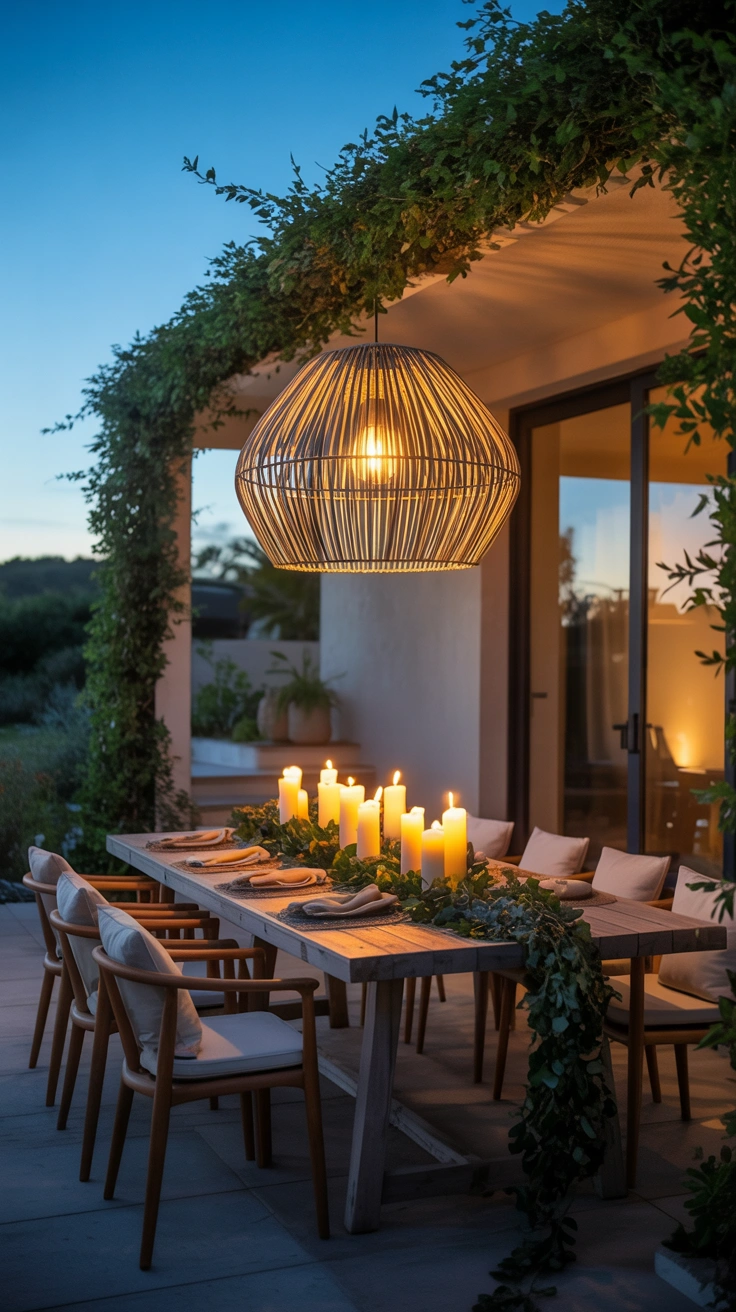
Just as a pendant light anchors a kitchen island indoors, a single well-chosen pendant hung above an outdoor dining table creates the same sense of intentional focus and warmth outside. This works particularly well on covered patios or under a pergola structure that can support the necessary wiring or a hook for a battery-powered fixture.
A rattan or woven pendant brings organic texture that complements natural wood furniture beautifully, while a sleek metal pendant in matte black or brushed brass suits a more contemporary outdoor dining setup. Either direction immediately makes the dining area feel like a defined, designed space rather than just a table that happens to sit outside.
7. Use Uplighting to Highlight Trees and Architectural Features
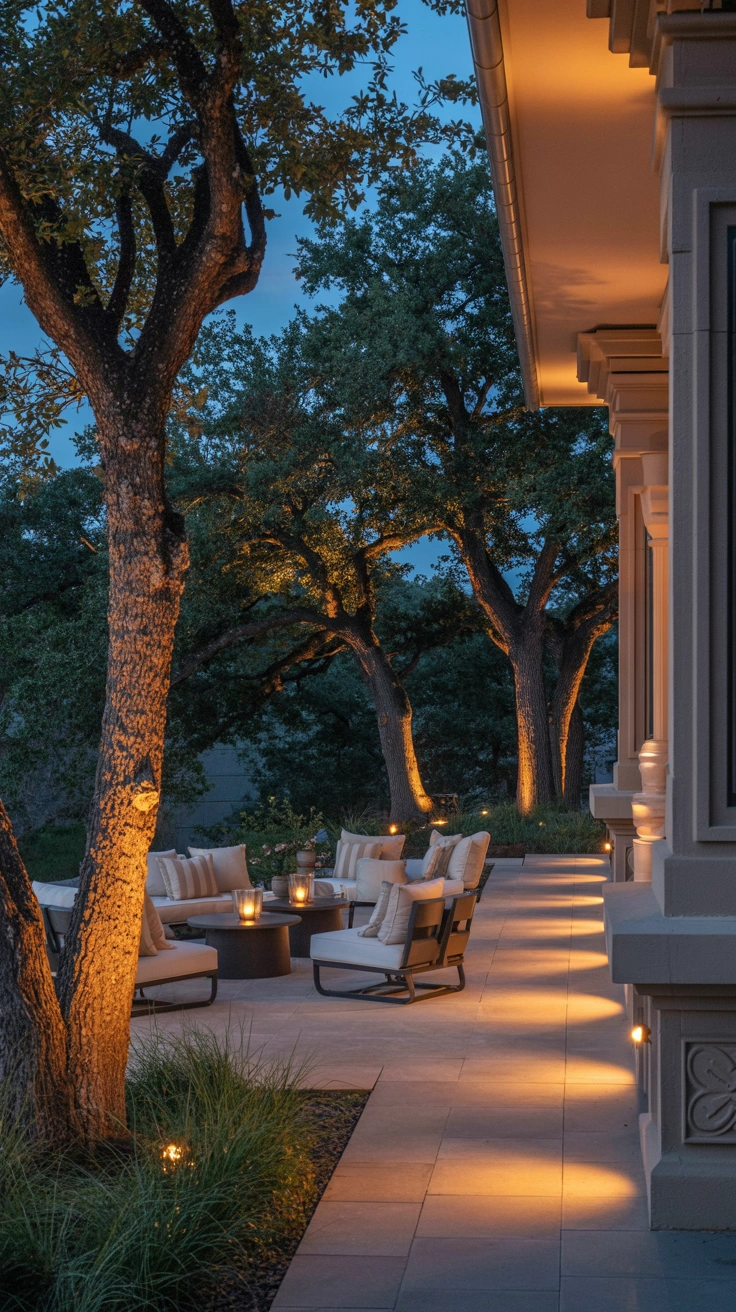
Uplighting involves positioning small fixtures at ground level and angling them upward to illuminate trees, columns, or architectural features from below, creating dramatic shadows and a genuinely sophisticated visual effect after dark. This technique transforms ordinary landscaping into something that looks deliberately designed and considerably more dimensional once the sun goes down.
A single well-placed uplight beneath a mature tree can completely change the character of an entire backyard view from indoor windows as well as from the patio itself. This is a lighting technique borrowed directly from professional landscape design, and it delivers a noticeably elevated result even when used sparingly on just one or two key features.
8. Choose Warm-Toned Bulbs Across Every Fixture
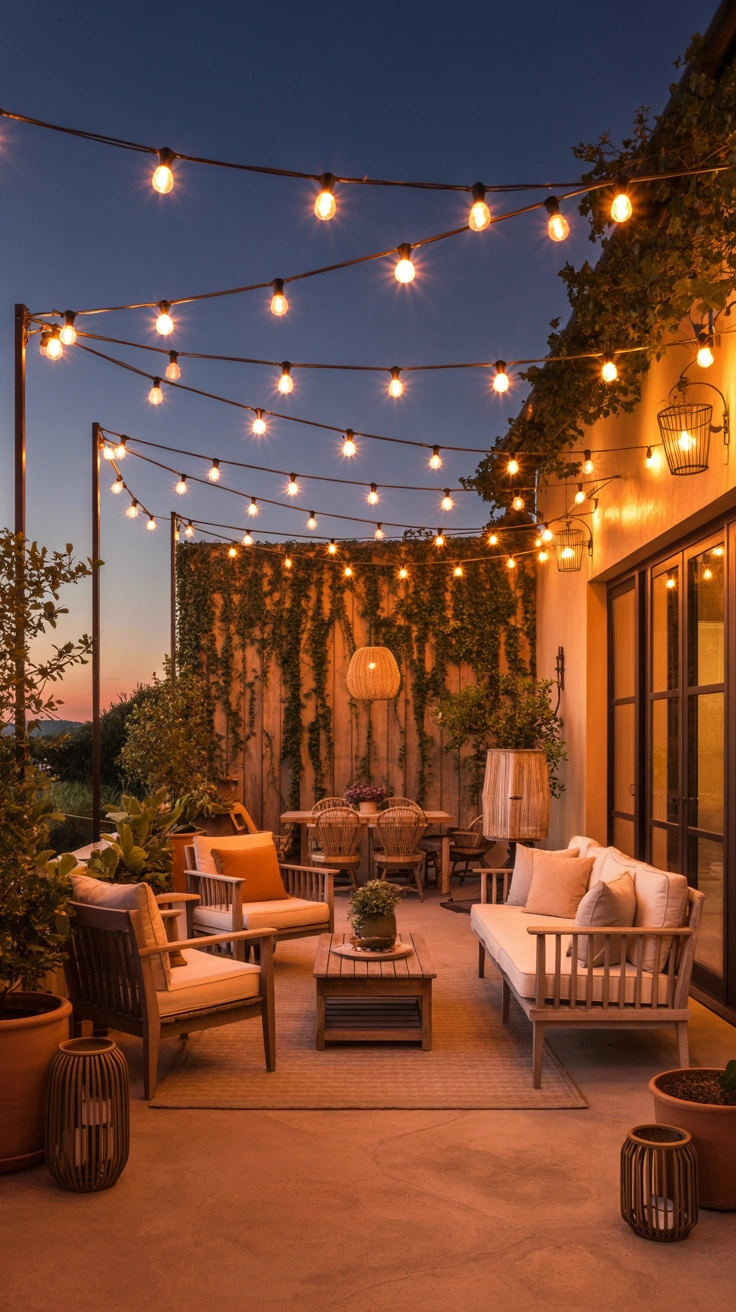
Regardless of which specific lighting idea you choose to implement, the bulb color temperature you select across every single fixture matters enormously to the overall atmosphere of the finished space. Warm white bulbs in the 2700K to 3000K range flatter skin tones, food, and outdoor materials in a way that cooler, bluer-toned bulbs simply cannot match.
Mixing warm and cool bulbs across different fixtures in the same patio creates a visually jarring, disjointed effect that undermines even the most carefully chosen lighting fixtures themselves. Standardizing on one warm temperature across string lights, sconces, lanterns, and pathway fixtures alike ties the entire space together into one cohesive, cozy atmosphere.
9. Add a Statement Chandelier for Covered Patios
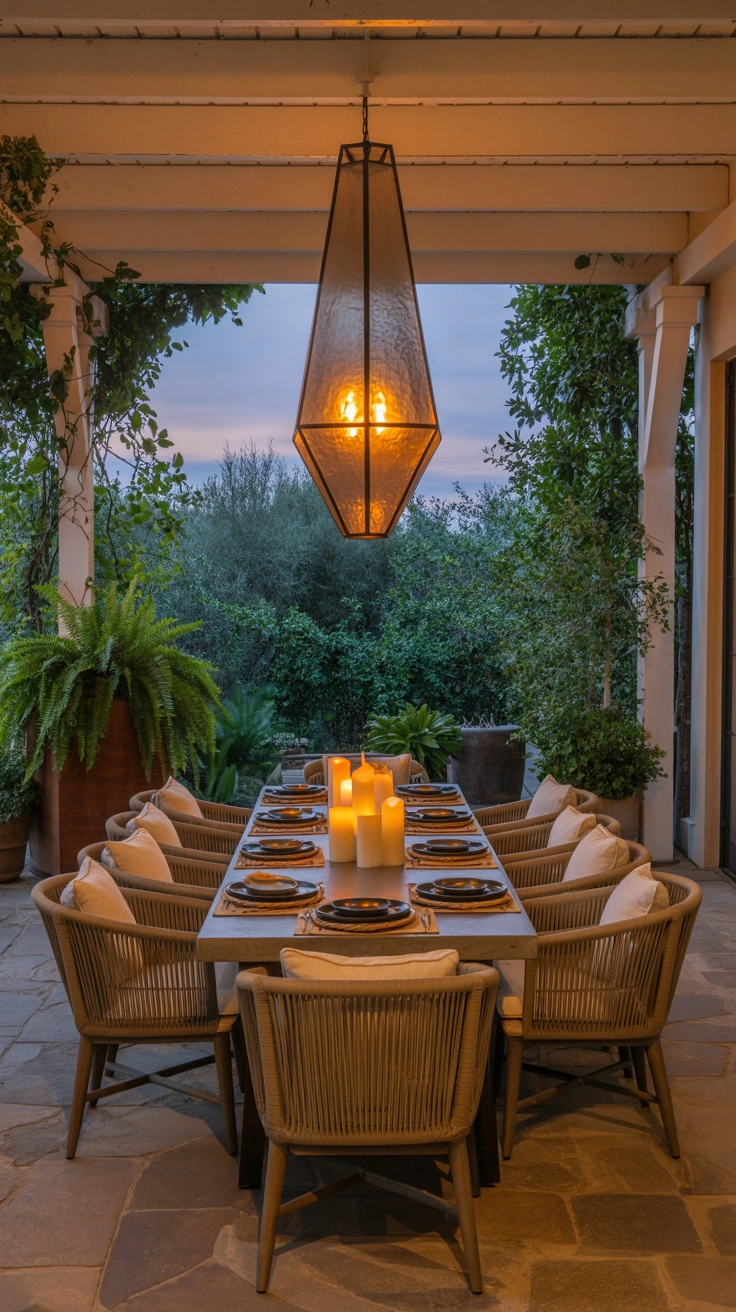
For covered patios with adequate ceiling height, a genuine outdoor-rated chandelier creates a level of drama and personality that smaller individual fixtures simply cannot achieve on their own. This works especially well over a dining table or central seating area where the fixture can become an obvious, intentional focal point visible from across the entire yard.
Look specifically for fixtures rated for outdoor or wet locations, since standard indoor chandeliers will deteriorate quickly when exposed to humidity, rain, and temperature swings. A wrought iron or weathered bronze chandelier with exposed bulbs brings a rustic, romantic quality, while a more streamlined drum-shaped fixture suits a contemporary outdoor aesthetic instead.
10. Use Tiki Torches or Citronella Lanterns for Bug Control and Glow
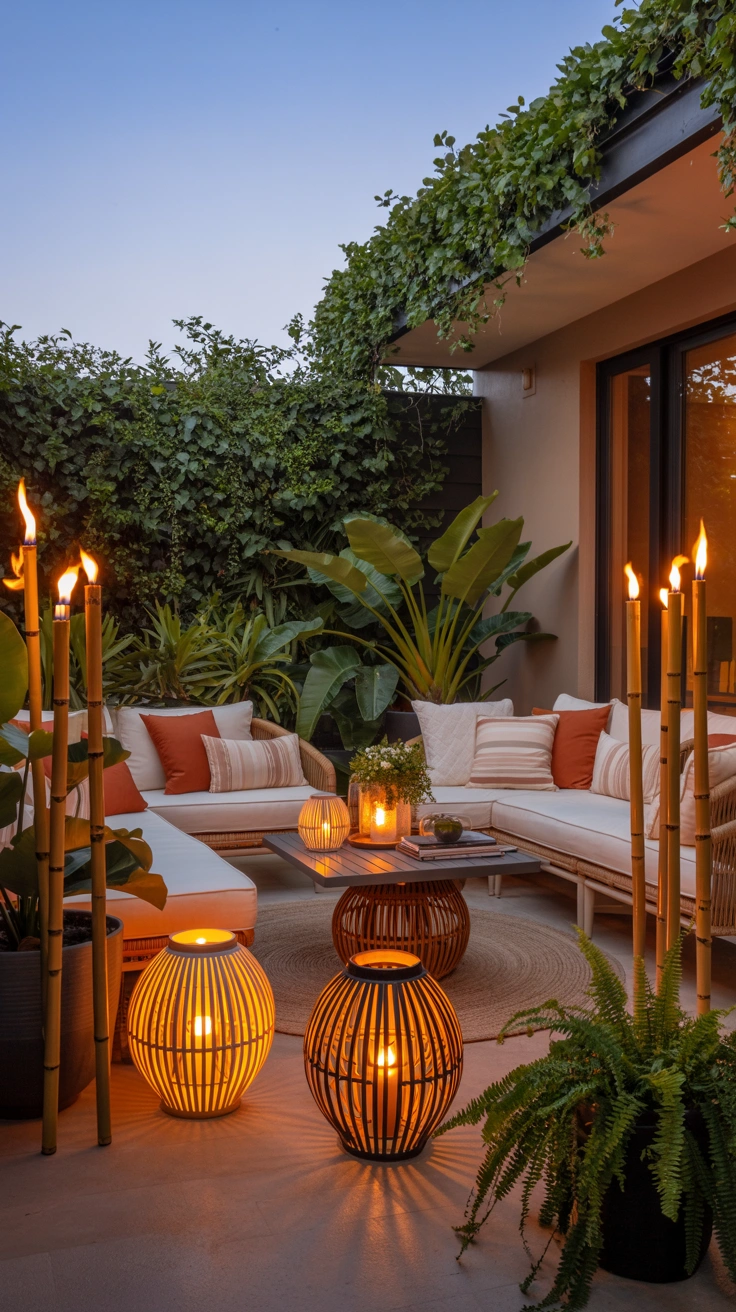
Tiki torches and citronella lanterns solve a genuinely practical seasonal problem while simultaneously contributing warm, flickering light to the overall patio atmosphere. Positioned around the perimeter of a seating or dining area, they create a soft visual boundary while actively helping to keep bugs away from your gathering.
Choose galvanized metal or ceramic versions over cheap plastic ones, since the better materials hold up significantly longer outdoors and look considerably more intentional sitting among your other patio decor. Mixing a few of these in among purely decorative lanterns means the practical, bug-repelling ones blend seamlessly into the overall styling rather than standing out as an obvious, utilitarian addition.
11. Install Dimmable Switches for Total Atmosphere Control
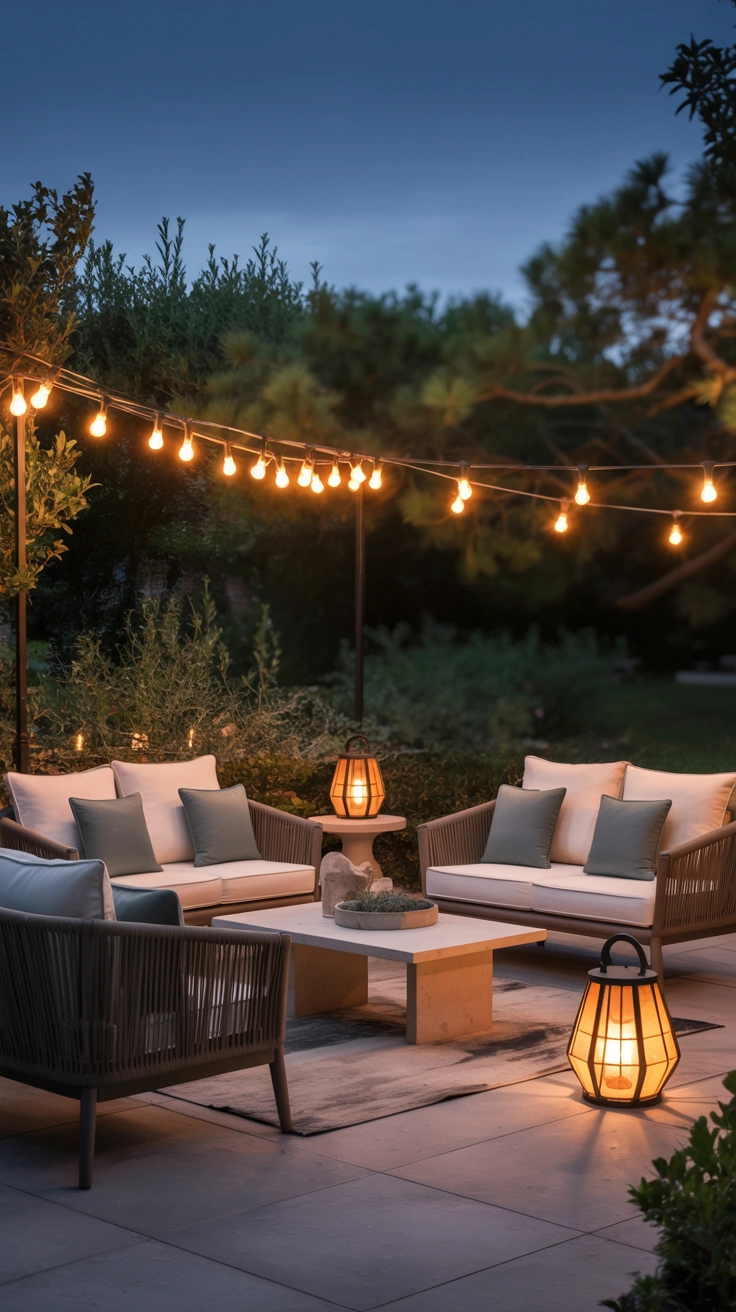
A dimmer switch on any wired patio lighting circuit gives you complete control over the mood of the space depending on the time of day and the occasion. Bright, fully lit settings work well for active dinner prep or kids playing outside, while a dimmed, softer setting suits a quiet evening conversation or a more intimate gathering later in the night.
This single upgrade, while it does require basic electrical work, pays off every single time you use the patio afterward, since it removes the all-or-nothing limitation that most outdoor lighting setups are stuck with by default.
12. Mix Multiple Lighting Layers Rather Than Relying on One Source
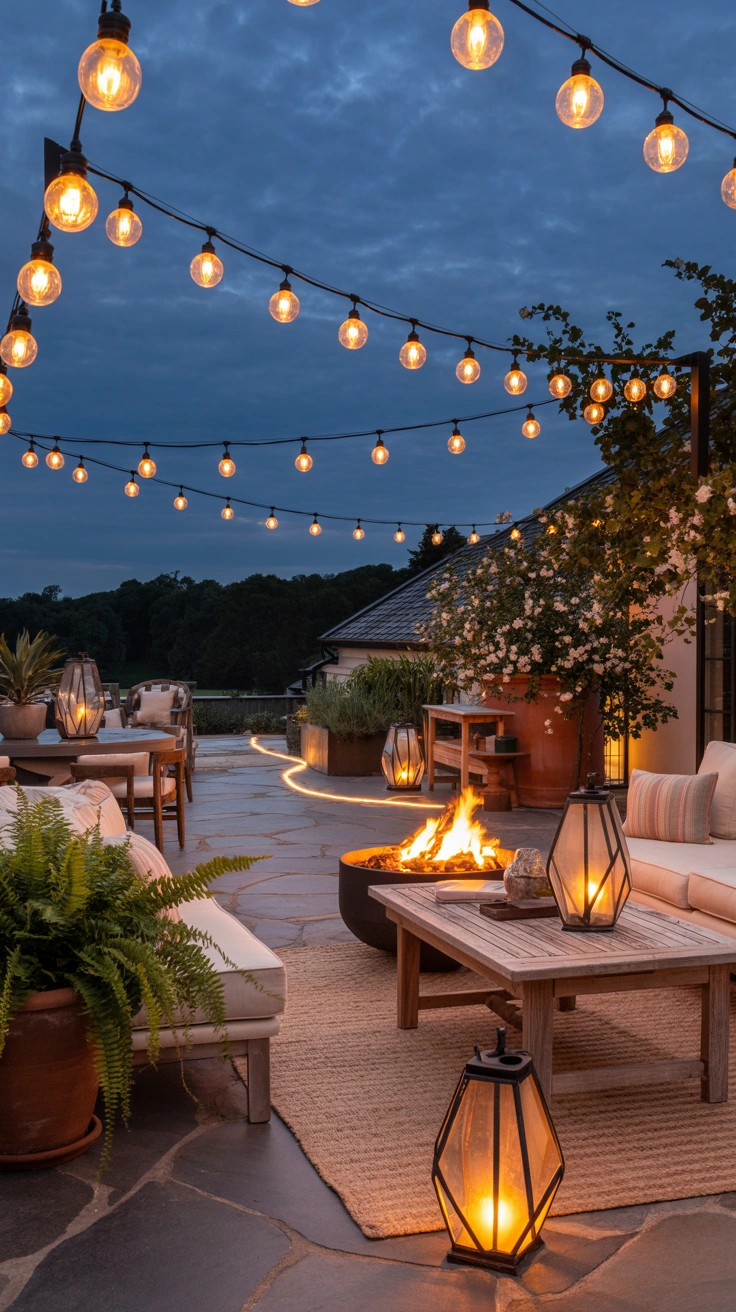
The most successfully lit patios almost never rely on a single lighting source doing all the work alone. Instead, they combine several of the ideas already covered in this list, layering string lights overhead, lanterns at table height, and pathway lights at ground level into one cohesive, dimensional lighting scheme.
This layered approach mimics how professional designers actually light interior rooms, combining ambient, task, and accent lighting rather than relying on a single overhead fixture to do everything. Applying that same layered thinking outdoors is genuinely the difference between a patio that is simply lit and one that feels considered, atmospheric, and ready for guests at any hour of the evening.
Conclusion
Twelve ideas, one patio that finally works after dark exactly the way you want it to. String lights, sconces, fire features, pathway lighting, and a commitment to warm, consistent bulb temperature throughout the whole space all work together to take your outdoor area from dim and forgettable to genuinely magical once the sun goes down. None of these ideas require a complete electrical overhaul, and several of them can be implemented in a single weekend afternoon.
Good patio lighting is ultimately about layering, not about finding one perfect fixture that solves everything on its own. Start with the basics like string lights and warm bulbs, then build outward toward fire features, pathway lighting, and dimmer controls as your space and budget allow.
Pick a couple of these ideas, get them installed before the weather turns, and watch your patio finally earn its reputation as the best part of the evening.