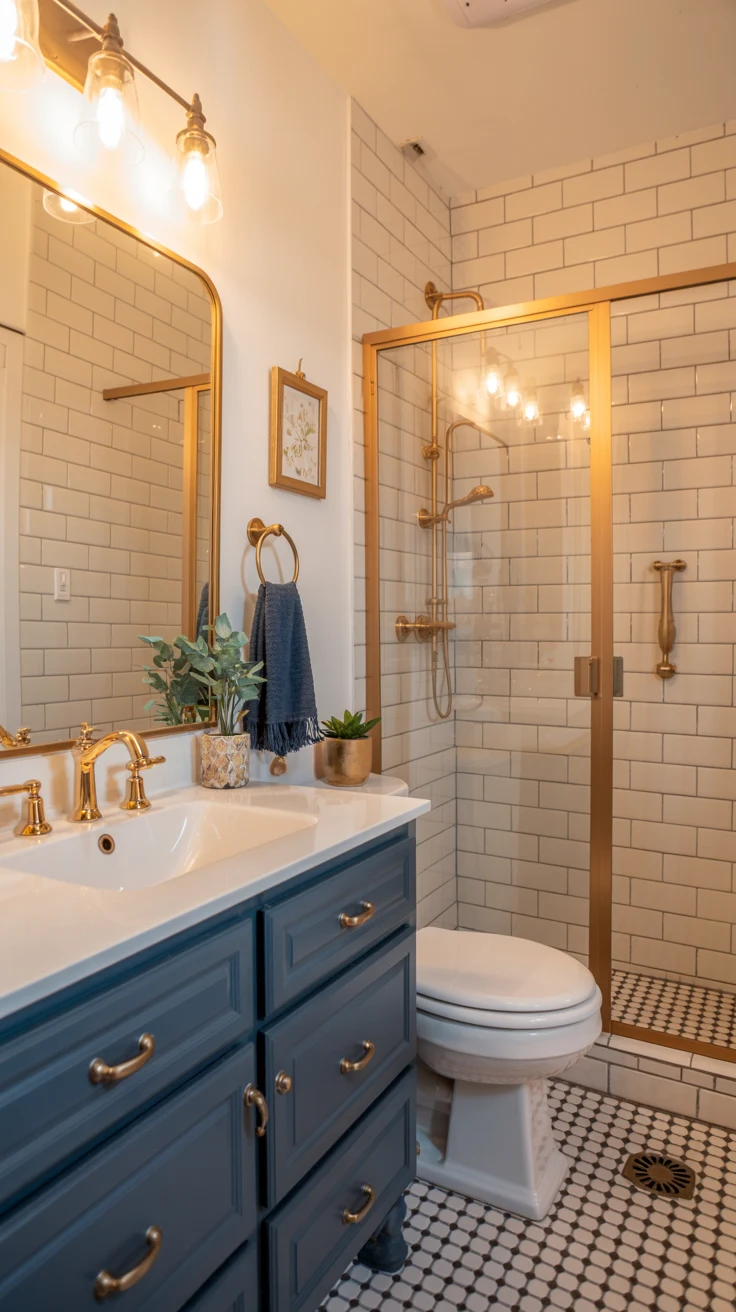
15 Dark Bathroom Tile Ideas That Prove Your Bathroom Deserves More Than White
Every bathroom renovation conversation starts the same way: “I’m thinking white tiles, keep it light, keep it bright.” And there is nothing wrong with that — a white tiled bathroom is a genuinely beautiful thing. But if you’ve ever walked into a dark-tiled bathroom that’s been done properly — all that depth and drama, the way the warm lighting bounces off dark stone, the specific quality of luxury that makes you feel like you’re in a five-star hotel rather than your own home — you know there’s another option entirely. Dark bathroom tiles create something that white simply cannot: atmosphere. Not just a clean room, but a room with genuine character, visual depth, and the kind of enveloping beauty that makes bathing feel like an event rather than a routine. I became completely obsessed with dark tile bathrooms while researching my own renovation and ended up going significantly darker than I initially planned — and I haven’t had a single moment of regret since. These 15 ideas will show you exactly why.
1. Nero Marquina — The Black Marble That Changes Everything
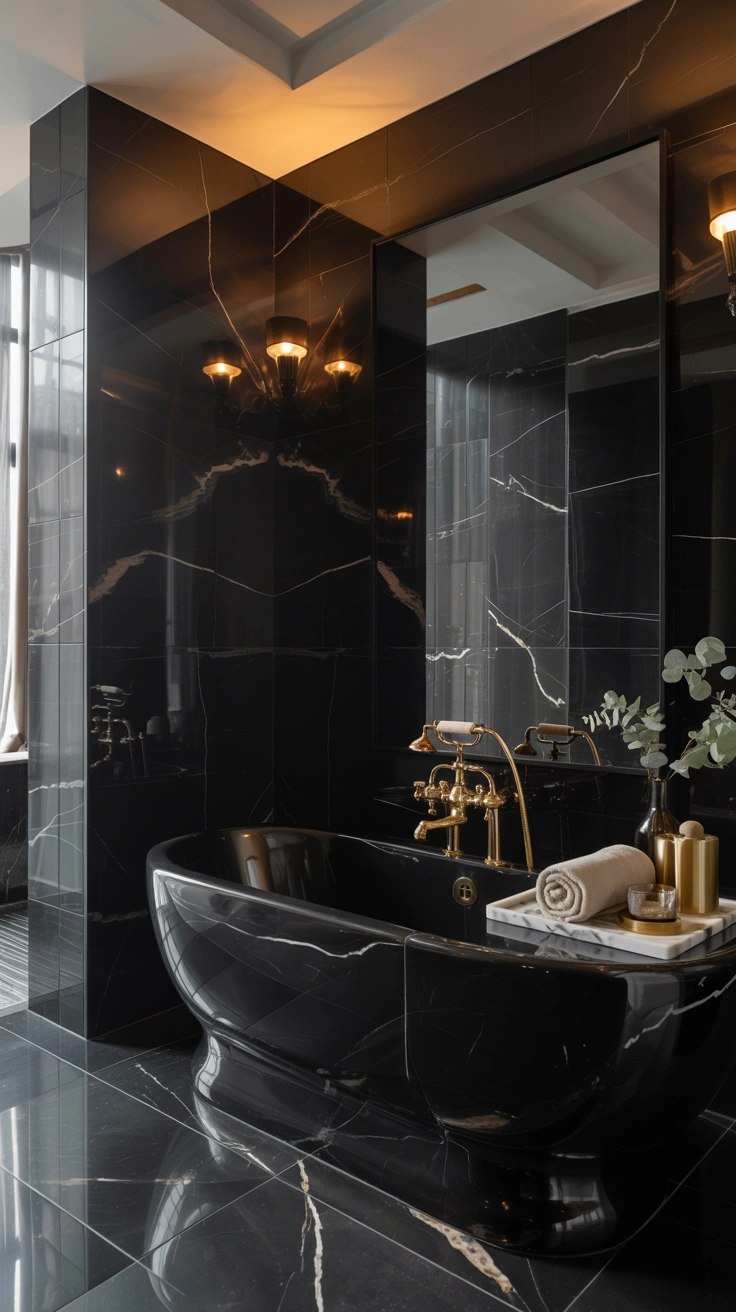
If there’s one tile choice that stops people cold when they walk into a bathroom, it’s Nero Marquina marble — the Italian black marble with white veining so dramatic it looks like abstract art applied to an architectural surface. No other dark tile delivers the same combination of geological depth, visual complexity, and unmistakable luxury.
Full-height Nero Marquina on the shower walls creates a bathing enclosure of extraordinary visual drama. A Nero Marquina feature wall behind the vanity creates the bathroom’s most prominent design statement. Floor-to-ceiling application in a small bathroom creates an all-enveloping dark mineral environment that feels genuinely extraordinary. The white veining on black stone creates a surface that is perpetually interesting — it looks different at every distance, under every lighting condition, and at every time of day.
2. Matte Black Subway — Familiar Format, Completely Transformed
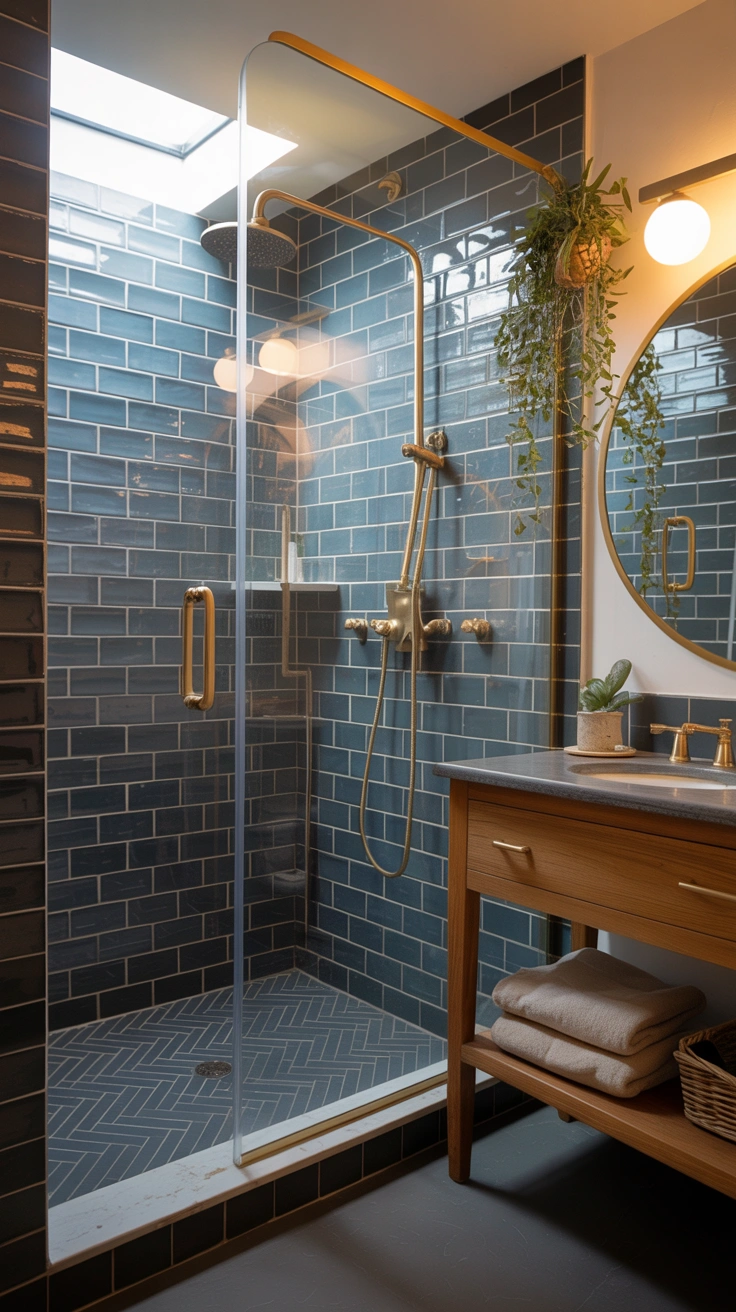
The subway tile is one of the most recognisable and most widely used tile formats in bathroom design — and in matte black, it transforms completely from a standard neutral choice into something with genuine contemporary edge and visual confidence. The familiar format in an unexpected dark tone creates bathrooms that feel both resolved and distinctively current.
Matte black subway tiles in a standard horizontal brick pattern on all shower walls with dark or black grout creates a seamless, deeply atmospheric result. A herringbone pattern in matte black elevates the standard format further — the directional variation of the herringbone creates a dynamic, textured surface with more visual energy than standard horizontal running bond. The matte finish is essential here — glossy black subway tiles show every water mark and fingerprint, while matte tiles conceal daily use and maintain their appearance with minimal effort.
3. Dark Zellige — Where Texture Meets Depth
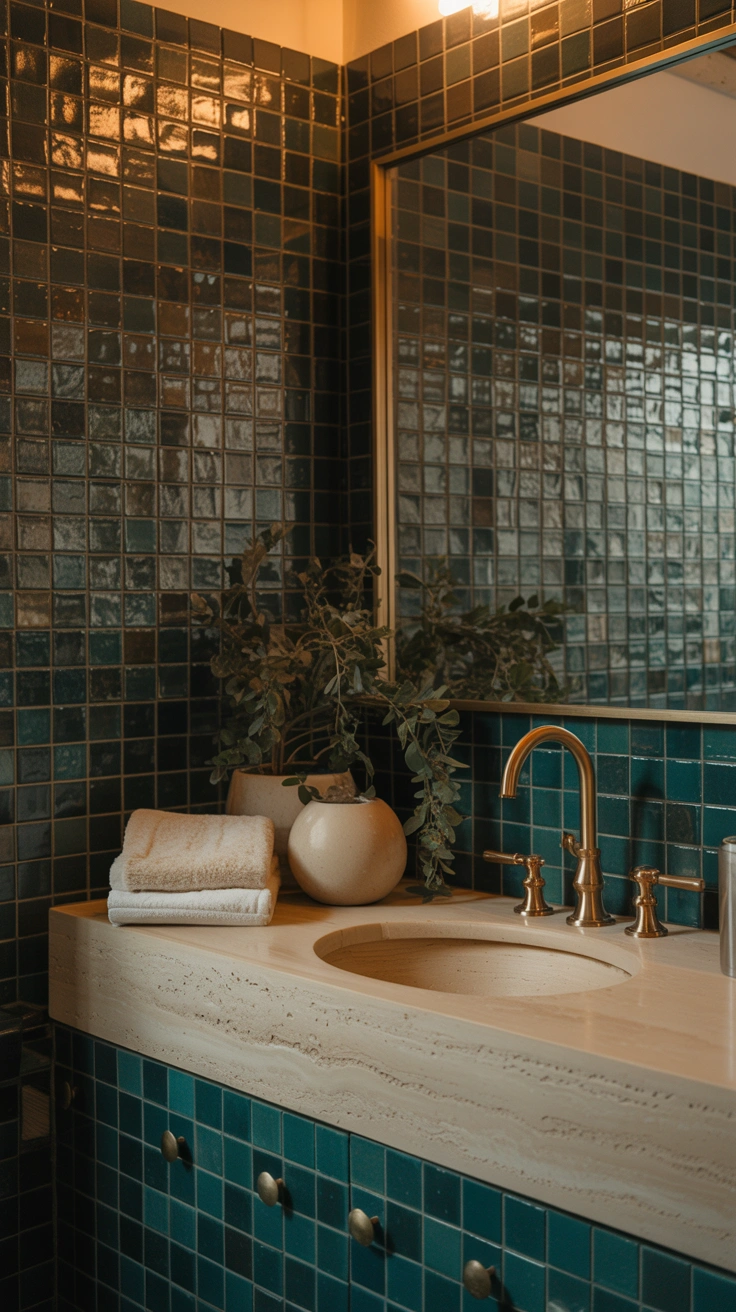
Zellige tiles — handmade Moroccan clay tiles with characteristic tonal variation, slight surface irregularity, and glossy glaze — are extraordinary in dark tones. The natural variation across dark zellige surfaces means the tile is never a flat, uniform dark — it shifts between deep teal, charcoal, navy, or dark green as the light moves across it, creating a living, dynamic surface that is unlike any manufactured tile.
Dark teal zellige on a bathroom floor creates a surface of extraordinary organic beauty — the irregular glaze pooling in different depths across each tile, creating a gentle luminosity that plain tiles simply cannot achieve. Dark charcoal zellige on a shower wall creates a surface with the visual complexity of natural stone combined with the warmth and artisanal character of handmade clay. FYI — dark zellige with pale or cream grout creates a graphic, pattern-forward tile surface; dark zellige with matching dark grout creates a more seamless, deeply atmospheric result. Both approaches are beautiful for different reasons.
4. Slate Grey Large Format — Bathroom Architecture Elevated
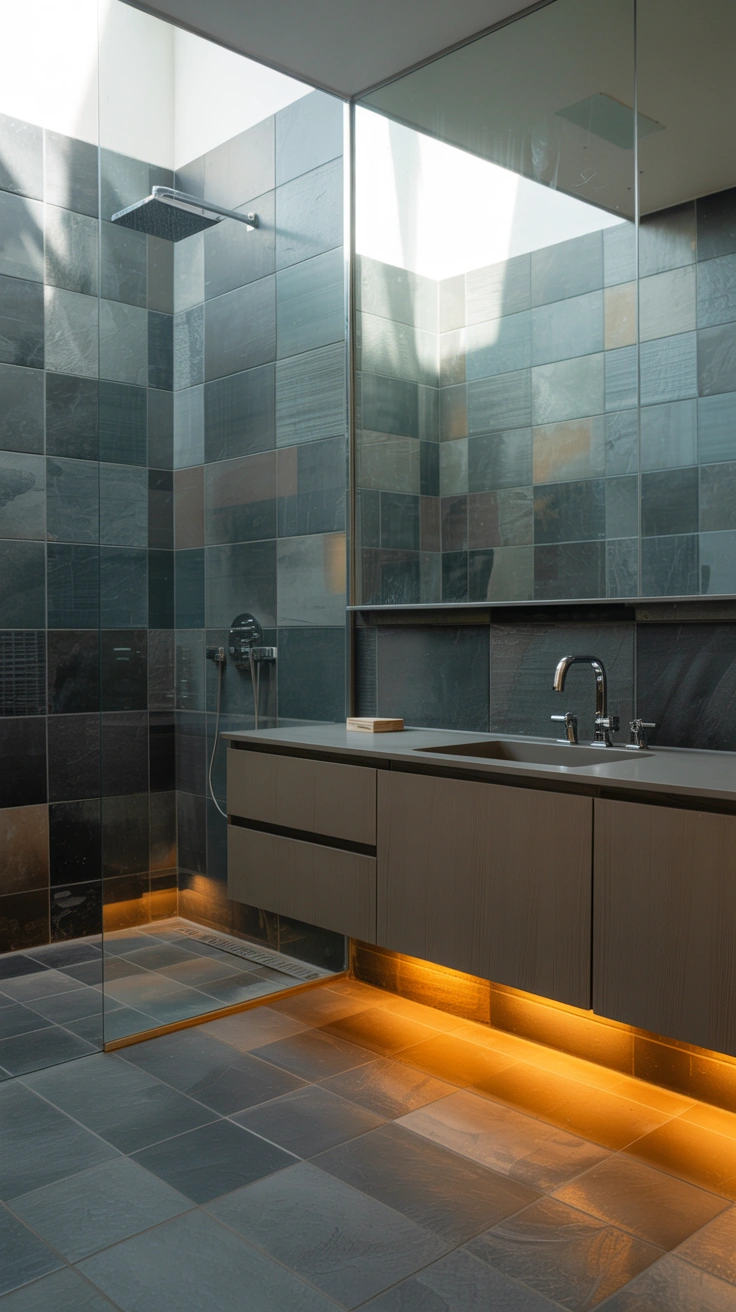
Large format tiles in dark slate grey — panels 600x1200mm or larger — create a bathroom surface that reads as architectural cladding rather than standard tiling. The absence of frequent grout lines across large surfaces creates a visual continuity that makes the bathroom feel significantly more spacious and significantly more designed than smaller tile formats with more visible grout.
Dark slate grey large format tiles on both floor and walls in the same material create the seamless stone environment that defines the most aspirational bathroom renovations. The minimal grout lines of large format tiling in a dark tone create a surface of quiet, powerful presence — less patterned than smaller tiles, more architecturally resolved, and genuinely extraordinary when lit with warm, precise task lighting. The tile size alone communicates investment and intention.
5. Dark Green Gloss — The Bathroom Colour Nobody Expects to Love This Much
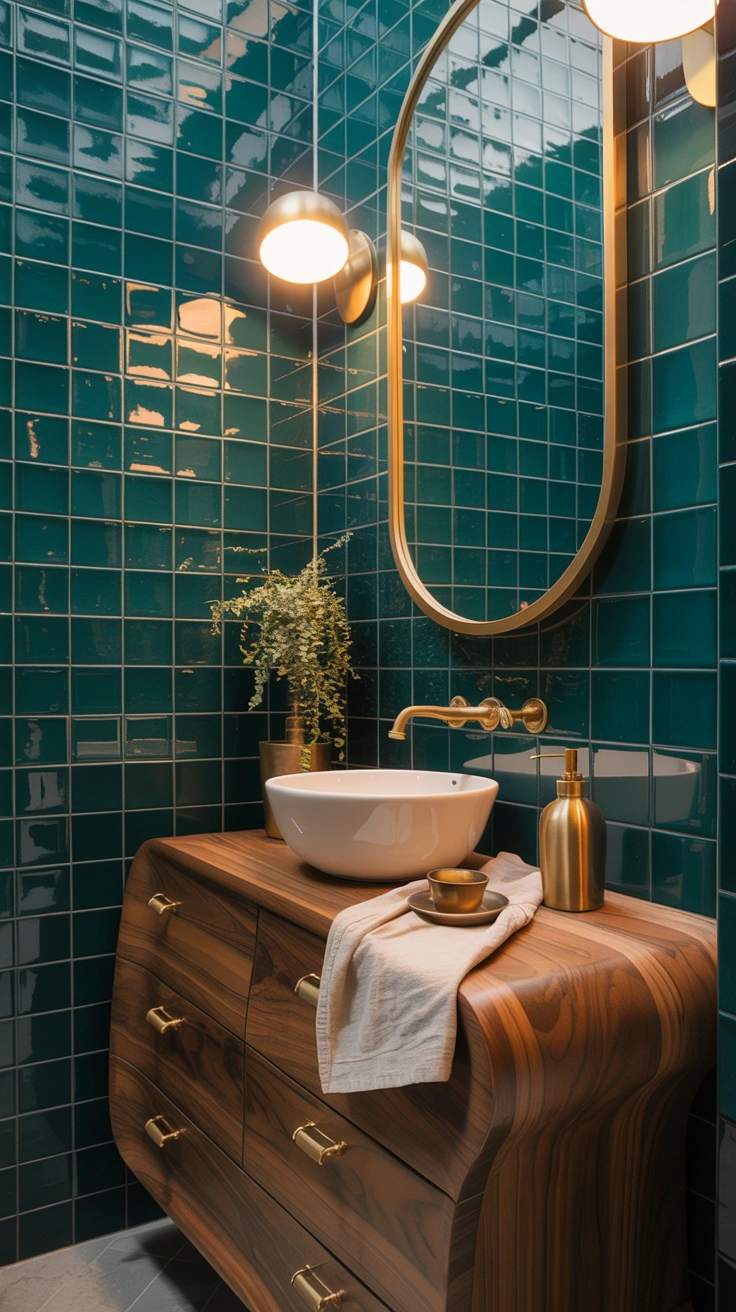
Deep bottle green or forest green gloss tiles are having a significant cultural moment in bathroom design — and the response from anyone who encounters them in a beautifully executed bathroom is consistently the same: immediate, genuine, slightly surprised admiration. Green gloss tiles create a bathroom that is simultaneously contemporary, historical, and completely distinctive.
Deep bottle green gloss metro tiles from floor to ceiling in a wet room create an environment with the specific quality of a Victorian bar or a Parisian brasserie — rich, confident, completely its own thing. Dark green gloss herringbone tiles in a shower enclosure create a directional, pattern-forward surface with the tile’s colour and gloss amplifying the geometric drama. Paired with warm brass fixtures throughout, deep green gloss tiles create a bathroom of extraordinary warmth and genuine luxury that reads as both current and timeless simultaneously.
6. Black Penny Rounds — Pattern and Depth in the Smallest Format
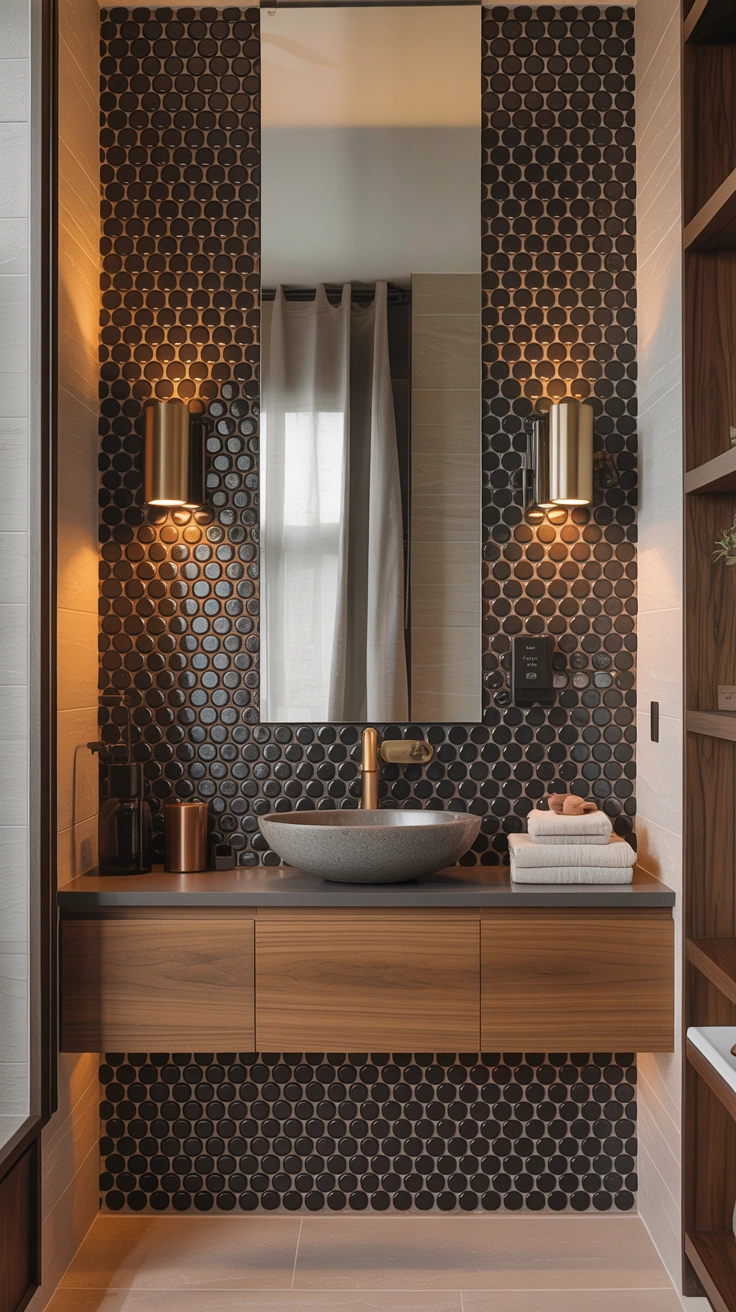
Penny round tiles in black create one of the most pattern-rich and most visually captivating dark bathroom tile surfaces available — the small circular format creating a surface of continuous, hypnotic pattern that rewards looking at from both close and far.
Black penny round tiles on a shower floor create a surface with both visual character and practical texture — the multiple grout lines providing genuine slip resistance while the circular pattern creates a mosaic-like richness. Black penny rounds on a feature wall behind the vanity, floor-to-ceiling, creates a surface of extraordinary pattern density that functions almost like wallpaper in its visual effect. The choice of grout colour with black penny rounds is significant — white grout emphasises the individual tiles and the pattern; dark grout creates a more unified, atmospheric surface where the pattern reads as texture rather than repetition.
7. Shou Sugi Ban Effect Tiles — Burning Dark and Beautiful
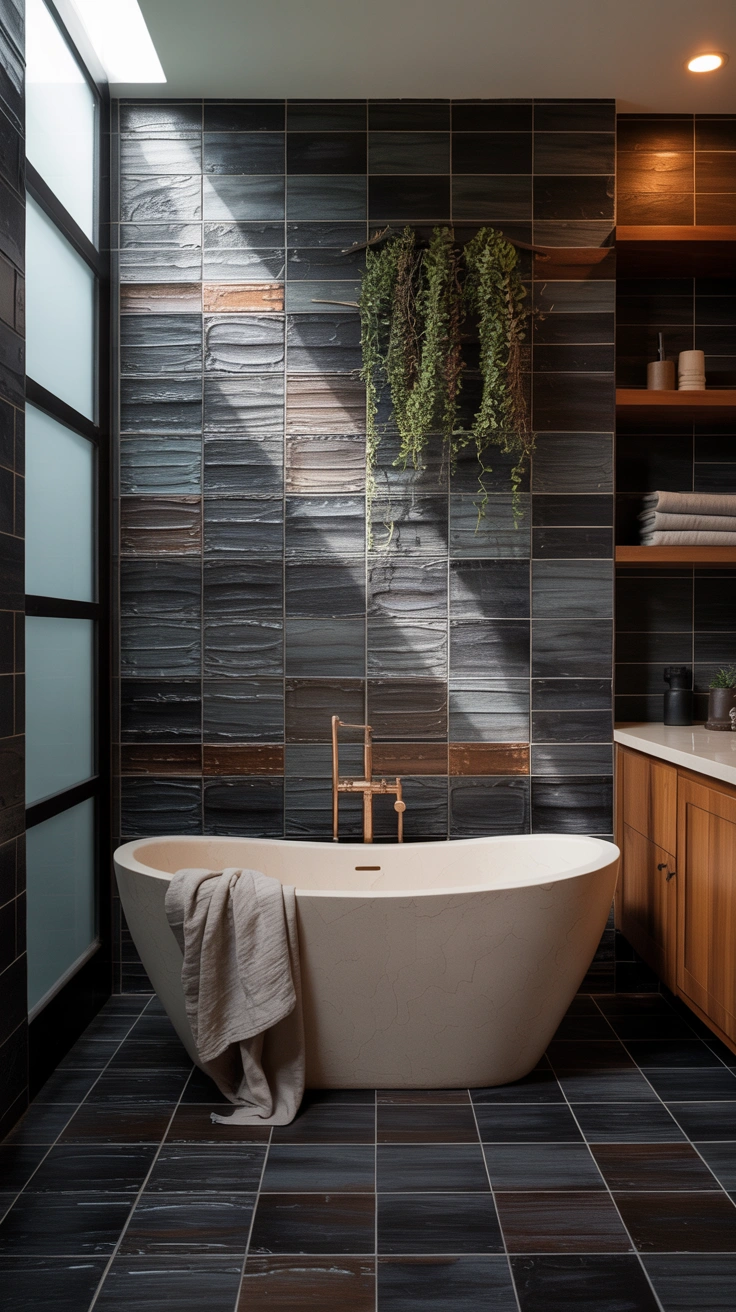
The Shou Sugi Ban effect tile — named after the Japanese technique of charring timber to preserve it — creates a bathroom tile surface with a deep, textured, carbon-dark character that is completely unlike any other tile aesthetic. These tiles have the specific quality of something ancient and elemental — dark, tactile, and deeply atmospheric.
Shou Sugi Ban effect tiles in the shower create an enclosure that feels like bathing inside a piece of sculpture — the deep, dimensional surface texture creating shadows and depth that flat tiles simply cannot achieve. On a feature wall above a freestanding bath, this tile creates a backdrop of extraordinary character that frames the bath as the room’s centerpiece with genuine visual authority. The dark, charred character of this tile works particularly beautifully with raw concrete, warm timber, and warm brass — materials that share its honest, elemental quality.
8. The Dark Floor, White Wall Combination
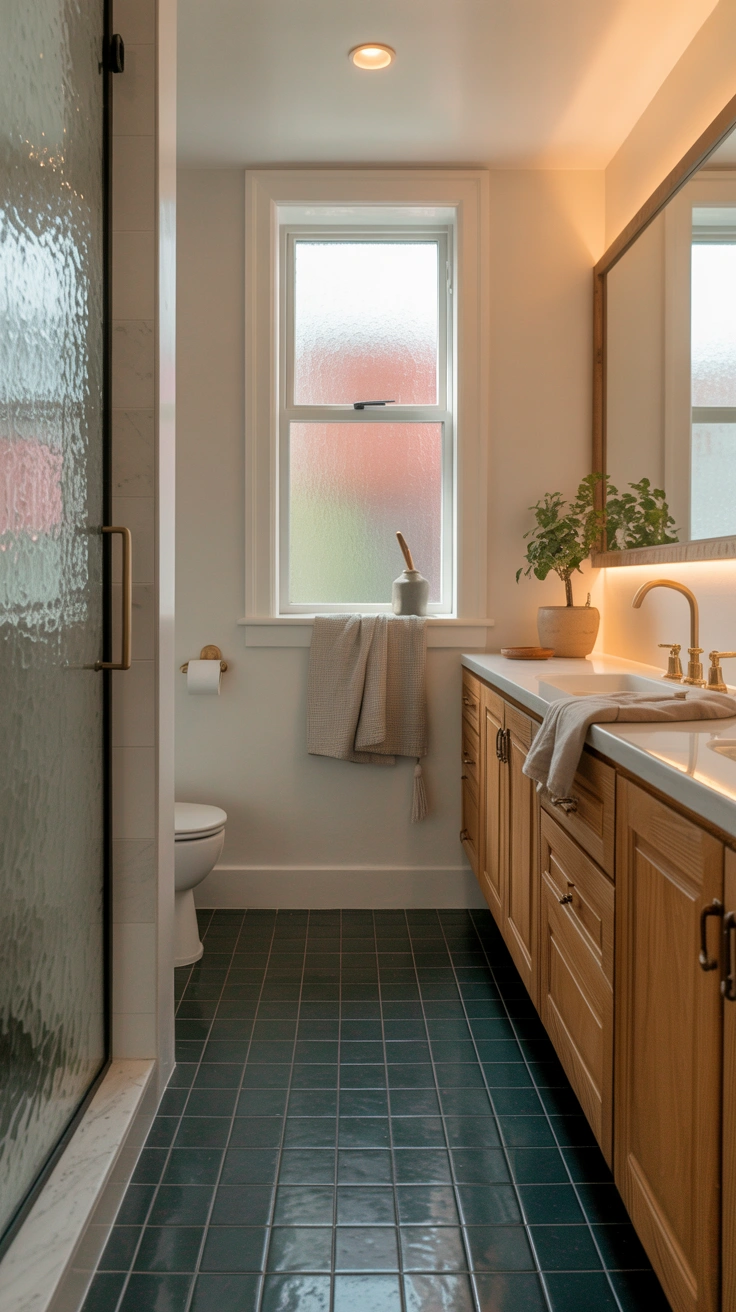
One of the most accessible and most visually balanced approaches to dark tiles in a bathroom is using dark tiles exclusively on the floor while keeping the walls in white or pale stone. This configuration grounds the bathroom with the drama and depth of dark tile while maintaining the light, open quality of pale walls above.
A dark charcoal, deep slate, or black floor tile beneath white or pale grey wall tiles creates a bathroom with a specific quality of restrained sophistication — sophisticated because the contrast is deliberate and precise, restrained because the darkness is contained to one surface. This approach is particularly effective in smaller bathrooms where full dark tile application might feel too enclosed. The dark floor creates a visual anchor that makes the white walls feel deliberately light and crisp rather than simply standard.
9. Dark Concrete-Effect Tiles — Industrial Warmth at Scale
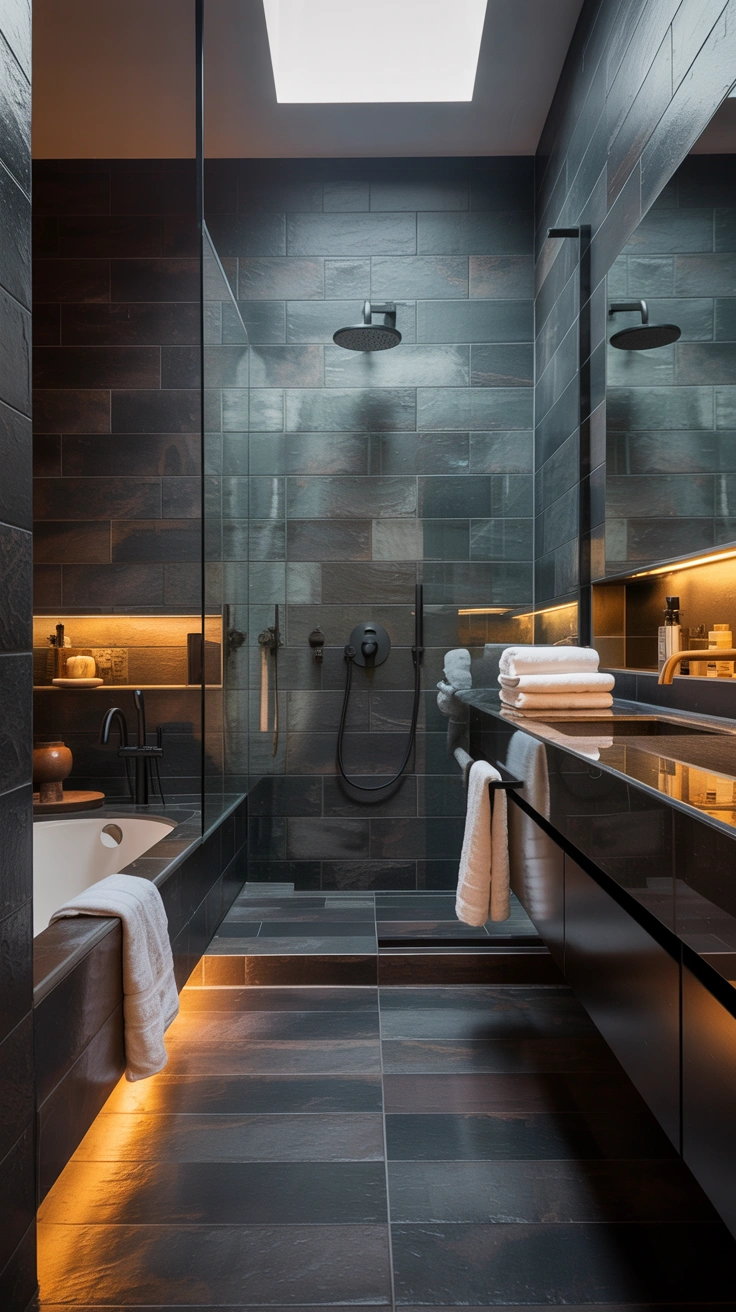
Concrete-effect tiles in dark grey or charcoal tones create a bathroom aesthetic that is urban, architectural, and completely contemporary — the specific combination of industrial character and functional precision that defines the most design-forward bathroom renovations of the past several years.
Large format dark concrete-effect tiles covering both floor and walls in a continuous surface create the seamless, monolithic environment of the best contemporary spa bathrooms. The subtle surface texture of concrete-effect tiles creates just enough visual interest to prevent the dark surface from feeling flat, while remaining clean and minimal enough to feel architecturally resolved. With matte black fixtures throughout and warm, precisely directed lighting, dark concrete-effect tiles create a bathroom of genuine design authority.
10. Navy Encaustic — Pattern Meets Depth
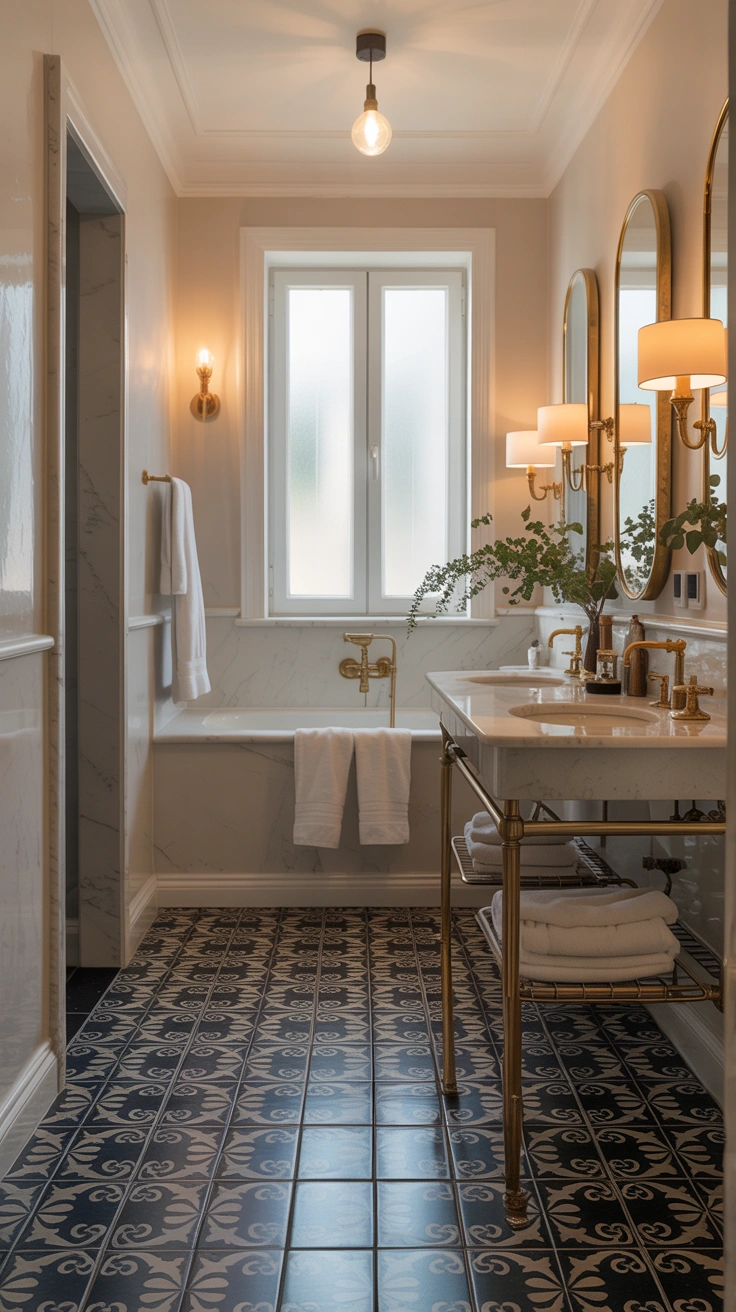
Navy and dark blue encaustic tiles — geometric patterned cement tiles in deep tones — create bathroom floors and feature walls of extraordinary visual richness and historical depth. Encaustic tiles have a centuries-long history in European and North African architecture, and their geometric patterns carry a quality of cultural reference and craft heritage that contemporary tiles rarely achieve.
A navy geometric encaustic floor in a bathroom with white walls creates a surface of visual complexity that anchors the entire room and makes the floor the space’s primary design statement. Dark navy encaustic tiles on the walls of a shower enclosure — particularly in a Moroccan-influenced geometric pattern — create a bathing environment with genuine character and distinctiveness. The handmade quality of encaustic tiles means slight variation between individual tiles creates a living, organic surface quality that mass-produced alternatives lack.
11. Black Fluted Tiles — Dimension Added to Darkness
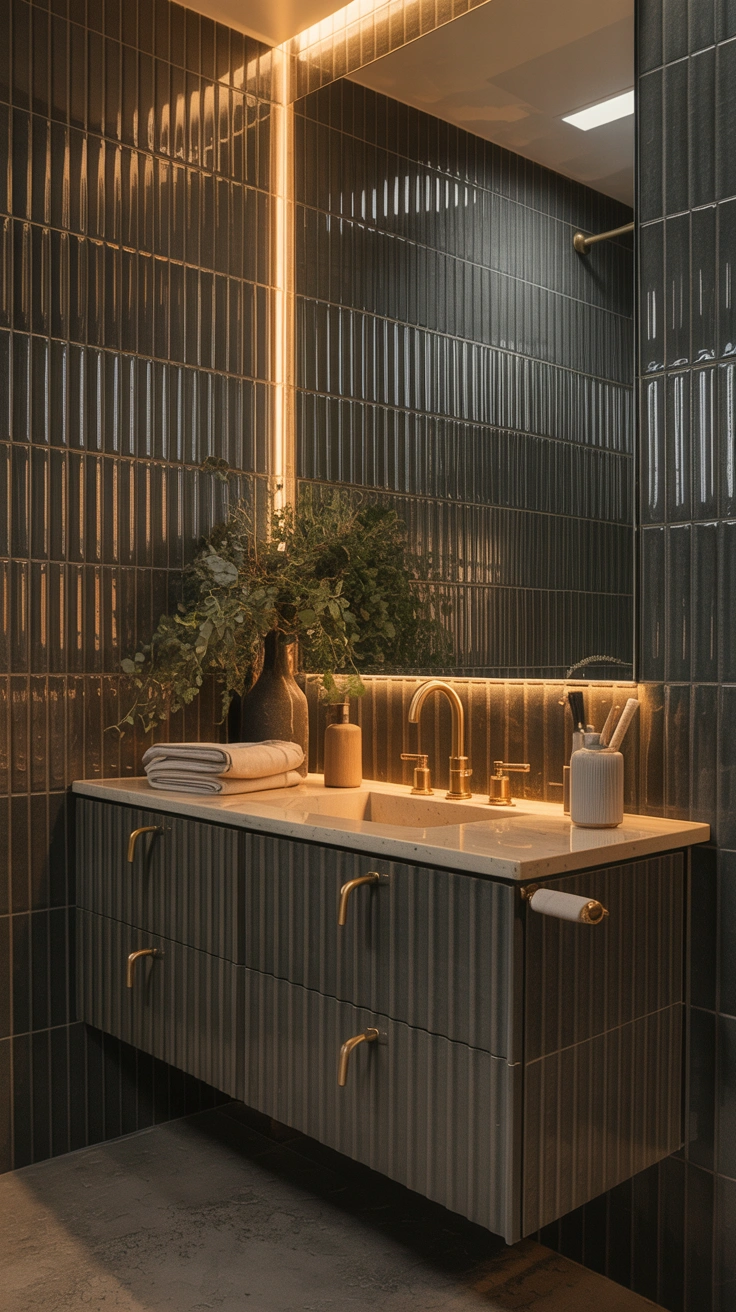
Fluted or ribbed tiles in black or near-black tones are among the most visually compelling tile formats in contemporary bathroom design — the vertical channels of the fluting creating dimensional shadow play across the surface that flat tiles can never achieve. The combination of dark colour and dimensional surface texture creates a tile that rewards looking at from every angle and under every light condition.
Black fluted tiles on a vanity wall behind the basin — positioned to catch the task lighting from above — create a surface where the light rakes dramatically across the ridges, creating a pattern of light and deep shadow that changes continuously throughout the day. Charcoal fluted tiles in a shower enclosure add tactile dimension to the dark enclosure, preventing the surface from feeling flat while adding the specific sensory quality of a textured surface under warm water.
12. Graphite Herringbone — Directional Energy in Dark Tones
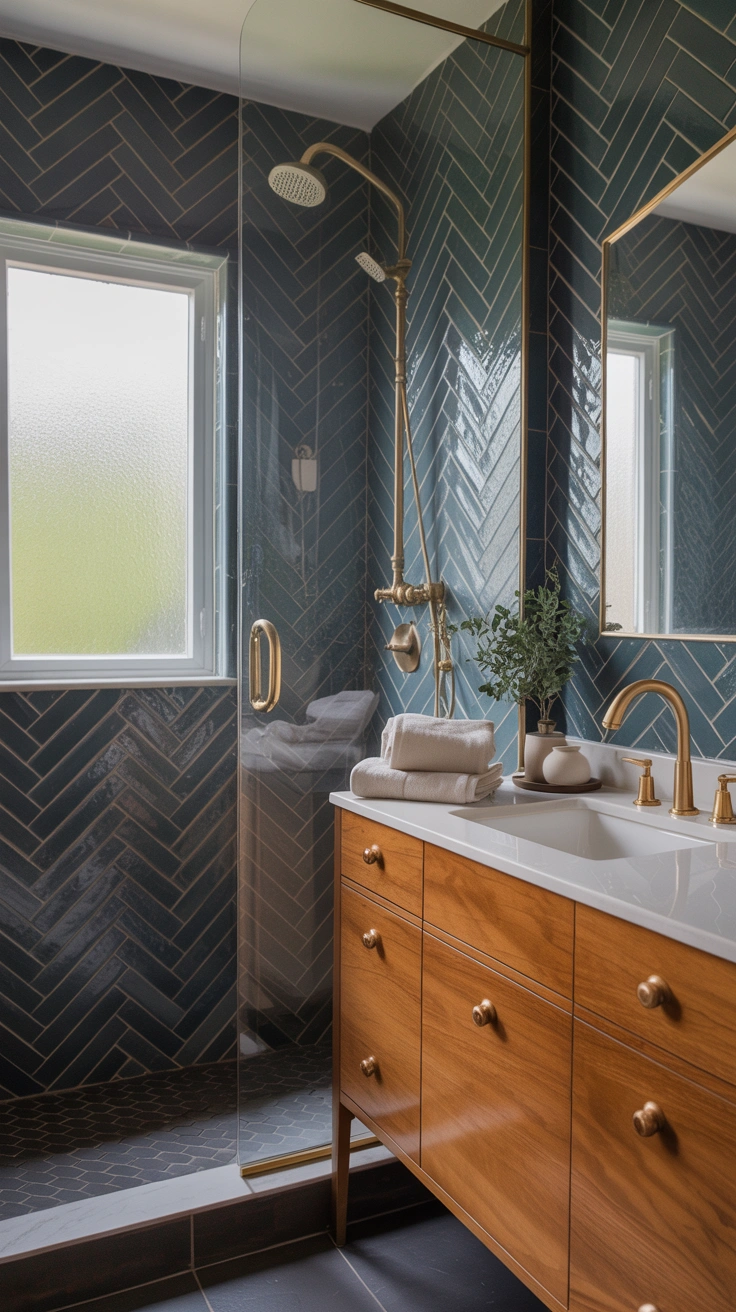
The herringbone pattern in dark graphite or deep charcoal tones creates one of the most dynamically beautiful bathroom tile surfaces available — combining the directional energy of the herringbone geometry with the depth and atmosphere of dark colour.
Dark graphite herringbone on a bathroom floor creates a surface that feels simultaneously classic and contemporary — the herringbone pattern has genuine historical pedigree while the dark graphite tone feels entirely current. Full wall application in a shower in dark herringbone creates an enclosure with more visual energy than any straight-set tile pattern, the directional lines creating a sense of movement and dimension that makes the shower a destination rather than simply a functional space. IMO, graphite herringbone with dark grey grout is the most resolved version of this tile — the grout nearly matching the tile colour creates a seamless field of pattern and depth rather than a visible grid.
13. Deep Teal Terrazzo — Speckled, Rich, Completely Unique
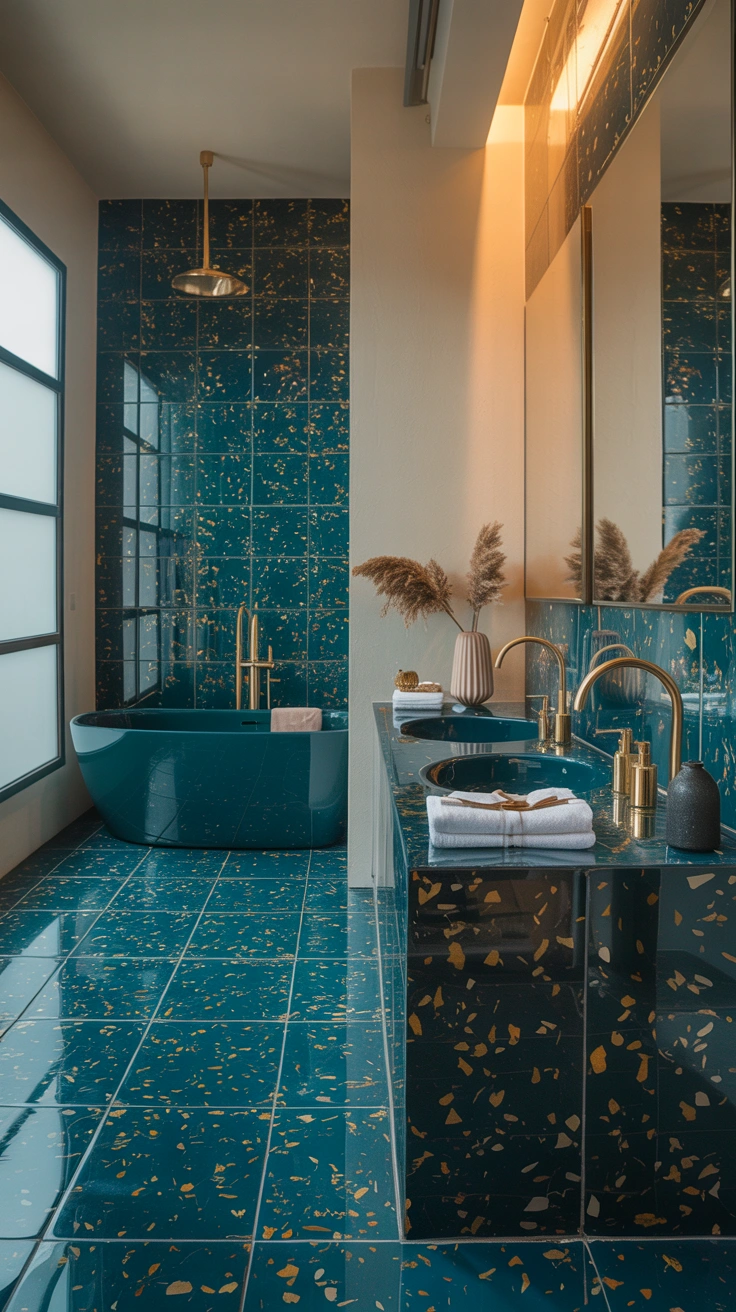
Dark teal terrazzo — either genuine terrazzo or a contemporary terrazzo-effect tile — creates a bathroom surface of extraordinary organic complexity. The speckled, multi-material character of terrazzo in deep teal tones creates a surface that is simultaneously bold and nuanced: vivid from a distance, increasingly detailed and individual on close inspection.
Dark teal terrazzo floor tiles in a bathroom with white walls and warm brass fixtures create a colour combination of real sophistication — the deep teal providing colour, depth, and organic character simultaneously. Terrazzo wall panels in a wet room or shower create the most immersive version of this tile — surrounded by the speckled, rich surface, the shower takes on a quality of genuinely extraordinary material beauty.
14. What Dark Grout Does That Nobody Talks About
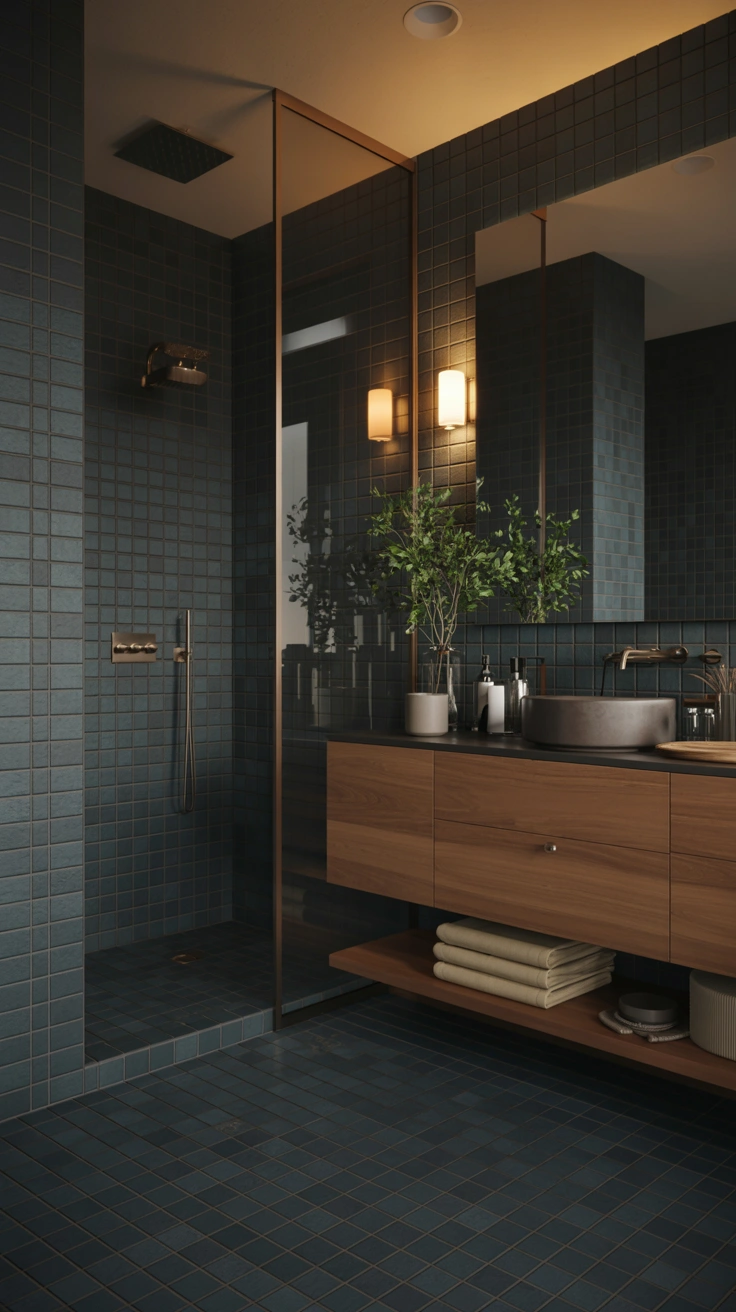
The grout colour in a dark tile bathroom is a design decision as significant as the tile choice itself — and dark grout creates completely different visual results from pale grout even with identical tiles. This distinction is consistently underappreciated in tile planning and consistently regretted when overlooked.
Dark grout with dark tiles creates a near-seamless surface where the tile field reads as a unified expanse of depth and colour rather than a grid of individual tiles. Pale grout with dark tiles emphasises the individual tile format and creates a more graphic, pattern-forward result that makes the tile’s shape as visible as its colour. Neither is categorically better — they create genuinely different aesthetic outcomes, and choosing deliberately between them is one of the most important decisions in planning a dark tile bathroom.
15. Lighting Is the Dark Tile Bathroom’s Most Important Specification
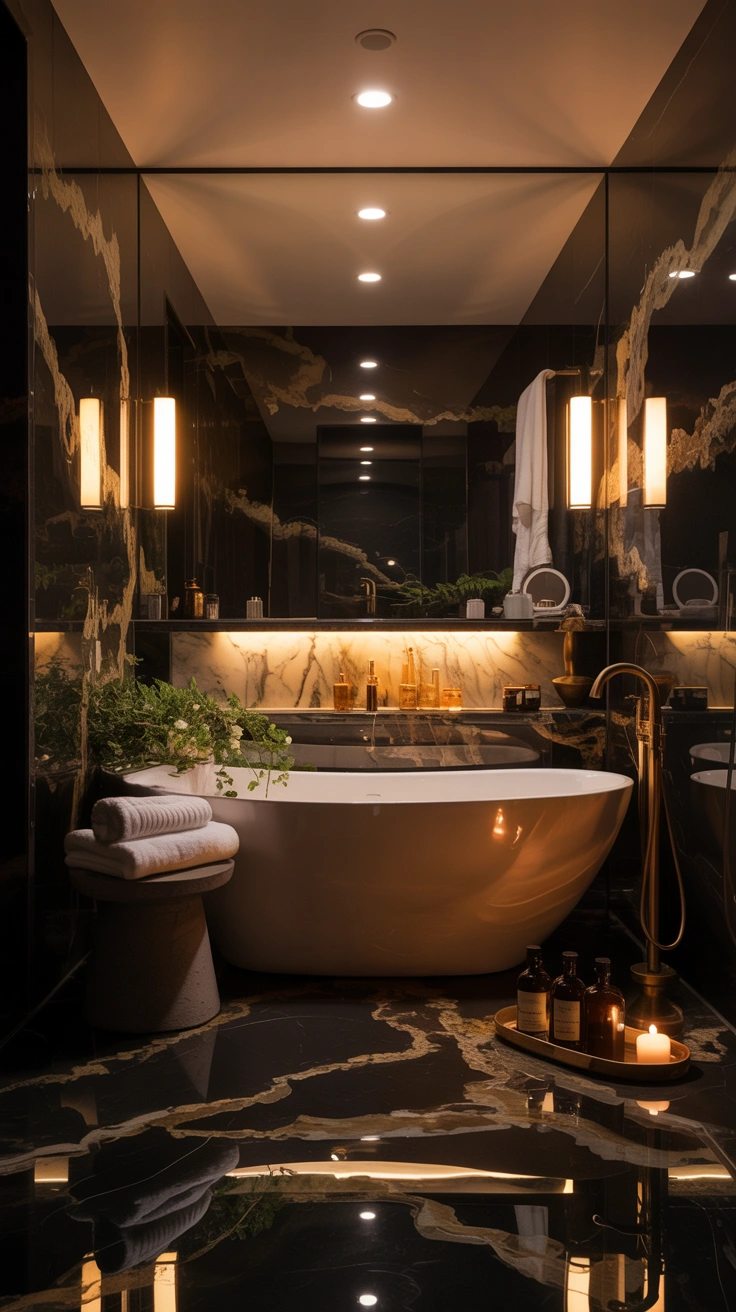
The single most consequential decision in any dark tile bathroom — more important than tile format, tile colour, or grout choice — is the lighting specification. Dark tiles absorb light significantly, and a dark bathroom that isn’t lit properly doesn’t just look bad: it functions poorly, feels oppressive, and undermines every design decision made in the specification of the tiles themselves.
Warm, precise task lighting at the vanity mirror — either integrated into the mirror frame or positioned directly above it at the right height — is non-negotiable. Under-shelf LED strips creating wash lighting across tile surfaces create the specific dramatic effect of warm light glowing against dark tile. Recessed spots on dimmers for ambient adjustment throughout the day. All bulbs at 2700K or warmer. The dark tile bathroom lit at this standard looks extraordinary — the warm light creating golden reflections across dark stone, gloss, or ceramic that is genuinely, repeatedly stunning.
Wrapping Up
Fifteen dark tile ideas spanning the full spectrum of what dark bathroom design can achieve — from the geological drama of Nero Marquina marble and the handcrafted character of dark zellige to the dimensional depth of fluted tiles, the pattern richness of penny rounds and herringbone, and the crucial lighting specification that makes all of it work.
Dark tiles in a bathroom require more consideration than pale ones — in lighting, in grout colour, in tile size, and in the overall balance of dark and light across the room. But the rooms they create when that consideration is applied with genuine care belong to a completely different quality of domestic interior from standard pale tile alternatives.
Go dark. Plan the lighting properly. And prepare for everyone who uses your bathroom to ask where you found the tiles.