How to Arrange Furniture Around Fireplace: 12 Layout Ideas That Actually Work
You’d think a fireplace would make furniture arrangement easier, right? It’s basically a built-in focal point. And yet somehow, fireplace rooms end up being some of the trickiest layouts to actually get right. Awkward sofa angles, a coffee table that doesn’t quite fit, a TV competing with the mantel for attention — sound familiar?
I lived with a fireplace room that genuinely never felt finished for almost two years. Every layout I tried left either the seating feeling disconnected from the fire or the whole room feeling like it was facing the wrong direction entirely. Once I finally cracked the right approach, the room went from “fine, I guess” to the spot everyone naturally gravitates toward the second they walk in. These 12 ideas are everything that finally worked.
1. Make the Fireplace the True Focal Point
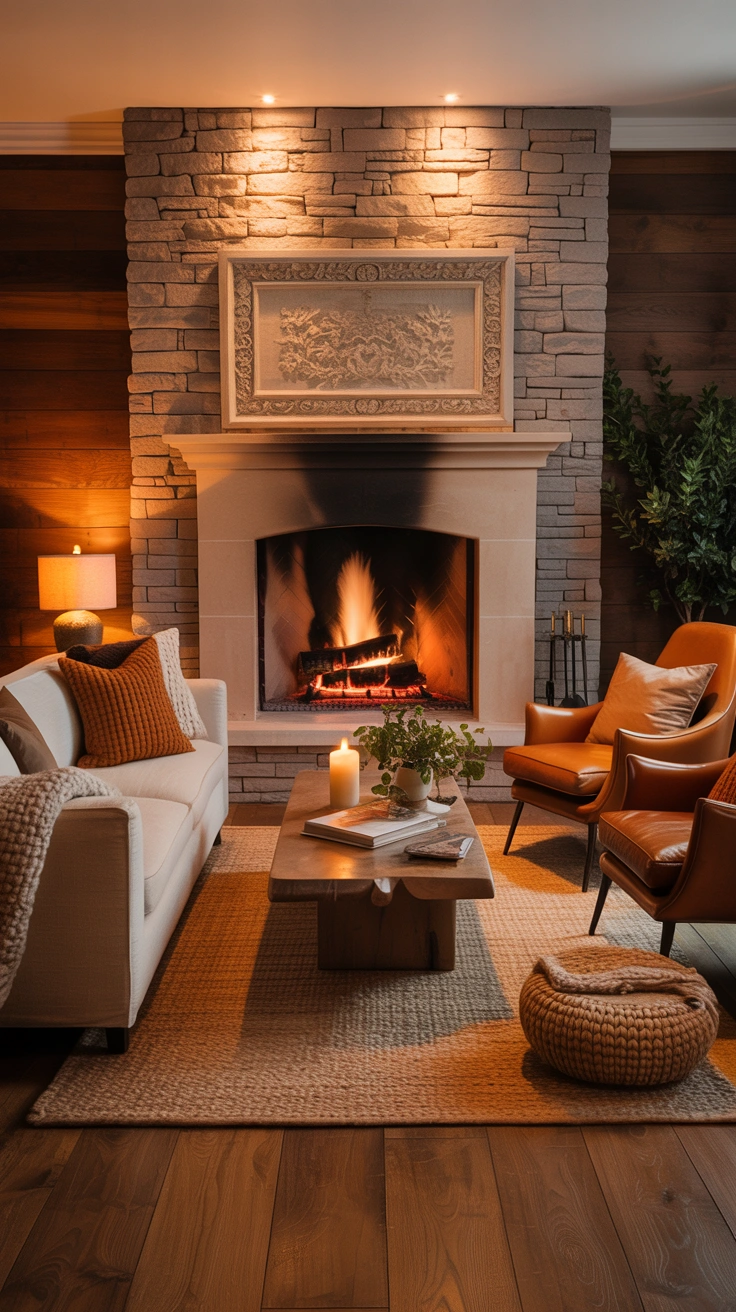
Before you move a single piece of furniture, decide honestly whether the fireplace is actually going to be your room’s focal point or whether something else — a TV, a window view, a piece of art — deserves that role instead. Trying to give two things equal visual weight usually backfires and leaves the whole room feeling unresolved.
Once you’ve made that call, arrange everything else to support it. If the fireplace wins, your seating should orient toward it clearly and consistently. If something else takes priority, the fireplace can still play a strong secondary role, but don’t fight the room by trying to make every wall compete for attention at once.
2. Float Your Sofa Instead of Pushing It Against a Wall
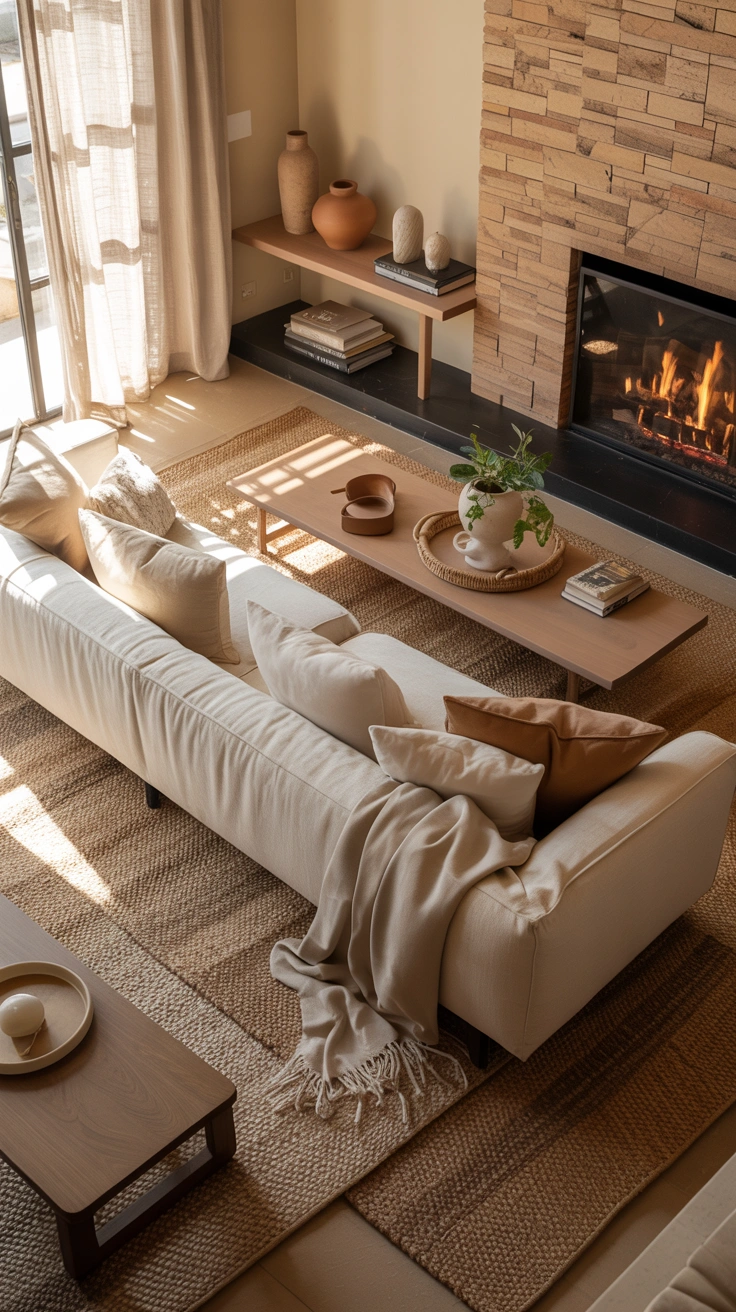
The instinct to shove your sofa against the farthest wall is strong, but it’s almost always the wrong move in a fireplace room. Floating the sofa a few feet away from the wall and angling it toward the fireplace creates a far more intentional, conversation-friendly layout.
This works even in smaller rooms. A sofa floated just three or four feet off the wall, with a console table behind it for visual support, looks more considered than the same sofa pushed flush against the wall ever could. FYI — this small adjustment is often the single biggest layout fix in any fireplace room.
3. Create a Symmetrical Seating Arrangement
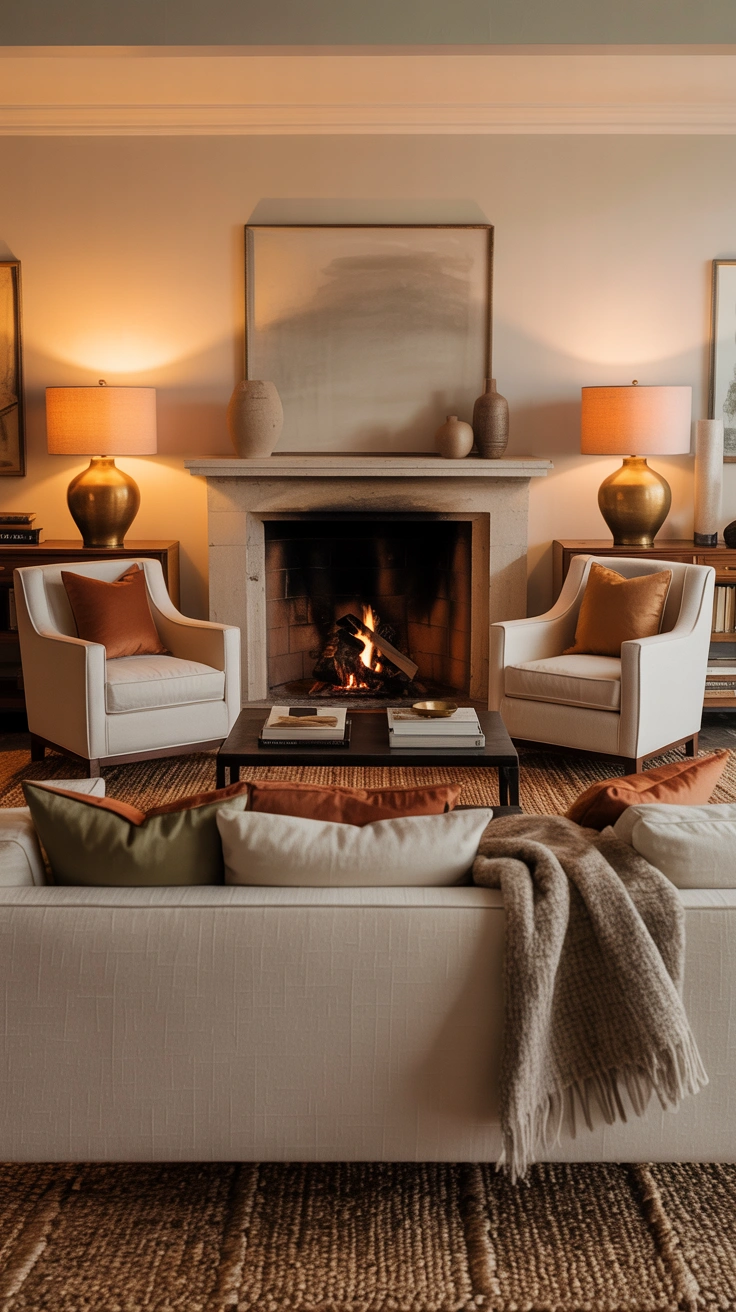
Symmetry is the classic, foolproof approach to fireplace seating, and there’s a reason it shows up in nearly every well-designed living room. Two matching armchairs flanking the fireplace, or a sofa directly across from it with a chair on either side, creates an instantly balanced, intentional-feeling room.
Symmetrical Layouts That Work Well
- Sofa facing fireplace, two chairs on either side — classic, balanced, conversation-friendly
- Matching loveseats facing each other — works beautifully in narrower rooms
- Sofa with matching side tables and lamps — symmetry through accessories, not just furniture
- Two identical armchairs angled toward the hearth — ideal for smaller or secondary seating areas
Symmetry doesn’t require an enormous budget. Even matching a pair of inexpensive accent chairs creates the same balanced effect as a custom furniture set.
4. Try an Asymmetrical Layout for a More Relaxed Feel
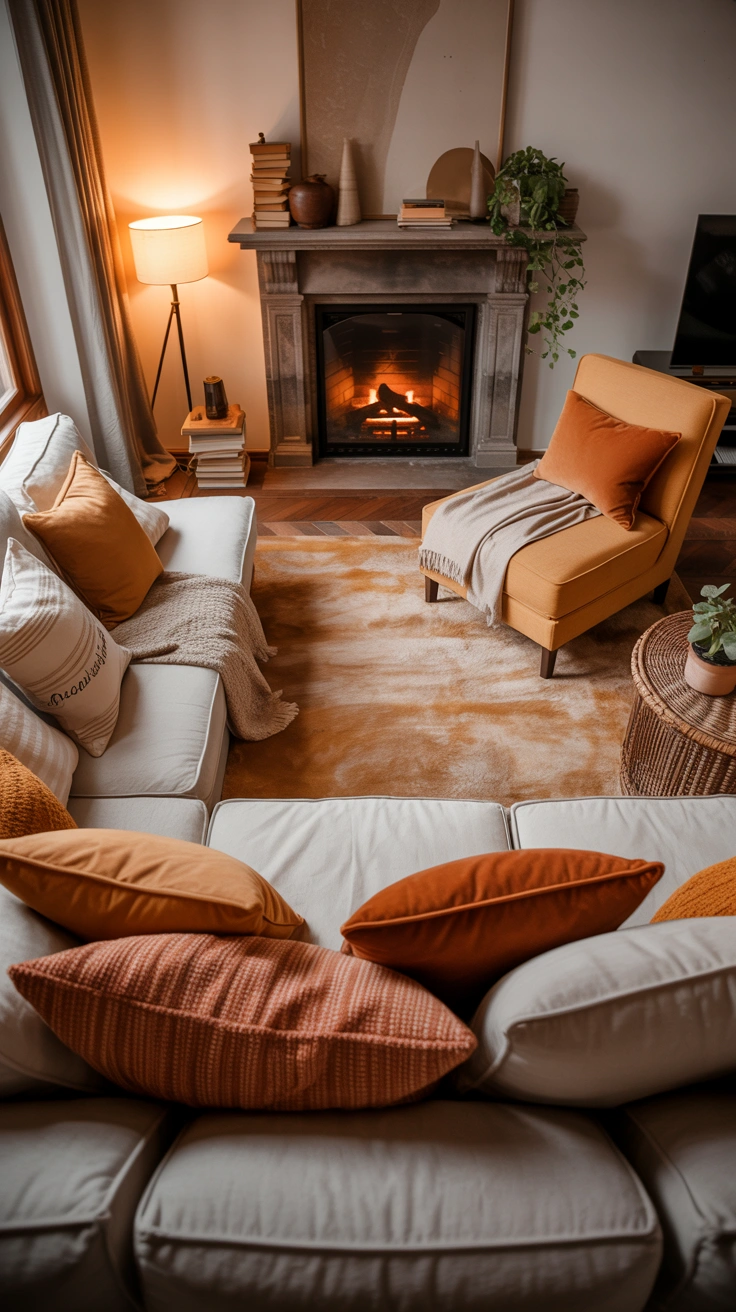
If perfect symmetry feels too formal for your space, an asymmetrical arrangement can be just as successful while feeling considerably more relaxed and collected over time. Pair a sofa on one side of the fireplace with a single larger armchair on the other, rather than matching pieces on each side.
This approach works particularly well if your room already has other architectural features competing for attention, like a large window or an open doorway. Asymmetry lets your layout respond naturally to the room’s real quirks instead of forcing a rigid mirror-image arrangement onto a space that doesn’t quite support it.
5. Use a U-Shaped Configuration for Maximum Conversation
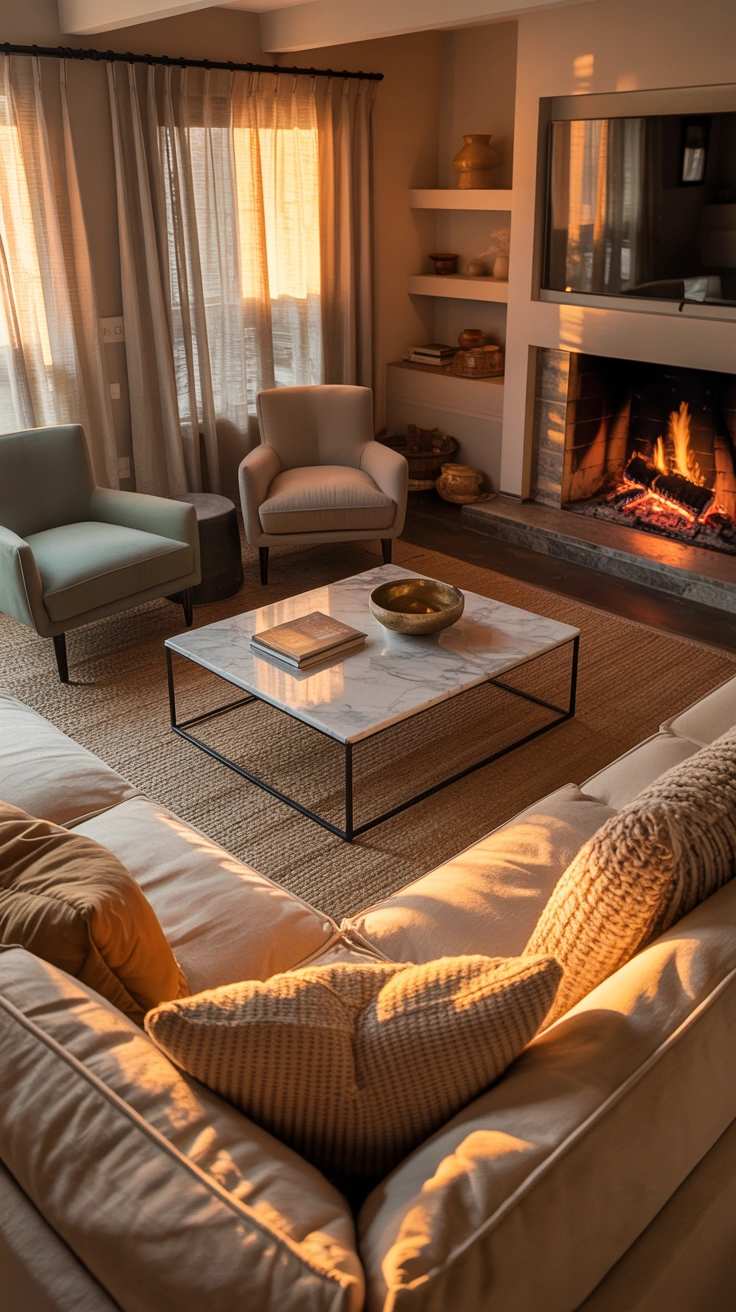
A U-shaped seating arrangement — a sofa on one side, with two chairs angled in on the other two sides — creates the most conversation-friendly layout possible around a fireplace. Everyone in the room can see both the fire and each other without straining their neck or shouting across the space.
This configuration genuinely shines during gatherings and works best in rooms with enough width to support the open end of the U facing the fireplace comfortably. IMO, this is the single best layout for anyone who hosts often and wants the fireplace to feel like the heart of the get-together rather than just a nice backdrop.
6. Angle Furniture Diagonally in Awkward Corner Fireplaces
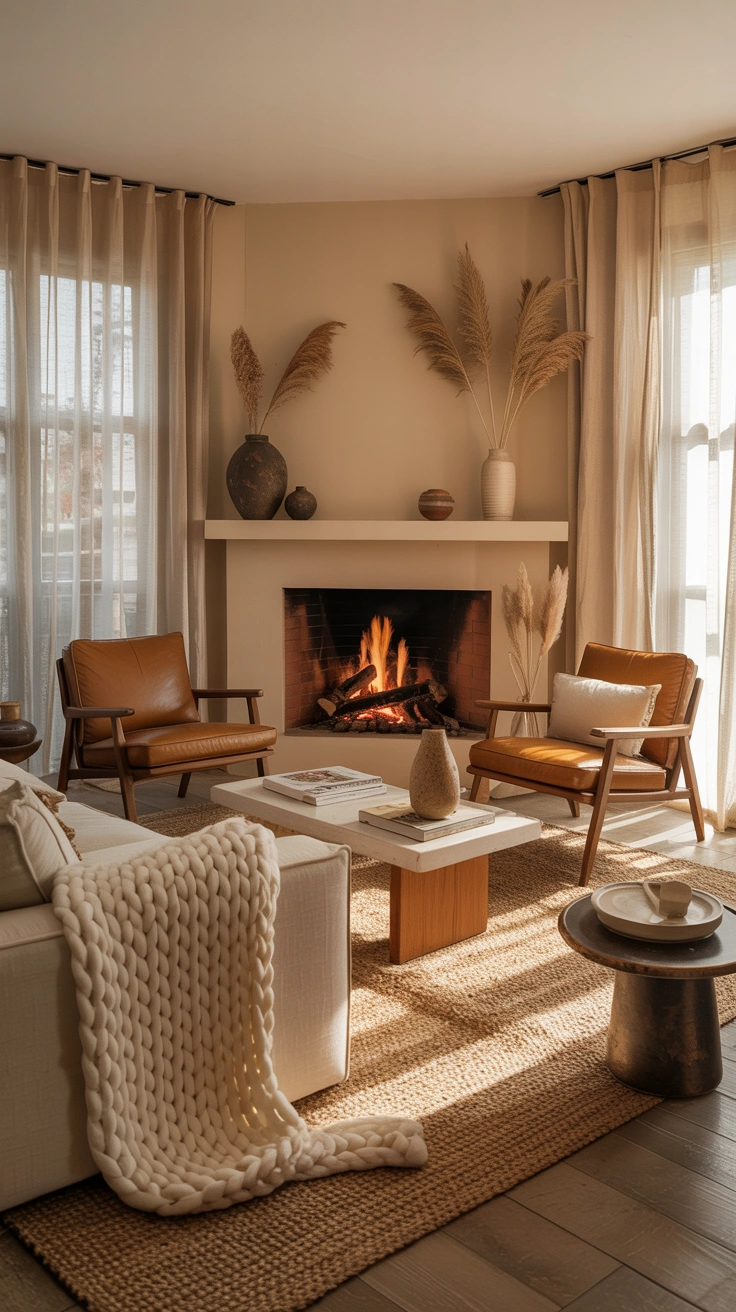
Corner fireplaces present a genuinely different challenge than centered ones, and trying to force a straight-on symmetrical layout often leaves the room feeling lopsided. Angling your sofa and chairs diagonally toward the corner instead creates a far more natural, balanced flow.
This diagonal approach also tends to open up more usable floor space elsewhere in the room, since corner fireplaces eat into the square footage of one wall significantly. Let the furniture follow the fireplace’s actual angle rather than fighting against it with a layout designed for a centered hearth.
7. Don’t Forget the TV-Fireplace Balancing Act
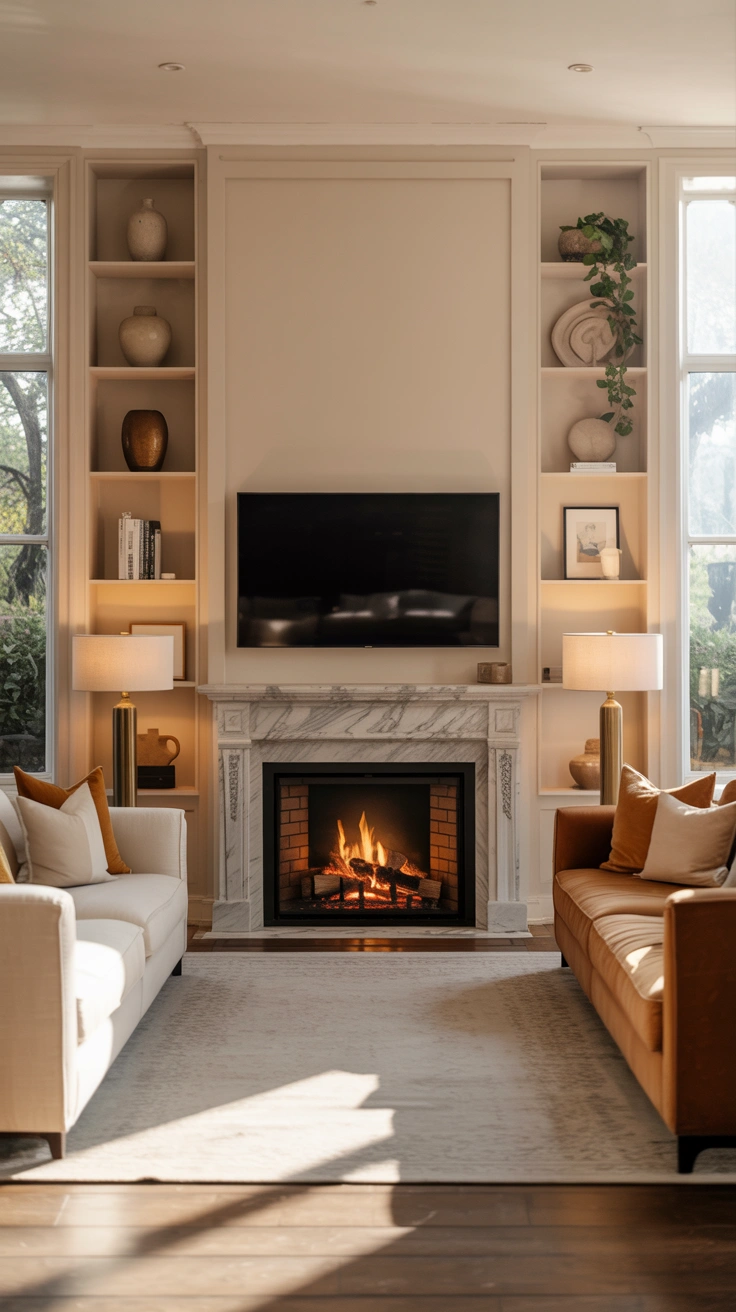
In most modern living rooms, the television and the fireplace are both competing for the same prime wall space, and resolving that tension is genuinely one of the trickiest parts of arranging furniture in these rooms. Mounting the TV directly above the fireplace is the most common solution, but it isn’t always the most comfortable viewing angle.
Alternatives Worth Considering
- TV above the mantel — classic, space-saving, works well with a slightly reclined seating angle
- TV on an adjacent wall — keeps the fireplace as the sole visual focal point
- TV on a swivel mount — flexible viewing angle without sacrificing the fireplace wall
- No TV in this room at all — increasingly popular for rooms meant purely for relaxing by the fire
If you do mount the TV above the fireplace, make sure your seating sits far enough back that necks aren’t straining upward during longer viewing sessions.
8. Add a Coffee Table That Anchors the Layout
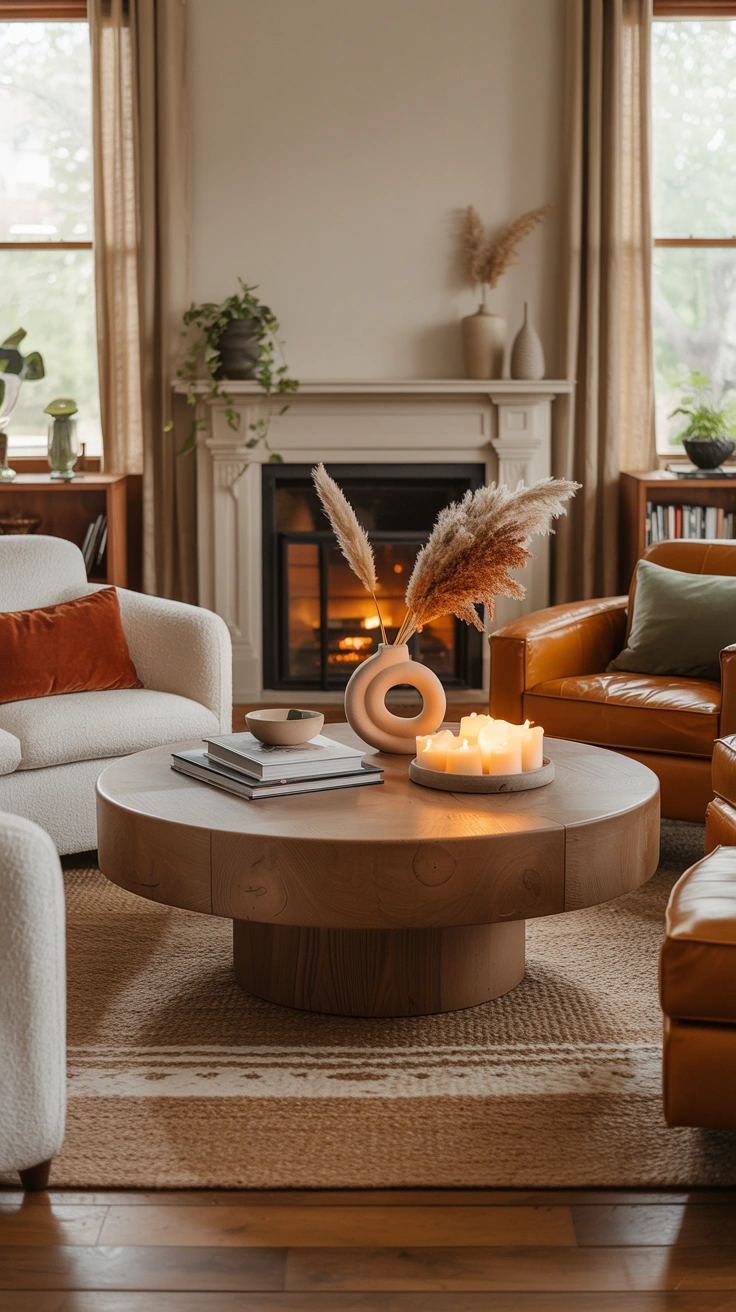
A coffee table positioned between your seating and the fireplace pulls the whole arrangement together and gives the layout a clear center of gravity. Without one, even well-placed furniture can feel slightly adrift and disconnected from the fireplace itself.
Leave enough room to walk comfortably between the table and the hearth — at least 36 inches is a safe general guideline. A round or oval table tends to work particularly well in fireplace seating areas, since the softer shape complements the more rigid geometry of the mantel and surround.
9. Use a Rug to Define the Fireplace Seating Zone
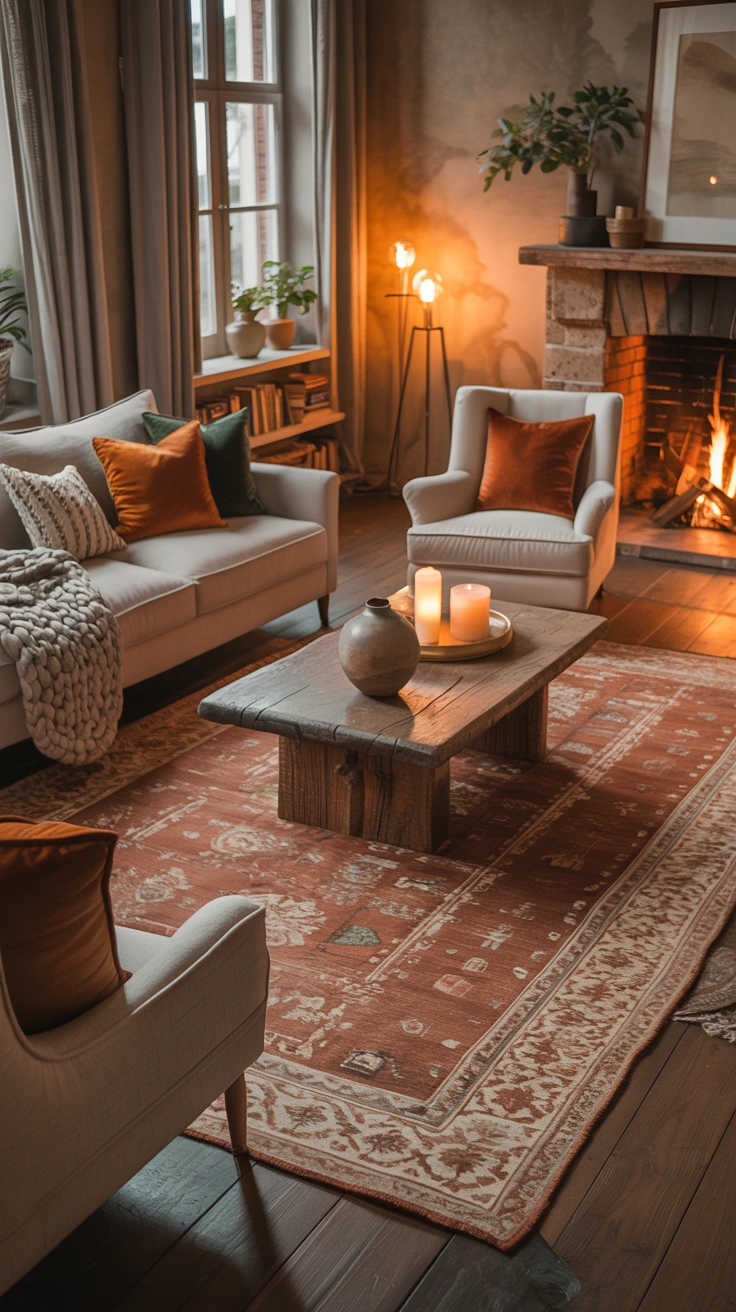
A rug placed beneath your seating arrangement does the same job in a fireplace room that it does anywhere else — it visually anchors the furniture and signals that this specific area is its own defined zone, separate from the rest of an open-plan room.
Size the rug so that at least the front legs of your sofa and chairs sit on it, rather than choosing something too small that floats awkwardly in the middle of the seating area. A well-sized rug pulls the whole fireplace arrangement together in a way that loose, unanchored furniture never quite achieves on its own.
10. Leave Breathing Room Around the Hearth
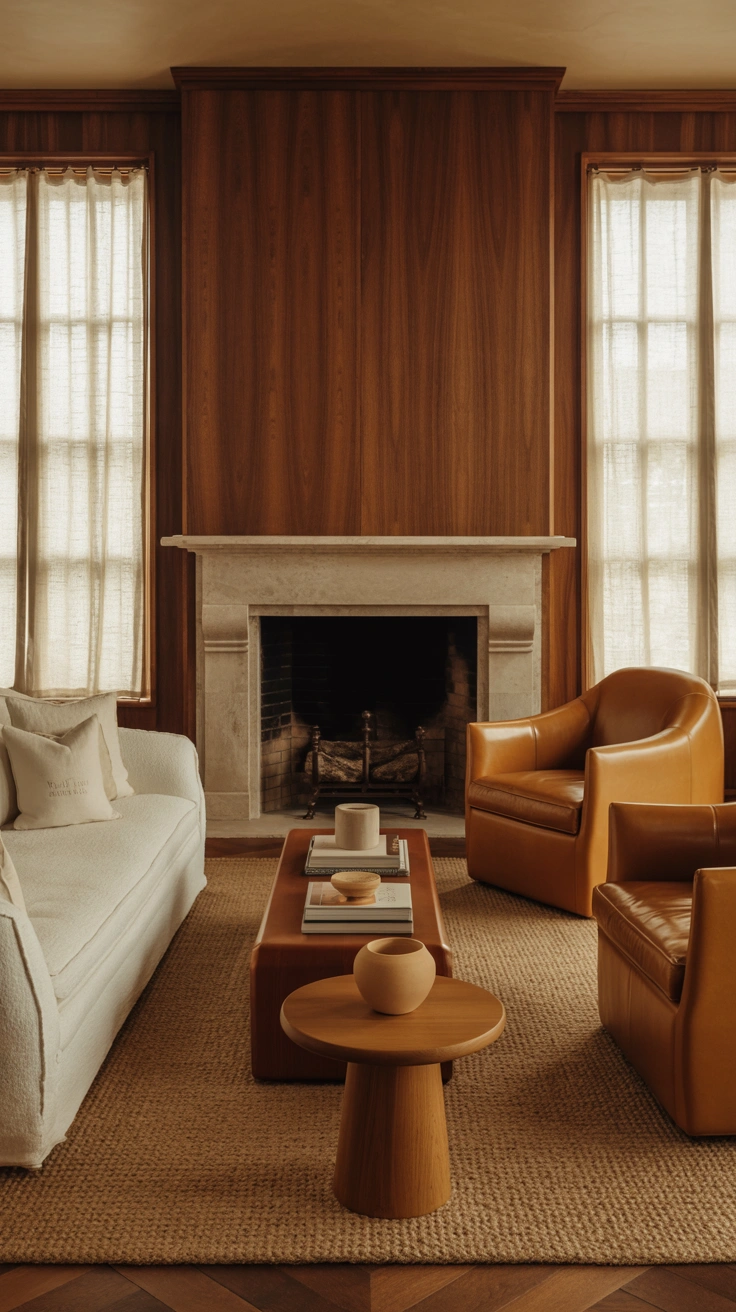
It’s tempting to push furniture as close to the fireplace as possible to maximize the cozy factor, but crowding the hearth too tightly creates both a safety concern and a cramped visual feeling. Leave at least a few feet of clearance between any furniture and the fireplace opening itself.
This breathing room also gives the fireplace surround — whether it’s brick, tile, or stone — enough visual space to actually be appreciated as a feature, rather than getting visually swallowed by furniture pressed right up against it.
11. Layer in Side Tables and Lamps for Balance
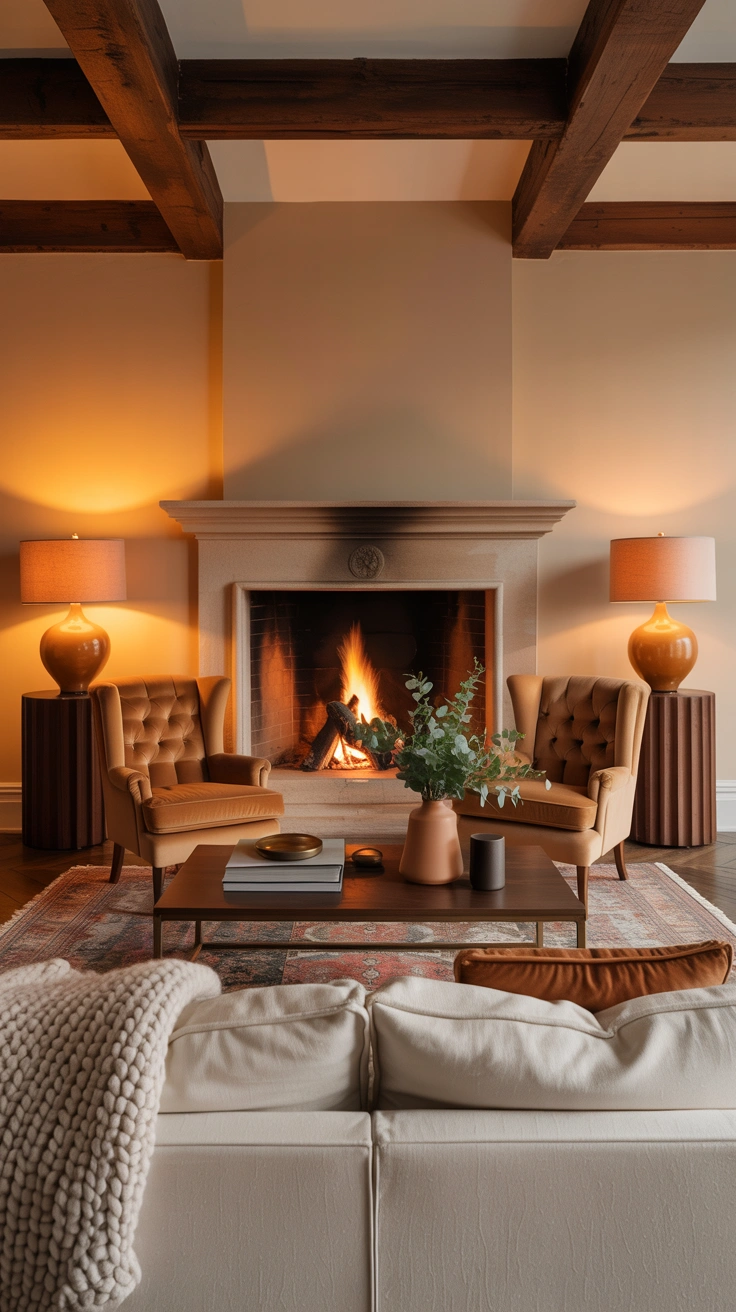
Side tables and lamps positioned at the ends of your seating arrangement do more than add convenient surface space. They visually balance the room and soften the transition between the fireplace’s hard architectural lines and the softer textures of your sofas and chairs.
A lamp on either side of the seating area also solves a practical lighting problem, since fireplace rooms often rely on overhead lighting alone, which can feel harsh once the fire is lit and the mood shifts toward something cozier. Warm-toned lamp light pairs beautifully with actual firelight in a way that overhead fixtures simply can’t match.
12. Adjust the Layout Seasonally If You Can
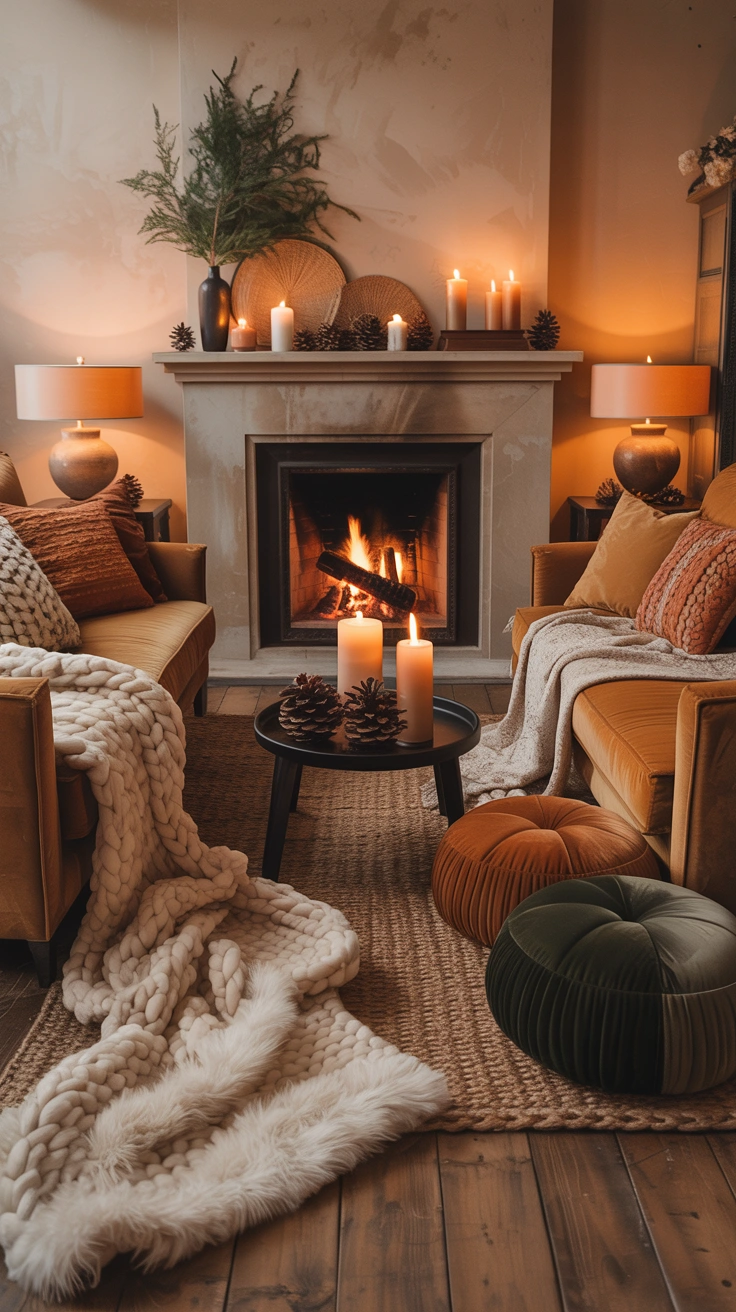
Not every fireplace gets used year-round, and if yours sits dormant for several months, it’s worth considering a layout that flexes slightly with the seasons. Pull seating in closer and more directly fire-facing during the colder months, then open the arrangement up slightly when the fireplace isn’t the room’s main draw.
This doesn’t require buying new furniture — just a willingness to shift a chair or angle a sofa differently a couple of times a year. A layout that adapts to how the room is actually being used will always feel more functional than one that’s locked into a single arrangement regardless of the season.
Conclusion
Twelve ideas, one fireplace room that finally feels as good as it looks. Whether you go fully symmetrical, embrace a relaxed asymmetrical layout, or solve the eternal TV-versus-mantel debate once and for all, the goal is the same — furniture that genuinely supports the fireplace as the heart of the room instead of fighting against it.
Start with the basics. Float that sofa away from the wall, add a rug to anchor the seating, and make sure everyone has a clear line of sight to both the fire and each other. Those three changes alone will make a noticeable difference almost immediately.
Now go pull that sofa away from the wall and see what happens. I have a feeling you’ll never want to push it back.