How to Decorate Your Entire Home for $500: Room-by-Room Plan
Introduction
Five hundred dollars sounds like nothing when you are staring at bare walls, a tired sofa, and a kitchen that has not changed since you moved in. One trip to a furniture store can eat the whole amount before you have even picked up a throw pillow, and that is exactly why most people either do nothing or blow the budget on one room and leave the rest of the house untouched.
The trick is not spending less on everything. It is spending on the right things, in the right order, with a plan that treats all $500 as one project instead of eight separate shopping trips. This guide gives you that plan: an exact dollar split for every room, the specific swaps that make the biggest visual difference per dollar, and a seven-day schedule that gets the whole house done in a week. Follow it as written, and your home will look like you spent five times more.
1. The $500 Split: Where Every Dollar Goes
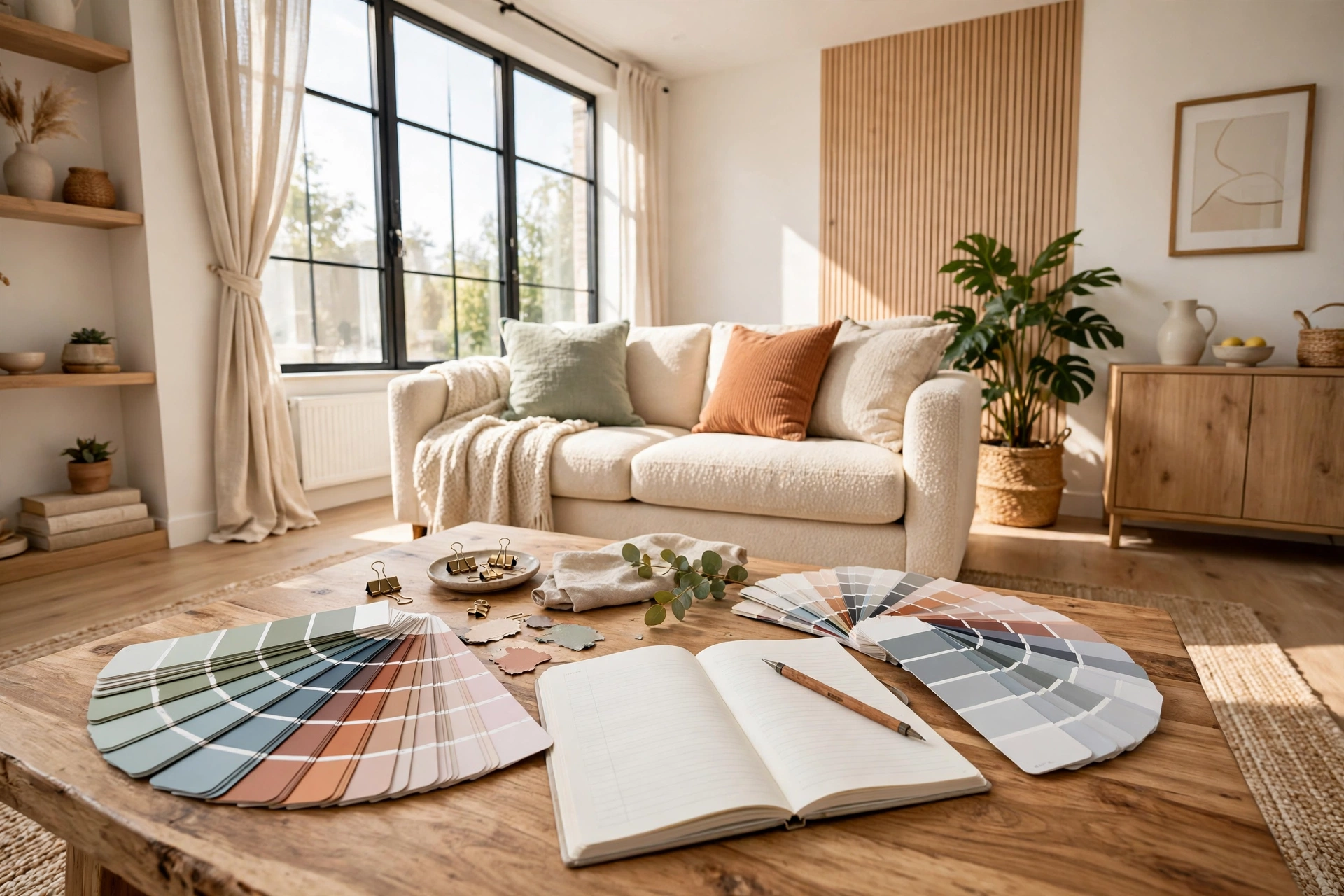
Before you buy a single thing, divide the money on paper. A whole-home budget only works when every room has a cap, because the living room will happily swallow $300 if you let it, and then the bathroom gets nothing and the whole house still feels unfinished. The split below puts the most money where you spend the most waking hours, keeps a $50 flex fund for paint and thrift finds, and adds up to exactly $500.
Write these numbers on a card and keep it in your wallet. When a $38 vase tempts you in the living room aisle, the card tells you the truth: that vase is nearly a third of the living room budget, and the curtains you actually need cost the same. Every room in this plan gets finished because no room is allowed to steal from another.
📌 Budget Card Rule: Photograph your budget card and set it as your phone wallpaper for the week. Every purchase gets checked against it before it goes in the cart, and anything that breaks a room’s cap goes back on the shelf.
2. Living Room: $120 for the Biggest Visual Payoff

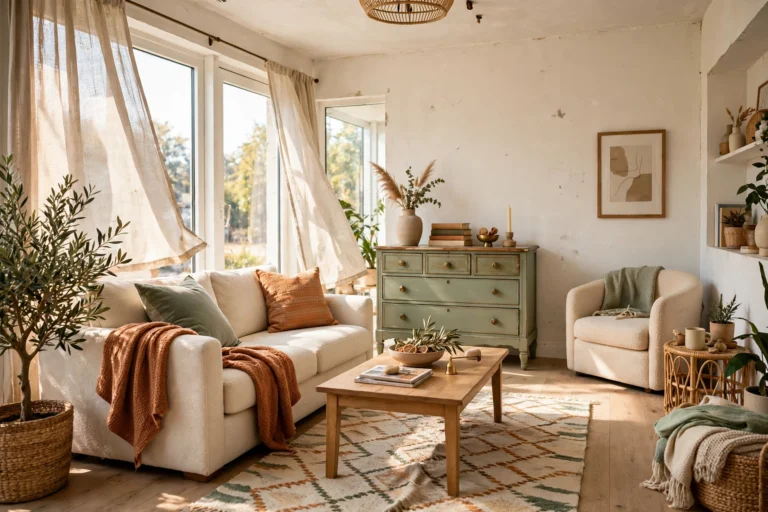
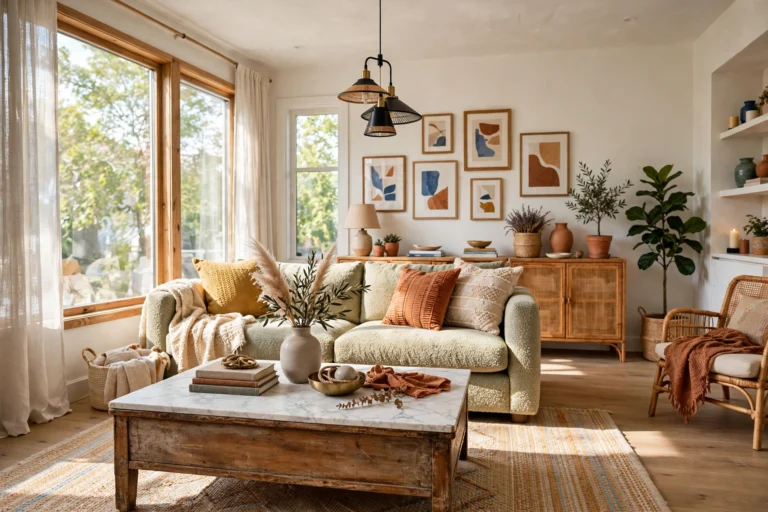
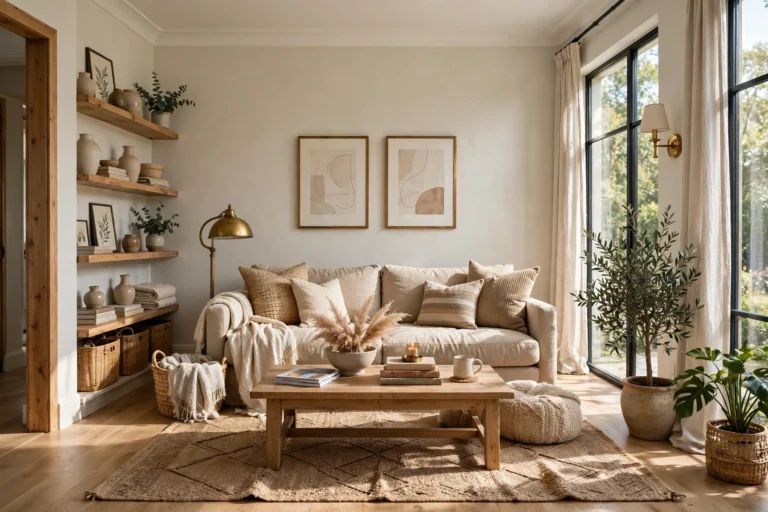
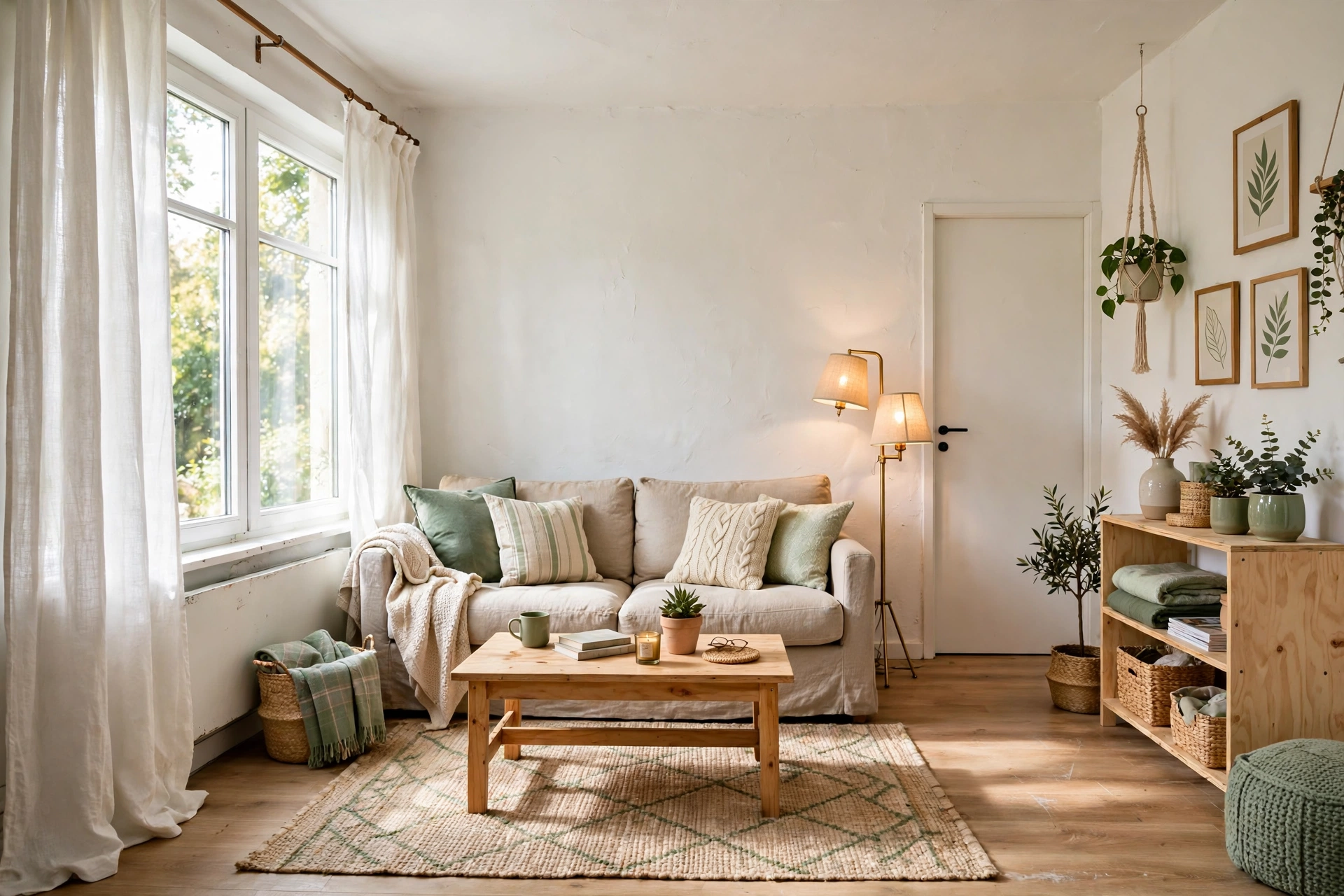
The living room earns the biggest slice because it is the room everyone sees, including you, every single day. Spend the first $45 on curtains: two panels of plain white or warm linen-look fabric, hung on a $12 rod mounted 4 to 6 inches above the window frame and 6 to 8 inches wider than the frame on each side. That one change makes the ceiling look taller and the whole room look finished in a way no accessory can match. Add a $25 floor lamp or a pair of $12 table lamps with warm 2700K bulbs, because good light at eye level beats any overhead fixture.
The remaining $50 goes to texture, not more furniture. Two 20-inch throw pillow covers in a solid and a subtle pattern cost about $24, a soft throw draped over one sofa arm costs around $18, and an $8 tray on the coffee table pulls the whole arrangement together. Keep the palette to three colours maximum — a neutral base, one warm wood tone, and one accent you repeat in the pillows and the throw — so the room reads as designed rather than assembled from clearance bins.
3. Bedroom: $90 for a Calmer, Cozier Sleep Space

A bedroom makeover lives or dies on the bed, because the bed fills half the room. Spend $45 on a crisp white or soft cream duvet set in cotton or a cotton blend, and wash it once before you put it on so it drapes instead of crackling. Then spend $18 on two new standard pillowcases and a single lumbar pillow in your accent colour, and the whole bed looks like a hotel bed for under $65. If your headboard is tired, a $20 can of paint and a Saturday afternoon turn it into a statement piece — deep green, warm charcoal, or soft terracotta all work against white bedding.
The last $25 goes to the edges of the room: a $10 bedside carafe and glass, a $9 small plant in a ceramic pot, and a $6 roll of LED fairy lights or a battery candle for the dresser. Clear the nightstand down to three objects — lamp, book, glass — because a calm surface is free and it makes the new bedding look twice as good. These are the same kinds of budget home decor ideas that look expensive when the palette stays tight and the surfaces stay clear.
💡 The Three-Object Nightstand: A nightstand holds three things: something that glows, something you read, and something you drink from. Everything else lives in the drawer. This one rule makes any bedroom feel like a boutique hotel room.
4. Kitchen: $70 for Small Swaps With Big Impact
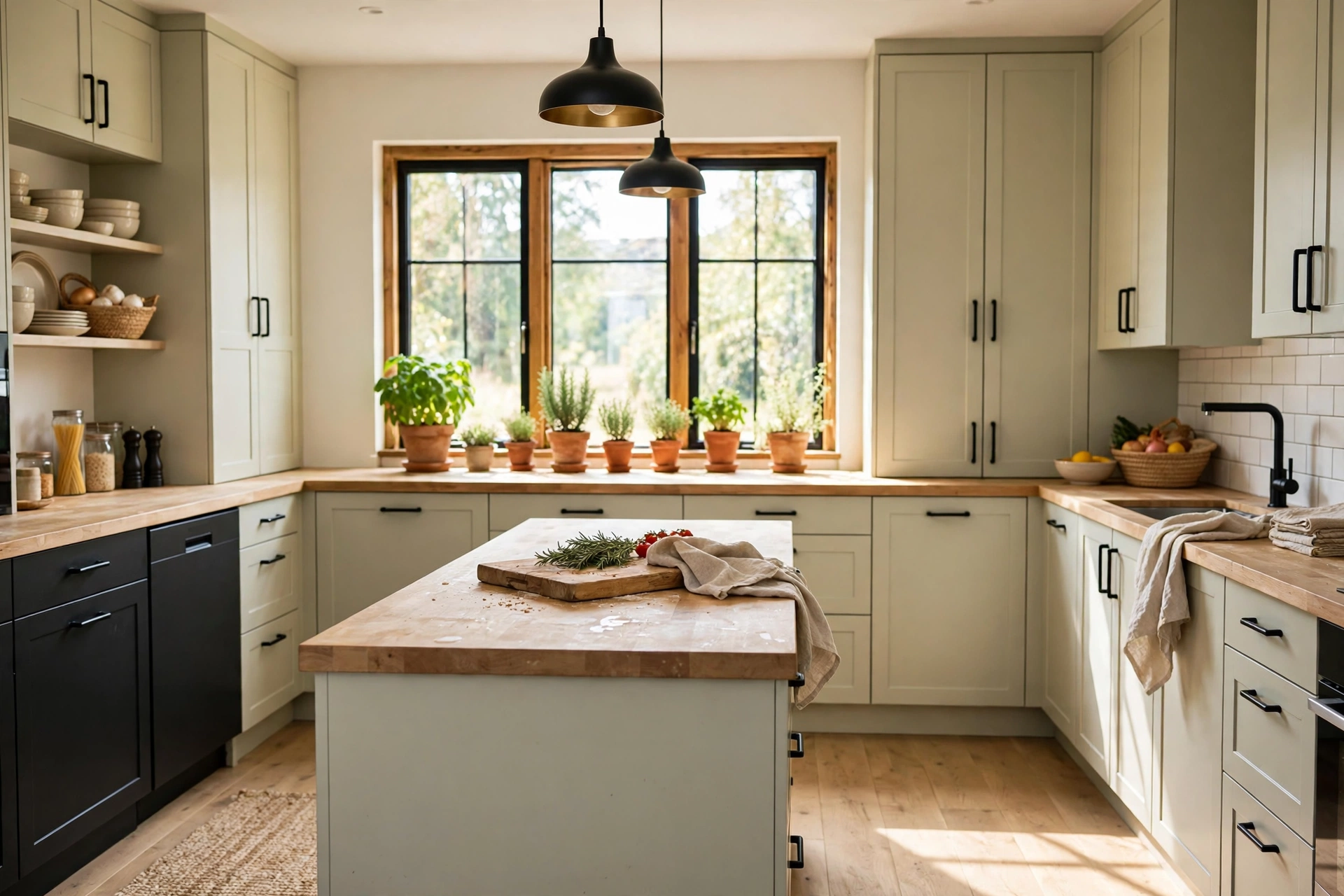
Kitchens punish big spending, so do not buy a single appliance. Spend $28 on new cabinet hardware: a 10-pack of matte black or brushed brass pulls runs about $22 to $28 online, and swapping them takes a screwdriver and an hour. Matching pulls across every door and drawer is the single cheapest way to make a dated kitchen look renovated, and it is completely reversible if you rent. While you have the screwdriver out, tighten every hinge and wipe the cabinet fronts with a degreasing cleaner so the new hardware sits on a clean surface.
Spend the other $42 on what your eyes actually land on: a $14 pair of linen-look dish towels in your accent colour, a $12 wooden tray or cutting board left out on the counter as a styling piece, a $9 small potted herb on the windowsill, and a $7 set of matching jars for the coffee, sugar, and tea you already own. Clear one full stretch of counter — at least 24 inches — and keep it empty. An empty stretch of counter reads as luxury, and it costs nothing.
5. Dining Area: $50 for Gather-Ready Warmth

A dining area needs exactly one focal point, and for $50 it should be the table itself. Spend $18 on a washable linen-look table runner in a warm neutral and $12 on a low centrepiece: a wooden bowl, three pillar candles in different heights, or a $10 bunch of eucalyptus in a glass vase you already own. Keep the centrepiece under 12 inches tall so people can actually see each other across the table — a tall arrangement looks impressive in a photo and ruins every dinner.
The remaining $20 goes to the chairs. A $14 set of four seat cushions in a washable fabric, tied on with simple ties, makes hard chairs comfortable and pulls the table palette together. If your chairs are mismatched, a $6 can of spray paint in one colour unifies them in an afternoon — this is where knowing chalk paint vs spray paint matters, because spray paint gives the smooth, even finish a chair needs, while chalk paint is better for flat furniture surfaces you want to distress. Finish with a $6 set of cloth napkins, and the table is ready for guests tonight.
6. Bathroom: $45 for a Spa-Like Refresh
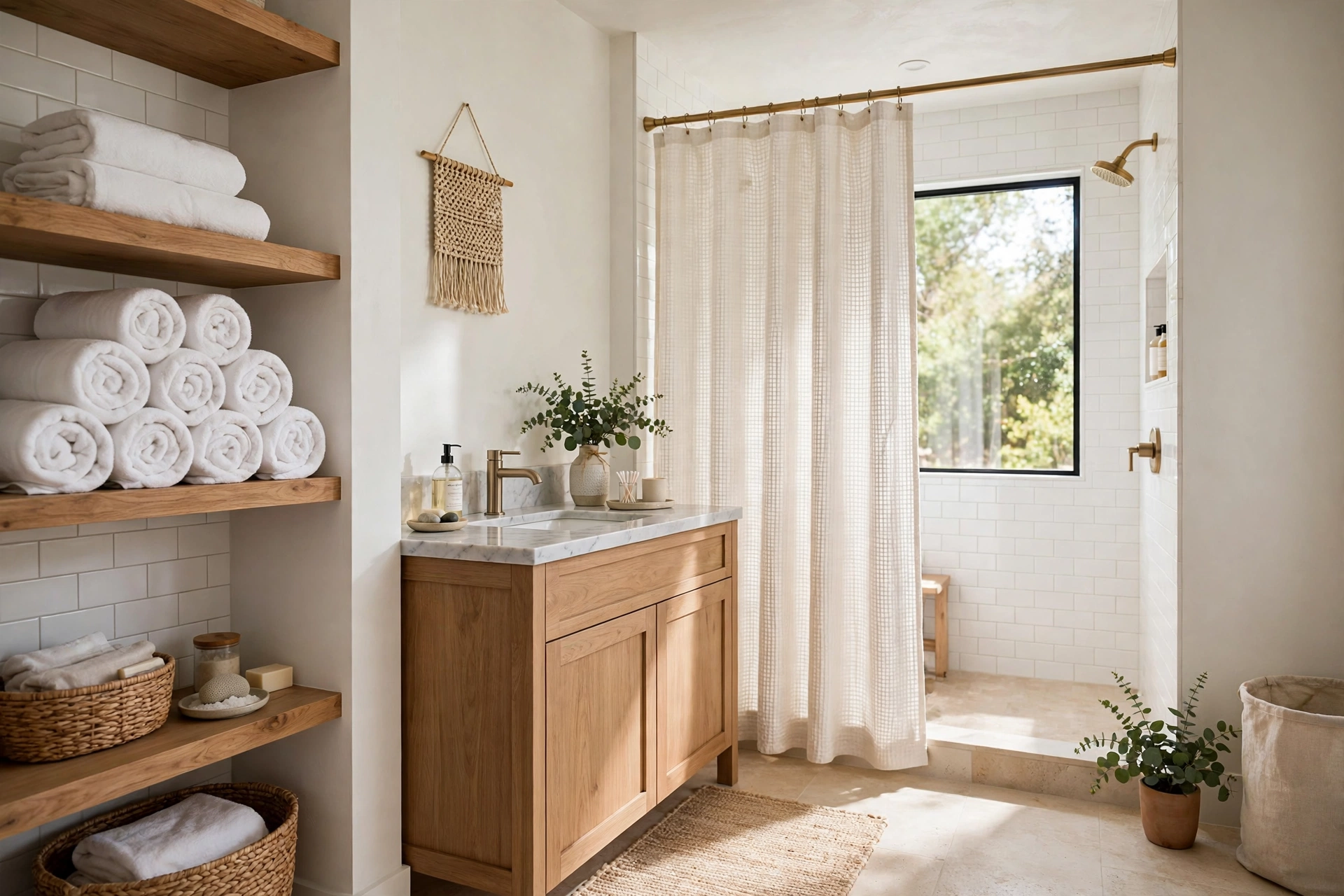
Bathrooms respond to texture more than decoration, so spend $22 on two plush bath towels and two hand towels in white or a soft sage, and roll them instead of folding them on an open shelf or a $9 wall-mounted basket. White towels are the oldest trick in hotel design for a reason: they signal clean, and they make every other colour in the room look intentional. Replace the shower curtain if yours is stained or yellowing — a $12 plain white or waffle-weave curtain changes the whole room.
Spend the last $11 on the details people touch: a $5 matching soap dispenser and toothbrush holder set, a $4 eucalyptus bunch hung from the showerhead with twine, and a $2 pack of adhesive hooks to get bottles off the counter. Keep the counter to three items — soap, one plant or candle, and the toothbrush holder — and put everything else in a basket under the sink. A bathroom with a clear counter and matching towels feels like a spa, and it took $45 and twenty minutes.
⚠️ Bathroom Water Warning: Never put a plug-in candle warmer, a mains-powered diffuser, or any electrical decor within 3 feet of the sink or shower. Battery candles and flameless tea lights give the same glow with zero risk near water.
7. Entryway: $35 for a First Impression That Lands
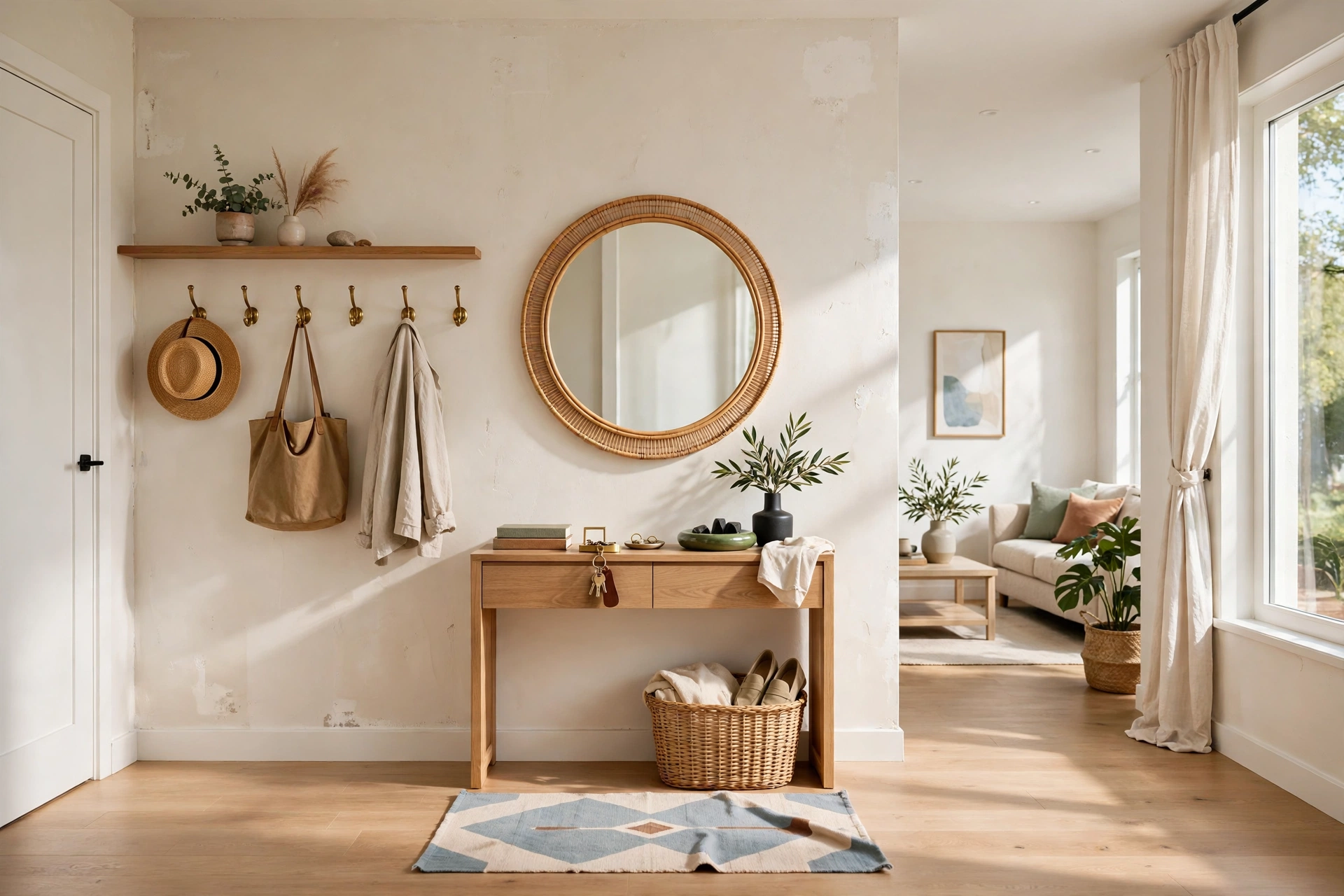
The entryway is the smallest room in the house and the one every guest judges first, which makes it the best value in the whole plan. Spend $14 on a round or arched wall mirror at least 20 inches across — it bounces light down the hallway and lets everyone do a last check before leaving. Mount it at eye level, about 60 inches from the floor to the centre, and hang a $9 set of three wall hooks beside it at 66 inches high for coats and bags.
The last $12 buys the two things that make an entryway work: a $7 low-pile doormat or small runner rug that actually catches dirt, and a $5 tray or small basket on a console or shelf for keys, sunglasses, and mail. If you have no console table, a $5 floating shelf at 36 inches high holds the tray just as well. The whole space should take one person thirty seconds to use — hang the coat, drop the keys, check the mirror, leave — and that is exactly what a good entryway feels like.
8. Home Office Corner: $40 for a Workspace That Works
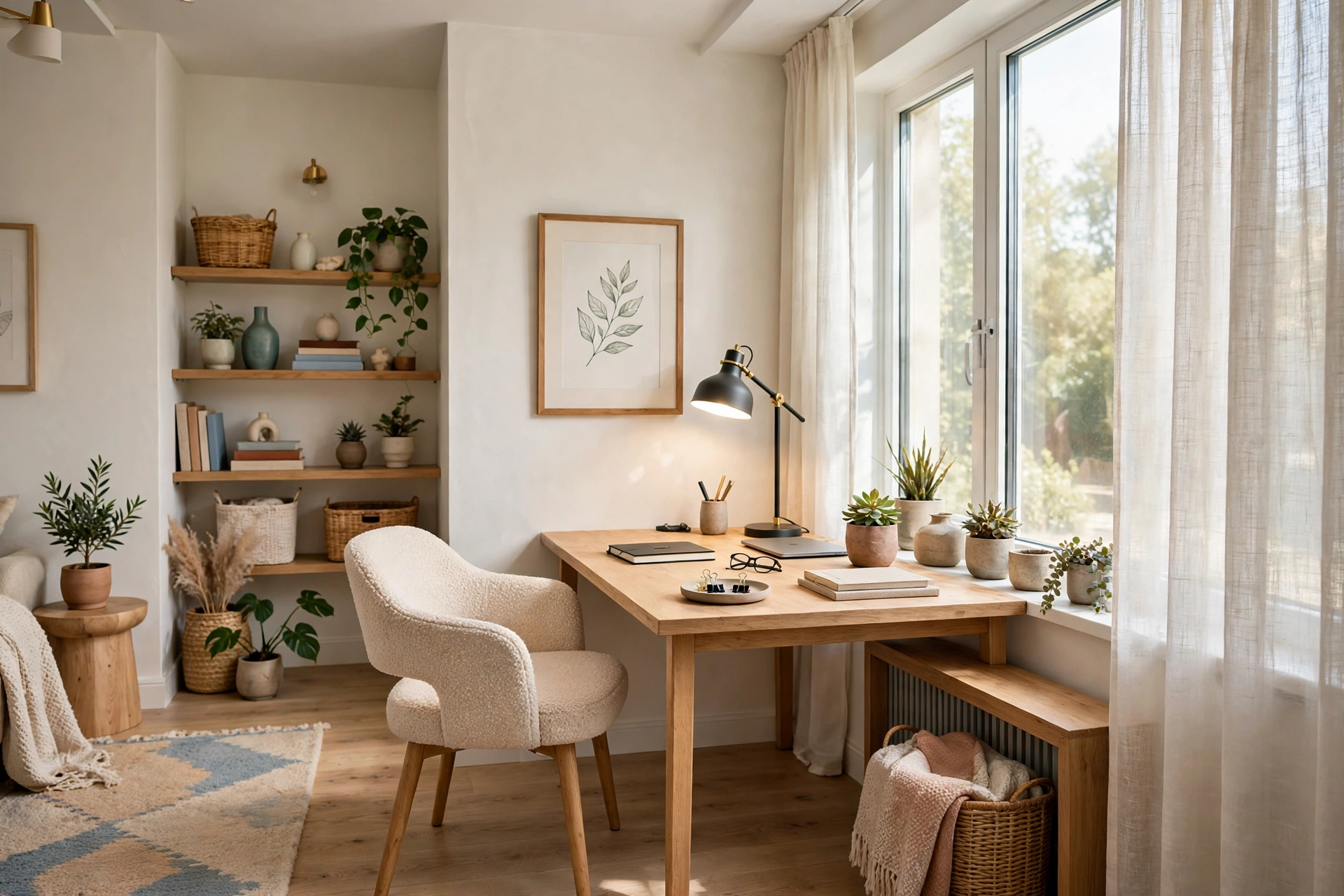
A home office corner does not need a new desk. It needs light, one organised surface, and a background that looks deliberate on a video call. Spend $16 on a desk lamp with an adjustable arm and a warm-white bulb, placed on the opposite side from your writing hand so your arm never casts a shadow on your work. Then spend $12 on a desk organiser — a simple tray, a pen cup, and a small drawer unit — and clear everything else off the desk surface except the lamp, your laptop, and one notebook.
The final $12 goes to the wall behind you: a $7 framed print in your accent colour and a $5 small plant on the desk or a shelf at shoulder height. That framed print is what your colleagues see on calls, so pick something calm and simple rather than a busy collage. Keep cables in a $4 cable clip or a binder clip on the desk edge, because a tidy cable is the difference between a workspace and a pile of electronics. The whole corner should feel like a room with a purpose, not a desk pushed against a wall.
9. The $50 Flex Fund: Paint, Thrift Finds and the Finishing Layer

The flex fund is the smartest $50 in the plan because it is unassigned until you can see what the house actually needs. Start with paint: a $25 quart of paint covers one accent wall or a whole piece of furniture, and a single painted wall behind the sofa or the bed changes a room more than $100 of accessories. Choose the colour from something you already own — the pillow, the rug, the art — so the paint ties the room together instead of fighting it.
Spend the remaining $25 at the thrift store, and go with a list, not a mood. The best thrift store home decor makeovers work when you hunt for specific things: a solid wood frame for $3, a ceramic vase for $4, a brass candle holder for $2, a basket for $5. These are the raw materials of thrift flip ideas — a $4 frame painted matte black holds a free printable and looks like a $40 piece of art. Keep $10 of the flex fund unspent until the last day, because the finishing layer always reveals one gap: a missing curtain tieback, a bare shelf, a hook that would solve everything.
💡 The Thrift List Rule: Never enter a thrift store without a written list of five specific items with a price cap beside each one. A list turns a two-hour wander into a fifteen-minute mission, and it is the only thing standing between you and a $25 ceramic owl you do not need.
10. The 5 Rules That Keep a $500 Makeover From Looking Cheap

A tight budget only looks cheap when the choices fight each other. Five rules keep the whole house coherent, and every one of them is free. First, repeat one accent colour in every room — sage green in the living room pillows, the bedroom lumbar, the kitchen towels, and the bathroom hand towels ties eight rooms into one home. Second, buy in threes: three pillows, three candles, three frames, because odd numbers look styled and even numbers look like a set from a discount bin.
Third, match your metals. If the kitchen pulls are matte black, the bathroom hooks and the entryway mirror frame should be matte black too, not a mix of chrome, brass, and black that reads as leftovers. Fourth, leave empty space on purpose — a clear counter, an empty shelf, a bare wall section — because a room with breathing room looks expensive and a room stuffed to the edges looks like a clearance sale.
Fifth, and most important: buy the best version of the cheap thing, not the cheapest version of the expensive thing. A $10 solid ceramic vase beats a $10 imitation brass vase every time, because real materials at a small scale always look better than fake materials pretending to be grand. This is the same logic behind Pottery Barn dupes — the dupe works when the material is honest and the shape is right, not when it is a plastic copy of a $200 original.
11. The 7-Day Schedule: One Room a Day, Done in a Week

A budget fails without a deadline, so give the whole project seven days and one room per day. Doing it room by room keeps the house liveable — you are never stepping over paint cans in three rooms at once — and finishing one room a day gives you a small win every evening, which is what keeps a project going. Order the rooms by impact, not by alphabet, so the rooms you see most get done while your energy is highest.
1. Day 1 — Plan and shop online. Order curtains, hardware, bedding, and towels online in one sitting, using the budget card as your list. Measure every window and cabinet before you order anything.
2. Day 2 — Living room. Hang curtains and the rod, place the lamps, and style the sofa with pillows and the throw. This is the biggest visible change, so do it first.
3. Day 3 — Bedroom and bathroom. Make the bed with the new bedding, refresh the nightstand, then swap towels and the shower curtain. Two small rooms, one day.
4. Day 4 — Kitchen and dining. Swap the cabinet hardware in the morning, style the counters and the table in the afternoon, and eat dinner at the finished table.
5. Day 5 — Entryway and office. Hang the mirror and hooks, lay the rug, set up the desk lamp and the wall art. Both spaces are small and fast.
6. Day 6 — Paint and thrift. Paint the accent wall or the furniture piece in the morning, hit the thrift store with your list in the afternoon, and place every find the same day.
7. Day 7 — Walk through and finish. Walk every room with the budget card, spend the last $10 of the flex fund on the one gap you can see, and put the tools away. The house is done.
📌 Measure Twice, Order Once: Returns eat a $500 budget alive — a $12 return shipping fee is 2.4% of the whole project. Measure the window, the cabinet hole spacing, and the bed size before you order, and keep every receipt until day 7 in case something needs to go back.
12. What to Skip: 5 Money Traps That Eat a $500 Budget

The fastest way to blow $500 is to spend it on the wrong things, and the traps are always the same. First, skip the new rug — a decent 8-by-10 rug costs $150 to $250, which is half the budget for one item in one room, and a $7 washable runner in the entryway does more for first impressions. Second, skip matching furniture sets, because a $200 matching side table and lamp set locks up 40% of the money and looks like a showroom, not a home.
Third, skip the gallery wall until you have the big pieces sorted. Ten frames, ten prints, and ten mats cost $60 to $80 and fill one wall, while the same money buys curtains for two rooms. Fourth, skip anything that needs a professional to install it — a $40 light fixture becomes a $140 project once an electrician is involved, and a $16 desk lamp gives you the same warm light. Fifth, skip the seasonal decor aisle entirely. A $25 autumn wreath is beautiful for three weeks and useless for the other forty-nine, and your $500 needs to work all year. Dollar Tree home decor DIY projects are the exception here, because a $1.25 vase or frame is a finishing touch, not a budget item — but only if it is on your list before you walk in.
Common $500 Decorating Mistakes
- Shopping without the budget card. Every unplanned purchase steals from a room that has not been decorated yet, and the last room always pays for the first room’s impulse buys.
- Starting with accessories instead of the big pieces. Pillows cannot fix bad lighting, and a tray cannot fix bare windows. Curtains, lamps, and bedding come first; accessories come last.
- Choosing a different colour in every room. Five accent colours across eight rooms looks like five different houses. One accent colour, repeated everywhere, looks like one designed home.
- Forgetting the cost of the boring stuff. Curtain rods, picture hooks, batteries, and screws add $20 to $30 to any project. Budget $15 for hardware and fixings before you start, or the flex fund disappears on day one.
- Decorating for guests instead of for yourself. The living room gets $120 because you live in it, not because visitors see it. Spend where your own eyes land every day, and the house will feel like yours.
Frequently Asked Questions
Can you really decorate a whole home for $500?
Yes, if you treat it as one project with a fixed split per room and you spend on curtains, lighting, bedding, and hardware instead of furniture. A new sofa or rug alone costs more than the whole budget, so the plan works by changing what your eyes notice — light, textiles, and colour — rather than replacing the big pieces.
Which room should you decorate first on a $500 budget?
Start with the living room, because it is the room you use most and the room guests see. Hang curtains, add a floor or table lamp, and style the sofa with two pillows and a throw. That one room, done well for $120, makes the whole house feel like it is changing.
Where should you shop to decorate a home for $500?
Mix three sources: online for curtains, bedding, and hardware where prices are easy to compare; discount and dollar stores for textiles and finishing touches; and thrift stores for solid wood frames, ceramic vases, and baskets. Always shop with a written list and a price cap per item so impulse buys cannot eat the next room’s budget.
Is $500 enough to decorate a three-bedroom house?
Yes, with the split in this plan, because the third bedroom and any spare room share the $50 flex fund rather than getting their own budget. Give a spare room clean bedding, one lamp, and one piece of art, and it reads as finished without needing a full $90 allocation.
Should you paint walls when decorating on a $500 budget?
Paint one accent wall or one piece of furniture, not the whole house. A $25 quart of paint on the wall behind the sofa or the bed changes the room more than $100 of accessories, and it is the highest-impact item in the flex fund. Keep the colour tied to something you already own so it matches the rest of the room.
What is the biggest waste of money when decorating on a budget?
Matching furniture sets and large rugs. A matching set locks up 40% of the budget in one corner, and a decent rug costs $150 to $250 — half the project for one item. Spend that money on curtains, lamps, and hardware instead, and add the rug later when the budget is bigger.
A $500 Home That Looks Like You Spent Five Times More
Five hundred dollars will not buy you a new home, and it was never supposed to. What it buys is a plan: curtains that make the ceiling look taller, lamps that make the evenings feel warm, bedding that makes mornings feel calm, hardware that makes the kitchen look renovated, and one accent colour that ties eight rooms into a single home. None of those things is expensive on its own. Together, in the right order, they are the difference between a house full of stuff and a home that feels finished.
Start on day one with the budget card and the measurements, not with a shopping trip. Finish one room a day, keep the last $10 of the flex fund until the final walk-through, and put the tools away on day seven knowing every room got its share. Then sit on the sofa, in the lamplight, under the new curtains — and enjoy the house that $500 built.