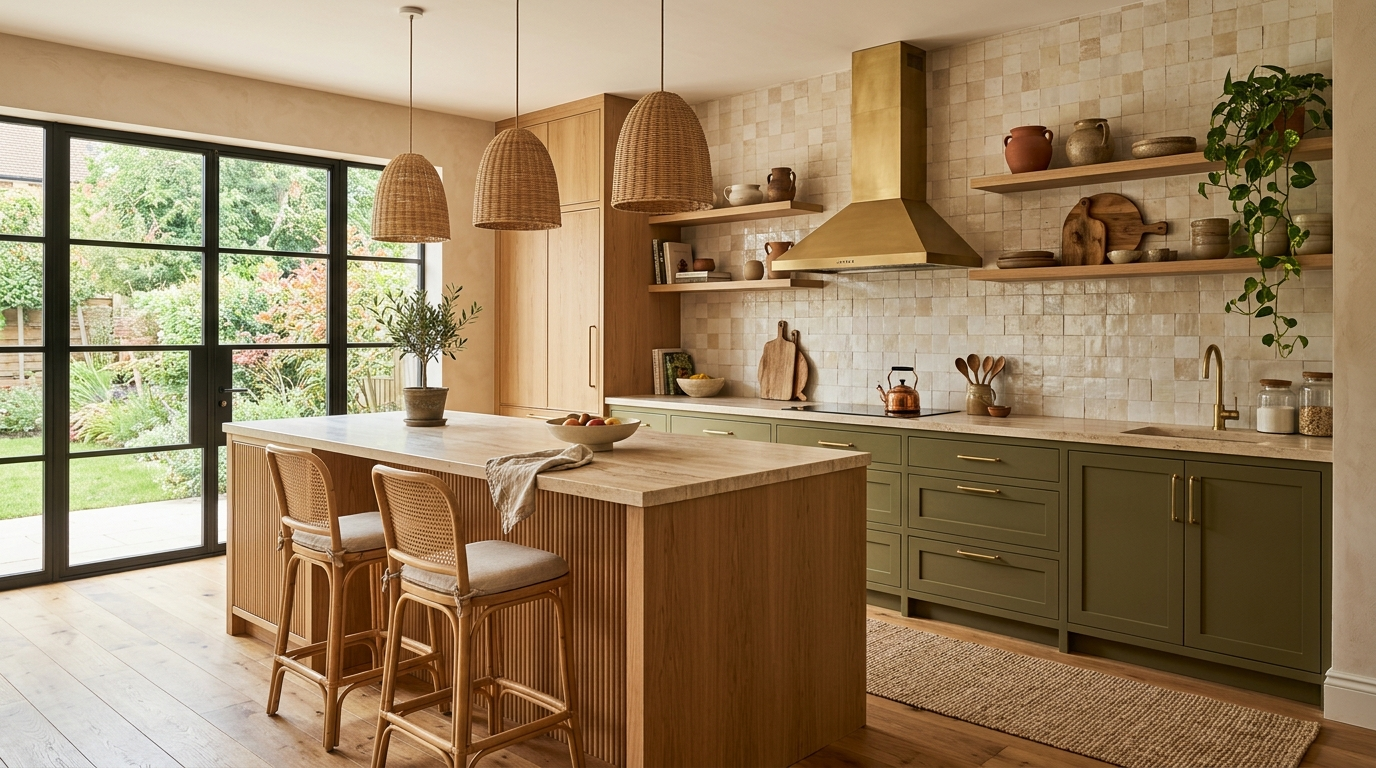
14 Modern Earthy Kitchen Ideas That Feel Warm, Grounded and Completely Current
There’s a specific shift happening in kitchen design right now that’s worth paying attention to. The all-white kitchen — that decade-long dominant formula of pure white cabinets, clean surfaces, and clinical brightness — is being replaced by something warmer, richer, and considerably more interesting. The modern earthy kitchen brings together the clean lines and functional intelligence of contemporary design with the organic warmth, natural materials, and grounded color palette of the natural world. The result is a kitchen that is simultaneously visually striking and genuinely inviting — a space that looks like it was designed by someone with genuine taste and lived in by someone who actually enjoys cooking.
I’ve been obsessing over the earthy kitchen aesthetic for the past two years and completely redesigned my kitchen around these principles — the change in how the room feels to use daily has been dramatic. These 14 ideas cover every element of building an earthy modern kitchen that genuinely delivers.
1. Ground Everything in an Earthy Color Palette
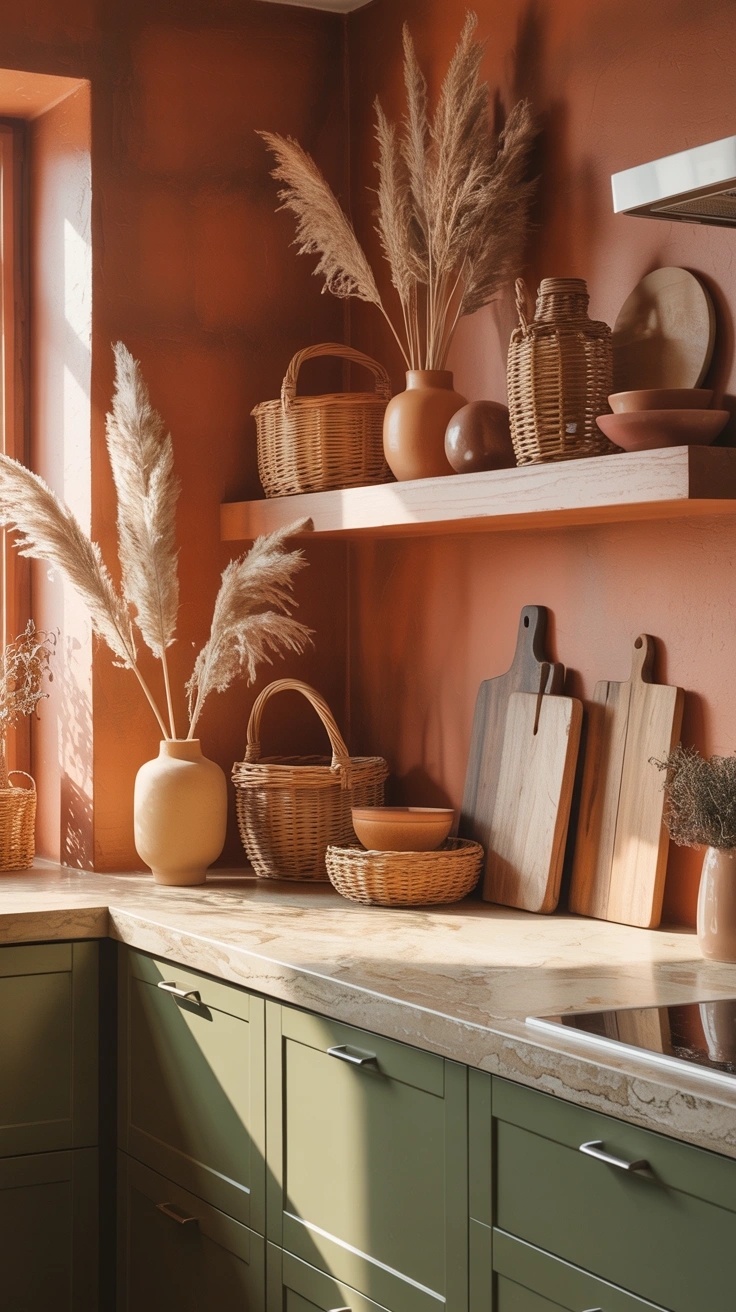
The modern earthy kitchen begins with color — specifically, a palette rooted in the geological world rather than the manufactured one. Earth tones kitchen design works from the colors of clay, stone, soil, dried grass, and organic matter: warm, grounded, and deeply familiar in a way that colors invented by trend cycles never quite achieve.
The Core Earthy Kitchen Palette:
- Warm cream and raw linen — the lightest, most versatile earthy neutrals
- Terracotta and warm clay — the color of baked earth, instantly warm and distinctive
- Warm olive and sage — earthy botanical greens that add organic vitality
- Natural caramel and honey — wood-adjacent warmth in paint or fabric form
- Deep ochre and warm mustard — rich, sun-saturated accents with historical depth
- Warm stone and travertine — mineral, geological, and deeply sophisticated
Choose two or three tones from this palette and apply them consistently across cabinets, walls, and large surfaces for the visual cohesion that makes an earthy kitchens aesthetic genuinely compelling.
2. Choose Organic Cabinet Colors
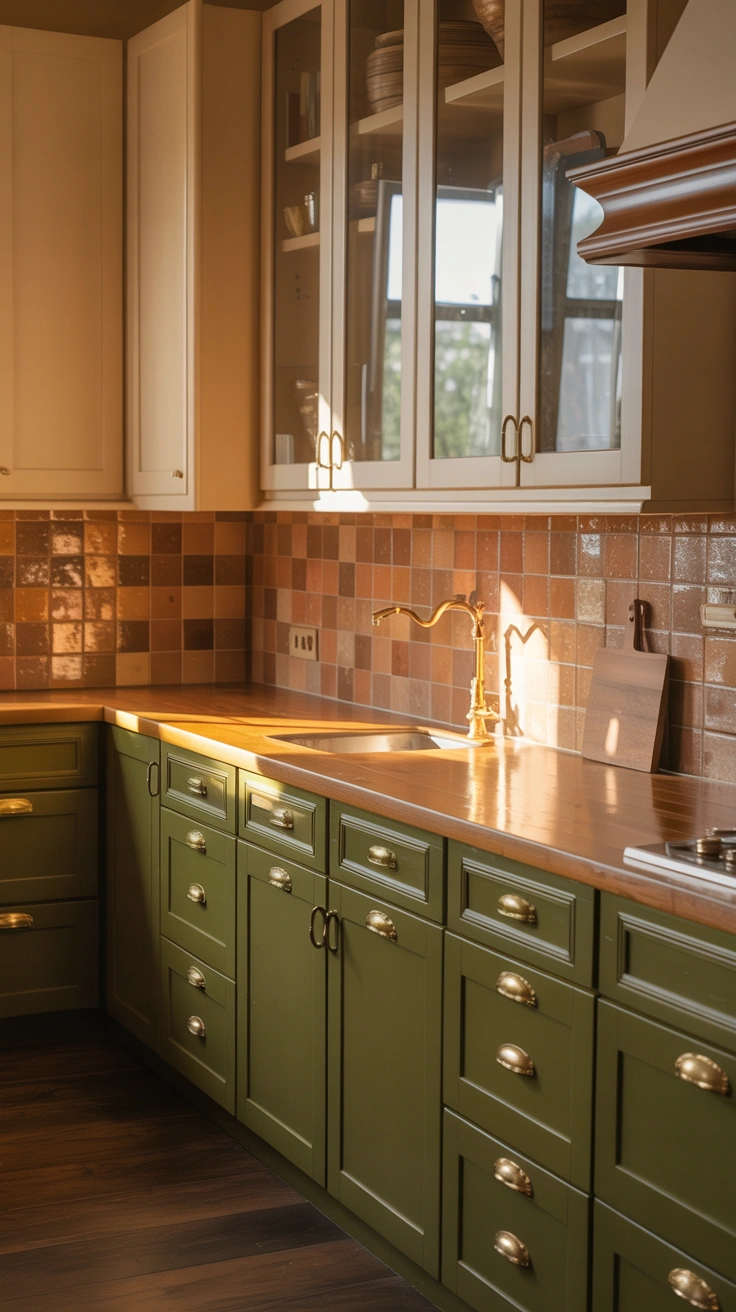
Cabinet color is the decision that most immediately and most visibly establishes a kitchen’s character — and in an earthy modern kitchen, the cabinet color should feel like it was found rather than manufactured. Organic, slightly complex tones with visible warmth and depth create the earthy kitchen aesthetic far more effectively than clean, pure colors.
Warm olive green cabinets with visible warm undertones. Deep terracotta on the lower units with warm cream on the upper ones. A warm, toasty caramel or almond tone across the full cabinet run. Natural wood veneer fronts that bring actual organic material into the cabinetry itself. Each of these cabinet color directions creates a fundamentally different kitchen personality — but all of them share the specific quality of warm, earthy aliveness that defines the modern organic kitchen design approach.
3. Specify Natural Stone Worksurfaces
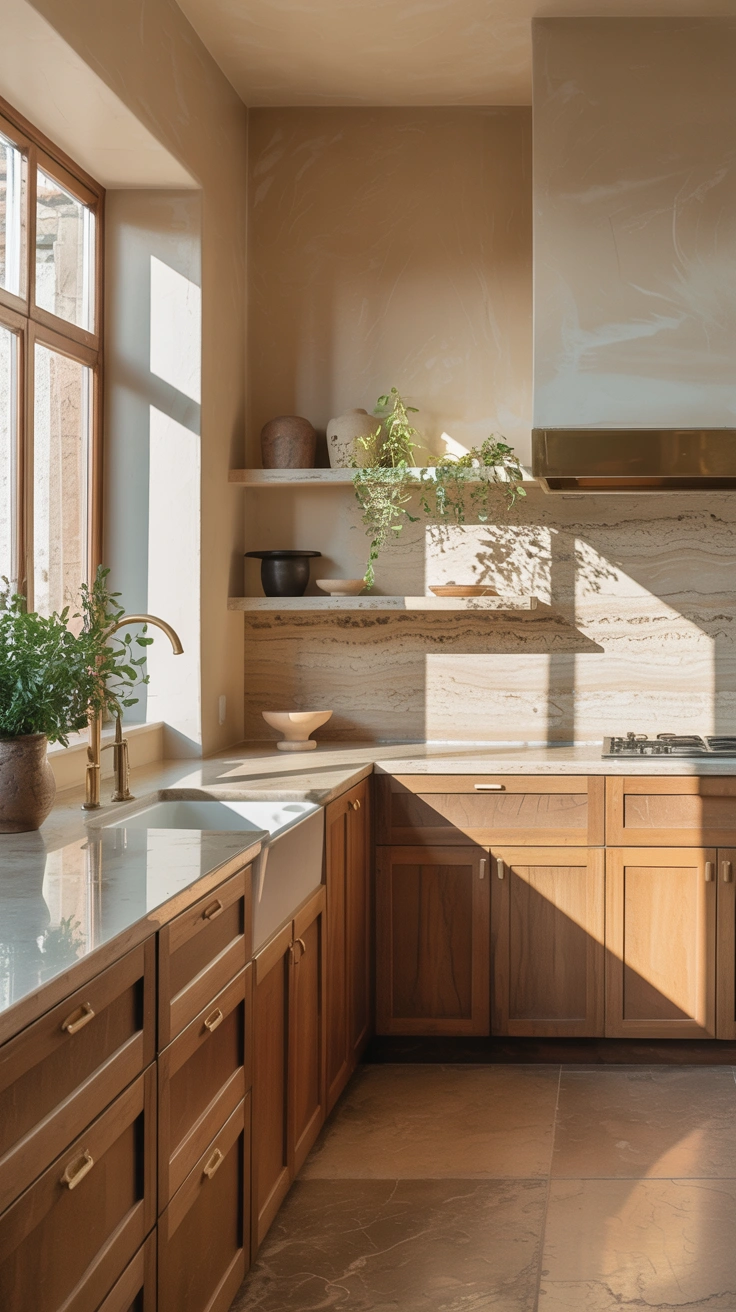
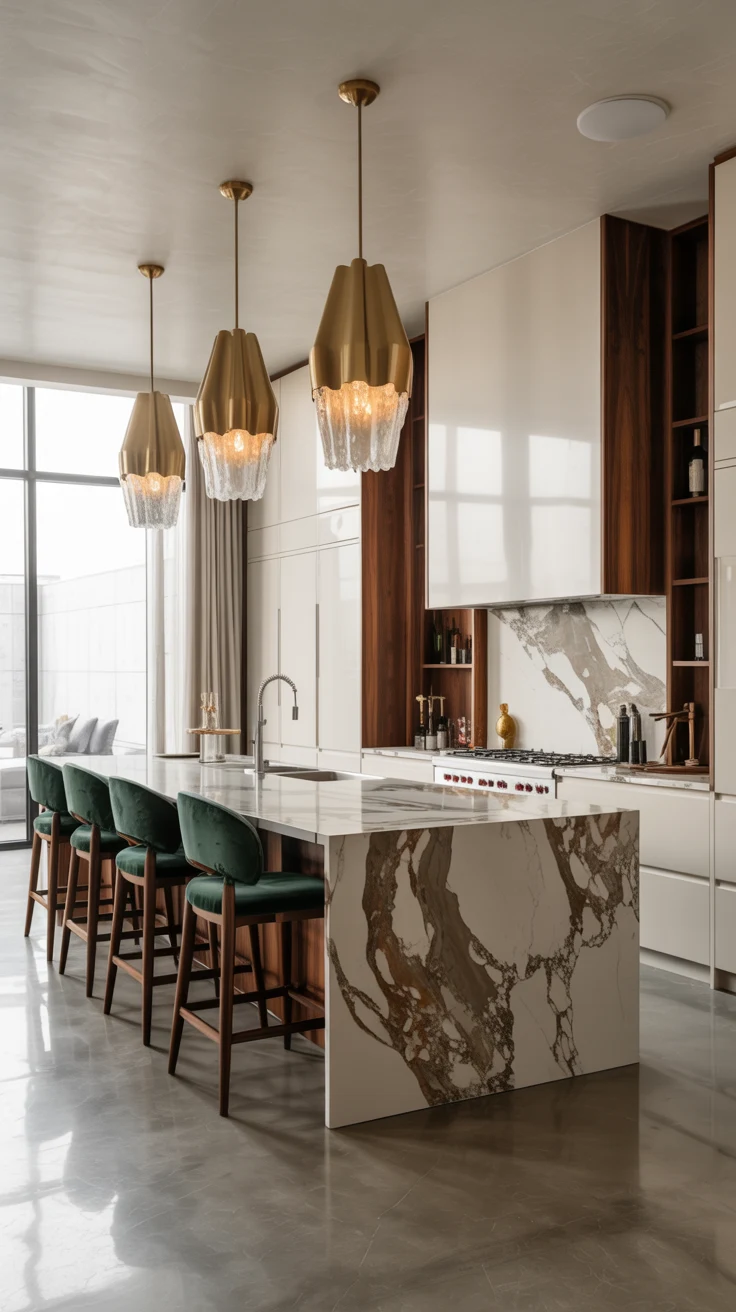
Natural stone is the worksurface material most perfectly aligned with the earthy kitchen aesthetic — because it is, literally, of the earth. Marble, quartzite, travertine, limestone, and soapstone all bring a depth of organic variation and geological character that engineered alternatives cannot replicate, and they age in ways that become more beautiful rather than more worn.
Honed travertine with its warm ivory tones and natural pitting creates a worksurface of extraordinary character. Warm-veined quartzite in honey and caramel tones adds material richness and natural depth. Soapstone in a warm grey with olive undertones creates an earthy, artisanal quality that is completely distinctive. Each stone variety creates a different earthy modern kitchen story — choose based on how the material ages in daily kitchen use and how it relates to the cabinet color and overall palette.
4. Integrate Natural Wood Throughout
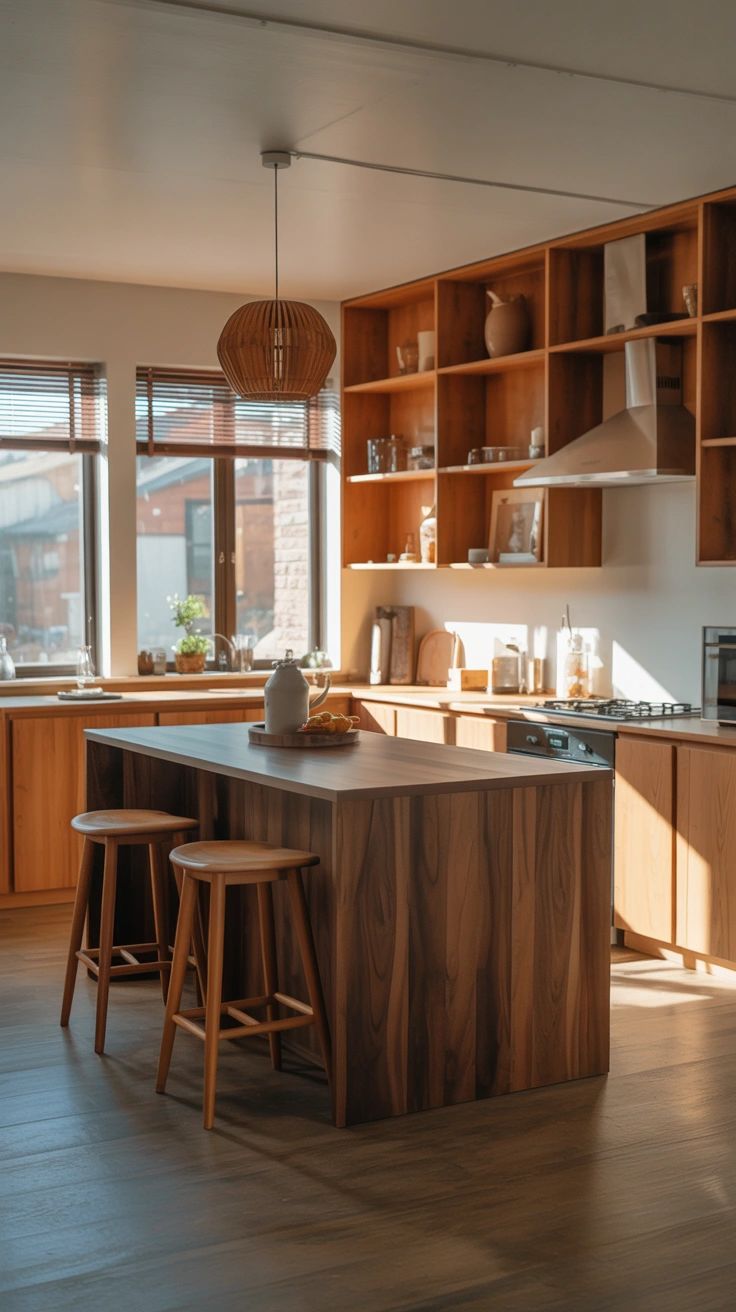
Natural wood is the element that most directly and most powerfully brings the modern organic design kitchen philosophy to life — and in an earthy kitchen, wood appears not just in furniture but throughout the material language of the space. The warmth, grain variation, and genuine organic character of real wood grounds and humanizes every earthy color around it.
A warm oak or walnut island top creating organic contrast with surrounding cabinetry. Open wooden shelving on one wall bringing material warmth and accessibility. Bar stools in natural rattan or solid wood at the island. Wooden cutting boards and serving pieces displayed as functional accessories. Even small wooden objects — a tray, a bowl, a utensil crock in natural timber — add meaningful organic warmth to the kitchen earthy modern palette.
5. Use Zellige or Handmade Tiles
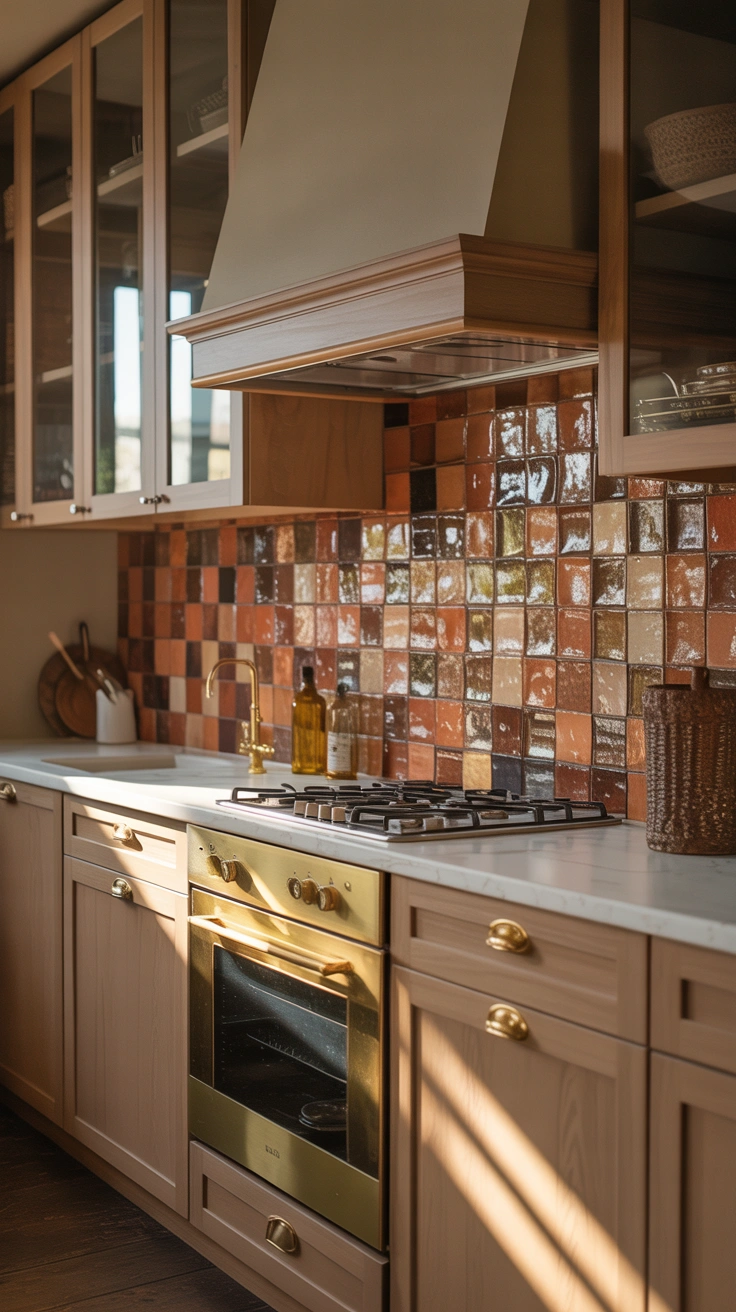
The splashback in an earthy kitchen is one of the most visible opportunities for introducing organic texture, artisanal character, and the beautifully imperfect quality that distinguishes a genuinely organic modern design kitchen from one that merely uses earthy colors on standard surfaces.
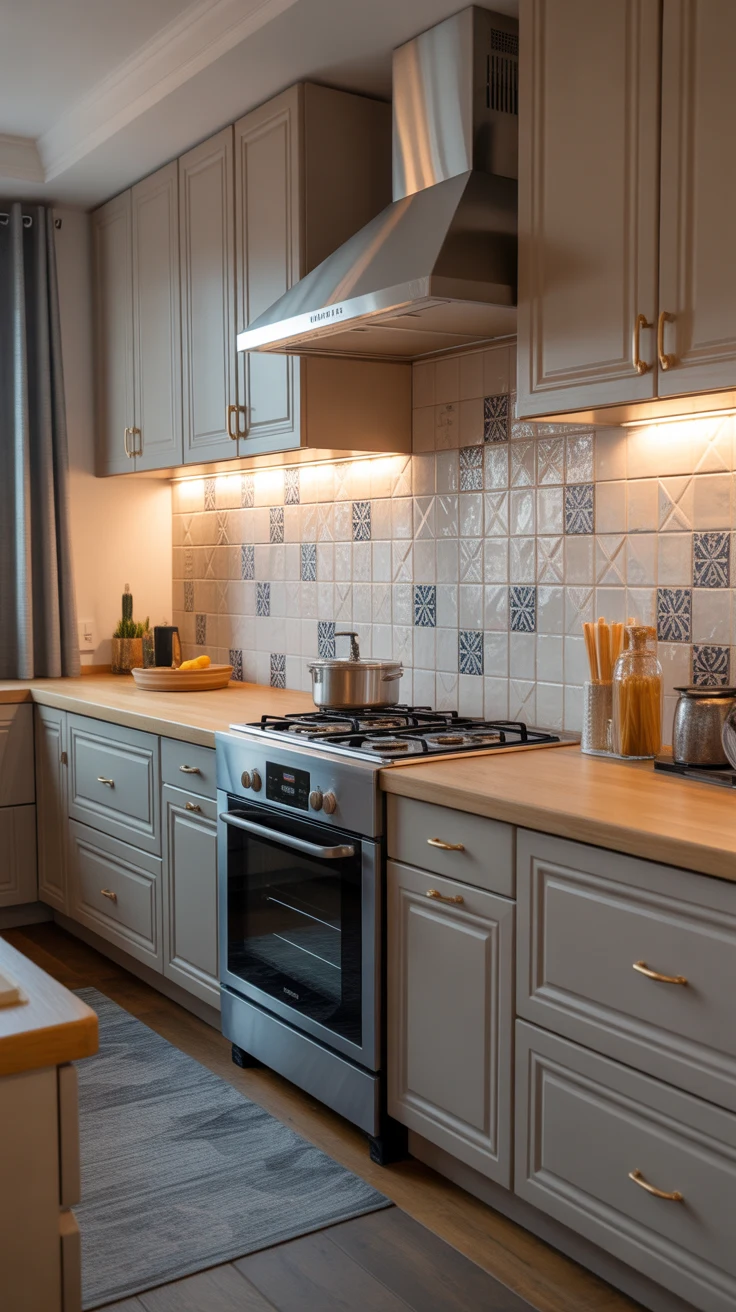
Zellige tiles — handmade Moroccan clay tiles with characteristic tonal variation, slight warping, and glossy glaze — are the most authentically organic tile choice available for an earthy kitchen aesthetic. Each tile is genuinely unique, with its own slight variations in color, shape, and glaze depth. Applied to a splashback, zellige creates a surface of extraordinary richness and handcrafted beauty that transforms the entire kitchen’s character. Warm terracotta zellige, deep olive green zellige, or warm cream zellige with earthy undertones all create splashbacks of exceptional quality that the kitchen earthy modern aesthetic celebrates.
6. Choose Warm Brass or Bronze Hardware
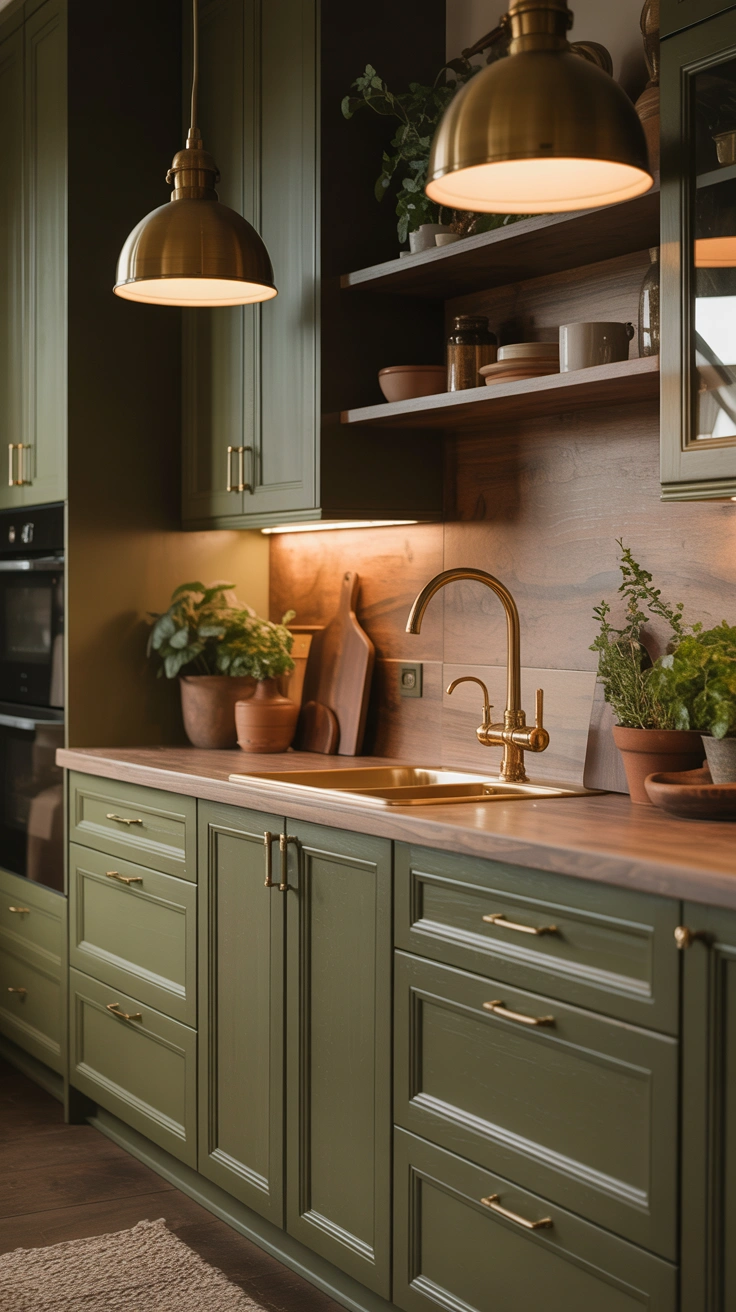
Hardware is the detail that ties every other material decision in an earthy modern kitchen together — and warm metallic finishes in brass, bronze, or aged copper share the same organic, naturally-derived character as the earthy palette they complement. FYI — the combination of warm brass hardware against olive green or terracotta cabinets is one of the most consistently admired pairings in contemporary kitchen design, and its appeal is entirely organic: warm metal against warm earth tone creates a chemistry that feels ancient and immediately right.
Apply the hardware finish consistently across every touchpoint in the kitchen — cabinet pulls, tap, pendant lights, towel rail, and accessories. Unlacquered brass that develops a natural patina over time is the most authentically organic option available — it changes and deepens with use, becoming more beautiful rather than more worn.
7. Design an Earthy Island
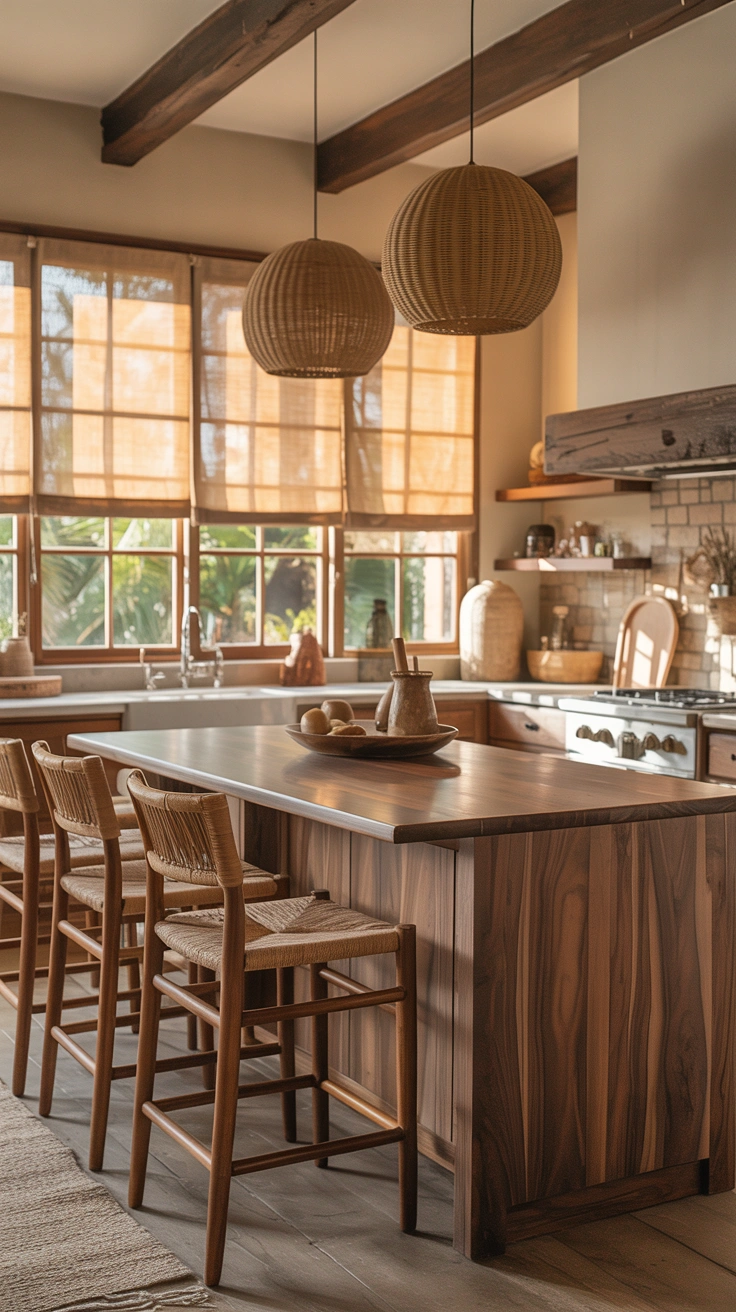
The island in an earthy modern kitchen is where the organic design philosophy can be most fully and most beautifully expressed — because the island’s prominence as the kitchen’s architectural centerpiece means every material decision it embodies is immediately, prominently visible.
A butcher block or live-edge wood island top creates the most organic, most material-honest earthy island surface available. A honed stone island in travertine or warm quartzite creates geological depth and organic variation. Dark walnut or smoked oak island base units in a wood tone that contrasts beautifully with lighter earthy perimeter cabinets. Rattan or wooden bar stools positioned at the island seating adding additional organic material at human height. The earthy island is where kitchen ideas earth tones meet modern functionality in the most resolved and most beautiful way.
8. Incorporate Organic Shapes and Curves
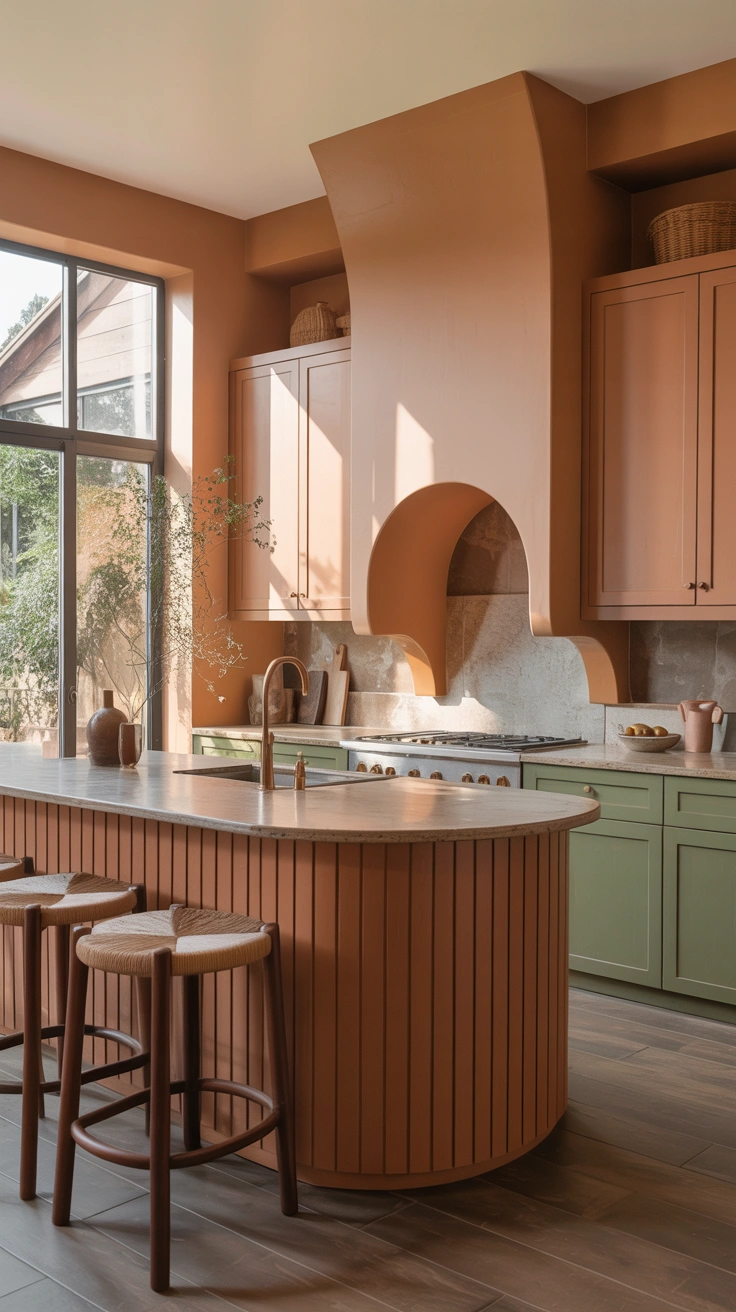
The organic modern design kitchen has a specific relationship with form — one that consciously moves away from the purely rectilinear geometry of standard contemporary design toward rounded edges, curved corners, and the softer forms that reference the natural world. This is earthy modern kitchens at their most distinctively contemporary.
Curved cabinet corners rather than sharp 90-degree profiles. A round or organic-shaped island instead of a strictly rectangular one. Arched cabinet door details. A curved range hood with organic sculptural form rather than a purely functional box. Rounded bar stools rather than sharp-edged geometric ones. These curved and organic forms create a kitchen that feels distinctively current within the earthy kitchen aesthetic — contemporary in its design language while organic in its material character.
9. Add Living Plants and Herbs
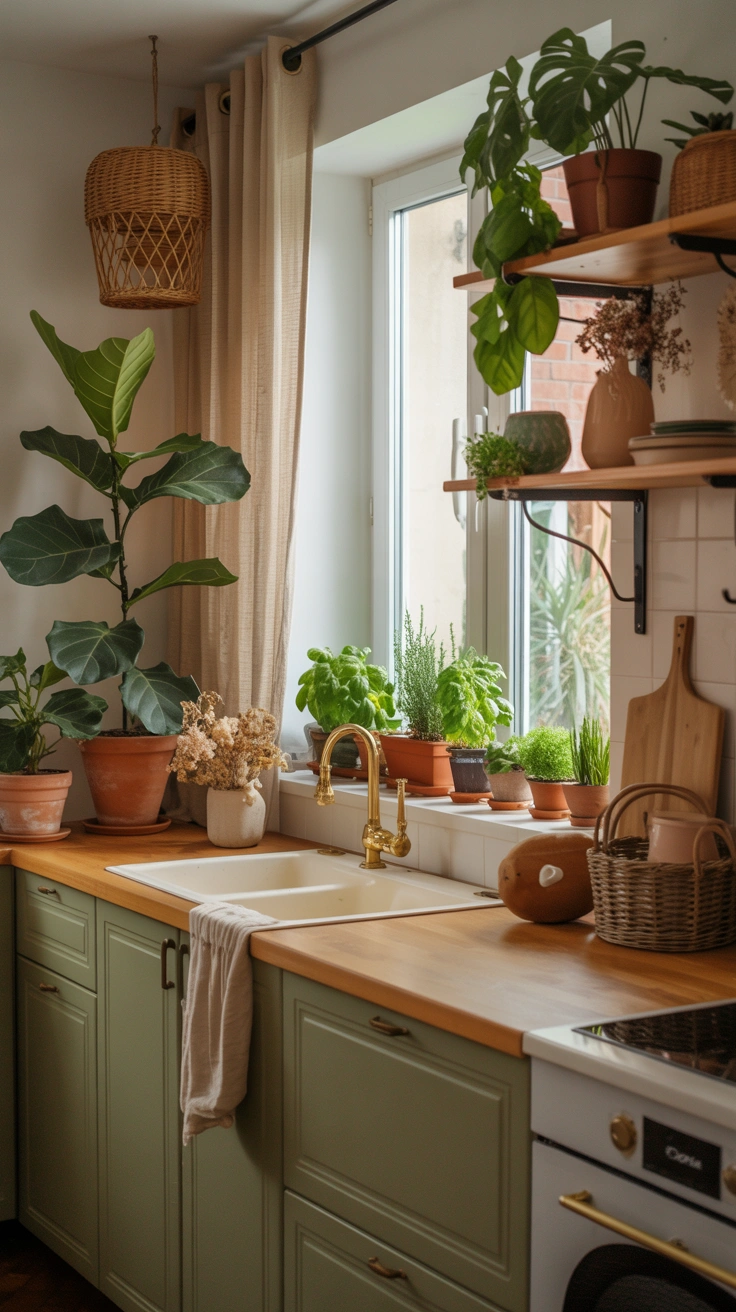
Plants are the element that most powerfully and most literally brings the earthy kitchen aesthetic to its full, living potential — because the organic warmth of the earthy palette and the living vitality of real plants are natural companions in exactly the same way that earth and plant life are natural companions in the world outside.
A kitchen herb garden on the windowsill — rosemary, thyme, and sage in individual terracotta pots — provides both visual freshness and functional ingredients for everyday cooking. A large trailing pothos or philodendron on a high shelf adds living, organic movement. A statement plant in a large terracotta or ceramic pot beside the island creates an organic focal point that grounds the entire earthy kitchen with genuine biological life. The earthy kitchen with abundant plants is a completely different sensory and visual experience from the same kitchen without them.
10. Specify Textured Wall Treatments
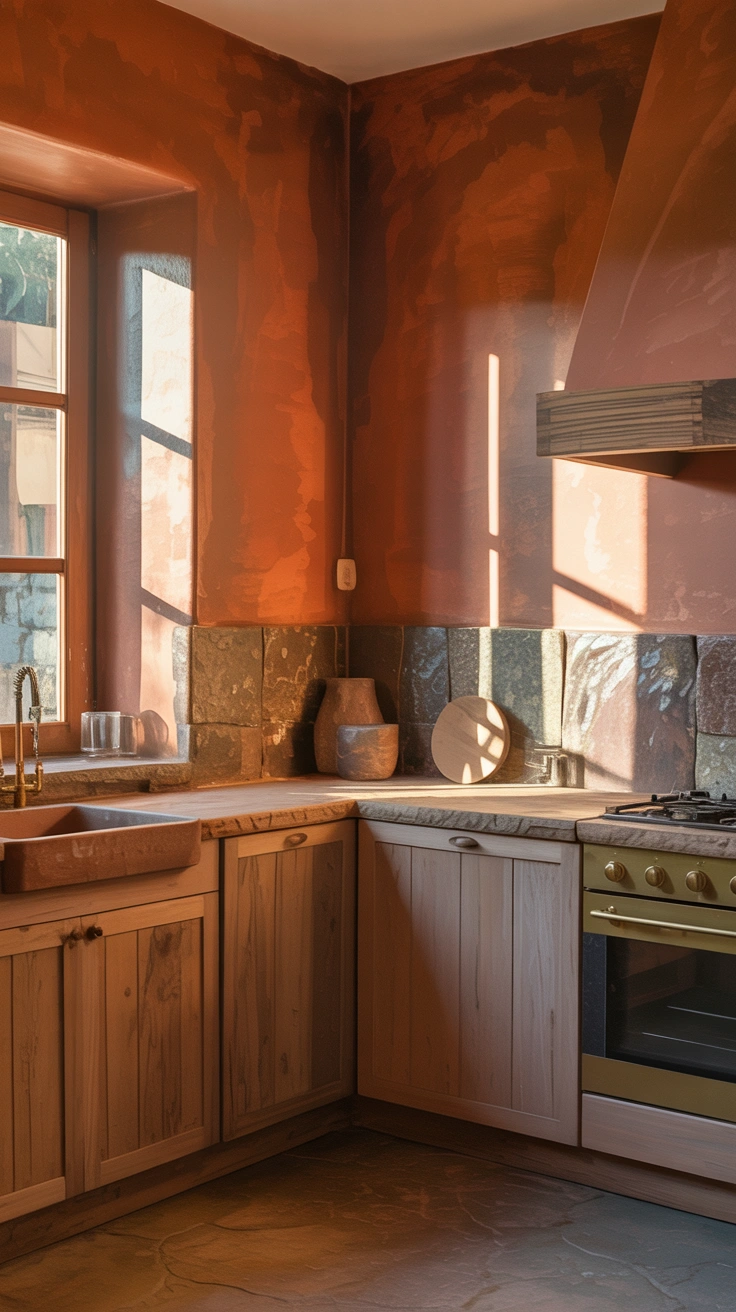
The walls of an earthy modern kitchen deserve as much material consideration as the cabinets and worksurfaces — and textured wall treatments bring the organic depth and dimensional richness that flat painted surfaces cannot achieve. Limewash, Venetian plaster, and microcement all create wall surfaces of organic warmth and tonal variation that align perfectly with the earthy kitchen aesthetic.
Limewash paint in a warm terracotta or dusty sage tone creates walls that appear to have absorbed decades of warmth — the soft, slightly chalky texture with subtle tonal variation creates a surface that feels ancient and organic rather than recently applied. Venetian plaster in warm stone tones creates a more refined, polished version of the same organic quality. Even a simple textured paint application in an earthy tone creates more visual depth than flat paint in the same color.
11. Use Open Shelving to Display Earthy Collections
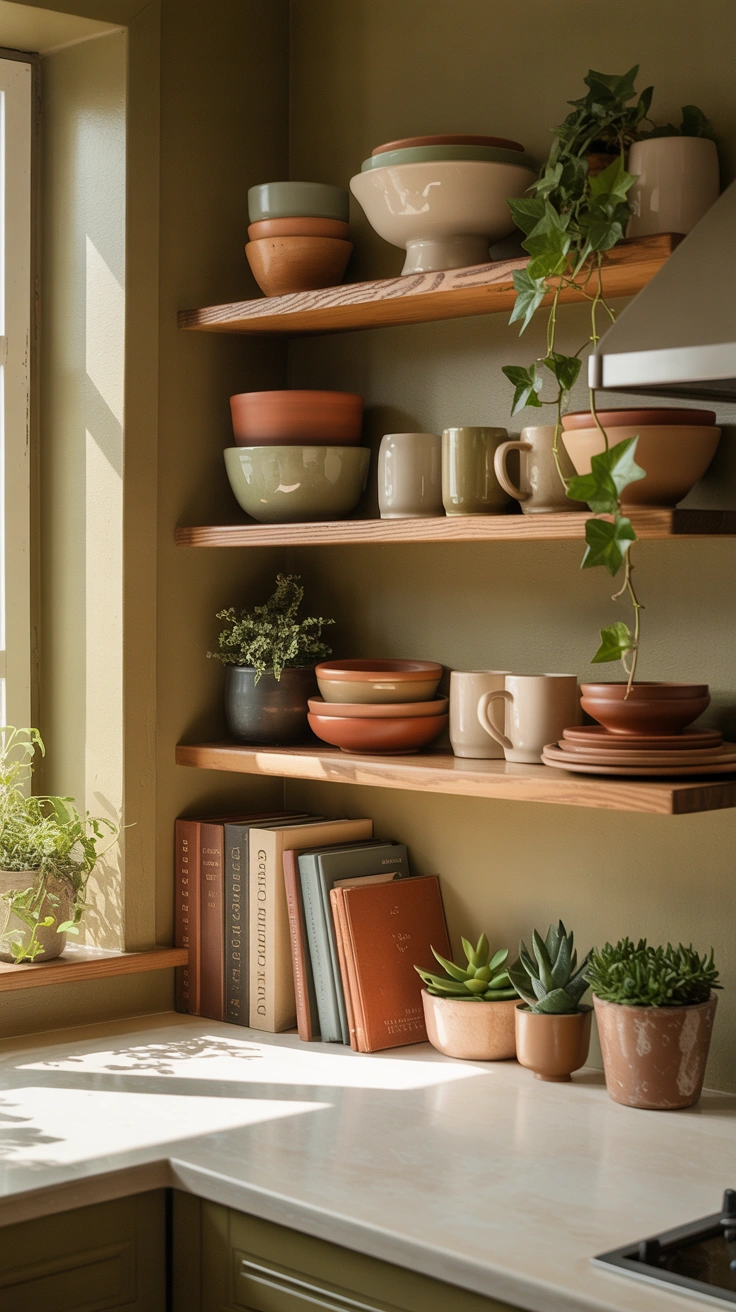
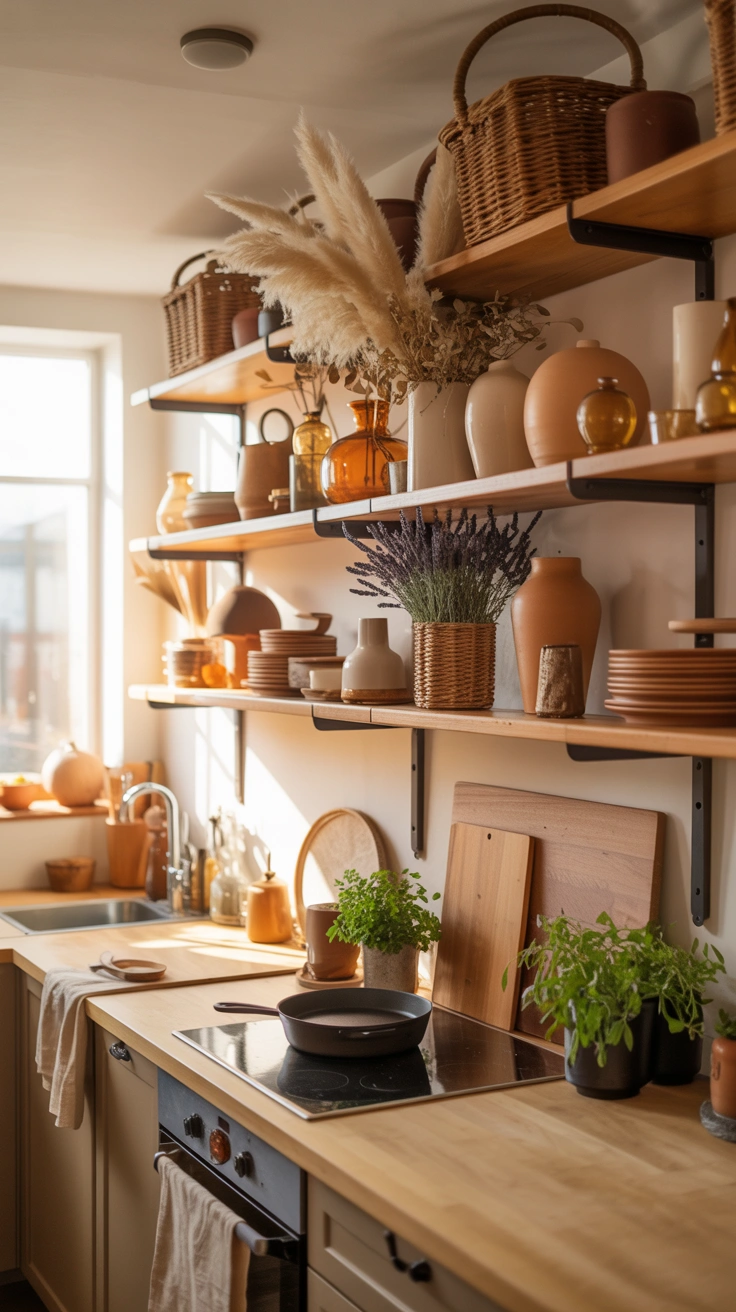
Open shelving in an earthy kitchen is not just practical storage — it’s an opportunity to display the organic, artisanal, naturally beautiful objects that express the kitchen’s design philosophy in the most personal and most human way. The objects on open earthy kitchen shelves should look found and gathered rather than purchased and placed.
Matching terracotta or ceramic canisters for dry goods in warm, handmade-looking finishes. A row of earthy-toned mugs with visible maker’s marks and slight tonal variation. Handmade ceramic bowls and plates in warm, organic glazes. Cookbooks with beautiful spines. One or two small plants breaking up the rows of objects with organic vitality. These gathered objects create shelves that tell the story of a kitchen lived in by someone who values beautiful, honest, naturally-made things.
12. Layer Earth Tones Through Lighting
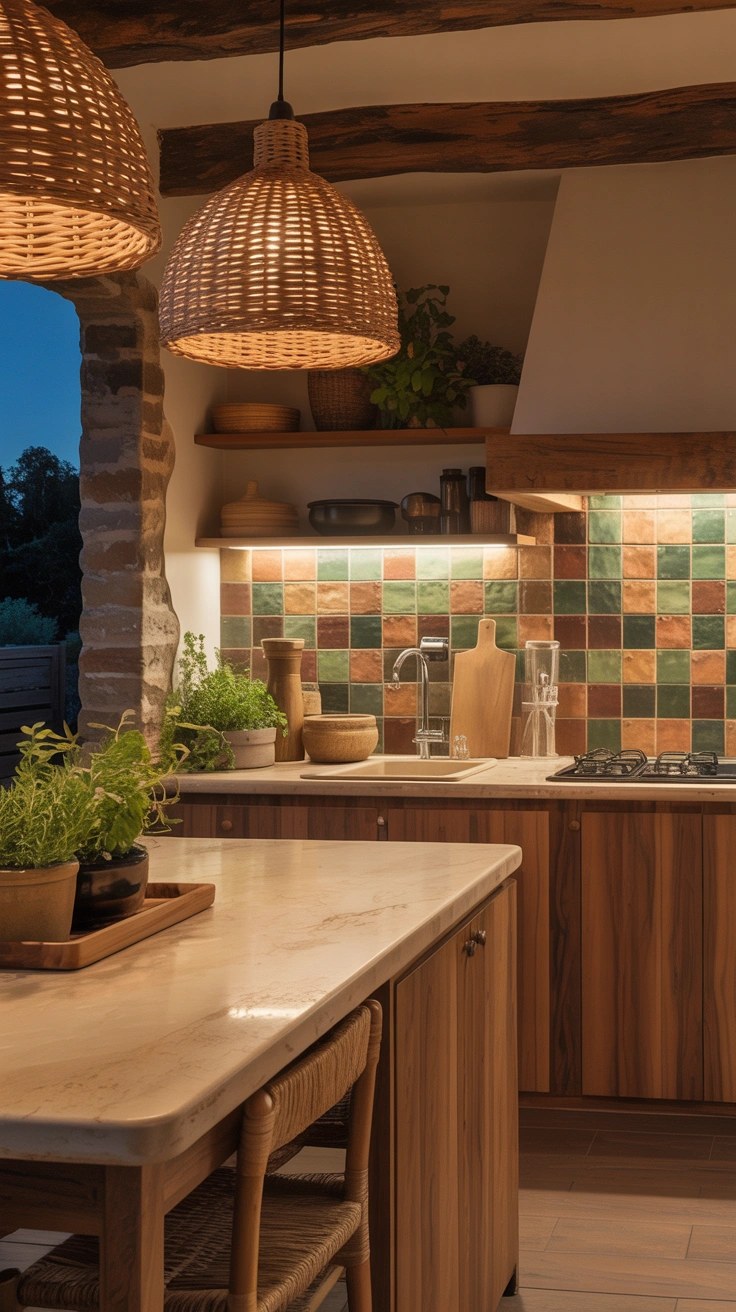
Lighting in an earthy modern kitchen has a specific responsibility beyond the functional: it needs to amplify the warmth of the earthy palette rather than working against it. Cool white light in an earthy kitchen flattens every warm tone in the room. Warm amber light deepens and enriches them.
Warm bulb temperatures (2700K) throughout every light source in the kitchen. Rattan or woven pendant lights above the island that cast dappled, organic light and add natural material at ceiling height. Under-cabinet LED strips in warm tones that illuminate the natural stone worksurface with amber glow. A statement ceramic or wood-based pendant in an earthy glaze above the dining area. Each lighting element should add both functional illumination and organic material warmth to the kitchen earthy modern environment.
13. Incorporate Natural Clay and Ceramic Accessories
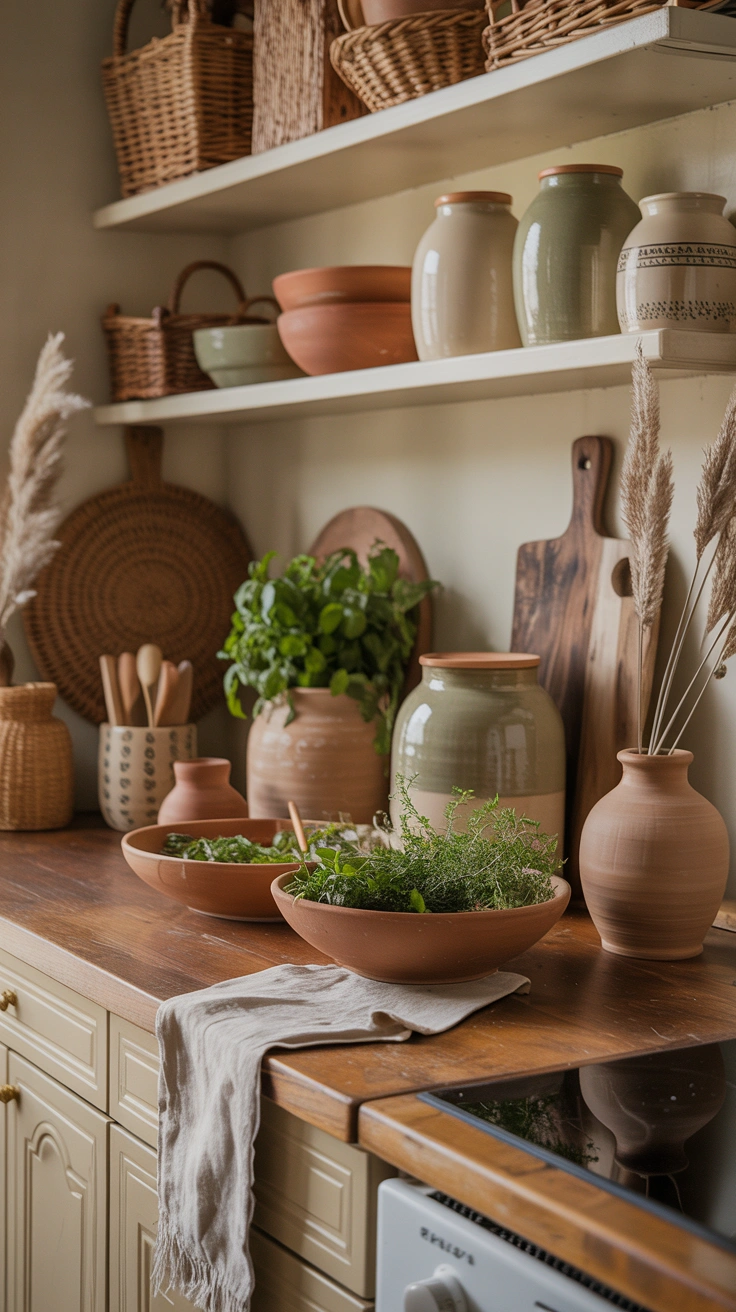
Accessories in an organic modern design kitchen should be as honest in their material character as the larger design decisions surrounding them — and natural clay and ceramic pieces are the most aligned accessory materials available. Handmade ceramics, terracotta vessels, and artisanal pottery all belong to the earthy kitchen aesthetic as naturally and as completely as any other element.
A large terracotta fruit bowl on the island as the counter’s central organic object. Ceramic oil and vinegar pourers in warm, earthy glazes replacing branded bottles on the counter. A handmade ceramic utensil crock in a warm, organic glaze beside the hob. Small terracotta pots of herbs on the windowsill. These ceramic and clay pieces cost relatively little but communicate the earthy kitchen aesthetic’s specific values — organic honesty, material beauty, and the appreciation of things made by human hands from natural materials.
14. Style With Precision and Organic Warmth
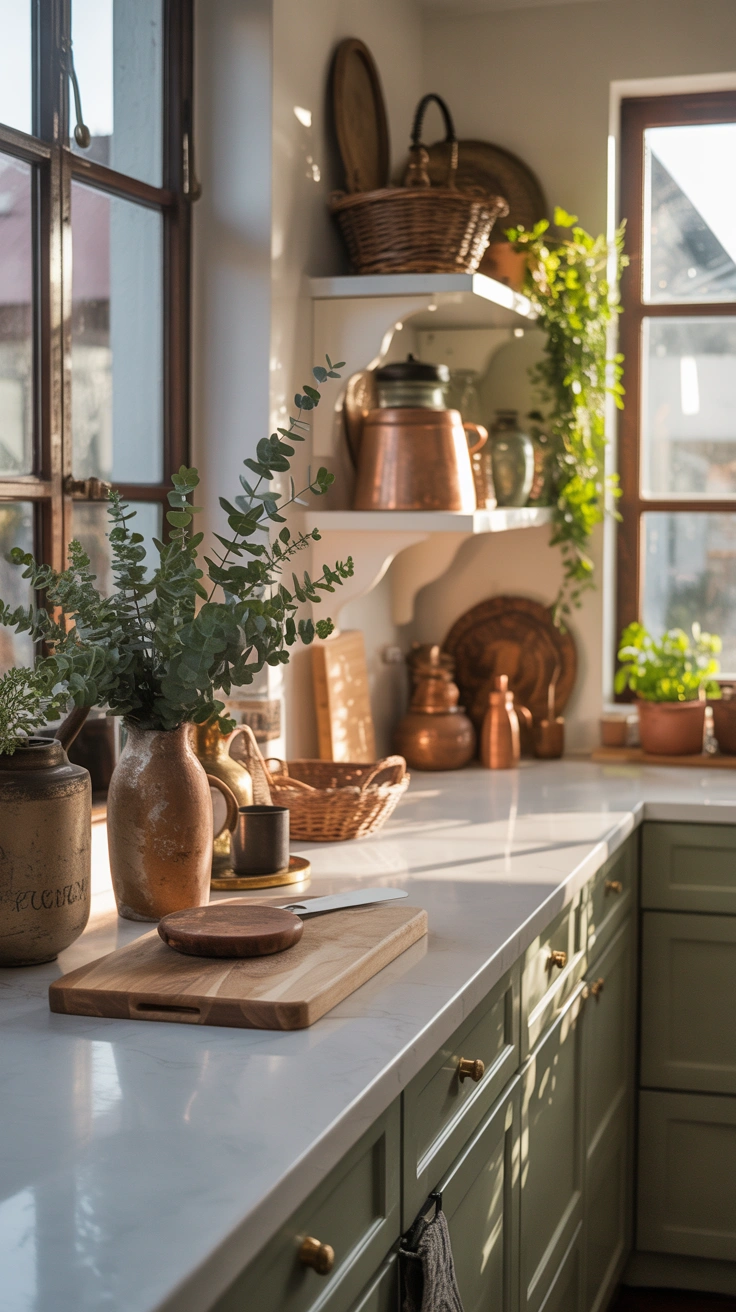
The final element that completes any earthy kitchen aesthetic is the precision styling of every visible surface with genuine intention and organic coherence. Because in an earthy modern kitchen, the natural materials and warm colors create a backdrop of extraordinary beauty — and the objects you place within that backdrop should be worthy of it.
Earthy Kitchen Styling Essentials:
- One statement plant or herb arrangement as the counter’s living focal point
- Consistent ceramic or terracotta storage containers replacing original packaging
- A quality cutting board in natural wood leaning against the splashback
- Fresh or dried botanicals in a simple terracotta or ceramic vase
- All hardware and accessories in a single warm metallic finish — all brass or all bronze
- Counter clear except for intentional, beautiful, genuinely earthy objects
IMO, the earthy kitchen that’s been styled at this level of precision and organic intention creates a room that doesn’t just look beautiful — it feels beautiful. The combination of warm colors, natural materials, living plants, artisanal objects, and honest styling creates a kitchen that is genuinely, completely alive.
Wrapping Up
Fourteen ideas that build the modern earthy kitchen from every direction: earthy palette, organic cabinet colors, natural stone worksurfaces, wood throughout, zellige splashbacks, brass hardware, earthy islands, organic forms, living plants, textured walls, honest shelving, warm lighting, ceramic accessories, and precision styling. Every idea deepens the same underlying philosophy — that kitchens should feel connected to the natural world and built from honest, organic materials rather than manufactured brightness.
The earthy modern kitchen doesn’t follow a trend. It follows a truth about how materials that come from the earth look beautiful in a room designed to prepare food that comes from the earth. That logic is older than kitchen design itself.
Make your kitchen as honest as the food you cook in it. Everything else will follow naturally.
Frequently Asked Questions
1. What is an earthy modern kitchen?
An earthy modern kitchen combines clean contemporary design with natural materials, warm colors, organic textures, and nature-inspired finishes. It creates a space that feels both stylish and welcoming.
2. Which colors work best in an earthy kitchen?
Warm neutrals such as cream, beige, terracotta, olive green, sage, caramel, warm stone, and soft clay tones create the perfect earthy color palette while maintaining a timeless look.
3. What countertop materials suit an earthy kitchen?
Natural stone surfaces like travertine, quartzite, marble, limestone, and soapstone are excellent choices because they add authentic texture, warmth, and unique natural character.
4. How can I make my kitchen feel more organic?
Incorporate natural wood, handmade ceramic accessories, living plants, textured tiles, warm lighting, and earthy colors. These elements work together to create a relaxed, nature-inspired atmosphere.
5. Is an earthy kitchen style suitable for small kitchens?
Yes. Using light earthy colors, natural materials, open shelving, and plenty of natural light can make even a small kitchen feel warm, spacious, and inviting.
6. Which hardware finishes complement an earthy kitchen?
Warm metallic finishes such as brushed brass, aged bronze, antique copper, and unlacquered brass pair beautifully with earthy cabinet colors and natural materials.
7. Are earthy kitchens just a trend?
Earthy kitchens have become increasingly popular, but their focus on timeless colors, natural materials, and functional design gives them lasting appeal that goes well beyond short-lived design trends.