15 Japandi Living Room Ideas That Are Serenely, Beautifully Different
Some design styles ask you to add more. Japandi asks you to add less — but better. And in that distinction lies everything. The Japandi living room is the meeting point of two of the world’s most considered design philosophies: Japanese minimalism, with its reverence for negative space, natural materials, and quiet beauty, and Scandinavian design, with its commitment to warmth, function, and the deeply human need for a home that actually feels like living in it. Together they create something neither tradition could quite achieve alone — a living room that is simultaneously pared-back and warm, minimal and deeply livable. I became completely obsessed with Japandi interiors after a long visit to Japan several years ago and I’ve been quietly building toward it in my own living room ever since. If you’ve been searching for Japandi living room ideas that feel genuinely authentic rather than simply aesthetic, this guide covers everything you need.
1. Start With a Neutral, Earthy Palette
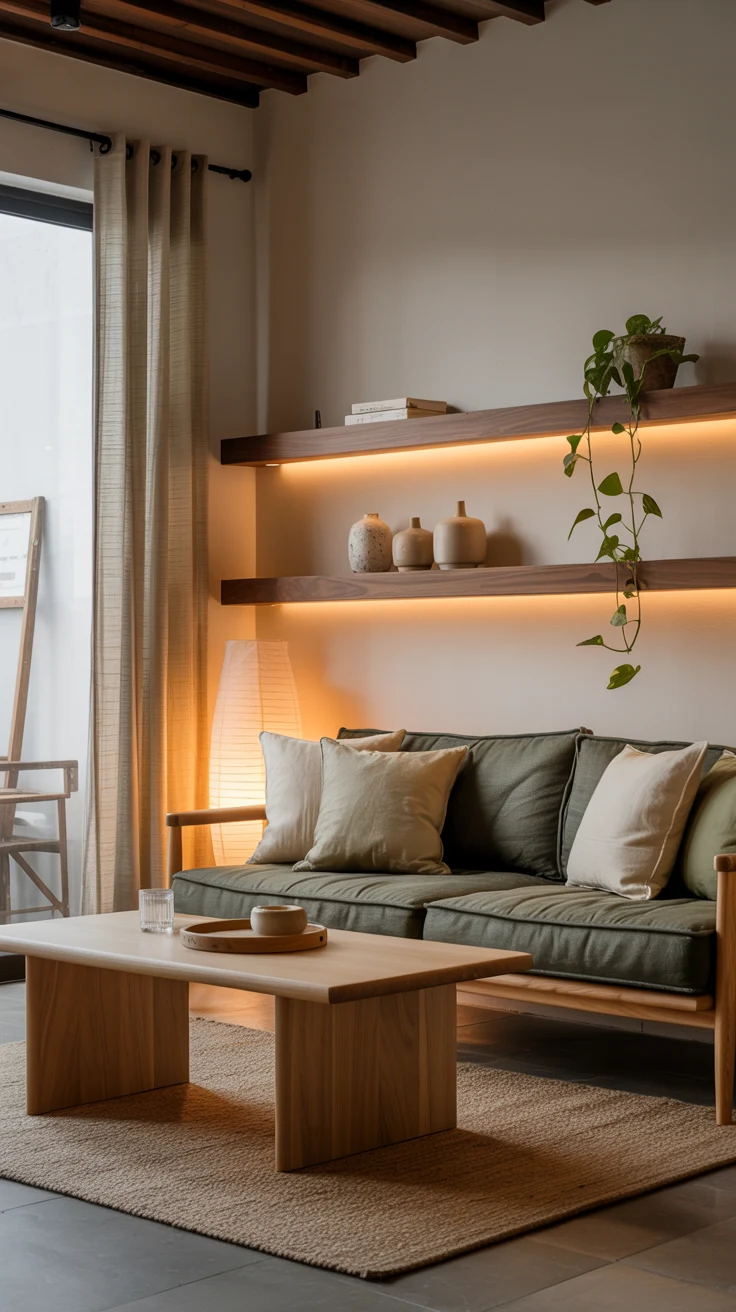
The foundation of every great Japandi living room design is color — specifically, the deliberate, disciplined use of a neutral, nature-inspired palette that communicates calm before a single piece of furniture is arranged. Japandi color palettes draw from the natural world rather than from fashion or trend cycles.
Think warm whites, soft stone, warm greige, natural sand, pale taupe, muted sage, and the softest possible charcoal or warm black. These tones share a common quality: they are grounded in organic, mineral reality rather than manufactured brightness or saturation. Apply your chosen palette consistently across walls, floor, ceiling, and large surfaces — and resist every temptation to introduce anything too bold or chromatic. Restraint is the design skill that defines Japandi living room decor ideas.
2. Choose Low-Profile Furniture
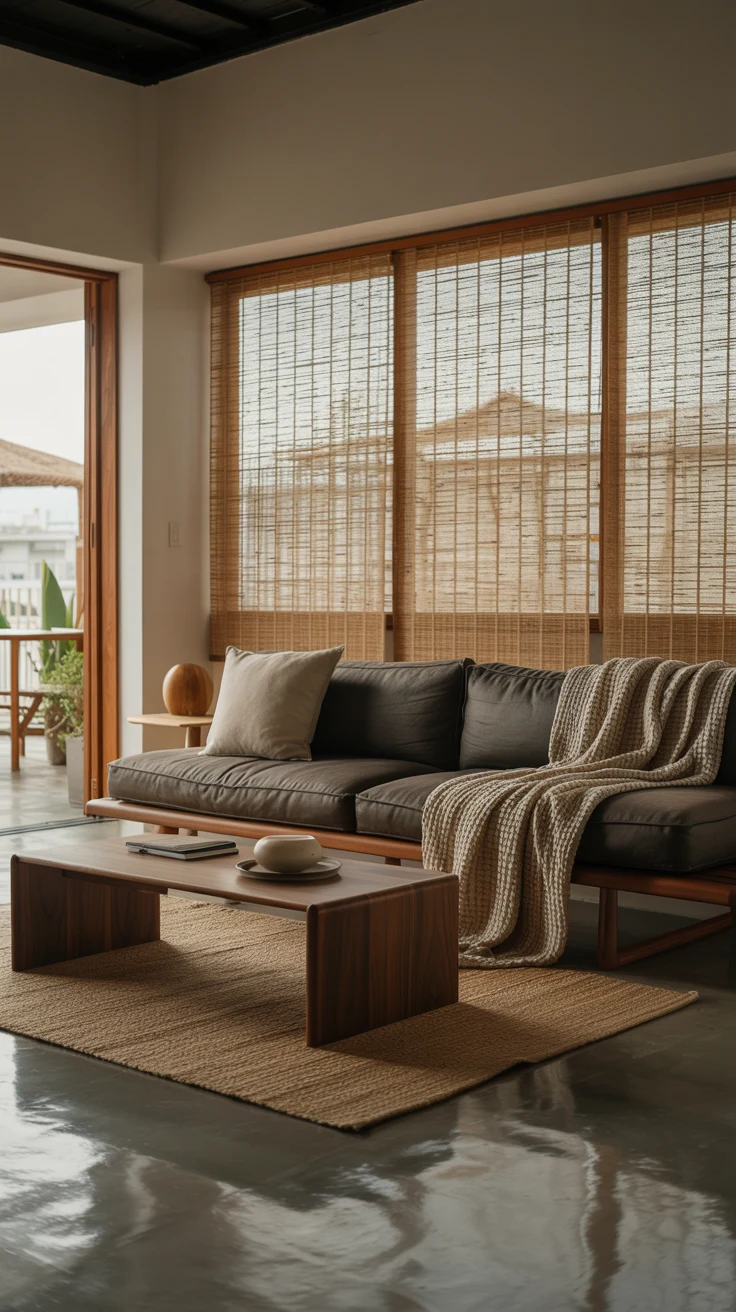
Low-profile furniture is one of the most distinctive and immediately recognizable characteristics of a Japandi living room. Sofas, coffee tables, chairs, and shelving units that sit close to the floor create a horizontal, grounded visual quality that is deeply characteristic of Japanese interior design — and that feels immediately calming when you enter a room.
A low-slung sofa in a warm linen or boucle fabric. A floor-level coffee table in solid oak or walnut. Floor cushions positioned around a low table as flexible, informal seating. These pieces create a living room that feels physically closer to the ground and psychologically closer to rest. Japandi inspired living room design uses low furniture not as an aesthetic quirk but as a genuine philosophy of how a space should feel.
3. Embrace Natural Materials
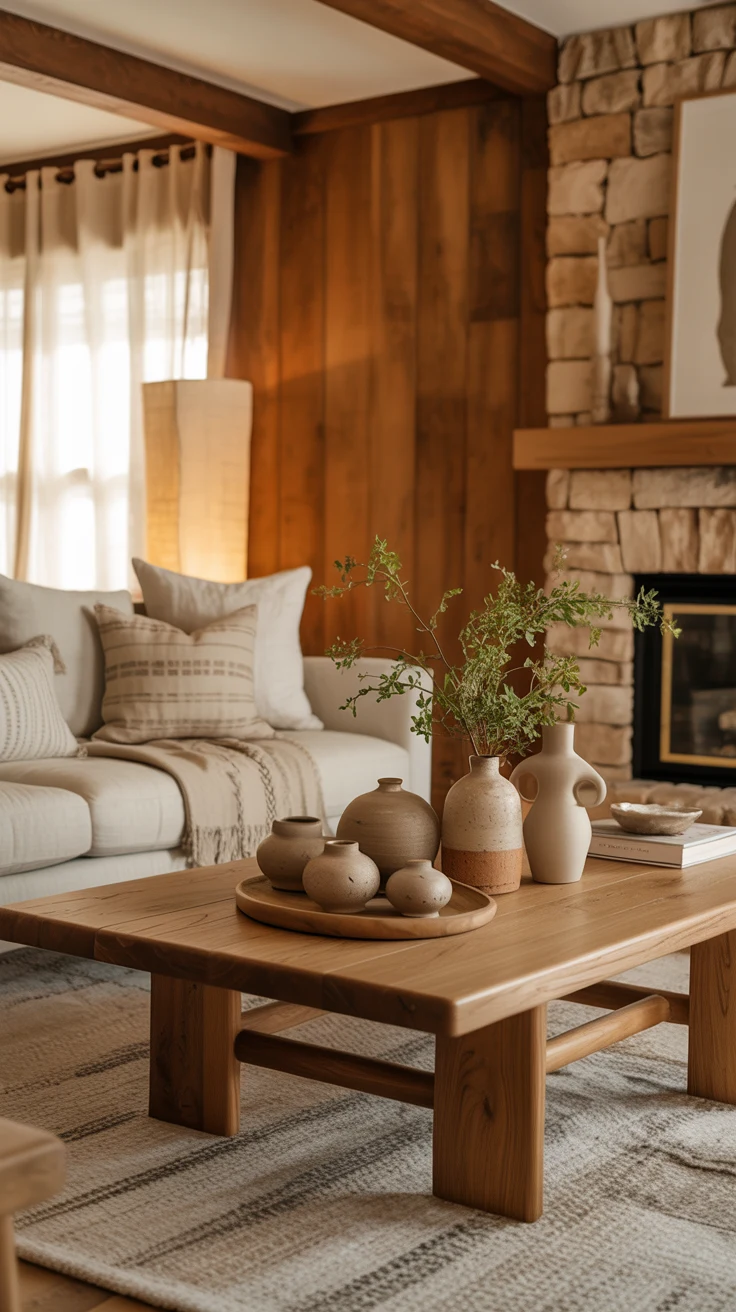
Natural materials are the soul of Japandi living room design — and their contribution to the room’s atmosphere goes beyond aesthetics. Wood, stone, linen, cotton, wool, rattan, bamboo, ceramic, and washi all bring an organic warmth and tactile richness that manufactured materials simply cannot replicate. They connect the living room to the natural world in a way that feels instinctively right.
Oak and walnut are the wood tones most characteristic of Japandi interiors living room design — warm, honest, and beautifully grained without being showy. Use them in flooring, furniture, shelving, and small decorative objects. Layer natural linen and cotton in bedding and upholstery. Choose ceramic accessories over glass or metallic ones where possible. Each natural material you introduce deepens the room’s connection to the organic world that Japandi design celebrates.
4. Use Negative Space Deliberately
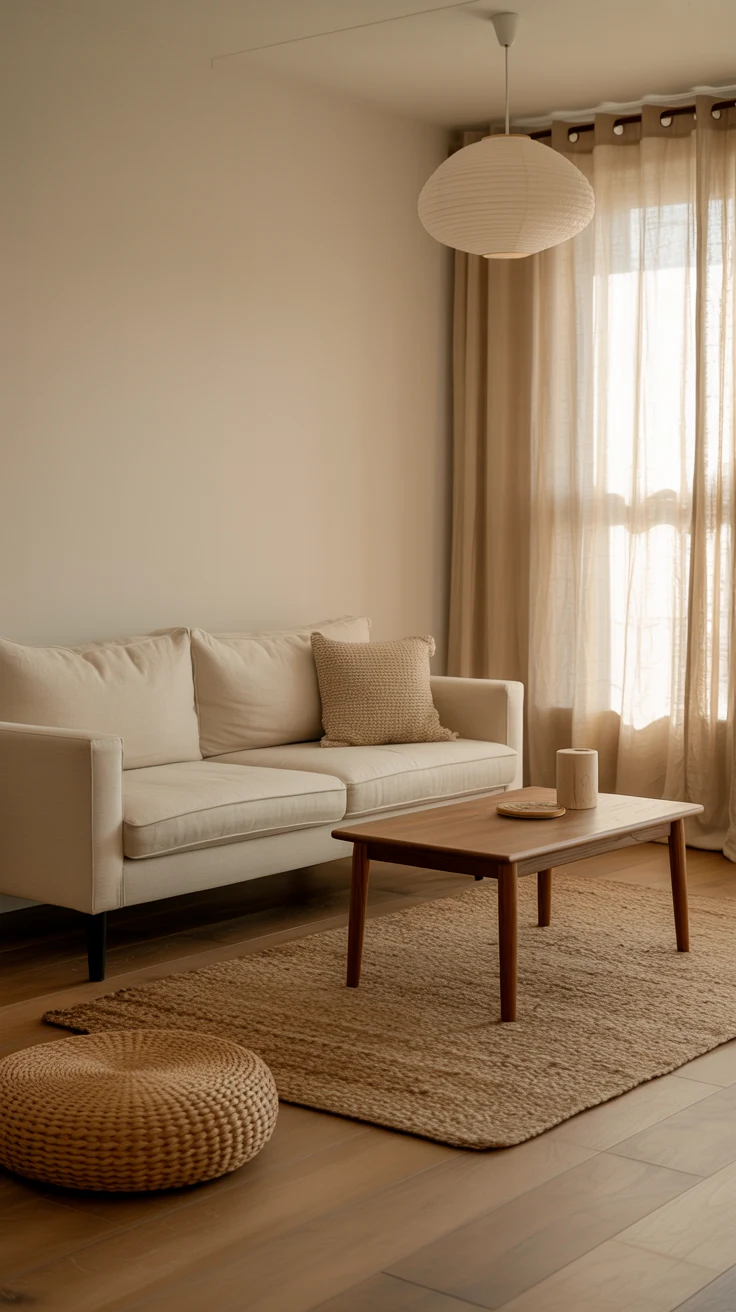
Here’s the Japandi design principle that most people struggle with most — and that makes the greatest difference when mastered: the deliberate embrace of negative space. In a Japandi living room, empty space is not wasted space. It is active space. It gives the eye somewhere to rest, the room somewhere to breathe, and every beautiful object within it somewhere to be genuinely seen.
Resist the impulse to fill every wall, every surface, and every corner. Leave the stretch of wall between two pieces of furniture completely clear. Allow the coffee table to contain just one or two intentional objects rather than a collection. Let the floor around the sofa remain open and uncluttered. These moments of deliberate emptiness are what give a Japandi style living room design its distinctive, irreplaceable quality of visual calm.
5. Layer Textures Thoughtfully
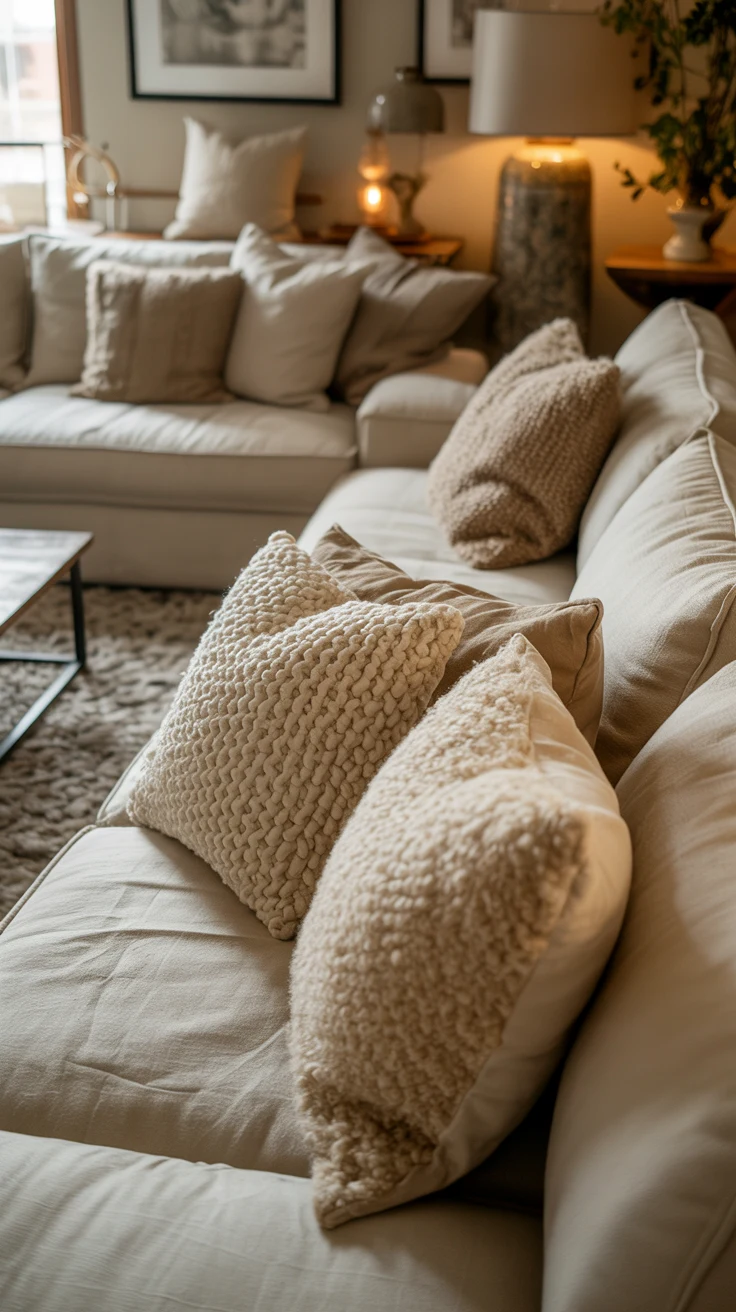
Just because a Japandi living room is minimal doesn’t mean it has to be cold or one-dimensional. Texture is the tool that prevents minimalism from feeling sterile — and in a Japandi inspired living room, it does the work that color and pattern do in busier design styles.
A chunky knit throw on the arm of a linen sofa. A wool rug with a subtle woven texture underfoot. A ceramic vase with a rough, handmade surface. A cushion in a natural boucle fabric. Each texture contributes a different tactile and visual quality that makes the room feel warm, layered, and genuinely inhabited without ever introducing visual noise or complexity. This is living room ideas Japandi design at its most warmly considered.
6. Bring In Plants and Nature
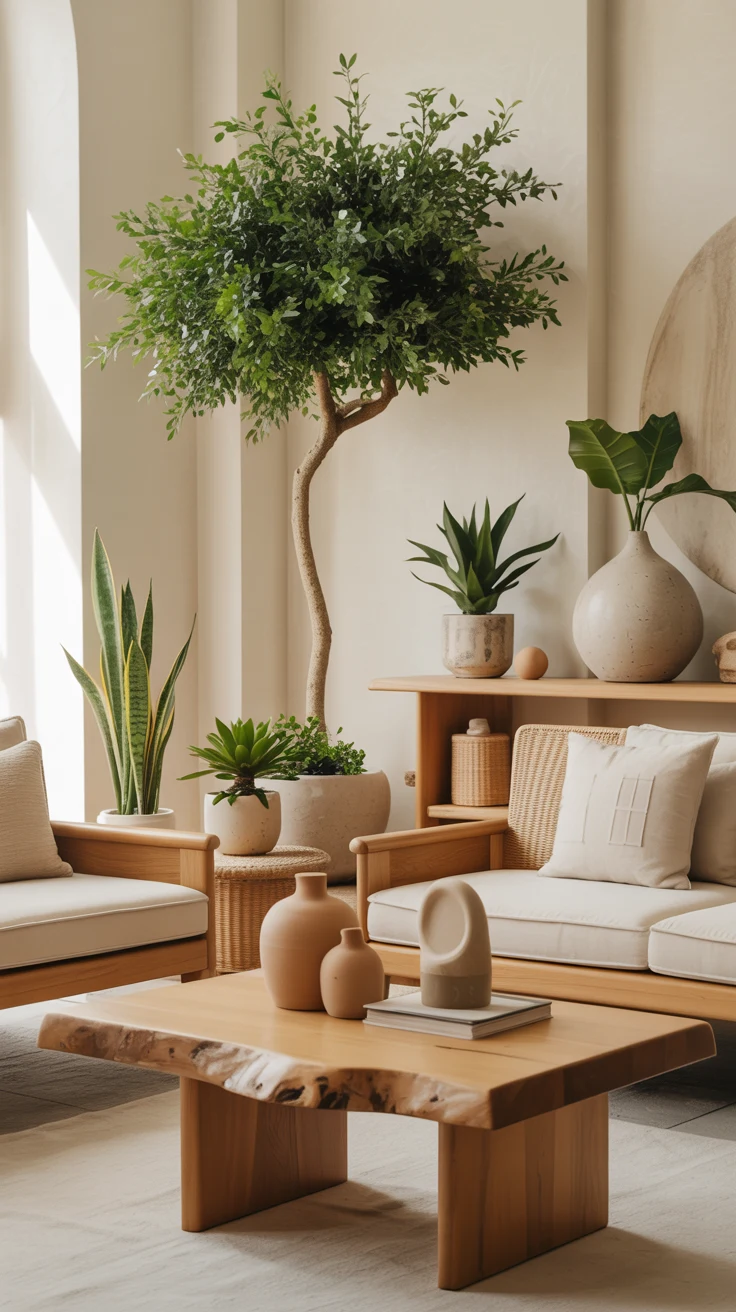
Nature is central to both Japanese and Scandinavian design traditions — and in a Japandi living room, plants and natural elements are not optional additions but fundamental design components. They bring life, organic beauty, and a connection to the living world that no manufactured element can replicate.
A single, beautifully potted bonsai or carefully shaped indoor tree as a statement piece. A graceful fiddle leaf fig in a simple ceramic pot in the corner. A small arrangement of dried botanicals in a handmade ceramic vase on the shelf. Fresh green branches cut from the garden placed in a tall vessel beside the sofa. Each natural element adds something irreplaceable — movement, color, organic imperfection — that makes the Japandi living room feel alive.
7. Choose a Simple, Quality Sofa
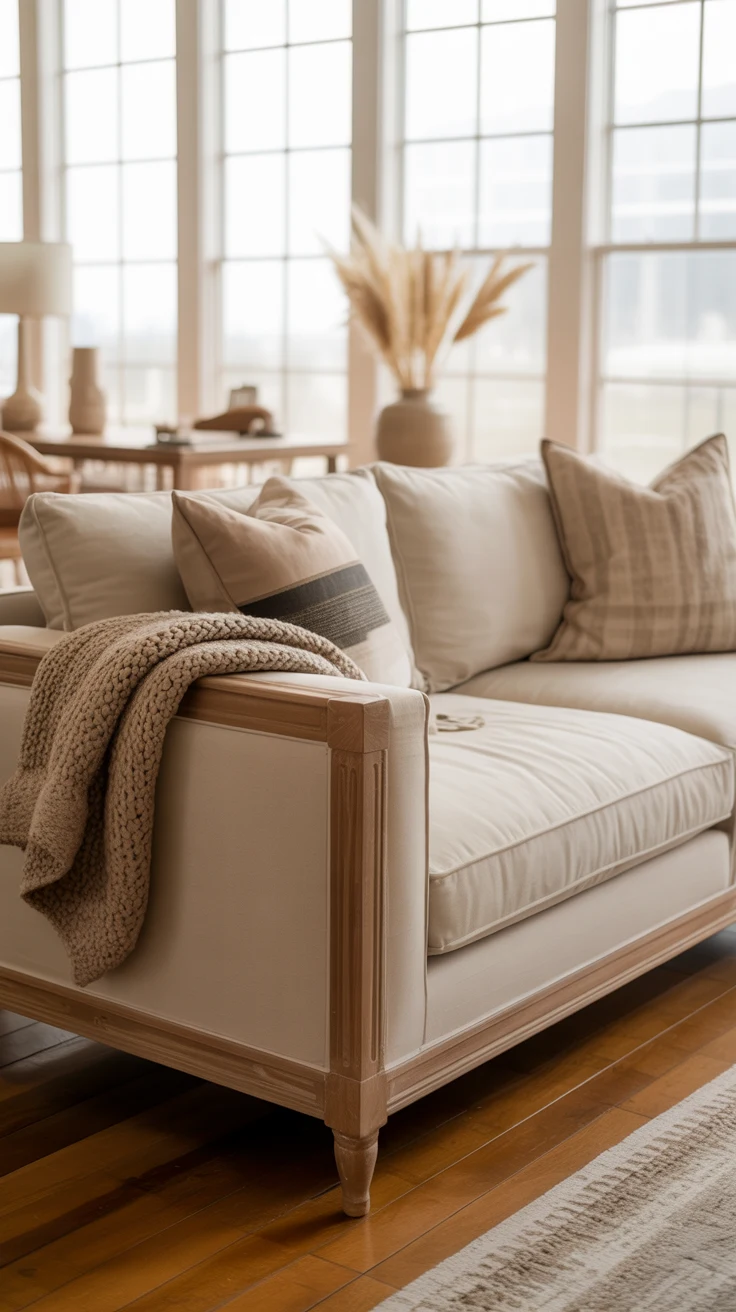
The sofa is the anchor of any living room — and in a Japandi living room design, it deserves the same philosophy of quality over quantity, simplicity over complexity, and honest material over superficial finish that defines the entire aesthetic. The ideal Japandi sofa has clean, simple lines, sits relatively low to the floor, and is upholstered in a natural fabric in a warm neutral tone.
FYI — a sofa with visible leg detail in natural wood is particularly characteristic of Japandi interiors, as it avoids the heavy, blocky quality of floor-sitting sectionals while maintaining a relatively low profile. Linen is the most authentically Japandi upholstery fabric — it wrinkles beautifully, breathes naturally, and develops a character over time that synthetic alternatives never achieve. Choose your sofa in oatmeal, warm grey, natural, or soft taupe.
8. Install Warm, Layered Lighting
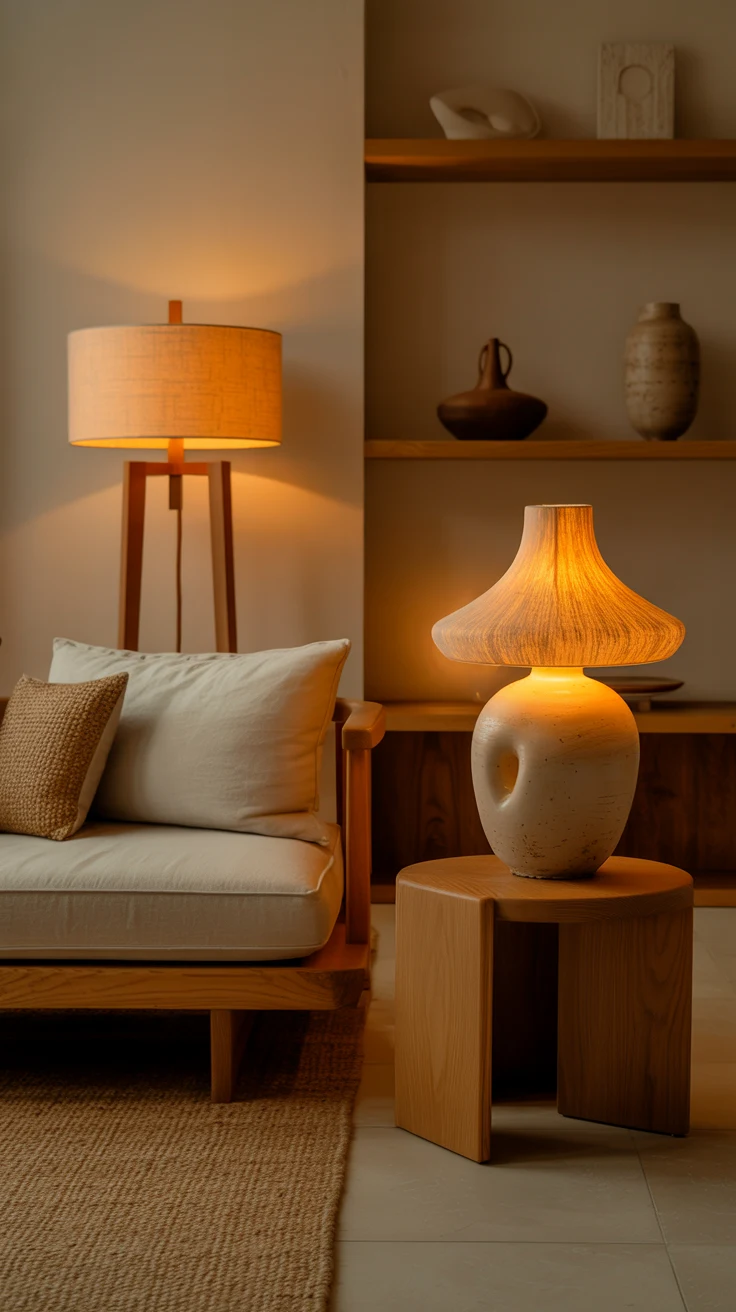
Lighting in a Japandi living room must create warmth, atmosphere, and a quality of light that feels genuinely natural and human — rather than bright, clinical, or performative. Both Japanese and Scandinavian design traditions prize warm, soft, indirect lighting that wraps a room in comfortable glow rather than flooding it with harsh illumination.
Layer your lighting across multiple sources: a sculptural floor lamp in natural materials beside the sofa, small table lamps on side tables in ceramic or wood bases, warm LED candles, and perhaps a single statement pendant in rattan or washi paper above a seating area. Keep everything on dimmers. The ability to adjust lighting from “bright enough for reading” to “warm enough for a quiet evening” is not a luxury in Japandi living room inspiration — it is a requirement.
9. Display Objects With Intention
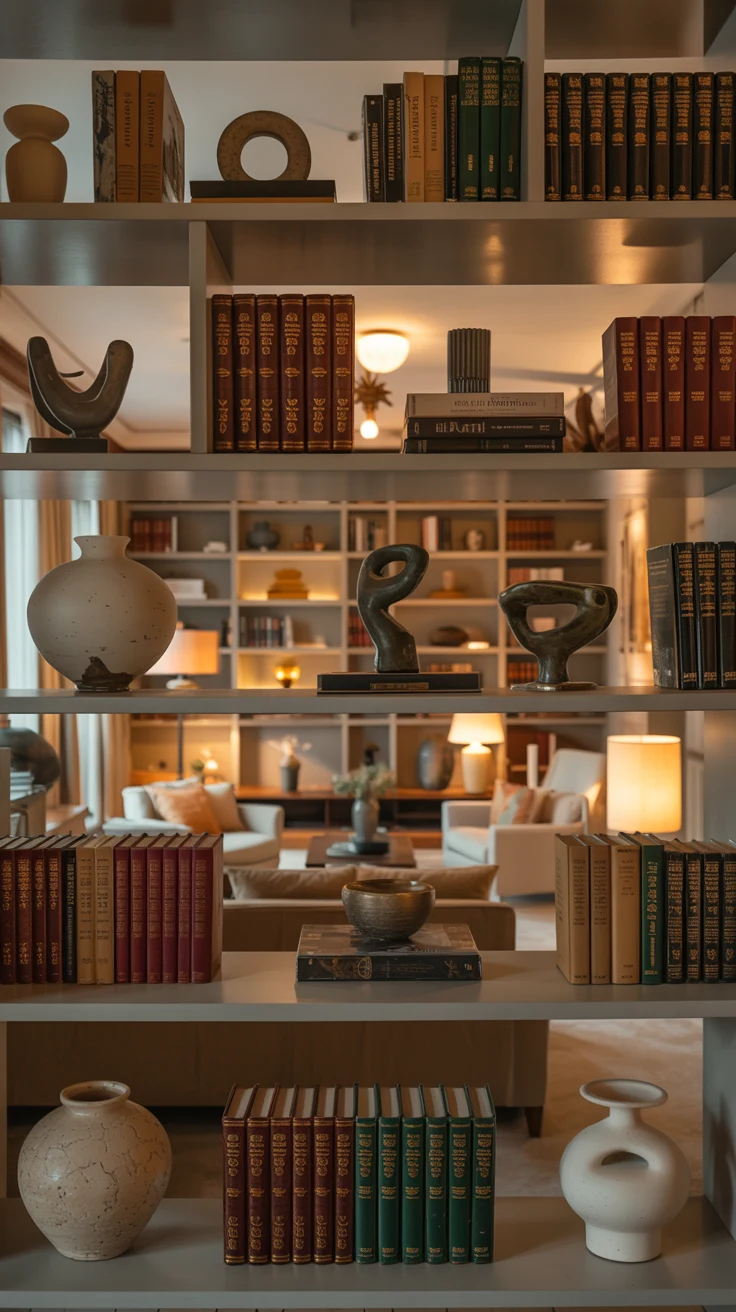
In a Japandi living room, every displayed object is a deliberate choice — and the way objects are displayed is as important as the objects themselves. The Japandi approach to object display is influenced by the Japanese concept of ma (negative space) and the Scandinavian value of functional beauty: every object should either serve a purpose or provide genuine aesthetic pleasure. Ideally both.
Display objects in small, carefully curated groupings with generous space between them. A single handmade ceramic bowl on a wooden shelf. A small stack of books with beautiful spines. One stone or wooden sculptural object beside a plant. Three items maximum per surface — and always with breathing room between them. This level of curation is what separates living room designs Japandi from rooms that simply contain neutral furniture.
10. Use Handmade and Artisanal Pieces
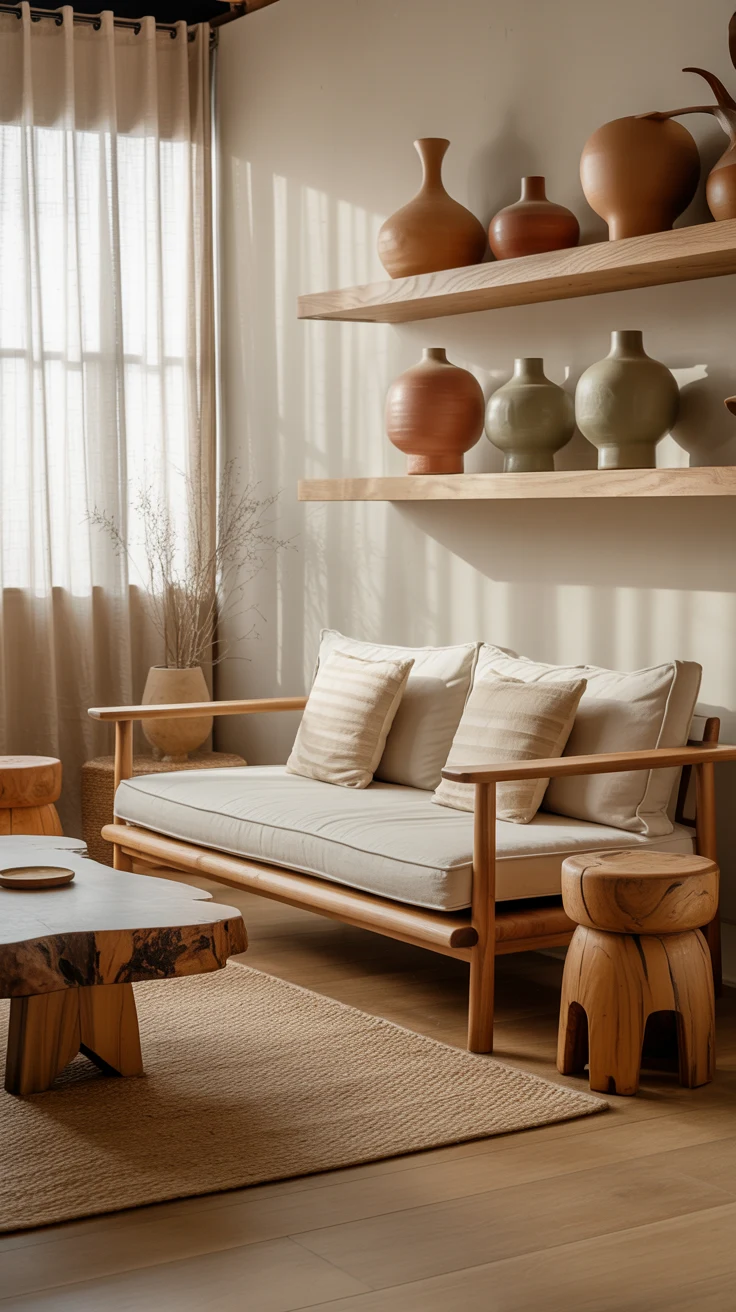
Japandi design has a deep respect for craft and handmade objects — a value shared by both Japanese artisan traditions and Scandinavian design culture. Handmade ceramics, hand-woven textiles, and artisanally produced furniture all bring a quality of human presence and imperfection to a living room that mass-produced items cannot replicate.
Hunt for handmade ceramic pieces at local markets and artisan studios. Invest in one or two genuinely well-crafted pieces of furniture that show the character of the material and the maker’s hand. Choose hand-woven throws and cushions over factory-produced alternatives. These pieces don’t need to be expensive — they need to be honest. And in a Japandi living room, honesty of material and craft is one of the highest aesthetic values.
11. Keep the Floor Visible
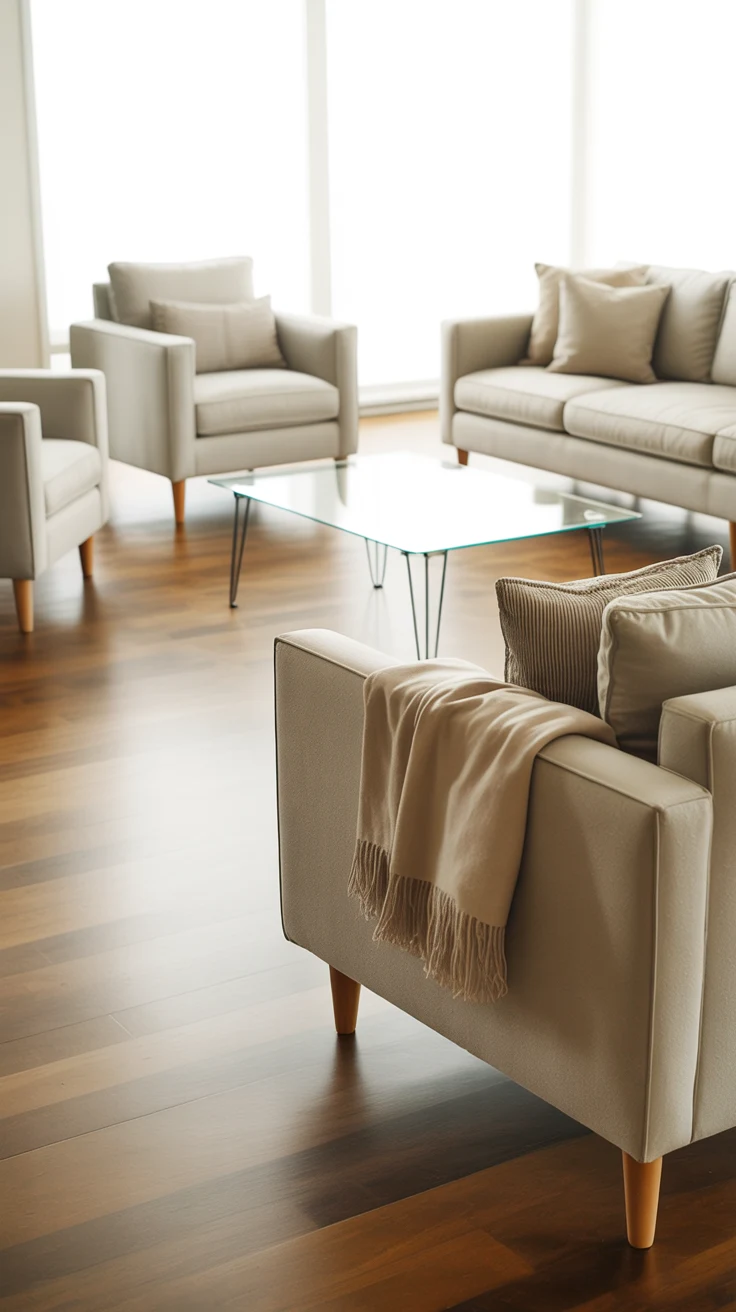
In Japanese interior design, the floor is an active living surface — not merely a background. In Japandi living room design, this translates to keeping a significant portion of the floor visible and unobstructed by furniture or rugs. The visible floor creates a sense of space, light, and calm that immediately feels more open and restful than a room where every surface inch is covered.
Choose furniture with legs rather than floor-sitting pieces where possible — the visible gap beneath each piece creates a visual lightness. Use rugs deliberately but not universally — one well-chosen rug beneath the main seating arrangement is sufficient. Resist the impulse to fill corners with furniture or accessories. The floor, seen clearly, contributes its own quiet beauty to the Japandi living room.
12. Add a Wabi-Sabi Element
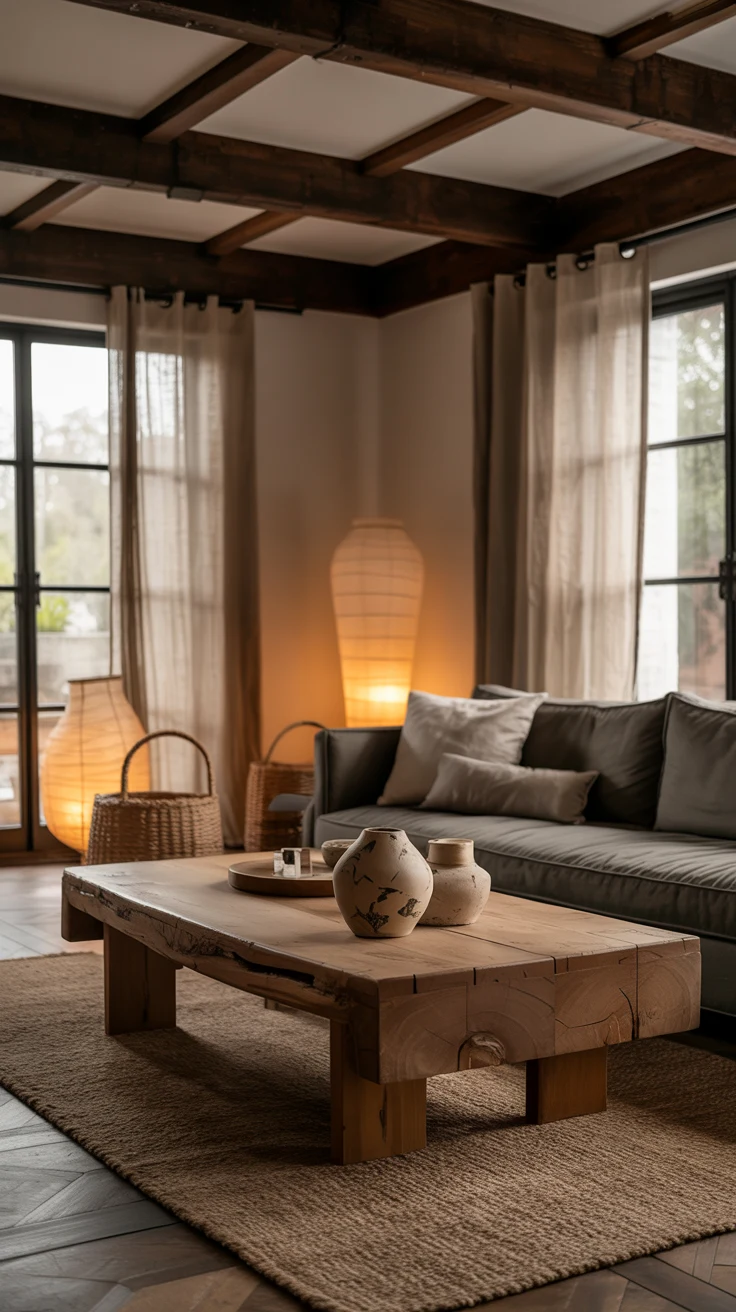
Wabi-sabi is the Japanese philosophy of finding beauty in imperfection and transience — and it is essential to the authenticity of any Japandi living room. A perfectly styled room with zero visible imperfection doesn’t feel Japandi; it feels cold and artificial. The wabi-sabi element is what gives the room its warmth and humanity.
This might be a deliberately imperfect handmade ceramic with visible thumb impressions. A piece of natural wood furniture with visible grain variation and knots. An aged linen cushion with softened wrinkles. A dried botanical arrangement at the end of its natural life. A deliberately worn vintage rug. Each of these imperfect elements tells the truth about time, use, and natural process — and that honesty is profoundly beautiful in the Japandi context.
13. Create a Dedicated Reading Area
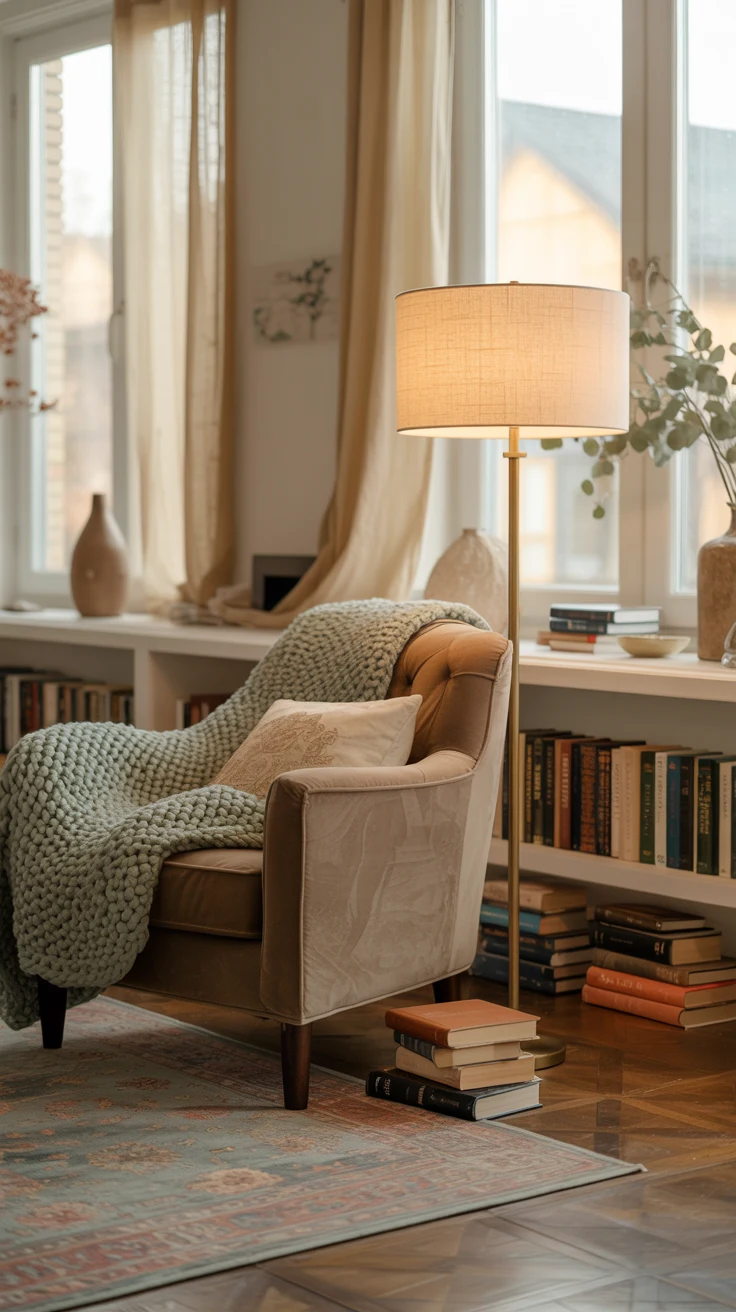
Both Japanese and Scandinavian cultures have a profound respect for quiet, solitary reading — and a Japandi living room should honor this with a dedicated reading area that is designed specifically for focused, undistracted contemplation. Not a corner of the sofa, but a genuinely considered space with its own lighting, its own seating, and its own atmosphere.
A single, beautifully proportioned armchair in a natural fabric. A small side table at exactly the right height for a cup of tea and a book. A warm-toned floor lamp that illuminates the reading surface without spilling into the rest of the room. A small shelf of carefully curated books within arm’s reach. This corner asks nothing of you but to sit, to read, and to rest — which is precisely what Japandi living room inspiration is ultimately about.
14. Choose Matte Finishes Throughout
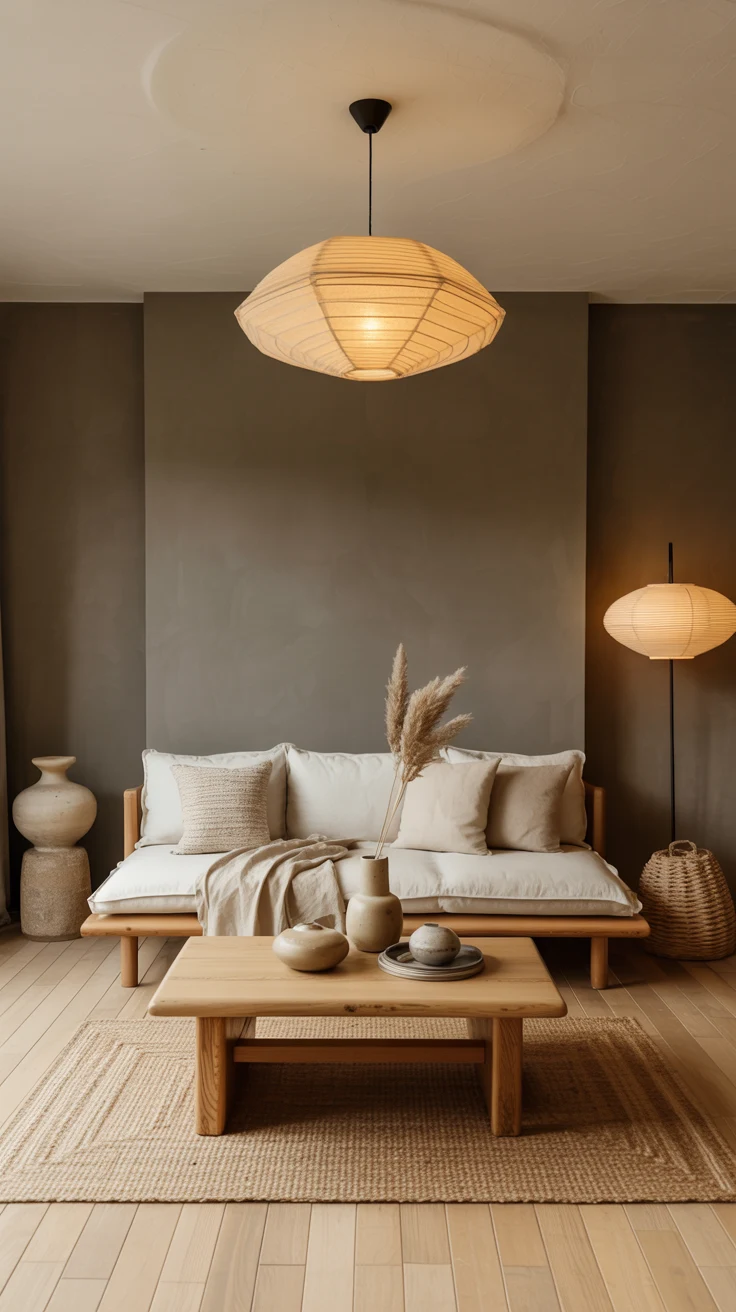
Matte finishes are deeply characteristic of Japandi design and they contribute significantly to the overall atmosphere of quiet, unpretentious beauty that defines the style. Matte surfaces absorb light gently rather than reflecting it aggressively — they create a softness and depth that high-gloss finishes rarely achieve.
IMO, switching from glossy to matte wherever possible is one of the single most impactful and least expensive upgrades in any Japandi living room makeover. Matte paint on walls. Matte ceramic accessories. Matte wood finishes in natural oil rather than high-gloss lacquer. Matte black hardware on furniture. Each matte surface choice brings the room closer to the quiet, considered quality of authentic Japandi style living room design.
15. Edit Ruthlessly and Continuously
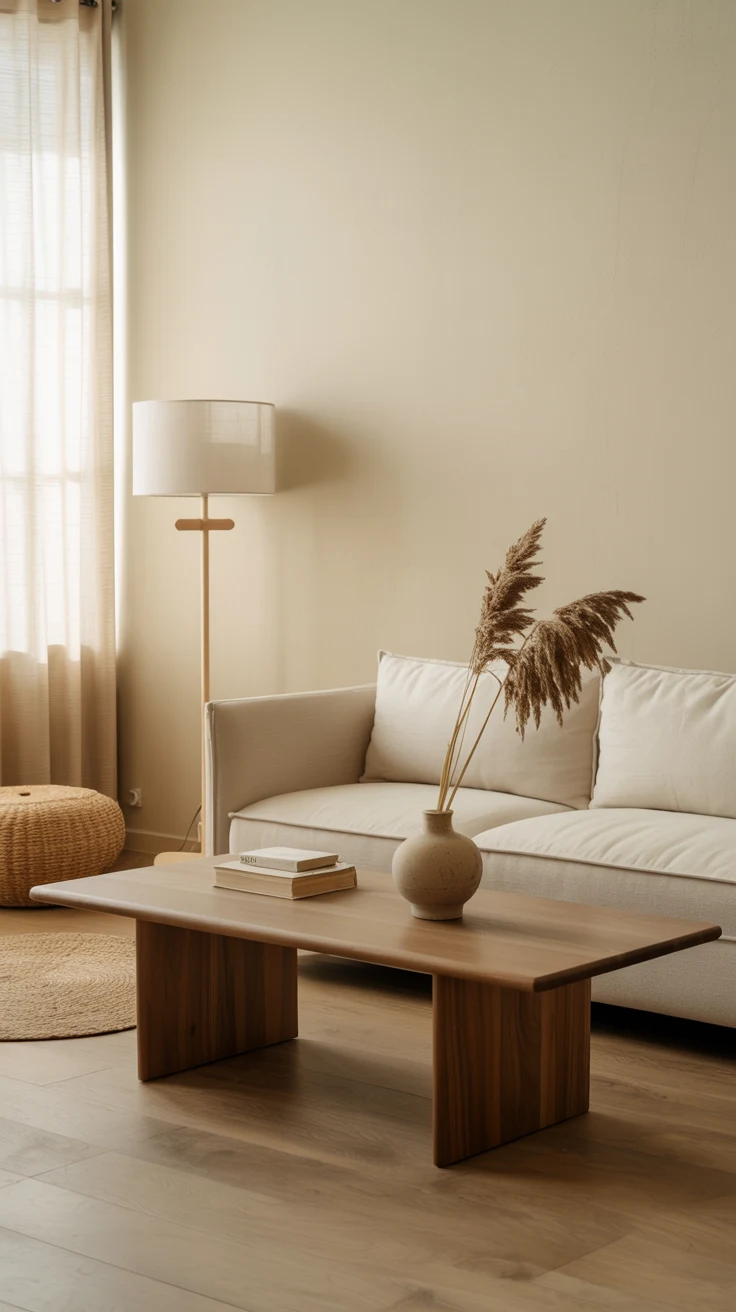
The final and most important principle of Japandi living room design is not about what you add — it’s about what you remove. And then remove again. The ongoing practice of editing — of looking at every visible element in the room and asking whether it genuinely earns its place — is what maintains the Japandi atmosphere over time and prevents the gradual accumulation of visual clutter that affects every home.
Japandi Editing Principles:
- Remove anything that doesn’t serve a function or provide genuine aesthetic pleasure
- Store everything out of sight that isn’t deliberately, beautifully displayed
- Replace collections of mismatched objects with single, quality pieces
- Simplify color wherever possible — reduce rather than add
- Question every new purchase: does this genuinely belong here?
This editing practice is not a one-time event. It is an ongoing commitment to the living room’s atmosphere — and it is the practice that keeps a Japandi living room feeling genuinely calm and considered rather than simply initially designed.
Wrapping Up
There you have it — 15 Japandi living room ideas that cover every dimension of this extraordinary, quietly beautiful design philosophy. Whether you’re building from scratch with low furniture and natural materials, or refining an existing space through editing, plant placement, and the embrace of wabi-sabi imperfection — every idea on this list moves your living room meaningfully closer to the Japandi ideal.
The core principle that ties all 15 ideas together is this: simplicity is not absence. It is the presence of exactly what is needed and nothing more. In a Japandi living room, every element earns its place — and the spaces between elements are as deliberately chosen as the elements themselves.
Pick the idea from this list that resonates most deeply, implement it this weekend, and notice the difference it makes. Then pick another. The Japandi living room is built one considered decision at a time — and each decision brings the room closer to the serenely beautiful space you deserve.
After all — once you’ve experienced the calm of a Japandi room, going back to clutter feels absolutely impossible. And honestly? That’s perfectly fine.