10 Studio Apartment Decor Ideas That Make One Room Feel Like a Whole Home
Here’s the thing about studio apartments that nobody tells you when you’re signing the lease: they are genuinely one of the most creatively rewarding living situations in interior design. Yes, really. Because when you have one room that needs to function as a bedroom, a living room, a dining room, a workspace, and sometimes a kitchen extension simultaneously — every single design decision matters in a way it simply doesn’t in a larger home. There’s nowhere to hide a bad choice. And conversely, there’s nowhere to underestimate a good one.
I lived in a 340-square-foot studio for two years in my mid-twenties and spent the better part of a year getting it genuinely right. The process taught me more about thoughtful, intentional design than any larger space I’ve lived in since. These 10 studio apartment decor ideas are everything I learned distilled into the approaches that consistently produce the most impressive results — regardless of how many square feet you’re working with.
The Studio Apartment Design Philosophy
Before any specific idea, here’s the mindset that makes everything else work: a studio apartment isn’t a small apartment. It’s a different type of living space that requires a fundamentally different design approach. The strategies that work in a one-bedroom flat don’t automatically translate. Furniture that’s appropriate for a separate room can overwhelm a studio completely. And the instinct to divide the space into rigid zones can create something that feels more cramped than open.
The best studio apartment designs work with the singleness of the space rather than against it. They create zones through suggestion rather than physical division. They choose furniture that earns its presence through multiple functions. And they maintain enough visual clarity throughout that the eye can travel across the room without stopping at clutter or confusion.
1. Zone Without Walls
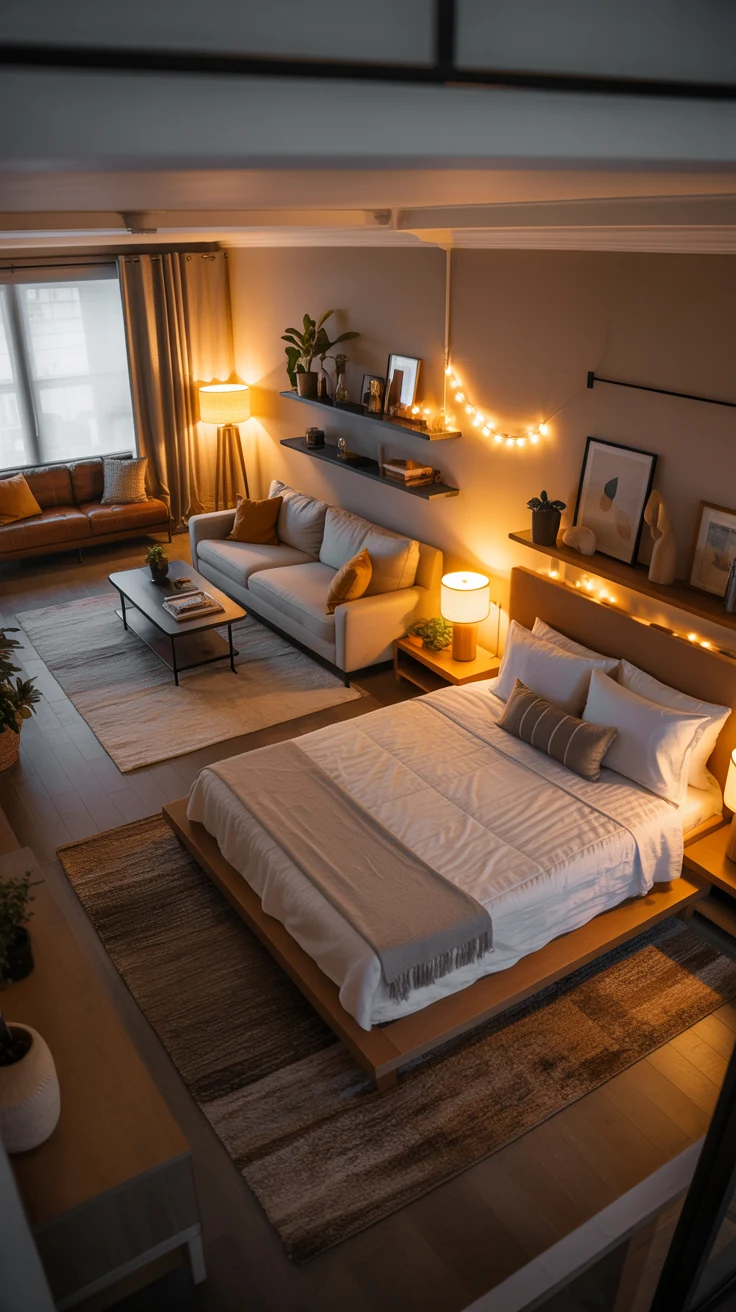
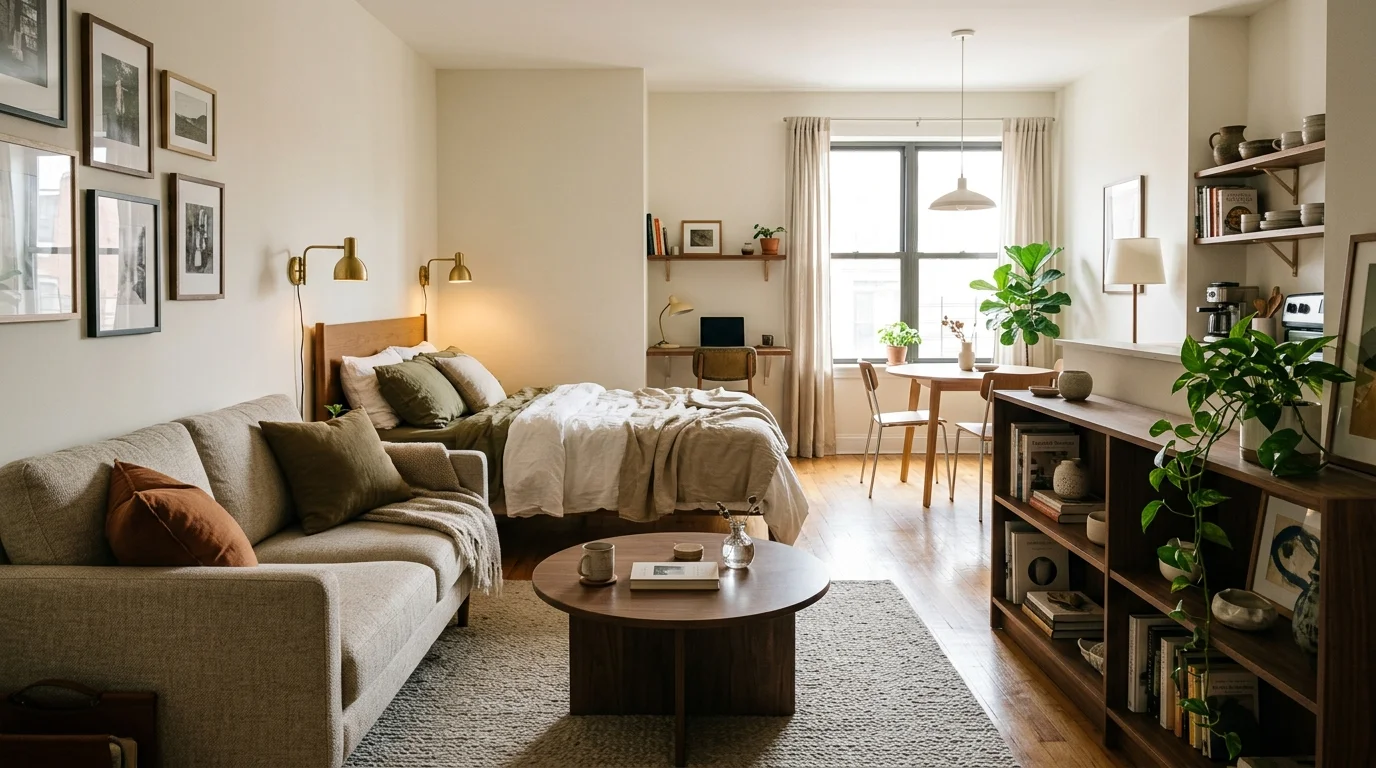
The foundational challenge in every studio apartment layout is creating the psychological distinction between different areas — sleeping, living, working, dining — without the physical walls that would normally do that job. And the good news is that you have multiple tools available for creating that distinction without enclosing any space.
A rug is one of the most powerful zone-defining tools in a studio. Place a generously sized rug under the sofa and coffee table and the living zone is instantly defined — the rug creates a floor plane that the eye reads as a separate area even though it’s entirely open to everything around it. Position the bed on the opposite end or at a perpendicular angle, and the two zones feel genuinely distinct despite sharing the same room.
Furniture arrangement does the rest. A sofa with its back to the sleeping area creates a soft visual barrier between zones without taking any additional space. A low bookshelf positioned perpendicular to the wall creates division without blocking light or sightlines. And a consistent lighting approach — different light sources for different zones — reinforces the functional separation at the atmospheric level where it matters most for daily living.
Zone definition tools that work:
- Area rugs in each functional zone — the single most effective zoning tool
- Furniture backs facing inward to create zone boundaries
- Low bookshelves as partial room dividers
- Different lighting types per zone — floor lamp for living, pendant for dining, bedside lamp for sleeping
- Ceiling treatments — a canopy above the bed creates a distinct sleeping zone within an open room
2. The Furniture Size Conversation
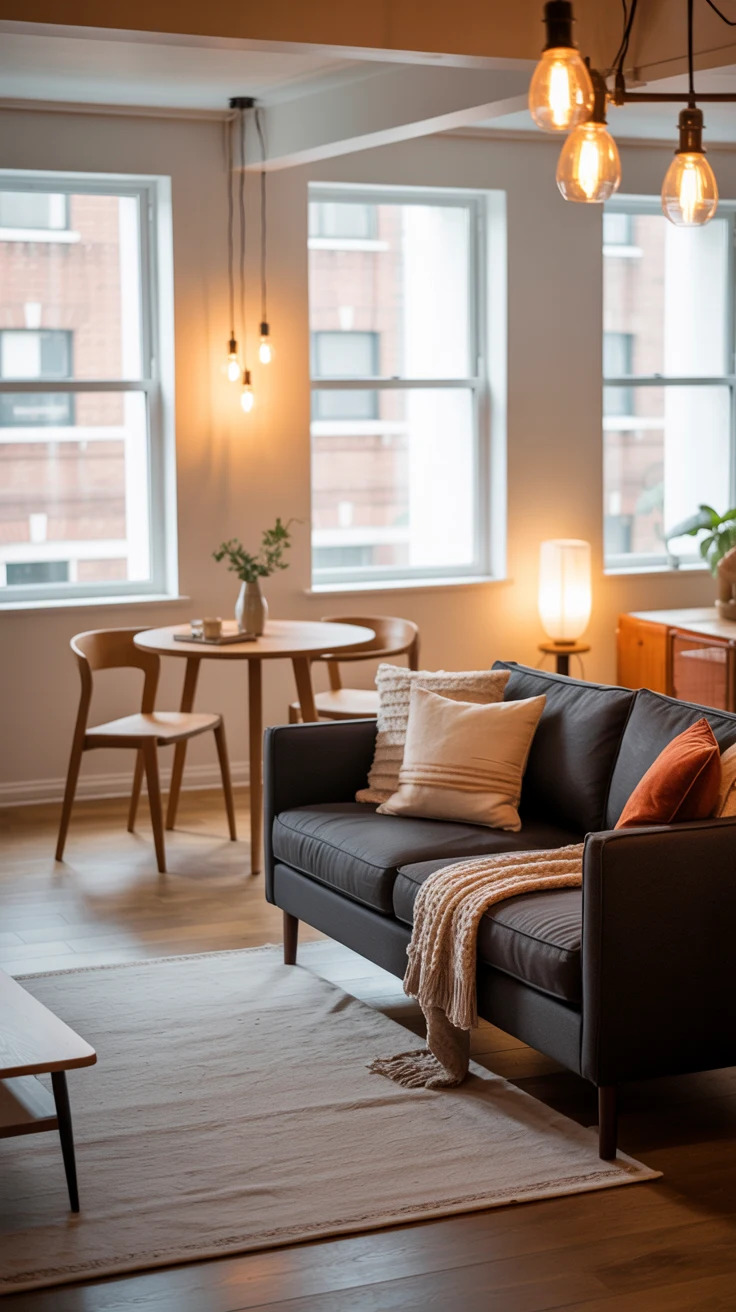
Here’s the studio apartment decor truth that saves people from the most common and most expensive mistake: oversized furniture in a studio doesn’t make the space feel bigger — it makes it feel smaller and more chaotic. Every piece of furniture in a studio apartment needs to be proportionally appropriate for the space it occupies, and in most studio apartments, that means going deliberately smaller than instinct suggests.
A two-seater sofa rather than a three-seater. A compact dining table with two chairs rather than a four-person table that dominates the floor plan. A bed that’s the correct size for actual use rather than the largest size that technically fits. These scale decisions are not compromises — they’re intelligent choices that keep the floor plan navigable, the room visually calm, and the overall space feeling significantly more generous than it actually is.
IMO, the single worst studio apartment furniture decision is a large sectional sofa. It eats the floor plan, prevents zone flexibility, and immediately makes the space feel like a showroom rather than a home. A well-chosen two-seater with a good armchair achieves everything a sectional does — seating, comfort, social space — in a fraction of the footprint.
3. Tiny Studio Apartment Ideas — The Multifunctional Imperative
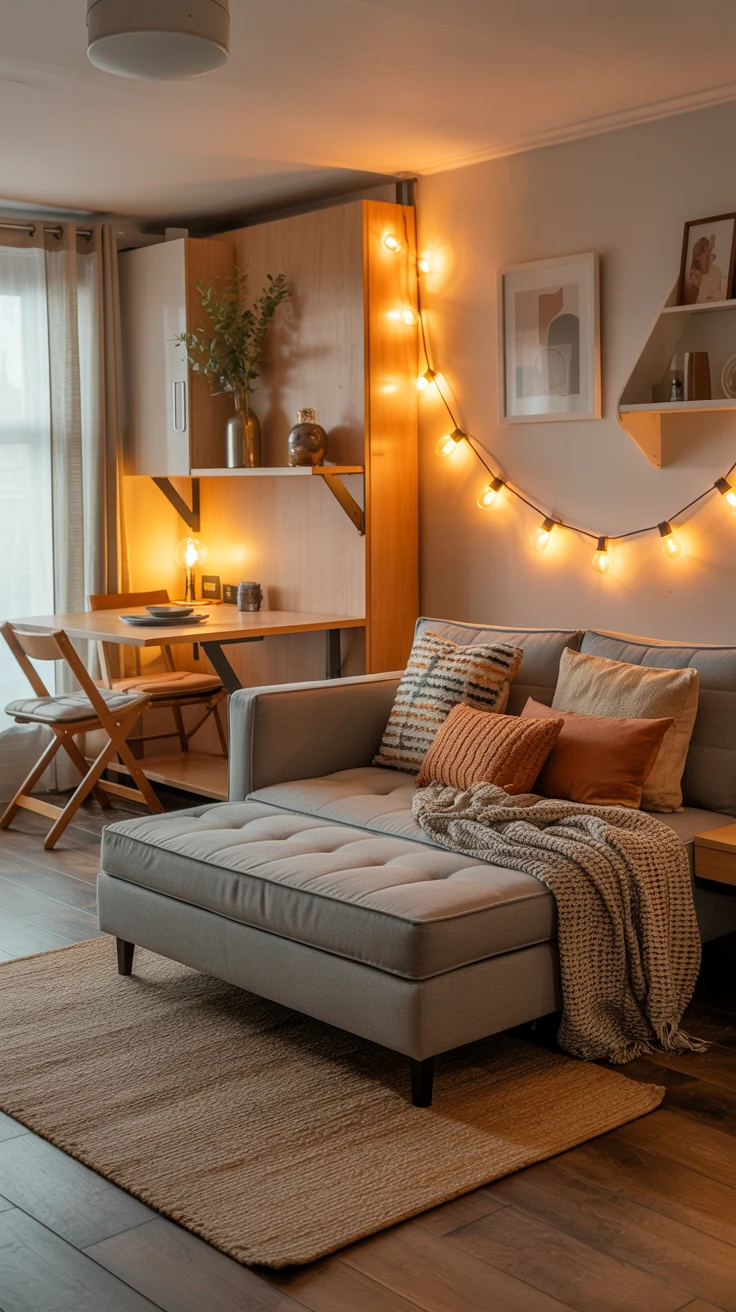
In a tiny studio apartment, every piece of furniture that serves only one function is a piece that isn’t earning its keep. The most successful small studio apartment decorating approaches build the entire space around multifunctional pieces that deliver two, three, or even four functions from one footprint.
A daybed serves as a sofa by day and a bed by night — without the visual weight of a traditional bed dominating the living space. An ottoman with storage inside serves as a coffee table, additional seating, and concealed storage simultaneously. A fold-down wall desk provides a complete workspace when needed and disappears entirely when not in use. A dining table on casters moves to serve meals, then rolls against the wall to free the floor for other activities. Each of these pieces multiplies the studio’s functional capacity without multiplying its furniture count.
Multifunctional furniture by priority:
- Daybed or sofa bed — sleeping plus living function in one piece
- Storage ottoman — seating, surface, and concealed storage
- Fold-down wall desk — full workspace with zero permanent footprint
- Extendable dining table — compact daily, full-size for hosting
- Bed with storage drawers — sleeping plus the equivalent of a chest of drawers
4. Cozy Studio Apartment Aesthetic
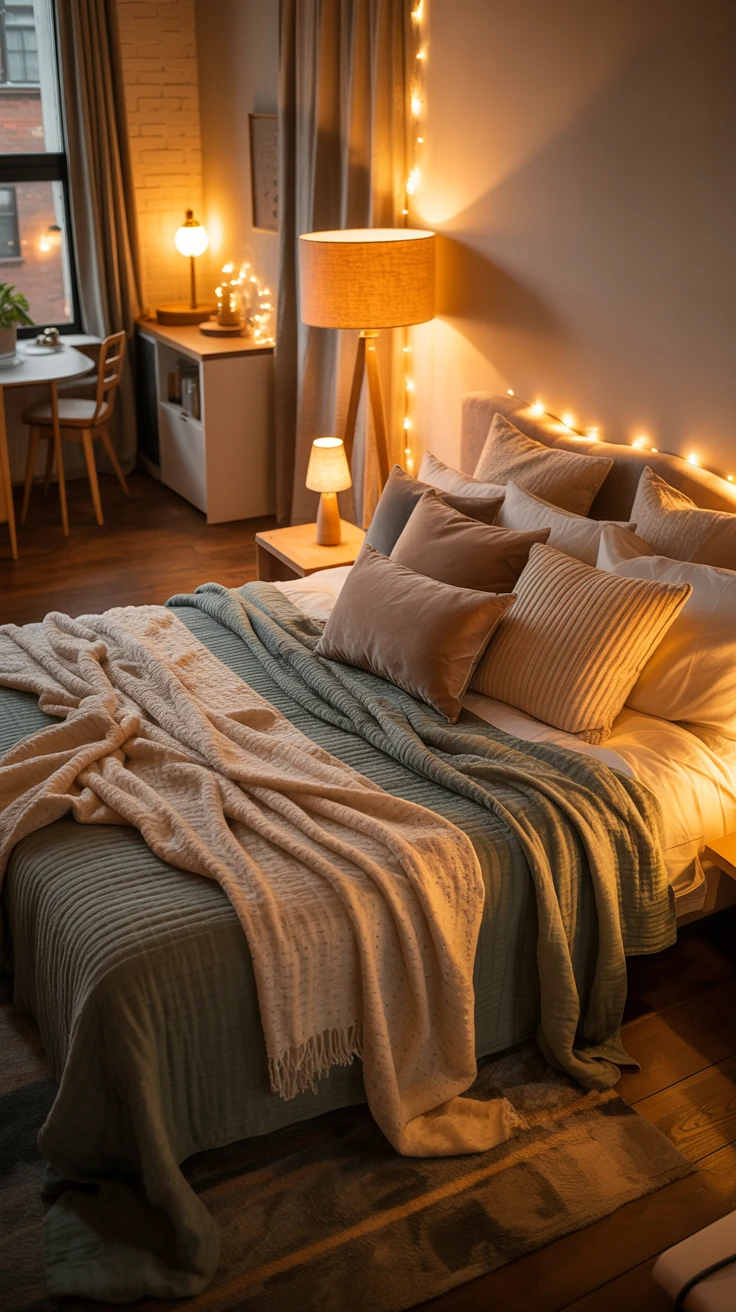
Here’s the studio apartment aesthetic cozy direction that makes the difference between a compact space that feels tight and one that feels genuinely inviting: textiles and warm lighting working together. These two elements — layered fabrics and amber-toned light sources — create warmth and intimacy that make a single room feel like a place you genuinely want to spend time in rather than just a space you happen to live in.
Layered textiles on the bed or daybed — a duvet, a throw, multiple cushions in varying textures — make the sleeping zone look inviting and deliberately styled. A soft rug in the living zone adds warmth underfoot and visual softness that hard floors alone can’t provide. And warm white bulbs throughout every light source — at 2700K rather than the cool daylight tones that many studios default to — create an evening atmosphere that makes even a compact space feel genuinely cozy and personal.
FYI: The fastest cozy studio apartment upgrade available is replacing every light bulb in the space with warm white 2700K alternatives. It takes fifteen minutes, costs almost nothing, and the difference in evening atmosphere is immediately and dramatically apparent.
5. Small Studio Apartment Inspiration — Vertical Storage
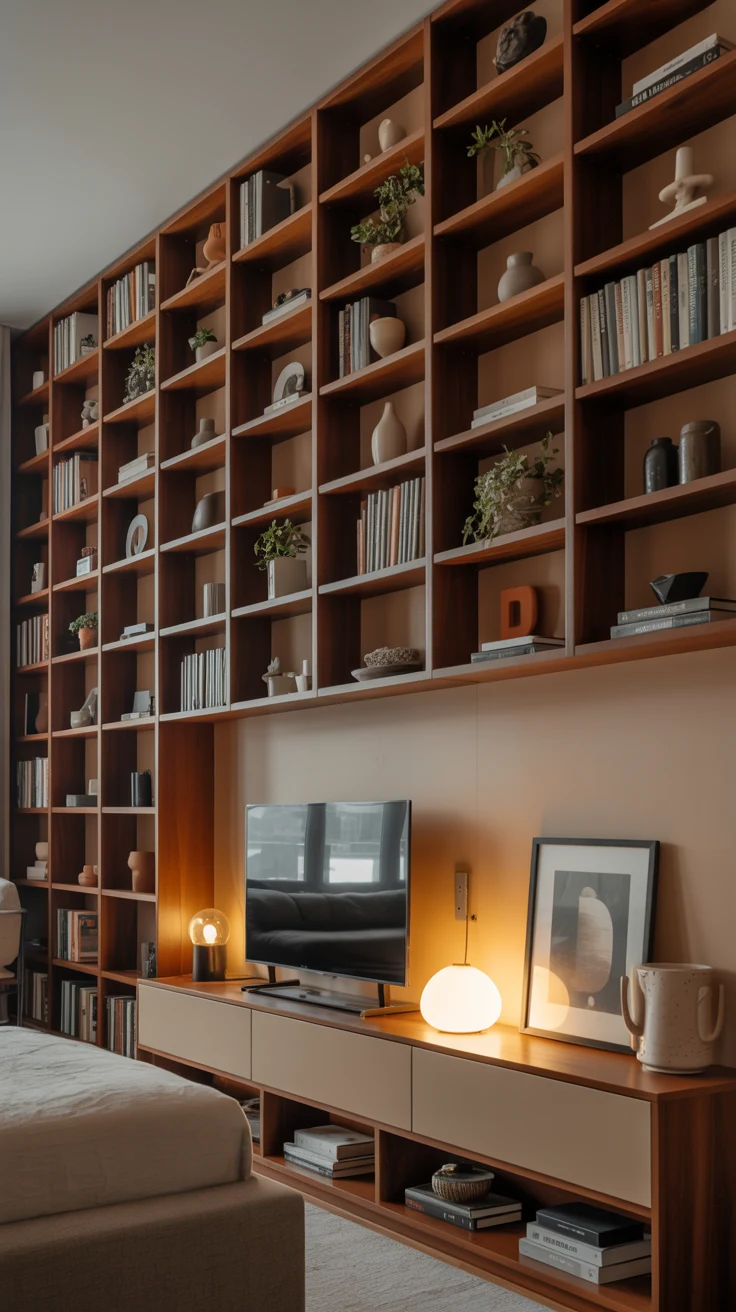
When floor space is the studio’s most precious resource, the walls become the primary storage opportunity — and using them intelligently is one of the most impactful decisions in any small studio apartment inspiration project. Floor-to-ceiling shelving that would look excessive in a larger apartment becomes entirely appropriate and visually impressive in a studio context.
Tall, slender shelving units that reach the ceiling use the vertical dimension of the space without consuming horizontal floor area. Wall-mounted floating shelves above the desk, beside the bed, and in the kitchen zone provide accessible storage and display surfaces without any floor footprint at all. And hooks — mounted at different heights on available wall sections — handle bags, coats, accessories, and even plants with zero impact on the floor plan.
6. Studio Apartment Layout — The Bed Placement Decision
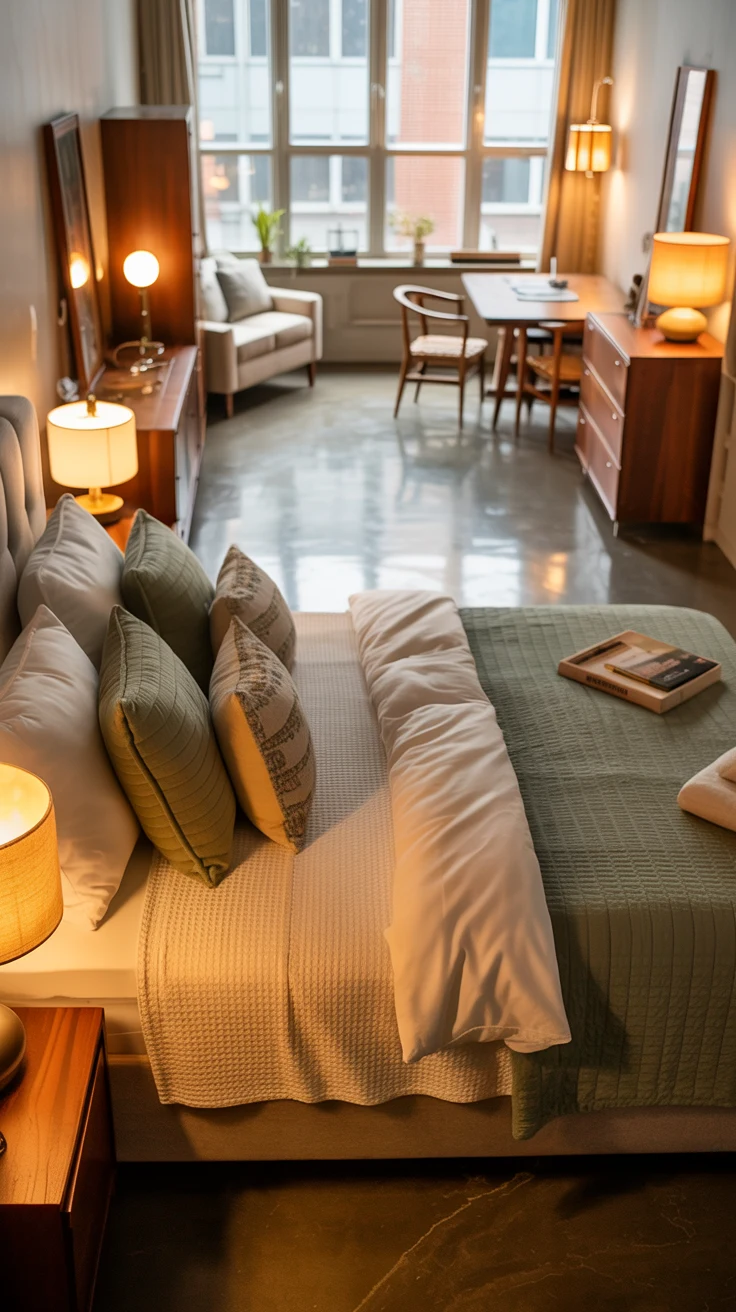
The most consequential single decision in any studio apartment layout is where the bed goes — because its position determines the layout of everything else in the space. And there are more options than most people initially consider.
Pushed against the wall with the headboard at the wall creates the most floor space in front of it. Positioned perpendicular to the main wall with only one side accessible creates a natural zone between the sleeping and living areas. Placed in a corner alcove or beneath a lofted structure removes it from the main visual field of the studio entirely. Each configuration creates a dramatically different studio experience — and trying multiple arrangements through planning rather than physical movement first is always worth the investment of time.
Bed placement options by studio configuration:
- Against the wall — maximizes floor space, most common approach
- Perpendicular to the wall — creates natural zone separation between living and sleeping
- Corner placement — removes the bed from the primary sightline
- Under a lofted structure — creates height variation that makes the studio feel larger
- Daybed against the wall — the most space-efficient sleeping solution available
7. Small Studio Apartment Ideas — The Color Strategy
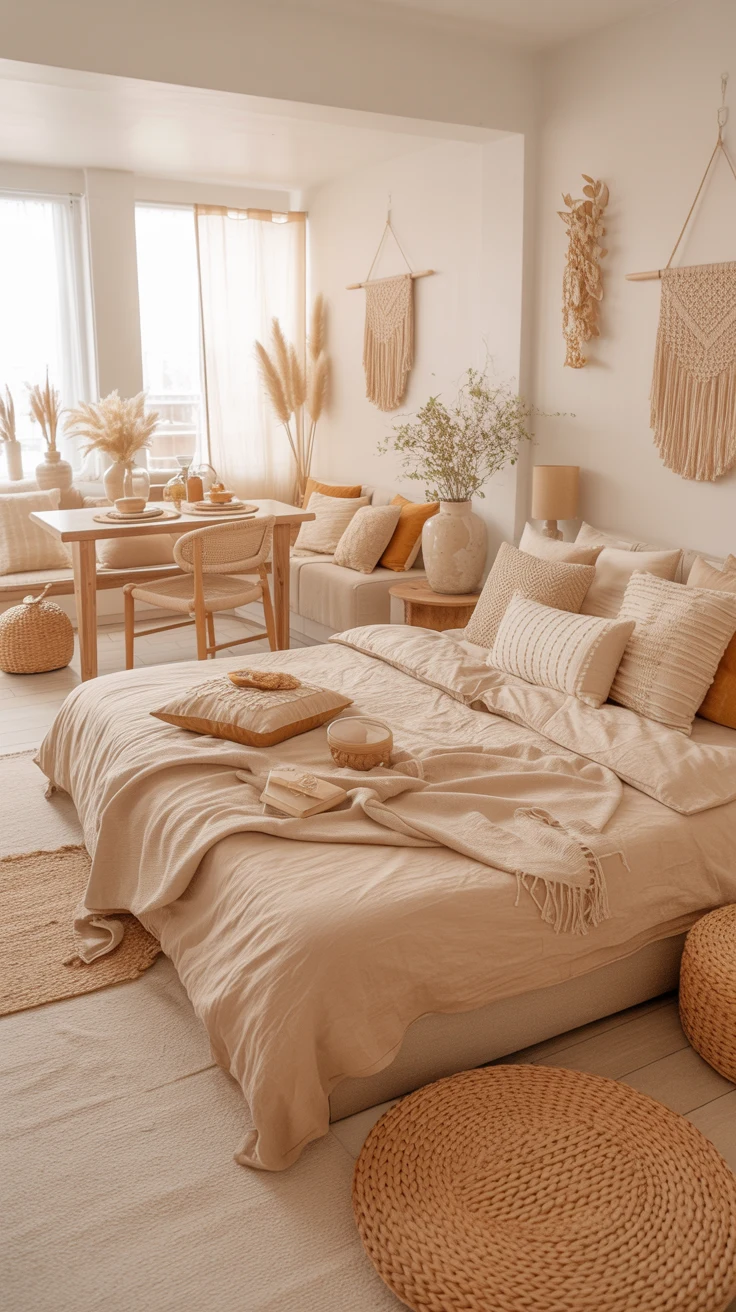
Color in a studio apartment operates differently than in a multi-room home — because every color choice affects every zone simultaneously. There are no separate rooms to contain different palettes. The entire space shares one unified visual field. And that shared visual field demands a more disciplined, more unified color approach than any other living situation.
The most successful studio apartment color strategies use one dominant neutral throughout — warm white, soft cream, pale warm gray — and introduce personality through accents in soft furnishings, artwork, and plants. This tonal consistency creates visual continuity that makes the studio feel larger and more cohesive than a multi-color approach would. And the personality comes through in the details — the specific cushion color, the art on the wall, the ceramic lamp base — rather than in competing wall colors that would fragment the already limited visual space.
8. Small Studio Apartment Decorating — The Illusion of Ceiling Height
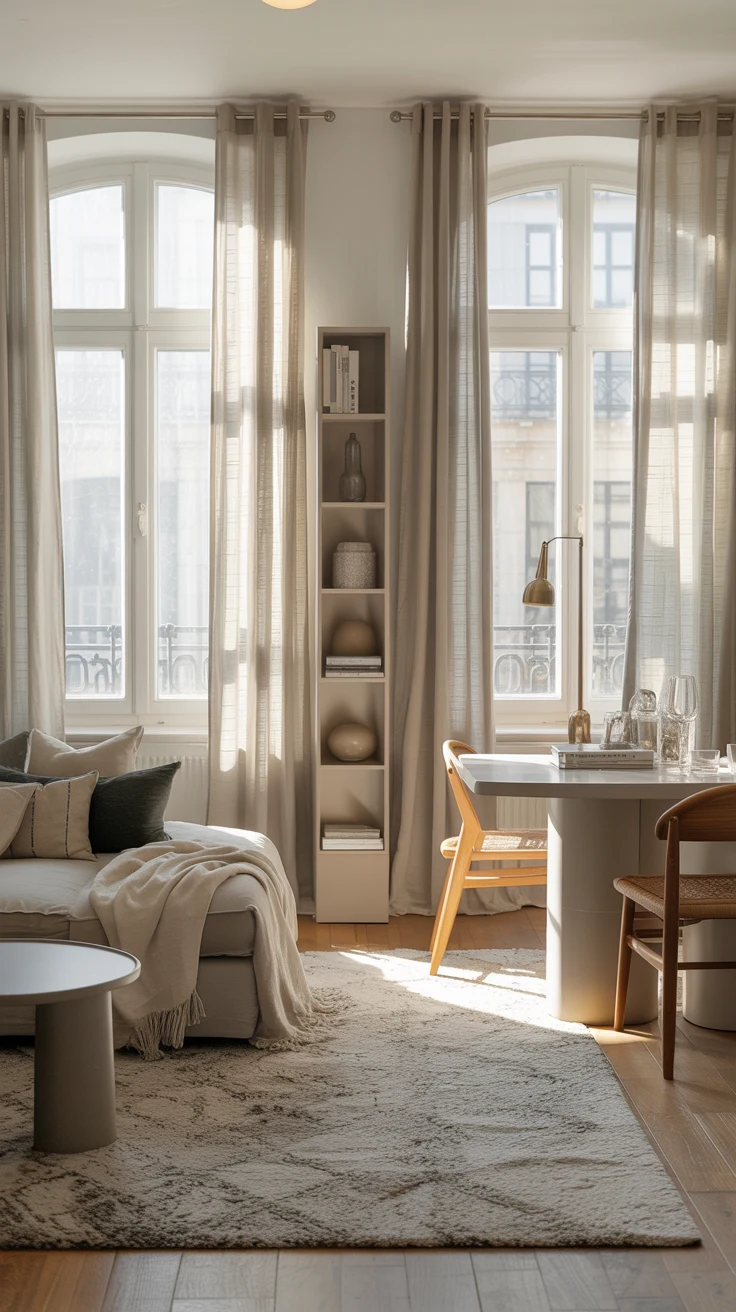
Here’s a small studio apartment decorating technique that consistently delivers impressive spatial results: making the ceiling feel higher than it actually is. Ceiling height is one of the primary contributors to a room feeling generous or tight, and even modest improvements in perceived ceiling height change the experience of being in the space significantly.
Hanging curtains as close to the ceiling as possible — regardless of where the window frame actually sits — draws the eye upward and makes the walls read as taller than they are. Vertical stripes or patterns on a feature wall emphasize height over width. Tall, slim furniture — a floor-to-ceiling bookshelf, a tall lamp — reinforces the vertical dimension of the space. And keeping the floor as clear as possible — minimal furniture legs touching the floor, floating shelves and wall-mounted pieces wherever feasible — creates the visual impression of more floor space which directly enhances the perception of ceiling height.
9. Studio Apartment Decor Ideas Inspiration — The Gallery Wall
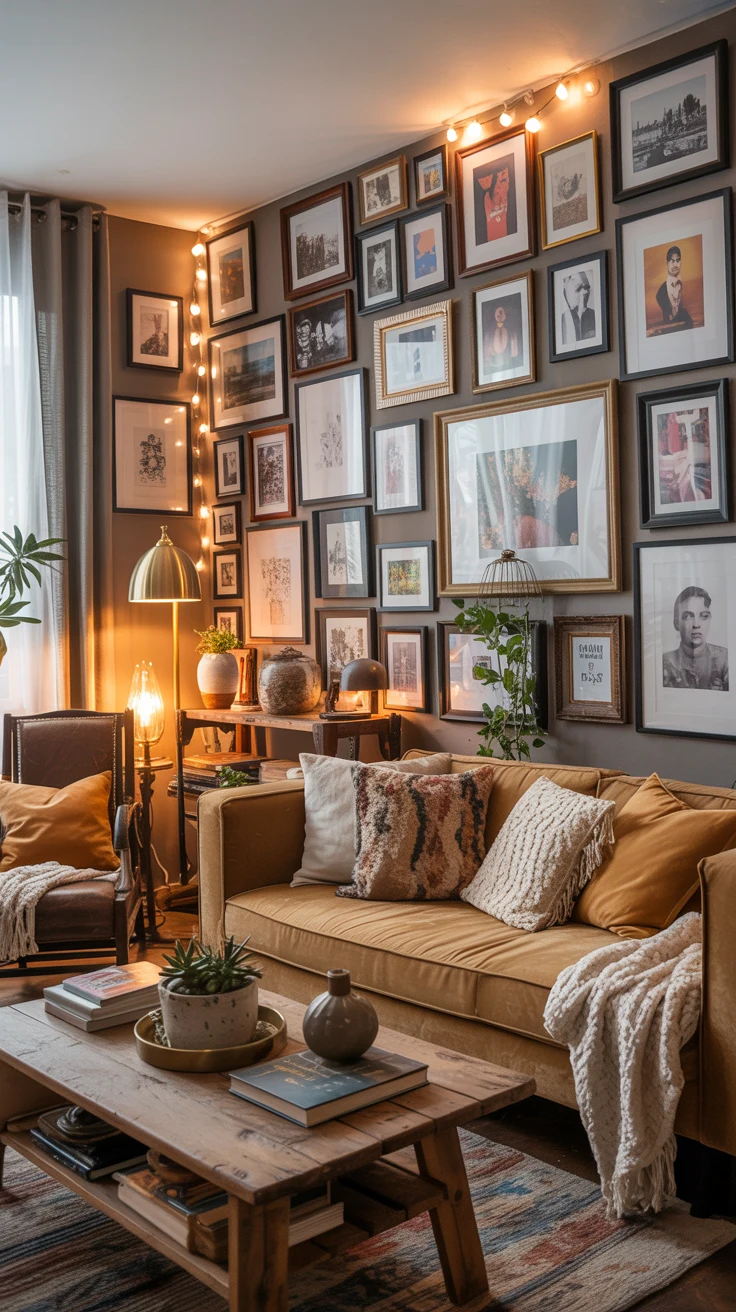
A gallery wall in a studio apartment does something that individual pieces of art scattered around the space cannot: it creates a focal point strong enough to anchor the entire room’s visual identity. In a space without architectural features like a fireplace or distinct architectural niches, a gallery wall provides the commanding visual centre that gives the studio its design character.
Position the gallery wall on the most prominent surface — typically the wall that’s visible from the entrance, or the wall behind the daybed or sofa. Keep the frames within a consistent finish family — all black, all natural wood, all antique gold — to create cohesion within the variety of the images themselves. And scale it generously — a gallery wall that fills the majority of the wall surface reads as a considered design decision, while a small cluster of frames on a large wall reads as unfinished.
10. Cozy Studio Apartment Ideas — Plants as the Final Layer
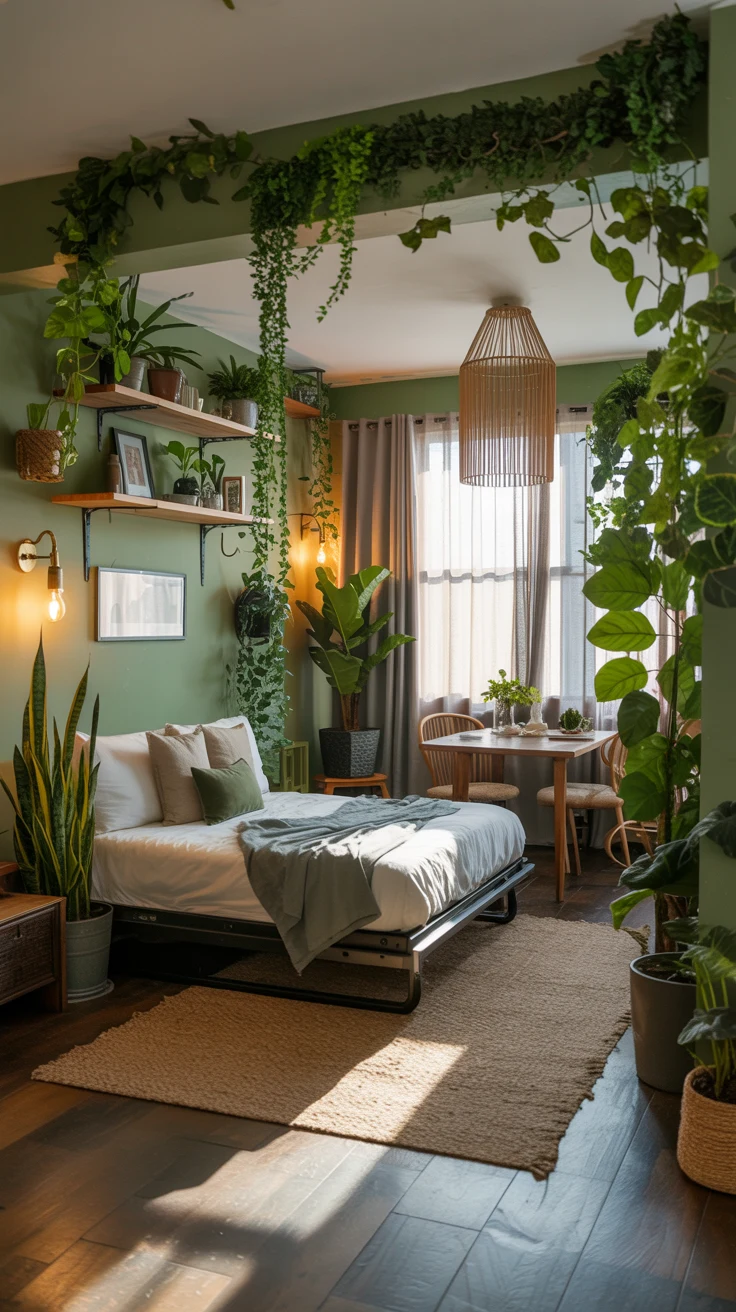
Here’s the cozy studio apartment ideas element that costs the least and contributes the most to the sense of genuine life and warmth in a compact space: plants. In a studio apartment where every other element is by necessity manufactured and designed, living plants bring an organic quality that changes the atmosphere of the space fundamentally.
A large-leafed plant in a corner brings vertical scale and tropical warmth to the living zone. A trailing pothos on a high shelf introduces cascading greenery that softens the hard lines of shelving and walls. Herbs on the kitchen windowsill provide both functional greenery and a genuinely domestic quality that makes even the smallest studio feel like a real, lived-in home. And a small succulent or cactus on the desk adds organic life to the workspace without requiring any attention beyond occasional watering.
Conclusion
Every studio apartment decor idea in this list is built on one conviction: a studio apartment is not a limitation. It’s a creative brief — specific, demanding, and genuinely rewarding when approached with real intention and real design intelligence.
From the zone-defining power of rugs and furniture arrangement, to the multifunctional furniture that multiplies functional capacity without multiplying footprint, to the warm lighting and layered textiles that create genuine coziness in a single room — these 10 ideas give you a complete framework for a studio that doesn’t just function well but genuinely feels like home.
Pick the two ideas that address your studio’s most significant current challenges and implement them first. Because a well-designed studio apartment is one of the most satisfying living environments imaginable — and once you get it right, you’ll stop counting the square feet entirely. You’ll just enjoy living in them.
Frequently Asked Questions
1. How do you divide a studio apartment into different zones?
Use area rugs, furniture placement, low bookshelves, different lighting sources, and ceiling-height curtains to visually separate the living, sleeping, dining, and work areas without adding walls.
2. What furniture works best in a small studio apartment?
Choose compact, appropriately scaled pieces such as a two-seater sofa, small dining table, daybed or sofa bed, storage ottoman, fold-down desk, and furniture with built-in storage.
3. How can I make a tiny studio apartment feel cozy?
Layer soft textiles, add a comfortable rug, use warm 2700K lighting, and combine different fabric textures around the bed and living area. These changes can make a compact studio feel much more inviting.
4. What is the best way to save space in a studio apartment?
Prioritize multifunctional furniture. A daybed can function as both seating and a bed, while storage ottomans, fold-down desks, extendable tables, and beds with drawers can provide several functions without taking up additional floor space.
5. How can I add storage without making my studio feel cramped?
Use vertical wall space instead of adding more floor furniture. Tall shelving, floating shelves, wall-mounted storage, and hooks can provide useful storage while keeping the floor relatively clear.
6. Where should I place the bed in a studio apartment?
The best position depends on the studio’s shape. You can place the bed against a wall to maximize floor space, perpendicular to a wall to create a natural zone division, in a corner to remove it from the main sightline, or use a daybed for an especially space-efficient solution.
7. What colors make a studio apartment feel larger?
A unified warm-neutral palette such as warm white, soft cream, or pale warm gray can create visual continuity throughout the studio. Personality can then be added through cushions, artwork, plants, and other smaller accents.