
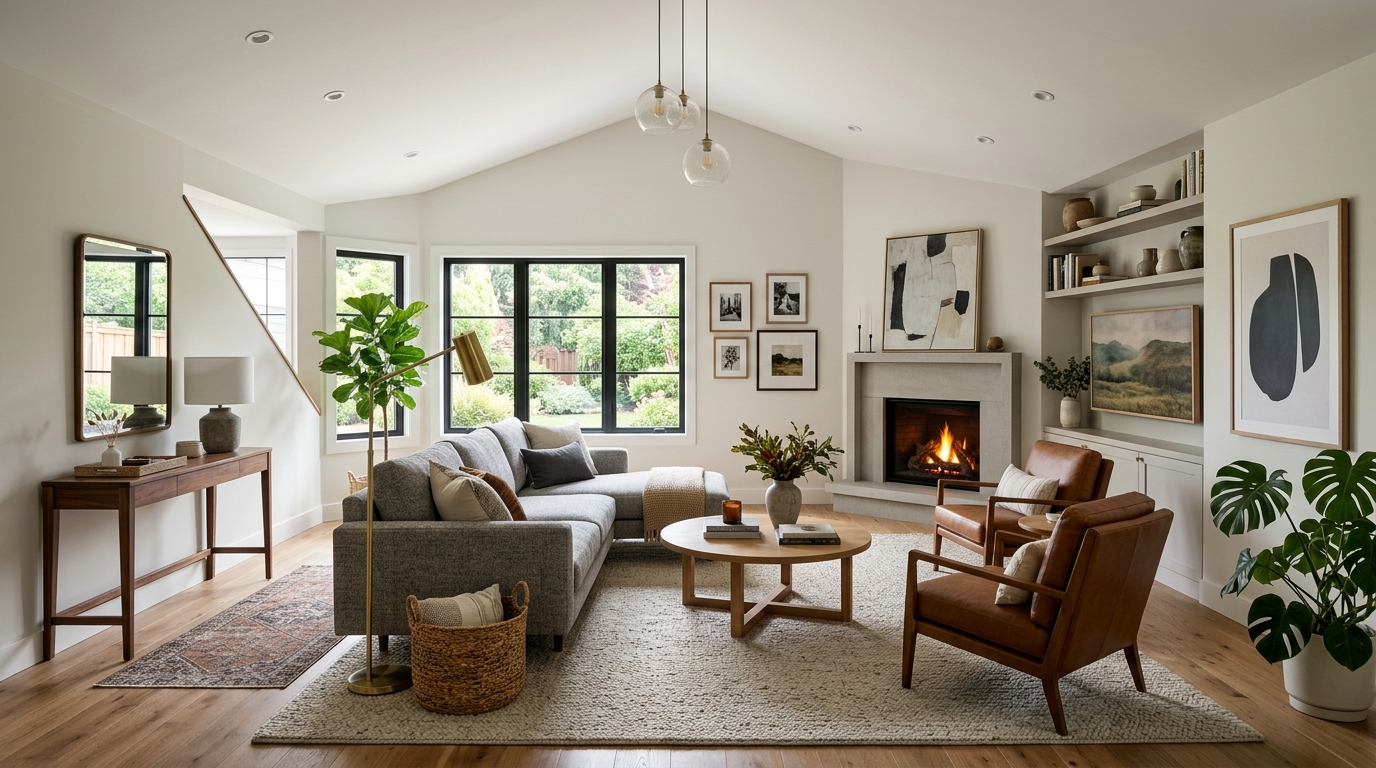
13 Living Room Layout Ideas That Finally Solve Your Most Awkward Spaces
Nobody warns you when you fall in love with a home that the living room might have the proportions of a confused trapezoid. That the fireplace will be in exactly the wrong corner. That there are three doorways competing for wall space with a load-bearing column and a radiator that can’t be moved. Awkward living room layouts are more common than standard ones — and yet most design advice assumes you’re working with a perfect rectangle and a clear vision. The reality for most people is considerably more complicated.
I’ve lived in two genuinely challenging rooms over the years — an L-shaped nightmare and a room with a corner fireplace, a bay window, and two different levels — and the solutions I found transformed both from frustrating spaces into genuinely excellent ones. What all of them had in common was understanding a handful of specific design principles that apply directly to awkward spaces. These 13 ideas address every variation of the awkward living room layout problem.
1. Stop Fighting the Shape
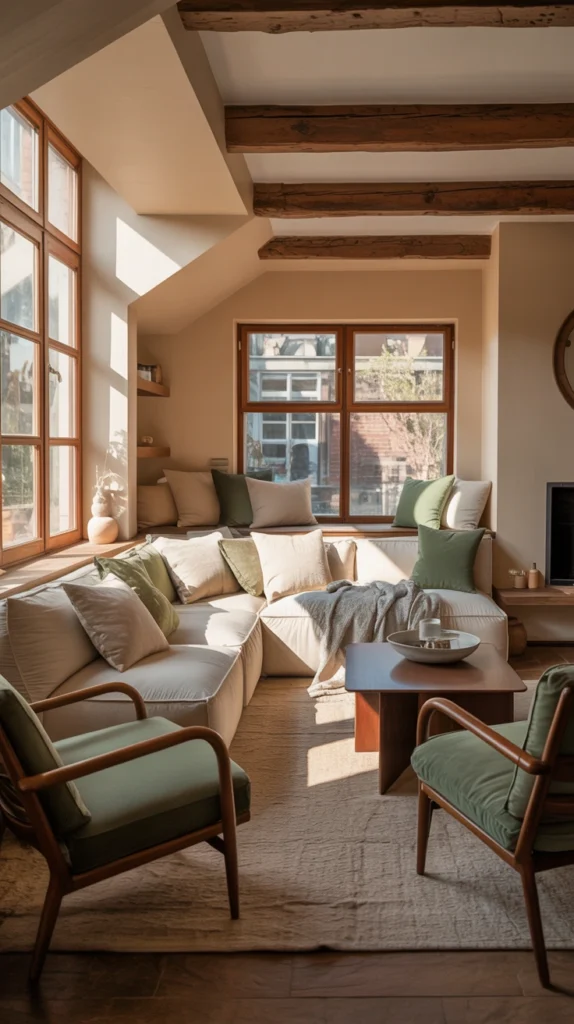
The most common mistake in an awkward shaped living room layout is treating the room’s unusual proportions as a problem to be solved by imposing a standard furniture arrangement onto them. It almost never works. The furniture fights the room, the circulation feels wrong, and nothing quite sits properly because the room wasn’t built for a standard arrangement.
The shift that changes everything is treating the room’s unusual shape as a specific design brief rather than a limitation to overcome. An L-shaped room isn’t a rectangle with a bit missing — it’s two zones waiting to be defined. An odd angle isn’t a problem — it’s an opportunity for a reading corner that no standard room provides. When you start designing with the shape rather than against it, the room begins to work in ways that feel genuinely satisfying.
2. Define Zones in an L-Shaped Layout
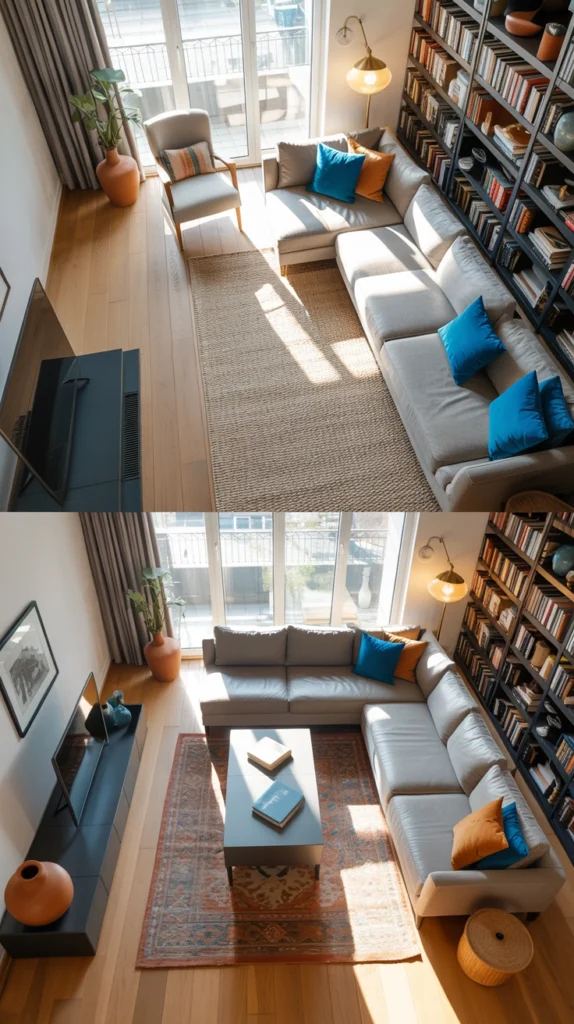
The L-shaped living room is one of the most common awkward shaped living room furniture arrangement challenges — and the key insight is that the L shape provides a natural zone division that standard rectangular rooms don’t offer. Use it deliberately.
Position the main seating group — sofa, armchair, coffee table — in the larger section of the L. Create a secondary zone in the smaller section: a reading corner, a dining area, a home office nook, or a dedicated children’s play area. Define each zone with its own rug. The L-shaped room that has been thoughtfully zoned stops feeling awkward and starts feeling genuinely generous — a room with multiple distinct areas rather than one undivided space with a confusing extra section.
3. Solve the Awkward Living Room Layout With TV
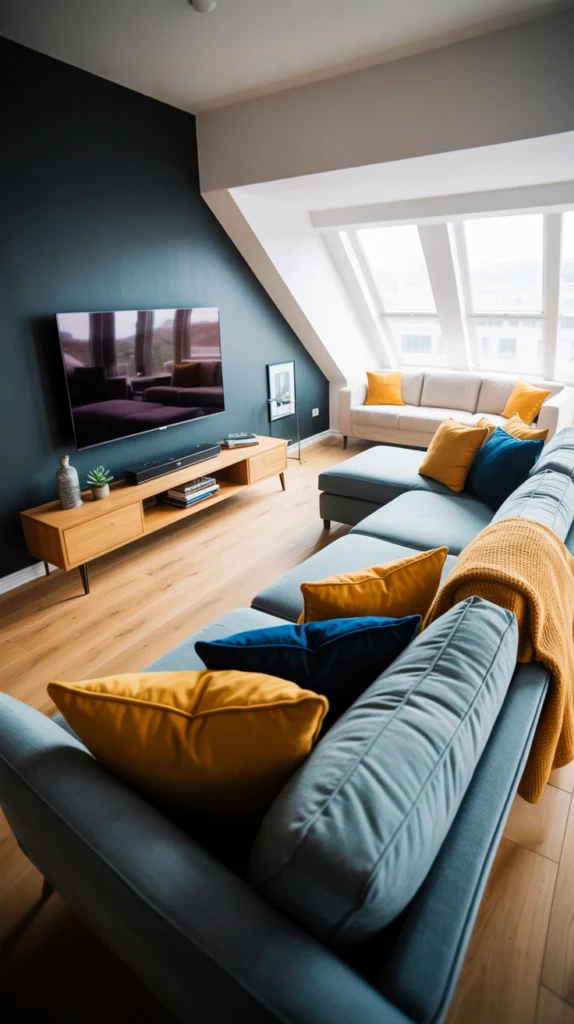
The television placement challenge is one of the most consistently frustrating aspects of designing awkward living rooms — because most rooms have one ideal wall for the sofa (the wall opposite the best window) and that wall is often directly opposed to the architectural realities of where cables run, where outlets exist, and where the room’s proportions suggest the TV should go.
In an awkward living room layout with TV, start by identifying the available TV wall options honestly rather than simply defaulting to the largest flat wall. A TV on an angled wall, positioned diagonally in a corner, can actually solve multiple layout problems simultaneously — creating a focal point visible from multiple seating positions and freeing the main walls for more generous sofa placement. A TV above a fireplace is visually prominent but ergonomically uncomfortable for long viewing — consider a wall-mounted bracket that allows the screen to tilt downward when in use.
4. Handle the Corner Fireplace
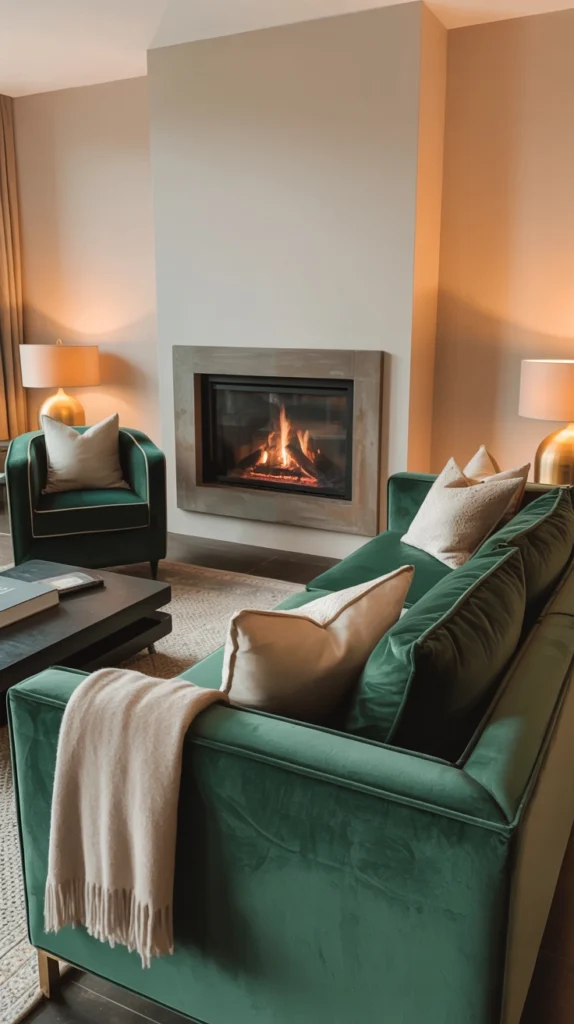
The awkward living room layout with corner fireplace is one of the most distinctive and most challenging spatial configurations in residential design — and the standard furniture arrangement advice simply doesn’t apply to it. A corner fireplace changes everything about how the room can be laid out.
Furniture Arrangement Approaches for Corner Fireplace Rooms:
- Angle the sofa to face the corner fireplace directly — this creates a diagonal composition that actually suits the corner focal point
- Use two shorter sofas or a sofa and two armchairs arranged in a V-shape that opens toward the fireplace
- Position the primary sofa on the longest wall and use an angled armchair to bridge toward the fireplace
- Embrace the diagonal — angle a rug and the furniture arrangement to respond to the corner, making the asymmetry intentional
FYI — the corner fireplace room that tries to ignore its fireplace and arrange furniture as if it weren’t there always looks wrong. The corner fireplace should be embraced as the room’s focal point, with every furniture decision responding to it.
5. Float Furniture Away From Walls
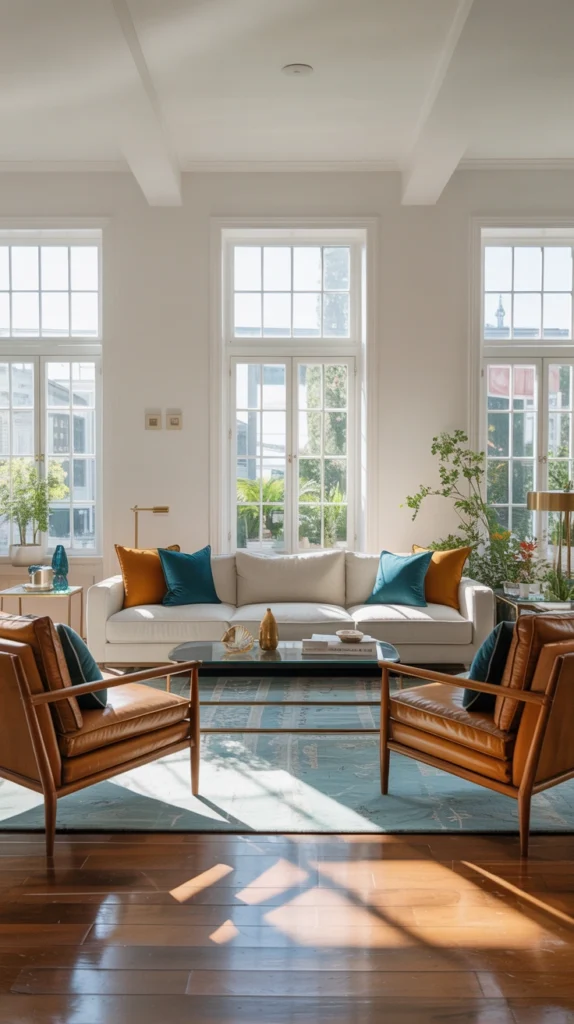
In any odd shaped living room layout, one of the most transformative and most counterintuitive design moves available is pulling furniture away from the walls and floating it toward the center of the room. The instinct to push everything against the walls to create clear floor space in the center is extremely common — and it’s almost always the wrong approach.
Floating the sofa away from the wall creates intimate, conversational groupings that work far better socially and visually than the against-the-wall arrangement. It also creates interesting circulation paths around the furniture rather than simply around the perimeter. A sofa floating 45-60cm from the wall looks more intentional, more designed, and creates more visual depth in the room than wall-hugging furniture ever manages.
6. Use Rugs to Create Order
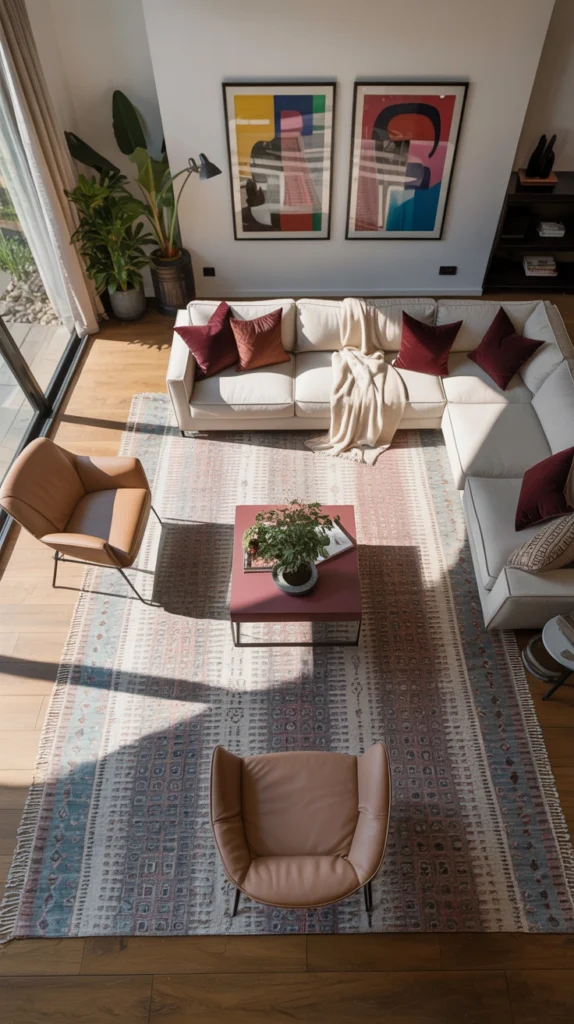
In an awkward shaped living room furniture arrangement, the rug is one of the most powerful ordering tools available — because it creates a visual zone of coherence within the irregular room that organizes the furniture arrangement and gives the eye a clear, stable composition to rest on.
A large rug positioned at a deliberate angle in an asymmetrical room can actually reinforce the room’s unusual geometry in a way that makes it feel designed rather than confused. In an L-shaped room, two separate rugs defining each section create visual clarity about how the room is zoned. In a room with awkward angles, a round rug in the center of the main seating group creates a circular composition that is inherently shape-neutral — it works beautifully regardless of what the walls are doing around it.
7. Work With Columns and Structural Features
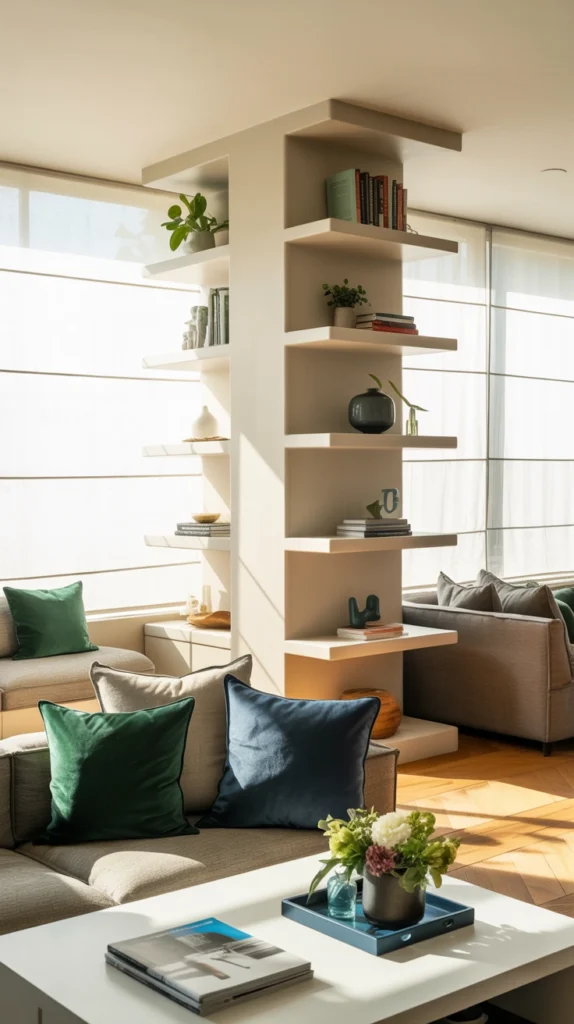
A column in the middle of a room, a half-wall, an unexpected alcove — these structural features are the elements that make a room genuinely odd shaped and that most standard furniture arrangement advice simply ignores. But structural features are actually among the most interesting design opportunities in any awkward space.
A column can anchor a sofa end, creating a natural definition for a seating zone. An alcove can become a dedicated reading corner, a media zone, or a home office nook. A half-wall can support shelving or act as a visual room divider that defines zones without creating enclosed separation. When structural features are embraced as active design elements rather than obstacles to work around, they consistently produce the most interesting and most distinctive room arrangements.
8. Address Multiple Doorways
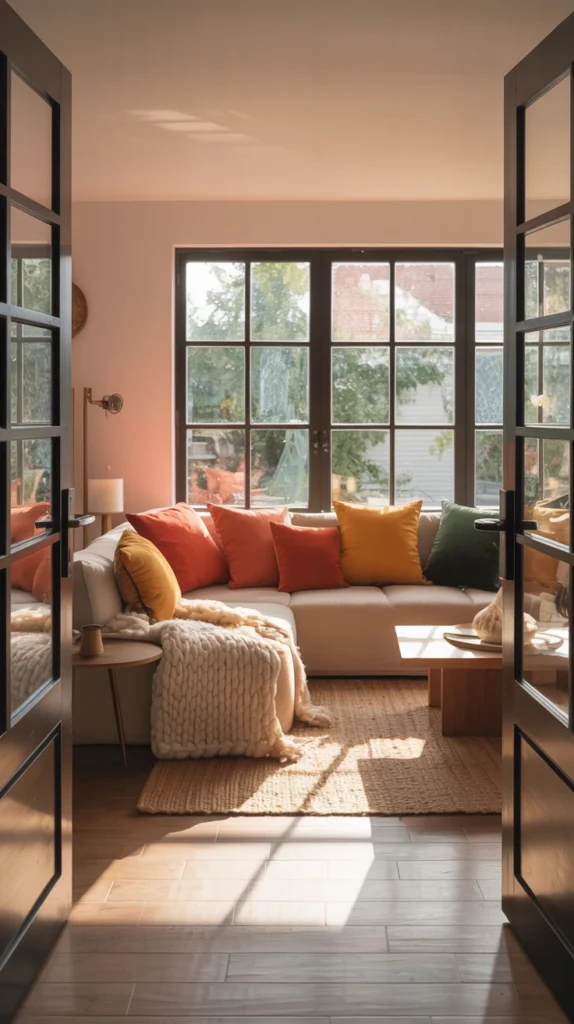
Multiple doorways competing for wall space is one of the most practically challenging aspects of how to arrange furniture in an awkward shaped living room — because they eliminate wall sections that would otherwise be natural candidates for sofas, shelving, or a media wall, and they create circulation paths that fragment the room’s usable space.
Map every doorway in the room and trace the natural circulation path between each one. The areas that are not in any circulation path are your furniture placement zones — these are the spaces where seated people will not be interrupted by people moving through the room. Keep those zones clear for seating and furniture. Use the spaces beside and between doorways for storage solutions, shelving, or decorative elements rather than attempting to place primary furniture across doorway circulation paths.
9. Use Diagonal Placement Deliberately
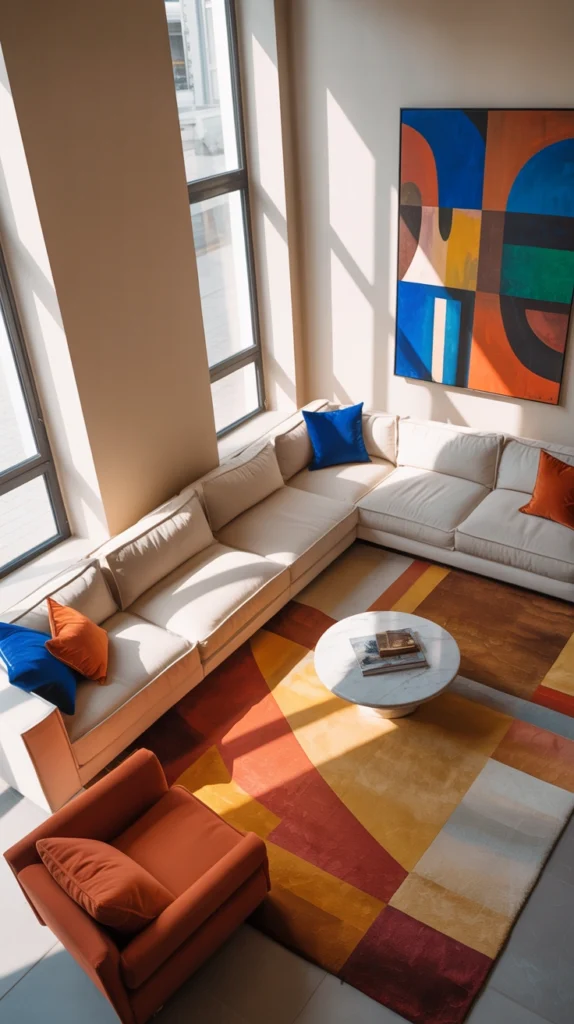
When a room’s angles and proportions resist standard parallel furniture placement, diagonal placement — positioning sofas, rugs, and furniture at 45-degree angles to the walls — can create compositions of genuine visual interest that suit the room’s unusual geometry far better than anything placed parallel to awkward walls.
An angled sofa placement in a room with odd proportions often creates significantly better circulation and a more interesting spatial composition than the same sofa placed parallel to the nearest wall. A rug positioned diagonally in an asymmetrical room can visually correct the room’s proportions by suggesting a different, more harmonious set of spatial relationships. Designing awkward spaces living rooms often involves abandoning the assumption that everything must be parallel or perpendicular — and the results of intentional diagonal placement are frequently more beautiful than any standard arrangement.
10. Create a Focal Point Deliberately
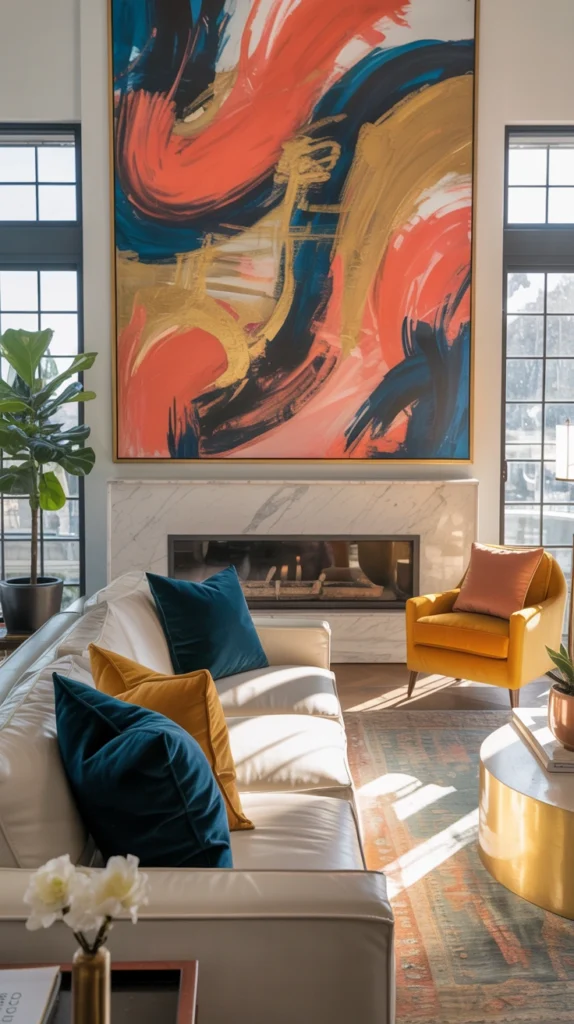
Awkward shaped living rooms frequently lack a clear focal point — and the absence of an obvious place for the eye to rest and the body to orient toward is one of the primary reasons these rooms feel uncomfortable and directionless even when filled with good furniture. Creating a deliberate focal point solves this completely.
In a room without an obvious architectural focal point, create one through design decisions. A large artwork on the most prominent wall. A carefully designed media wall that treats the television as part of a composed architectural feature. A beautifully styled bookshelf occupying a full wall. A gallery wall that transforms a blank surface into a visual destination. Any of these creates the focal point around which the room’s furniture arrangement can naturally orient — and without which even a well-laid-out room feels somehow incomplete.
11. Let the Traffic Flow Guide Everything
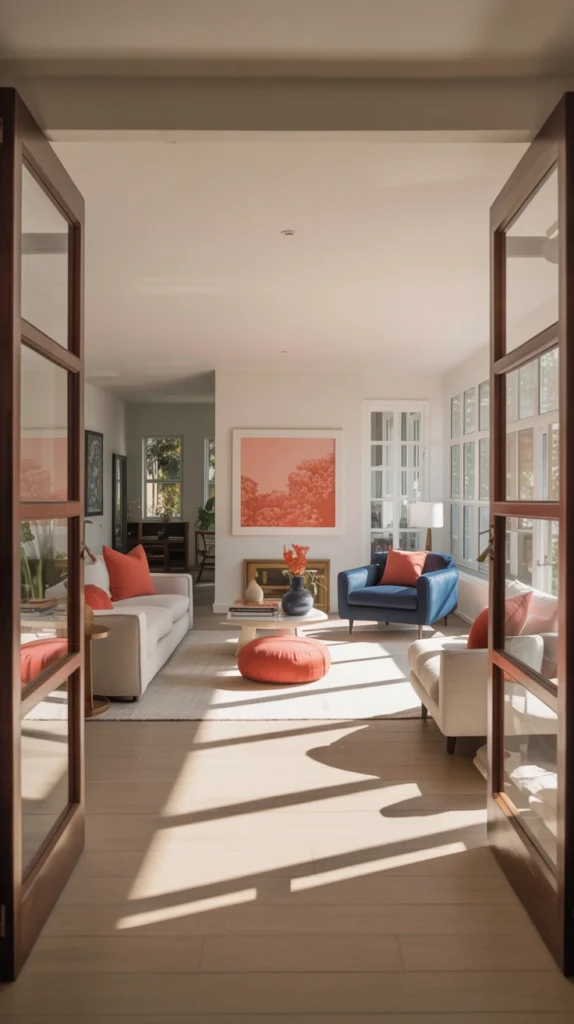
In any odd shaped living room layout, understanding how people naturally move through the room — from the door to the sofa, from the sofa to the kitchen, from one zone to another — is the most important spatial intelligence available to guide furniture arrangement decisions.
Walk the natural traffic patterns in your room before placing any furniture. The paths people naturally take between entry points and functional destinations should remain unobstructed — any furniture placed across these natural paths will be worked around constantly, which creates the specific quality of subtle awkwardness that makes a room feel frustrating without anyone being able to articulate exactly why. Traffic flow clarity is the invisible infrastructure of every room that feels intuitively comfortable to move through.
12. Scale Your Furniture to the Room
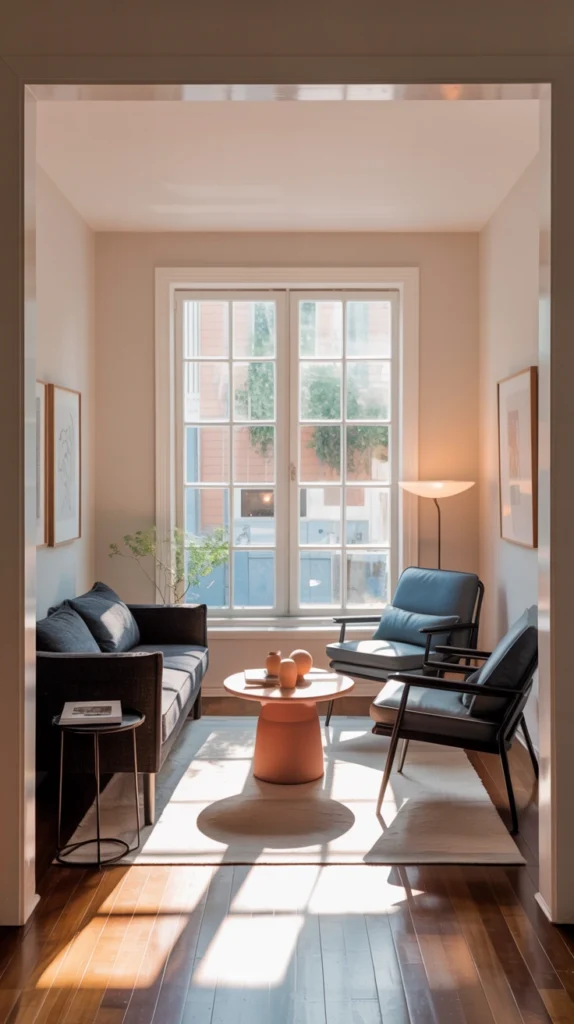
One of the most common furniture arrangement mistakes in awkward shaped living rooms is using furniture scaled for a standard room in a space with very different proportions. A sofa that’s the right size for a 4m-wide rectangular room may be completely wrong for an L-shaped space with a 3m wide primary section, or for a narrow room where the same sofa blocks half the circulation.
Scale every furniture piece actively to the room’s actual dimensions rather than to a standard room. A two-seater or compact three-seater may work better than a standard three-seater in a constrained space. A love seat and two armchairs may create better flexibility in an awkward room than a single sofa. IMO, the most useful thing anyone can do before buying a single piece of furniture for an awkward room is to create a scaled floor plan on paper or a simple app and arrange scaled furniture cutouts within it — it reveals impossibilities and possibilities that looking at the empty room alone never shows.
13. Embrace the Unusual as the Design Identity
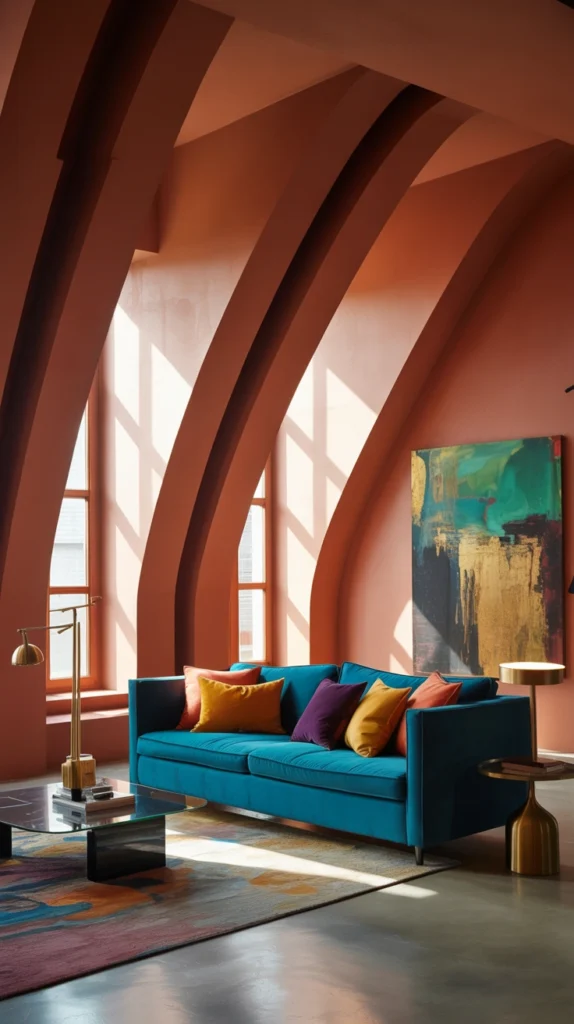
The final idea for how to decorate an awkward living room is the most liberating one: stop trying to make the unusual room look like a standard one. The awkward shaped living room, designed with genuine intelligence and genuine commitment to its specific character, consistently produces more interesting and more memorable rooms than standard rectangular ones.
The diagonal corner, the asymmetrical alcove, the room that’s slightly too long and narrow — these spatial realities, worked with rather than against, create design constraints that produce creative solutions. And creative solutions produce rooms with genuine personality and distinctive character that standard rooms, however beautifully furnished, rarely achieve.
Quick Reference: Awkward Living Room Layout Solutions:
- L-shape → two defined zones with separate rugs
- Corner fireplace → angled furniture arrangement toward the corner
- Multiple doorways → furniture in non-circulation zones only
- Narrow/long room → zone-define with rugs, float furniture from walls
- Structural columns → use as anchors for furniture arrangement
- No clear focal point → create one through design decisions
These solutions don’t work in spite of the awkwardness. They work because of it.
Final Thoughts
Thirteen ideas that address the awkward living room from every angle — L-shapes and corner fireplaces, TV placement challenges and column complications, traffic flow logic and diagonal furniture placement, and the underlying philosophy that the unusual room, approached correctly, produces the most interesting designs.
The awkward living room doesn’t need to be conquered. It needs to be understood. Every unusual proportional challenge contains within it the specific solution that no standard room would ever generate — and that solution, when found, creates a room that only your specific space could have produced.
Your awkward room isn’t the problem. It’s just been waiting for the right design conversation. Consider this the start of it.


