10 Front Porch Decor Ideas That Make Your Home Feel Instantly More Welcoming
The front porch is the first thing every visitor sees and the last thing you see when you leave the house every morning — and most people treat it like a transition zone rather than a room worth designing. A bare porch with a forgotten doormat and a single light fixture that came with the house is not a front porch. It is a missed opportunity. And the gap between a porch that is simply there and one that genuinely stops people in their tracks is much smaller than most homeowners realize.
I ignored my front porch for four years after moving in. The rest of the house was carefully considered — every room had been thought through, styled, and made to feel like home. The porch got whatever was left over. Then one weekend I committed a single afternoon to it, spent less than I expected, and ended up with the most commented-on part of the entire house. Neighbors I had never spoken to stopped to ask about it. Guests started arriving and immediately saying something before they even got through the door. That afternoon changed how I think about exterior spaces entirely.
These 10 front porch decor ideas cover every direction a great porch can take — from the single decisions that anchor the whole composition to the layered details that make visitors feel something before they even knock.
1. Start With a Front Door That Commands Attention
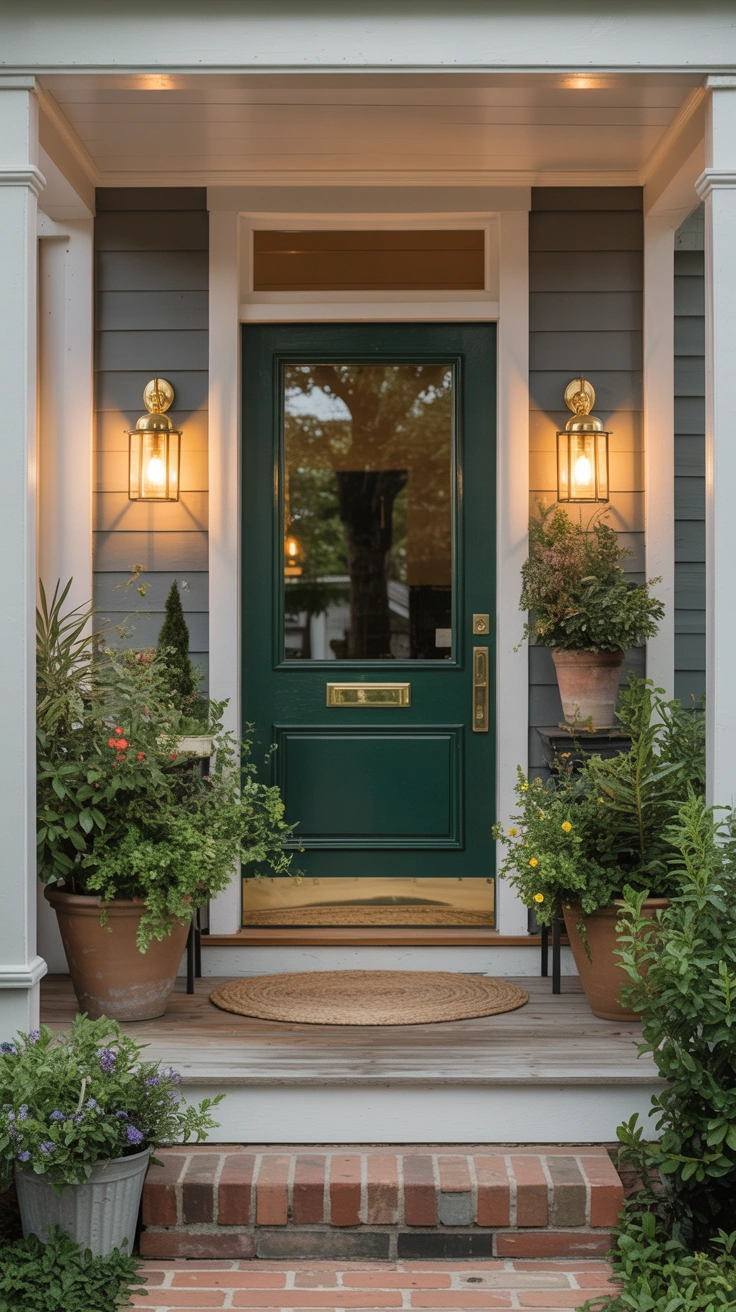
The front door is the focal point of every front porch — and a door that is simply functional, in whatever color it came painted, is the single biggest missed opportunity in the entire exterior composition. A front door in a considered, deliberate color with quality hardware transforms the porch from forgettable to genuinely striking.
Deep forest green on a door framed by white trim creates a combination of classic authority and natural warmth that works on almost every architectural style. Matte black on a contemporary house creates a graphic, confident statement. Warm terracotta on a cottage or craftsman bungalow creates an earthy, welcoming quality that reads as intentional and personal. Rich navy with polished brass hardware creates something that feels genuinely curated and considered.
Hardware That Elevates the Door
- A solid brass knocker in an unlacquered finish that develops patina over time
- A house number in a matching metal finish mounted at eye level
- A quality lever or knob handle in brushed brass, matte black, or aged bronze
- An exterior sconce on either side of the door in a finish that connects to the hardware
The door and its hardware form a single composed unit. When every element within that unit shares a finish language and a sense of quality, the entire porch looks more considered as a result.
2. Define the Space With Outdoor Seating
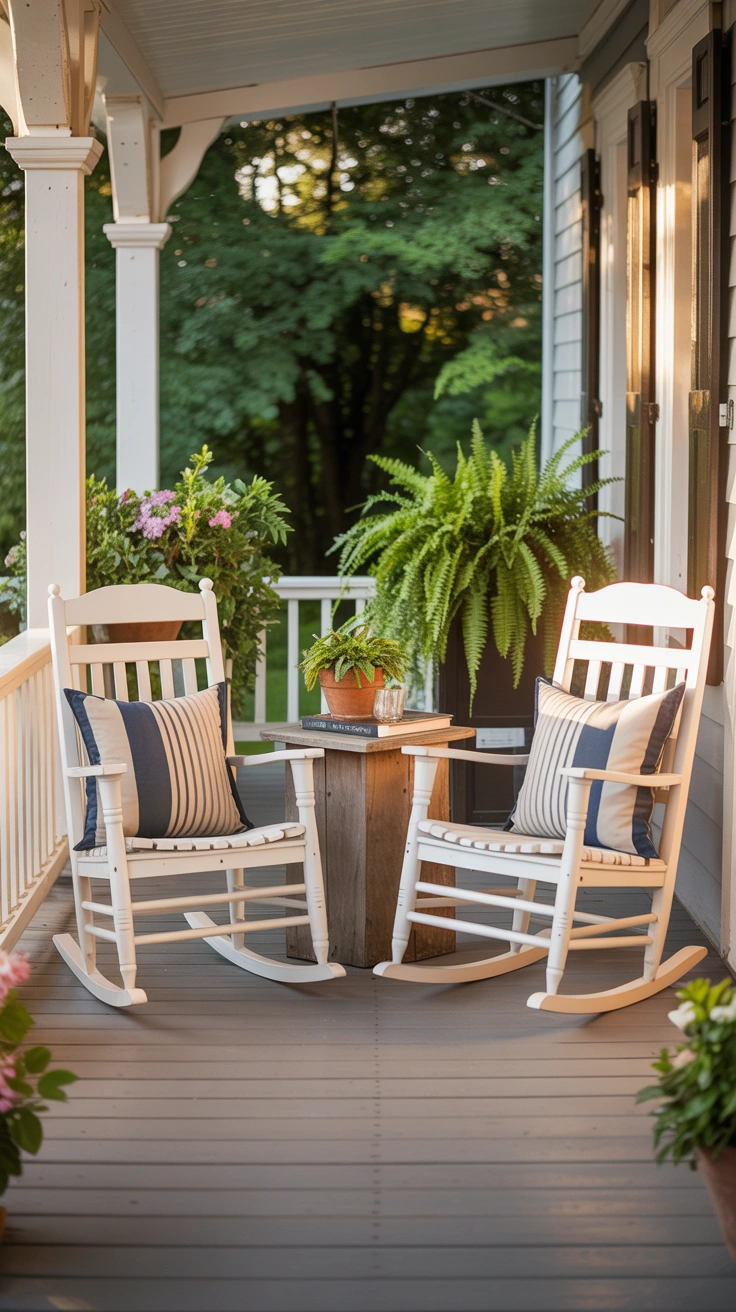
A front porch without seating is a passageway. A front porch with seating is a destination — a room that exists outdoors and invites people to slow down, sit, and actually experience the space rather than simply pass through it. The addition of even a single chair changes the quality and the intention of the entire porch.
A pair of classic rocking chairs in painted wood or resin wicker on a generous porch. A porch swing hung from the ceiling for something more romantic and unhurried. A pair of vintage-style metal chairs with a small side table between them for something graphic and considered. The seating choice communicates what kind of porch this is — and what kind of home lies beyond it.
Choose seating that is proportionate to the porch size. Oversized furniture on a small porch looks crowded and makes the space harder to navigate. A single well-chosen chair on a modest porch looks intentional. Scale the seating to the space and the space immediately looks designed.
3. Anchor the Entry With a Quality Doormat
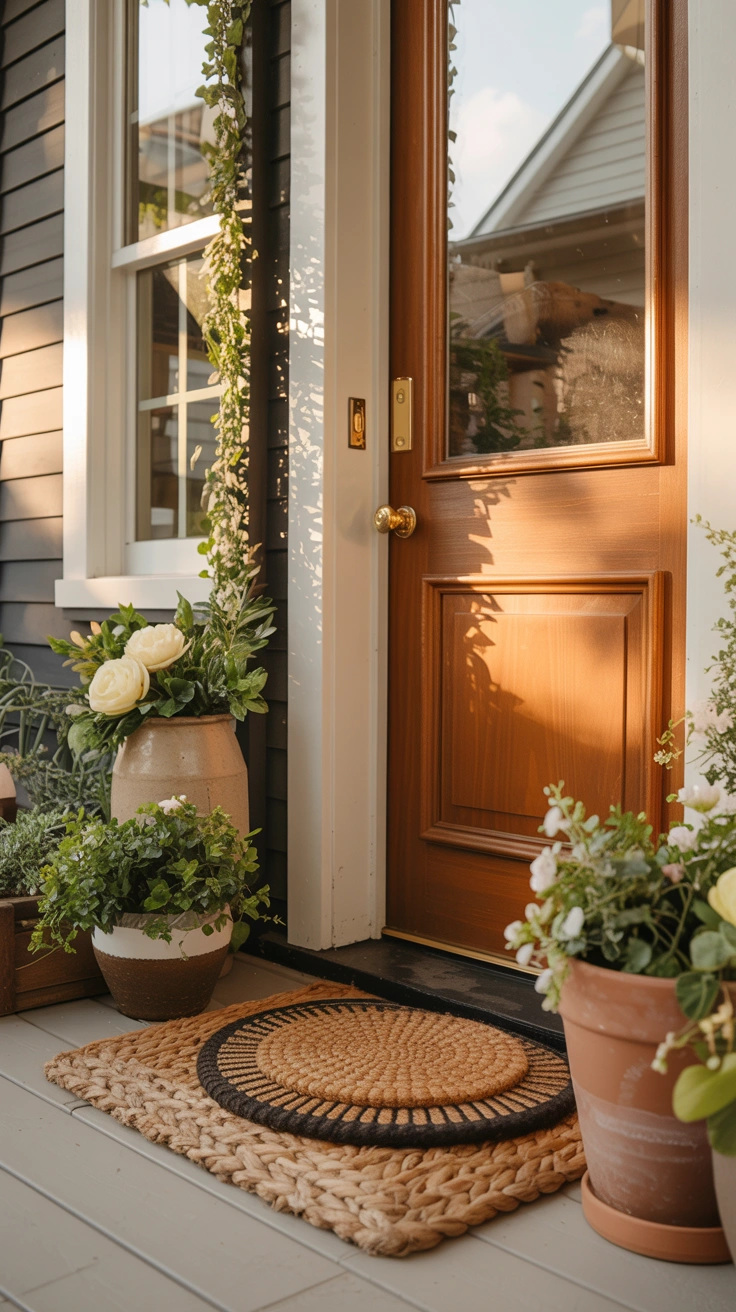
The doormat is the most underinvested-in element on most front porches — a thin, generic rectangle that says nothing about the home it sits in front of and deteriorates within a season. A quality doormat in a considered material, pattern, or finish does something entirely different. It anchors the entry, introduces the home’s personality, and communicates care and attention in the most immediate possible way.
A natural coir mat with a simple border in black or natural for something clean and classic. A woven jute or seagrass mat for organic warmth and texture. A patterned tile-look or geometric mat for something more graphic and contemporary. A monogram or house initial mat for something personal and traditionally welcoming.
FYI — layering two mats creates a visual depth and a practical functionality that a single mat cannot achieve. A larger natural fiber mat as the base layer with a smaller decorative mat centered on top is a technique used in the most beautifully styled porches and one that reads as considerably more designed than a single mat alone.
4. Bring in Potted Plants With Real Intention
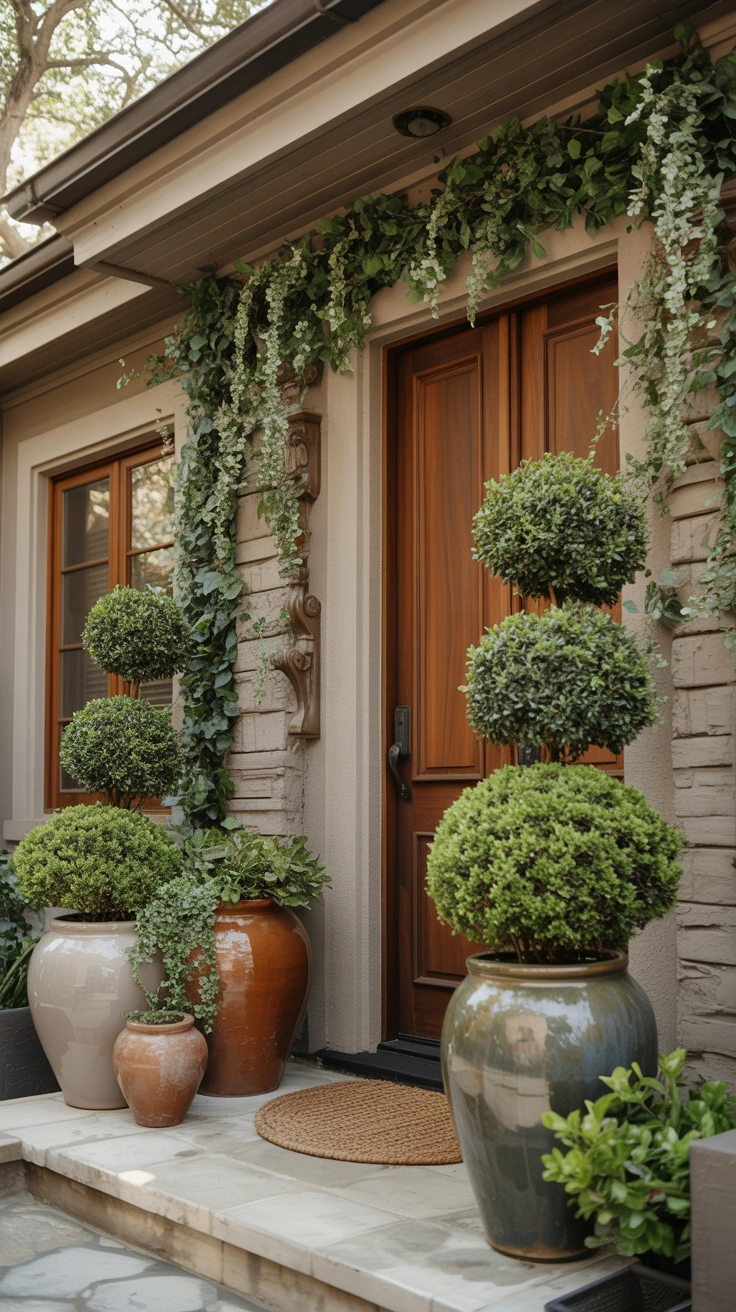
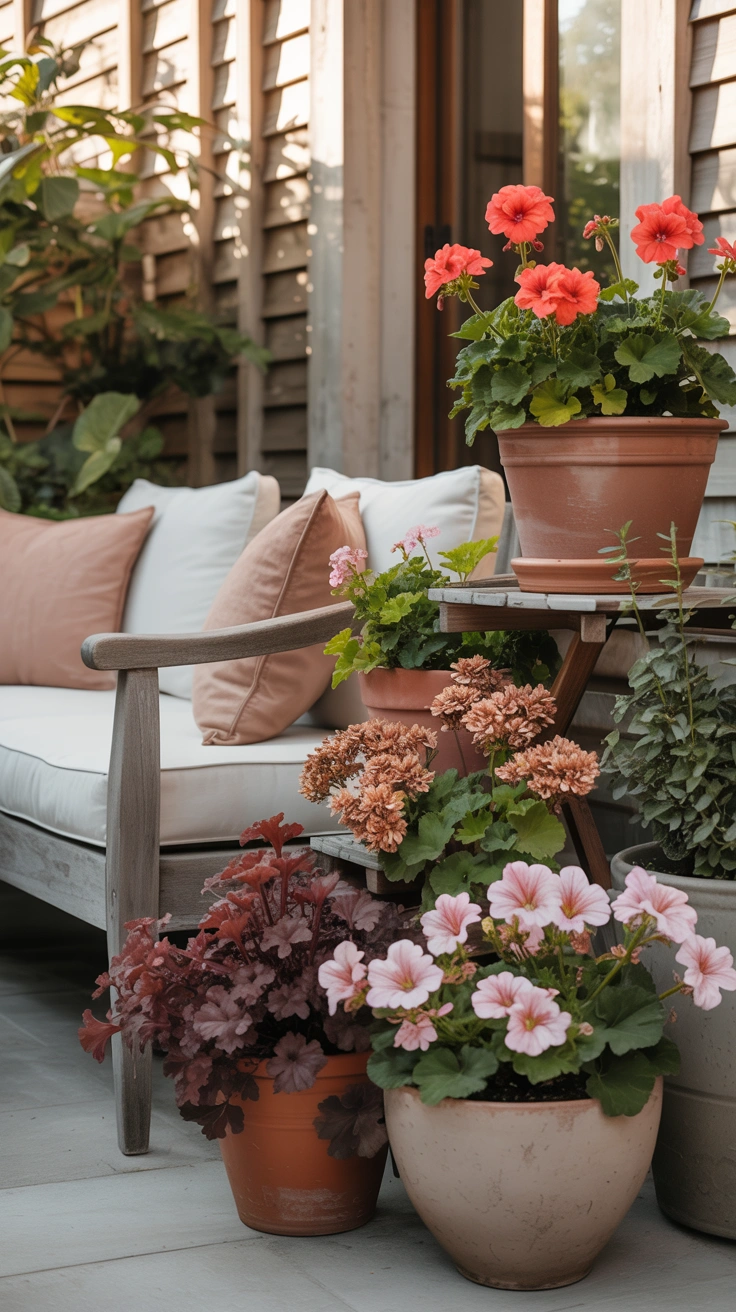
Potted plants on a front porch are one of the most consistently effective and most widely accessible front porch decor decisions available — but the difference between plants placed with intention and plants placed without it is enormous. Two identical terracotta pots flanking the front door in perfect symmetry. A cluster of pots in varying heights and materials grouped asymmetrically beside the steps. Tall architectural grasses in oversized planters anchoring the corners of the porch. Each approach creates a completely different quality of welcome.
The pot material matters as much as the plant inside it. Terracotta pots in warm clay tones read as timeless, organic, and Mediterranean. Glazed ceramic pots in a deep navy, forest green, or warm sage add color and a finished quality that unglazed pots cannot match. Aged zinc or galvanized metal planters for something more industrial and contemporary. The combination of the right plant and the right pot creates a moment of genuine beauty at the entry.
Plants That Perform Well on Porches
- Boxwood topiaries for structure, symmetry, and year-round greenery
- Seasonal flowering plants — geraniums in summer, chrysanthemums in autumn, pansies in winter
- Trailing ivy or sweet potato vine for organic movement and cascading form
- Tall ornamental grasses for architectural presence in larger planters
- Ferns for shaded porches where direct sunlight is limited
Rotate seasonal plants as the year changes and the porch remains visually current without requiring any permanent design decisions to be revisited.
5. Add Outdoor Lighting That Does More Than Illuminate
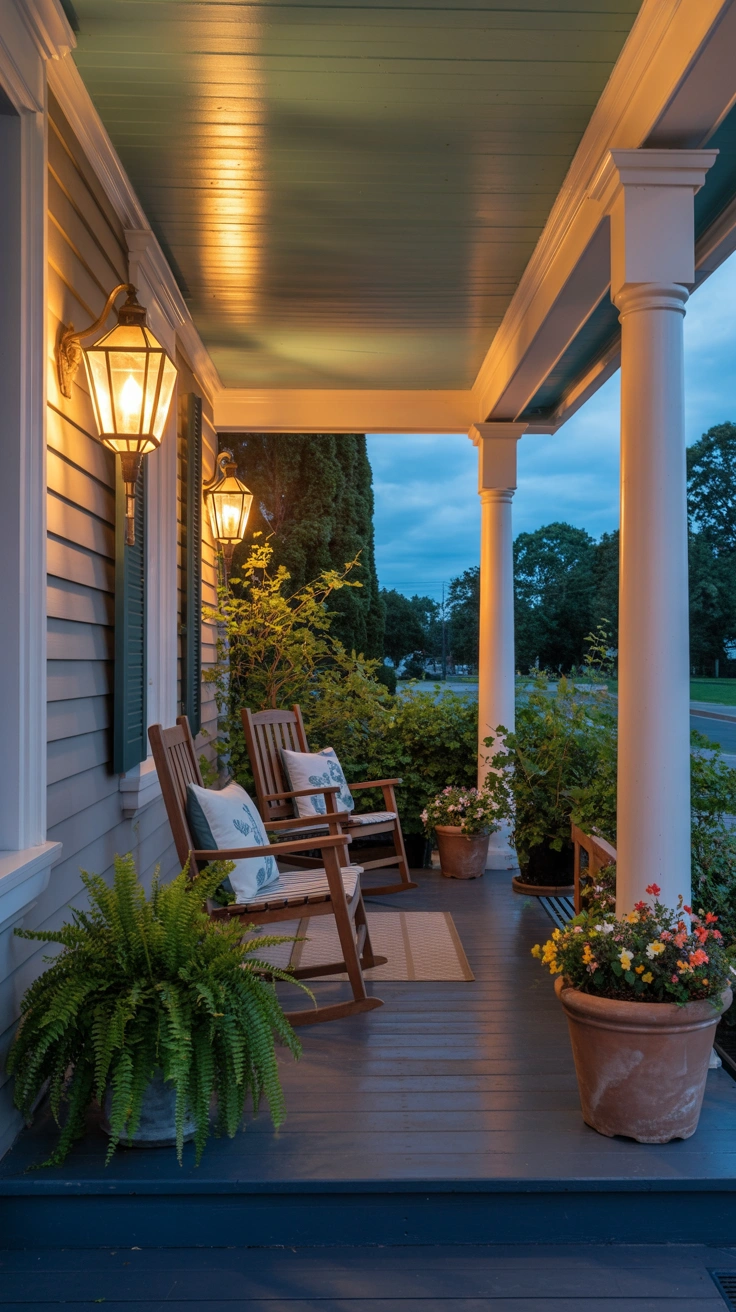
Exterior lighting on a front porch is one of those elements that most people think about in purely functional terms — it needs to be bright enough to find the keyhole and light enough to see who is at the door. But porch lighting is also the element that defines the porch’s appearance after dark, which is when most people arrive home and when the majority of guests come to visit. It deserves considerably more thought than it typically receives.
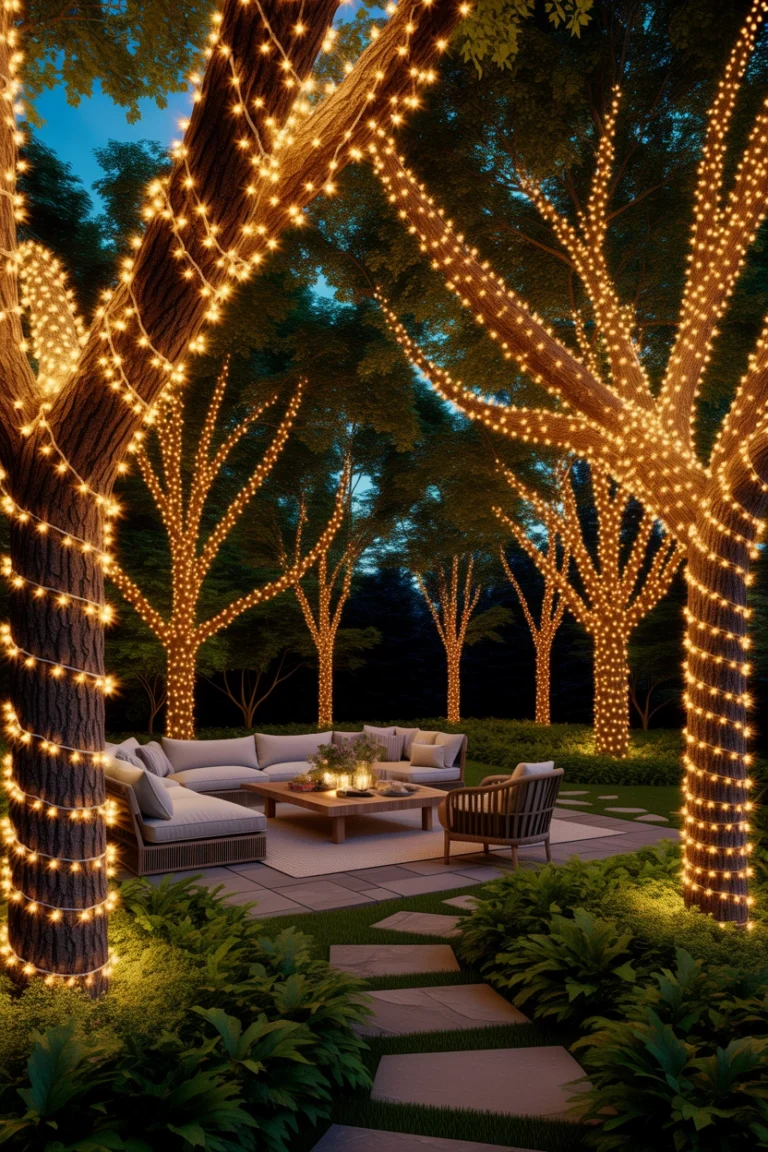
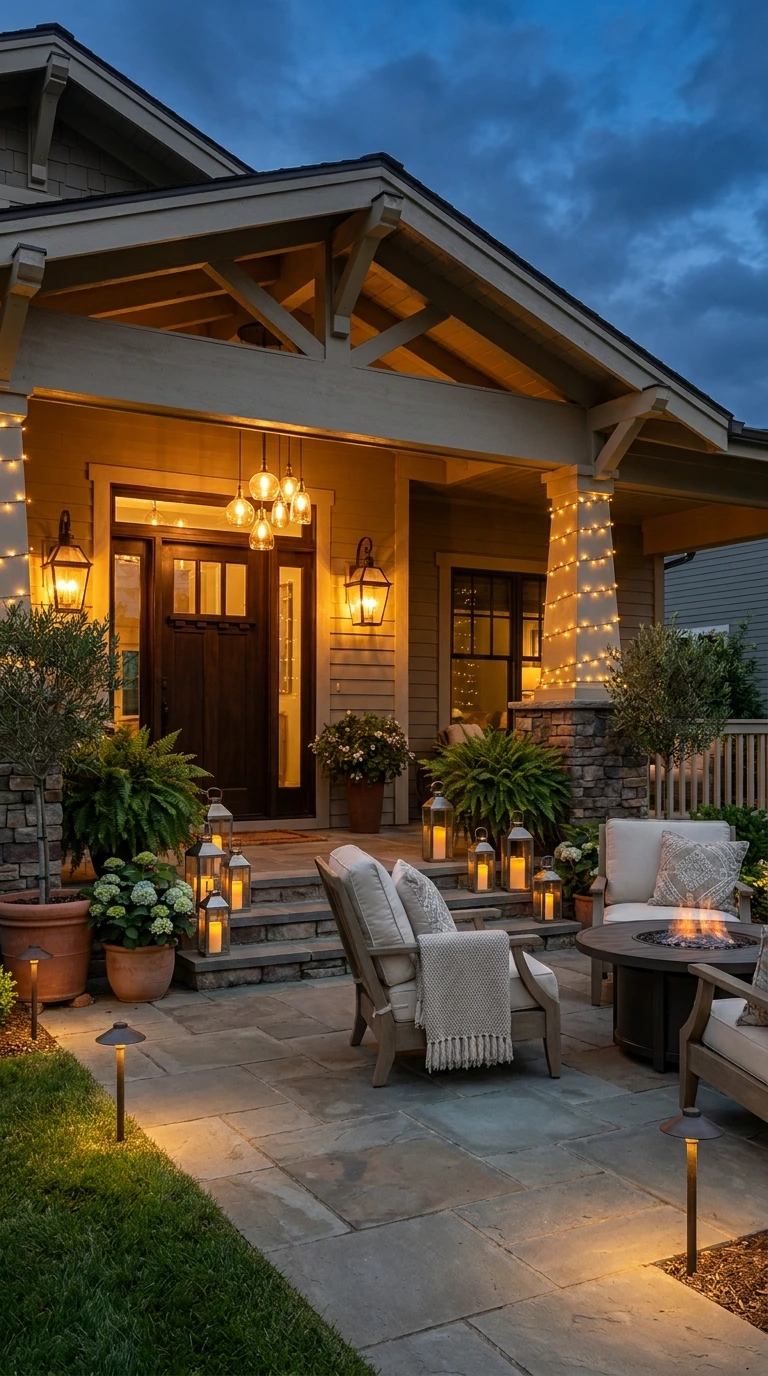
A pair of lantern-style wall sconces flanking the front door in aged brass or matte black creates a framing effect that is both welcoming and architecturally complete. String lights strung along the porch ceiling or wrapped around columns create an ambient warmth that transforms the space after dark into something genuinely beautiful. A pendant light hung from the porch ceiling above the seating area adds intimacy and warmth to an outdoor sitting space.
Choose warm-toned bulbs — 2700K — in every exterior fixture. Warm light makes the porch, the plants, and every person who stands in it look better than cool or daylight bulbs. This is a detail that costs nothing to get right and that noticeably improves the quality of the porch at the time of day when it matters most.
6. Hang a Wreath That Reflects the Season
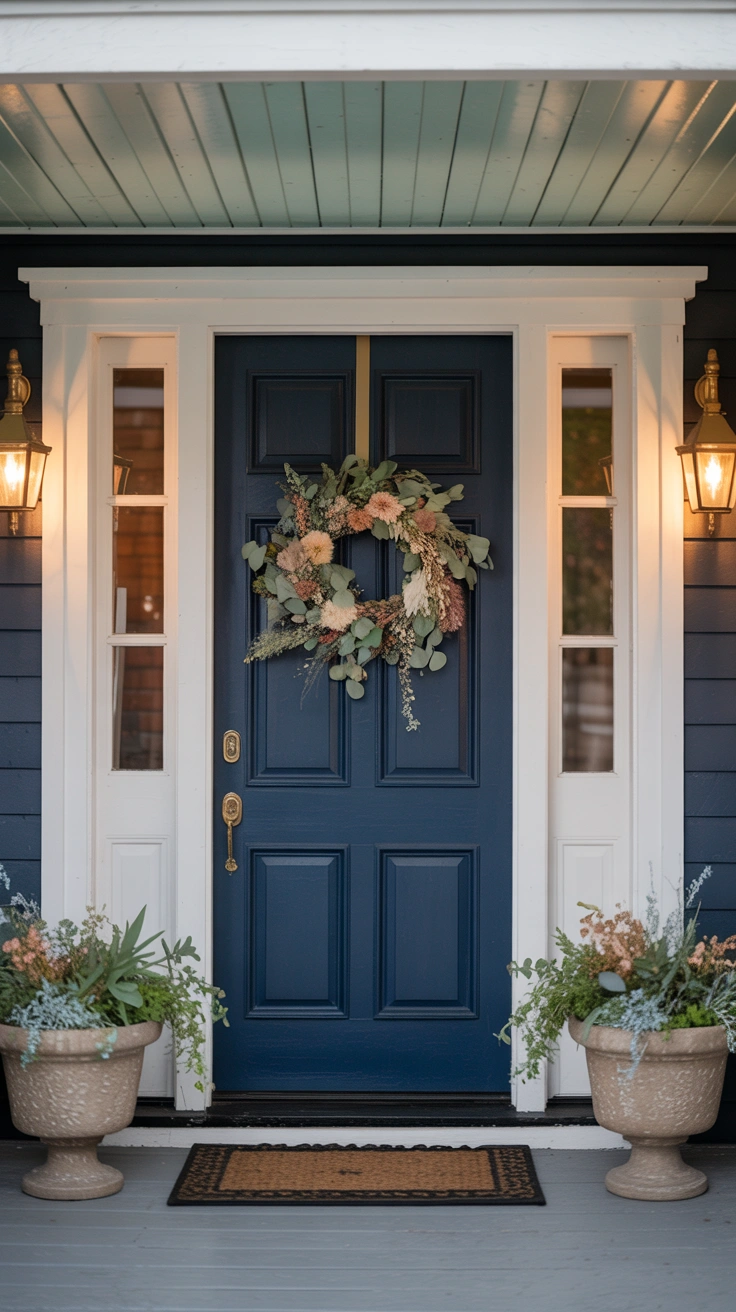
A wreath on the front door is one of the oldest and most reliably effective front porch decor traditions — and its enduring popularity comes from the simple fact that it works. A well-chosen wreath at the center of the front door completes the composition of the entry in a way that nothing else quite replicates. It softens the hard geometry of the door, introduces organic form and texture, and communicates a welcome that feels genuinely personal.
A eucalyptus and dried flower wreath in warm, muted tones for a contemporary, year-round option. A seasonal wreath updated quarterly — spring blooms, summer greens, autumn foliage and berries, winter pine and dried citrus — for a porch that always feels current. A simple twig or grapevine wreath in a natural finish for something that suits more rustic or farmhouse-style homes.
IMO, the wreath is the single most impactful small addition available to any front door — and the effort required to hang one is so minimal that the return on that effort is extraordinary. Change it four times a year and the porch never stops feeling fresh.
7. Paint or Stain the Porch Floor
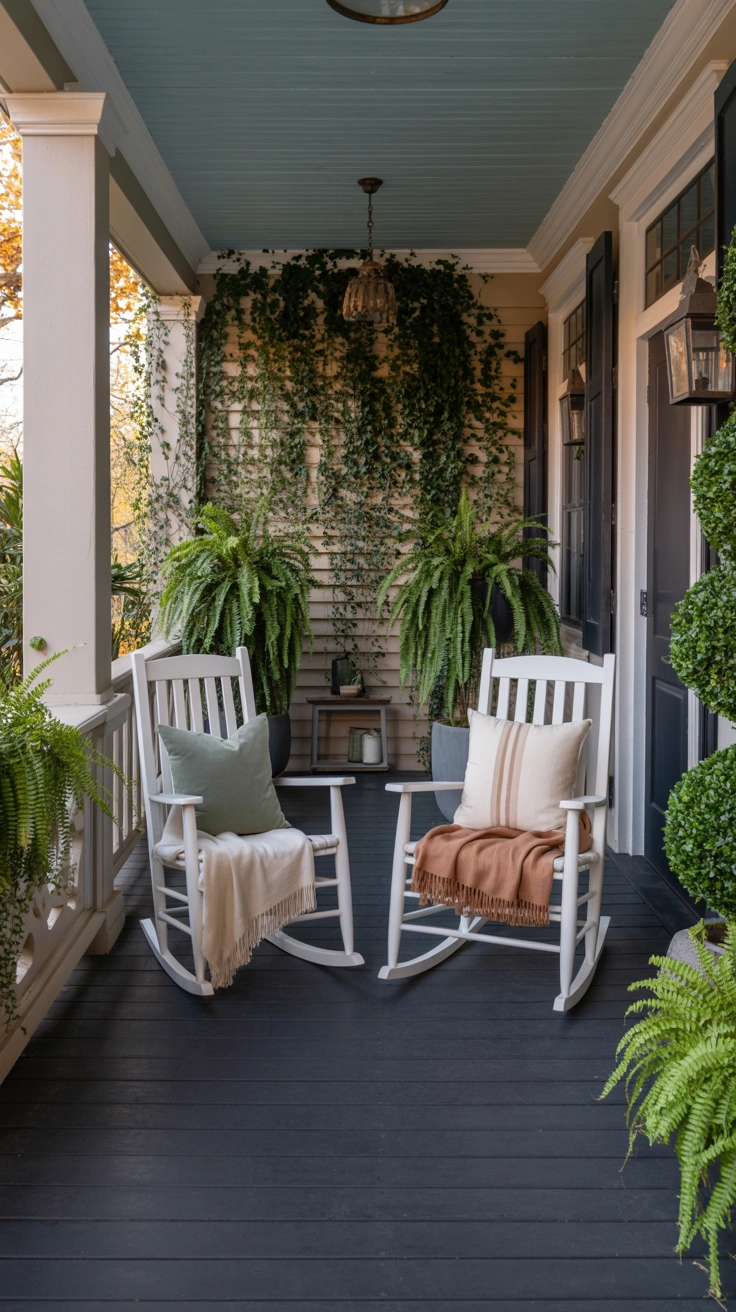
The porch floor is one of the largest visible surfaces in the entire exterior composition — and a worn, weathered, or simply neutral floor undermines every other decorating decision made above it. A painted or stained porch floor creates a foundation of visual intention that makes everything positioned on it look more considered and more complete.
A painted floor in a classic grey, warm white, or deep charcoal for something clean and architectural. A stained timber floor in a warm honey or rich walnut tone for something that celebrates the natural material beneath the surface treatment. A painted geometric pattern or simple border detail for something more decorative and visually interesting. A floor cloth or outdoor rug in a bold pattern for something that adds color and graphic energy without requiring any permanent treatment.
The floor treatment sets the material tone for the entire porch. It is the surface that connects every other element — the seating, the plants, the lighting, the door — and getting it right makes the whole composition look resolved in a way that a neglected floor never can.
8. Style a Small Porch Vignette
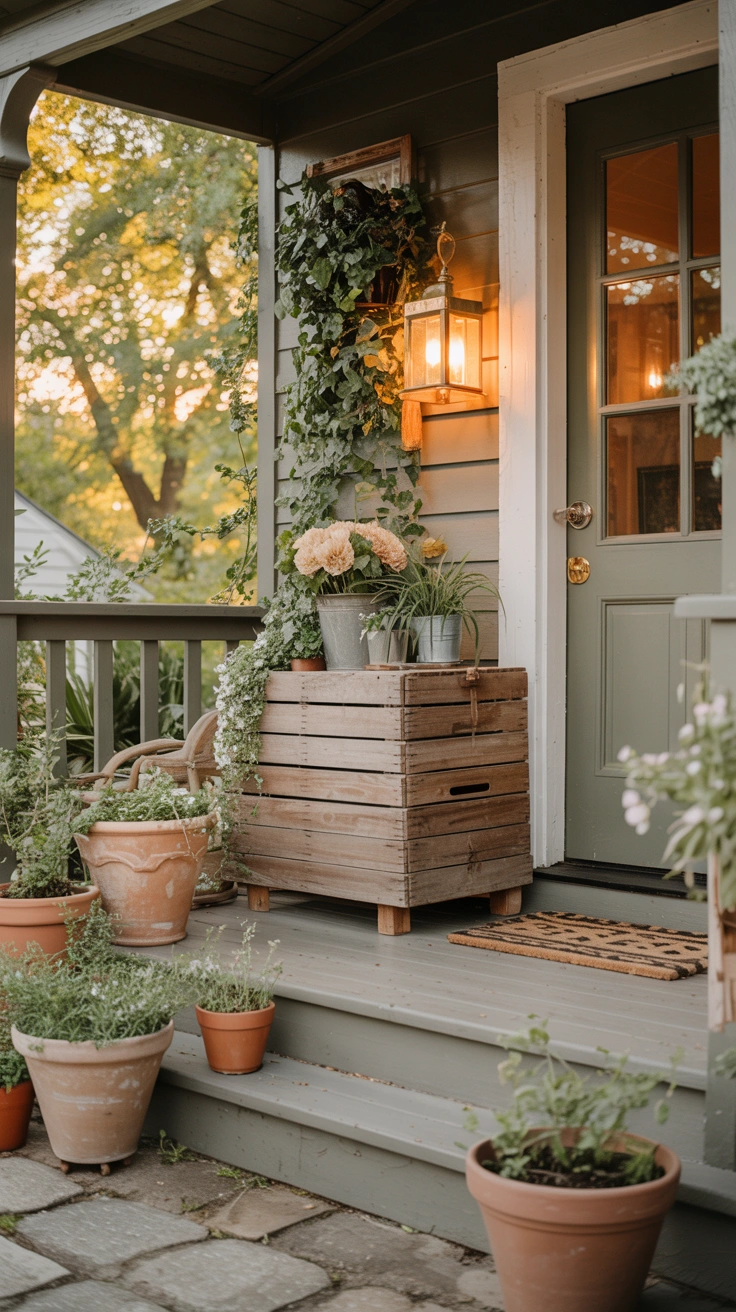
Every well-decorated front porch has at least one moment of deliberate styling — a small grouping of objects that creates visual interest, organic warmth, and a sense of personality that generic porch decor cannot provide. Think of it as a front porch vignette: a considered arrangement of three to five elements that work together to create something that feels more than the sum of its parts.
A vintage milk crate or wooden crate beside the door holding a trailing plant, a small lantern, and a stack of firewood. A collection of terracotta pots in graduating sizes grouped beside the steps with different plants at different heights. A small bistro table with two chairs, a potted plant, and a candle lantern creating a miniature outdoor seating moment on even the smallest porch.
Vignette Elements That Create Warmth
- A lantern — in aged brass, matte black, or weathered iron, with a real or battery candle inside
- A plant — in a pot that complements the overall porch material palette
- A natural material — a wooden crate, a woven basket, a bundle of dried botanicals
- One personal element — a house number, a small sign, something that makes the vignette specific to this home
The vignette is where the porch’s personality concentrates — and a well-styled one stops people in a way that even beautifully maintained plants and good lighting alone cannot fully achieve.
9. Introduce Outdoor Textiles for Warmth and Color
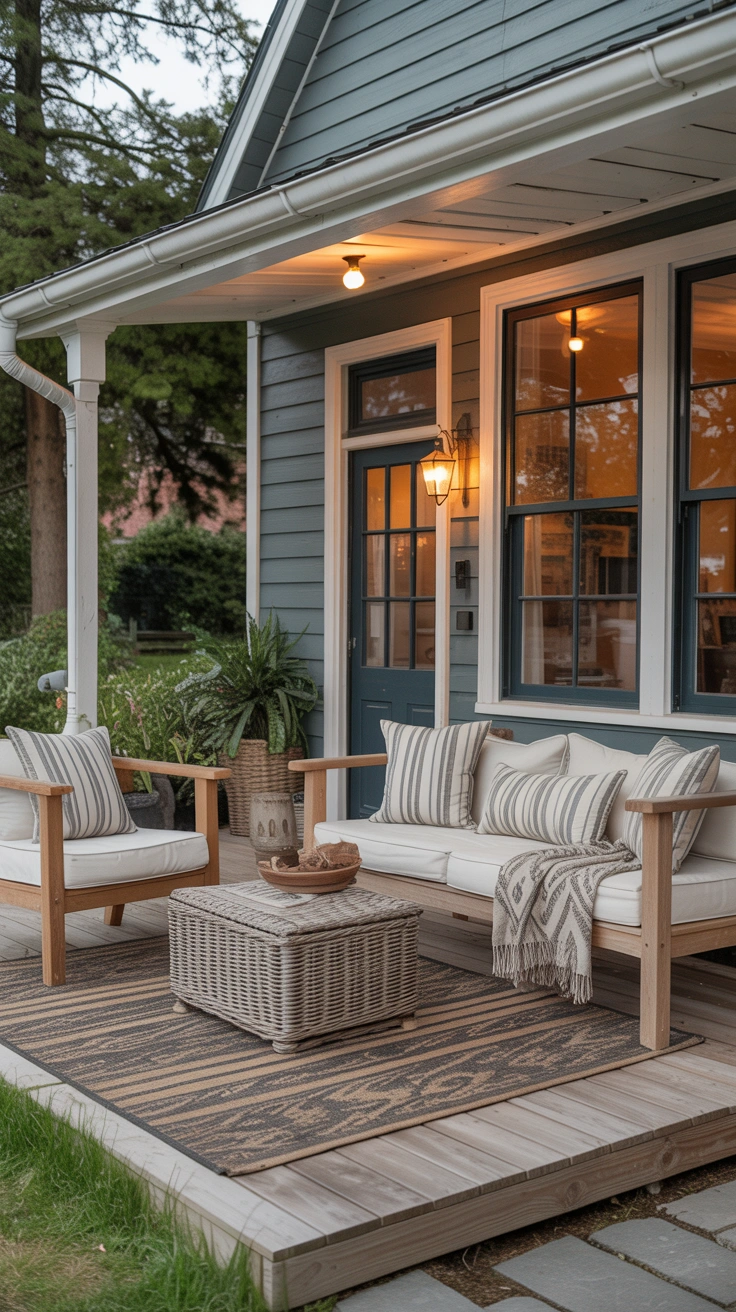
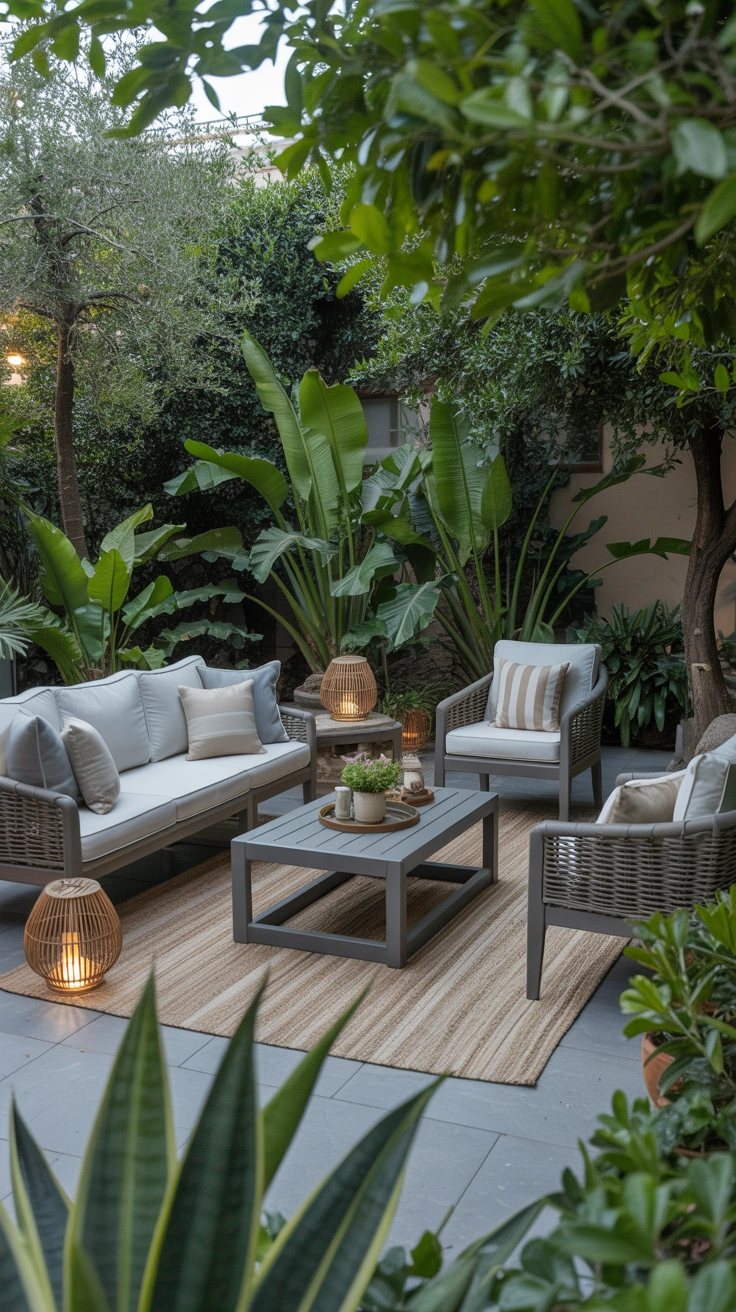
Textiles on a front porch — cushions on the seating, a throw draped over a chair back, an outdoor rug beneath the furniture — transform the space from an exterior surface into something that feels like a room. The softness of fabric in an outdoor context creates an immediate sense of welcome and habitation that hard surfaces alone cannot produce.
Outdoor cushions in weather-resistant fabric in a stripe, a botanical, or a solid in a color that connects to the front door or the porch’s overall palette. An outdoor rug beneath the seating area in a flat-weave or woven construction that handles moisture and foot traffic without deteriorating. A weatherproof throw in a neutral-toned waffle or woven texture draped over a chair for something that reads as lived-in and genuinely welcoming.
Choose textiles in colors and patterns that work together rather than treating each piece as an independent decision. A cohesive palette across the cushions, rug, and throw creates a porch that looks designed. Competing patterns and colors in outdoor textiles create a porch that simply looks busy.
10. Get the Scale and Symmetry Right
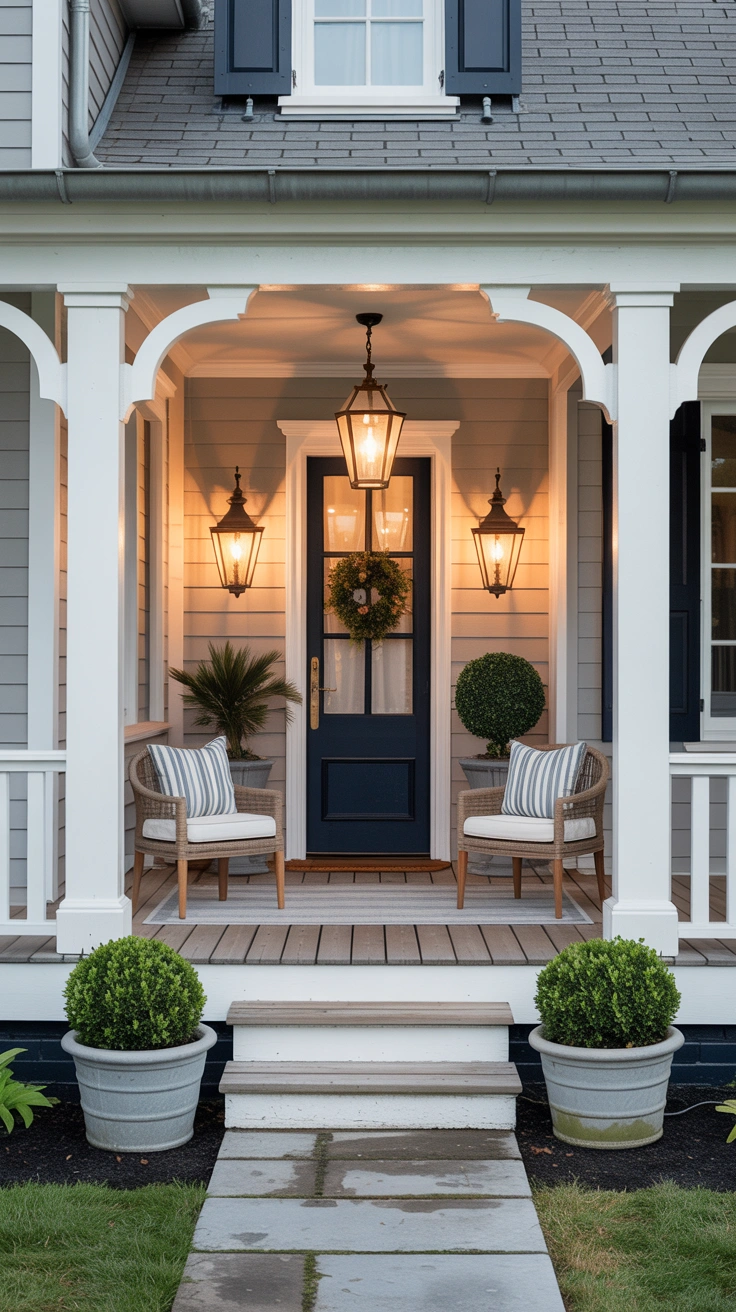
The final front porch decor idea is the foundational principle that determines whether all the others work together or feel disconnected — understanding that scale and symmetry on a front porch are the structural decisions that make everything else read as intentional. A beautifully chosen pot in the wrong size. A stunning piece of seating that overwhelms the available floor area. A wreath that is too small for the door it hangs on. These scale errors undermine even the most beautiful individual choices.
Symmetry creates a classical, composed quality at the entry that reads as considered from the street. Two matching planters flanking the door. Two matching sconces on either side of the entry. Two matching chairs on either side of the seating area. Symmetry does not require identical items on each side — it requires visual balance. A tall plant on one side balanced by a smaller cluster of pots on the other achieves symmetry through weight rather than replication.
Porch Scale Guidelines
- Planters — at least 18 inches tall for a standard entry door, 24 inches and above for a generous porch
- Doormat — wide enough to span at least the width of the door itself, ideally wider
- Wreath — at least two-thirds the width of the door for proper visual proportion
- Seating — leave at least 36 inches of clear pathway to the door regardless of what seating is added
- Lighting — fixtures scaled to the height of the porch ceiling, not the minimum available size
Getting the scale and symmetry right costs nothing beyond attention. It is the decision that makes a porch look designed from the street — and the street view is the one that matters most.
Conclusion
Ten front porch decor ideas that cover every element of a great exterior entry — a front door color and hardware that commands attention, seating that makes the porch a destination, a quality doormat that anchors the entry, intentional potted plants in considered vessels, lighting that performs after dark, a seasonal wreath that completes the door, a painted or stained floor that resolves the composition, a styled vignette that concentrates personality, outdoor textiles that add warmth and color, and scale and symmetry that ties the whole thing together. Each idea contributes a different layer to the same result — a front porch that stops people, creates a genuine welcome, and makes coming home feel like arriving somewhere worth arriving at.
The front porch is the most public room in the house — the one that introduces the home to everyone who passes, visits, or simply glances over while walking by. It deserves the same thought and intention you bring to the rooms inside.