How To Layer Rugs Living Room Ideas That Add Depth, Warmth and Serious Style
Layering rugs in a living room is one of those design moves that looks effortlessly intentional when done well — and completely baffling when done badly. The difference between a layered rug arrangement that looks like a carefully considered design decision and one that looks like two rugs that couldn’t agree on who should be there is entirely in understanding a handful of specific principles. I resisted rug layering for years because it seemed like a decorating technique reserved for people with an instinctive eye for these things, then finally tried it on a Saturday afternoon with two rugs I already owned — and the result was so immediately good that I spent the rest of the day rearranging every room in the house. These 10 ideas cover everything from size relationships to material combinations, pattern pairings, and the specific techniques that make layered rugs look designed rather than accidental.
1. The Base Rug Is Everything
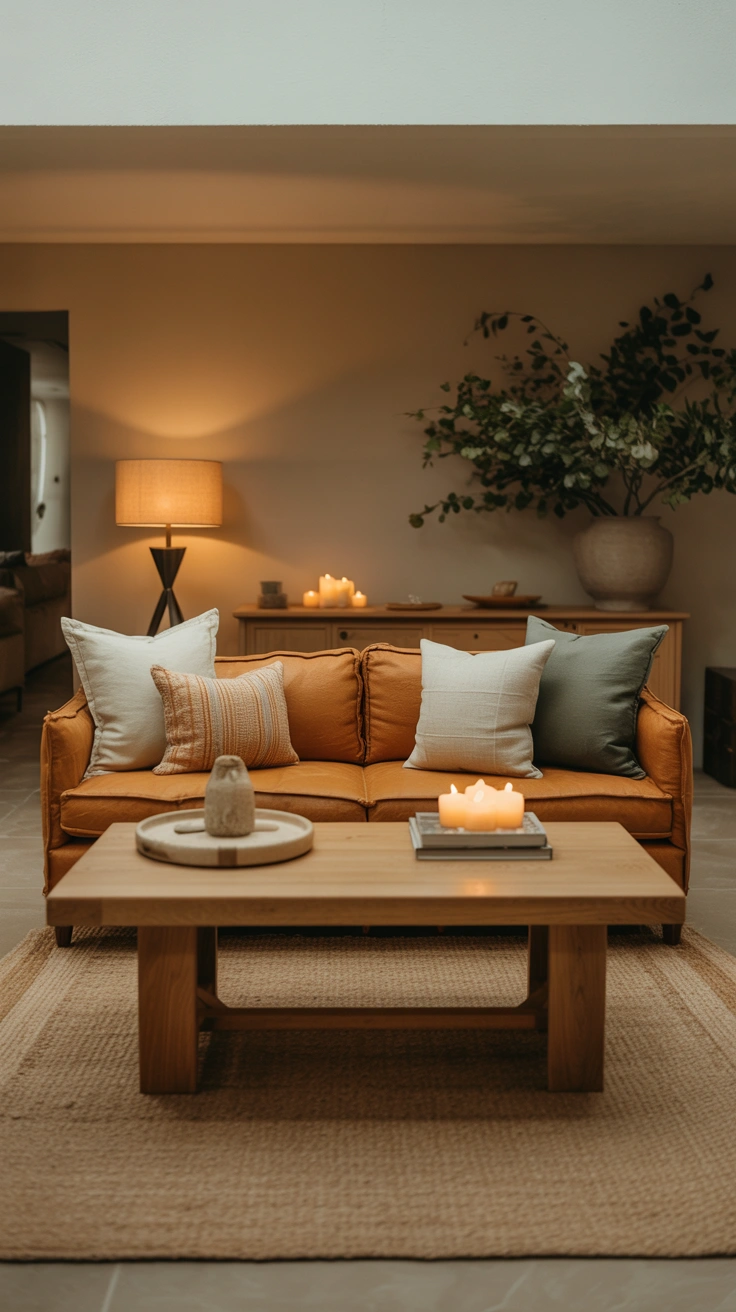
The success of any layered rug arrangement begins with the base rug — the larger rug that sits directly on the floor and provides the foundation for everything above it. Get this right and the rest of the layering process becomes significantly easier. Get it wrong and no top rug will fix it.
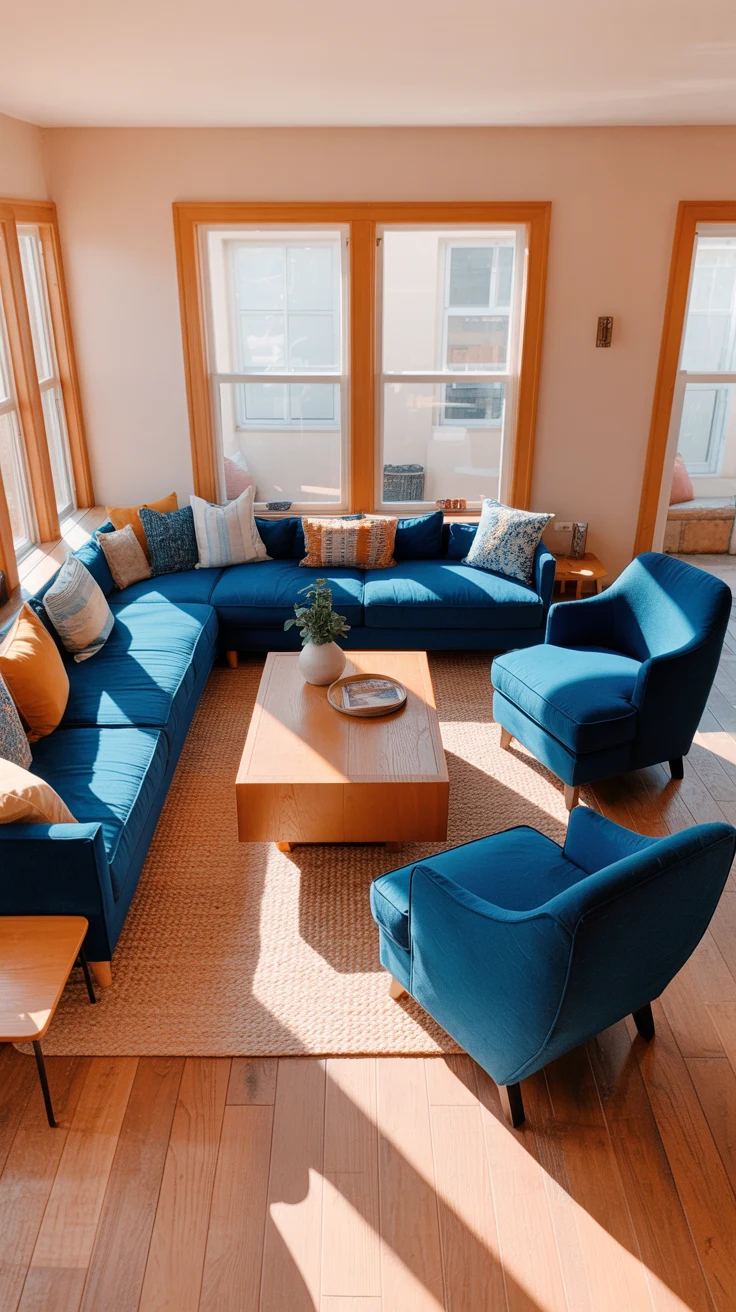
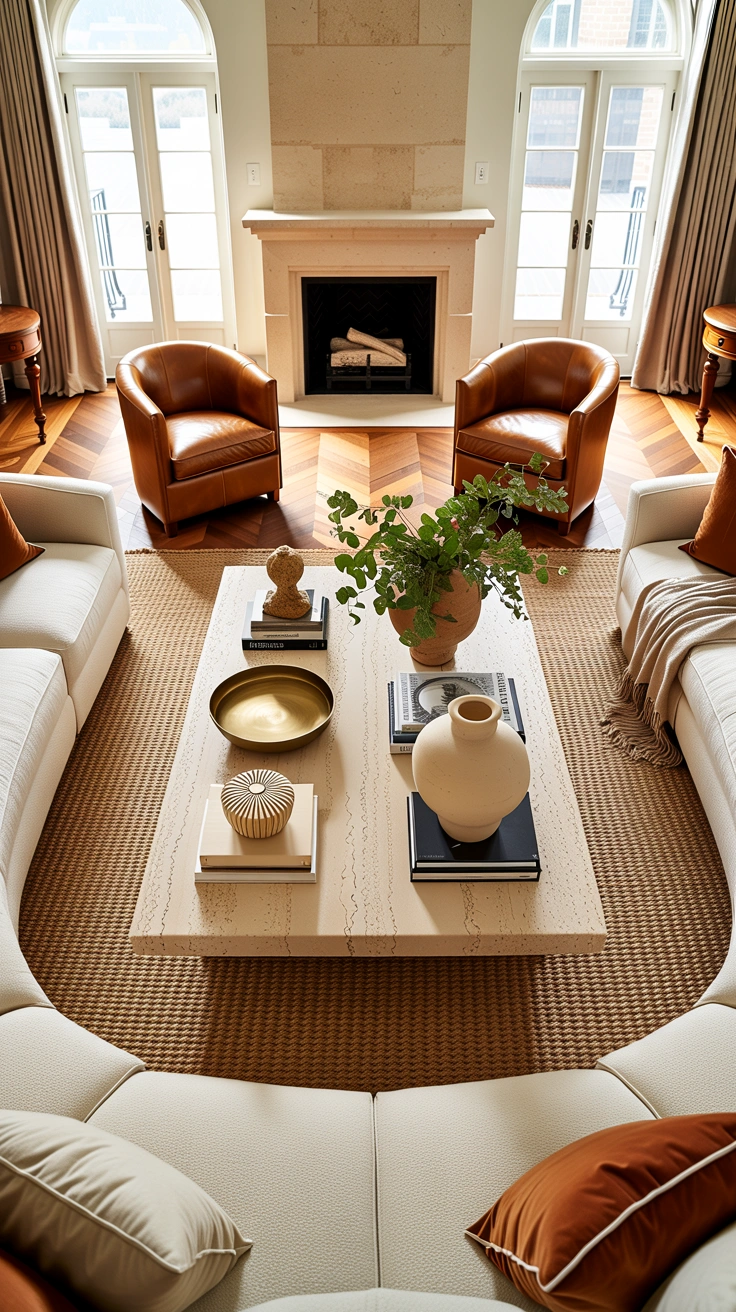
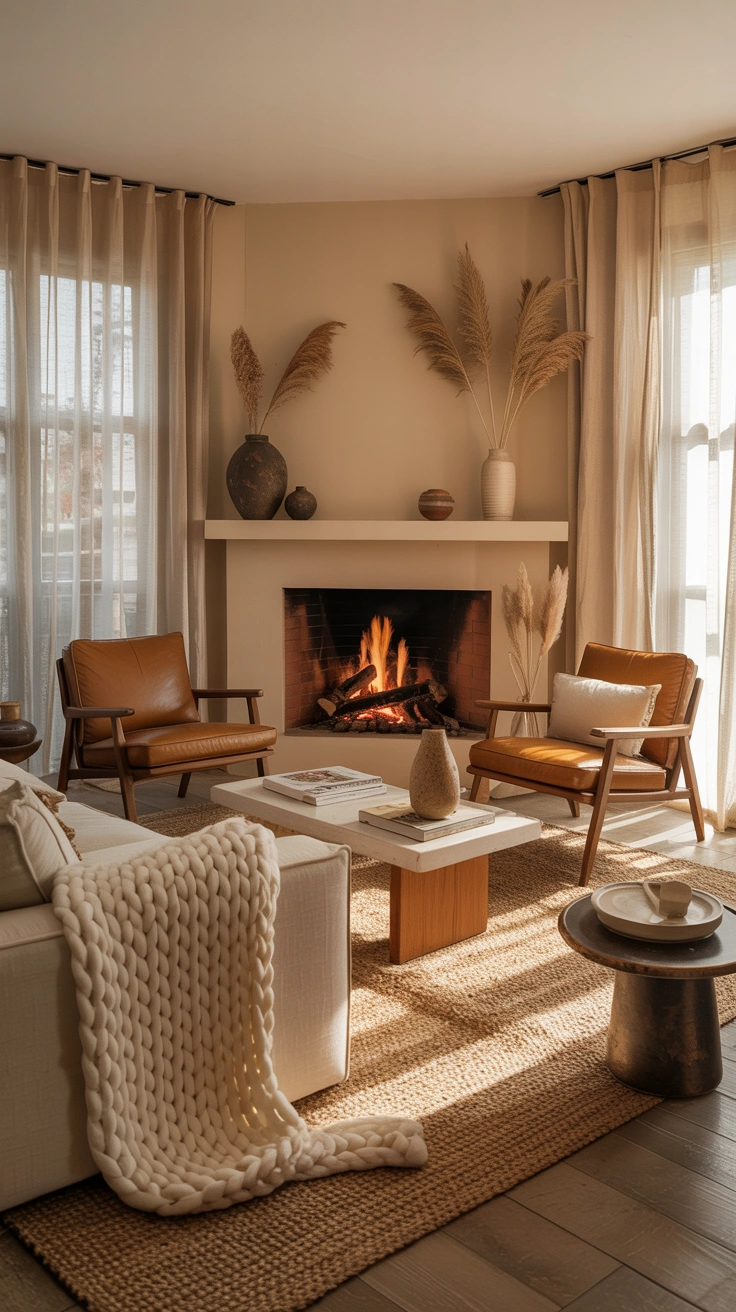
The base rug should be large enough to anchor the entire seating group — ideally with all four legs of every sofa and armchair resting on it, or at minimum the front legs. Natural fibre rugs in jute, sisal, or seagrass make the most effective base rugs because their neutral, organic tones work with almost any top rug choice and their flat, low-profile texture doesn’t compete visually with whatever sits above them. A natural jute base rug is the starting point for the majority of the world’s most beautiful layered rug arrangements — and there’s a reason for that.
2. Size Relationship Between the Two Rugs
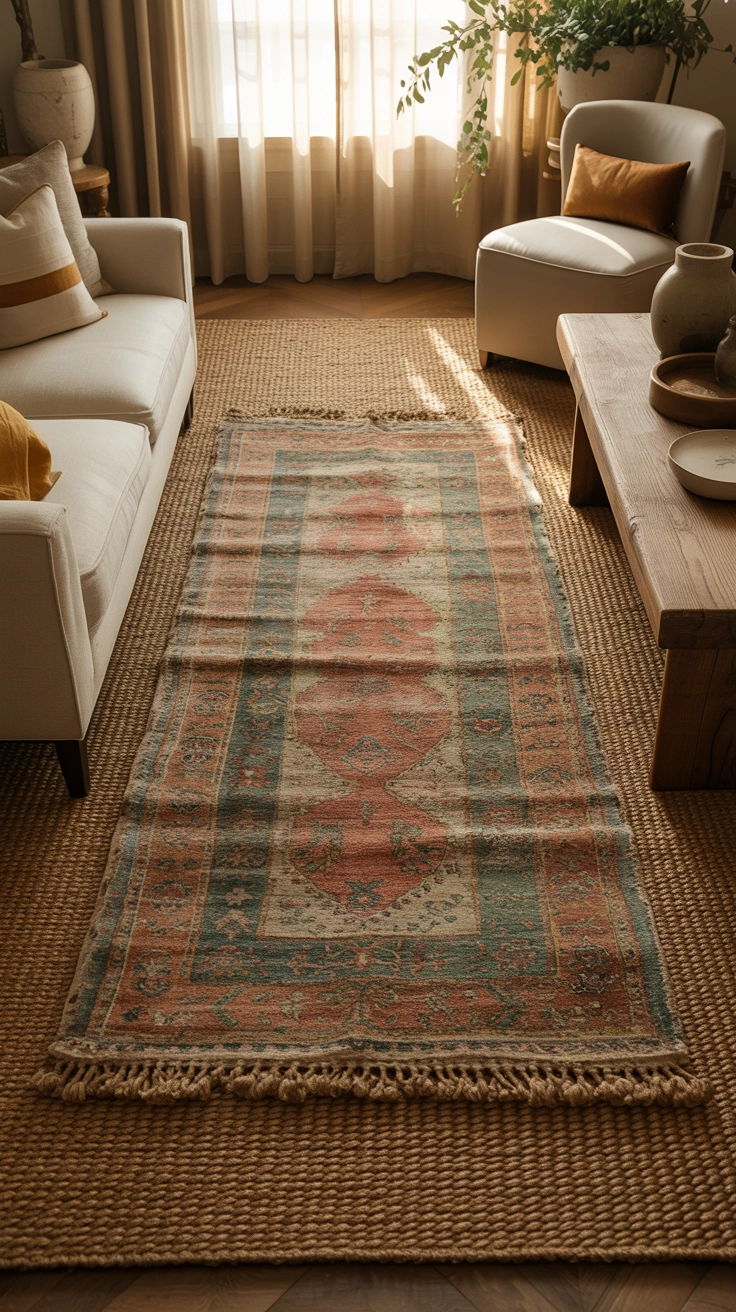
The size relationship between the base and top rug is the technical decision that determines whether the layering reads as intentional or simply chaotic. Too little difference in size and the two rugs compete for the same visual territory. Too much difference and the top rug looks lost on top of the base.
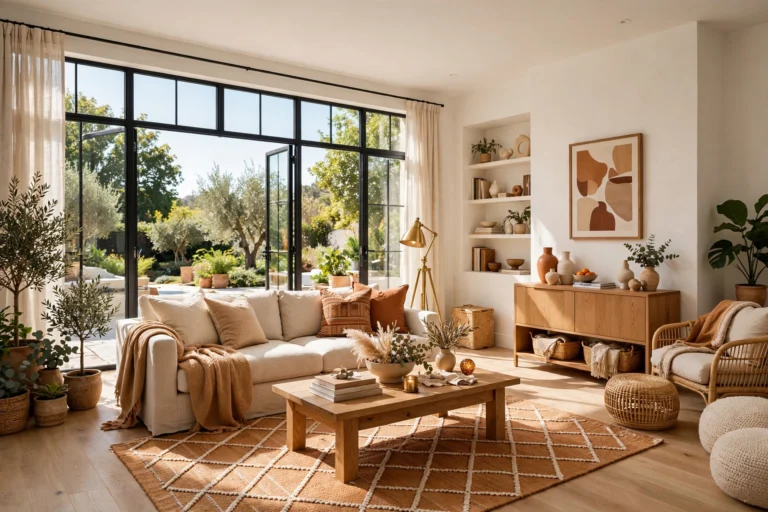
The ideal size relationship leaves approximately 30 to 50 centimetres of the base rug visible around the edges and foot of the top rug. If your base rug is 240x170cm, your top rug should be approximately 160x120cm — large enough to have genuine presence and to anchor a seating area, small enough that the base rug creates a clear visible border around it. This relationship of base showing around top rug is the specific visual signature of intentional rug layering.
3. Texture Contrast Is the Key Principle
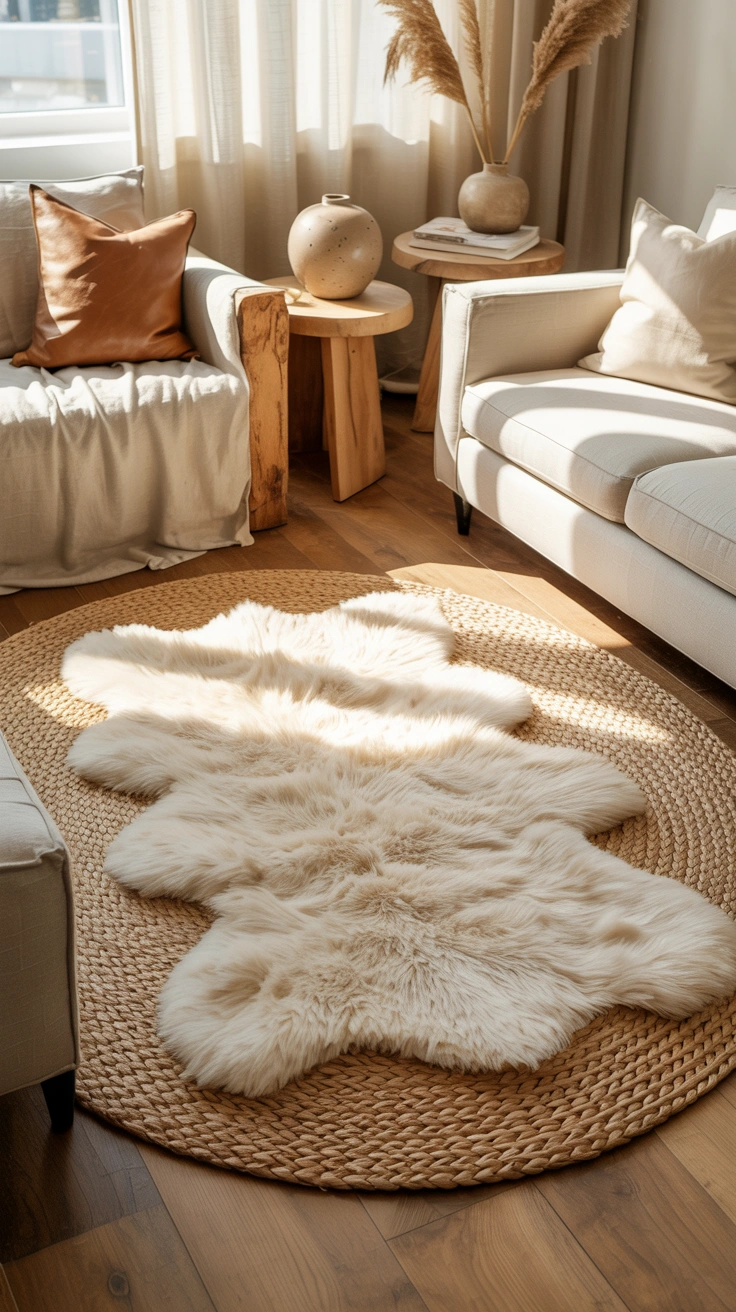
The most important design principle in how to layer rugs in a living room is texture contrast between the two rugs. Two rugs of similar texture layered together look flat and confusing. Two rugs of contrasting texture — one smooth and flat, one with pile or pattern — create the visual interest and material depth that makes layered rugs so compelling.
A flat-weave or low-pile jute base rug beneath a high-pile wool rug creates immediate, striking texture contrast. A sisal base beneath a vintage Persian flatweave creates a combination of organic texture and pattern richness. A smooth dhurrie base beneath a fluffy boucle or shag rug creates the ultimate in tactile contrast. The specific combination matters less than the principle: different textures, clearly contrasting, is what makes the layered rug look work.
4. Pattern Mixing Without the Chaos
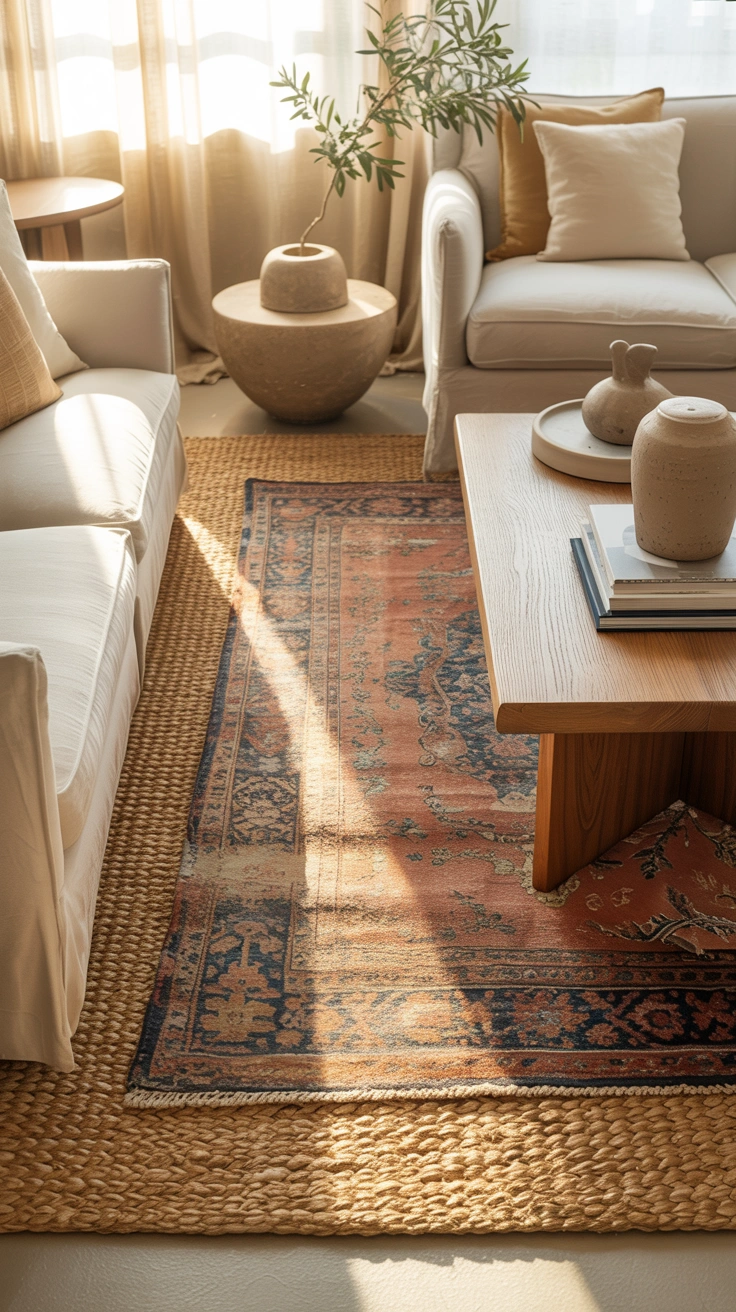
Mixing patterns in layered rugs is the element that most people approach with the most anxiety — and it’s considerably more forgiving than it appears, provided one simple rule is followed: vary the scale of pattern significantly between the two rugs.
A small geometric pattern on the base rug beneath a large botanical or abstract pattern on top creates a combination where neither pattern overwhelms the other. A plain or very subtle texture base beneath a boldly patterned top rug creates the most visual impact for the top rug while keeping the overall composition balanced. Two similarly-scaled, similarly-bold patterns layered directly on top of each other is the only genuinely problematic combination — they fight for the same visual space and create visual noise rather than visual interest.
5. The Diagonal Placement Option
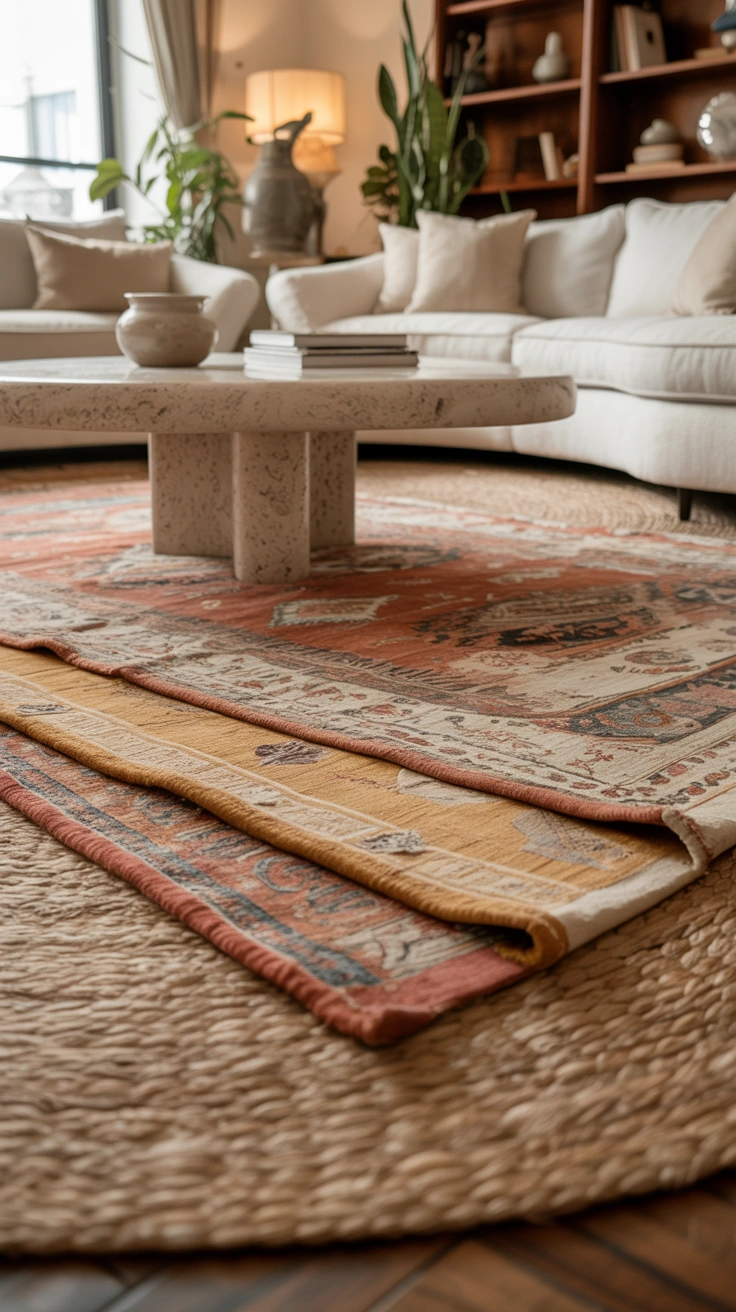
Most layered rug arrangements position the top rug parallel to the bottom rug — and this works beautifully. But a top rug placed at a slight diagonal angle to the base rug creates a different quality of visual energy that is worth considering for rooms with enough scale to carry it.
A diagonally placed top rug creates directional movement within the composition that draws the eye and adds dynamism to the layered arrangement. It works particularly well in L-shaped rooms, rooms with angular furniture arrangements, or rooms where the standard parallel arrangement creates a composition that feels slightly static. The diagonal angle should be gentle — 15 to 20 degrees from parallel — enough to read as intentional without making the room feel restless.
6. Colour Relationships That Always Work
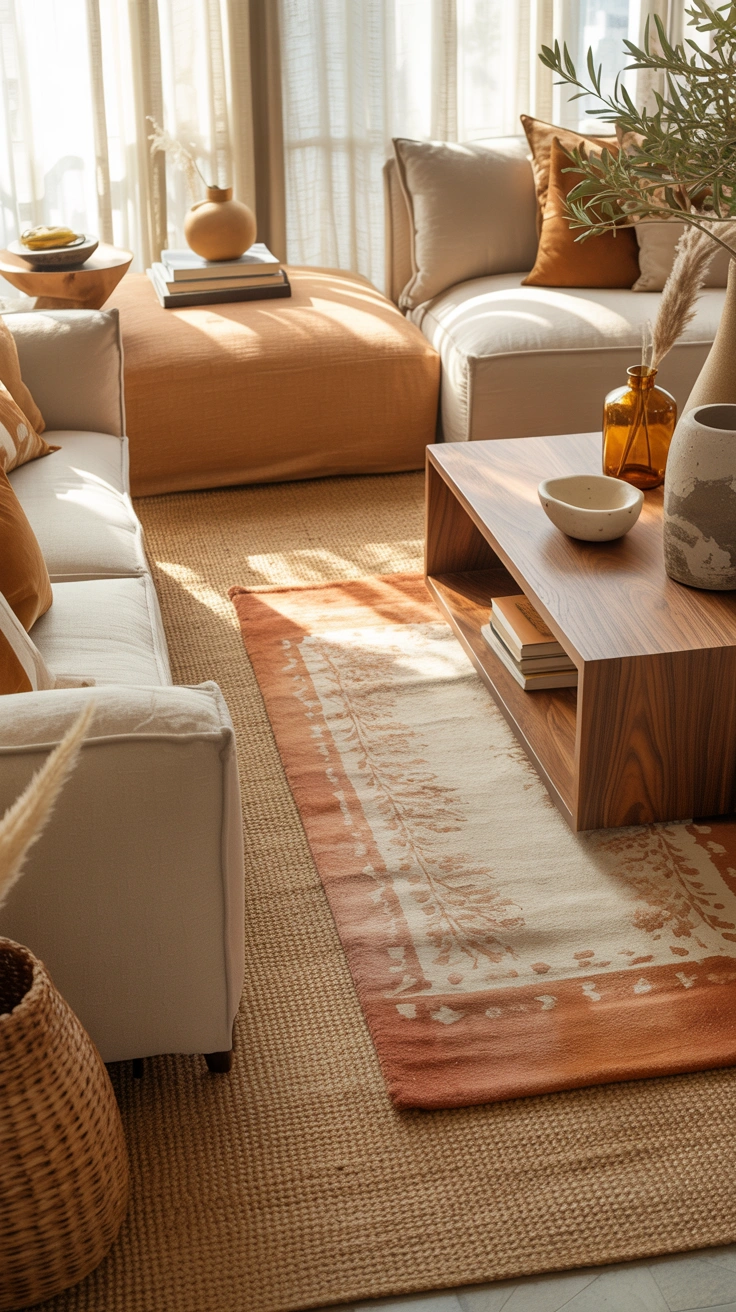
Colour is where rug layering gives you the most flexibility — because the physical separation of the two rugs by texture and pile height means colour combinations that would be overwhelming on a single surface read as balanced and intentional when layered.
FYI — the colour combinations that consistently produce the most beautiful layered rug arrangements are tonal pairings (two rugs in different depths of the same colour family), complementary pairings (a warm neutral base beneath a warm jewel-toned top), and natural neutral combinations (natural jute or sisal beneath any warm, earthy tone). The combination to approach carefully is two rugs of equal visual weight and equal colour saturation — this creates competition rather than harmony.
7. Vintage Rugs as the Top Layer
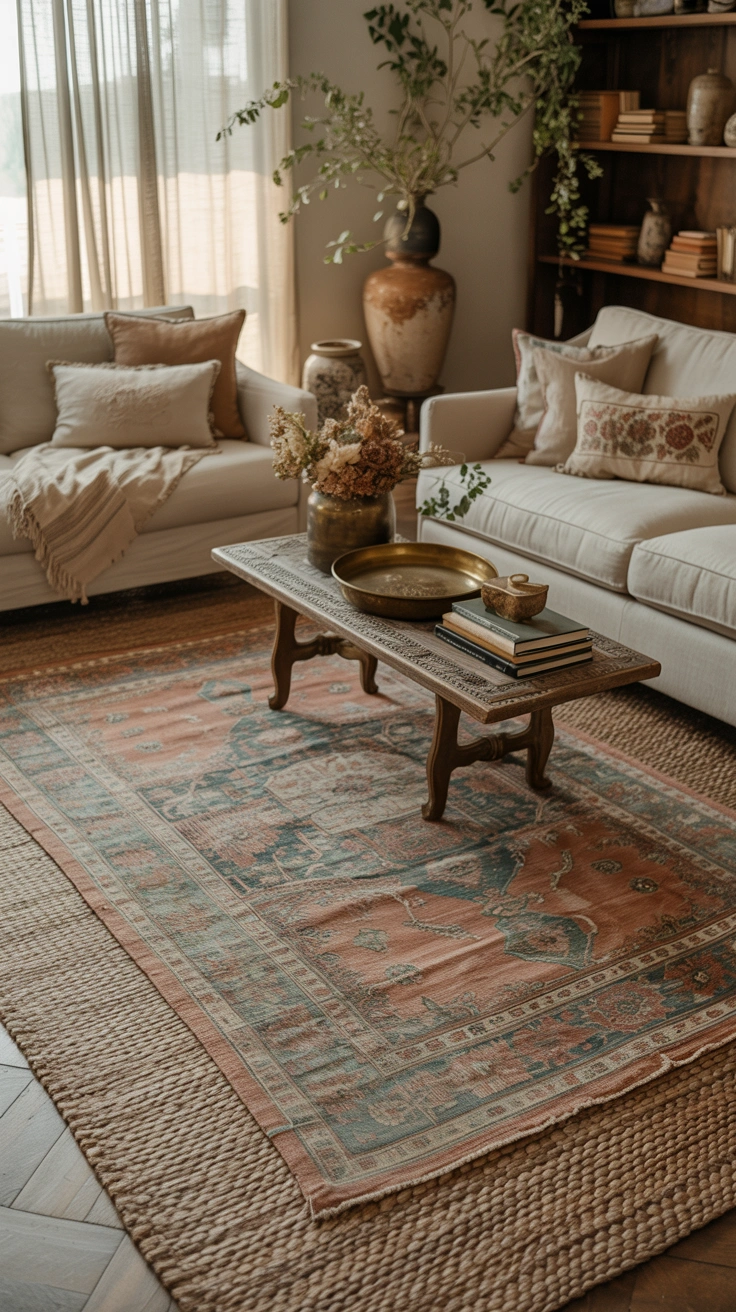
Vintage or antique rugs are among the most beautiful and most characterful choices available for the top layer in a layered rug arrangement — and they are frequently available at accessible price points precisely because their worn, faded quality makes them less desirable to buyers who want pristine rugs. In a layered context, that worn quality is exactly what makes them extraordinary.
A vintage Persian, Turkish kilim, or Moroccan Beni Ourain as the top layer on a natural jute base creates a combination of organic foundation and gathered, aged character that feels genuinely collected rather than purchased. The fading and slight irregularity of a vintage rug adds the specific quality of authenticity and history that new rugs consistently lack — and in a layered arrangement, these qualities are amplified by the contrast with the fresh, clean base beneath.
8. Non-Slip Solutions Between Layers
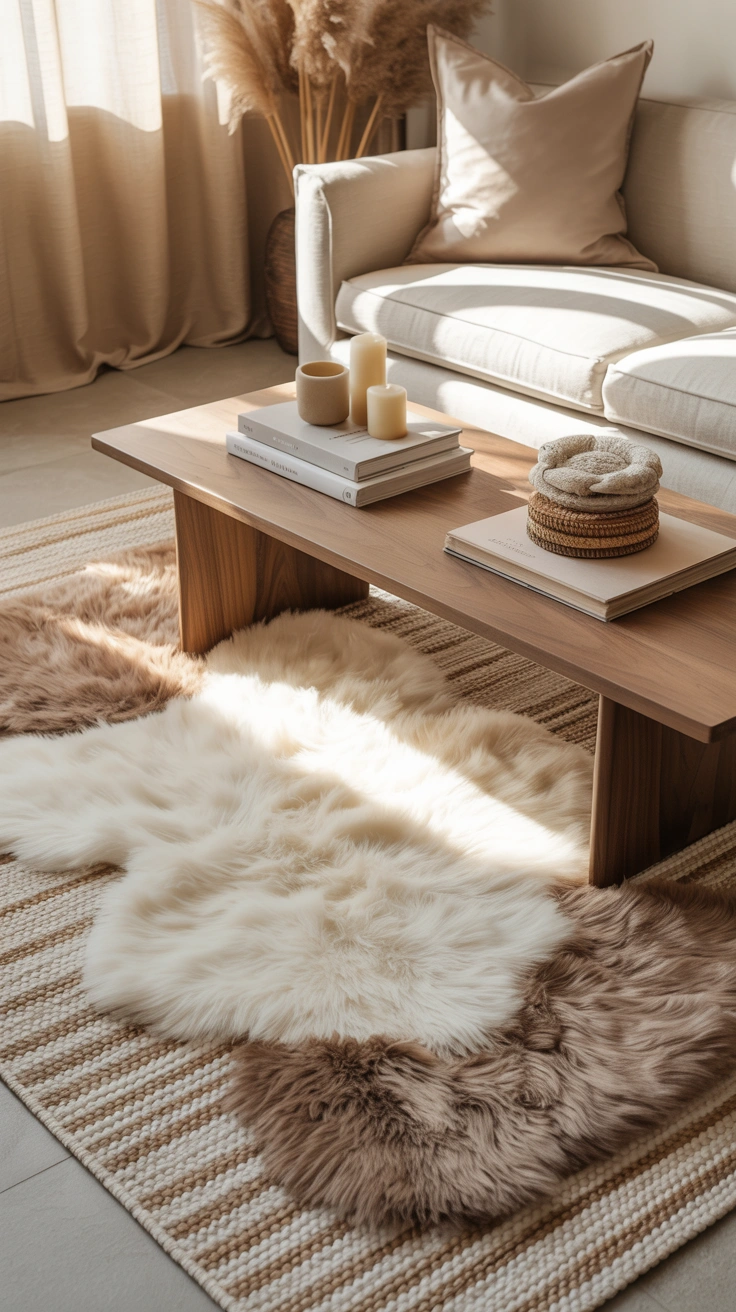
The practical question of how to prevent the top rug from sliding on the base rug is the most commonly asked and most easily solved element of rug layering. A top rug that moves every time someone walks across it is not a design feature — it’s a hazard and an irritant.
A rug-to-rug non-slip pad placed between the base and top rug prevents movement entirely. These are inexpensive, cut to size, and completely invisible in use. The alternative — rug grip tape applied at the corners of the top rug — works well for smaller layered rugs but is less effective for larger top rugs with more movement potential. Solve the non-slip question before styling the arrangement rather than discovering it as a problem after guests have shuffled the top rug out of position.
9. Layering Rugs in Specific Room Configurations
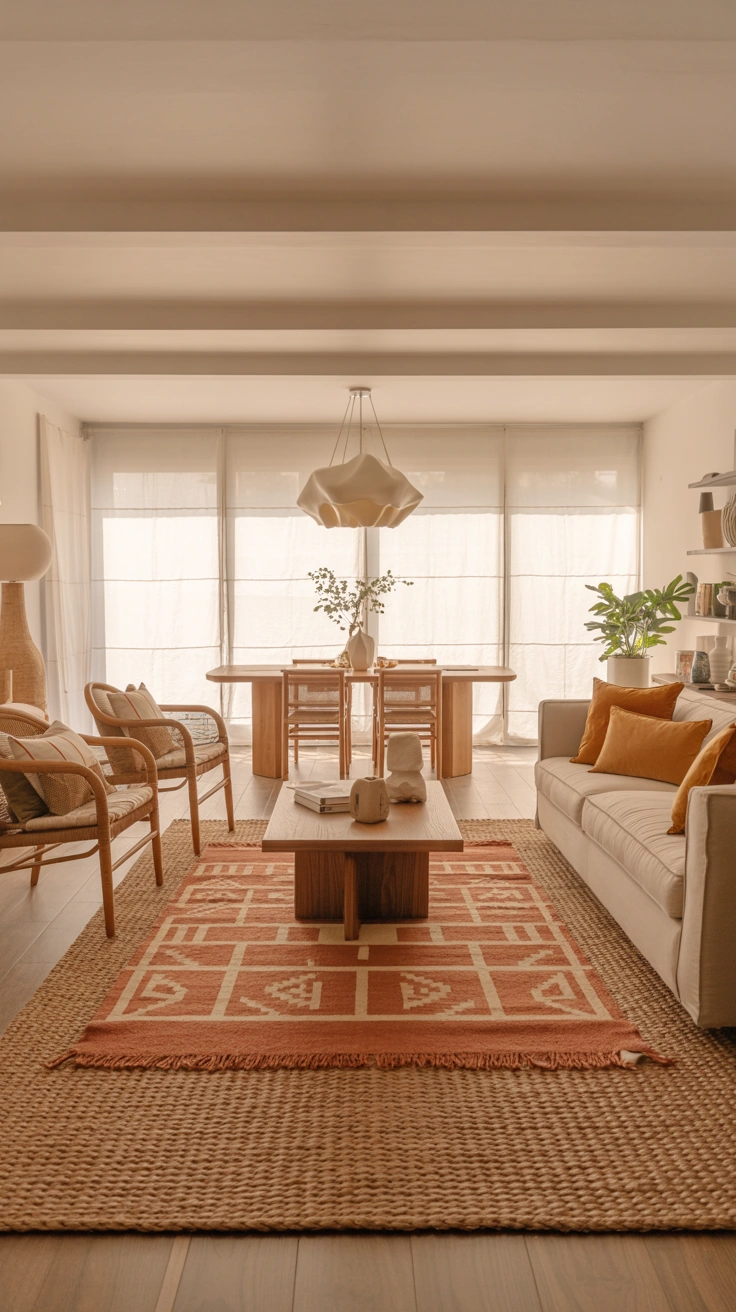
The principles of how to layer rugs in a living room apply across different room configurations — but each configuration has specific considerations that are worth understanding before choosing rug sizes and positioning.
Configuration-Specific Guidance:
Standard rectangular room: Base rug anchoring the full seating group, top rug centered within the seating arrangement. This is the most straightforward application of layering principles.
L-shaped room: Consider two separate layered arrangements — one for each section of the L — rather than one very large base rug attempting to cover both sections.
Open plan living-dining: The layered rug arrangement defines the living zone within the open plan space. The base rug should extend to the natural boundaries of the living zone; the top rug should sit within the primary seating area.
Small living room: A modest base rug (160×120) with a smaller top rug (120×80) creates the layering effect at a scale appropriate to compact spaces. The principles remain identical — only the dimensions reduce.
10. The Finished Look — Styling Around the Layers
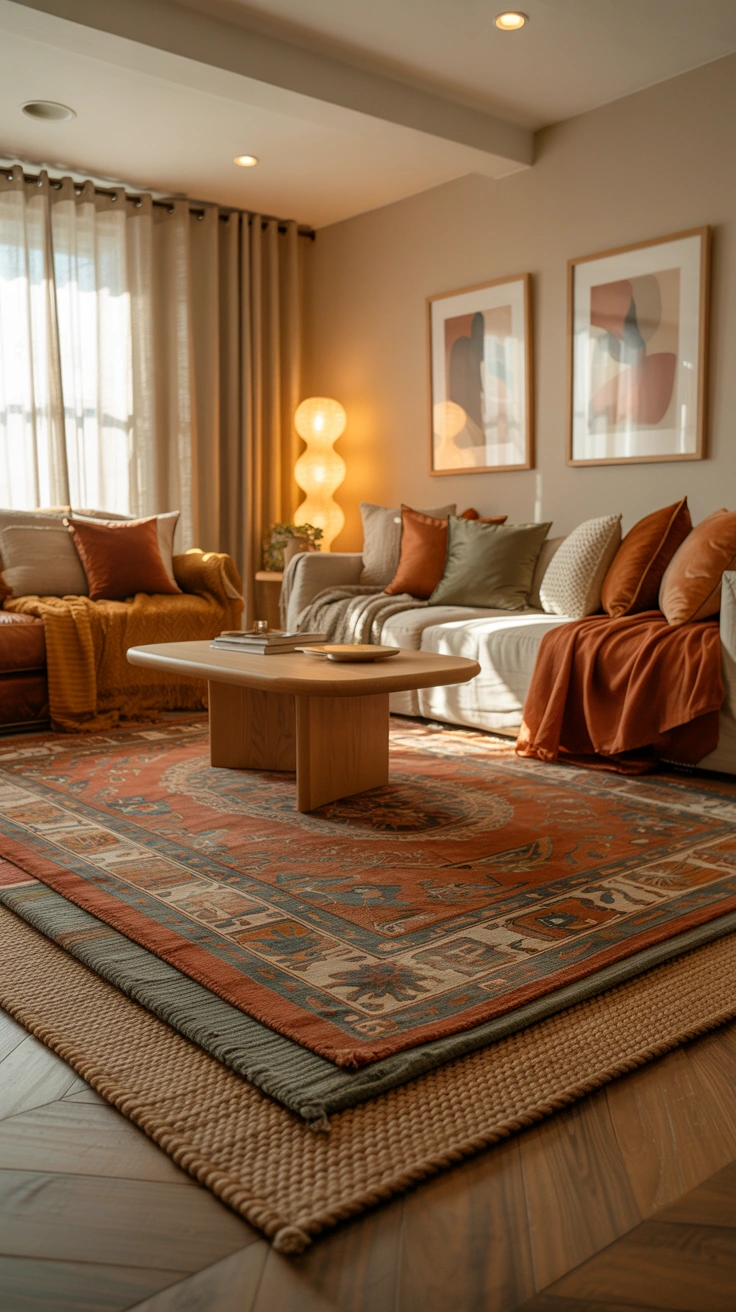
IMO, the layered rug arrangement reaches its full visual potential when the rest of the room’s styling responds to and complements the combination rather than ignoring it. The layered rug is a significant visual element in the living room — and treating it as such in the overall styling creates a room of genuine coherence.
Pull accent colours from the top rug into cushions, throws, and accessories elsewhere in the room — creating a visual thread between the floor and the seating above it. Choose a coffee table that sits cleanly on the top rug without covering its pattern entirely. Position floor lamps so their bases sit on the base rug rather than the top rug, reinforcing the visual hierarchy of the layered arrangement. These small styling responses to the layered rugs create a room that feels composed from floor to ceiling rather than simply well-furnished at each individual level.
Conclusion
Ten ideas that cover every dimension of how to layer rugs in a living room — from choosing the right base rug and understanding the size relationship, through texture contrast, pattern mixing, diagonal placement, colour relationships, vintage choices, non-slip solutions, room-specific configurations, and the styling that completes the arrangement.
Rug layering is one of the highest-impact and lowest-risk living room upgrades available. It adds depth, warmth, pattern, and the specific quality of gathered, considered style that rooms built from single rugs rarely achieve — and it can be tried, adjusted, and changed without any permanent commitment.
Try it this weekend with rugs you already own. The worst outcome is that you put one of them back where it was. The most likely outcome is that you immediately start looking for another vintage Persian to add to your collection.