Dark & Moody Small Apartment Decor Ideas That Feel Luxurious
Introduction
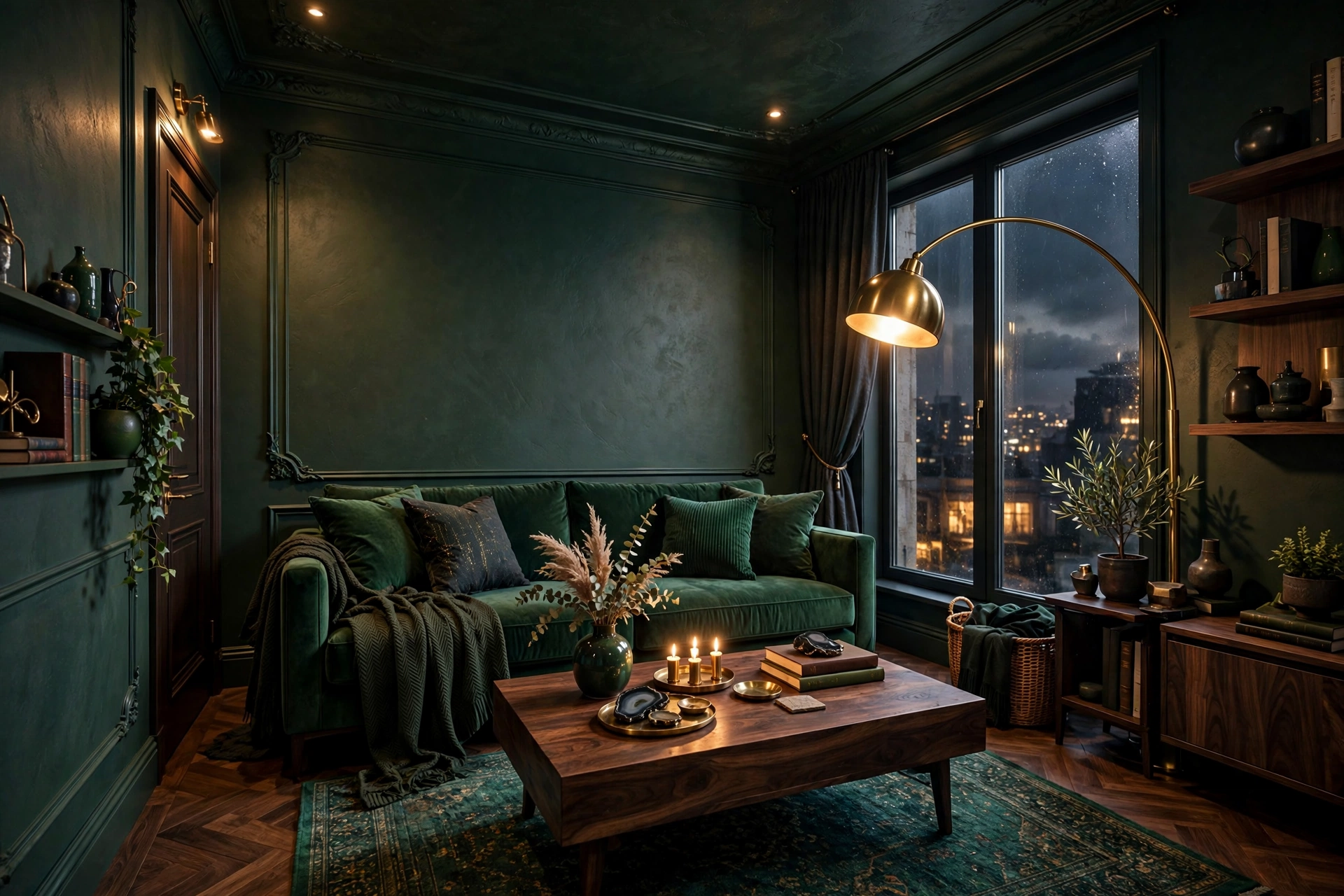
Dark and moody does not mean dark and gloomy. The most luxurious small apartments are often the ones that lean into depth instead of fighting it: walls wrapped in inky green or warm charcoal, velvet that drinks the light, brass that catches it back. A small space wrapped in rich color feels intimate and intentional in a way pale minimalism rarely achieves — like a jewel box instead of a shoebox.
The fear, of course, is that dark colors will swallow a small apartment whole. That only happens when dark is done carelessly: one dim overhead bulb, flat black walls with nothing to reflect, clutter piling up in the shadows. Done well, a moody palette actually flatters small rooms, because deep color blurs corners and edges, making walls feel farther away rather than closer. Designers have used this trick in boutique hotels and tiny city flats for decades.
What follows are fifteen dark apartment decor ideas that bring the drama without the cave effect, each adapted for rentals and small footprints. Many of these pair beautifully with proven tiny apartment decorating ideas for layout and storage, so the room stays as functional as it is atmospheric. Pick three or four, start with lighting and one painted accent, and watch the whole apartment take on a completely different character by the weekend.
1. Drench One Wall in a Deep, Saturated Color
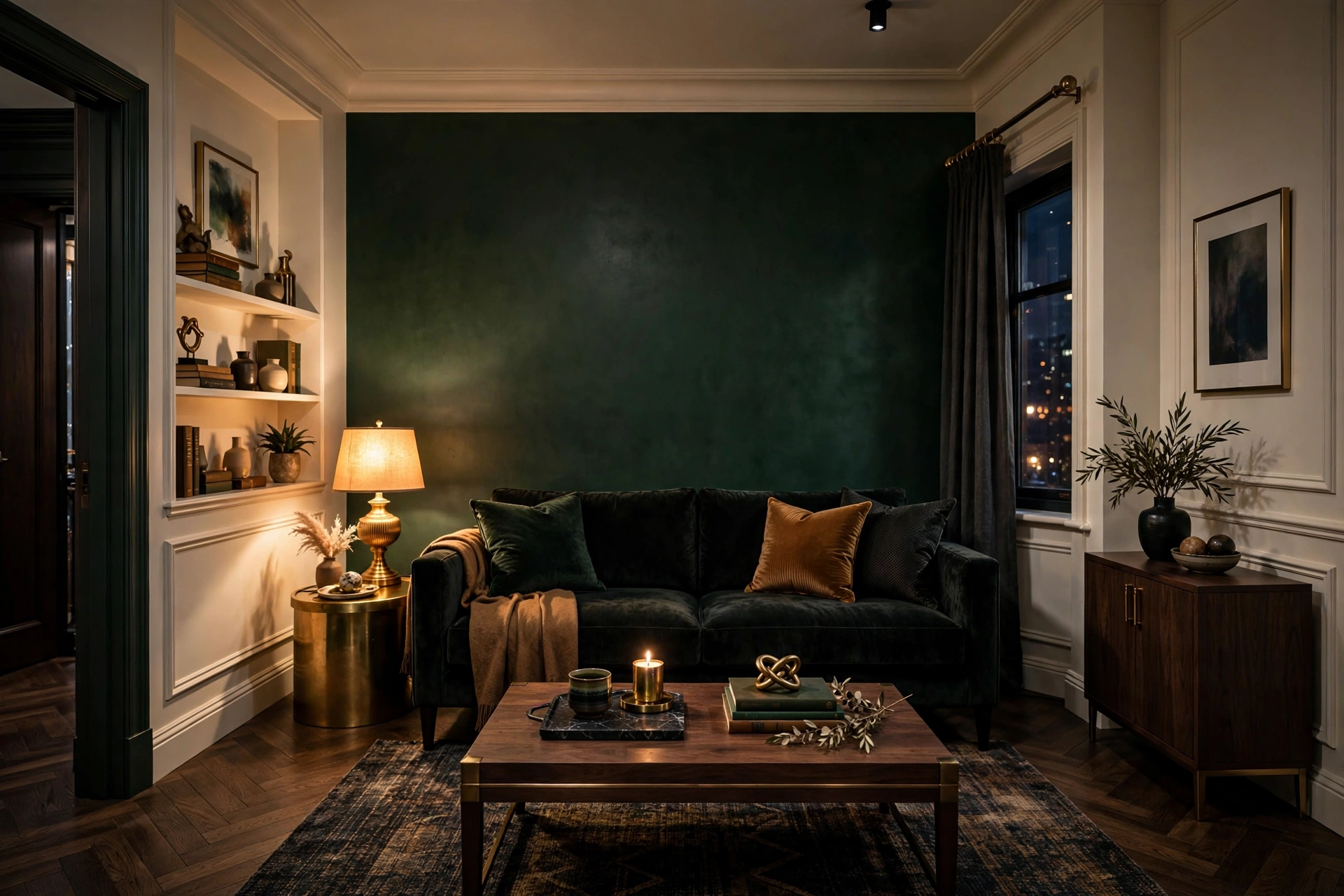
The fastest way to get the moody look is a single deep accent wall: forest green, oxblood, inky navy, or warm charcoal. One saturated wall reads as a deliberate design statement, while four dark walls in a tiny room can overwhelm before you have learned the rest of the playbook. Start with the wall behind the sofa or the bed — the one your eye lands on most — and let the other walls stay light to bounce daylight around.
Paint choice matters more in dark colors than in light ones. Flat and matte finishes look velvety and hide wall imperfections, but they also absorb light; eggshell or satin on dark paint gives a soft glow that keeps the room from going flat. If you rent and cannot paint, a deep-toned peel-and-stick wallpaper or even a floor-to-ceiling curtain panel in a rich color fakes the effect without touching the lease.
📌 Important: Test dark paint on a large board and move it around the room through a full day before committing. Deep colors shift dramatically between morning daylight and evening lamplight — a forest green that looks rich at noon can read almost black by night, which changes how much contrast the room needs.
2. Layer Warm Lighting at Three Heights

Dark rooms live or die by their lighting. One harsh overhead bulb on dark walls creates exactly the cave everyone fears; layered warm light at three heights — a floor lamp in the corner, a table lamp beside the seating, and a small accent light on a shelf or picture frame — turns the same room into a glowing jewel box. Each pool of light becomes a little destination, and the dark walls recede behind them.
Warmth is non-negotiable here. Choose bulbs at 2700K or below across every layer, because cool white light on dark walls looks flat and institutional, while warm light makes deep colors glow like embers. Dimmers on the two main lamps let you drop from functional brightness to evening mood in seconds. For anyone borrowing tricks from guides on how to make a small room look bigger, this is the dark-room version of the same principle: light the corners and the walls visually push outward.
3. Choose Velvet and Other Light-Absorbing Textiles

Texture is what separates a luxurious dark room from a merely dark one. Velvet, in particular, is the moody palette’s best friend: it absorbs light unevenly, so a velvet sofa or headboard in emerald, rust, or midnight blue shifts tone as you move around it, giving the room a living, dimensional quality flat fabrics cannot match. A single velvet armchair can carry an entire corner.
Layer it the way you would in any small living room ideas for apartments plan: a velvet cushion or two, a nubby wool throw, linen curtains in a deep tone. The trick is keeping the textures rich and the count restrained — three or four deep, touchable surfaces read as luxury, while a dozen small dark objects read as clutter. In a dark room, every texture choice shows, so make each one count.
4. Add Brass and Gold Metals That Catch the Light

In a dark room, metallics are not decoration — they are lighting. Brass, aged gold, and warm bronze catch every scrap of lamplight and throw it back across the room, which is why dark, luxurious interiors almost always include them: a brass floor lamp, gold picture frames, cabinet pulls in aged bronze. Against deep green or charcoal walls, warm metals glow like candlelight.
Keep the metals consistent — one warm metal repeated beats three competing finishes — and let them appear at different heights so the glints travel around the room. A brass arc lamp in the corner, small gold frames on the mantel, bronze pulls on a dark dresser: each one is a tiny mirror. This is the same repetition principle behind the best small space furniture ideas — consistency makes a small room read as designed rather than collected.
5. Paint the Ceiling and Trim to Match the Walls

The boldest moody move is color drenching: walls, trim, and ceiling all in the same deep color. Every place two colors meet, the eye registers a boundary; erasing those boundaries lets the gaze glide around the room without ever finding its edges. In a small apartment, that continuity can make the room feel larger, not smaller, because the brain never gets a crisp signal of where the room ends.
This works best in rooms where you can commit fully — a bedroom, a dining nook, a small study. Keep the sheen consistent (eggshell everywhere reads as one calm envelope) and be generous with lighting, since a drenched room depends on lamplight the way a white room depends on daylight. If full drenching feels like too much, painting just the ceiling a deep tone while walls stay mid-dark gives most of the cocooning effect.
💡 Pro Tip: A drenched ceiling in a small room looks best with a flush-mount or semi-flush light fixture in brass or smoked glass — a white builder-grade dome will punch a glaring hole in your carefully built mood every time you look up.
6. Use Mirrors to Keep the Mood From Going Cave-Like
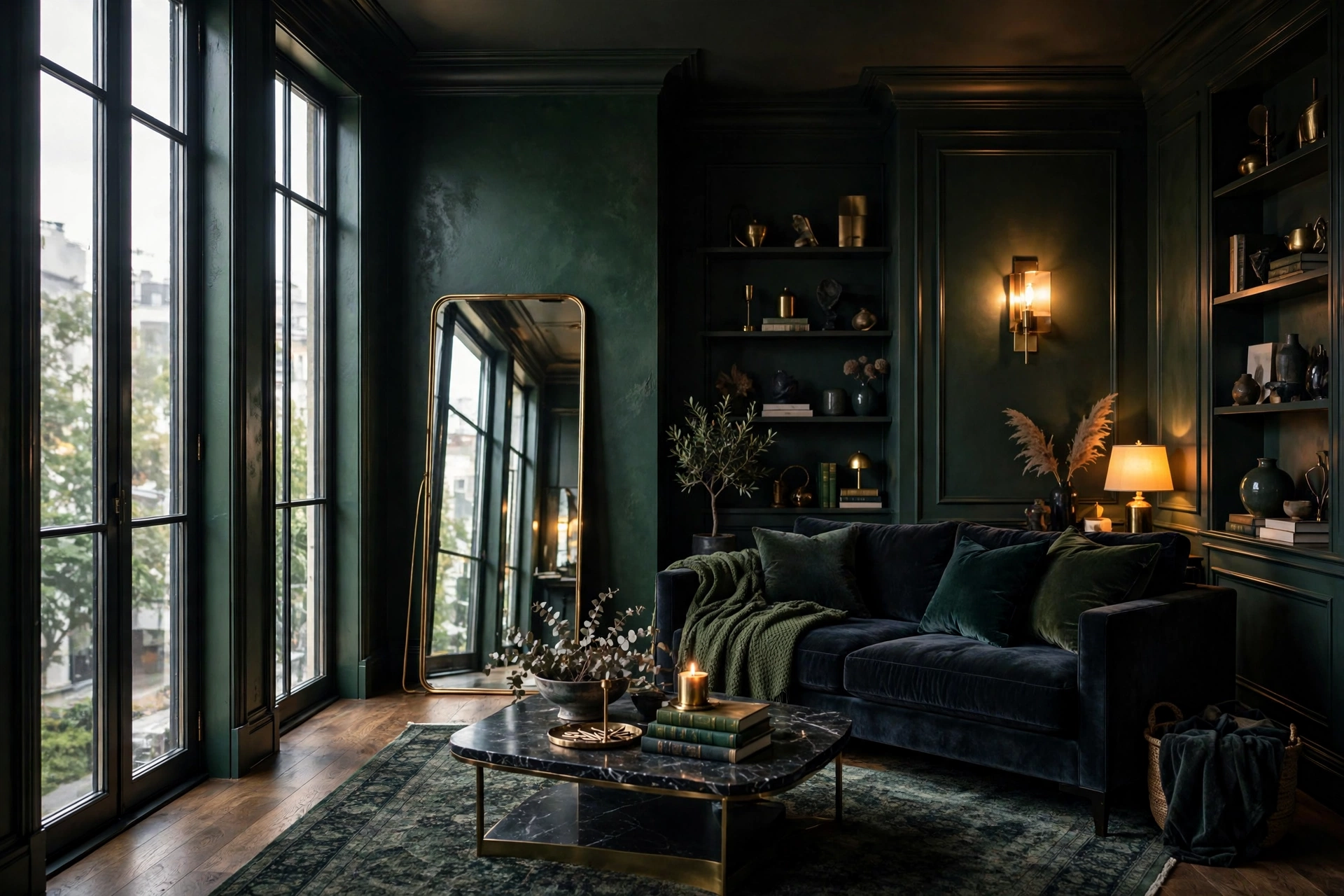
Moody does not have to mean lightless. One large mirror — leaning floor-length against a dark wall or hung opposite the window — catches daylight and lamplight alike and throws it back across the room, doubling your brightest light source. In a dark apartment, a mirror is the single most effective tool for keeping the drama without the gloom.
Placement decides everything. Opposite or adjacent to the window is the strongest position; aim the reflection at something pleasant — the window view, a styled corner, the warm glow of a lamp — never at clutter or a blank wall. A mirror with a brass or dark wood frame doubles as wall art in a moody room, and a leaning floor mirror needs no drilling, which keeps the whole move renter-friendly.
7. Style Dark Wood Furniture for Warmth and Depth
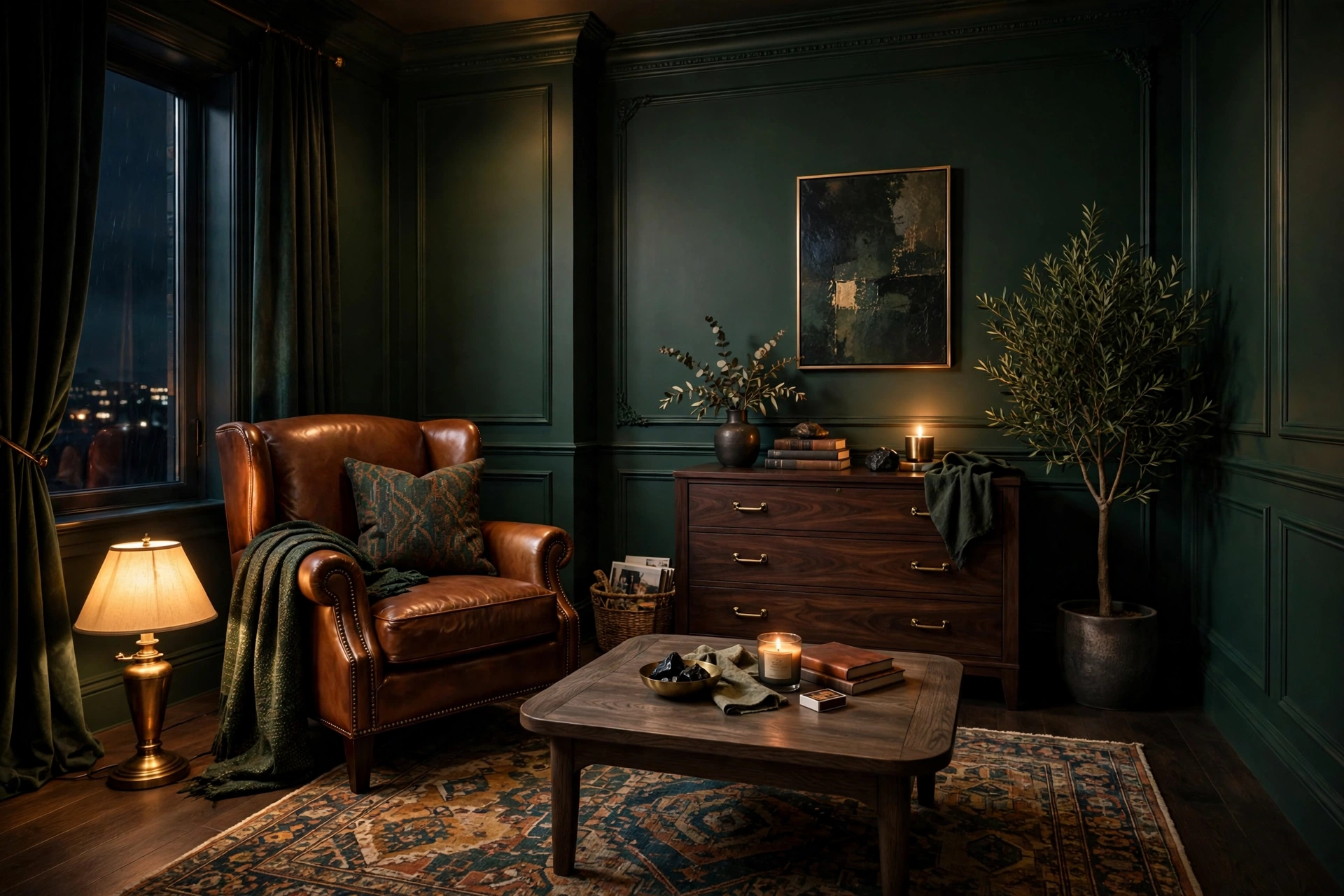
Dark wood furniture — walnut, smoked oak, ebonized finishes — is the backbone of a moody small apartment. Unlike pale wood, which keeps a room feeling airy, dark wood adds visual weight exactly where you want it: a walnut dresser against a deep green wall, a smoked-oak coffee table grounding a velvet sofa. The room gains the layered, collected feeling that makes small spaces feel expensive.
Balance is the whole game. If the furniture is dark and the walls are dark, bring warmth through the floor and textiles: a mid-tone rug, a cognac leather chair, cream or camel cushions that keep the seating from melting into the wall. And give dark wood room to breathe — one substantial dark piece per zone reads as intentional, while five crammed together read as a furniture showroom in dim lighting.
8. Hang Moody Art in Oversized Scale
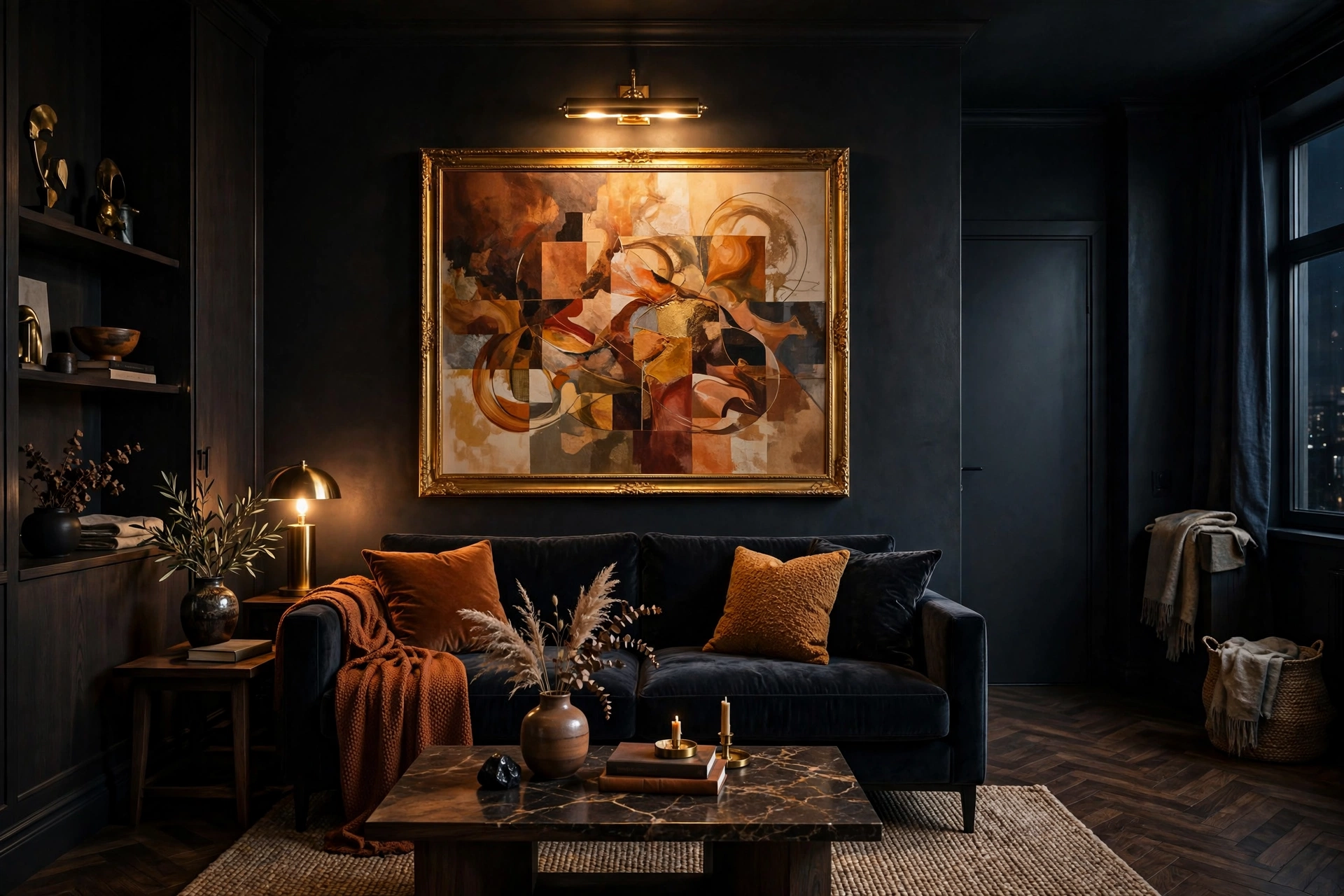
Dark walls are a gallery’s best friend. Deep backgrounds make art pop the way white walls never can: gilt frames glow against charcoal, abstract prints in rust and ochre look richer against forest green, and even simple black-and-white photography gains drama on a navy wall. One oversized piece above the sofa or bed anchors the whole room and gives the eye a confident landing spot.
Scale matters more than quantity here. In a small moody room, one substantial piece beats a scattered cluster of small frames, because the dark walls already provide plenty of visual weight — small scattered frames just add noise. Hang the strongest piece at the end of the longest sightline from the door so the eye travels the room’s full depth on entry. If you love the gallery look, keep frames within two finishes and leave generous negative space between them.
⚠️ Warning: Art hung too high is the most common mistake in moody rooms — dark walls swallow small, high-hung pieces entirely. Center larger pieces around 57 to 60 inches from the floor, and in a small room, never be afraid to go bigger than instinct suggests.
9. Embrace Dark Cabinetry in a Small Kitchen
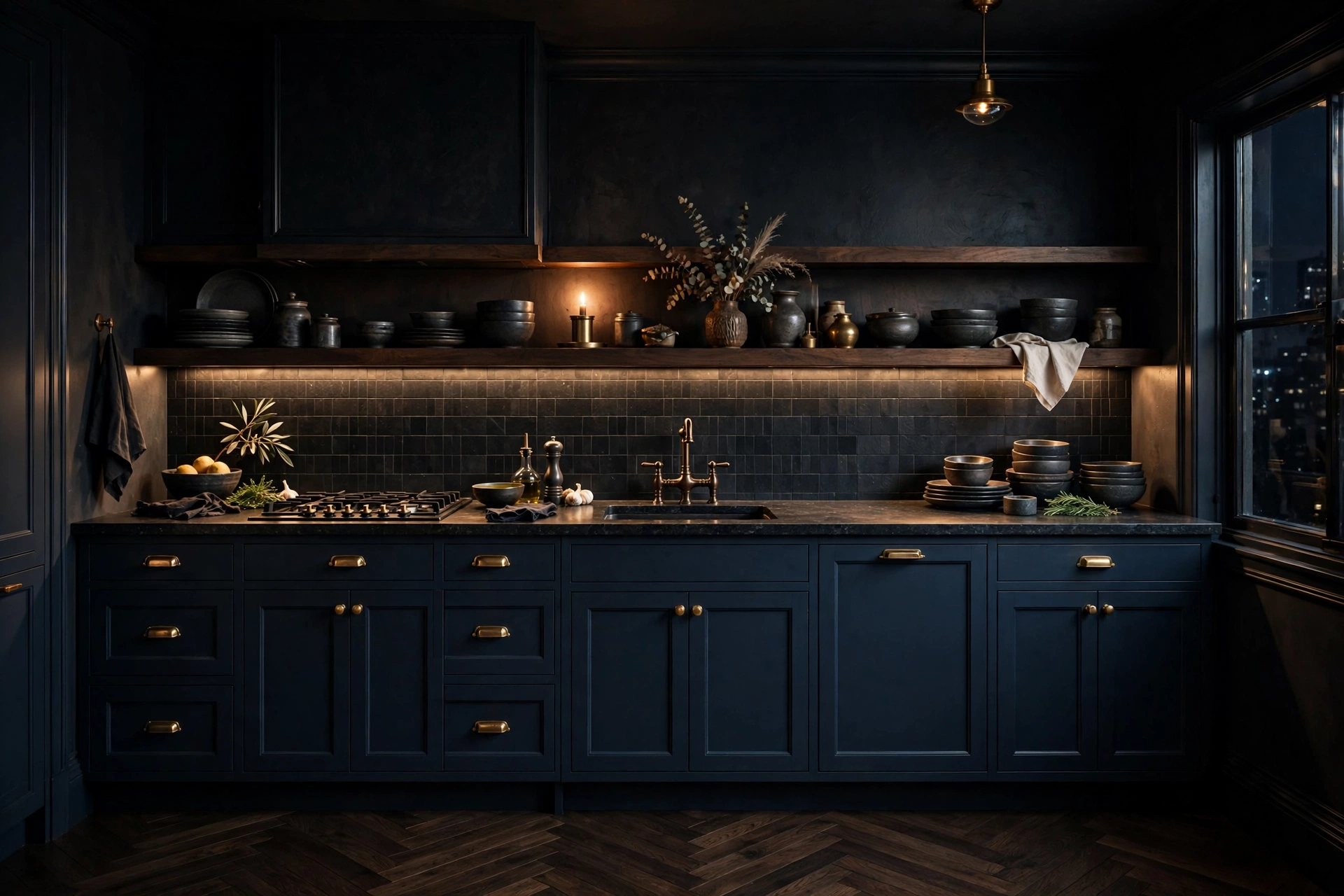
The kitchen is where most renters fear dark color most, and it is exactly where dark cabinetry pays off. Deep green, navy, or charcoal lower cabinets with warm brass hardware turn a basic rental kitchen into the most expensive-looking room in the apartment. Dark cabinets also hide the wear and smudges that small, hardworking kitchens accumulate far better than white ones do.
Renters have options beyond paint: peel-and-stick cabinet films in matte deep tones, or simply styling the existing kitchen dark through accessories — a black kettle, dark stoneware, bronze fixtures, a deep-toned runner. Keep the counters mostly clear and add under-cabinet lighting, which washes the workspace in warm light and stops dark uppers from looming. Open shelving in dark wood with edited styling keeps a moody kitchen feeling curated rather than cramped, a trick that pairs well with broader studio apartment decor inspiration for open-plan homes.
10. Create a Cocooning Dark Bedroom

The bedroom is the easiest room to go moody in, because darkness is literally what a bedroom is for. Deep walls behind the bed — forest, plum, ink — make the bed feel like a nest, and the effect on sleep ambiance is immediate: the room tells your body it is evening the moment the lamps go low. This is the one room where you can safely commit to full drenching without worrying about daytime function.
Layer the bed itself in the same spirit: dark or tonal bedding in washed linen or velvet, cushions in two or three deep tones, a throw with real texture. Keep the bedside lighting warm and low — small shaded lamps or plug-in sconces flanking the bed — so the room glows rather than glares. One mirror or one piece of art is enough on dark bedroom walls; the bed is the star, and everything else should support it quietly.
11. Use Candles and Ambient Glow as Decor

Nothing flatters a dark room like real flame. Candlelight — real or high-quality flameless — adds a flickering warmth that electric bulbs cannot replicate, and in a moody small apartment it doubles as decor: clusters of pillar candles on a tray, taper candles in brass holders on the mantel, a lantern glowing in a dark corner. After dark, a candlelit moody room feels like the most luxurious place in the city.
Group candles in odd numbers at varying heights for the most natural look, and always use a tray or holder — wax on a walnut table is a tragedy. If real flame worries you, modern flameless candles with warm-toned LEDs are genuinely convincing at a glance, especially inside frosted holders. Either way, treat the candle grouping as a styled vignette, not an afterthought: it is doing real work in the room’s lighting plan.
💡 Pro Tip: Place one candle or lantern in the darkest corner of the room — the corner where two walls meet is usually the gloomiest spot. A single warm glow there erases the shadow that tells the brain “the room ends here,” visually pushing the walls back out.
12. Ground the Room With a Dark, Patterned Rug
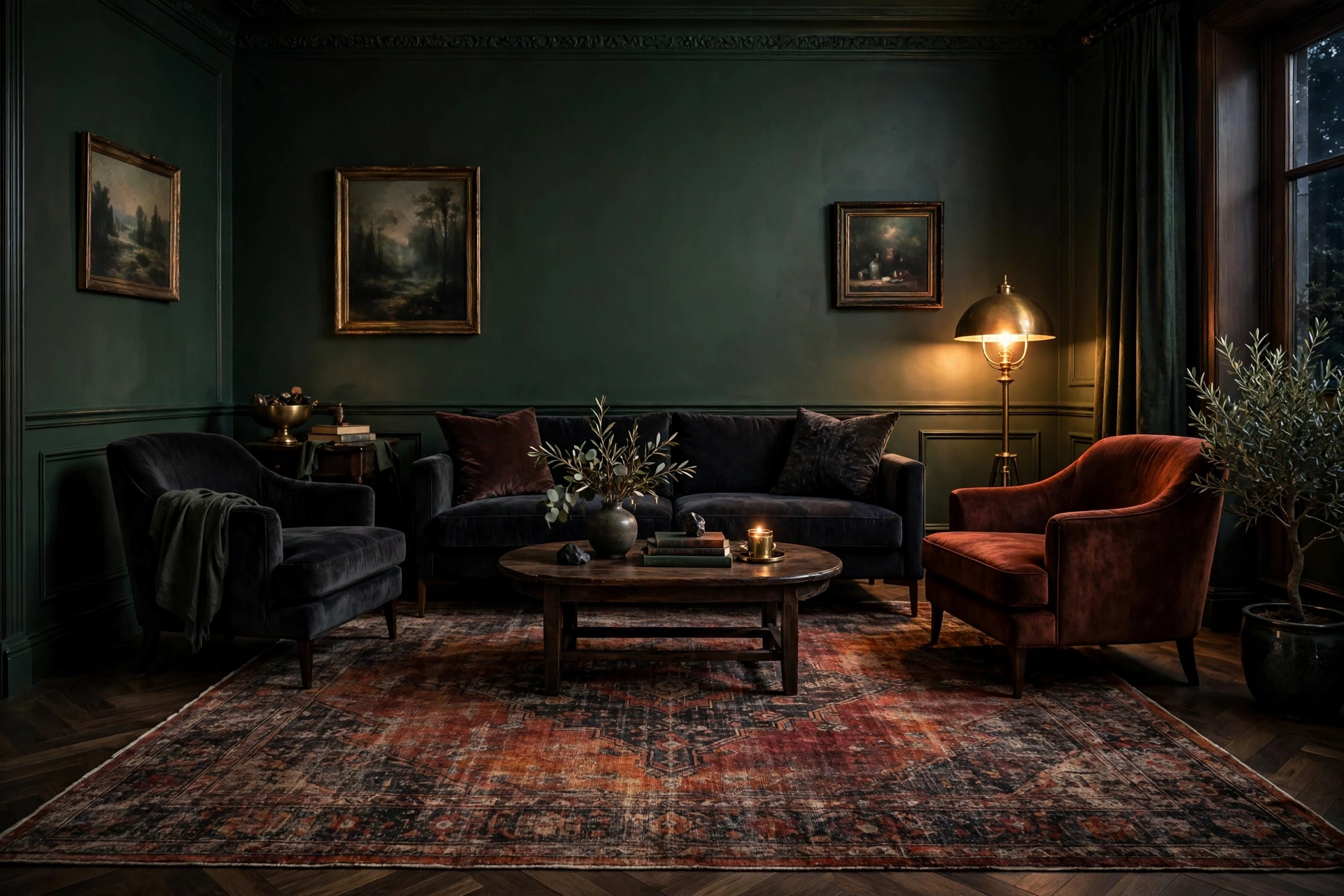
A dark rug does for the floor what dark walls do for the perimeter: it anchors the seating group into one intentional zone and hides the wear a small, hardworking room inevitably shows. Faded vintage-style rugs in deep rust, charcoal, and ink — or a bold dark geometric — give a moody room its foundation and let lighter furniture float above them without visual competition.
Size it the way you would any rug: front legs of the sofa and all chair legs on the rug, never a postage-stamp island in the middle of the floor. In a dark room, a too-small rug is doubly punishing, because it chops an already low-contrast space into fragments. If one large dark rug blows the budget, layer two smaller flat-weaves with the seam hidden under the coffee table — from above it reads as one generous rug.
13. Mix Dark Walls With Light Furniture for Balance
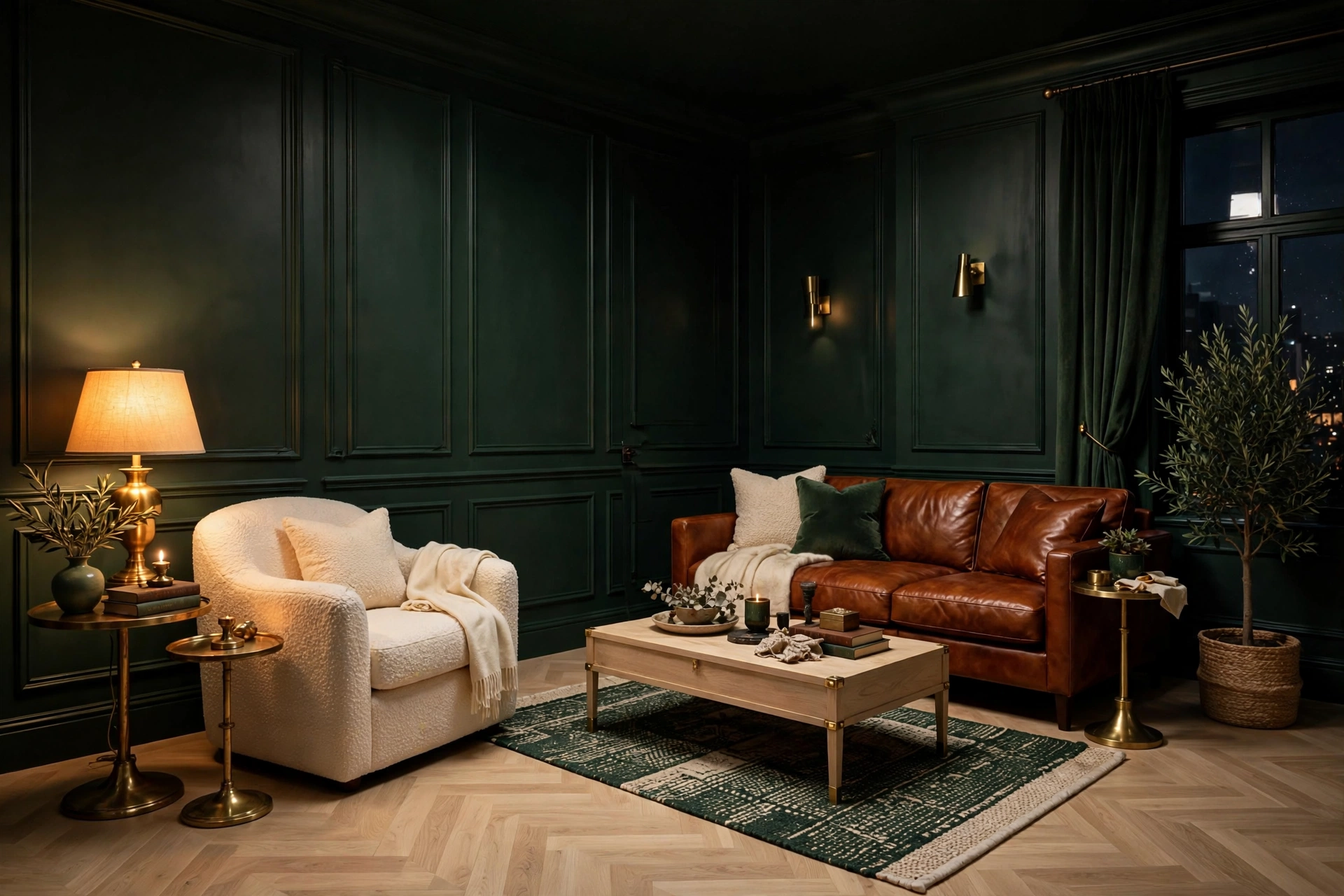
The most livable moody rooms are not all-dark — they are high-contrast. A cream bouclé armchair against a forest green wall, a cognac leather sofa in front of charcoal built-ins, pale oak floors under inky walls: these light-dark pairings give the eye somewhere to rest and stop a dark room from feeling heavy. Contrast is what makes dark colors read as a choice rather than an accident.
Apply the contrast deliberately rather than evenly. Keep the big architectural moves dark (walls, ceiling, major furniture) and let the contrast live in movable things — cushions, throws, one light chair, a pale rug — so you can adjust the balance seasonally. This is the dark-room answer to the camouflage effect: instead of melting furniture into the walls, you are sculpting it out of them, and the silhouette of each piece becomes part of the design.
14. Bring In Moody Botanicals and Dried Arrangements

Greenery behaves differently in a dark room. Deep green plants — fiddle-leaf figs, snake plants, ZZ plants — practically disappear against dark walls in the best way, adding living texture without visual noise. And dried arrangements are the moody room’s secret weapon: pampas grass, dried eucalyptus, preserved ferns in a dark ceramic vase add sculptural height that stays beautiful for months with zero maintenance.
Keep the vessels dark and matte — charcoal ceramics, smoked glass, aged bronze — so the arrangements read as part of the palette rather than interruptions. One tall botanical moment per room is enough: a statement plant in the corner, one dried arrangement on the mantel. In a small moody apartment, restraint with plants matters more than abundance, because every silhouette shows against deep color.
15. Keep It Edited: Dark Rooms Demand Discipline

Here is the honest trade-off of the moody look: dark rooms punish clutter more than light rooms do. Every object on a dark surface casts a harder shadow and draws a sharper silhouette, which means the visual noise that a white room forgives becomes genuinely distracting against deep color. The luxury feeling of a dark apartment comes as much from what is not there as from what is.
Build the habit of the nightly reset — surfaces cleared, throws folded, the candle tray tidy — and apply a strict one-in-one-out rule for decor objects. Closed storage earns its keep in moody rooms: a dark cabinet that swallows chargers, remotes, and paperwork keeps the visible layer calm. When the room stays edited, the deep colors, warm metals, and layered light get to do all the talking, and the apartment feels like a boutique hotel suite rather than a storage unit with nice paint.
Quick Comparison: Moody Decor Moves by Cost and Effort
Dark Apartment Quick-Start Checklist
- ✅ Paint or wallpaper one deep accent wall behind the sofa or bed
- ✅ Swap every bulb to 2700K warm white and add lamps at three heights
- ✅ Add one velvet piece: armchair, headboard, or a pair of cushions
- ✅ Repeat one warm metal — brass or aged gold — at three different heights
- ✅ Hang one large mirror opposite or adjacent to the window
- ✅ Ground the seating with a properly sized dark rug
- ✅ Edit ruthlessly: every surface earns its place or gets cleared
Common Dark Decor Mistakes
Mistake 1: Relying on a Single Overhead Light
One ceiling fixture on dark walls creates harsh pools of light surrounded by gloom — the exact cave effect people fear. Moody rooms need layered light: floor, table, and accent sources that wash the walls instead of spotlighting the middle of the room.
Mistake 2: Choosing Flat Black Instead of Rich Color
Pure flat black walls absorb light without giving anything back. Deep greens, navies, plums, and warm charcoals have undertones that glow under warm lamplight; black just goes void. If you love black, use it in furniture and accents, and keep the walls a color with depth.
Mistake 3: Skipping the Warm Metals
A dark room with only cool-toned metals — chrome, nickel, stainless — feels cold and flat. Warm brass, gold, and bronze are what make deep colors look expensive, because they reflect lamplight in the same warm spectrum as the bulbs. One metal swap can change the entire temperature of the room.
Mistake 4: Letting Clutter Collect in the Shadows
Dark corners hide mess during the day and reveal it as silhouette chaos at night. Moody rooms need stricter editing than light ones: closed storage, a nightly reset, and honest assessment of what actually earns visible space. The luxury is in the restraint.
Mistake 5: Forgetting the Ceiling
White ceilings over dark walls chop the room in half and kill the cocooning effect. Even if full drenching feels like too much, painting the ceiling a tone or two darker than the walls — or at minimum a warm off-white instead of stark white — keeps the envelope continuous.
Frequently Asked Questions
1. Do dark colors really make a small apartment feel smaller?
Not when they are done well. Deep colors blur corners and edges, so the eye cannot find exactly where the walls end — which can make a small room feel larger, not smaller. The cave effect comes from poor lighting and clutter, not from the paint itself. Layer warm light, keep the room edited, and dark walls become depth instead of shrinkage.
2. What is the best dark paint color for a small apartment?
Deep greens, inky navies, warm charcoals, and rich plums all work beautifully — the key is choosing a color with visible undertones rather than flat black. Warm undertones (green, oxblood, warm charcoal) feel cozier; cool undertones (navy, slate) feel more dramatic. Always test on a large board through a full day of light before committing.
3. How do I get the moody look as a renter who cannot paint?
Peel-and-stick wallpaper in deep tones, floor-to-ceiling curtain panels in rich color, and large-scale art all create the effect without touching the walls. You can also go dark through furniture and textiles — a velvet sofa, dark rug, and deep-toned bedding deliver most of the mood while the walls stay light.
4. What lighting works best in a dark apartment?
Warm bulbs at 2700K or below, layered at three heights: a floor lamp, a table lamp, and a small accent light. Dimmers on the main lamps let you shift from functional to atmospheric. Avoid cool white bulbs entirely — they make dark walls look flat and institutional instead of rich and glowing.
5. Can a dark apartment still feel bright during the day?
Yes, with mirrors and window strategy. A large mirror opposite or beside the window doubles your daylight, and keeping window treatments sheer or minimal lets the glass do its work. Dark walls actually make window light more dramatic — the contrast between glowing windows and deep walls is one of the moody look’s best daytime effects.
6. What metals go best with dark, moody decor?
Warm metals: brass, aged gold, and bronze. They catch lamplight and throw warm glints across dark walls, which is exactly what makes a moody room feel luxurious instead of gloomy. Keep to one warm metal repeated throughout the room rather than mixing several finishes.
7. How do I keep a dark room from feeling cluttered?
Edit harder than you would in a light room. Every object casts a stronger silhouette against dark surfaces, so apply a one-in-one-out rule for decor, use closed storage for the visual noise (chargers, remotes, paperwork), and do a quick nightly reset of surfaces. Restraint is the real luxury material.
8. Is the moody look expensive to achieve?
Not necessarily. Paint is one of the cheapest transformations available, warm bulbs cost little, and the core moves — one accent wall, layered lighting, a velvet cushion or two, brass accents — can come together on a modest budget. The expensive feeling comes from cohesion and editing, not from price tags.
Conclusion
Dark and moody is not a risk to manage — it is a palette that flatters small apartments when you respect its rules. Deep color gives walls depth, warm light gives them glow, brass and velvet give them luxury, and ruthless editing keeps the whole composition calm. None of it requires a renovation, and most of it starts with a single painted wall and better bulbs.
Start where the payoff is biggest: one deep accent wall, warm layered lighting at three heights, and a mirror to keep the daylight moving. Add the velvet, the brass, and the dark rug as the room tells you what it needs. A small apartment wrapped in rich color does not feel smaller — it feels like somewhere that was designed on purpose, and that is the entire point.