
12 Cozy Small Living Room Ideas for Apartments Under 600 Sq Ft
Introduction
A small living room in a sub-600-square-foot apartment is not a problem to solve — it is a canvas that happens to be compact. The most inviting apartments I have ever walked into were not the biggest ones; they were the small ones where every inch had a job, the light was layered like candlelight, and the room wrapped around you like a warm blanket. Coziness is actually easier to achieve in a small living room than in a cavernous one. The challenge is keeping it cozy without letting it tip into cramped.
The secret is that comfort in a small space comes from decisions, not square footage. Scale your furniture to the room instead of shrinking big-room ideas down. Choose pieces that work twice as hard. Keep the palette warm but controlled, light every corner, and give the eye clear paths to travel. None of these twelve ideas requires a renovation, and most cost less than a single oversized sofa — which, fittingly, is the first thing to go.
These ideas build on each other. If you are working with a truly compact home, start with the broader tiny apartment decorating ideas that handle layout and storage at the whole-apartment level, then zoom in here for the living room specifically. Pick the four or five that match your room’s biggest weakness — too dark, too cluttered, too awkwardly shaped — and you will feel the difference this weekend.
1. Swap the Bulky Sofa for an Apartment-Scale Love Seat

The single fastest way to make a small living room feel bigger and cozier at once is to right-size the sofa. Standard three-seaters run 84 to 96 inches wide — in a living room that is barely 10 feet across, that one piece swallows the wall and crowds everything else against the edges. An apartment sofa (68 to 78 inches) or a generous love seat (58 to 68 inches) frees up to two feet of precious wall, which is enough room for a floor lamp, a side table, or simply breathing space. The room instantly reads as designed rather than stuffed.
Smaller does not mean less comfortable. Look for apartment sofas with deep seats (22 inches or more), high-density foam, and a tight back — they seat two adults luxuriously without the visual bulk of rolled arms and overstuffed cushions. Slipcovered styles in performance fabric are ideal: they look relaxed and high-end, they wash when life happens, and their tailored-but-soft lines suit compact rooms. If you occasionally host, a love seat plus one good armchair seats three people more comfortably — and more stylishly — than a single oversized sofa ever will.
📌 Important: Before you order anything, measure your doorways, hallway turns, and elevator — not just the room. In apartments under 600 square feet, the delivery path is usually tighter than the living room, and a sofa that fits the space perfectly is useless if it cannot make the last corner.
2. Float the Seating Away From the Walls
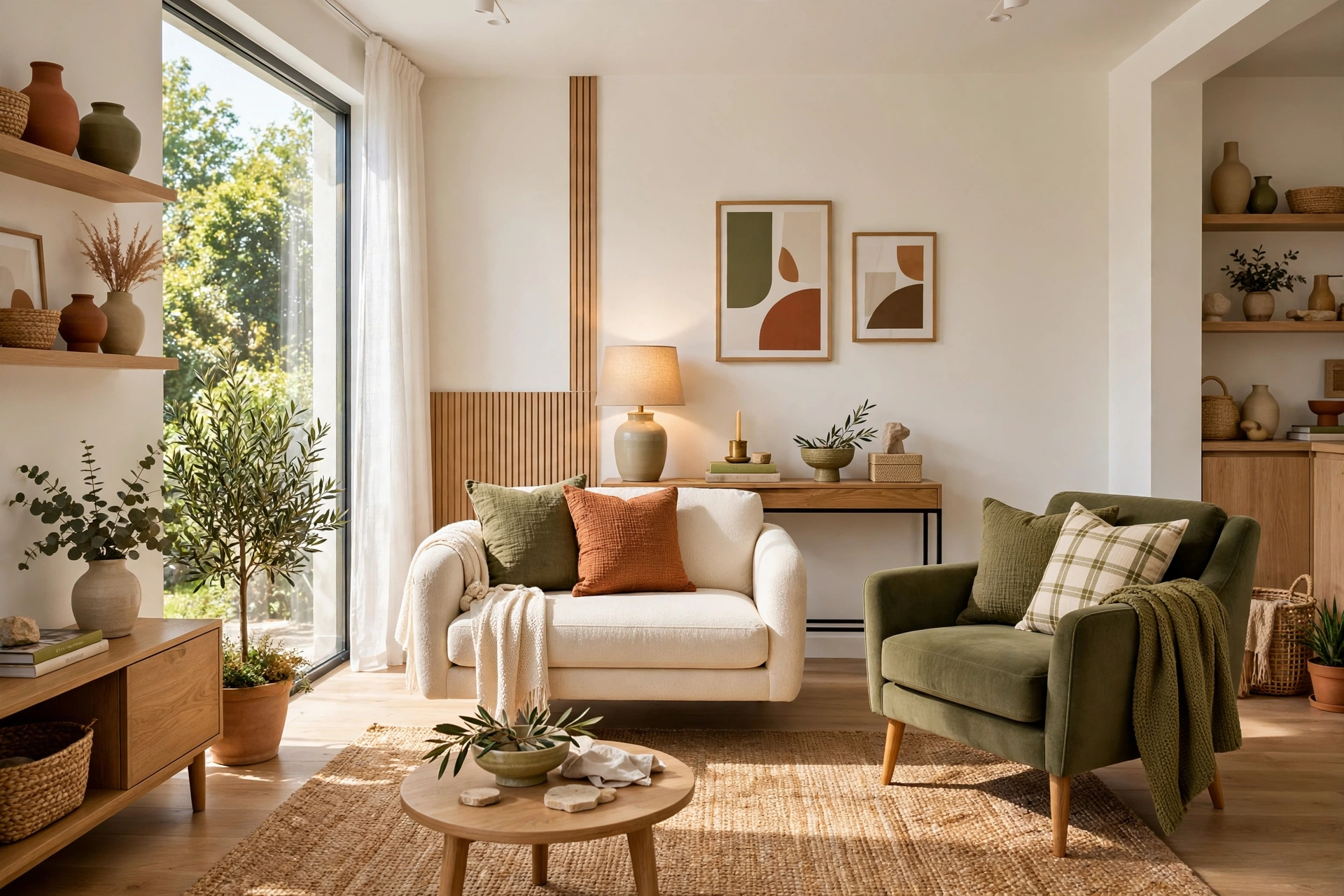
Pushing every piece of furniture against the walls feels like the obvious way to maximize floor space, but it backfires: the room becomes a hollow middle surrounded by a ring of furniture, which reads as smaller and far less inviting. Pulling the love seat even six to eight inches off the wall — and angling one chair slightly inward — creates shadow lines and depth that trick the eye into reading the room as larger. Conversation areas are meant to face each other, not the perimeter.
Floating also solves the awkward traffic problem small living rooms always have. When seating hugs the walls, the walking path cuts straight through the middle of the conversation zone; when you float the arrangement slightly, the path flows naturally behind the furniture instead. A slim console table behind a floated sofa doubles as a landing strip for keys, remotes, and a lamp — and in studio layouts, it quietly marks where the living room ends and the rest of the apartment begins, a trick that pairs beautifully with studio apartment decor inspiration for open single-room homes.
3. Choose a Round Coffee Table Over a Rectangular One

Rectangular coffee tables have sharp corners at exactly shin height and rigid lines that chop a small room into smaller rectangles. A round or oval coffee table eliminates the corners entirely — nothing to bruise yourself on in tight quarters — and its curved silhouette lets traffic flow around it smoothly instead of bottlenecking at the ends. In a compact seating area, that ease of movement is the difference between a room that feels navigable and one that feels like an obstacle course.
Scale matters as much as shape: the table should sit about two-thirds the length of your love seat and leave roughly 14 to 18 inches between its edge and the seating. A glass or open-base round table goes further still — the visible floor beneath it keeps the sightline open, so the table barely registers as an object in the room. If you need the surface for storage, choose a round ottoman-style coffee table with a lift-off tray top: soft edges, hidden storage inside, and a stable surface for drinks when the tray is on.
4. Anchor Everything With One Right-Sized Rug

Nothing shrinks a small living room faster than a postage-stamp rug floating in the middle of the floor — it visually chops the room into fragments and makes the seating look like it is drifting. One properly sized rug does the opposite: it unifies the seating group into a single intentional zone, and that unified zone reads as larger than the sum of its parts. In most small living rooms, that means a 5×7 or 6×9 rug, not the 3×5 that looks tempting on the shelf.
The rule is simple: at minimum, the front legs of the love seat and all chair legs should sit on the rug. When the rug runs under the furniture, the pieces feel connected and grounded; when it stops short, each piece looks marooned. Choose a low-pile or flat-weave rug so doors clear it and the vacuum glides over it, and pick a pattern with some warmth — a faded vintage-style rug or a subtle geometric in warm neutrals adds coziness underfoot while hiding the wear a small, hardworking room inevitably shows.
💡 Pro Tip: If one big rug blows the budget, layer two smaller flat-weave rugs side by side with the seam hidden under the coffee table. From above it reads as one generous rug, and you can pull the layers apart later for a larger home.
5. Hang One Big Mirror to Double the Light

Small living rooms under 600 square feet are often short on windows, and what little daylight arrives gets swallowed by walls. One large mirror — leaning floor-length or hung opposite the window — catches that light and throws it back across the room, effectively doubling your brightest light source for the price of a single decor piece. It also doubles the view, which gives the eye somewhere pleasant to travel instead of stopping at a blank wall.
Placement is everything. The mirror earns its keep opposite or adjacent to the window, reflecting daylight and greenery; hung where it reflects a blank wall or the television, it just doubles the dullest part of the room. A leaning floor mirror in a simple wood or thin black frame adds height and a designer feel, and it needs no drilling — a genuine advantage for renters. Keep the glass clean and the reflected view intentional, and the mirror becomes the hardest-working square footage in the room, a favorite move from the playbook of how to make a small room look bigger.
6. Mount the TV on the Wall and Skip the Media Console
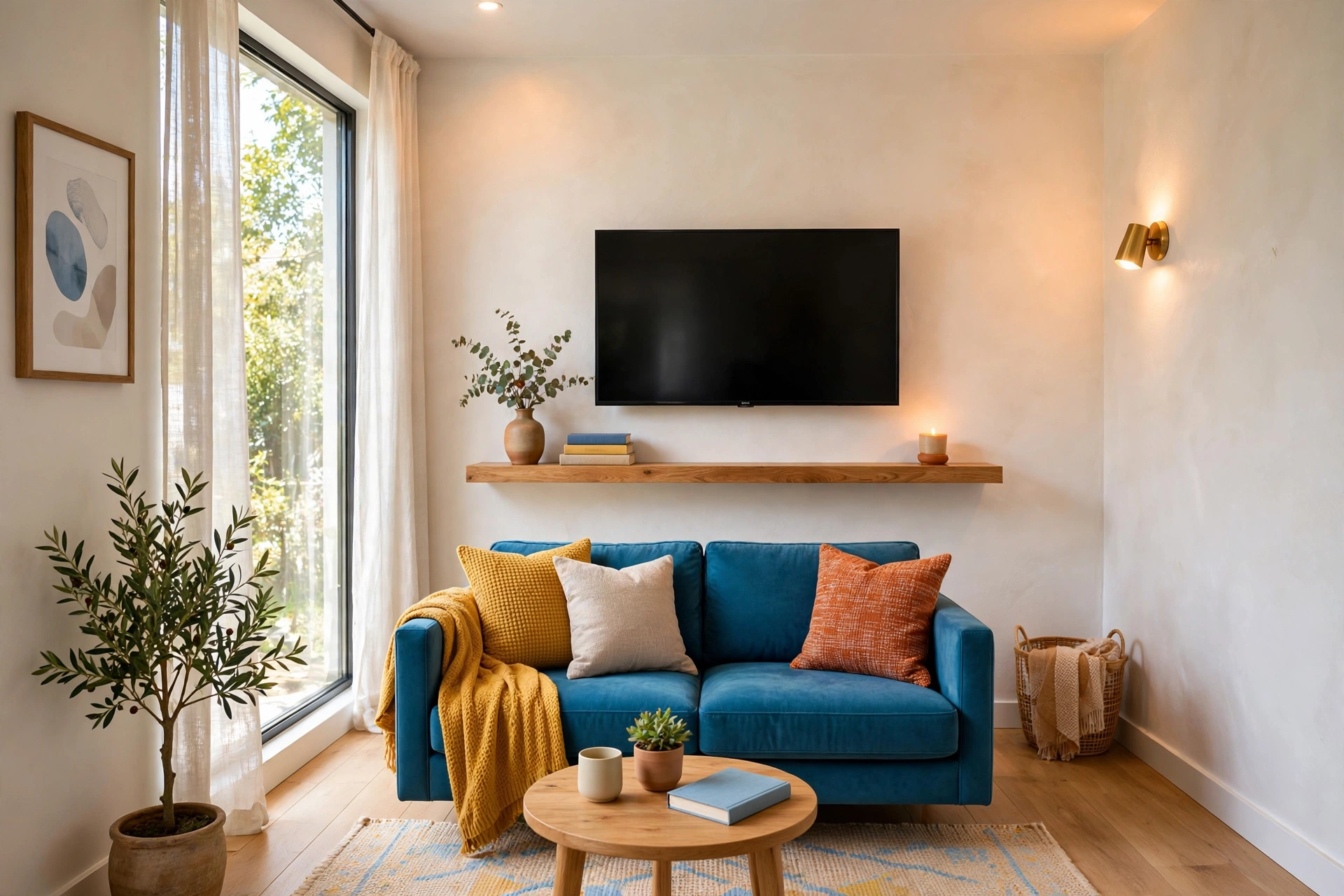
A television on a stand plus a media console beneath it eats a full two feet of floor depth along your longest wall — in a small living room, that is an entire walkway. Wall-mounting the TV reclaims that floor completely: the screen floats at eye level, the wall beneath stays open, and the room gains a clean vertical line that draws the eye up instead of out. The visual difference between a TV on furniture and a TV on the wall is startling in a compact room.
The space underneath does not have to stay empty. A single floating shelf below the screen holds the streaming box and a soundbar, with cables tucked into a paintable cord cover that blends into the wall. Renters who cannot drill have options too: no-stud TV mounts that use slim nails, or a tall leaning ladder shelf beside the TV that holds components without touching the wall at all. Either way, removing the console removes the room’s biggest single piece of visual bulk after the sofa — and it makes cleaning the floor underneath a thirty-second job.
7. Layer Lighting at Three Heights

One overhead ceiling light is the fastest way to make a small living room feel flat and interrogation-bright. Cozy rooms are lit in layers: ambient light from above, task light at reading height, and accent light down low or up high. In a compact living room, aim for at least three sources — a floor lamp in a dark corner, a table lamp beside the seating, and something small and warm on a shelf or sideboard. Each pool of light becomes its own little destination, and the room feels rich instead of merely illuminated.
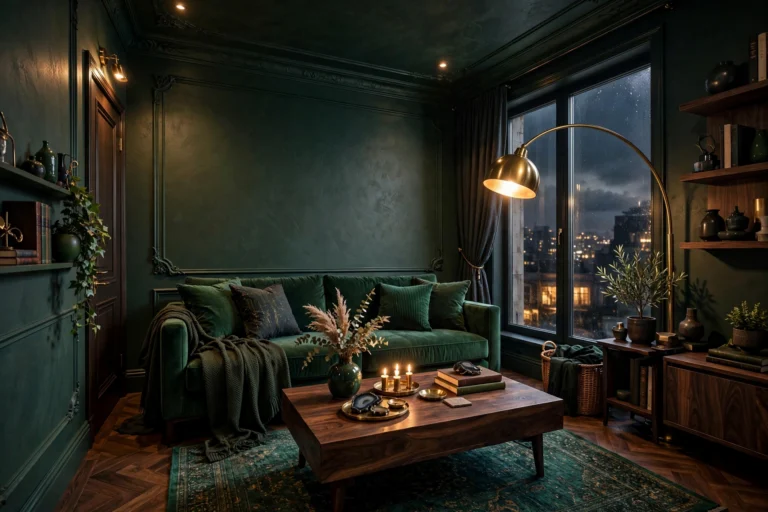
Warmth is non-negotiable for coziness. Choose bulbs at 2700K (warm white) or below across all three layers — mixed color temperatures make a room feel restless even when you cannot name why. Dimmers or smart bulbs on the two main lamps let you drop from bright-and-functional to evening-glow in seconds. And do not forget the dark corners: a small uplight or even a candle-style LED tucked behind a plant washes the wall with warmth and visually pushes it outward, erasing the gloomy edges that make small rooms feel smaller.
💡 Pro Tip: Put your two main lamps on a single smart plug or remote-controlled outlet. One tap drops the whole room into evening mode — it feels luxurious, and you will actually use the layered lighting instead of leaving one harsh overhead on.
8. Pick Furniture That Does Double Duty
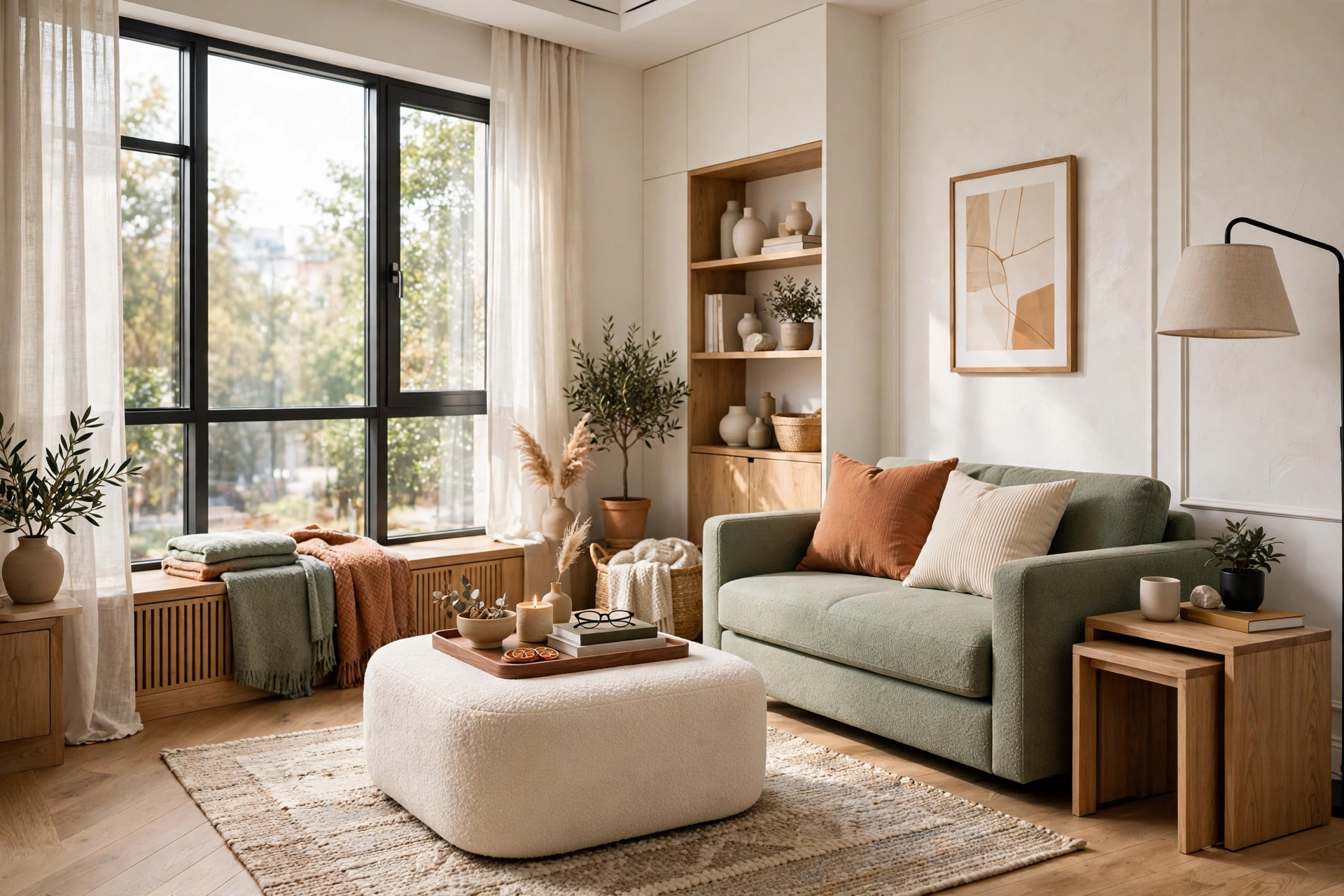
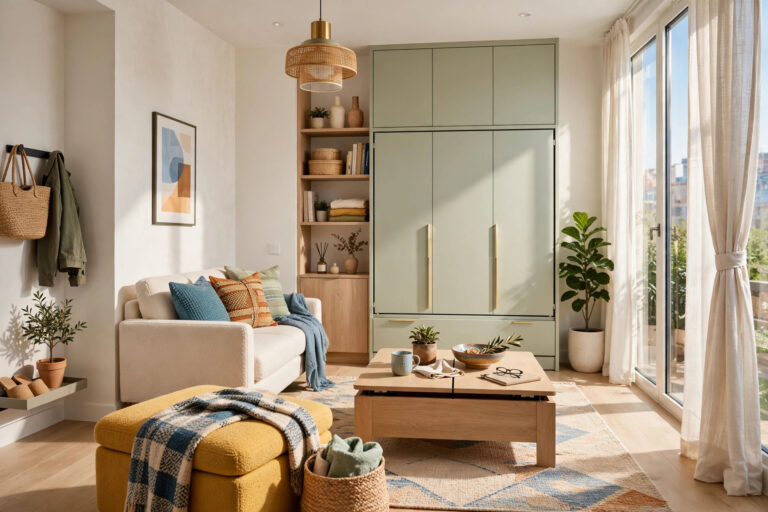
In an apartment under 600 square feet, every piece of living room furniture should justify its footprint twice. The classic is the storage ottoman: footrest by day, blanket and board-game vault inside, extra seat when friends visit. A lift-top coffee table works as a desk for laptop evenings and dining surface for takeout nights. Nesting side tables tuck away until you need surfaces for guests, then fan out in seconds.
The double-duty rule also applies to how pieces look. Choose items whose second job is invisible — a handsome lidded ottoman in bouclé reads as pure style until you lift the lid. Avoid furniture that screams “storage unit”: wire cubes and plastic bins belong in closets, not in the room you live in. When each visible piece quietly handles two functions, you need fewer pieces overall, and fewer pieces is the entire game in a small living room. This is the same philosophy behind the best small space furniture ideas — hardworking pieces that earn their floor space twice over.
9. Go Vertical: Shelves, Cabinets, and Art Up High

Small living rooms run out of floor fast, but they almost always have underused wall — the vertical band between eye level and the ceiling sits empty in most apartments. Tall, narrow bookcases, floating shelves, and wall-mounted cabinets move storage into that dead zone without touching a single extra inch of floor. A 12-inch-deep bookcase holds as much as a 24-inch-deep one for most living room items, and it protrudes half as far into the room.
Style the vertical storage with intention, not density. Leave breathing room on shelves — a stack of books, one plant, one object, then empty space — because crammed shelves read as clutter while edited shelves read as design. Hang art higher than instinct suggests, with the center of larger pieces around 60 inches from the floor, so the eye travels upward and the ceiling feels taller. If your lease allows one upgrade, a single tall closed cabinet beats three open shelves: it swallows the visual noise (chargers, remotes, paperwork) that makes small rooms feel chaotic.
⚠️ Warning: Wall-mounted shelves in apartments must be anchored into studs or proper drywall anchors rated for the load — a shelf of books that rips out of the wall damages the plaster and your deposit. When in doubt, choose freestanding tall bookcases and secure them to the wall with anti-tip straps instead.
10. Keep the Palette Tight and Warm

A small living room can handle color — what it cannot handle is chaos. Limit the room to one warm neutral base (warm white, greige, soft caramel), one deeper accent (olive, terracotta, cognac, deep teal), and one metallic or wood tone that repeats. When every item in the room speaks the same three-color language, the eye glides instead of jumping, and the room feels calm and pulled-together rather than busy. Busy is what makes small rooms feel small.
Warmth is the coziness engine. Cool grays and stark whites can make a compact room feel clinical; warm whites, honeyed woods, and textiles in rust, amber, and moss make the same room feel like an embrace. You do not need to repaint — renters can warm a room entirely through textiles: a caramel throw, amber-glass lamp bases, a jute rug, walnut-toned frames. Keep the big surfaces (sofa, rug, curtains) in the neutral base and let the accent live in things you can swap seasonally, so the room stays fresh without ever feeling restless.
11. Choose Leggy, Open-Base Furniture
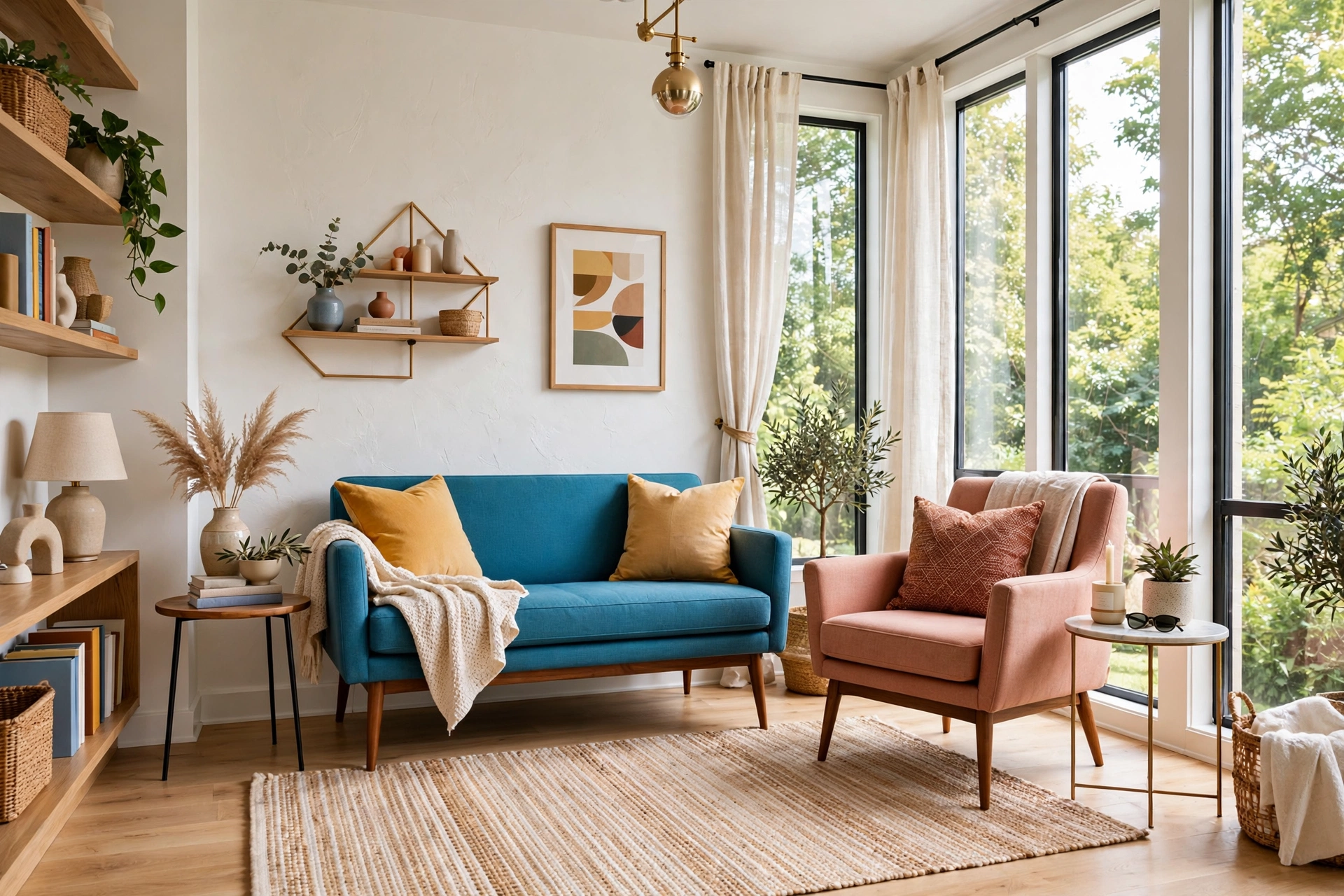
Furniture that sits directly on the floor — blocky sofas, solid-base armchairs, closed cabinets — creates heavy visual blocks that stop the eye and swallow light. Pieces raised on legs, even just four to six inches, let light and sightlines pass underneath, and that visible sliver of floor makes each piece feel lighter and the room feel larger. Mid-century-style tapered legs, slim metal pin legs, and open-base consoles all do the same quiet work.
Apply the leggy rule beyond the sofa: a media area on slim legs, an armchair with an open wooden base, side tables with airy frames instead of solid drums. The cumulative effect is significant — five leggy pieces can reveal several extra square feet of visible floor that solid pieces would hide. As a bonus, raised furniture is dramatically easier to clean under, which matters in a small room where dust shows fast. Pair this with a light-toned rug and the floor itself becomes part of the room’s brightness strategy.
12. Add Texture, Not Clutter

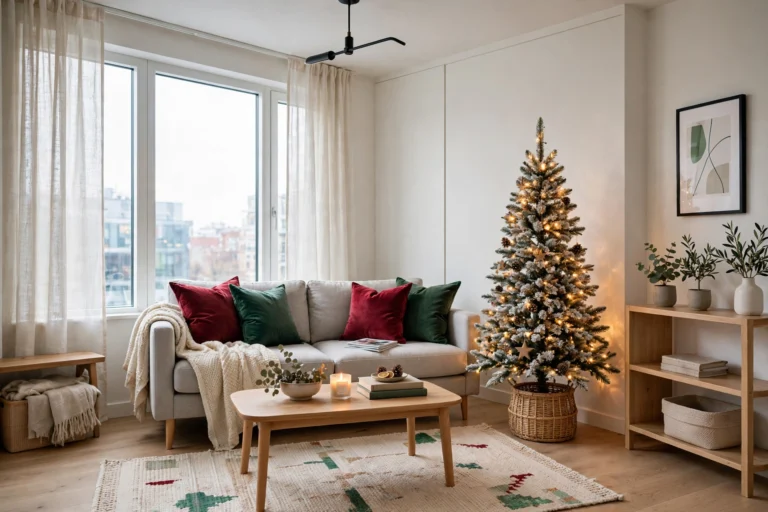
Coziness lives in texture: nubby bouclé, chunky knit throws, linen cushions, a soft wool rug underfoot, the rough edge of a jute basket. A small living room layered with three or four rich textures feels luxurious and enveloping even in a restrained color palette — the hand wants to touch everything, and the eye reads that richness as comfort. Texture is how you get the warm, collected feeling without adding a single extra object to dust.
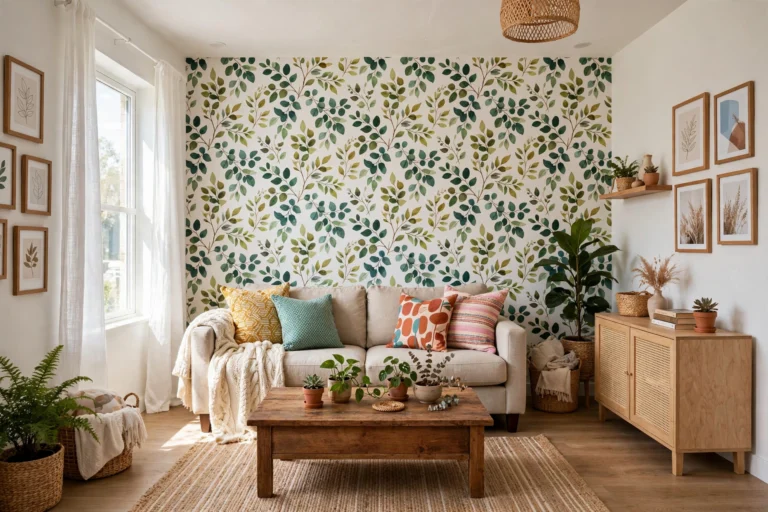
The line between textured and cluttered is editing. Each texture should earn its place and repeat at least twice: the knit throw picks up the weave of the cushions, the jute basket echoes the rug’s fibers. Corral small necessities into beautiful containers — remotes in a lidded box, throws in one basket, not draped over every surface. One living plant (a forgiving pothos or snake plant) adds organic texture and life without visual weight. When every surface has a purpose and every textile has a texture, a 200-square-foot living room can feel more inviting than rooms three times its size.
📌 Important: Texture without editing becomes clutter fast in a small room. Use the one-in-one-out rule for decor objects: every new cushion, candle, or frame means an old one leaves. Coziness is curated abundance, not accumulation.
Quick Comparison: Small Living Room Ideas by Cost and Effort
Small Living Room Quick-Start Checklist
- ✅ Measure the room AND the delivery path before ordering any furniture
- ✅ Choose an apartment-scale love seat (68 inches or under) instead of a full sofa
- ✅ Float seating 6 to 8 inches off the walls and angle one chair inward
- ✅ Lay one 5×7 or larger rug with front furniture legs on it
- ✅ Hang a large mirror opposite the window to double the daylight
- ✅ Set up three warm (2700K) light sources at different heights
- ✅ Give every piece a second job: storage ottoman, lift-top table, nesting sides
Common Small Living Room Mistakes
Mistake 1: Buying a full-size sectional “for guests”
A sectional built for a suburban family room devours a small apartment living room — it dictates the entire layout, blocks traffic, and leaves no wall for anything else. Two apartment-scale pieces (love seat plus chair, or two chairs plus a settee) seat the same number of people with far more flexibility, and you can rearrange them when life changes.
Mistake 2: Using several small rugs instead of one large one
Three little rugs chop the floor into visual fragments and make the room feel piecemeal. One generous rug unifies the seating zone into a single deliberate composition. If budget is tight, layer two flat-weaves with the seam hidden — but never scatter small rugs and hope for the best.
Mistake 3: Lighting the room with a single overhead fixture
One ceiling light flattens everything, casts harsh shadows, and kills any chance of coziness. Small rooms need layered light more than any single furniture purchase.
Mistake 4: Filling every wall and surface
In a small living room, negative space is a design element. Walls covered edge to edge in art and every surface dressed with objects create visual noise that the brain reads as crowding. Leave one wall or one shelf deliberately calm — the restraint makes everything else look intentional.
Mistake 5: Ignoring the vertical band above eye level
The most common waste in small living rooms is the empty wall between 5 feet and the ceiling. Tall bookcases, high shelves, and art hung to draw the eye upward reclaim that zone for storage and style without costing any floor space at all.
Frequently Asked Questions
1. What size sofa is best for a small apartment living room?
Look for an apartment sofa between 68 and 78 inches wide, or a love seat between 58 and 68 inches. Keep the depth under 38 inches and the back height moderate so it does not loom over the room. Always measure your doorways and hallway turns before ordering — delivery access is the real constraint in older apartment buildings.
2. How do I make my small living room cozy without making it cluttered?
Layer texture instead of objects: a chunky throw, nubby cushions, a soft rug, and warm 2700K lighting create coziness through feel rather than stuff. Follow the one-in-one-out rule for decor, corral small items into lidded containers, and leave deliberate negative space on at least one wall or shelf.
3. Should the rug go under the sofa in a small living room?
Yes — at minimum, the front legs of the sofa and all chair legs should sit on the rug. A rug that stops short of the furniture makes each piece look marooned and chops the room into fragments. In most small living rooms a 5×7 or 6×9 rug hits the sweet spot.
4. Where should I put the TV in a tiny living room?
Wall-mount it on the longest uninterrupted wall at seated eye level, and skip the media console entirely — that reclaims up to two feet of floor depth. Use a single floating shelf for components and a paintable cord cover for cables. Renters can use no-stud mounts or a tall leaning shelf for gear instead.
5. What colors make a small living room feel bigger and cozier?
Warm neutrals do both jobs: warm white, greige, or soft caramel on the big surfaces, with one deeper accent like olive, terracotta, or cognac in textiles. Cool grays and stark whites can feel clinical in compact rooms, while warm tones make the same space feel enveloping.
6. How many lamps does a small living room need?
At least three light sources at three heights: a floor lamp in a dark corner, a table lamp beside the seating, and a small accent light on a shelf or sideboard. Keep every bulb at 2700K warm white and put the main two on dimmers or smart plugs so you can drop the whole room into evening mode.
7. Can I have a coffee table in a very small living room?
Yes, if it is round, right-sized (about two-thirds your sofa’s length with 14 to 18 inches of clearance), and preferably open-based or glass so the floor shows beneath it. A storage ottoman with a tray top is the hardest-working alternative — soft edges, hidden storage, and a stable surface in one piece.
Conclusion
A small living room under 600 square feet asks for better decisions, not fewer comforts. Right-size the sofa, float the arrangement, choose one generous rug, bounce the light with a mirror, and layer warm lighting at three heights — those five moves alone will make the room feel designed instead of cramped. Everything after that is refinement: vertical storage, double-duty pieces, leggy silhouettes, and texture layered with a disciplined hand.
Start this weekend with the changes that cost nothing: pull the furniture off the walls, edit one shelf down to breathing space, and swap every bulb to warm 2700K. Then invest where it counts — the rug, the lighting, the love seat that actually fits. Small rooms reward intention faster than big rooms do, and the coziest apartment on the block might just be the smallest one.