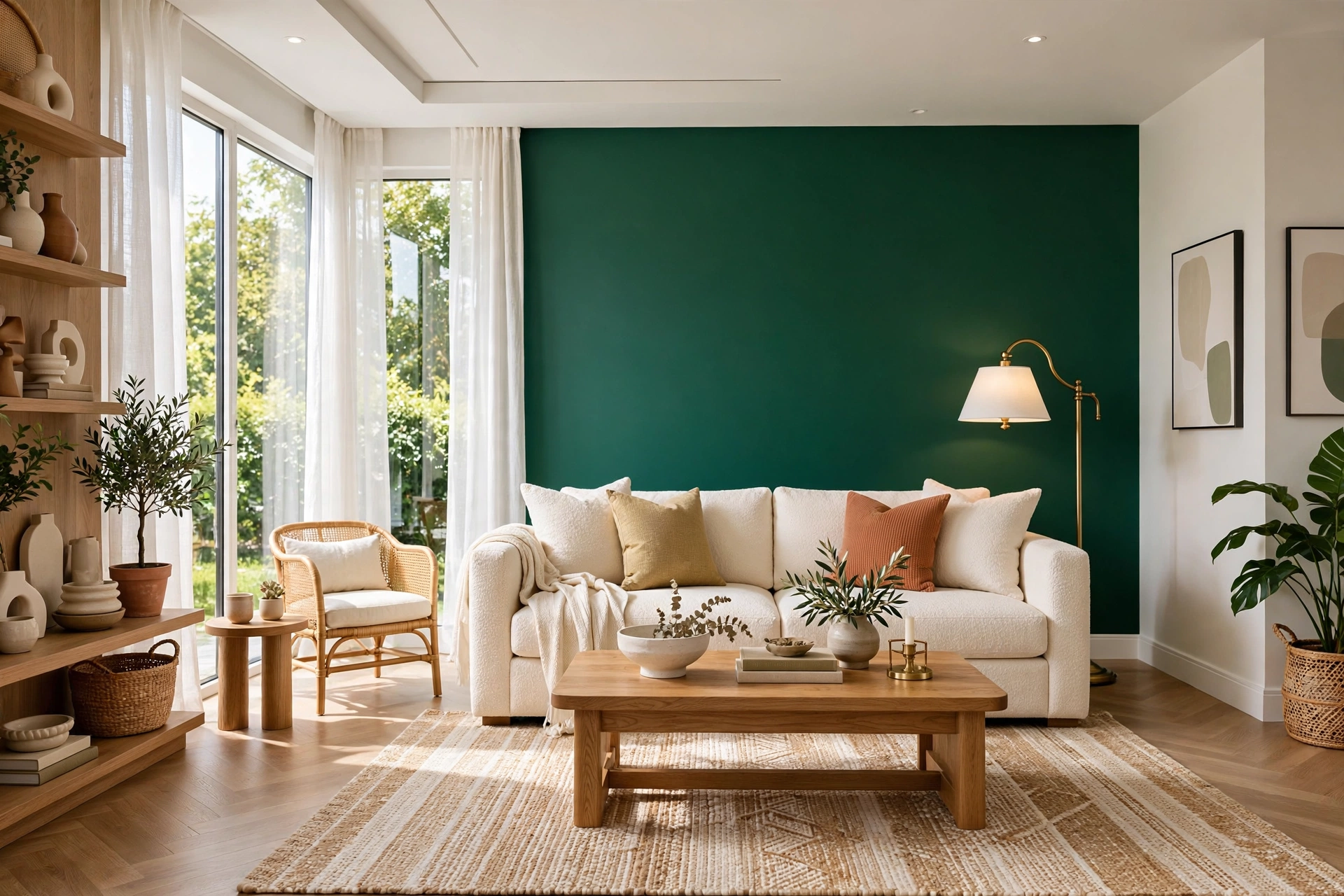
18 Living Room Accent Wall Ideas That Transform a Space
Introduction
One wall can change everything. While the other three walls of a living room do quiet background work, an accent wall is the room’s thesis statement — the surface the eye lands on first and remembers last. It sets the color story, anchors the furniture arrangement, and gives the whole space a focal point worth styling around.
An accent wall is also the highest-impact, lowest-commitment project in decorating. Painting one wall takes an afternoon and a single can of paint, yet it reads like a full renovation. Even renter-friendly options — peel-and-stick wallpaper, leaned panels, one oversized textile — deliver the same drama without a drop of commitment. And because it is only one wall, it is the safest place in your home to try the color or material you secretly love but would never put on all four walls.
Below are 18 living room accent wall ideas, ordered roughly from the simplest weekend projects to the full statement makers. Each includes what it costs, how hard it is, and which rooms it suits best. If you want to place your accent color inside a bigger palette first, our guide to living room color schemes will help you choose with confidence.
1. Paint It a Deep, Moody Color
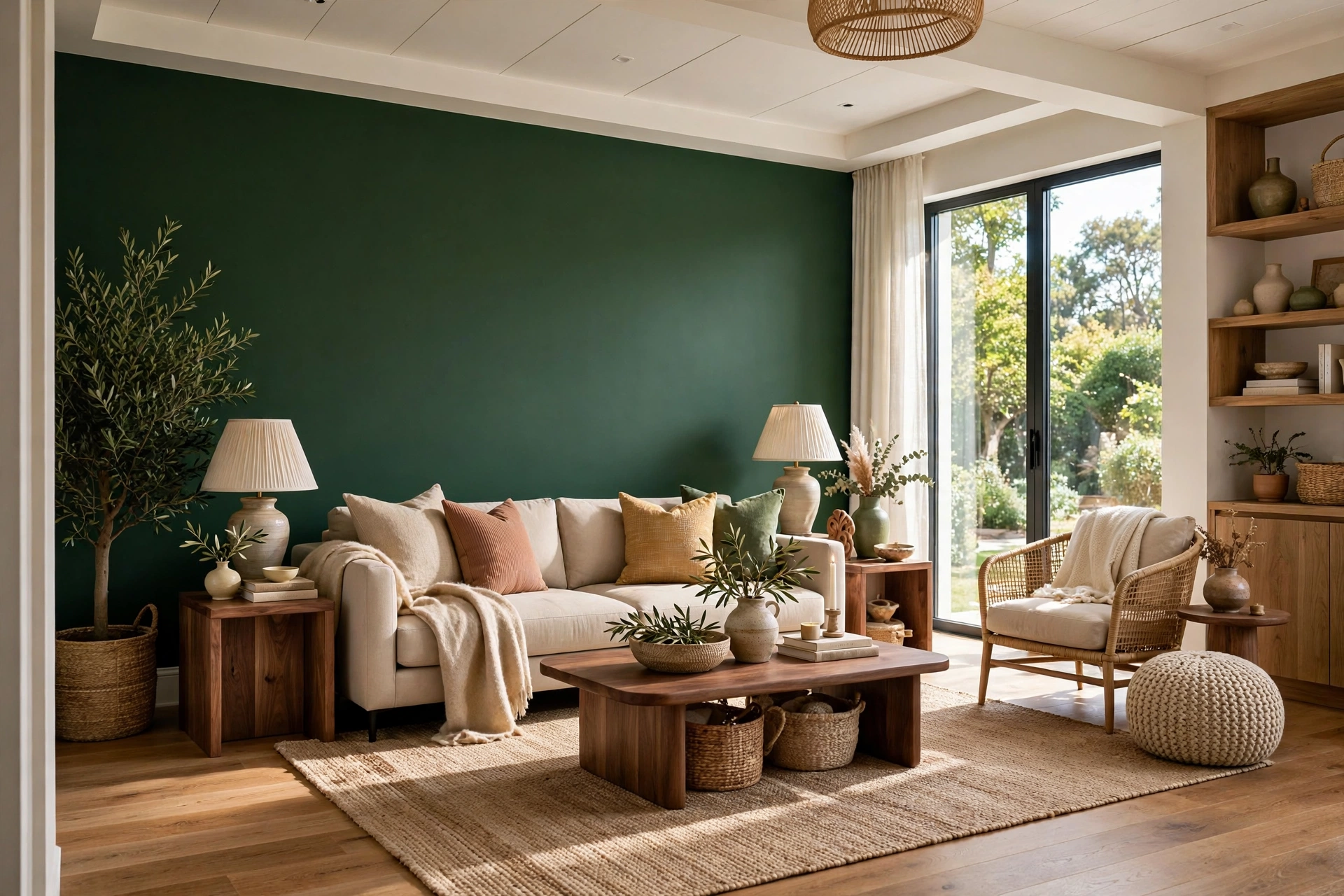
The fastest accent wall in existence is one bold can of paint. Deep forest green, inky navy, charcoal, espresso, or oxblood behind the sofa wraps the room in depth that pale walls can never fake. Dark color recedes visually, so the wall seems to fall back — the room feels larger at night and intimately cocooned by day.
Finish matters as much as color. Choose matte or eggshell so the pigment reads velvety rather than glossy, and carry the same paint onto the baseboards for a fully enveloping effect. Keep the other three walls warm and light so the contrast stays crisp, and repeat the accent color once more in the room — a cushion, a throw, one piece of art — so it reads as a scheme, not a sample.
📌 Important: Always test a deep paint color under your real evening lighting before committing. A green that looks rich in daylight can turn nearly black under warm bulbs. Paint a full poster board, tape it to the wall, and live with it for two evenings before you open the roller tray.
2. Try a Limewash or Plaster Texture
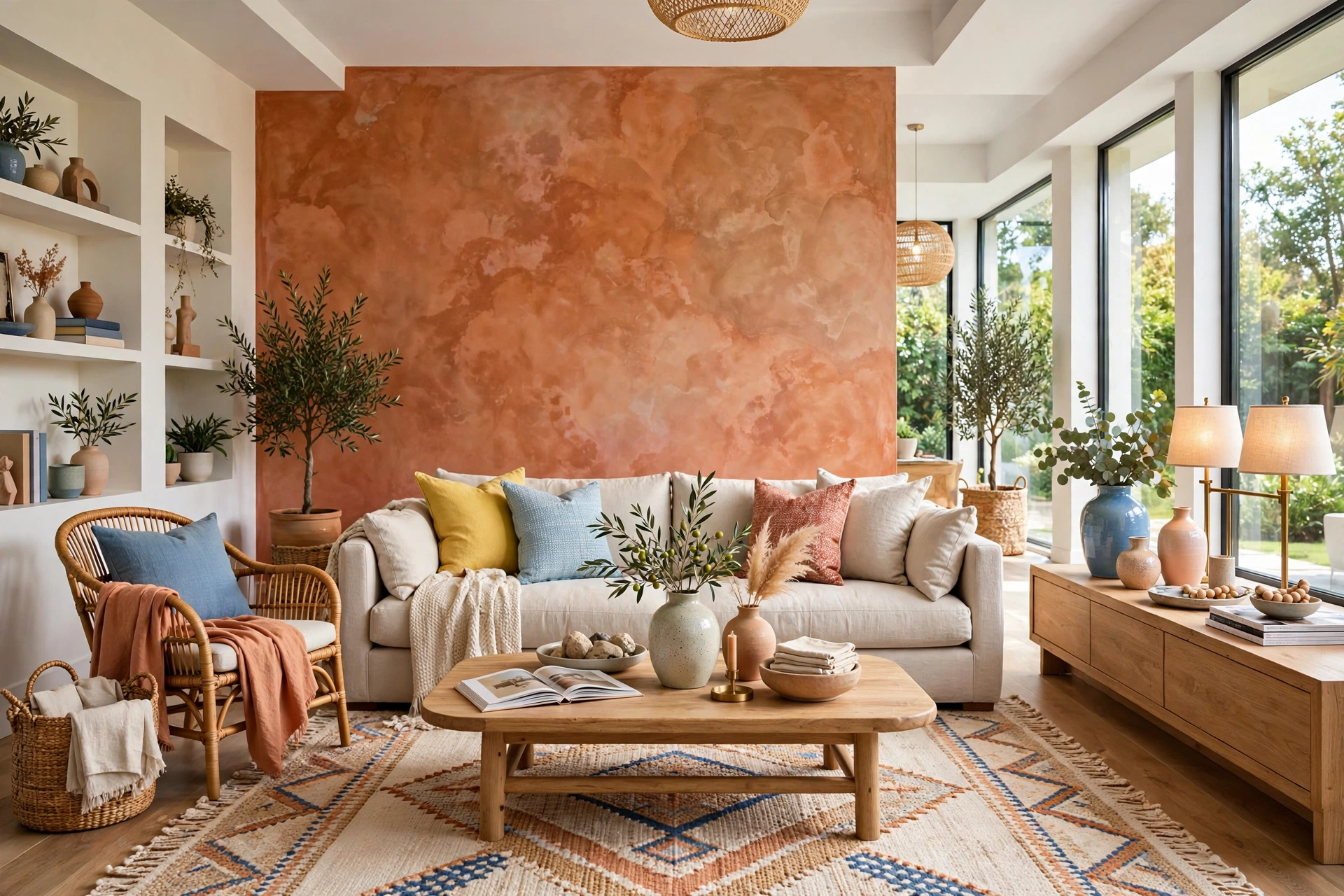
Flat paint is fine, but walls with subtle movement feel enveloping rather than boxed in. Limewash or plaster-effect paint catches light unevenly, so the wall seems to breathe as lamps come on — it is the difference between a wall painted warm and a wall that feels warm. The cloudy, hand-troweled finish hides application sins, which makes it one of the most forgiving painted accent walls for beginners.
Limewash-style paints now come in gorgeous warm neutrals — clay, sand, sage, stone — that pair beautifully with both modern and rustic furniture. One feature wall behind the sofa or fireplace changes the entire room’s temperature. Work in large, loose X-strokes with a block brush, and resist the urge to over-blend: the cloudiness is the point, so stop while it still looks handmade.
3. Install Vertical Shiplap or Tongue-and-Groove
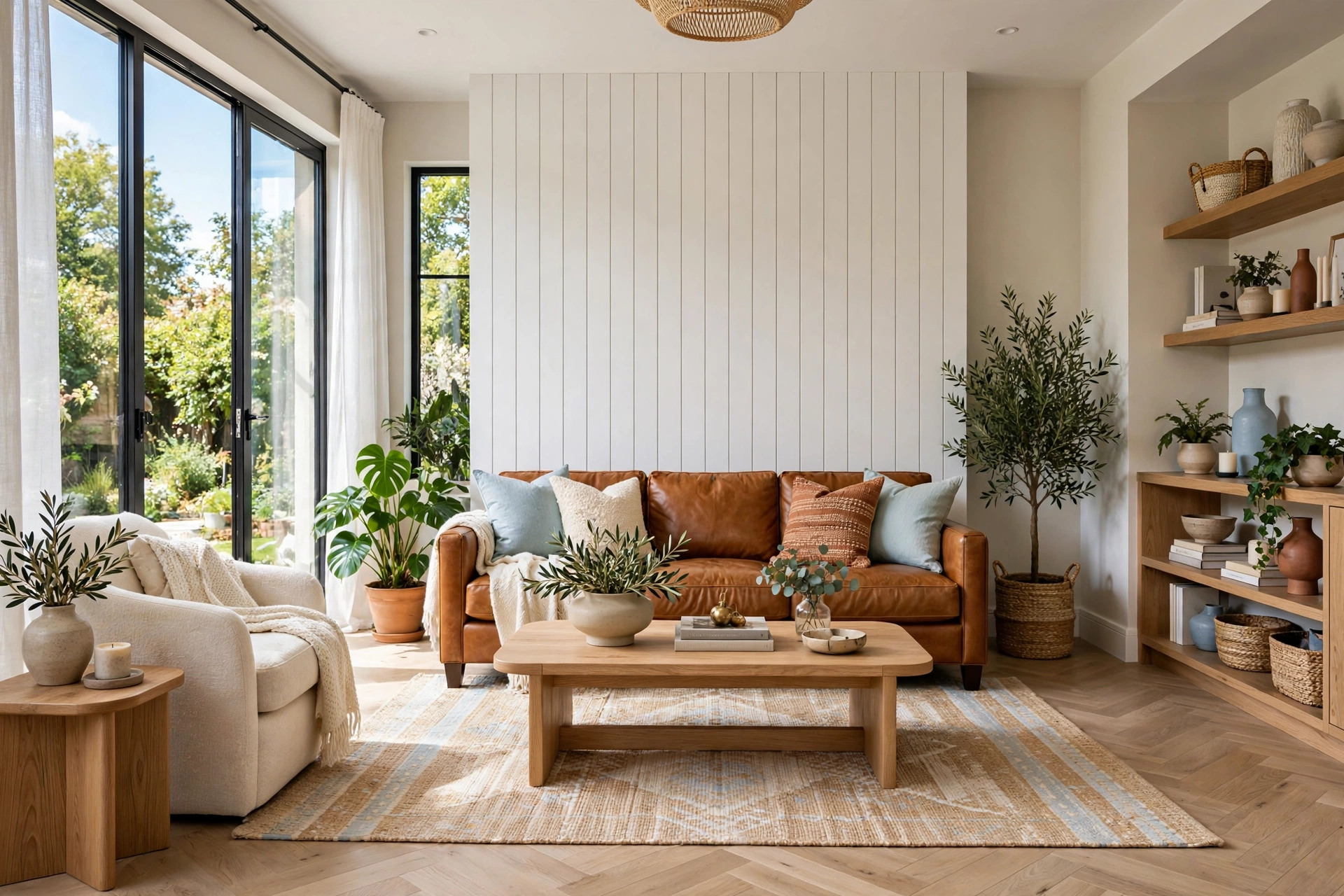
Vertical wood boards are the farmhouse-modern accent wall that never quite leaves the spotlight, and for good reason: the narrow shadow lines add texture that flat paint cannot, while the vertical orientation makes ceilings feel taller. Painted the same warm white as the other walls, it adds quiet architecture; painted a saturated color, it becomes the room’s graphic moment.
This is a genuinely beginner-friendly build. Pre-primed MDF boards go up with construction adhesive and a few finishing nails, and the gaps forgive slightly uneven walls. Keep the boards tight and the caulk lines crisp — sloppy seams are the difference between custom and craft-project. If you love the tailored look, clean-lined accent walls like this pair naturally with modern living room design ideas that prize simple silhouettes and honest materials.
4. Go Bold With a Geometric Paint Pattern
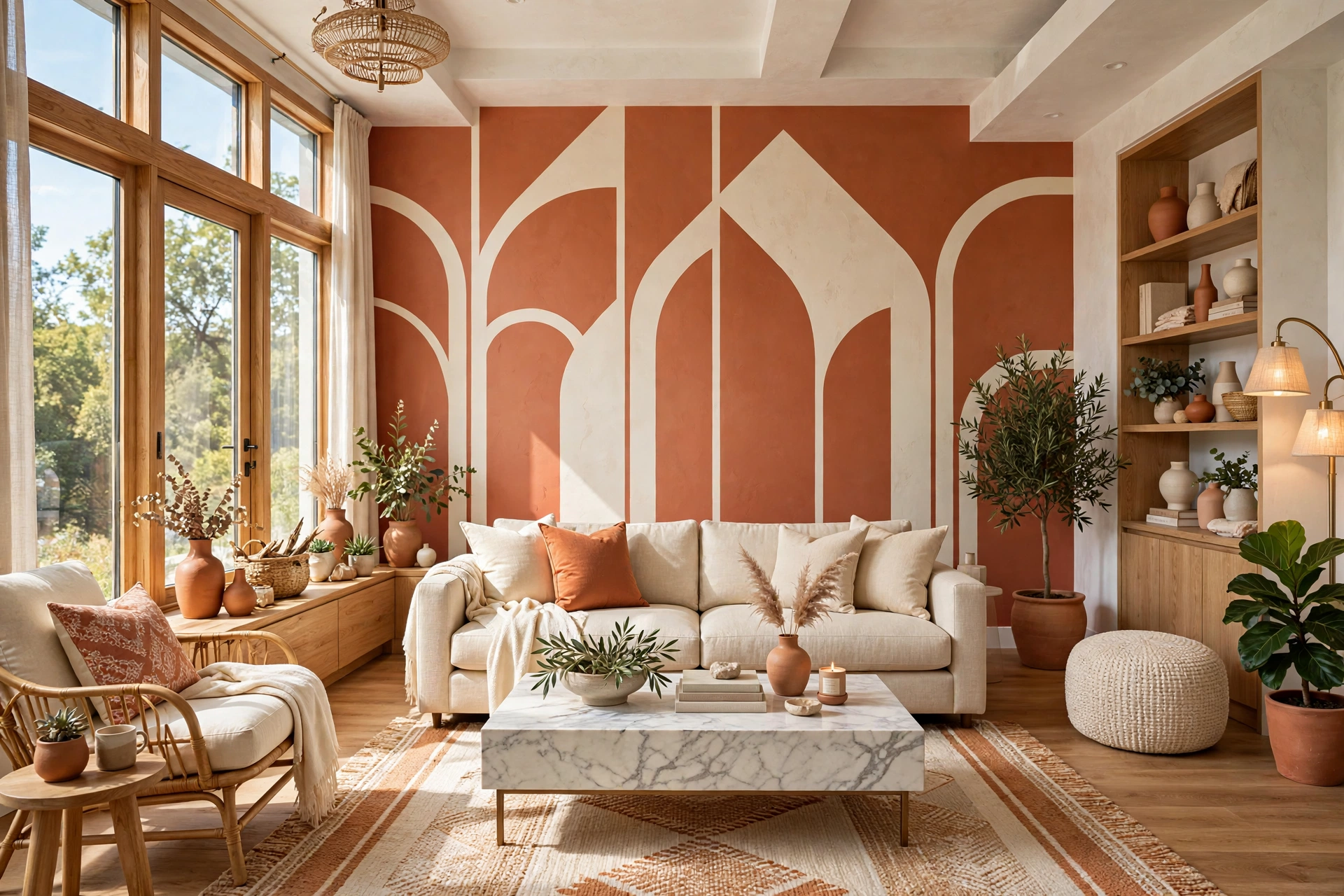
When one color feels too safe, paint a pattern. Oversized arches, half-wall color blocks, tone-on-tone stripes, or a simple grid of painted rectangles turn a plain wall into custom artwork for the price of two paint colors and a roll of painter’s tape. The trick is restraint: one geometric move, executed crisply, beats five competing patterns every time.
Plan the design on paper first and mark it on the wall with a level and pencil before any tape goes down. Seal tape edges with a thin coat of the base color (or clear sealer) so the accent color cannot bleed underneath — that single step is what separates sharp professional lines from fuzzy DIY ones. Step back to the doorway after the first section dries; the doorway view is what guests register first, so the composition has to work from there.
💡 Pro Tip: For a near-foolproof geometric accent wall, paint tone-on-tone stripes — the same color in flat and eggshell, or two shades apart on the same paint chip. You get all the texture and movement of a pattern with zero risk of the colors clashing.
5. Build a Gallery Wall With Intention
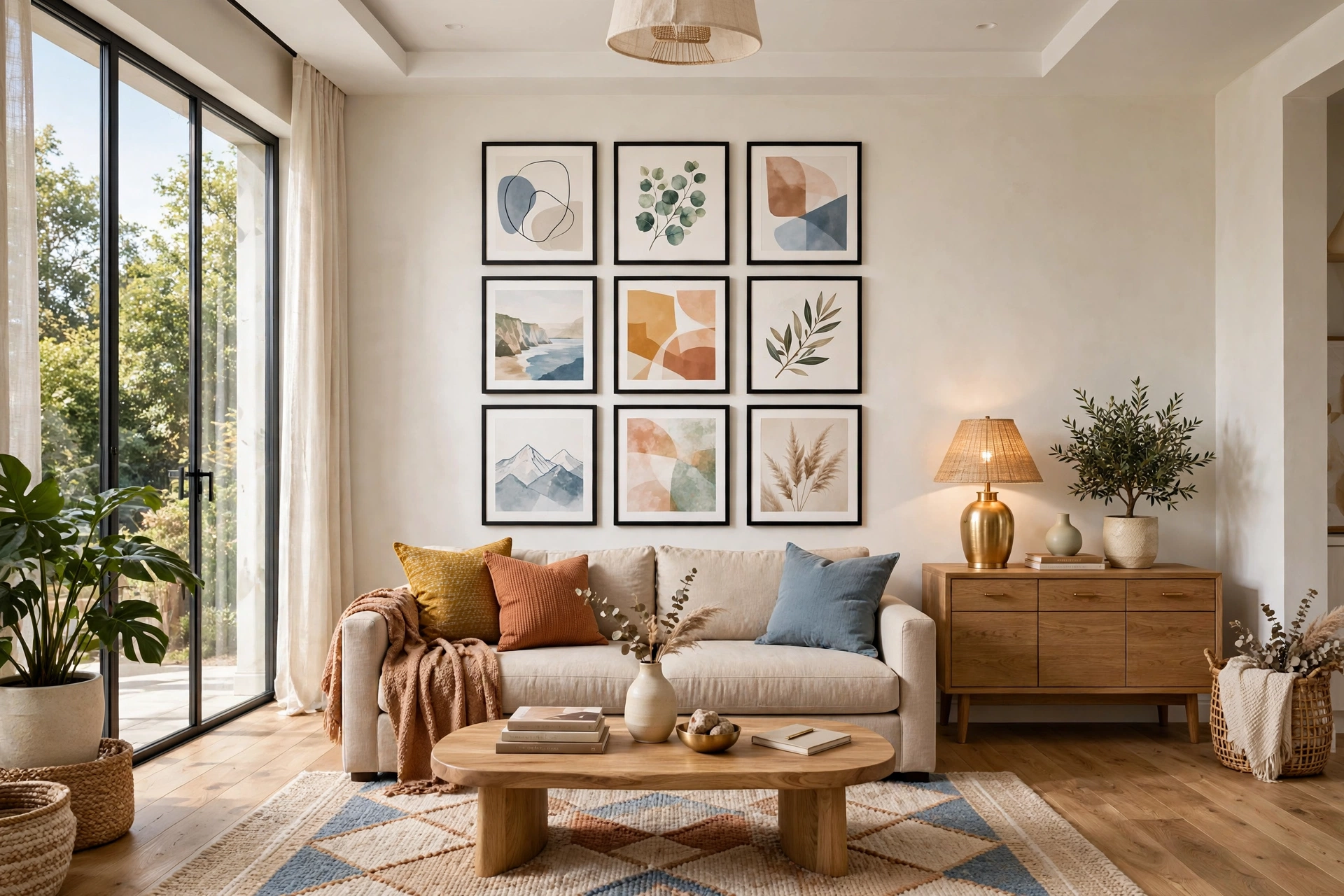
A gallery wall is the accent wall for people who collect rather than commit — art, photography, mirrors, and objects arranged into one confident composition. The difference between artful and chaotic is discipline: commit to one wall, one tight cluster, and consistent two-to-three-inch spacing, and the whole arrangement reads as a single installation.
Start by planning on the floor. Lay the largest piece slightly off-center as the anchor, then build outward, keeping the arrangement’s center at eye level — roughly 57 to 60 inches from the floor. Matching simple frames do more work than expensive art: four prints in identical slim frames read as a collection, while four mismatched pieces read as leftovers. Leave the surrounding walls calm so the gallery wall stays the exclamation point in a quiet sentence.
6. Add Wood Slat Panels for Warmth
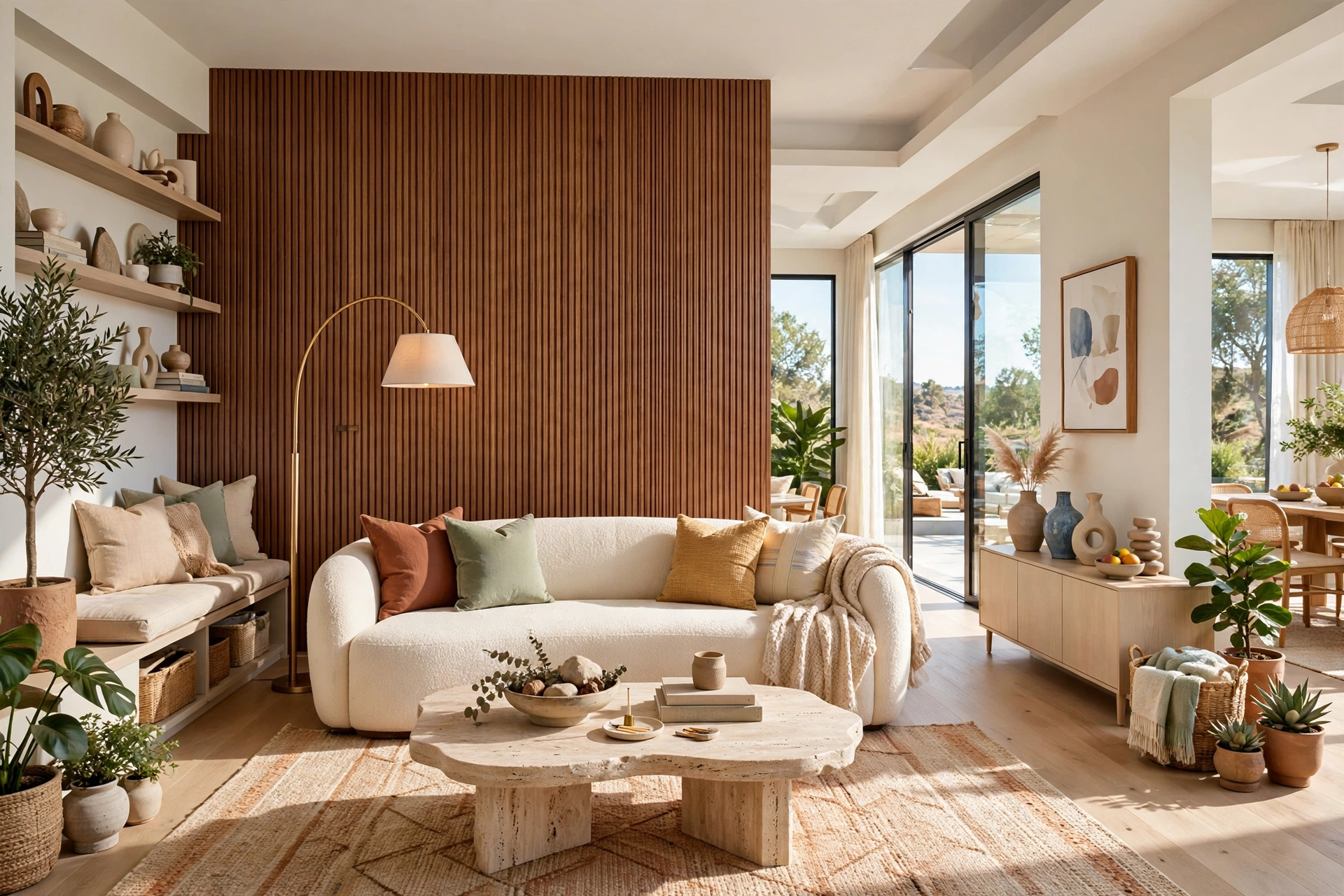
Thin vertical wood slats — the fluted-panel look covering design magazines — add warmth and rhythm to a wall without the weight of full paneling. The slim shadow gaps between slats create constant visual interest as light moves across them through the day, and natural wood tones instantly make a room feel more expensive and more tactile.
Pre-made slat panels now come as large sheets that screw straight into studs, which turns a weekend project into an afternoon one. Walnut and white oak are the premium choices, but stained pine slats get you 90 percent of the look for a fraction of the price. Run the slats floor to ceiling behind the sofa or media console — stopping at chair-rail height chops the effect and makes the ceiling feel lower.
💡 Pro Tip: Stain or finish your slats before mounting them, not after. Finishing flat on sawhorses is faster, more even, and keeps stain off your floors and the adjacent walls — the installed slats will look like they grew there.
7. Hang a Statement Mural or Wallpaper
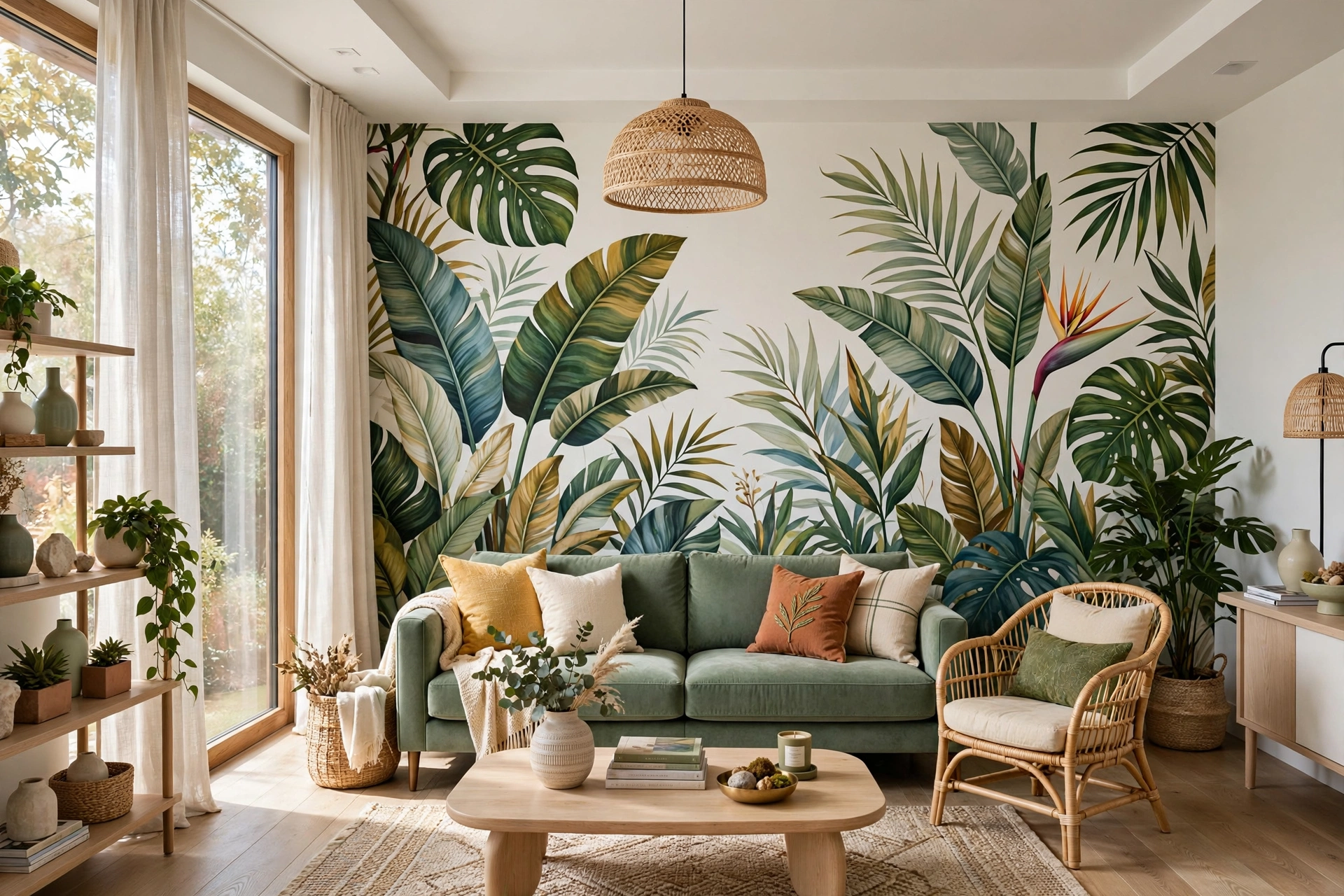
A large-scale mural or bold wallpaper turns one wall into a window onto somewhere else — misty forests, abstract brushstrokes, oversized botanicals, moody landscapes. Because the pattern does all the talking, the rest of the room can stay calm and simple, which makes murals surprisingly easy to live with long-term.
Measure twice before ordering: murals are printed to your exact wall dimensions, and pattern repeat matters enormously for standard wallpaper. For a low-risk trial, peel-and-stick versions now rival pasted paper in quality and come off cleanly — ideal if you are a renter or a commitment-phobe. Keep furniture in front of the wall low and simple so the mural stays visible; a tall bookcase parked in front of an expensive mural is money hidden behind furniture.
8. Build a Board-and-Batten Grid
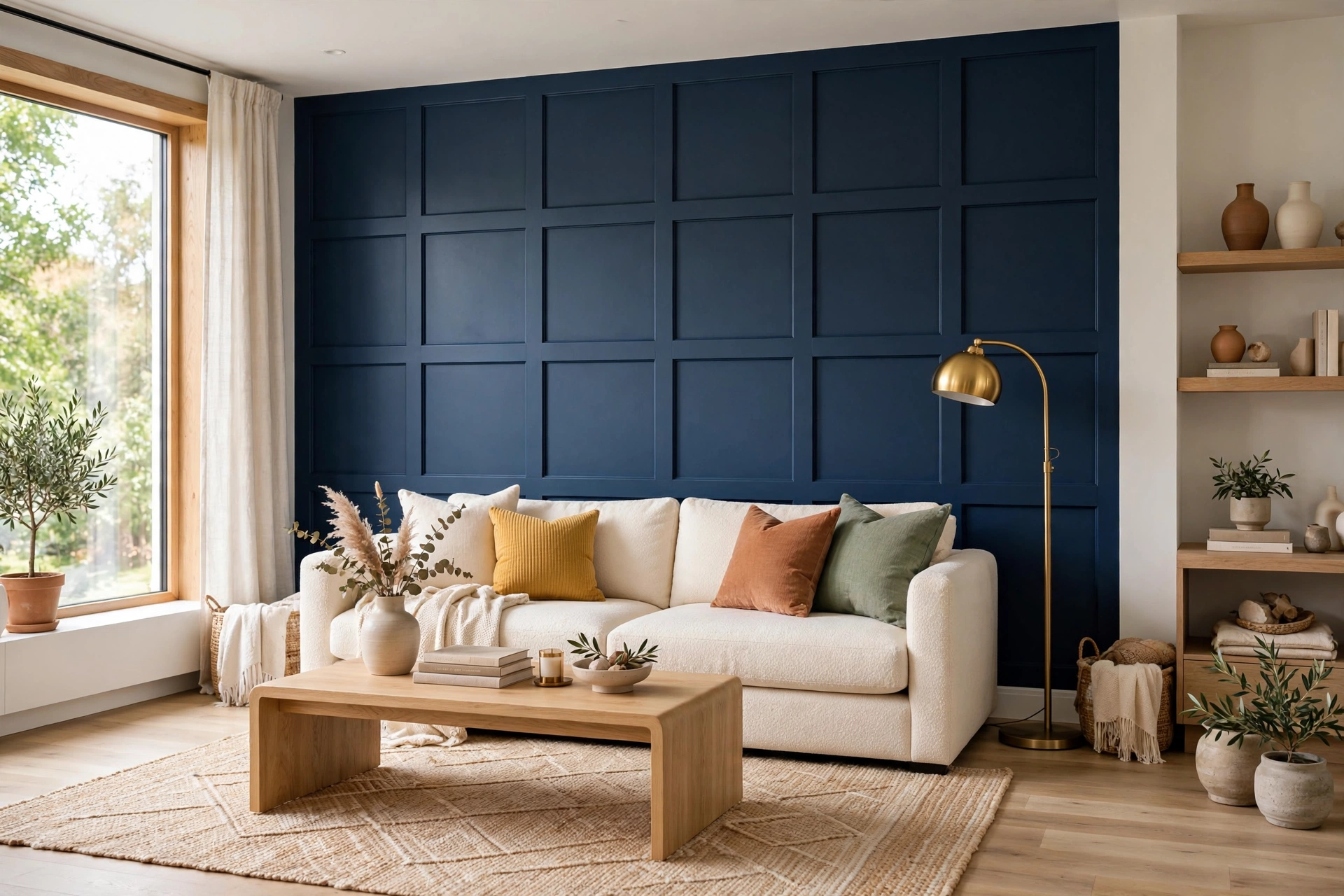
Board-and-batten — slim vertical boards over a flat wall, often with a horizontal rail — is the tailored cousin of shiplap. The grid adds crisp architectural detail that reads as custom millwork, and it photographs beautifully: the shadow lines give the wall dimension in every light. Painted one saturated color over a neutral room, it is pure designer drama.
This project rewards careful measuring more than carpentry skill. Space the battens evenly, keep every cut square, and caulk every joint before painting — painted caulk disappears, unpainted gaps shout. A chair-rail-height version suits traditional rooms, while a full-height grid behind the sofa reads modern. If warmth is the goal rather than architecture, pair the wall with cozy living room ideas like layered lamps and soft textiles to balance the crisp lines.
9. Use Exposed Brick — Real or Faux
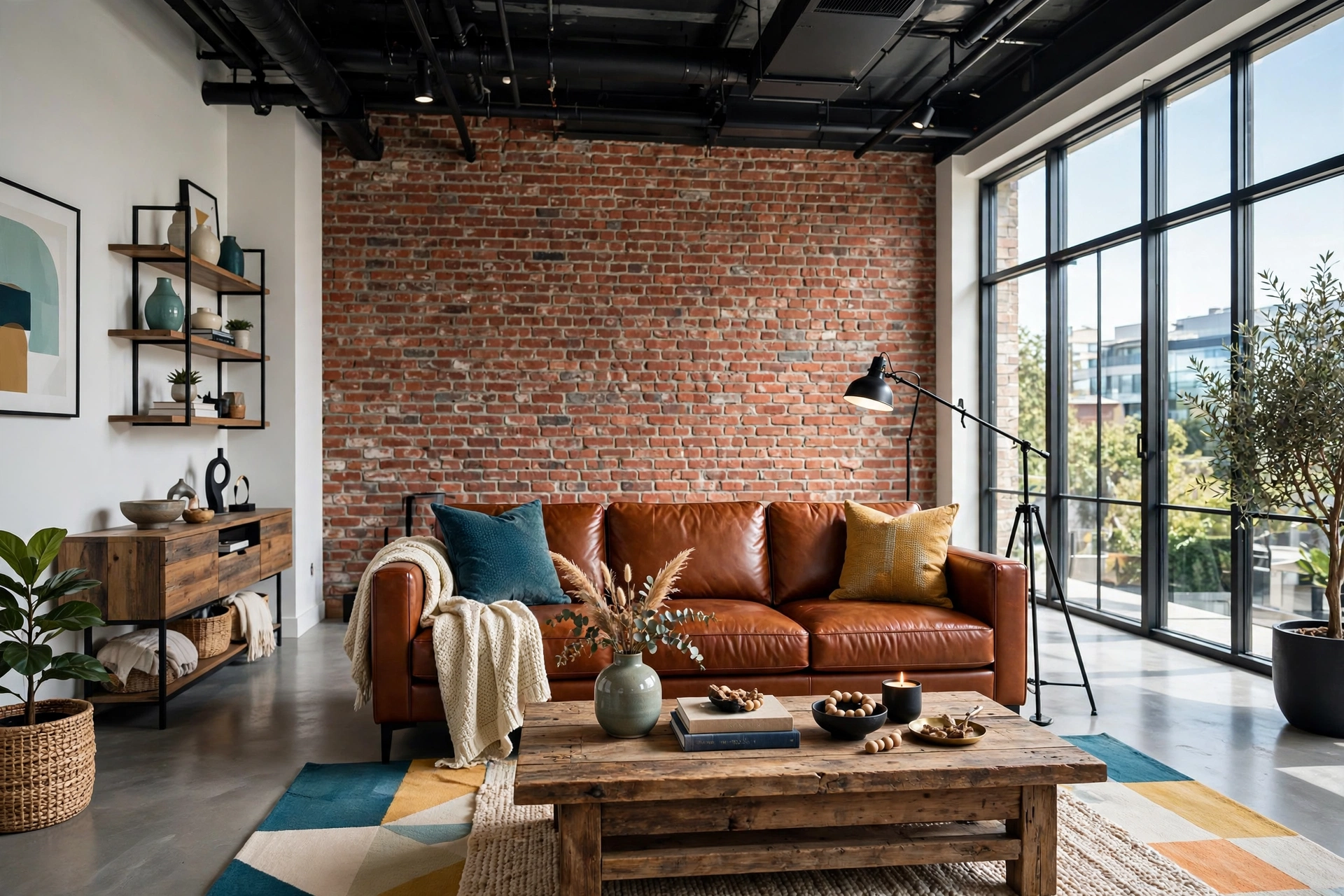
Few accent walls have the instant character of brick. Real exposed brick brings texture, history, and warmth in a single surface — no paint required. If your walls hide brick underneath, uncovering it is the most dramatic free project in decorating. If they don’t, thin brick veneer and remarkably convincing faux panels deliver the look without structural work.
The styling around brick matters: it loves warm wood, black metal, leather, and greenery — the industrial-modern family. Whitewashing or limewashing brick keeps the texture while lightening a dark room, and it is far more forgiving than a full repaint if you change your mind later. Seal real brick with a matte masonry sealer so it stops shedding dust onto your sofa and floors.
⚠️ Warning: Thin brick veneer is heavy — verify your wall can carry it and use the adhesive the manufacturer specifies, not generic construction glue. On drywall, most veneers need a cement backer board behind them. Skipping the backer is the failure you only discover when panels start peeling in year two.
10. Frame It With Picture-Frame Molding
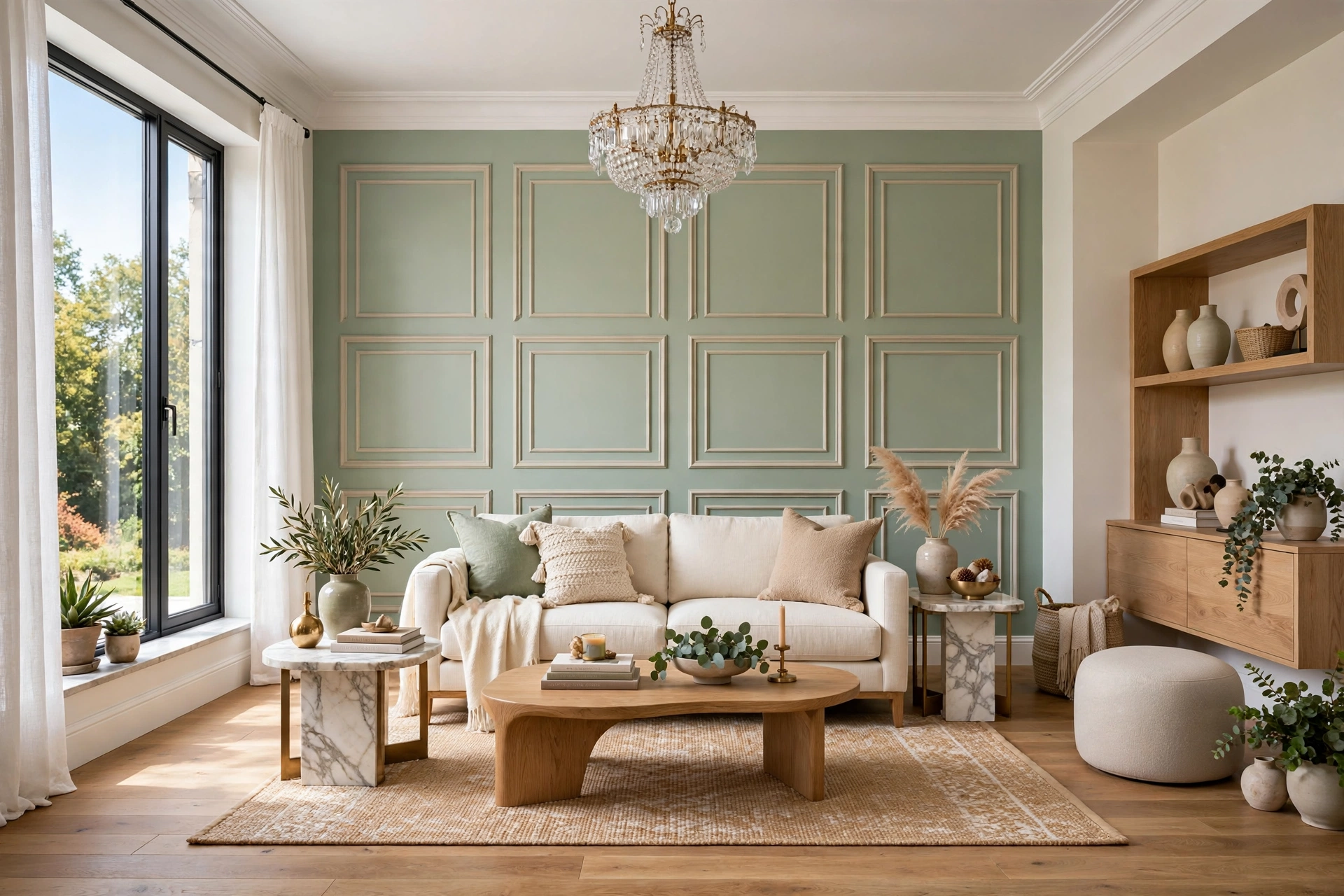
Picture-frame molding — rectangular trim boxes applied directly to a flat wall — is the classic European trick for making plain drywall look like paneled plaster. The raised rectangles catch light and shadow, adding quiet luxury for little more than the cost of trim, caulk, and paint. It works in traditional rooms and, painted the same color as the wall, in surprisingly modern ones too.
The geometry is everything. Sketch the layout so every rectangle is identical in size and spacing, and center the whole composition on the wall — moldings that drift off-center look accidental. Use lightweight polyurethane or MDF trim rather than real hardwood for the easiest install, and paint wall and molding the exact same color so the shadow lines, not the trim, do the talking.
11. Build a Floor-to-Ceiling Bookshelf Wall
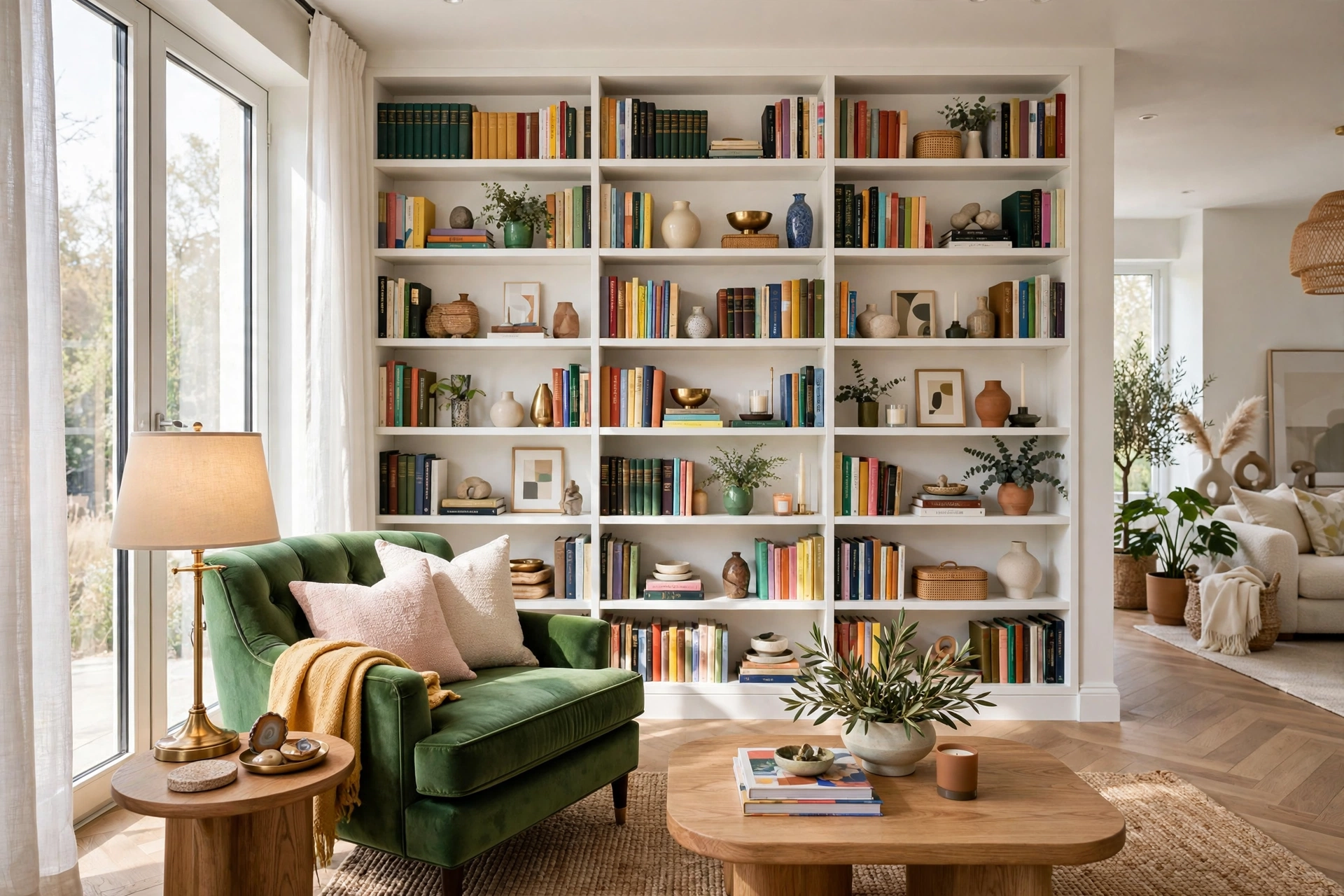
A wall of books is an accent wall with a job. Floor-to-ceiling shelving — filled with real books, styled with objects and small art — gives the living room a scholarly spine and a focal point that never needs redecorating. It is the hardest-working accent wall on this list because it stores, displays, and decorates at once.
You do not need custom carpentry. Painted stock bookcases, trimmed with crown molding at the top and a baseboard at the bottom, read as built-ins for a fraction of the price. Style the shelves like a real library, not a showroom: group books by height, stack some horizontally, leave breathing room for brass objects and framed minis. For the moodier reading-room version of this wall, the dark academia living room aesthetic shows how books, brass, and low lamplight build atmosphere.
📌 Important: Any bookshelf taller than waist height must be anchored to wall studs — a fully loaded tall bookcase can weigh hundreds of pounds and will tip. Use the anti-tip hardware that comes with the shelves, and find the studs with a stud finder rather than guessing. This is non-negotiable with kids or pets in the house.
12. Try Dark Botanical Wallpaper
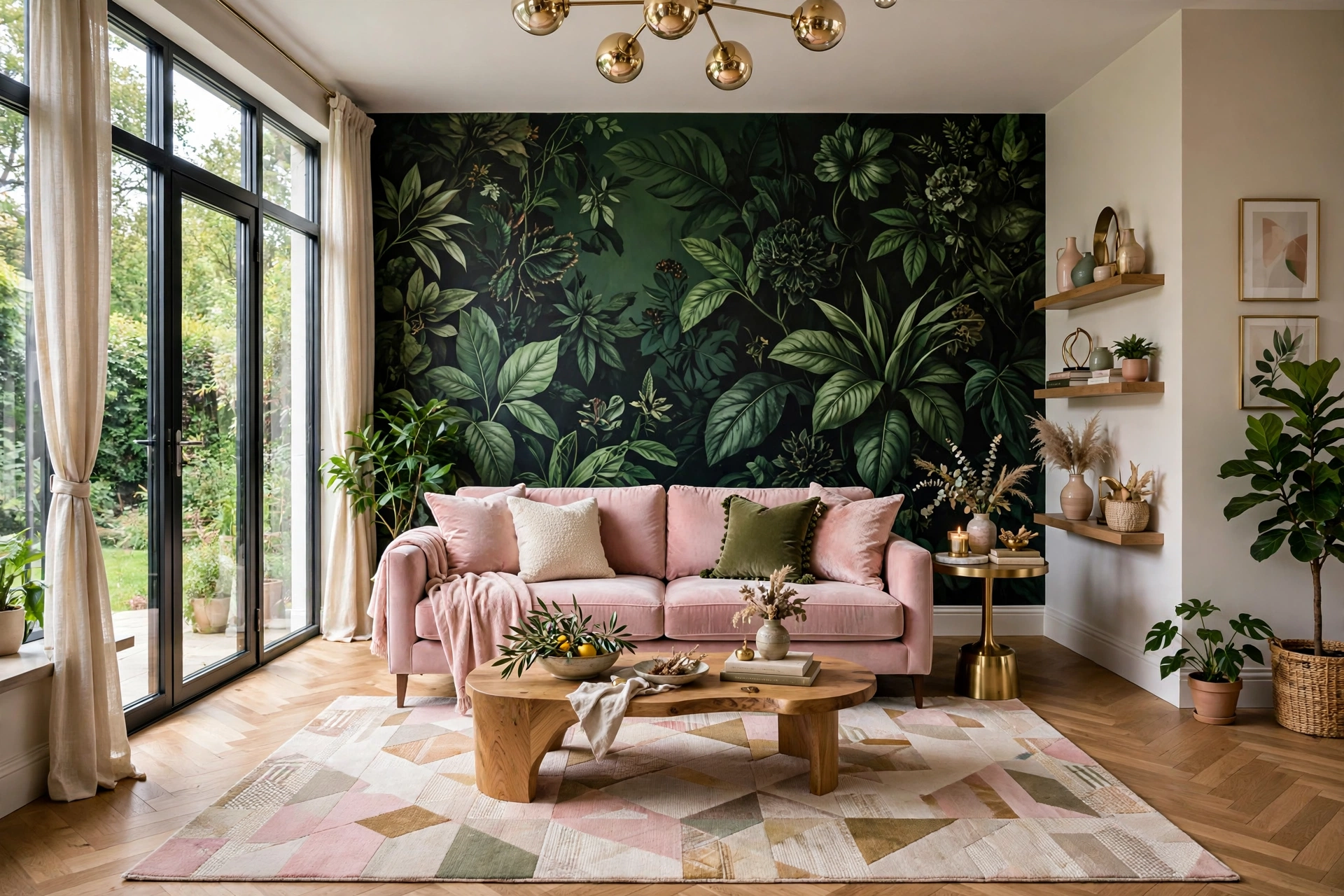
Dark botanical wallpaper — deep green or charcoal grounds printed with oversized leaves, palms, or florals — is the accent wall for plant lovers who want the jungle without the watering schedule. Against a dark ground, the pattern glows under lamplight, and the wall reads as both dramatic and alive. It is maximalism with a botanical excuse.
Because the pattern is busy, keep everything else on that wall quiet: one low console or a floating bench, a single sculptural object, nothing competing. Repeat one green from the paper in a real plant and one metallic from the print in a lamp or frame, and the whole wall feels designed rather than applied. This is a commitment piece — order samples, tape them up, and live with the scale for a few days before you buy the rolls.
13. Paint a Color-Block or Two-Tone Wall
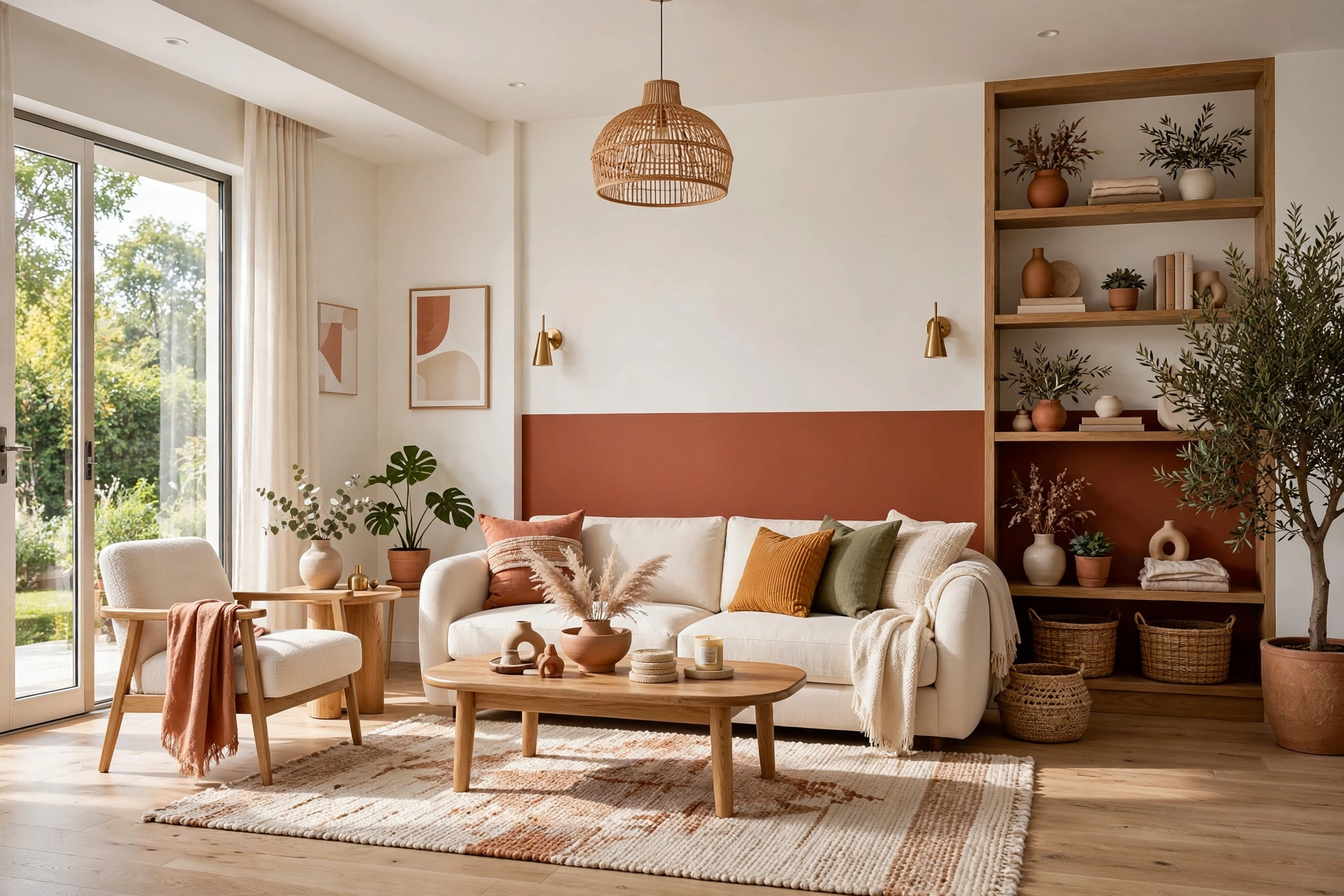
Color-blocking — painting the lower third of a wall one color and the upper two-thirds another, or wrapping one bold band around the room — is the modern way to add architecture with paint alone. A deep band of color at sofa height grounds the seating area; a painted arch behind a chair creates a nook where none existed. It is graphic, fresh, and costs exactly two sample pots.
Crisp lines are the entire project, so invest in quality painter’s tape and a level rather than expensive paint. The classic ratio is roughly one-third saturated color to two-thirds neutral, which keeps the bold move from overwhelming the room. Slightly imperfect lines can be charming in a hand-painted arch; on a straight two-tone split, wobbles just look like mistakes — choose your design honestly.
14. Install Stone or Faux-Stone Veneer
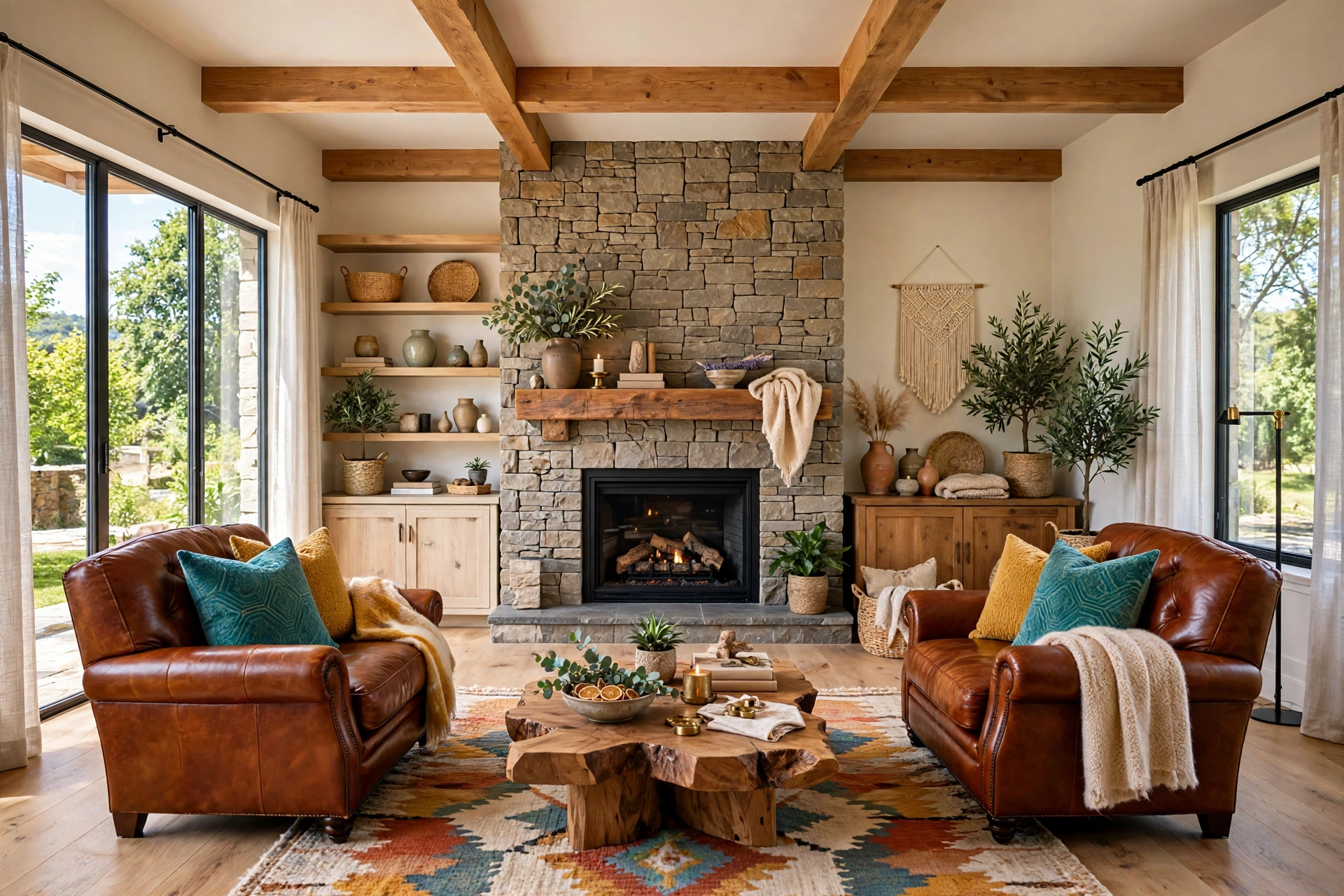
Stone veneer — real thin-cut stone or convincing manufactured panels — gives an accent wall the permanence and texture of a mountain lodge. It is the boldest material on this list and the one that most convincingly fakes a renovation: a stone fireplace wall or a full stone feature wall reads as structural, not decorative.
Like brick, stone wants the right supporting cast: warm woods, black or bronze metal, nubby textiles, and low warm lighting that rakes across the texture. Keep the palette around it restrained — stone is the statement, so the furniture should be the quiet audience. This is a bigger-budget, bigger-commitment move; if you are unsure, live with a painted dark wall in the same tone for a month first and see if you still crave the texture.
15. Add Classic Wainscoting
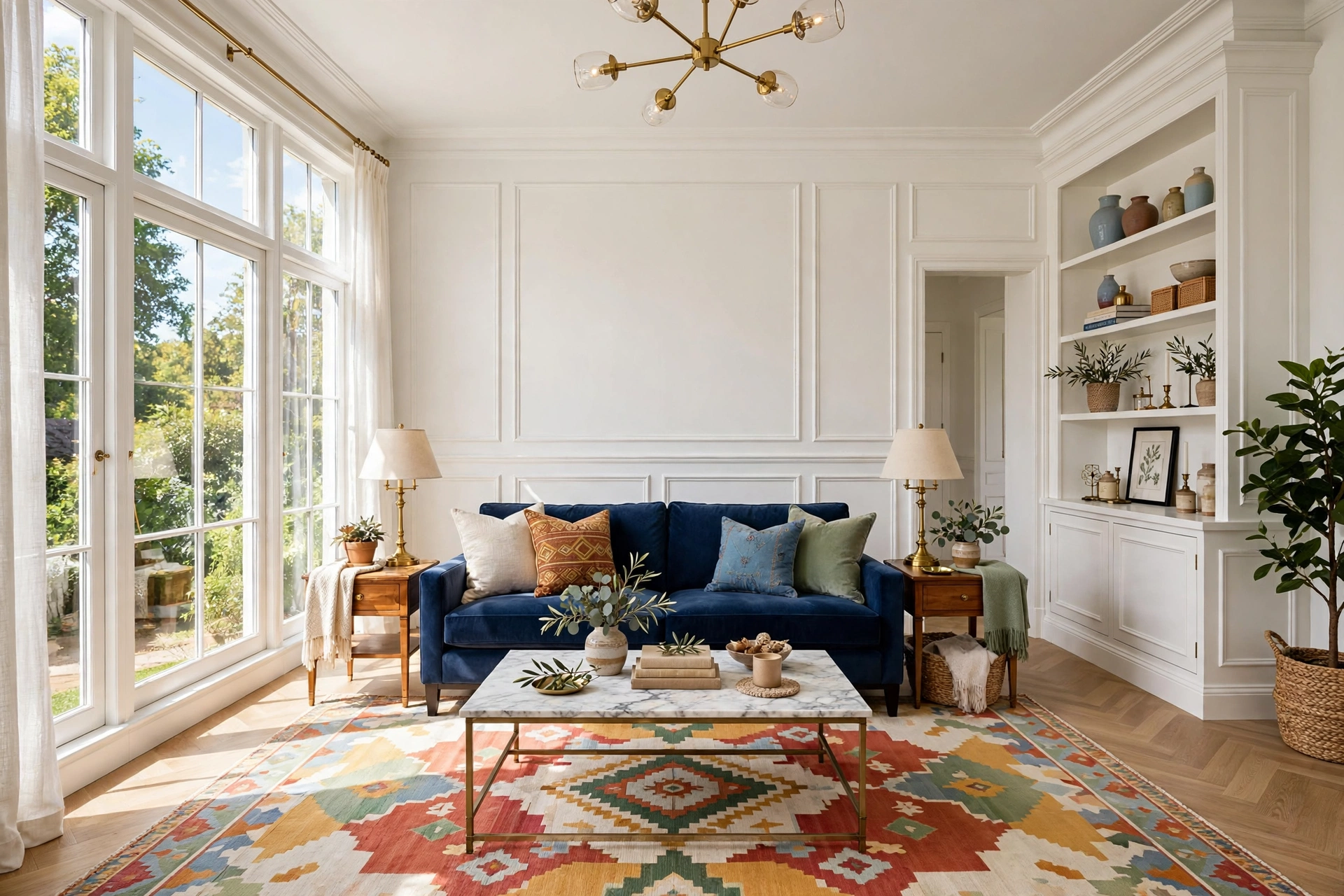
Wainscoting — paneling on the lower portion of the wall, topped with a chair rail — brings instant traditional polish and is one of the most forgiving ways to hide imperfect lower walls. Painted the same color as the upper wall, it adds quiet texture; painted a contrasting deep tone below a light upper wall, it becomes a genuine two-tone accent.
Modern versions skip the fussy colonial profiles for clean Shaker-style rectangles, which suit contemporary rooms beautifully. The chair rail must be level and at a consistent height around the whole room — an unlevel rail is visible from every angle and impossible to unsee. Cap the rail with a slightly deeper profile than the panels below so it casts a clean shadow line; that shadow is what makes the whole installation look expensive.
16. Hang an Oversized Tapestry or Textile
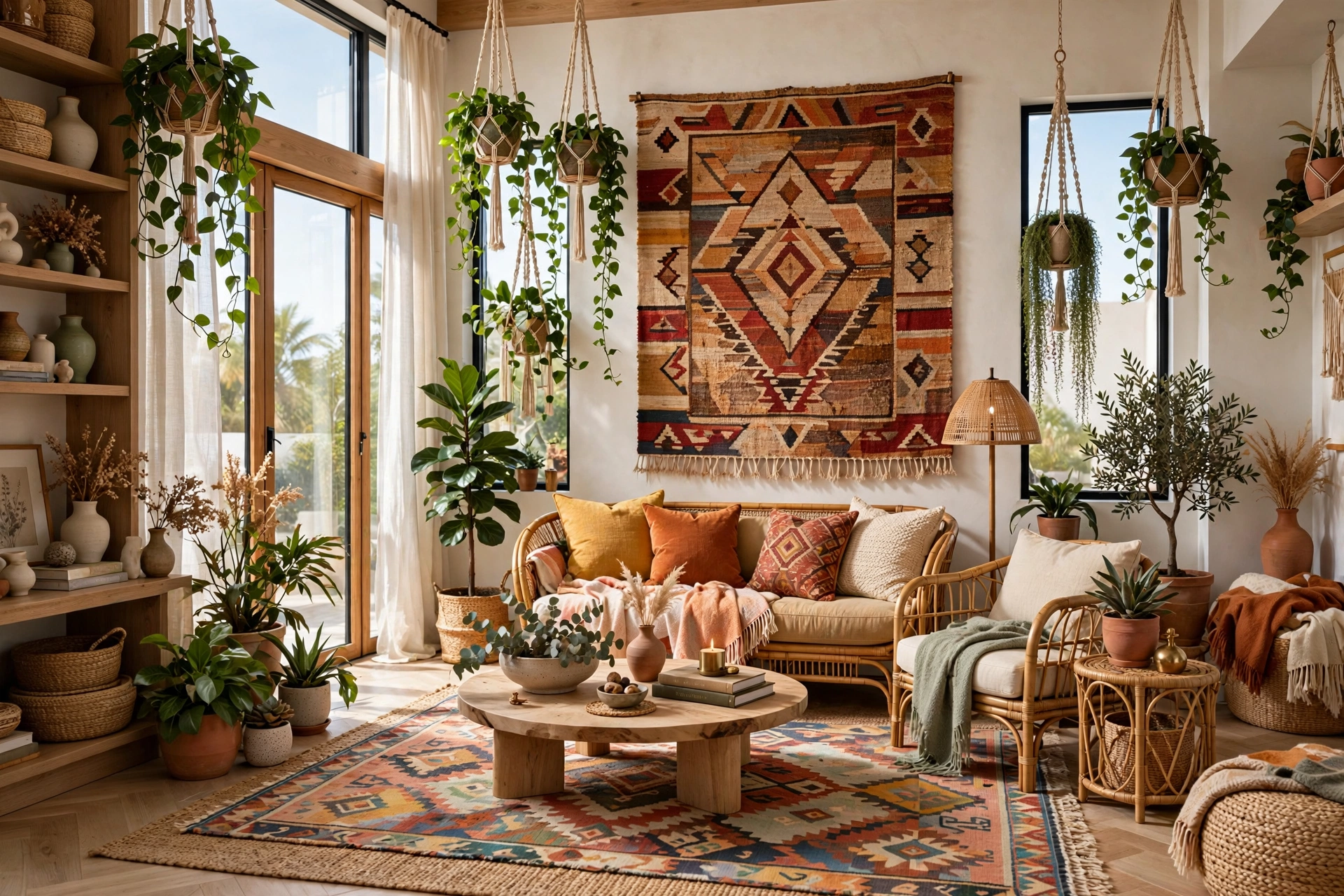
One huge textile — a woven tapestry, a vintage rug hung as art, a block-printed kantha quilt — is the softest accent wall on this list. It adds color, pattern, and acoustic softness in a single afternoon, and it comes down in minutes when you move or change your mind. For renters, it is the ultimate no-commitment statement.
Scale is the make-or-break: the textile should be generous, roughly two-thirds the width of the sofa beneath it. Too small and it reads as an afterthought pinned to the wall. Hang it from a simple wooden dowel or brass rod so it drapes naturally, and keep its center at eye level. Our bohemian living room ideas guide is full of textile layering tricks if this wall makes you want to go further down the collected, global path.
17. Create an LED-Lit Floating Shelf Display Wall
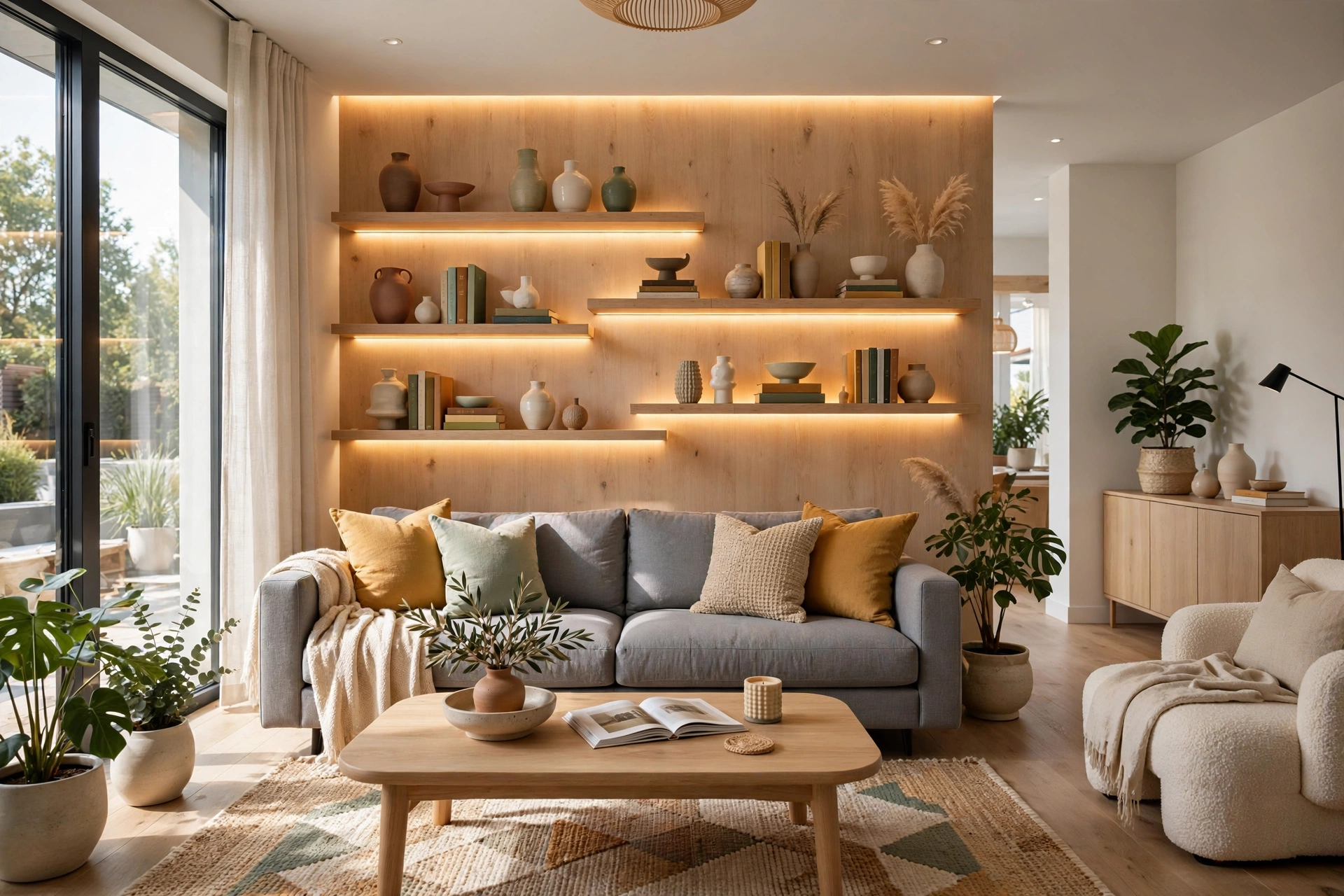
Floating shelves washed with hidden LED strips turn a plain wall into a gallery that glows. The shelves themselves hold art, ceramics, and books; the warm light grazing the wall behind them adds a layer of evening drama that no overhead light can imitate. By day it is a styled display wall; by night it is the room’s mood lighting.
Install the shelves first, then run the LED strips along their undersides or in a recessed channel behind them so the source stays invisible — visible strip dots are the difference between luxe and gadget. Wire them to a dimmer or a smart plug so the glow drops from functional to atmospheric in seconds. Keep the styling on the shelves edited and low: backlit clutter just looks like backlit clutter.
💡 Pro Tip: Choose LED strips at 2700K or below — the warm candlelight temperature. Cooler 4000K+ strips make wood look gray and skin look tired, which undoes everything the accent wall is trying to do. Warm light flatters both the wall and everyone in front of it.
18. Go Monochrome: Match the Wall to the Sofa
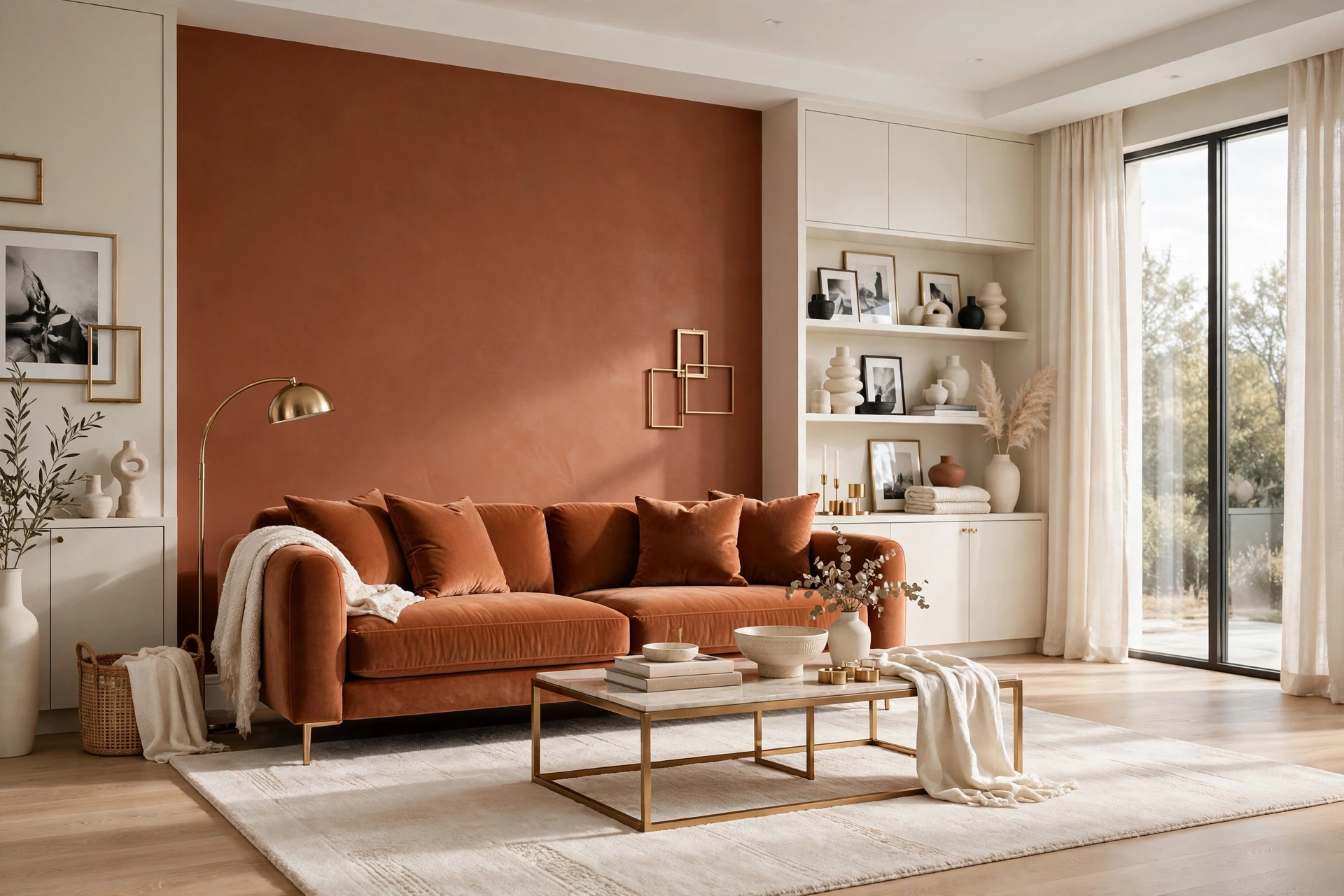
The most sophisticated accent wall trick is also the simplest to describe: paint the wall the same color as the sofa. A deep green wall behind a deep green sofa, or a warm terracotta wall behind a terracotta loveseat, dissolves the boundary between furniture and architecture. The seating area reads as one continuous sculptural moment instead of furniture parked against a backdrop.
This only works with commitment to the match — near-miss tones look like a mistake, so take a cushion to the paint store and color-match properly. Once the wall and sofa merge, the room needs its contrast elsewhere: a light rug, pale curtains, one warm metal repeated three times. The result is the kind of tonal, editorial room that looks straight out of a design magazine, built from a single can of paint and a brave decision.
Quick Comparison: Living Room Accent Walls by Cost and Effort
Living Room Accent Wall Quick-Start Checklist
- ✅ Pick the wall the eye lands on first — usually behind the sofa or fireplace
- ✅ Test paint colors and wallpaper samples under your real evening lighting
- ✅ Measure the wall and photograph it before ordering any materials
- ✅ Repeat the accent color or material once more in the room so it reads as a scheme
- ✅ Plan lighting for the wall — one picture light or washed shelf glow doubles the drama
- ✅ Style the wall’s base with low furniture so the accent stays fully visible
Common Living Room Accent Wall Mistakes
Mistake 1: Choosing the Wrong Wall
The most common accent-wall failure has nothing to do with color — it is location. The accent wall must be the room’s natural focal wall: behind the sofa, behind the fireplace, or the first wall you see from the doorway. Accenting a random side wall just because it is empty creates a focal point that fights the furniture layout instead of anchoring it. Stand in the doorway, notice where your eye lands first, and commit to that wall.
Mistake 2: Going Too Timid With Color
A wall painted one shade darker than the other three is not an accent wall — it is a painting error. The whole point of the exercise is contrast: the accent wall should be decisively darker, bolder, or more textured than its neighbors. If you are nervous, go bolder than your instinct says, not safer; nearly every repainted accent wall in history went darker the second time.
Mistake 3: Forgetting the Lighting
An accent wall lit only by a central ceiling fixture looks flat after dark, which is when you actually live in the room. Plan at least one dedicated light for the wall — a picture light over art, LED wash behind shelves, a floor lamp aimed to graze texture. Texture-heavy walls like brick, slats, and limewash especially need raking light; without it, you paid for dimension you cannot see.
Mistake 4: Letting Furniture Hide the Wall
A tall bookcase parked in front of a mural, a sofa piled with cushions swallowing a painted arch — furniture that covers the accent wall wastes the entire project. Keep the wall’s sightline clear: low-profile furniture in front, breathing room around the edges, nothing taller than two-thirds of the wall height blocking the center. The wall is the art; let it be seen.
Mistake 5: Stopping at the Wall
The accent wall is the beginning of a scheme, not the whole scheme. A bold green wall floating in an otherwise beige room looks like a dare; the same wall with two green cushions, one green vase, and a brass lamp that echoes the hardware looks like a design. Repeat the accent color or material at least twice more in the room — repetition is what turns a bold choice into an intentional one.
Frequently Asked Questions
1. Which wall should be the accent wall in a living room?
Choose the wall your eye lands on first from the main doorway — usually the wall behind the sofa or the fireplace wall. That is the room’s natural focal point, and accenting it anchors the furniture arrangement instead of fighting it. Avoid walls broken up by multiple doors or windows, since interruptions chop the effect.
2. What is the cheapest living room accent wall idea?
Paint. One gallon of quality paint covers a single accent wall with room to spare, making a painted accent wall the cheapest high-impact project in decorating — typically an afternoon’s work. Peel-and-stick wallpaper and a curated gallery wall of prints you already own are the next-cheapest options, both renter-friendly.
3. Are accent walls still in style in 2026?
Yes — but the style has evolved. The single flat bold wall of a decade ago has given way to texture and material: limewash, wood slats, panel molding, and murals. The principle is the same — one wall carries the room’s personality — but the execution now favors depth and tactility over plain saturated color.
4. Can renters do an accent wall?
Absolutely. Peel-and-stick wallpaper and murals come off cleanly, a large textile or tapestry hangs from a single rod, and a gallery wall needs only small nail holes that fill with toothpaste-grade spackle. Even paint is renter-friendly if your lease allows repainting — many landlords permit it as long as you return the wall to the original color.
5. What color makes the best living room accent wall?
The best accent color is one that already appears in your room’s textiles or art, pushed two shades deeper. Deep greens, inky navies, warm terracottas, and charcoal are the most forgiving because they pair with both warm and cool neutrals. Test any candidate under your evening lighting before committing — undertones shift dramatically between daylight and lamplight.
6. Should the accent wall be darker or lighter than the other walls?
Darker, almost always. A darker accent wall recedes visually, adds depth, and makes the lighter walls around it feel brighter by contrast. A lighter accent wall in a dark room can work as a bright focal point, but it is the harder move to pull off — contrast in the darker direction is the safer, more dramatic choice.
7. How do I decorate around an accent wall?
Repeat the accent color or material at least twice more in the room — cushions, a throw, a vase, a frame — so the wall reads as part of a scheme. Keep furniture in front of the wall low so the accent stays visible, and give the wall its own light source. The surrounding walls and large furniture should stay calm so the accent wall keeps its starring role.
Conclusion
An accent wall is proof that decorating is about decisions, not square footage or budgets. One wall, chosen well and executed with care, can carry the entire personality of a living room — whether that personality is moody and dramatic, warm and textural, or bold and graphic. The eighteen ideas above span every budget and skill level, from a single afternoon with a roller to a weekend with a saw.
Start with the wall your eye finds first, test your color under real evening light, and give the wall its own lighting so it performs after dark. Repeat the accent once or twice around the room, keep the furniture in front of it low, and resist the urge to decorate the other three walls into competition. Do that, and the smallest project in your home will deliver the biggest transformation.