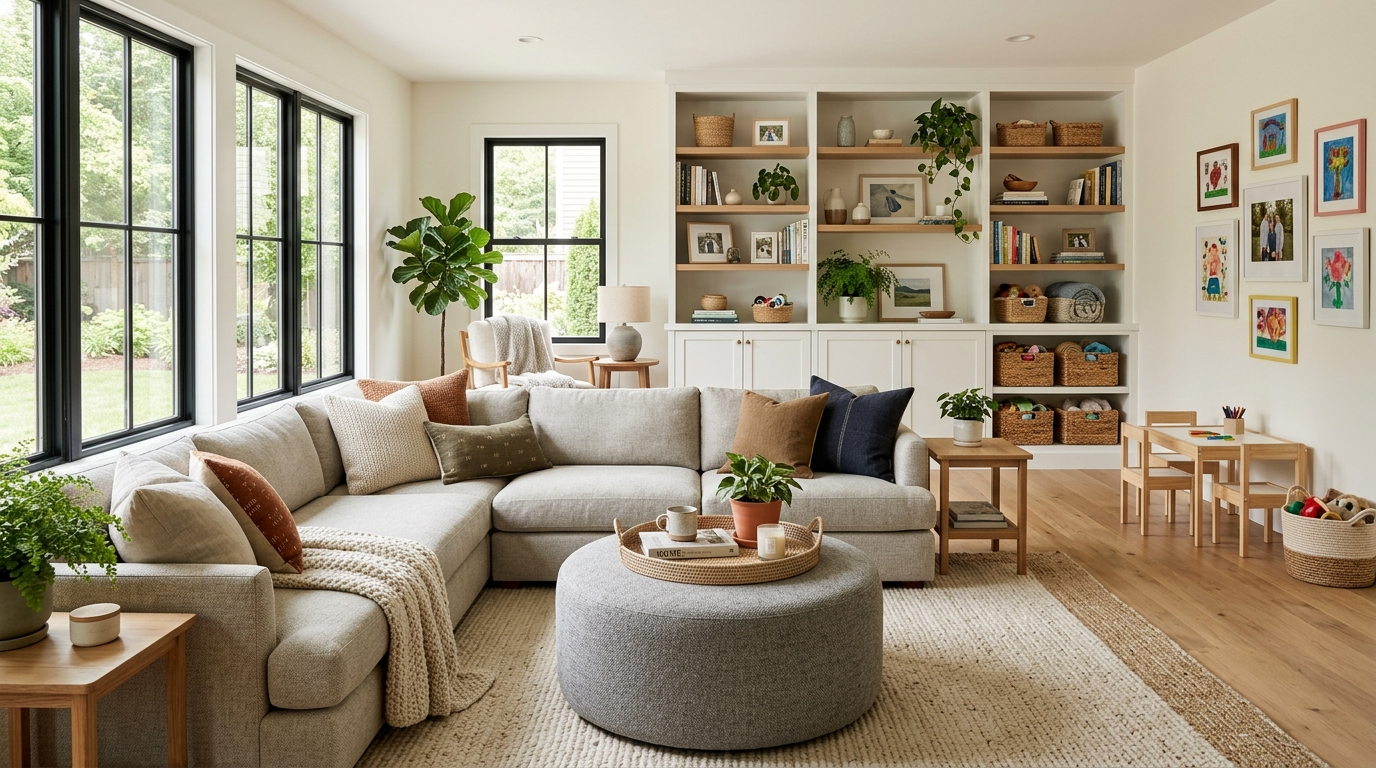
10 Family Living Room Ideas That Are Beautiful, Practical and Actually Survive Real Life
Here’s the design brief that most interior designers secretly find the most challenging: make it beautiful, make it comfortable, make it work for adults and children simultaneously, survive a juice spill on a Tuesday afternoon, and still look like somewhere you’d be proud to have guests. The family living room is the room that has to do the most jobs in any home — and the conventional wisdom that you simply have to sacrifice aesthetics for functionality is, fortunately, completely wrong. The best family room design ideas prove that a living room can be genuinely beautiful and genuinely functional at the same time. It just requires thinking about materials, layout, and storage differently from the beginning.
I’ve redesigned my own family living room twice — once before I understood this, and once after — and the difference between those two approaches was significant. These 10 ideas represent everything the second version taught me.
1. Choose Fabrics That Can Handle Real Life
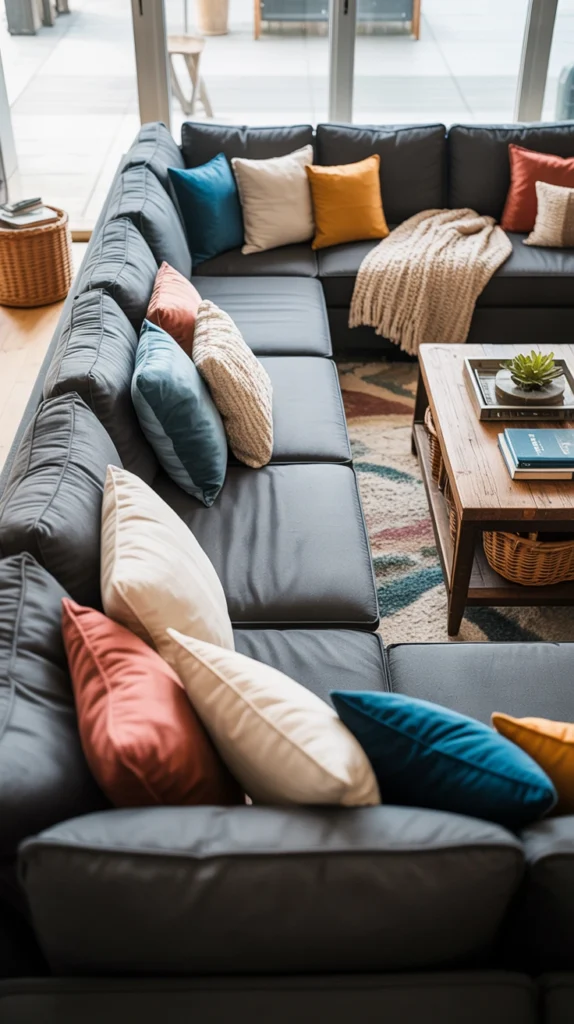
The sofa is where family living room design lives or dies — and choosing the right fabric for a kid friendly living room is the decision that determines whether you’re relaxed in your own home or spending every evening anxiously intercepting small people with snacks. The right fabric makes this room genuinely livable. The wrong one makes it a source of constant low-level stress.
Performance fabrics — microfibre, Crypton, outdoor-grade textiles brought indoors, and tightly woven natural alternatives like wool and boucle — are the materials that genuinely stand up to family use without sacrificing visual quality. Performance velvet in particular has advanced significantly and now looks identical to standard velvet while cleaning easily with a damp cloth. Slipcover sofas offer a different solution: fully washable covers that can be removed and laundered when needed, making spills categorically non-threatening. FYI — the choice isn’t between a beautiful sofa and a practical one anymore. Performance fabric sofas now come in every style, color, and configuration you’d want.
2. Design Smart, Generous Storage
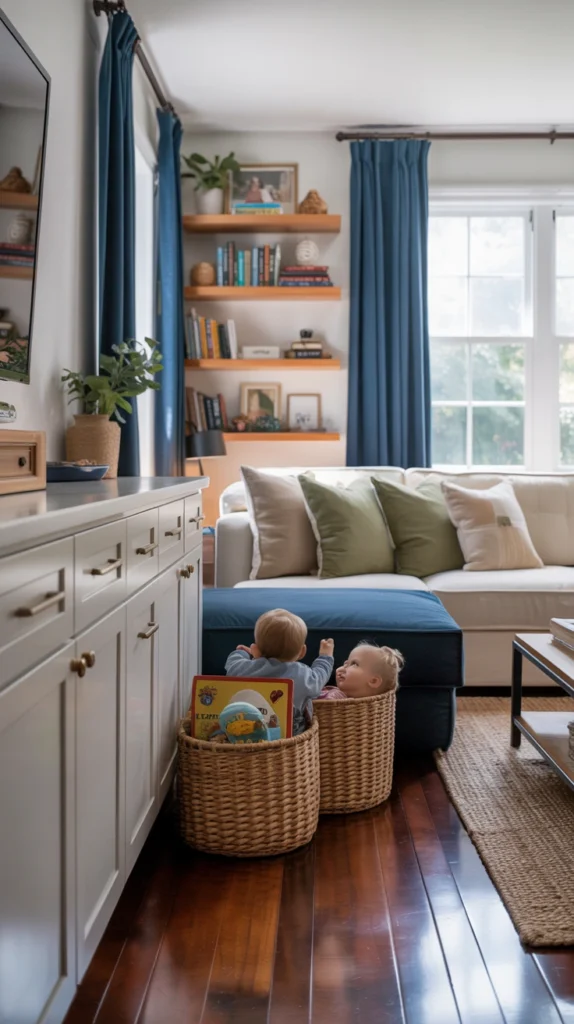
The functional family room design that looks consistently good in daily life is the one with enough storage to absorb all the accumulated objects of family existence without leaving them permanently visible on every surface. Toy storage, book storage, game storage, throw blanket storage, remote control storage — the family living room generates a specific category of daily clutter that only disappears when it has somewhere designed to go.
Family Living Room Storage Solutions:
- Large upholstered ottomans with lift-off tops — seating, coffee table, and toy storage in one
- Built-in cabinetry flanking a fireplace or media unit with closed doors concealing everything
- Floor-to-ceiling shelving with lower zones specifically designated for children’s accessible storage
- Large wicker or canvas baskets in the corners for quick tidying
- Window seat benches with storage boxes below for books and games
Storage that’s genuinely sufficient — not aspirationally sufficient — is the foundation of a family room that looks good without constant effort.
3. Choose a Durable, Easy-Clean Rug
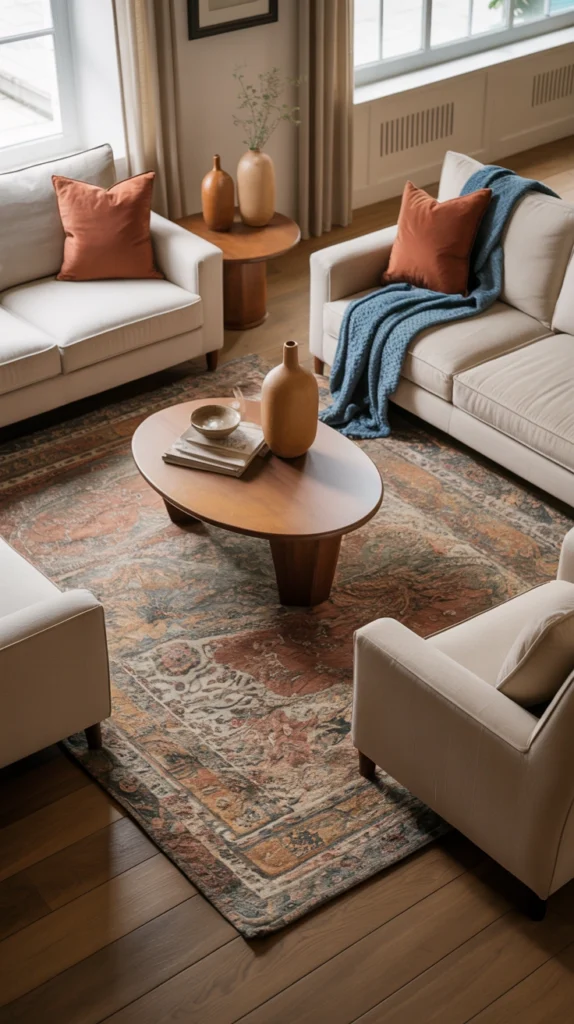
The rug in a child friendly living room ideas context carries more risk and more visual weight than almost any other single purchase — and choosing the right one is the decision that lets you stop worrying about the floor and start enjoying the room. The wrong rug turns every family gathering into a source of anxiety.
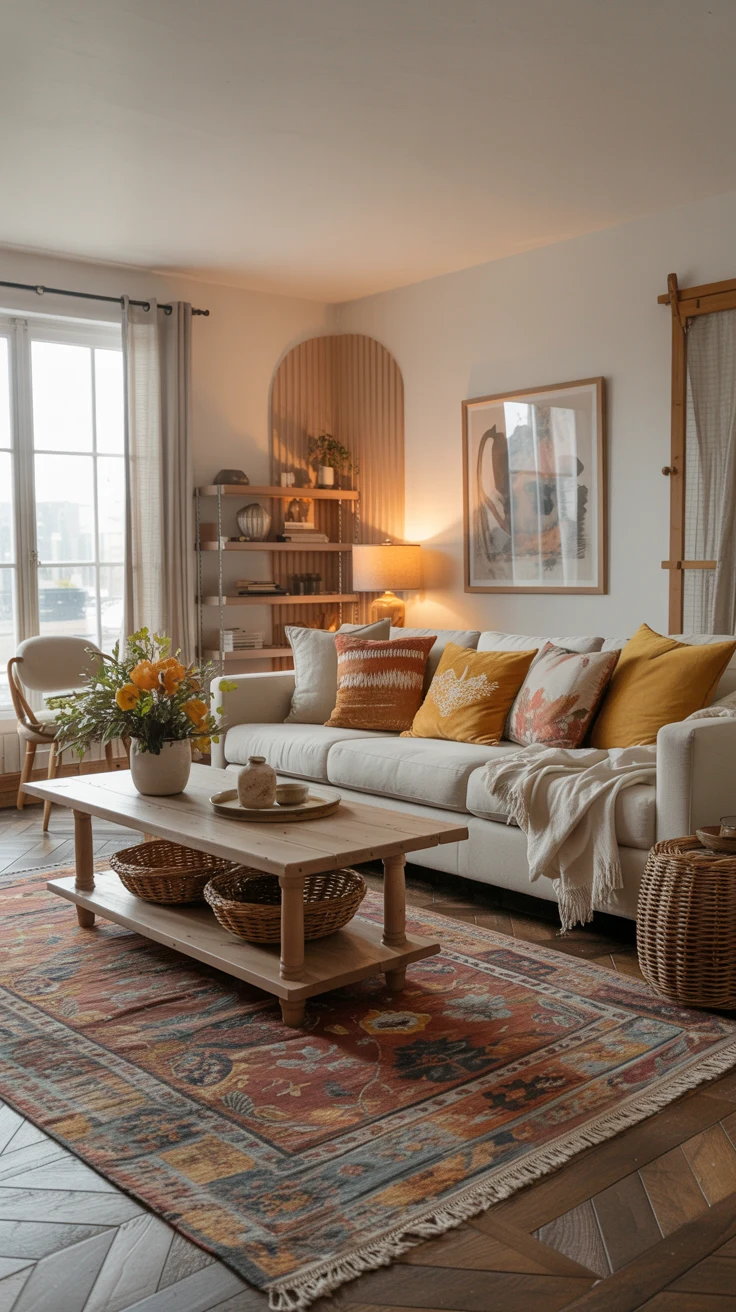
Flat-weave rugs and those with low, dense pile are significantly more cleanable and stain-resistant than high-pile or shaggy alternatives. Natural fibres like wool have inherent stain-resistance and recover well from compression. Indoor/outdoor rugs in natural tones and textures look genuinely beautiful in family living rooms while being essentially indestructible. Choose a pattern or a tone that doesn’t show every footprint — warm mid-tones and subtle patterns forgive daily use far more graciously than pale, flat-colored alternatives.
4. Create Zones Within the Room
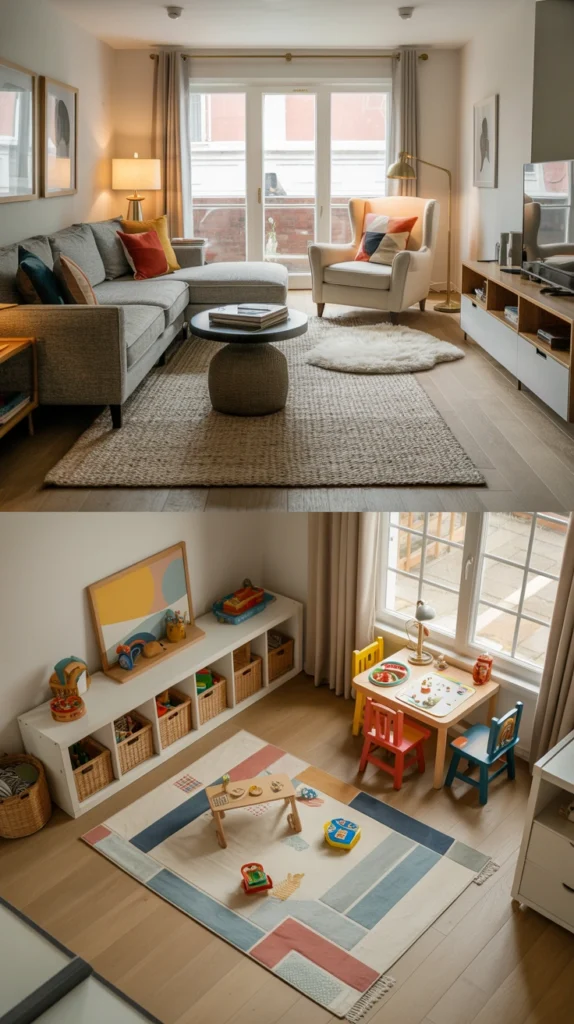
A well-designed casual family room design doesn’t treat the living room as a single undifferentiated space — it creates defined zones within the room that allow different activities to happen simultaneously without interfering with each other. A reading zone. A play zone. A media zone. A quiet corner for adults while children play nearby.
Define zones through furniture arrangement, rugs, and lighting rather than through walls or physical barriers. The sofa and rug define the main seating and media zone. A corner with a low bookshelf, a small table, and child-height seating creates a play zone that contains activity. A reading chair with a floor lamp creates an adult zone of relative calm. When each activity has its own defined area, the room accommodates everyone simultaneously without feeling chaotic or compromised.
5. Use Wipeable Paint Finishes on Walls
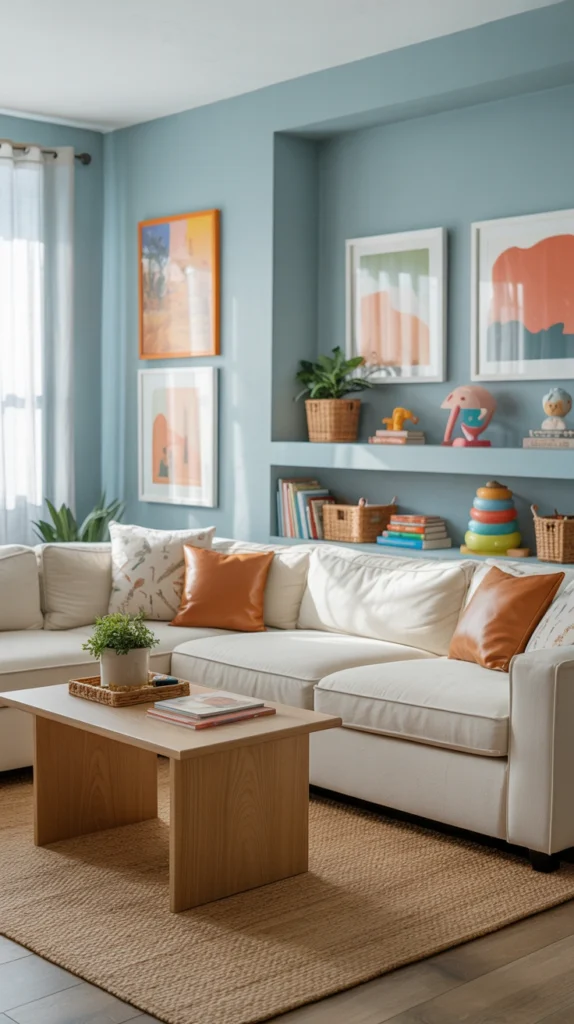
Wall paint in a kids friendly living room ideas context requires more thought than color alone — because the finish determines how the surface responds to the inevitable daily contact with small handprints, food splashes, and the general enthusiastic presence of children. Flat paint looks beautiful but is essentially impossible to wipe clean. The right finish changes this completely.
Eggshell or satin paint finishes are the family living room ideal — they have enough sheen to be wiped clean with a damp cloth while remaining visually warm and relatively matte in appearance. Many paint manufacturers now offer dedicated washable paint formulations in their full color range. Choose the same colors you’d use in any other room — the finish change is invisible in the final result but completely transformative in daily maintenance.
6. Choose a Media Unit That Works for Everyone
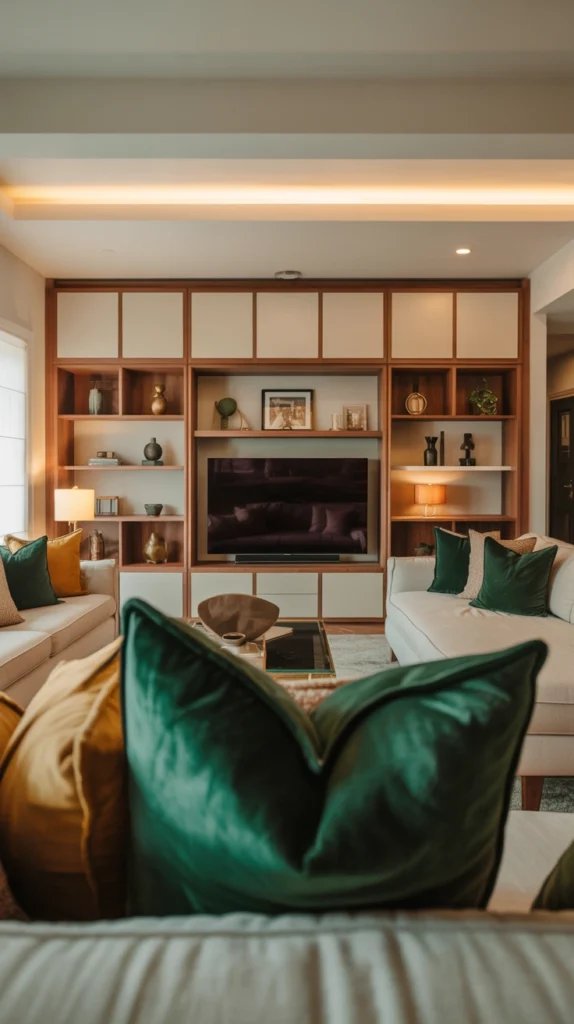
The television and media area is one of the most practically significant zones in any family room design — and how it’s organized, concealed, and integrated into the room’s design determines both the visual quality of the space and the practical ease of daily family life within it.
A built-in media unit with closed cabinet storage for consoles, remotes, cables, and all the accumulated technological paraphernalia of family entertainment creates a clean, considered appearance when not in use. Concealing the television within a cabinet or behind sliding panels when not in use is the luxury approach to the media zone — but even a well-specified open media unit in a consistent finish creates significantly more visual order than freestanding furniture of different heights, depths, and styles arranged around the screen.
7. Invest in a Sectional or Large Sofa
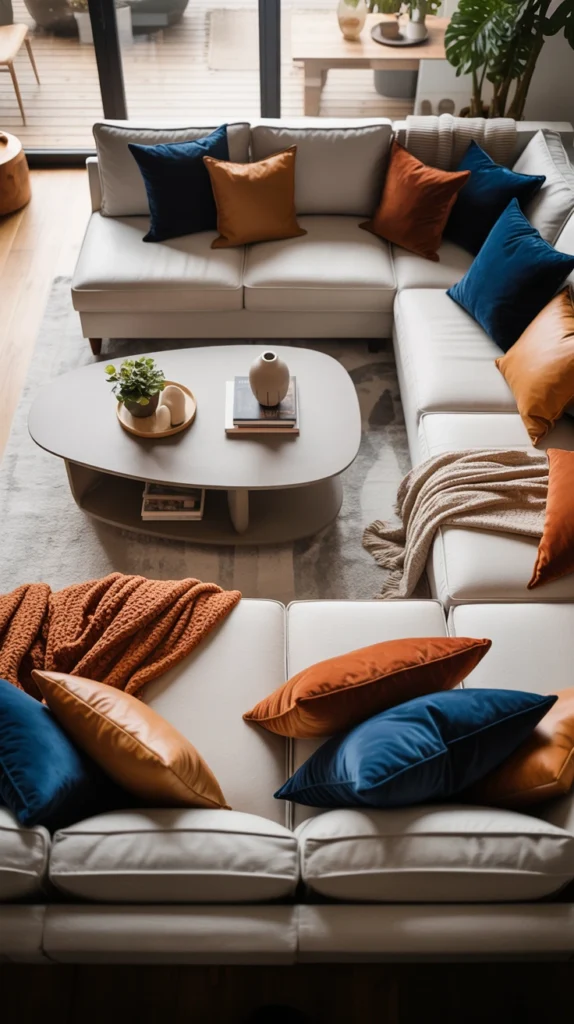
The family living room inspiration that consistently resonates most on design platforms is the generous, deeply comfortable sectional — and the reason is entirely practical. A sectional that seats the whole family simultaneously, without anyone having to perch on a footstool or drag a chair from another room, creates the specific quality of family togetherness that is the entire point of a family living room.
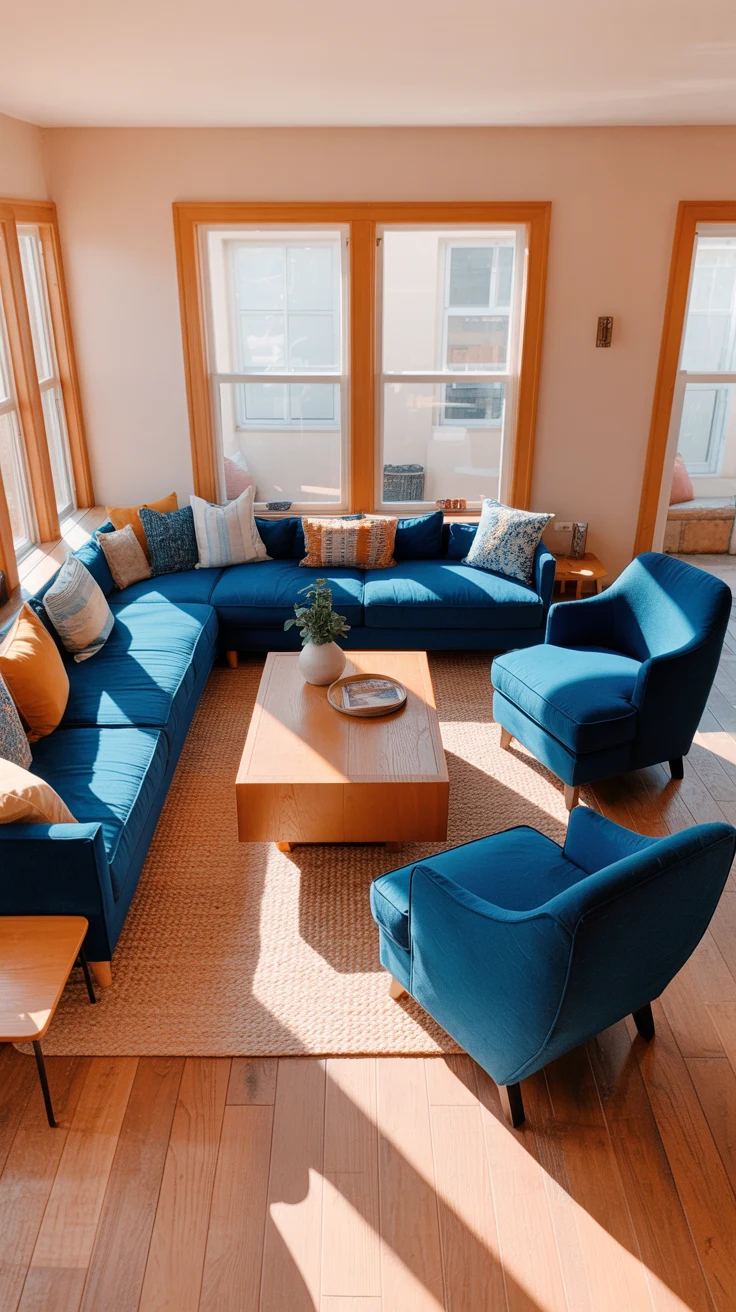
A U-shaped or L-shaped sectional in a performance fabric gives the room its social heart — a seating configuration large enough for the whole family to genuinely gather, with enough depth and cushion quality that everyone chooses to be there. This is family room decorating that prioritizes what the room is actually for above any other consideration — and it consistently produces rooms that look beautiful and feel genuinely wonderful to live in.
8. Design for Multiple Ages Simultaneously
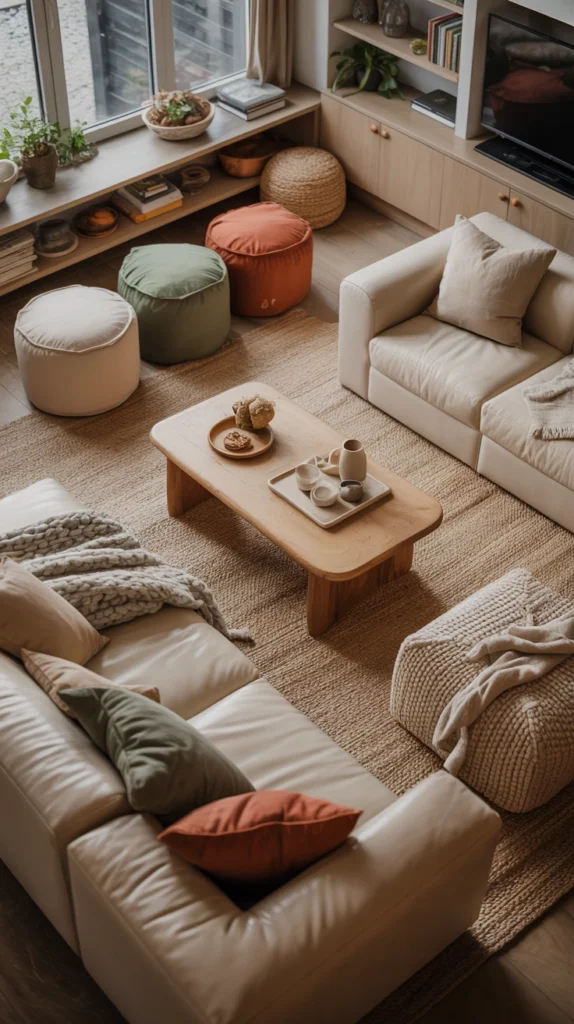
The most effective family room design inspiration addresses the genuine diversity of ages, interests, and physical sizes that a family living room serves — creating a space that works well for a toddler, a ten-year-old, a teenager, and two adults simultaneously rather than optimizing for one age group at the expense of others.
Low-level storage accessible to young children alongside higher shelving for adult books and display objects. Furniture at adult scale with low, soft footstools and floor cushions for children. Soft, rounded edges on coffee tables and furniture where small people are likely to encounter them. A coffee table with storage and rounded corners that serves adults for drinks and children for Lego building sessions. These multi-age design decisions create a room that genuinely accommodates everyone rather than requiring constant negotiation about who the space is really for.
9. Create a Kids Corner That Contains Activity
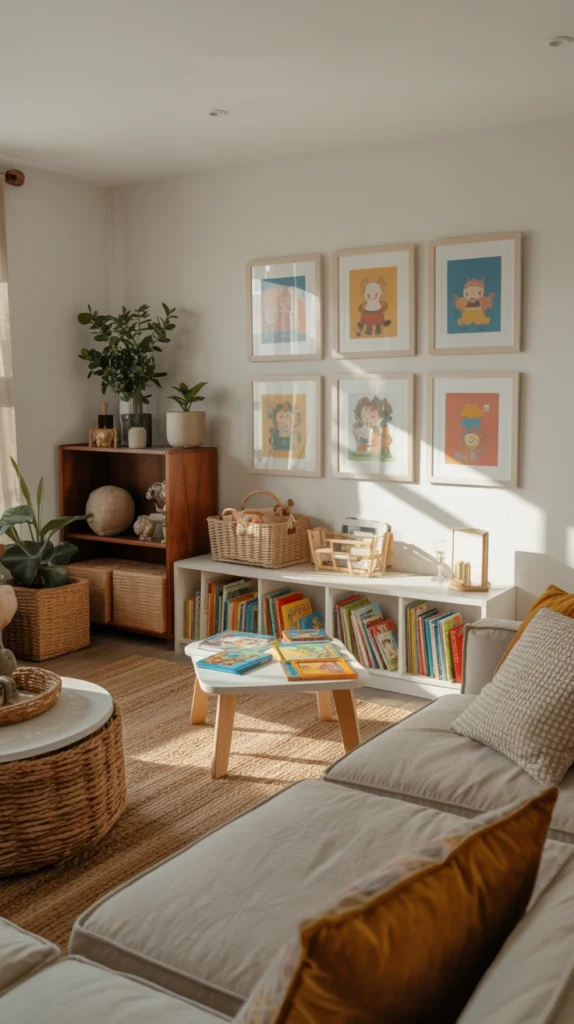
One of the most effective family living room ideas for reducing the visual chaos of family life is creating a genuinely well-designed children’s zone within the living room — a corner that is specifically and attractively organized for children’s activity and that contains that activity within a defined, visually managed area.
A child-height bookshelf stocked with accessible, genuinely loved books. A small table and chairs at child scale for drawing and crafts. Low, open toy storage in attractive baskets or bins that children can access and replace independently. A soft, durable rug defining the zone. When children’s activity has an attractive, well-organized home within the living room, it consistently occupies that space rather than distributing itself across every surface in the room. IMO, a well-designed children’s corner is worth more to a family living room’s daily visual quality than almost any other single design decision.
10. Make It Beautiful Anyway
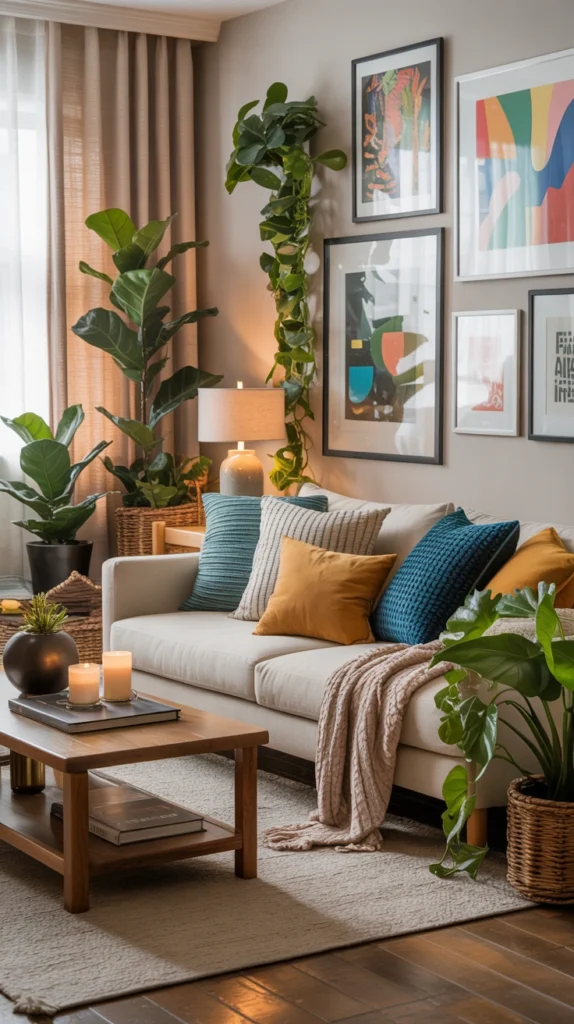
The final family room design idea is the one that most families forget in the practical urgency of childproofing and stain-resistance planning: make it genuinely beautiful. Not beautiful despite being a family room — beautiful because it’s a family room, the room where the whole family spends the most time, and which therefore deserves more care and more beauty than any other room in the house.
Creating Beauty in a Family Living Room:
- Artwork hung at adult height where children can’t reach — not avoided because of children
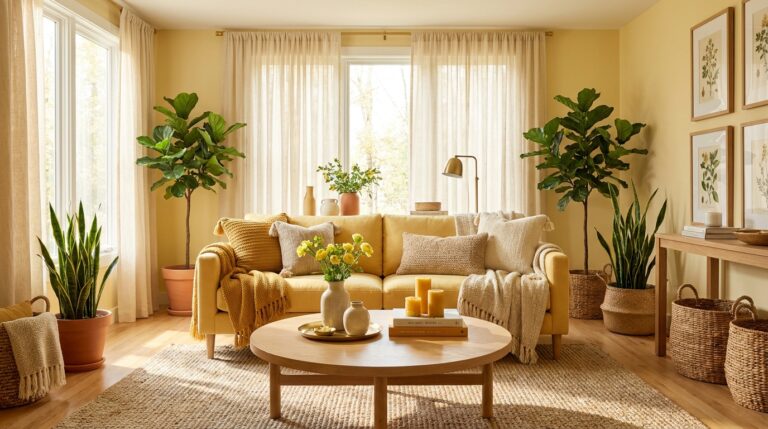
- Plants positioned where they can thrive and be admired — not eliminated because of risk
- A consistent, considered color palette applied throughout — not abandoned in favor of stain-hiding beige
- Proper curtains, proper cushions, proper rugs — not replaced with utilitarian alternatives
- Personal objects and meaningful details that tell the family’s story
A family living room that is functional but loveless is not a success. A beautiful family living room that has been designed intelligently for how a family actually lives is the room your children will remember as the warmth of their childhood. That’s worth designing toward.
Wrapping Up
Ten ideas that address the family living room from every practical and aesthetic angle: performance fabrics that survive daily life, generous storage that contains the inevitable accumulation, durable rugs, wipeable paint, smart media solutions, generous seating, multi-age design thinking, a well-organized children’s corner, and the conscious commitment to making the room beautiful regardless.
The family living room doesn’t require a trade-off between looking good and working well. It requires understanding that looking good and working well, in a family context, are the same goal approached from different directions.
Design a room your family genuinely lives in and genuinely loves. And then enjoy the fact that the juice spill, when it inevitably comes, is just a minor interruption rather than a minor tragedy.
Frequently Asked Questions
1. What makes a living room family-friendly?
A family-friendly living room combines comfort, durability, and functionality. Choose stain-resistant fabrics, easy-to-clean surfaces, plenty of storage, and furniture arranged to support both everyday activities and family gatherings.
2. How do I keep my family living room looking tidy every day?
Use decorative baskets, storage ottomans, built-in shelves, and closed cabinets to hide everyday clutter. Creating designated spots for toys, blankets, books, and remotes makes cleaning up quick and easy.
3. What is the best couch material for a family living room?
Performance fabrics, microfiber, and tightly woven upholstery are excellent choices because they resist stains, spills, and daily wear while remaining comfortable for the whole family.
4. How can I decorate a family living room without making it feel cluttered?
Focus on a few statement pieces instead of filling every surface. Use layered textures, plants, artwork, and decorative accents while leaving open space to create a clean, balanced look.
5. Which colors work best in a family living room?
Warm neutrals like beige, greige, soft gray, cream, and taupe create a timeless foundation. You can add personality with earthy greens, muted blues, terracotta, or mustard through pillows, throws, and décor.
6. How can I make a small family living room feel larger?
Choose multifunctional furniture, keep walkways open, use mirrors to reflect light, and select furniture with exposed legs. Light colors and smart storage also help maximize the feeling of space.
7. Is a coffee table necessary in a family living room?
Not always. Many families prefer a large upholstered ottoman because it provides a softer, safer surface for children while offering extra seating, storage, and a place to rest trays or books.