How to Do a Bedroom Makeover on a Budget: Full Room Transformation
Introduction
A bedroom makeover on a budget is one of the most satisfying home projects you can take on, because the bedroom is the room you see first every morning and last every night — and it is also the room where small, affordable changes have the biggest emotional payoff. You do not need new furniture, a contractor, or a four-figure budget to make it feel completely different.
Most people approach a bedroom refresh backwards, buying a cute cushion here and a candle there until the room holds a dozen unrelated objects and no real transformation. A full room transformation works the opposite way. You start with the free moves — decluttering, rearranging, deep cleaning — and only then spend, deliberately, on the few layers that make a bedroom feel like a retreat: bedding, lighting, paint, and art.
This guide walks you through fifteen budget bedroom makeover steps in the order a designer would tackle them, from the zero-cost reset to the finishing touches. Most of the ideas cost little or nothing, and none require more landlord permission than a typical lease already allows. By the end, the room you wake up in will feel like a place you chose — not just a place you sleep.
1. Start With a Deep Declutter and Room Reset
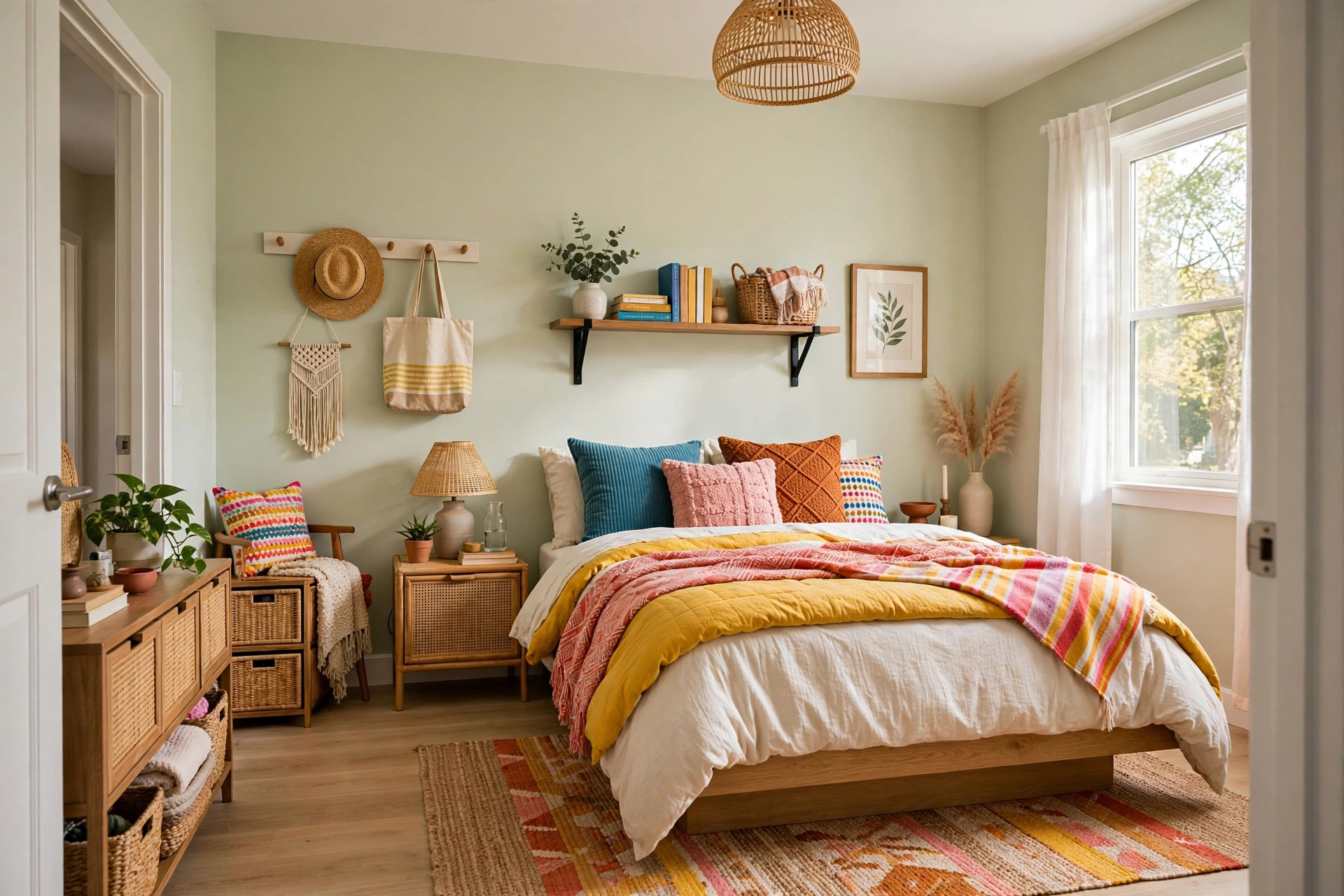
Before you spend a single dollar, empty the room of everything that does not earn its place. Pull out the nightstand drawers, clear the top of the dresser, and strip the bed completely. A bedroom makeover on a budget lives or dies on this step, because clutter is visual noise — and no amount of pretty styling can shout over it. Sort everything into three piles: keep, relocate, and let go.
Once the room is stripped back, deep clean what is usually hidden: wash the windows inside and out, wipe down baseboards, vacuum under the bed, and dust the tops of wardrobes. This is also the moment to fix the small annoyances you have been living with — the squeaky drawer, the wobbly lamp, the burned-out bulb. A clean, calm room already looks halfway transformed and gives you a blank canvas to see what it actually needs.
2. Repaint With One Budget-Friendly Color Move
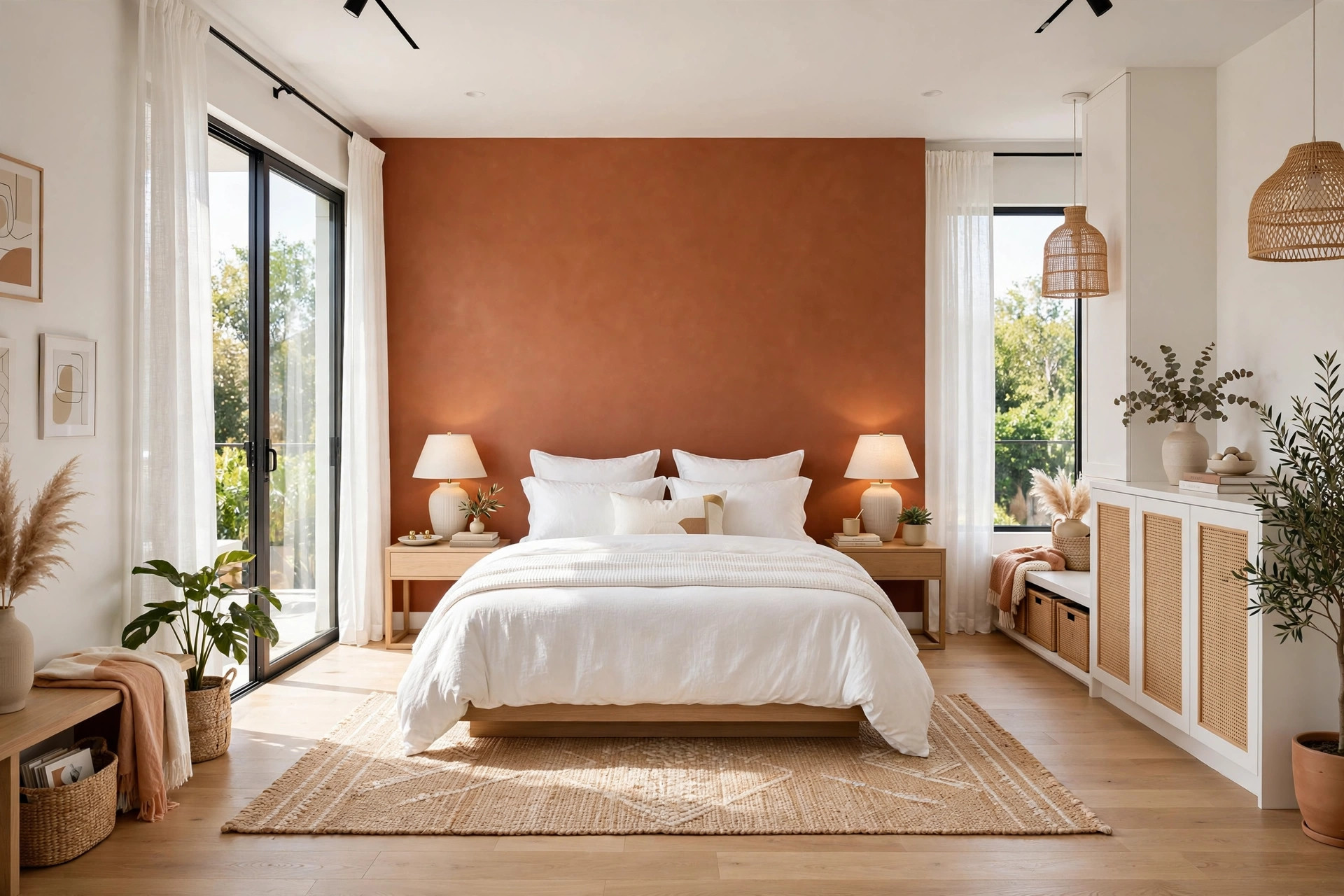
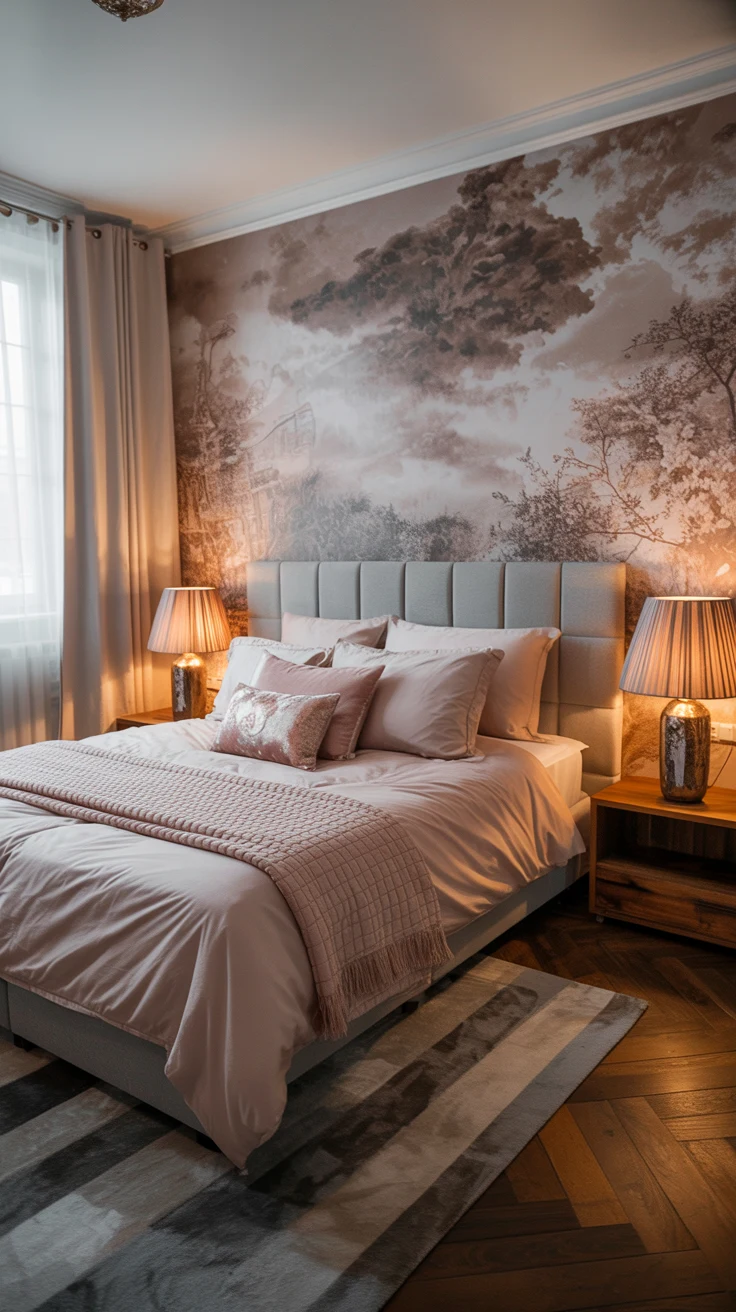
Paint is the highest-impact budget move in home decorating, and a bedroom needs far less of it than you think. One gallon covers a typical accent wall, and even repainting all four walls costs less than most people expect — certainly less than a new piece of furniture. If your walls are a tired beige or a cold landlord-white, a fresh coat in a warm white, soft greige, or muted sage changes the entire mood of the room overnight.
Renters and the paint-shy have options too. Painting just the wall behind the bed creates a focal point for almost nothing, and peel-and-stick wallpaper or fabric panels hung with damage-free hooks deliver the same drama with zero permanence. Whatever route you take, sample the color in the room’s real light first — bedroom paint is mostly experienced in lamplight, and undertones shift dramatically between morning and evening.
💡 Pro Tip: Paint large test swatches on poster boards instead of the wall, and move them around the room through the day. You will see the true color in morning daylight and evening lamplight before committing a single gallon — and the boards cost almost nothing.
3. Rearrange the Furniture for a New Layout
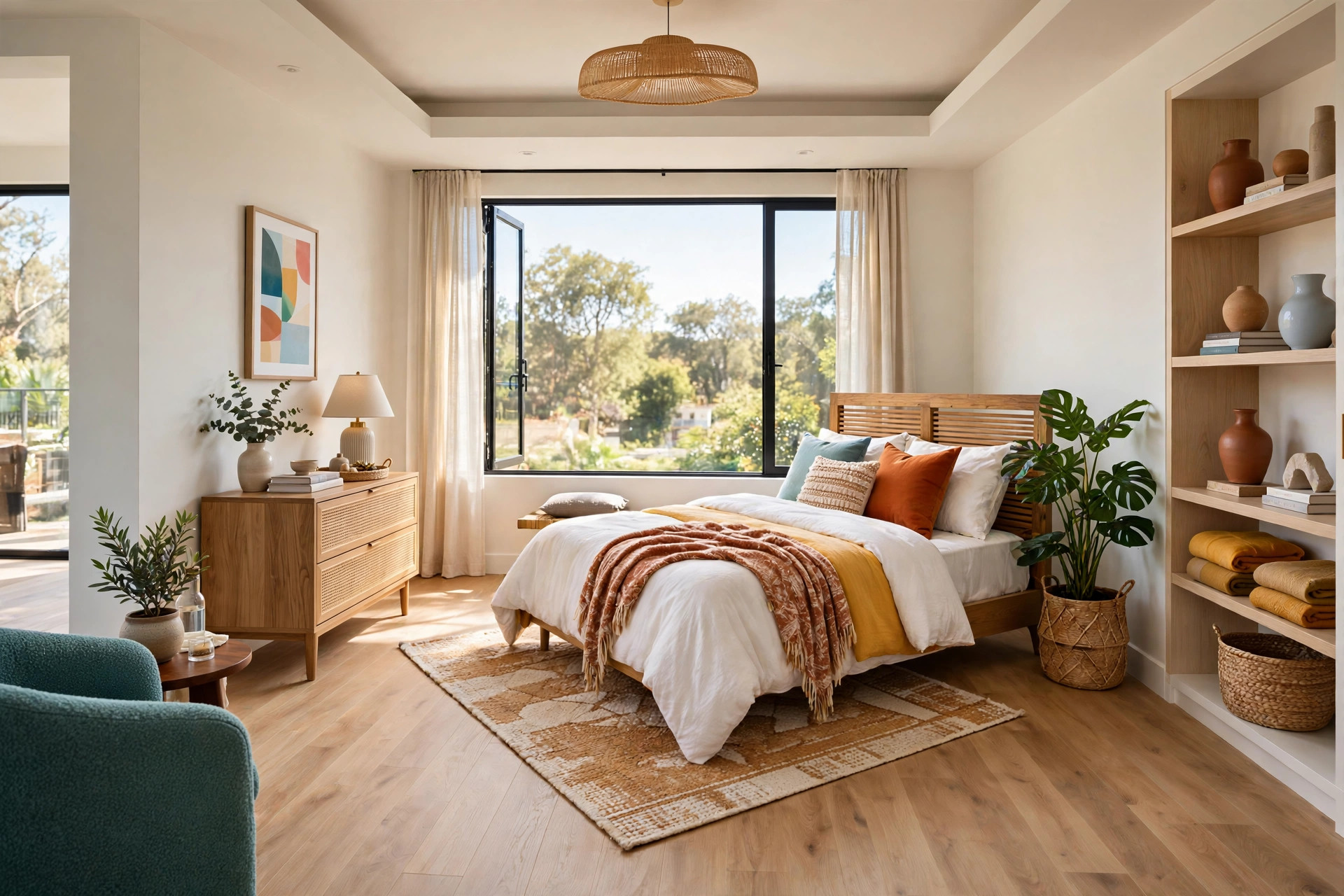
The cheapest makeover move of all is moving what you already own. Pull the bed off its wall and try it on a different one — the wall opposite the door usually gives the best first impression when you walk in. Float the dresser to the wall you never considered, angle the reading chair into a corner that used to hold nothing, and see how the room’s traffic and sightlines change. The same furniture arranged three different ways can feel like three different rooms.
Measure first and use painter’s tape to mark footprints on the floor before you heave anything heavy. Leave at least two feet of clear walking space on the main path from door to bed, and keep the nightstand within arm’s reach of the pillow. Small room veterans know that pulling furniture a few inches off the walls adds breathing room that reads as space, a trick straight out of the best tiny apartment decorating ideas.
Bedroom Makeover Quick-Start Checklist
- ✅ Strip the room, declutter, and deep clean — including under the bed and the tops of wardrobes
- ✅ Fix the small annoyances: squeaky drawers, wobbly lamps, burned-out bulbs
- ✅ Rearrange the furniture and live with the new layout for a few days
- ✅ Refresh paint or add an accent wall (or peel-and-stick for renters)
- ✅ Layer lighting: at least two warm sources beyond the overhead
- ✅ Restyle the bed with layered textiles in a cohesive palette
- ✅ Hang art, add a mirror, and finish with plants and texture
4. Refresh Bedding and Layer Textiles
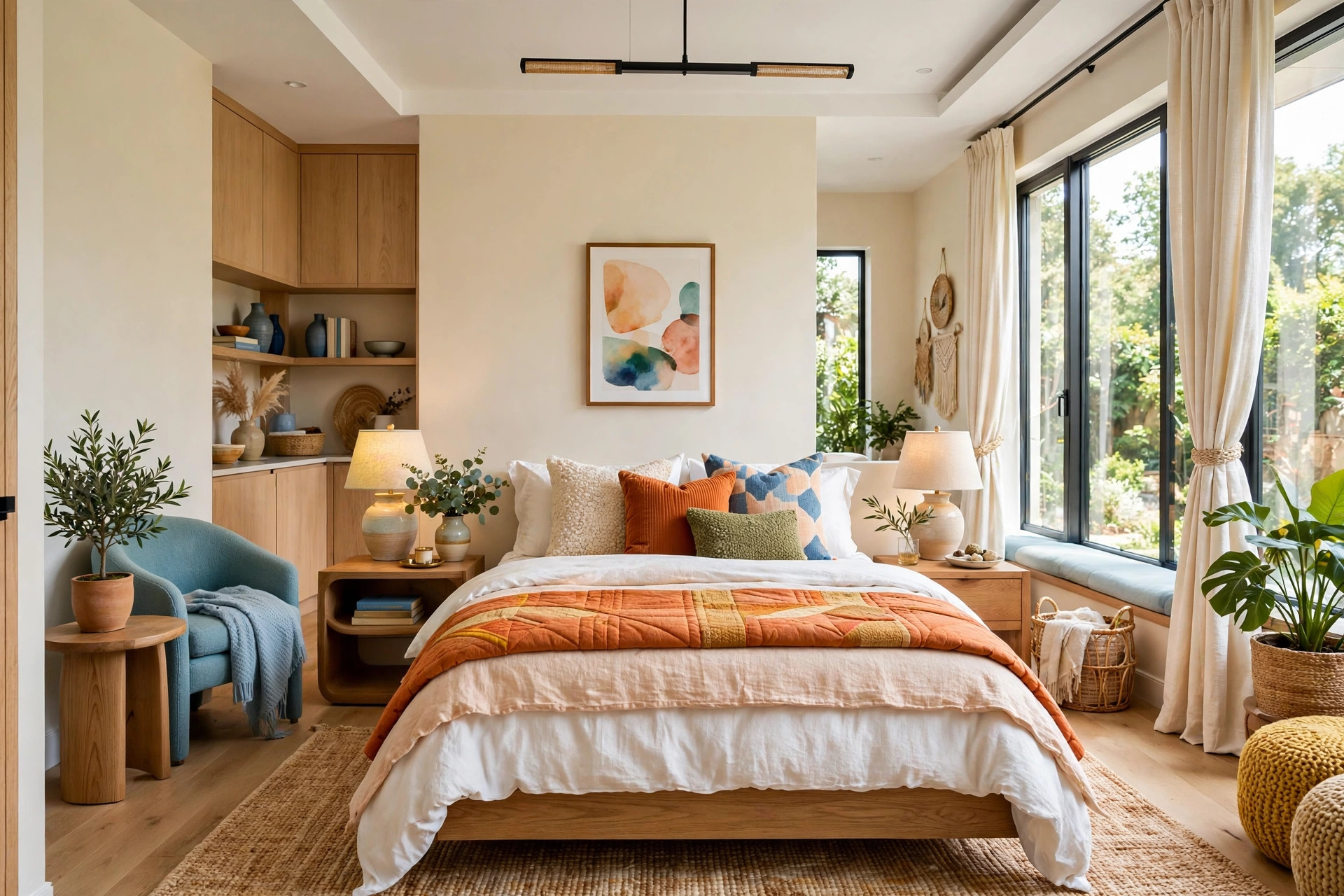
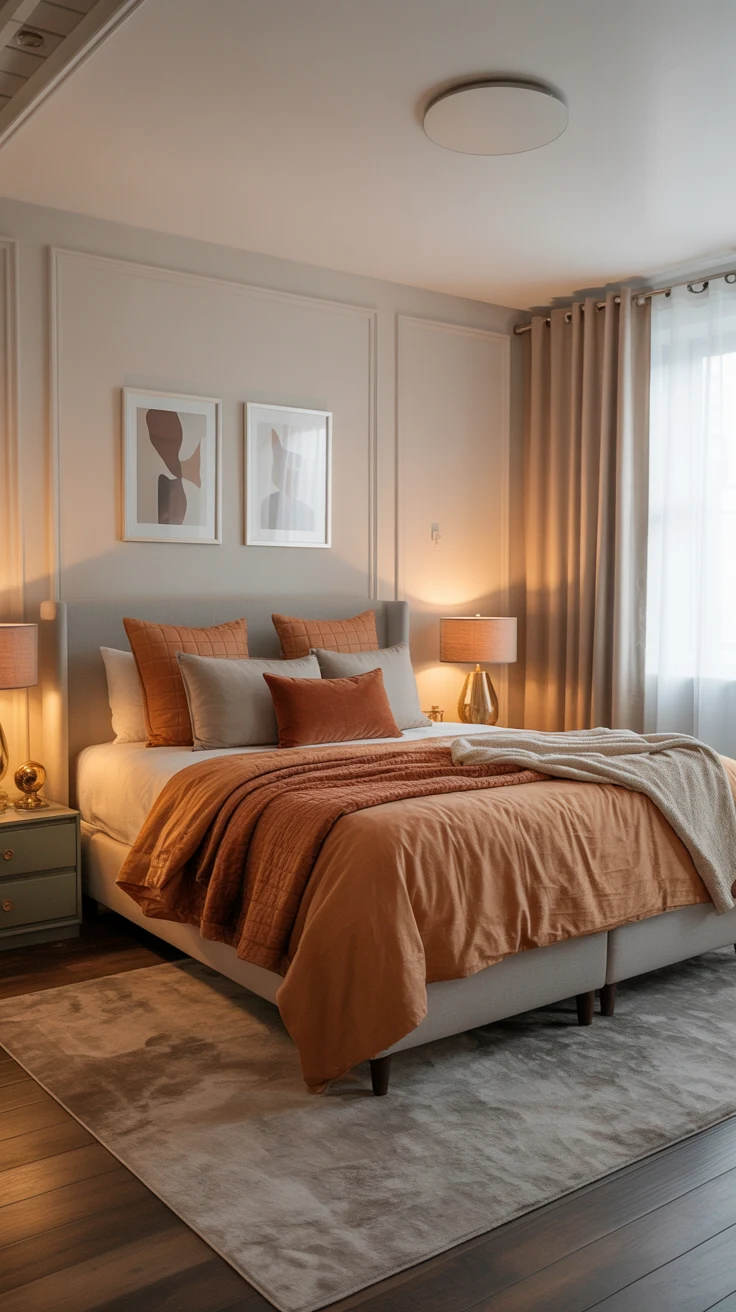
The bed is roughly half of everything you see in a bedroom, so new bedding is the single fastest way to make the room feel transformed. You do not need a luxury set — a crisp duvet cover in a solid, warm neutral plus two extra pillows instantly reads as “hotel” compared to a faded comforter. Layering is the real trick: a folded throw across the foot of the bed, one textured cushion in front of the sleeping pillows, and a fitted sheet that actually fits.
Shop this category strategically. End-of-season sales, outlet stores, and thrift shops are full of quality bedding at a fraction of retail, and a simple white or cream base lets you swap one accent color with the seasons instead of rebuying everything. If the budget only stretches to one purchase for the whole makeover, make it the duvet cover and pillows; they carry more visual weight than almost anything else in the room.
5. Upgrade Lighting With Warm Affordable Layers
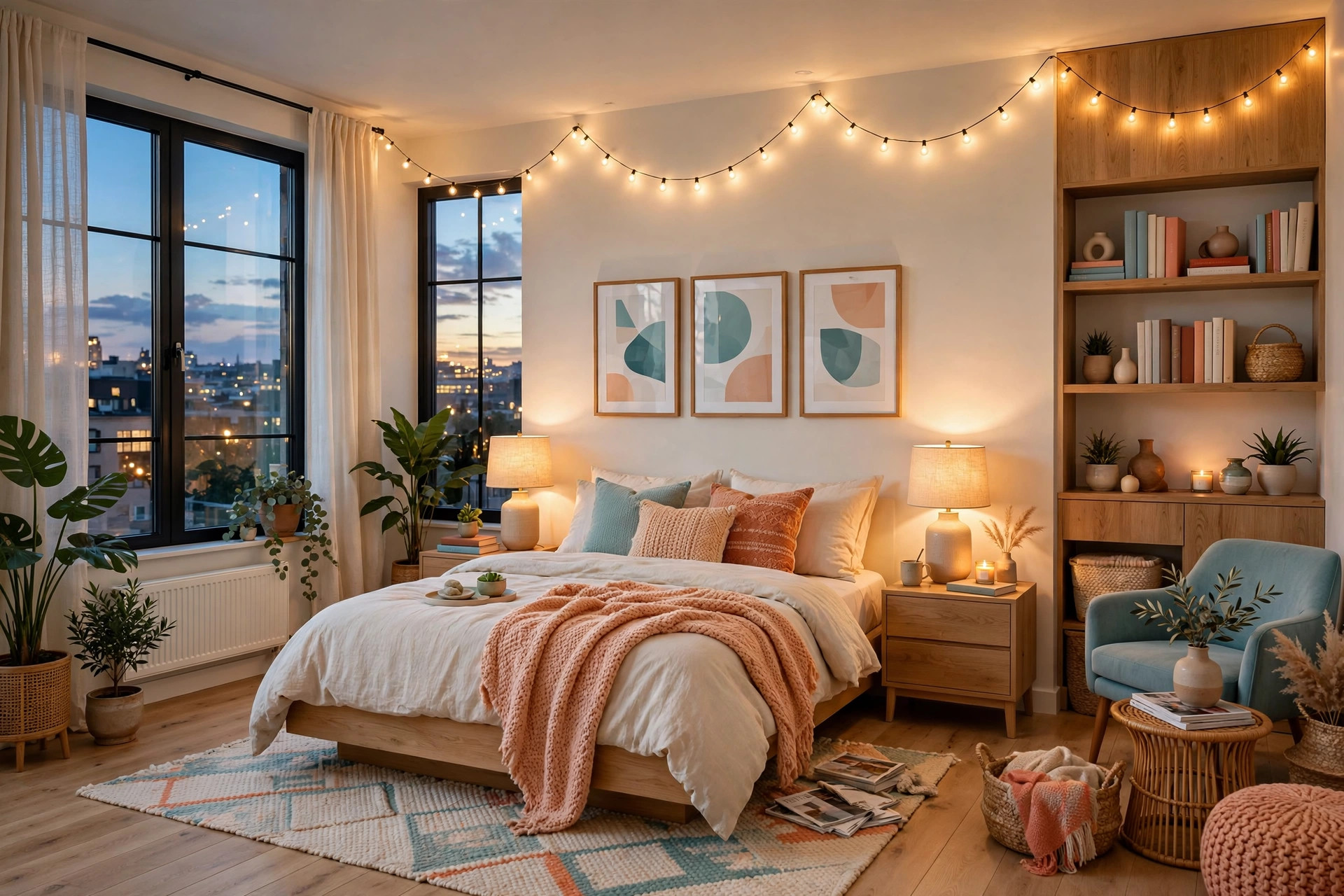
Bedrooms lit by a single harsh overhead never feel like a retreat — they feel like a waiting room. The designer fix costs surprisingly little: three warm light sources at different heights. A floor lamp in the darkest corner, matching table lamps on the nightstands, and a small accent light — string lights along a shelf or an LED strip behind the headboard — completely change how the room feels after dark. Choose warm-white bulbs around 2700K; cool daylight bulbs make bedrooms feel clinical.
Hunting for affordable lamps is part of the fun. Thrift stores and marketplace listings are full of solid lamp bases with dated shades — and a new drum shade costs a fraction of a new lamp while modernizing the whole piece. Put at least one lamp on a plug-in dimmer or smart plug so the evening mood is one tap away.
📌 Important: Always match bulb color temperature across your bedroom lamps. Mixing a cool-white bulb in the floor lamp with warm bulbs on the nightstands creates a subtle visual clash that makes the room feel unsettled, even if you cannot name why.
Quick Comparison: Bedroom Makeover Ideas by Cost and Effort
6. Add a DIY or Peel-and-Stick Headboard
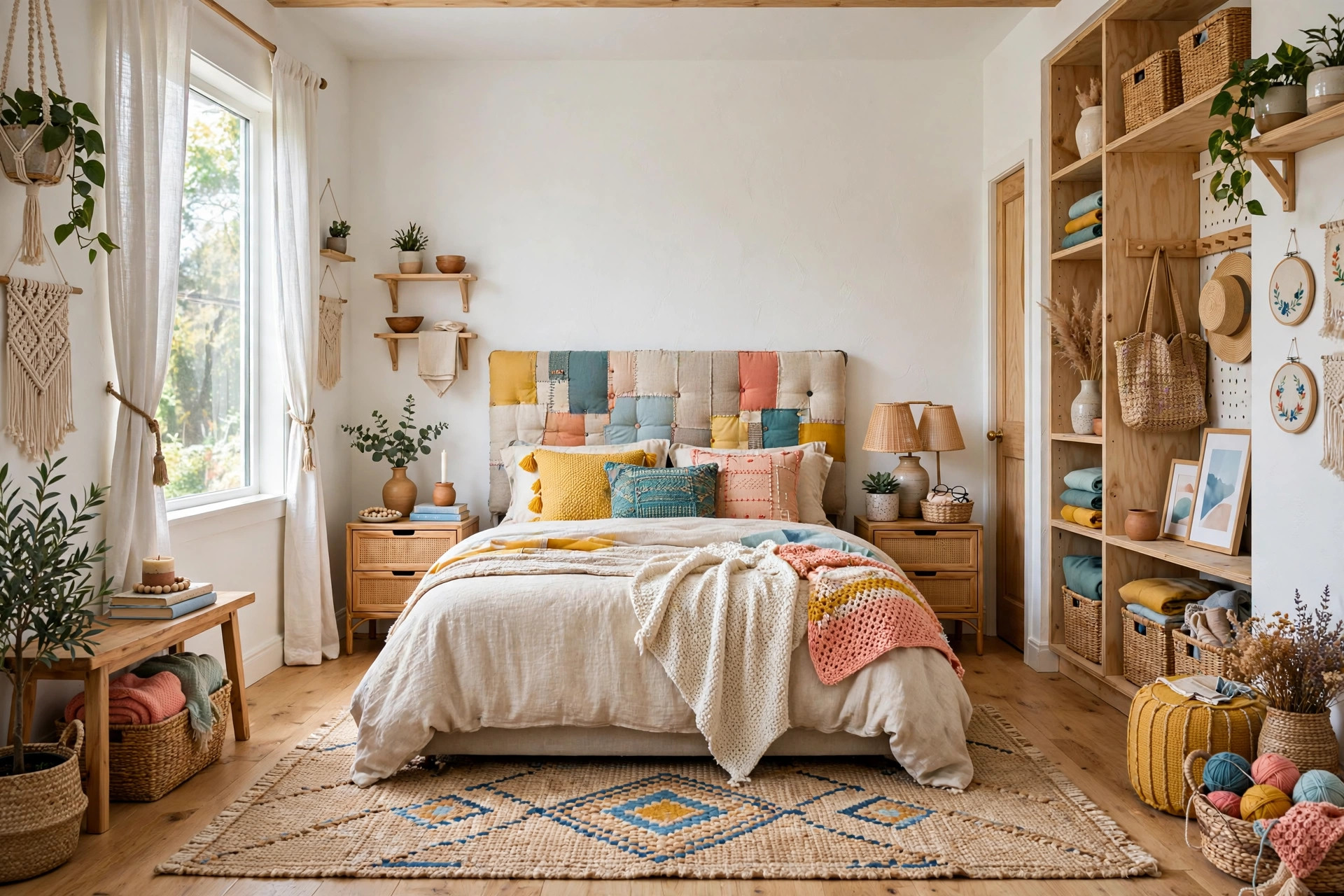
A bed without a headboard looks unfinished — the pillows slump against bare wall and the whole sleeping zone lacks an anchor. But headboards are also one of the priciest bedroom items at retail, which is why this is a prime DIY target. A plywood board wrapped in batting and fabric, a row of peel-and-stick wall panels behind the bed, or even a large piece of art hung low where a headboard would sit all create the same anchored effect for a fraction of store prices.
The upholstered-panel route is the most forgiving for beginners: cut plywood or foam board into rectangles, wrap each in batting and your chosen fabric, and mount them in a grid with damage-free strips. Choose a fabric with some texture — linen-look, velvet, or a subtle weave — since texture reads as expensive even when the material is not. Keep the headboard slightly wider than the mattress for a tailored look.
7. Style Walls With Thrifted Art and Prints
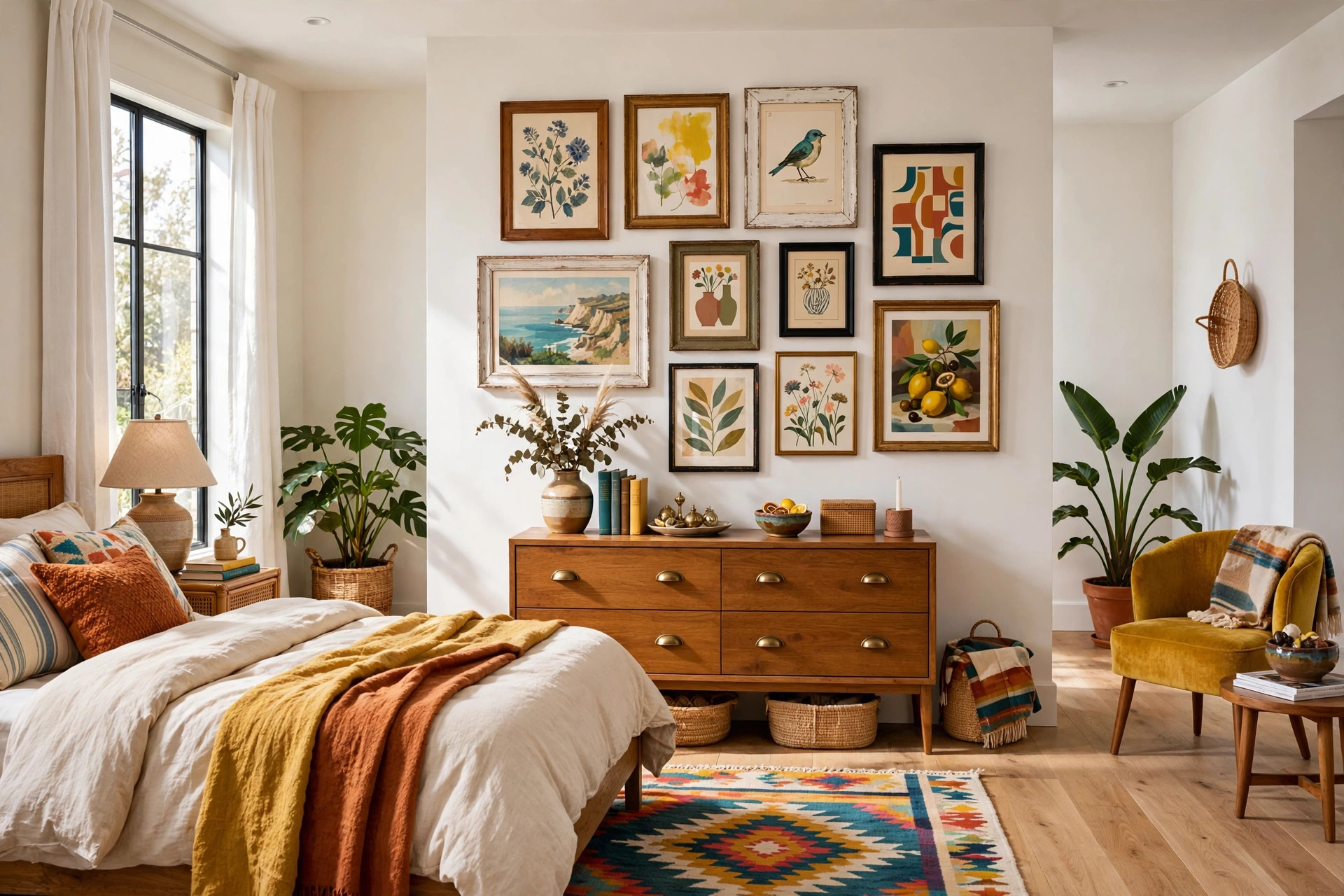
Bare bedroom walls are a missed opportunity, and filling them does not require gallery prices. Thrift stores, flea markets, and online print shops sell frames and artwork for next to nothing — the trick is cohesion. Pick one frame finish (all black, all natural wood, or all brass) and suddenly a random collection of prints reads as a curated gallery wall. Hang art at true eye level, with the center of the piece around 57 inches from the floor.
If buying art feels risky on a budget, make it: frame a beautiful fabric remnant, a page from a vintage book, your own travel photos printed large, or even wallpaper samples in matching frames. A grid of four identical frames with simple botanical prints above the dresser looks intentional and calm — exactly the energy a bedroom wants. One large piece above the bed beats five small scattered frames every time.
8. Bring in a Mirror to Bounce Light
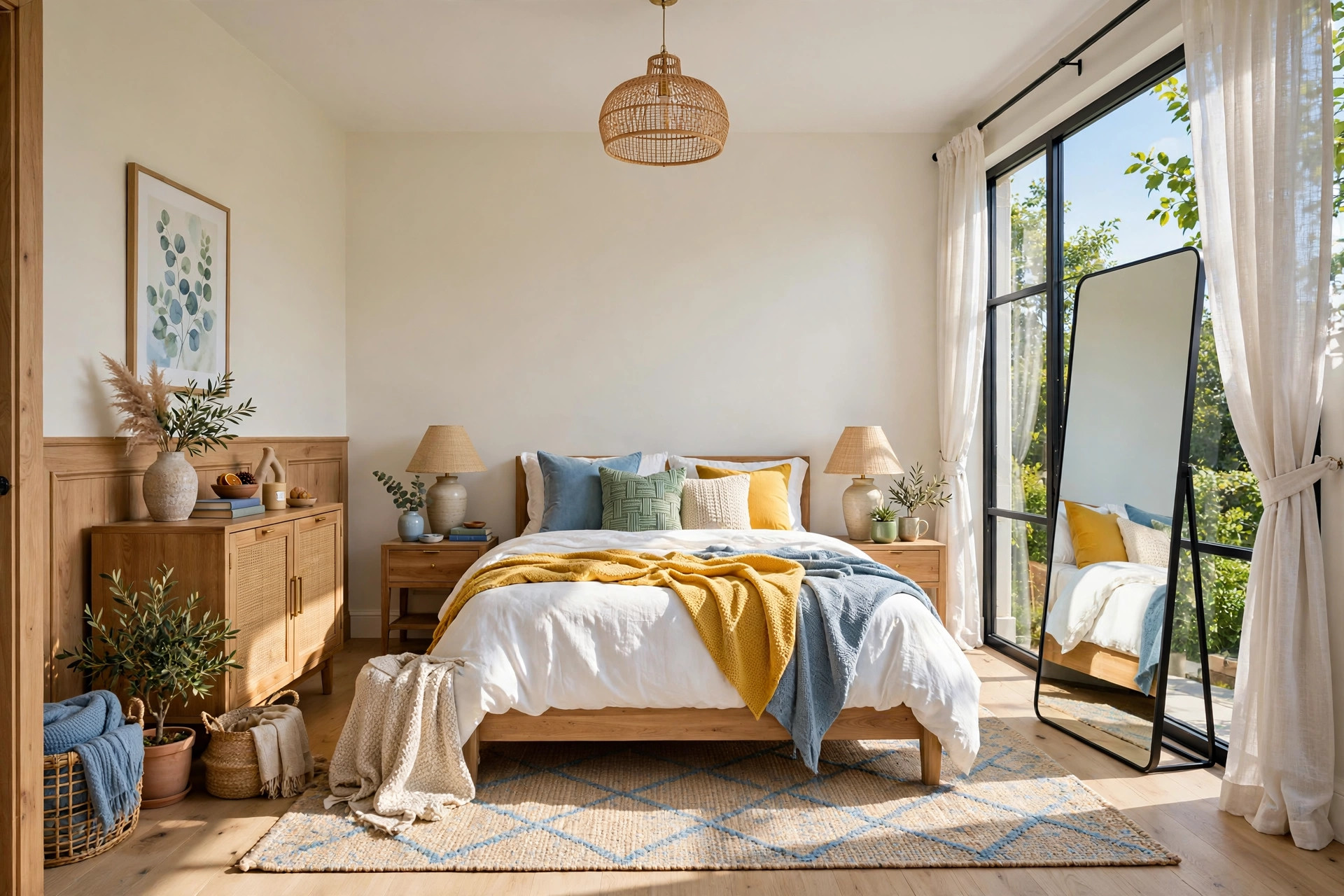
Bedrooms are often the darkest rooms in the house — one window, heavy curtains, and furniture that swallows light. A large mirror is the budget answer: placed opposite or beside the window, it bounces daylight deep into the room and creates the illusion of a second window, which makes the whole space feel bigger and brighter. A full-length mirror leaned against the wall needs no drilling and doubles as the getting-dressed mirror the bedroom probably needed anyway.
Size matters more than style here. A small decorative mirror does almost nothing for light; a tall mirror — at least two-thirds of your wall height — genuinely changes the room. Thrifted mirrors with dated frames are easy finds; a coat of spray paint in black, brass, or white modernizes the frame in minutes. For more placements and sizing guidance, the best mirrors for small spaces walk through every room-expanding trick in detail.
⚠️ Warning: Never hang or lean a mirror where it reflects the bed’s headboard straight-on from the doorway if the bed is usually unmade — a mirror doubles whatever it faces, and a rumpled bed reflected at double scale is the opposite of the calm you are building.
9. Swap Hardware and Small Details
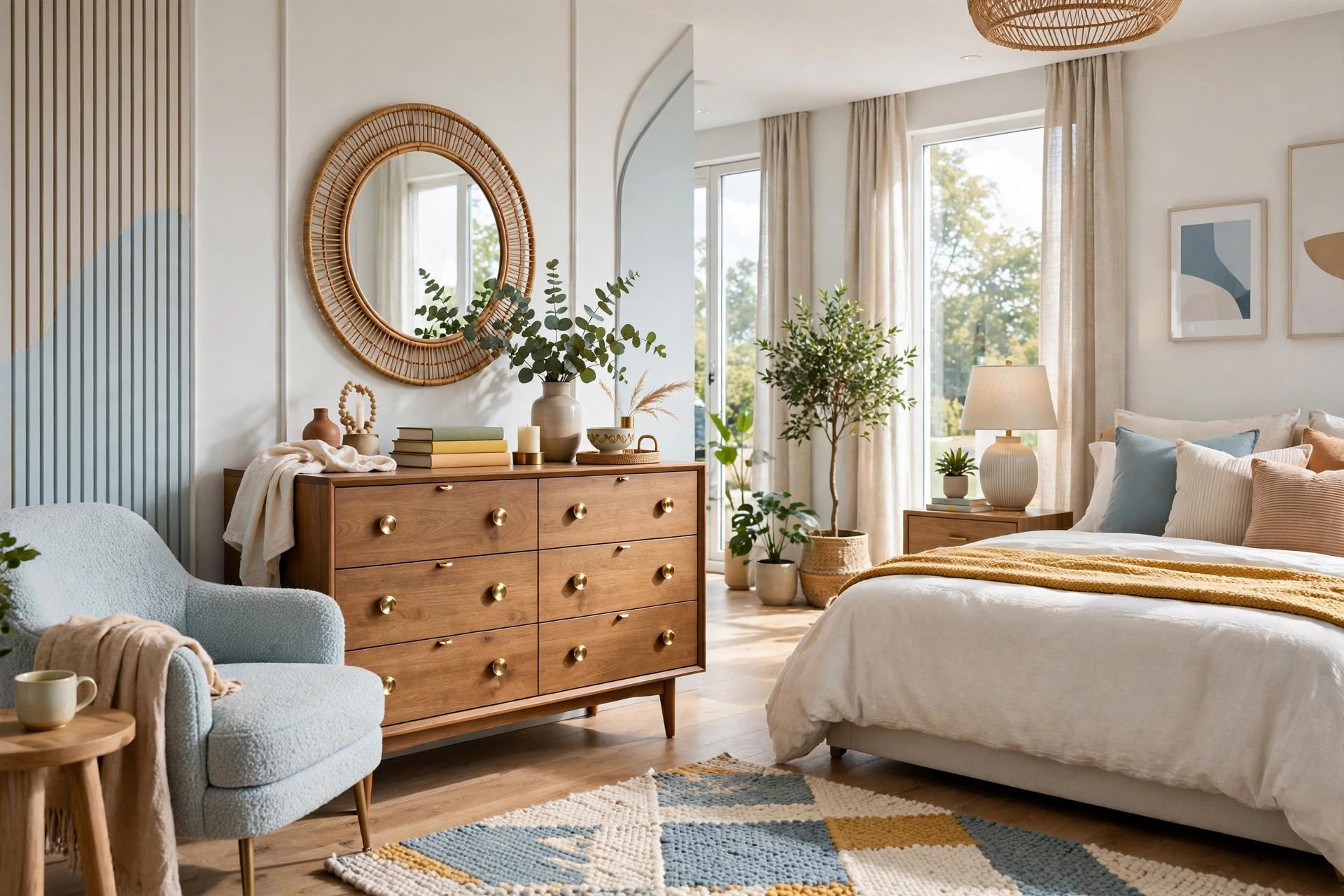
Small details are where a budget bedroom either looks thoughtful or looks tired, and they cost the least to fix. Swap dated drawer pulls and knobs for a matching set — one afternoon, one screwdriver, and the dresser looks like a different piece. Replace the yellowed switch plates, the plastic curtain finials, and the mismatched hangers visible in an open closet. None of these costs much alone, but together they remove the little visual frictions that make a room feel worn.
This is also the moment to edit the surfaces. Clear the nightstand down to three things — lamp, one book, one small object — and give the dresser top the same treatment. Corral the remaining necessities into a tray so they read as a styled grouping instead of scattered clutter. When every surface holds only what belongs there, even inexpensive furniture looks curated. The details will not photograph as dramatically as new bedding, but they are what make the room feel finished when you live in it every day.
10. Create a Cozy Reading or Vanity Corner
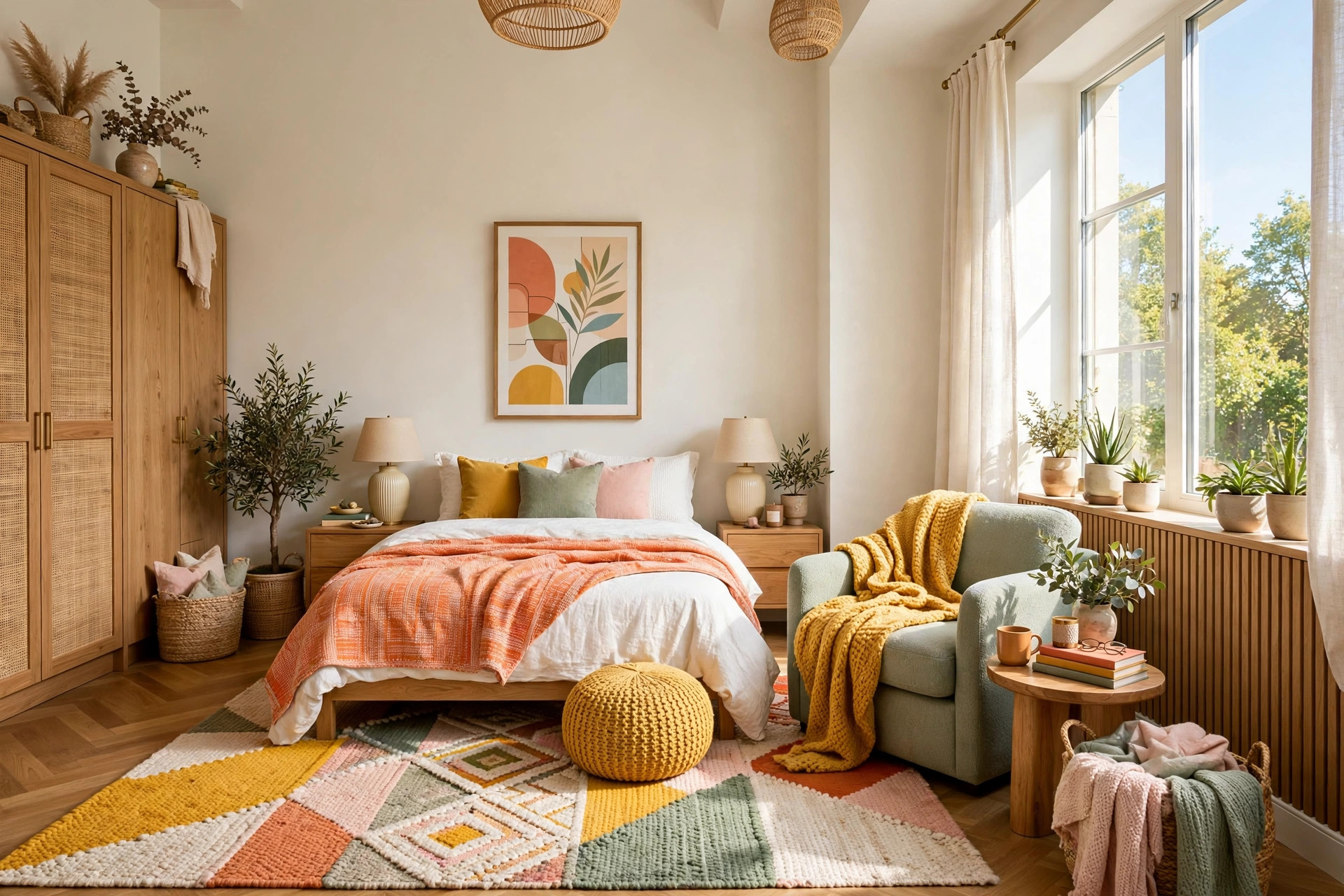
A bedroom that only holds a bed feels like a place to sleep, not a place to live — and carving out one small corner for another activity makes the whole room feel larger and more intentional. It does not take much: an armchair (even a thrifted one with a throw over it), a small side table, and a floor lamp become a reading nook; a small desk with a mirror and a stool becomes a vanity.
Keep the corner genuinely small — a reading nook is a chair plus light plus a surface, not a second living room. Style it deliberately: a cushion on the chair, a small stack of books on the table, a plant nearby. If your bedroom shares space with work or dressing in a studio layout, affordable room dividers like a folding screen or an open bookshelf can separate the sleeping zone from this new corner without blocking light.
💡 Pro Tip: The reading corner works hardest when it sits near the window. Natural light makes it inviting by day, and the window view gives your eyes somewhere pleasant to rest — which is the whole point of a nook.
11. Add Greenery With Low-Cost Plants
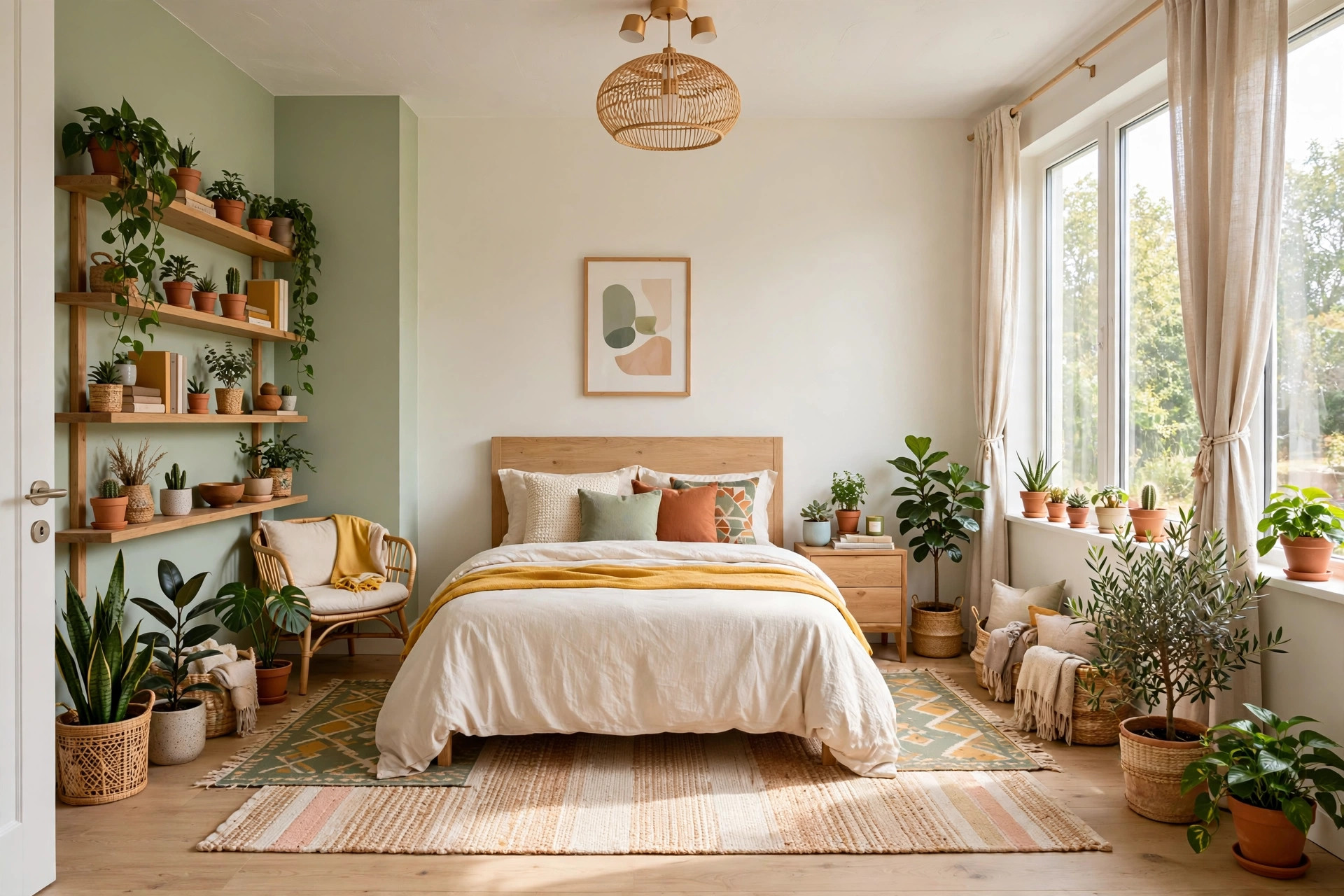
Plants are the cheapest way to add life, color, and texture to a bedroom, and they ask for very little in return. A tall snake plant in an empty corner fills vertical space that would otherwise sit dead; a trailing pothos on top of the wardrobe softens a hard edge; a small cluster of succulents on the nightstand adds a living detail at eye level. Stick to low-maintenance varieties — snake plants, ZZ plants, and pothos forgive missed waterings and low light, which makes them ideal bedroom companions.
Presentation matters as much as the plant. A five-dollar plant in a matching, generously sized pot looks intentional; the same plant in a plastic nursery pot looks temporary. Choose two or three pots in one material family — terracotta, matte ceramic, or woven baskets — and the plants read as a scheme rather than an afterthought. Skip plants if your bedroom gets almost no natural light; a struggling plant adds guilt, not beauty.
12. Organize the Closet and Hidden Storage
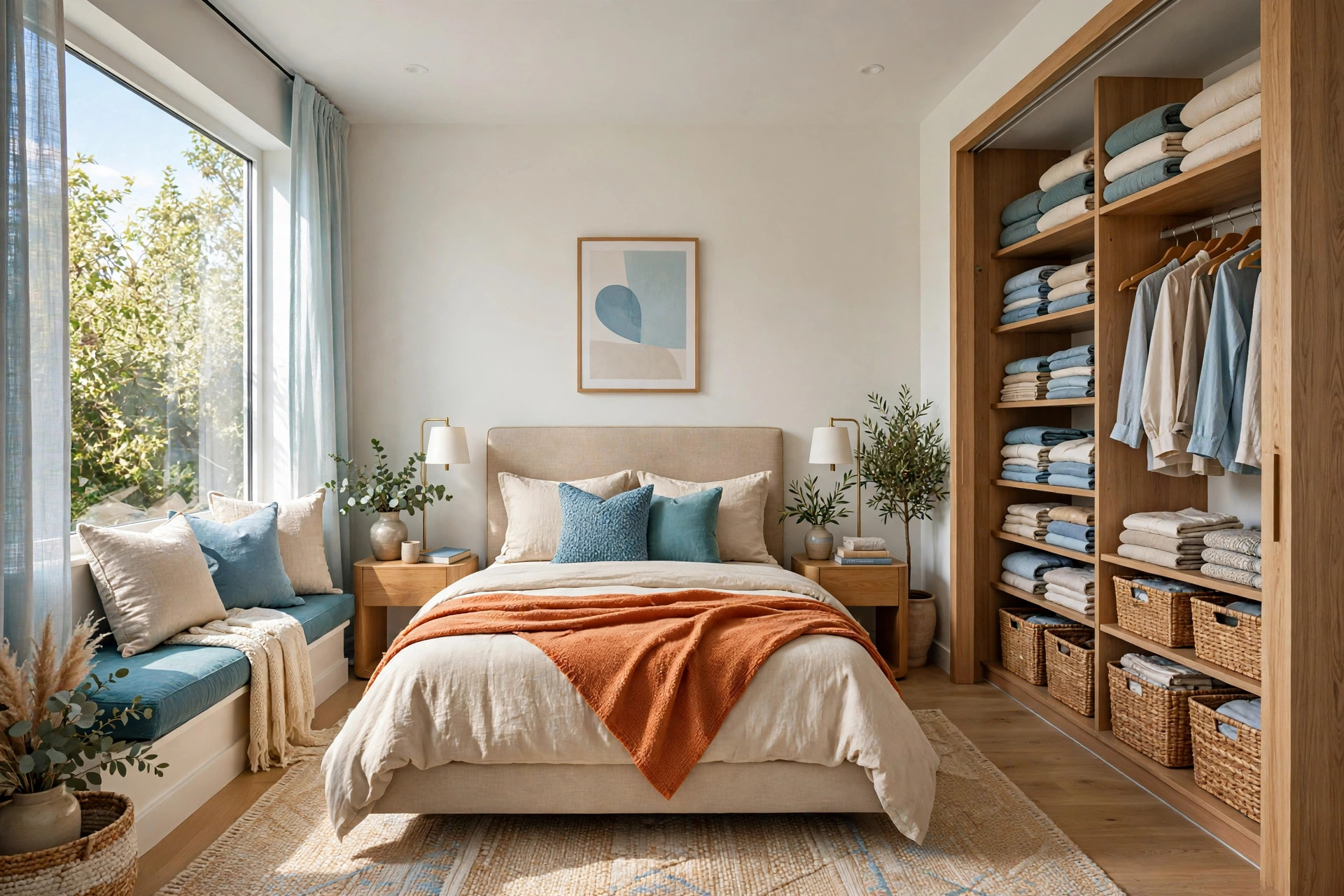
A bedroom makeover is incomplete if the closet still explodes every morning — disorganization leaks into the room no matter how pretty the bed looks. You do not need a custom closet system; you need matching hangers, a few fabric bins, and one honest purge. Take everything out, let go of what you have not worn in a year, and put back only what fits comfortably. Uniform hangers alone make an open closet look twice as tidy.
Inside drawers, simple dividers or rolled clothing turn chaos into calm — and they make mornings faster. Under the bed, flat storage boxes or zippered bags swallow off-season clothes and extra linens, freeing closet space for daily wear. If the closet has no doors, a curtain panel on a tension rod hides the storage while adding softness to the room.
📌 Important: Measure your closet and drawers before buying any organizers. Bins that are an inch too wide or dividers that do not fit the drawer depth become clutter themselves — the most common way a storage project wastes money.
13. Layer Rugs for Warmth on a Budget

Bare floors make bedrooms feel cold and unfinished, especially in the morning when your feet hit the ground. A rug under and around the bed adds warmth, softness, and a huge amount of visual polish — and it does not need to be expensive. The budget move is size over luxury: one large, affordable rug that extends at least two feet beyond each side of the bed beats a small plush one that floats awkwardly in the middle of the floor.
Layering is the designer trick that stretches a budget further. A large, inexpensive flat-weave or jute rug as the base, topped with a smaller soft rug beside the bed where your feet land, gives you the look of a high-end layered floor for the price of one budget rug. Keep the rug’s tones in the same family as your bedding palette so the floor and bed read as one composition.
14. Refresh Curtains and Window Treatments
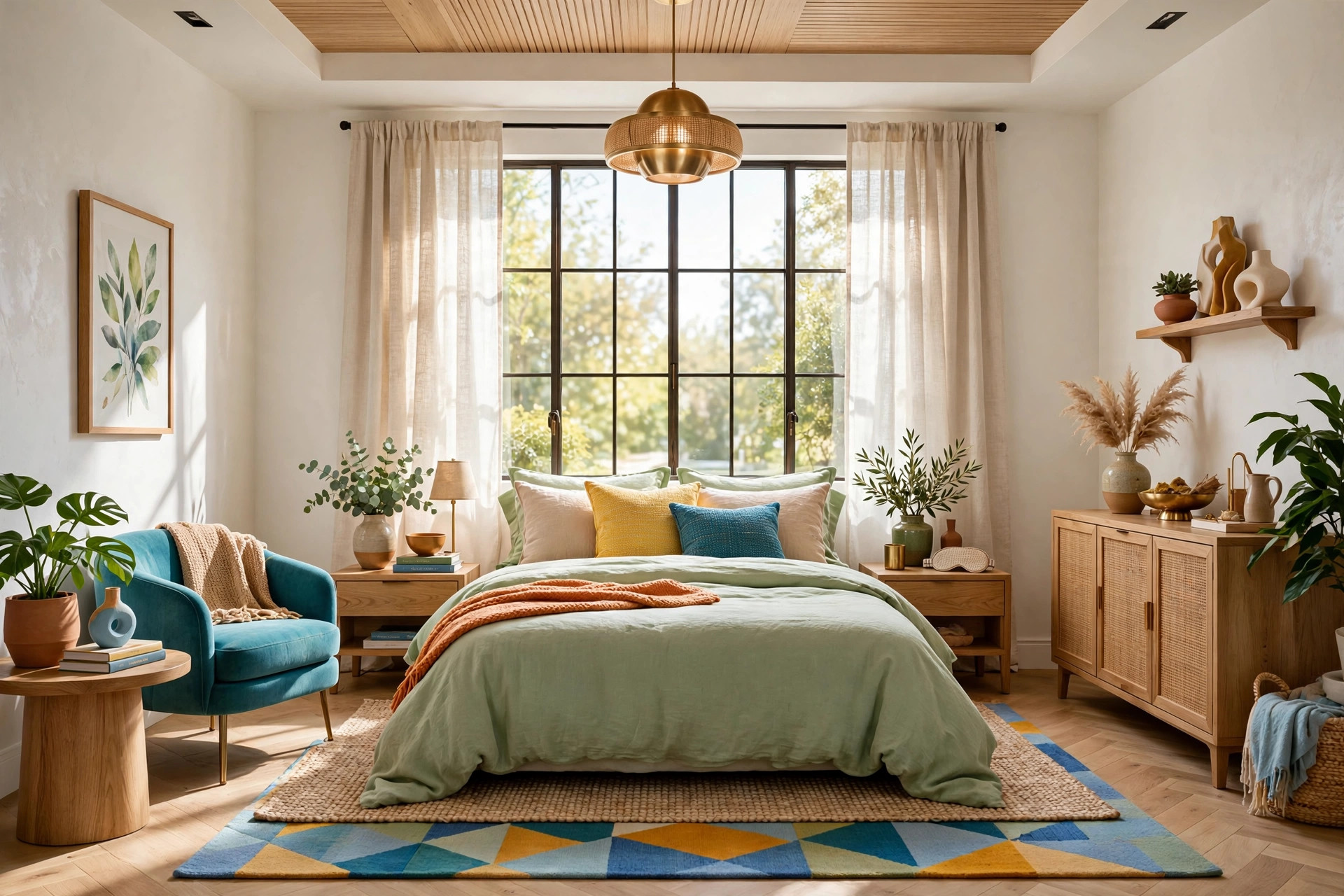
Window treatments frame the room’s light, and tired ones drag the whole bedroom down. Short, faded curtains that stop at the sill visually chop the wall and make windows look smaller — the classic budget fix is floor-length panels hung high and wide. Mount the rod four to six inches below the ceiling and extend it well past the window frame on both sides; the window instantly reads grander and the ceiling feels taller.
Choose curtain fabric in a color close to your walls for a calm, seamless look, or pick a soft texture like linen-look weave to add richness without pattern risk. Sheer inner panels are a cheap privacy solution that keeps daylight flowing. If new curtains are not in the budget at all, take the existing ones down, wash them, and rehang them properly — clean, high, and wide transforms even old panels.
15. Finish With a Cohesive Color Palette Check
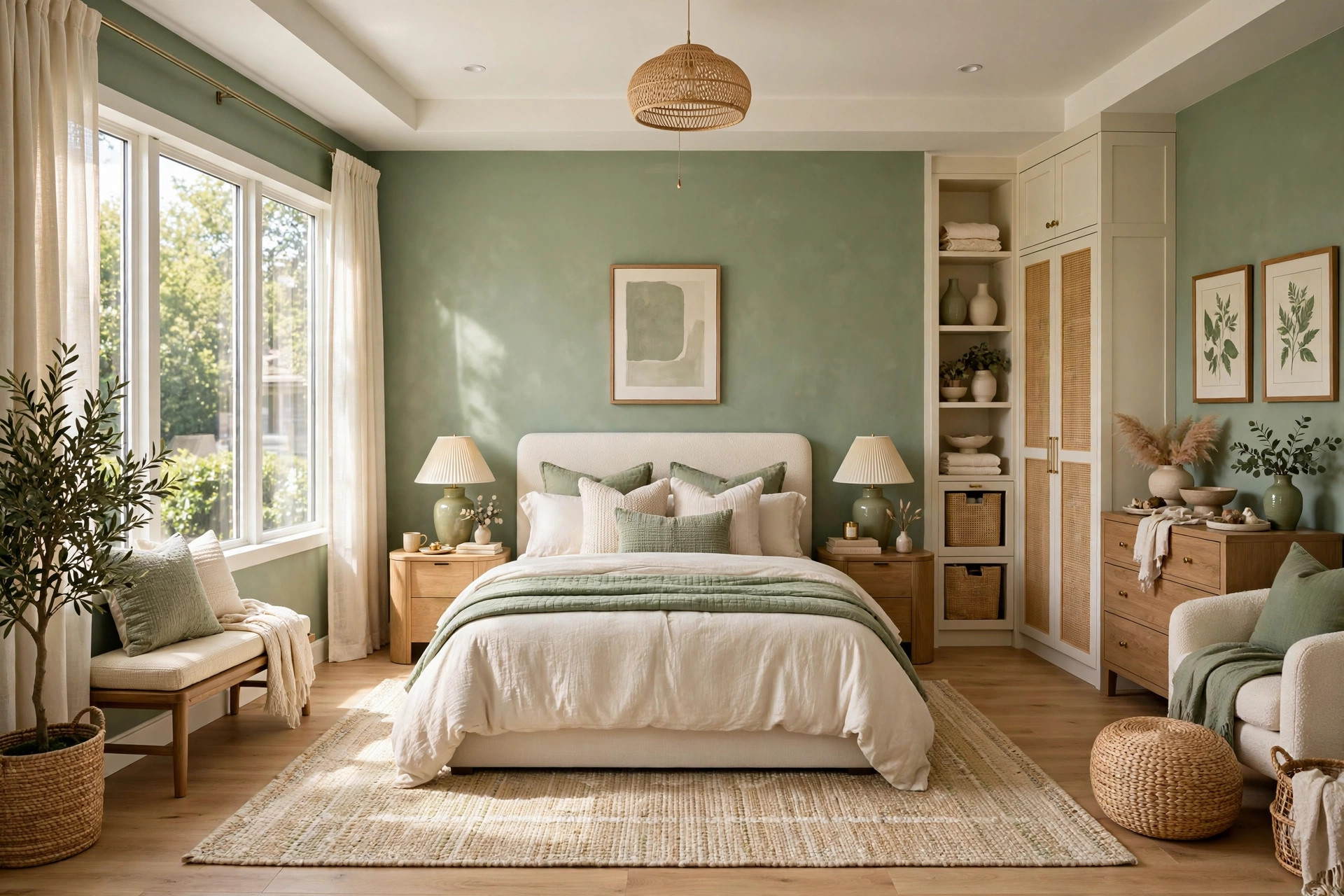
The final step costs nothing and ties everything together: the palette audit. Stand in the doorway and look at the room the way a guest would. Count your colors — one dominant tone (walls and bedding base), one supporting tone (rug, curtains, larger textiles), and one accent appearing in at least three small places. If a fourth or fifth color is fighting for attention, that is the item to edit out.
This is where the 60-30-10 color rule earns its keep as a finishing tool rather than a planning one. Photograph the room and squint at the photo: squinting blurs the details and reveals only the color masses, so you can see instantly whether one tone dominates or the accents have crept too far. Small swaps fix most imbalances — a cushion cover here, a throw there — and each one costs almost nothing.
💡 Pro Tip: Do the palette audit in both daylight and lamplight before calling the makeover done. Colors shift between the two, and the bedroom is one of the few rooms you experience heavily in both — what harmonizes at noon should still harmonize at ten at night.
Common Bedroom Makeover Mistakes
Mistake 1: Buying decor before decluttering
New cushions on a cluttered bed just make expensive clutter. The reset always comes first — declutter, clean, and rearrange before spending anything. Half the time, the room reveals it needed editing, not shopping, and the budget you saved goes further on the things that truly need replacing.
Mistake 2: Choosing paint in the store’s lighting
That perfect greige under fluorescent tubes can read pink under your warm bedroom lamps and grey in morning daylight. Always test large swatches in the actual room through a full day before buying gallons. Paint is cheap; repainting because you skipped sampling is not.
Mistake 3: Mixing bulb color temperatures
A cool-white bulb in the floor lamp fighting warm bulbs on the nightstands creates a subtle visual discord that makes the whole room feel unsettled. Pick one temperature — warm white around 2700K for bedrooms — and use it in every fixture. Consistency is what makes layered lighting feel cozy instead of chaotic.
Mistake 4: Hanging curtains too low and too narrow
A rod mounted right at the window frame chops the wall in half and makes the window look smaller. Mount it near the ceiling, extend it past the frame, and let panels fall to the floor. This one fix costs nothing extra and does more for the room’s proportions than almost any decor purchase.
Mistake 5: Letting the accent color take over
One terracotta cushion is a scheme; terracotta cushions, curtains, rug, and art is a takeover. Keep your accent to three to five small touches at different heights around the room. When the accent creeps, the calm collapses — and calm is the entire point of a bedroom.
Frequently Asked Questions
1. How much does a bedroom makeover on a budget typically cost?
It depends on how much you already own, but a genuine full-room transformation is very achievable for a few hundred dollars or less. The free moves — decluttering, rearranging, deep cleaning — cost nothing and do a surprising share of the work. After that, spend on bedding, paint, lighting, and textiles, in roughly that order, rather than scattering money across a dozen small decor items.
2. What should I do first in a budget bedroom makeover?
Start with the free reset: declutter ruthlessly, deep clean everything including hidden spots, and rearrange the furniture. These three moves cost nothing and often reveal that the room needed editing rather than shopping. Only after living with the reset for a few days should you spend — beginning with the bed, since it dominates what you see.
3. Can I do a bedroom makeover as a renter?
Absolutely — most of these fifteen steps are fully renter-friendly. Peel-and-stick wallpaper and wall panels, leaned mirrors, tension-rod curtains, damage-free hooks, and freestanding furniture need no drilling. The only step to check your lease on is painting; many leases allow it as long as you return the walls to their original color at move-out.
4. How do I make my bedroom look expensive on a budget?
Cohesion is what reads as expensive: one color palette, matching frames, uniform hangers, consistent bulb temperature, and edited surfaces. Layered textiles — a proper duvet cover, a throw, textured cushions — add the depth that cheap rooms lack. And restraint matters more than spending: three confident choices always look richer than twelve hesitant ones.
5. What is the cheapest way to make a small bedroom feel bigger?
Rearrange first — pulling furniture slightly off the walls and keeping the main walkway clear costs nothing. Then add one large mirror opposite or beside the window to bounce light, hang curtains high and wide, and keep the color palette light and cohesive. These are the same principles behind good small space decorating, and they work just as powerfully in a bedroom.
6. Should I paint my bedroom walls or leave them white?
White is not wrong, but flat landlord-white can read as cold and unfinished. If painting is an option, a warm white, soft greige, or muted sage adds warmth without darkening the room. If you cannot paint, build warmth through textiles instead — a large rug, full curtains, and layered bedding in warm neutrals give a white room the coziness paint would have provided.
7. How often should I update my bedroom decor?
The big layers — paint, furniture, rugs — should last years. The refresh engine is the small stuff: swap cushion covers, the throw, and one or two accent pieces with the seasons, and the room feels new twice a year for very little money. A deep declutter and textile refresh once a year keeps the room from slowly sliding back into clutter.
Conclusion
A bedroom makeover on a budget is not about finding the cheapest version of an expensive room — it is about spending in the right order so every dollar lands where your eyes land. The free reset first, then the bed, then light, walls, and floor, with cohesion holding it all together. Follow that sequence and the room transforms even when the budget is small.
Start this weekend with steps one through three: strip the room back, clean what you have been ignoring, and move the furniture into a layout you have never tried. Live with it for a few days, then spend deliberately on the layers that matter most. A few weeks from now, you will walk into a bedroom that feels chosen, calm, and entirely yours — and you will know exactly how little it took to get there.