
15 Aesthetic Bedroom Ideas: Moodboard-Worthy Spaces to Copy
Introduction
“Aesthetic” might be the most-pinned word in bedroom decorating right now — and for good reason. An aesthetic bedroom is not one rigid style. It is any bedroom that looks and feels intentional: a room with a clear point of view, where the colors agree, the textures repeat, and every object feels like it chose to be there. Whether your dream board is full of creamy minimalism, moody dark-academia corners, or sun-soaked boho layers, the common thread is cohesion. The room photographs beautifully because it was designed with a single idea carried through confidently.
The difference between a bedroom that looks aesthetic and one that merely looks decorated is editing. Moodboard-worthy rooms share the same quiet habits: a tight palette (three colors, not seven), repeated materials, lighting that flatters skin and fabric, and clutter that has a home. This is the same discipline behind our roundup of dreamy bedroom decor ideas — hotel-worthy bedrooms and aesthetic bedrooms both run on restraint, and both reward anyone willing to edit.
Below are 15 aesthetic bedroom ideas, each one a complete room concept you can copy in full or borrow pieces from. Start with the style that matches your moodboard, or browse them all and notice which ones make you mentally save the image. Every idea works in a real bedroom — no stylist, no renovation, and most of them no big budget either.
1. The Clean White-on-White Sanctuary
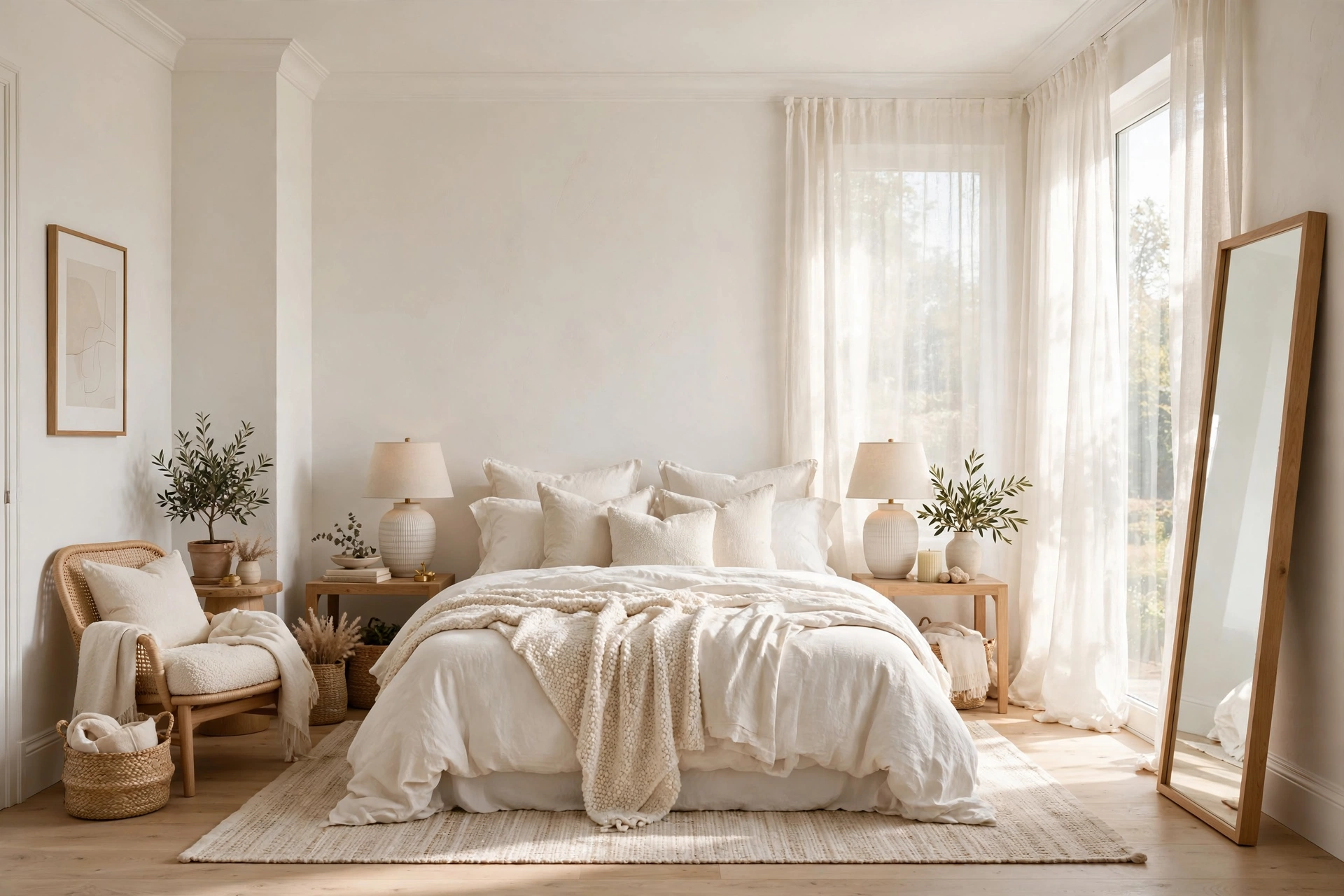
The white bedroom is the original aesthetic bedroom, and it endures because nothing photographs — or sleeps — better than clean, bright calm. The key is that “white” is never just one white: layer warm white walls, ivory linen bedding, a nubby cream throw, and a soft ivory rug so the room has depth without a single drop of color. Texture does all the decorating work here, which is why this style looks expensive even when the pieces are simple.
White-on-white is also the most forgiving style for a small or dark bedroom, since the palette multiplies whatever light you have. Lean a full-length mirror against the wall opposite the window to double the daylight — the same trick from our small master bedroom ideas guide — and keep window treatments sheer so the room glows. The whole look rests on maintenance, though: wash bedding weekly and keep surfaces nearly clear, because white shows everything and the aesthetic depends on freshness.
2. Warm Japandi Calm

Japandi — Japanese restraint meeting Scandinavian warmth — might be the most sleep-friendly aesthetic on this list. It keeps Scandinavian’s pale woods and cozy textiles but adds Japanese discipline: lower furniture profiles, natural materials with visible grain, and a near-monastic approach to clutter. The bed sits low on a simple platform, dressed in stone-colored or warm-grey linen that looks beautifully rumpled rather than sloppy.
Light it the Japanese way: a paper lantern pendant or two warm-shaded lamps instead of anything harsh, so the room glows like candlelight in the evening. Decorate with intention and almost nothing else — a single branch in a handmade ceramic vase, one piece of quiet art, a low wooden stool. If your mind races at bedtime, this is the aesthetic to try: a Japandi bedroom gives your eyes almost nothing to process, and a quiet room makes for a quiet mind.
3. Cottagecore Floral Daydream

Cottagecore is nostalgia you can sleep in: floral quilts, vintage finds, dried flowers, and the feeling of a countryside cottage even if you live on the fourteenth floor. Start with the bed — a floral or gingham quilt layered over simple sheets, a crocheted throw, pillows in small-scale vintage prints. Painted wood furniture in cream, sage, or soft white suits this aesthetic far better than dark or ultra-modern pieces.
The charm lives in the collected details: dried lavender in a jug on the dresser, a stack of old books as a nightstand moment, lace-trimmed curtains, a braided or floral rug underfoot. Keep it charming, not cluttered — cottagecore curdles when every surface is covered, so edit ruthlessly and let each vintage piece breathe. One caution: keep the florals small-scale and the palette soft. Oversized bold florals tip the room from cottage-charming to grandmother’s parlor, and the line is thinner than you think.
💡 Pro Tip: When thrifting for cottagecore, carry a paint chip of your palette in your phone case. Vintage florals only stay cohesive if every new find speaks the same color language — one rogue orange floral can undo the whole moodboard.
Aesthetic Bedroom Quick-Start Checklist
- ✅ Choose ONE aesthetic and commit to it for the whole room — no style mixing
- ✅ Lock a 3-color palette before buying anything (dominant, supporting, accent)
- ✅ Layer the bed: sheets + duvet + throw + pillows in at least two textures
- ✅ Swap cool-white bulbs for warm 2700K in every light source
- ✅ Clear every surface to a styled minimum — lamp, one book stack, one living thing
- ✅ Hang curtains high, wide, and to the floor in a light, simple fabric
- ✅ Add one living element: a plant, fresh stems, or dried botanicals
4. Dark Academia Moody Nook
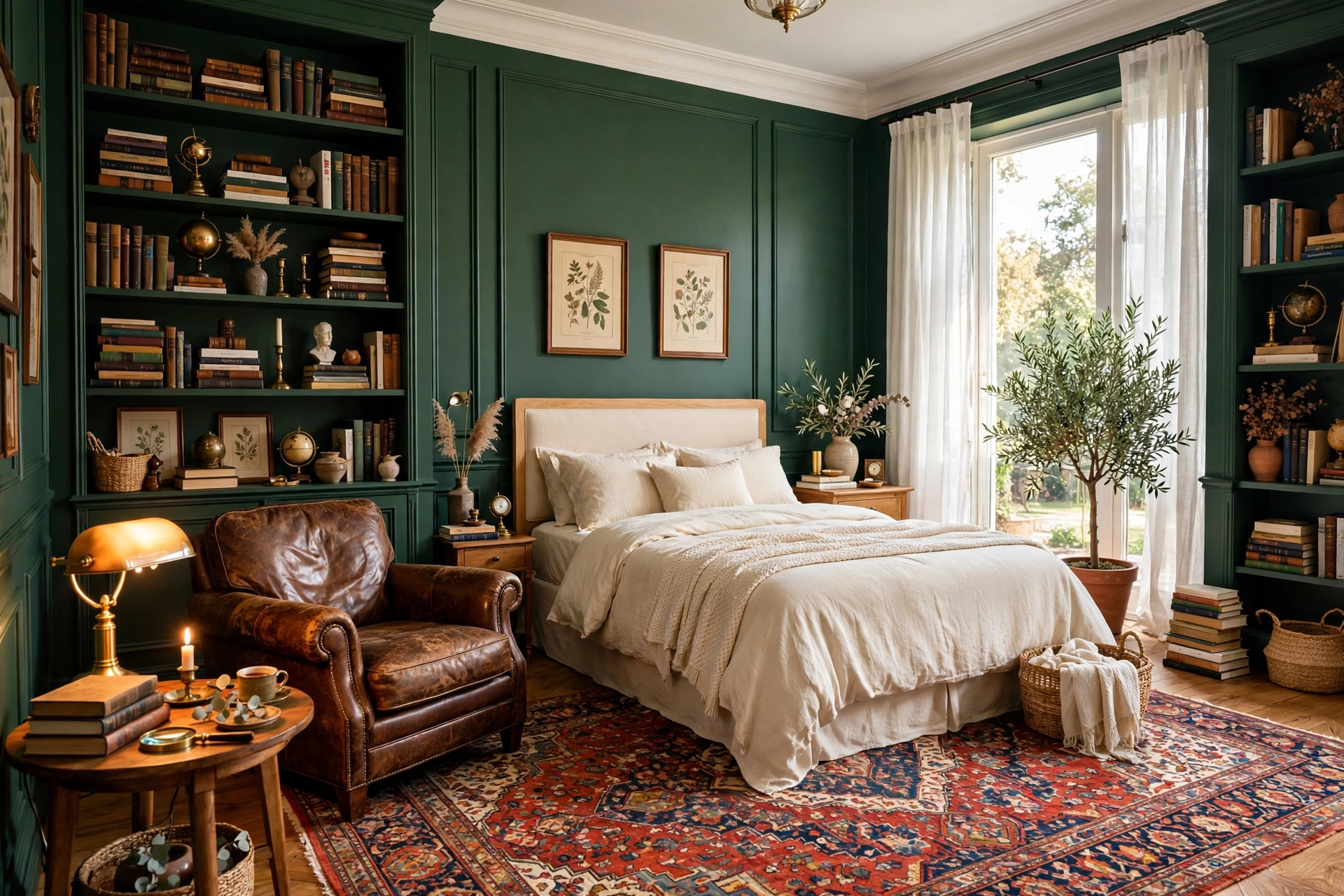
Dark academia brings the library into the bedroom: deep greens, oxblood, espresso browns, brass lamps, stacked books, and the feeling of studying by lamplight on a rainy evening. This aesthetic works best as a corner or a wall rather than a whole room — a moody reading nook with a leather chair, a brass pharmacy lamp, and floor-to-ceiling books (real or styled) delivers the fantasy without turning the bedroom into a cave.
The trick is balancing the darkness with warmth. Every dark academia corner needs at least two warm light sources — the brass lamp plus candles or a small glowing lantern — because brown and green walls go flat and cold under a single overhead. Keep the bedding lighter than the walls (cream or oatmeal against deep green) so the bed stays the room’s resting place, and add one lived-in texture like a worn leather throw or a Persian-style rug to keep it from feeling like a set.
📌 Important: Test dark paint colors at night under your actual bulbs before committing. A green that looks rich in the store can read nearly black in bedroom lamplight. Paint a large swatch, live with it for two evenings, then decide.
5. The Beige “Cloud” Bedroom

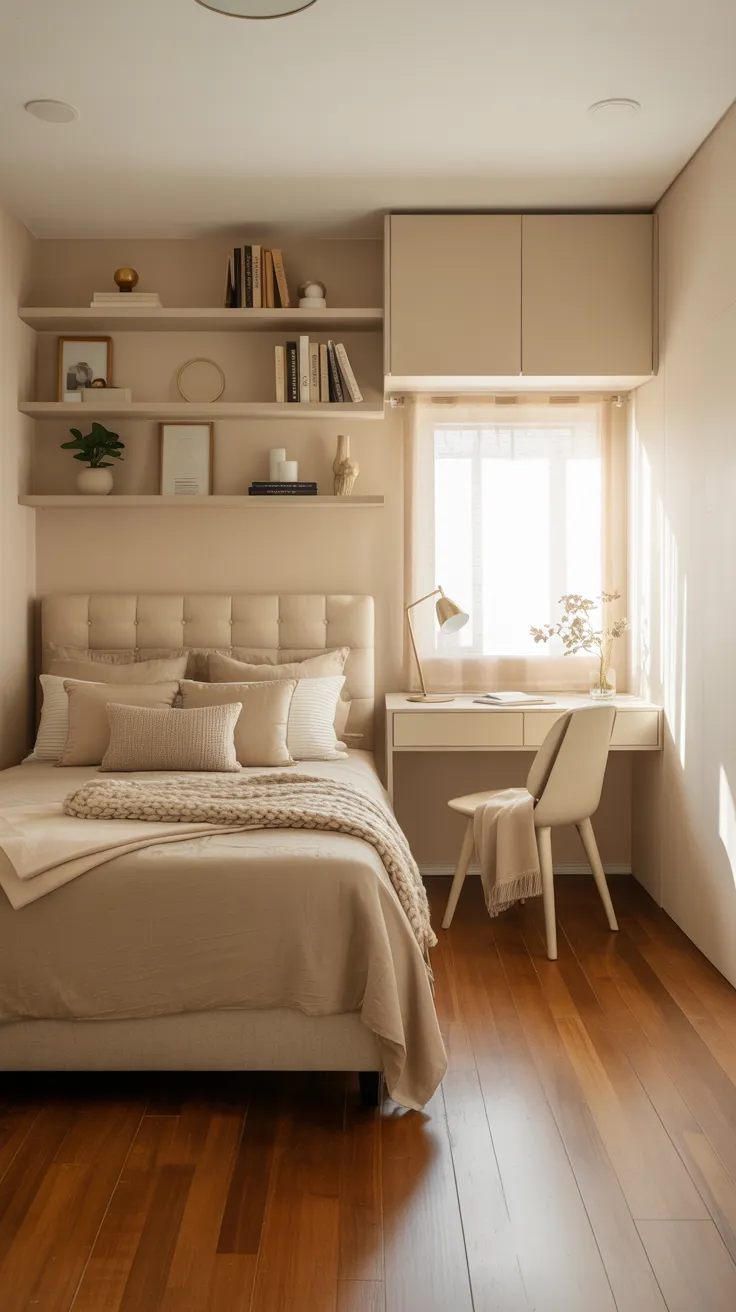
The beige cloud bedroom is the internet’s favorite nap: every surface in soft, warm neutrals — oat, cream, mushroom, warm greige — piled into bedding so plush it looks like weather. This aesthetic runs entirely on layering: a linen duvet, a quilt folded mid-bed, a chunky knit throw across the foot, and pillows in three textures (smooth cotton, nubby boucle, soft velvet). From the doorway, the bed should look like something you could fall into.
This is one of the most forgiving aesthetics for renters because it needs almost no wall work — the bedding IS the design. Pair it with warm wood nightstands, a cream rug that extends past the bed, and dimmable warm lamps, and you have a room straight from our cozy bedroom inspiration boards. The one rule: keep the beige warm. Cool, grey beiges turn sad under warm bulbs; hold swatches in the room’s evening light before you buy.
Quick Comparison: Aesthetic Bedroom Styles by Cost and Effort
6. Boho Textured Layers

Boho is the maximalist’s aesthetic: rattan, macrame, layered rugs, plants in every corner, and the happy feeling that the room grew over time rather than being bought in a weekend. The bed anchors it — a simple wood or rattan frame dressed in white or cream bedding, then buried under pattern: a block-print quilt, embroidered shams, a tasseled throw, pillows in every global print you love. The rule is that everything must share a warm color family so the abundance reads as curated, not chaotic.
Plants are non-negotiable in boho: a tall one in the corner (fiddle leaf, bird of paradise, or a forgiving snake plant), trailing pothos on a shelf, something small and sculptural on the nightstand. Layer the floor too — a jute base rug with a smaller patterned rug on top is the classic boho move that makes the room feel collected. Edit once a season: boho curdles fastest of all aesthetics when the layers keep accumulating with no one in charge.
7. Soft Romantic Blush
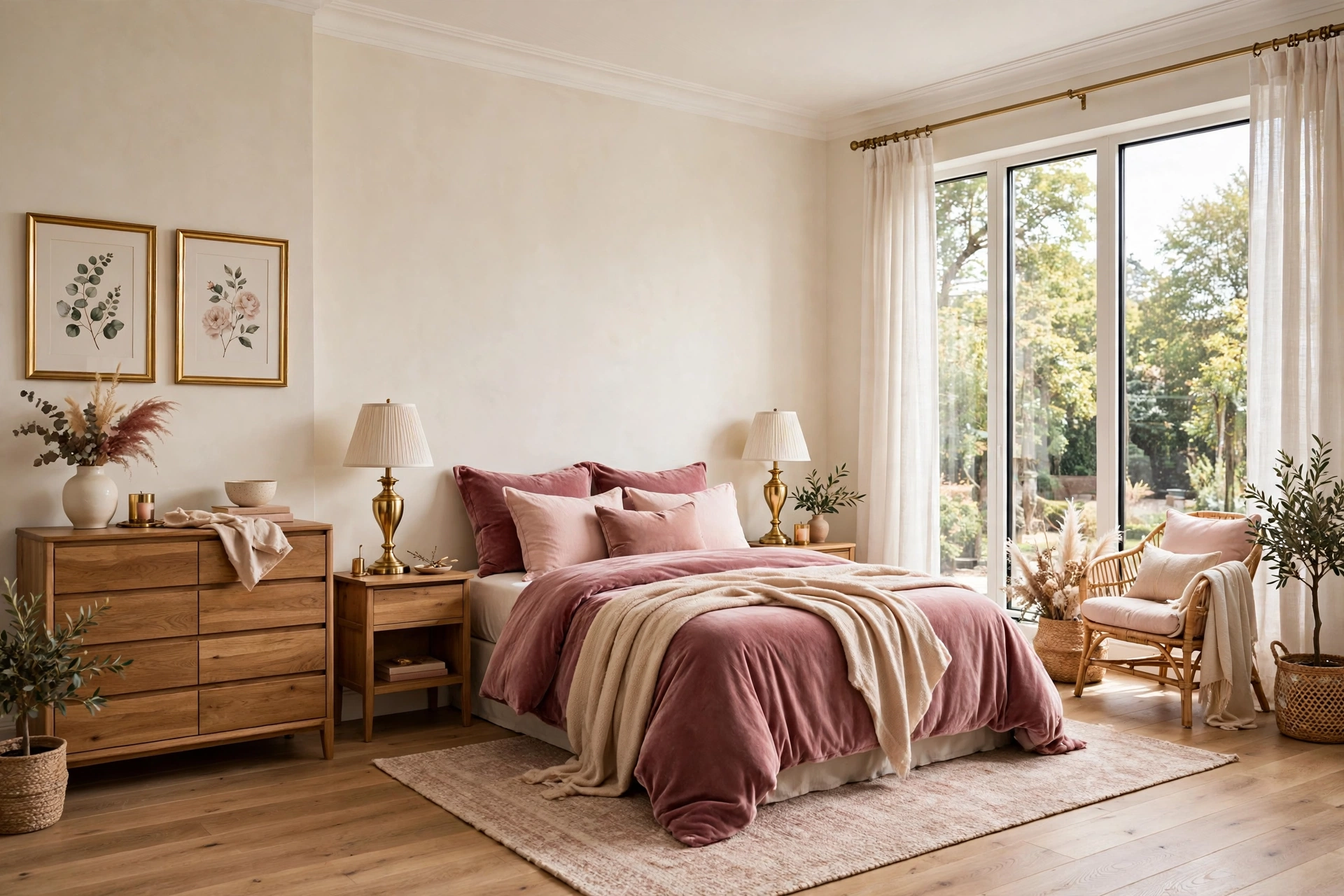
Blush done right is grown-up romance, not a teenager’s bedroom: dusty rose, warm taupe, cream, and soft gold, kept muted and layered like a watercolor. The bed carries it — blush linen or velvet bedding against cream walls, a champagne-toned throw, pillows that move from pale pink to warm neutral. One metallic thread running through the room (brass lamp bases, gold-framed art, brushed-gold hardware) keeps the softness from going sugary.
Balance is everything here. For every blush element, add one grounding neutral: a natural wood dresser, a jute rug, black or bronze picture frames. The most common mistake is going all-pink, which photographs flat and feels one-note in person. Blush is the accent in this aesthetic’s name — the room should read as warm and rosy, not literally pink.
💡 Pro Tip: Test blush paint and fabric swatches in your bedroom’s evening lamplight, not just daylight. Pink tones shift dramatically under warm bulbs — a swatch that looks sophisticated at noon can turn bubblegum at 9 p.m. Warm 2700K light deepens blush, so choose one shade more muted than your instinct.
8. Modern Organic with Curves

Modern organic is the aesthetic of arches, curves, and softness: rounded headboards, arched mirrors, boucle chairs, travertine side tables, and a palette of warm white, oatmeal, clay, and sand. Nothing in the room has a sharp corner if you can help it. This style photographs beautifully because curved silhouettes catch light in gradients instead of hard lines — the whole room glows softly.
Start with one hero curve — an arched headboard or a big arched mirror — then echo it twice more (a round rug, a curved lamp, arched artwork). Our master bedroom design ideas guide covers the furniture shapes in more depth, but the short version is: three curves make a motif, one curve is just a mirror. Keep the palette tonal and the textures natural — boucle, linen, raw wood, stone — and the room feels like a boutique hotel designed by a sculptor.
9. Vintage Eclectic Collected Mix

The collected aesthetic is the anti-showroom: every piece looks found, inherited, or hunted down, and the room’s beauty comes from the story the objects tell together. A vintage brass bed, a mid-century dresser, a flea-market mirror, art in mismatched-but-harmonious frames — nothing matches, and that’s the point. What holds it together is a consistent color temperature: warm woods, aged brass, and a tight palette of creams, ambers, and one deep accent like forest green or oxblood.
This is the slowest aesthetic to build and the most satisfying, because it can’t be bought in one shopping trip — and that’s its honesty. Shop secondhand first: estate sales, flea markets, and vintage shops are the supply chain. The editing rule is the tightest of any style on this list: every new find must earn its place by fitting the palette and the story. One off-palette impulse buy is all it takes to turn “collected” into “cluttered.”
10. Breezy Coastal Calm
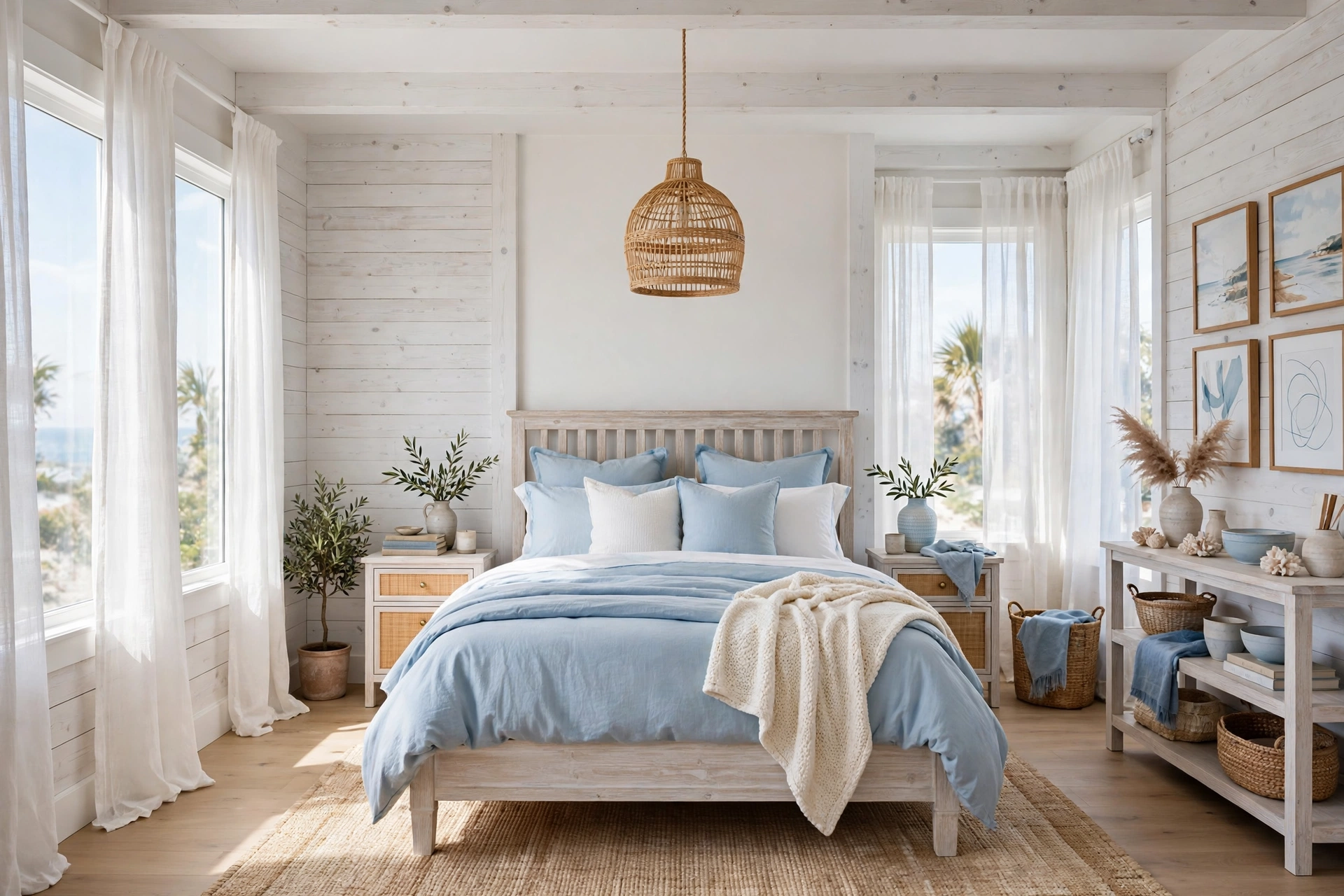
Coastal aesthetic is not seashells and rope — it’s light, air, and the calm of a shoreline palette: whitewashed woods, white and soft blue-grey bedding, rattan, jute, and linen that all feel sun-warmed. The room should feel like a deep breath, with sheer curtains that move in the breeze and nothing visually heavy anywhere. This aesthetic depends more on daylight than any other, so it’s a natural fit for bedrooms with good windows.
Keep the blue in the soft register — powder, sea glass, pale slate — and let white do most of the work. A rattan pendant light or a pair of woven nightstands gives the coastal signal without a single nautical cliché. One piece of ocean-toned art and a plant with an airy shape (a palm, an olive tree) complete the story. Skip the themed decor entirely: the moment a room has an anchor motif, it stops being aesthetic and starts being a gift shop.
📌 Important: Coastal rooms live or die on light quality. If your bedroom faces north or gets little sun, boost the warmth: honey-toned woods instead of whitewashed, cream instead of stark white. A dim coastal room reads cold and grey; a warm-lit one reads like golden hour.
11. Earthy Terracotta Glow
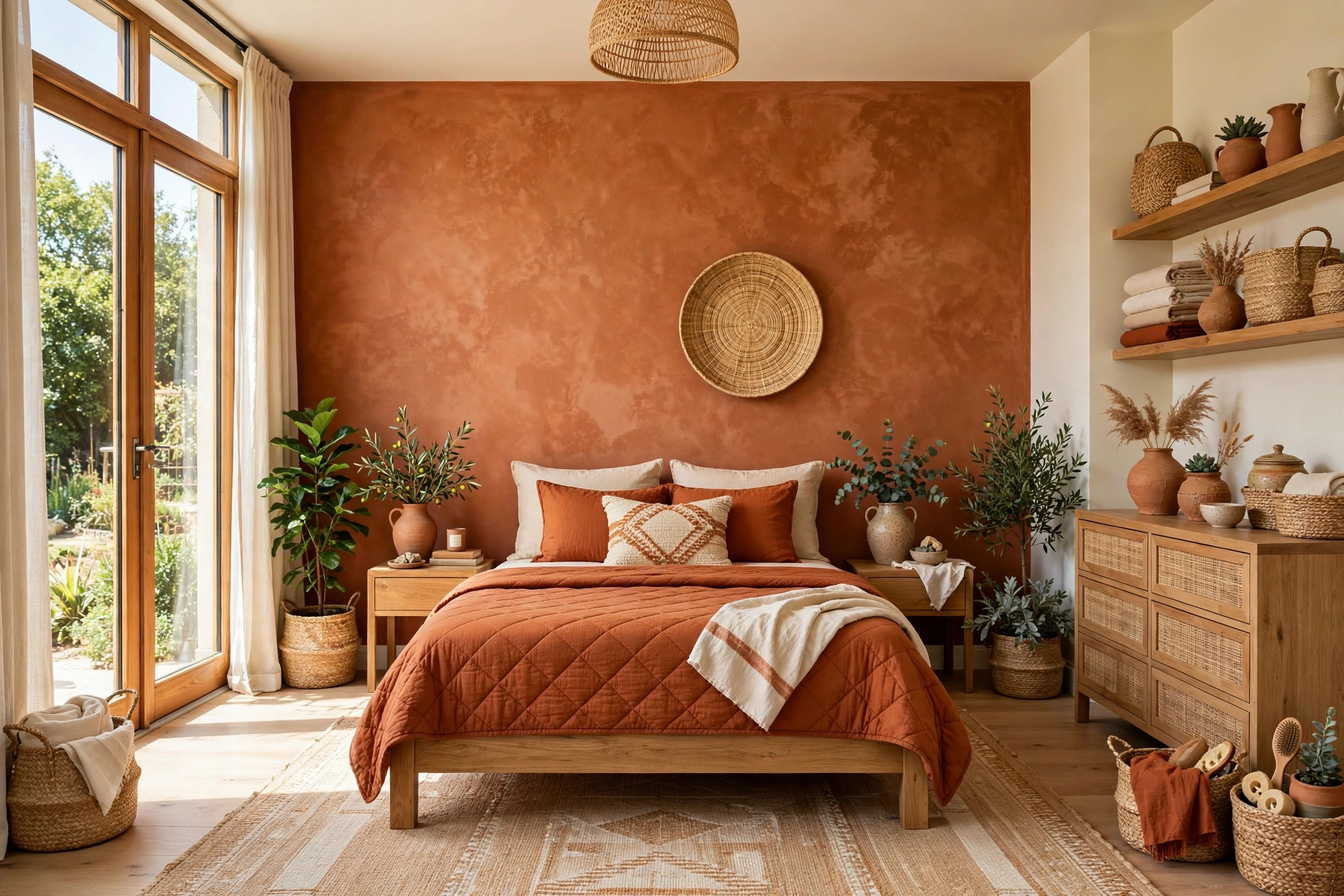
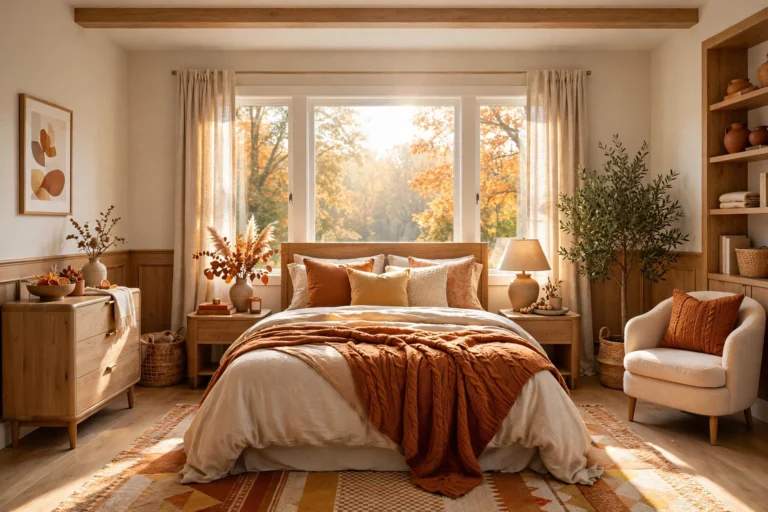
Terracotta is warmth you can see: clay, rust, burnt sienna, and warm sand, wrapped around a bedroom like late-afternoon sun. This aesthetic leans into natural materials — a clay-toned accent wall or limewash finish behind the bed, terracotta bedding or a rust quilt, woven jute and seagrass, pottery in every shape. Against all that earth, green plants pop beautifully, which is why terracotta rooms almost always have the best plant game.
The key is keeping the terracotta grounded in neutrals so it glows instead of shouting: cream walls on the other three sides, natural wood furniture, a light rug to anchor the floor. Limewash or textured paint is the budget hero here — a single accent wall in a clay limewash looks handcrafted and expensive for the price of two paint cans. If full terracotta feels like a lot, start with bedding and pottery; the color works in doses too.
12. Scandi Pastel Softness
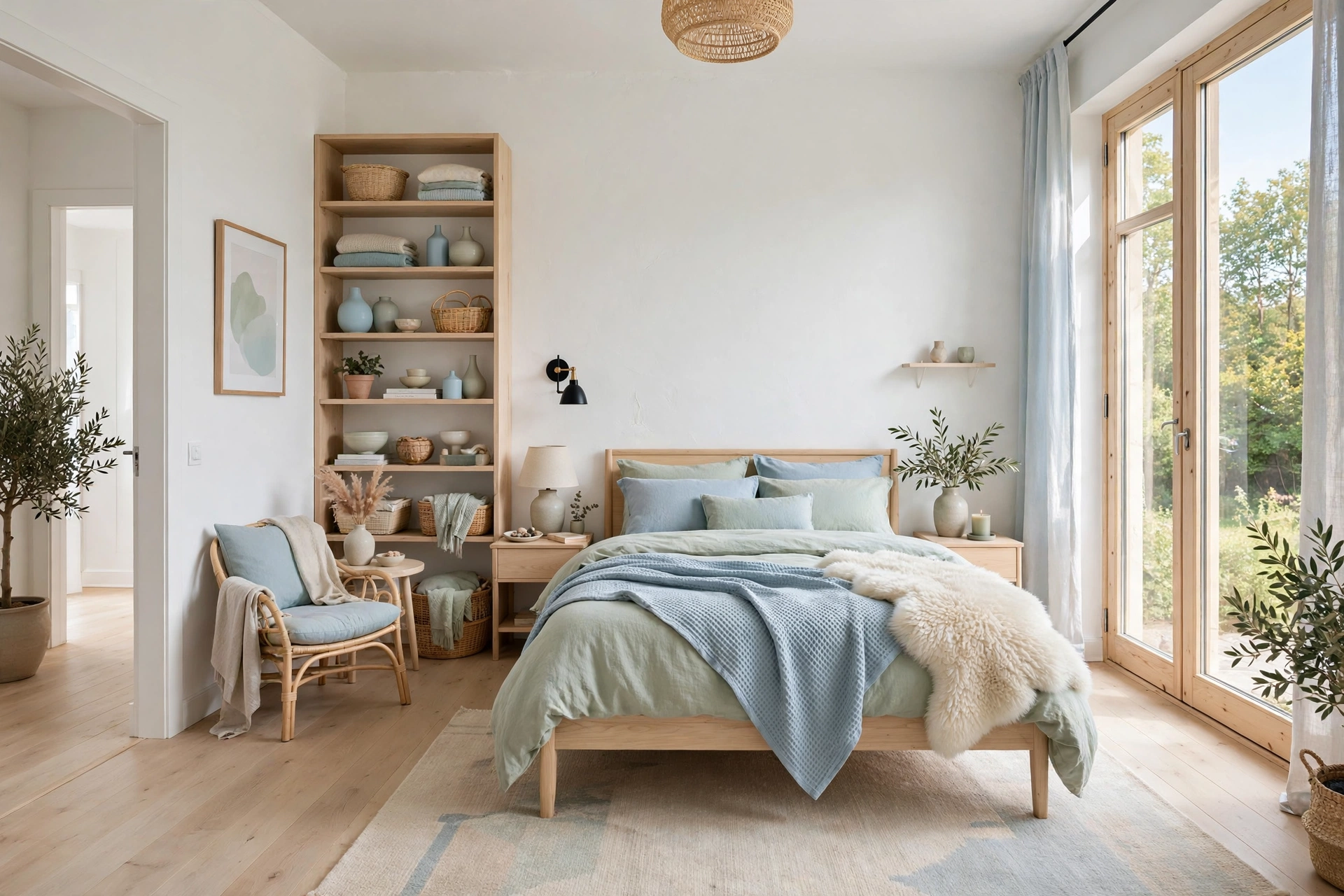
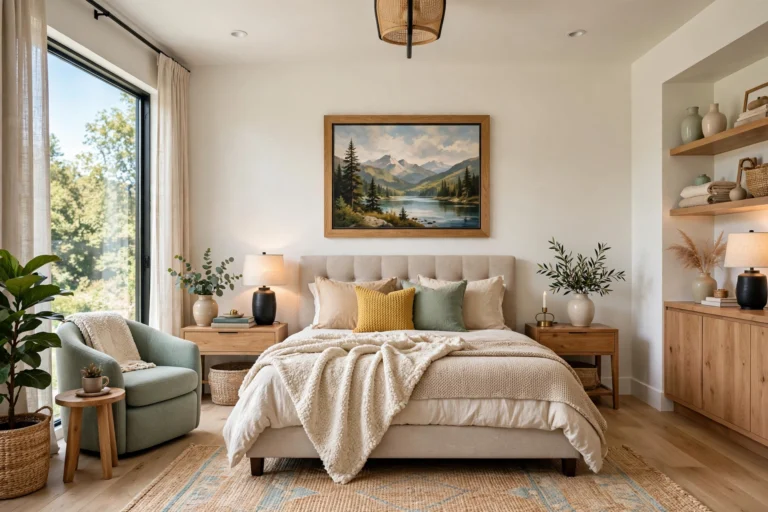
Scandinavian pastel is minimalism with a gentle blush of color: white walls, pale oak furniture, and bedding in washed-out pastels — powder blue, soft sage, pale lilac, buttery cream. Everything is light, everything is simple, and the color arrives in whispers rather than statements. The aesthetic depends on daylight and negative space, so it suits bright rooms and people who genuinely like calm.
Keep the pastels desaturated and the palette to two pastels maximum plus white and oak — more than that and the room tips from serene to nursery. Texture carries the interest: a waffle-weave throw, linen bedding, a sheepskin draped over the bed’s edge, a soft flatweave rug. One graphic element (a simple line-art print, a striped cushion) keeps the softness from going shapeless. This is the aesthetic for people who want color but flinch at commitment.
13. Glam Gold-Accented Aesthetic
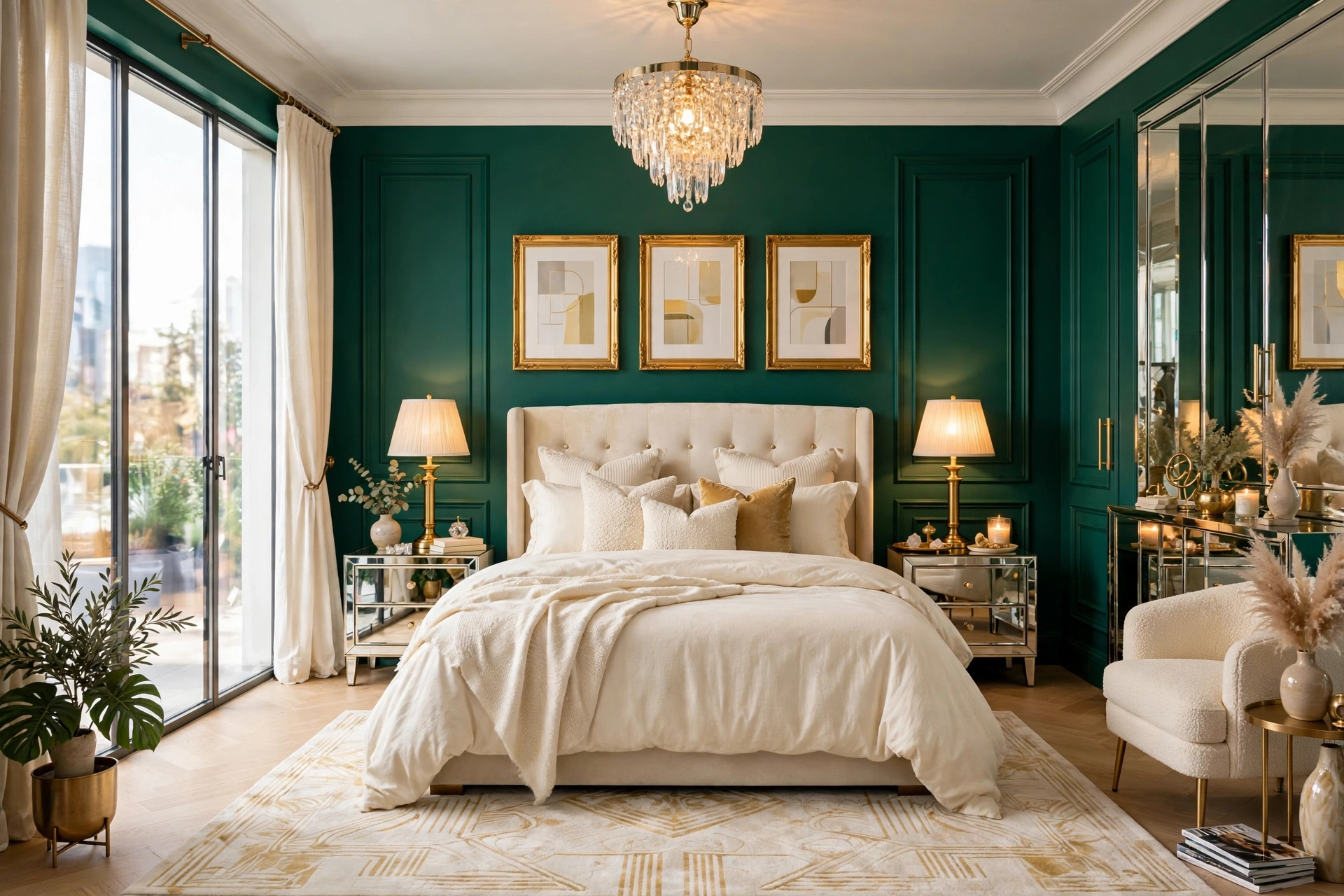
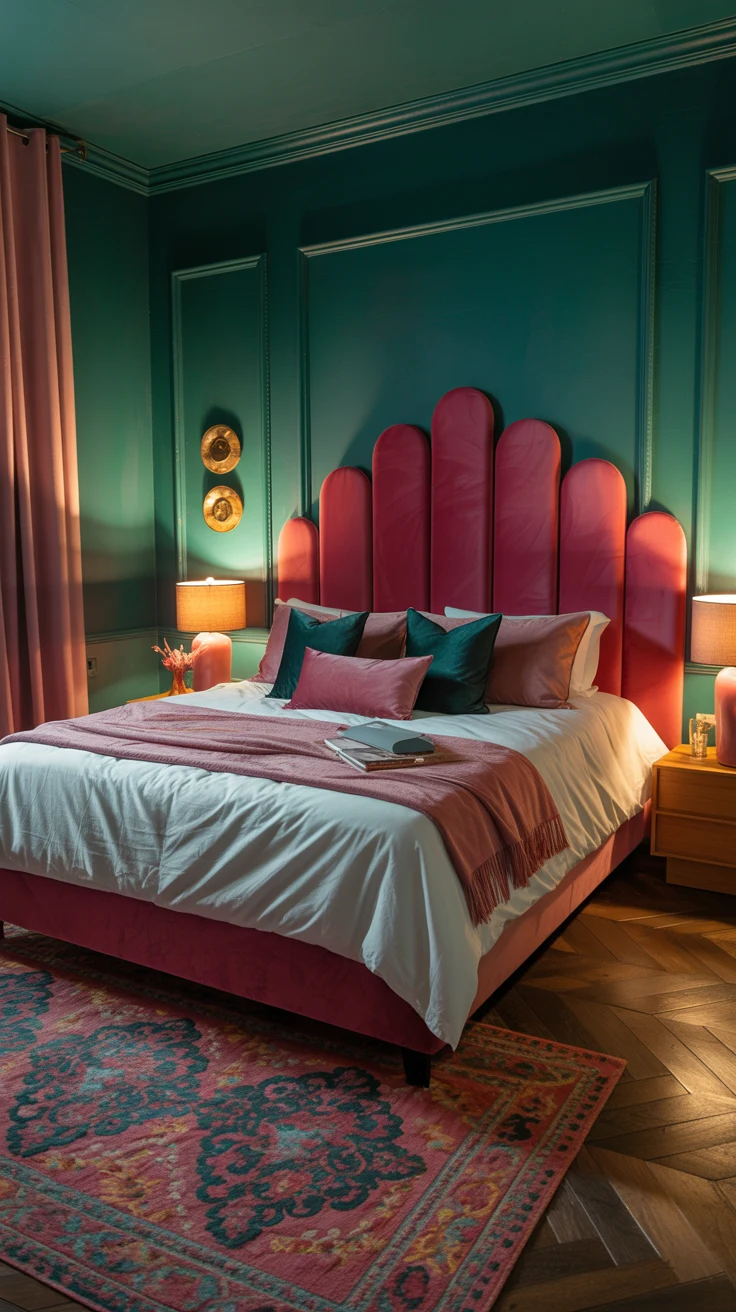
Glam is the evening-outfit version of an aesthetic bedroom: deep, rich color (emerald, navy, charcoal, or warm chocolate) paired with gold that catches the light — mirrored nightstands, brass lamps, gold-framed art, a crystal or beaded pendant. The palette is high-contrast on purpose: dark walls make the gold glow, and the glow is the whole point. This aesthetic looks most expensive after dark, which makes it perfect for people whose bedroom is mainly an evening room.
Restraint is the entire skill. Gold is an accent metal, not a theme: two or three gold moments per sightline is the limit — lamp bases, one mirror frame, hardware. More than that and the room tips from glamorous to gaudy. Keep the bedding mostly neutral (cream or ivory against dark walls) so the gold has a quiet background to shine against. A mirrored nightstand or two also bounces lamplight around, pulling the same light-doubling duty our guide on how to make a small bedroom feel bigger recommends — glam and spacious are not opposites.
⚠️ Warning: Mixing gold with silver or chrome in the same sightline breaks the glam spell instantly. Pick one metal family for the whole room — warm gold/brass — and commit. Mixed metals can work in eclectic styles, but in glam they just read as indecision.
14. Botanical Green Sanctuary
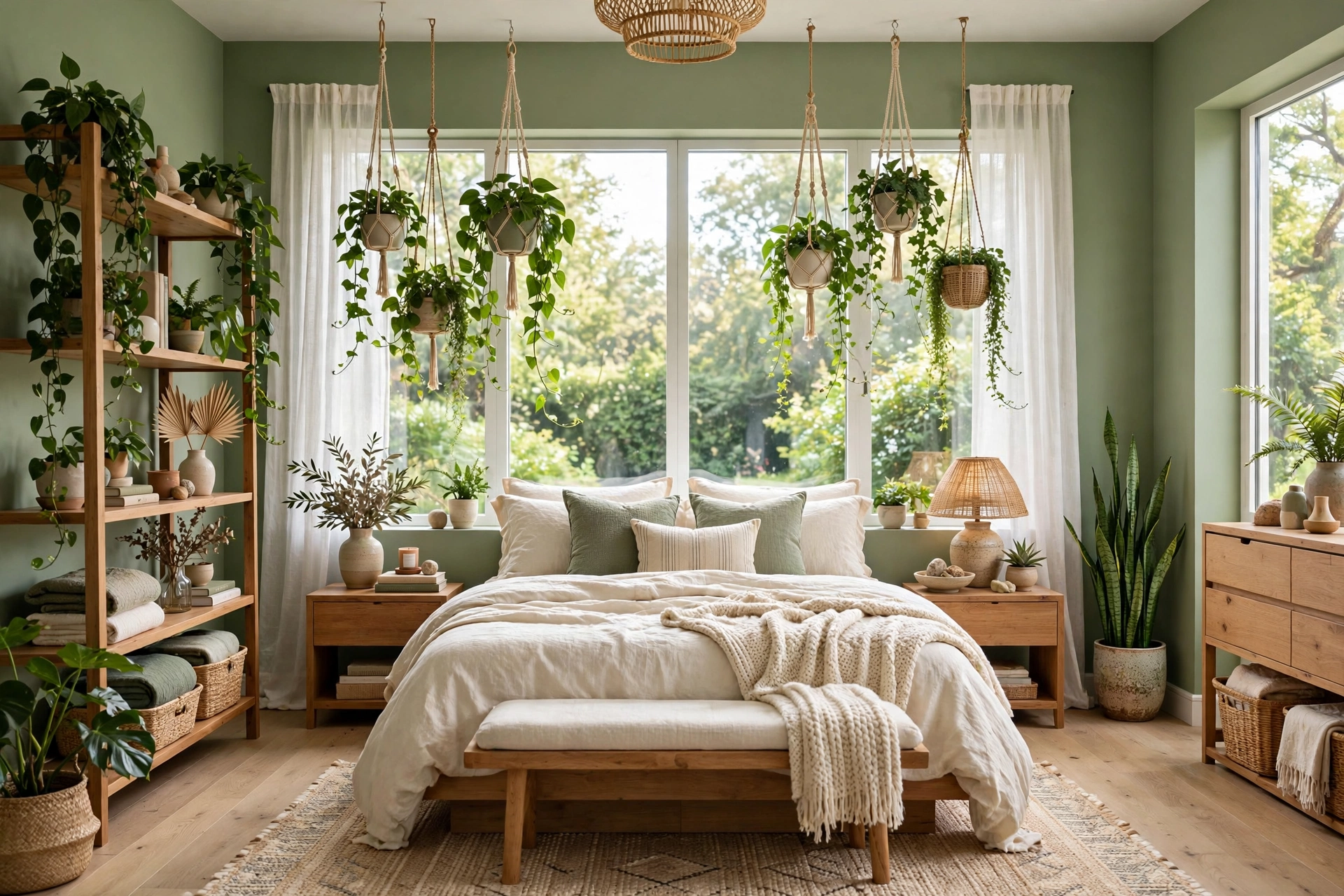
The botanical bedroom is a greenhouse you sleep in: green walls or green bedding, plants at every height, natural wood, and light that feels filtered through leaves. The wall color does the heavy lifting — a soft sage or deep botanical green on all four walls (or one dramatic green wall) sets the scene, and then the plants are just the room agreeing with itself. Hanging planters, a tall tree in the corner, trailing vines on a shelf: the more layers of green, the better.
Not every plant needs to be real — but the hero ones should be, because real leaves catch light in a way fakes never do. Choose easy ones for bedrooms (snake plants, pothos, ZZ plants tolerate low light and neglect), and put the fussiest plant closest to the window. Keep the furniture and textiles simple — natural wood, cream linen, one woven rug — so the greenery stays the star. A botanical bedroom with simple furniture always looks more expensive than a plain bedroom with fancy furniture.
15. Artsy Gallery-Wall Bedroom
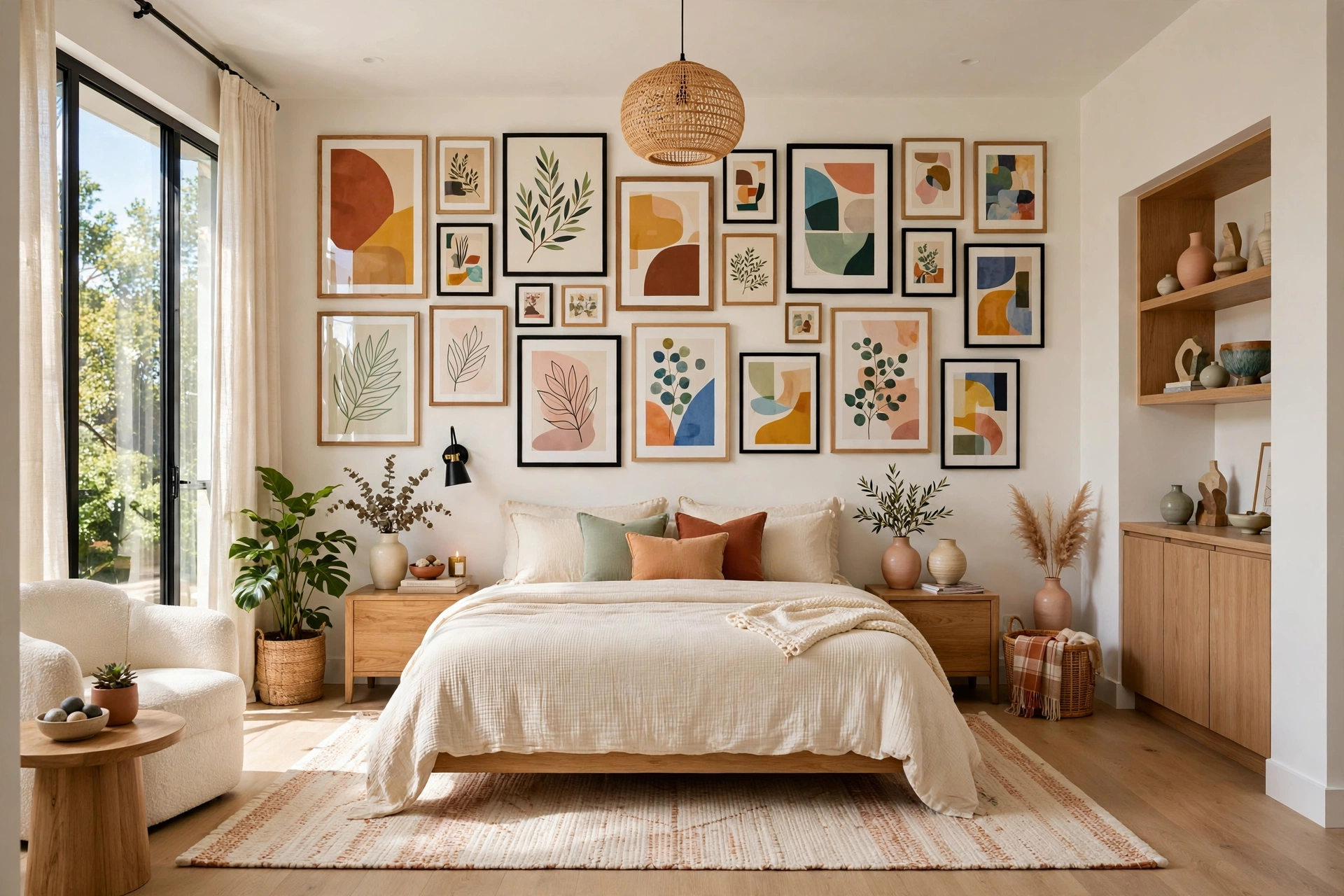
The gallery-wall bedroom puts art at the center: a big, confident arrangement of framed prints above the bed or across the main wall, with the rest of the room kept deliberately simple so the art can breathe. This aesthetic works for any style underneath — minimalist, boho, modern — because the gallery wall IS the style statement. Mix frame sizes and art types (photography, abstracts, line drawings, a textile piece) but keep the frames in one or two finishes so the arrangement reads as one composition.
Plan the arrangement on the floor first: lay the frames out, photograph the layout, then hang. Start with the largest piece slightly off-center and build outward, keeping 2–3 inches between frames. This is also the most renter-friendly statement on the list — with removable hanging strips, the whole aesthetic comes down cleanly at move-out, which is why it’s a favorite in our small space furniture ideas roundups for apartment dwellers. One strong gallery wall beats a dozen small scattered frames every time.
💡 Pro Tip: Hang the gallery’s center at 57 inches from the floor — gallery standard eye level. Above a bed, leave 6–8 inches between the mattress top and the lowest frame so the arrangement feels connected to the bed rather than floating away from it.
Common Aesthetic Bedroom Mistakes
Mistake 1: Buying everything from one store in one day
A room bought in a single shopping trip looks like a showroom floor, not a moodboard. Aesthetic rooms have the feeling of being collected over time — mix sources, eras, and price points. Buy the big pieces, live with them for two weeks, then fill in the layers. The pause is where the taste happens.
Mistake 2: Ignoring light bulb color temperature
Mixed bulbs — one cool-white overhead fighting warm bedside lamps — make even expensive rooms feel restless. The eye always notices the fight, even when you can’t name it. Put 2700K warm bulbs in every fixture in the bedroom, no exceptions. It’s the cheapest aesthetic upgrade in existence.
Mistake 3: Five competing statement pieces
One hero per room: the arched mirror OR the gallery wall OR the bold headboard, never all three shouting at once. When everything competes, nothing wins and the room feels chaotic instead of curated. Pick the piece that makes you happiest and let everything else play a quiet supporting role.
Mistake 4: Copying a moodboard pixel-for-pixel
Your room is not the Pinterest photo: different size, different light, different ceiling height. Copy the idea — the palette, the proportions, the feeling — not the exact shopping list. A moodboard is a direction, not a blueprint, and rooms copied literally almost always feel slightly wrong in ways you can’t quite fix.
Mistake 5: Forgetting texture entirely
Aesthetic rooms that fall flat are almost always texture-poor: flat paint, flat bedding, flat everything, in the right colors but with no depth. When color is doing all the work and touch is doing none, the room photographs okay and feels like nothing. Add at least three textures you can feel from the doorway — linen, knit, wood, boucle, jute — and watch the room come alive.
Frequently Asked Questions
1. What exactly is an “aesthetic” bedroom?
An aesthetic bedroom is simply a bedroom with a clear, cohesive point of view — a defined palette, repeated textures, and intentional styling that makes the room feel designed rather than assembled. It’s not one style: Japandi, cottagecore, dark academia, and boho can all be “aesthetic” when they’re executed with consistency.
2. How can I make my bedroom look aesthetic on a budget?
Start with what costs nothing: declutter ruthlessly, rearrange for better flow, and make the bed properly every day. Then spend where it shows most — bedding in your palette, warm bulbs, and one statement piece like a big mirror or a thrifted headboard. Paint is the highest-impact budget move: one accent wall in the right color transforms a room for the price of a can or two.
3. What colors make a bedroom look most aesthetic?
The most reliably aesthetic palettes are tonal and restrained: warm whites and creams, soft beiges, sage green, dusty rose, warm terracotta, or deep moody greens — each used as a tight family of three tones rather than scattered brights. Pick one palette and repeat it across walls, bedding, and textiles; cohesion matters more than which specific color you choose.
4. How many pillows are too many on an aesthetic bed?
For most beds: two sleeping pillows, two Euros or shams, and two to three accent pillows is the sweet spot — enough to look styled, few enough to manage nightly. Beyond that you’re spending five minutes every morning just deconstructing the bed, and the aesthetic collapses the first tired night you skip it.
5. Can a small bedroom still look aesthetic?
Absolutely — small bedrooms often photograph better because the cohesion is easier to maintain. Keep the palette light and low-contrast, use mirrors to double the light, choose leggy or floating furniture so the floor shows through, and edit harder than you think you need to. Every aesthetic on this list scales down; the beige cloud and white sanctuary styles are especially forgiving in small rooms.
6. How do I keep an aesthetic bedroom from sliding back into mess?
Give everything a home: chargers in a drawer, throws in a basket, books on a shelf — clutter creeps back when objects have no address. Do a two-minute reset nightly (bed made, surfaces cleared) and a ten-minute edit weekly. Aesthetic is a maintenance practice, not a one-time project; the rooms you admire are rooms someone tidies.
7. What’s the difference between “aesthetic” and minimalist decor?
Minimalism is a specific philosophy — fewer objects, empty space as design. “Aesthetic” just means visually cohesive: a maximalist boho room and a stark Japandi room can both be deeply aesthetic. Don’t confuse the two and strip your room bare if what you actually love is layered abundance — cohesion, not emptiness, is the goal.
Conclusion
An aesthetic bedroom isn’t about chasing a trend — it’s about deciding what you love and then having the discipline to repeat it. Pick the style from this list that made you pause, lock in its three-color palette, and start with the bed: it’s the largest surface in the room and the fastest way to make the whole space agree with itself. Layer in warm light, one living thing, and surfaces that stay clear, and you’re most of the way there.
Then give it time. The best aesthetic rooms are never finished in a weekend — they get better as you live in them, edit them, and let the layers accumulate with intention. Start tonight with the two-minute reset: make the bed, clear the nightstand, dim the overheads. Your moodboard is closer than you think.