
How to Create a Sleep Sanctuary Bedroom: 10 Steps for Better Rest
Introduction
Your bedroom should be the calmest room in your home — the place where the noise of the day falls away and your body gets a clear signal that rest is coming. Yet most bedrooms quietly work against sleep: a harsh overhead light, cluttered surfaces, glowing screens within arm’s reach, and air that feels stale by morning. It is no wonder so many of us toss and turn in a room that was never set up for rest. The good news is that every one of these problems has a decor-side fix — you don’t need a sleep clinic, just a room that’s finally working with your body instead of against it.
A sleep sanctuary is not about a gut renovation or a designer budget. It is about shaping your surroundings around the handful of things that genuinely drive good sleep — light, temperature, sound, air, comfort, and routine. Whether you are planning a full bedroom makeover on a budget or simply refreshing what you already own, small deliberate changes add up quickly when they all point in the same direction.
This guide walks you through ten practical steps that blend sleep science with real-world decorating. Each one is something you can start this week, and together they transform an ordinary bedroom into a true sanctuary — a room that doesn’t just look restful, but actively helps you rest.
1. Master the Light With Thoughtful Layering

Light is one of the strongest signals your brain uses to decide whether it is time to be awake or asleep. Bright, cool-toned light in the evening tells your body to stay alert, while warm, dim light tells it to start winding down. The trouble is that most bedrooms depend on a single overhead fixture — the harshest and least flexible light source in the house — which blasts the whole room at full brightness until the moment you flip it off.
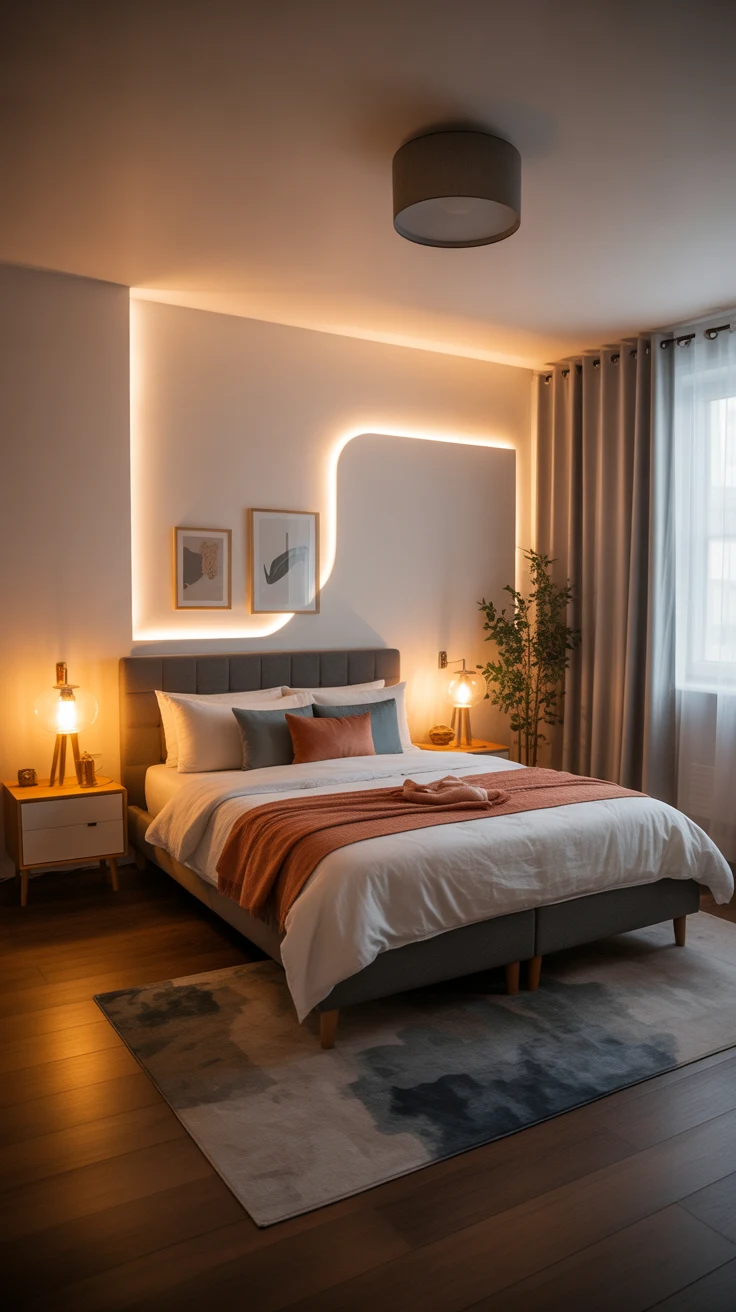
Layer your lighting instead, and give yourself options for every hour of the evening. Hang blackout curtains or lined shades so you control morning light; use warm-toned bedside lamps with low-watt bulbs for reading and winding down; and if you can, put the main fixture on a dimmer so the room can glide from bright to soft instead of snapping between the two. The goal is warm light after sunset and a bedroom that can go genuinely dark at bedtime — sleep experts generally recommend the deepest darkness you can comfortably achieve. Morning light matters too: once you’re up, open those curtains wide and let daylight flood in, because bright mornings help anchor your body’s rhythm for deeper sleep the following night.
💡 Pro Tip: Plug bedside lamps into simple timer plugs so they switch off automatically after you fall asleep — you get the warm glow for your wind-down and a fully dark room for the rest of the night.
2. Dial In Your Perfect Sleep Temperature

Your body temperature naturally dips as you drift off, so a bedroom that runs slightly cooler than your daytime comfort zone helps your body make that transition smoothly. A warm, stuffy room is one of the most common — and most fixable — reasons for restless, broken sleep, especially in the first half of the night.
Start with breathable bedding: cotton or linen sheets, a duvet you can fold back or swap for a lighter quilt, and pillows that don’t trap heat against your face. If you share the bed, try separate blankets so each person can fine-tune their own warmth without negotiations. A quiet ceiling fan or a cracked window in mild weather adds gentle air movement, and for larger primary suites, our master bedroom design ideas show how to zone bedding and airflow across a bigger footprint. Pay attention to pajamas as well — lightweight, breathable sleepwear works with your bedding instead of against it, so you don’t wake up overheated in the small hours.
3. Soften Sound for Deeper Quiet

You don’t need total silence to sleep well — you need predictable, gentle sound. Sudden noises pull the brain toward alertness: traffic outside, a neighbor’s door, a dog barking down the street. A soft, continuous background sound, on the other hand, fades into the scenery and lets your mind let go.
Textiles are your quietest allies. A thick area rug under the bed, an upholstered headboard, heavy lined curtains, and plenty of soft furnishings all absorb echo and dampen household noise. If outside sounds still break through, a small fan or a white-noise app played at low volume can mask interruptions — place it across the room rather than beside the bed so the sound washes over the space evenly instead of hissing in one ear. Solid-core doors, draft stoppers, and even a bookshelf against a shared wall can further cut sound transfer — small, renter-friendly tweaks that make a surprising difference.
Sleep Sanctuary Quick-Start Checklist
- ✅ Swap the overhead light for warm bedside lamps after dinner
- ✅ Hang blackout curtains or lined shades on every window
- ✅ Set the room slightly cooler than your daytime comfort level
- ✅ Add a thick rug and soft textiles to absorb echo and noise
- ✅ Move phone charging out of the bedroom — or at least out of arm’s reach
- ✅ Place one calming scent, like a diffuser or dried lavender, on the nightstand
4. Keep the Air Fresh and Clean

Stale, dusty air makes a bedroom feel heavy by morning, and irritated airways are nobody’s idea of restful. The simplest fix is regular airflow: open a window for a few minutes each day — even in cooler months — to exchange the room’s air and reset how the space feels.
Plants do double duty here, adding life and softness while gently freshening the atmosphere; a few easy-care varieties on a shelf, sill, or dresser go a long way. If you live somewhere dusty or you wake up congested, a compact air purifier on a nightstand or dresser keeps the sleep environment consistently clean. And don’t forget the basics: wash pillow protectors regularly and dust surfaces so the room stays as fresh as it looks. If the room ever smells musty, check under the bed and behind the headboard first — forgotten clutter traps dust and moisture, and clearing it often fixes the problem overnight.
📌 Important: Clean or replace your air purifier’s filter on the manufacturer’s schedule — a clogged filter recirculates dust instead of removing it, which defeats the purpose of having the machine in your sanctuary.
5. Build a Bed That Begs You to Climb In

Your bed is the centerpiece of the sanctuary, so it should look — and feel — like the best seat in the house. Start with a supportive mattress and a protector, then build comfort in layers: breathable sheets, a duvet or comforter with real loft, a folded quilt at the foot for adjustable warmth, and pillows arranged for both sleeping and lounging.
Layering is also where style and comfort meet. Mixing textures — crisp cotton, a nubby throw, a velvet accent pillow — makes the bed look inviting without sacrificing sleep quality, a balance our dreamy bedroom decor ideas strike in every room. Choose a palette you find genuinely calming rather than one that photographs well, because you are the one who has to fall asleep in it. Finish with a throw you can pull over yourself during an evening read, and the bed becomes a place you look forward to all day. Replace pillows and toppers when they flatten or lose support — tired bedding quietly undermines even the most beautiful room, and fresh support is felt from the very first night.
Quick Comparison: Sleep Sanctuary Upgrades by Cost and Effort
6. Declutter for a Calmer, Clearer Mind
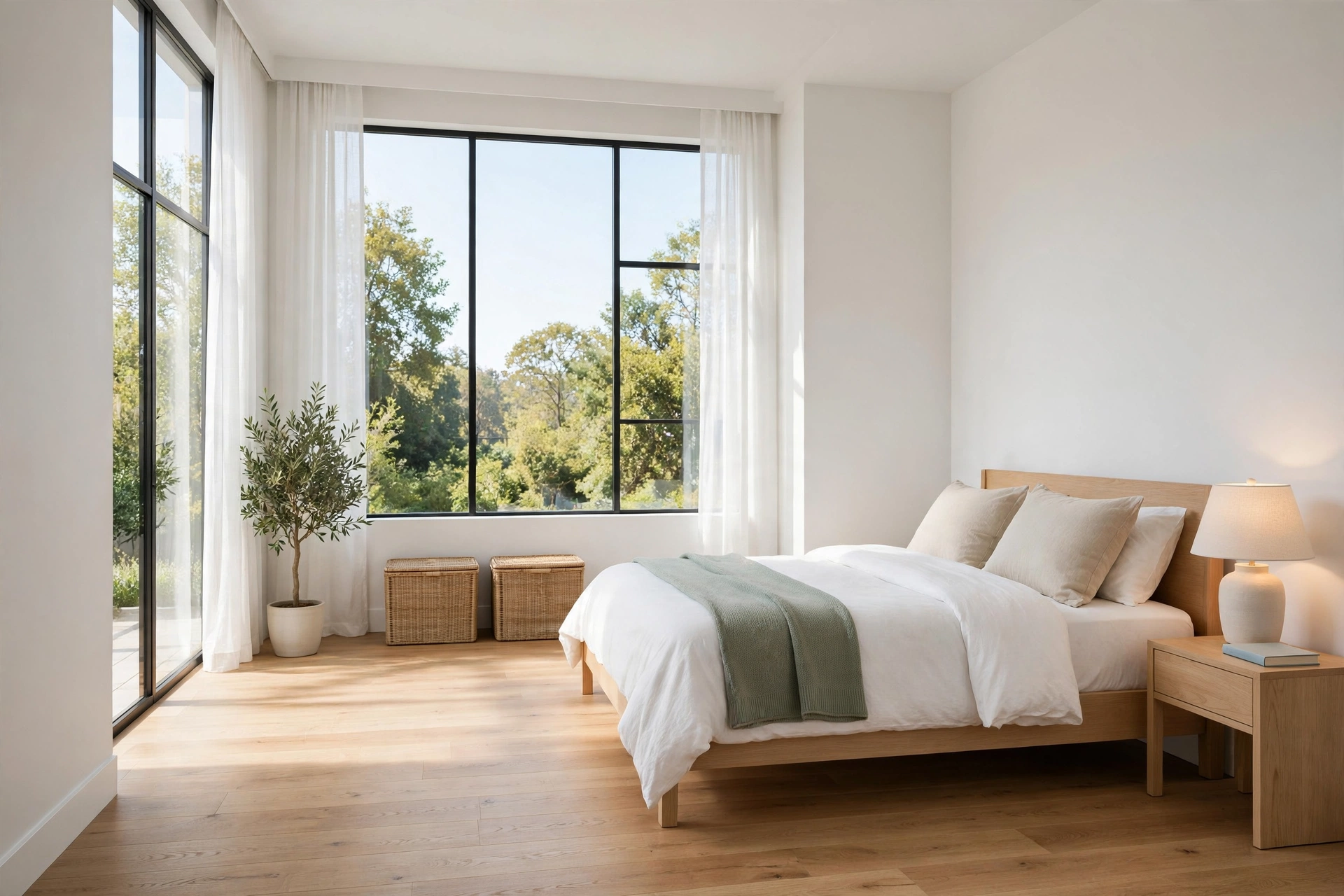
Visual clutter keeps your brain in problem-solving mode — every pile is a tiny unfinished task, and your eyes can’t help but catalog them as you try to drift off. A sanctuary bedroom doesn’t have to be stark or minimalist, but its surfaces should be calm and its storage should actually work.
Start with the nightstand: keep only what serves rest (a lamp, a book, water, one meaningful object) and relocate everything else. Then work outward — the dresser top, the chair that collects clothes, the closet floor. Even classic guides like how to make a small bedroom feel bigger start with subtraction, because clear space reads as calm space. Give every item a home, add one closed basket for the inevitable strays, and make a five-minute evening reset part of your routine so the calm lasts. Be honest about what actually belongs in a sleep space: paperwork, hobby supplies, and drying laundry all belong elsewhere, because every non-sleep item dilutes the room’s single purpose.
⚠️ Warning: Don’t turn under-bed space into a junk drawer — clutter you can’t see still registers as unfinished business. If you must store things there, use matching closed bins so the room still reads as tidy.
7. Create a Screen-Free Bedside Zone
The glow of a phone or tablet is a double problem: the light itself is stimulating, and the content — messages, feeds, headlines — keeps your mind racing. Even a TV across the room tells your brain the bed is a place for entertainment, not rest. A true sanctuary reserves the bed for sleep and closeness only.
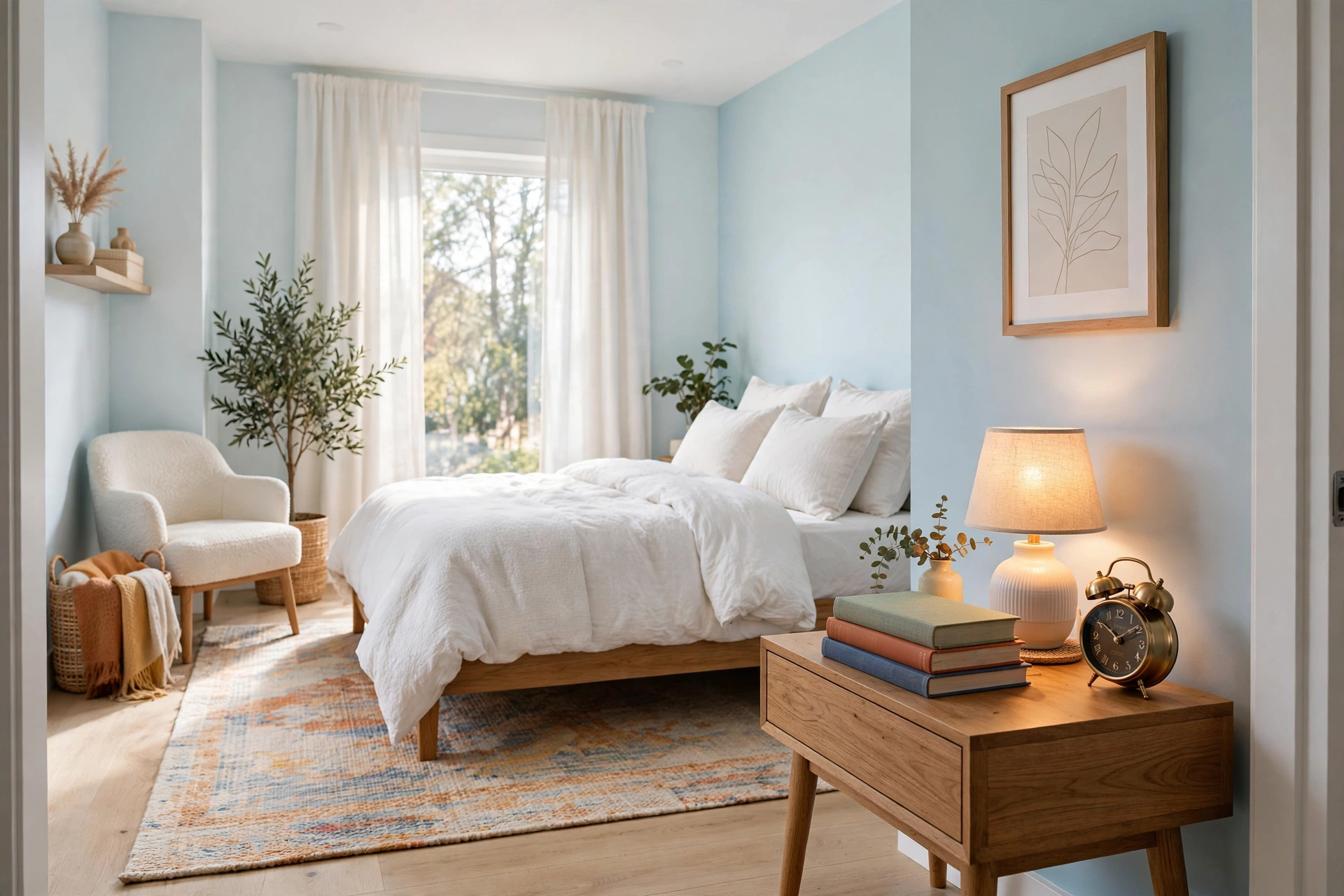
Set up a charging station outside the bedroom — a hallway outlet or the living room — so the phone simply isn’t an option at 2 a.m. Replace the bedtime scroll with an old-fashioned alarm clock and a stack of books on the nightstand. If you use your phone as an alarm, switch it to airplane mode and place it face-down across the room, out of reach. E-readers with warm backlights are a reasonable compromise for bedtime reading, but set them to their warmest tone and a low brightness — and put them down when your eyes start to feel heavy.
💡 Pro Tip: Keep a small notepad by the bed for the thoughts that used to go into your phone — tomorrow’s to-dos, middle-of-the-night ideas. Writing them down empties your head faster than any app.
8. Design a Wind-Down Ritual Into the Room

Good sleep rarely starts the moment your head hits the pillow — it starts with the hour before. A wind-down ritual is a repeatable sequence that tells your body the day is over, and your room can be designed to make that ritual effortless and inviting.
Carve out a small corner for it: a comfortable chair or a stack of floor cushions, a warm lamp, a basket with a book and a journal, maybe a soft throw. A reading corner styled with cozy bedroom inspiration in mind becomes a place you genuinely want to spend your last waking hour — no willpower required. Keep the ritual simple and repeatable: dim the lights, change into sleep clothes, read or stretch for twenty minutes, and let the room do the rest. Consistency is what turns a pleasant routine into a genuine sleep cue — the same steps, in the same order, in the same calm corner, night after night.
9. Layer in Calming Scent

Scent is processed by the same part of the brain that handles memory and emotion, which is why a familiar calming fragrance can become a powerful sleep cue. When the same gentle scent greets you every night, your brain starts associating it with winding down before you’re even in bed.
Lavender is the classic choice, but chamomile, cedarwood, and soft vanilla work just as well — pick whatever genuinely relaxes you. Use a reed diffuser or an ultrasonic diffuser on the dresser for a constant low-level background, and keep a linen spray for your pillows. Rotate scents with the seasons if you like, but keep one signature fragrance as your consistent nighttime anchor. Scent layering also extends to laundry: a lightly fragranced sheet spray or a sachet of dried lavender in the linen closet keeps your bedding smelling like rest the moment you pull it out.
⚠️ Warning: Never leave a lit candle burning while you sleep — use flameless candles or a diffuser for overnight scent, and always blow out real candles before getting into bed.
10. Dress the Room in Restful Color

Color sets the emotional temperature of a room, and for sleep, cooler and softer wins. Restful blues, gentle greens, warm grays, and creamy neutrals all recede visually, which makes the room feel calmer and — as a bonus — a little more spacious. Save the energizing reds, bright oranges, and high-contrast patterns for rooms where you want to feel alert.
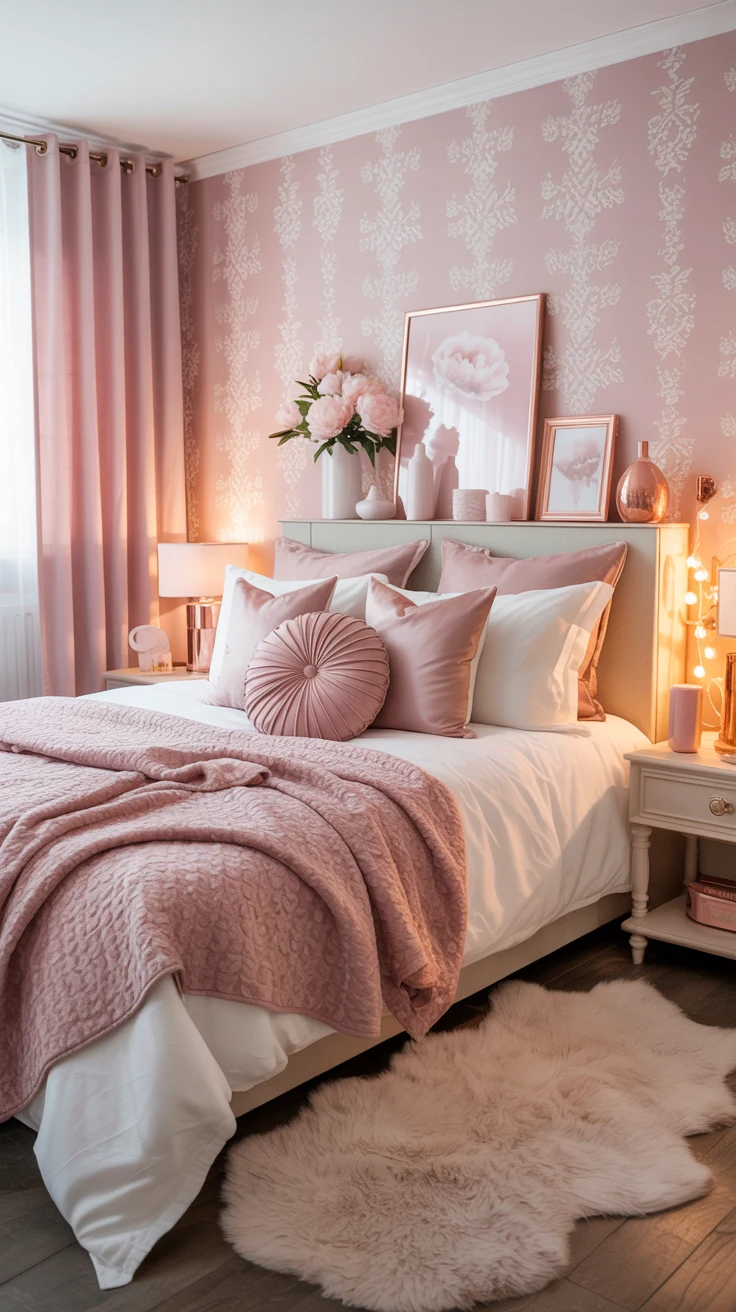
You don’t need to repaint to shift the palette: bedding, curtains, a rug, and a few accessories can carry the whole color story. If you do paint, choose a muted, desaturated tone and test it on the wall in both daylight and lamplight before committing. For more palette pairings, our guide to aesthetic bedroom styling walks through calm color combinations that photograph beautifully and sleep even better. Ceilings deserve a thought too — a soft, slightly deeper tone overhead or a warm white instead of stark white removes that last visual “brightness” and makes the whole room feel like it’s tucking you in.
Common Sleep Sanctuary Mistakes
Mistake 1: Keeping the Overhead Light On All Evening
Blasting the room with bright ceiling light until the second you get into bed keeps your brain in daytime mode. Switch to warm, low lamps at least an hour before sleep so your body gets a gradual dimming cue instead of an abrupt lights-out.
Mistake 2: Treating the Bed as a Workspace
Answering emails or scrolling through feeds in bed trains your brain to associate the mattress with alertness. Keep work, screens, and stressful conversations out of the bed entirely — your sleep will thank you within a week.
Mistake 3: Skipping the Blackout Layer
Sheer curtains look lovely in daylight but do almost nothing at night, and streetlights or early sunrises leak straight through. A blackout lining behind curtains you already love works just as well as new drapes.
Mistake 4: Choosing Style Over Comfort in Bedding
A stiff decorative duvet or scratchy accent pillows might photograph well, but if your bedding isn’t genuinely comfortable, it works against rest every single night. Prioritize how fabrics feel against your skin — comfort is the whole point of the room.
Mistake 5: Letting Clutter Creep Back After the First Declutter
One big tidy-up fades fast if there’s no system behind it. Without a nightly five-minute reset and a home for every item, surfaces refill within a week and the calm unravels. Build the reset into your evening ritual so the sanctuary maintains itself.
Frequently Asked Questions
1. What exactly is a sleep sanctuary bedroom?
It’s a bedroom deliberately designed to support rest — controlling light, temperature, sound, and air while removing clutter and screens. Think of it as turning your room into a tool for better sleep rather than just a place with a bed in it. The ten steps in this guide are the building blocks; use the checklist above to track your progress.
2. How dark should my bedroom be for sleep?
As dark as you can comfortably make it. Blackout curtains or lined shades, no glowing electronics, and hallway light blocked under the door all help. If total darkness feels unsettling, a very dim warm nightlight in the hallway is a fine compromise.
3. Do I really need blackout curtains?
If any light reaches your windows — streetlights, a neighbor’s porch light, early sunrise — then yes, they’re one of the highest-impact upgrades you can make. A blackout lining behind curtains you already love works just as well as new drapes.
4. What’s the best bedding for hot sleepers?
Breathable natural fibers like cotton or linen, a lighter-weight duvet or quilt you can fold back, and pillows that don’t trap heat. Separate blankets for each sleeper also help, since couples rarely agree on ideal warmth.
5. Can bedroom plants actually help me sleep?
Plants make the room feel calmer and more alive, which supports the relaxed mindset sleep needs. A few easy-care varieties are plenty — just don’t turn the bedroom into a greenhouse that adds watering chores to your evenings.
6. How can I make my bedroom quieter without renovations?
Layer soft textiles: a thick rug, an upholstered headboard, heavy curtains, and plush bedding all absorb echo and dampen noise. A fan or white-noise app at low volume masks the sounds that remain.
7. How long does it take to build a sleep sanctuary?
You can make meaningful progress in a single weekend — lighting, bedding, decluttering, and a screen-free bedside are all one-day projects. Treat the rest as a gradual layering process, and your room will keep getting calmer over a few weeks.
Conclusion
Creating a sleep sanctuary bedroom is less about buying things and more about making deliberate choices — dimmer light, cooler air, softer sound, calmer surfaces — that all tell your body the same thing: it’s safe to let go of the day. Each of the ten steps in this guide is small on its own, but together they reshape the room into an environment where rest comes naturally. And because the changes are layered rather than all-or-nothing, you can adjust each one — dimmer light, softer sound, a cooler corner — until the room fits the way you personally fall asleep.
Start tonight with the easiest wins: swap to warm lamps, clear the nightstand, and move the phone charger out of the bedroom. Then work through the checklist one step at a time. Within a couple of weeks, you’ll have a bedroom that doesn’t just look like a sanctuary — it feels like one, every single night.