
9 Bedroom Decorating Mistakes That Make Your Room Look Unfinished
Introduction
There is a special kind of frustration that comes from a bedroom that is almost right. You bought the bedding, you hung the curtains, you arranged the nightstands — and yet the room still reads as “not quite done,” like a sentence missing its last word. Guests can’t name what’s wrong, and neither can you, so you keep buying small things hoping the next one will finish the job. It rarely does, because the problem is almost never a missing accessory. It is one of a handful of structural mistakes that quietly undermine everything else.
The good news: these mistakes are remarkably consistent. Walk into any bedroom that feels unfinished and you will find the same culprits — a rug that is too small, walls that were never addressed, light that comes from exactly one harsh source. Designers see these patterns instantly, and they fix them in a predictable order, because each correction unlocks the next one. Fix the rug and the furniture suddenly looks intentional; fix the lighting and the colors start working.
This guide walks through the nine bedroom decorating mistakes that keep rooms looking unfinished, with the fix for each one. They are ordered from highest visual impact to the finishing touches, so if you only have a weekend, start at the top. If you’re starting from absolute zero, our bedroom decorating 101 guide lays out the full sequence — but even tackling two or three items below will move your room from “almost” to “done.”
1. Choosing a Rug That’s Too Small Under the Bed

The single most common reason a bedroom feels unfinished is a rug that is too small. A postage-stamp rug floating under the bed chops the floor into fragments — bare floor here, rug there, bare floor again — and each fragment makes the room read smaller and less intentional. The bed looks like it is parked on a mat rather than anchored in a room, and nothing else you add can fix that visual breakup because the floor is the largest surface your eye reads.
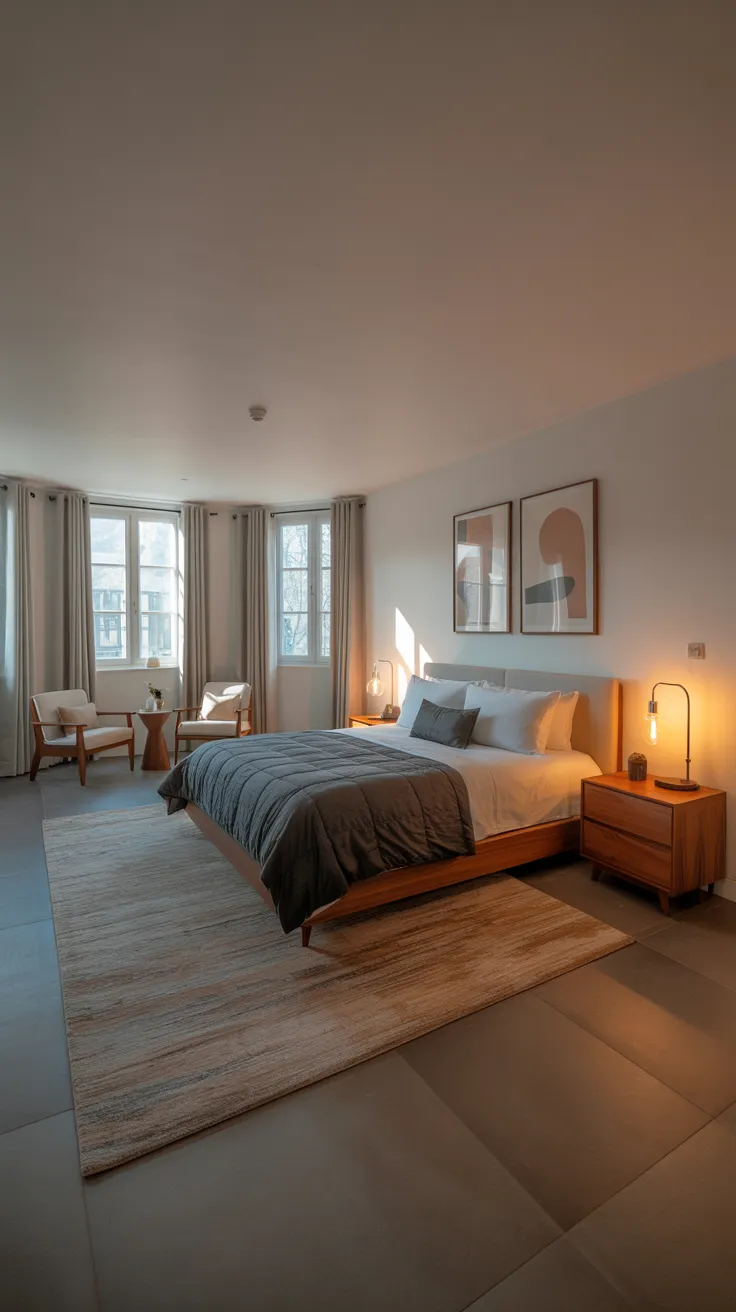
The rule runs counter to instinct: go bigger than feels safe. The rug should extend at least 18 to 24 inches beyond the sides of the bed and a generous stretch at the foot, so your feet land on softness every morning and the bed reads as one composed island. In a queen bedroom that usually means an 8×10; in a king room, 9×12. The bed’s legs don’t all need to sit on the rug, but the rug needs enough presence to unite the sleeping zone into one plane. For the full method, our guide to choosing the right rug size walks through the front-legs rule and the standard size ladder so you buy once and buy right.
💡 Pro Tip: When you are torn between two rug sizes, always size up. A rug that is six inches too big reads as intentional; a rug that is six inches too small reads as a mistake you can see from the doorway.
2. Relying on a Single Overhead Light

If your bedroom has exactly one light source — the ceiling fixture — that single fact is doing more damage to the room’s atmosphere than almost any furniture choice. One overhead light blasts straight down with no nuance, flattening everything, casting harsh shadows, and making evenings feel cold and institutional. A room lit this way looks unfinished because it is unfinished: the lighting plan was never completed, and your eye can feel the missing layers even if you can’t name them.
A solid bedroom lighting plan builds light in three layers: ambient (a softer ceiling or floor light), task (reading lamps by the bed), and accent (a warm glow on the dresser, a shelf, or in a corner). You do not need an electrician or a big budget — a pair of bedside table lamps with warm-white bulbs plus one floor lamp or sconce transforms the room after dark. Keep every bulb at the same warm temperature, around 2700K, because mixing cool daylight bulbs with warm ones makes the room feel subtly wrong in a way nobody can diagnose. Judge the result after dark, with the overhead off and the lamps on: that is the room’s real evening face, and it should glow in layers.
3. Leaving the Walls Bare

Bare walls are the fastest way to make a bedroom feel unfinished, full stop. The bedding can be perfect and the lamps can be glowing, yet the room still reads as “almost there” — because nine times out of ten, the missing ingredient is what is happening on the walls. Walls are the backdrop for everything else; when they are blank, every piece of furniture looks slightly lost, floating without a visual anchor to relate to.
You do not need a gallery wall or expensive art. One generous piece — over the bed, at the right height and scale — does more than five small frames scattered timidly around the room. Hang it so the bottom sits six to eight inches above the headboard and spans roughly two-thirds of the bed’s width; undersized art above a bed is its own sub-mistake and makes the wall feel bigger and emptier than it is. And remember that hanging bedroom wall decor correctly matters more than the art itself — perfectly hung inexpensive art beats crooked expensive art every time, and a level, well-placed frame is what signals “designed” to your eye.
📌 Important: The wall above the bed is the bedroom’s billboard. If you decorate exactly one wall, make it that one — it is where your eyes land from the doorway and where the room’s whole composition is judged.
Bedroom Fix Quick-Start Checklist
- ✅ Size the rug up: extend it 18–24 inches beyond the sides of the bed so the sleeping zone reads as one plane
- ✅ Build three light layers: one ambient, one task (bedside), one accent — all in matching warm-white 2700K
- ✅ Put one generous art piece above the bed: bottom 6–8 inches above the headboard, spanning two-thirds of the bed’s width
- ✅ Hang curtains high and wide with panels that kiss the floor — never sill-length
- ✅ Commit to one color story (60-30-10) before buying anything else
- ✅ Give the bed a headboard and full textile layers: pillows, a throw, something textured
4. Hanging Curtains Too Short and Too Low

Short curtains are a bedroom giveaway. Panels that stop at the sill or hover awkwardly above the floor chop the wall in half, shrink the window, and lower the ceiling — visually, at least. It is the difference between a dorm room and a grown-up bedroom, and it costs less to fix than almost any other item on this list, which makes it one of the most frustrating mistakes to leave uncorrected.
The fix is a formula: mount the rod four to six inches above the window frame and three to four inches wider on each side, then hang panels long enough to just kiss the floor. The window suddenly looks larger, the ceiling reads taller, and the whole wall gains presence it did not have before. Choose linen or linen-look panels in a color close to your walls — white or off-white is nearly impossible to get wrong — and let the fabric do the quiet work of softening the room. If you are renting and cannot drill, even a tension rod with full-length panels beats drilled short ones; length matters more than hardware.
5. Using Too Many Competing Colors With No Plan

Unfinished-feeling bedrooms almost always share one trait: accidental colors. The gray sheet set, the navy throw, the beige rental walls, the black storage boxes — none of them chosen together, all of them fighting. Each item might be fine on its own, but a room without a color story reads as a collection of purchases rather than a designed space, and “collection of purchases” is the visual definition of unfinished.
You do not need a design education; you need one decision, made before you spend another dollar: a color story built on the 60-30-10 rule. Sixty percent of the room is your dominant color (usually walls and large furniture), thirty percent your secondary (bedding, curtains), ten percent your accent (throws, art, small decor). Keep the dominant color light and forgiving — warm white, soft greige, pale sage — because neutrals hide mistakes and let you change the mood later by swapping only the accent. Walk through your room and assign every visible color to one of the three layers; anything that fits none of them is a candidate for relocation. Cohesion is what separates “decorated” from “done.”
Quick Comparison: These 9 Bedroom Mistakes by Cost and Effort to Fix
6. Getting the Furniture Scale Wrong

A bedroom with the wrong furniture scale looks unfinished because the pieces never relate to each other — they look like they arrived at different times from different rooms, which is usually exactly what happened. The classic version: a massive dresser swallowing a small wall while tiny nightstands drown beside a tall bed, or a king bed crammed into a room where it touches three walls. Each piece might be perfectly nice; together they argue.
Scale is about relationships, not absolute size. Nightstands should land within a few inches of your mattress height — too low and they look like stools, too high and they tower. The dresser should be proportioned to its wall: roughly two-thirds of the wall width is the sweet spot, with breathing room on each side. And the bed itself needs clearance — if you cannot walk around three sides of it, the room is telling you the bed is too big for the space, and all the styling in the world will not fix the cramped feeling. These are the same spatial principles behind the tricks that make a small bedroom feel bigger: show the floor, respect the proportions, and let every piece earn its footprint.
⚠️ Warning: Never buy bedroom furniture from measurements alone — tape the footprint on your floor first. A dresser that “fits” on paper can still dominate a room visually, and painter’s tape is cheaper than a return.
7. Letting the Nightstands Become Clutter Zones

The nightstand is the most personal square foot in your bedroom, and it is where “unfinished” most visibly collects. Chargers snaking everywhere, a graveyard of water glasses, books you finished months ago, receipts, hand cream, a lamp buried behind it all — a cluttered nightstand tells the eye that the room is in progress, not complete. Because nightstands sit at eye level when you are in bed, they get more visual attention than almost any other surface in the room.
The formula is simple and strict: a lamp, something to drink from, something to read, and one small beautiful thing. That last item — a tiny plant, a candle, a framed photo — is what makes it feel styled rather than merely functional. Everything else lives in the drawer or elsewhere. Hide the chargers: a small basket or a cable box on the shelf below keeps them accessible without advertising them, and a single charging station beats three cables draped over the edge. Symmetry helps too — matching lamps on matching nightstands create instant order, which is exactly the signal a room needs when it is trying to look finished.
8. Skipping the Textiles: A Bare, Flat Bed

The bed is roughly forty percent of everything visible in a bedroom, so a bare, flat bed is forty percent of the room looking undone. One thin duvet pulled up, two limp sleeping pillows, nothing else — it reads as a bed that is made but not dressed, and the whole room inherits that half-dressed feeling. Beginners under-decorate the bed because each layer feels optional; the finished look comes from the layers stacking.
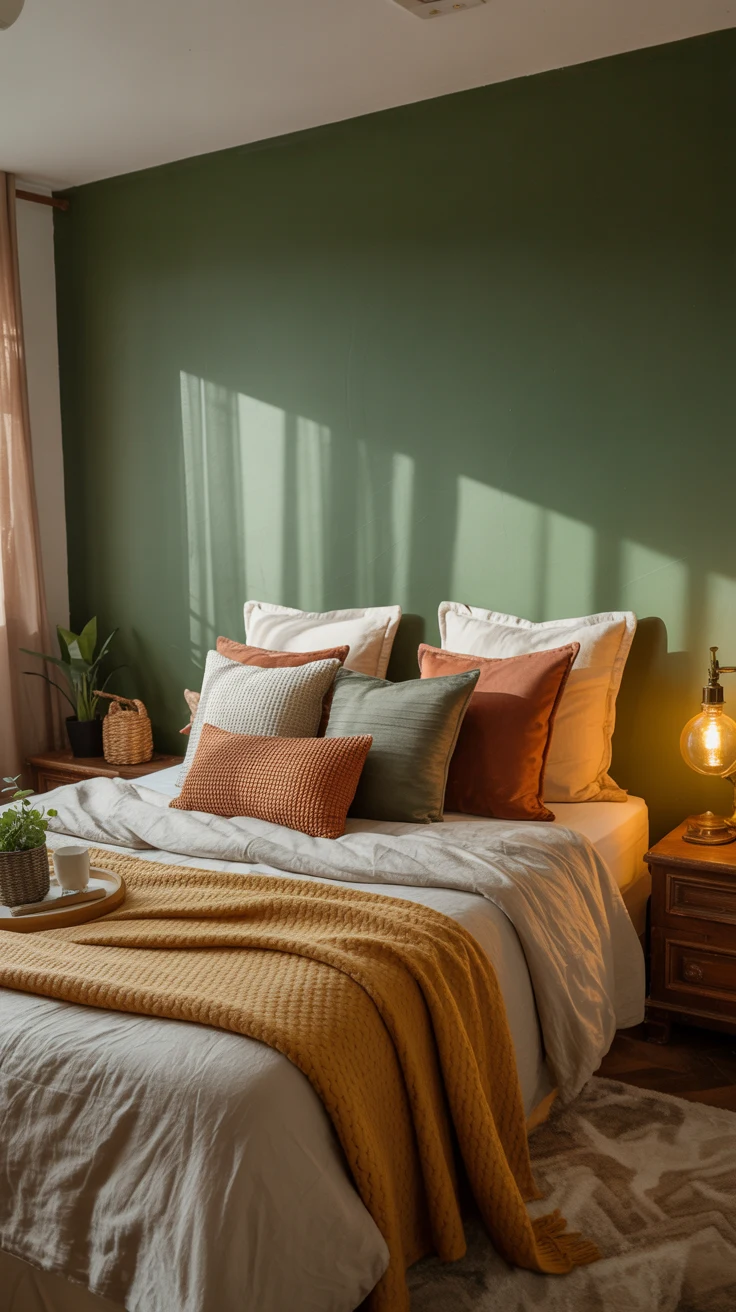
The secret is not more pillows — it is layers. Start with the fitted and flat sheets, add a duvet or quilt with some loft, fold a throw across the lower third, and stack pillows in descending sizes: sleeping pillows upright, two euro shams or mid-size pillows, then one or two smaller decorative cushions. Each layer adds depth, and depth reads as “designed.” Mix textures — linen sheets, a knitted throw, a velvet cushion — but keep every piece inside your color story from section five. Learning to style your bed like a hotel bed gives you the exact folding and layering order professionals use, and a made bed with real layers is the highest-return five minutes in all of bedroom decorating.
💡 Pro Tip: Make the bed every morning, properly — smooth the duvet, stack the pillows, fold the throw. A styled bed resets the entire room to “finished” daily, and it is the one habit that makes every other fix on this list look better.
9. Forgetting the Headboard

A bed without a headboard looks like a mattress that is waiting for its frame to arrive. It is the single piece that anchors the bed to the wall and gives the room’s focal wall its structure — without it, pillows slump against bare wall, the bed’s top edge looks blunt, and the whole composition lacks a finish line. This is why “unfinished” is the exact word people reach for: the room is literally missing its most visible piece of bedroom furniture.
You do not need an expensive upholstered showpiece. A simple wooden headboard, a DIY upholstered panel, even a large textile or a pair of art prints hung at headboard height delivers the “finished bed” signal — flat wall decor at the right height takes zero floor space while doing most of the visual work. If you do invest, match the headboard’s scale to the bed: it should be at least as wide as the mattress, tall enough to show above stacked pillows, and in a material that relates to the rest of the room. One headboard, properly scaled, does more for the finished feeling than any five accessories.
More Sneaky Bedroom Mistakes to Watch For
Mistake 1: Mixing Bulb Colors Across Lamps
A warm bedside lamp on one side and a cool daylight bulb on the other makes the room feel subtly wrong in a way nobody can name. Match every visible bulb to the same warm-white temperature — 2700K to 3000K — and the whole room will read as one cohesive glow instead of two rooms arguing.
Mistake 2: Ignoring the Ceiling — the Forgotten Fifth Wall
A plain white ceiling with a sad flush-mount fixture leaves the room’s largest surface doing nothing. You don’t need paint: a textured or statement ceiling fixture, or even a large pendant hung at the right height, turns dead overhead space into a design moment and completes the room vertically.
Mistake 3: Leaving Cords and Chargers on Display
Nothing says “in progress” like a tangle of cords behind the nightstand. Route charger cables through a small basket, use adhesive cord clips along the bed frame, and put the power strip on the far side of the nightstand where the eye never lands. Ten minutes, and the room’s most honest clutter disappears.
Mistake 4: Decorating for the Doorway View Last
You judge your room from inside it, but everyone else — and your own first impression every day — sees it from the doorway. Stand in the doorway after every change and look: the bed should be centered and dressed, the art level, the floor clear. The doorway view is the room’s report card; decorate to pass it.
Frequently Asked Questions
1. What is the biggest bedroom decorating mistake?
Relying on a single overhead light. It flattens everything, makes evenings feel cold, and undermines even expensive furniture. Adding two warm lamps at different heights is the highest-impact, lowest-cost fix in bedroom decorating — the room’s whole mood changes the first night.
2. Why does my bedroom look unfinished even though I decorated it?
Usually it is one of three things: the rug is too small, the walls are bare, or the bed is missing layers (headboard, throw pillows, a folded throw). These are structural — no accessory fixes them. Walk the checklist above in order and the room will start reading as complete.
3. How can I make my bedroom look expensive on a small budget?
Work the highest-impact free and cheap moves first: declutter every surface, make the bed with real layers daily, match all bulb temperatures to warm white, hang curtains high and to the floor, and tape-test a bigger rug layout. Cohesion — one color story, matching lamps — reads as expensive; clutter and mismatched temperatures read as cheap regardless of what you spent.
4. Should my nightstands match each other?
Matching is the safe, fast route to a finished look — matching lamps and matching nightstands create instant symmetry and order. Mismatched can work, but only when the pieces share something deliberate: same height, same wood tone, or same style family. Random pairs read as “still collecting,” which is the unfinished signal.
5. How big should art be above the bed?
Aim for roughly two-thirds of the bed’s width — about 40 inches over a queen, 50 over a king — with the bottom of the frame six to eight inches above the headboard. One generous piece at the right scale beats a cluster of small frames every time, and undersized art above a bed is one of the most common bedroom hanging errors.
6. What size rug should go under a queen bed?
An 8×10 is the standard answer: it extends 18 to 24 inches beyond the sides of the bed and gives a generous run at the foot, so the sleeping zone reads as one unified plane. A 6×9 works in tight rooms if the front legs of the bed and both nightstands’ front feet can sit on it — anything smaller chops the floor into fragments.
7. How many throw pillows are too many on a bed?
For a queen, stop at five decorative pieces beyond your sleeping pillows: two euros or shams, two mid-size cushions, one lumbar or bolster. Beyond that, making the bed becomes a chore and the stack starts reading as clutter rather than styling. Odd numbers, largest in back, smallest in front — and every cushion should earn its place in your color story.
Conclusion
An unfinished bedroom is almost never missing a purchase — it is missing a decision. The rug was never sized, the walls were never addressed, the lighting was never layered, the colors were never chosen. Each of the nine mistakes above is really the same mistake wearing different clothes: stopping one step short of complete. The fixes are not expensive and most take an afternoon, but they share one requirement — finishing the job instead of decorating around it.
Start with the highest-impact three: size the rug up, layer the light, and put something real on the walls. Then give the bed its headboard and its textiles, hang the curtains properly, and commit to one color story. Stand in the doorway when you are done. The room that used to whisper “almost” will finally say “done” — and you will wonder why it took so long to finish what was always a weekend’s work.