
How to Make a Small Bedroom Feel Twice as Big in One Weekend
Introduction
A small bedroom is where decorating advice goes to fail. The bed eats half the floor, the dresser blocks the door’s swing, and every “genius” idea online assumes square footage you simply don’t have. You end up shuffling sideways between furniture, stacking things where they land, and calling it cozy when it actually just feels cramped. If your bedroom is the room you avoid during the day, the problem isn’t the size — it’s that nothing in the room is working for the size.
Here’s the promise: one weekend — Saturday morning through Sunday evening — and a room that genuinely feels twice as big. No renovation, no new bed frame, no knocking down walls. Learning how to make small bedroom feel bigger is mostly about visual tricks and breathing room, not demolition: raising the eye line, opening up the floor, simplifying the palette, and giving every stray object a hidden home. Nearly every idea below is renter-friendly and costs little or nothing, because the fastest way to enlarge a bedroom is to remove what’s shrinking it.
Whether you arrived through a roundup of tiny apartment decorating ideas or you just can’t look at your bedroom anymore, work through the sections in order — they build on each other, free declutter and rearranging jobs first. By Sunday night you’ll have a room that photographs bigger, feels calmer, and finally invites you to spend time in it.
1. Lift the Bed to Unlock Hidden Storage
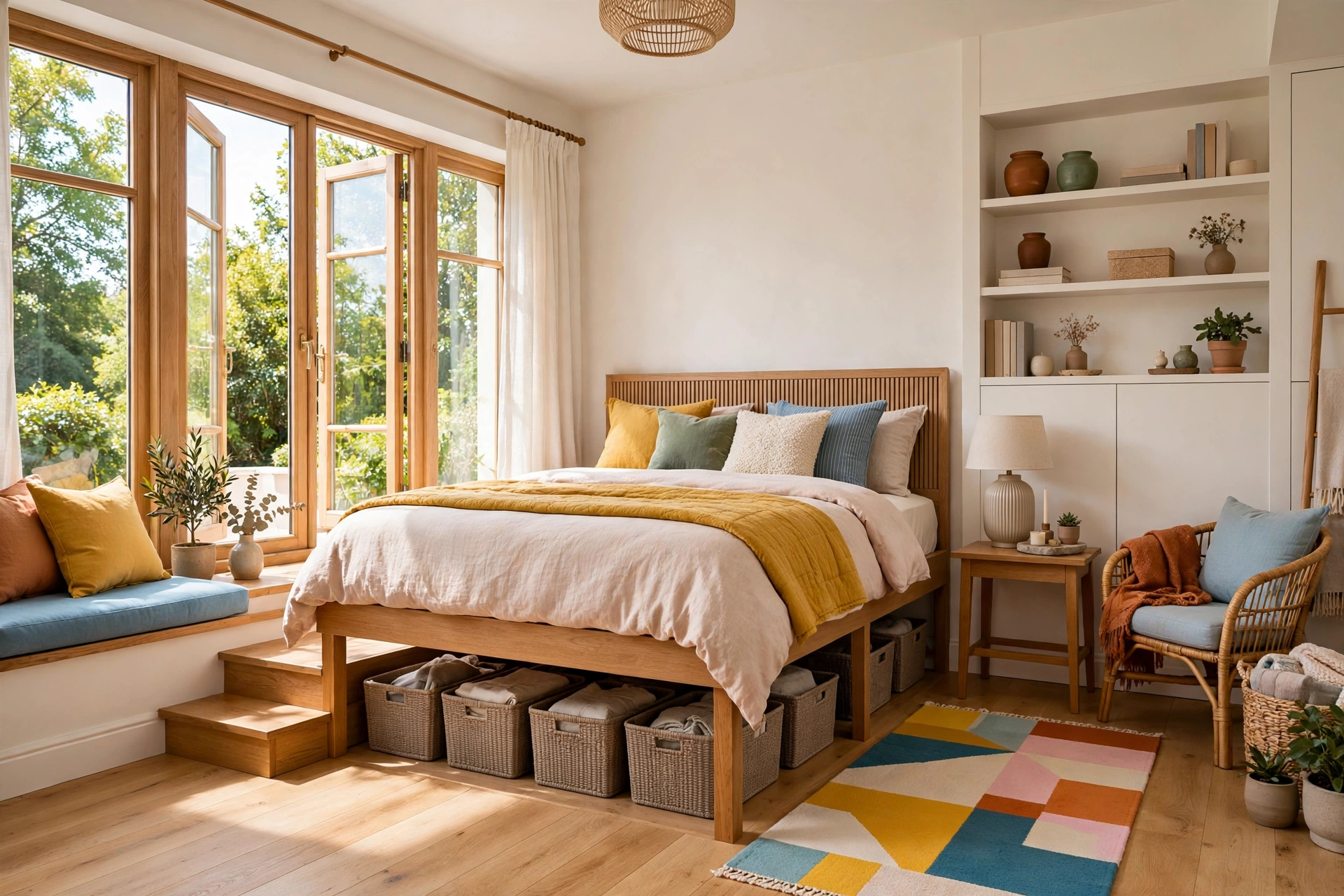
The biggest wasted space in a small bedroom is the six to eight inches under your bed. Standard bed risers lift the frame and turn that dead zone into roughly two dozen cubic feet of hidden storage — enough to swallow off-season clothes, spare bedding, and the boxes currently living on your closet floor. Choose sturdy risers, lift each corner onto them, and slide in low, lidded bins that pull out like drawers. Instantly, the visual clutter of the room drops — and clutter is the number-one thing that makes a bedroom feel small.
The lift also raises your sightline slightly, which reads as “higher, more open room” to your eyes. If your bed frame already sits high, skip the risers and go straight to the bins — flat under-bed boxes or rolling drawers work just as well. The rule is simple: nothing that lives under the bed may be visible from the doorway. Lids on, labels facing in, and the floor perimeter stays visually clean, so the room reads larger from every angle.
2. Hang Curtains High, Wide, and to the Floor

Short curtains that just cover the glass are a small-bedroom giveaway: they shrink the window, which shrinks the wall, which shrinks the room. The fix costs one weekend morning and a cheap rod. Mount the rod six to eight inches above the window frame and extend it six to twelve inches past the frame on each side, so the panels cover wall, not glass, when open. Then hang panels long enough to just kiss the floor. The window suddenly looks twice its real size, the ceiling looks higher, and the whole wall gains presence.
Keep the fabric light and simple — a plain linen-look or sheer weave in a pale tone — because heavy dark drapes do the opposite job in a small room. If you’re renting and can’t drill, a tension rod set inside the frame is better than nothing, but even a basic drilled rod is a tiny job with removable patching at move-out. One window, one rod, two long panels: the most cinematic change you can make in a bedroom before noon on Saturday.
💡 Pro Tip: Measure the rod length before you shop — a common mistake is buying a rod that spans only the window frame, which forces the panels back over the glass. Panels should stack on the wall on both sides so daylight floods in and the window reads wide.
3. Put a Tall Mirror Opposite the Window
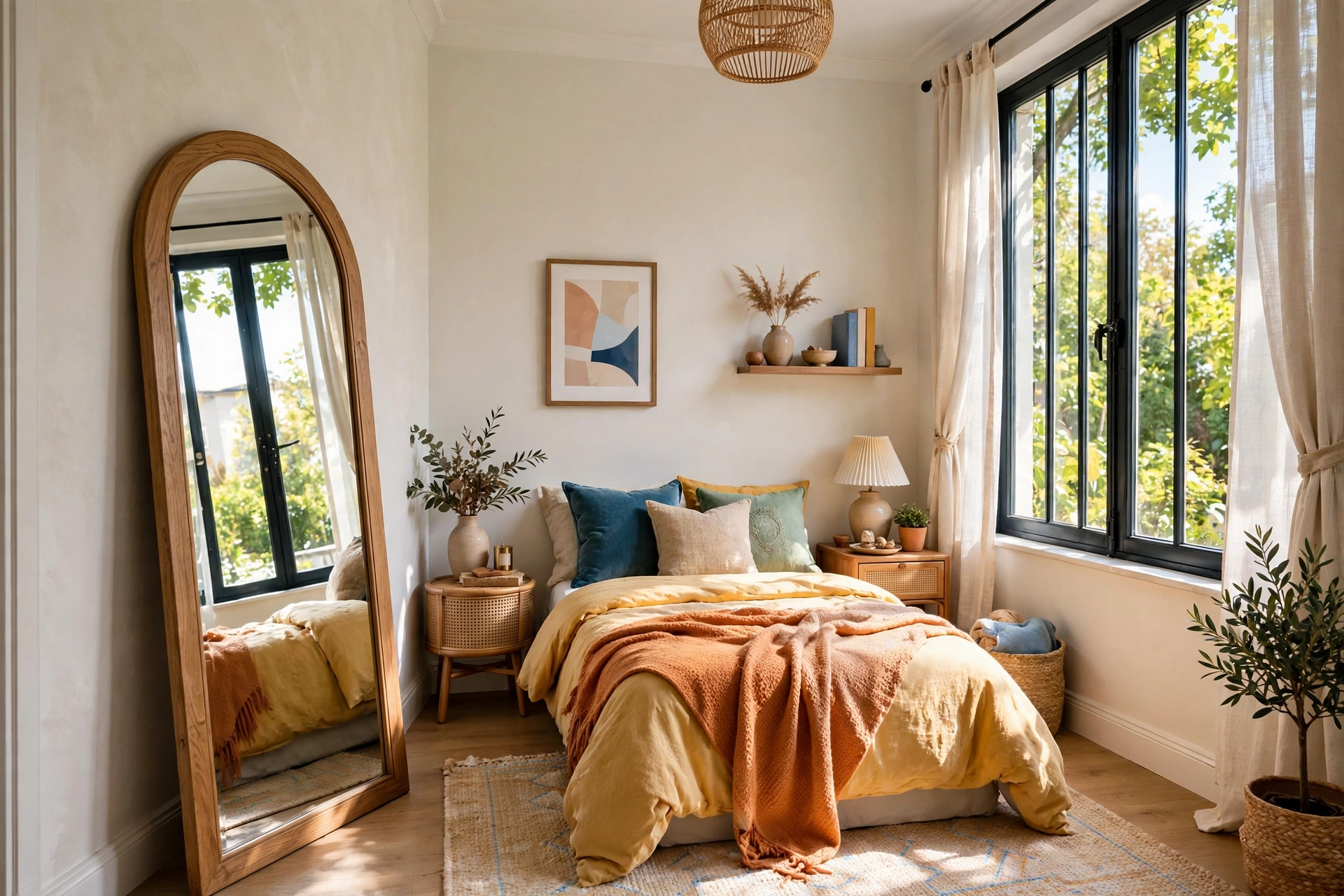
A tall mirror placed across from the window is the oldest trick in interior design because it works: it bounces daylight deeper into the room and reflects the brightest view back at you, so your brain reads the space as larger and lighter. A full-length leaning mirror is ideal — no mounting, no holes, and the slight backward lean makes it feel integrated rather than propped. Position it so it catches the window, not the cluttered dresser; a mirror only doubles what it faces.
Size matters more than frame style here. A mirror that’s too small reads as decoration; a mirror that runs most of the wall’s height reads as another window. Lean it on the wall opposite or diagonal to the glass, and check what it reflects from the doorway — the first thing guests see. Combined with the tall curtains from the last step, you’ve got two light-multiplying moves working before you’ve spent anything serious.
📌 Important: Lean full-length mirrors at a slight angle with the base a few inches from the wall, and anchor the top to the wall with a removable adhesive strip for safety — especially in homes with kids, pets, or uneven floors. A tall leaning mirror that slides is a hazard, not decor.
4. Commit to One Light, Low-Contrast Palette

Nothing makes a small room feel smaller than visual noise: dark walls fighting light bedding, black furniture against pale trim, patterns competing across every surface. The antidote is a low-contrast palette — walls, bedding, curtains, and major furniture within the same light color family, differing in tone and texture rather than color. When the eye flows across surfaces without stopping at hard contrasts, it travels further, and a room the eye crosses easily feels bigger. If there’s one principle that explains how to make small bedroom feel bigger with paint and fabric alone, it’s this: contrast stops the eye, and a stopped eye measures the room as small.
You don’t need to repaint to do this (though one wall of fresh paint is a weekend-friendly option for owners). In a rental, build the palette through textiles: white or ivory bedding, pale curtains, a light rug — and move dark, bulky pieces out or cover them. Keep two or three small darker accents — a frame, a lamp base, a basket — so the room has depth instead of feeling washed out. The contrast should live in the accessories, never in the big surfaces.
5. Clear the Floor with Floating Nightstands and Wall Sconces
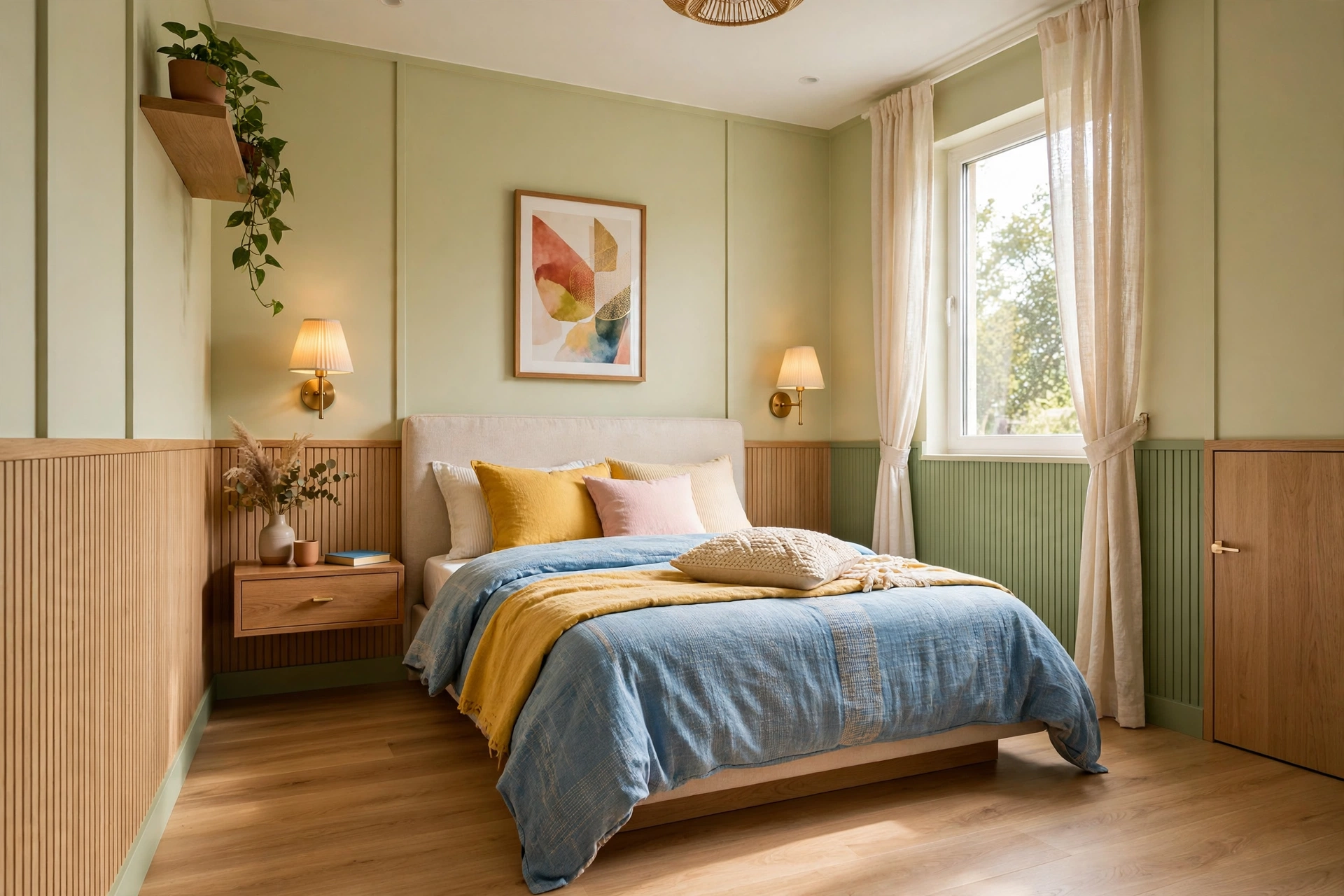
Every square inch of visible floor makes a bedroom read bigger, so the nightstand is prime real estate to reclaim. Wall-mounted floating nightstands — or even a small wall shelf on each side of the bed — hold the lamp, book, and water glass while leaving the floor completely open underneath. Suddenly both sides of the bed are air instead of furniture.
If mounting isn’t an option, shrink rather than float: a narrow stool, a slim wall-mounted shelf, or a tall stack of closed storage boxes can hold the essentials in a quarter of the footprint. Either way, the less furniture your feet touch at night, the larger the room feels at bedtime. This is one of those small space furniture ideas where the furniture you remove matters more than the furniture you add.
⚠️ Warning: Use wall anchors rated for the actual weight if you’re mounting nightstands or shelves — adhesive strips alone won’t hold a shelf with a lamp on it. Overloaded floating surfaces sag, tilt, and eventually fail onto the bed. When in doubt, keep the mounted load to a lamp plus a paperback.
6. Swap Heavy Bedding for Light, Layered Bedding

The bed is roughly half of everything visible in a small bedroom, so heavy, dark, bulky bedding visually fills the whole room. Swap it for lighter, layered bedding: a pale duvet cover, a folded throw across the foot, and pillows in one calm color family — washed cotton, waffle weave, a linen-look cover — with texture doing the decorating work.
Resist the pattern urge here — one subtle pattern across the whole bed is fine, but competing prints chop the bed into pieces. Keep sleeping pillows stacked flat and upright rather than sprawled, and pull the duvet smooth and symmetrical; a lumpy, half-undone bed looks bigger and messier than a crisp one. This is the fastest Saturday-afternoon transformation on the list: change the bedding, step back, and the bed visibly shrinks while the room visibly grows.
7. Go Vertical: Tall Dressers, Wall Shelves, and Over-Door Storage
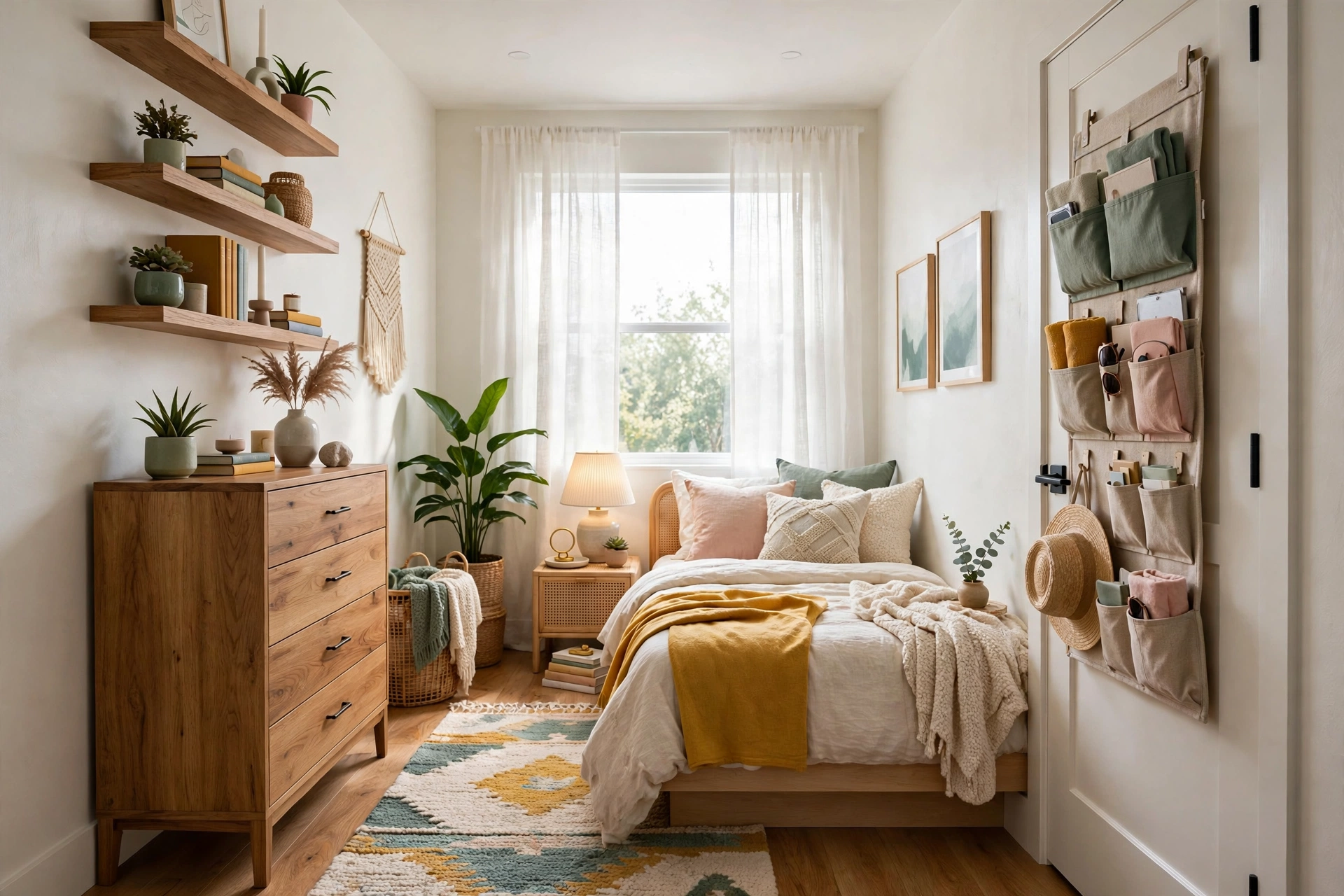
Small bedrooms run out of floor long before they run out of wall, so the weekend’s storage work goes upward. Swap a wide, low dresser for a tall, narrow one if you can — same storage volume, half the floor footprint, and the height draws the eye up toward the ceiling. Fill the wall above it with two or three floating shelves for books and plants; hang an over-the-door organizer inside the closet or bedroom door for shoes, accessories, and small essentials. Every category that leaves the floor makes the floor feel bigger.
Style the shelves with restraint: a third of the space stays empty, books stand upright, and nothing dangles below the shelf edge. Overloaded vertical storage creates the same visual clutter as floor clutter — the goal is air, not a tower of stuff. Renters styling a studio apartment decor inspiration board love this vertical habit for the same reason: when the walls do the work, the floor gets to breathe, and breathing floor is what “big” actually looks like.
💡 Pro Tip: Install shelves in a vertical column above the dresser rather than spread wide across the wall — a tall, narrow arrangement echoes the room’s height and keeps the upper walls feeling open instead of busy.
8. Run a 20-Minute Declutter Reset

No decorating trick survives clutter, so Saturday afternoon earns a ruthless reset. Set a timer for twenty minutes, grab a donation bag and a trash bag, and clear every surface: nightstands, dresser top, the chair that became a closet, the floor. Touch everything once and decide — keep and house it, relocate it, donate, or trash. In most small bedrooms this single pass removes a shocking amount of visual weight.
The second half is giving the keepers real homes: the top dresser drawer for daily items, a basket for charging cables, hooks for tomorrow’s outfit. Clutter creeps back when things have no address, so every category you touched gets one. This is pure decorating on a budget — it costs nothing and can do more for perceived size than new furniture, because an empty surface reflects light and a covered one absorbs it.
9. Add a Renter-Safe Vertical Accent Wall

A vertical accent wall — board-and-batten strips, peel-and-stick shiplap, or vertical stripe wallpaper — pulls the eye upward and makes the ceiling feel higher. Vertical lines lift; horizontal ones widen, which a small bedroom doesn’t need. Renters have real options now: peel-and-stick moldings and removable wallpaper panels install in an afternoon and come down cleanly at move-out.
Keep the accent in the same light color family as the rest of the room — painted the same shade as the walls or a tone lighter — so it adds texture and height without adding contrast. One wall only, ideally the headboard wall, so the vertical lines frame the bed and create a focal point that reads as “designed” rather than “small.” Test any adhesive product behind the door first: press a strip, wait 24 hours, peel, and check the paint before committing to the full wall.
10. Maximize Daylight at the Window

Daylight is the cheapest square footage there is, and most small bedrooms waste it. Start with the glass: clean both sides of the window, because grimy panes cut incoming light noticeably, and wash or replace dingy blinds. Swap heavy curtains for sheers or light-filtering panels that let daylight through while keeping privacy — the sheer layer stays closed all day for soft glowing light, with heavier panels only for nighttime. A brighter room is automatically a bigger-feeling room.
Then help the light travel: move tall furniture away from the window wall, keep the windowsill clear, and switch bedside and overhead bulbs to a brighter daylight-balanced option in any dark corners. You can’t add windows in a weekend, but you can stop wasting the ones you have — and that alone changes how the room’s size registers.
11. Choose a Low-Profile or Open-Frame Headboard
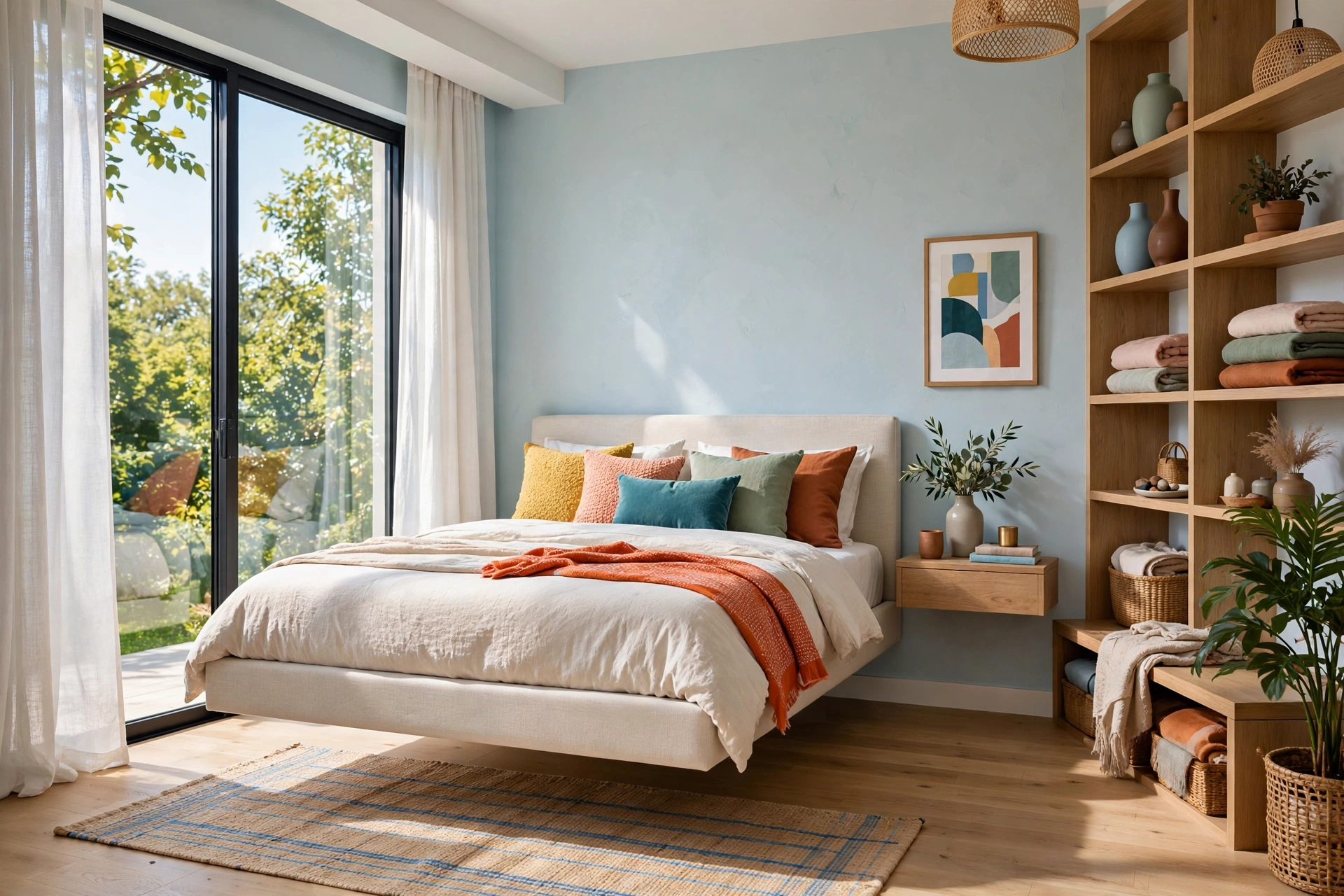
A tall, bulky headboard eats visual space on the bedroom’s focal wall and shortens the wall above it. Swapping to a low-profile headboard — one that sits below the sightline of stacked pillows — or an open-frame design with slats or spindles lets the wall show through and keeps the ceiling line feeling high.
No budget for a swap? Fake it: remove an oversized headboard and hang a textile, a large frame, or a pair of art prints at headboard height instead. Flat wall decor takes zero floor space and zero visual depth while delivering the same “finished bed” signal. Either way, keep whatever sits above the pillows slim and quiet.
12. Pick Furniture with Legs So the Floor Shows Through

Furniture that sits flat on the floor reads as a solid block occupying the room; furniture on legs lets the floor continue underneath, and your eye counts that hidden floor as space. This is why mid-century-style pieces with tapered legs look so good in small rooms — the gap beneath the dresser, the nightstand, even the bed frame creates a shadow line of “more room.” When you can, choose the legged version of every bedroom piece: dressers, chairs, storage benches.
The effect multiplies with the floating nightstands and lifted bed from earlier steps: every sliver of visible floor connects into one continuous surface, and a continuous floor reads as one big room. If you’re stuck with blocky furniture, the same trick works visually — pull pieces a few inches off the wall so a shadow gap appears behind them. Of all the advice on how to make small bedroom feel bigger, this is the easiest to use while shopping: the floor is the room, so show as much of it as possible.
13. Size the Rug Up, Not Down
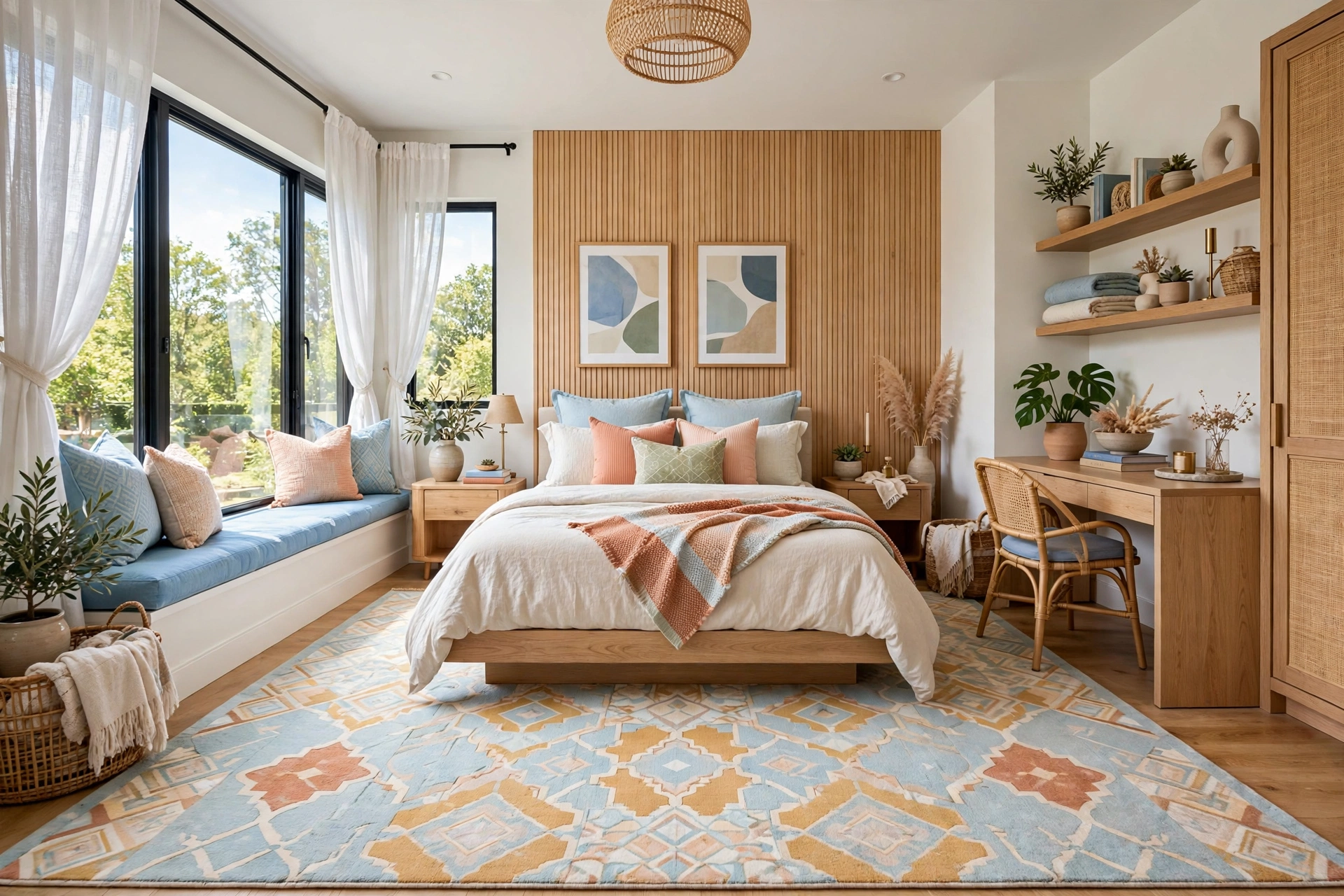
A too-small rug is one of the most common small-bedroom mistakes: a postage-stamp rug under the bed chops the floor into pieces and makes the room look smaller. The rule runs counter to instinct — go bigger. A rug that extends well beyond the bed on three sides unifies the floor into one continuous plane, and one unified plane reads as one generous room. In most small bedrooms, that means the largest rug the floor can hold while leaving a border of visible flooring around the edges.
The rug should also sit low and flat — no thick shag that swallows the bed’s legs and adds visual bulk. A flatweave or low-pile rug in a light tone keeps the palette calm and the floor easy to see. If the bed is against the wall and a full under-bed rug won’t fit, run a wide runner along the open side instead; even a strip of unified flooring beats bare, broken-up boards. Bigger rug, bigger-looking room — that’s the simplest summary of how to make a small room look bigger without spending much.
💡 Pro Tip: Before buying, outline the rug size on the floor with painter’s tape and live with it for an hour. Tape the generous size first — most people are surprised how much bigger they can go, and the tape test is free while a too-small rug is an expensive lesson.
14. Corral Clutter in Matching Baskets and Closed Storage
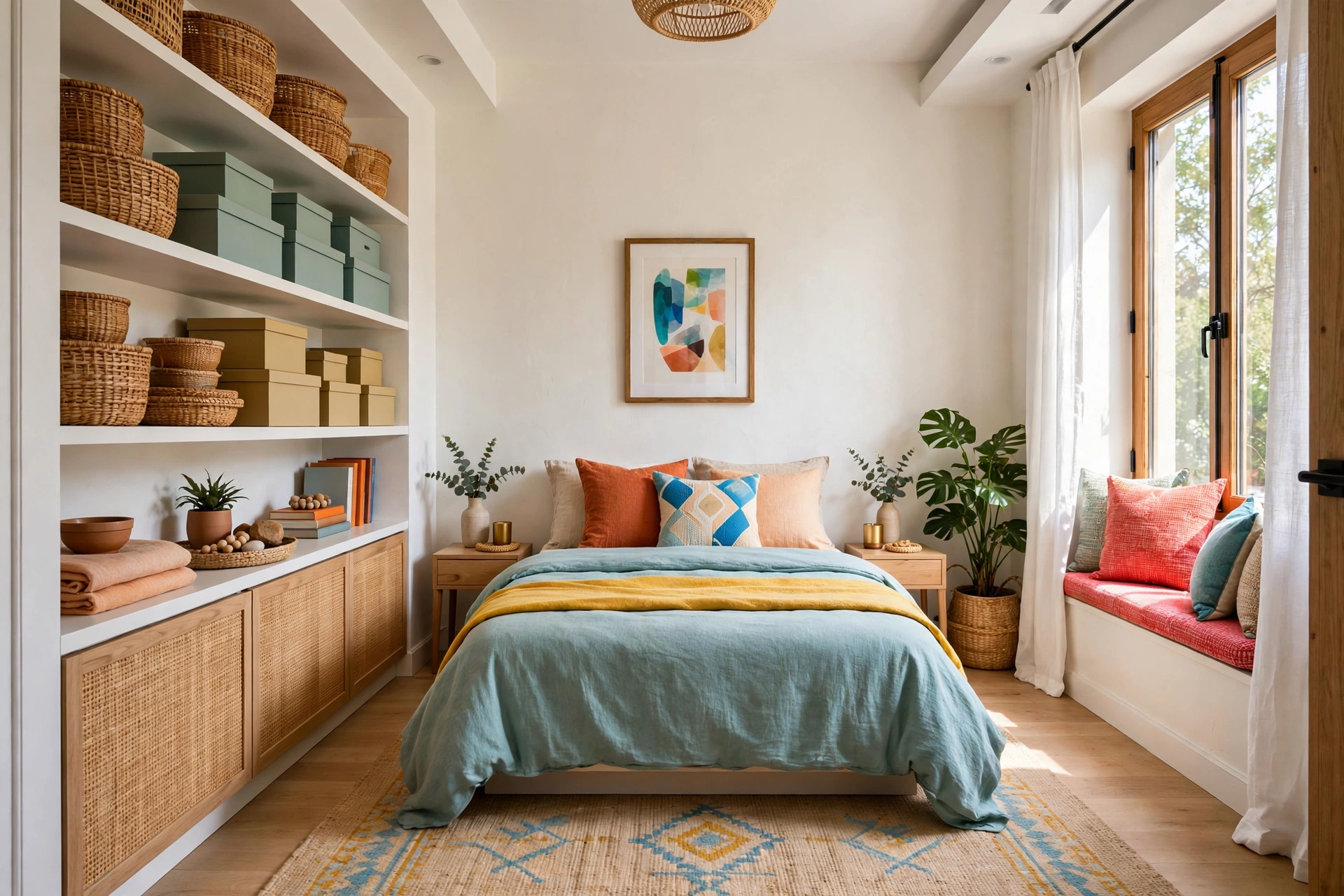
Open storage displays everything you own; closed storage displays nothing, and nothing is what a small bedroom needs to show. Move the visual clutter — chargers, medications, notebooks, the random drawer contents — into matching lidded baskets, fabric bins, or a dresser with doors. Matching matters: three identical baskets read as one calm unit, while three different containers read as three separate messes. Closed, coordinated storage turns “stuff” into “furniture.”
Apply the same thinking to the closet: matching hangers, bins on the top shelf, shoes in a row rather than a pile. You don’t need to see any of this for the trick to work — even storage inside closed closets benefits, because you’ll maintain it better when it’s simple. The weekend goal isn’t minimalism; it’s invisibility. Everything gets a home with a lid or a door, and the room shows only calm surfaces.
15. Finish with a Hotel-Bed Styling Pass on Sunday Evening

The final step costs nothing and takes twenty minutes: style the bed like a hotel. Smooth the sheets, center the duvet with equal overhang, stack sleeping pillows flat against the headboard, and lean two decorative pillows in front. Fold a throw across the foot in a crisp horizontal band. Clear both nightstands down to a lamp, one book, and one small object each. Step into the doorway — the first view anyone gets — and check the sightline: bed crisp, floor visible, surfaces calm.
Then do the lighting pass: warm bulbs on, overheads off, and let the room glow the way it will on a real evening. Photograph the room from the doorway in daylight too, and compare it with a “before” photo from Saturday morning — the difference is usually startling, and it’s the proof the weekend worked. A small bedroom can’t become a big bedroom, but a styled, light, calm small bedroom feels twice its size, and that’s the whole game.
Quick Comparison: Bedroom Size Tricks by Cost and Effort
Small Bedroom Quick-Start Checklist
- ✅ Clean the window glass and swap heavy curtains for sheers or light-filtering panels
- ✅ Lift the bed on risers and slide lidded bins underneath — nothing visible from the doorway
- ✅ Hang the curtain rod high and wide, with panels kissing the floor
- ✅ Lean a tall mirror opposite or diagonal to the window, anchored safely
- ✅ Run the 20-minute declutter reset on every surface, then give keepers real homes
- ✅ Simplify the palette: light bedding, light rug, low-contrast walls and furniture
- ✅ Finish Sunday evening with the hotel-bed styling pass and a doorway photo comparison
Common Small Bedroom Mistakes
Mistake 1: Pushing every piece of furniture against the walls
It feels logical — walls free, middle open — but furniture ringing the walls outlines the room’s exact small dimensions and makes the boundary impossible to ignore. Pulling the bed or a chair even a few inches off the wall breaks the outline and lets shadow and air soften the edges.
Mistake 2: Choosing a rug that’s too small
A tiny rug under a big bed chops the floor into disconnected pieces, each reading as its own small zone. The floor should read as one continuous plane — size the rug generously so it extends well past the bed, and let one unified surface do the visual work of a bigger room.
Mistake 3: Keeping the overhead light as the only light source
A single ceiling light flattens everything and throws harsh shadows across the room. Layer two or three warm, low light sources — bedside sconces or lamps, plus one soft glow elsewhere — and the room gains depth, corners soften, and the size feels generous instead of exposed.
Mistake 4: Storing things where you see them first
The top of the dresser, the chair by the door, the floor beside the bed — these are the first surfaces your eye hits, and using them as storage means the first impression is always clutter. Move open storage inside the closet and behind doors, and keep first-sight surfaces nearly clear. Perceived size is decided in the first three seconds at the doorway.
Mistake 5: Matching everything to the walls too exactly
Low-contrast is the goal, but painting or buying everything in one identical shade removes all depth and the room goes flat. Keep the big surfaces close in tone but vary the texture — smooth walls, woven rug, washed bedding, wood legs — and let two or three small dark accents give the eye places to rest. Depth without contrast is the sweet spot.
Frequently Asked Questions
1. Can you really make a small bedroom feel bigger in one weekend?
Yes — “feeling bigger” is mostly visual, and the biggest wins (decluttering, curtain height, mirrors, bedding, lighting) each take an hour or less. A focused weekend covers all fifteen ideas, and most people notice the change the moment they step into the doorway.
2. What’s the cheapest way to make a small bedroom look bigger?
Decluttering costs nothing and usually wins: clearing surfaces and the floor lets light move and the eye travel, which is the core of perceived space. After that, cleaning the windows, rearranging furniture for visible floor, and making the bed hotel-crisp are all free and all high-impact.
3. Do mirrors really make a room look bigger, or is that a myth?
They genuinely work, but placement decides everything. A mirror opposite or diagonal to a window doubles the daylight and the brightest view, which reads as more space. A mirror facing a cluttered wall just doubles the clutter — always check what it reflects from the doorway first.
4. What colors make a small bedroom feel larger?
Light, low-contrast palettes: warm whites, soft greiges, pale sage, light warm grays across walls, bedding, curtains, and large furniture. It’s the lack of contrast that enlarges — when the eye glides without stopping at dark boundaries, the room feels continuous and bigger. Add depth with texture and a few small dark accents.
5. Should the bed go against the wall in a tiny bedroom?
Often yes — a bed tucked into a corner or against the longest wall frees the maximum open floor, which matters more than walk-around access in a truly small room. Protect the wall-side edge with a washable cover, since it takes more wear.
6. How do I make a small bedroom feel bigger as a renter?
Often yes — a bed tucked into a corner or against the longest wall frees the maximum open floor, which matters more than walk-around access in a truly small room. Protect the wall-side edge with a washable cover, since it takes more wear.
7. Does a bigger rug actually help, or does it crowd the room?
It helps, as long as it lies flat and stays light. A generous rug unifies the floor into one continuous plane that reads as one big room; a small rug fragments the floor into pieces that each feel cramped. Outline the size with painter’s tape first so you can see the difference before you buy.
Conclusion
A small bedroom stops feeling small when you give the eye room to travel: long curtains lifting the ceiling line, a mirror doubling the daylight, pale surfaces flowing without hard stops, and a floor that shows itself instead of hiding under clutter. None of the fifteen ideas needs a contractor or a big budget — just a weekend and a willingness to move furniture until the room breathes.
Start Saturday morning with the free wins — the reset, the window, the rearranging — and let the purchased upgrades follow in the afternoon. By Sunday evening’s hotel-bed styling pass, you’ll know how to make small bedroom feel bigger not as a theory but as a room you walk into every night. Twice the feel, same four walls, one weekend.