10 Best Amazon Dupes for Expensive Home Decor That Fooled Everyone
Introduction
You have seen the room on Pinterest a hundred times: the arched mirror, the bouclé chair, the travertine side table, all of it looking like it cost a month’s rent. Then you click through to the source and the mirror alone is $400. The good news is that the same look exists on Amazon for a tenth of the price — and in most cases, even a designer would struggle to tell the difference from three feet away.
The trick is knowing which dupes are genuinely convincing and which ones are cheap plastic pretending to be stone. This list only includes the swaps that pass the doorway test: they look right, feel right, and survive daily use. Every price below is the typical Amazon range at the time of writing, and every comparison names the designer original so you can judge the resemblance yourself.
1. The Arched Floor Mirror That Costs $25 Instead of $400

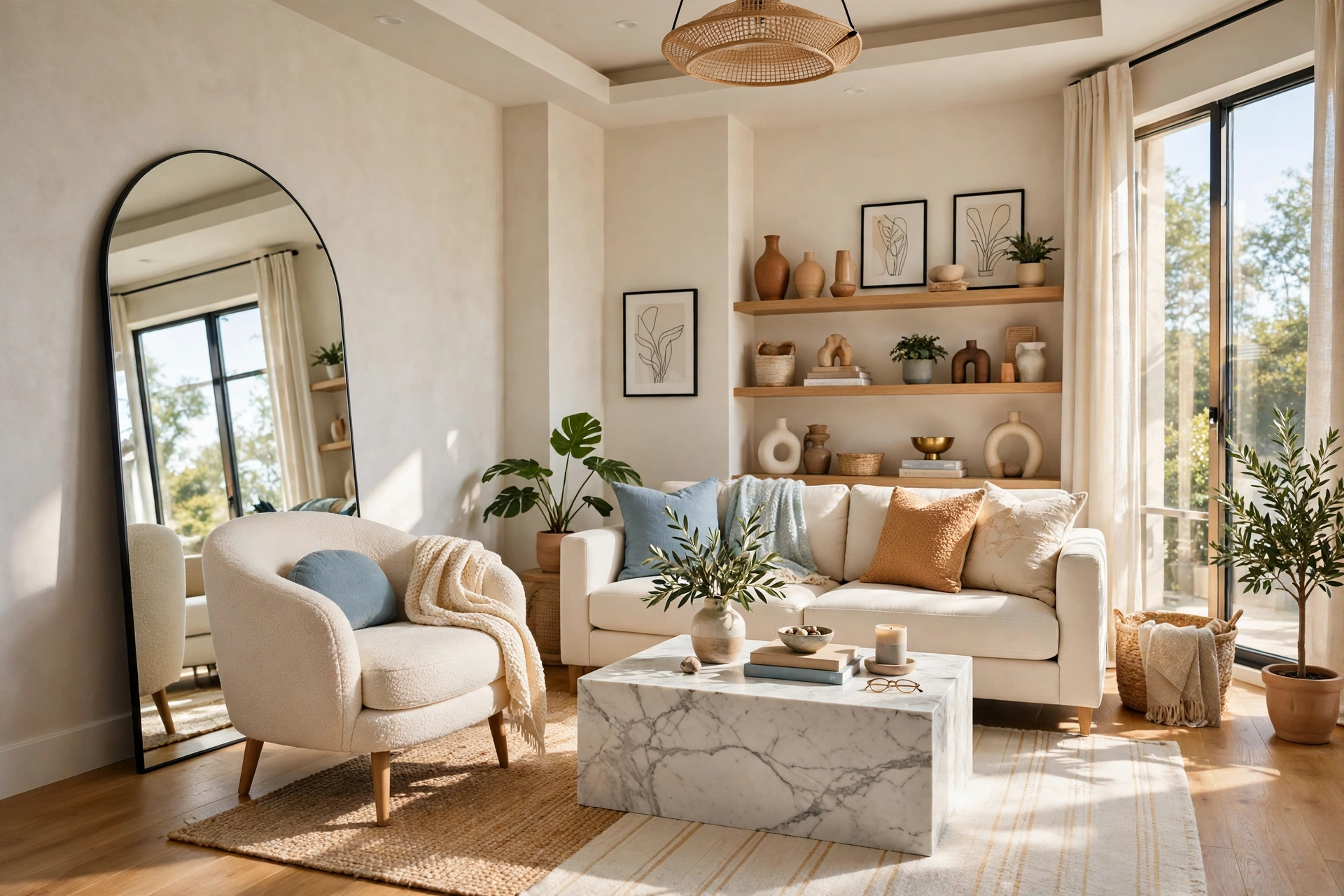
The arched mirror is the single most copied shape in home decor right now, and the designer originals sell for $300 to $500 depending on size. The Amazon version — a 65-by-24-inch arched floor mirror with a thin black or gold metal frame — usually lands between $22 and $35, and it is the same silhouette: a soft rounded top, a full-length reflection, and a frame slim enough to disappear against the wall.
Hang it opposite a window and it does the same work as the expensive one: it bounces light across the room and makes a small space feel twice as wide. The one detail to check is the glass itself. Read the reviews for the words “wavy” or “distorted” — a good dupe uses real glass, not acrylic, and the reflection should be flat and true. If the listing does not say glass, move on. Lean it against the wall at a slight angle rather than hanging it, and keep the bottom 2 inches off the floor with felt pads so the frame never scratches your skirting board.
2. The Bouclé Accent Chair for $180, Not $900
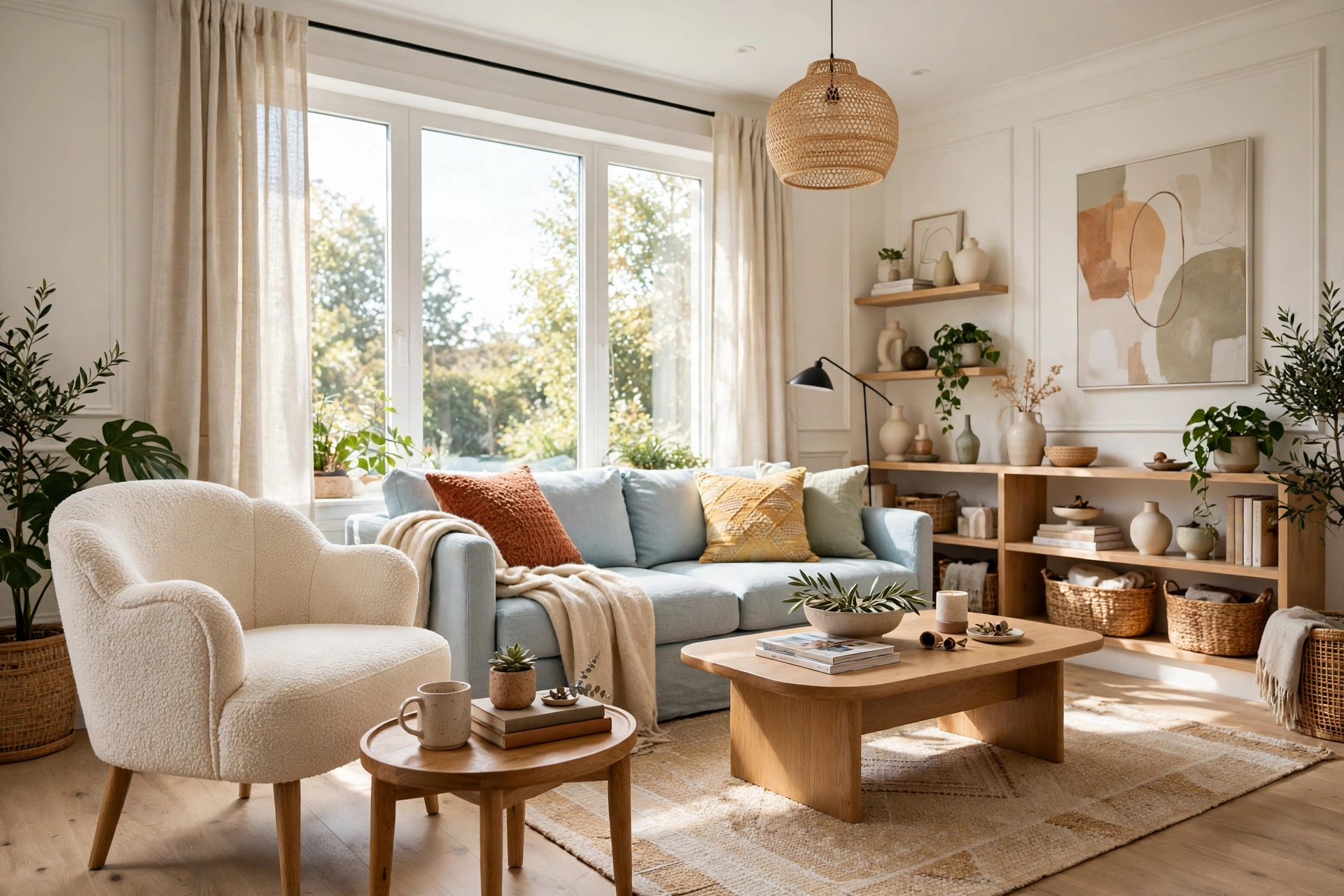
Bouclé chairs are the designer world’s favourite texture, and the originals from high-end furniture houses start around $800 and climb past $1,200. Amazon’s best-selling bouclé accent chair — a curved back, a swivel base, and a nubby cream fabric — typically costs $160 to $200, and from across the room the silhouette is identical: the same rounded back, the same low seat, the same cosy cloud shape.
Sit in it before you commit to the look, because the difference between a good dupe and a bad one is the cushion. A good one has a seat cushion at least 4 inches thick with a removable cover you can wash. A bad one is a thin slab of foam over plywood, and you will feel it in twenty minutes. Check the weight limit in the listing too — a sturdy chair supports 250 pounds or more, and the frame should be solid wood, not hollow MDF. Style it with a small side table and a throw, and nobody in the room will ask where it came from.
3. The Marble-Look Coffee Table That Fools the Touch Test
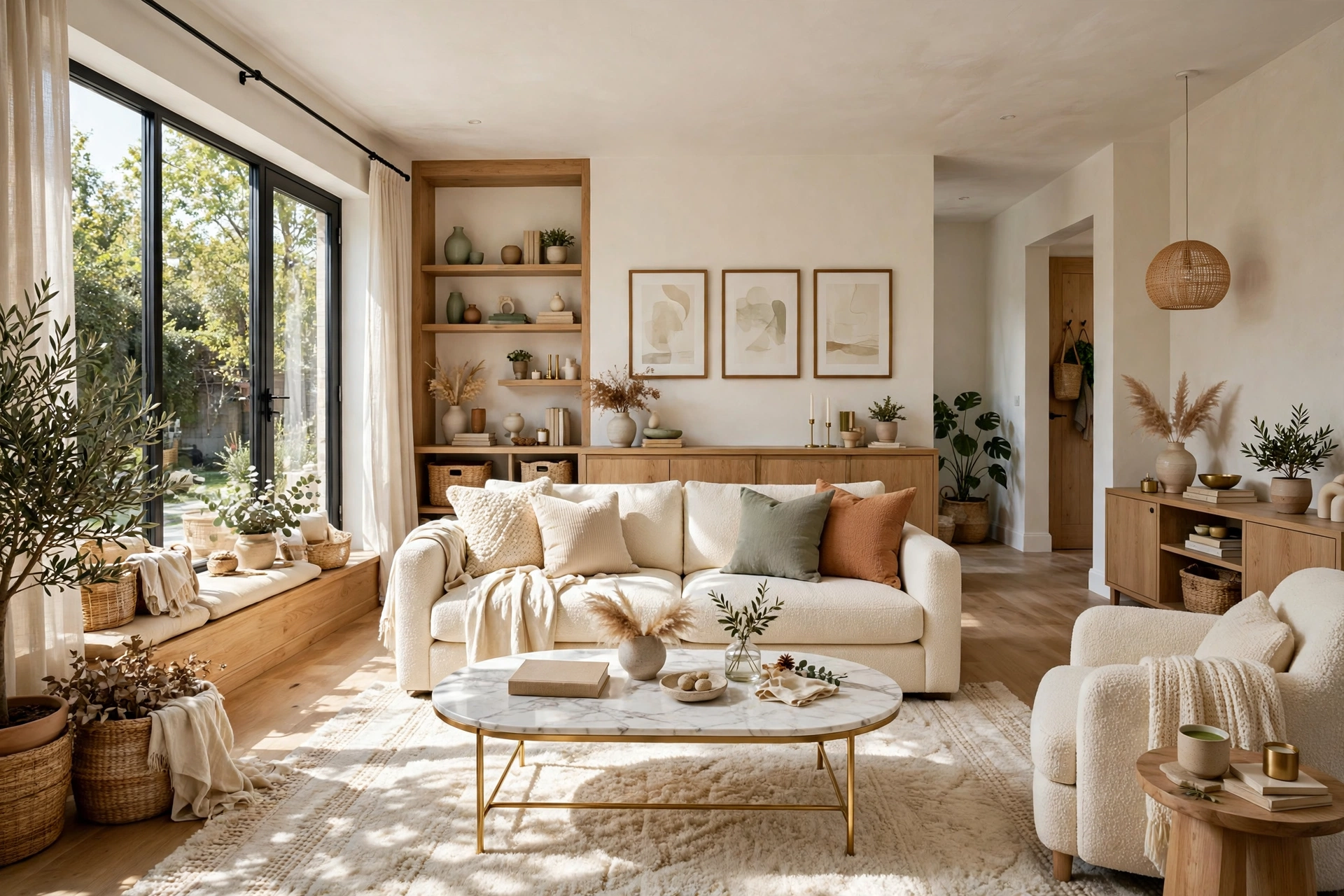
A real marble coffee table weighs 80 pounds and costs $600 or more. The Amazon dupe — a 43-inch oval or rectangular table with a white marble-pattern top and slim gold or black legs — costs $90 to $130, and the top is a printed sintered stone or high-pressure laminate that copies the veining so well you have to knock on it to know the difference.
This is the dupe where the checklist matters most, because a bad marble print looks like a photograph of marble rather than marble itself. Before you buy, zoom into the listing photos and look at the veining: real-looking veins are irregular, faint in places, and never repeat in a perfect pattern. If the veins look drawn on with a marker, skip it. Once it is home, the maintenance is easier than the original — wipe it with a damp cloth, no sealing, no staining from a coffee ring, and no panic when someone sets down a glass without a coaster.
- Read the 3-star reviews first — they tell the truth about wobble, colour, and quality
- Check the material line — real glass, solid wood, and sintered stone beat acrylic and MDF every time
- Measure the space twice — a dupe that is 4 inches too big looks wrong no matter how cheap it was
- Compare the listing photo to the review photos — if the reviews look duller, trust the reviews
- Confirm the return window — a 30-day free return turns a risky dupe into a free trial
- Count the total cost — a $25 mirror that needs a $20 hanging kit is a $45 mirror
4. Linen-Look Curtain Panels at $30 a Pair, Not $150

Designer linen curtains cost $75 to $150 per panel, and a pair can eat a whole decorating budget. Amazon’s linen-look panels — a 52-by-84-inch pair in a natural or cream weave — sell for $26 to $38, and hung correctly they read as the same soft, slightly textured drape.
The secret is in the hanging, not the fabric. Buy panels 6 inches longer than your window and hang the rod 4 to 6 inches above the frame, so the fabric pools just 1 inch on the floor — that puddle is what makes cheap curtains look expensive. Use clip rings instead of the sewn-in rod pocket, because the clips create even, tailored folds. And always buy two pairs for a standard window: one pair looks thin and sad, two pairs give you the fullness that makes the room feel finished. Wash them once on cold before hanging, because the weave softens and the creases from the packaging disappear.
💡 The Two-Pair Rule: One pair of curtains per window is a hotel room. Two pairs is a home. The second pair costs $30 and doubles the fullness — it is the cheapest upgrade on this entire list, and it is the one people notice first when they walk in.
5. The Rattan Pendant Light for $45 Instead of $250
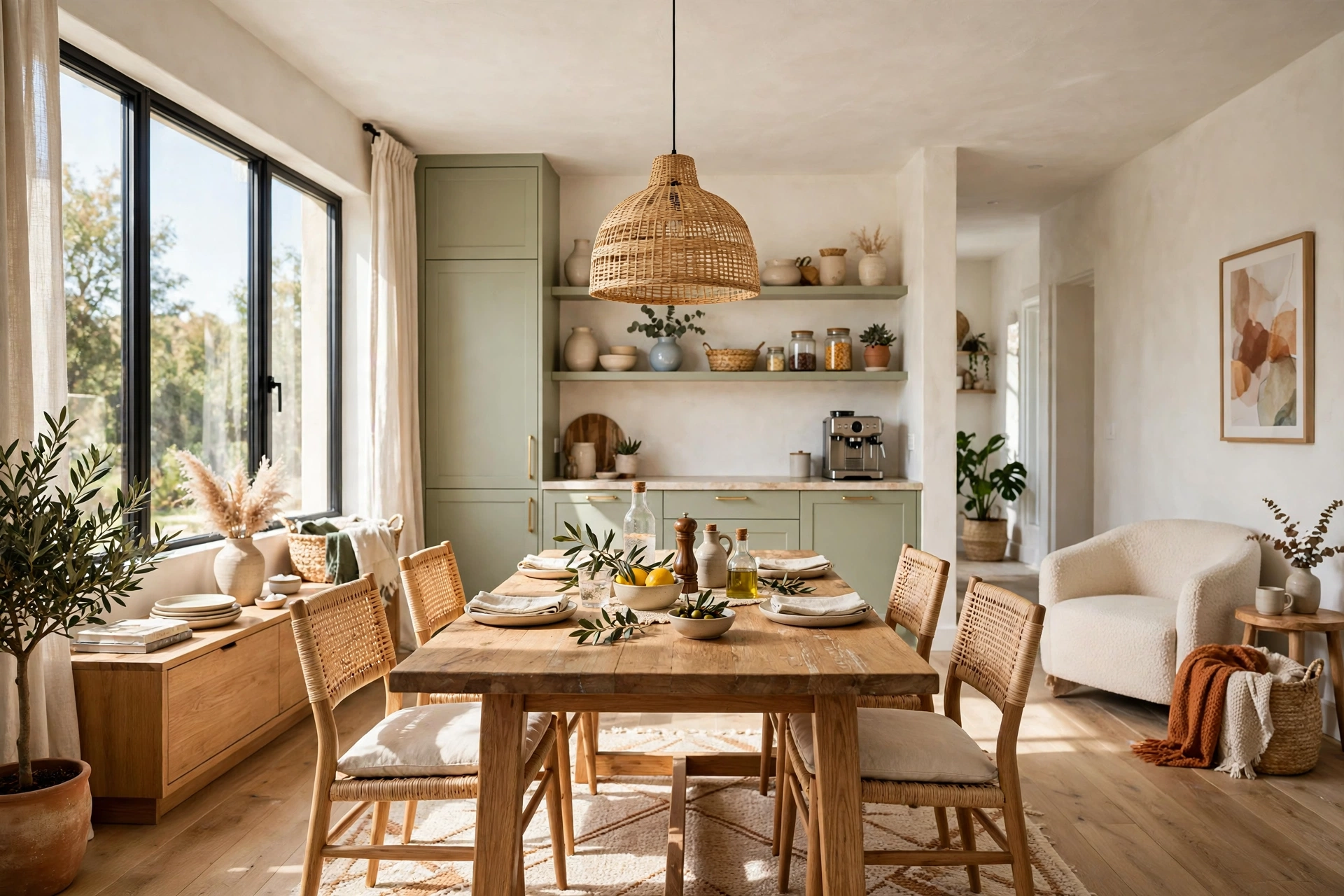
Woven rattan pendants are the light fixture every designer reaches for, and the originals from lighting boutiques run $200 to $350. The Amazon version — a 16-to-20-inch hand-woven rattan dome with a black cord and a standard E26 socket — costs $38 to $55, and the weave is the same natural rattan, not plastic pretending to be rattan.
Hang it 30 to 36 inches above a dining table or 7 feet from the floor in a hallway, and the light it throws is warm and patterned in exactly the same way. The detail that separates the good dupes is the bulb: use a 2700K warm white LED, 60 watts equivalent, and the rattan glows amber instead of glaring white. Never use a daylight bulb in a rattan shade — it turns the weave grey and kills the whole effect. If the shade arrives slightly squashed from shipping, a hairdryer on low for two minutes reshapes the weave, and a light mist of water before reshaping helps it hold.
The table is the whole argument in one place: the ten swaps together cost about $578, while the designer originals cost about $3,190. That is a $2,600 difference for a room that looks the same in a photograph and feels the same to walk into. The savings only count if the dupes last, though — which is why the quality checks in this article matter more than the prices.
6. The Travertine Side Table That Weighs Like the Real Thing

Travertine is having a moment, and a genuine travertine side table costs $250 to $400. The Amazon dupe — a 16-inch round or square table with a travertine-pattern top and a matching pedestal base — sells for $55 to $70, and the best versions use real travertine-look stone composite, which has the same cool touch and the same weight as the original.
Weight is your quality test here: pick the table up. A convincing dupe weighs 15 to 20 pounds, because stone composite is heavy. A plastic imitation weighs 4 pounds and feels hollow when you tap it. Place it beside a sofa or an armchair with 2 inches of clearance from the seat edge, and top it with one object — a small vase, a candle, a stack of two books — never three. Travertine’s whole appeal is its quiet, solid simplicity, and clutter kills it faster than any cheap material ever could. The same styling discipline is what makes thrift finds look high-end: one hero object, breathing room around it, and nothing competing for attention.
7. The Ceramic Vase Set That Looks Handmade
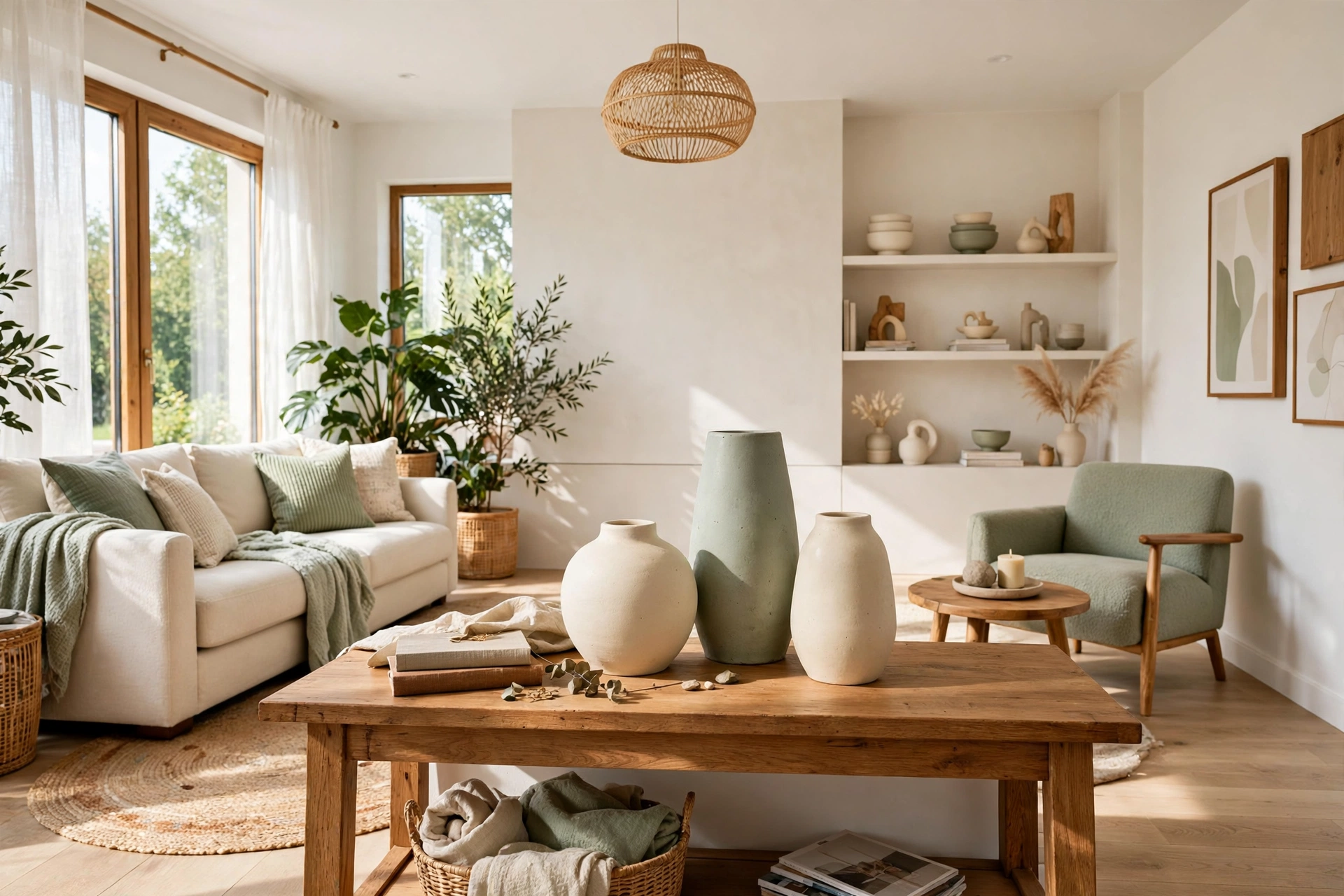
Artisan ceramic vases sell for $60 to $140 each in homeware boutiques, and a styled set of three can cost more than a chair. Amazon’s ceramic vase sets — three matte vases in graduated heights of 8, 10, and 12 inches, in cream, sage, or terracotta — cost $24 to $32 for the whole set, and the matte glaze and slightly irregular rims copy the handmade look convincingly.
The trick is to never display all three together in a row. Group two on a console table and one on a shelf across the room, or use one as a single stem vase and the other two empty as sculptural objects — the empty vase is a legitimate styling move, and it is how the expensive ones are photographed. Fill them with real stems, not plastic flowers: a $4 bunch of eucalyptus from the grocery store makes a $9 vase look like a $60 one, while plastic stems make the whole arrangement look like a dollar store display. If a vase arrives with a wobble, a felt pad under one side fixes it in ten seconds.
📌 The Grocery Store Stem Rule: A cheap vase with a real stem looks expensive. An expensive vase with a fake stem looks cheap. Spend your money on fresh stems — $4 a week — and let the vase be the quiet part of the arrangement.
8. The Faux Olive Tree That Passes the Squint Test

A real olive tree from a nursery costs $150 to $200, needs bright light, and drops leaves on your floor. The Amazon faux olive tree — a 5-to-6-foot tree in a nursery pot, with a realistic trunk and layered leaves — costs $30 to $40, needs nothing, and from six feet away even plant people have to look twice.
The squint test is the standard: stand six feet back and squint. If the tree still reads as a tree, it passes. The giveaways are always the same — a shiny plastic trunk, leaves that are all the same size, and a cheap black nursery pot. Fix all three for under $10: wrap the trunk base in a $5 woven basket, fluff the branches so no two leaves sit at the same angle, and bend a few branches downward so the silhouette is irregular. Place it in a corner with a window nearby, never in the middle of a wall, because trees grow in corners and against light in real life. The same “put it where it would grow” logic is behind the best thrift flip ideas for every room — a piece looks right when it sits where the real thing would sit.
9. The Chunky Knit Throw for $25, Not $120

Hand-knit chunky throws are the cosiest thing you can put on a sofa, and the handmade originals sell for $100 to $150. Amazon’s version — a 50-by-60-inch chunky knit throw in cream, grey, or sage — costs $22 to $30, and the thick braided yarn gives the same soft, heavy drape over an armrest or a bed.
Weight is the test again: a good chunky throw weighs 3 to 4 pounds, because thick yarn is heavy yarn. A light, thin throw is a blanket pretending to be chunky, and it will look flat on the sofa. Drape it over one arm of the sofa, not folded in a neat square on the seat — the casual drape is what sells the look, and it is also how you will actually use it. Wash it on a gentle cold cycle inside a pillowcase, because the loose knit snags on zippers and buttons in the machine. One throw per room is enough; two throws on one sofa looks like a blanket shop, and the cosy effect disappears under the clutter.
10. The Gold Picture Light That Makes Any Wall Look Like a Gallery

Brass picture lights are the detail that makes a wall look curated, and the designer originals cost $120 to $180. The Amazon dupe — a battery-operated brass picture light with a warm 2700K LED and a remote control — costs $25 to $35, and because it is battery-powered there is no electrician, no wiring, and no hole in the wall.
Mount it 6 to 8 inches above the frame, centred on the artwork, and the warm wash of light does the same work as the wired original. The battery version has one advantage the expensive one does not: you can move it in two minutes when you rearrange the wall. Use rechargeable AA batteries, because the light runs 8 to 10 hours on a charge and regular batteries become a weekly expense. Pair it with a thrifted frame and a free printable, and you have a gallery wall that cost $40 total — the same styling moves that make a home look expensive without spending much, applied to one small, glowing detail.
⚠️ The Battery Trap: A battery picture light with cheap batteries costs more than the wired original within a year. Buy a 4-pack of rechargeable AAs for $12 on the same order, and the light costs you nothing to run from then on.
Common Amazon Dupe Mistakes
Buying the cheapest listing instead of the best-reviewed one. The $12 mirror and the $25 mirror look identical in the listing photo. The difference is in the 3-star reviews: wavy glass, bent frames, and a return process that costs more than the mirror. Spend the extra $10 and buy the listing with 4.5 stars and a thousand reviews.
Forgetting to check the real dimensions. Amazon photos make everything look the same size. A 24-inch mirror and a 65-inch mirror look identical in a thumbnail. Always check the dimensions line, then tape the outline on your wall with painter’s tape before you order — it takes two minutes and saves a return.
Mixing too many dupes in one room. Ten dupes in one room looks like a showroom, not a home. Pick three or four swaps per room and let the rest of the room be pieces you already own. The dupes work best when they are the quiet background, not the whole story.
Ignoring the material line. “Marble pattern” and “marble” are different things, and so are “rattan style” and “rattan”. The material line in the listing tells you what you are actually buying — read it before the reviews, not after.
Skipping the return window check. A dupe you cannot return is a gamble, not a bargain. Before you buy, confirm the listing offers free returns for at least 30 days. If it does not, the $15 you save is not worth the risk of being stuck with a wobbly chair.
Frequently Asked Questions
Are Amazon home decor dupes good quality?
Some are excellent and some are terrible, and the price does not always tell you which. The reliable signal is the review count and the 3-star reviews: a dupe with 4.5 stars and over a thousand reviews is almost always a safe buy, while a dupe with 12 reviews and a perfect 5 stars is usually a new listing with no track record. Check the material line too — real glass, solid wood, and stone composite are the materials that age well.
How do I find the best Amazon dupes for expensive decor?
Start with the designer piece you love, then search Amazon for its defining feature — “arched floor mirror 65 inch”, “boucle accent chair swivel”, “travertine side table round”. Sort by average review score, then read the 3-star reviews before the 5-star ones. Save the good listings to a wishlist and watch the price for a week, because Amazon prices on decor fluctuate by $5 to $15.
Is it legal to buy dupes of designer furniture?
Yes. Dupes copy a general style, shape, or material — not a trademarked logo or a patented design. The pieces on this list are style-inspired, which is how the entire furniture industry works: every high street store sells its own version of the same chair. What is not legal is selling a fake with a designer’s brand name on it, and none of these listings do that.
Why do some Amazon dupes look cheap in person?
Usually it is the material or the styling, not the design. A dupe made from acrylic instead of glass, or hollow plastic instead of stone composite, will always look cheap up close. The other cause is styling: a good dupe photographed in a bare room looks flat, while the same dupe styled with a throw, a plant, and proper lighting looks expensive. Buy the right material, then style it like the real thing.
How much can I really save with Amazon home decor dupes?
On this list, the ten swaps together cost about $578 against roughly $3,190 for the designer originals — a saving of about $2,600. The saving is real only if the dupes last: a $25 mirror you replace twice costs more than a $60 mirror you keep. Buy the best-reviewed version of each dupe, not the cheapest, and the saving holds.
Can Amazon dupes actually fool guests?
Yes, and that is the point of the doorway test. From six feet away, a well-chosen dupe is indistinguishable from the original — the silhouette, the colour, and the material all read the same. Up close, a guest would need to knock on the table or pick up the vase to tell the difference, and nobody does that at a dinner party. The pieces that fool people are the ones with honest materials and correct proportions, which is why this list leads with those checks.
The Dupe That Fools Everyone Is the One You Style Like the Real Thing
The mirror, the chair, and the coffee table are only half the trick. The other half is what you do after the box arrives: hang the mirror opposite the window, drape the throw over one arm instead of folding it flat, put one real stem in the vase, and leave a third of every surface empty. Those five minutes of styling are what turn a $25 purchase into a piece guests ask about, and they cost nothing at all.
Start with one room and three swaps — the mirror, the curtains, and the pendant light are the highest-impact trio for under $100 — and live with them for a week before you buy anything else. It is the same room-by-room discipline behind how to decorate your entire home for $500: spend where the eye lands first, and let one good piece carry each surface. If the room feels different when you walk in, the dupes worked, and you can move on to the next room with the $2,600 you kept. If something feels off, return it within the window and try the next listing. The whole point of a dupe is that the experiment is cheap, and the room that fools everyone is the one where the styling is honest, the materials are real, and nothing is trying too hard to be something it is not.