16 Bathroom Tile Ideas That Will Make You Genuinely Excited About Your Renovation
Let me tell you the one thing nobody warns you about before a bathroom renovation: tile paralysis. You walk into a tile showroom fully confident, and within forty-five minutes you’re standing in the middle of thousands of options, holding three samples that look identical under the artificial lighting, and genuinely questioning every decision you’ve ever made. I’ve been there. Twice. And the second time, I came prepared — with clear criteria, a strong direction, and the knowledge that a great tile choice can transform a bathroom more dramatically than almost any other single decision.
Because here’s what I’ve learned: bathroom tile ideas aren’t just about finding something that looks nice in isolation. They’re about understanding how tile choices interact with light, space, fixtures, and each other to create a complete experience. Get that understanding right, and the tile showroom becomes one of the most exciting stops in any renovation. Get it wrong, and you’re living with the consequences every morning for the next decade. Let’s make sure it’s the former.
Why Tile Is Your Bathroom’s Most Important Decision
Before the ideas, here’s the context that makes every subsequent decision easier: tile covers more surface area in a bathroom than any other material. Floors, walls, shower surround, sometimes even the ceiling — tile is everywhere. That means its color, texture, format, and grout choice affect the room’s size perception, light quality, warmth, and overall atmosphere more than the vanity, the fixtures, or any single decorative element.
Bathroom tiles design ideas chosen with real intention create rooms that feel genuinely extraordinary. Chosen carelessly, they create rooms that feel fine but somehow never fully deliver on the promise of the beautiful fixtures and fittings surrounding them. Every idea that follows will help you choose with intention. Let’s get into it.
1. Large Format — The Space Expander
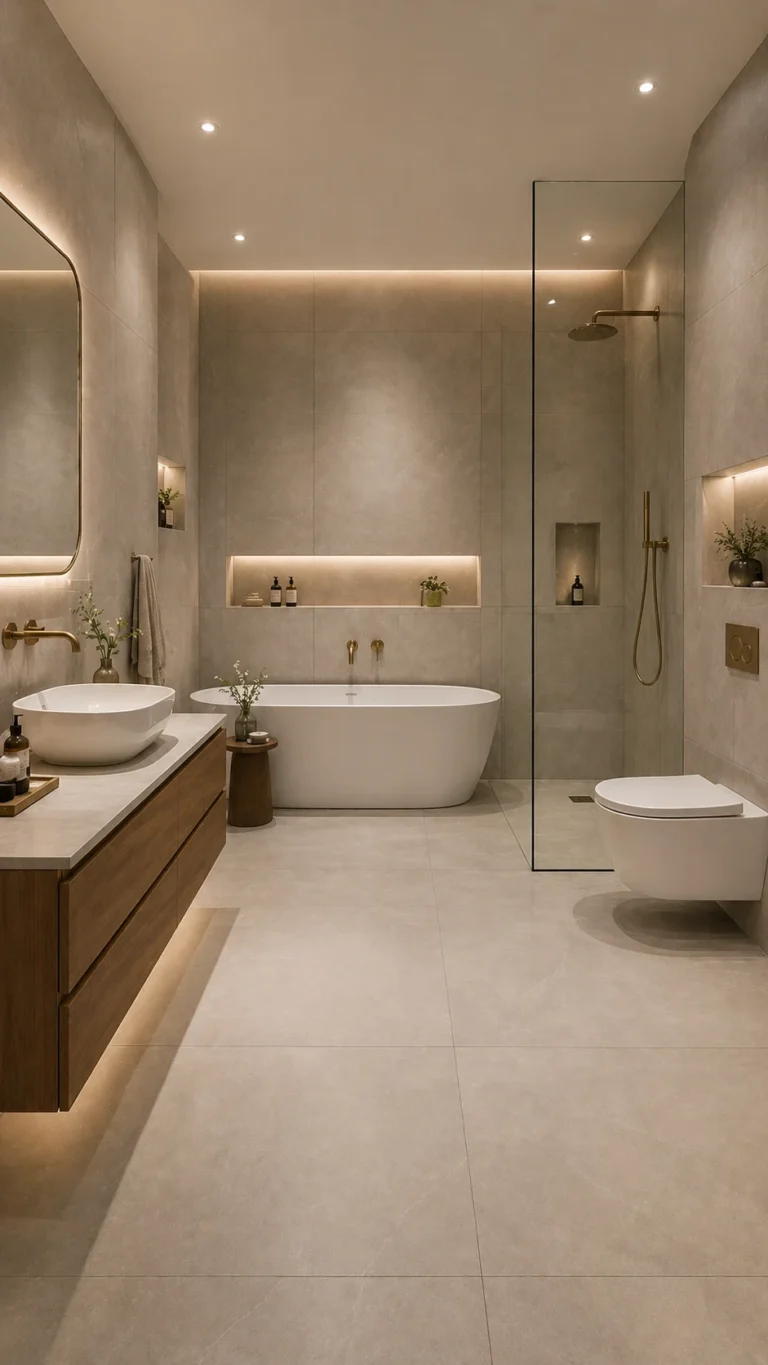
The single most impactful modern tiles for bathroom choice for creating a sense of spaciousness is large format tile — and it works through a beautifully simple visual principle. Fewer tiles mean fewer grout lines. Fewer grout lines mean less visual grid. Less visual grid means the room reads as one expansive, continuous surface rather than a fragmented collection of smaller elements.
Choose tiles that are at least 60×60cm — and go larger if the room’s proportions support it. Run them continuously from floor to wall in the shower zone without changing material or direction. The seamless flow creates a luxury hotel quality that smaller tiles simply cannot achieve regardless of their individual beauty. In a warm, neutral tone — soft travertine, pale limestone, or warm cream — the effect is genuinely breathtaking.
Large format tile specifications that matter:
- Minimum size: 60×60cm for meaningful visual impact
- Grout line width: Keep to 2–3mm maximum for the most seamless appearance
- Tonal grout: Match grout color closely to tile — reduces grid visibility dramatically
- Rectified edges: Essential for large format tiles — allows tighter grout lines
- Slip rating: R10 minimum for bathroom floors, R11 for shower floors
2. Zellige Tile — Handmade Magic
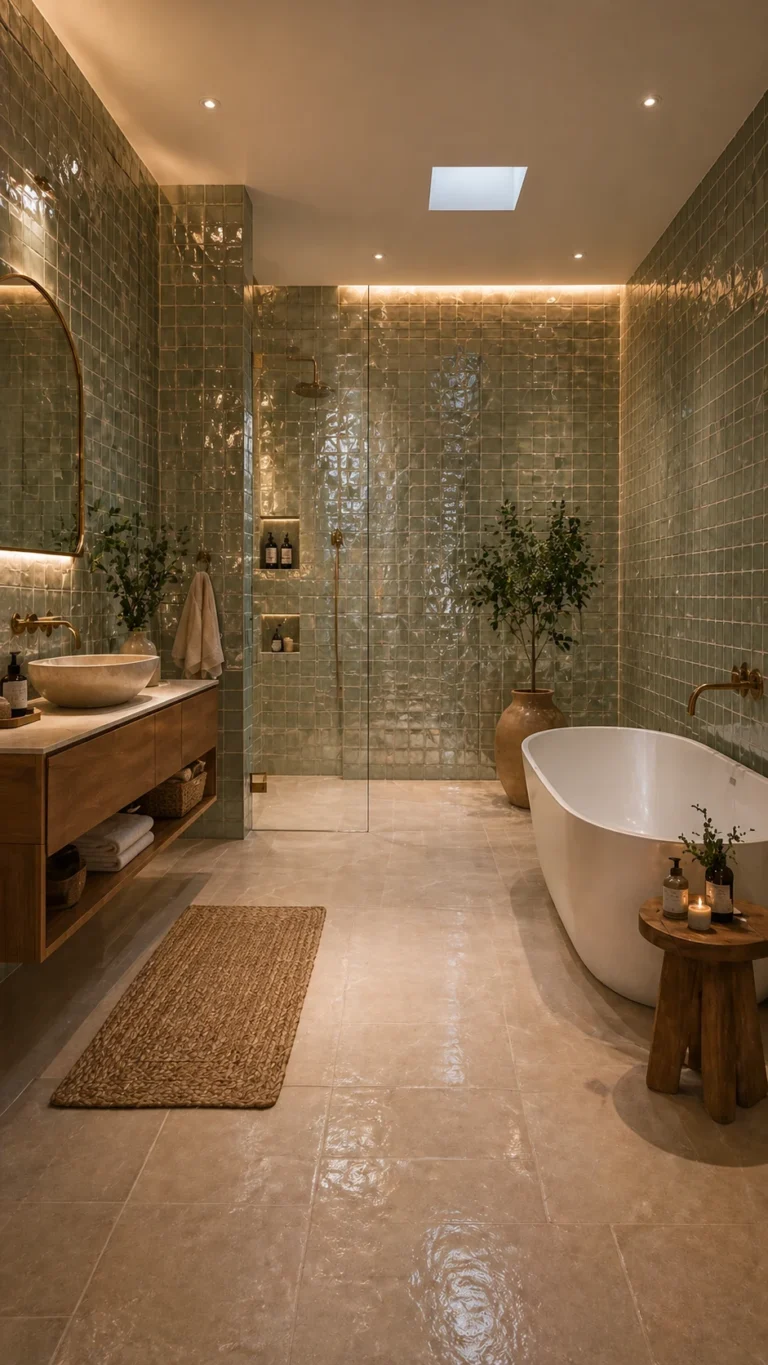
Here’s a trendy bathroom tiles direction that has moved firmly beyond trend status into something more enduring: zellige. These handmade Moroccan clay tiles have an irregular surface, a rich glaze depth, and a quality of light-catching shimmer that no manufactured tile has convincingly replicated. Every single tile is slightly different. And that variation — that beautiful, handmade imperfection — is precisely what makes zellige so extraordinarily compelling.
Zellige works beautifully as a bathroom shower tile choice on the main wet wall, as a full-height backsplash behind the vanity, or as a feature wall in a bold color. The irregular surface catches light at constantly changing angles throughout the day, creating a living quality that flat tiles simply don’t possess. And the color range available — from the softest white and pale sage to deep navy, terracotta, and forest green — makes zellige one of the most versatile and most beautiful tile choices available at any price point.
3. Fluted and Ribbed Tiles — Texture as Design
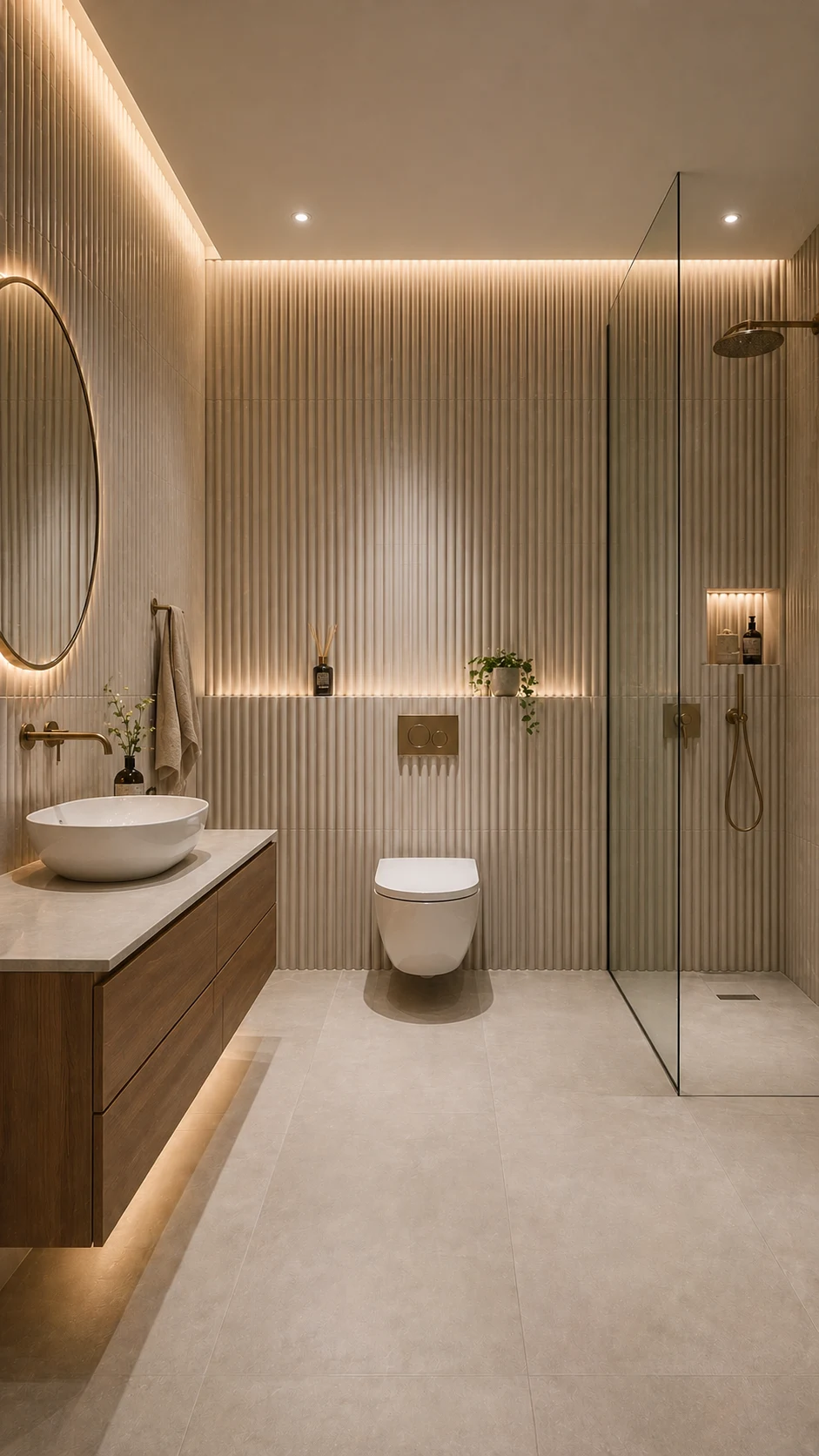
Bathroom tile inspiration in recent years has been significantly shaped by one specific direction: three-dimensional surface texture. Fluted tiles — with their parallel ridges running vertically or horizontally — add sculptural depth to bathroom walls that flat tiles cannot achieve regardless of their color or material quality.
A fluted tile wall in the shower zone or behind the vanity creates depth and shadow that changes character throughout the day as the light angle shifts. In a pale tone — warm white, soft cream, or pale stone — fluted tiles add interest without introducing pattern or color, keeping the overall room feeling calm and considered. In a bolder color — deep sage, terracotta, or charcoal — the three-dimensional texture takes on a genuinely dramatic quality that makes the bathroom feel truly designed.
4. Bathroom Floor Tiles Design — Pattern Where You Least Expect It
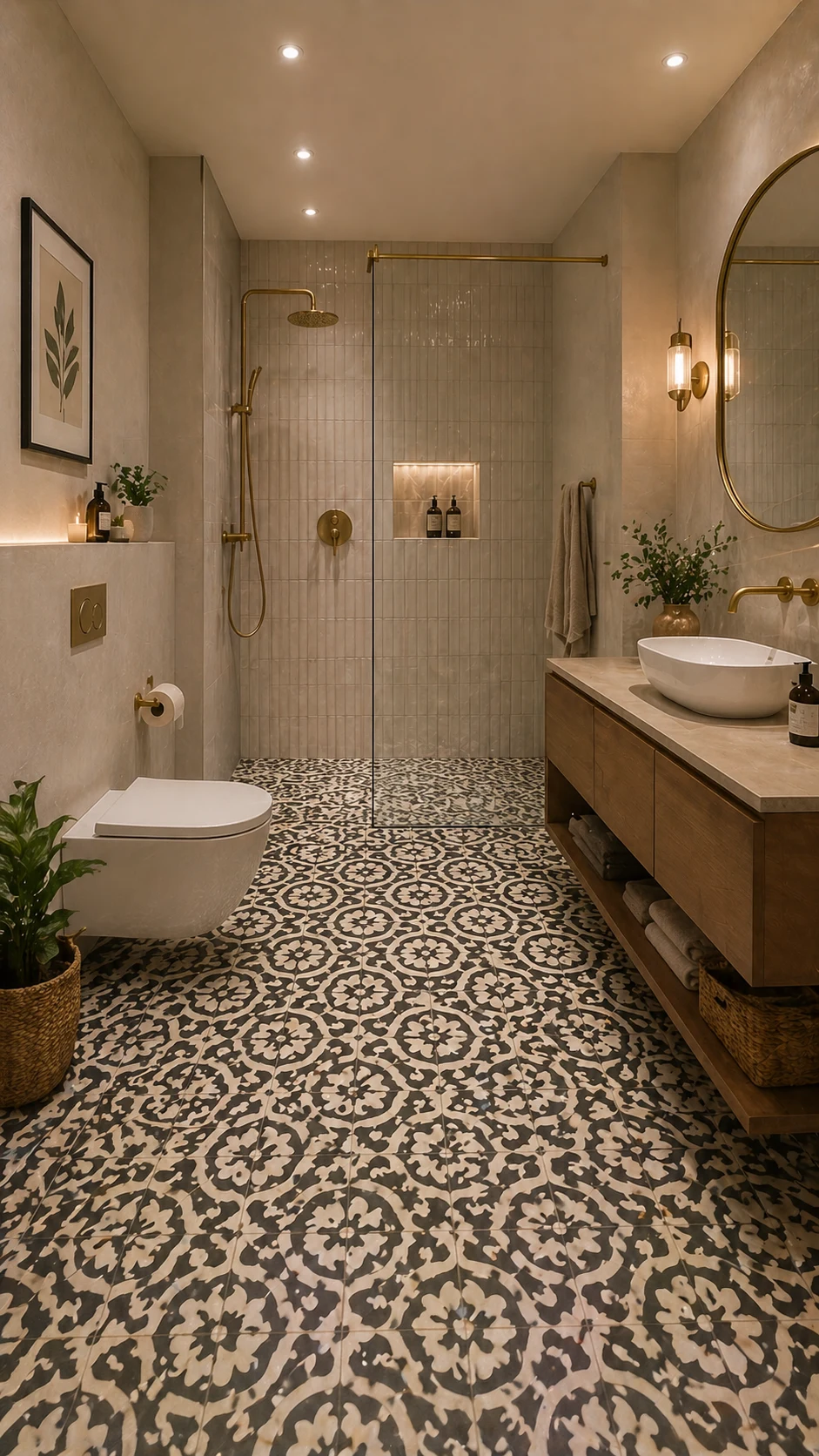
Here’s a bathroom floor tiles design principle that consistently produces stunning results: keep the walls relatively restrained and put all the personality in the floor. A patterned floor tile against simpler wall tiles creates a visual composition that feels layered and sophisticated — the floor surprises you, while the walls give it room to breathe.
Encaustic cement tiles with geometric patterns in muted, earthy tones work beautifully in this role. Bold black and white graphic patterns create a timeless, high-contrast effect that suits both traditional and contemporary bathrooms. And a soft, irregular stone mosaic in natural tones creates organic interest that feels collected rather than chosen from a catalogue. Whatever the pattern, keep the wall tiles tonal and calm — the floor does the talking, and it needs space to do it.
FYI: Patterned floor tiles work best in rooms with sufficient natural light to reveal the pattern fully. In a darker bathroom, a bold patterned floor can read as visual noise rather than design intention. Always check your tile samples in the actual room’s light conditions before committing.
5. Bathroom Wall Tiles Design — Full Height Impact
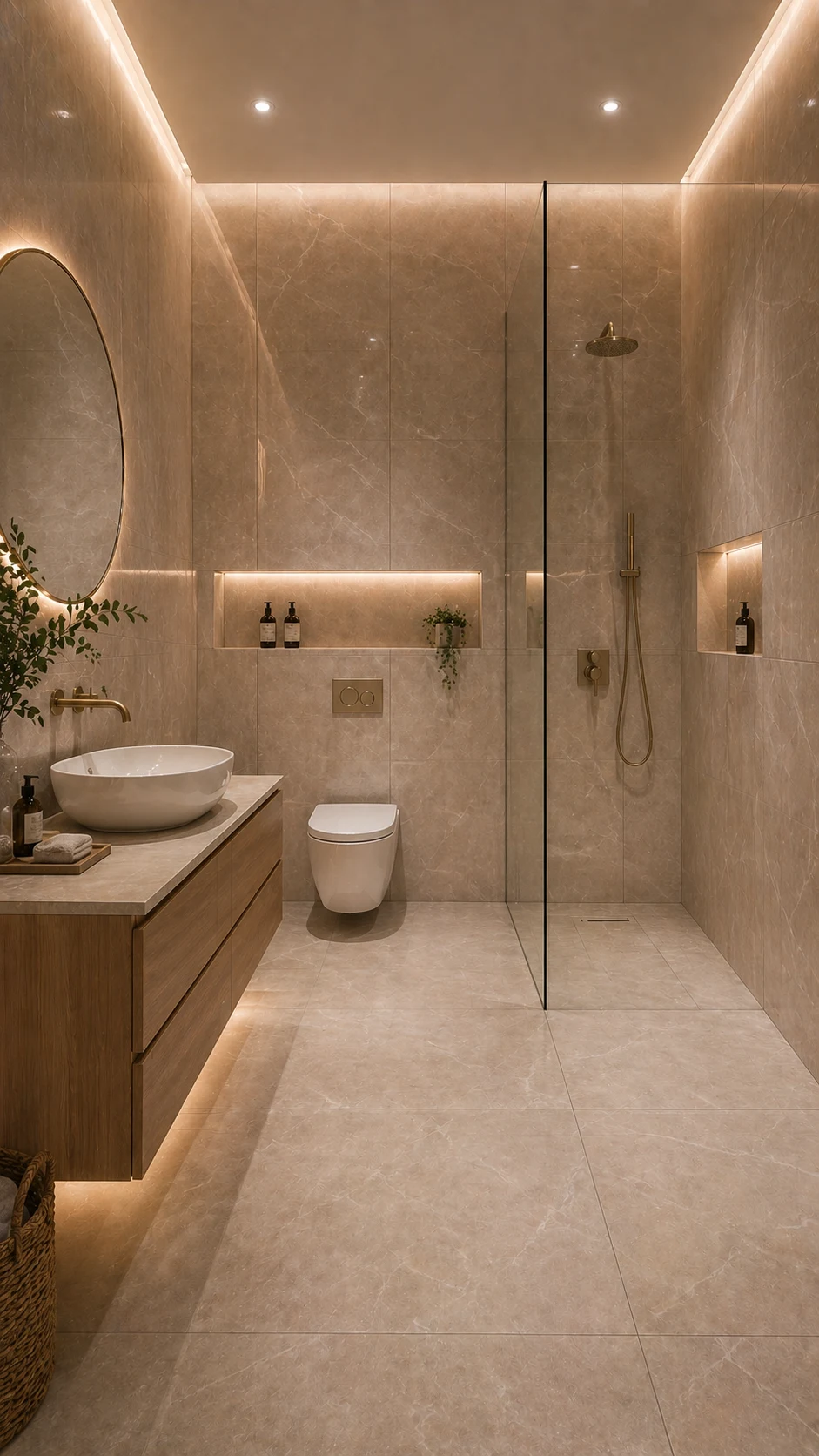
Most bathrooms tile their walls to a standard height — typically 1.2m or 1.5m — and then paint the wall above. It’s practical, it’s economical, and it produces a bathroom that looks exactly like every other bathroom tiled to the same height. Taking tile to the full ceiling height instead is one of the most dramatically impactful and relatively affordable upgrades available in any bathroom wall tiles design project.
Full-height tiling makes the ceiling appear higher, makes the room feel more resolved and considered, and creates an enveloping quality that partial-height tiling simply cannot achieve. The cost difference is the additional tile and labor for the upper section — significant in large bathrooms, but often surprisingly modest in compact ones. And the visual return is extraordinary in both cases. Once you’ve seen a bathroom with full-height tile done well, the half-tiled version starts looking perpetually unfinished.
6. Bathroom Tile Combination — Mixing Done Right
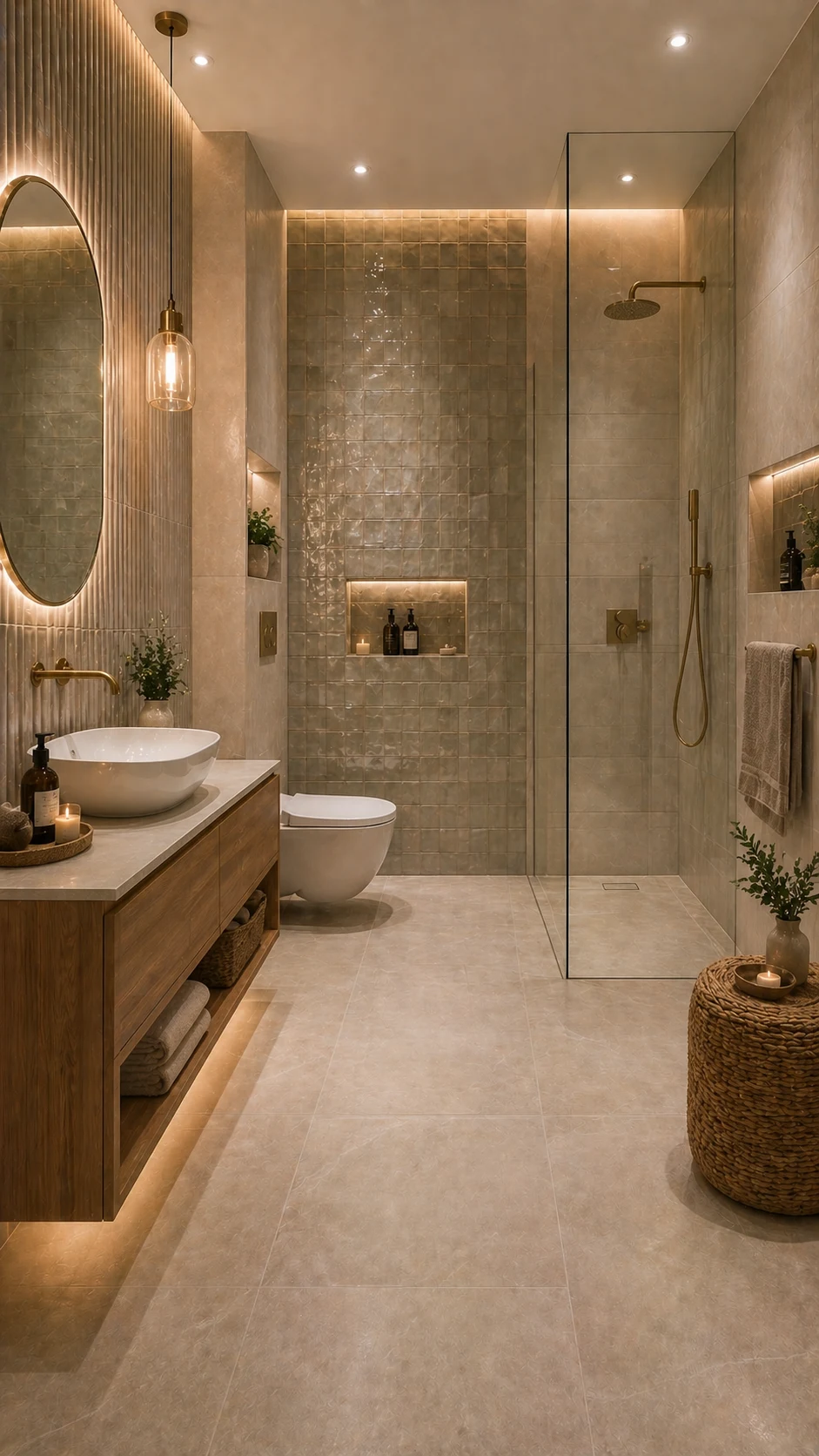
Here’s where bathroom tile combination design gets genuinely interesting — and genuinely risky if approached without clear principles. Mixing tiles in a bathroom can create beautiful, layered results that feel curated and personal. Or it can create visual chaos that makes the room feel busy and unresolved. The difference between the two outcomes is almost entirely about following one simple rule: vary one characteristic at a time.
Combine tiles that share the same color but differ in texture — a smooth large format floor tile with a fluted wall tile in the same stone tone. Or combine tiles that share the same format but differ in tone — a pale version of the tile on the walls and a slightly deeper version on the floor. Changing color, format, AND texture simultaneously is almost always too much — the combinations compete rather than complement, and the room loses the cohesion that makes it feel genuinely designed.
Tile combination principles that consistently work:
- Same color, different texture — smooth floor, fluted wall in matching tone
- Same material, different format — large floor tile, mosaic shower niche in same stone
- Same tone family, different pattern — plain wall tile, patterned floor tile in coordinating tones
- Feature tile in one zone — bold tile in the shower, simple tile everywhere else
- Tonal grout throughout — consistent grout color ties different tiles together visually
7. Small Bathroom Tiles Design — What Actually Works
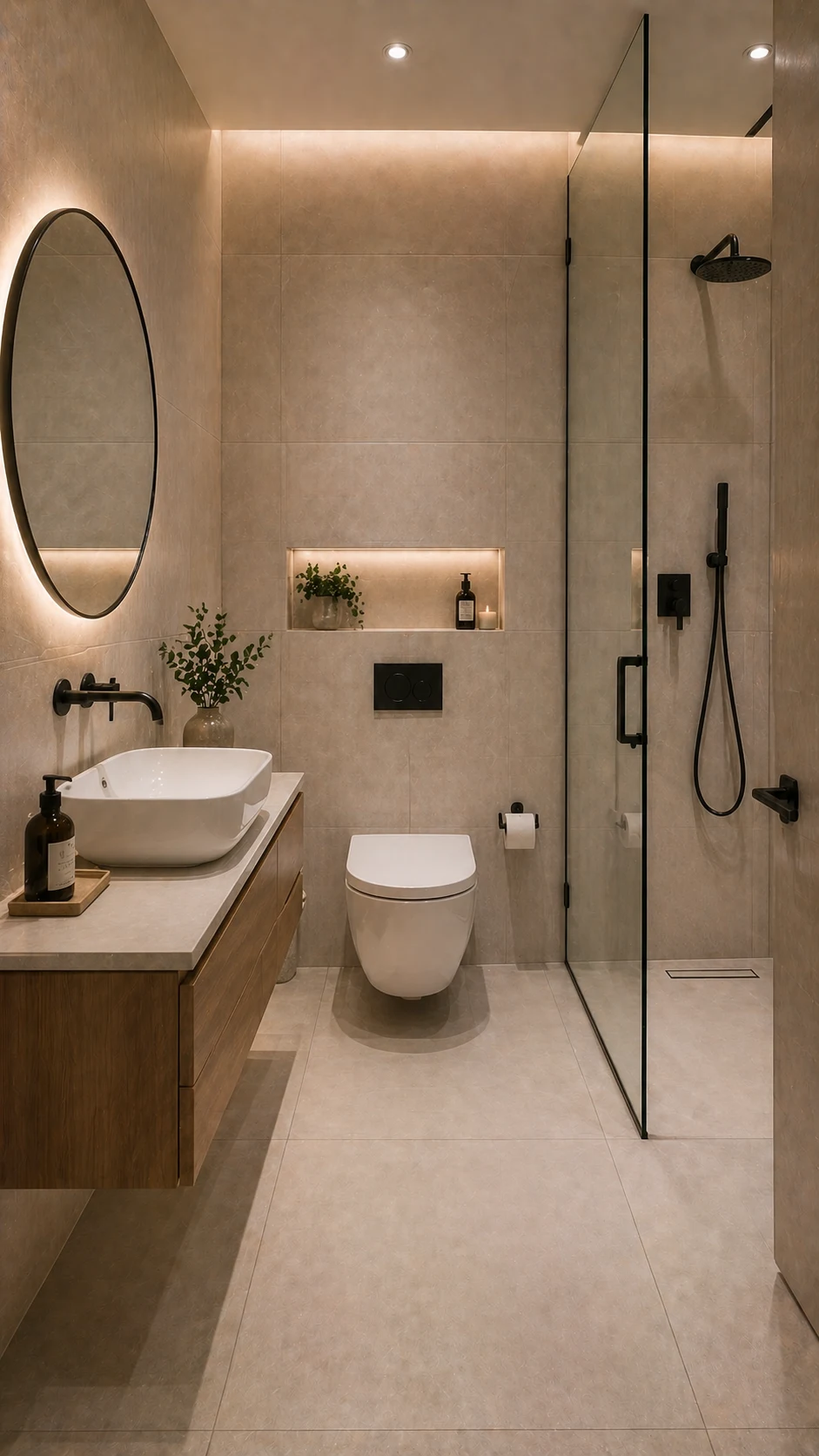
Here’s the small bathroom tiles design conversation that needs to happen more often: the conventional wisdom of “use small tiles in small rooms” is frequently wrong. Small tiles in a small room create a busy, fragmented visual field that makes the space feel even more compressed than it actually is. The opposite approach — large format tiles that reduce grout lines and create visual continuity — almost always serves a small bathroom better.
The one context where smaller tiles genuinely work in a compact bathroom is as a contrast element in a specific zone — a mosaic tile inside a recessed niche, or a small-format pattern on the floor against large-format wall tiles. In this configuration, the small tile has context and contrast that makes it feel intentional. Used throughout a small bathroom uniformly, smaller tiles typically work against the room’s sense of space rather than with it.
8. Bathroom Shower Tile — The Zone That Demands the Most Attention
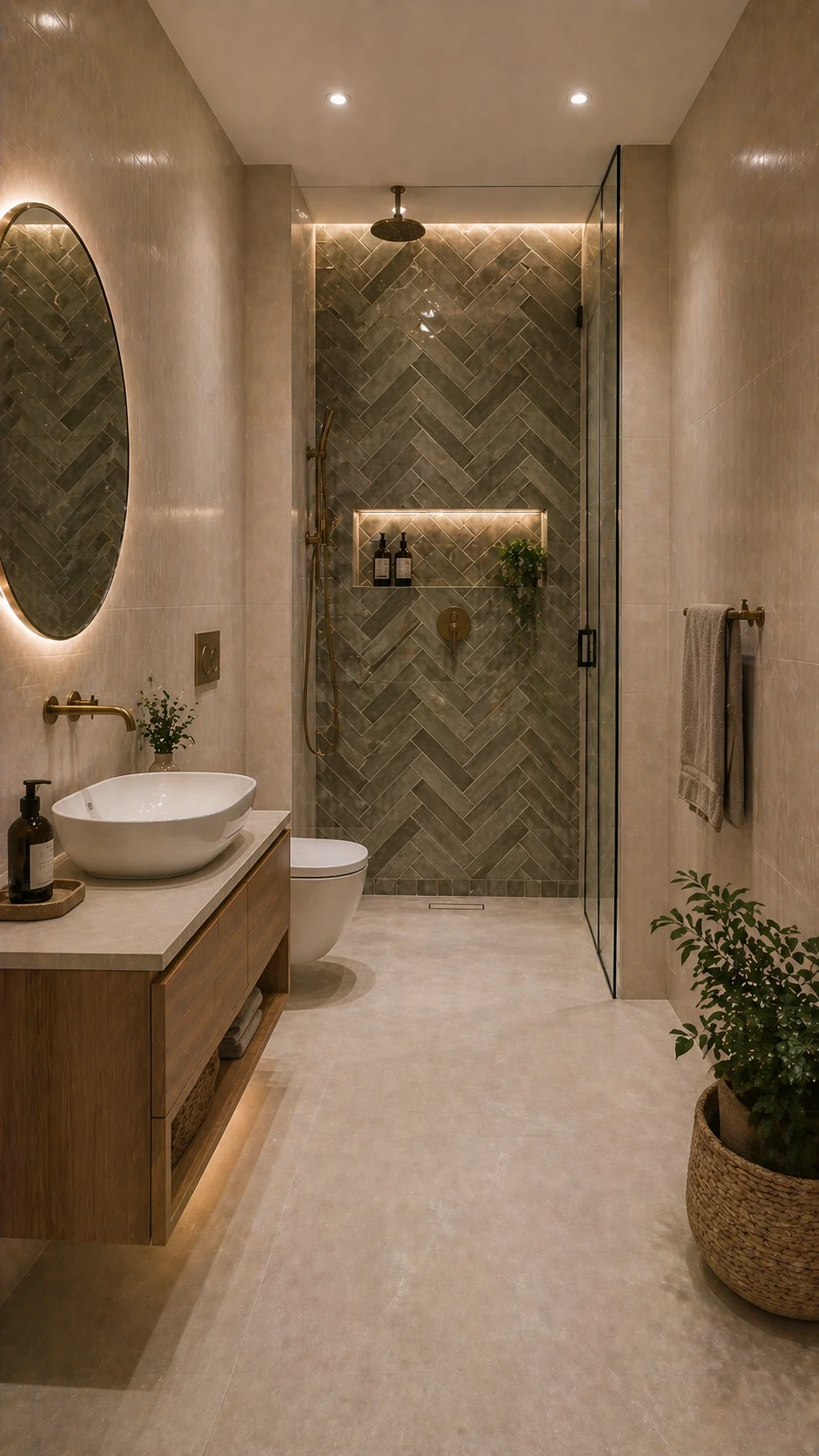
The bathroom shower tile choice is the single most visible and most scrutinized tile decision in any bathroom — because it’s the tile you’re surrounded by, at close range, every single morning. It deserves the most thought, the highest budget allocation, and the most decisive design commitment of any tile in the room.
A book-matched marble slab in the shower surround — where two adjacent panels create a mirrored veining pattern — is the ultimate luxury shower tile expression. Handmade zellige covering the entire wet wall brings artisanal warmth and irregular beauty. Large-format sintered stone in a travertine or limestone pattern creates a seamless, contemporary luxury that suits almost any design direction. Whatever you choose, run the shower tile to the ceiling — the full-height treatment in this zone creates an enveloping quality that partial-height tiling never achieves.
IMO, the best shower tile investment isn’t necessarily the most expensive tile — it’s the most considered one. A relatively affordable tile chosen with clear design intention and installed perfectly will always outperform an expensive tile chosen inconsistently or installed carelessly. Spend on craft first; the material second.
9. Grout Color — The Detail That Changes Everything
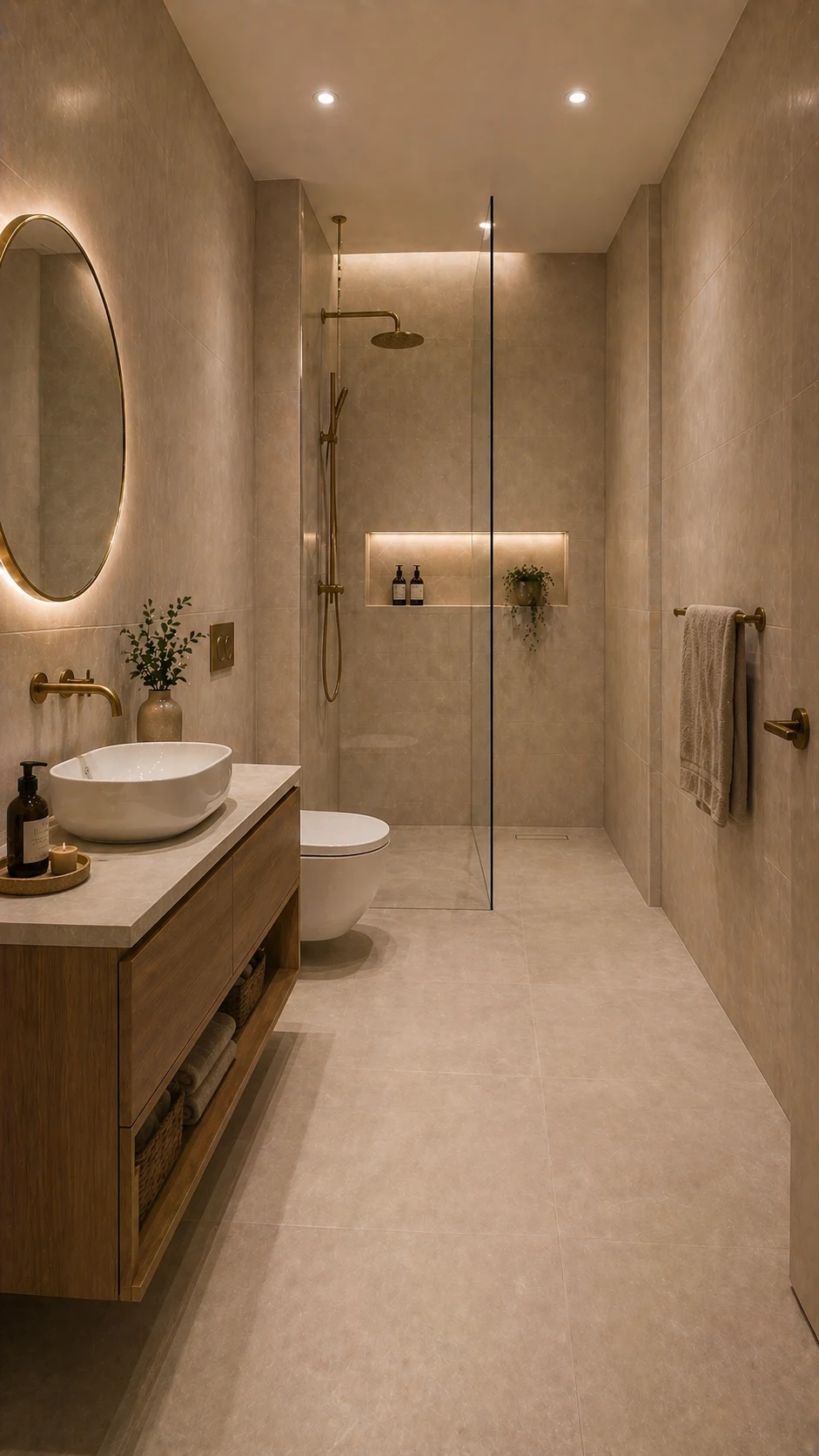
Here’s a bathroom tiles design ideas decision that most people make last and should be thinking about much earlier: grout color. Grout is visible on every tiled surface in your bathroom, and its color choice has a more significant impact on how the tile reads than most people realize until they see the finished result.
Tonal grout — where grout color closely matches tile color — makes surfaces read as unified planes and creates a seamless, luxurious effect. It reduces the visibility of the grid pattern and lets the tile’s material quality take center stage. Contrasting grout — dark grout with light tiles, or vice versa — emphasizes the tile pattern deliberately. This can look beautifully graphic and intentional, particularly with geometric tiles or classic subway formats. The key is making the decision consciously rather than defaulting to standard gray regardless of the tile it’s paired with.
10. Travertine and Natural Stone — Warmth That Never Ages
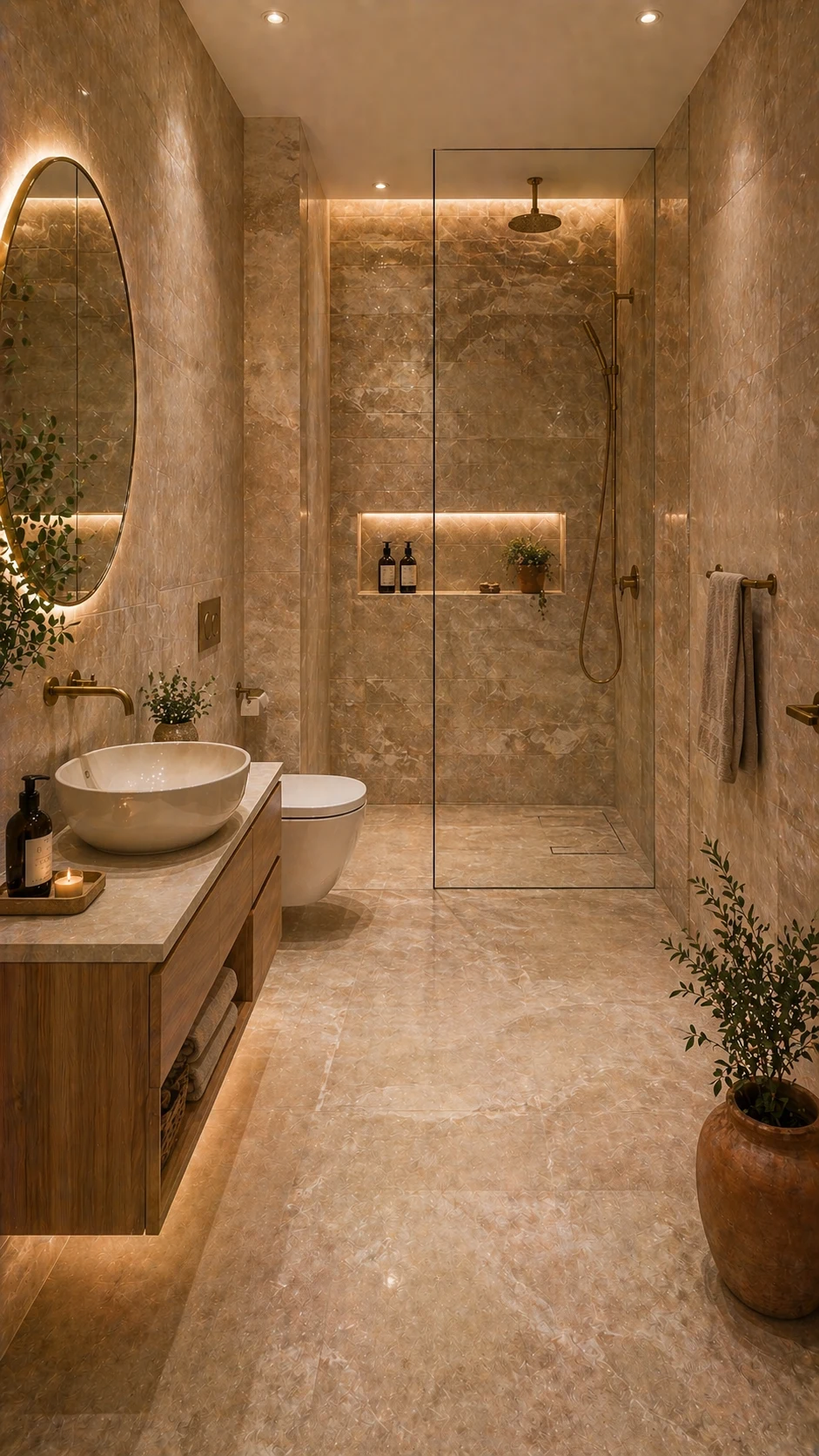
Few bathroom tile inspiration directions have proven more enduring or more universally appealing than natural travertine and limestone. These materials have a quality of warmth, variation, and geological authenticity that no manufactured tile has convincingly replicated — and they create bathrooms that feel genuinely luxurious without effort or ostentation.
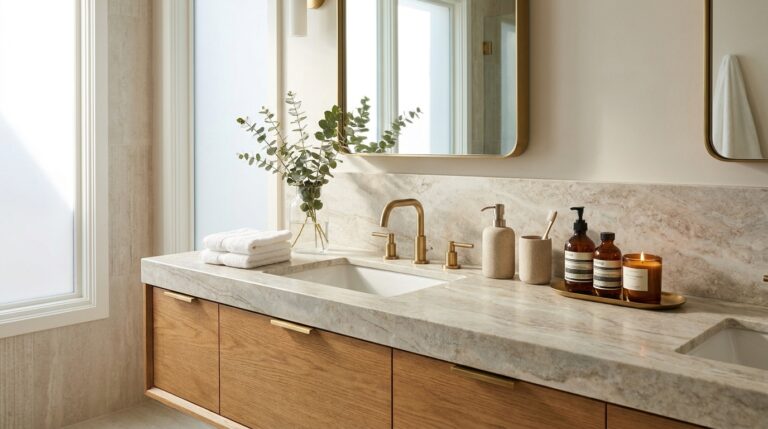
Travertine in particular has experienced a significant revival — moving from its association with early 2000s interiors into a genuinely contemporary, warm-organic aesthetic that feels completely current. Honed travertine on the floor and walls, with its characteristic fossil marks and natural variation, creates a bathroom that feels simultaneously ancient and completely modern. It pairs beautifully with warm brass fixtures, natural wood, and matte black hardware — a combination that currently represents one of the most compelling directions in contemporary bathroom design.
11. Subway Tile — The Classic Reimagined
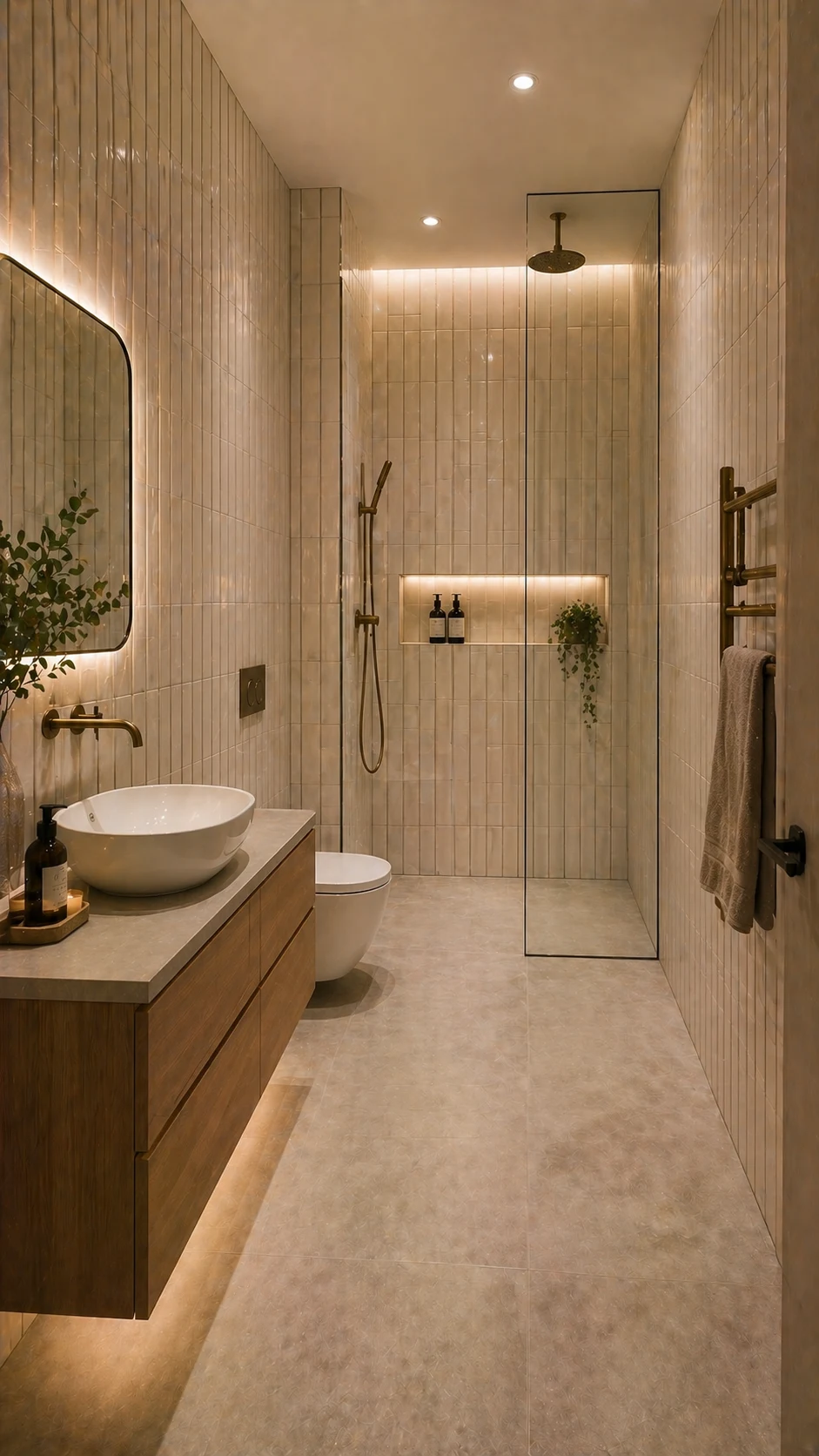
Subway tile gets dismissed as basic — and in its most generic expression, that’s fair. Standard white subway on a bathroom wall with gray grout is a choice that communicates a lack of commitment rather than a considered design decision. But the subway tile format — that simple, elongated rectangle — is actually one of the most versatile and beautiful tile formats available when used with real intention.
Run subway tiles vertically instead of horizontally and the room immediately feels taller and more architectural. Choose subway in a deep, saturated color — forest green, cobalt blue, warm terracotta — and the format becomes the vehicle for a genuinely bold design statement. Use oversized subway in a 15×60cm format on the full height of the shower wall and the scale shift creates something that feels dramatically more current and more considered than the standard format. The classic subway tile isn’t boring. It’s just been underestimated.
12. Mosaic Tile — Detail in the Right Places
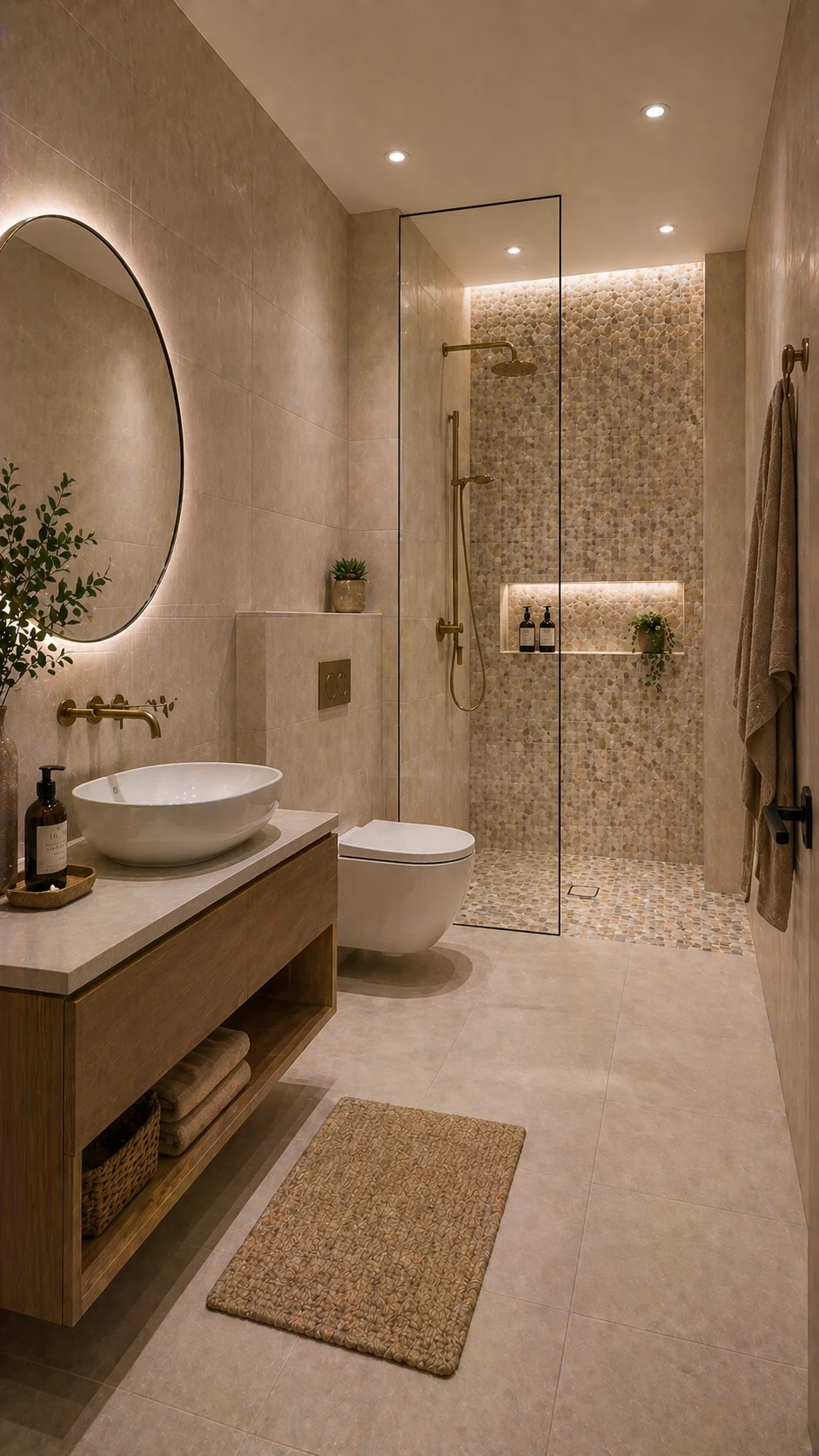
Mosaic tile used throughout a bathroom is almost always too much. Mosaic tile used strategically in one specific zone — the shower floor, a recessed niche, a feature band — is often extraordinary. The distinction between these two outcomes is entirely about restraint and context.
A small mosaic tile on the shower floor provides the R11 slip rating that safety requires in the wet zone, while creating a beautiful texture contrast with the larger format tiles on the shower walls. A strip of mosaic as a horizontal feature band on an otherwise plain wall adds interest without competing. And mosaic inside a recessed niche — in a material or color that differs from the surrounding tile — makes the niche read as a genuinely designed detail rather than a practical afterthought. Mosaic’s power is in its precision. Use it precisely.
13. Terrazzo — The Statement Floor
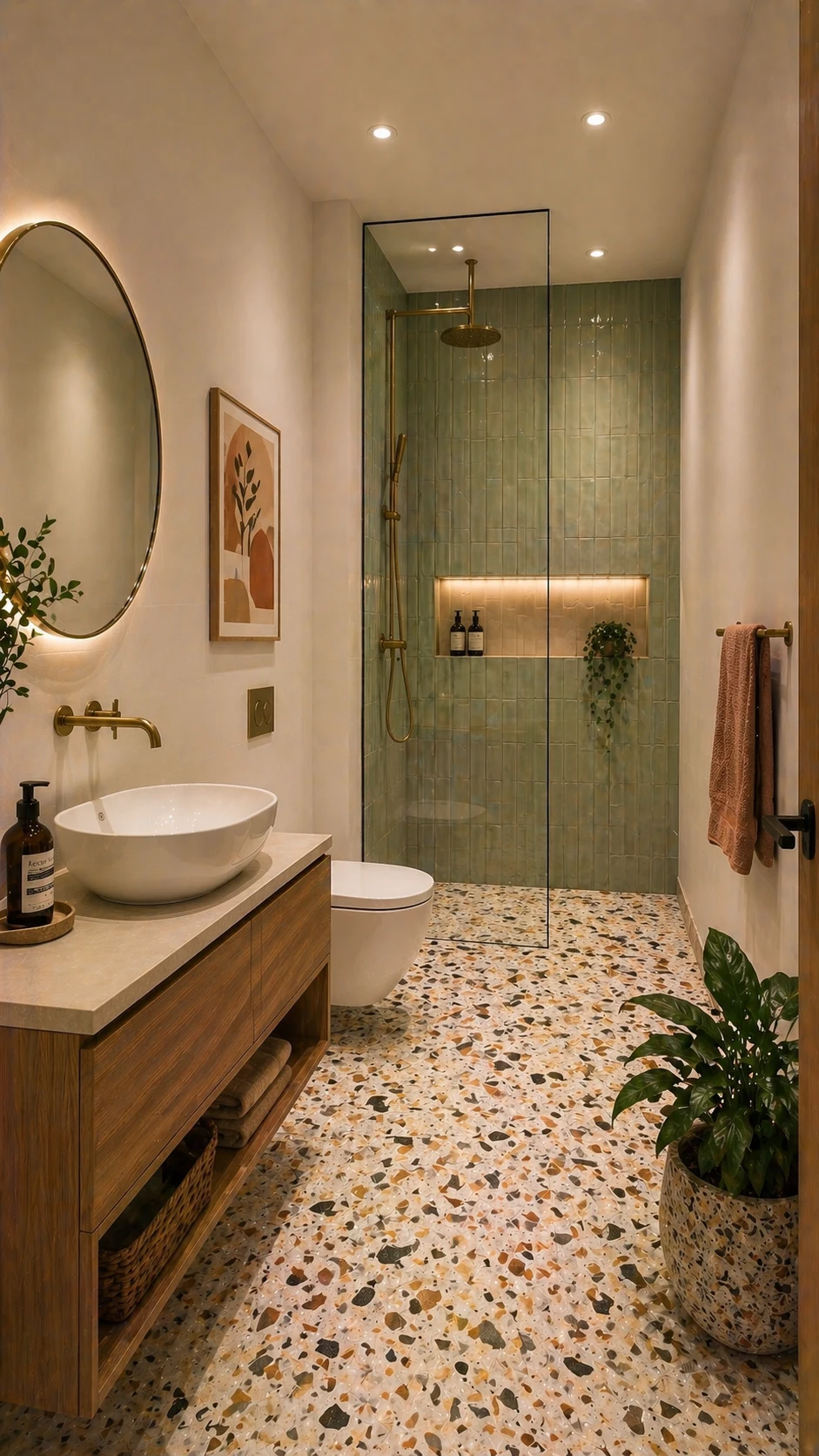
Terrazzo is having one of the most significant rehabilitation in design history right now — and in bathroom floor applications specifically, it’s producing some of the most beautiful and most talked-about results in contemporary interiors. The material’s characteristic aggregate of stone chips, glass, and marble suspended in a cement or resin base creates a floor that’s unique in every installation, genuinely beautiful, and extraordinarily durable.
Modern tiles for bathroom applications have made terrazzo accessible through large-format porcelain tiles that convincingly replicate the terrazzo look without the cost and specialist installation of poured terrazzo. The design range is broad — from pale, fine-aggregate versions in neutral tones to bold, graphic versions with large colored chips in saturated hues. Whatever the colorway, terrazzo brings a playfulness and personality to the bathroom floor that few other materials achieve while remaining genuinely sophisticated.
14. Tonal Bathrooms — One Material, Total Commitment
Here’s a bathroom tile combination direction that requires the most courage and delivers the most dramatic results: the fully tonal bathroom, where one tile material covers every surface — floor, walls, shower zone — in an uninterrupted, completely cohesive expanse. No material changes. No grout color variations. One tile, from floor to ceiling, creating a room that reads as one continuous, immersive surface.
The effect in practice is extraordinary. The bathroom feels simultaneously larger and more intimate. The material quality — whatever it is — is showcased in a way that no mixed-material approach achieves. And the overall room has a quality of conviction and completeness that immediately communicates serious design intention. The material choice is everything here: travertine, zellige, large format stone, or even a beautifully glazed ceramic all work brilliantly. What matters is the commitment to running it everywhere without interruption or exception.
15. Dark Tile — The Dramatic Statement
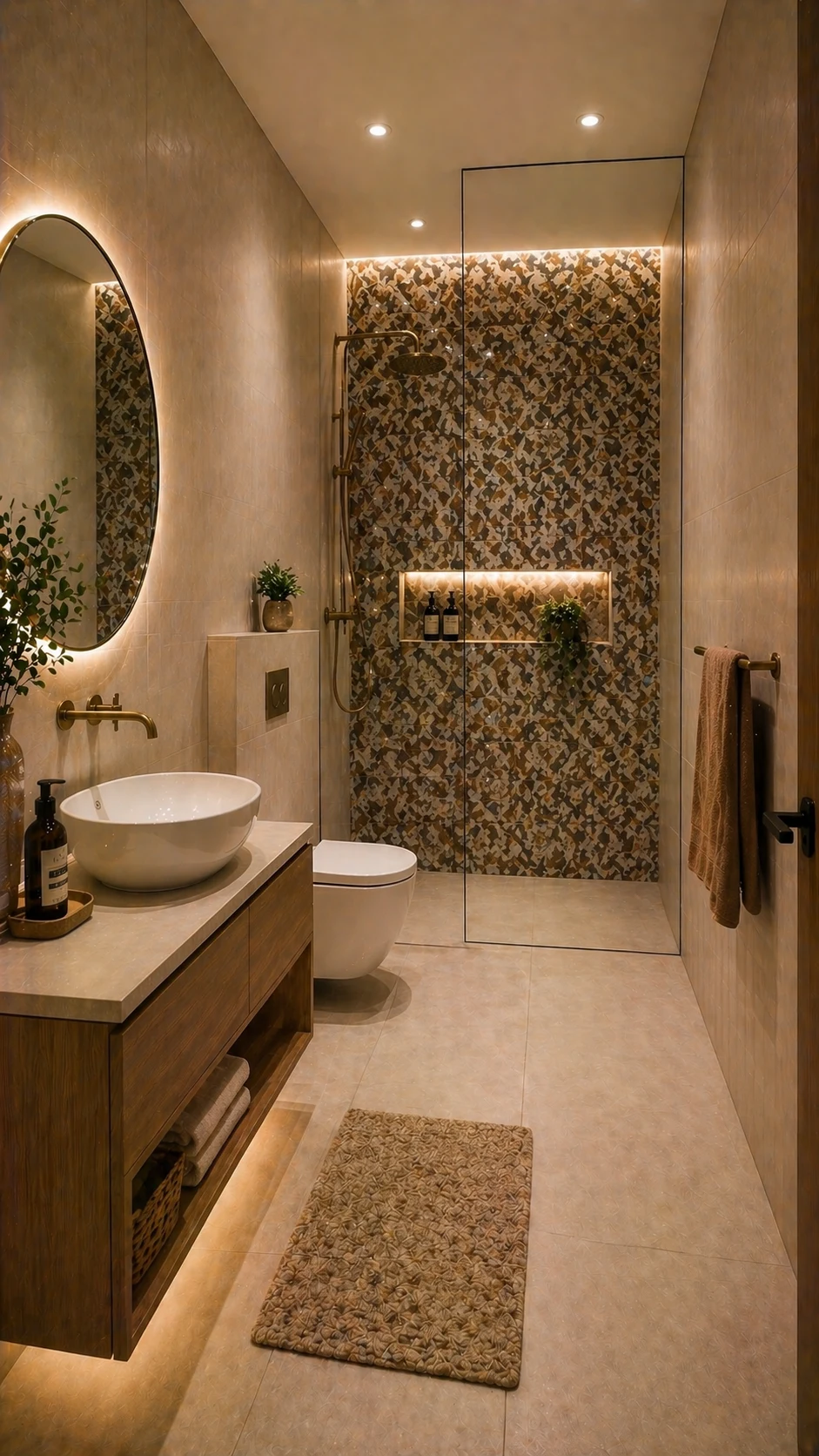
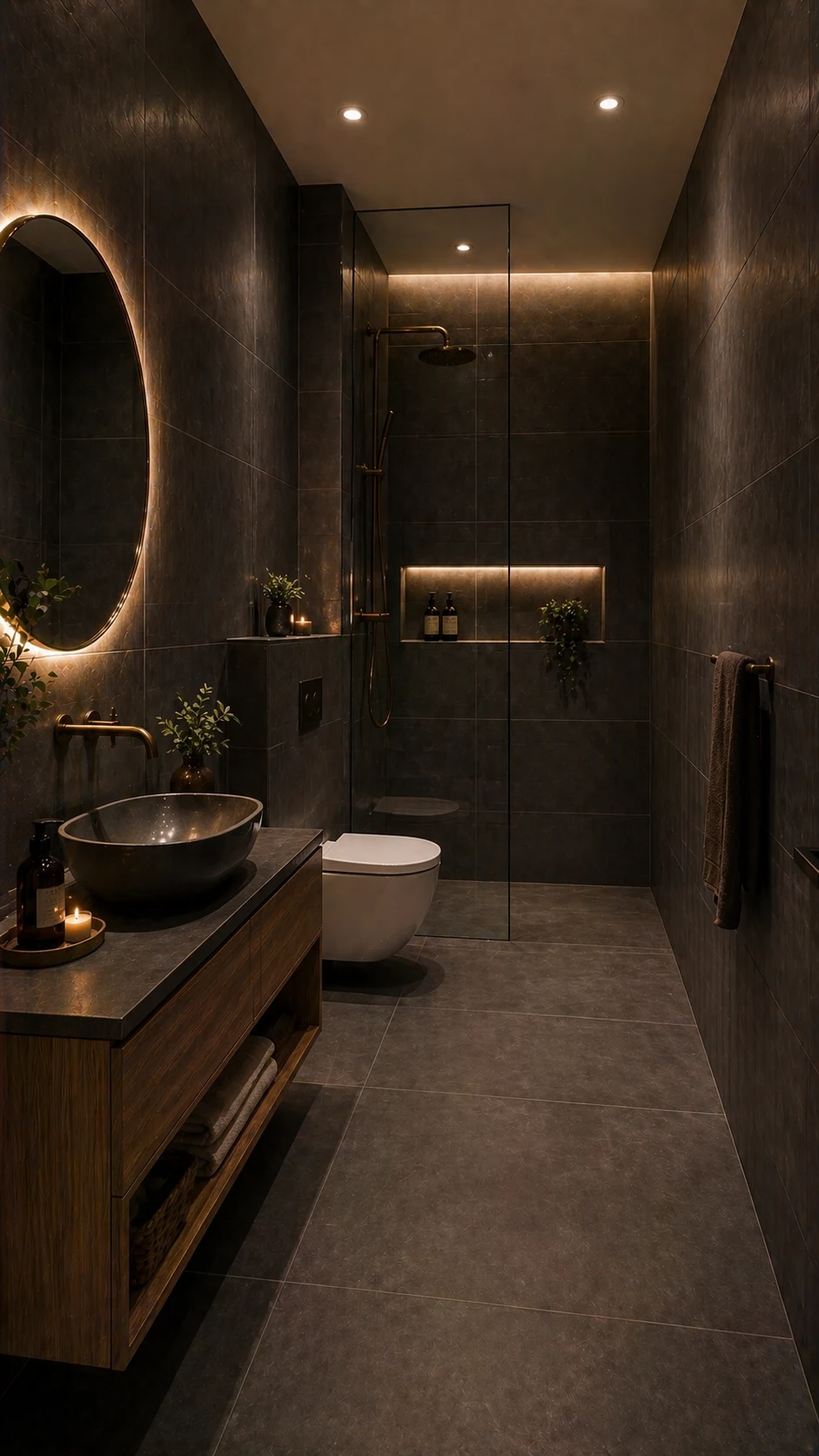
Dark tiles in bathrooms used to be considered risky — associated with rooms that felt cave-like and oppressive rather than sophisticated and dramatic. That perception has changed completely. Trendy bathroom tiles at the high end of contemporary design now frequently embrace deep, saturated tones — charcoal, slate, deep green, midnight blue — with results that are genuinely extraordinary.
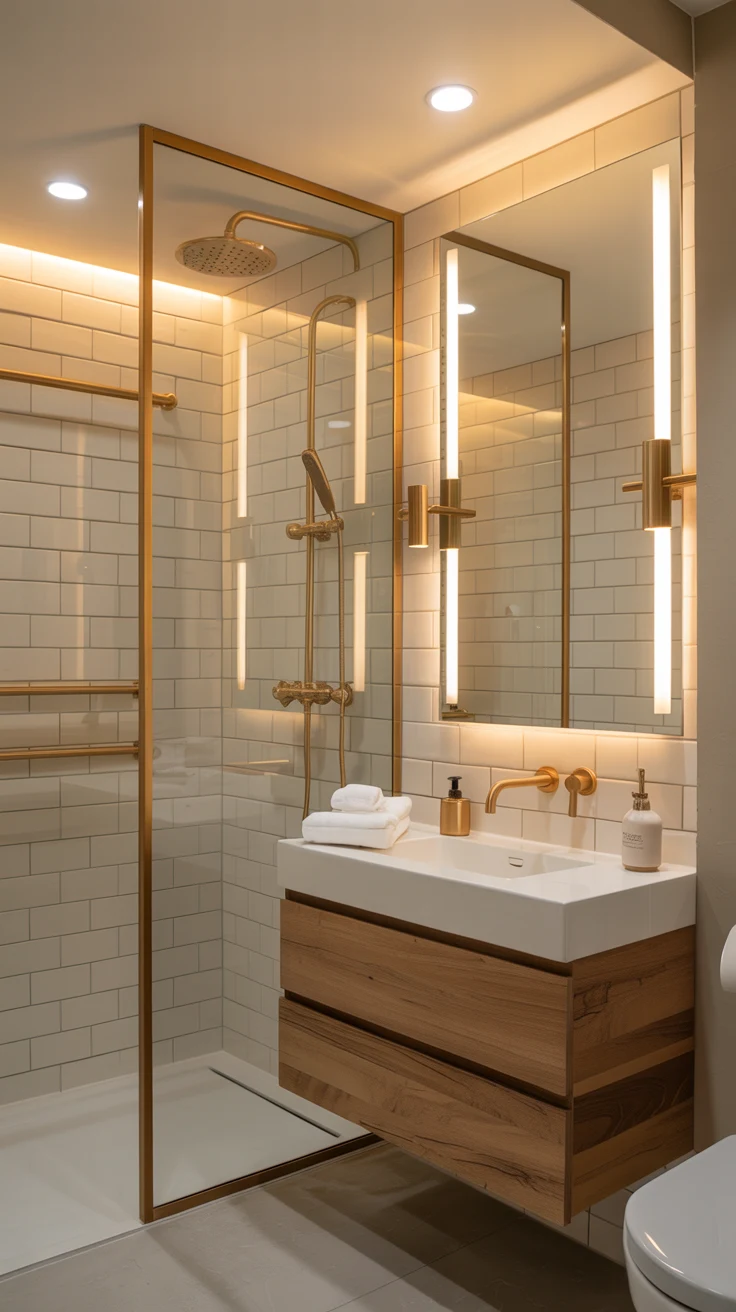
The key to making dark tiles work is light — specifically, generous, layered, warm-toned artificial lighting that reveals the tile’s depth and richness rather than letting the room fall into shadow. A recessed spotlight that hits a dark tile wall at an angle reveals a surface quality completely invisible in flat light. A backlit mirror over a dark tile vanity wall creates a beautiful tonal contrast that makes both elements look more considered. Dark tile rooms done well feel like the most sophisticated bathrooms imaginable. Done without sufficient lighting, they simply feel dark.
16. Pattern Tile as Focal Point
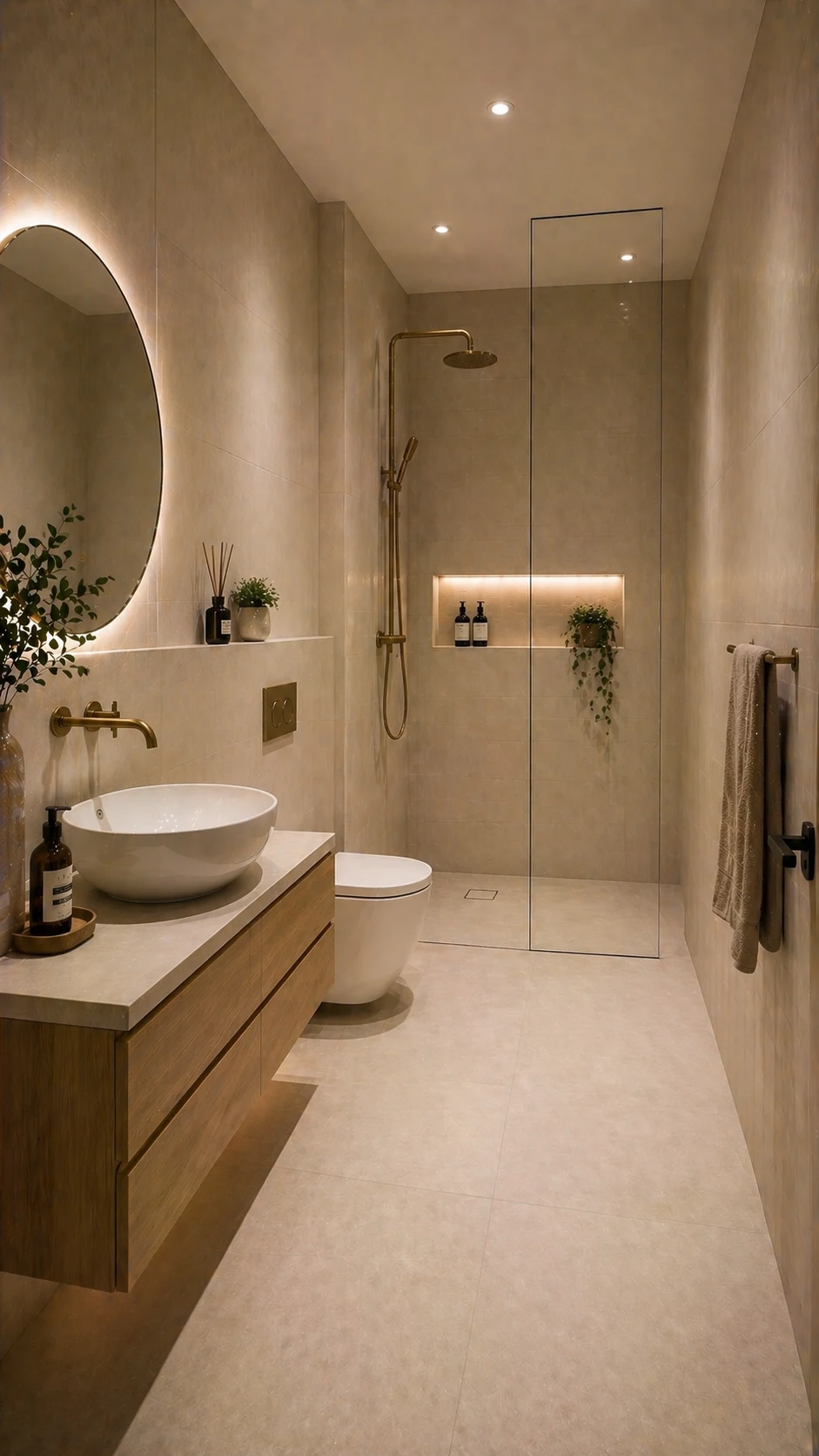
Our final bathroom tile ideas entry is the boldest and potentially the most rewarding: a single wall of genuinely patterned tile used as the room’s undisputed focal point. Not pattern everywhere — one wall, fully committed, while every other surface remains simple and secondary.
The pattern wall creates a room with a clear visual hierarchy — one surface that demands attention, framed by everything else that deliberately doesn’t compete with it. The toilet wall. The wall behind the freestanding bath. The end wall of the shower that you face every morning. Each of these positions can carry a pattern tile that becomes the defining element of the entire bathroom’s character. Choose a pattern that genuinely excites you — geometric, botanical, graphic, or abstract — and then exercise the discipline to keep everything around it beautifully restrained. That restraint is what makes the pattern wall work. Without it, the room becomes chaotic. With it, it becomes genuinely unforgettable.
Final Thoughts
Every bathroom tile inspiration idea in this list is built on one foundational conviction: your tile choice isn’t just a surface covering — it’s the primary design decision that defines your bathroom’s entire character, atmosphere, and quality for as long as you live in your home. It deserves the most thought, the most deliberate consideration, and the most decisive commitment of any decision in the renovation.
From the spatial expansion of large format tiles and the handmade magic of zellige, to the sculptural depth of fluted surfaces and the dramatic power of a fully patterned focal wall — every idea here represents a direction that works because it’s been chosen and executed with intention rather than default.
So here’s your challenge: before your next tile showroom visit, decide on your direction first. Not your specific tile — your direction. Large or small. Textured or smooth. Bold or tonal. Pattern or plain. Walk in with a clear intention and let these ideas guide you toward the choice that’s right for your bathroom specifically. Because the right tile, chosen with confidence and installed with care, will make your bathroom the room people remember. And that’s exactly what it deserves to be.