The Dark Kitchen Is the Boldest Move in Interior Design Right Now — Here’s How to Pull It Off
For years, kitchen design followed one unspoken rule: keep it light. White cabinets, pale countertops, bright overhead lighting — the formula was so dominant it almost became invisible. And then, quietly at first and now absolutely everywhere, designers started going the other way. Dark kitchens began appearing in the most aspirational homes, the most celebrated renovations, and the most-saved posts on every design platform — and the reaction was always the same. People stopped, stared, and thought: why haven’t I seen this before? The dark kitchen isn’t a trend. It’s a declaration. It says this room has personality, confidence, and genuine design intent.
I’ve been obsessed with dark kitchen design for years and finally made the leap in my own home last year — and the dramatic, beautiful result made me wish I’d done it a decade earlier. If you’ve been tempted by dark kitchens but aren’t sure how far to go or where to start, these 13 ideas cover everything you need.
1. Choose the Right Dark Tone
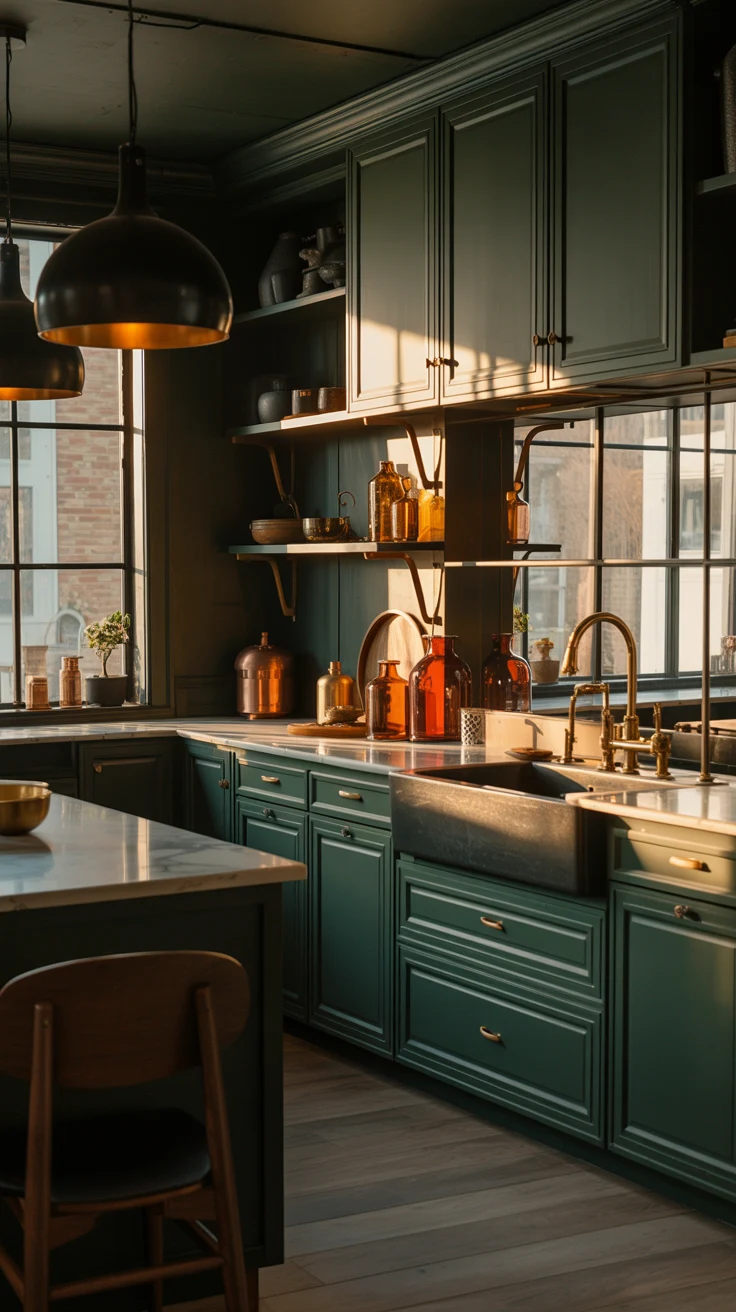
The first and most consequential decision in any dark kitchen design project is choosing the specific dark tone that becomes the room’s defining character. “Dark” is not a single color — it’s an entire spectrum of deep, atmospheric shades that each create a completely different kitchen personality.
Dark Kitchen Colour Options and Their Character:
- Matte black — the most dramatic and architectural choice, timeless and uncompromising
- Deep charcoal — dark but slightly warmer than pure black, extremely versatile
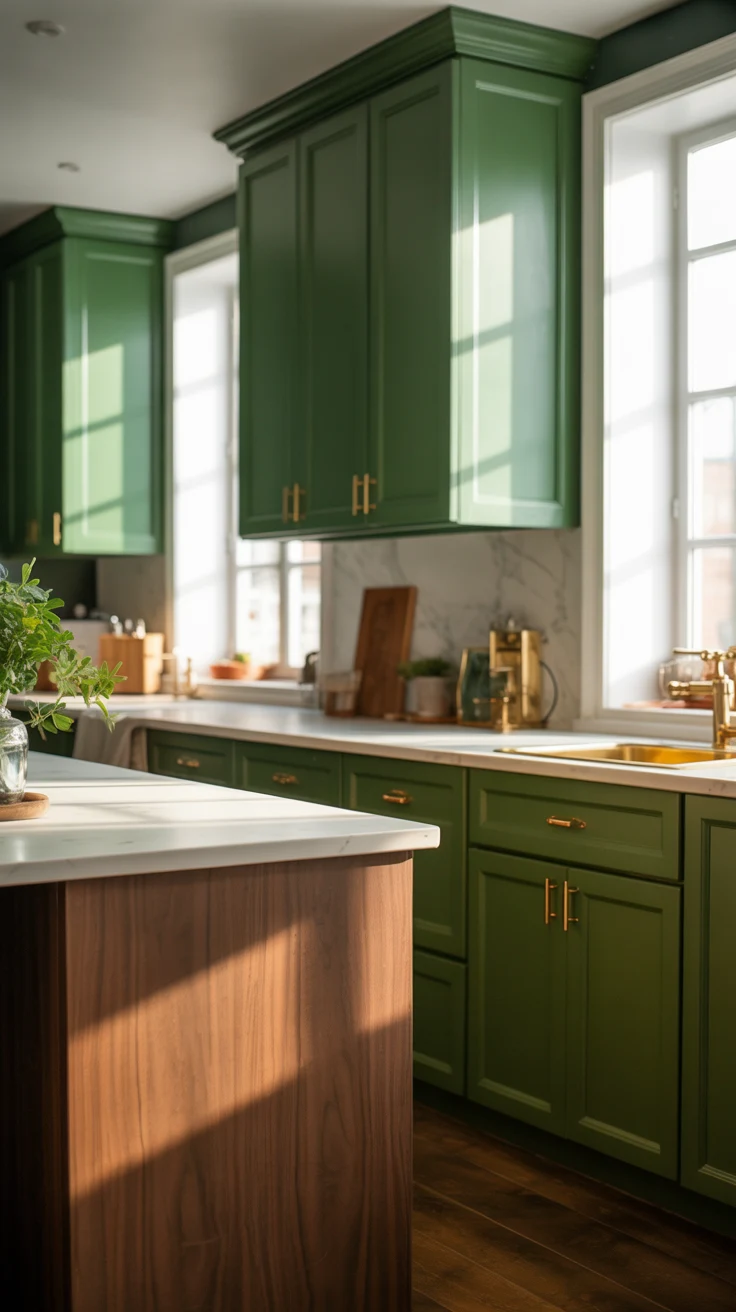
- Forest or bottle green — rich and enveloping, beautiful with brass and natural wood
- Midnight navy — sophisticated and classic, stunning with warm metallic accents
- Deep plum or aubergine — distinctive and luxurious, genuinely unlike any other kitchen
- Warm espresso brown — earthy and cocooning, particularly beautiful with stone surfaces
Test your shortlisted shades on a large sample in the actual kitchen before committing. Dark kitchen ideas look dramatically different under natural daylight versus warm artificial lighting — and both conditions need to feel right before you proceed.
2. Go Dark on the Cabinets First
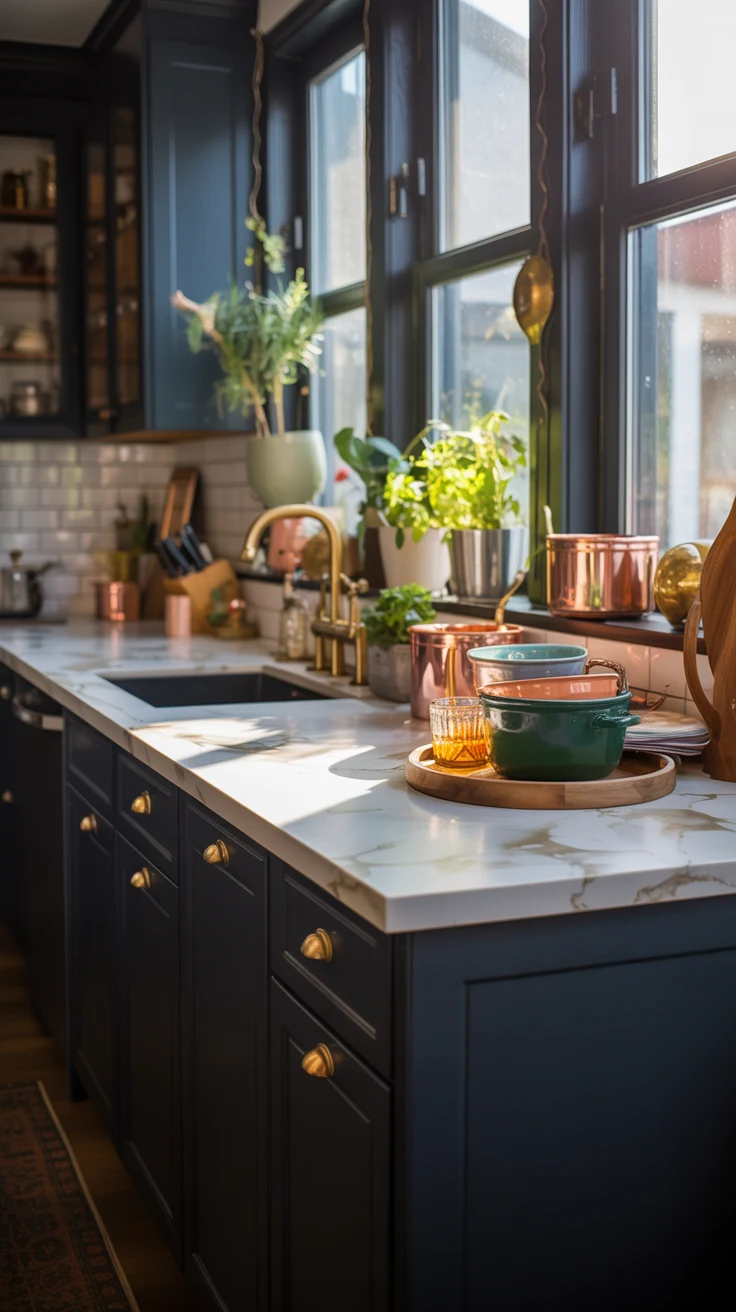
Dark kitchen cabinets are the most accessible entry point into the dark kitchen aesthetic modern movement — and the most impactful single change available in any kitchen. Cabinet fronts cover more visual surface area than any other element in a kitchen, which means changing their color changes the room’s entire character instantly and completely.
You don’t need to replace the cabinet carcasses to make this transformation. Painting existing cabinet doors with a quality kitchen cabinet paint, or replacing the doors alone while keeping existing frames, are both highly effective approaches. Deep charcoal, matte black, or forest green painted cabinet doors against a lighter wall and countertop create exactly the dark kitchen aesthetic that has become one of the most sought-after looks in contemporary kitchen design.
3. Use Contrasting Countertops
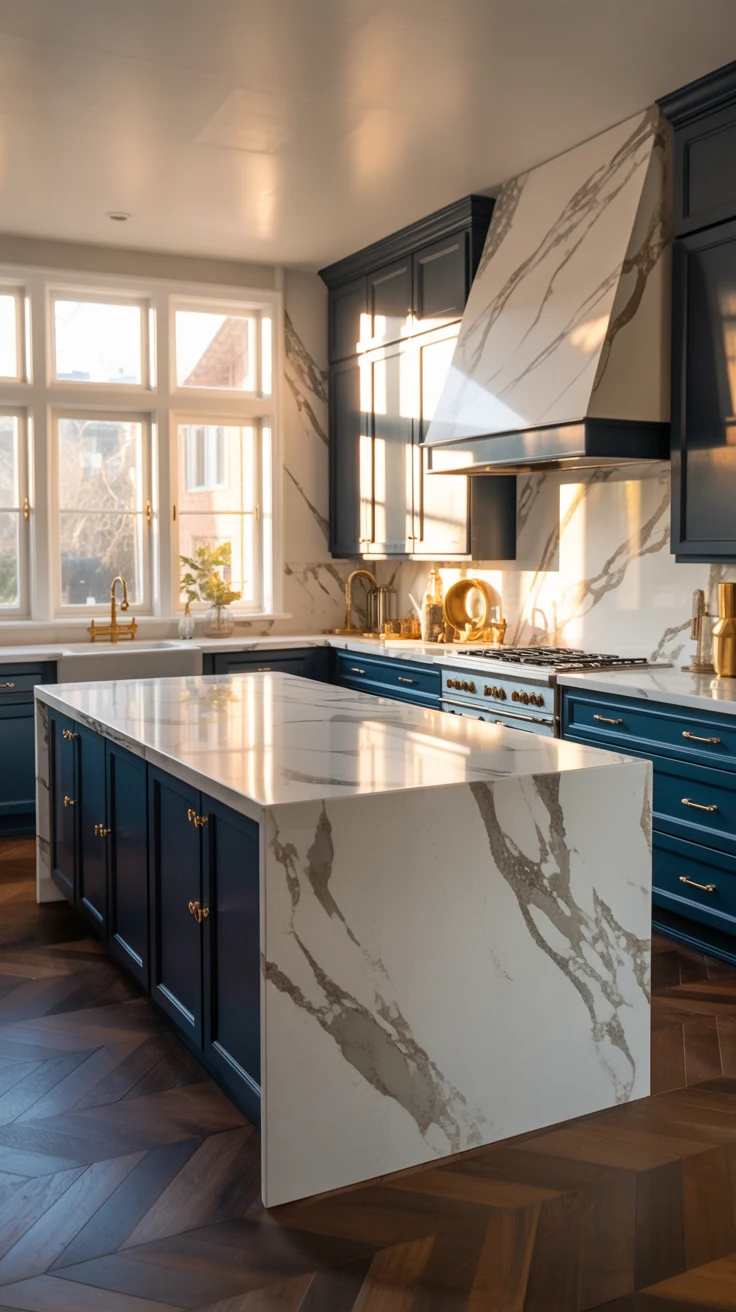
The countertop in a dark kitchen is the surface that determines whether the overall design reads as cohesive and considered or as simply very dark. The right countertop choice creates contrast, introduces texture and material interest, and prevents the kitchen from feeling visually heavy or one-dimensional.
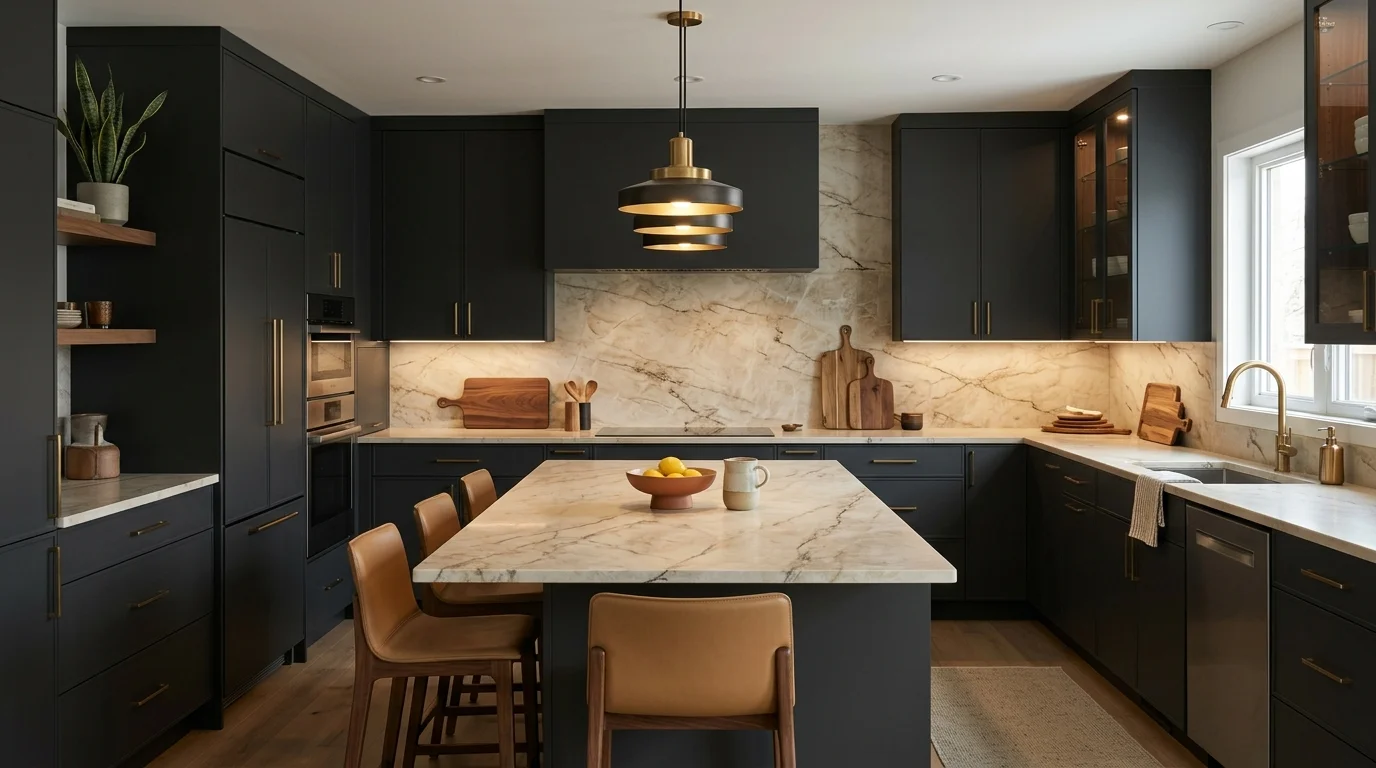
White or cream marble with dramatic grey or black veining against dark cabinets creates the classic, high-contrast combination that appears in the most admired dark kitchen interior images everywhere. Warm walnut or oak butcher block provides organic warmth that balances the depth of dark kitchen cabinets beautifully. Honed concrete or soapstone in a mid-grey tone adds an industrial edge that feels completely contemporary. The countertop is where the dark kitchen finds its balance — choose it with as much care as the cabinet color itself.
4. Layer in Warm Metals
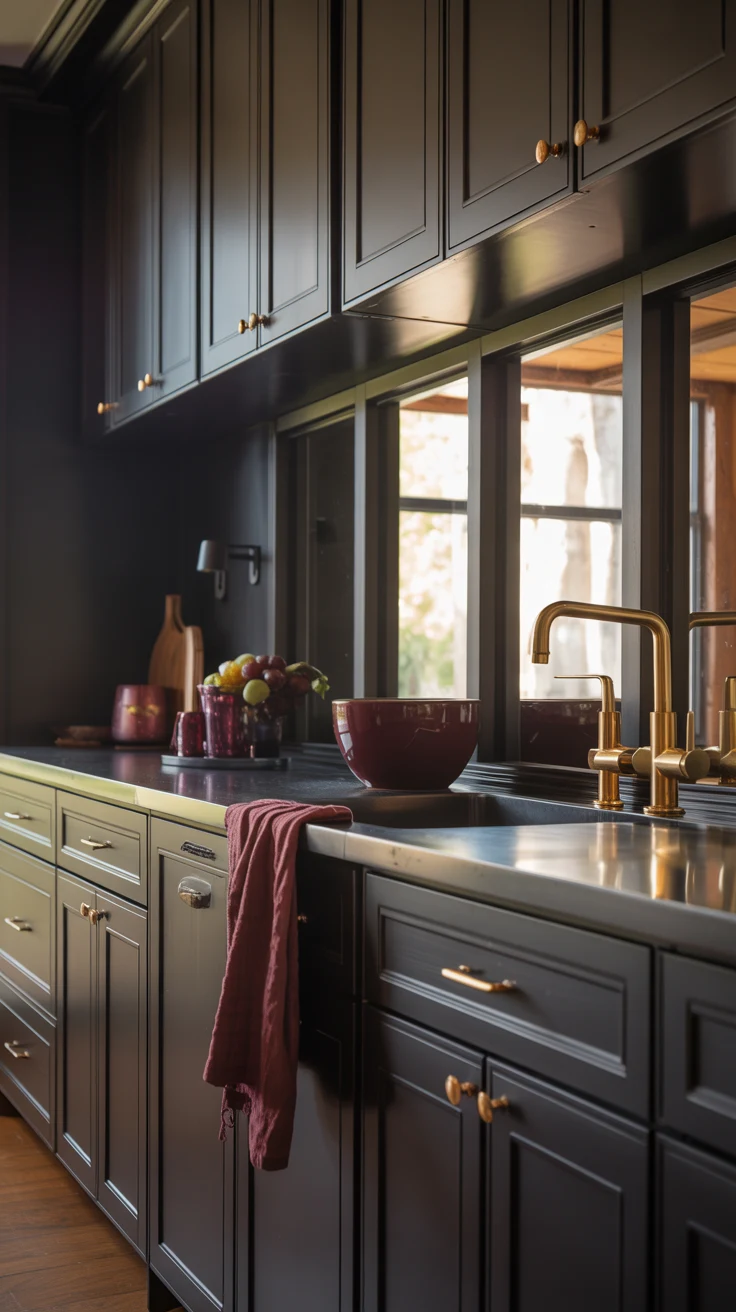
Warm metallic hardware and fixtures are the element that most powerfully determines whether a dark kitchen feels cold and stark or warm and genuinely inviting. The right metal finish against a dark kitchen backdrop creates a visual warmth and a quality of light reflection that fundamentally changes the room’s atmosphere.
Brushed brass against matte black or deep charcoal cabinets is arguably the most beautiful and most consistently admired combination in modern dark kitchen design. The warmth of brass against the depth of dark paint creates a visual chemistry that feels both contemporary and timeless simultaneously. Aged bronze and unlacquered brass that develops patina over time also work extraordinarily well — the warmth of the metal and the depth of the dark cabinet create a combination that feels genuinely luxurious.
5. Light It Strategically
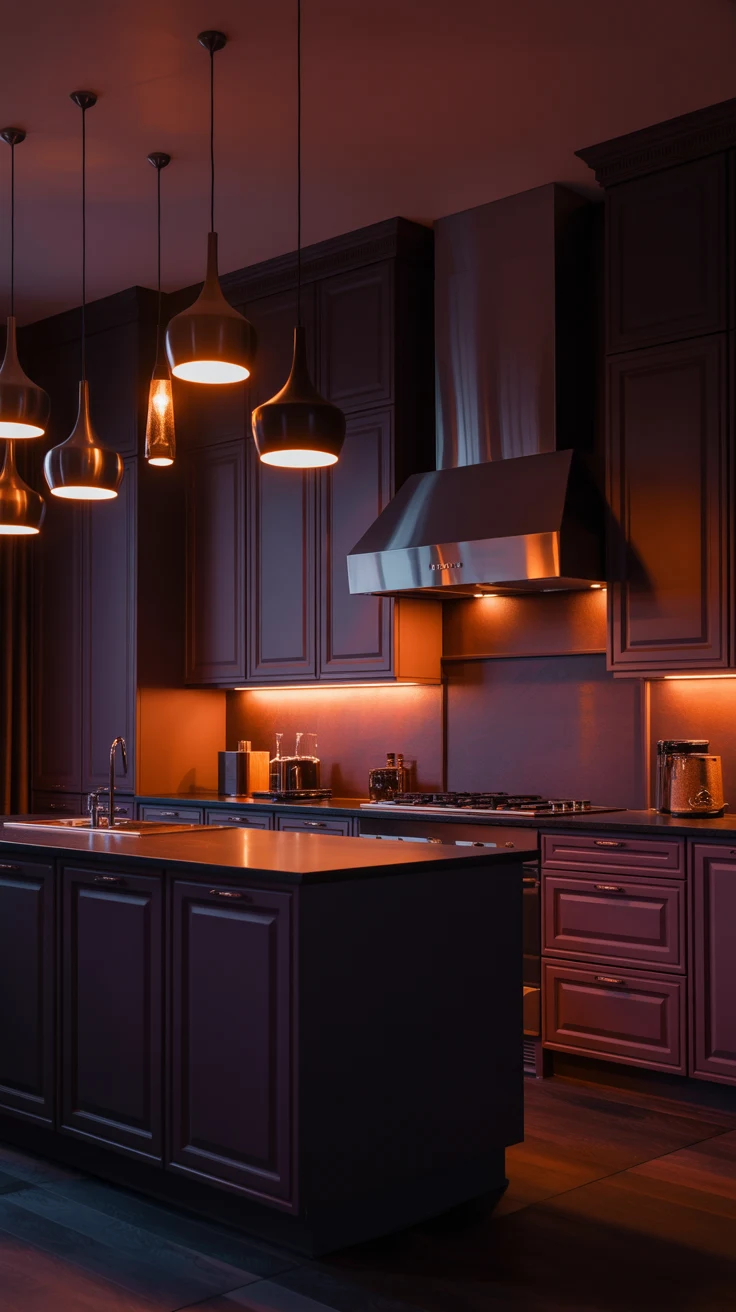
Lighting is the single most important practical consideration in any dark kitchen ideas project — because a dark kitchen that isn’t lit properly doesn’t just look bad, it doesn’t function properly either. Inadequate lighting in a dark kitchen creates shadows exactly where you need clear visibility the most: on the countertop, at the cooking surface, and in the sink.
FYI — the solution is layers of targeted light rather than simply brighter overhead illumination. Under-cabinet LED strips illuminating the countertop directly. Pendant lights above the island providing both task lighting and visual warmth. Recessed spots on dimmers for adjustable ambient illumination. Accent lighting inside glass-fronted cabinets creating drama and depth. Each lighting layer serves a different purpose — and together they ensure the dark kitchen interior is as functional as it is beautiful.
6. Create a Black Kitchen Aesthetic
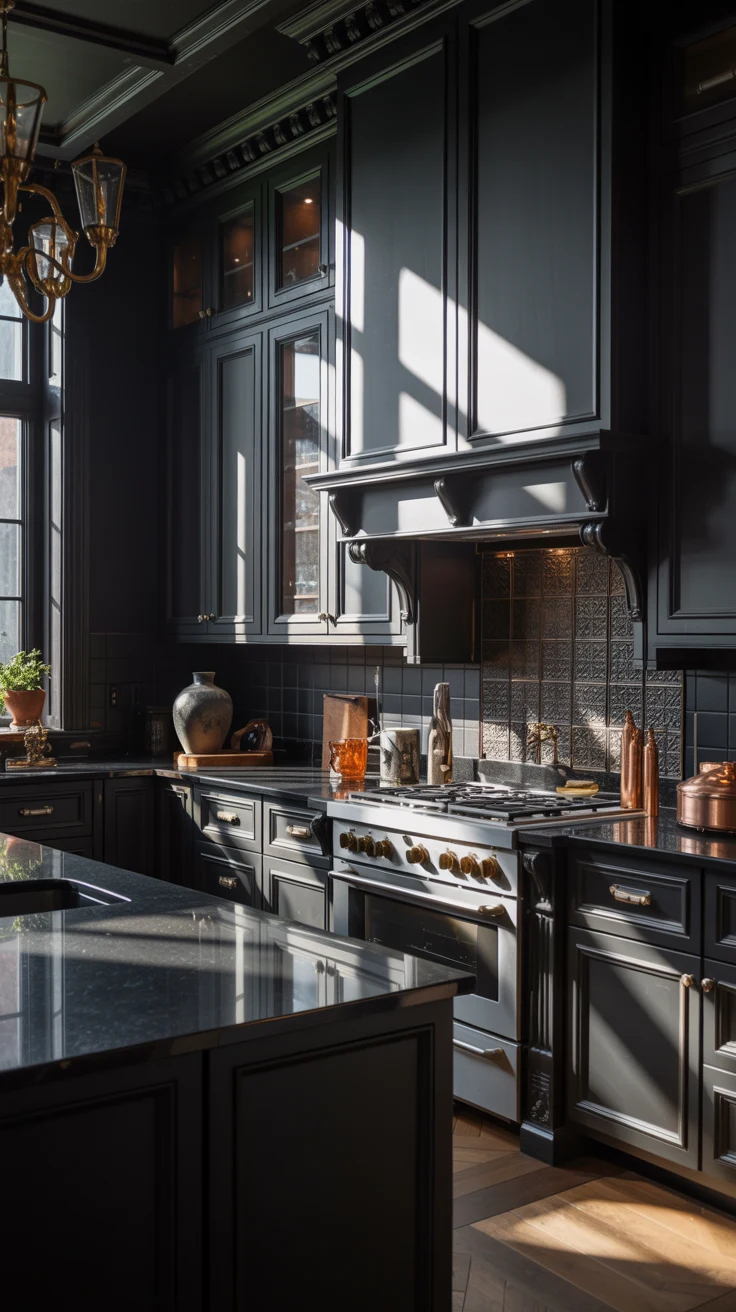
The all-black or near-black kitchen is the most committed and arguably the most extraordinary expression of dark kitchen design — and in the hands of a confident designer, it is one of the most stunning interiors available. Black cabinet fronts, black countertops, black fixtures, black splashback — when unified in a single, deeply saturated tone, the kitchen becomes something genuinely architectural.
The key to making an all-black kitchen aesthetic modern rather than oppressive is contrast through material variation. Matte black cabinets against a polished black granite countertop with visible crystalline structure. Black lacquered fronts alongside a raw concrete island. Matte black hardware against a brushed black stainless steel range. The black remains consistent but the materials vary — and that variation creates depth and richness that prevents the room from feeling flat or cavern-like.
7. Mix Dark Cabinets With a Light Ceiling
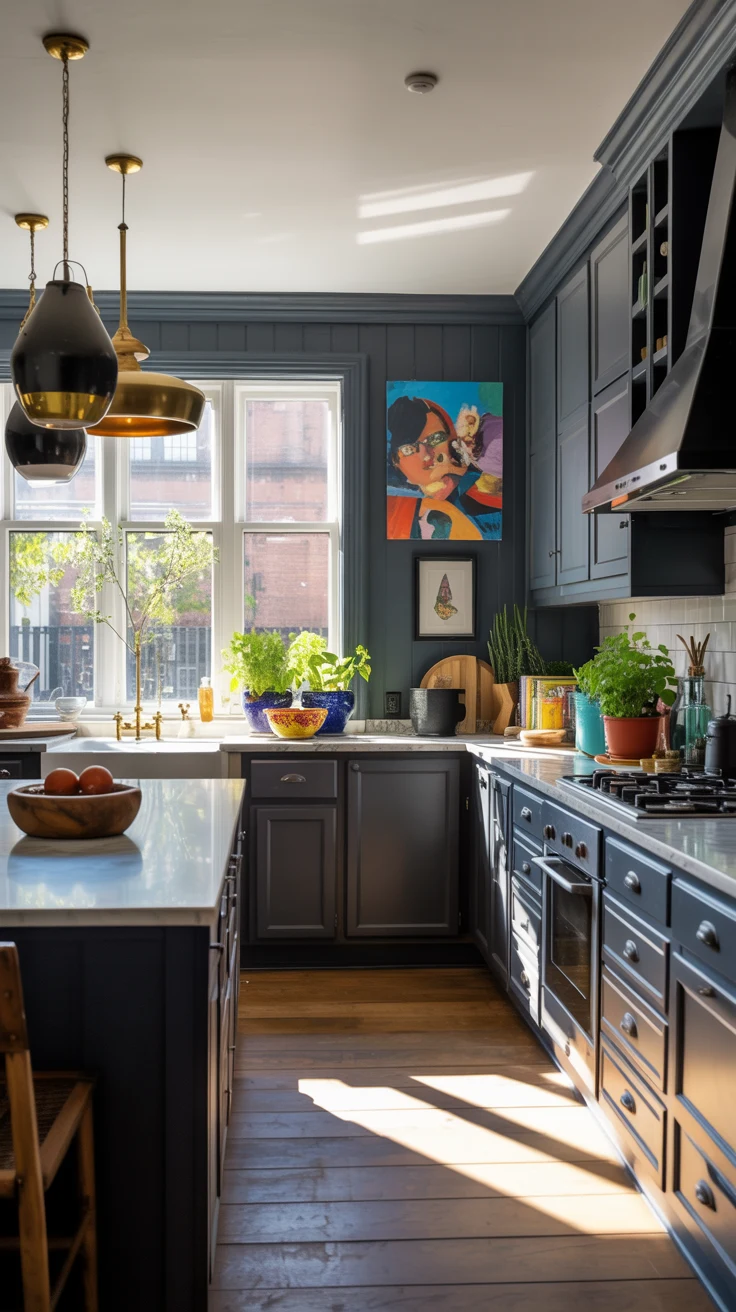
One of the most effective ways to make dark kitchens feel spacious and well-balanced rather than enclosed and heavy is maintaining a light ceiling above dark cabinetry and walls. The contrast between a dark lower half of the kitchen and a white or light ceiling above creates a visual breathing space that makes the darkness below feel deliberate and considered rather than overwhelming.
This two-tone approach — dark kitchen cabinets with a pale ceiling — is particularly effective in kitchens with lower ceilings where full dark immersion might create an uncomfortably enclosed feeling. It also allows more natural light to bounce off the ceiling surface and distribute throughout the kitchen, making the overall space feel brighter than a uniformly dark kitchen would appear.
8. Try Dark Lower Cabinets With Light Uppers
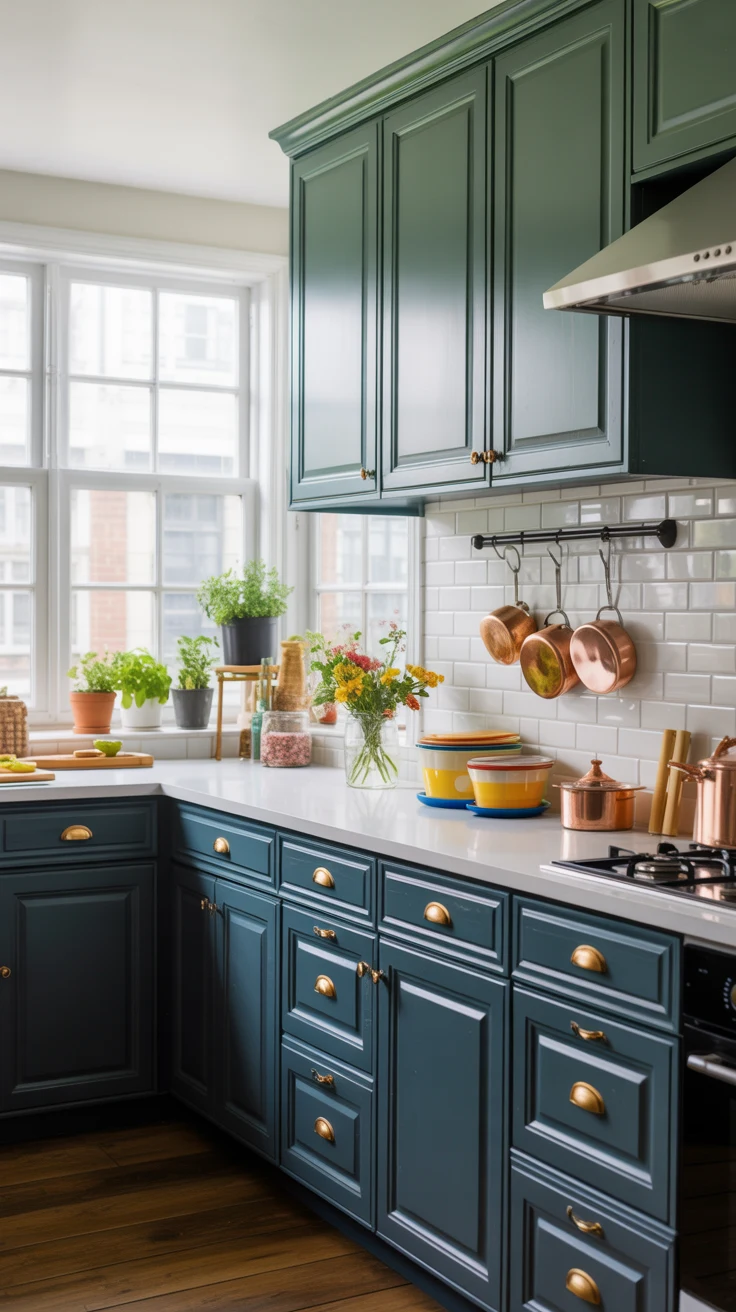
One of the most popular and most visually balanced dark kitchen ideas modern approach is using dark lower cabinets alongside lighter upper cabinets. This two-tone configuration takes the drama and personality of dark kitchen design and balances it with the brightness and visual lightness of a contrasting upper cabinet color.
Two-Tone Dark Kitchen Combinations:
- Dark charcoal lowers with white or cream upper cabinets
- Forest green base units with warm off-white wall cabinets
- Midnight navy lower cabinets with pale grey or sage upper units
- Matte black base units with open natural wood floating shelves above
This configuration is also one of the most practical dark kitchen ideas for smaller kitchens — it brings the dark tones to the most visually grounded part of the room while keeping the upper walls and ceiling area lighter and more open.
9. Introduce Natural Stone
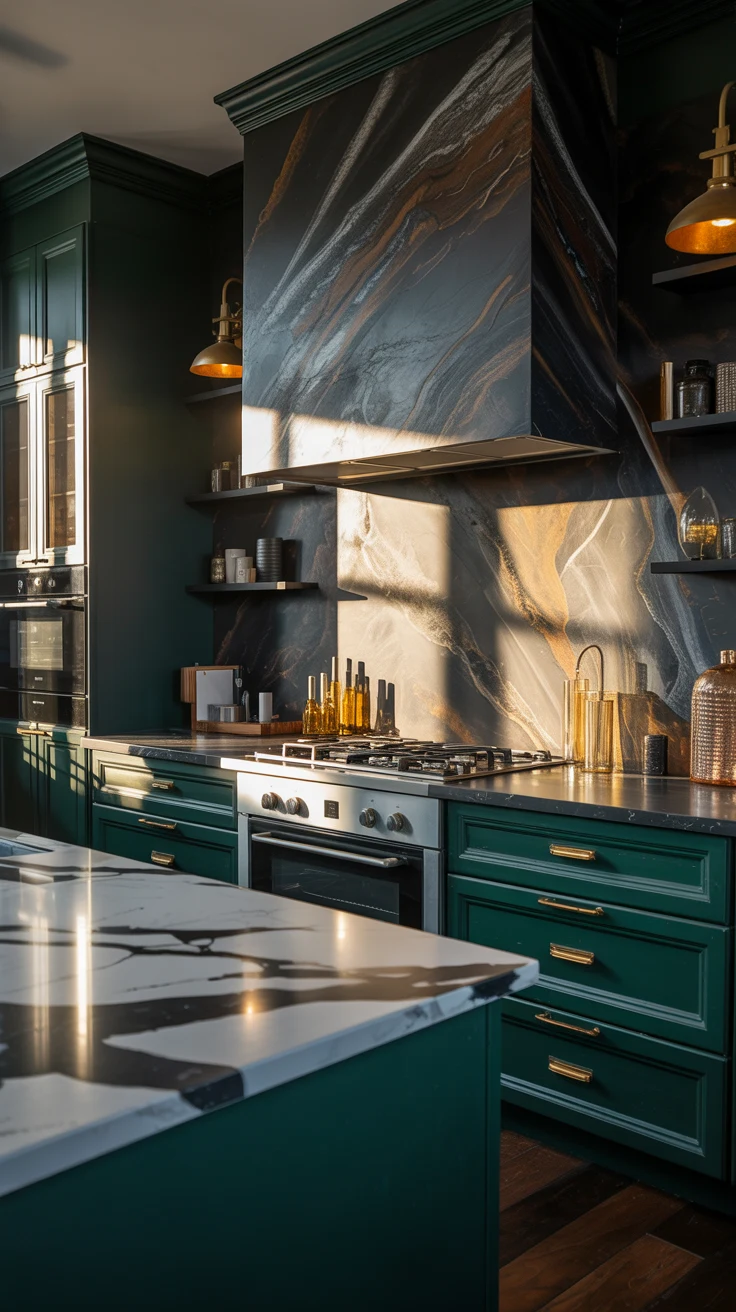
Natural stone is one of the most beautiful and most appropriate material partners for a dark kitchen interior — and its presence elevates the overall design from striking to genuinely extraordinary. Stone’s geological depth, natural variation, and honest materiality create a counterpoint to the precision and flatness of dark painted cabinetry that feels completely right.
A full-height stone splashback in book-matched marble running from countertop to ceiling creates a dramatic focal point of natural beauty. A stone island in a contrasting tone to the perimeter cabinets becomes the kitchen’s architectural centerpiece. Even small stone accessories — a marble mortar and pestle, a stone chopping board, a travertine soap dispenser — add organic character and material richness that softens the kitchen’s dark elements beautifully.
10. Add Organic Warmth
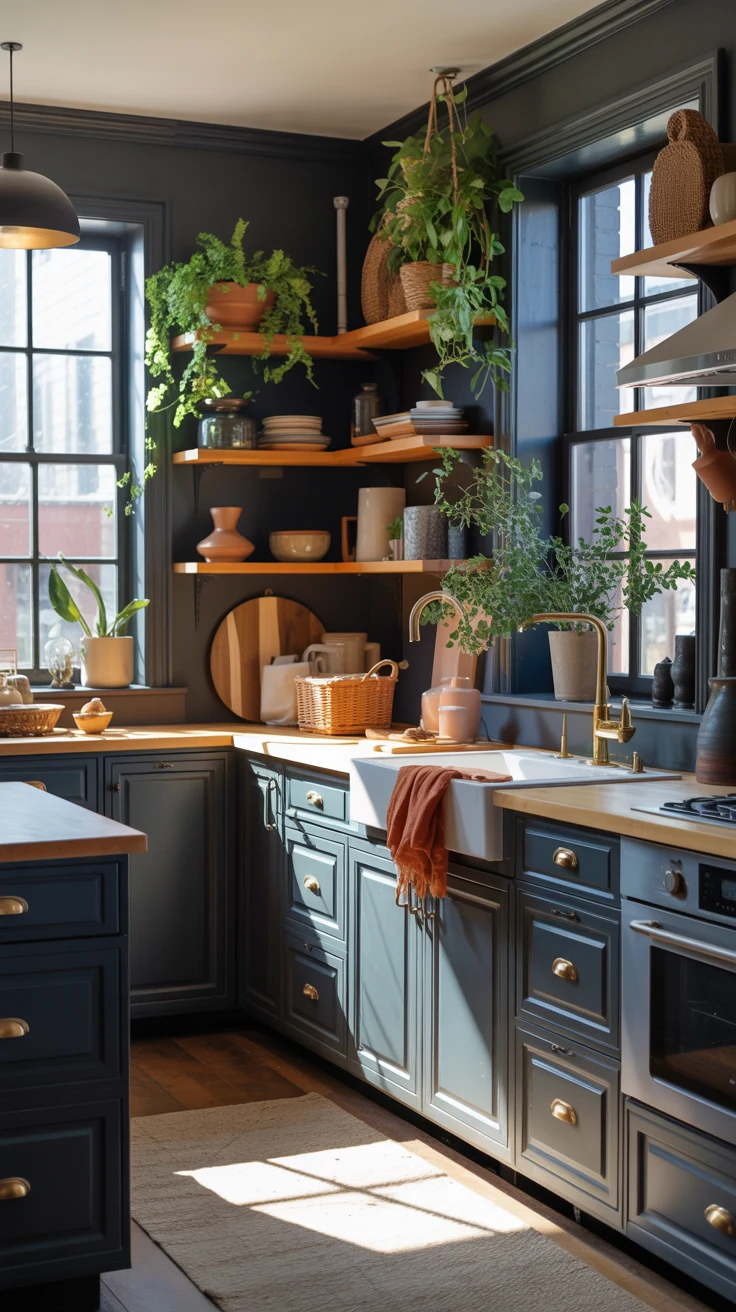
One of the most common concerns about dark kitchen ideas is that they’ll feel cold or unwelcoming — that all the depth and drama will come at the cost of the warmth and humanity that makes a kitchen feel like the heart of a home. The solution is organic warmth: natural materials, living plants, and warm-toned accessories that balance the darkness with genuine life and heat.
Natural wood in the island top, open shelving, or bar stools. A trailing plant on a high shelf or windowsill. A warm-toned ceramic fruit bowl on the counter. Linen or cotton tea towels in warm neutral tones. A cluster of wooden serving boards displayed against the splashback. Each organic element introduces warmth, texture, and natural character that makes the dark kitchen feel genuinely inviting rather than simply dramatic.
11. Design a Dark Kitchen With Island
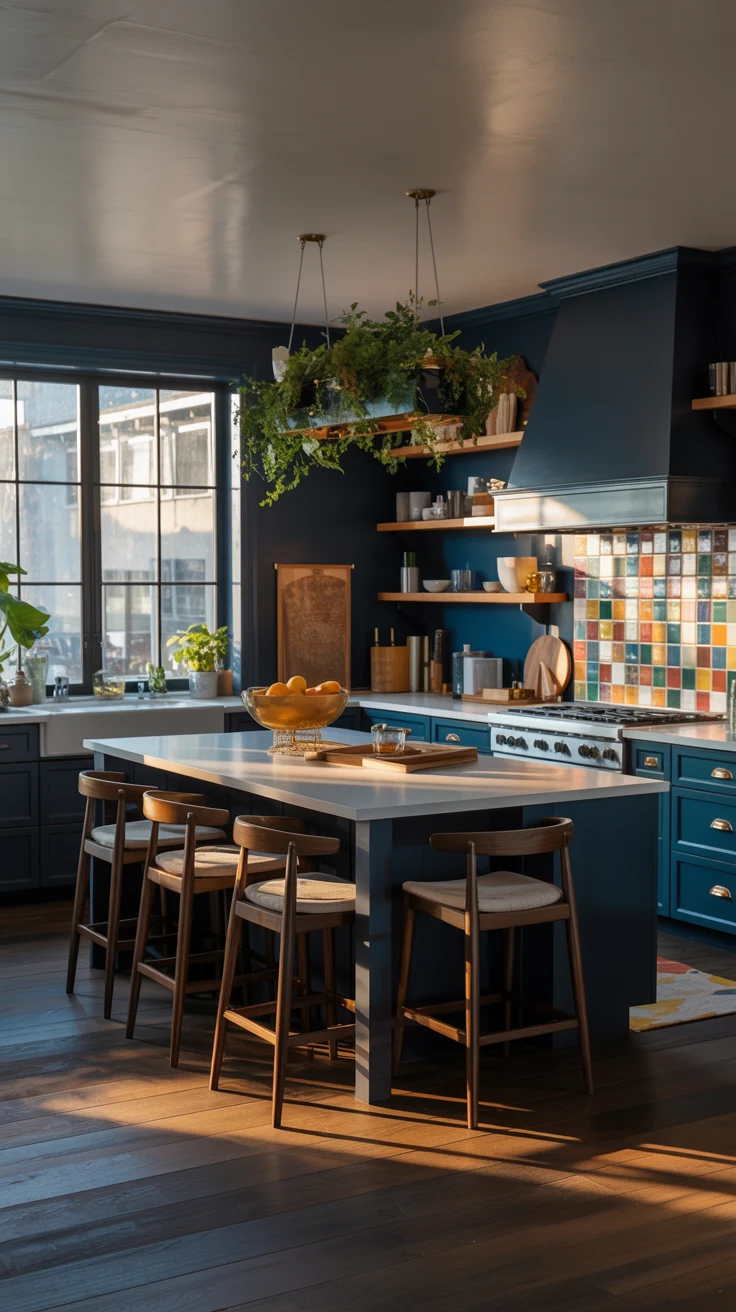
A dark kitchen with a central island is the most complete and most aspirational expression of dark kitchen ideas — combining the personality and drama of dark design with the practical and social benefits of additional workspace and informal dining. The island in a dark kitchen becomes an architectural statement piece that anchors the entire room.
IMO, the most beautiful dark kitchen interior configurations use the island as an opportunity for intentional contrast with the perimeter cabinetry. A warm wood or natural stone island against deep charcoal perimeter units. A light concrete island beside matte black cabinetry. A white marble island against forest green base units. The contrast draws the eye to the island, defines it as the kitchen’s social heart, and adds a material richness that makes the overall dark kitchen design feel layered and genuinely considered.
12. Commit to a Matte Finish
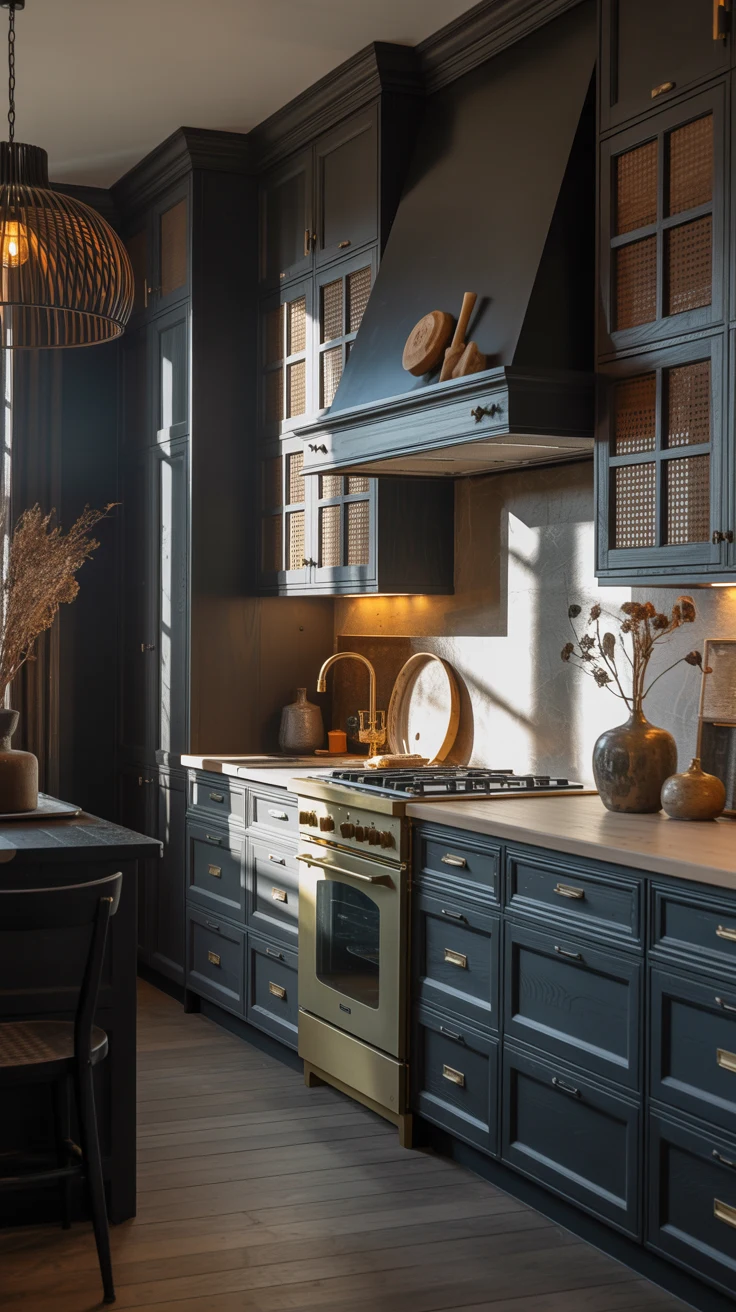
The finish choice in dark kitchen cabinets matters enormously — and matte is almost always the right answer for dark kitchens. Matte finishes absorb light softly rather than reflecting it, creating a depth and sophistication that gloss alternatives simply cannot achieve in dark tones. Dark gloss cabinets show every fingerprint and every scratch; dark matte cabinets look perpetually beautiful.
Matte finish also has an important textural quality that contributes to the overall atmosphere of modern dark kitchen design. It makes the surface look like it has been thoughtfully applied rather than simply manufactured. Matte dark surfaces have a visual weight and seriousness that makes the kitchen feel genuinely designed — which is exactly the effect dark kitchen ideas are intended to create.
13. Style It With Absolute Precision
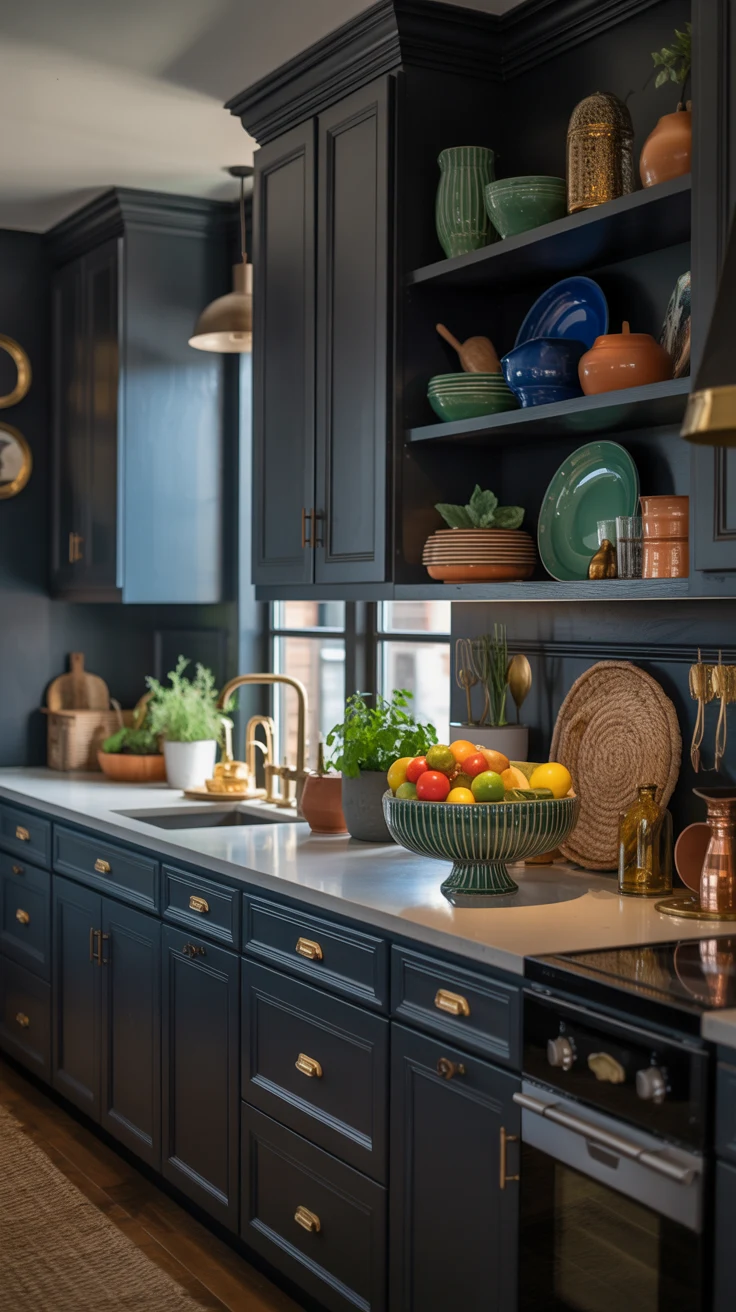
The final idea in any great dark kitchen design project is the one that completes everything else — and it’s about styling with a level of precision and intentionality that the darkness of the space both requires and rewards. In a dark kitchen, every visible object is prominent against the deep backdrop. Nothing hides. Everything is seen. Which means everything must be genuinely beautiful.
Dark Kitchen Styling Essentials:
- Matching brass or warm metallic accessories — soap dispenser, brush holder, paper towel holder
- Quality knife block or magnetic strip in a coordinating dark or warm metallic finish
- One architectural plant — a sculptural snake plant or trailing pothos against the dark backdrop
- Matching ceramic or glass storage containers rather than branded packaging on open shelves
- A statement fruit bowl or wooden board as the counter’s intentional focal point
- Pendant lights that are beautiful enough to function as jewelry for the room
These details make the difference between a dark kitchen that looks renovated and one that looks genuinely, completely designed. The darkness amplifies the quality of every detail — which is, ultimately, one of the most compelling reasons to choose dark kitchen ideas in the first place.
Wrapping Up
There you have it — 13 dark kitchen ideas that cover every dimension of this bold, beautiful, and deeply rewarding design approach. From choosing the right dark tone and specifying dark kitchen cabinets to lighting strategy, warm metal accents, natural stone, organic warmth, and precision styling — a dark kitchen is built through confident decisions and consistent execution.
The most important thing? Commit. Half-committed dark kitchens — one dark wall surrounded by pale surfaces, dark cabinets under inadequate lighting, or dark units without the warm accents to balance them — rarely achieve the atmosphere that makes dark kitchen design so compelling. The magic requires full commitment.
Take the leap. Choose your dark. Light it properly. Warm it with brass and wood and stone. And then stand in the kitchen you’ve created and understand, finally and completely, why this is the boldest and most beautiful move in interior design right now.
And yes — your guests are absolutely going to ask what color that is. Have the paint code ready.
Frequently Asked Questions
1. What colors work best for a dark kitchen?
Matte black, deep charcoal, forest green, bottle green, midnight navy, deep plum, aubergine, and warm espresso brown are excellent choices for creating a dark kitchen.
2. Will a dark kitchen make the room feel smaller?
Not necessarily. A dark kitchen can feel sophisticated and atmospheric when balanced with appropriate lighting, contrasting countertops, natural materials, and a lighter ceiling.
3. What countertop colors work best with dark cabinets?
Warm white, cream, and light marble with dramatic veining create strong contrast against dark cabinets. Natural walnut or oak can also add warmth, while mid-gray concrete or soapstone creates a more industrial look.
4. What hardware looks best with dark kitchen cabinets?
Brushed brass, aged brass, unlacquered brass, and aged bronze work especially well. Their warm metallic tones prevent deep cabinet colors from feeling cold or overly stark.
5. How do you properly light a dark kitchen?
Use multiple layers of lighting rather than relying on one bright ceiling fixture. Under-cabinet LEDs, island pendants, recessed lights, and accent lighting inside cabinets can provide both practical illumination and atmosphere.
6. Can I create an all-black kitchen without making it feel oppressive?
Yes. The key is varying the materials and finishes. Combine matte black cabinets with natural stone, polished or textured surfaces, wood, warm metals, and carefully layered lighting to create depth.
7. Should a dark kitchen have a light ceiling?
A light ceiling can help balance dark cabinetry and walls, especially in kitchens with lower ceilings. It allows more natural light to bounce around the room and can make the overall space feel more open.
8. Are dark lower cabinets with light upper cabinets a good idea?
Yes. This two-tone approach keeps the visual weight toward the lower portion of the kitchen while allowing lighter upper cabinets, shelves, or walls to make the room feel brighter and more spacious.
9. How can I make a dark kitchen feel warmer?
Introduce natural wood, warm brass or bronze, stone, plants, handmade ceramics, warm neutral textiles, and warm 2700K lighting. These organic elements soften the depth of the dark cabinetry.
10. Is matte or glossy better for dark kitchen cabinets?
Matte finishes are particularly effective because they absorb light softly and create a sophisticated, understated appearance. They also tend to show fewer fingerprints and scratches than dark glossy surfaces.
11. How should I decorate a dark kitchen countertop?
Keep the styling highly intentional. A beautiful fruit bowl, wooden serving boards, matching ceramic containers, one architectural plant, and coordinated warm-metal accessories can provide enough visual interest without cluttering the workspace.
12. Does a dark kitchen work in a small space?
Yes. For smaller kitchens, consider dark lower cabinets with lighter upper cabinets or open natural-wood shelving. This keeps the dramatic dark elements grounded while maintaining visual openness above.
13. What makes a dark kitchen look professionally designed?
Consistency and precision make the biggest difference. Coordinate the cabinet finish, hardware, lighting, stone, accessories, and materials so every visible element feels intentionally selected rather than randomly added.