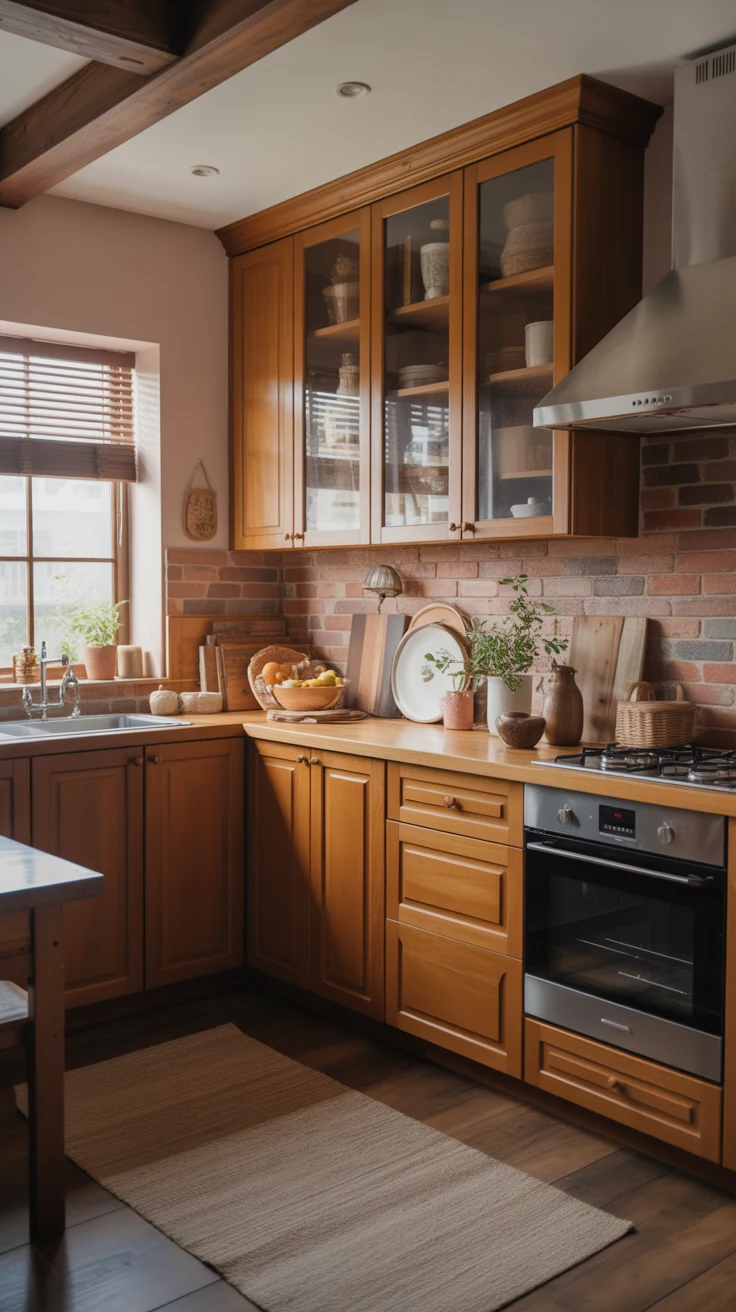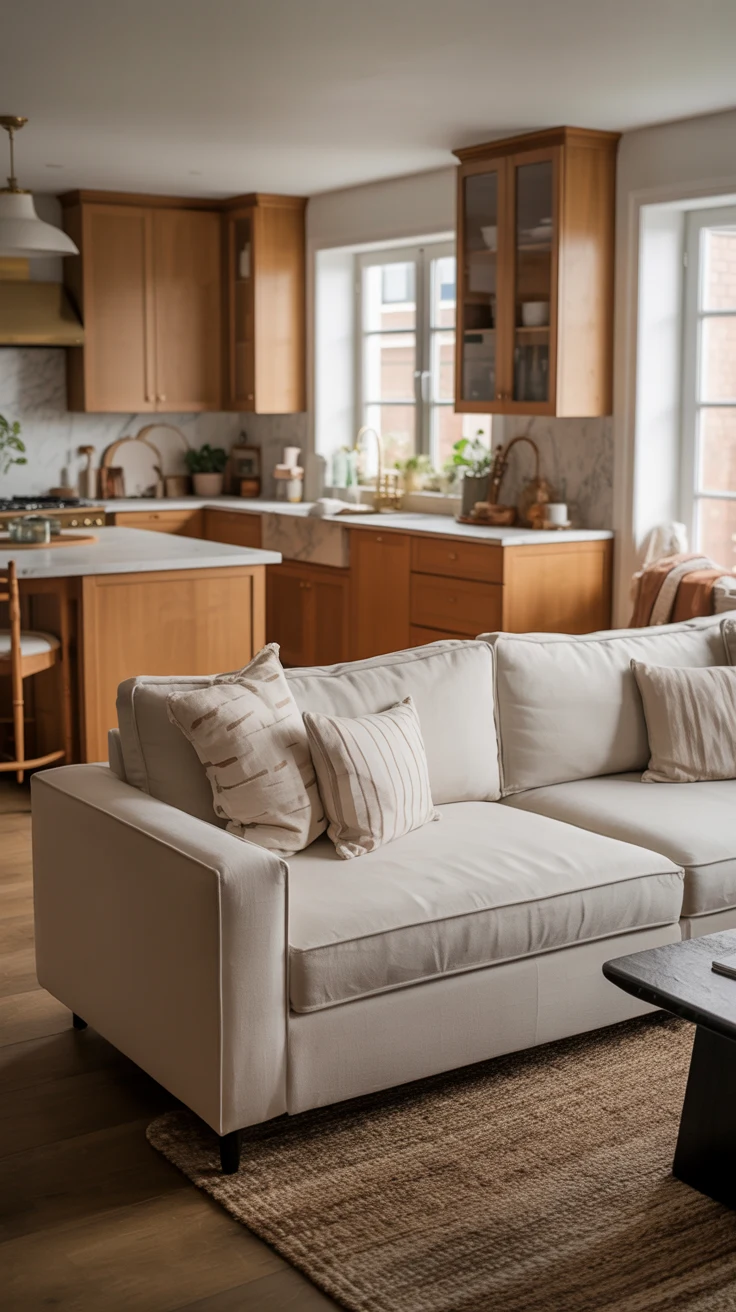

8 Kitchen Organizing Mistakes That Make Your Kitchen Feel Messy
Introduction
If your kitchen always looks messy no matter how often you tidy it, the problem is probably not your cleaning habits. Most messy-looking kitchens are not dirty at all. They are organized badly, which means the mess comes back within a day of cleaning because nothing has a proper home, the counters collect everything by default, and the cabinets hide a jumble that spills out every time a door opens. You can wipe the counters every evening and still wake up to a kitchen that feels chaotic, because tidying treats the symptom while the system underneath keeps generating clutter.
Kitchen organizing mistakes are usually invisible to the person living with them. You get used to the stack of pans balanced on top of each other, the drawer that will not close properly, and the pantry shelf where you buy duplicates because you cannot see what you already own. Guests notice it instantly, though, and so do you on the days when you are trying to cook a real meal and spend half the time hunting for the right lid, the right spice, or a clear patch of counter. The kitchen feels messy because using it is hard, not because you are lazy or disorganized by nature.
The good news is that every mistake in this guide has a simple fix, and none of them requires a remodel or a big budget. Work through the eight mistakes below, fix the ones you recognize in your own kitchen, and you will feel the difference within a week. If you are starting from scratch, our guide on kitchen organization for beginners lays out the full system these fixes fit into, so you can build good habits from the ground up instead of patching one problem at a time.
1. Keeping Everything on the Countertop

The countertop is the most common victim of kitchen organizing mistakes, because it is the easiest place to put things down. The coffee maker stays out, then the toaster, then the blender, then the knife block, the fruit bowl, the mail, the keys, and the vitamins. Each item seems reasonable on its own, but together they eat every inch of workspace until chopping an onion means shoving things aside first. A kitchen with no clear counter feels messy even when it is clean, because the eye reads a crowded surface as clutter no matter how tidy each object is.
The fix is to treat counter space as workspace, not storage. Keep out only what you genuinely use every single day — for most people, that is the coffee maker and perhaps the knife block — and move everything else to a cabinet, a shelf, or an appliance garage. Once the counters are clear, you will be amazed at how much bigger the kitchen looks and how much easier cooking becomes. If you want the cleared counters to still look inviting, our guide on how to style kitchen counters shows how a few intentional pieces can make an empty counter feel styled rather than bare.
2. Storing Things Where They Do Not Belong

The second classic mistake is storing items by category instead of by task. All the baking trays live together in one cabinet, all the pots in another, and all the plates somewhere else entirely — which sounds logical until you realize that making dinner means opening five different cabinets across the kitchen. Things end up where they do not belong because the “right” spot is inconvenient: the spatula migrates to the junk drawer, the baking sheets end up on top of the fridge, and the everyday plates sit behind the holiday platters.
Zone your kitchen by how you actually cook instead. Keep prep tools near the main counter, pots and cooking utensils beside the stove, and plates and glasses near the sink or dishwasher. When everything for one job lives together, putting things away becomes obvious instead of a decision, and other people in the household can do it correctly too. This one change prevents more daily mess than any bin or basket, because it stops clutter from forming in the first place.
3. Cramming Cabinets Without a System

Open a typical kitchen cabinet and you will find the third mistake: a deep, dark space packed with stacked pans, nested bowls, and a leaning tower of baking trays that collapses whenever you pull one item out. Deep cabinets are the worst offenders because the back half is unreachable, so the front fills up while the back becomes a graveyard of forgotten gadgets. Stacking makes it worse, since reaching the pan at the bottom means lifting the whole pile and then abandoning the rest on the counter.
Stop stacking and start filing. Stand baking trays, cutting boards, and lids upright in a vertical rack or a tension rod divider so you can pull one out without disturbing the rest. Add shelf risers to double the usable height inside tall cabinets, and put a turntable in deep corners so nothing hides at the back. Drawers deserve the same treatment: the best drawer organizers for kitchen utensils turn a tangled drawer into rows you can actually see, which means you stop buying duplicates of tools you already own.
💡 Pro Tip: Before you buy any organizer, empty the cabinet completely and measure it. Most organizer returns happen because a bin that looked perfect online is half an inch too wide for the actual shelf.
8 Kitchen Organizing Mistakes Quick-Start Checklist
- ✅ Clear the counters: keep out only what you use every single day
- ✅ Zone the kitchen by task: prep, cooking, dishes, and food storage near where each job happens
- ✅ Stand trays and lids upright instead of stacking them in deep cabinets
- ✅ Declutter before you buy a single bin, basket, or divider
- ✅ Move everyday items to easy-reach shelves and rarely used items up high
- ✅ Give the pantry categories and clear containers so you can see what you own
- ✅ Finish with a 10-minute daily reset so the fixes actually stick
4. Buying Organizers Before Decluttering
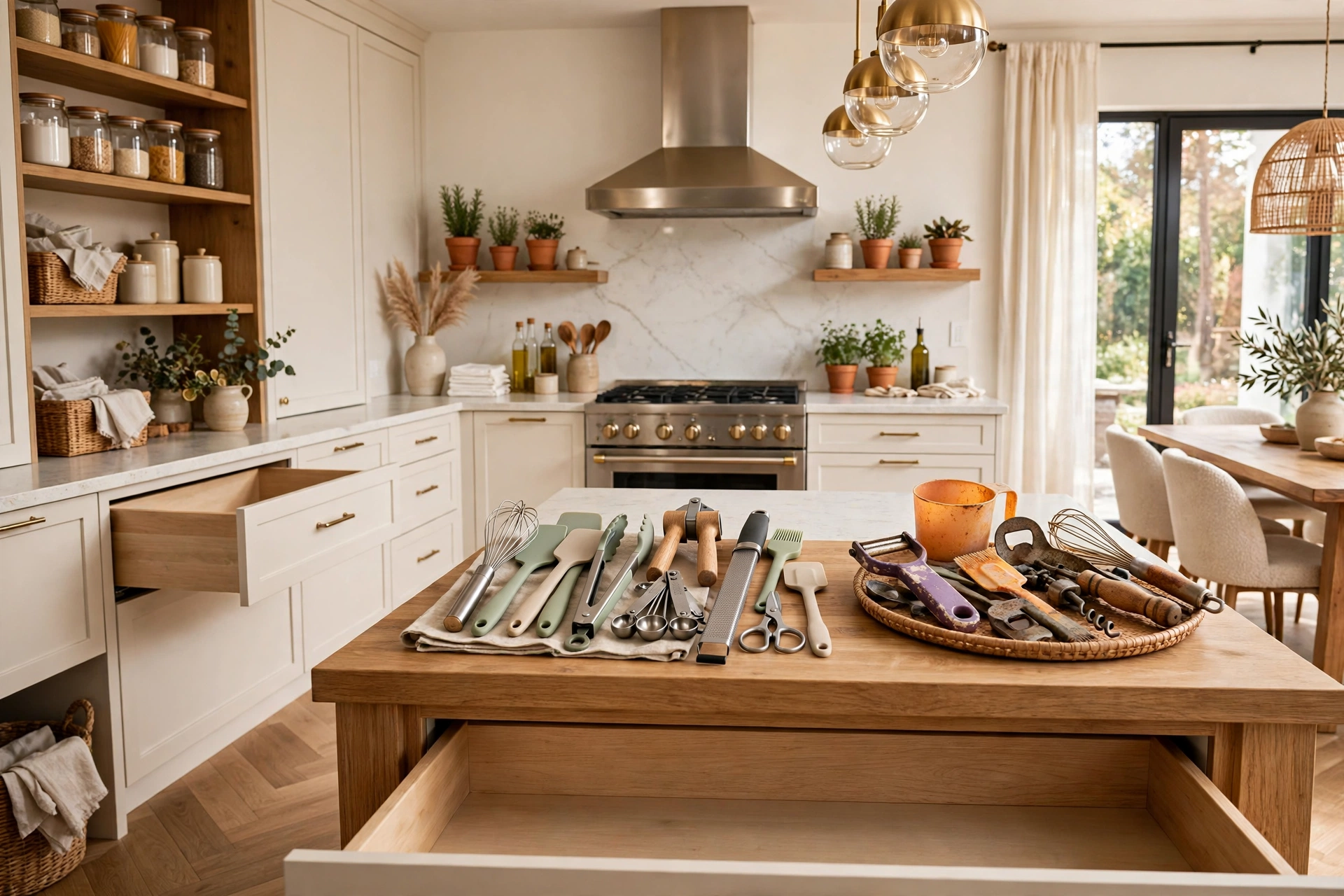
This is the most expensive kitchen organizing mistake, and the most tempting. A beautiful set of matching bins looks like a solution, so people buy it first and then try to fit their existing clutter into it. The result is organized clutter: the same too-many gadgets, now in prettier containers, still overflowing because there was never enough space for all of it. Organizers do not create space. They only divide the space you already have, which means they work brilliantly after a declutter and barely at all before one.
Declutter first, and be honest about it. Pull everything out of one zone, keep what you use regularly, move what belongs elsewhere, and let go of what is broken, duplicated, or untouched for a year. Only then measure the space that remains and buy organizers to fit it — not the other way around. You will spend less money, because you will need fewer containers, and the ones you buy will actually fit. A drawer that held forty utensils does not need a forty-slot organizer; it needs fifteen utensils and a simple divider.
5. Hiding Everyday Items Out of Reach

Walk into many kitchens and the everyday plates live on the highest shelf while the turkey roaster sits at waist height, simply because that is where things landed years ago. This inverted storage is a quiet daily frustration: every meal starts with a stretch, a step stool, or a request for help, and putting dishes away feels like a chore, so they pile up in the drying rack instead. The space between your knees and your shoulders is the kitchen’s prime real estate, and it should belong to the things you touch every day.
Audit your prime real estate this weekend. Move daily plates, glasses, favourite pans, and coffee supplies into the easy-reach zone, and relocate the rarely used items — the fondue set, the giant roasting pan, the twelve-person platter — to high shelves, low cabinets, or another room. If your walls are free, vertical kitchen storage ideas like a rail for utensils or a rack on a cabinet door can move everyday tools into easy reach without taking a single inch of counter or shelf space.
Quick Comparison: Kitchen Organizing Fixes by Cost and Effort
6. Letting the Junk Drawer Take Over

Every kitchen has a junk drawer, and that is not the mistake. The mistake is letting it grow until it swallows batteries, rubber bands, takeaway menus, dead pens, spare keys, and three pairs of scissors — and then letting the overflow colonize the next drawer, the counter corner, and the top of the fridge. A junk drawer without boundaries becomes the kitchen’s landfill, and because it has no categories, finding anything in it means digging through everything else. Worse, it trains the household to treat any flat surface as a dumping ground.
Give the junk drawer a job description and a size limit. Empty it completely, throw away the obvious trash, and return only the true essentials in small compartment trays: scissors, tape, a pen, batteries, a screwdriver, and not much else. Everything else gets a real home elsewhere in the house — the toolbox, the office, the recycling — or it leaves the house entirely. If you want a model for how far this principle goes, our guide on how to organize under the kitchen sink shows the same idea applied to the messiest cabinet in most kitchens, where a few small bins turn chaos into zones.
7. Overstuffing the Pantry Without Categories
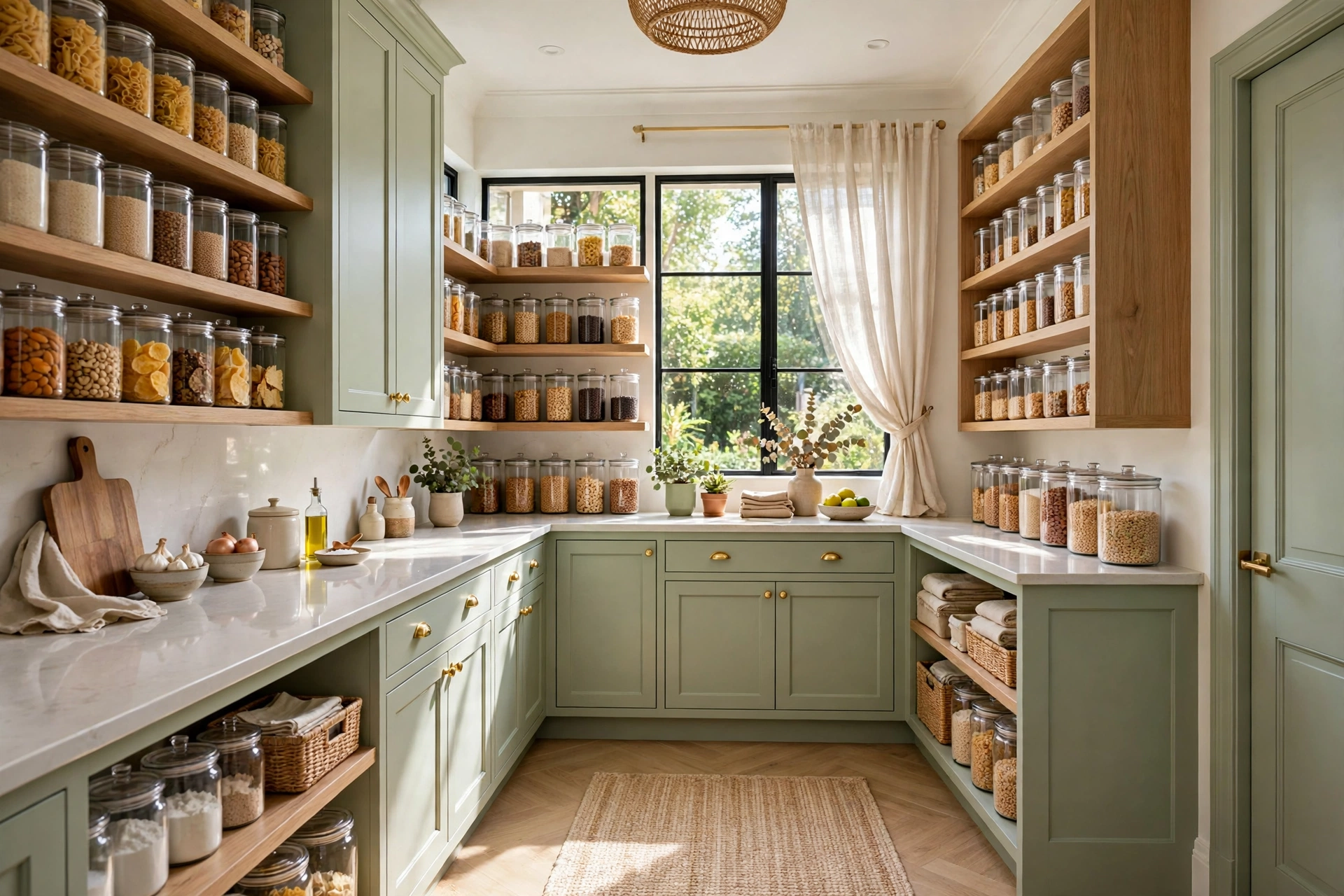
A pantry without categories is a machine for buying duplicates and wasting food. Bags of flour slump against half-used pasta boxes, spices hide behind each other, and cans roll to the back of deep shelves where they expire unnoticed. You cannot see what you own, so you buy another jar of cumin, another bag of rice, and another box of stock cubes — and the pantry gets fuller and messier with every shopping trip. The mess is not a lack of effort. It is a lack of visibility.
Fix the pantry with categories and clear containers. Group food by type — baking, breakfast, snacks, canned goods, grains — and decant the open bags into clear airtight containers so you can see at a glance what is running low. Label the containers and keep the categories in the same spot every time, so anyone putting groceries away can do it correctly. Our pantry organization ideas guide goes deeper on layouts for small and large pantries alike, but the principle is the same at any size: if you can see it, you will use it, and if you cannot, you will buy it twice.
⚠️ Warning: Never decant food into unlabelled containers. A white powder could be flour, sugar, or baking soda, and guessing wrong ruins a recipe — or worse, if someone in the household has an allergy.
8. Organizing Once and Never Maintaining It

The final mistake is the one that undoes all the others: treating organization as a one-time project instead of a habit. A kitchen reorganized in a heroic weekend looks wonderful on Sunday night, and then real life arrives — a new gadget, a bulk buy, a housemate who never learned the system — and within a month the old clutter is back. People conclude that organization “does not work for them” when what actually failed was maintenance. No system survives contact with daily life unless someone tends it.
Build maintenance into the system instead of relying on willpower. A ten-minute reset each evening — counters cleared, dishes away, anything homeless returned to its zone — is enough to keep a good system good indefinitely. Add a quick monthly check of one zone, rotating through the kitchen, so small drifts get caught before they become big messes. And agree on a one-in-one-out rule for gadgets and tools: something new arrives, something old leaves. The kitchens that stay tidy for years are not the ones with the best organizers. They are the ones whose owners spend ten minutes a day keeping the system alive.
📌 Important: A kitchen that works for your real cooking habits beats a picture-perfect kitchen every time. If a system looks beautiful but you cannot maintain it, it is the wrong system — simplify it until keeping it tidy takes minutes, not hours.
Common Kitchen Organizing Mistakes to Avoid While You Fix Things
Mistake 1: Copying a Kitchen You Saw Online
A storage wall that works in a influencer’s huge kitchen may fail completely in a small rental with two drawers and a galley layout. Borrow ideas, but adapt them to your space, your cooking style, and the number of people using the kitchen. The right system is the one that survives your actual life.
Mistake 2: Buying a Matching Set of Everything
Matching containers look wonderful in photos and waste money in real kitchens, because your shelves, drawers, and food quantities are not uniform. Buy containers to fit the spaces you measured and the food you actually store, even if the set does not match perfectly. Function first, photos second.
Mistake 3: Organizing Alone Without Household Buy-In
A system only one person understands is a system everyone else will break by accident. Label the bins, show the household where things live, and keep the rules simple enough that a guest could put groceries away correctly. If other people cannot follow it, it is not a system yet.
Mistake 4: Aiming for Perfection Instead of Better
Waiting until you can afford a full renovation, or until you have a free weekend to do everything at once, keeps the kitchen messy for months. Fix one zone this week — just the junk drawer, or just the pantry shelf — and let that small win build momentum. A kitchen that is ten percent better organized is ten percent easier to cook in.
Frequently Asked Questions
1. What is the biggest kitchen organizing mistake?
Keeping everything on the countertop is the biggest one, because it removes your workspace and makes the whole room look cluttered even when it is clean. Clear the counters first, keep out only daily-use items, and the kitchen instantly feels calmer and larger.
2. Should I declutter or organize first?
Always declutter first. Organizers divide the space you have; they cannot create more of it. Remove what you do not use, then measure what remains and buy containers to fit that space, not the clutter you started with.
3. How do I organize a kitchen with very little storage?
Zone what you have by cooking task, use vertical space on walls and cabinet doors, and stand trays and lids upright instead of stacking them. Small kitchens benefit most from these fixes because every inch matters more when there are fewer inches to waste.
4. Why does my kitchen get messy again so fast?
Usually because items have no fixed home, or their home is inconvenient. If putting something away takes effort, it stays on the counter. Give every item one obvious spot near where it is used, and add a ten-minute daily reset to catch the rest.
5. Are clear containers really worth it in the pantry?
Yes, because they solve the visibility problem that causes duplicate buying and wasted food. When you can see what you own and how much is left, you shop accurately and use things before they expire.
6. How long does it take to fix a messy kitchen?
One zone takes about an hour, and a full kitchen takes a weekend if you work zone by zone. You do not need to finish everything at once — fixing the counters and one cabinet this week already makes cooking noticeably easier.
7. What should I do with gadgets I rarely use?
Move them out of prime real estate to a high shelf, a low cabinet, or another room. If you have not used something in a year and it is not seasonal or sentimental, donate it. Rarely used tools should never occupy the space daily tools need.
Conclusion
A messy-looking kitchen is almost never a character flaw, and it is rarely a cleaning problem either. It is a collection of small, fixable mistakes: counters used as storage, items stored far from where they are used, cabinets packed without a system, organizers bought before decluttering, and a system that nobody maintains. Fix the mistakes you recognized in this guide, one zone at a time, and the kitchen will start working with you instead of against you.
Start today with the easiest win: clear the counters, keeping out only what you use every day. Then pick the next mistake that felt familiar — the junk drawer, the pantry, the deep cabinet — and fix just that one zone this week. Small, steady fixes beat heroic overhauls, because they are the ones you actually finish. Within a month, your kitchen will not just look tidier. It will feel easier to cook in, easier to clean, and easier to live with, every single day.