15 Kitchen Organization Trends 2026: The Pantry Styles Taking Over
Introduction
Walk into a well-organized kitchen in 2026 and the first thing you will notice is the pantry. It is no longer a dark cupboard you open only when you need flour. Pantries have become the centerpiece of kitchen organization, with styled shelves, decanted jars, pull-out towers, and zones that work like small rooms inside the kitchen. The pantry styles taking over this year are less about buying more containers and more about designing storage that actually fits how you cook, shop, and live.
The shift makes sense when you look at how kitchens changed. More people cook at home most nights, bulk buying is back, and open-plan kitchens mean the pantry is often visible from the living room. A messy pantry is no longer hidden behind a door, so homeowners are treating it like a room worth designing. The best kitchen organization trends of 2026 share one idea: the pantry should be beautiful enough to show off and practical enough to use every single day.
Below are fifteen pantry styles and organization ideas defining kitchens this year, from the return of the appliance garage to the rise of zoned pantries and refill stations. The checklist after trend three will help you plan your own pantry refresh before you buy anything, and the comparison table after trend five sums up cost and effort at a glance. By the end, you will know which trends are worth copying, which ones are a waste of money in a small kitchen, and how to get the look without a full renovation.
1. The Appliance Garage Makes a Comeback
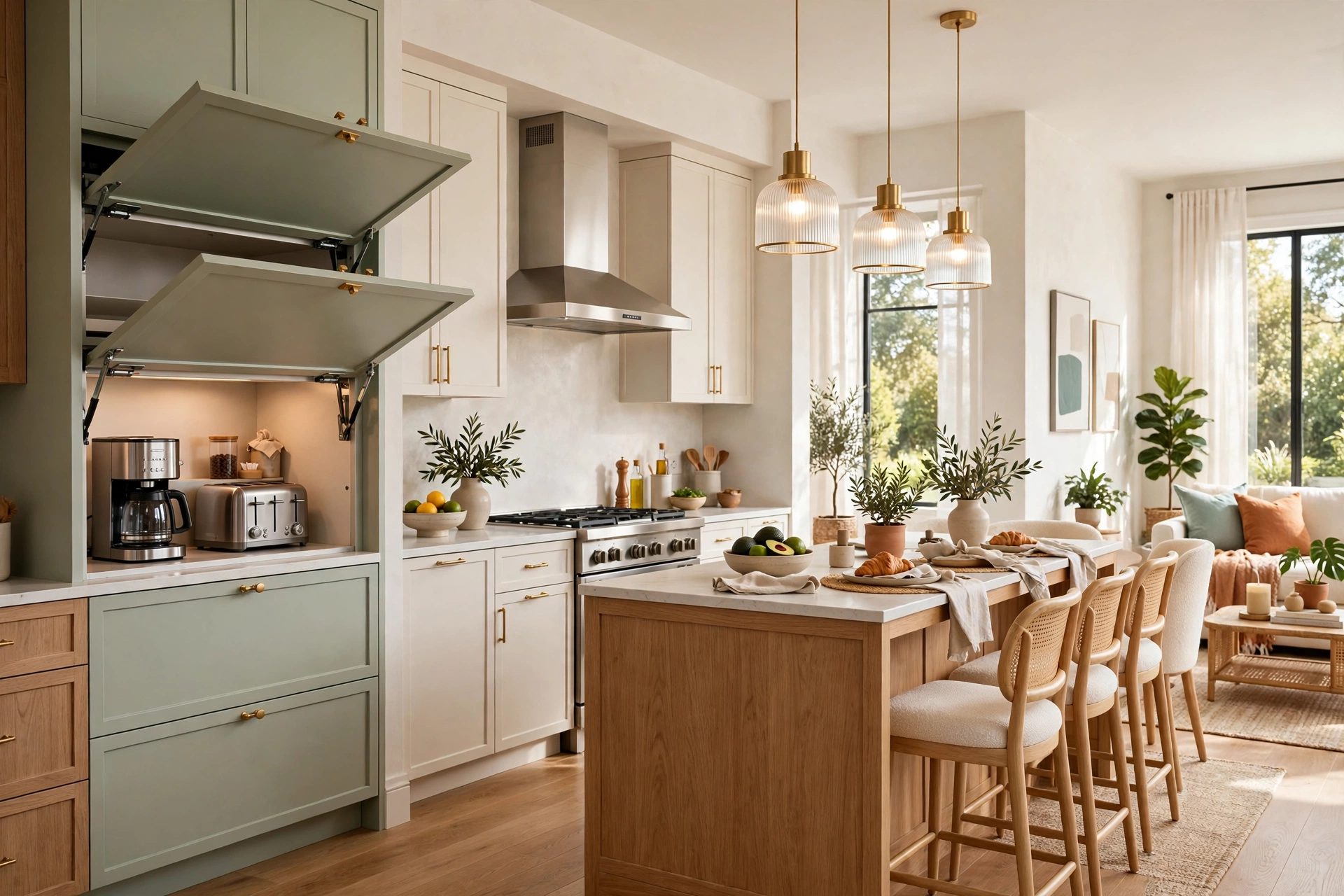
The appliance garage is the 2026 answer to cluttered counters. It is a dedicated cabinet, usually at counter height with a roll-up or lift-up door, where the toaster, blender, coffee maker, and food processor live permanently, plugged in and ready, but hidden when not in use. The modern version looks nothing like the clunky tambour-door boxes of the 1990s. Today’s appliance garages use lift-up doors, pocket doors, or sleek fluted panels that match the rest of the kitchen, and many include built-in outlets and LED lighting inside.
What makes the trend work is that it solves two problems at once. Counters stay clear, which makes the whole kitchen look bigger and calmer, while the appliances you use every morning are still one motion away instead of buried in a cabinet. The best appliance garages sit near the spot where the appliance is actually used, so the coffee station lives by the sink or the breakfast zone, and the blender lives near the fridge. A garage placed on the wrong side of the kitchen just becomes another cupboard you never open.
The cost of adding one is lower than most people expect if you plan it during a cabinet refresh, and even a retrofit is possible with a single tall cabinet and a lift-up door kit. The main thing to measure first is height: a garage needs enough clearance for your tallest appliance plus a few inches for the door mechanism. Get that measurement right and the appliance garage quietly becomes the most-used piece of storage in the kitchen.
2. Decanted Pantries: Clear Jars, Labeled Everything
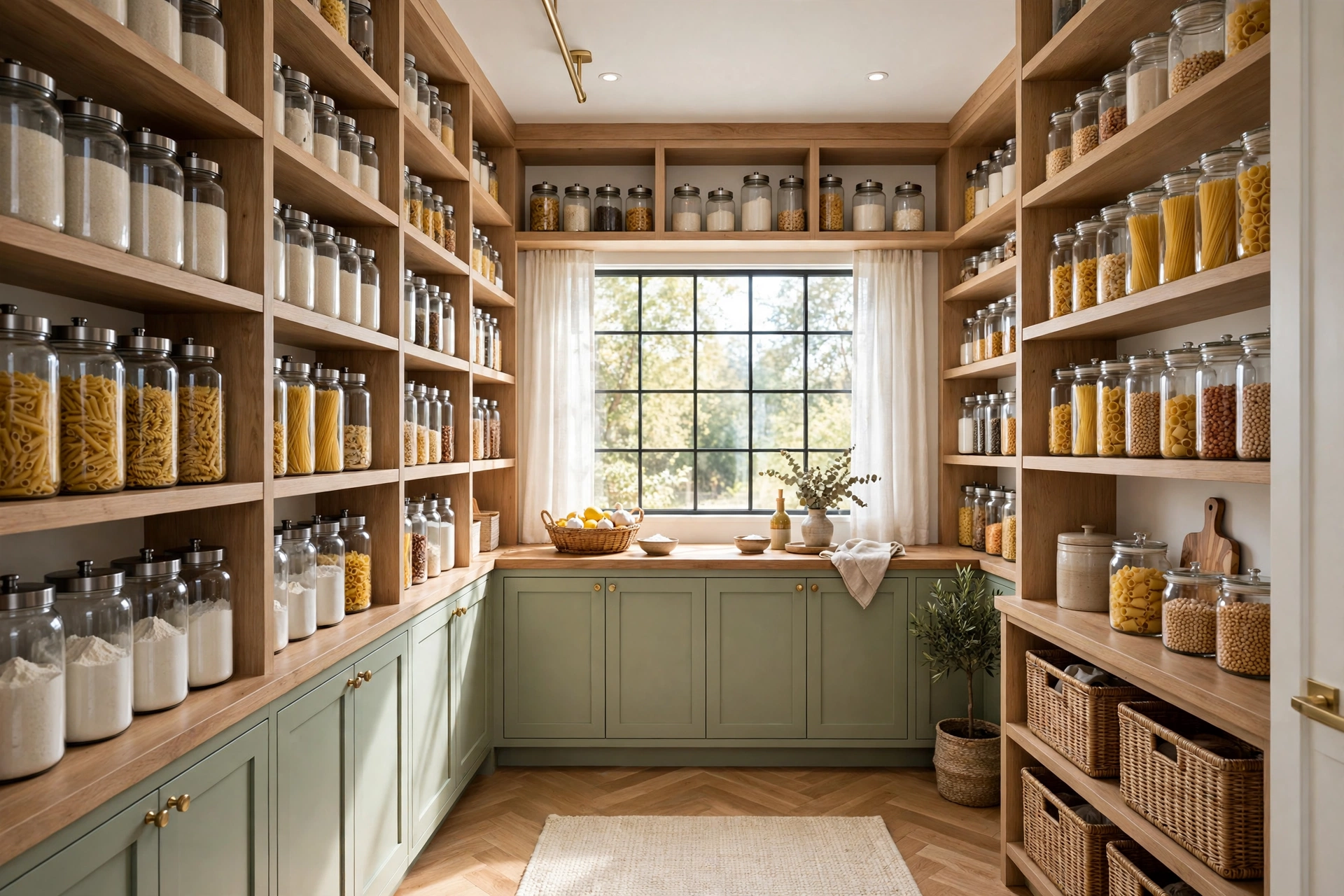
Decanting is the pantry trend that photographs best, and in 2026 it has moved past the all-white-everything phase into something warmer and more practical. Dry goods go into clear glass or sturdy plastic jars, cans and boxes are grouped by type, and every jar gets a label. The point is not just the look, though the look is genuinely satisfying. When you can see exactly how much rice, pasta, or flour you have left, you stop buying duplicates and you stop discovering expired food at the back of a shelf.
The 2026 version of decanting is smarter about what actually gets decanted. Staples you use weekly, like rice, oats, pasta, flour, sugar, and coffee, earn a jar. Odd-shaped items, half-used bags, and things you buy rarely stay in their original packaging, because decanting everything is a weekend project that never gets maintained. The jars that work best are wide-mouthed, airtight, and sized to the shelf they sit on, with the label facing forward at eye level so you can read it without picking the jar up.
There is a real maintenance cost to this trend, and honest organizers admit it. Decanting adds a step to every grocery trip, and jars need washing when they are refilled. The kitchens where decanted pantries last are the ones where the system is simple: a dozen jars at most, one label style, and a rule that nothing new gets decanted until an old jar is empty. Done that way, a decanted pantry stays beautiful for years instead of collapsing after a month.
3. Pull-Out Pantry Towers
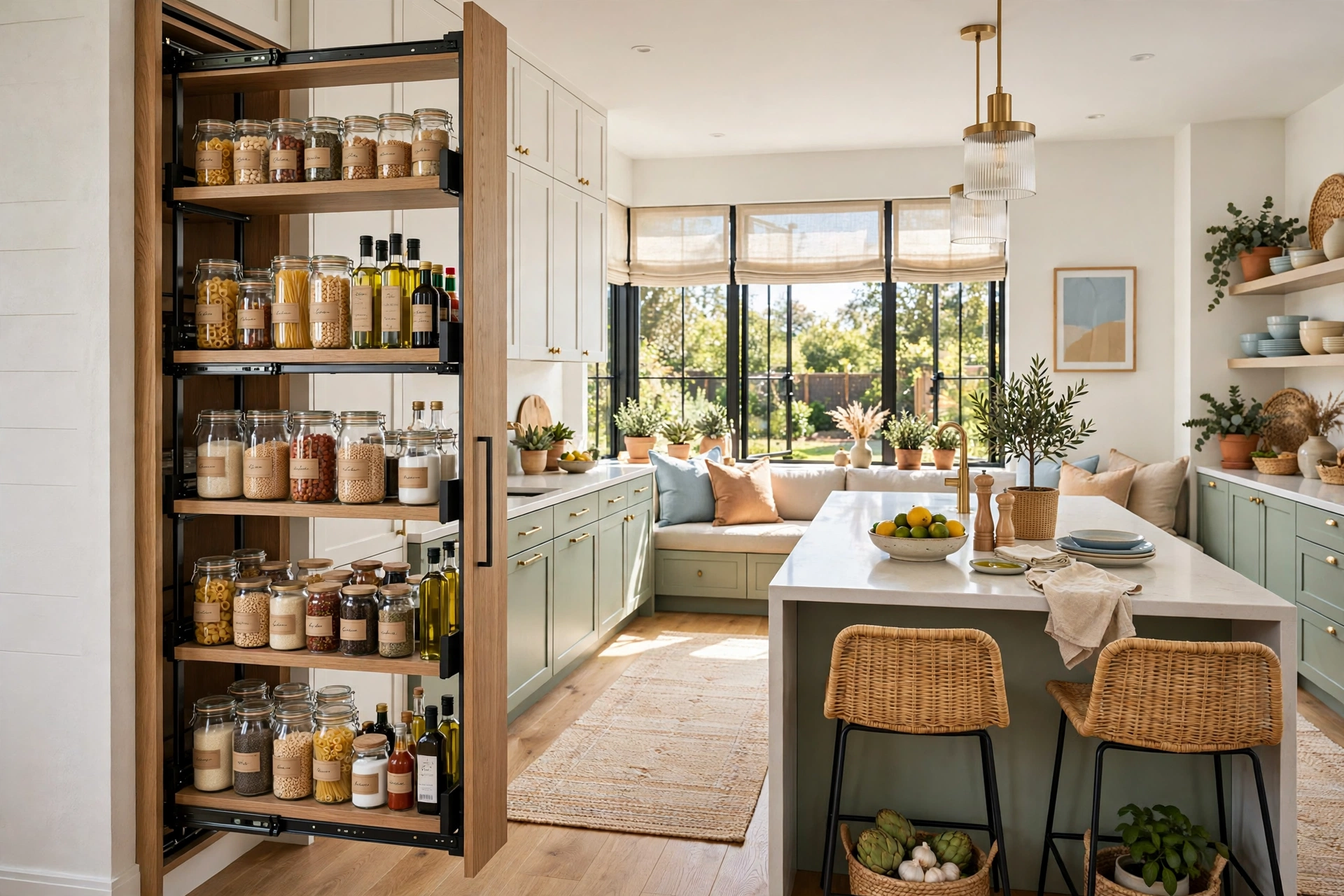
Pull-out pantry towers are the trend that converts the most skeptics, because they solve the oldest pantry problem: the deep shelf where things disappear. A pull-out tower is a tall, narrow unit, often just 30 to 45 centimeters wide, fitted with several shelves on full-extension runners. Pull it out and every shelf comes to you, front to back, so nothing hides. Push it back and it looks like an ordinary tall cabinet.
These towers shine in the awkward gaps kitchens always seem to have, the narrow space beside the fridge, the strip between the oven and the wall, or the end of a run of cabinets. In a new kitchen they can be planned in from the start, but retrofit kits exist for existing tall cabinets too, and many homeowners fit one during a small kitchen refresh without touching the rest of the layout. The shelves are usually adjustable, so tall oil bottles and short spice jars can share the same tower, and many designs include a rail or lip so nothing slides off when the tower moves.
The one thing to check before committing is weight. A fully loaded tower of cans and jars is heavy, and cheap runners will sag or stick within a year. Spend on full-extension, soft-close runners rated for the load, and keep the heaviest items on the lowest shelves. With decent hardware, a pull-out pantry tower is the single most practical upgrade in this whole list, and it works in kitchens of almost any size.
Kitchen Organization Trends 2026 Quick-Start Checklist
- ✅ Measure your pantry shelves, including height between shelves, before buying any containers.
- ✅ Empty the pantry completely and toss anything expired before starting a refresh.
- ✅ Group food by how you cook: breakfast, baking, snacks, dinner staples, drinks.
- ✅ Decide which three trends you actually want, and ignore the rest for now.
- ✅ Check that tall bottles and appliances fit the space you plan for them.
- ✅ Pick one label style and one jar style, and stick to them throughout.
- ✅ Leave one empty shelf or zone so the system has room to grow.
4. Open Pantry Shelving With a Styled Look
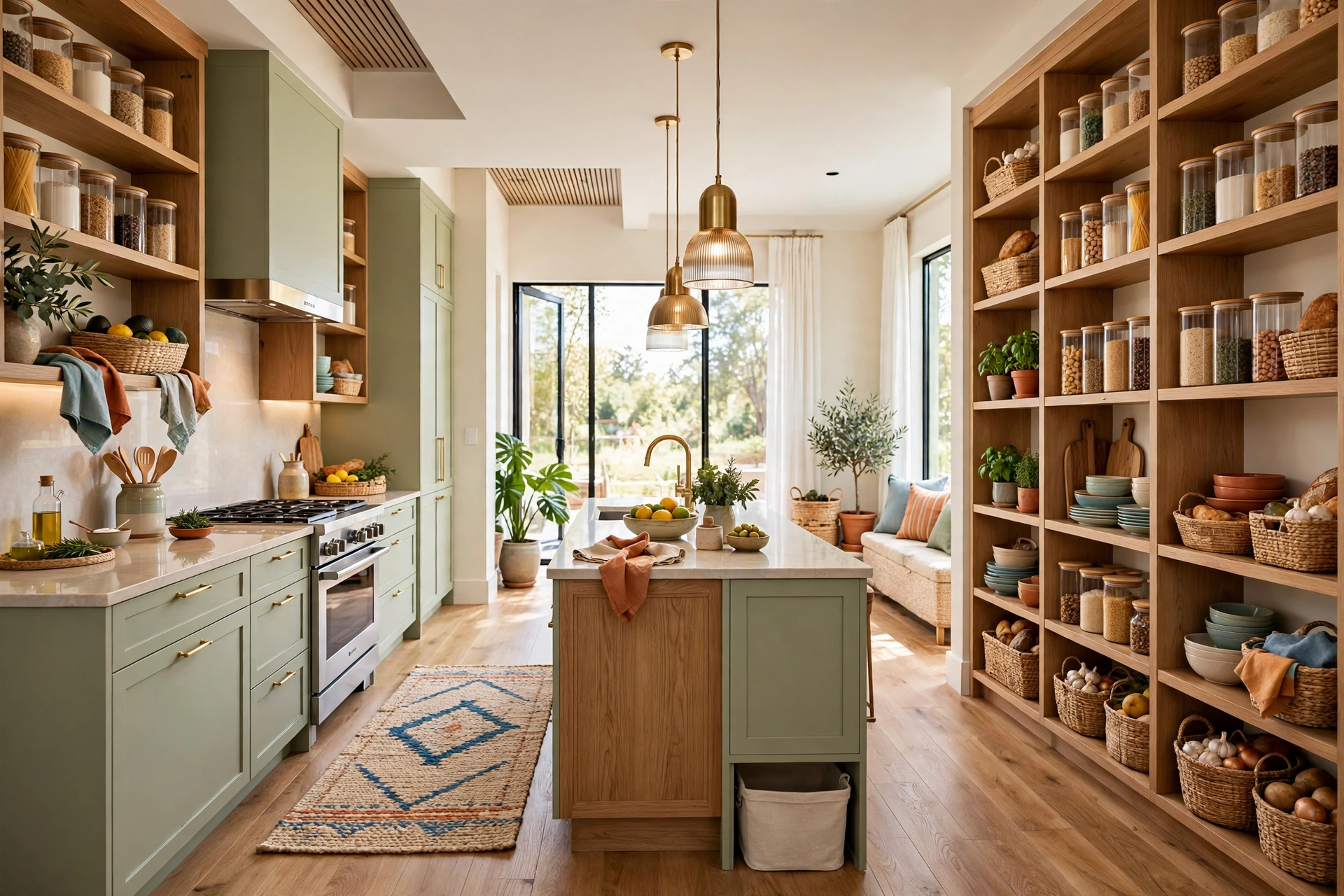
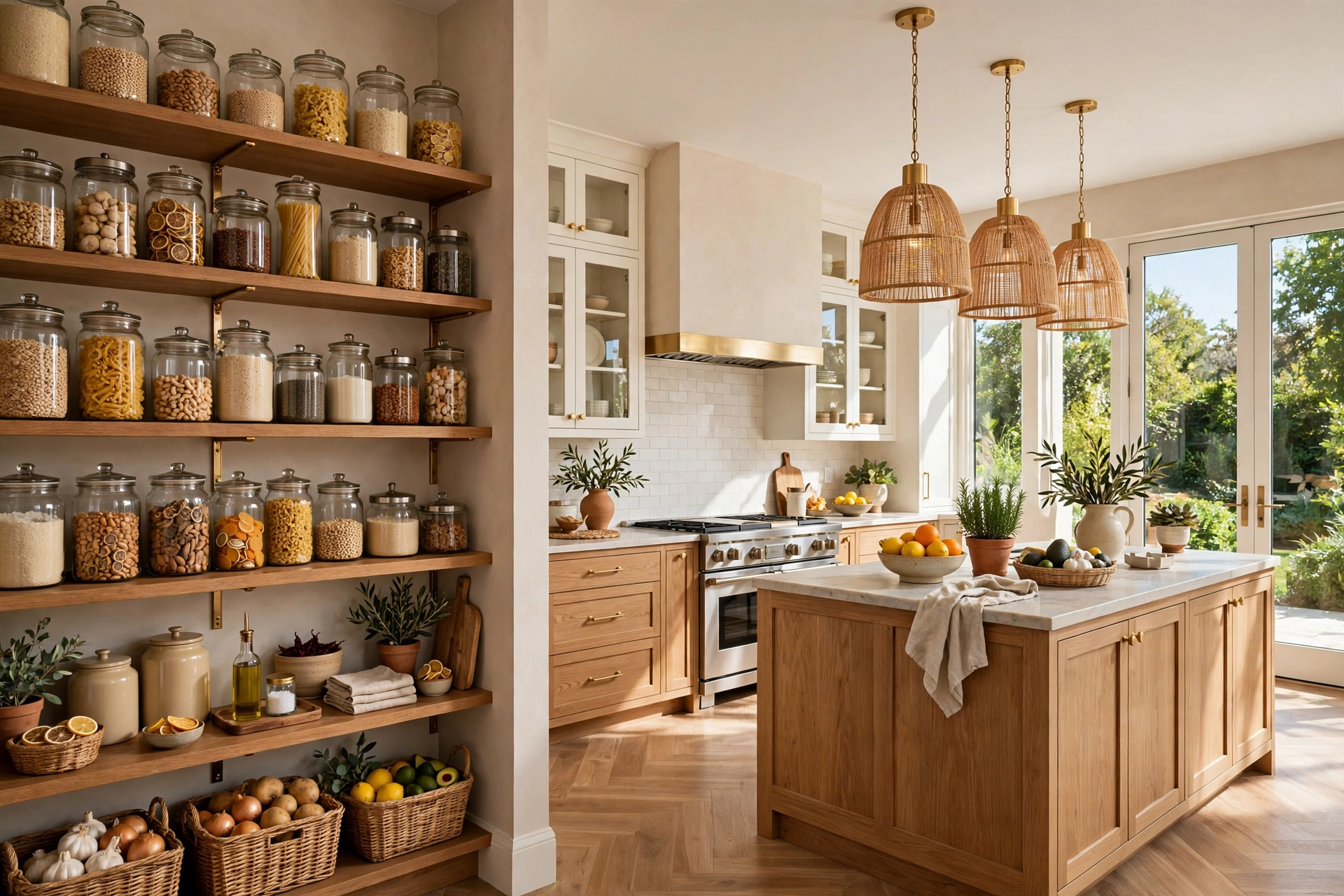
Open pantry shelving is the boldest of the 2026 trends, because it puts your food on display the way open kitchen shelving puts dishes on display. Instead of a closed pantry cupboard, shelves are left open, often in a walk-in pantry or a dedicated pantry wall, and the contents are arranged to look intentional: matching jars, grouped cans, baskets for loose items, and a few styled touches like a small plant or a wooden tray. The effect, when it works, is a pantry that feels like part of the kitchen’s decor rather than a storage closet.
The key word is styled, and that is also where this trend fails most often. Open shelving forgives nothing. A shelf of mismatched boxes and half-empty bags looks messy in a way a closed door would hide, so this trend only works if you are willing to decant, label, and maintain the look. Most successful open pantries use a mix of closed and open storage: closed baskets and bins on the lower shelves for the messy reality, and open styled shelves at eye level for jars, oils, and the items that look good.
If you love the look but doubt your ability to maintain it, a half-open pantry is the safer version. Keep the doors, but replace solid panels with glass, or leave one section open as a display shelf while the rest stays behind doors. You get the airy, styled feeling without committing your entire food supply to public view, and you can always open up more shelves later once the system proves itself.
5. Zoned Pantries: Breakfast, Baking, Snacks
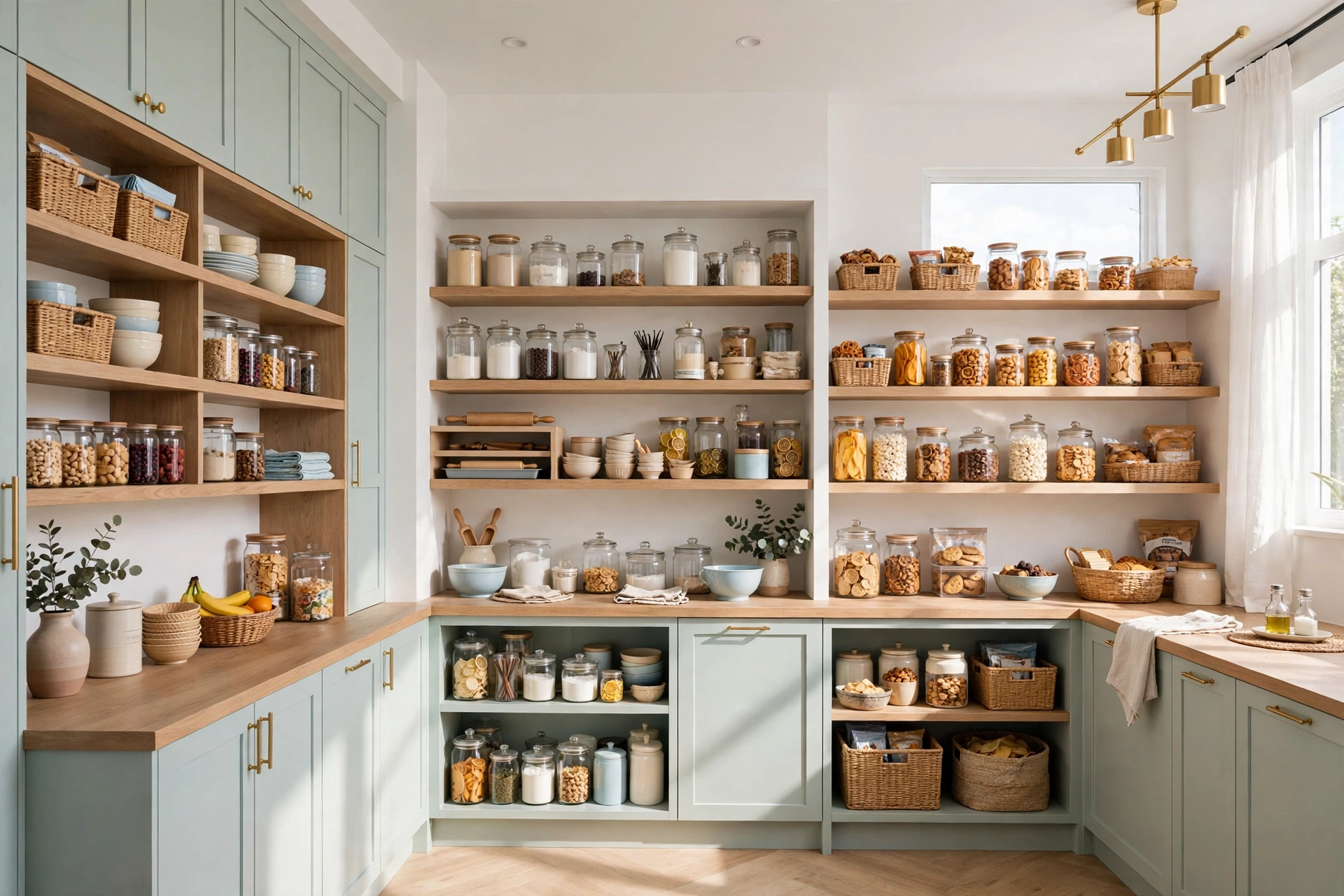
Zoning is the organizing idea behind almost every other trend on this list, and in 2026 it has become a trend in its own right. A zoned pantry divides food and tools by activity instead of by type, so there is a breakfast zone with cereal, oats, coffee, and mugs together, a baking zone with flour, sugar, and measuring tools together, and a snack zone that kids can reach without help. Everything needed for one task lives in one place, which means fewer trips across the kitchen and fewer half-finished searches.
The breakfast zone is the one most families start with, because it changes mornings immediately. Coffee, tea, cereal, bread, and spreads all sit together, ideally near the kettle or coffee maker, so the first person up can make breakfast without opening five different cupboards. The snack zone works the same way for kids: a low shelf with healthy snacks they can reach and choose themselves, which quietly ends the constant asking for help. Baking zones tend to live deeper in the pantry, since baking is a weekly activity rather than a daily one, but grouping the tools with the ingredients saves real time when you do bake.
Zoning costs almost nothing, which is part of its appeal. It is a rearrangement, not a purchase, and it works with the shelves and containers you already own. The discipline is in keeping the zones honest: when a new item comes home, it goes to its zone, not to wherever there happens to be space. That one habit is what separates a zoned pantry that lasts from a rearrangement that falls apart in a fortnight.
Quick Comparison: 2026 Pantry Trends by Cost and Effort
6. Back-of-Door Storage Goes Full-Height
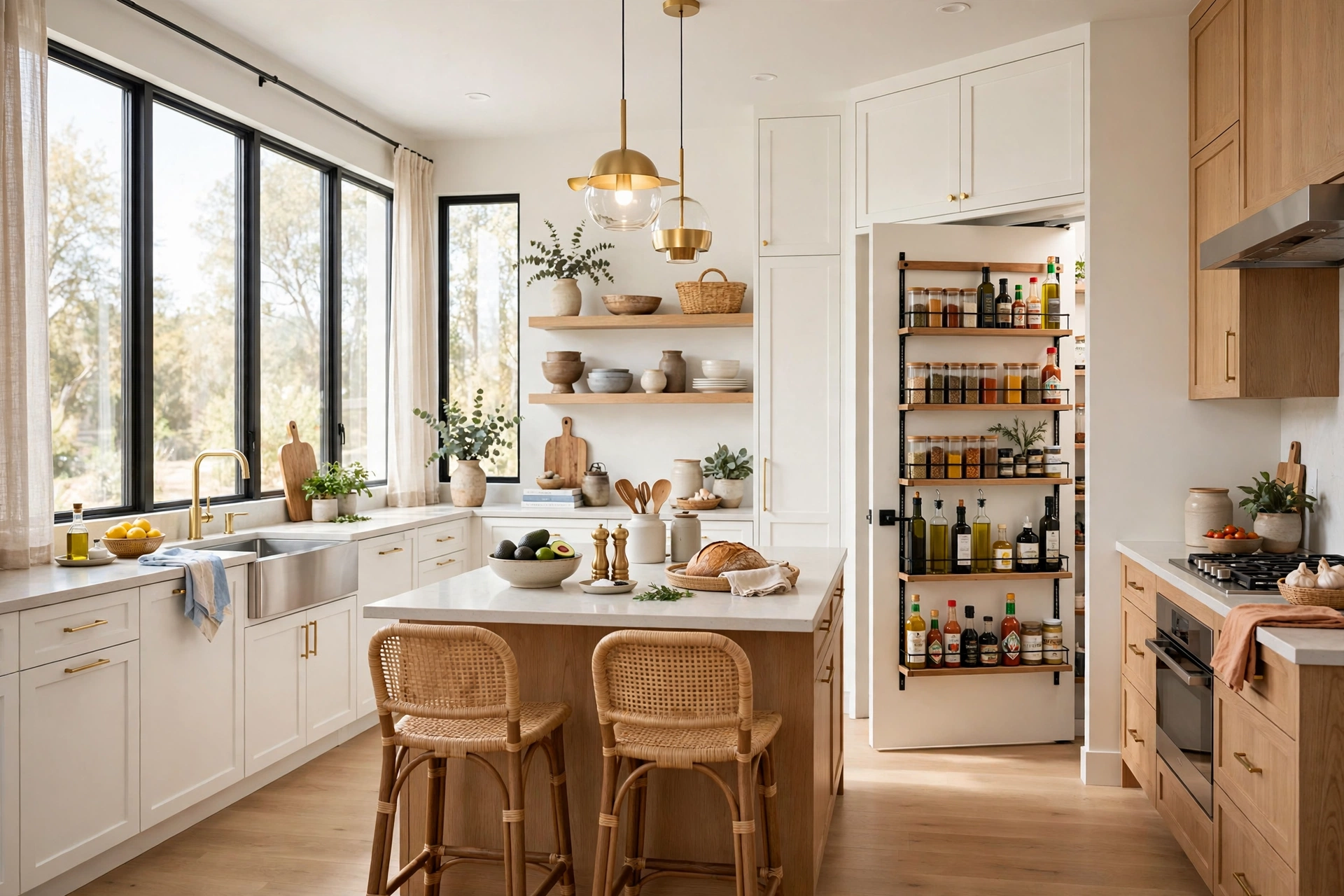
Back-of-door storage used to mean a small wire rack for spices. In 2026 it has gone full-height, with slim racks, shelves, and pockets running the entire inside of the pantry door, turning dead space into one of the most useful zones in the kitchen. Spices, oils, sauces, wraps, and small packets all live on the door, which frees a full shelf inside the pantry for larger items.
The full-height version works because modern racks are shallow and well-built, so the door still closes cleanly even when loaded. The best designs use adjustable shelves so tall bottles and short jars can share the door, and a small lip or rail on each shelf so nothing falls when the door swings. It is a particularly good fit for narrow pantries where every centimeter counts, and for renters, since most racks hang over the door without a single screw.
The limit is weight and depth. A door rack should hold light, frequently used items, not heavy cans or large bottles, and the rack must be shallow enough that it clears the shelves inside when the door closes. Measure the gap between the door and the first shelf before you buy, and keep the heaviest items at the bottom of the rack where the hinges carry the load best.
7. Deep Drawer Pantries Replace Upper Cabinets
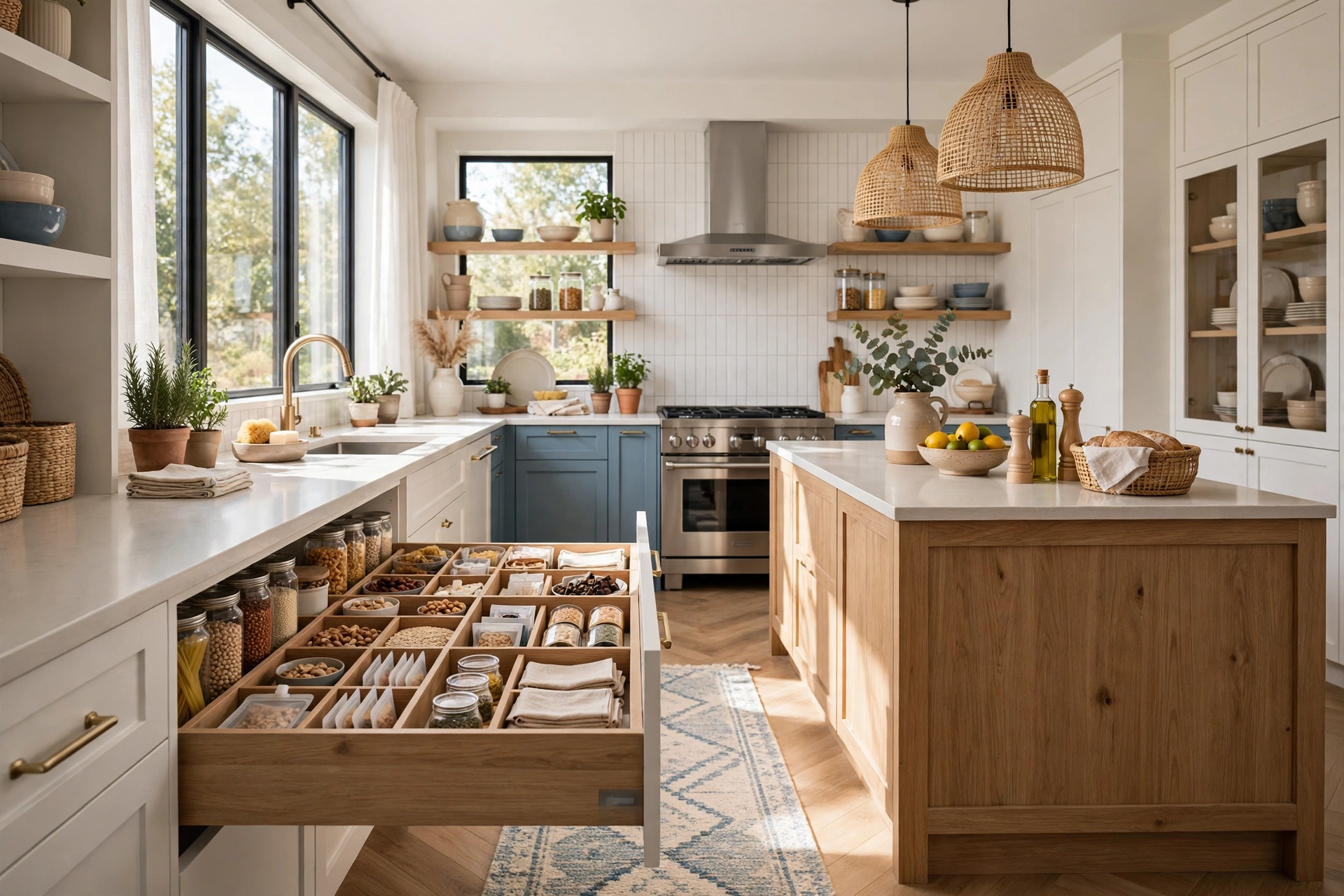
Deep drawers are quietly replacing upper cabinets as the pantry of choice in new kitchens, and the trend is easy to understand once you have used one. A deep drawer pulls out fully, so you see everything in it from above, and nothing hides at the back. Heavy items like bags of flour, cans, and bottles sit low, where they are easy to lift, instead of high up where they are a stretch and a risk. For many cooks, a bank of deep drawers under the counter is simply a better pantry than a tall cupboard.
The 2026 version adds dividers and inserts that turn a big empty drawer into a real pantry. Adjustable dividers keep bottles upright, shallow trays hold packets and spices, and some drawers include a second shallow tier for small items. The result feels more like a shop display than a drawer, with everything visible and reachable in one pull.
The catch is that deep drawers cost more than shelves, and they need good hardware to carry the weight smoothly. They also hold less per square meter than a tall cabinet, because drawer sides and runners take up space. The kitchens that love them most are ones where the cook values access over maximum capacity, and where the lower cabinets were underused anyway. If that sounds like your kitchen, one bank of deep drawers can change how the whole room works.
8. Butler’s Pantries Get a Second Life

The butler’s pantry, once a feature of grand old houses, is back in 2026 as a small working room between the kitchen and the dining area. It is not a second kitchen. It is a staging space: extra counter for plating and serving, storage for serving dishes and glassware, a second sink or a wine fridge, and a place to hide the mess of cooking while guests sit down to eat. In new builds it is often a small room off the kitchen. In existing homes it is frequently a converted laundry nook, hallway, or the end of a large kitchen.
What makes the modern butler’s pantry different from the old one is that it is designed to be used, not just admired. Open shelving for everyday dishes, a counter at serving height, and good task lighting matter more than fancy finishes. Many homeowners use theirs as a coffee station in the morning and a bar in the evening, which makes it the hardest-working few square meters in the house.
A butler’s pantry is the most expensive trend on this list and the least necessary, which is worth saying plainly. It suits homes that entertain often and kitchens with space to spare. If your kitchen is small, the same money spent on a pull-out tower and better drawer storage will do more for daily cooking. But if you have the space and you host regularly, a butler’s pantry is the trend that changes how your kitchen feels when people come over.
9. Wood and Warm Tones Replace All-White Pantries
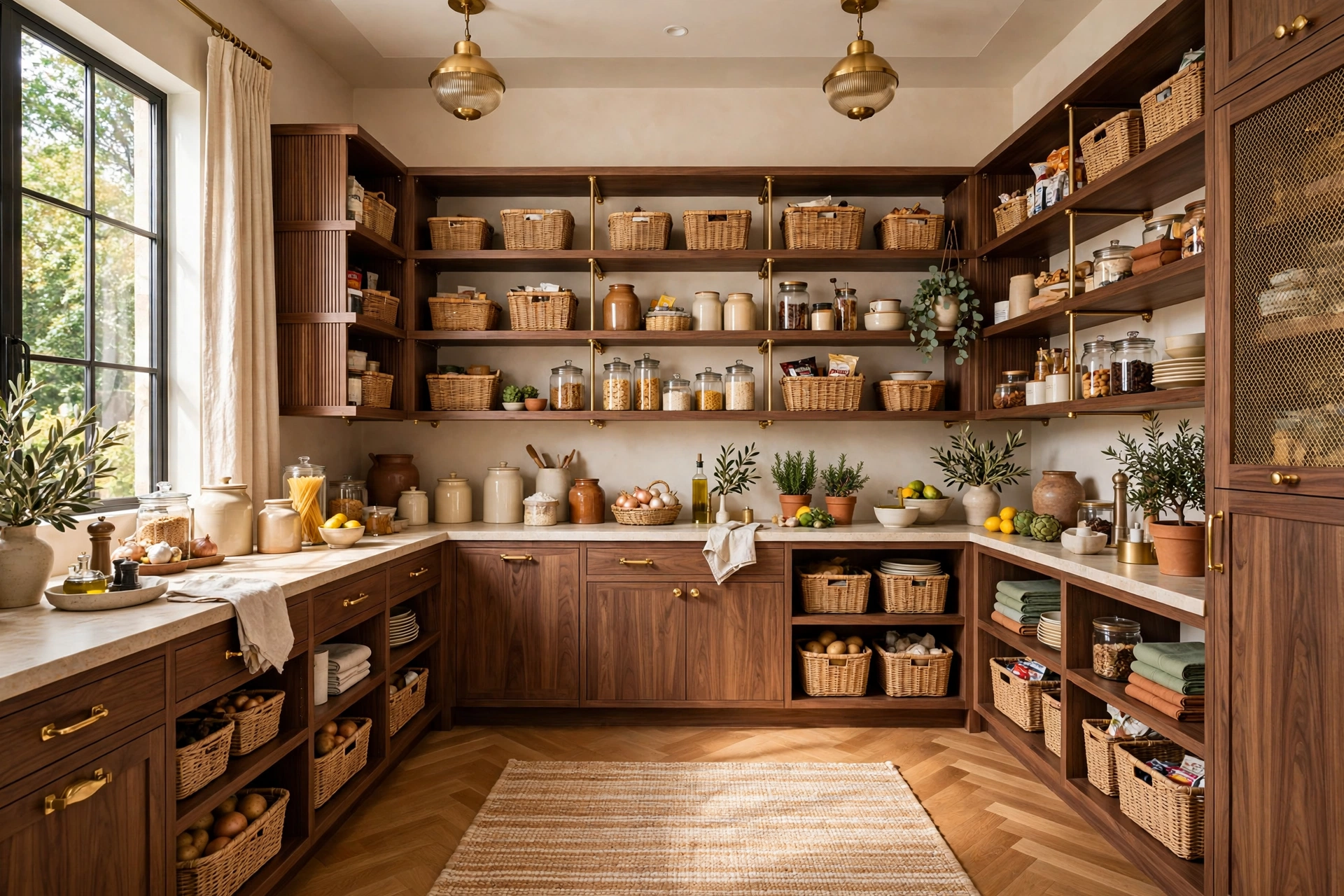
After years of all-white pantries, 2026 is the year wood and warm tones take over. Walnut, oak, and warm timber shelves replace painted white boards, brass or matte black hardware replaces chrome, and pantry walls get warm paint colors instead of stark white. The look is richer and more forgiving, and it matches the wider move toward warm, lived-in kitchens that has been building for a few years.
The practical benefit is real, not just visual. Wood shelves hide scuffs and stains better than white paint, and warm tones make a pantry feel like a room rather than a cupboard. The trend shows up in small ways too: wooden crates for produce, a timber chopping board stored upright as decor, and woven baskets instead of plastic bins. Even a pantry with white cabinets can join the trend by swapping in wooden shelf fronts or a warm-toned back wall.
This is also one of the cheapest trends to try, because it is mostly about swapping materials rather than rebuilding. A few wooden baskets, a warm paint color on the pantry wall, and timber-toned labels can shift the whole feeling of the space in an afternoon. If your pantry currently feels cold and clinical, warm tones are the fastest fix on this list.
📌 Important: Wood and warm paint show scuffs, dust, and fingerprints far less than glossy white, so a warm-toned pantry stays looking tidy between cleanings.
10. The Beverage Station as a Pantry Zone
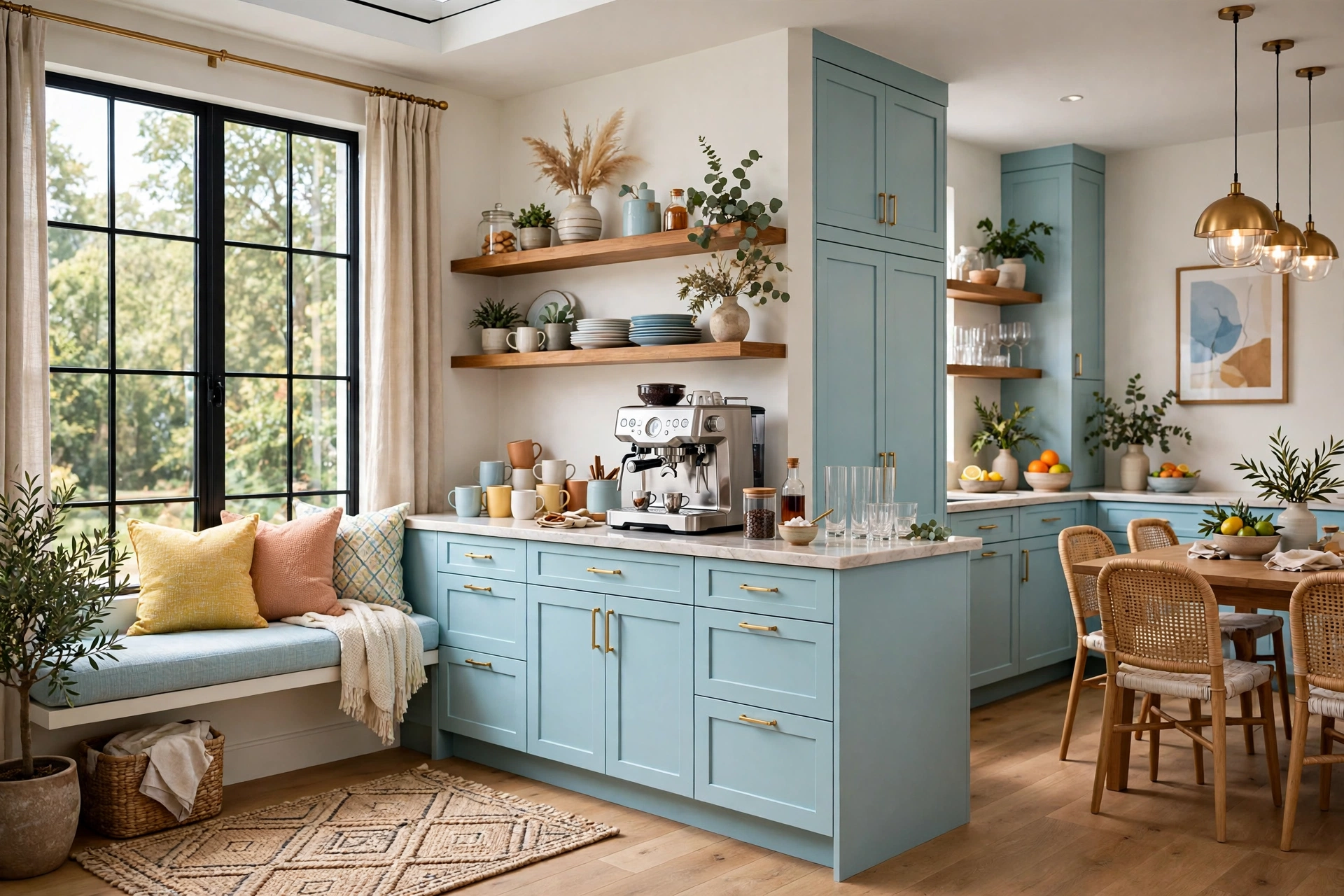
The beverage station has graduated from a coffee corner to a full pantry zone in 2026. It is a dedicated area, usually a section of counter with shelving above or a cabinet nearby, where everything drink-related lives together: coffee and tea, mugs, glasses, the kettle or coffee machine, water bottles, and even wine or cocktail supplies in the evening. Treating drinks as a zone means the rest of the pantry is not constantly disturbed by someone making a cup of tea.
The best beverage stations are built around the household’s actual habits. A coffee-first household needs the machine, beans, filters, and mugs in one place. A family with kids needs a low shelf of water bottles and cups they can reach themselves. A home that entertains needs glassware and a small fridge or wine rack nearby. The station works when it is honest about who drinks what, and it fails when it is designed for a lifestyle nobody in the house actually lives.
Plumbing is the luxury version: a small sink or a plumbed coffee machine in the station means no trips to the main sink. Most households skip that and keep the station near the main sink instead, which gives nearly the same convenience for a fraction of the cost. Either way, the beverage station earns its place by taking the most frequent kitchen activity and giving it a permanent home.
11. Bulk-Buy Bins and Refill Stations

Bulk buying is back, and with it the refill station: a pantry section dedicated to large containers of staples, with smaller everyday jars refilled from them. Big airtight bins hold rice, flour, oats, and pasta bought in bulk, while the daily-use jars on the shelf stay small and light. The system saves money, cuts packaging, and means the pantry never runs out of a staple mid-recipe.
The 2026 version is more organized than the bulk bins of the past. Bins are labeled with the contents and the purchase date, they sit on lower shelves or in a dedicated pantry corner where their weight is no problem, and a simple scoop lives in each bin so refilling a jar takes seconds. Some households keep a small whiteboard or a note on the pantry door listing what is running low, which turns the refill station into a shopping list that writes itself.
This trend suits households that cook most nights and have somewhere to store bulk goods, which usually means a garage shelf, a basement, or a deep pantry. In a small apartment kitchen it can backfire, because bulk bins take up the very space a small pantry cannot spare. The honest test is whether you actually finish bulk staples before they go stale. If you do, a refill station pays for itself quickly. If you do not, smaller jars and regular shopping are the better system.
12. Hidden Charging Drawers in the Pantry

Hidden charging drawers are the most 2026 trend on this list, and the most quietly practical. A drawer inside the pantry, or in a nearby cabinet, is fitted with outlets and USB ports, so phones, tablets, and small kitchen gadgets charge out of sight instead of trailing cables across the counter. The drawer keeps devices safe from spills, keeps counters clear, and gives the household a single known place where chargers live.
The idea started in home offices and has migrated to the kitchen because that is where devices actually get used: recipes on a tablet, music on a phone, a shopping list on a screen. A charging drawer in or near the pantry makes sense because the pantry is already the kitchen’s storage hub, and a drawer there is easy to reach without being in the cooking zone. Some designs include a small shelf above the drawer for a tablet stand, so a recipe can be read while the device charges.
This is a trend to plan during a renovation or a cabinet refresh, because it needs an electrician and a drawer with proper ventilation. Retrofitting is possible but costs more, and it is not a job for a do-it-yourself attempt with mains power. If you are already planning electrical work in the kitchen, adding one charging drawer is a small extra cost for a daily convenience. If you are not, a simple charging tray on a pantry shelf is a perfectly good halfway version.
💡 Pro Tip: A charging drawer near the pantry keeps recipe tablets and phones safe from spills and off the counter, and it ends the daily hunt for a free outlet.
13. Seasonal Rotation Systems

Seasonal rotation is the organizing system that makes the other trends last, and in 2026 it has become a named trend of its own. The idea is simple: the pantry changes with the seasons. Baking supplies and holiday ingredients move to the front in winter, grilling sauces and picnic supplies take over in summer, and the items you are not using move to a higher shelf or a labeled box. Twice a year, usually at the change of seasons, the pantry gets a short reset: expired items out, zones checked, and the layout adjusted for what is coming next.
The reason rotation matters is that a pantry organized once and never revisited slowly drifts back to chaos. New items get squeezed into the nearest gap, seasonal things pile up, and within a year the zones that made sense in January make no sense at all. A seasonal reset, even a short one of thirty minutes, catches that drift before it becomes a full reorganization job. Many households pair the reset with a deep clean of the shelves and a check of expiry dates, which keeps food waste down too.
The system works best when it is kept simple. A single labeled box per season, stored on a high shelf, holds the out-of-season items, and the reset is written on the calendar like any other household task. It is not glamorous, and it will never photograph as well as a decanted pantry, but it is the trend that keeps every other trend working.
14. Vertical Lid and Tray Storage

Lids, trays, and baking sheets are the hardest items to store in any kitchen, and 2026 has a clear answer: store them vertically. Slim dividers, file-style organizers, and tension rods turn a narrow cabinet or a pantry shelf into a filing system where every lid, tray, and chopping board stands upright in its own slot. You can see each one, pull out the one you want, and slide it back without disturbing the rest.
The vertical approach works because it matches the shape of the items. Lids and trays are flat and tall, so stacking them horizontally wastes space and guarantees a clattering avalanche every time you need the one at the bottom. Standing them upright uses the height of the cabinet, keeps them visible, and makes the whole stack accessible. The same trick works for baking sheets, cutting boards, and even large platters.
The cheapest version of this trend costs almost nothing: a few tension rods or a small file organizer inside a cabinet does the job. Purpose-built dividers are sturdier and look better, but the principle is the same either way. It is a small change with an outsized effect, and it is one of the trends most people wish they had tried years earlier.
⚠️ Warning: Vertical dividers need enough height for your tallest tray plus a finger’s width to lift it out. A divider that is too tight turns a neat filing system into a daily struggle.
15. The “One In, One Out” Pantry Rule Goes Mainstream

The final trend of 2026 is not a product or a layout. It is a rule, and it is the one that makes all the others survive. One in, one out means that every time a new item enters the pantry, an old one leaves: a new spice replaces an old one, a new gadget means an old one is donated, and a new bulk buy means the old container is finished or given away. The rule caps the pantry at its current size, which is the only way a beautifully organized pantry stays beautiful.
The rule works because pantries do not get messy all at once. They get messy one small addition at a time, each one squeezed into a gap that did not really exist. One in, one out stops that drift at the source, and it forces a small decision at the moment of purchase instead of a big clear-out months later. Households that follow it find their pantries stay close to the organized state they worked so hard to create, and their grocery spending drops too, because they stop buying duplicates of things they already own.
The hardest part is applying the rule to gifts, sale purchases, and well-meaning bulk buys, which is exactly where it matters most. A simple version helps: if the new item does not have a clear home in the pantry, it does not come in until something else goes out. That single test, applied honestly, is worth more than any container or shelf system on this list.
Common Kitchen Organization Mistakes
Mistake 1: Buying containers before measuring
The most expensive pantry mistake is buying a full set of matching containers before measuring a single shelf. Containers that are too tall for the shelf, too wide for the gap, or too deep for the door simply do not fit, and the money is wasted. Measure height, width, and depth first, then buy containers that fit the space you actually have.
Mistake 2: Decanting everything at once
Decanting every item in the pantry in one weekend feels productive, but it creates a system that is hard to maintain. Start with the five or six staples you use most, get that system working, and add more only when the first set is effortless. A small decanted system that lasts beats a large one that collapses.
Mistake 3: Organizing by type instead of by use
Grouping all cans together and all boxes together looks tidy, but it ignores how you cook. Breakfast items end up spread across three shelves, and every morning becomes a scavenger hunt. Organize by activity instead, so everything for one task lives together, and the pantry starts working the way you actually use it.
Mistake 4: Ignoring the top and bottom shelves
The highest and lowest shelves are the most wasted space in most pantries, because they are hard to reach and easy to forget. Use the top shelf for seasonal or rarely used items in labeled boxes, and the bottom shelf for heavy bulk items and appliances. A pantry that uses every shelf is effectively a bigger pantry.
Mistake 5: Copying a trend that does not fit your kitchen
Not every 2026 trend suits every kitchen. Open shelving fails in a household that cannot maintain it, a butler’s pantry is wasted in a home that never entertains, and bulk bins are a burden in a small apartment. Pick the trends that fit your space, your habits, and your budget, and leave the rest for someone else’s kitchen.
Frequently Asked Questions
1. What is the biggest kitchen organization trend in 2026?
The biggest trend is the pantry becoming the centerpiece of kitchen organization, with zoned layouts, decanted jars, pull-out towers, and styled open shelving replacing the old idea of a pantry as a hidden cupboard.
2. Are decanted pantries worth the effort?
Yes, for staples you use weekly, because you can see exactly what you have and stop buying duplicates. Decant only your most-used items, and leave rarely used foods in their original packaging to keep the system maintainable.
3. What is a zoned pantry?
A zoned pantry groups food and tools by activity, such as breakfast, baking, or snacks, instead of by type, so everything needed for one task lives in one place and mornings run faster.
4. How much does a pull-out pantry tower cost?
A retrofit pull-out tower typically costs a few hundred dollars including hardware, while a built-in tower planned into new cabinets costs more. Good full-extension runners are worth the extra money because they carry the weight safely.
5. Can renters follow these kitchen organization trends?
Yes, most of them. Zoning, decanting, over-door racks, and vertical lid dividers need no screws or permanent changes, while appliance garages and butler’s pantries are better left to homeowners planning a renovation.
6. What is an appliance garage?
An appliance garage is a counter-height cabinet with a lift-up or pocket door where small appliances live plugged in and ready, but hidden, so counters stay clear while the coffee maker and toaster remain one motion away.
7. How do I keep a pantry organized long-term?
Use the one in, one out rule, rotate seasonally with a short reset twice a year, and keep zones honest by putting every new item in its zone rather than the nearest empty gap.
8. Do open pantry shelves work in small kitchens?
They can, but only if you are willing to maintain the look, because open shelves hide nothing. A half-open pantry with glass doors or one open display shelf gives the same airy feeling with far less upkeep.
Conclusion
The kitchen organization trends of 2026 all point in the same direction: the pantry is no longer a place to hide food, but a space to design. Zoned layouts, pull-out towers, decanted jars, and warm materials make pantries that are beautiful to look at and practical to use every day, and the best of these trends cost little more than a rearrangement and a few good habits.
The smartest way to start is small. Pick two or three trends that fit your kitchen and your habits, measure before you buy anything, and set up a system you can actually maintain. A pantry that stays organized for a year is worth far more than a pantry that looks perfect for a week. Start with the checklist, try one trend this weekend, and let your pantry grow into the organized, calm heart of your kitchen.