12 Kitchen Island Decor Ideas That Instantly Elevate the Heart of Your Kitchen
The kitchen island is the most used, most looked at, and most under-decorated surface in most homes. It does everything — food prep, casual dining, homework, morning coffee, impromptu gatherings — and yet most people treat its decor as an afterthought, leaving it bare or cluttered with whatever happened to land there. The kitchen island deserves better than that, and so does your kitchen.
I used to think a kitchen island only needed to be functional. Then I spent time really looking at the kitchens that stopped me mid-scroll — the ones that felt complete, considered, and genuinely beautiful — and realized the island was always doing more than one job. It was functional, yes, but it was also styled. Every item on it was there for a reason, and the combination of those items created something that elevated the entire room.
These 12 kitchen island decor ideas cover every direction this can beautifully take you — from the simplest styling moves to the most architecturally resolved decisions available.
1. Pendant Lights That Do the Heavy Lifting
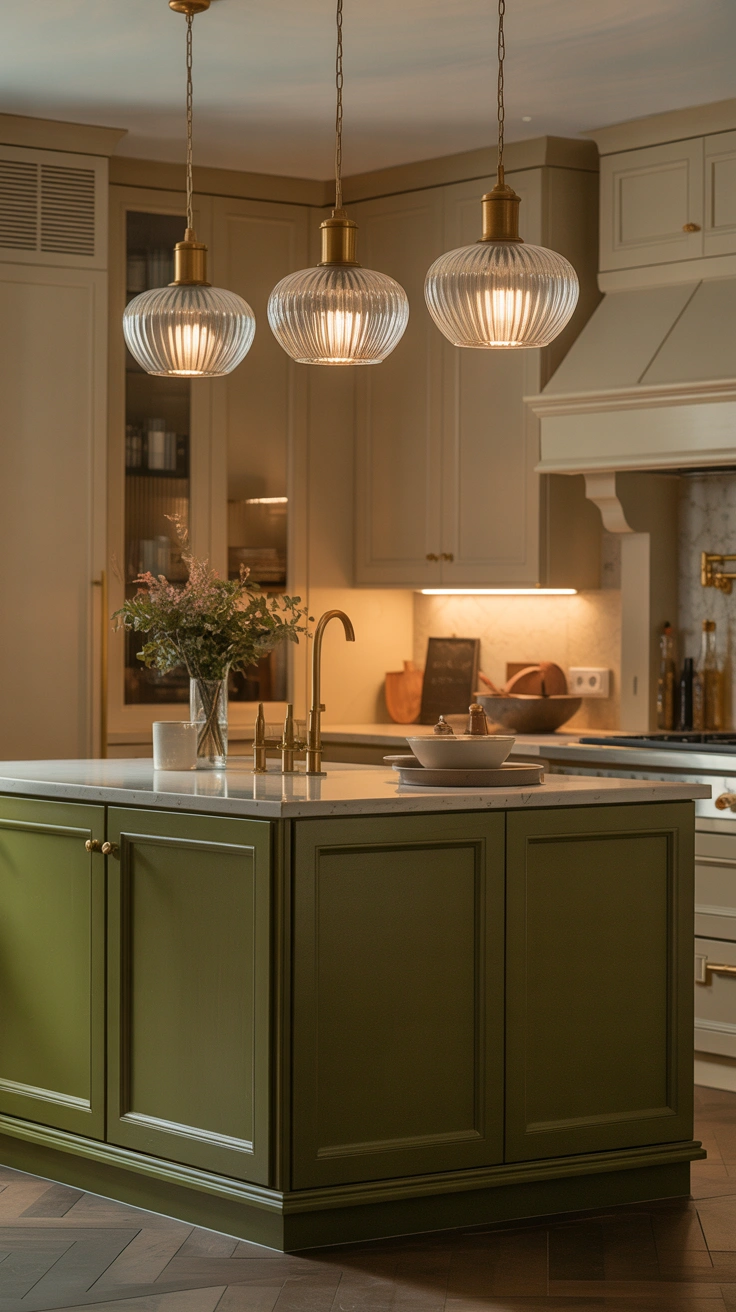
Nothing transforms a kitchen island more immediately or more dramatically than the right pendant lighting — and getting this decision right elevates not just the island but the entire kitchen around it. Pendants above an island are one of the few decor decisions that are simultaneously architectural, functional, and purely decorative.
The scale matters enormously here. Pendants that are too small for the island look provisional and timid. Pendants sized generously — wide enough to create a genuine presence above the surface — look designed and intentional. Three medium pendants or two large ones over a standard island create the visual rhythm that makes the island feel anchored and complete.
Pendant Styles Worth Considering
- Rattan or woven pendants for organic warmth and texture in a natural material
- Smoked glass globe pendants for something contemporary with a warm, amber quality
- Aged brass or unlacquered bronze metal shades for warmth and material richness
- Fluted glass pendants for a detail that catches and refracts light beautifully
Choose pendants that share a material or finish language with the island hardware. That connection between the hanging fixtures and the cabinet pulls is the detail that makes the whole composition feel resolved rather than assembled.
2. A Countertop Material That Earns Attention
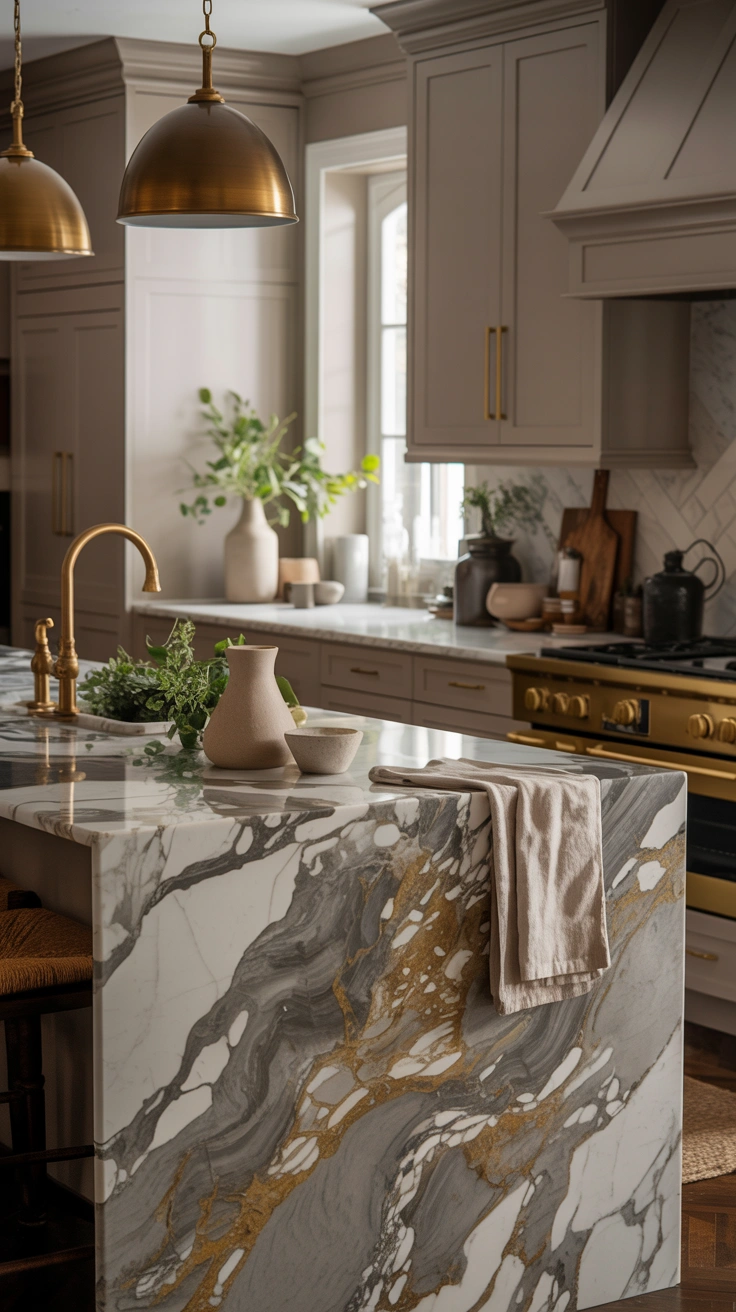
The island countertop is the largest single decorative surface in most kitchens — and treating it as purely functional misses the most impactful design opportunity the space offers. The right countertop material does not just withstand daily use. It actively contributes to the kitchen’s visual character in a way that no amount of accessorizing can compensate for if the surface itself is uninspiring.
Natural stone with genuine movement — a marble with bold veining, a quartzite with dramatic color variation, a leathered granite with visible texture — turns the island top into something worth looking at. Butcher block in oiled walnut or warm oak brings an organic warmth and craftsmanship quality that stone cannot replicate. A honed concrete top brings an industrial, tactile quality that suits more contemporary kitchen directions.
The countertop is not just where you prep food. It is the visual anchor of the island and the surface your eye lands on every time you enter the room. Choose it accordingly.
3. A Contrasting Island Color
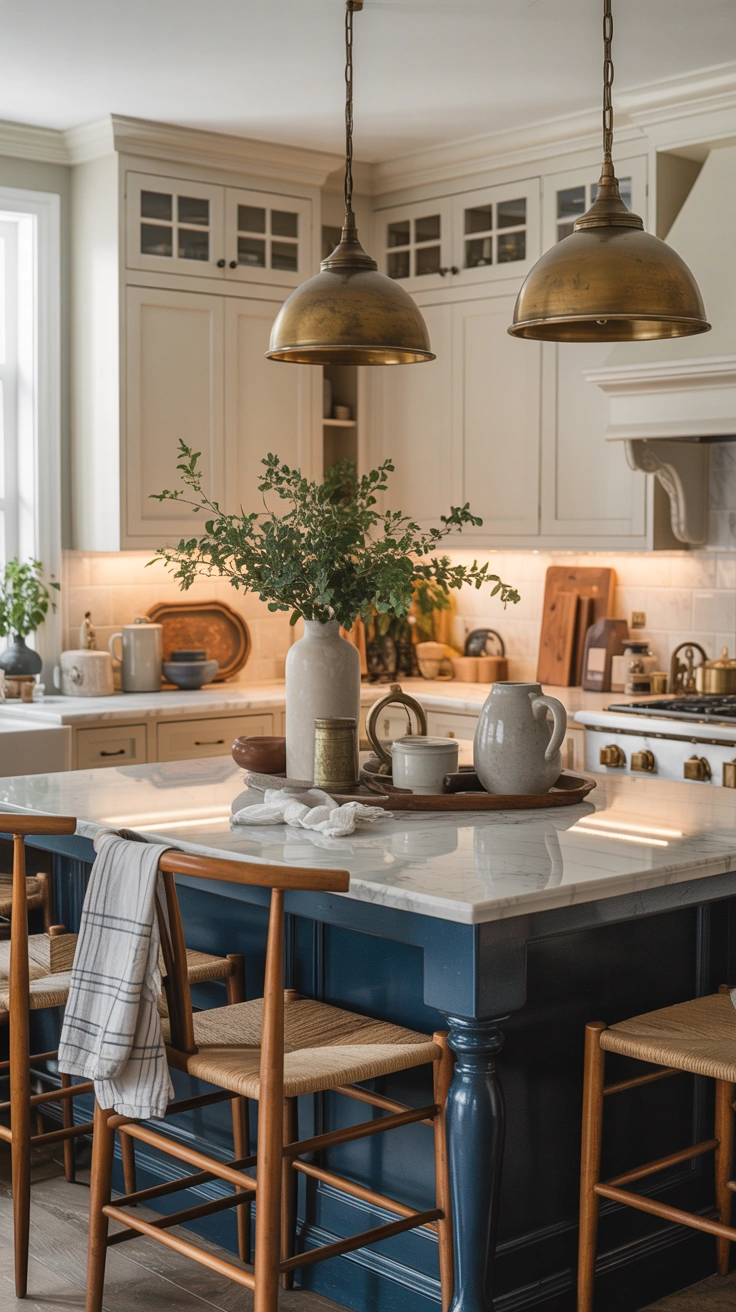
The kitchen island is the most logical and most rewarding place to introduce a second color into a kitchen that is otherwise operating in a single cabinet tone. One strong color decision on the island — while the perimeter cabinetry stays neutral — transforms the island into the kitchen’s focal point and the room’s most confident design statement.
Deep navy, forest green, warm terracotta, rich charcoal, or warm burgundy on the island beside white or cream perimeter cabinets creates a visual impact that a single-color kitchen simply cannot achieve. The island becomes the kitchen’s personality in concentrated form — the single decision that tells you everything about how the space was approached.
FYI — the island color and the perimeter cabinet color should belong to the same warm or cool family to read as intentionally coordinated rather than accidentally contrasting. Warm green with warm cream works. Cool grey-green with warm beige fights.
4. Styled Produce and Pantry Items as Decor
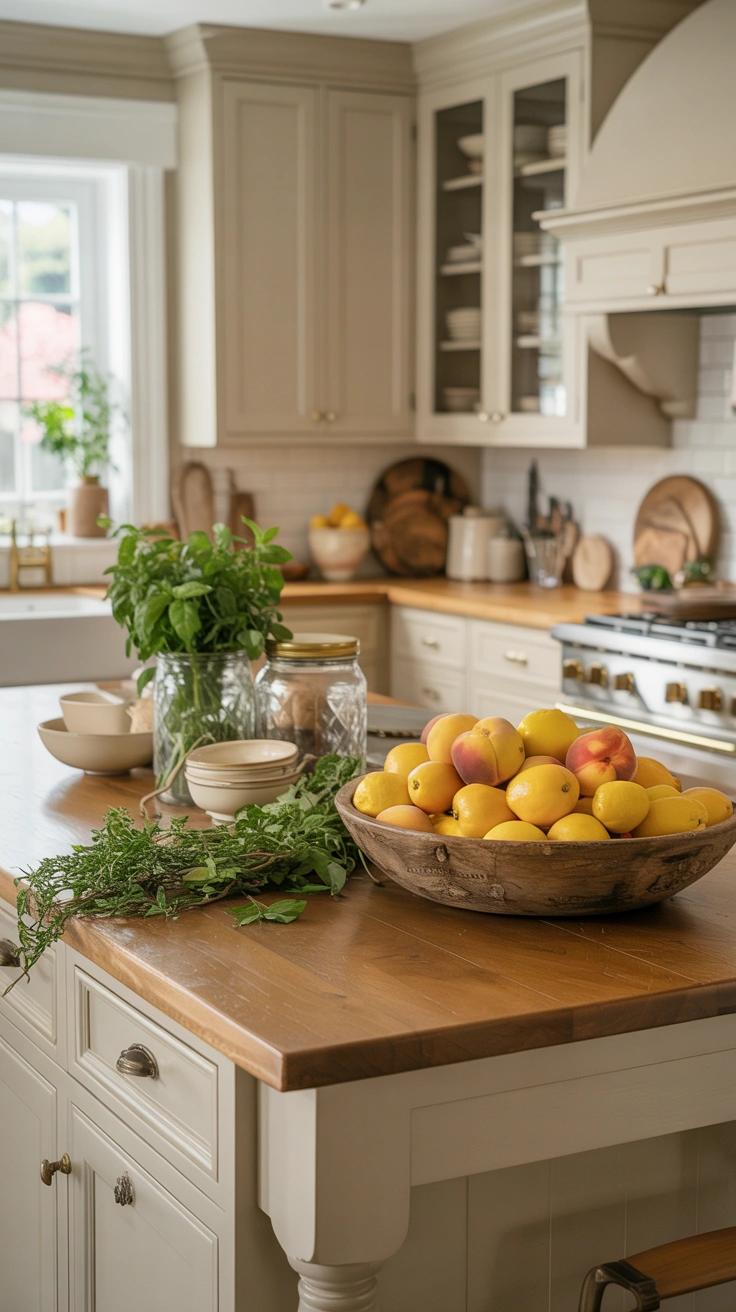
The most natural and most quietly beautiful form of kitchen island decor costs nothing and comes from the kitchen itself — fresh produce, pantry staples, and ingredients arranged on the counter with the same intention you would bring to a decorative vignette anywhere else in the home.
A wooden bowl of seasonal fruit. A cluster of lemons on a simple ceramic plate. A bunch of fresh herbs in a small glass jar. These items belong in the kitchen already — the only thing that changes is the care and intention with which they are placed. Grouped together on one section of the island, they create a moment of organic color and life that no purchased decorative object can replicate.
This approach also changes with the season naturally, without any effort or deliberate updating. Summer brings stone fruit and tomatoes. Autumn brings gourds and pomegranates. The island decor evolves with the kitchen’s rhythm.
5. A Waterfall Edge Countertop
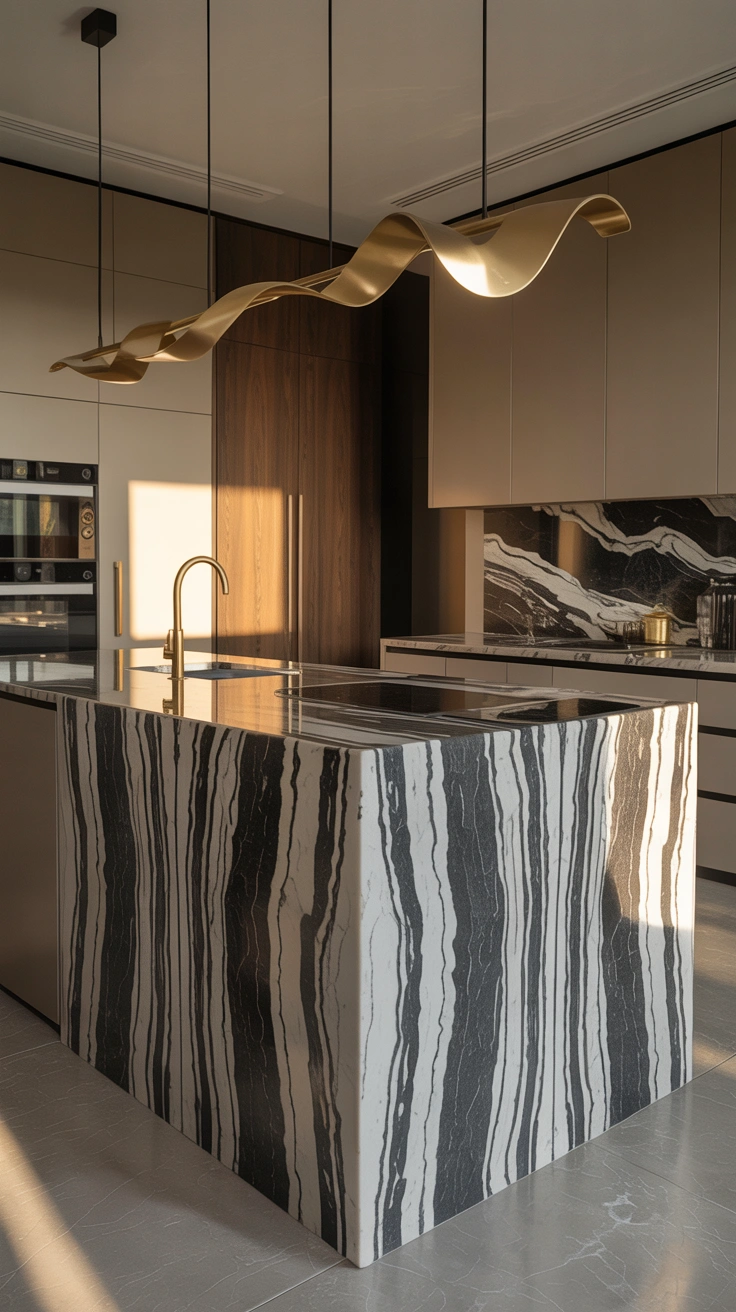
The waterfall countertop — where the island surface material continues vertically down one or both ends of the island to the floor — is one of the most architecturally resolved and most visually sophisticated island design decisions available. It transforms the island from a piece of furniture into a sculptural object.
A marble or quartzite waterfall edge with dramatic veining running continuously from the horizontal surface to the vertical face creates a moment of genuine material luxury. The continuity of the stone across both planes, with the veining matched at the corner, communicates a level of considered craftsmanship that guests notice immediately without necessarily identifying what they are responding to.
This is island design for a kitchen that wants to compete with the most beautiful contemporary interiors available — and executed well, it absolutely does.
6. Integrated Seating That Invites People In
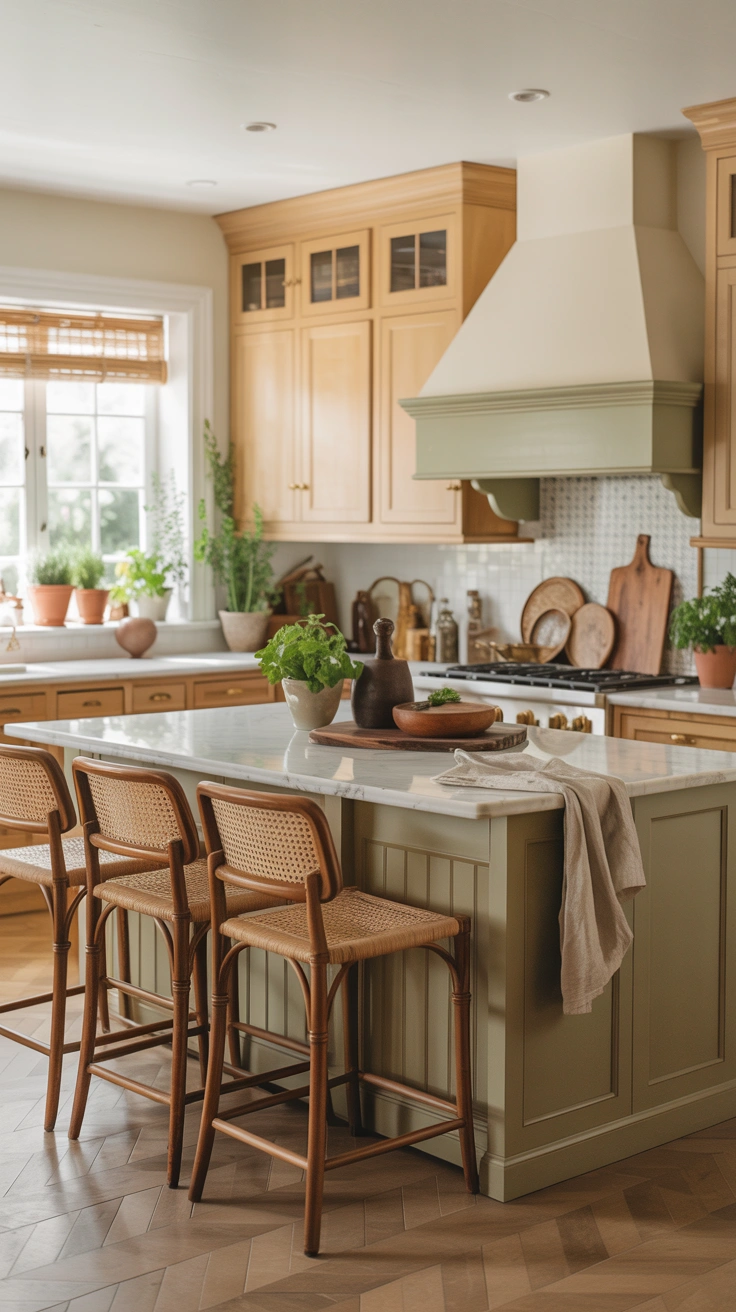
The kitchen island that incorporates seating on one side does something that no amount of surface styling can achieve — it makes the island a destination rather than just a workspace. People gather at a seating island in a way they simply do not gather around a prep surface with nowhere to sit.
Stools are the design decision that most people underinvest in. The stool is visible from the moment you enter the kitchen, sits at eye level for anyone seated in the adjacent living or dining space, and contributes significantly to the island’s overall visual impression. A beautifully chosen stool — in rattan, leather, warm wood, or a textured upholstered seat — completes the island in a way that a generic stool never can.
Stool Choices That Elevate the Island
- Rattan or cane stools for organic warmth and visual lightness
- Leather seat stools in cognac, tan, or warm caramel for material richness
- Solid wood stools in oak or walnut for a clean, architectural quality
- Upholstered seat stools in boucle or linen for softness and texture
The stool height matters practically — standard islands at 36 inches need counter-height stools at 24 to 26 inches. Bar-height islands at 42 inches need bar stools at 28 to 30 inches.
7. A Decorative Tray as an Organizing Anchor
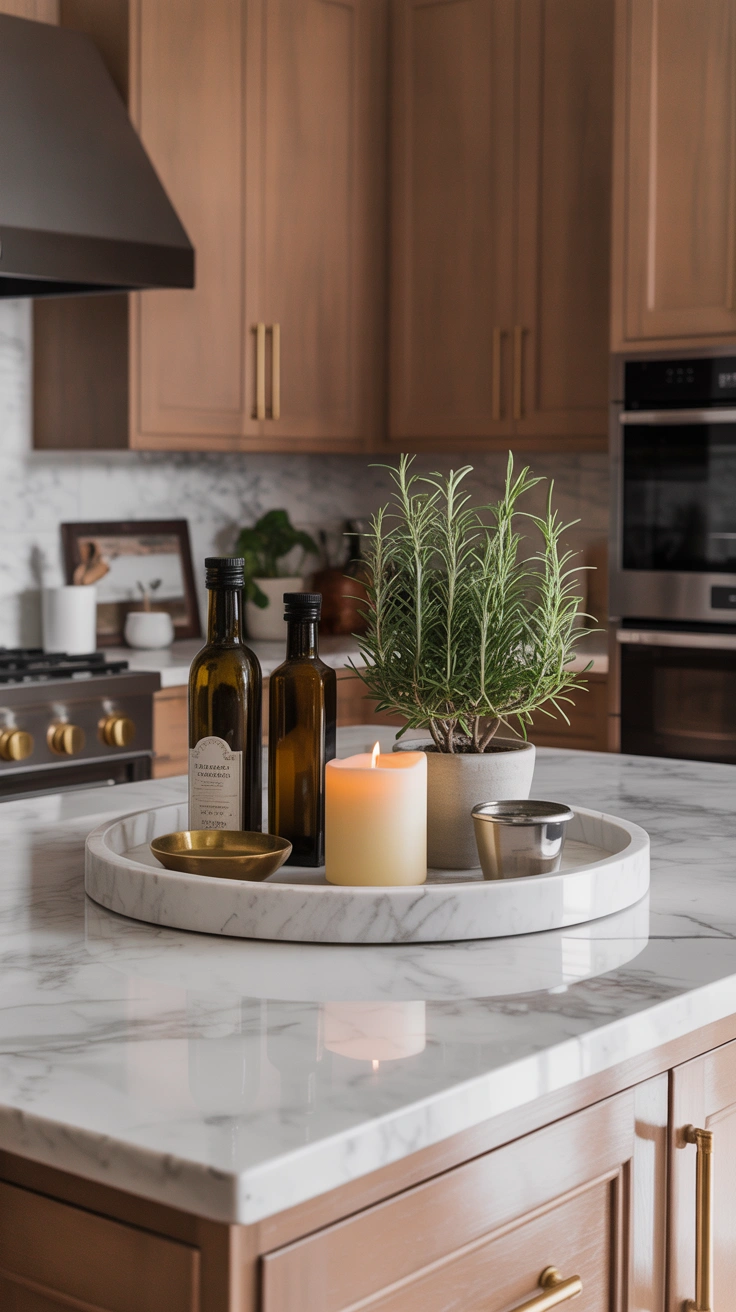
The single most accessible and most immediately effective kitchen island decor move is a well-chosen tray placed on one section of the counter. A tray does two things simultaneously — it contains and organizes the items within it, and it creates a defined decorative zone on a surface that might otherwise feel unresolved.
A large round tray in marble, aged brass, woven seagrass, or matte ceramic placed on one end of the island creates an anchor point for a small vignette. Olive oil, a salt cellar, a small candle, a fresh herb in a ceramic pot — the items that live on the island anyway, collected and contained within a beautiful vessel. The tray turns a practical grouping into a deliberate decorative moment.
IMO, the tray is the most underused tool in kitchen island styling — and it costs less than almost any other decorative investment you could make in the space.
8. Fresh Flowers or Potted Herbs
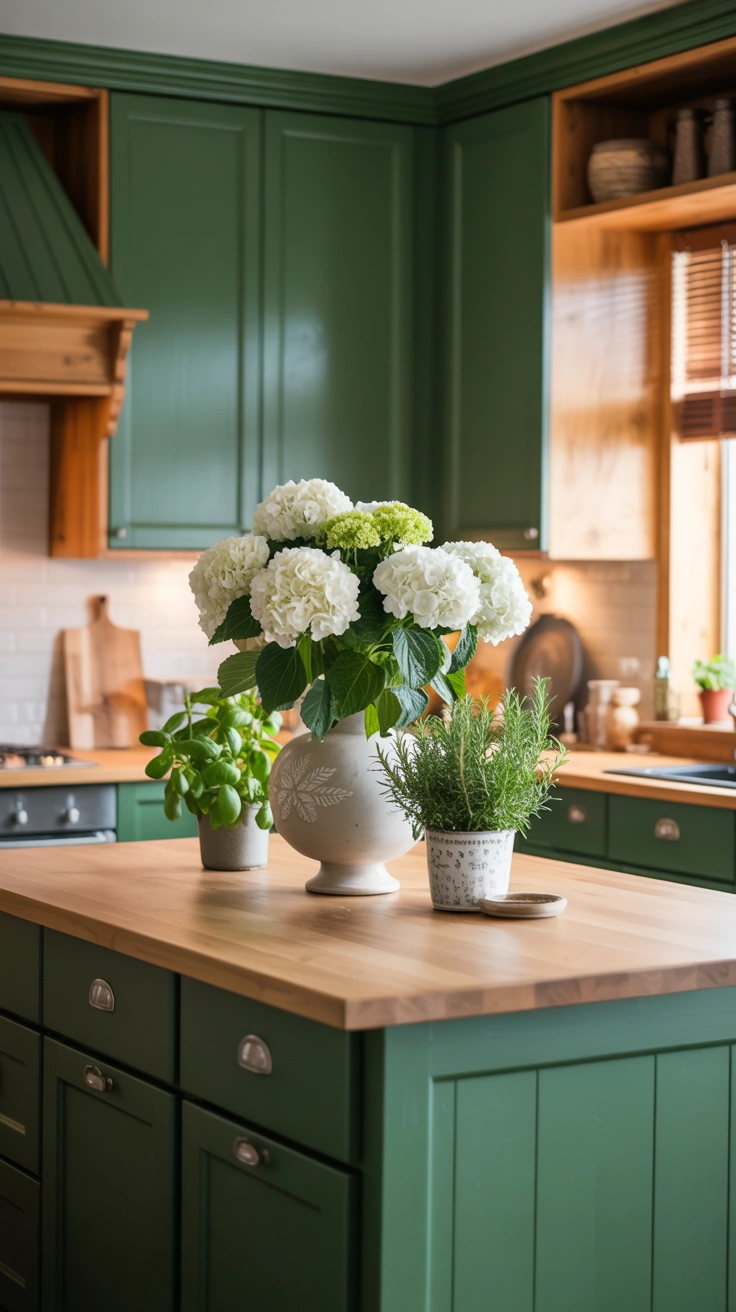
A single stem in a slim vase or a small bunch of fresh flowers in a simple ceramic vessel on a kitchen island changes the energy of the room in a way that is immediately felt but difficult to articulate. It introduces life, color, organic form, and scent in the most concentrated possible dose.
The vessel matters as much as the flowers. A beautiful ceramic bud vase, a small glass bottle, a handmade pottery jug — these objects hold their own decorative weight even when empty and look extraordinary when filled. Choose vessels with a material connection to the rest of the island — warm clay beside a wood countertop, clear glass beside marble, matte ceramic beside a concrete surface.
Potted herbs serve the same purpose with the added quality of being genuinely functional. A small pot of rosemary, basil, or thyme on the island is simultaneously decorative, aromatic, and useful — kitchen island decor at its most honestly integrated.
9. Open Shelving Built Into the Island
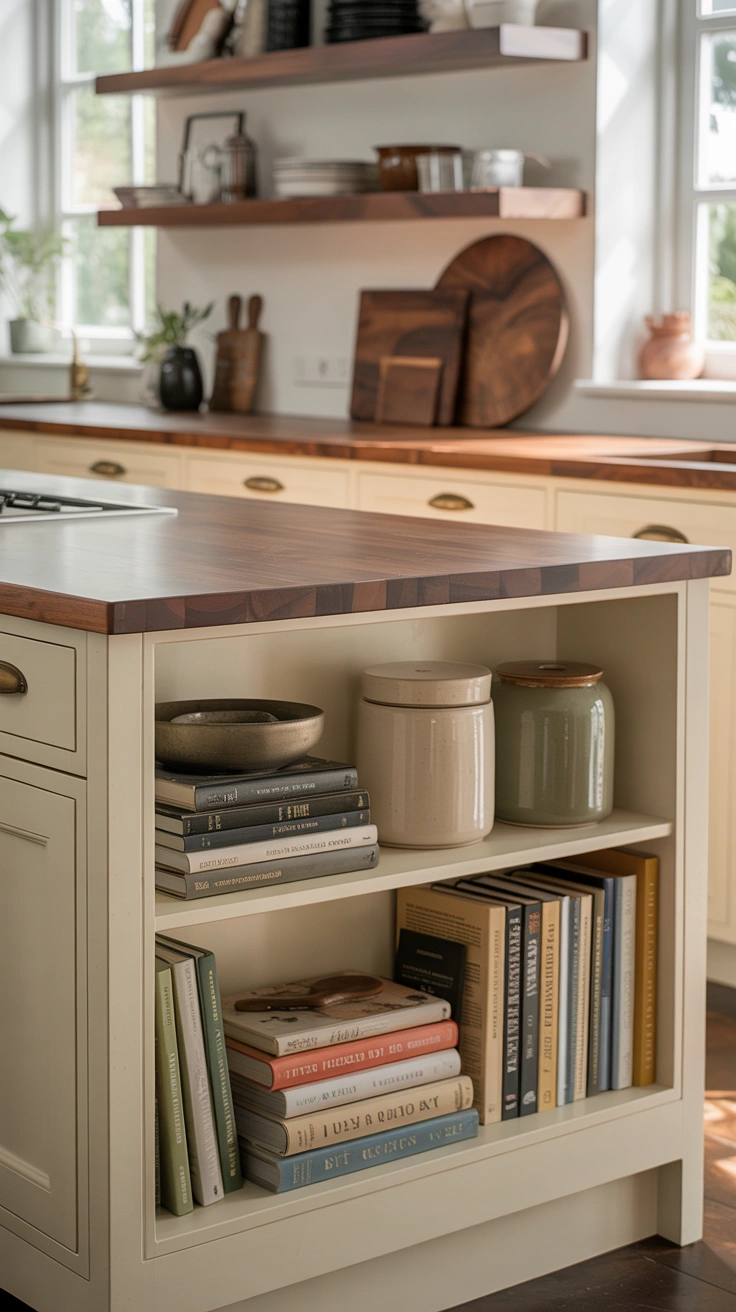
An island with open shelving built into one or more faces — rather than solid cabinet doors on every side — adds a layer of visual interest and practical accessibility that closed storage cannot provide. The open section becomes a display and storage opportunity that contributes to the island’s decorative character.
Cookbooks stacked horizontally with a small object on top. A row of matching ceramic storage jars. A collection of beautiful boards and platters stored vertically. These items are functional, they belong in the kitchen, and displayed on open island shelving they read as intentional and considered rather than simply stored.
The key is editing the open shelving with the same care you would bring to any open display. The items there should be chosen, not defaulted to. The arrangement should be considered, not random. Open shelving rewards intentionality and exposes the lack of it with equal honesty.
10. Statement Hardware That Ties the Room Together
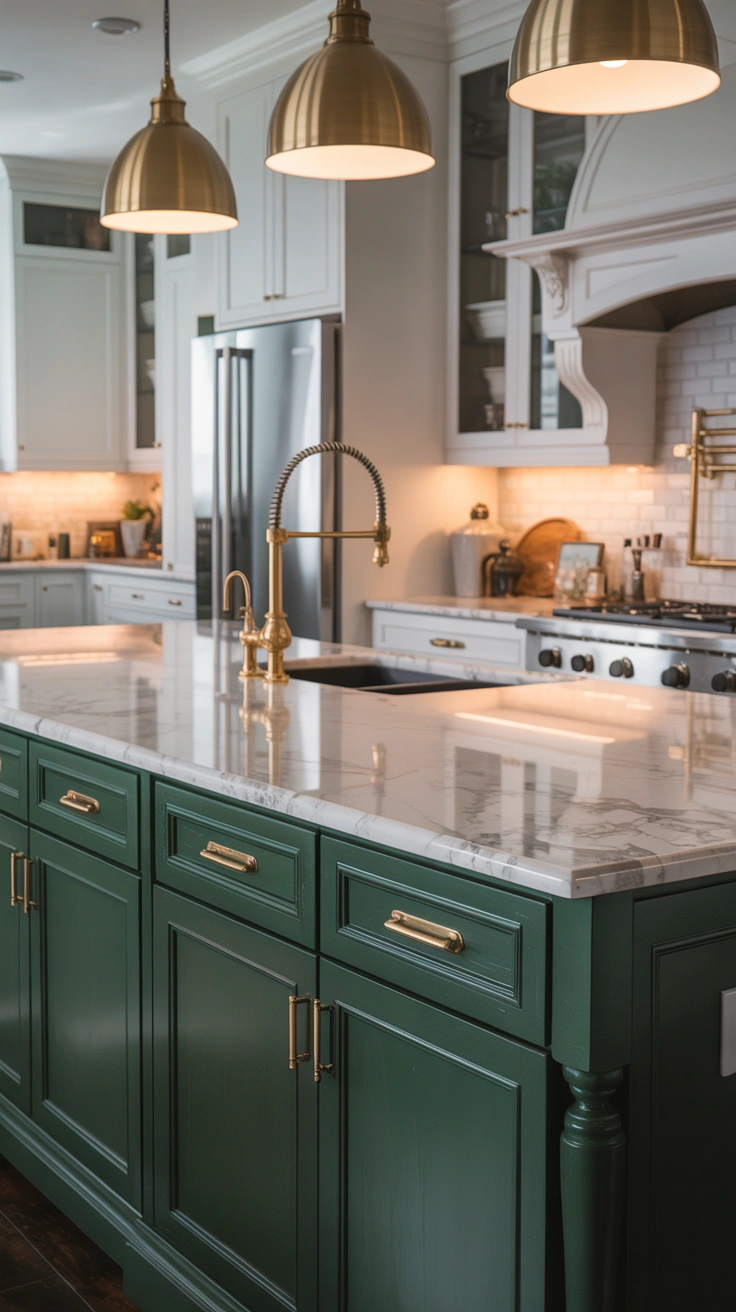
Island cabinet hardware is one of the most visible and most impactful finishing details in the entire kitchen — and it is one that most people decide on quickly without considering its full contribution to the room’s overall material palette. The hardware finish on the island cabinets is seen at eye level every time someone sits at the island, stands at the counter, or moves through the kitchen.
Aged brass hardware on a navy or forest green island creates a combination of depth and warmth that is immediately beautiful. Matte black hardware on a white or cream island creates something crisp, contemporary, and graphic. Unlacquered bronze on a warm wood or terracotta island creates an earthy, artisan quality that feels genuinely considered.
The hardware finish should connect to at least one other finish in the kitchen — the faucet, the pendant light, the range knobs — creating a thread of material consistency that makes the room feel designed as a whole rather than decided surface by surface.
11. A Butcher Block Section for Warmth and Function
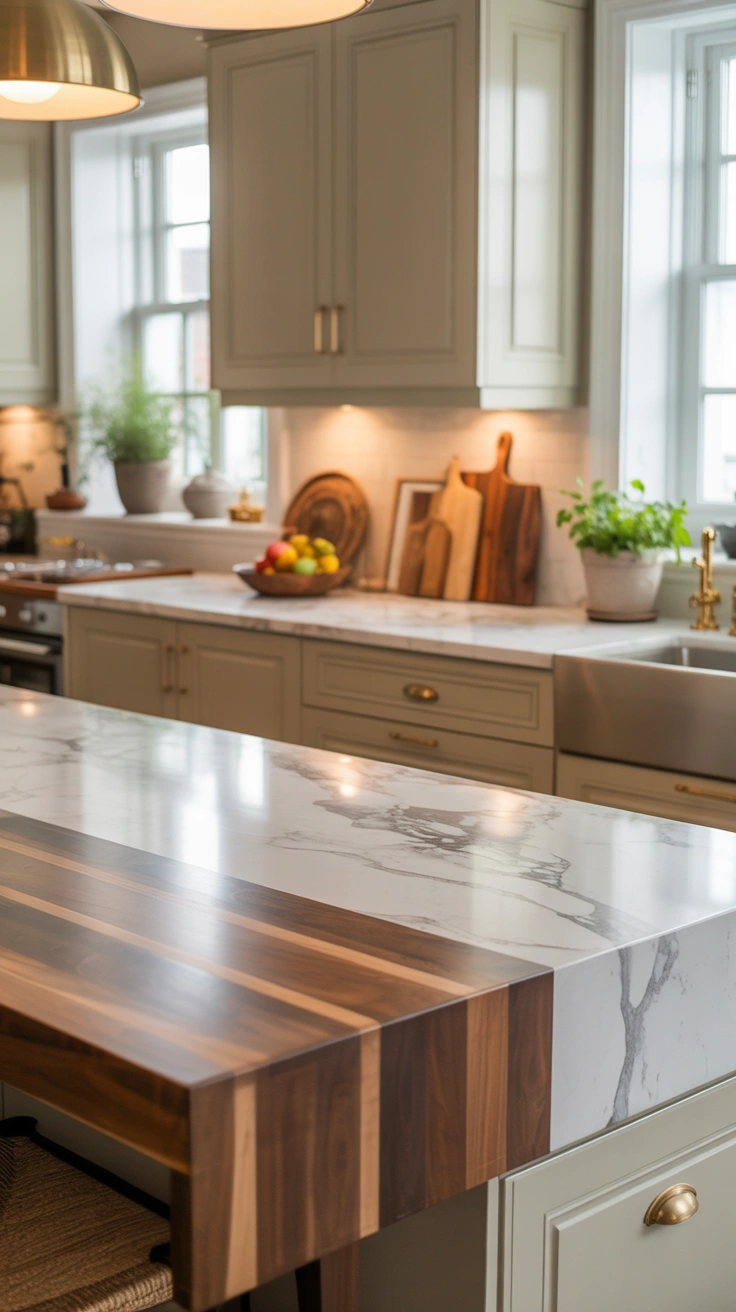
A kitchen island that incorporates a butcher block section alongside a stone or solid surface top achieves something that either material alone cannot — the combination of practical warmth and material contrast that makes the island feel genuinely bespoke. The butcher block section reads as a deliberate design decision rather than a default choice.
Warm oiled walnut or maple butcher block alongside a honed marble or concrete surface creates a material conversation between organic warmth and cool precision. The two surfaces sit in productive contrast — neither overwhelming the other, each contributing a quality the other lacks. The result is an island that looks like it was specified by someone with a genuine point of view.
This combination also photographs beautifully, which matters in an era where the kitchen is one of the most captured rooms in any home.
12. Get the Proportion Right
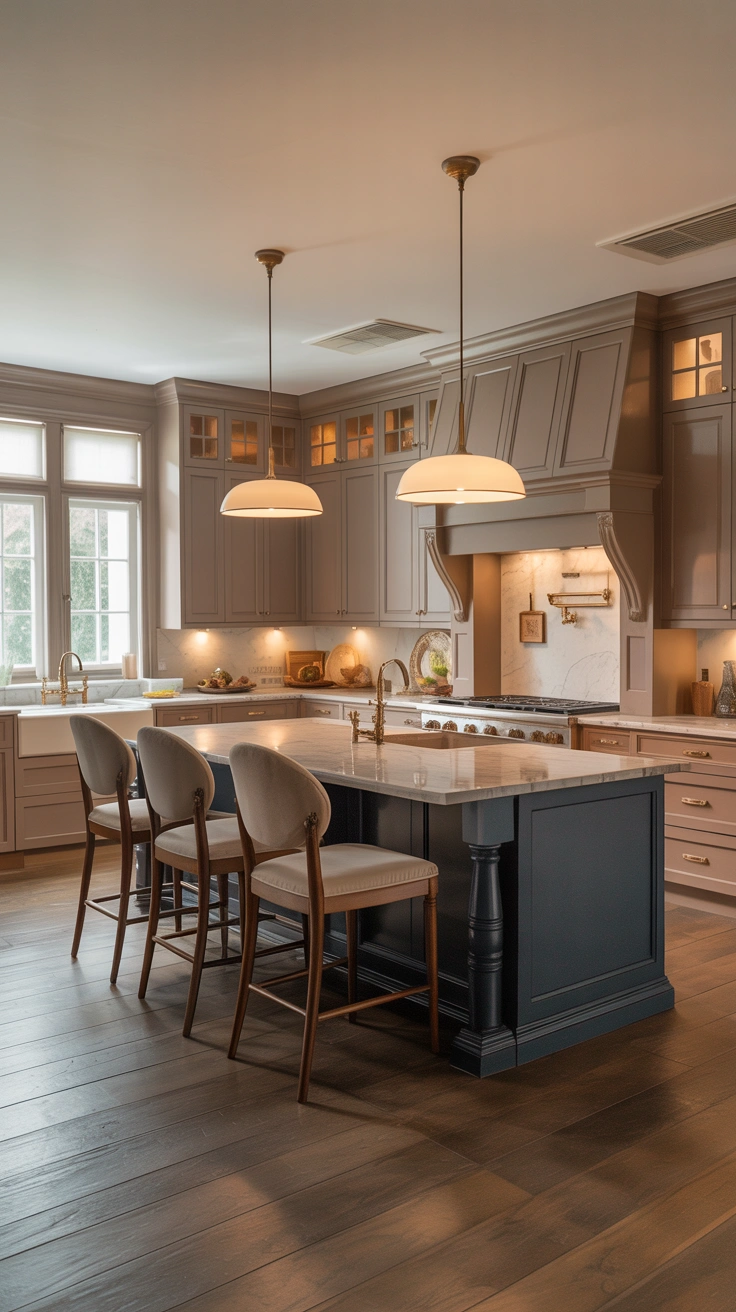
The final kitchen island decor idea is the foundational principle that determines whether all the others succeed or feel overwhelming — understanding that island proportion is the most commonly misjudged element in kitchen design, and that almost every island decor mistake comes from a surface that is either too large for the space or too small to make an impact.
An island that crowds the kitchen creates a room that feels difficult to move through regardless of how beautifully it is styled. An island properly scaled to the space — with at least 42 to 48 inches of clearance on all working sides — creates a room that functions beautifully and provides a surface generous enough to actually decorate with intention.
Island Proportion Guide
- Minimum clearance on all working sides — 42 inches, 48 inches preferred
- Island length — no more than half the total kitchen length as a general rule
- Overhang for seating — 12 inches minimum, 15 to 18 inches preferred for comfortable legroom
- Height — standard 36 inches for prep, 42 inches for bar-height seating zones
Getting the proportion right costs nothing. It is a decision made before a single item is placed on the surface — and it is the decision that makes everything placed there afterward look its best.
Conclusion
Twelve kitchen island decor ideas that cover every direction this surface can take — pendant lighting that anchors the space, countertop materials that earn attention, contrasting island colors, styled produce and pantry items, waterfall edges, integrated seating, decorative trays, fresh flowers and herbs, open shelving, statement hardware, butcher block contrast, and the foundational principle of getting the proportion right. Each idea creates a different kitchen personality while sharing the principle that the island is not just a workspace but the room’s most visible and most designed surface.
The kitchen island is where the room’s functionality and its beauty intersect most completely. Treat it as both — as the hardest working surface in the house and as the most rewarding decorative opportunity the kitchen offers.