15 Kitchen Aesthetic Ideas That Will Make You Actually Excited to Cook
Can we talk about that specific kind of kitchen envy? The kind that hits you when you’re scrolling through your phone at midnight, and you stumble across a kitchen so beautiful that you put your phone down, stare at the ceiling, and think — why doesn’t my kitchen look like that? I know that feeling intimately. I’ve lived it more times than I’d like to admit.
The thing is, those kitchens that stop you mid-scroll aren’t just well-equipped. They have a feeling. An atmosphere. A visual identity so clear and so consistent that every element seems to belong exactly where it is. That’s what aesthetic kitchen design is really about — not perfection, but intention. And the good news? Intention is something you can absolutely bring to your kitchen regardless of its size, age, or budget.
I’ve spent years obsessing over what makes a kitchen genuinely beautiful rather than just functional. Here are 15 aesthetic ideas that cover every direction — from soft and dreamy to bold and dramatic — so you can find the one that feels most like you.
The Aesthetic That Starts Every Conversation
Before you pick a single tile or paint color, the most important decision you’ll make about your kitchen is this: what feeling do you want it to create? Not what style is trending. Not what looked good in someone else’s home. What feeling do you want to walk into every morning?
A great kitchen aesthetic design is personal first and stylish second. The aesthetic ideas that follow each have their own distinct mood and personality. Some will resonate immediately. Others won’t be for you at all. Trust that instinct — it’s the beginning of a kitchen you’ll genuinely love.
1. The Soft White Dream — A Light Kitchen Aesthetic Done Perfectly
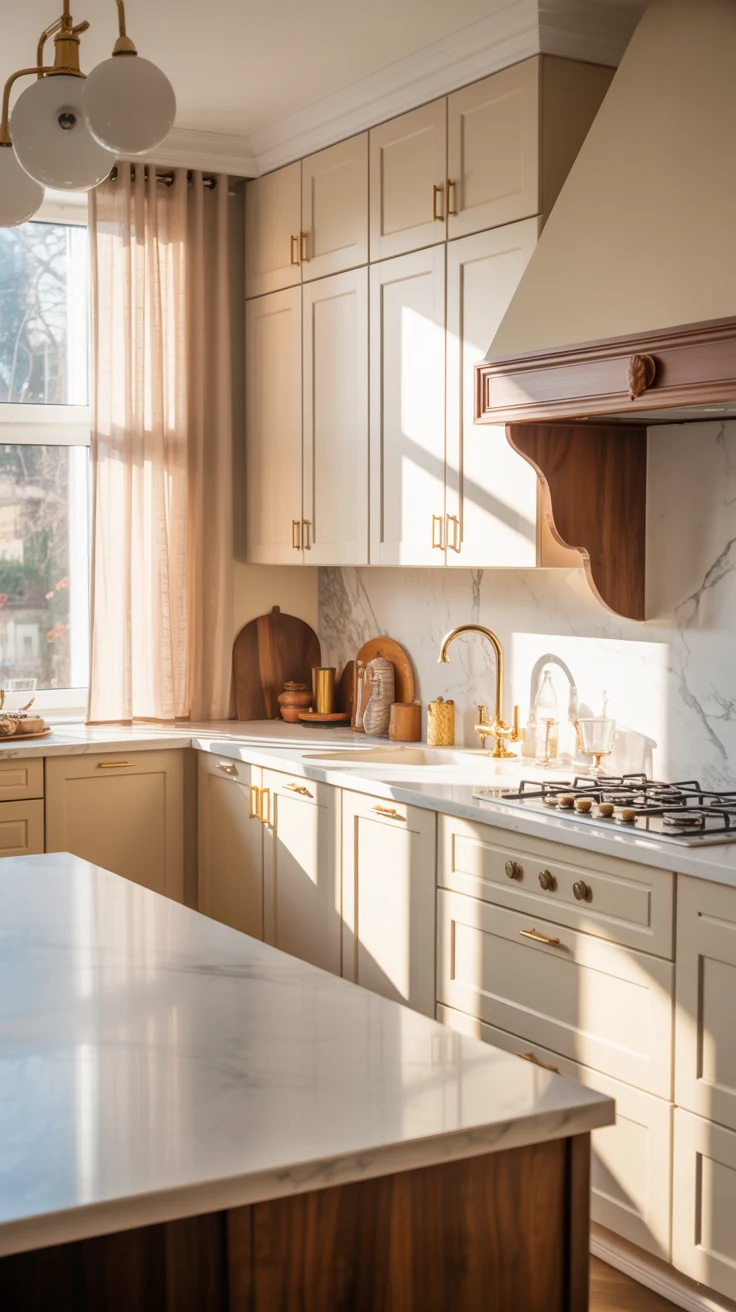
There’s a reason the light kitchen aesthetic dominates inspiration boards everywhere — it works. Soft white, warm cream, and barely-there ivory create a kitchen that feels open, calm, and perpetually sun-drenched even on the dreariest days. It’s not about being stark or clinical. It’s about creating a gentle, luminous backdrop that makes everything else look effortlessly beautiful.
The secret to making this aesthetic feel rich rather than flat is layering. White on white on white sounds monotonous until you start differentiating the textures — matte cabinet fronts, a glossy subway tile backsplash, a honed marble countertop, a linen roman blind. Each surface reflects light differently, and together they create depth and warmth that a single-texture approach simply cannot.
How to layer a light kitchen aesthetic successfully:
- Matte cabinetry against a glossy backsplash tile for surface contrast
- Warm white walls rather than pure brilliant white — warmer undertones prevent sterility
- Natural wood accents — a cutting board, open shelf, or bar stool seat adds organic warmth
- Aged brass or champagne bronze hardware — prevents the all-white look from feeling cold
- Soft textiles — a linen tea towel, a woven rug runner, a cotton blind ground the palette
2. Green is the New Neutral — Kitchen Inspo Green
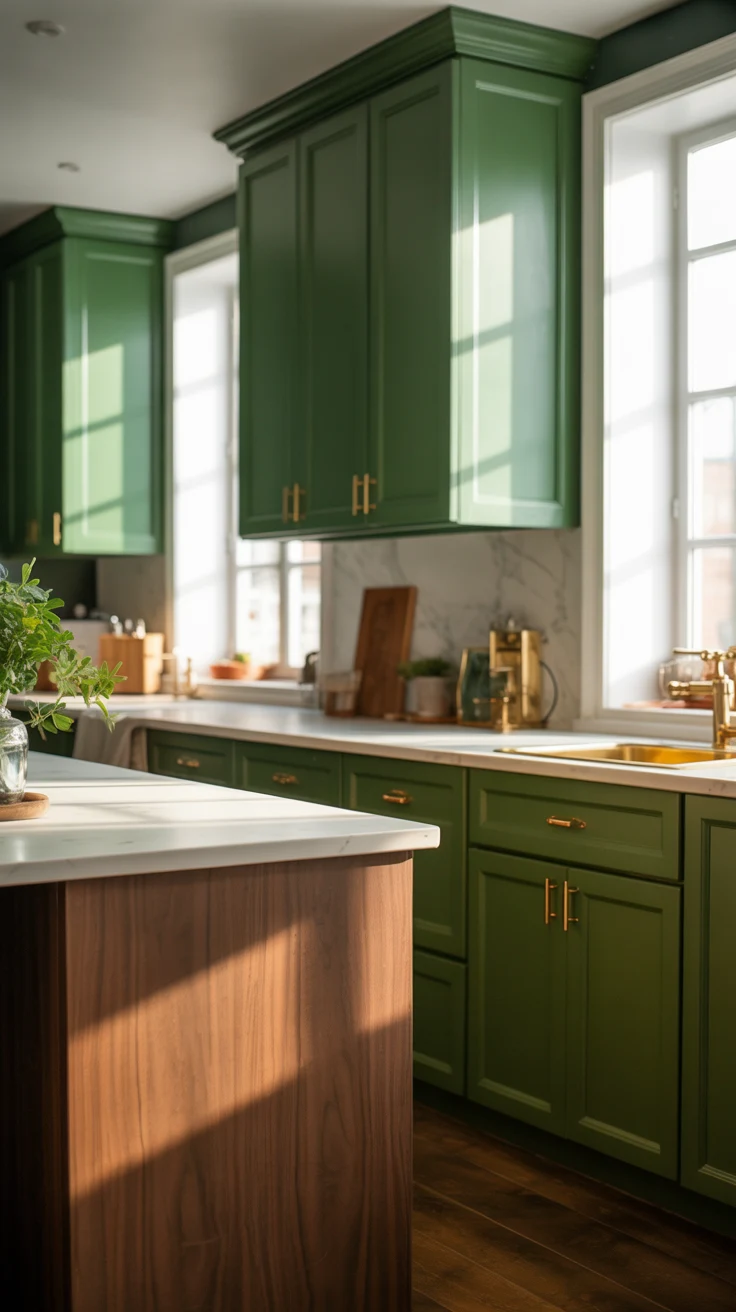
If you haven’t fallen for kitchen inspo green yet, prepare yourself — because this aesthetic is genuinely irresistible. From dusty sage to deep forest, from olive to hunter, green kitchens have a quality that no other color quite captures: they feel simultaneously bold and calm, contemporary and timeless, sophisticated and completely approachable.
Green works so well in kitchens because it echoes the natural world. It connects the cooking space to something organic and alive. And it pairs beautifully with almost every material — warm wood, cool stone, brass, chrome, rattan, linen. Whatever your countertop, whatever your floor, a green kitchen cabinet color finds a way to belong.
The key decision is shade. Lighter sages and muted eucalyptus tones create a soft, almost Scandinavian feel. Mid-toned olive and moss greens hit an earthy, organic note. Deep forest and hunter greens bring genuine drama and luxury. All of them work — choose based on how much natural light your kitchen receives and how bold you’re willing to go.
3. Modern Kitchen Aesthetic — Clean, Considered, Completely Current
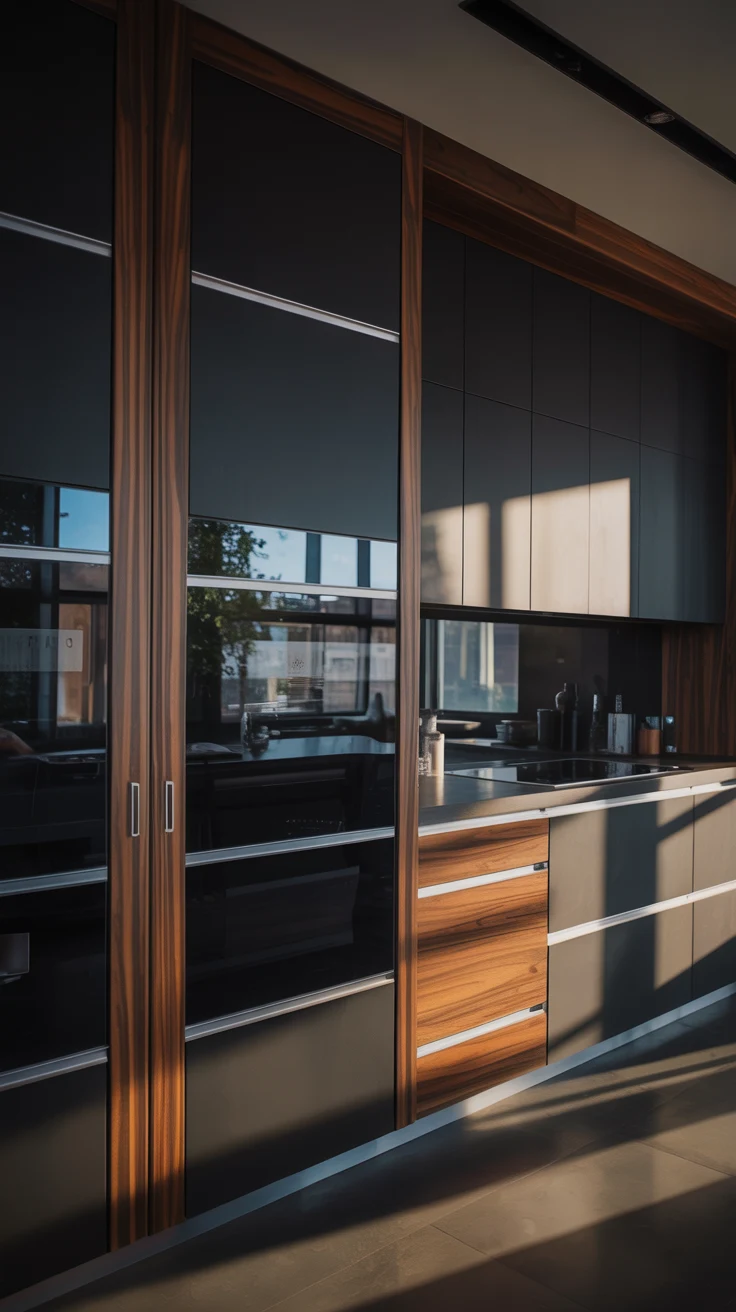
The modern kitchen aesthetic isn’t just a style — it’s a philosophy. It says that beauty and function are inseparable. That a cluttered surface is a design failure. That the materials should speak for themselves without decoration. And that every single element in the room should earn its presence through both usefulness and visual contribution.
In practice, this means handleless cabinetry in a flat-panel profile. Integrated appliances that disappear into the overall composition. A disciplined two or three-tone palette with no competing patterns. Countertops clear enough to feel like design statements in themselves. And lighting that works in layers — ambient, task, and accent — so the kitchen transforms from bright and practical during the day to warm and atmospheric in the evening.
4. Luxury That Lives in the Details — Kitchen Aesthetic Luxury
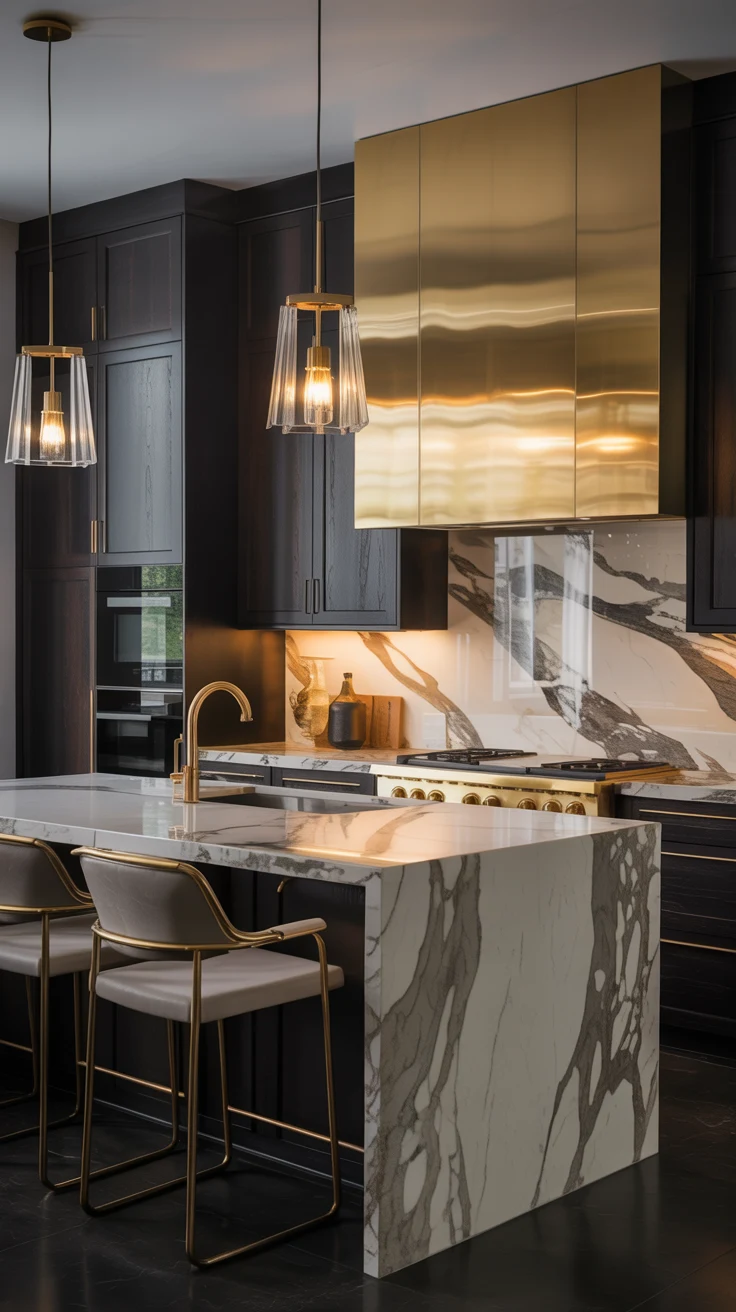
What separates a kitchen aesthetic luxury feel from a merely expensive one? It’s never the price tag. It’s always the details. The weight of the drawer when it closes. The quality of the stone and the depth of its veining. The way the lighting hits the cabinet fronts at a particular angle in the late afternoon. These are the things that make a kitchen feel truly luxurious — and many of them are more achievable than you’d expect.
A kitchen aesthetic modern luxury approach concentrates investment on the elements you touch and see most closely. The countertop material. The tapware finish. The pendant lights over the island. The hardware on every cabinet and drawer. These high-touch, high-visibility details define the perceived quality of the whole kitchen — and upgrading them selectively delivers luxury impact without requiring a complete renovation.
5. Apartment Kitchen Inspo — Making a Small Space Genuinely Stunning
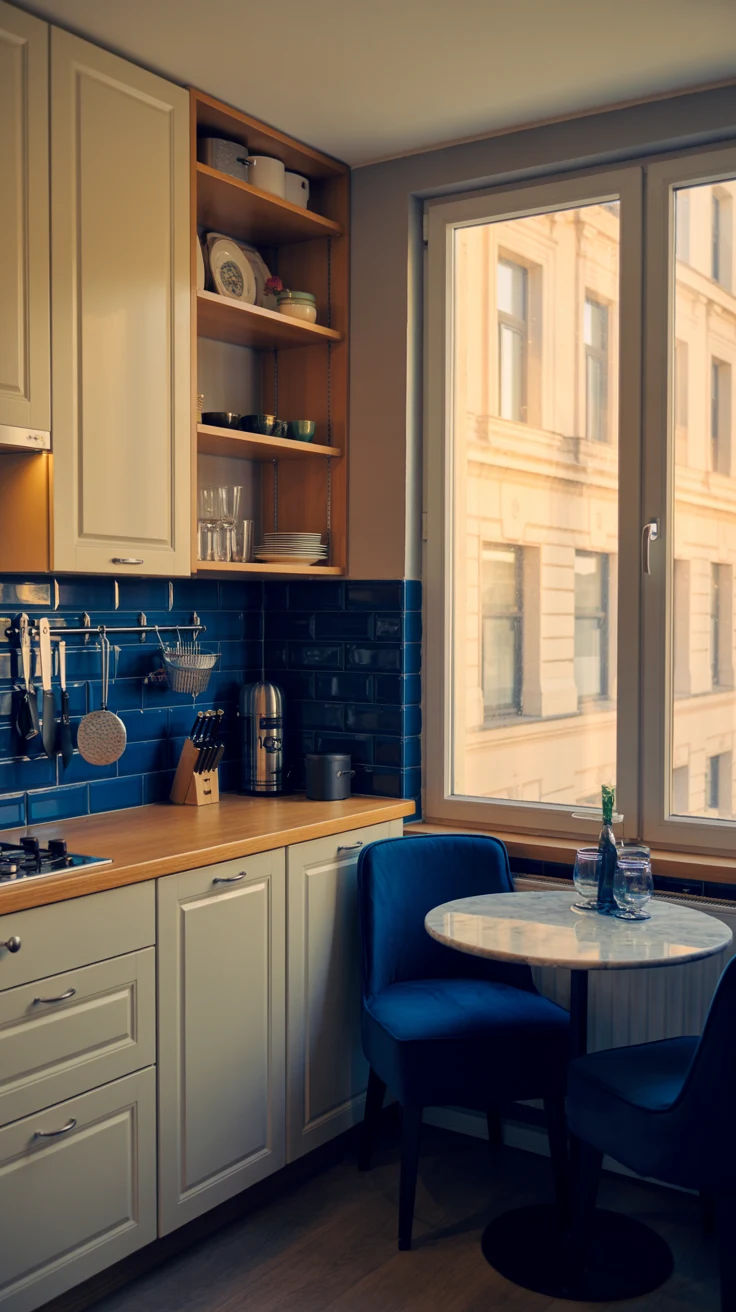
Apartment kitchen inspo aesthetic is one of the most searched and most underserved areas of kitchen design – because most apartment kitchens are genuinely challenging spaces that standard design advice doesn’t fully address. Small footprint, limited storage, often no natural light, and zero ability to structurally change anything. Sound familiar?
The aesthetic solution for apartment kitchens is cohesion above everything else. When a space is small, visual unity makes it feel larger and more intentional. Choose one consistent material for all surfaces, one hardware finish for all fixtures, and one textile tone for any soft elements. The result is a kitchen that feels designed rather than assembled — and in a small space, that distinction is worth everything.
FYI: Peel-and-stick backsplash tiles, removable wallpaper, and adhesive contact paper for cabinet fronts are genuinely impressive renter-friendly tools that can completely transform an apartment kitchen aesthetic without touching a single permanent surface.
6. Minimal Aesthetic Home Decor Applied to the Kitchen
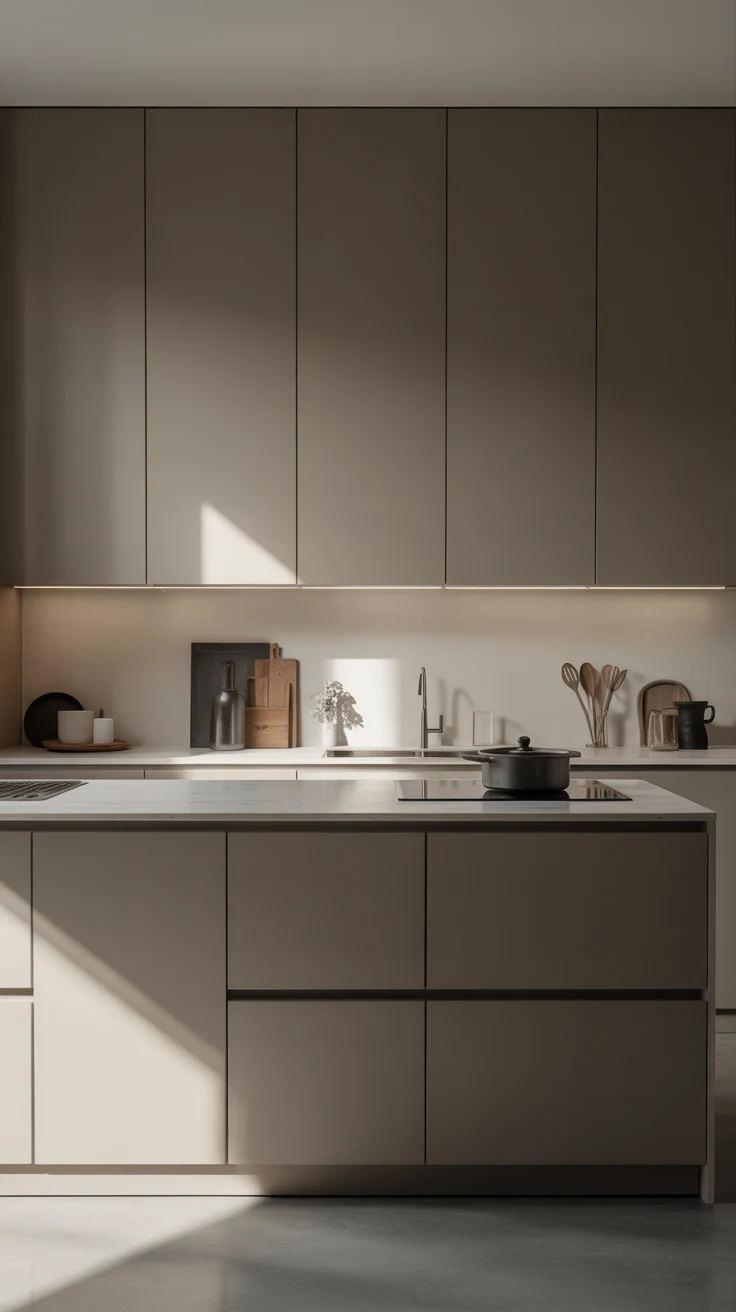
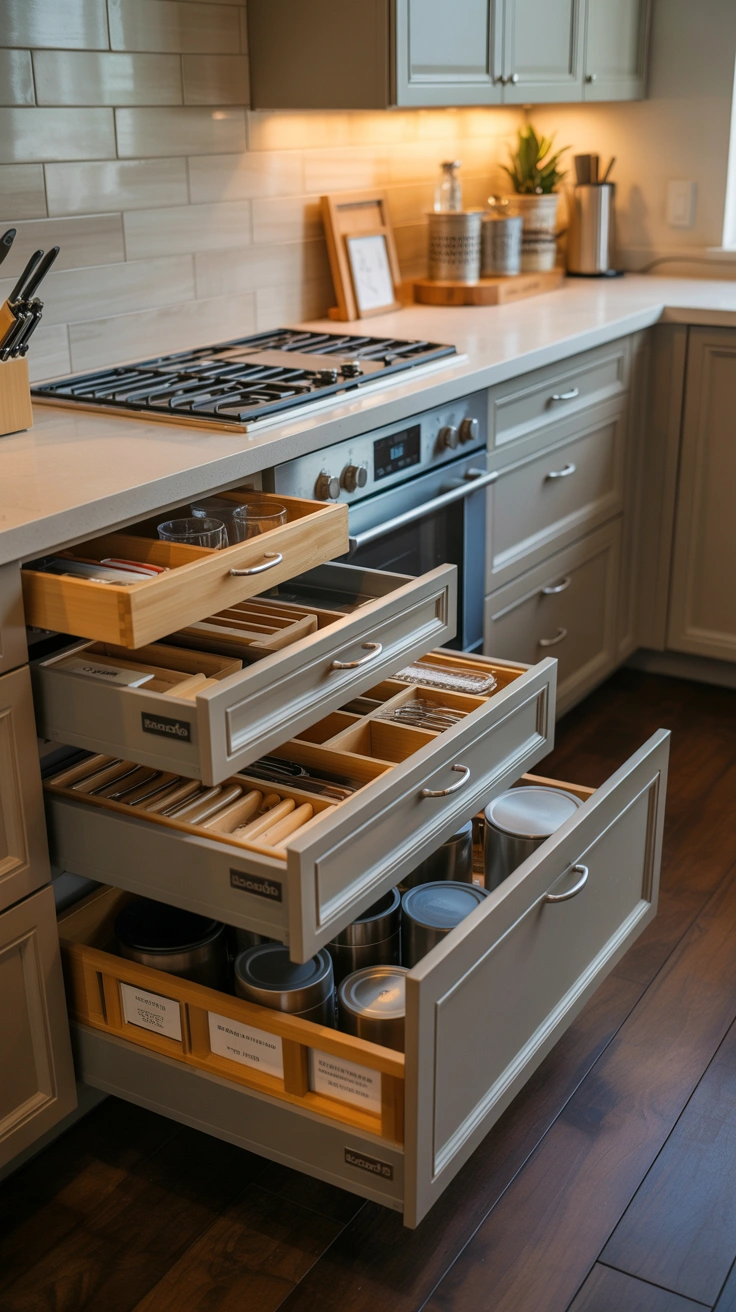
The kitchen is perhaps the greatest test of minimal aesthetic home decor principles — because it’s also the most used, most functional, most inherently cluttered room in the home. Achieving genuine minimalism here requires not just aesthetic choices but behavioral ones. Storage systems that actually work. Habits that keep surfaces clear. A willingness to own less and choose better.
But when it works — when the surfaces are genuinely clear, the storage is genuinely organized, and the materials are genuinely beautiful — a minimal kitchen is one of the most extraordinary spaces a home can contain. It creates a sense of calm that positively affects everything that happens in it, from the quality of meals to the mood of the people cooking them.
7. The Warm Wood Kitchen — Organic Aesthetic at Its Best
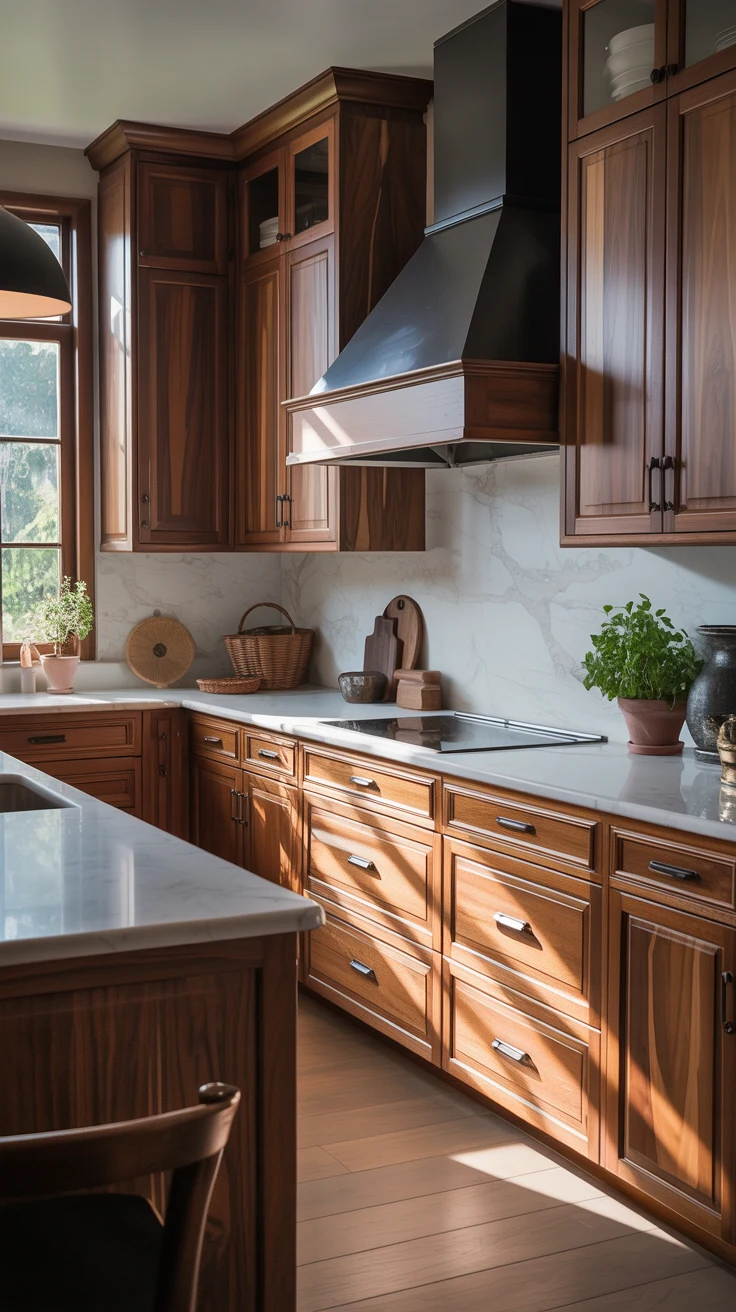
Warm wood cabinetry might be the single most universally loved kitchen aesthetic design direction right now. And it’s not hard to understand why. Wood brings something to a kitchen that no painted or lacquered surface can replicate — genuine organic warmth, natural variation, and a quality of material richness that gets more beautiful with age rather than less.
Oak is the dominant choice right now — in its natural, barely-treated form that shows every grain and every knot as a feature rather than a flaw. Walnut brings a deeper, richer warmth for a more luxurious result. Ash offers a cooler, more contemporary take on the wood kitchen. And painted wood with visible grain — where the texture shows through a matte color coat — bridges the wood aesthetic with a specific color palette beautifully.
Wood tones and their perfect material partners:
- Light oak — pairs with white stone, matte black hardware, and linen textiles
- Warm walnut — works with cream countertops, aged brass, and deep tile backsplashes
- Ash — suits a cooler palette with concrete, chrome, and pale gray stone
- Painted wood with grain — bridges color and organic texture simultaneously
8. The Dark and Dramatic Kitchen Aesthetic
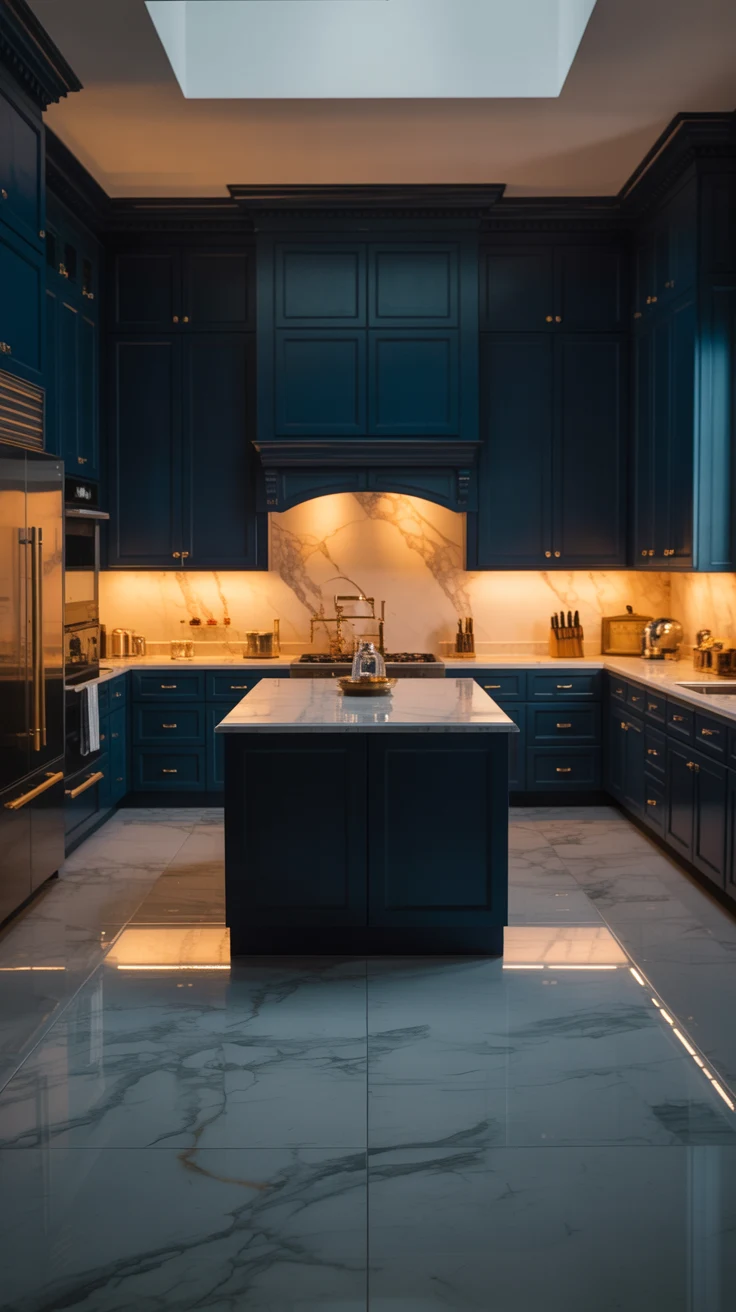
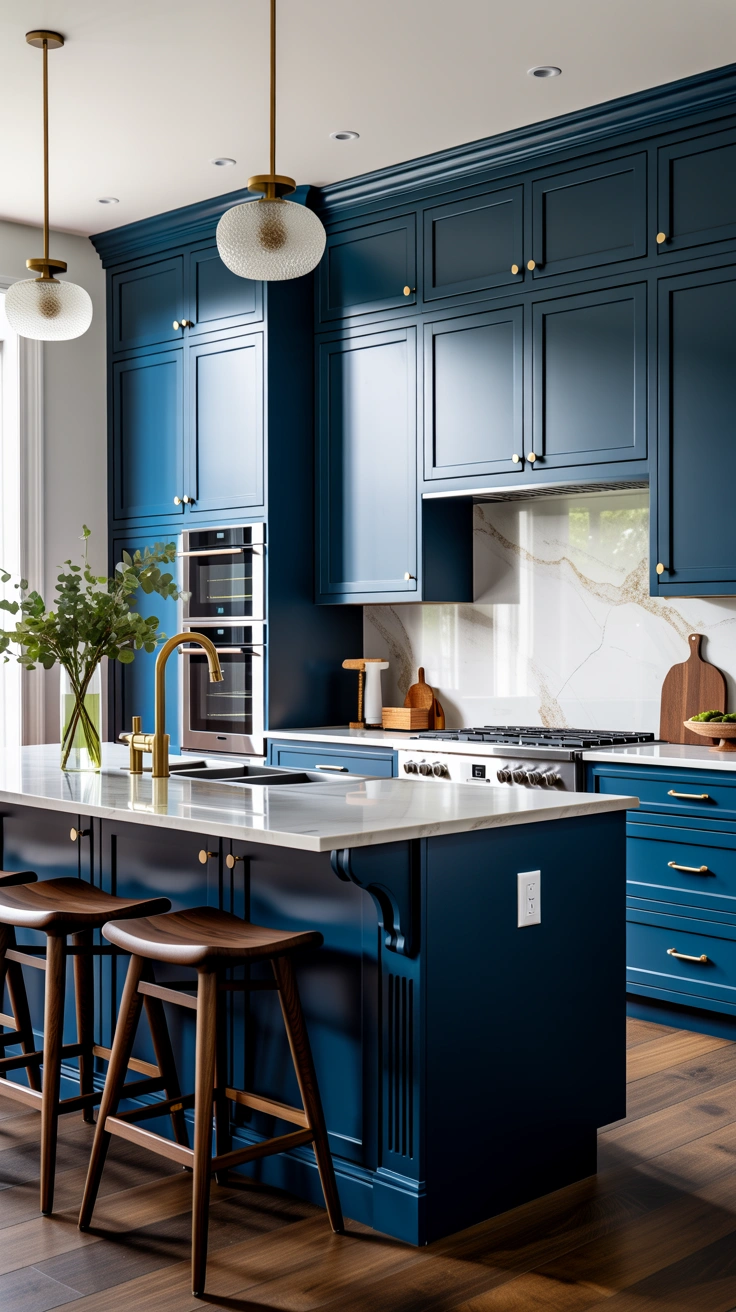
Here’s an aesthetic kitchen design direction that takes real confidence but rewards it enormously: going dark. Deep charcoal, inky navy, rich forest green, warm black — a dark kitchen creates an atmosphere that no lighter palette can match. It’s moody, enveloping, and genuinely theatrical in a way that makes cooking feel like an event rather than a chore.
The key to making a dark kitchen work is light — specifically, the strategic use of it. Under-cabinet task lighting that illuminates the countertop against the dark cabinet face. Pendant lights over the island that create pools of warm light. A window treatment that maximises whatever natural light is available. Without sufficient lighting, a dark kitchen feels oppressive. With it, it feels extraordinary.
9. Kitchen Interior Aesthetic Modern — The Japandi Direction
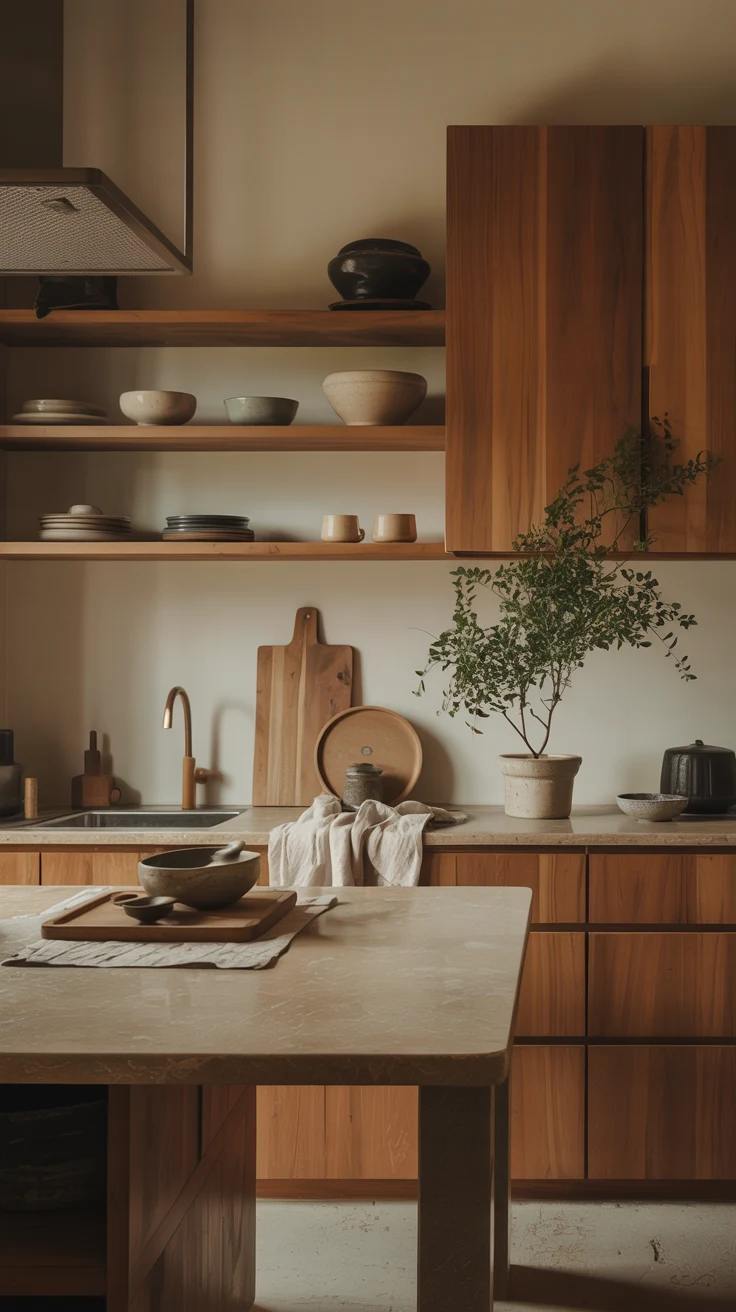
The kitchen interior aesthetic modern approach that has most captured the design world’s imagination in recent years is Japandi — the marriage of Japanese minimalism with Scandinavian warmth. In a kitchen context, this translates to natural materials used with tremendous restraint, a muted earthy palette, functional objects chosen for their beauty as well as their utility, and an overall atmosphere of profound calm.
A Japandi kitchen has no unnecessary elements. The open shelf holds exactly what belongs on it — no more. The countertop is clear of everything except what’s in active use. The hardware is simple and considered. The materials — warm wood, handmade ceramic, natural stone — are honest and unembellished. It’s a kitchen that respects both the cook and the cooking, and that respect shows in every detail.
10. The Cottage Core Kitchen — Soft, Romantic, and Endlessly Charming
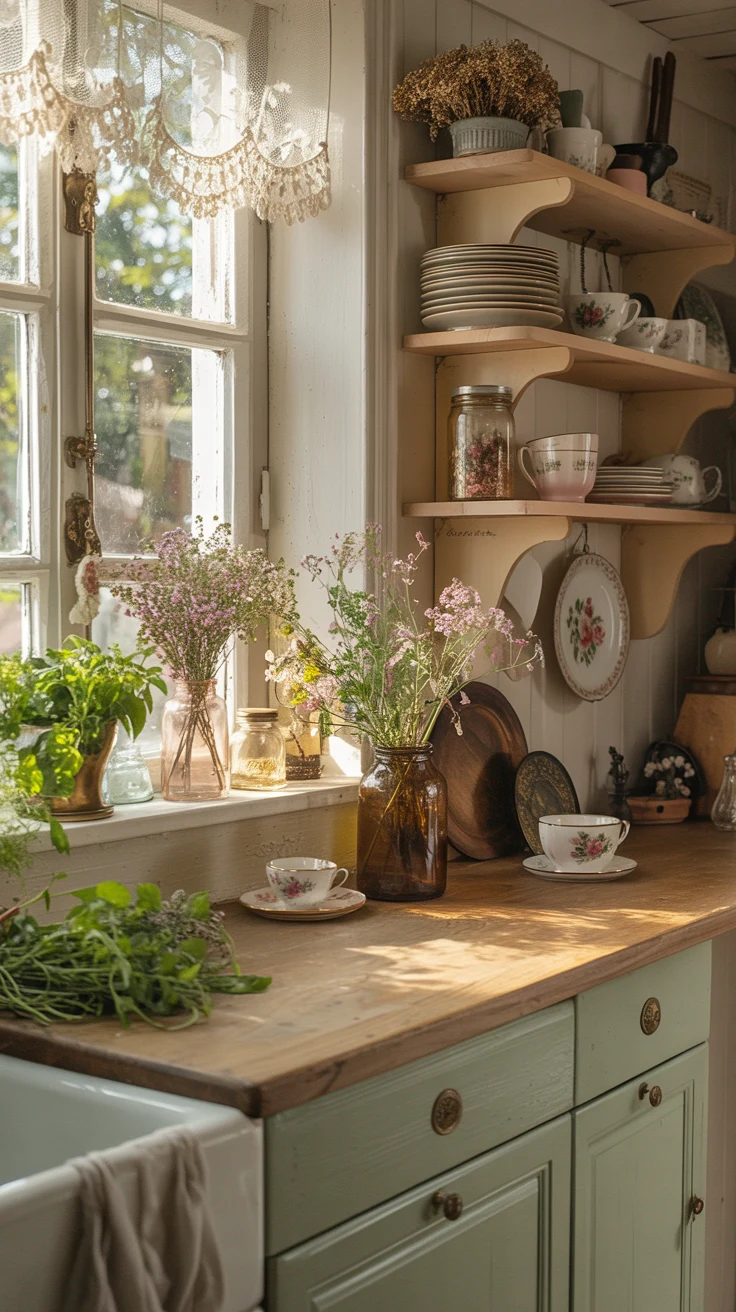
Not every kitchen aesthetic needs to be sleek or minimal or contemporary. The cottagecore kitchen leans into warmth, imperfection, and romantic nostalgia in a way that feels genuinely joyful. Open shelving displaying mismatched but coordinated pottery. Floral or botanical prints on the backsplash or a single wall. Bunches of dried herbs hanging from a rail. A Belfast sink under a small window with a garden view.
This aesthetic works because it celebrates the kitchen as a place of genuine nourishment — not just food preparation. It’s the aesthetic that says cooking is a pleasure, not a task. And in a world increasingly dominated by sleek minimalism, there’s something deeply refreshing about a kitchen that openly prioritizes warmth and charm over precision and perfection.
11. The Two-Tone Color Block Kitchen
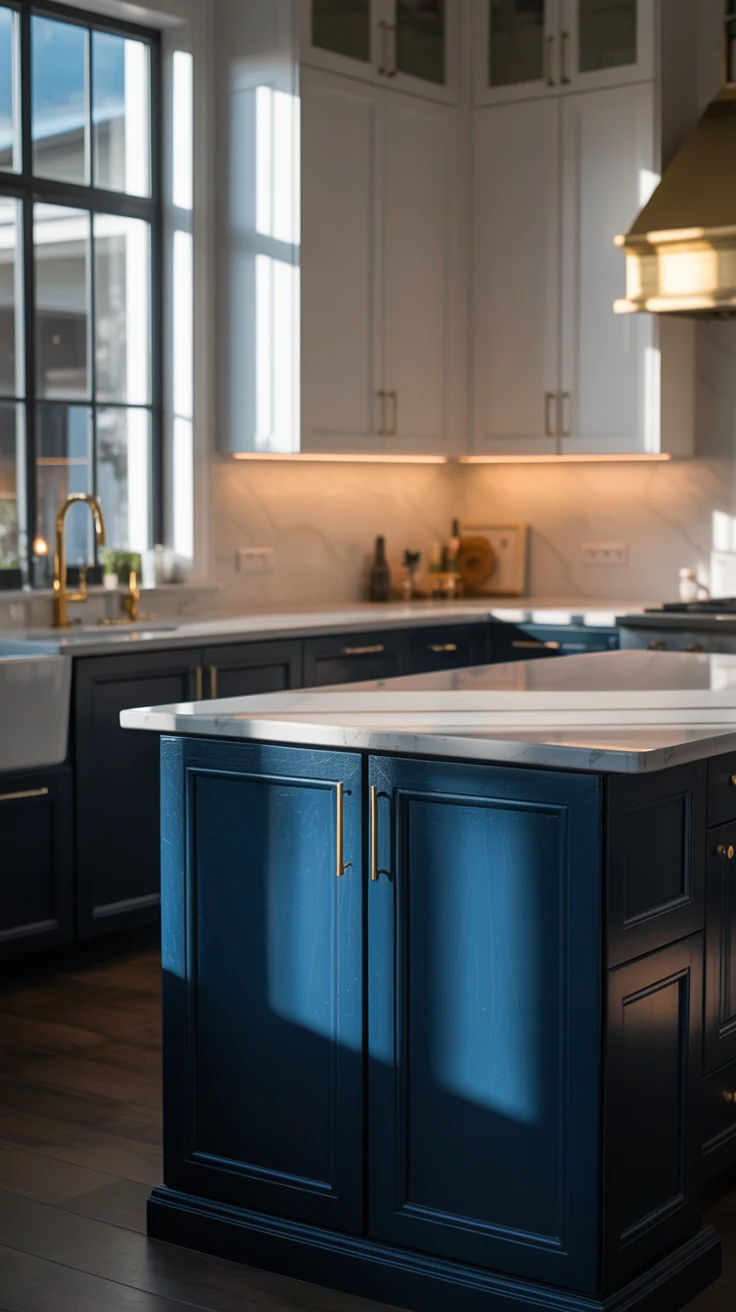
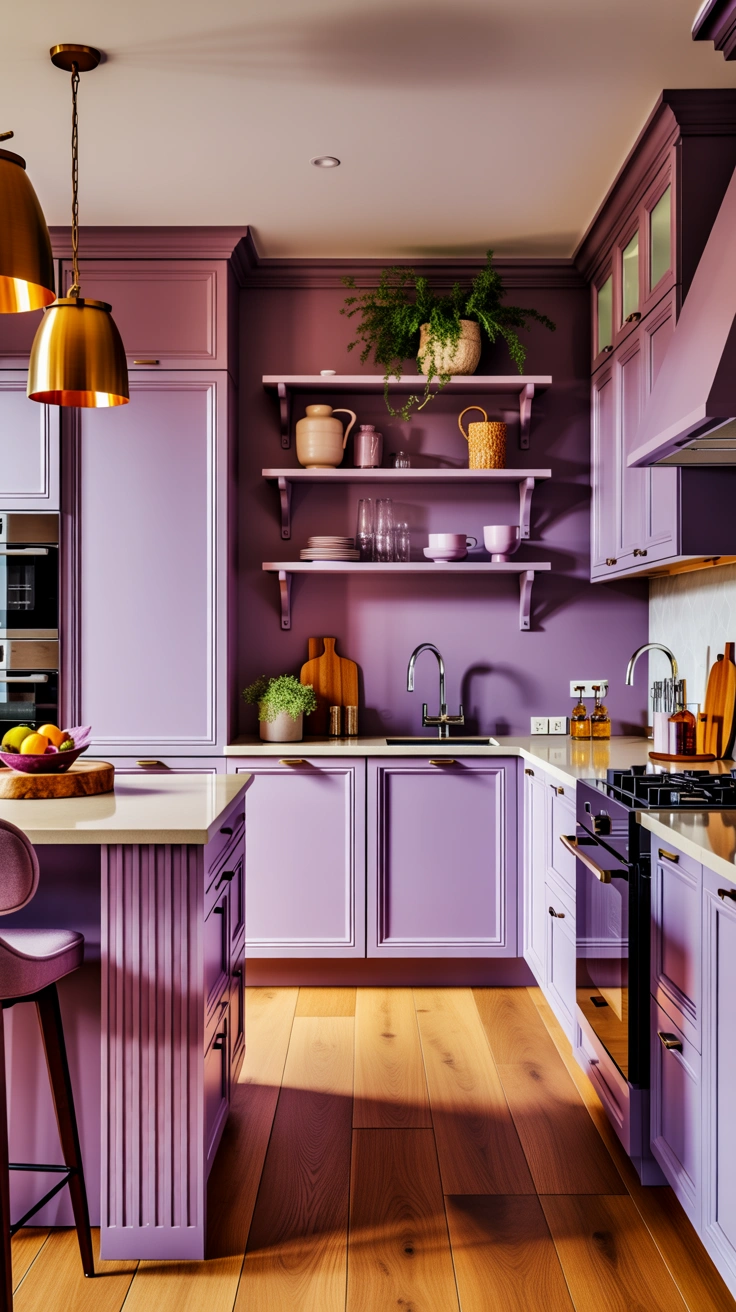
Two-tone cabinetry is one of the most effective modern kitchen aesthetic moves available — and it’s more versatile than people realize. The classic approach is a lighter upper cabinet color with a deeper lower cabinet tone, creating visual grounding and preventing the kitchen from feeling top-heavy. But the possibilities extend far beyond that formula.
A boldly colored island in a completely different tone from the perimeter cabinetry creates an immediate focal point and gives the kitchen a layered, collected feel. A single wall of cabinets in a contrasting color used as a feature wall creates depth and drama without committing the whole kitchen to a dark palette. Two-tone is the aesthetic that gives you permission to be bold while keeping an escape route — and that balance is enormously appealing.
12. Stone and Marble — The Timeless Luxury Aesthetic
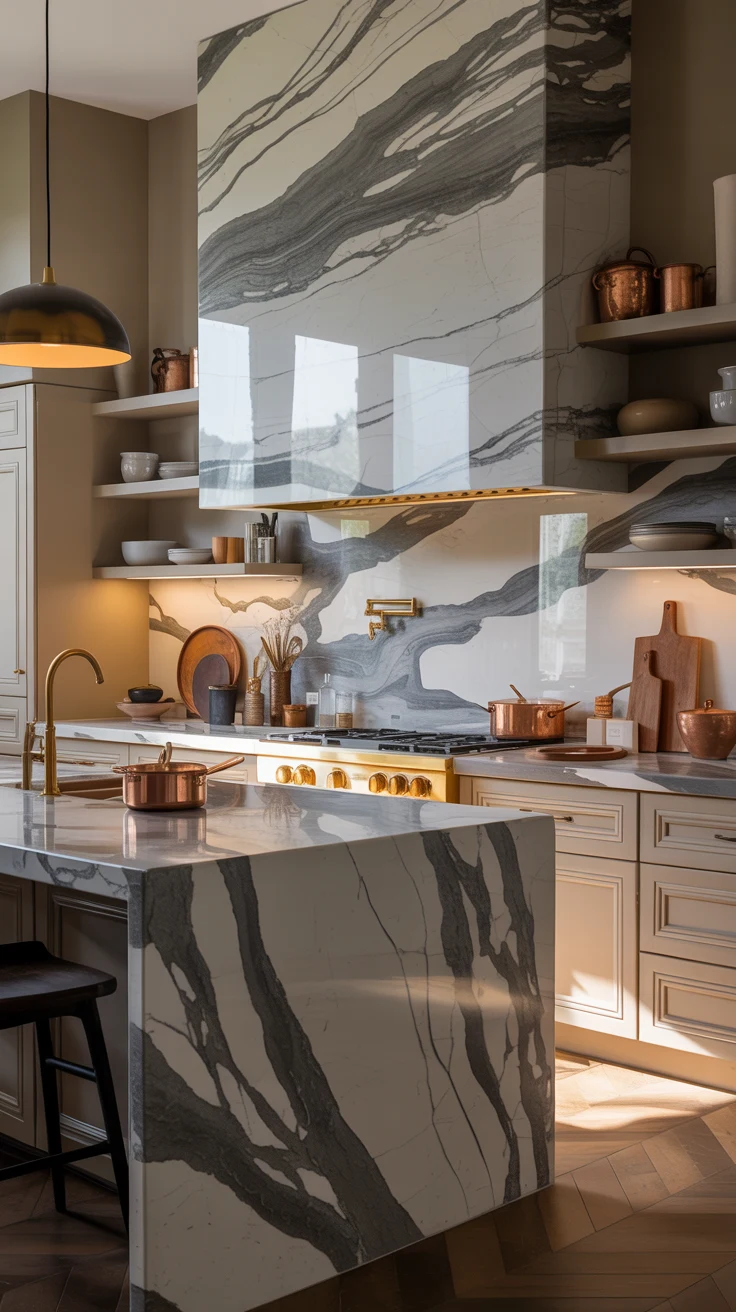
If there’s one material that defines kitchen aesthetic luxury more consistently than any other, it’s natural stone. Marble, quartzite, travertine, limestone — each brings a quality of beauty and material richness that no manufactured surface has yet managed to convincingly replicate. The veining is unique. The depth is real. And the way it ages — developing a patina and character over years of use — is something genuinely priceless.
The most impactful use of stone in a kitchen is the full-height backsplash slab — where the countertop material continues up the wall in one seamless panel. This eliminates the visual break of a separate backsplash material and creates a luxurious, cohesive surface that reads as genuinely extraordinary. Book-matched panels — where two mirrored slabs create a symmetrical veining pattern — take it to another level entirely.
13. The Industrial Aesthetic Kitchen
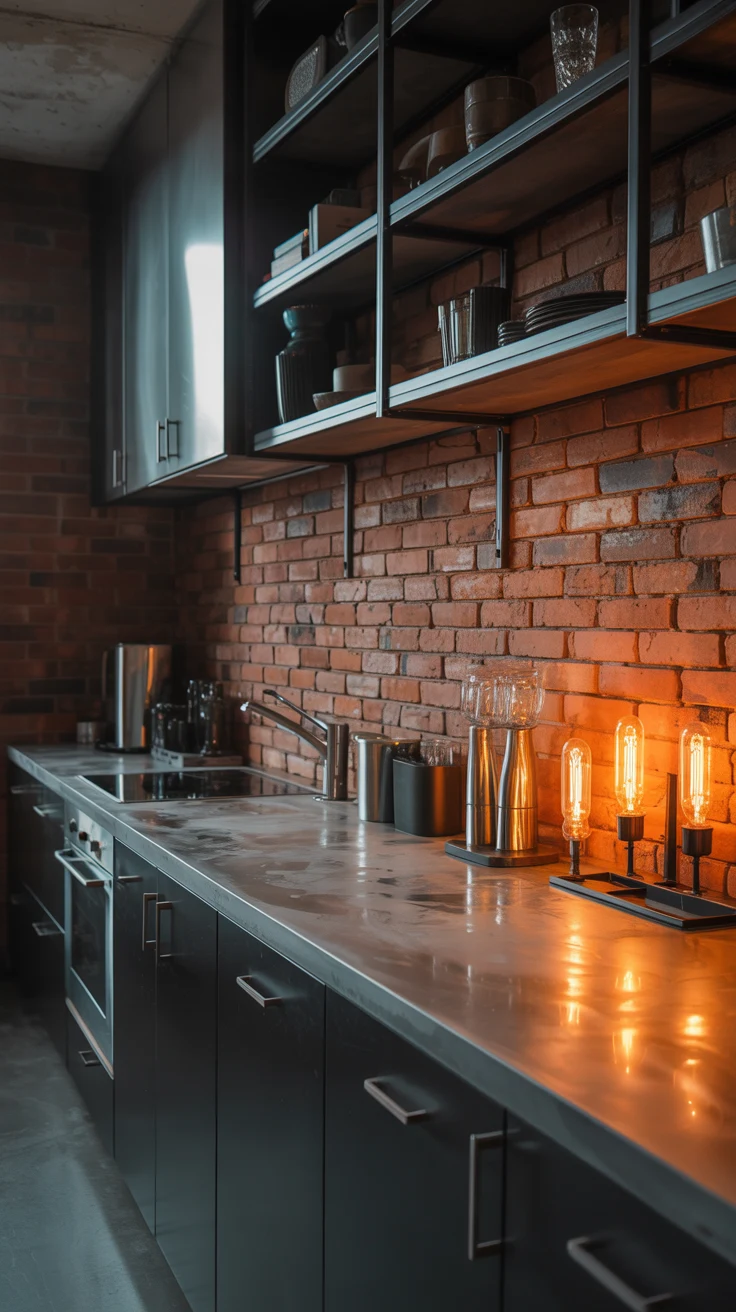
Raw, honest, and unapologetically bold — the industrial kitchen aesthetic draws from the visual language of factories, warehouses, and urban loft spaces and translates it into something surprisingly liveable and beautiful. Exposed brick or concrete walls. Open steel shelving with no pretense of hiding what’s stored there. Concrete countertops with visible texture. Pendant lights in aged metal with visible Edison bulbs.
What makes the industrial aesthetic work so well in kitchens is its inherent authenticity. There’s no attempt to hide the materials or disguise the structure. The pipes are part of the design. The rawness is the point. And in a room that’s fundamentally about real, honest work — cooking — that design philosophy feels completely appropriate and genuinely compelling.
14. The Maximalist Kitchen — More Is Gloriously More
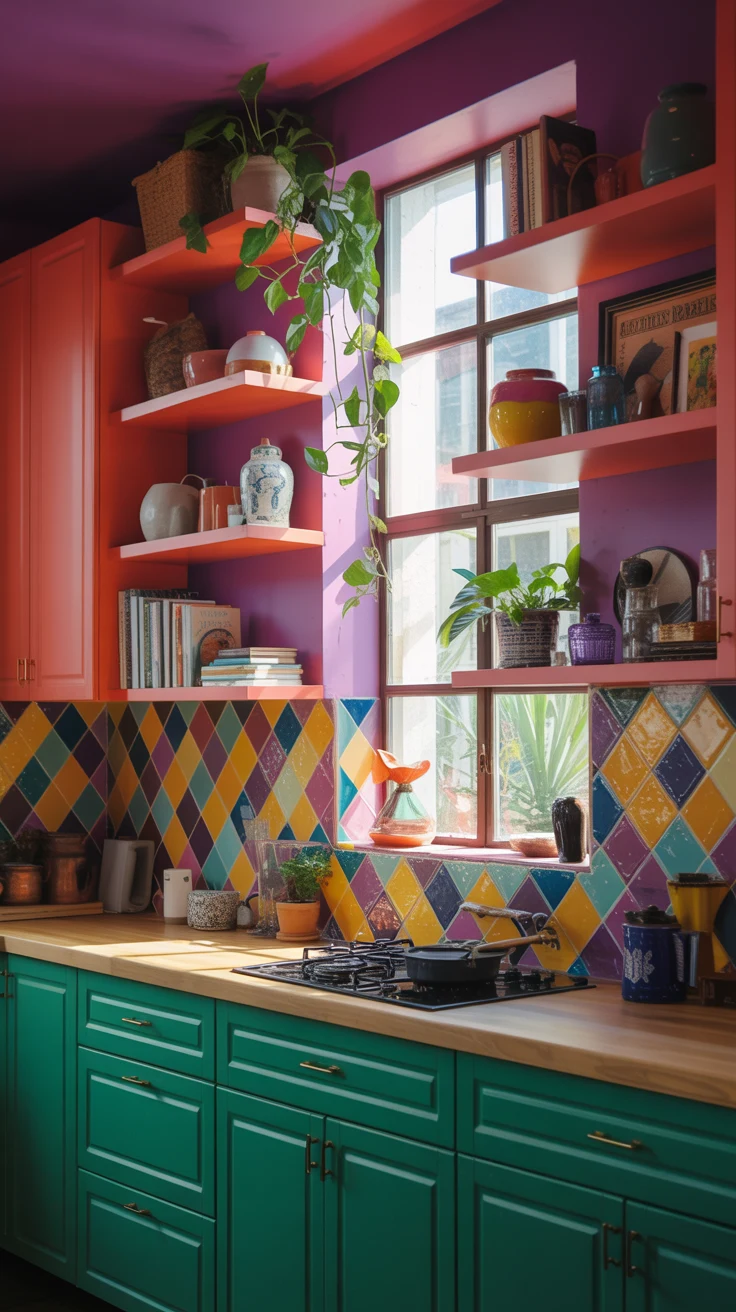
For everyone who finds minimalism a little too austere and restraint a little too restricting, the maximalist kitchen is here and it is glorious. Bold patterned tile on the floor. Colorful cabinetry. Open shelves displaying an abundant, joyful collection of ceramics, plants, cookbooks, and objects. Art on every available wall. It’s unapologetically full, deliberately layered, and completely intentional in its exuberance.
The key to maximalism that works rather than overwhelms is a consistent color story running through the chaos. Even the most abundant maximalist kitchen has a thread — a dominant color that appears in the tile, echoes in the cabinetry, and repeats in the accessories. That thread is what makes a maximalist kitchen feel curated rather than cluttered. Without it, abundance becomes noise. With it, it becomes a genuinely extraordinary space.
15. The Bespoke Details That Make Any Kitchen Aesthetic Complete
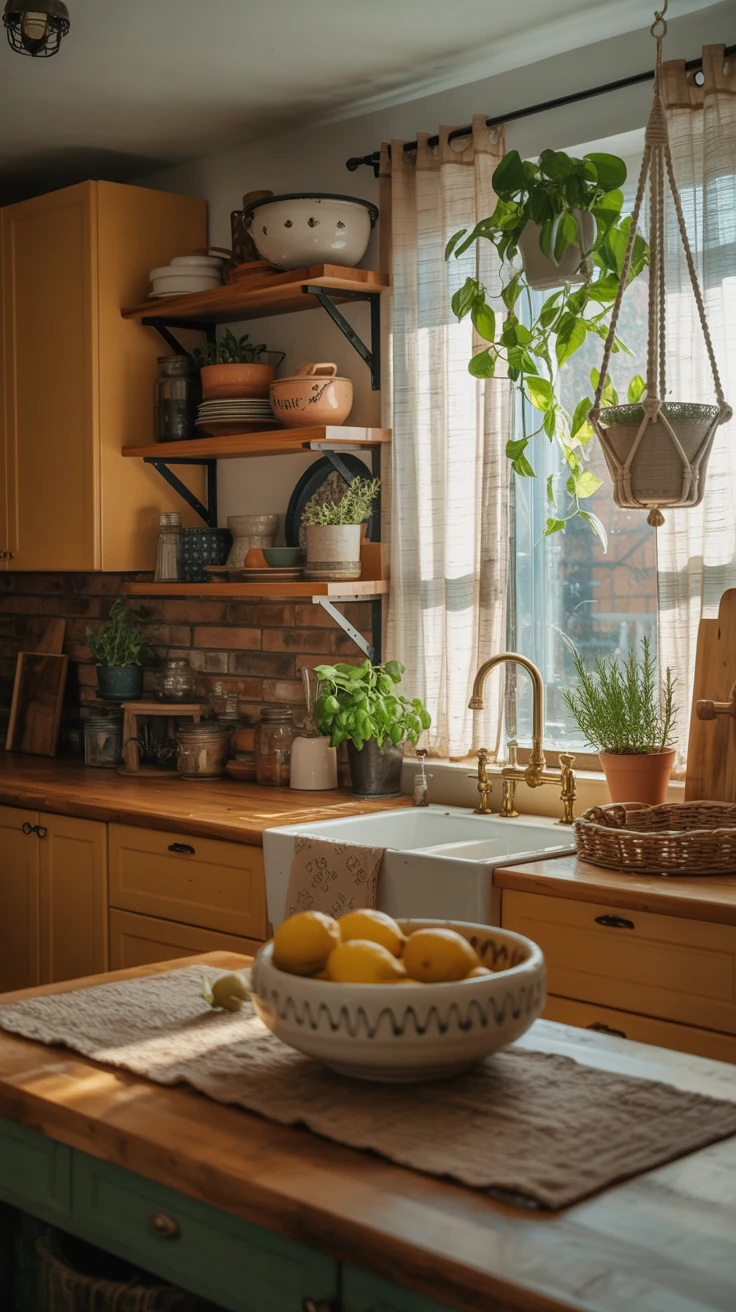
Here’s the final idea — and in some ways the most important one. No matter which aesthetic kitchen design direction you choose, the thing that truly completes it is the bespoke detail. The custom touch that couldn’t have come from a catalogue. The element that makes your kitchen unmistakably yours.
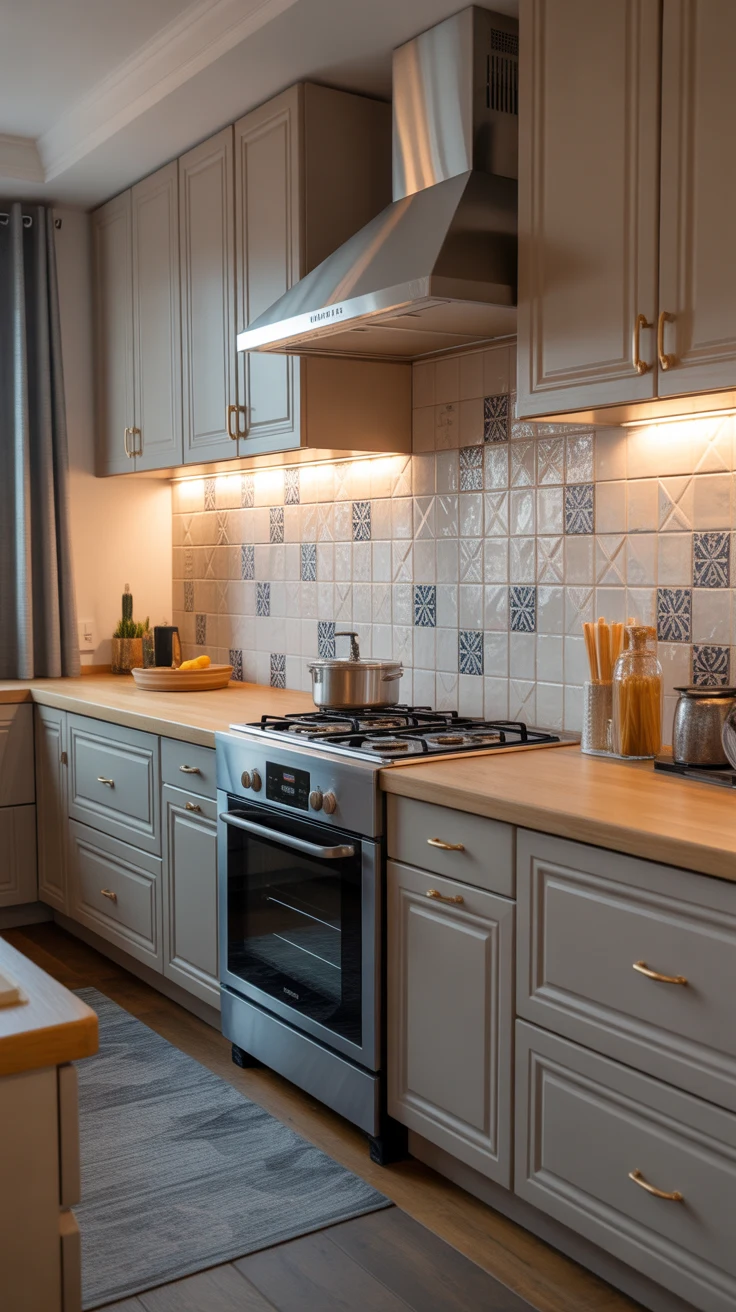
It might be a hand-painted tile insert in the backsplash. A vintage light fixture rewired and installed over the island. A collection of ceramics made by a local artist displayed on open shelves. A particular plant — a large olive tree in a terracotta pot, a trailing fig along the top of the cabinets — that brings life in a way that no manufactured object can. These details cost varying amounts but share one quality: they communicate genuine personality. And personality is what transforms a kitchen from a well-designed room into a space that people genuinely love.
The Takeaway — Your Kitchen Aesthetic Starts With One Good Decision
Here’s the honest truth about kitchen aesthetic modern luxury, cottagecore, Japandi, industrial, or any other direction in this list: none of them require a complete renovation to begin. Every aesthetic in this article can be started today with one focused decision — a paint color, a hardware upgrade, a new set of coordinated ceramics, a single statement plant.
The kitchens that stop you mid-scroll didn’t get that way all at once. They got that way through a series of intentional choices made over time by someone who cared about the space they were cooking in. You can be that person. You already are, if you’ve read this far.
So pick the aesthetic that made your pulse quicken a little when you read it, and take one step toward it today. Your kitchen deserves to be as beautiful as the meals you make in it — and honestly, so do you.