
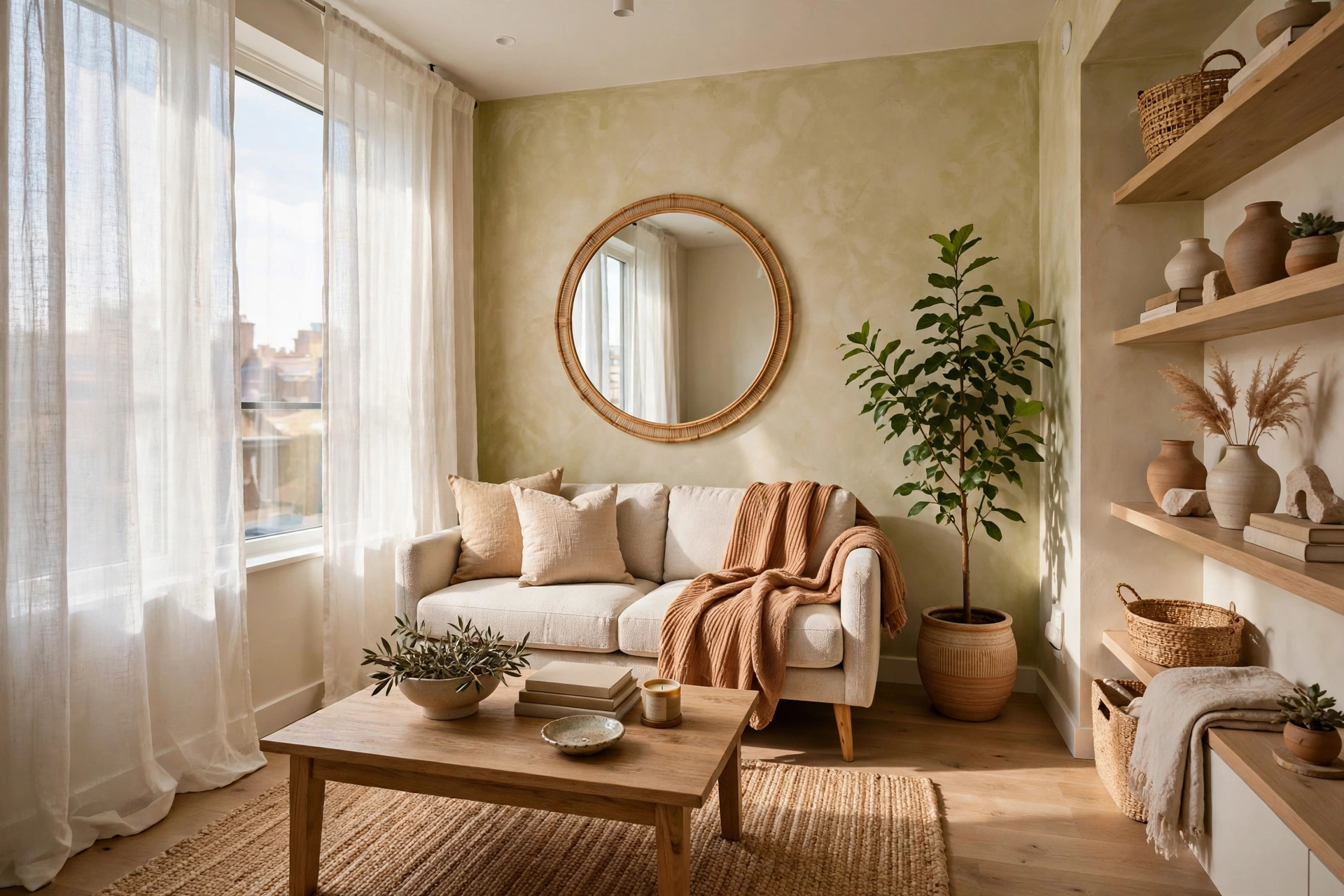
25 Tiny Apartment Decorating Ideas That Actually Feel Spacious
Introduction
A tiny apartment does not have to feel tiny. The difference between a cramped rental and a space that feels open and intentional usually comes down to a handful of decorating decisions: how furniture is scaled, where the eye is allowed to travel, and how much visual clutter is competing for attention at any given moment.
The good news is that none of these decisions require a big budget or a renovation. Most of them are about choosing slimmer profiles, lighter colors, and smarter layouts with the furniture and rooms you already have. A few well-placed mirrors and a stricter approach to what stays visible can change how a small apartment feels within a single weekend.
This list covers twenty-five decorating ideas that make a small apartment feel genuinely more spacious, whether the goal is a quick styling refresh or a full rethink of how the space is laid out.
1. Choose Furniture With Visible Legs
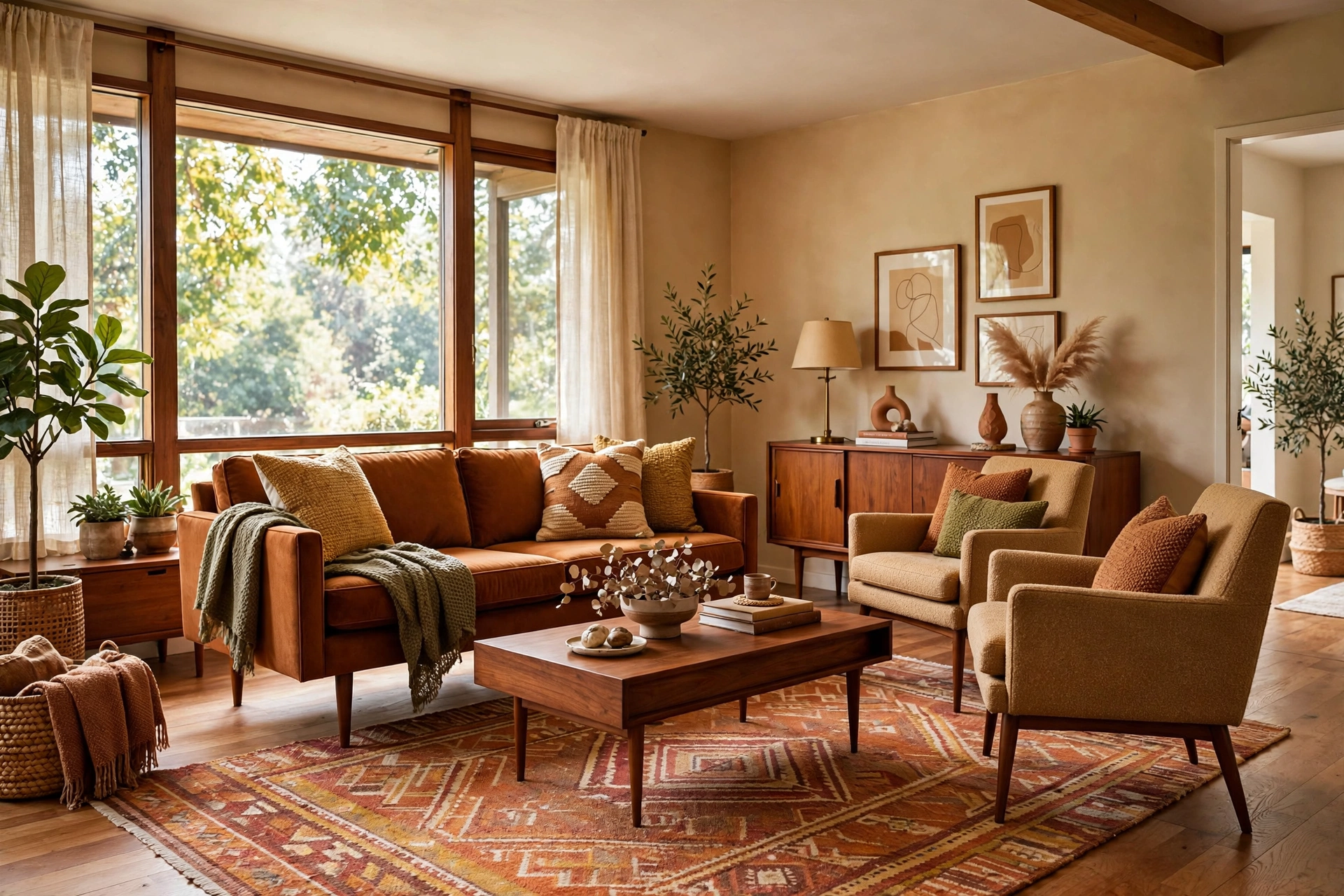
Furniture that sits directly on the floor creates a solid visual block that stops the eye, which makes a small room feel more crowded than it is. Sofas, armchairs, and media consoles raised on slim legs let the floor continue underneath, and that uninterrupted floor line tricks the eye into reading the room as larger.
Mid-century style pieces are a natural fit here, but the principle works with any style. When shopping, look for at least a few inches of clearance beneath seating and storage so light and shadow can pass under and keep the pieces feeling light rather than bulky.
2. Hang Curtains High and Wide
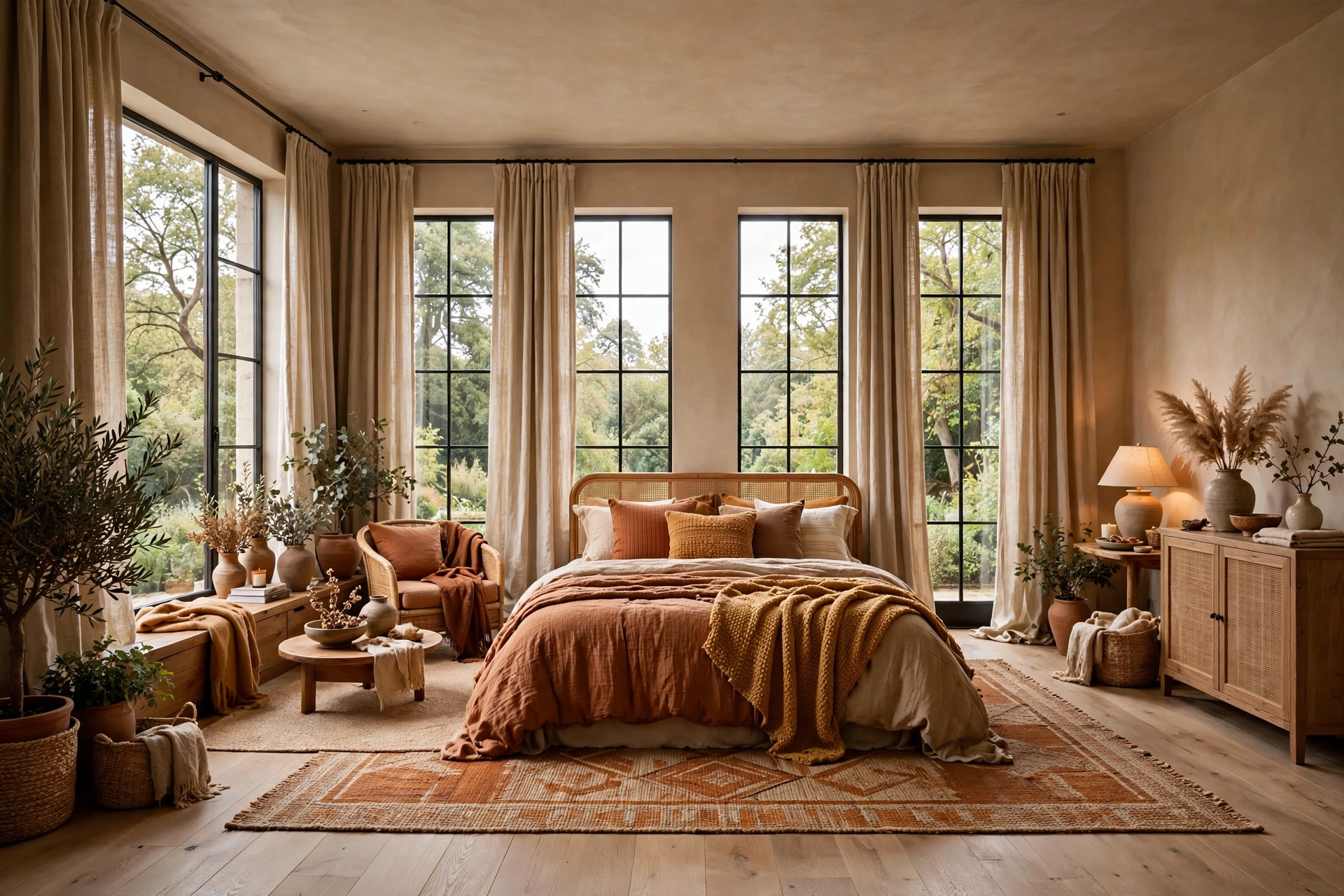
Mounting curtain rods several inches above the window frame and extending them well past the sides of the window makes the window itself appear larger and the ceiling feel higher. The extra fabric on each side also means the curtains stack back over the wall rather than covering glass when open.
Choose curtains in a color close to the wall color so the whole wall reads as one continuous surface. Floor-length panels that just kiss the floor elongate the wall, while short curtains that stop at the sill visually chop the room into smaller pieces.
📌 Important: When extending the rod past the window, make sure the stacked curtain panels still leave the full glass exposed during the day. Curtains that permanently cover part of the window defeat the purpose by reducing natural light, which is the single biggest factor in how spacious a room feels.
3. Use One Large Rug Instead of Several Small Ones
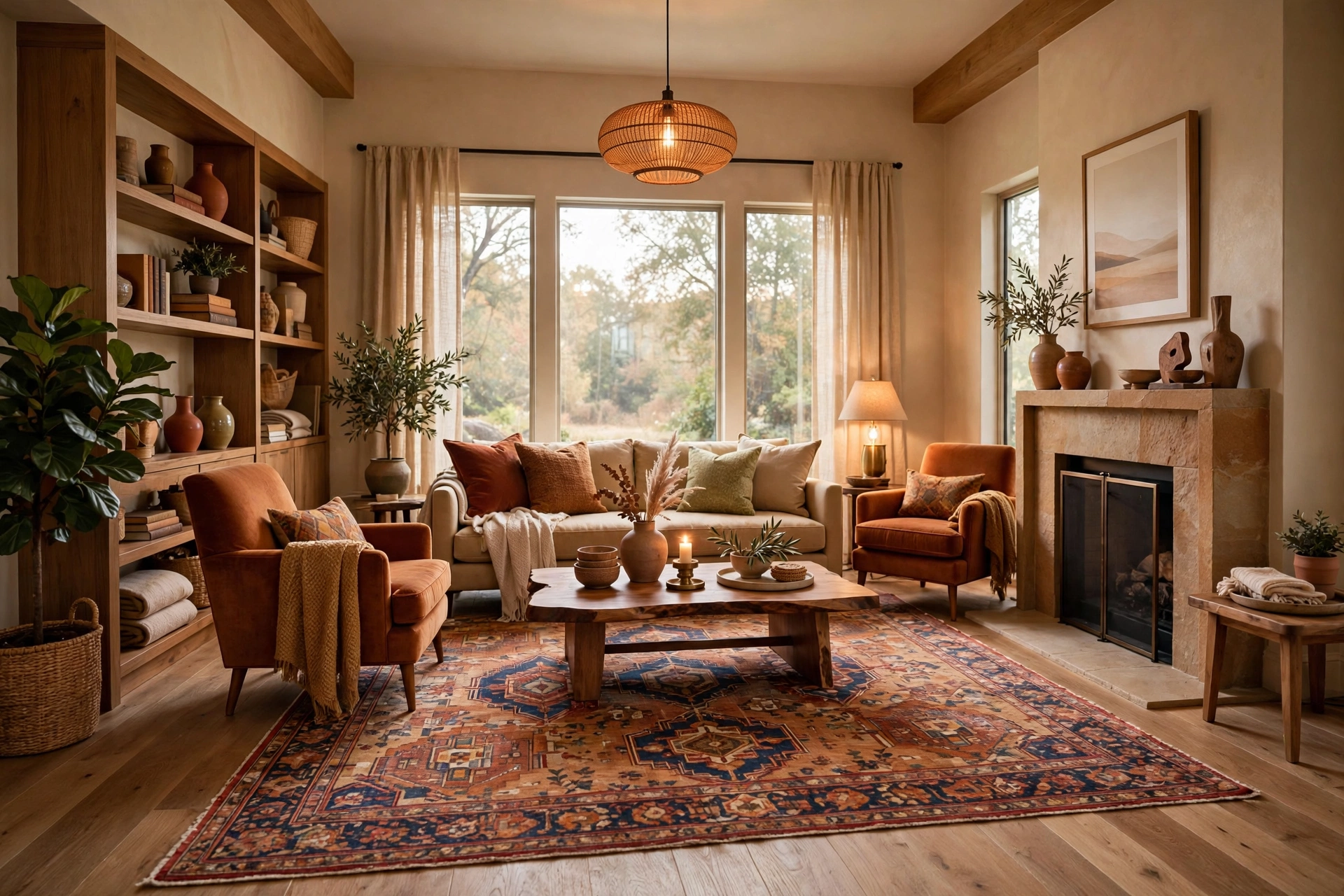
Multiple small rugs chop a small apartment into visual islands, and each boundary makes the floor area feel more fragmented. A single large rug that extends under the front legs of the main furniture pieces unifies the seating area into one zone and lets the eye travel across it without interruption.
In a studio, one generous rug can anchor the entire living area while still leaving a border of visible floor around the edges. That border of bare floor actually helps, since it outlines the rug as a deliberate zone rather than wall-to-wall coverage.
4. Mirror Opposite the Window
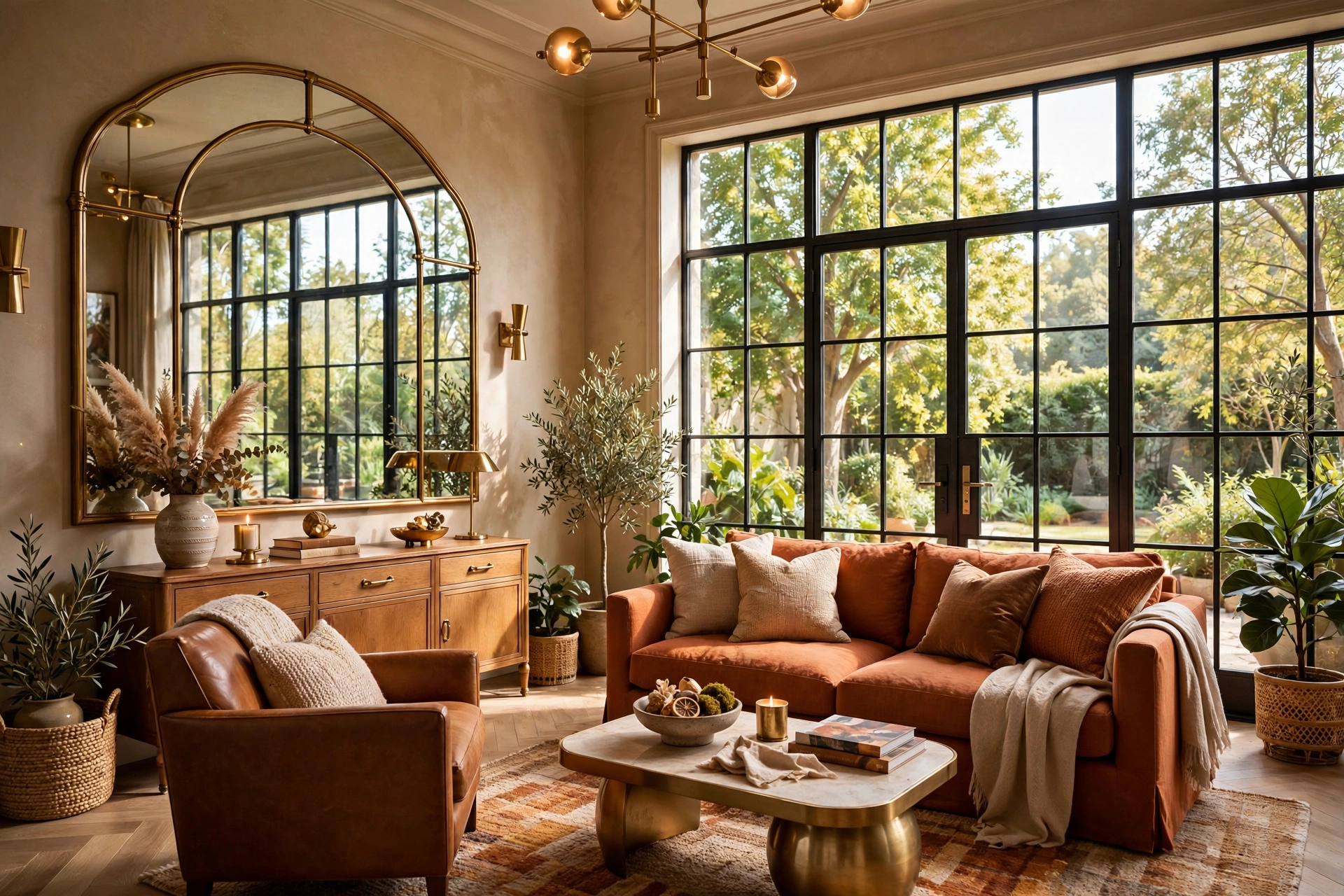
A large mirror placed on the wall directly across from a window does double duty: it bounces natural light deeper into the room and creates the illusion of a second window, which visually doubles the perceived depth of the space. This is one of the oldest small-space tricks because it genuinely works.
Leaning a full-length mirror against the wall is a renter-friendly way to get the effect without drilling. Keep the mirror’s reflection pointed at something pleasant, ideally the window view or a styled corner, rather than at clutter or a blank wall.
5. Go Vertical With Storage
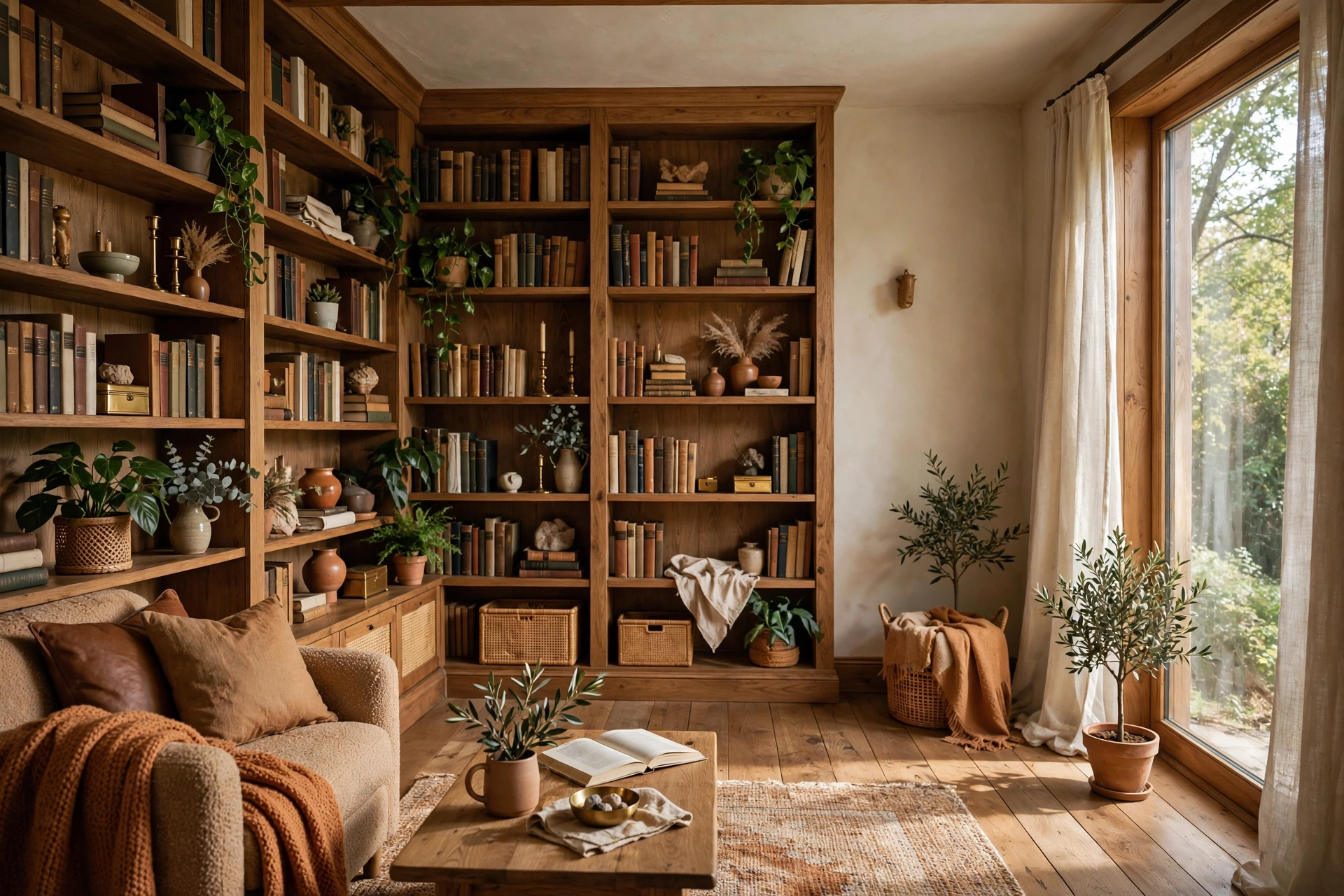
Floor space is the scarcest resource in a tiny apartment, so storage that climbs the walls instead of spreading across the floor pays for itself immediately. Tall, narrow bookcases, wall-mounted shelves, and over-door organizers hold as much as a wide dresser while occupying a fraction of the footprint.
Take shelving as close to the ceiling as is practical. The upper shelves are perfect for items used rarely, and drawing the eye upward emphasizes the room’s height, which contributes as much to a spacious feeling as the actual square footage does.
6. Pick a Light, Cohesive Color Palette
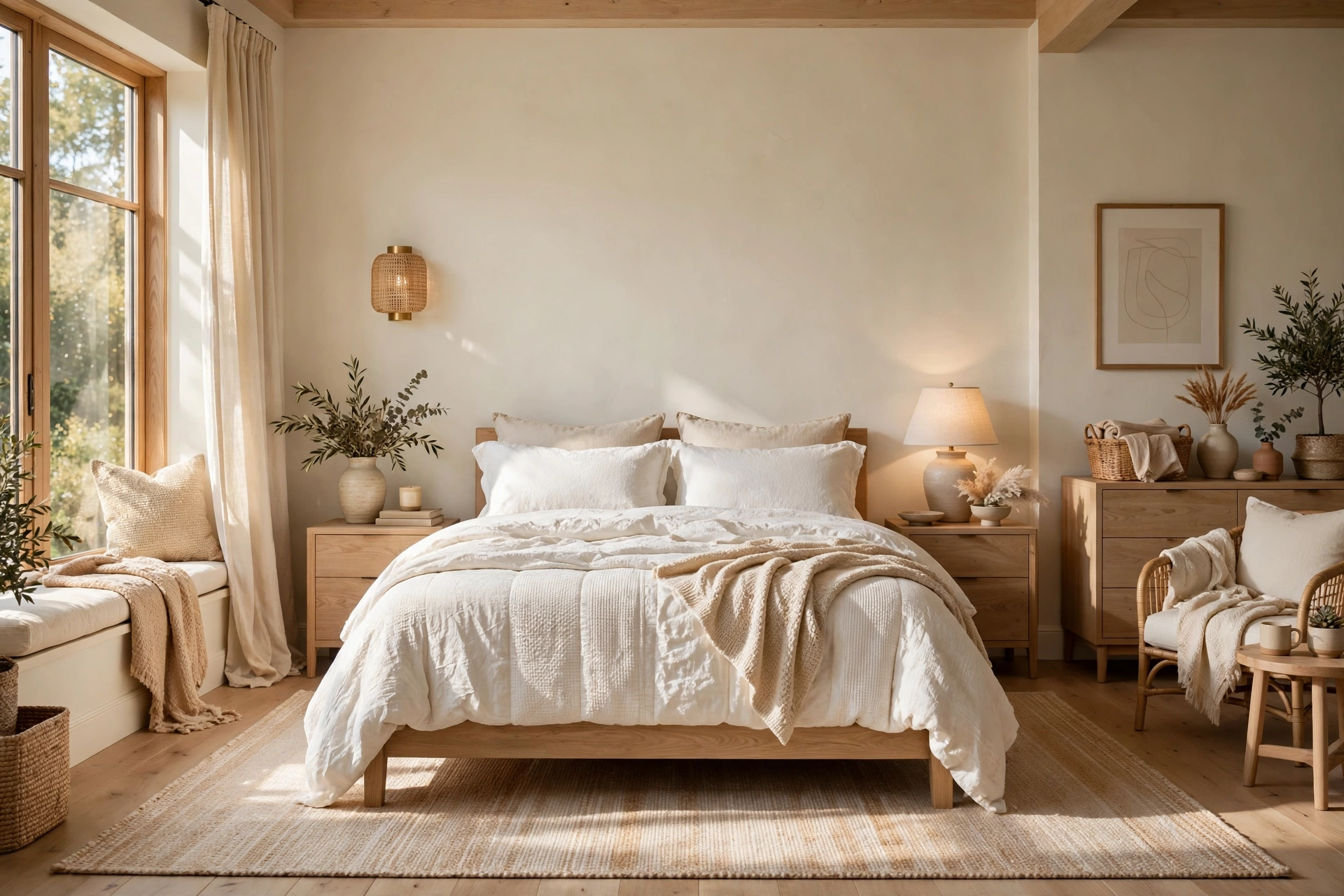
Every time the eye hits a sharp color contrast, it registers a boundary, and boundaries make spaces feel smaller. Painting walls, trim, and even the ceiling in closely related light tones removes those visual stopping points so the room reads as one continuous volume.
This does not mean the apartment has to be all white. Warm off-whites, pale greige, soft sage, and light warm gray all keep things bright while adding more personality than a stark white box. The key is keeping contrast low between the major surfaces.
💡 Pro Tip: If an all-light palette feels flat, add depth through texture rather than dark color: a nubby throw, a woven basket, light wood tones, and linen curtains layer interest without breaking the airy feeling that makes the space feel bigger.
7. Use Multipurpose Furniture Everywhere
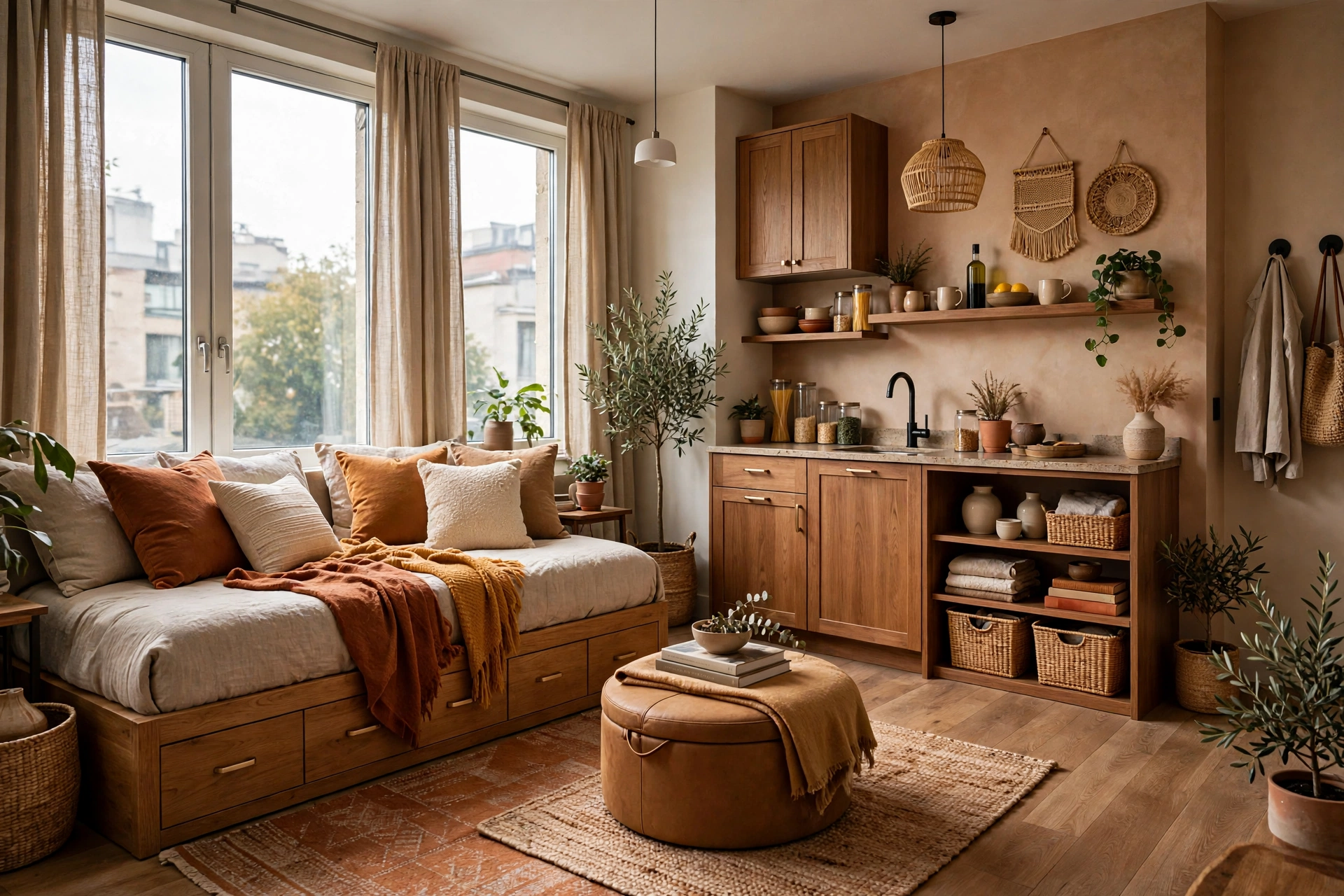
In a tiny apartment, every piece of furniture should earn its footprint twice. A storage ottoman works as seating, a footrest, and a place to stash blankets. A drop-leaf table serves as a desk on weekdays and expands for dinner guests on weekends.
Before buying anything new, list what each piece in the room already does and look for single-purpose items that could be upgraded. Replacing a plain coffee table with one that has interior storage, for example, removes an entire category of visible clutter without adding a single new object to the room.
8. Keep the Floor as Visible as Possible
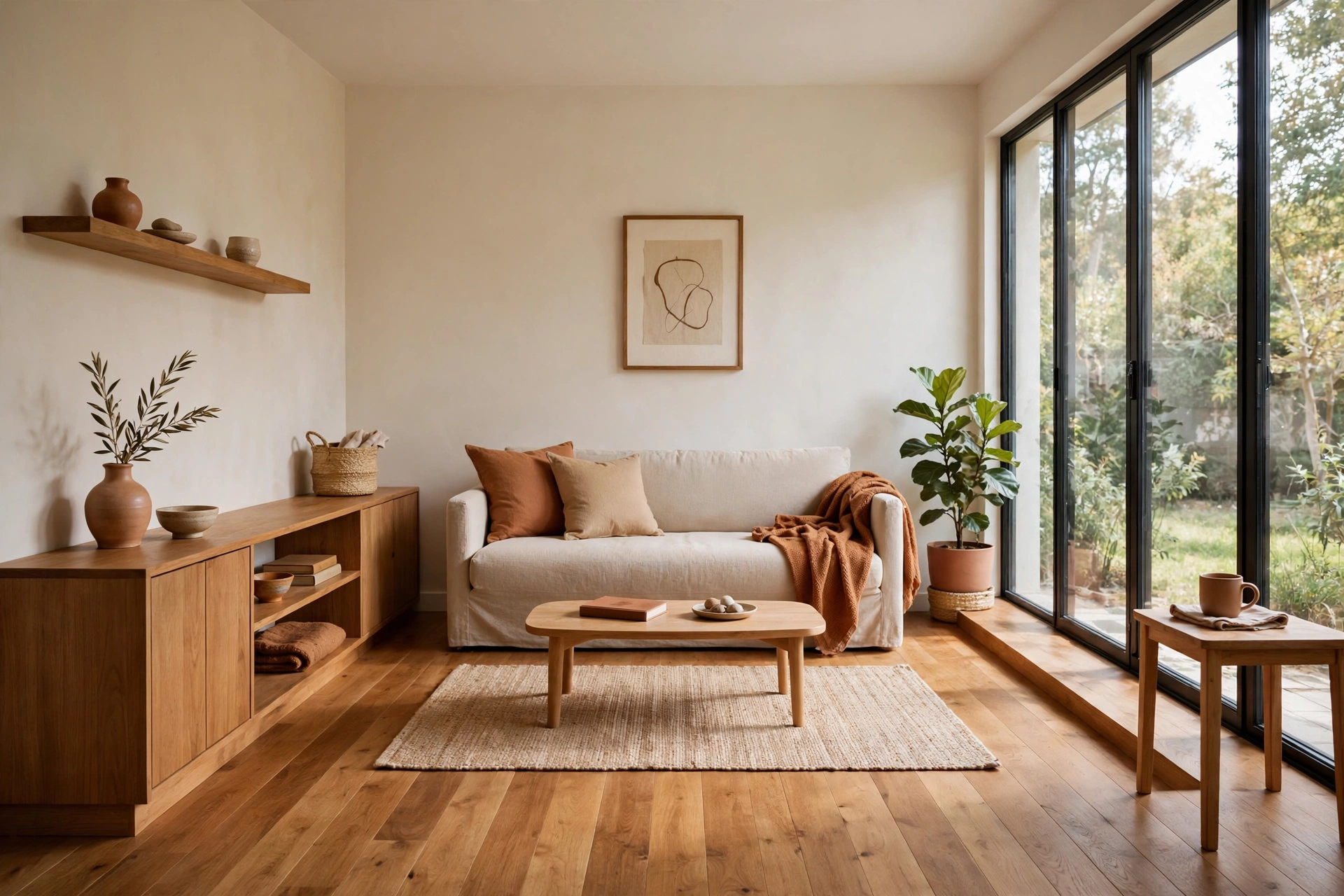
The more continuous floor the eye can see, the larger the room registers in the brain. This means resisting the urge to fill every corner: a clear path through the room and a few inches of breathing room around furniture groupings matter more than any single decor object.
Audit the floor once with fresh eyes and remove anything sitting directly on it that does not need to be there. Laundry baskets, stacks of magazines, and shoes migrate to closets and wall hooks, and the newly visible floor instantly makes the layout feel calmer and more generous.
9. Choose Glass and Lucite Accent Pieces
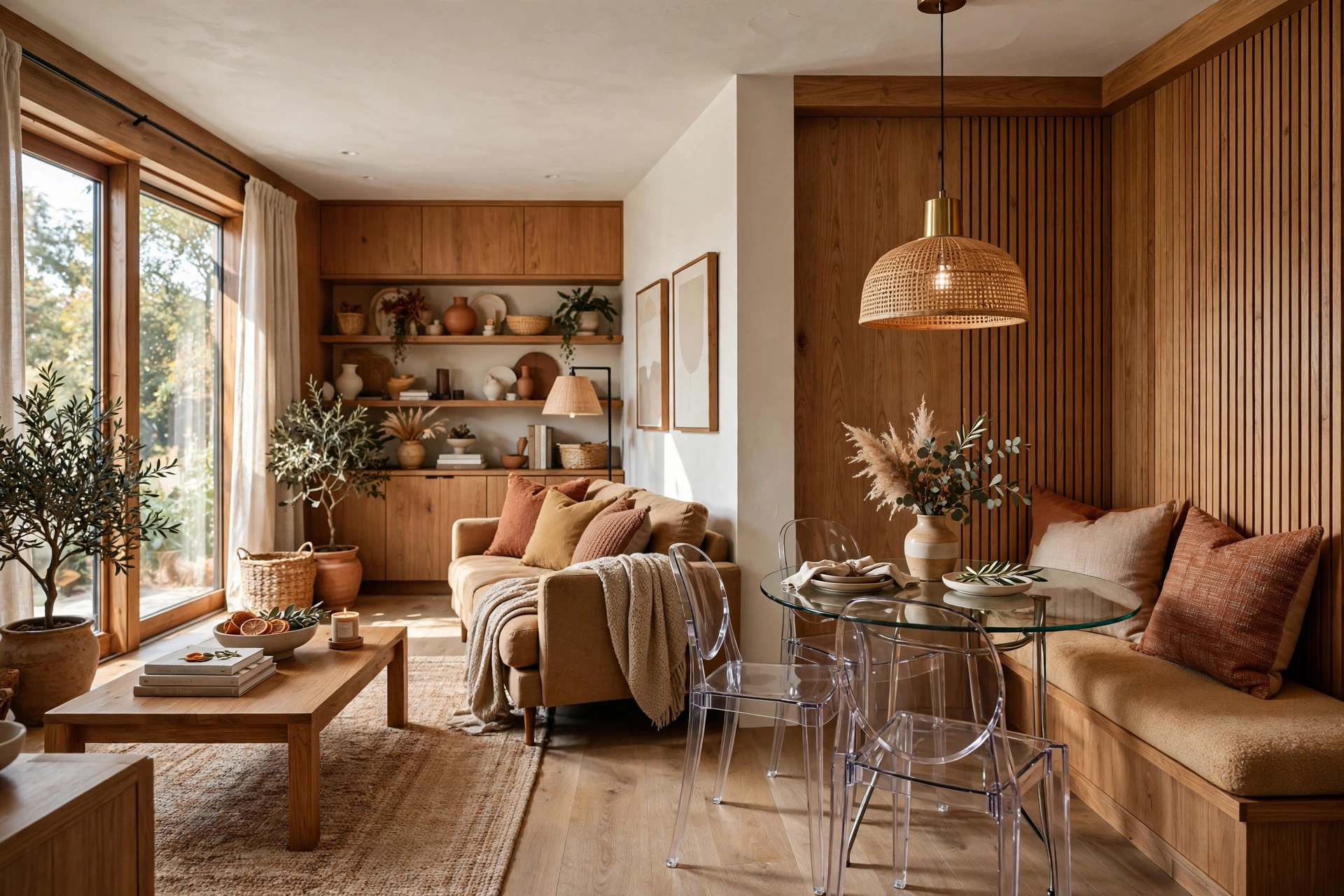
A glass coffee table or a set of clear acrylic dining chairs provides full function while remaining nearly invisible, which means they add zero visual weight to the room. In a small dining nook, transparent chairs can make the difference between a corner that feels stuffed and one that feels curated.
Use transparency strategically rather than everywhere. One or two clear pieces mixed with upholstered and wood furniture keep the room from feeling cold or sterile while still preserving sightlines across the space.
10. Mount the TV on the Wall
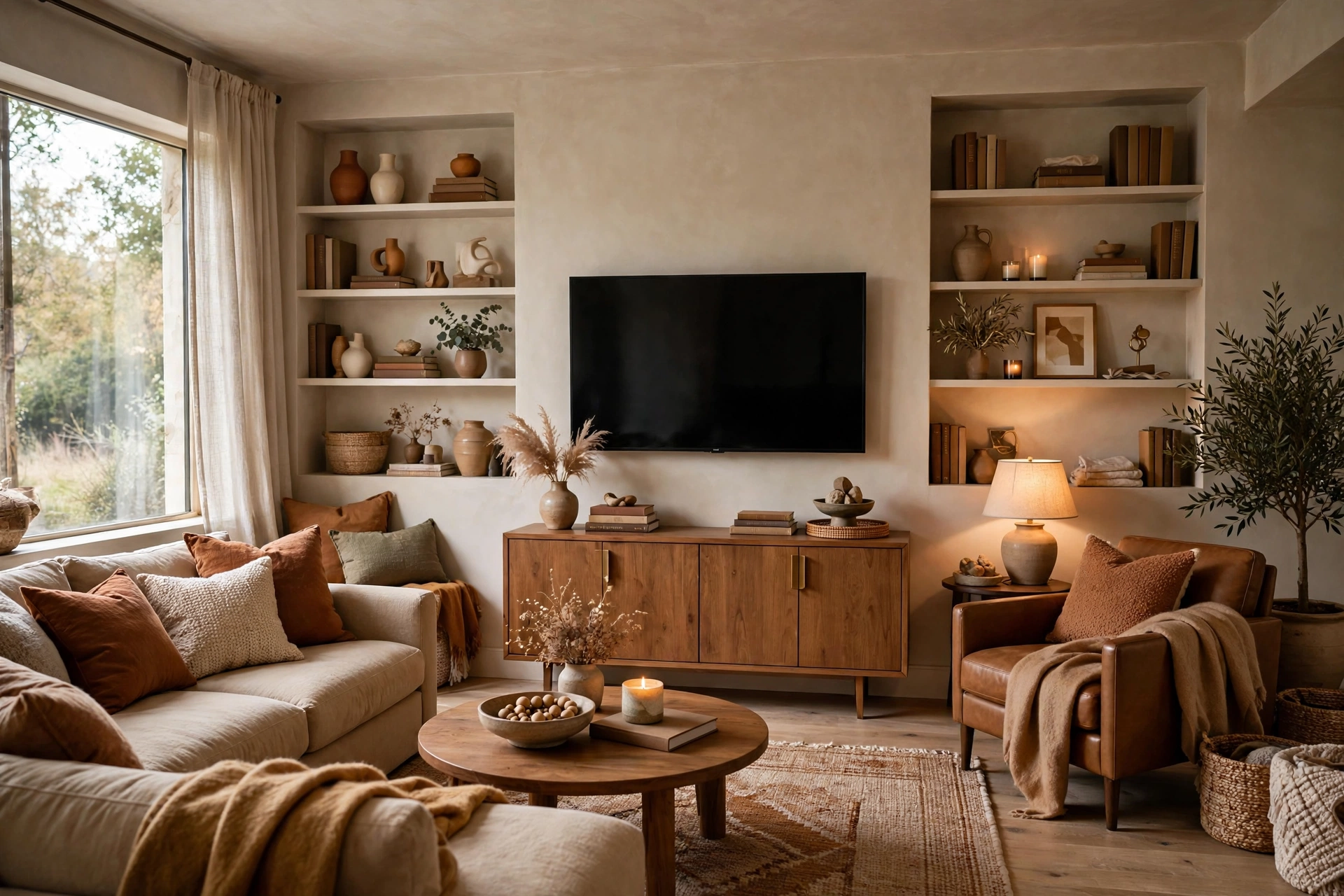
A TV on a stand or console consumes a wide band of floor and surface area in the room’s main sightline. Mounting it on the wall reclaims that footprint entirely and lets a slim floating shelf or a narrow console handle the components underneath.
Position the mount so the center of the screen sits roughly at seated eye level. In a small room the viewing distance is short, so a modest screen size looks proportional and avoids overwhelming the wall it hangs on.
Quick Comparison: Small-Space Strategies by Cost and Effort
Small Apartment Quick-Start Checklist
- ✅ Hang curtains high and wide, in a color close to the walls
- ✅ Place a large mirror across from the biggest window
- ✅ Swap one single-purpose piece for a storage version
- ✅ Move storage up the walls instead of across the floor
- ✅ Clear the floor: baskets, shoes, and stacks find a home
- ✅ Unify with one large rug instead of several small ones
11. Use Curtains Instead of Swing Doors for Closets
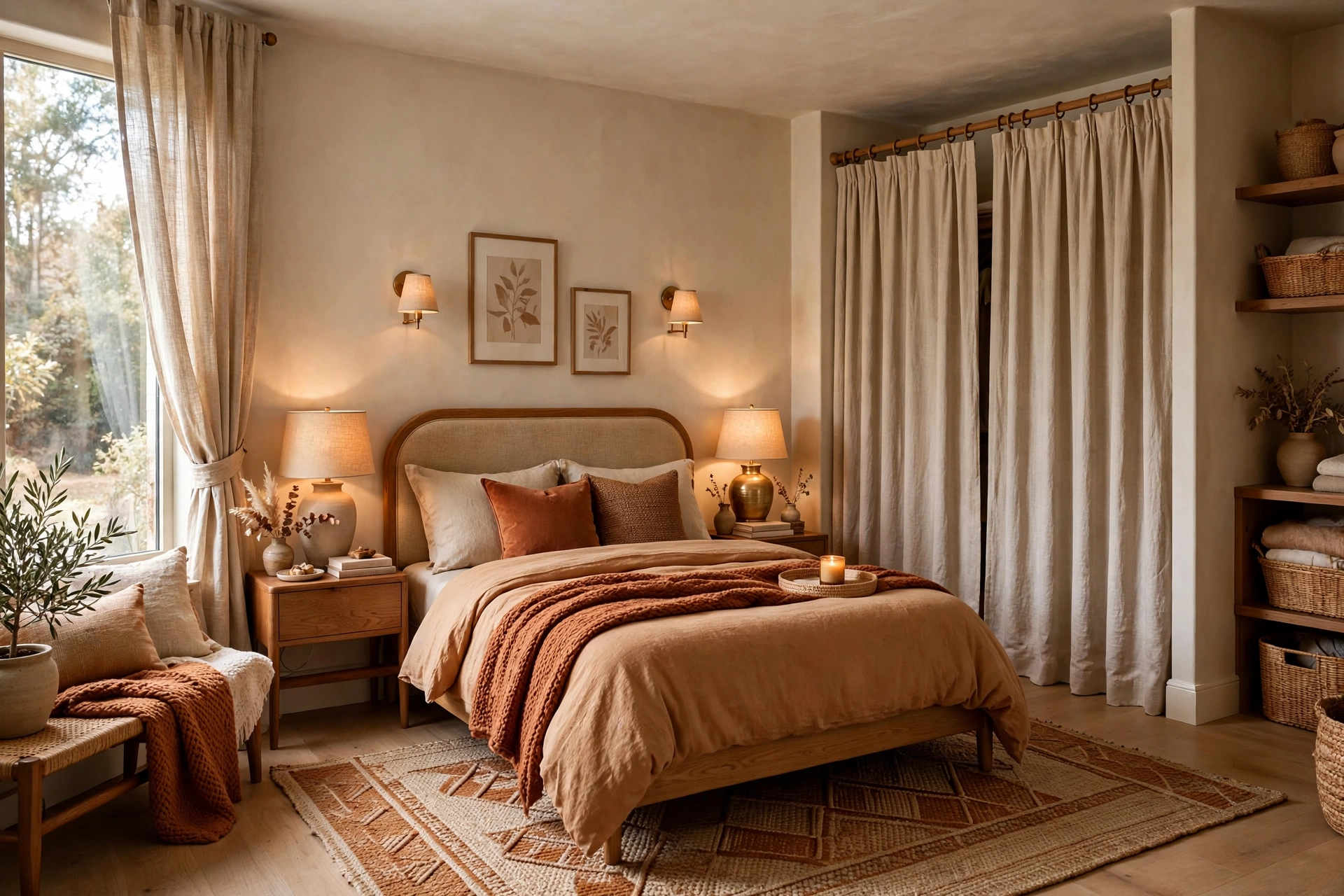
A standard closet door needs a full semicircle of clear floor to swing open, which is dead space in a tiny apartment. Replacing closet doors with a simple curtain panel on a tension rod gives that floor area back to the room and adds softness at the same time.
Choose a curtain fabric that coordinates with the room’s palette so the closet reads as a deliberate design choice rather than a missing door. This trick works especially well in bedrooms where the closet sits in the main sightline.
12. Style Open Shelves Sparingly
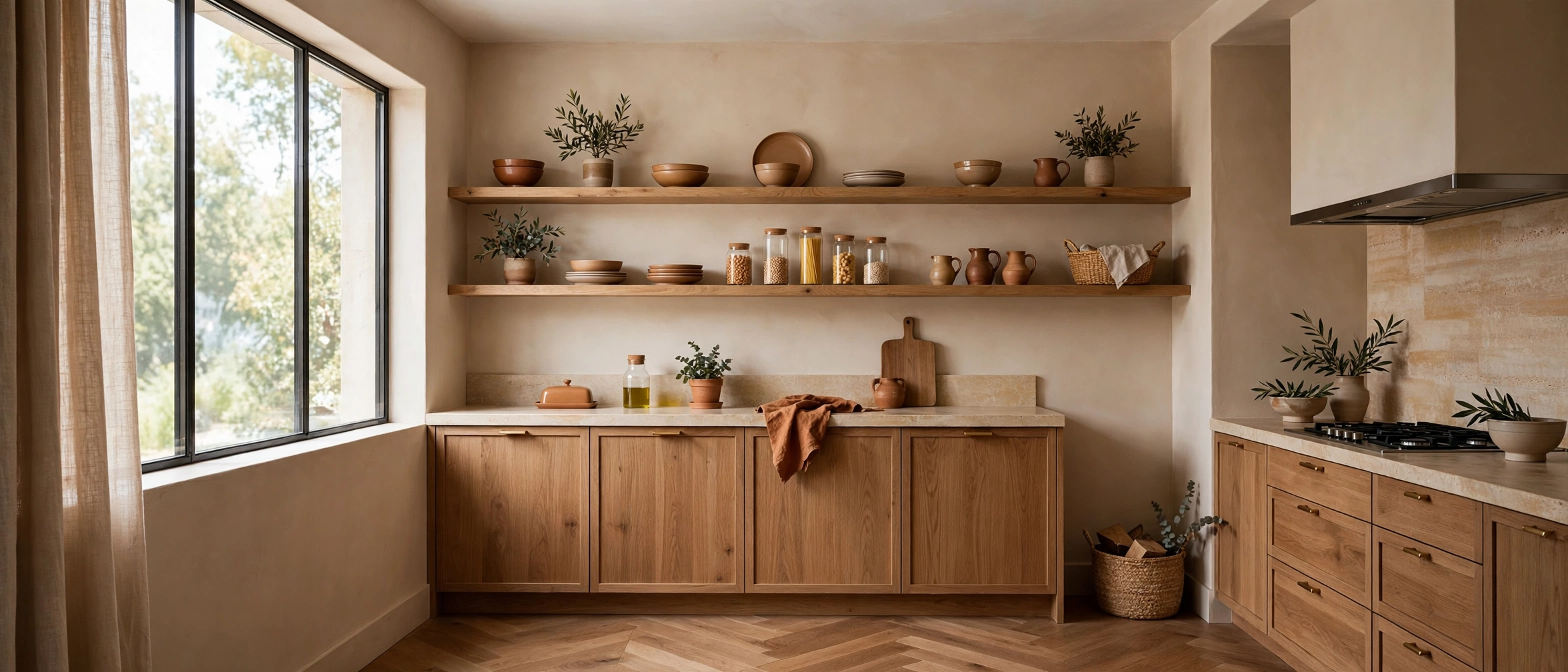
Open shelving keeps a small kitchen or living area feeling airy, but only if the shelves themselves stay curated. Crammed shelves read as clutter, which shrinks a room faster than almost anything else. Aim for a mix of everyday items and breathing room, roughly two-thirds full at most.
Group items by color or material so each shelf reads as one calm composition rather than a collection of unrelated objects. In the kitchen, decanting dry goods into matching jars turns a necessity into a deliberate design choice.
⚠️ Warning: Open shelving in a tiny apartment demands ongoing discipline. If maintaining a styled shelf sounds exhausting, a closed cabinet is the better choice. An honest closed door always looks calmer than a chaotic open shelf.
13. Let Natural Light Win
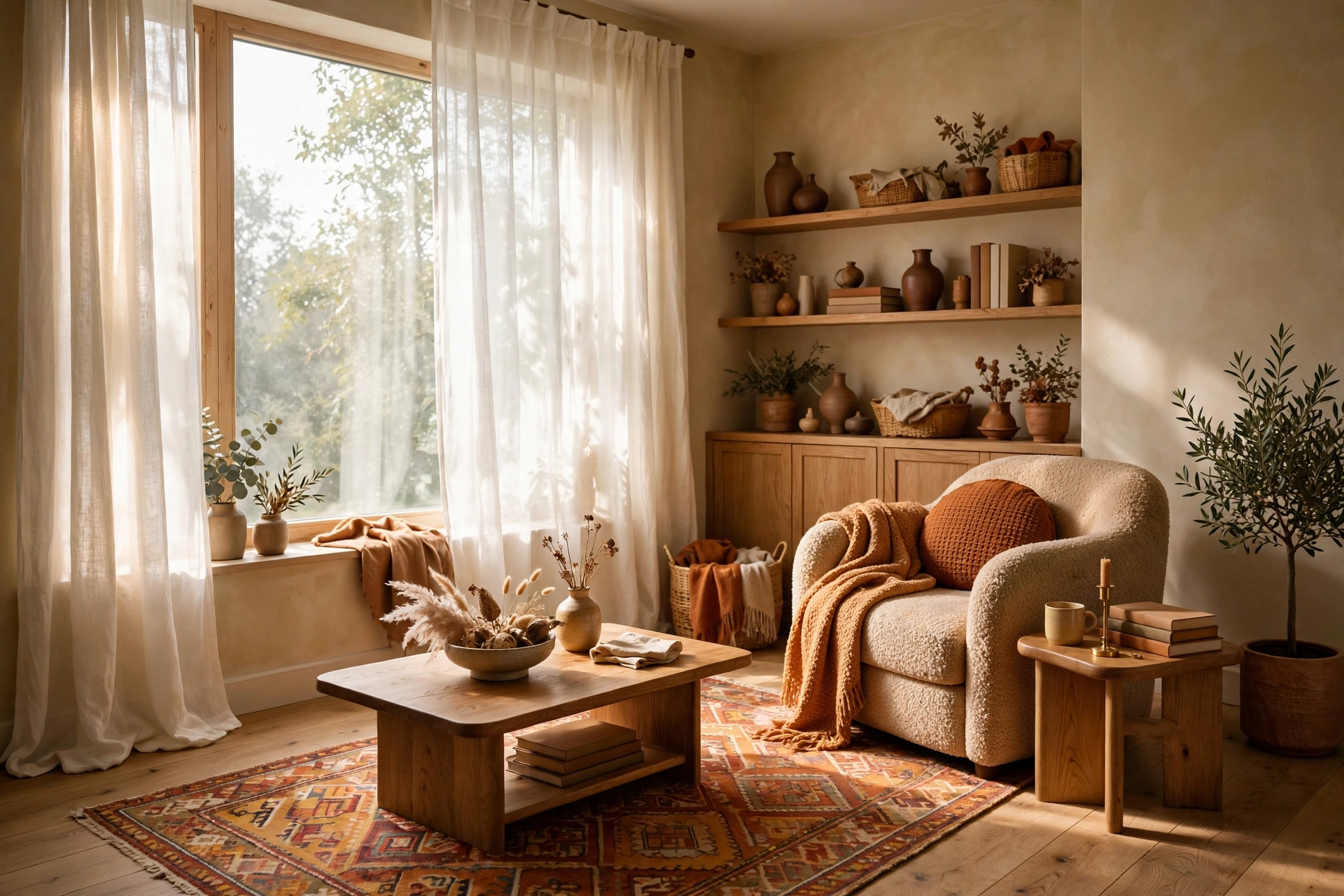
Heavy drapes, dark blinds, and furniture placed in front of windows all tax the natural light a small apartment receives, and dim rooms always feel smaller. During the day, window coverings should frame the glass rather than filter it, using sheer layers for privacy instead of light-blocking fabrics.
Rearrange so no tall furniture blocks a window, even partially. A bookshelf shifted six inches to the side can be the difference between a bright corner and a gloomy one, and brightness is the cheapest square footage there is.
14. Define Zones With Lighting, Not Walls
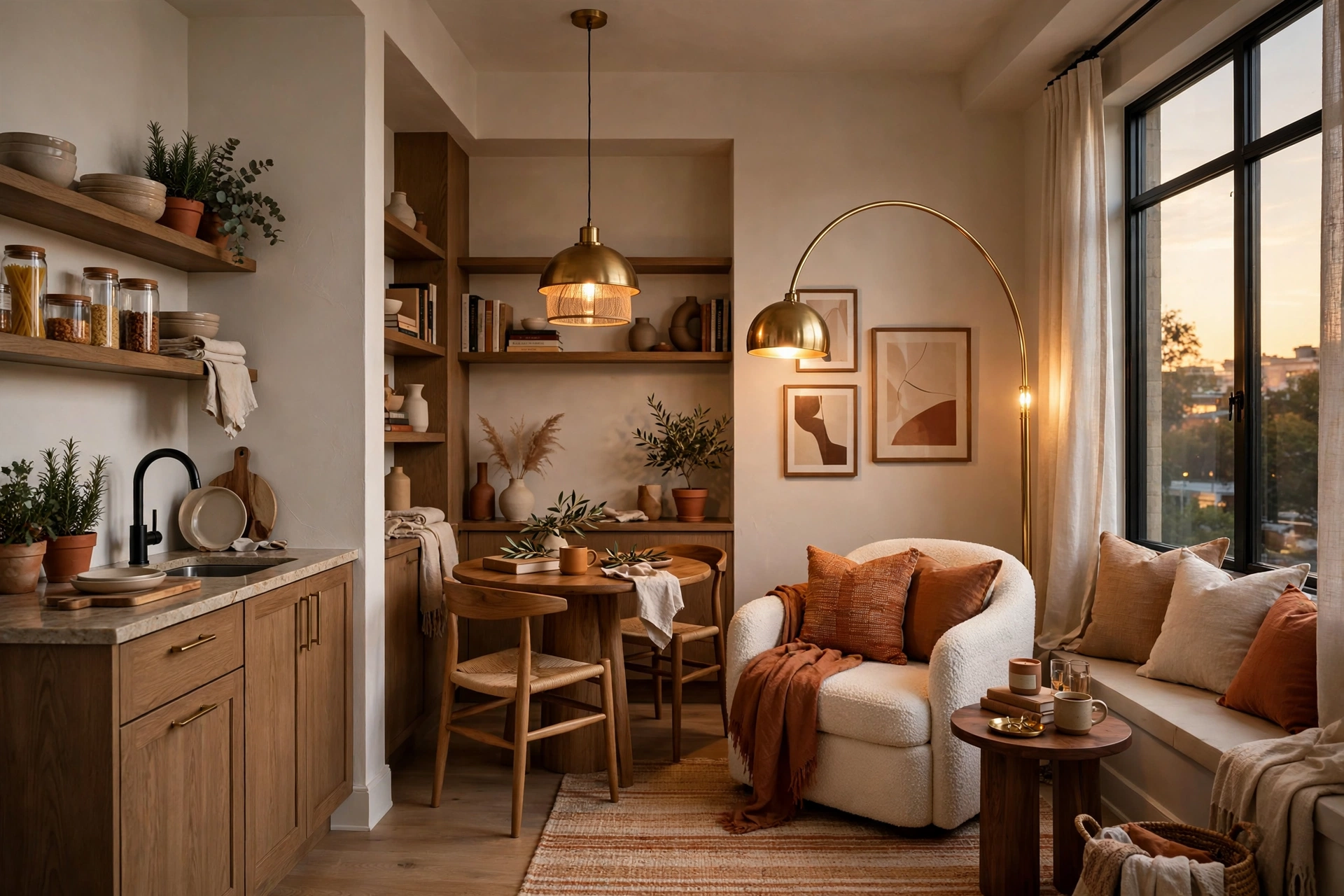
In a studio or open-plan small apartment, separate areas for sleeping, working, and relaxing help the space feel larger because each zone gets its own purpose. But physical dividers eat floor space, so use lighting instead: a pendant over the dining spot, a floor lamp by the reading chair, and a small table lamp on the desk.
Each light pool signals a distinct area to the brain without a single partition. Dimmable bulbs make the trick even stronger, letting one open room shift mood between zones from morning to evening.
15. Choose a Few Large Decor Pieces Over Many Small Ones
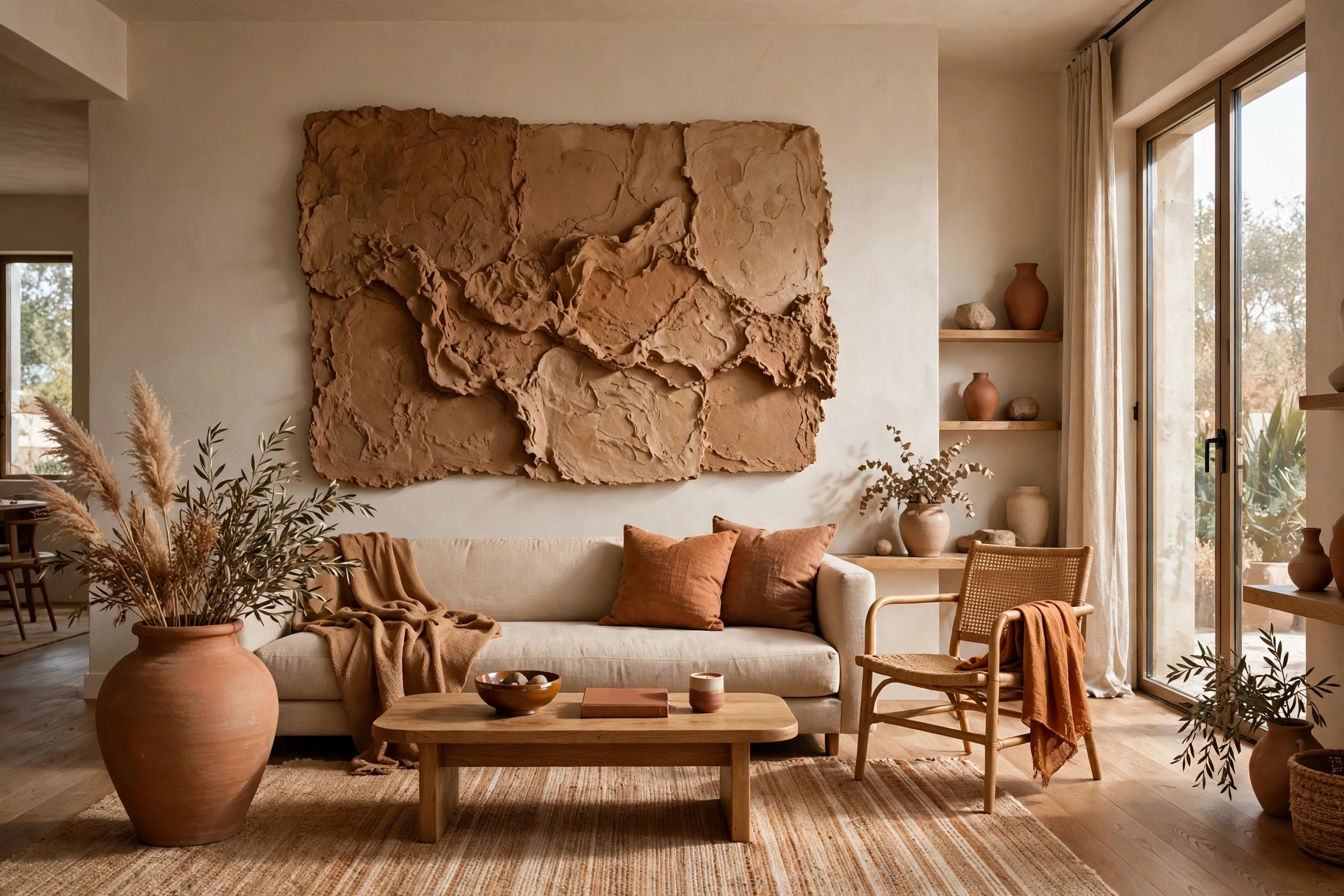
A dozen tiny decorative objects scattered around a small apartment create visual noise, and noise reads as clutter. Three or four larger pieces, one substantial piece of art, a big plant, a sculptural vase, give the eye clear focal points and let the rest of the room stay calm.
This applies to wall art especially. One oversized print above the sofa makes the wall feel grander, while a scattered gallery of small frames chops the same wall into fragments. When in doubt in a small space, go bigger and fewer.
16. Use Vertical Lines to Add Height
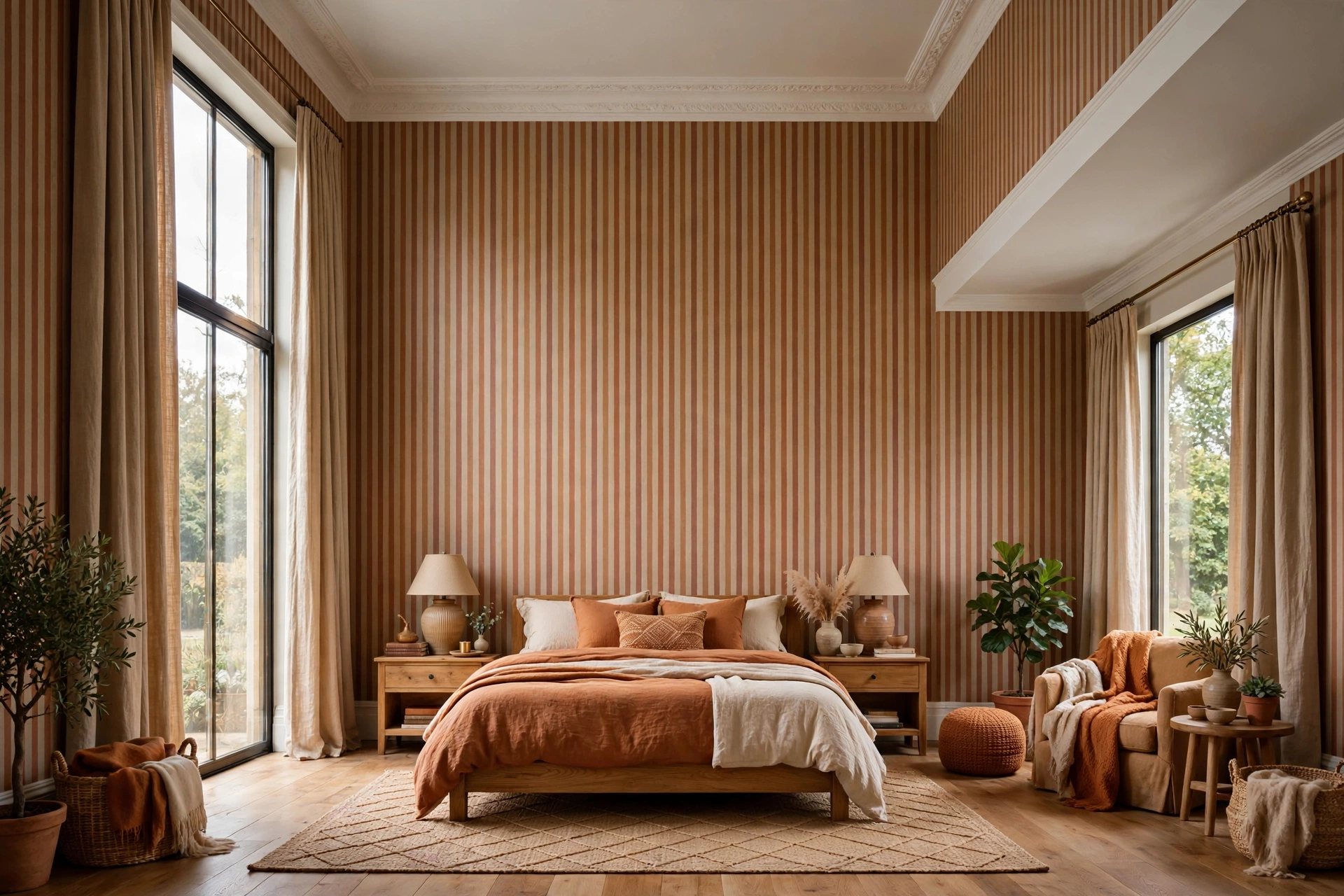
Vertical stripes on an accent wall, tall curtains with a subtle vertical texture, or a high bookshelf with strong vertical lines all pull the eye upward and make ceilings feel taller. The effect is subtle but reliable, and it works in rentals through removable wallpaper panels or fabric hung with damage-free hooks.
Keep the stripes tone-on-tone rather than high contrast so the wall still reads as one surface. Bold contrasting stripes add energy but also add visual boundaries, which works against the spacious feeling in a truly tiny room.
17. Keep Surfaces Mostly Clear
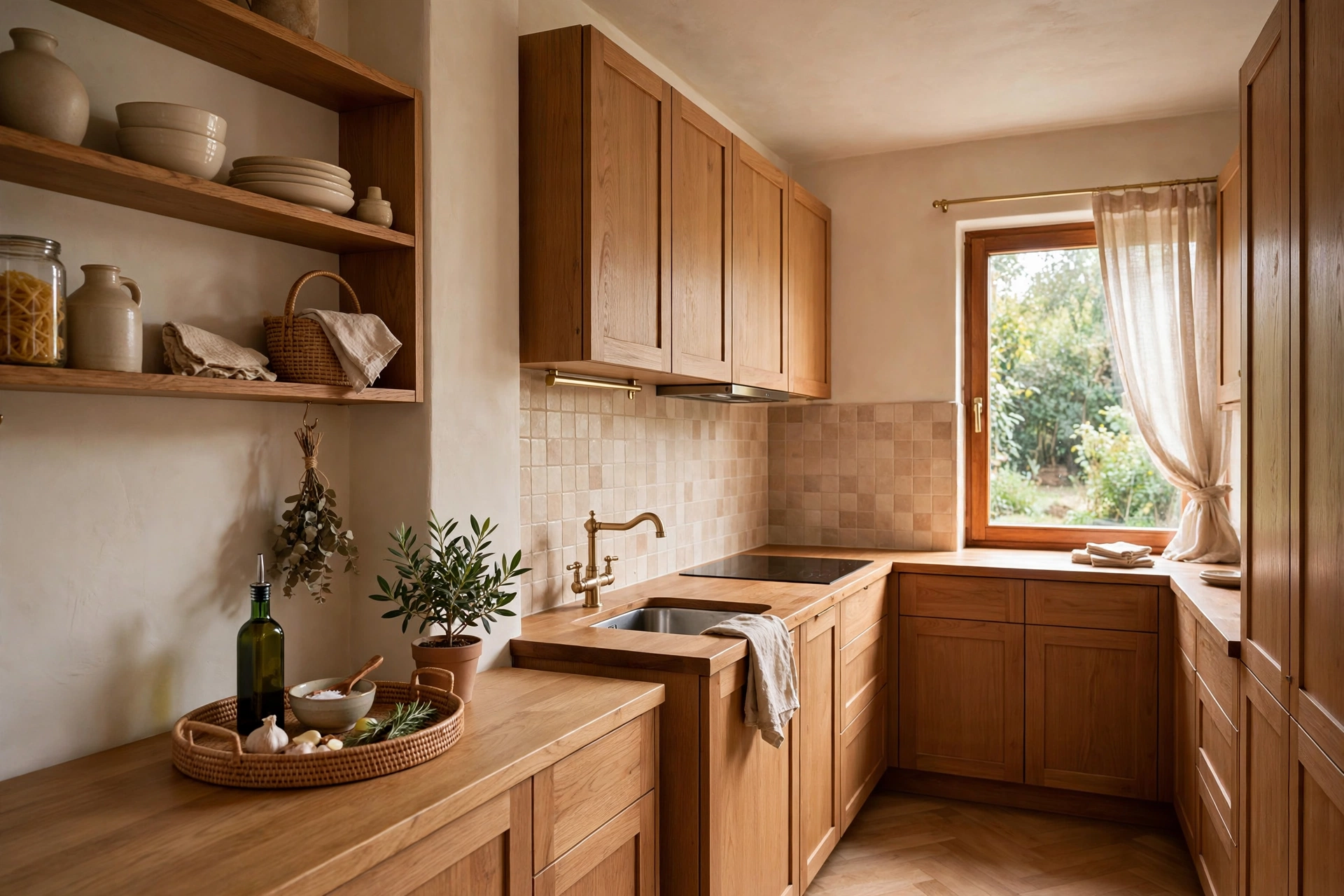
Every object left out on a counter, table, or shelf adds a small amount of visual noise, and in a tiny apartment that noise accumulates fast. Aim to keep roughly three-quarters of every surface clear, with only a few intentional items on display.
Build the habit of a nightly reset: mail goes in one tray, keys in one bowl, and everything else gets put away. A clear surface in the morning makes the whole apartment feel bigger before the day even starts, and it takes less than five minutes once it becomes routine.
18. Use the Backs of Doors
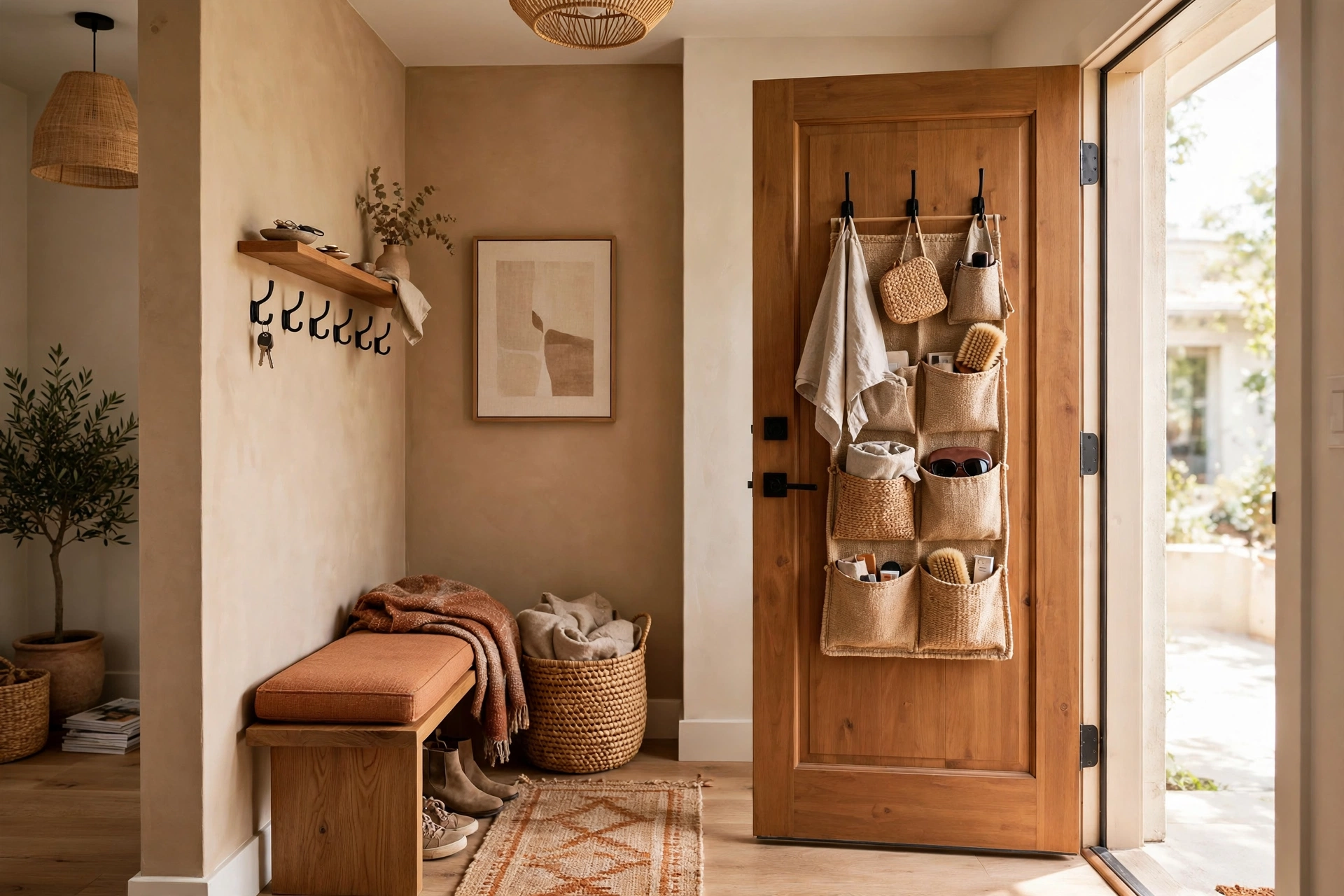
The backs of doors are some of the most underused square footage in a small apartment. Over-door hooks hold coats, bags, and robes; slim over-door racks organize pantry goods, cleaning supplies, or shoes without touching the floor or the walls.
Because these organizers hang on existing doors, most need no drilling at all, which makes them ideal for rentals. Just check the door still closes fully with the organizer in place, since a door that will not latch is more annoying than the storage is helpful.
📌 Important: Distribute weight evenly on over-door organizers and avoid overloading them. A door hung with too much weight can sag on its hinges over time, leading to a door that scrapes the floor or will not close properly.
19. Choose Low-Profile Furniture
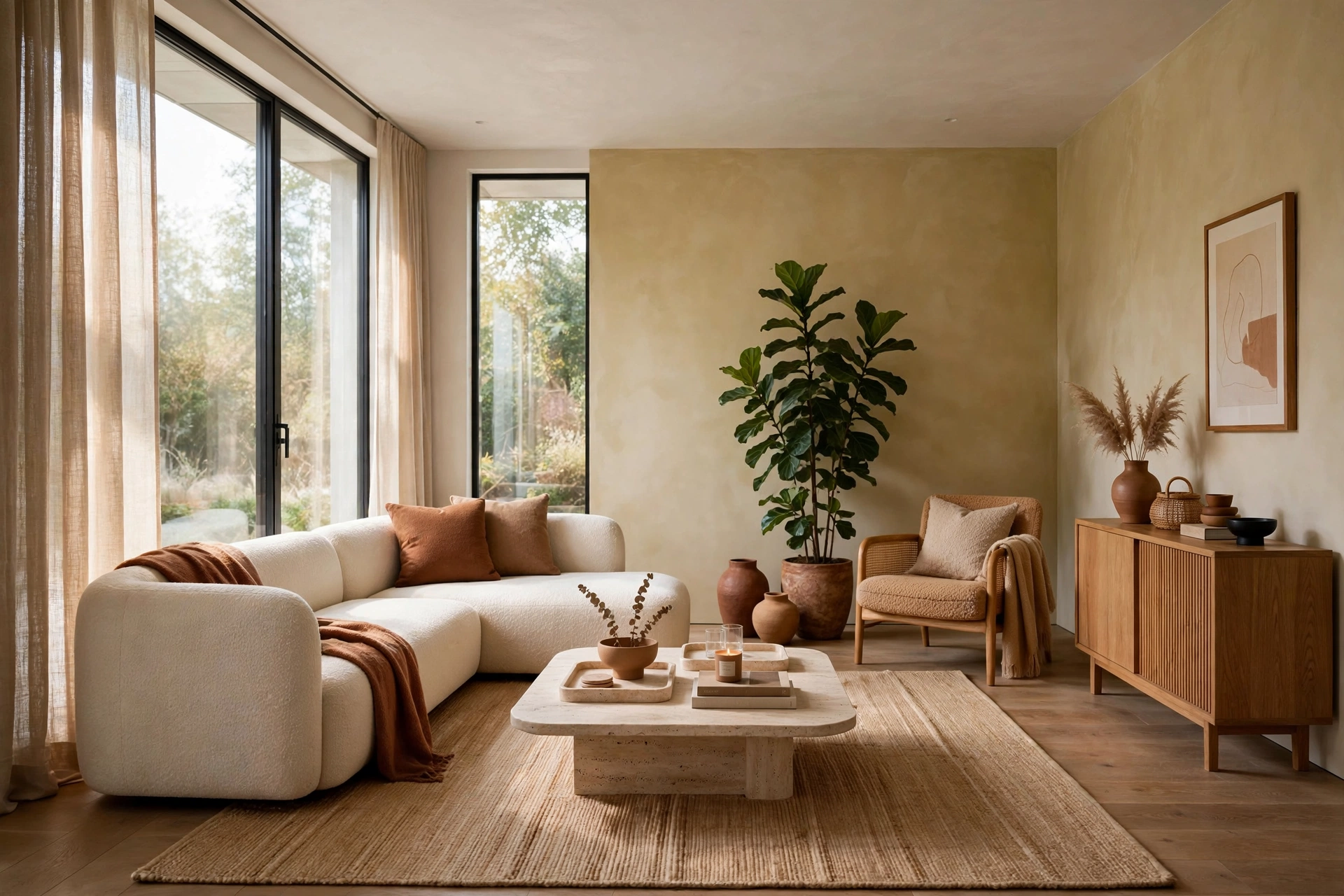
Bulky, overstuffed furniture eats both physical and visual space. Sofas and chairs with slim arms, lower backs, and tighter upholstery provide the same seating while leaving more of the room visible around them. A low-profile sofa, in particular, exposes more wall above it, which makes the whole wall feel taller.
When comparing two pieces, the one with the smaller visual footprint almost always wins in a tiny apartment, even if the seat dimensions are similar. Elegant, tailored shapes simply take up less of the eye’s attention.
20. Add Plants for Life Without Bulk
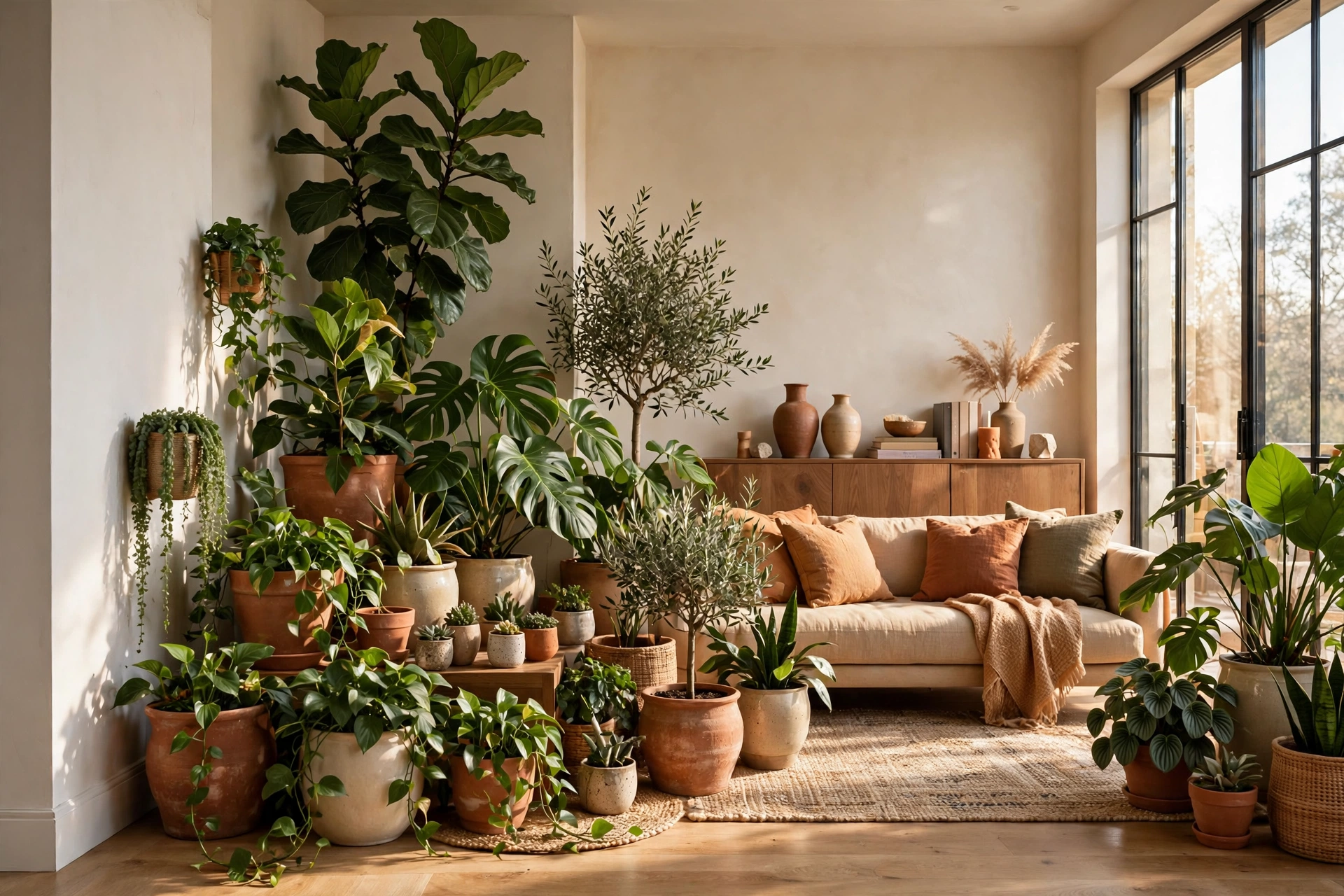
Plants add color, texture, and a sense of life to a small apartment without the visual weight of another furniture piece. A tall plant in an empty corner fills vertical space that would otherwise sit dead, while small trailing plants soften shelf edges.
Stick to a handful of healthy plants rather than a jungle. In a tiny space, five thriving plants look intentional and fresh, while twenty struggling ones read as clutter. Hanging planters keep greenery completely off the floor and the surfaces.
21. Use Round Tables and Soft Shapes
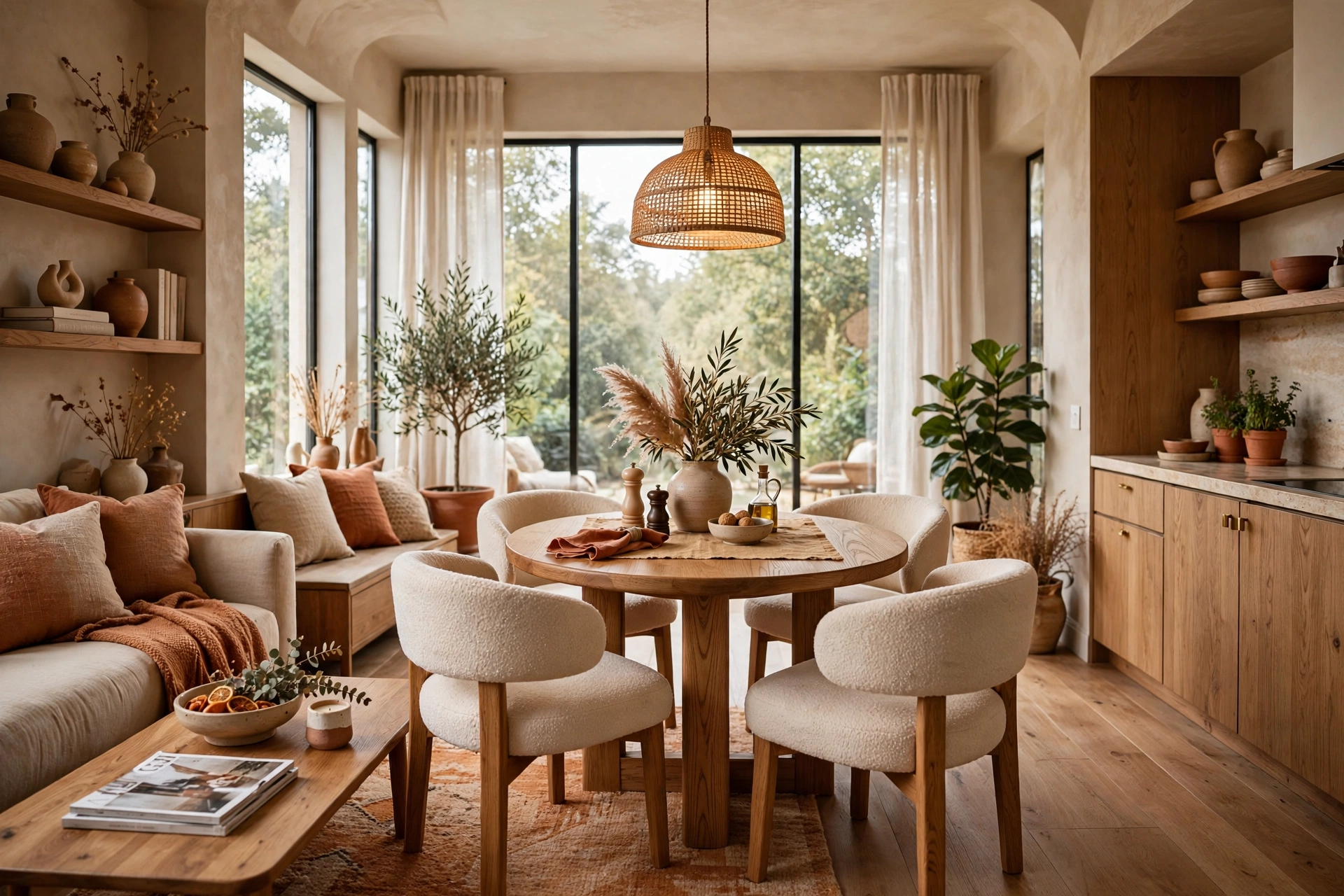
Round dining and coffee tables eliminate sharp corners that jut into walkways, which matters enormously when every inch of circulation counts. A round table also seats more people flexibly in a tight dining nook than a rectangular one of the same width.
Softer shapes in general, curved chairs, oval mirrors, arched floor lamps, keep the eye moving smoothly through the room instead of catching on hard angles. In a small space, that sense of flow translates directly into a feeling of openness.
22. Paint the Ceiling the Same Color as the Walls
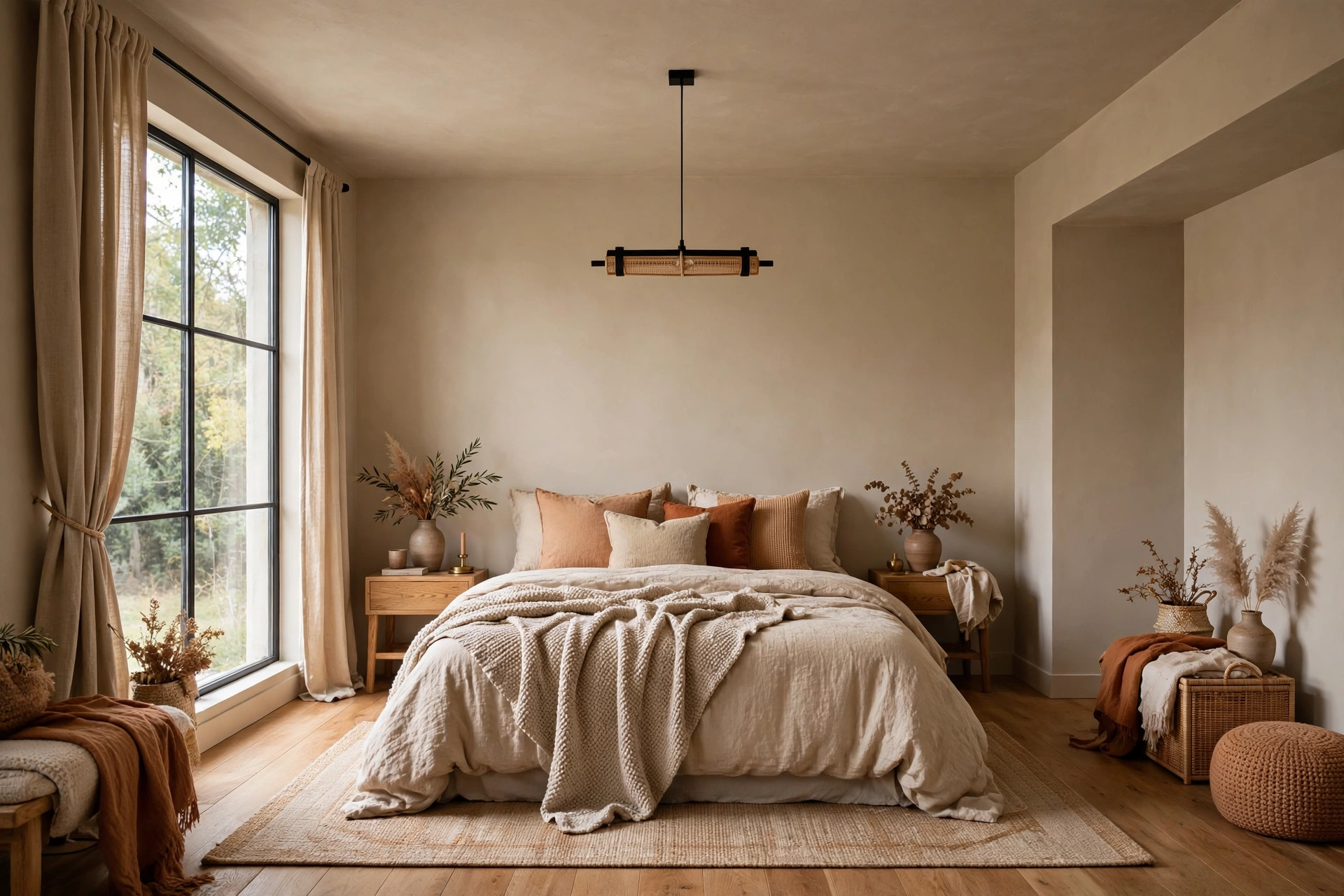
The standard white ceiling creates a hard line where the wall ends, and that line marks the exact limit of the room. Painting the ceiling the same color as the walls, or just a shade lighter, dissolves that boundary so the eye keeps traveling upward.
This works best with light, warm colors rather than stark white. A soft warm white or pale greige on all surfaces wraps the room in one continuous envelope that feels noticeably larger than the same room with a contrasting bright-white ceiling.
💡 Pro Tip: If painting the ceiling feels like a big commitment, test the effect first with a large swatch board held against the ceiling next to the wall color. Seeing the two tones meet without a white line in between usually sells the idea immediately.
23. Corral Small Items on Trays
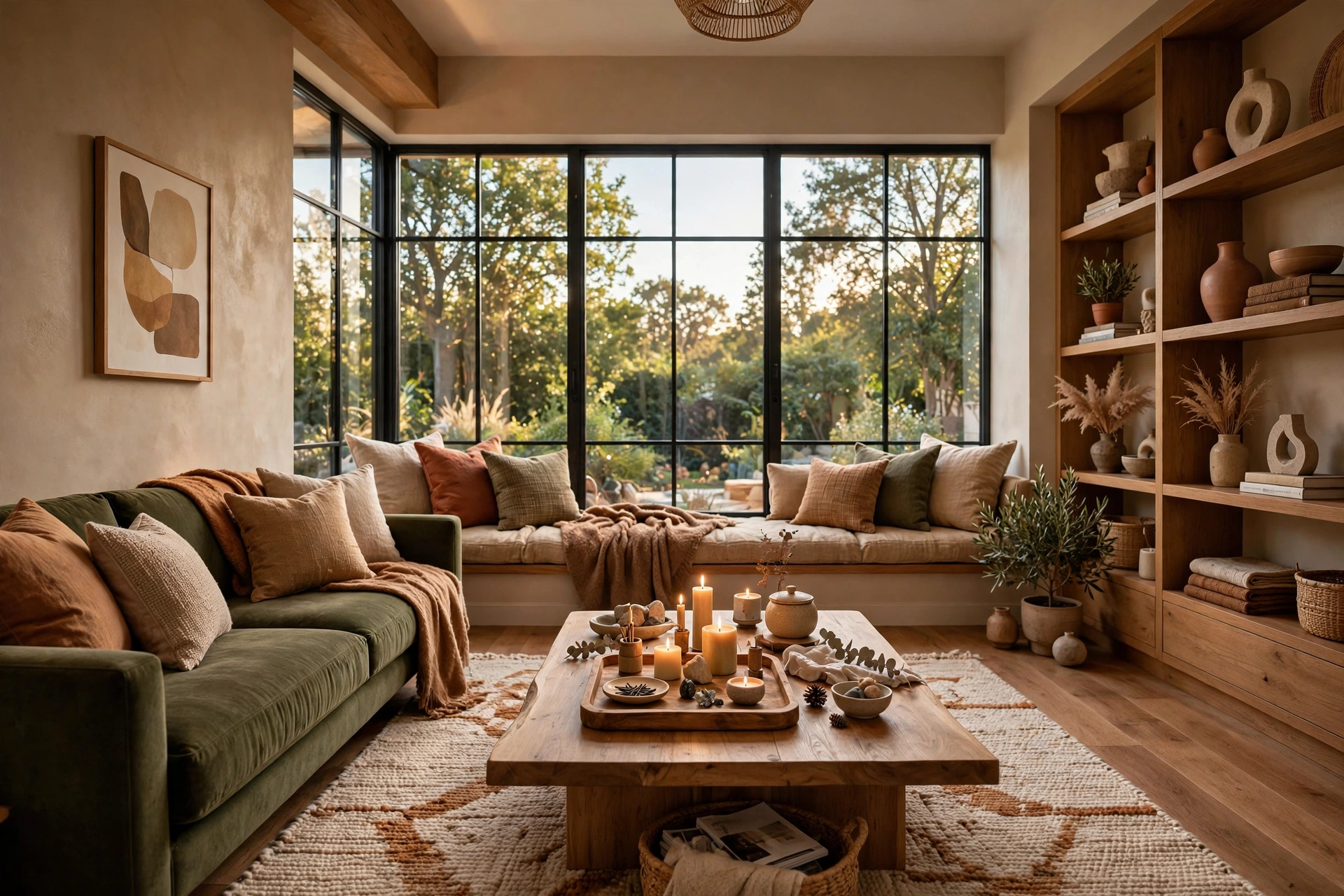
Remote controls, candles, hand cream, and all the other small daily items look like clutter when scattered, but grouped on a single tray they read as a styled vignette. The tray gives loose objects a visual boundary, which tells the eye they belong together.
Use this trick on coffee tables, nightstands, and bathroom counters, anywhere small things tend to accumulate. One tray per surface is the rule; two trays on one table starts to look like storage rather than styling.
24. Borrow Light With Glass Doors and Transoms
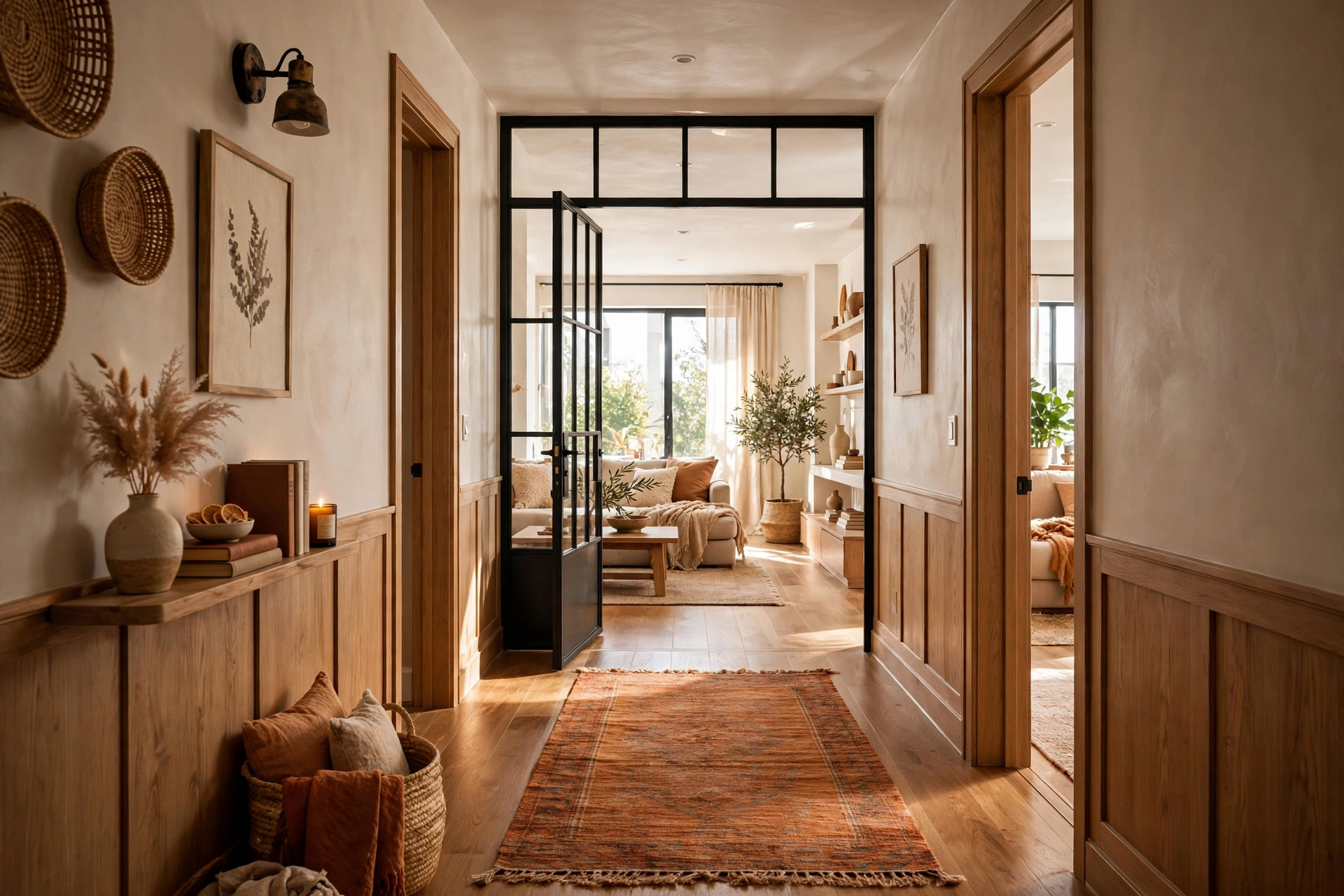
Interior doors with frosted glass panels let light travel between rooms while still providing privacy, which keeps a small apartment’s inner rooms from feeling like caves. Even swapping one solid door for a glazed version changes how light moves through the whole floor plan.
Where changing doors is not possible, keep interior doors open during the day whenever privacy allows. An open door borrows both light and sightlines from the next room, effectively expanding the perceived size of wherever you are standing.
25. Edit Ruthlessly, Then Edit Again
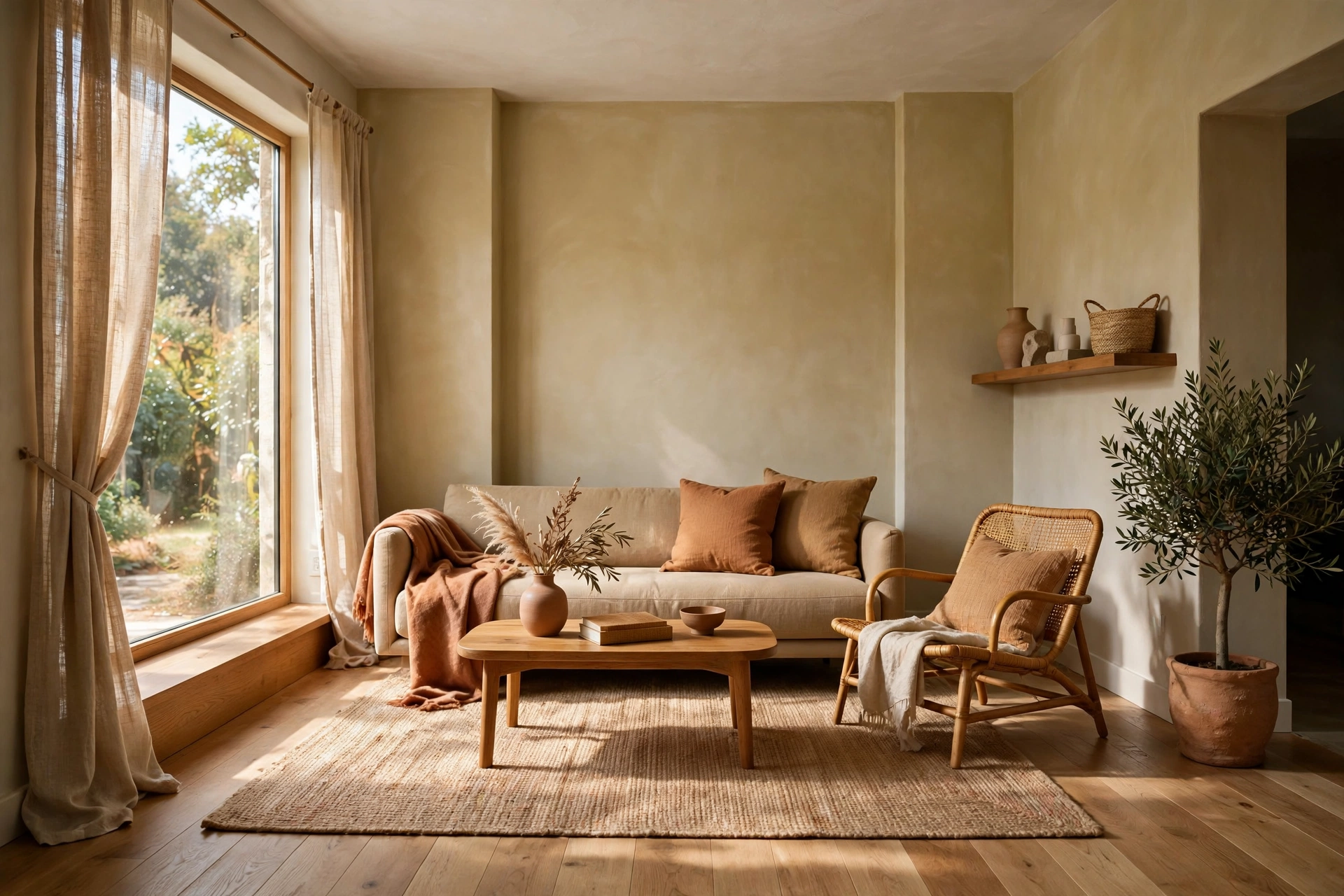
The single most spacious thing a tiny apartment can have is less stuff in it. Every decorating idea on this list works better with fewer belongings competing for attention, so a serious decluttering pass multiplies the effect of everything else.
Go room by room with three boxes: keep, relocate, and remove. Be honest about the “someday” items, since in a small apartment every stored maybe-item charges rent in the form of space and visual calm. The goal is not minimalism for its own sake, but giving the things you love enough room to actually be seen.
Common Tiny Apartment Mistakes
Mistake 1: Pushing all furniture against the walls
Lining every piece along the perimeter feels like it maximizes space, but it actually creates a dead zone in the middle and makes the room feel like a waiting area. Floating the sofa even a few inches off the wall with a narrow console behind it adds depth and makes the layout feel designed rather than defaulted.
Mistake 2: Using dark, heavy window treatments
Thick dark curtains absorb light and visually shrink the window, which shrinks the whole room’s perceived size. Light-filtering sheers or curtains matched to the wall color keep the brightness that small spaces depend on.
Mistake 3: Buying furniture that is the wrong scale
An oversized sectional or a massive dining table in a tiny apartment leaves no circulation room and dominates every sightline. Measure the room and tape out furniture footprints on the floor before buying anything, since a piece that looked perfect in the showroom can swallow a small room whole.
Mistake 4: Ignoring vertical space
Leaving walls bare above eye level wastes the one dimension a small apartment has in abundance. Tall shelving, high art placement, and floor-to-ceiling curtains all exploit height that costs nothing in floor area.
Mistake 5: Keeping every surface decorated
A styled surface needs negative space around the objects to read as styled. When every inch of every table and shelf holds something, the eye finds no rest and the room feels chaotic and cramped regardless of its actual size.
Frequently Asked Questions
1. What colors make a small apartment look bigger?
Light, low-contrast colors make the biggest difference: warm whites, pale greige, soft sage, and light warm gray. Keeping walls, trim, and ceiling in closely related tones removes visual boundaries so the room reads as one continuous, larger-feeling space.
2. How can I make a studio apartment feel like it has separate rooms?
Use rugs, lighting, and furniture placement to define zones instead of walls. A rug under the bed area, a pendant over the dining spot, and a bookshelf placed perpendicular to the wall as a soft divider each signal a distinct area without consuming floor space.
3. What furniture works best in a tiny apartment?
Pieces with visible legs, slim profiles, and more than one function: storage ottomans, drop-leaf tables, wall-mounted desks, and sofas with raised legs. Every item should earn its footprint, ideally twice.
4. Do mirrors really make a room look bigger?
Yes, when placed thoughtfully. A large mirror opposite a window bounces light deeper into the room and creates the illusion of a second window, effectively doubling perceived depth. A mirror reflecting a blank wall or clutter does far less, so aim it at something worth doubling.
5. How do I decorate a small apartment on a budget?
Start with the free moves: decluttering, rearranging for light, and clearing the floor. Then spend on high-impact, low-cost changes like curtain rods mounted high and wide, a large mirror, and paint in a light cohesive palette. Multipurpose secondhand furniture covers the rest.
6. Should I avoid patterns in a small apartment?
Not entirely, but keep them calm and tone-on-tone. Subtle vertical textures add height without chopping up the space, while bold high-contrast patterns create visual boundaries that make rooms feel smaller. One patterned element per room is a safe limit.
7. How much decor is too much in a tiny apartment?
When surfaces have no empty space left, it is too much. Keep roughly three-quarters of every surface clear and choose a few larger statement pieces over many small objects. If removing one item makes the room feel calmer, it was one item too many.
Conclusion
A tiny apartment feels spacious not because of its square footage but because of how deliberately that footage is used. Light colors, visible floor, vertical storage, and furniture that earns its place twice all work together to give the eye long sightlines and the brain a sense of calm order.
Start with the simplest moves: clear the floor, let the light in, and hang the curtains high. Then layer in the bigger changes one weekend at a time. Measure the room, choose pieces that fit it honestly, and edit without mercy. Do that, and the apartment will feel less like a compromise and more like a choice.