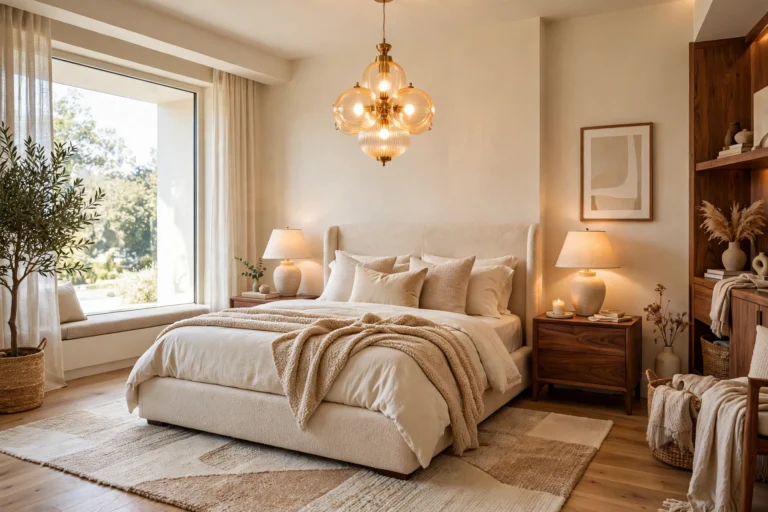
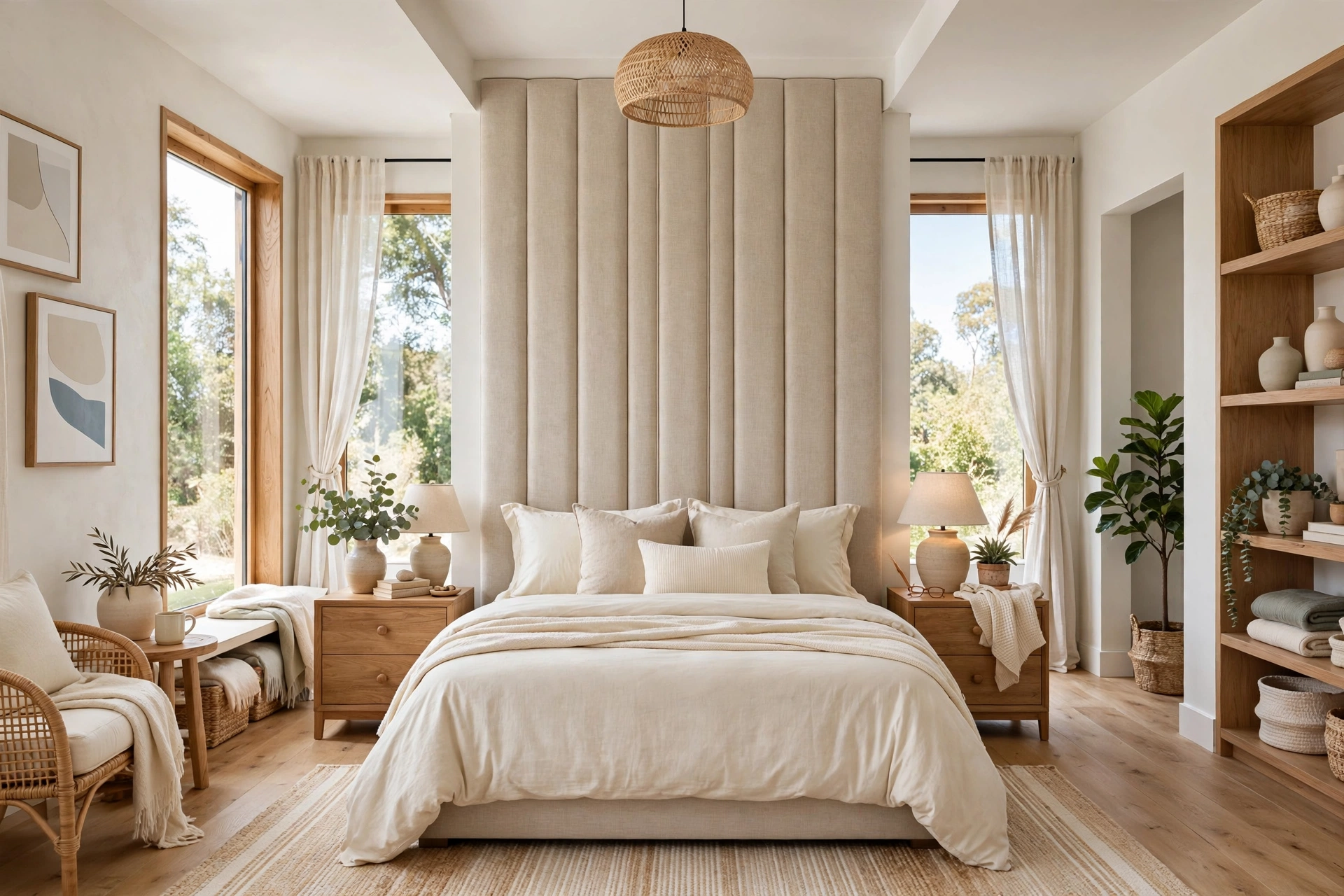
10 Affordable Headboards That Instantly Upgrade a Bedroom
Introduction
A headboard is the single most powerful piece of furniture in a bedroom — and the one most people skip. Without it, even a beautifully dressed bed drifts against a bare wall, the pillows slump, and the room lacks a center. Add the right headboard and everything changes: the bed suddenly looks anchored, the wall behind it gains purpose, and the whole room reads as designed rather than assembled. Designers call it the bedroom’s focal point, and it earns the title every time.
The catch is that retail headboards are notoriously overpriced for what they are. Walk into a furniture store and a decent upholstered headboard can cost as much as the mattress it sits behind, which is exactly why so many bedrooms go without one. But a headboard does not need a showroom budget to look like it had one. The secret is that most headboards are visually simple objects — a padded panel, a woven texture, a shaped piece of wood — and simplicity is cheap to fake convincingly.
Below are ten affordable headboards bedroom upgrade ideas that deliver the designer look without the designer invoice. Every one costs far less than a standard retail headboard, and several cost almost nothing — yet each one gives your bedroom the anchored, finished feeling of a professionally styled room. If the headboard is part of a bigger refresh, our bedroom makeover on a budget guide covers the rest of the room’s transformation in the same thrifty spirit.
1. The Upholstered Linen Panel Headboard
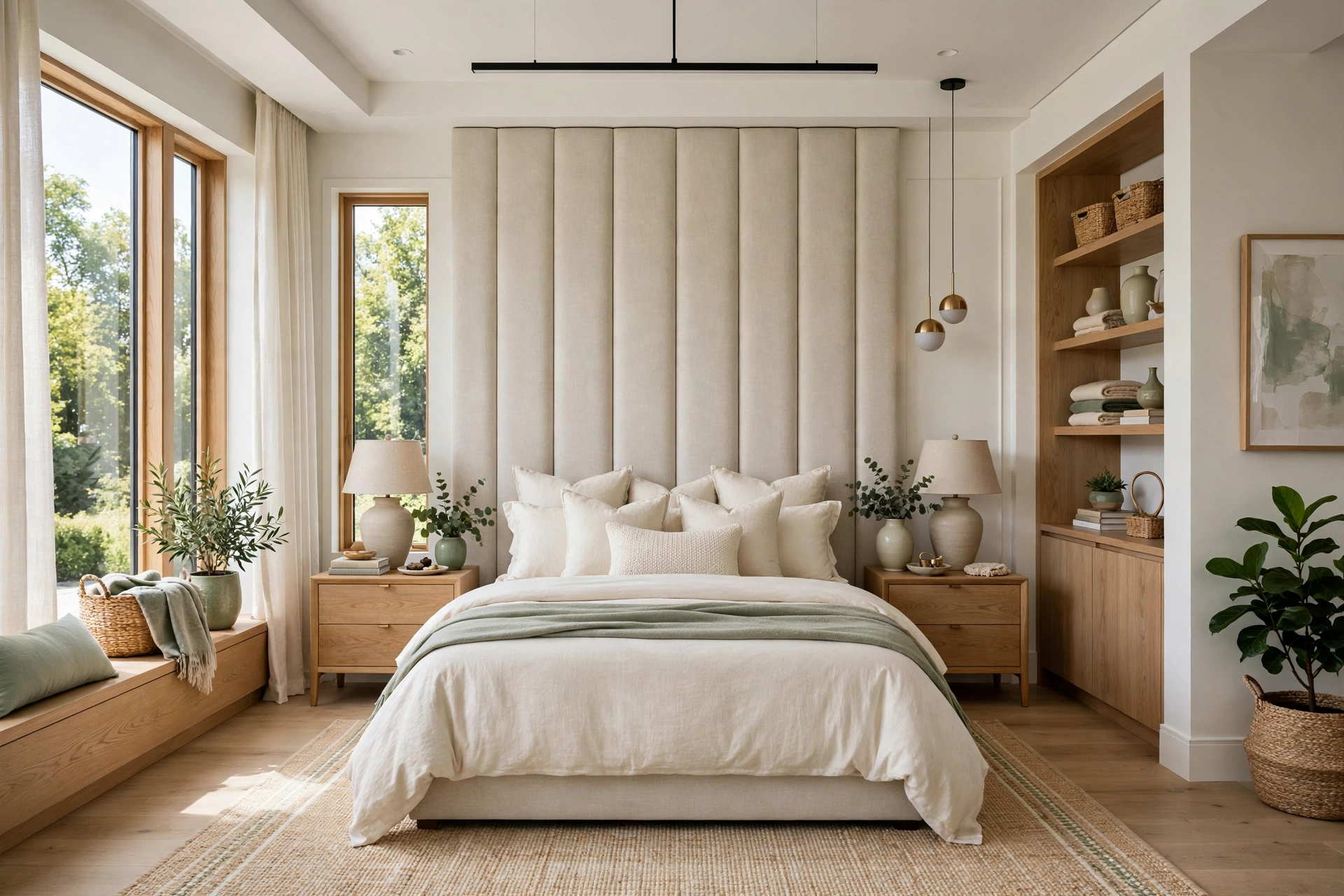
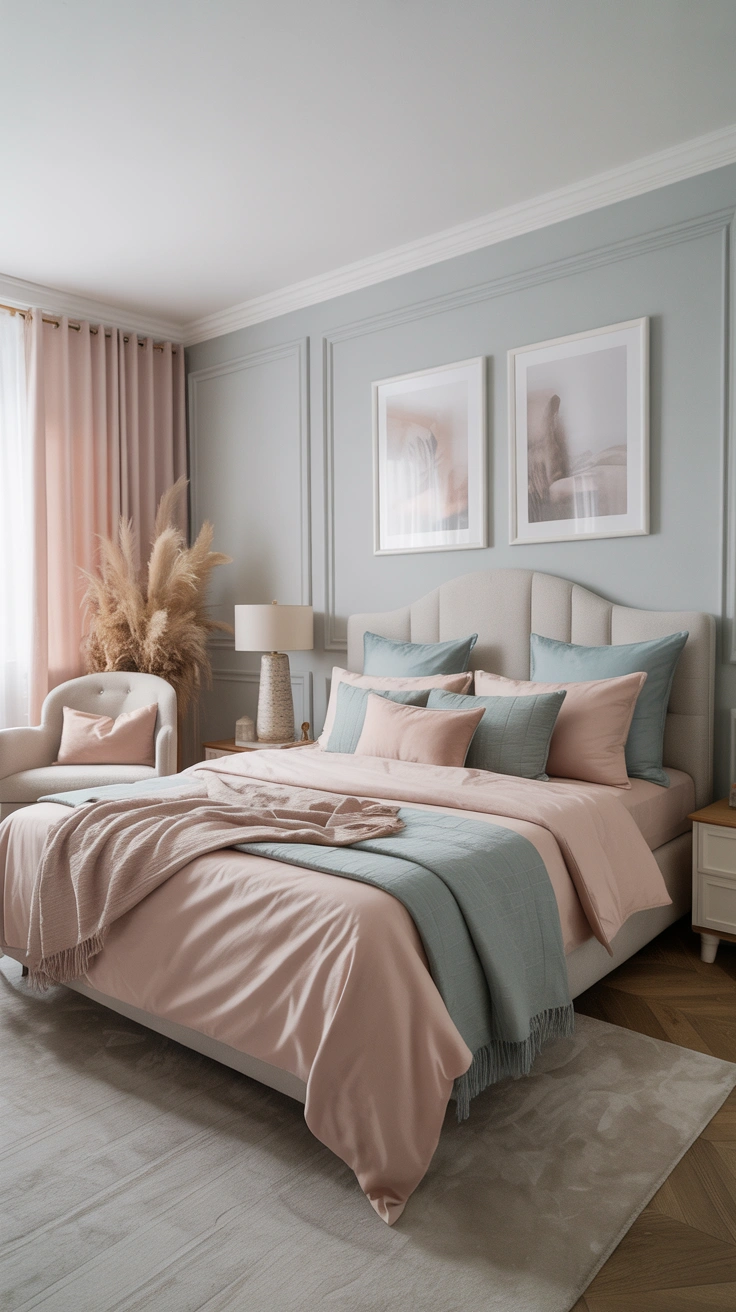
The upholstered linen panel is the headboard that looks most like it cost four figures, and it is one of the cheapest to build yourself. A sheet of plywood, a layer of foam, a wrap of batting, and a few yards of linen-look fabric are all it takes. The magic is in the texture: natural linen weave catches light in a way that reads as custom and expensive, even when the fabric came from a budget bolt. Stretch it tight, staple it on the back, and the front looks like something a boutique hotel ordered from a workroom.
This style earns its place first on this list because it is also the most forgiving beginner project. There are no joints to join, no stain to apply evenly, no pattern to align. If your staple line wanders slightly, nobody will ever see it — it hides behind the bed. Choose a warm oatmeal, soft sage, or classic greige and the panel will sit quietly behind any bedding you already own, lifting the whole bed the way a tailored blazer lifts an outfit. Style the pillows against it with the layered formula from our guide on how to style your bed for a hotel-like look, and the bedroom reads five-star for a fraction of the price.
💡 Pro Tip: Pick a performance or linen-look fabric with a tight weave rather than genuine loose-weave linen. Real linen wrinkles and shows every wrinkle under bedroom lamplight, while performance fabrics look the same for years and wipe clean — and they cost about the same per yard.
2. The Tufted Velvet Headboard
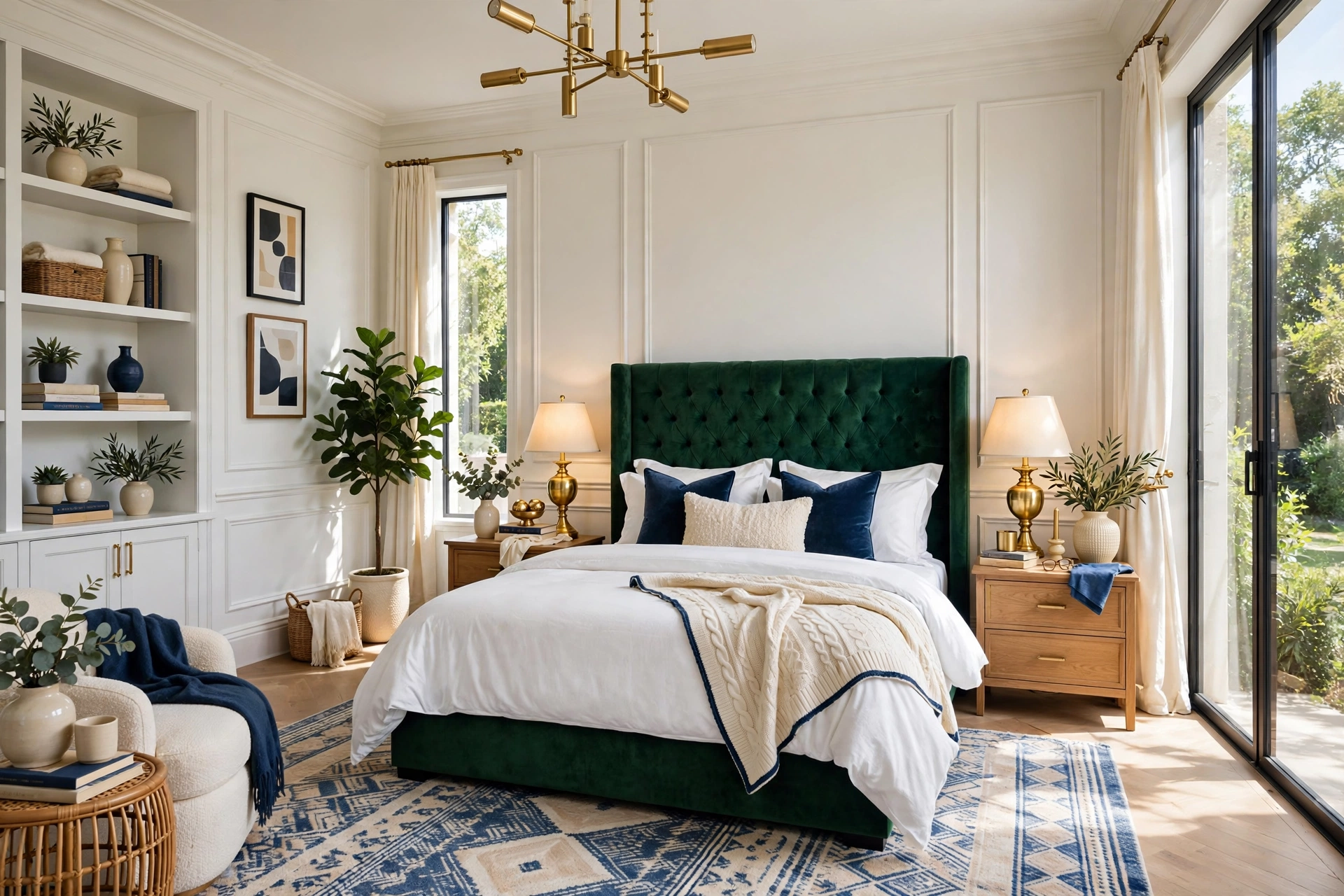
Tufted velvet is the headboard of luxury hotels and film-set bedrooms, all deep button dimples and light-catching pile — and it is surprisingly achievable on a budget. Ready-made tufted velvet headboards are among the most common budget furniture finds, because the style is produced in enormous volumes, which keeps prices low. The trick to making an inexpensive one look expensive is color choice: a deep, saturated tone like emerald, navy, or charcoal velvet looks rich at any price, while pale or oddly shiny velvets can look thin.
Velvet’s pile does real design work for free. It absorbs and reflects light unevenly, which gives the headboard depth and movement that flat fabrics cannot match, and it photographs beautifully — one reason it dominates bedroom inspiration boards. If you are buying rather than building, look for diamond tufting with buttons over plain pull tufting; the buttons signal craft, and they are what the eye reads as “expensive.” Pair it with crisp, simple bedding so the headboard stays the star — a busy duvet pattern fights the tufting and makes both look cheaper.
3. The Rattan Weave Headboard
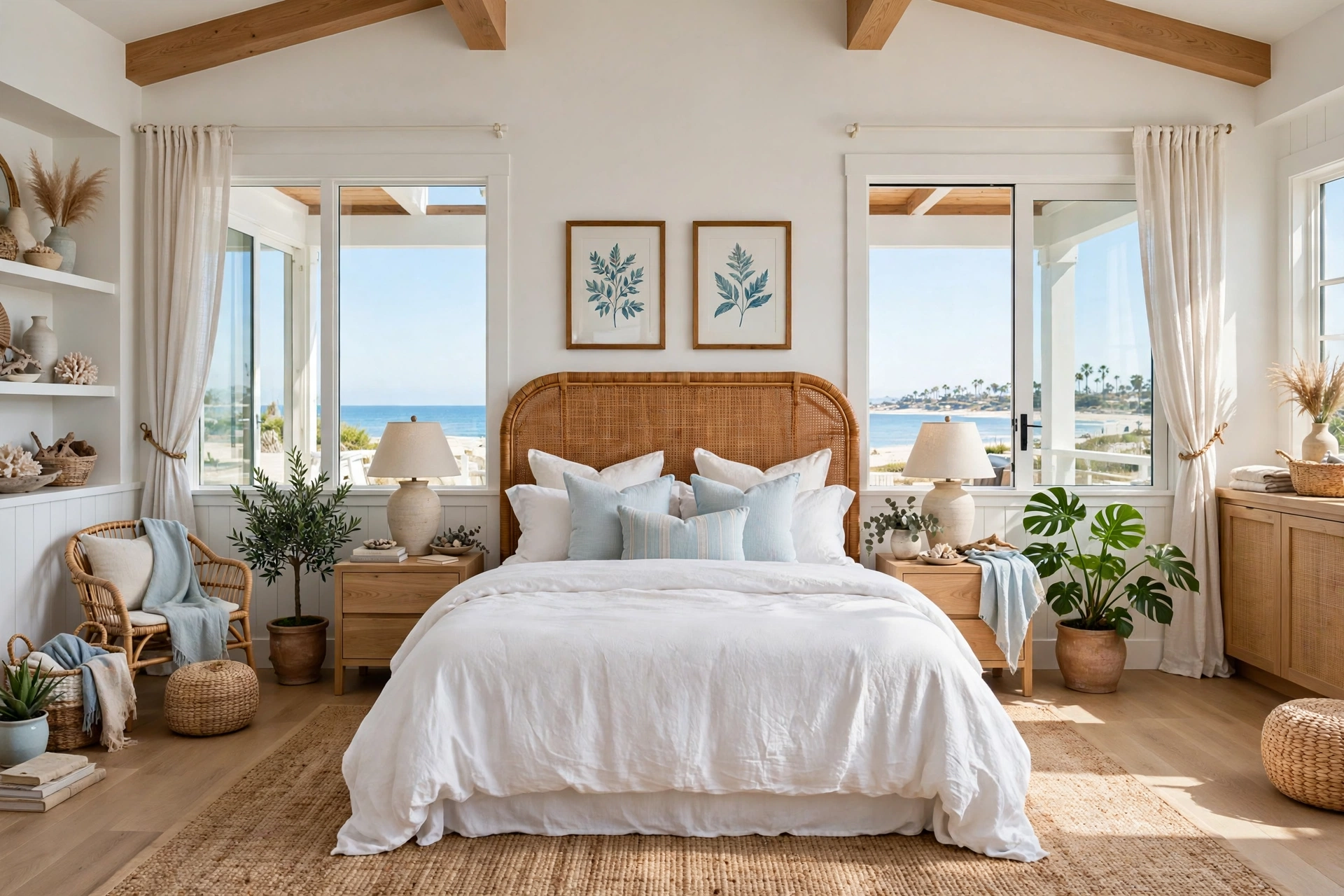
Rattan headboards bring warmth and texture that no fabric can imitate — that honey-toned, hand-woven look that sits comfortably in boho, coastal, and modern organic bedrooms alike. The woven texture does something clever: it reads as artisanal and collected, which means slight imperfections in the weave actually add character instead of looking cheap. A mass-produced upholstered panel has to be perfect to look good; a rattan weave just has to be honest.
Because rattan is lightweight, these headboards are among the easiest to mount and the kindest to walls — most hang on two simple brackets or even rest against the wall behind the bed. Style it with white or cream bedding and a jute or natural-fiber rug, and the room instantly feels sun-warmed and relaxed, a mood our aesthetic bedroom ideas roundup shows off in several variations. The one rule is restraint with the rest of the room: rattan is a strong texture, so let it be the only woven statement and keep the surrounding furniture simple and smooth.
Affordable Headboard Quick-Start Checklist
- ✅ Measure your bed’s width and your wall height before choosing — a headboard should sit 2–4 inches wider than the mattress on each side.
- ✅ Pick your style from the list below based on your room’s palette and your DIY comfort level.
- ✅ Gather materials first: for DIY routes, buy fabric, foam, and fasteners in one trip to avoid repeat costs.
- ✅ Plan your mounting method — wall brackets, bed-frame bolts, or freestanding — before you build or buy.
- ✅ Keep bedding in the room’s existing palette so the new headboard integrates instead of clashing.
- ✅ Finish the wall behind it: patch holes, touch up paint, and consider the headboard’s backdrop as part of the design.
4. The Reclaimed Wood Plank Headboard
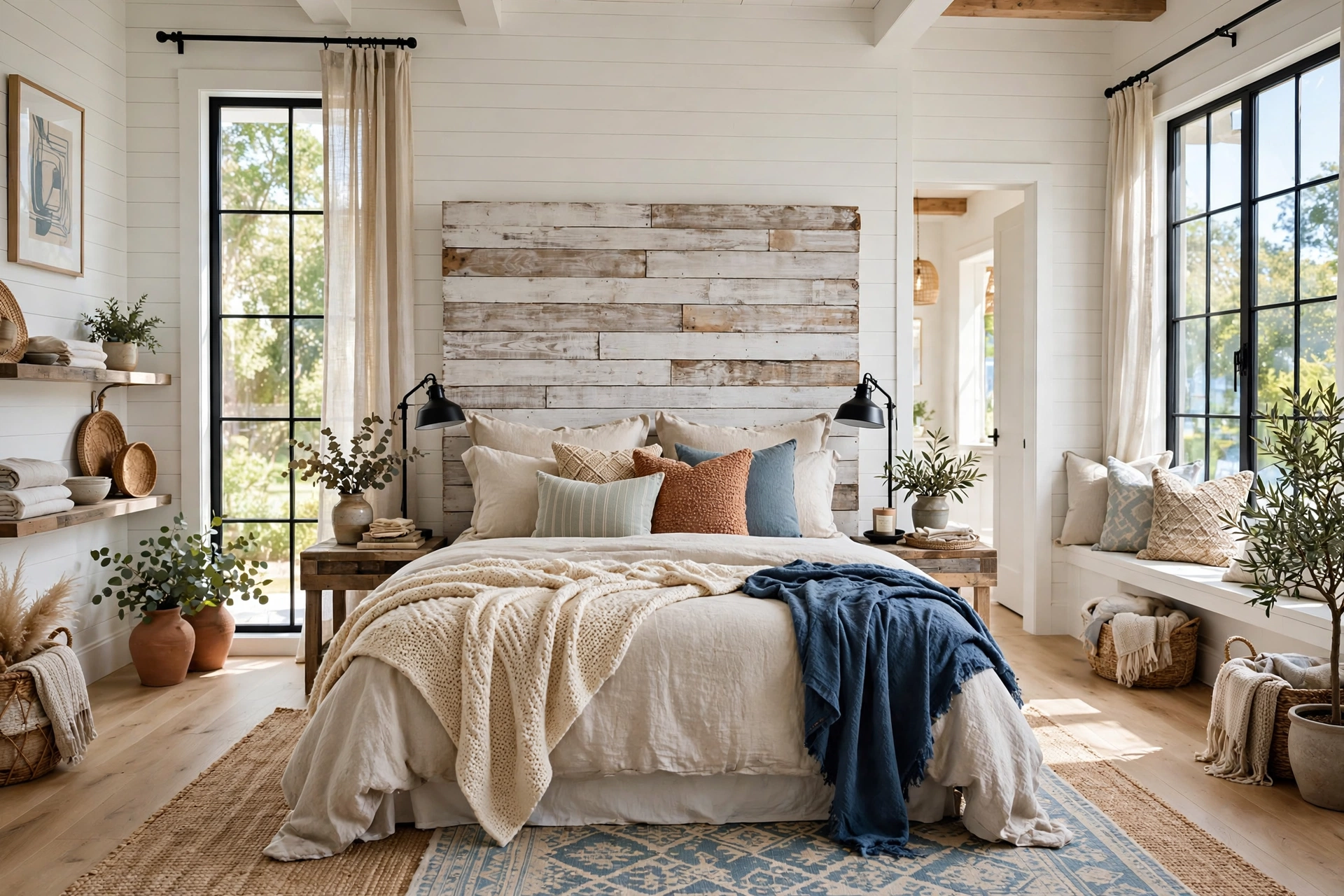
Few materials deliver as much character per dollar as reclaimed wood. Old fence boards, barn planks, or pallets pulled apart and refinished carry decades of weathering in their grain — knots, nail holes, color variation — that would cost a fortune to buy new as “rustic” lumber. Arranged as horizontal or vertical planks behind the bed, they create a headboard with a story built in, and the material itself often costs little more than the screws that hold it together.
The finish is where this project succeeds or fails. Sand every plank smooth enough that no splinter threatens a pillow (or a head), seal the wood so it cannot shed dust onto the bedding, and consider a whitewash or matte sealant rather than heavy stain — a light finish keeps the bedroom bright and lets the wood’s texture show through. The result suits farmhouse, rustic, and eclectic rooms beautifully, and it is one of the most genuinely sustainable headboard options on this list, giving old material a second life behind the bed.
⚠️ Warning: Never use reclaimed wood straight from the source without preparing it. Inspect every board for pests, old nails, and rot, then sand and seal thoroughly. Skipping this step can bring insects or rough splinters into the one place you rest your head — the prep is the project.
5. The Painted Arch Headboard
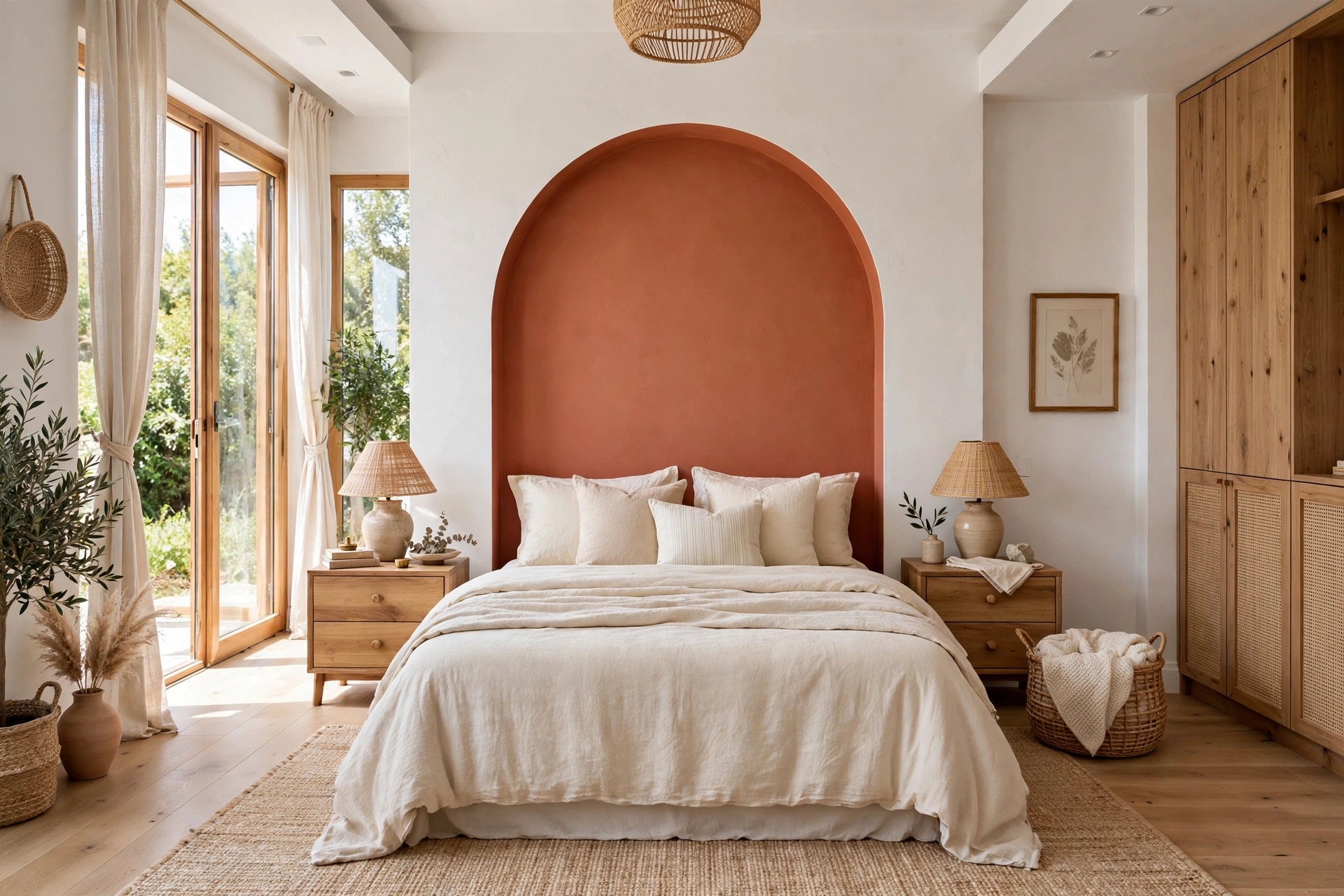
The painted arch is the headboard that costs about as much as a single sample pot of paint. Instead of a physical object, you paint a large arch — or a rounded rectangle, a half-circle, or a full backdrop band — directly on the wall behind the bed. It reads instantly as a designed headboard zone: the eye registers the shape, the color, and the framing of the bed, and the brain fills in “headboard” without any furniture at all. It is the ultimate budget move because the material is paint you may already own.
The execution is simple but the details matter. Mark the arch with a pencil line and painter’s tape or a thumbtack-and-string compass before touching a brush, and choose a color with enough contrast against the wall to read clearly — a warm terracotta or deep sage against white walls, for example. Keep the arch’s width a few inches wider than the bed and its top above pillow height so it frames the sleeping area properly. Renters can get the same effect with a large peel-and-stick arch decal, which removes cleanly when the lease ends. It is also the easiest headboard to change: when you tire of the color, one afternoon repaints the whole concept.
Quick Comparison: Affordable Headboards by Cost and Effort
6. The DIY Fabric-Draped Canopy Headboard
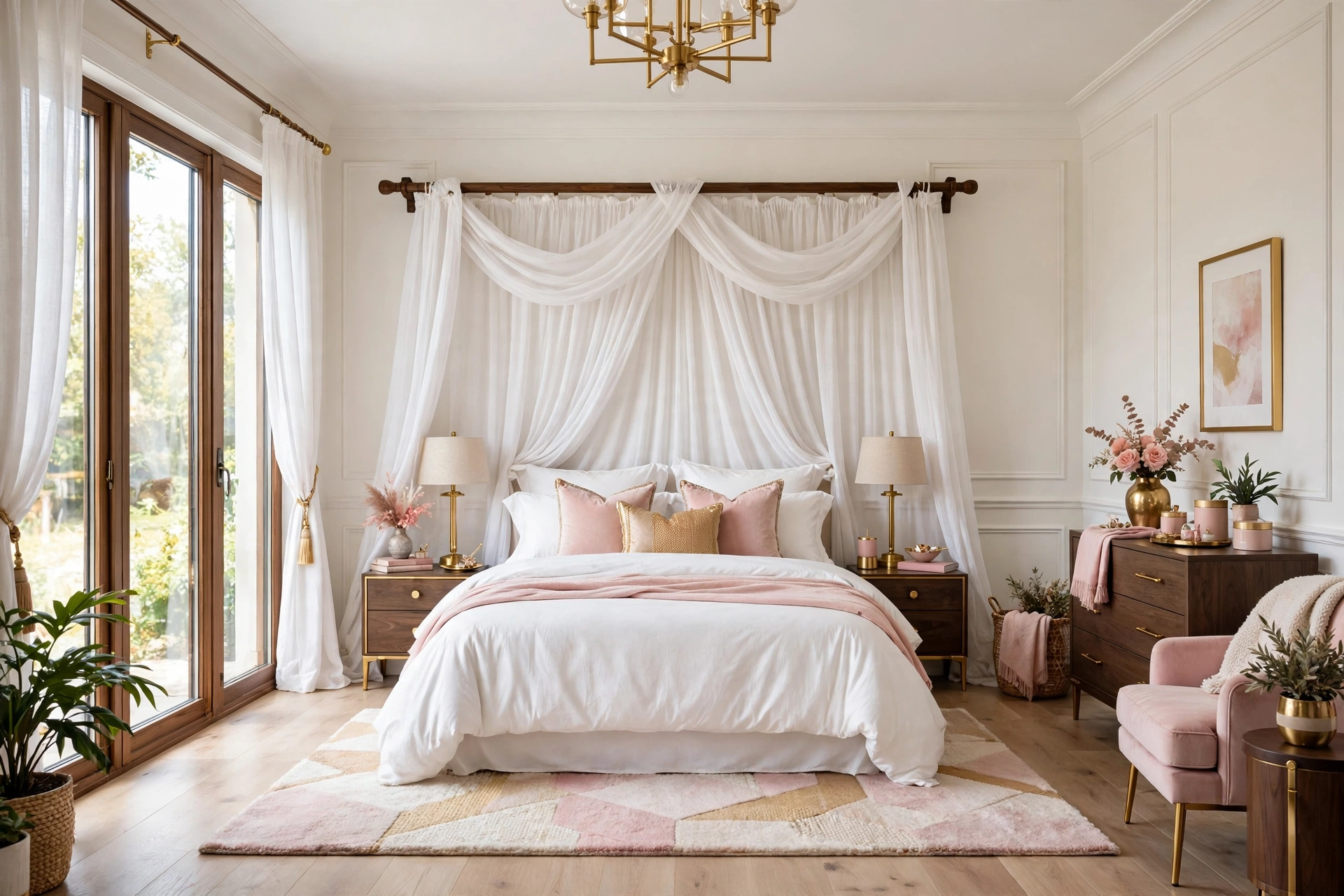
If you want drama on a budget, nothing beats fabric. A canopy headboard is made from a curtain rod or wooden dowel mounted above the bed, with lengths of fabric draped and tucked behind the pillows to form a soft, gathered headboard wall. Gauzy white curtains are the classic choice — they billow slightly, filter light, and turn an ordinary bed into something out of a boutique hotel or a film. The whole project is a rod, four to six yards of fabric, and an afternoon.
The fabric choice sets the mood entirely. Sheer linen or voile reads romantic and airy; a heavier canvas or velvet reads moody and cocooning. Hang the rod 6–12 inches wider than the bed on each side and about two feet above the pillow line, and let the fabric pool just slightly at the top — a tight, flat drape looks like a mistake, while gentle gathers look like design. This is also a renter-friendly route if you use a tension rod inside a window-style mount or heavy-duty removable hooks. Keep the fabric washable, because anything hanging behind pillows collects dust faster than you expect.
📌 Important: Mount the rod into studs or use anchors rated well above the fabric’s weight. Fabric seems light until six yards of it gathers on one rod — a rod that pulls out of drywall at 2 a.m. is the one DIY failure nobody forgives. When in doubt, find the studs.
7. The Slatted Wood Headboard
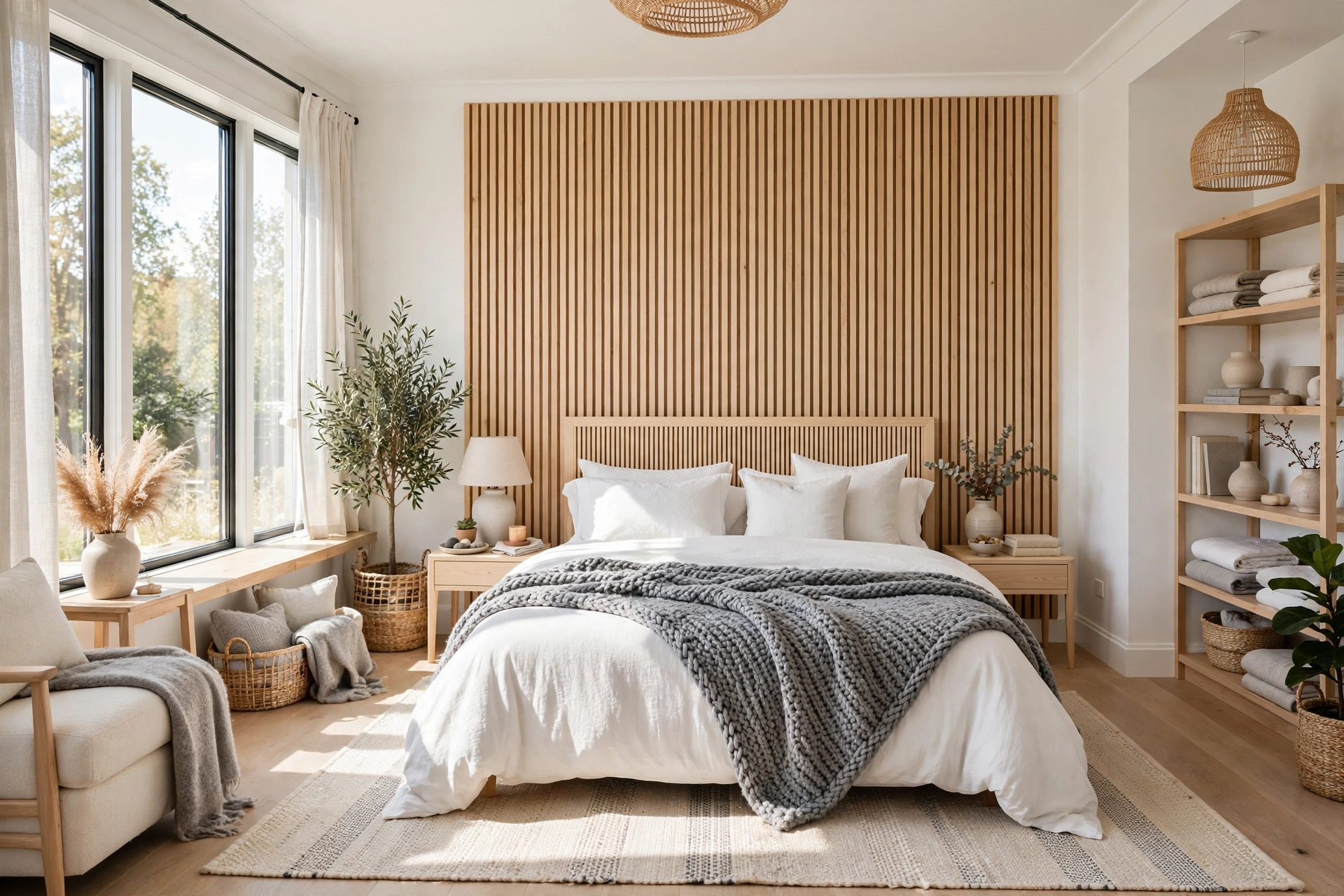
The slatted wood headboard is the minimalist’s answer to reclaimed wood: clean vertical or horizontal slats, evenly spaced, in a pale oak or ash finish that feels Scandinavian rather than rustic. You can buy budget slatted headboards widely, or build one from inexpensive pine boards cut to length and spaced on two back rails — either way, the look is calm, architectural, and endlessly versatile. The slats let the wall color show through between them, which makes the headboard feel lighter than a solid panel and keeps a bedroom airy.
Spacing is the whole design here. Even gaps — around an inch between slats — read as intentional craftsmanship, while uneven gaps read as a weekend gone wrong, so measure twice and use a spacer block while fastening. Finish the wood with a clear matte sealant to protect it and keep the pale tone from yellowing; skipping the sealant is how pale pine turns orange within a year. Pair it with white or pale grey bedding and simple furniture, and the room gets that quiet, hotel-clean feeling with a warm wood heart. In a compact room, the slim profile of a slatted headboard keeps sightlines open — a principle our small master bedroom ideas guide applies to every piece of bedroom furniture.
8. The Arched Bouclé Headboard
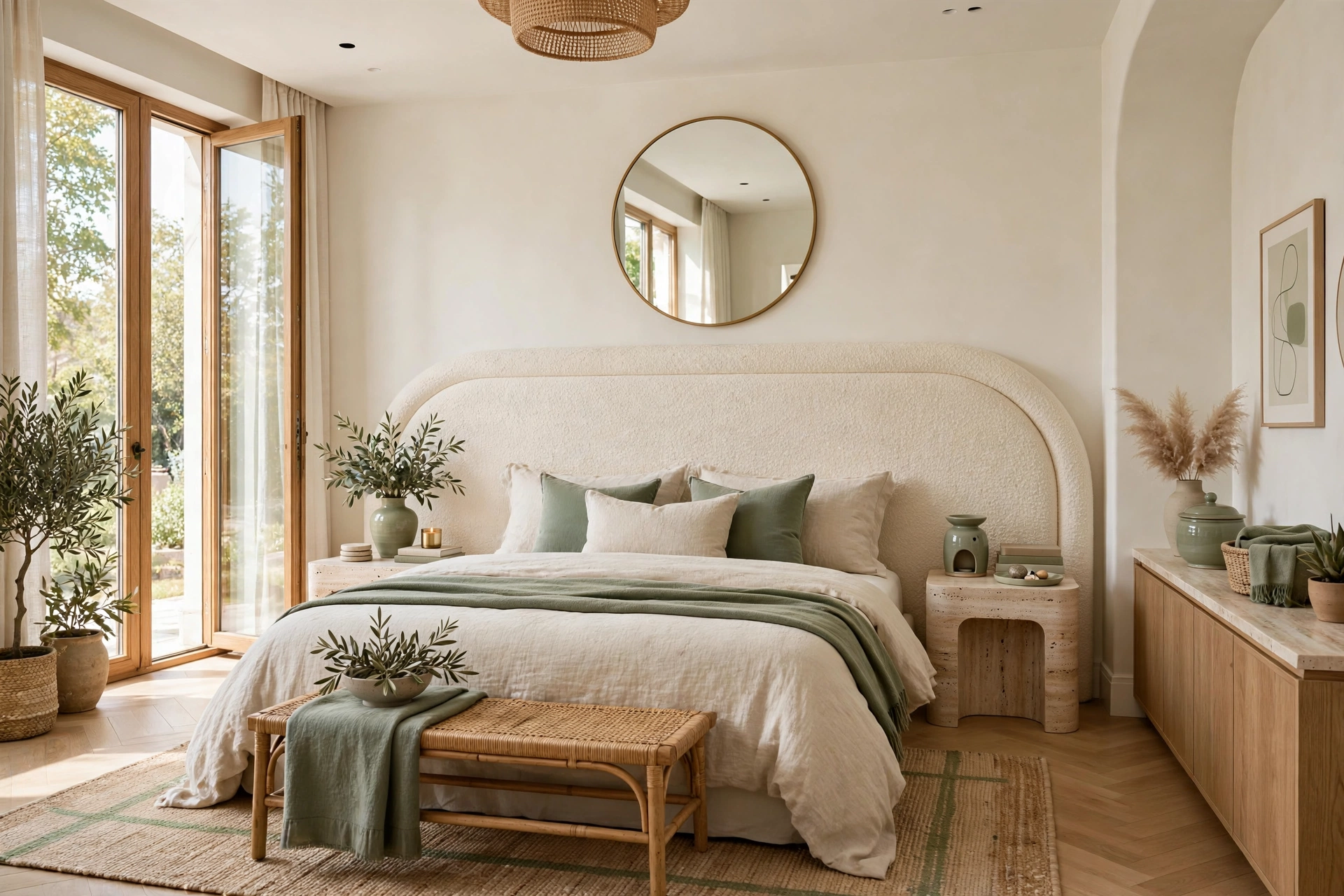
Arches are having a long design moment, and an arched headboard in nubby white or cream bouclé sits right at the sweet spot of trendy and timeless. The curved silhouette softens the whole bedroom — no sharp corners, no hard lines — and the bouclé’s looped texture catches light in a way that makes even a simple shape look rich. Budget versions of this style are increasingly common as the trend has matured, and the shape itself is simple enough that a confident DIYer can cut an arched panel from plywood and wrap it in bouclé-look fabric.
The reason this headboard punches above its price is contrast: most bedrooms are a box of right angles — rectangular bed, rectangular nightstands, rectangular windows — so one strong curve stands out enormously. Echo the arch once or twice elsewhere (a round mirror, an arched print) and it becomes a motif rather than a lone shape, which is what makes it look designed rather than purchased. Keep the palette tonal — cream bouclé against white walls with oatmeal bedding — and the texture does all the talking. This is the headboard for anyone whose moodboard leans modern organic, and it proves that a single curved silhouette can carry a whole room.
💡 Pro Tip: Bouclé shows soil faster than flat weaves, so treat the fabric with a fabric protector spray before mounting the headboard — especially the lower edges near the pillows where hair products and hands land daily. One preventive coat saves a future of spot-cleaning regret.
9. The Botanical Wallpaper Headboard Panel
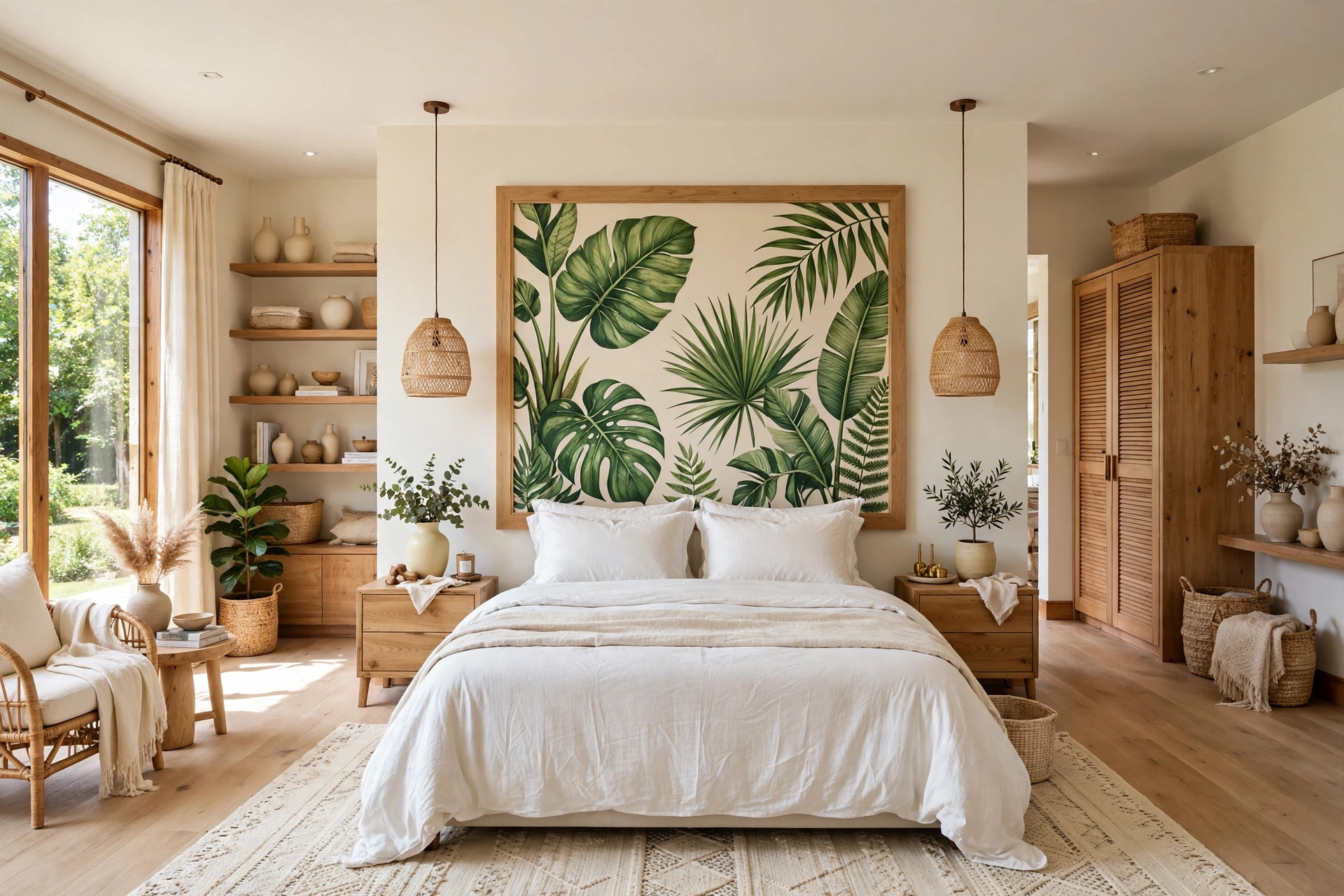
Here is the headboard for people who want art and architecture in one move: a single framed panel of botanical wallpaper mounted behind the bed. Instead of wallpapering a whole wall, you cover one large board — or frame a few matching panels in a row — in a beautiful botanical print: oversized leaves, trailing vines, delicate ferns. It reads as a headboard because it occupies the headboard zone and frames the bed, but it behaves like art, adding pattern and color that no plain fabric could deliver.
This route is gloriously forgiving. Wallpaper panels do not need to be perfect behind furniture — the bed hides the bottom third — and a single panel uses a fraction of a roll, which means you can afford a print you would never justify for a whole wall. Peel-and-stick wallpaper makes it fully renter-friendly and repositionable. Choose a print with a background color close to your wall color so the panel feels integrated rather than pasted on, and keep the bedding simple: the wallpaper is the pattern in the room, so let it have the stage alone.
10. The Oversized Cushion Headboard
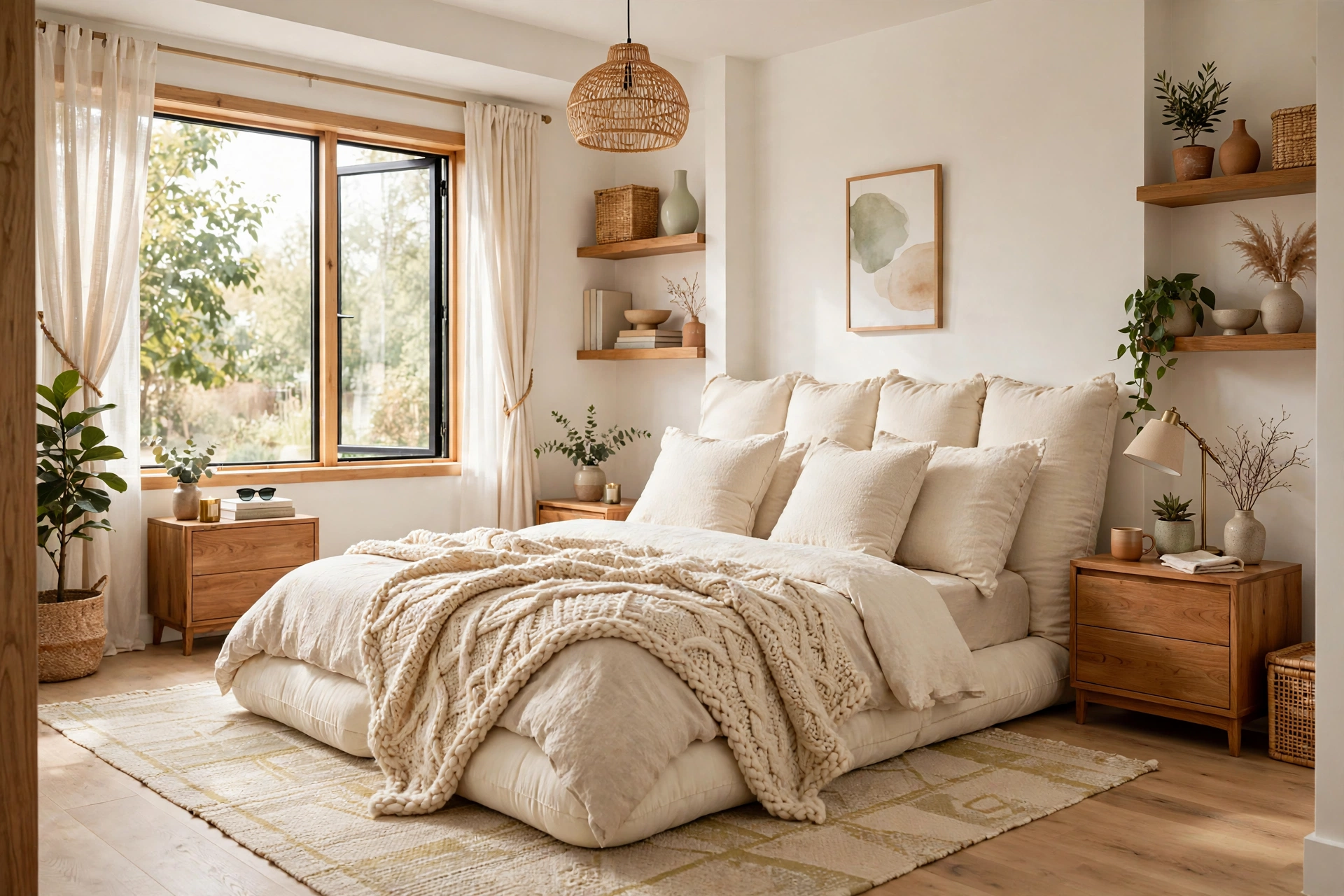
The simplest headboard on this list is also one of the most comfortable: a row of oversized floor cushions or large square pillows leaned against the wall behind the bed. No tools, no mounting, no construction — just four to six big, plump cushions in your palette, stacked or leaned to form a soft, padded backdrop. It is the headboard equivalent of a beanbag: instantly inviting, endlessly rearrangeable, and genuinely pleasant to lean against while reading.
The trick is scale and cohesion. The cushions must be big — at least 24 inches square, ideally larger — because small cushions read as throw pillows, not a headboard. Keep them in one tight color family with varied textures (linen, velvet, knit) so they look like a set rather than a pile of leftovers. This is the fastest transformation on the list: you can do it in the time it takes to arrange a shopping delivery, which makes it perfect for renters, dorms, and anyone who wants the bedroom to feel finished tonight rather than next weekend. For the rest of the bed’s styling once the cushions are in place, the layered approach in our small master bedroom ideas guide keeps compact beds looking intentional.
Common Affordable Headboard Mistakes
Mistake 1: Choosing the Wrong Scale
The most common headboard mistake has nothing to do with style — it is size. A headboard that is narrower than the mattress looks like an afterthought, and one that towers to the ceiling in a small room swallows the wall. The reliable rule is simple: the headboard should extend a few inches beyond the mattress on each side and reach at least to the top of the pillows, ideally a foot or more above them. Measure the bed and the wall before you buy or build anything, because a beautiful headboard at the wrong scale will always look wrong.
Mistake 2: Mounting It Too Low
A headboard that peeks out just barely above the pillows looks accidental, no matter how nice it is. The top of the headboard should clear the pillows by a clear margin — aim for the pillows to cover no more than the bottom third. This is the mistake that makes budget headboards look cheap: people hang or lean them at pillow-top height, and the whole thing reads as an apology. Go taller than your instinct suggests; height is what gives a headboard presence.
Mistake 3: Letting the Bedding Fight the Headboard
A statement headboard plus statement bedding equals visual noise. If the headboard carries the pattern — botanical wallpaper, bold tufting, busy wood grain — the bedding should go quiet: solids, subtle textures, a calm palette. Conversely, a plain linen panel can handle patterned bedding beautifully. Pick one hero per bed. Rooms where everything competes look expensive nowhere and tiring everywhere.
Mistake 4: Forgetting the Wall Behind It
A headboard mounted on a damaged, stained, or badly patched wall still looks like a damaged wall with a headboard on it. Before installing anything, patch holes, touch up the paint, and consider whether the wall color flatters the headboard you chose — a warm wood headboard against a cold grey wall can clash subtly all day. The headboard gets the credit, but the wall does half the work.
Mistake 5: Skipping the Stability Check
Freestanding and lean-to headboards have a way of migrating — creeping sideways, tilting, or rattling against the wall every time someone sits up. If your headboard is not bolted to the bed frame, anchor it to the wall with brackets or anti-tip straps, especially in homes with kids or restless sleepers. A headboard that shifts daily will never look intentional, and a falling one is a genuine hazard. Stability is invisible when it works and the only thing you notice when it does not.
Frequently Asked Questions
1. What is the cheapest headboard idea that still looks good?
A painted arch on the wall behind the bed. It costs about as much as a sample pot of paint, takes an afternoon, and reads instantly as a designed headboard zone. If you want a physical object for nearly nothing, oversized floor cushions leaned against the wall are the next cheapest — no tools, no mounting, and they genuinely improve leaning-against-the-wall comfort.
2. How wide should a headboard be?
At minimum, as wide as the mattress, and ideally a few inches wider on each side. A queen mattress is 60 inches wide, so a headboard around 64–68 inches looks tailored; going wider still can look deliberately grand in a large room. A headboard narrower than the bed is the single fastest way to make it look like a mistake, so when in doubt, size up.
3. Can I make a headboard without any power tools?
Absolutely. The painted arch needs only paint and tape, the cushion headboard needs no tools at all, the fabric-draped canopy needs just a rod and brackets (a hand screwdriver handles most), and a peel-and-stick wallpaper panel mounts with nothing but a level. The plywood-based DIY routes are the only ones that truly want a saw — and many hardware stores will cut plywood to size for you.
4. Do renters have real headboard options?
Yes, several. Peel-and-stick wallpaper panels and arch decals remove cleanly, tension-rod fabric canopies need no drilling with the right mounts, freestanding or lean-to headboards need no wall fixing at all, and the cushion headboard is just furniture. If your lease allows small holes, wall-mounted upholstered panels on damage-free strips are also an option — but always check your lease first and patch everything on move-out.
5. How tall should a headboard be?
Tall enough that the pillows cover no more than its bottom third — for most beds that means the top of the headboard sits 48–60 inches from the floor, roughly a foot or more above the pillow line. Taller headboards add drama and presence; the main constraint is ceiling height and proportion. In rooms with low ceilings, a wider-but-shorter headboard keeps the balance right.
6. Will a DIY headboard actually look good, or will it look homemade?
It will look good if you respect two things: straight lines and good materials. Most “homemade-looking” DIY fails come from wavy cuts, wrinkled fabric, or uneven spacing — all fixable with measuring, tight stretching, and spacer blocks. Spend your effort on precision and your money on decent fabric or finish, and the result reads as custom rather than crafty. The upholstered linen panel is the most forgiving first project for exactly this reason.
7. What headboard style makes a small bedroom look bigger?
Styles that keep the profile slim and the palette light: a painted arch adds zero physical bulk, a slatted wood headboard lets wall color show through so it feels airy, and a pale upholstered panel reads as texture rather than mass. Avoid dark, massive, heavily tufted headboards in tight rooms — they advance visually and close the space in. Light colors, slim profiles, and open designs are the small-room formula, and our best bedroom lighting ideas guide shows how layered warm light makes any headboard look its best after dark.
Conclusion
A headboard is proof that the highest-impact bedroom upgrade is not the most expensive one. Every idea on this list — from a painted arch to a draped canopy to a row of oversized cushions — exists because the bedroom’s focal point does not require a showroom budget, only a clear decision about what the wall behind your bed should say. Pick the style that fits your room, your palette, and your comfort with a staple gun, and you will have the single change that makes the whole bedroom feel designed.
Start this weekend with the move that costs the least and changes the most: measure your bed, choose your style, and give the wall behind it a purpose. Whether that is an afternoon with a paintbrush or a delivery of velvet and cushions, the result is the same — a bed that looks anchored, a room that looks finished, and a bedroom that finally feels like it was meant to look this way all along. For the finishing layers once the headboard is up, our master bedroom design ideas guide carries the styling through the rest of the room.