18 Master Bedroom Design Ideas for Every Style: From Minimal to Maximalist
Introduction
The master bedroom is the one room in the house that answers to nobody but you. Guests rarely see it, trends come and go, and yet it shapes how every single day begins and ends. That makes it the most personal design project you will ever take on — and the one where getting the style right pays off in actual sleep quality, not just compliments.
Here is the liberating truth: there is no single correct master bedroom style. Some people sleep best in a calm, nearly empty room with white walls and one perfect lamp; others need pattern, color, and collected treasures around them to feel at home. The ideas below walk the full spectrum, from soft minimalism to full maximalism, so you can find the look that feels like you. Many of them borrow the layered warmth of our favorite cozy bedroom inspiration rooms — because whatever your style, the bedroom should always feel like a place you want to be.
Below are 18 master bedroom design ideas, each one a complete room concept you can copy whole or borrow pieces from. Start at the minimalist end and read toward maximalism, or jump straight to the style that called to you from the list. And if your master bedroom is on the smaller side, read these alongside our guide on how to make a small bedroom feel bigger — every style on this list works better once the room itself feels generous.
1. Soft Minimalist Serenity
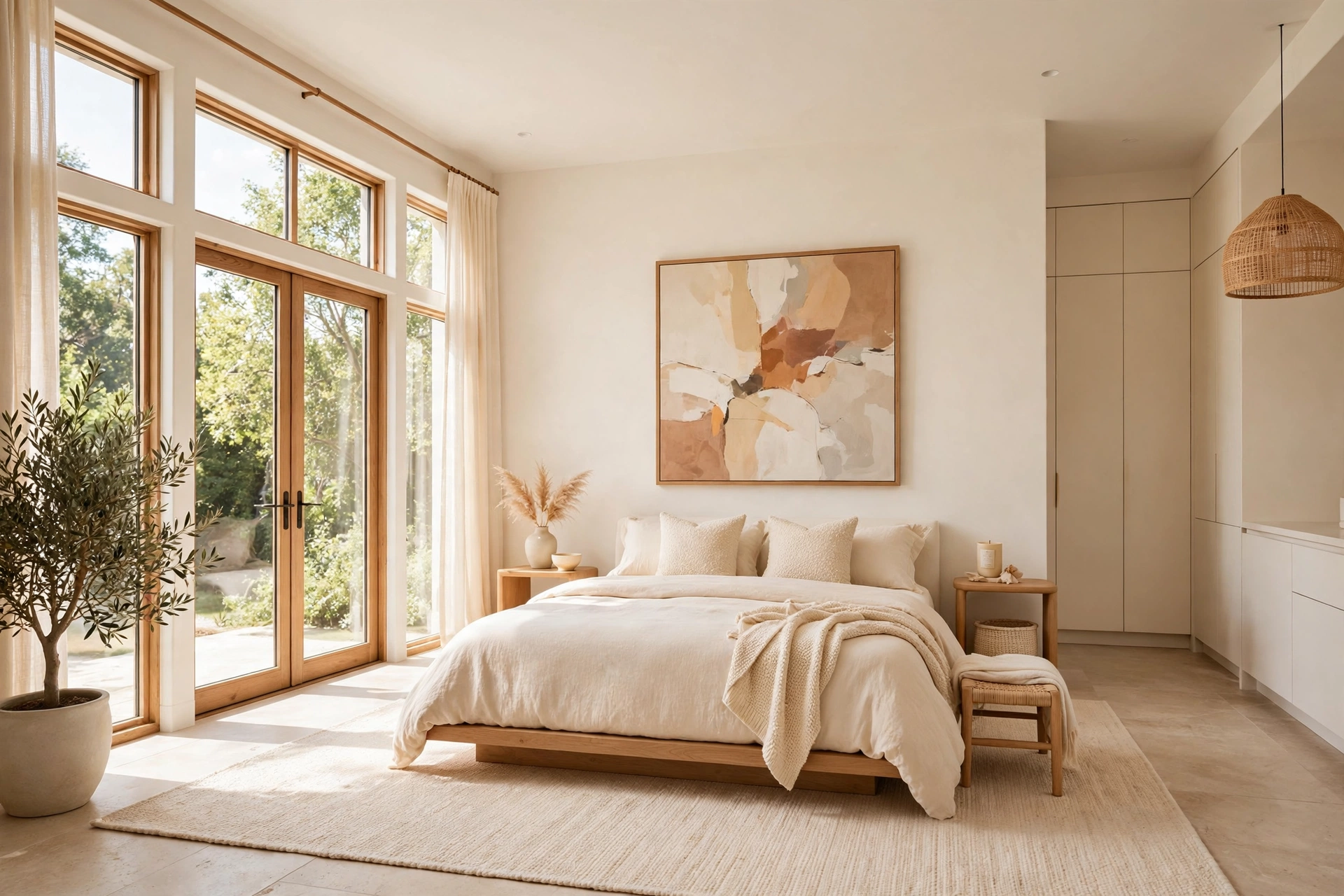
Soft minimalism is minimalism you can actually sleep in — not the stark, gallery-white version, but a warm, edited room where every object earns its place. Think a low platform bed in pale oak, bedding in warm white and oatmeal linen, one oversized piece of calm art, and surfaces that stay nearly clear. The palette lives in the 60-30-10 color rule‘s gentlest register: a dominant warm white, a supporting oatmeal, and almost no accent at all — maybe a single ceramic vase in a clay tone.
The secret to making minimalism feel serene rather than empty is texture. When color steps back, touch steps forward: washed linen against smooth oak, a nubby wool throw folded once at the foot of the bed, a soft flatweave rug that warms the floor. Keep the lighting low and warm — one sculptural bedside lamp per side, or a single pendant — and resist the urge to fill the quiet corners. In a minimalist master bedroom, the empty space is the design.
2. Scandinavian Simplicity
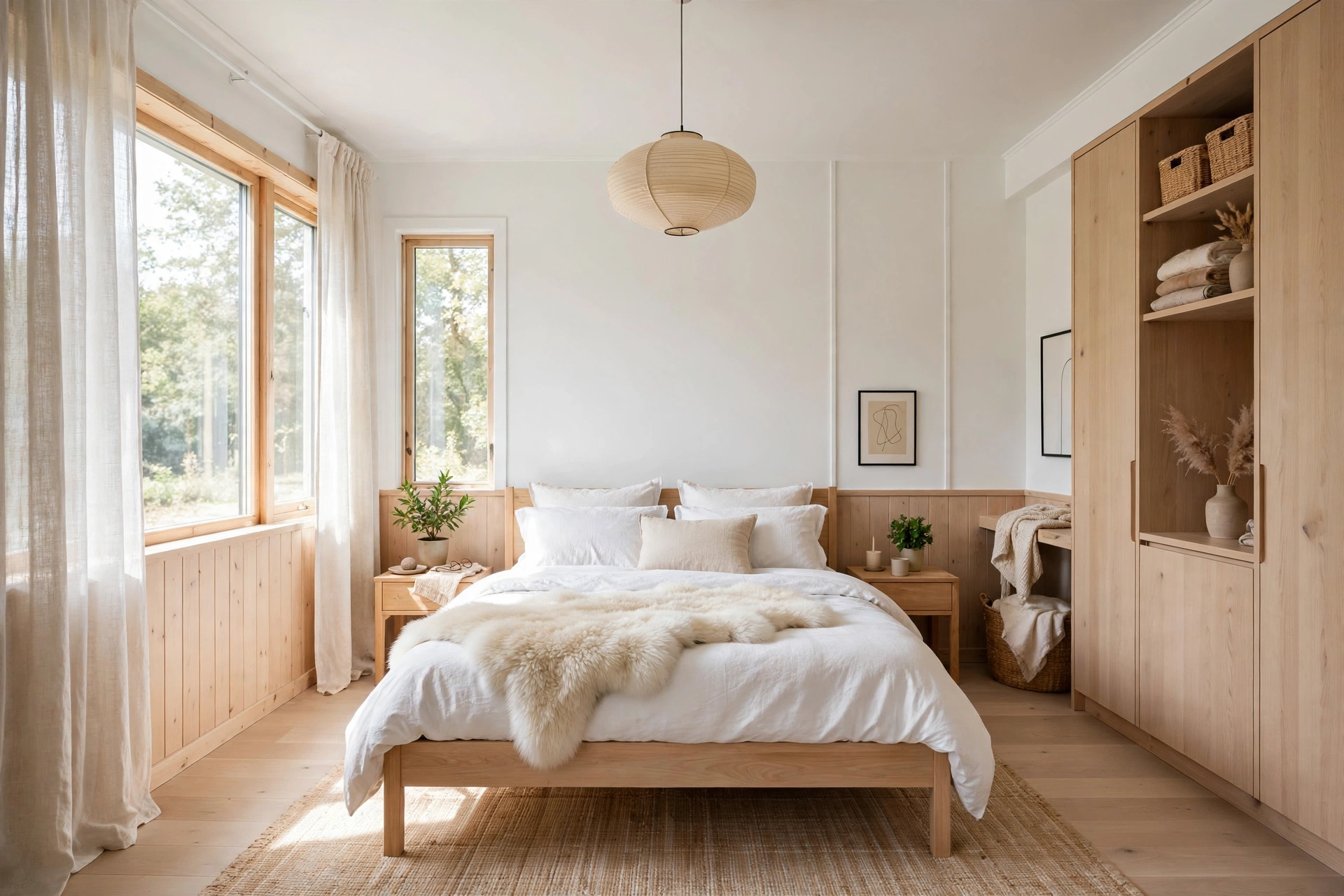
Scandinavian bedrooms run on a simple formula: bright light, pale wood, and cozy textiles doing all the decorative work. Start with white or near-white walls that bounce daylight around, then ground the room with a light oak or ash bed frame and matching nightstands. The bedding stays simple — white or soft grey cotton — but gets its warmth from layers: a sheepskin draped over the bed’s edge, a chunky knit throw, cushions in muted sage or dusty blue.
Function is part of the style. Every piece should work hard: a nightstand with a drawer for the clutter, a bench at the foot of the bed that holds extra blankets, wall-mounted sconces that free the nightstand surface entirely. Add one living thing — a tall green plant in a simple pot — and keep art minimal, one or two unframed prints leaning on the dresser. The result is a master bedroom that feels fresh at 7 a.m. and calm at 11 p.m., with nothing in it you don’t use and love.
3. Japandi Calm

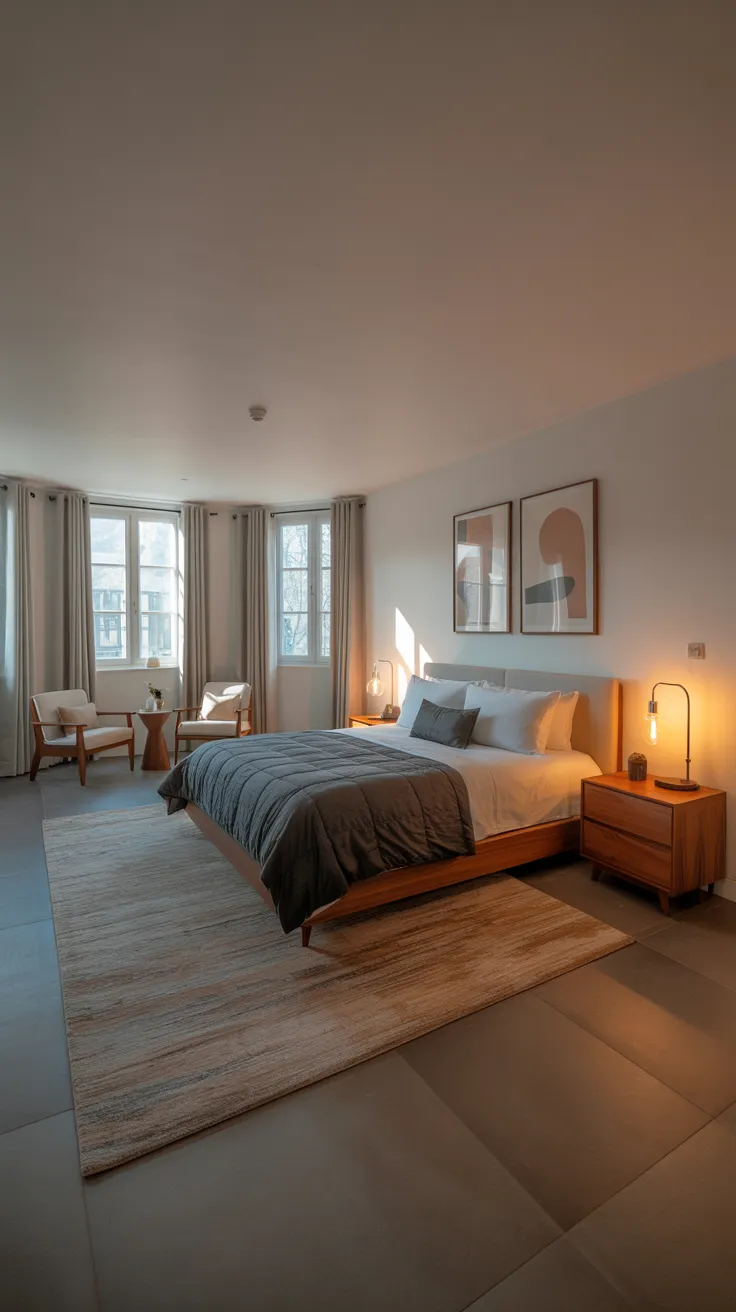
Japandi — the meeting point of Japanese restraint and Scandinavian warmth — might be the most sleep-friendly style on this list. It keeps Scandinavian’s pale woods and cozy textiles but adds Japanese discipline: lower furniture profiles, natural materials with visible grain, and a near-monastic approach to clutter. The bed sits low, often a simple platform in dark or medium wood, dressed in stone-colored or warm grey linen that looks beautifully rumpled.
Light it the Japanese way: a paper lantern pendant or two warm-shaded lamps instead of anything harsh, so the room glows like candlelight in the evening. Decorate with restraint and intention — a single branch in a handmade ceramic vase, a low wooden stool, one piece of calligraphy-style art. Every object should feel chosen, not accumulated. If your mind races at bedtime, this is the style to try: a Japandi master bedroom gives your eyes almost nothing to process, and a quiet room makes for a quiet mind.
💡 Pro Tip: Paper lantern pendants look magical but collect dust fast — choose one with a wipeable finish and dust it monthly. In a Japandi bedroom, the pendant is often the only overhead light, so put it on a dimmer and keep the bulb warm (2700K) to preserve the evening glow.
Master Bedroom Quick-Start Checklist
- ✅ Place the bed on the wall opposite the door or the longest uninterrupted wall — never floating in traffic flow.
- ✅ Choose your style’s palette first (three colors maximum), then buy nothing outside it.
- ✅ Layer lighting at two heights minimum: bedside lamps plus one overhead or accent light, all warm-toned.
- ✅ Size the rug to extend at least 18 inches beyond the bed on both sides — a too-small rug shrinks the room.
- ✅ Hang curtains high, wide, and to the floor; the window should look twice its real size.
- ✅ Clear every surface to a styled minimum: lamp, one book stack, one living thing, one personal object per nightstand.
4. Contemporary Neutral Sophistication

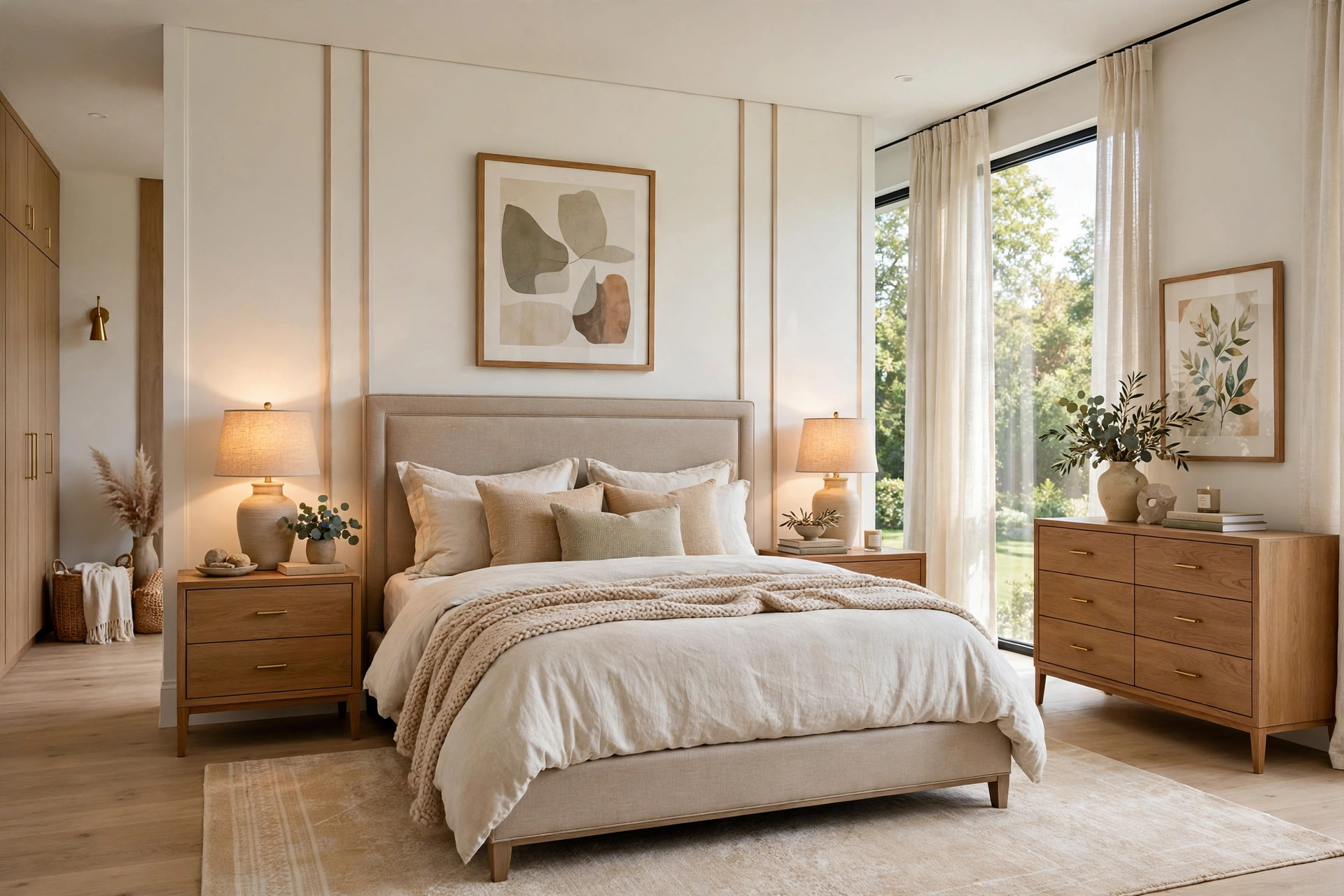
Contemporary neutral is the grown-up version of beige: layered greiges, taupes, warm whites, and stone tones built up until the room feels rich rather than plain. The anchor is usually a tall, tailored upholstered headboard — linen or bouclé in oatmeal or warm grey — that gives the bed real presence. Around it, keep the palette tonal: bedding in two or three close neutrals, curtains a shade deeper than the walls, a rug that blends rather than contrasts.
This style lives or dies on material contrast. Since the colors whisper, the textures have to speak: velvet cushions against crisp cotton sheets, a nubby wool rug under a smooth upholstered bench, brushed brass lamps catching light against matte walls. Add one sculptural element — an asymmetrical floor lamp, an organic-shaped mirror, a piece of abstract art in your neutral range — to keep the room from feeling flat. The payoff is a master bedroom that looks expensive in any light and never goes out of style, because neutrals are the one trend that never cycles out.
5. Modern Farmhouse Charm

Modern farmhouse takes the cozy bones of a country house and edits them for right now: shiplap or board-and-batten on one wall (painted white or a soft warm tone, never orange-toned wood), a simple rustic wood bed frame, and black metal accents that keep the sweetness in check. The bedding mixes crisp white cotton with a plaid or ticking-stripe throw — heritage patterns that feel collected rather than themed.
The modern half of the equation is restraint. One shiplap wall, not four; a couple of galvanized or black metal light fixtures, not a barn door on every opening. Balance the rustic wood with clean white surfaces and at least one contemporary piece — a streamlined dresser, a simple upholstered bench — so the room reads farmhouse-inspired rather than farmhouse-costume. Woven textures (a jute rug, seagrass baskets for the extra throws) add the handmade warmth this style needs. Done right, it is the bedroom equivalent of fresh coffee on a slow Saturday morning.
📌 Important: If you are adding a shiplap or board-and-batten accent wall, paint it the same white as your trim rather than leaving wood bare. Bare wood reads rustic-cabin; painted boards read modern farmhouse. And always caulk the seams — in bedroom lamplight, uncaulked gaps cast tiny shadows that cheapen the whole wall.
Quick Comparison: Master Bedroom Styles by Cost and Effort
6. Coastal Breeze Retreat
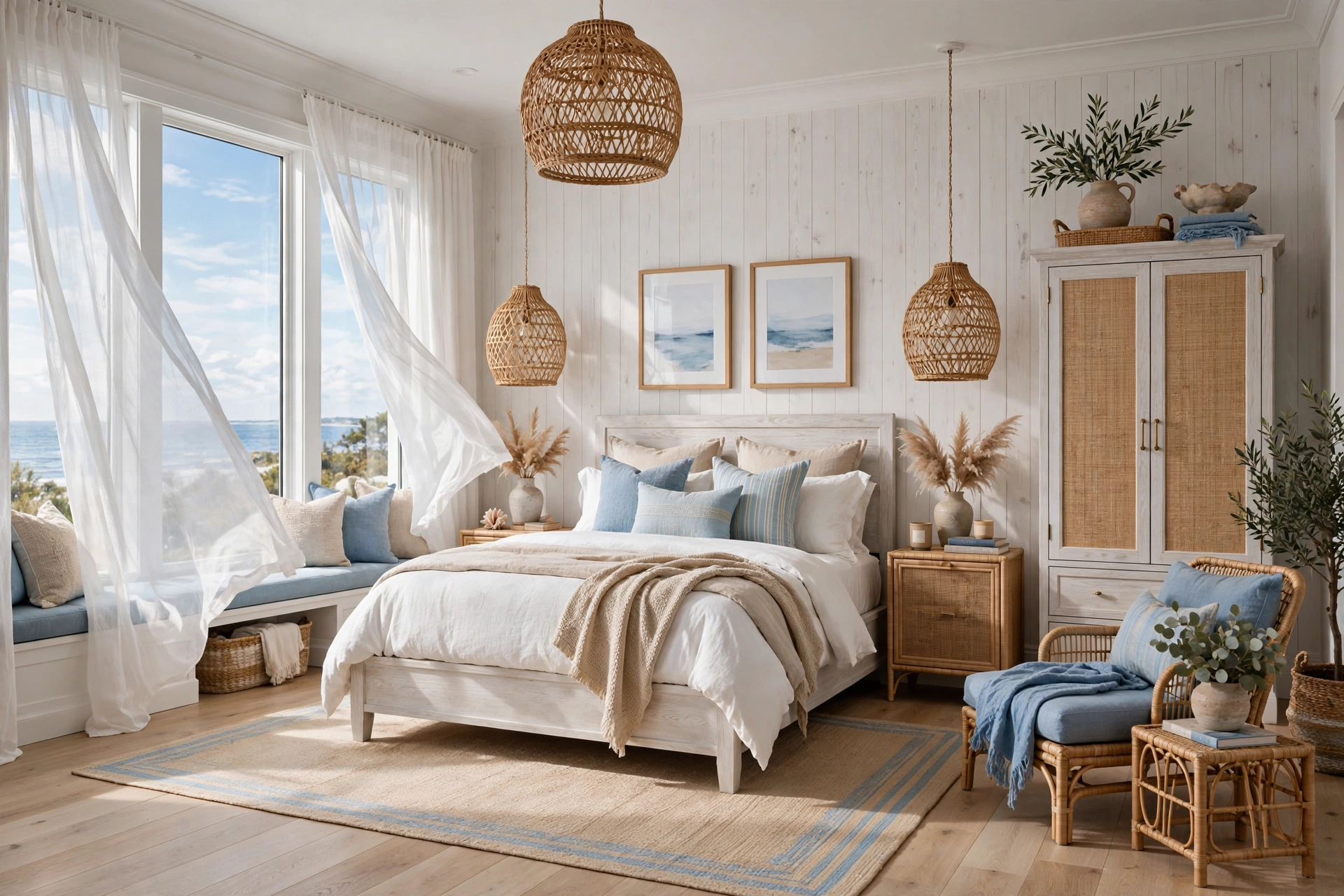
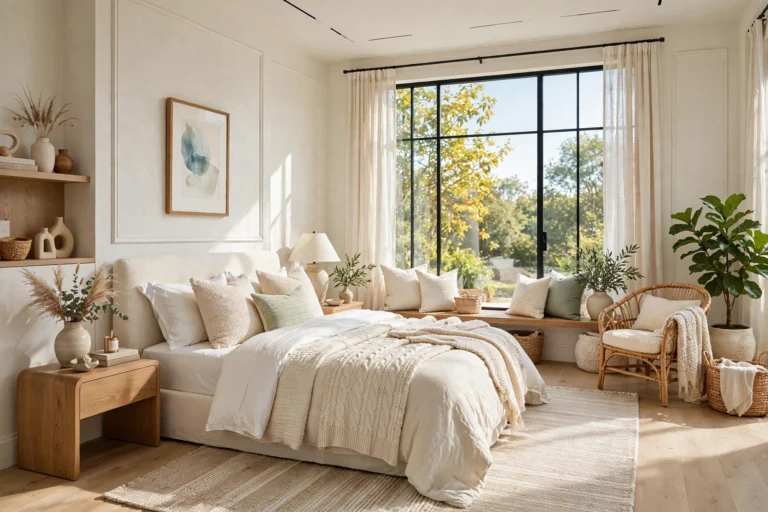
A coastal master bedroom is not about seashells and rope — it is about light, air, and the calm of a shoreline palette. Build it on whitewashed or pale woods, bedding in white and soft blue-greys, and natural textures that feel sun-warmed: rattan, jute, linen, light oak. The room should feel like a deep breath, with sheer curtains that move in the breeze and nothing visually heavy anywhere.
Keep the blue in the soft register — powder blue, sea glass, pale slate — and let white do most of the work so the room stays bright. A rattan pendant light or a pair of woven nightstands gives the coastal signal without a single nautical cliché. One piece of ocean-toned art, a striped throw in blue and white, and a plant with an airy shape (a palm, an olive tree) complete the story. This style is a natural fit for bedrooms with good daylight, since the whole look depends on sun doing half the decorating.
7. French Country Romance
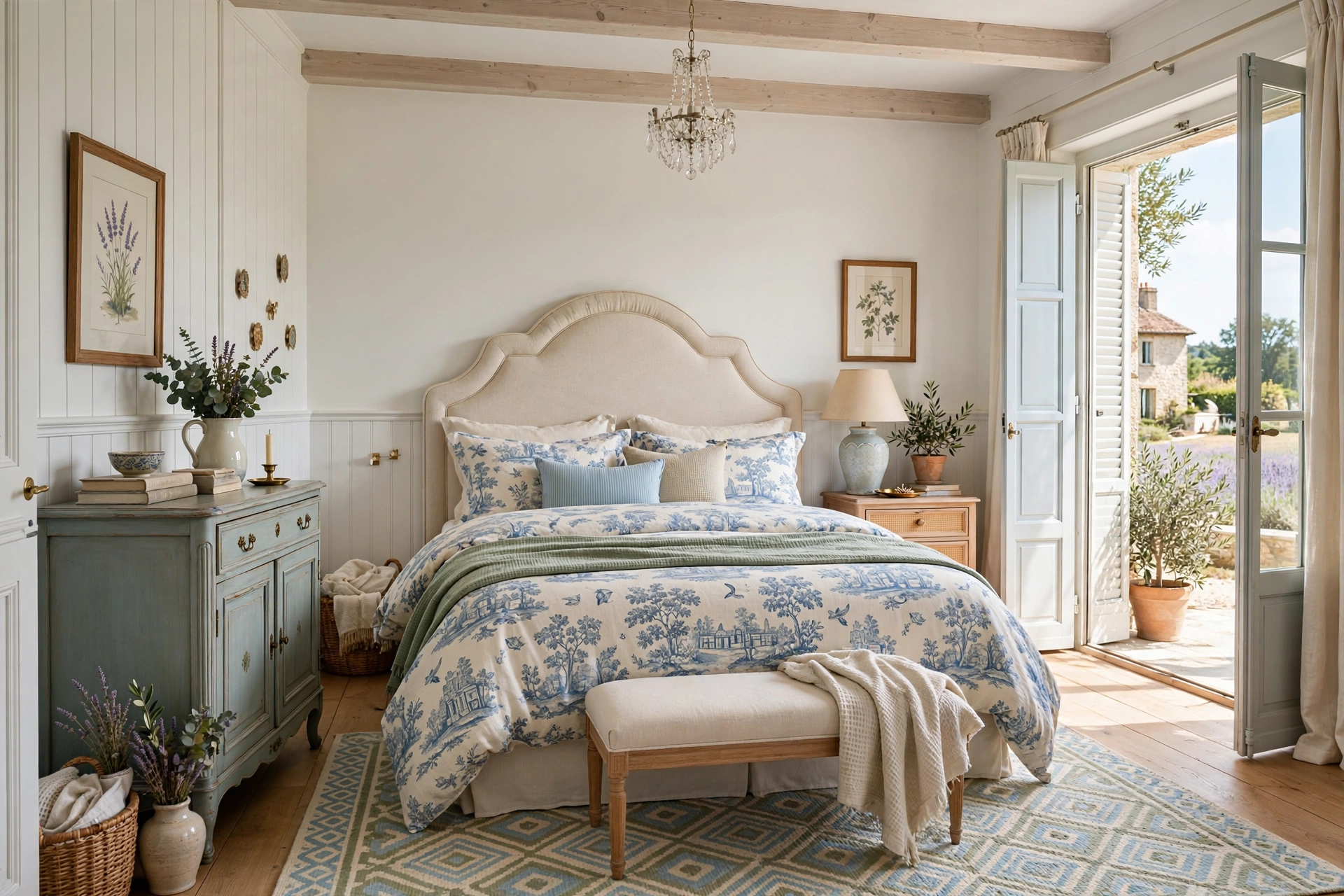
French country brings a soft, romantic formality to the master bedroom: curved lines, linen in natural tones, and furniture that looks gently aged rather than brand new. The classic anchor is an upholstered headboard with a curved or arched silhouette in natural linen or a subtle toile, paired with a vintage-style dresser in a painted, distressed finish. Bedding layers white and cream with a patterned quilt or coverlet folded at the foot.
Details carry this style: a small crystal or beaded chandelier, fresh flowers (even grocery-store stems) on the dresser, linen curtains that puddle just slightly, and artwork in soft landscapes or botanicals. Keep the palette powdery — creams, soft greys, faded blues, gentle lavenders — and avoid anything high-gloss or starkly modern, which breaks the spell. The goal is a bedroom that feels like a countryside inn: romantic, unhurried, and quietly luxurious without trying too hard.
8. Cottagecore Cozy
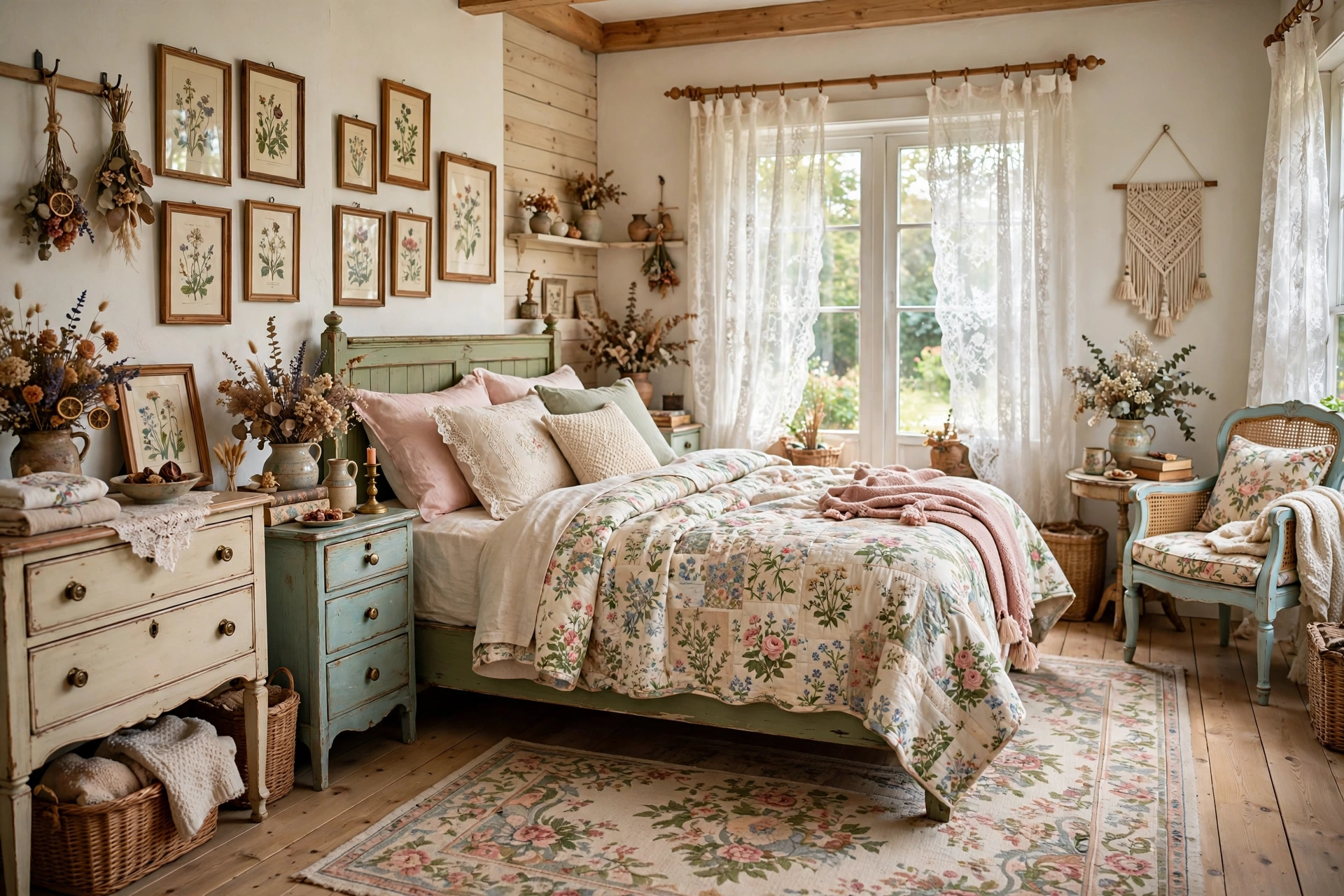
Cottagecore is nostalgia you can sleep in: floral quilts, vintage finds, dried flowers, and the feeling of a countryside cottage even if you live on the fourteenth floor. Start with the bed — a floral or gingham quilt layered over simple sheets, a ruffled or crocheted throw, pillows in small-scale vintage prints. Painted wood furniture (cream, sage, soft white) suits this style better than dark or modern pieces.
The charm is in the collected details: dried lavender in a jug on the dresser, a stack of old books as a nightstand styling moment, lace or embroidered curtains, a braided or floral rug. Keep it cozy, not cluttered — cottagecore curdles when every surface is covered, so edit ruthlessly and let each vintage piece breathe. One caution: keep the florals small-scale and the palette soft. Oversized bold florals tip the room from cottage-charming to grandmother’s-parlor, and the line is thinner than you think.
9. Classic Traditional Elegance
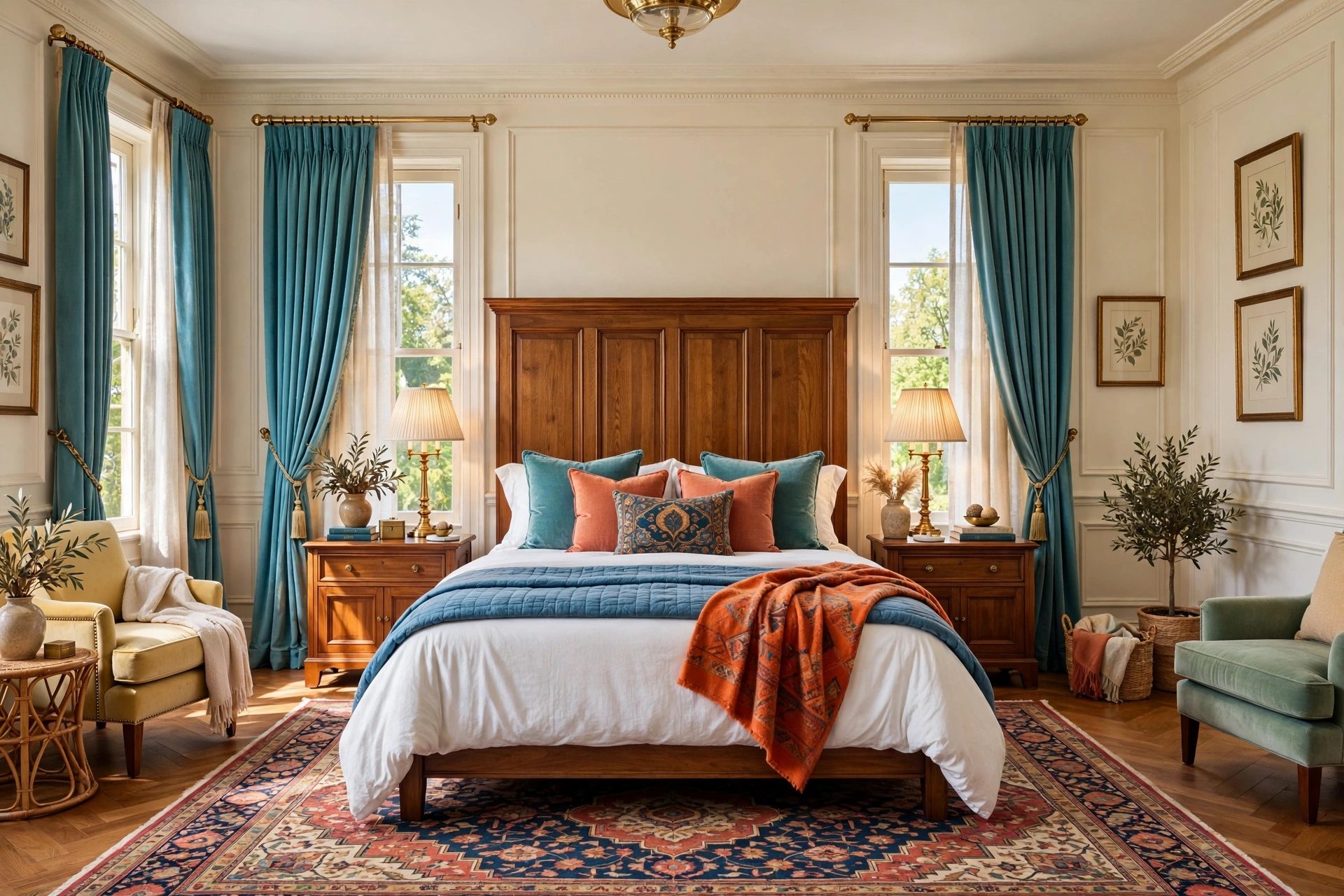
Traditional master bedrooms are built on symmetry, quality materials, and proportions that have worked for a century. The bed is the monument: a paneled wood headboard, a four-poster, or a tall upholstered headboard in a classic fabric, flanked by perfectly matched nightstands with identical lamps. Drapery is full and floor-length, the rug is a proper Persian or Oriental in rich tones, and the art is framed traditionally — landscapes, portraits, botanicals in wood or gilt frames.
Color in a traditional bedroom tends toward the rich and enveloping: deep greens, warm reds, navy, chocolate, balanced with cream bedding and wood tones. This is a style that rewards investment pieces — a good dresser, a quality rug, real curtains with lining — because traditional design shows its construction. If you love the idea of a bedroom that feels established and gracious rather than trendy, traditional delivers it. Just keep the symmetry disciplined: in this style, a single mismatched nightstand undoes the whole effect.
10. Transitional Timeless Blend
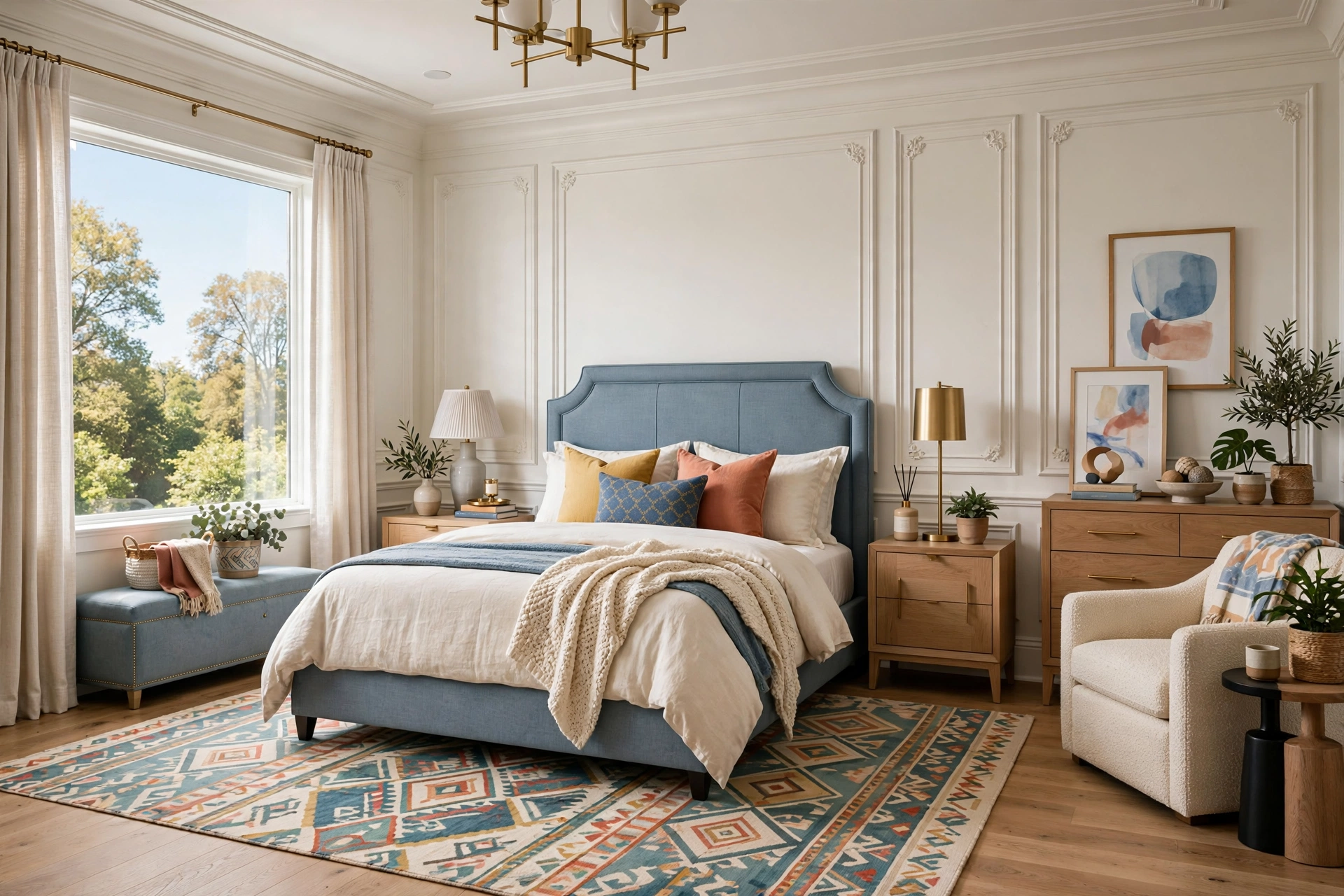
Transitional is the diplomat of bedroom styles: it takes traditional’s warmth and classic proportions and strips away the formality, landing in a room that feels both timeless and current. Think a tailored upholstered bed with clean lines, nightstands that nod to classic shapes without ornate detailing, wall molding painted the same color as the walls, and a palette of warm neutrals with one or two muted accents.
This is arguably the safest style on this list for anyone who redecorates rarely. Because it borrows from both ends of the timeline, it never looks dated — there is no single trend to age out of. Build it with quality basics in neutral tones, then let personality in through art and textiles, which are cheap to change. A transitional master bedroom is also the easiest to evolve: lean the art more modern or the textiles more traditional, and the room shifts with you without requiring new furniture.
11. Mid-Century Modern Statement
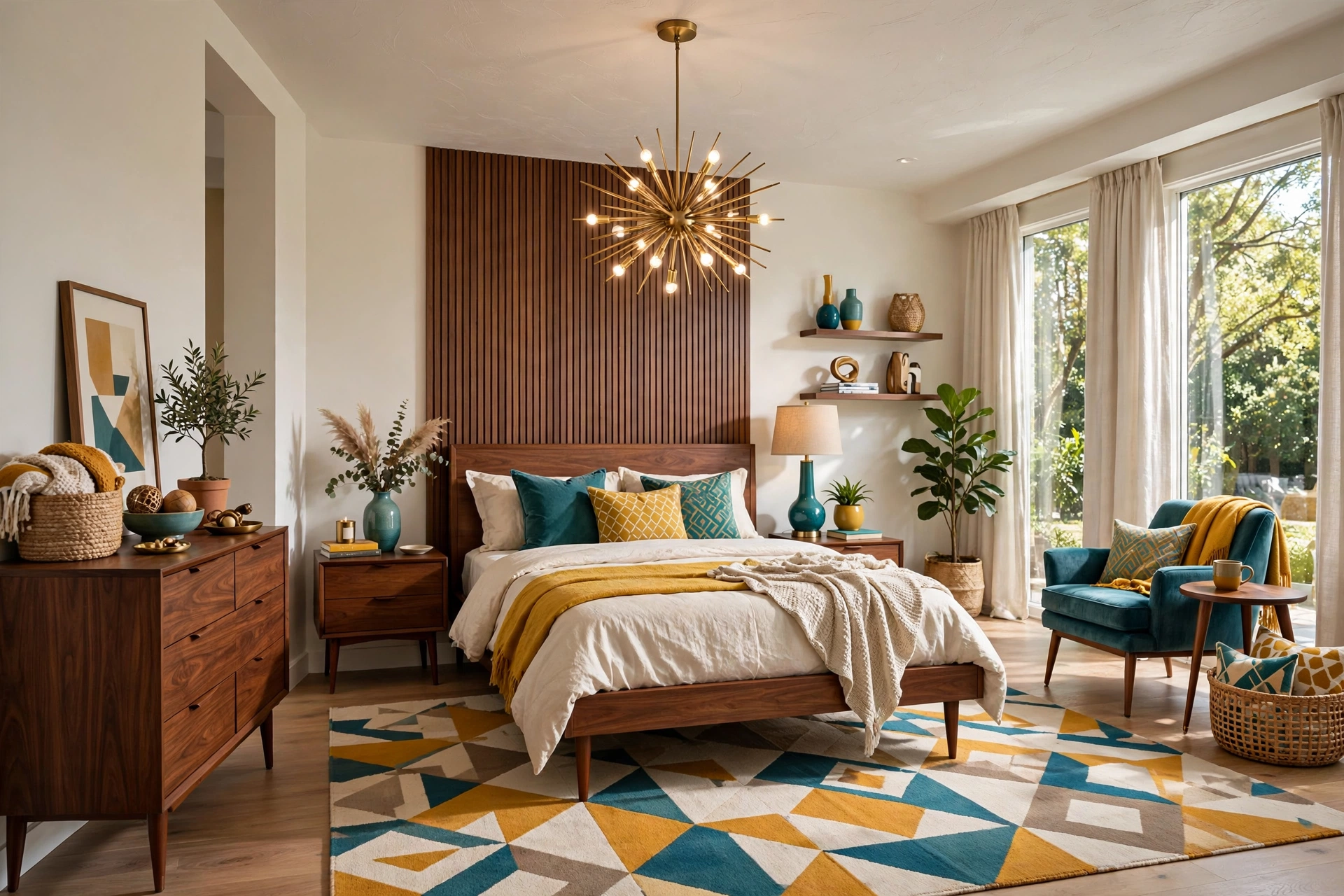
Mid-century modern brings the master bedroom its dose of design confidence: walnut furniture on tapered legs, clean geometric lines, and a palette that pairs warm wood with punchy accents like mustard, teal, or burnt orange. The bed is typically a low platform with a simple rectangular headboard in walnut or teak, and the nightstands echo the same leggy, minimal construction.
Let one or two pieces be the stars — a starburst or globe pendant light, a geometric rug in your accent colors, a great piece of abstract art — and keep everything else quiet so the stars can shine. The tapered-leg construction is doing real visual work here: furniture that shows floor underneath makes the bedroom feel larger, which is why mid-century pieces are a gift in modest-sized master bedrooms. Balance the retro with softness (a textured throw, linen bedding) so the room feels like a home, not a showroom.
12. Rustic Lodge Warmth
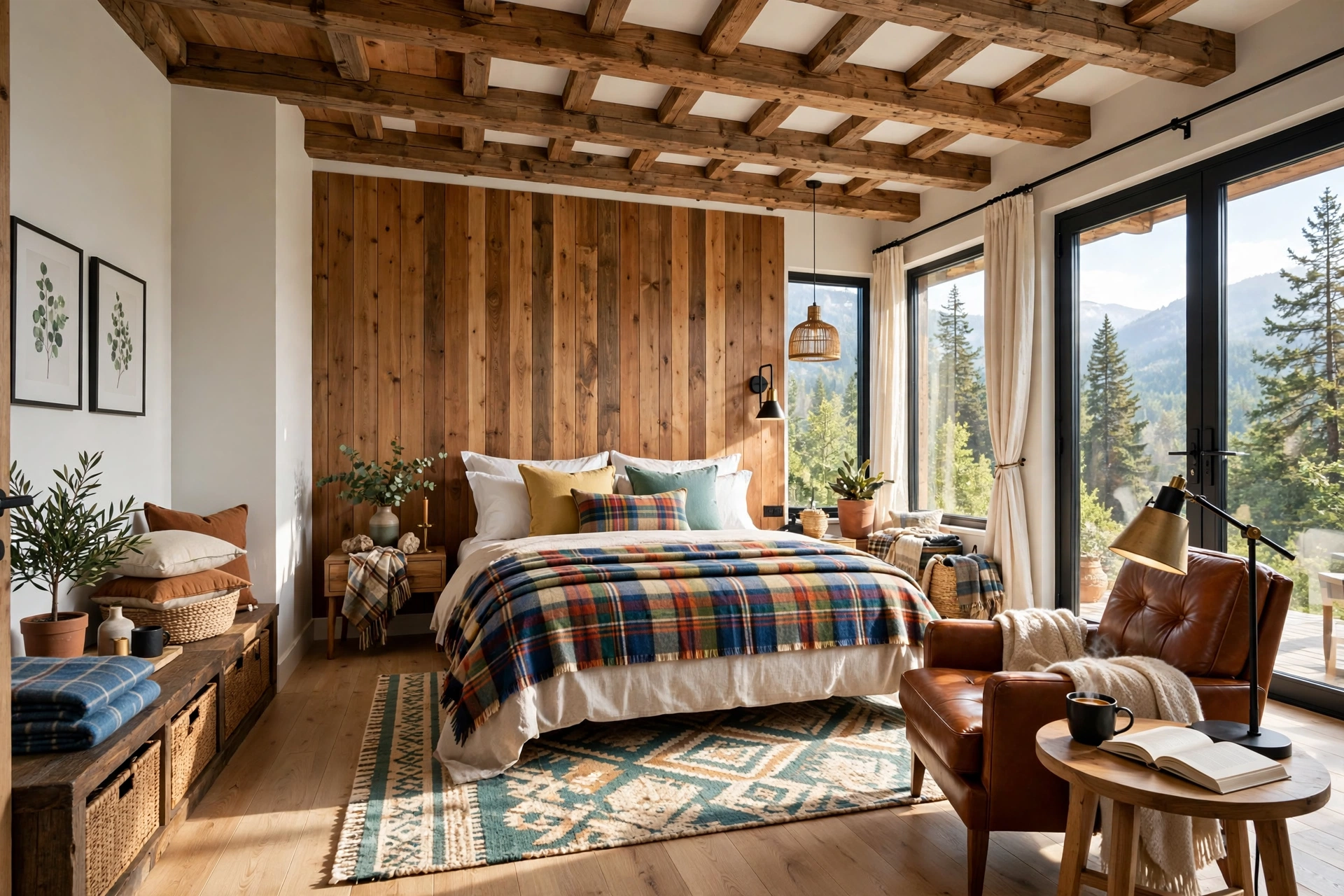
Rustic lodge style wraps the master bedroom in the feeling of a mountain retreat: wood beams (real or faux) on the ceiling, a wood plank or stone accent wall, bedding in plaid wool or rich flannel, and furniture in dark, weighty woods. A leather reading chair in the corner, a chunky knit throw, and warm amber lighting complete the cabin fantasy — this is a bedroom designed for cold nights and slow mornings.
The trick is keeping it luxurious rather than literally rough. Mix the rugged materials with softness: the plaid bedding gets crisp cotton sheets underneath, the wood walls get warm layered lighting so they glow instead of looming, and the heavy furniture gets breathing room around it. One stone or wood accent wall is plenty — wrap all four and the room starts to feel like the inside of a barrel. Done with restraint, rustic lodge is the coziest cold-weather bedroom style there is.
💡 Pro Tip: Faux wood beams are dramatically cheaper and lighter than real timber, and in bedroom lamplight nobody can tell the difference. Stain them to match your darkest wood furniture, and mount them with proper anchors into ceiling joists — a beam that sags is worse than no beam at all.
13. Industrial Loft Edge
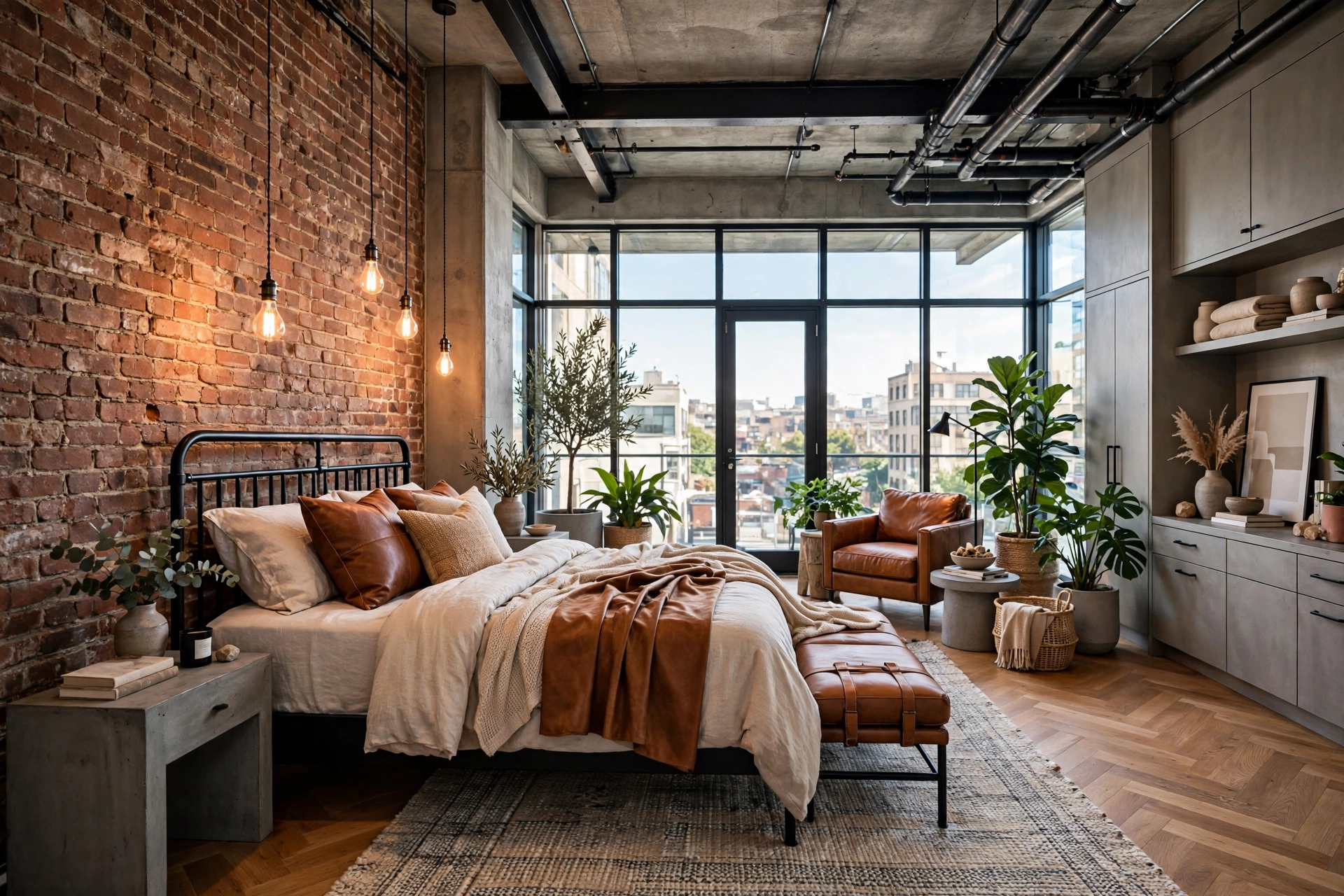
Industrial style gives the master bedroom an urban, architectural backbone: exposed brick or concrete-look walls, a black metal bed frame, Edison-bulb pendants, and materials that show their construction — steel, reclaimed wood, leather. The palette runs grey, black, and warm brown, with the brick or concrete providing all the pattern the room needs.
Warmth is the make-or-break factor. An industrial bedroom without softness feels like a warehouse, so layer it deliberately: a cognac leather bench at the foot of the bed, warm wool bedding in rust or camel, a vintage-style rug to soften the floor, and — critically — warm 2700K bulbs in every fixture. Edison bulbs look the part but run dim, so use them as accent pendants and put real light in the bedside lamps. One living plant also does heavy lifting here, softening all those hard edges with a single organic shape.
14. Wabi-Sabi Organic Textures
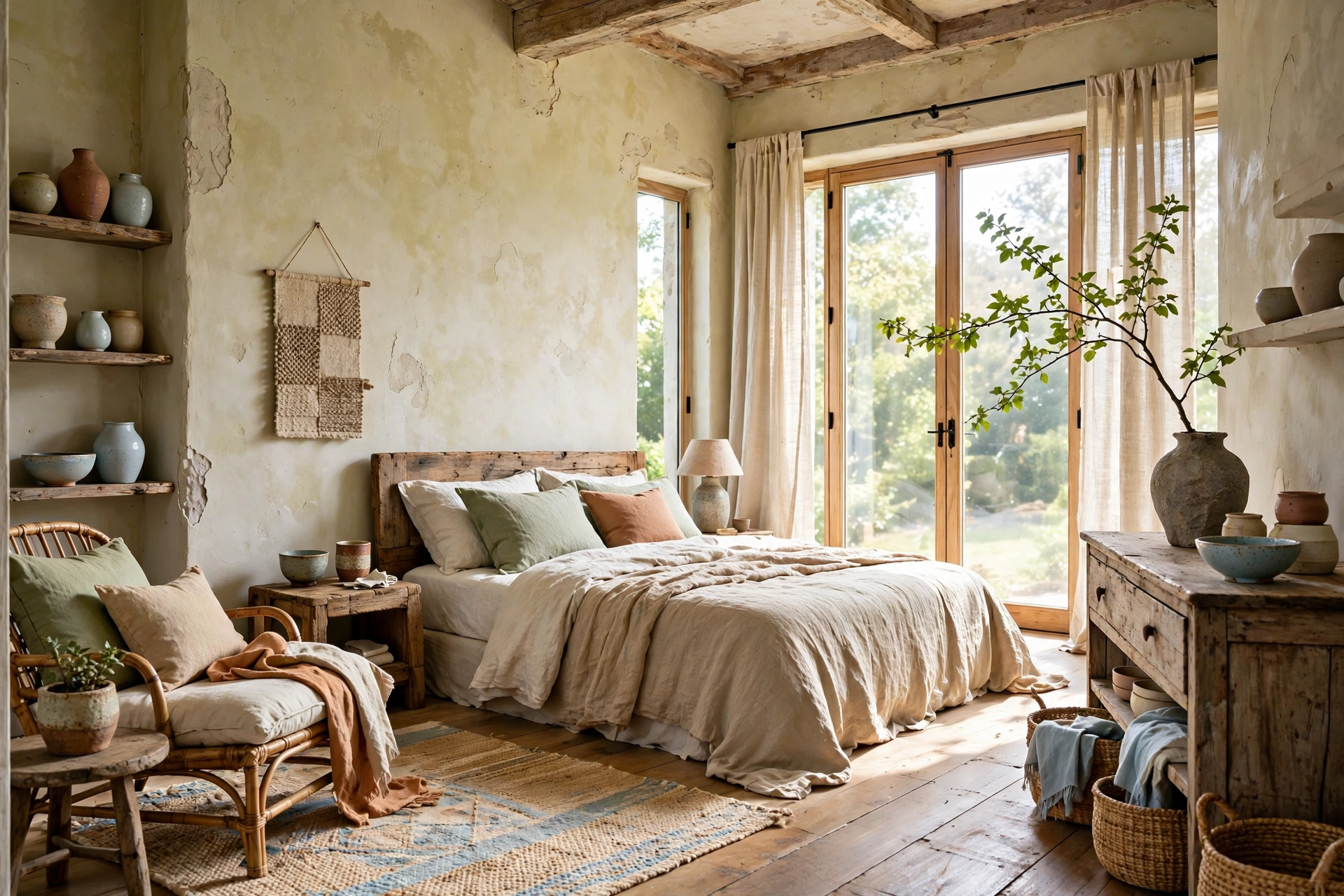
Wabi-sabi — the Japanese philosophy of beauty in imperfection — creates master bedrooms that feel handmade and soulful. Plaster walls with a soft, uneven finish; bedding in raw, washed linen that wrinkles beautifully; furniture in aged wood with visible grain and knots; handmade ceramics holding a single stem. Nothing is glossy, nothing is perfect, and that is exactly the point.
This style asks you to buy less and choose better: one handmade vase instead of five decorative objects, one beautiful textile instead of a stack of trendy cushions. The palette stays earthy — clay, stone, sand, warm grey, natural wood — and the room’s richness comes from touch rather than color. It pairs naturally with low furniture and minimal window treatments; a simple linen shade or sheer curtain is all the dressing the windows need. If perfectionism keeps you up at night, a wabi-sabi bedroom is permission to let the room — and yourself — be beautifully unfinished.
15. Bohemian Layered Haven
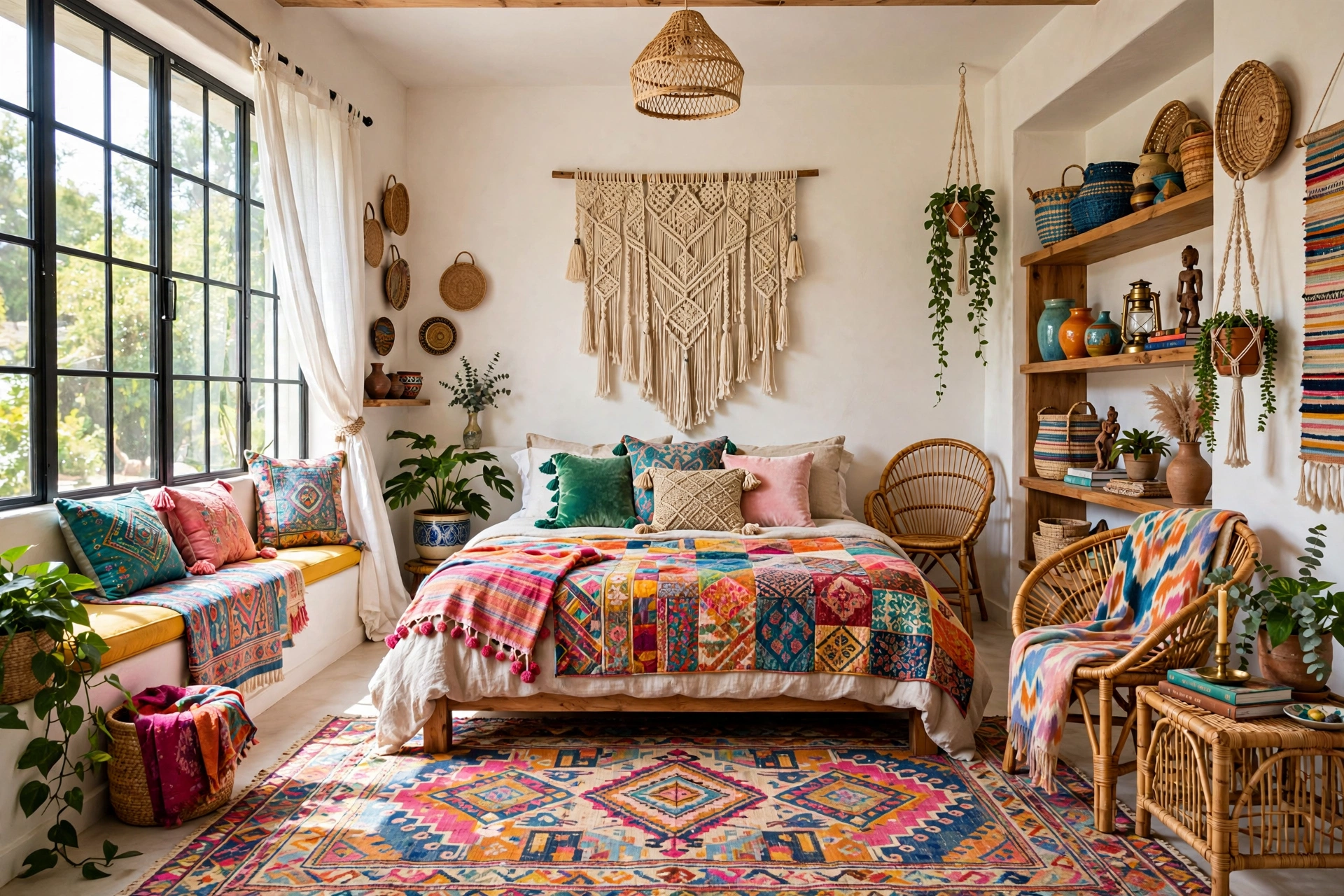
Bohemian style is where the spectrum starts tipping toward abundance: layered textiles, global patterns, plants everywhere, and a collected-over-time feeling that no single shopping trip can fake. The bed gets the full treatment — a patterned duvet, a kantha or mudcloth throw, cushions in mixed prints and textures — and the floor gets a vintage-style rug (or two layered). Macrame or woven wall hangings, rattan furniture, and trailing plants fill the vertical space.
The difference between boho-chic and boho-chaos is a controlled palette. Pick two or three colors — say terracotta, cream, and deep green — and let every pattern live inside that family; the mix of prints then reads as curated rather than random. Give the eye resting places too: one plain wall, bedding with a solid layer, surfaces that aren’t fully covered. Bohemian bedrooms should feel abundant but breathable, like a well-traveled friend’s home — full of stories, never full of clutter.
16. Art Deco Glamour

Art deco turns the master bedroom into an evening in 1925: bold geometry, mirrored and lacquered surfaces, velvet in jewel tones, and brass everywhere. The signature move is a velvet upholstered headboard — emerald, sapphire, or black — flanked by mirrored nightstands with brass lamps, all of it grounded by a geometric rug in black, gold, and cream. Symmetry is essential; deco is a formal style and it shows.
Keep the glamour in the bedroom’s upper register but the lighting warm — deco rooms photographed in cool light look like hotel lobbies, while warm light makes the brass glow and the velvet drink the light beautifully. A large round mirror above the dresser doubles the lamplight and the drama; our guide to the best mirrors for small spaces covers the sizing that makes one mirror read as architecture instead of decoration. One warning: deco is a high-commitment style. The bold pieces only work together, so commit fully or choose a quieter style — half-deco reads as confused, full-deco reads as fabulous.
⚠️ Warning: Mirrored furniture is the soul of art deco, but it shows every fingerprint and dust mote. If your master bedroom doubles as a high-traffic dressing area, budget for a weekly wipe-down of every mirrored surface — or the glamour quietly curdles into smudges.
17. Luxury Hotel Suite Style
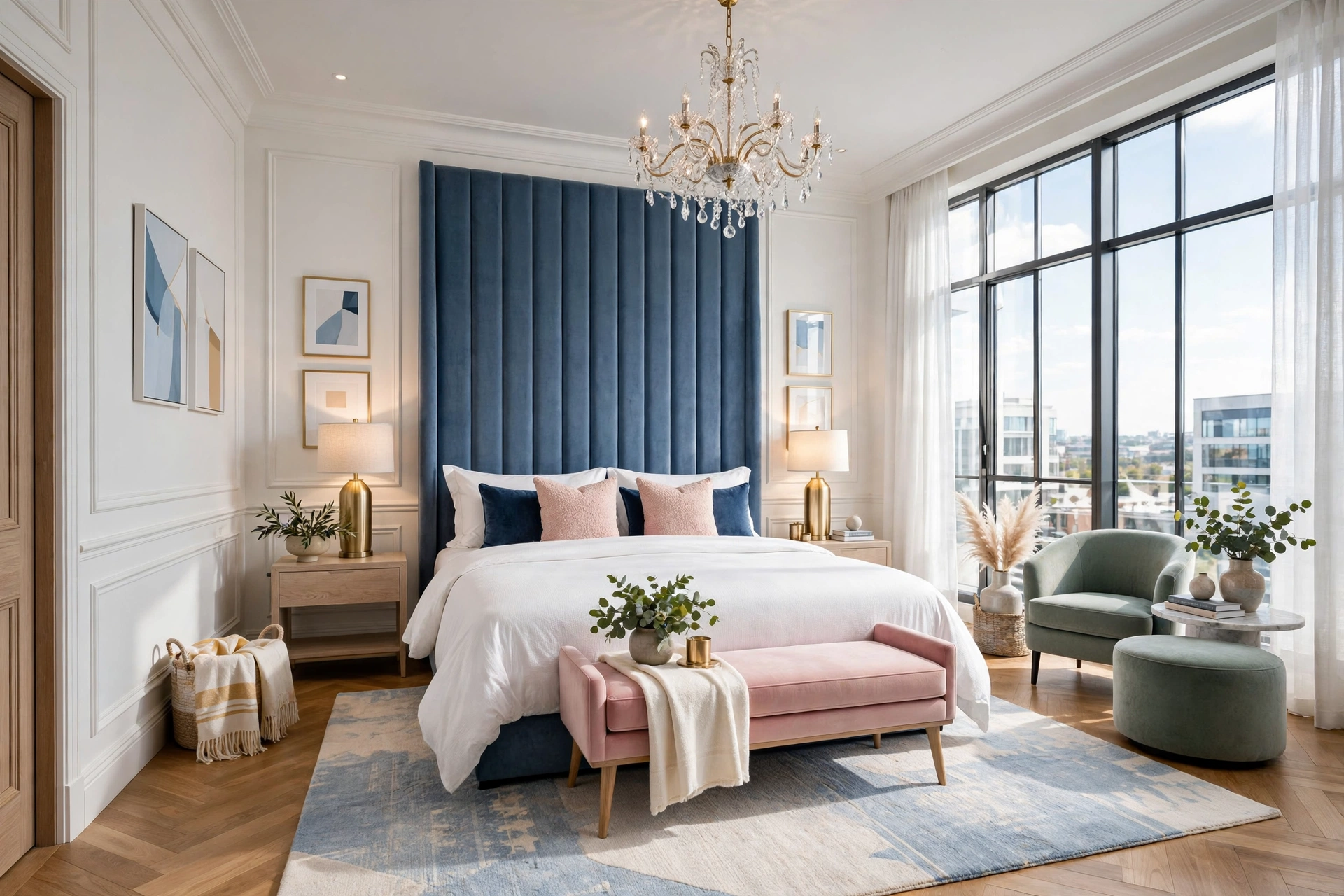
The hotel-suite master bedroom borrows the five-star formula wholesale: crisp white or ivory bedding, an extra-tall upholstered headboard, perfectly matched nightstands with identical lamps, a bench at the foot of the bed, and lighting in warm layers. It is the most replicable luxury on this list because hotels have spent decades refining it into a system — and our full breakdown of dreamy bedroom decor ideas walks through the complete formula room by room.
What makes the hotel look work is discipline, not budget. The bedding is white because white signals clean and reflects light; the nightstands match because symmetry reads as calm; the surfaces stay nearly clear because clutter is the opposite of luxury. Add the details hotels never skip: curtains hung high and wide, a rug that extends well beyond the bed, blackout lining behind the sheers for true darkness. This style suits anyone who wants their bedroom to feel like a retreat every single night — no vacation required.
18. Full Maximalist Color Story

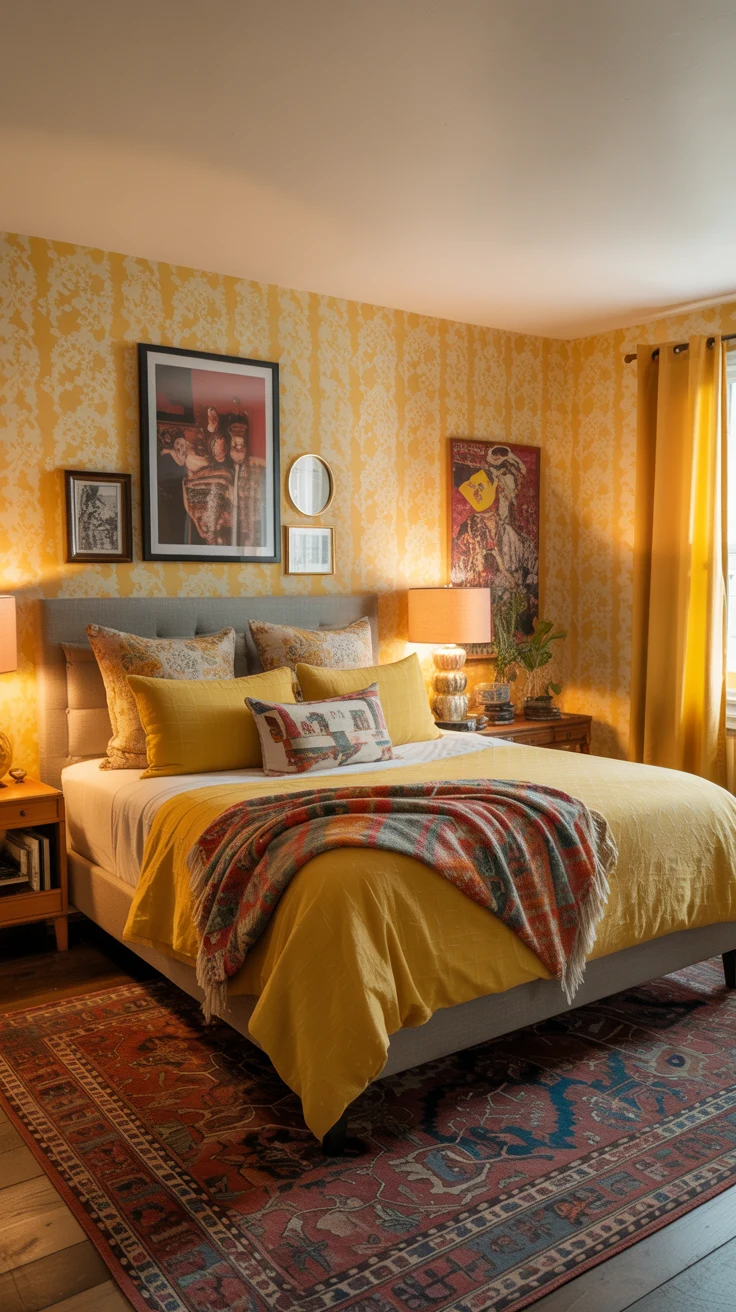
At the far end of the spectrum, maximalism throws out the rulebook: bold patterned wallpaper, jewel-tone velvet and saturated color everywhere, a gallery wall of art in mixed frames, layered rugs, collected objects on every surface. This is the bedroom for people who find minimalism genuinely depressing — who want to wake up inside a story, not a blank page.
Maximalism only works with intention behind the abundance. The pros use a tight color story — three or four saturated hues repeated everywhere — so the room reads as composed rather than chaotic; pattern-mixing works when the colors agree. Vary the scale of your patterns (one large-scale wallpaper, one medium print, small accents) and repeat each color at least three times around the room. And if you love the drama but fear the commitment, borrow the moodier half of this look from our dark apartment decor ideas — deep walls with rich, layered color give you 80 percent of the maximalist thrill with far less risk.
📌 Important: Maximalism fails without editing passes. After styling, photograph the room from the doorway and remove three things — the photo never lies about what is decoration and what is clutter. Repeat monthly: maximalist rooms accumulate objects the way gardens accumulate weeds, and a ten-minute edit keeps the abundance joyful instead of overwhelming.
Common Master Bedroom Design Mistakes
Mistake 1: Choosing the Style Before the Palette
Falling in love with a style photo and buying pieces in its colors without defining your palette first is how bedrooms end up with six competing neutrals and nothing that matches. Define three colors on paper before you shop — dominant, secondary, accent — and reject anything outside them, no matter how pretty it looked online. The style is the vocabulary; the palette is the grammar, and grammar comes first.
Mistake 2: Pushing the Bed Against the Wrong Wall
The bed shoved into a corner or blocking the window because “it fit there” ruins both the room’s flow and its look. The bed belongs on the longest uninterrupted wall, ideally visible from the doorway, with clear walking space on both sides. If the only workable wall has the window, center the bed under it and use the curtains as a frame — a bed under a dressed window looks intentional, while a bed crammed beside one looks like an apology.
Mistake 3: Lighting the Room With a Single Overhead
One ceiling fixture blazing down is the fastest way to make any master bedroom — minimalist or maximalist — feel flat and unwelcoming. Bedrooms need layered light: bedside lamps for reading, an overhead or pendant for general light, and one accent (a picture light, a dimmable strip, a candle cluster) for evening mood. Put the overhead on a dimmer if you do nothing else; the ability to drop the room from functional to firefly-glow changes everything.
Mistake 4: Buying a Rug That Is Too Small
The postage-stamp rug floating under the bed’s middle is one of the most common bedroom mistakes across every style. A rug that doesn’t extend well beyond the bed chops the floor into fragments and makes the whole room look smaller and cheaper. Size up until the rug reaches at least 18 inches past the bed on both sides and the foot — in most master bedrooms that means the largest rug the floor can hold while leaving a border of flooring visible.
Mistake 5: Decorating for the Photo Instead of the Morning
It is easy to style a bedroom that photographs beautifully and lives terribly: white bouclé everything with a toddler and a dog, open shelving that collects dust you will never dust, a reading chair positioned for the camera rather than the light. Before committing to any style, run it through your actual mornings — who gets dressed where, where the laundry lands, how the light hits at 7 a.m. The best master bedroom design is the one that still looks good on a tired Tuesday, not just on reveal day.
Frequently Asked Questions
1. What is the most popular master bedroom style right now?
Transitional and modern organic styles dominate current design — warm neutrals, natural wood, layered textures, and clean-lined upholstered beds. They sit in the comfortable middle of the minimal-to-maximalist spectrum, which is why they photograph well and live even better. That said, the “most popular” style matters far less than the style you won’t tire of; a bedroom you love for a decade beats a trendy one you resent in two years.
2. How do I choose a bedroom style if my partner and I disagree?
Find the overlap, not the compromise. List what each of you loves about your preferred style — usually it’s two or three specific things (warmth, color, clean surfaces) rather than the whole look. Then build the room on shared neutrals and give each person one zone of self-expression: their nightstand, their side’s art, the reading corner. Transitional style exists precisely for this negotiation.
3. Can I mix two bedroom styles together?
Yes, if they share a palette and an attitude. Scandinavian and Japandi mix effortlessly; traditional and transitional are cousins; boho and maximalist are natural allies. What doesn’t mix is a formal style with a casual one at full volume — art deco’s mirrored glamour fights cottagecore’s vintage softness. When mixing, let one style lead (about 70 percent) and the other accent, and keep the color story unified.
4. What color should I paint my master bedroom?
The safest answer is a warm, muted neutral — warm white, greige, soft taupe — because it accepts any style layered on top. If you want color, bedrooms reward depth: muted sage, dusty blue, and warm clay are restful without being boring, and deep tones like forest green or inky navy create a cocooning effect that many people sleep better in. Always test large swatches in your room’s actual light before committing.
5. How much should I budget for a master bedroom redesign?
A style refresh using mostly textiles, lighting, and paint typically runs $500–$1,500; replacing the bed, nightstands, and dresser pushes it to $2,000–$5,000 depending on quality. The highest-impact money goes to bedding, curtains, and lighting — the three things you touch and see most. Buy the best mattress and bedding you can afford first; nobody ever regretted overspending on sleep.
6. Should the master bedroom match the rest of the house?
It should harmonize, not match. Bedrooms can carry a distinct mood — deeper color, softer lighting, more personal style — while still sharing the home’s overall palette or wood tones so the transition doesn’t jar. Think of it as the same story told in a quieter voice. If your home is light and airy throughout, a moody bedroom still works as long as one or two elements (trim color, wood tone) echo the rest of the house.
7. How do I make a master bedroom feel luxurious on a budget?
Luxury in a bedroom is mostly about the bed and the light: crisp quality bedding in white or ivory, two matching bedside lamps with warm bulbs, curtains hung high and wide, and surfaces kept clear. Those four moves cost a few hundred dollars total and deliver most of the five-star feeling. Add one plush rug and a single piece of large-scale art, and guests will assume you spent ten times what you did.
Conclusion
Eighteen styles, one spectrum, and not a single wrong answer among them — the right master bedroom design is simply the one that makes you exhale when you walk in at night. Whether that is the quiet discipline of soft minimalism or the joyful abundance of full maximalism, the principles underneath never change: a bed placed with intention, light in warm layers, a palette with a plan, and surfaces edited down to what you actually love.
Start with the style that pulled you hardest while reading, then steal freely from its neighbors — the best bedrooms are rarely pure anything. And remember that a master bedroom is never truly finished; it evolves as you do. The goal was never perfection on reveal day. It is a room that still feels like yours on the thousandth morning, holding you exactly the way you like to be held: calm, beautiful, and entirely your own.