How to Shop Thrift Stores for Home Decor: A Complete Beginner’s Guide
Introduction
Your first thrift store trip for home decor usually goes one of two ways. Either you wander the aisles for an hour, buy a chipped mug and a candle holder you do not need, and leave wondering what everyone is so excited about — or you stumble on a solid oak side table for $18 and wonder why you ever paid full price for furniture. The difference between those two trips is almost never luck. It is method.
Thrift stores reward shoppers who arrive with a plan, know what quality looks like, and can spot the difference between a $5 bargain and a $5 mistake. The stores are not organised like a home decor shop: the good stuff hides between the broken stuff, sizes are never labelled, and the best pieces disappear within hours of hitting the floor. That chaos is the whole point — it is why a $200 lamp costs $12 there — but only if you know how to work it.
This guide gives you the complete beginner’s method, from the list you write before you leave the house to the cleaning routine that makes a secondhand find safe to bring home. Follow the ten rules below in order on your next trip, and you will stop guessing and start finding pieces your friends assume cost ten times what you paid.
1. Write a List Before You Leave the House
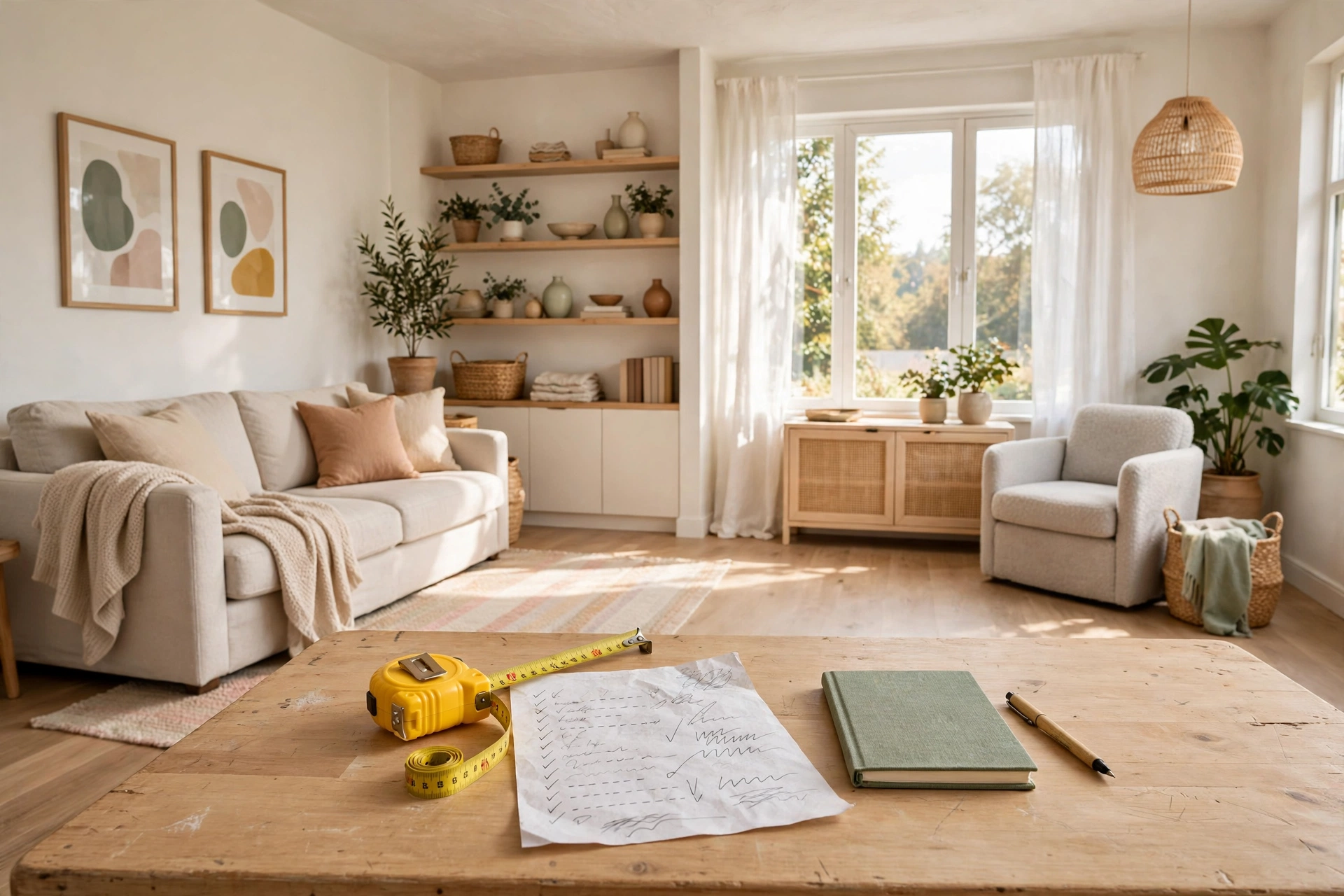
Thrift stores are designed to make you impulse-buy. Every aisle is a surprise, and without a list you will come home with three vases and no lamp — the exact opposite of what your living room needed. Before you leave, walk through your home with your phone and write down the three to five things you actually need, with measurements.
Your list should be specific enough to act on. “A lamp” is not a list item; “a table lamp, 14 to 18 inches tall, for the reading corner, warm brass or black base” is. Add the maximum you will pay for each item, and add the measurements of the spot it has to fit: the width of the console, the height of the shelf, the diameter of the side table. A $10 mirror is only a bargain if it fits the wall you bought it for.
📏 The numbers: keep the list to 5 items max · write the measurements in inches · set a price cap per item · bring a tape measure (a soft tailor’s tape folds into a pocket and weighs nothing).
Keep the list in your phone’s notes app, not on paper — you will want to add photos of finds and cross items off as you go. And add one “wild card” line at the bottom: one thing you are allowed to buy on impulse if it is under $10 and genuinely beautiful. That single line protects you from the two extremes — buying nothing because you were too strict, and buying everything because you had no rules at all.
💡 The List Test: If an item is not on your list and not your wild card, put it back on the shelf and walk away. If you are still thinking about it at the checkout, it was a real find — go back and get it. Nine times out of ten, you will have forgotten it by then.
2. Learn When Your Store Restocks
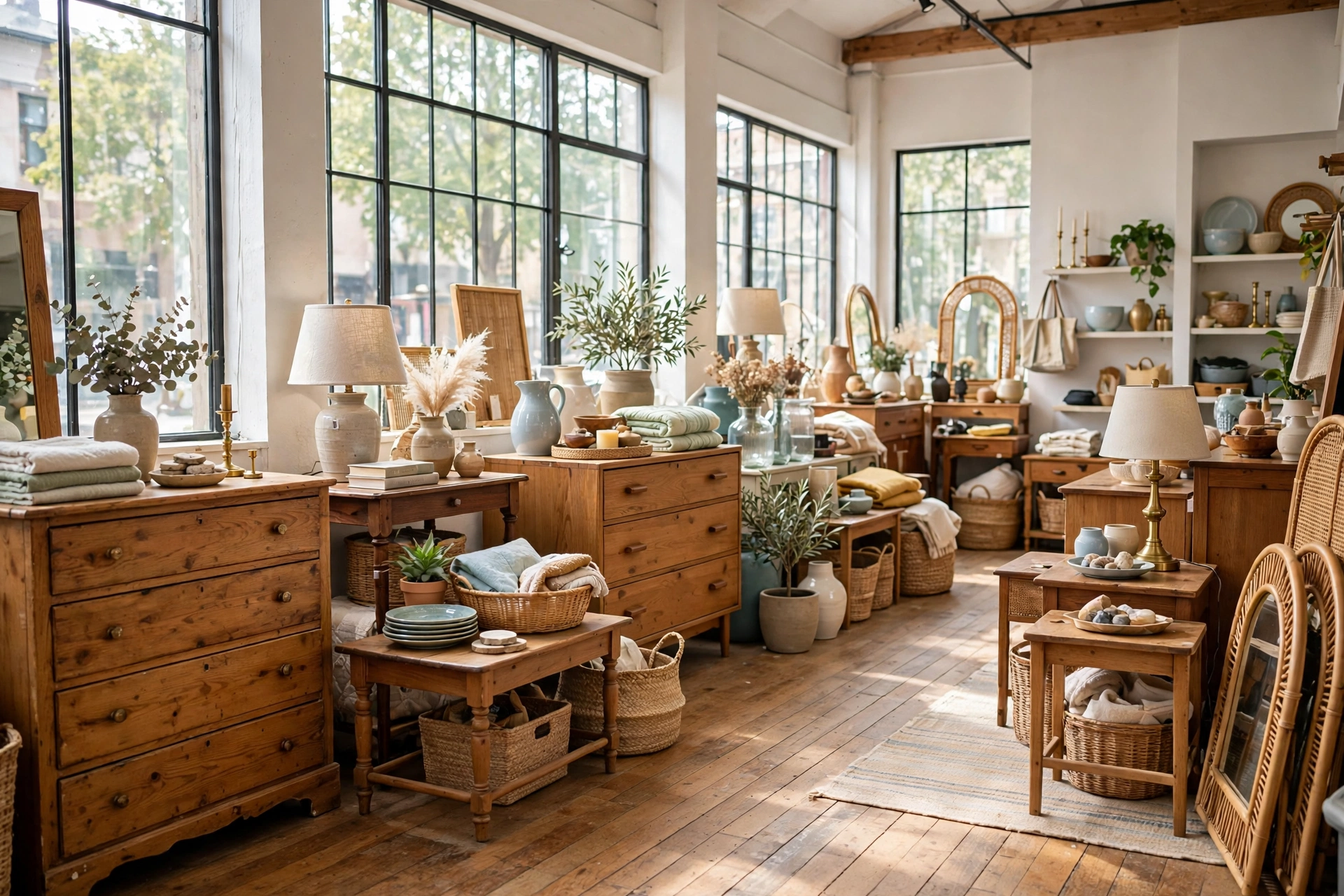
The best thrift finds are never sitting on the shelf for a week. They are bought within hours of being put out, usually by the regulars who know the restock schedule. So your second rule is simple: find out when new stock hits the floor, and shop then.
Ask a staff member directly — “Which days do you put out new furniture?” — and you will almost always get a straight answer. Most stores process donations in weekday morning batches, put furniture out on Tuesday and Thursday, and clear the floor on Sunday or Monday. Saturday is the worst day to hunt: the shelves have been picked over all week and the weekend crowd arrives before you do. A quiet Tuesday at 10 a.m. will beat a crowded Saturday every single time.
1. Visit the same store twice in one week and note which days the shelves look fullest.
2. Ask staff when the furniture and home goods sections get refreshed — write the answer in your phone.
3. Plan your big trips for that restock morning, and keep a second store as backup for the other days.
4. Arrive in the first hour after opening on restock day; the best pieces are gone by lunch.
Smaller charity shops often restock continuously as donations arrive, so the rule flips there: visit often, briefly, instead of rarely and for hours. A 20-minute stop twice a week finds more than a single two-hour Saturday expedition. Frequency beats duration — that is the single most useful sentence in this whole guide.
3. Do a Full Scouting Lap Before You Touch Anything

Walk the entire home goods section once, hands in your pockets, before you pick up a single item. This sounds slow. It is actually the fastest way to shop a thrift store, because it stops you from falling in love with the first mediocre lamp you see and missing the great one three aisles over.
On the scouting lap, you are only looking. Note the pieces that catch your eye, check the price tags from a distance, and keep walking. By the end of the lap you know what the store actually has today, which aisle holds the best furniture, and whether the $25 side table is a bargain or a rip-off compared with the $12 one in the next row. Then — and only then — go back to the pieces you noted and inspect them properly.
✅ Do this: walk every aisle first, even the ones that look like junk. The best finds hide in the worst-looking corners.
🚫 Skip this: grabbing the first item that looks promising and heading to the checkout. You have not seen the store yet.
The scouting lap also protects your budget. Once you know the store’s price range for the day, your list’s price caps become real numbers instead of guesses. A lamp that looked cheap at $18 stops looking cheap when you spot a better one for $8 two aisles later — and you only learn that by looking at the whole store first. Regulars do this lap without thinking about it; beginners who skip it pay for it, literally.
4. Check Quality Like a Pro in 60 Seconds
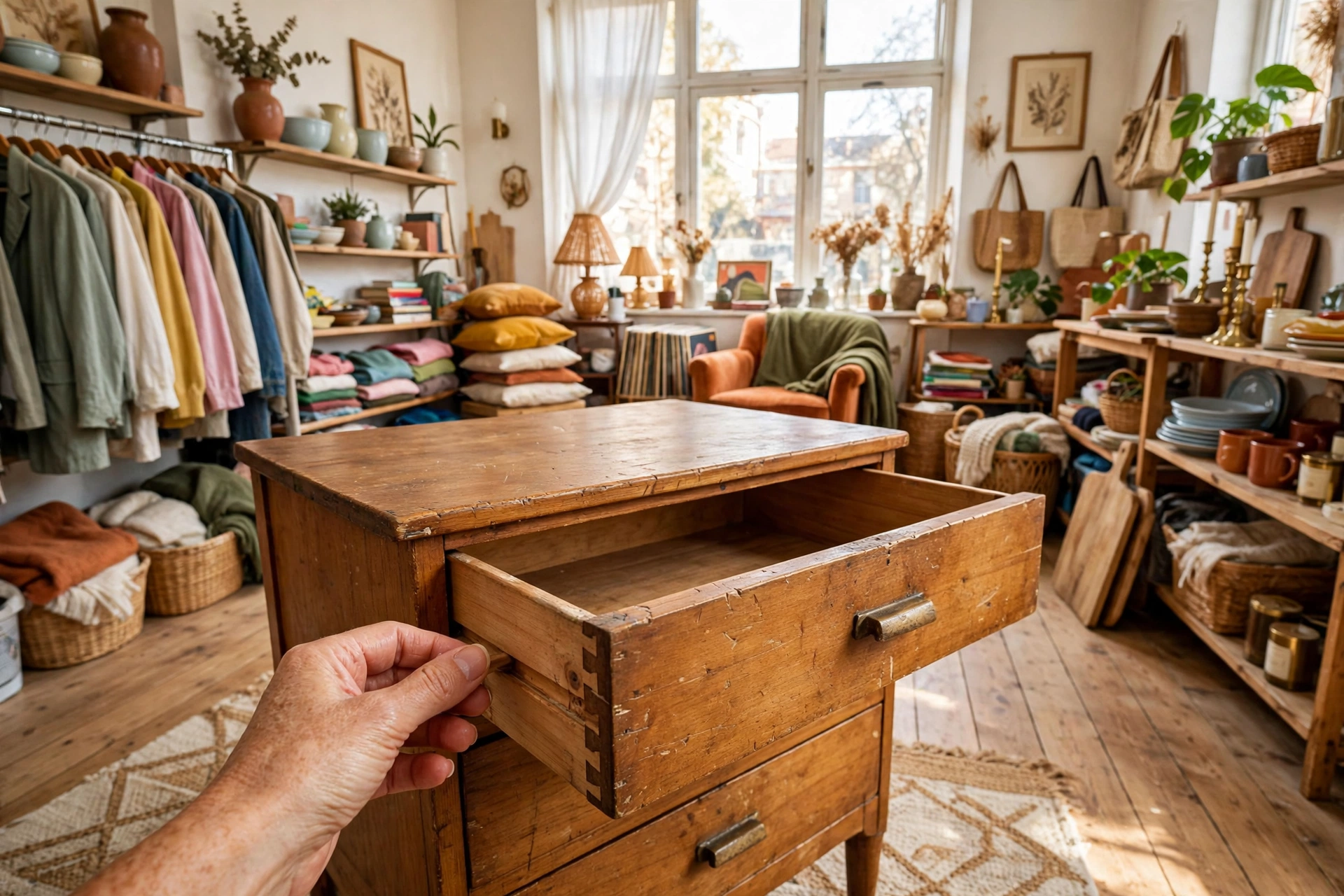
A thrift find is only a bargain if it lasts. Here is the 60-second quality check professionals use on every piece before it goes in the cart — run it on furniture, lamps, ceramics, and frames alike.
For ceramics and glass, run a fingertip around the rim and base — chips hide on the underside, and a chip on a vase’s rim will cut you every time you arrange flowers in it. For frames, check the corners: a frame that has separated at one corner will never sit straight on a wall. For mirrors, look at the reflection at an angle — dark spots or a cloudy silver backing mean the mirror is dying, and no amount of cleaning fixes it.
⚠️ The Wobble Rule: A wobbly chair is a $0 chair. Tightening a loose joint takes wood glue, a clamp, and 24 hours of drying — fine if you enjoy the project, a waste of money if you just wanted a chair. Buy stable pieces and leave the repairs to the flippers.
5. Measure Everything — Twice
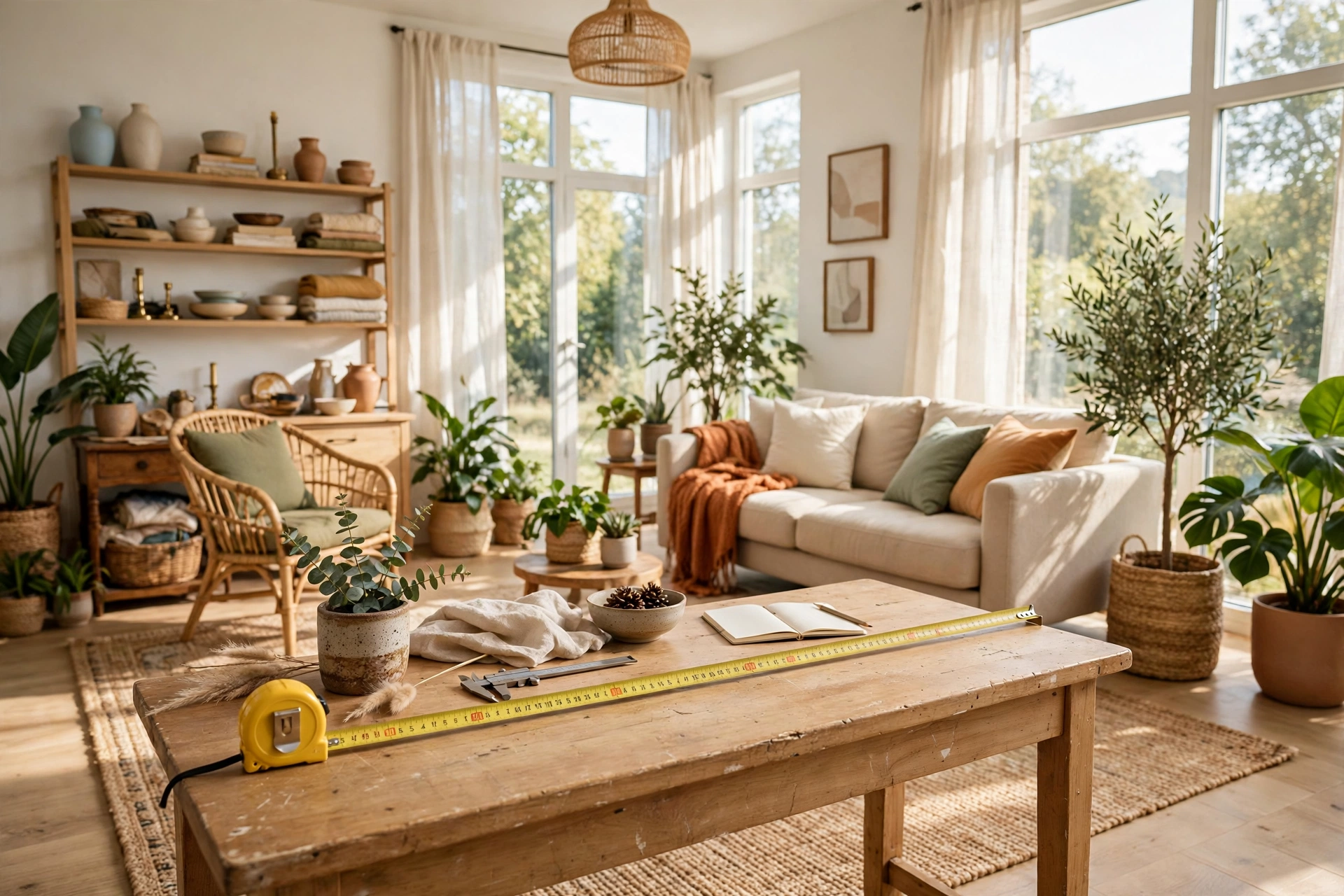
The number one reason thrift finds end up back at the thrift store is size. That gorgeous dresser does not fit through the bedroom door. The mirror is six inches too wide for the wall. The rug is a foot short on every side and looks like a bath mat in the middle of the room. Every one of these mistakes costs nothing to prevent: measure before you buy, and measure the space, not just the item.
Your phone is your measuring kit. Before each trip, photograph the spot the item is going in, and write the maximum dimensions in your notes: “console wall: 42 inches wide max, 30 inches tall max, 12 inches deep.” In the store, measure the item with your tape and compare it against those numbers on the spot. Do not eyeball it — a 36-inch table looks identical to a 42-inch table until it is in your living room.
📏 The numbers: doorways are usually 30 to 36 inches wide — measure yours once and save it · standard side tables are 22 to 24 inches tall, matching a sofa arm · a living room rug should be at least 8 by 10 feet, with the sofa’s front legs on it · leave 14 to 18 inches between a coffee table and the sofa.
Also measure your car. A piece that fits your room but not your trunk is not a purchase, it is a logistics problem. Keep a folded blanket in the car for wrapping finds, and a bungee cord or two for securing anything that sticks out. Many stores will hold a large piece for 24 hours if you ask — always ask before you drive home to fetch a bigger vehicle, because someone else will buy it while you are gone.
6. Know What Things Should Cost
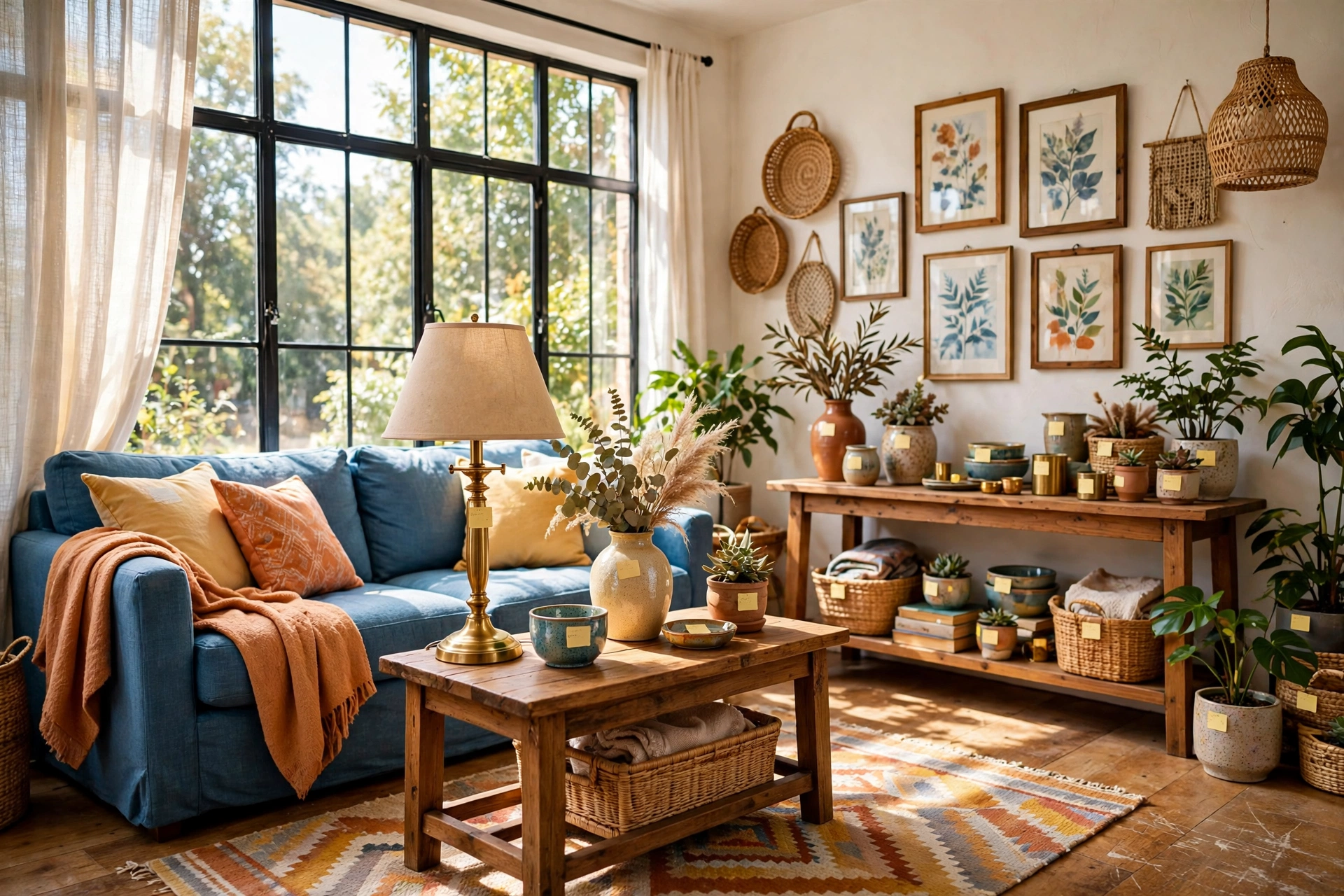
Thrift stores price by feel, not by a catalogue, so the same lamp can cost $8 in one store and $28 in another. Knowing the usual price range for common finds is what turns you from a browser into a bargain hunter — you will recognise a genuine deal instantly and walk away from an overpriced piece without a second thought.
Prices vary by city, and charity shops in wealthy neighbourhoods often price higher — but the quality is usually higher too. The point of the table is not the exact numbers; it is having a number in your head before you look at the tag. If you do not know what a side table should cost, the tag tells you what the store wants, not what the piece is worth.
💡 The 50% Rule: If a thrift price is more than half the price of the same item new, it is not a deal — it is a convenience fee. A $30 lamp you could buy new for $45 is a bad buy; a $12 lamp you could buy new for $45 is the whole reason you came. For more on what to do with the pieces once they are home, read how to make thrift finds look high-end — the styling tricks there turn a $12 lamp into the piece guests ask about.
7. Hunt the Overlooked Aisles First

Everyone crowds the furniture section. The real bargains live in the aisles most shoppers walk straight past: picture frames, baskets, linens, books, and the housewares shelves. These are the sections where a $3 find transforms a room, and where the competition is thinnest.
- Frames: A solid wood frame for $2 to $4, sprayed matte black or gold, looks identical to a $25 store frame. Buy every good frame you see — you will use them.
- Baskets: Woven baskets at $3 to $8 are the cheapest storage that exists. They hide clutter, hold throws, and work as planters with a plastic liner inside.
- Linens: Look for linen tablecloths, cotton curtains, and wool throws. Hold fabric up to the light — thin spots and stains show immediately. A $5 linen tablecloth cut in half becomes two cushion covers.
- Books: Hardcover books in colours that match your palette are decor, not reading material. Buy by the spine colour, $1 to $3 each, and stack them in threes.
- Ceramics and glass: Vases, bowls, and candle holders are the easiest wins in the store. One unusual shape beats five ordinary ones.
- The “free” shelf: Many stores have a free or 50-cent bin near the door. Dig there first — plant pots, small frames, and candle holders hide in it daily.
Check the overlooked aisles on every trip, even when you are hunting furniture. A five-minute detour through the frames and baskets often produces the best find of the day, and it is the habit that separates people who decorate with thrift finds from people who just own secondhand furniture. These small pieces are also the ones that make a room feel finished — the reason a styled shelf looks intentional instead of empty.
8. Test Everything Electrical Before You Pay

A lamp that does not light up is not a $10 lamp. It is a $10 paperweight. Thrift stores sell electrical items as-is, and most of them do not test what they put on the shelf — so you have to. Every store has a power outlet somewhere near the home goods section; ask a staff member where it is, and use it.
BEFORE: a brass table lamp with a stained shade, a frayed-looking cord, and a price tag that says “works” — a claim nobody has verified.
AFTER: the same lamp plugged in at the store, bulb glowing warm, switch clicking cleanly, cord intact — a $10 lamp that would cost $60 new, already proven to work.
Plug the lamp in, flip the switch on and off three times, and wiggle the cord gently near the plug and the socket. If the light flickers, the socket is loose — a $12 rewire kit fixes it, but only buy it if the lamp is worth the extra cost and the 20 minutes of work. For anything with a motor — a fan, a vintage radio, a sewing machine — run it for a full minute and listen for grinding, smell for burning, and check that every speed or setting works. A device that works on one setting and not the others is a repair project, not a purchase.
⚠️ Safety First: Never buy an electrical item with a cracked plug, exposed wire, or a plug that feels hot after 30 seconds of use. A $12 rewire kit is cheap; a house fire is not. And always check that the bulb is included — a lamp without a bulb is a lamp you cannot test, and a lamp you cannot test is a gamble.
9. Use Discount Days and Ask for a Better Price
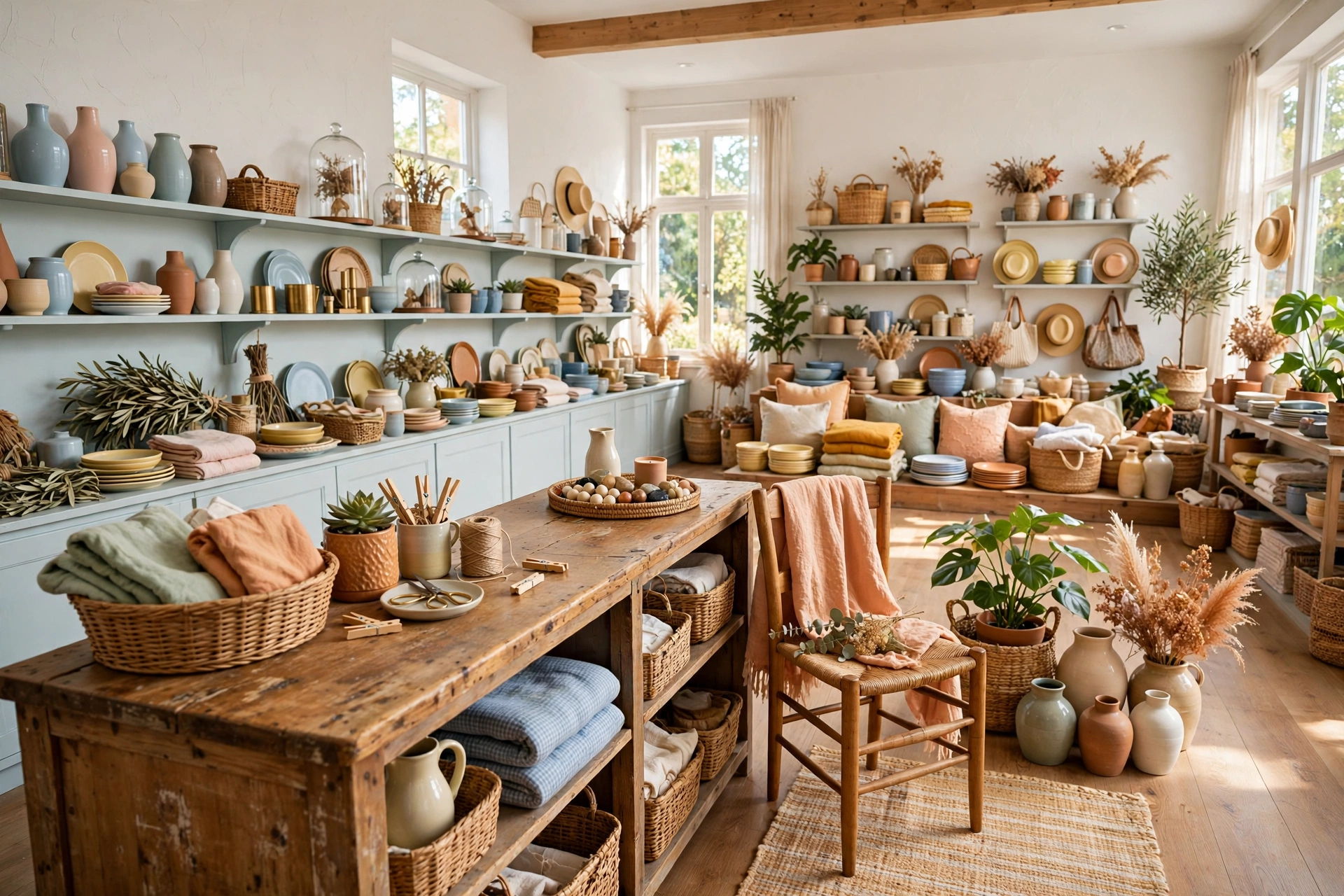
Thrift stores run discount days constantly — a coloured tag that is 50% off this week, a senior discount on Tuesdays, a student discount with ID, a bag sale on the last Saturday of the month. Regulars plan their trips around these days, and you should too. A $20 side table on a 50%-off tag day is a $10 side table, and the only difference is the day you walked in.
1. Ask at the till which tag colour is discounted this week, and what the store’s regular discount days are.
2. Check the store’s social media or notice board before a big trip — bag sales and clearance events are usually announced there first.
3. If a piece has been on the floor for weeks — dusty tag, faded price sticker, a layer of dust on top — it is fair to ask for a discount. “Would you take $15 for this? It’s been here a while” works far more often than beginners expect.
4. Buy in multiples when it makes sense: a set of four chairs is always cheaper per chair than one chair, and stores love clearing a matching set in one sale.
Negotiation is normal in thrift stores in a way it never is in a retail shop. Be polite, be specific, and accept the answer gracefully if it is no — the staff remember the polite hagglers and the rude ones, and you will be back next week. And never haggle over a $3 vase. Save the negotiation for furniture and anything over $20, where a 20% discount actually matters. If you are furnishing a whole room this way, the savings stack up fast — see how to decorate your entire home for $500 for the full room-by-room plan that these thrift trips feed into.
10. Clean It, Fix It, Then Style It — The 24-Hour Rule
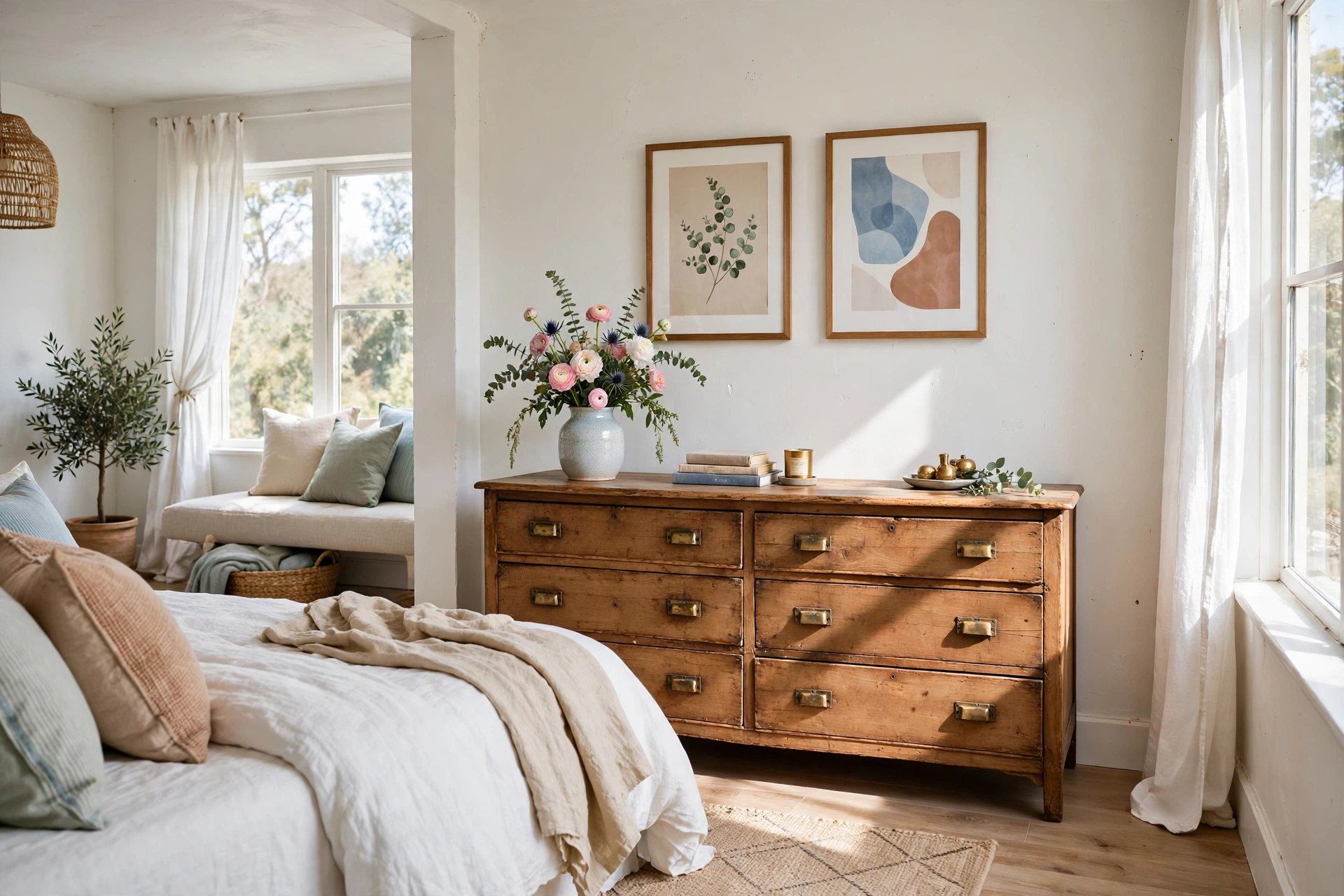
The last rule starts after you get home. Every thrift find gets cleaned before it enters your living space, no exceptions — and then it waits 24 hours before you decide where it lives. That cooling-off period is the difference between a home full of pieces you love and a home full of pieces you bought in the excitement of the hunt.
Clean first, always: wipe hard surfaces with a damp cloth and a mild cleaner; wash ceramics, glass, and linens in hot soapy water; air out wooden furniture outside for an hour if it smells musty. For upholstery, vacuum thoroughly and sprinkle baking soda on it, leave it for two hours, then vacuum again — that removes most thrift-store smells for free.
Fix small, skip big: tighten a loose screw, glue a wobbly joint, replace a missing knob ($3 to $5 each), and touch up a scratch with a furniture marker. Those four fixes take under 30 minutes total and make a piece look cared for. But do not start a project that needs a sander, a rewire, and a weekend — that is a flip, not a find, and it belongs in a different budget. For full transformations, the thrift flip ideas for every room list shows which projects are actually worth the effort.
Then style it: live with the piece for a day before you commit to its spot. Put it where you think it belongs, walk past it a few times, and photograph it from the doorway — the camera test from rule one applies here too. If it still looks right after 24 hours, it stays. For inspiration on what a cleaned-up find can become, browse these thrift store home decor makeovers — the before-and-after photos show exactly what a $15 piece looks like once it is styled properly. If it does not look right after 24 hours, return it to the store within the week and let someone else find it. Thrift shopping is a loop, not a one-way street, and returning a mistake is part of shopping well, not a failure.
✅ Do this: clean every find the day you buy it, fix only the small things, and give each piece a 24-hour trial in its spot.
🚫 Skip this: dragging a dusty, uncleaned piece straight into the living room, or starting a major repair on a $10 item the same evening you bought it.
Walk In With a List, Walk Out With a Home You Love
Thrift store shopping is a skill, not a talent, and the ten rules above are the whole curriculum: a list before you leave, a restock day on the calendar, a scouting lap with your hands in your pockets, a 60-second quality check, measurements in your phone, prices in your head, the overlooked aisles, a plug test for anything electrical, a polite question about discounts, and a cleaning routine the moment you get home.
Your first few trips will feel slow. You will measure a table twice, put a lamp back, and leave with less than you expected. That is not failure — that is the method working. By your fifth trip you will know your stores, your prices, and your list by heart, and the finds will start coming faster than the rooms to put them in.
So write the list tonight, check the restock day, and go on Tuesday morning. The solid oak side table for $18 is already sitting on the shelf, waiting for the shopper who knows how to find it. This week, that shopper is you.
Frequently Asked Questions
Is it safe to buy secondhand home decor from thrift stores?
Yes, with basic cleaning. Wash ceramics, glass, and linens in hot soapy water, wipe hard furniture with a mild cleaner, and air out wooden pieces before bringing them inside. Avoid anything with a musty smell you cannot remove, cracked electrical cords, or stained upholstery you cannot clean — those are the three real risks, and all three are easy to spot in the store.
What should a beginner buy first at a thrift store?
Start with frames, baskets, vases, and books — items that cost $2 to $10, cannot really be broken, and instantly improve a room. Once you are confident checking quality, move on to lamps and small furniture. Save large furniture for your third or fourth trip, when you know the store’s prices and your own measurements by heart.
How do I know if a thrift find is actually worth the price?
Compare it with the new price: a good thrift buy costs under half of the same item new. Check the quality list in rule four — solid wood, stable joints, working electrics — and check the price table in rule six for the usual range. If the price is over half of new, or the piece needs a repair that costs more than the piece itself, leave it on the shelf.
What days are best for thrift store shopping?
Weekday mornings on restock days, usually Tuesday or Thursday depending on the store — ask the staff, they will tell you. Avoid Saturday, when the shelves are picked over and the store is crowded. For small charity shops, short visits twice a week beat one long weekend trip.
Can you negotiate prices at thrift stores?
Yes, politely, and mostly on furniture and items over $20. Ask if a piece that has been sitting for weeks can go for less, and take advantage of discount tag days and bag sales. Staff expect negotiation on larger pieces — but never haggle over a $3 item, and always accept no gracefully.
How do I get rid of the thrift store smell from furniture?
Air the piece outside for an hour, wipe every surface with a mix of warm water and white vinegar, and for upholstery, sprinkle baking soda generously, leave it for two hours, then vacuum thoroughly. For wooden drawers, a small bowl of baking soda left inside overnight usually finishes the job. If the smell survives all of that, the piece is not worth keeping.