15 Bedroom Decor Trends 2026: The Aesthetic Every Designer is Talking About
Introduction
Every year, bedrooms quietly change. The colours soften or deepen, the furniture curves or straightens, the lighting gets warmer or smarter, and suddenly the room that felt current last year feels a little tired. Bedroom decor trends 2026 are not a single look, though — they are a shift in feeling. Designers are moving away from rooms that photograph well but feel cold, and towards bedrooms that genuinely help you rest, recharge, and wake up calm.
The big story this year is warmth with restraint. Think soft, nature-inspired colour instead of stark white, texture you can actually feel instead of flat surfaces, and furniture chosen for comfort rather than show. The 2026 bedroom is less about filling a room and more about editing it well: fewer, better pieces, lighting in layers, and materials that age gracefully. It is a look that works whether your bedroom is a generous master suite or a compact room that has to work hard.
Below are fifteen trends that designers keep returning to in 2026, each one explained with practical ways to try it at home. You do not need to adopt all fifteen — pick the three or four that suit your room, your budget, and the way you actually sleep, and your bedroom will feel current without feeling like a showroom.
1. Warm Minimalism Replaces Stark White

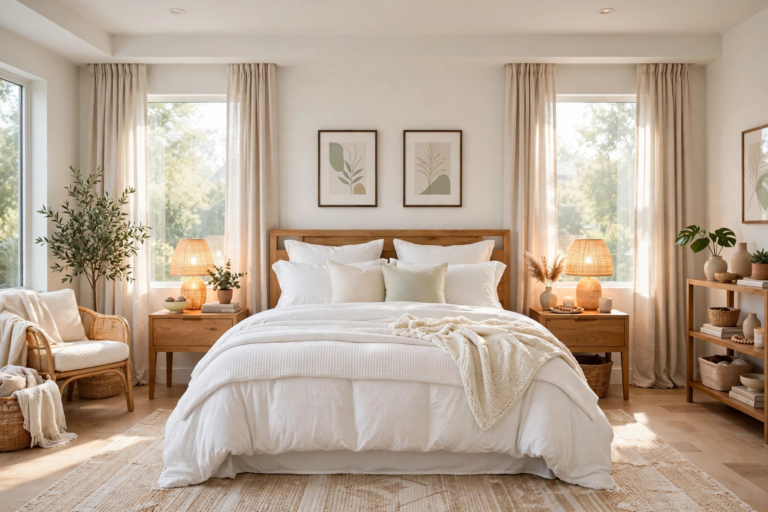
Stark, blue-white minimalism is fading, and warm minimalism is taking its place. The bones are the same — clean lines, uncluttered surfaces, breathing room — but the palette is warmer: ivory, oatmeal, warm greige, soft clay, and honeyed wood instead of icy white and cool grey. The room still feels calm and uncluttered, but it also feels human, like a place you want to be at the end of the day rather than a gallery you admire from the doorway.
The trick is to keep the simplicity and change the temperature. Paint in a warm white, choose bedding in natural linen or washed cotton, and let wood tones do the warming work — an oak nightstand, a walnut-framed mirror, a woven basket. Keep surfaces mostly clear, but allow a few soft textures to stay visible. Warm minimalism is minimalism you can live in, and that is exactly why designers love it for 2026.
2. Earthy, Nature-Inspired Colour Palettes
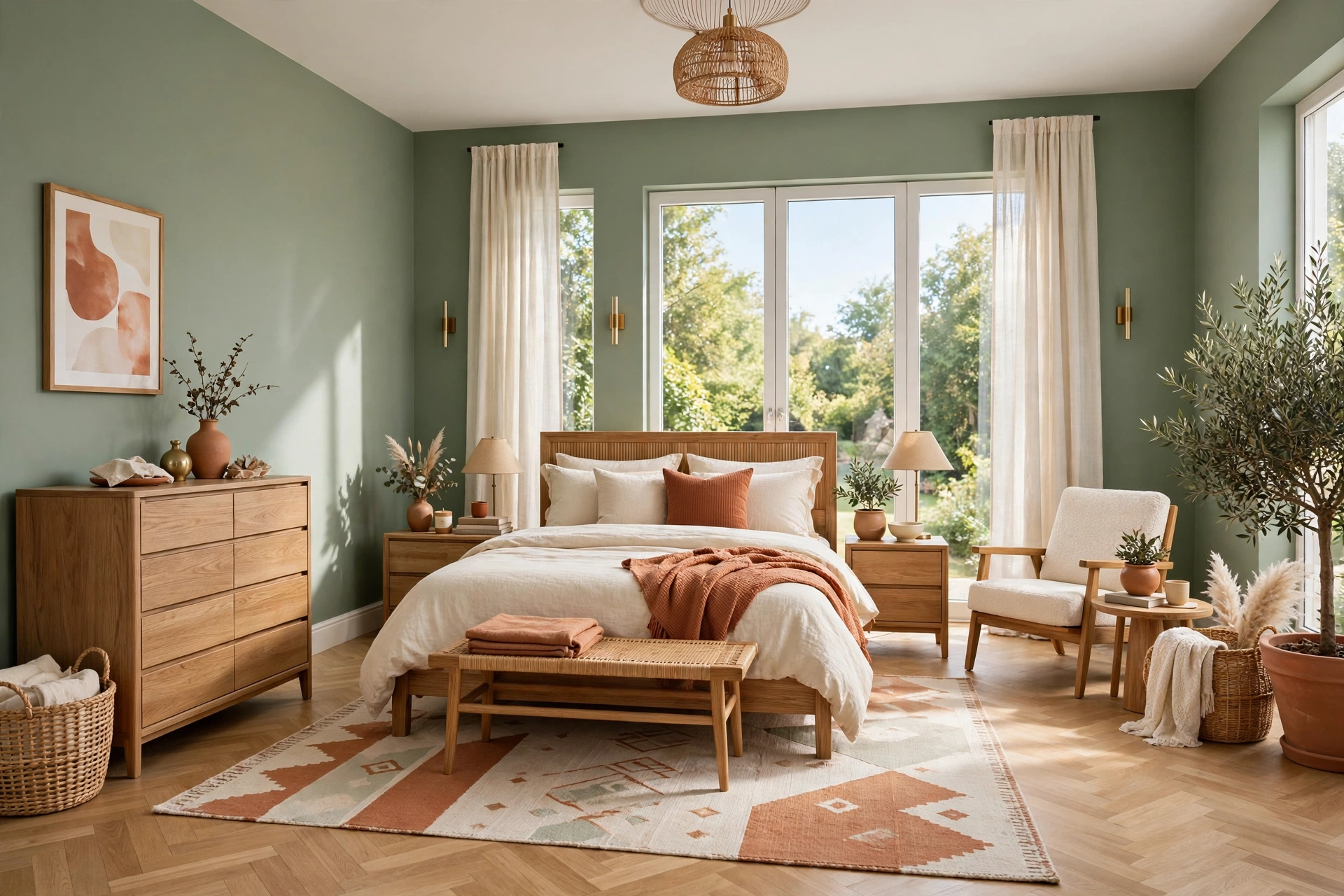
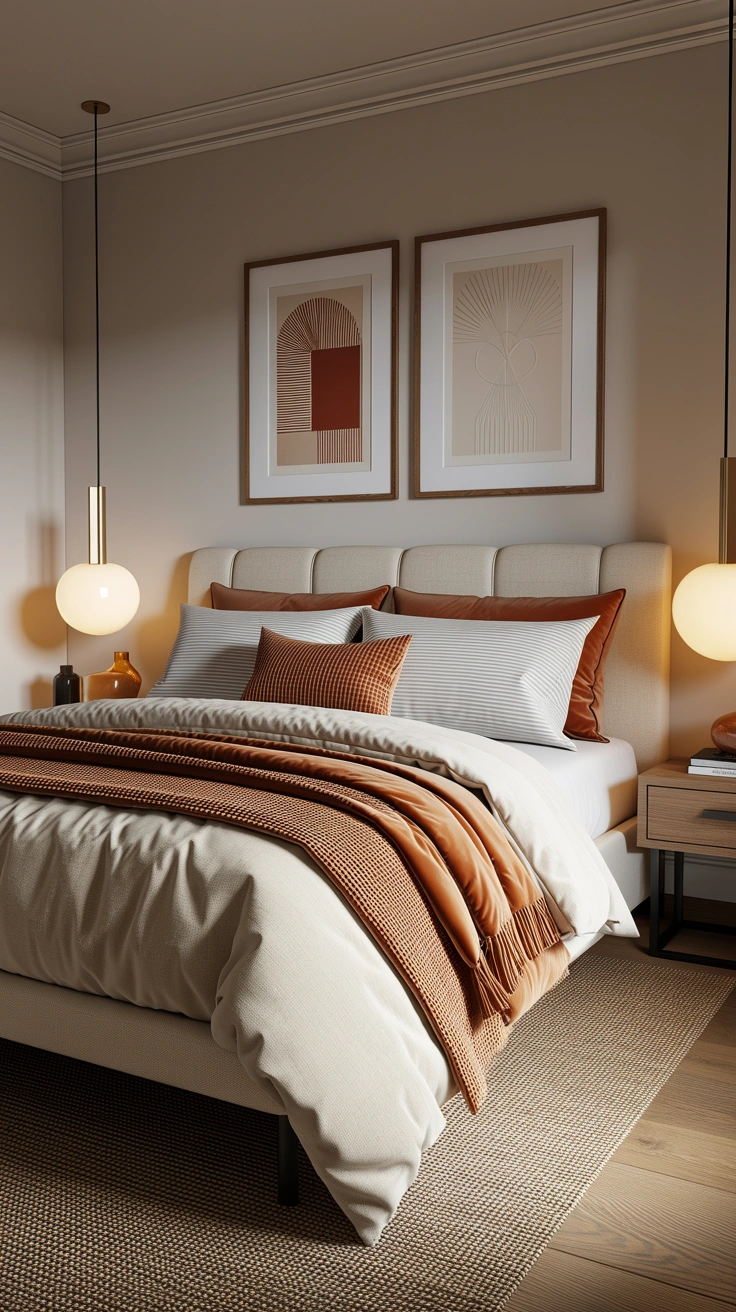
Colour in 2026 comes from nature: sage green, terracotta clay, warm sand, muted olive, and soft mushroom brown. These are colours that flatter skin, calm the eye, and pair beautifully with natural wood and linen. Unlike the bold accent walls of a few years ago, these earthy tones are used generously — on walls, bedding, and curtains together — so the room feels enveloped rather than decorated in patches.
Start with one earthy anchor and build around it. Sage walls with cream bedding and oak furniture feel fresh and restful; terracotta accents against warm white walls feel rich without feeling dark. If you are choosing a palette from scratch, learning how to choose a bedroom color palette before you buy paint will save you from the most common regret of all: a colour that looked perfect on a swatch and wrong on four walls. Earthy palettes forgive small mistakes, which makes them a safe and stylish place to start.
💡 Pro Tip: Test earthy paint colours on a large board and move it around the room for three days. Sage can flash grey in north light and warm gold in evening lamplight — the colour you live with is the one you see at 10 p.m., not the one you saw in the store.
3. Bouclé and Heavily Textured Bedding

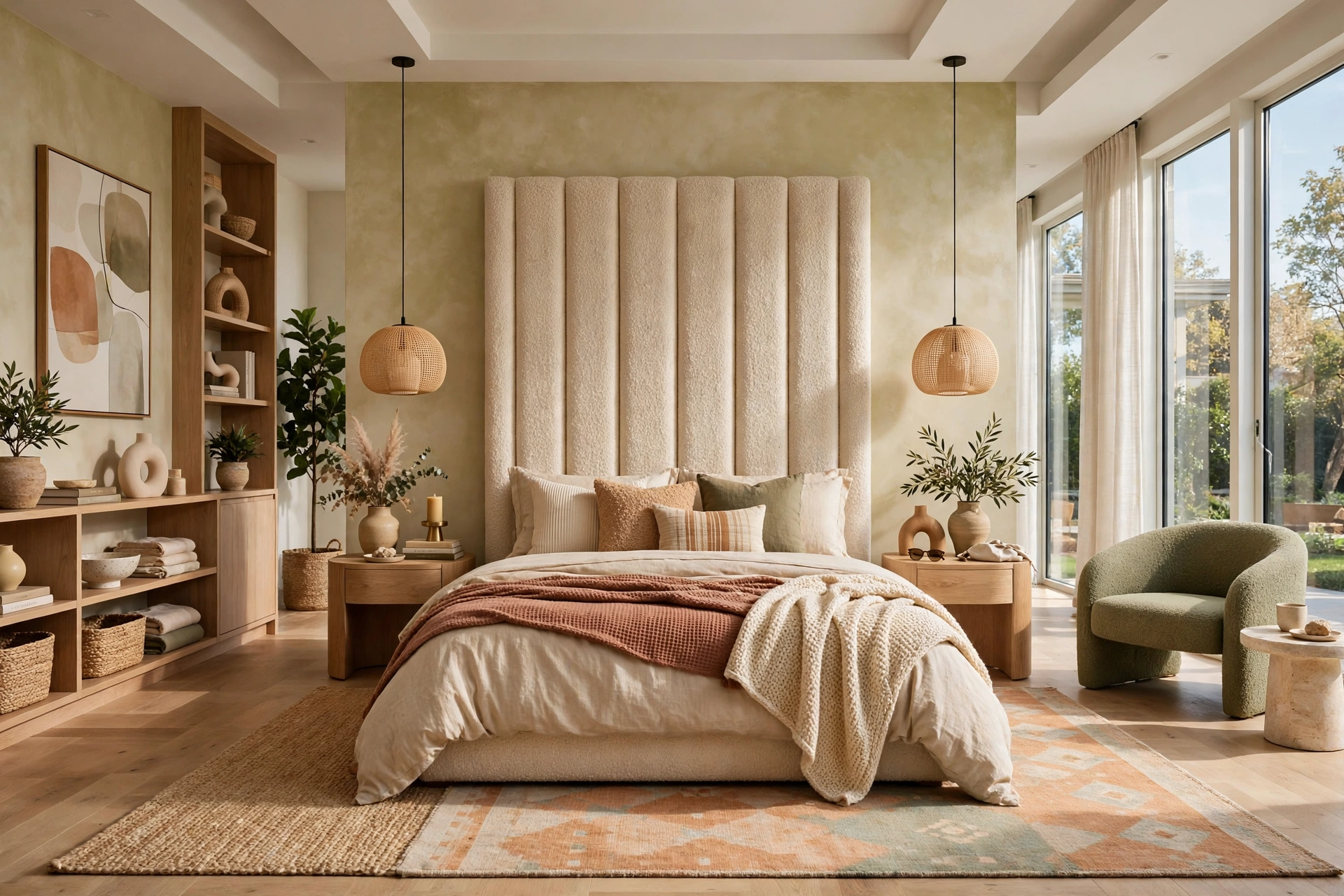
Bouclé is the texture of 2026 bedrooms, and it is everywhere: headboards, accent chairs, cushions, and throws. That nubby, cloud-like fabric adds instant softness to a room without adding colour or pattern, which is why it works in almost any scheme. Run your hand over a bouclé cushion and you understand the trend immediately — bedrooms this year are meant to be touched, not just looked at.
Bouclé works best as one or two hero pieces, not a whole room of it. A bouclé headboard or a single bouclé chair gives the room its tactile moment; pair it with smooth linen bedding and a flat-weave rug so the textures contrast instead of competing. If bouclé feels too much, the same idea works with chunky knit throws, waffle-weave cotton, or velvet cushions — the trend is texture itself, and bouclé is simply its most popular face this year.
Bedroom Decor Trends 2026 Quick-Start Checklist
- ✅ Pick one warm neutral as your base: warm white, oatmeal, or soft greige.
- ✅ Choose one earthy accent colour (sage, terracotta, or olive) and repeat it three times.
- ✅ Add one tactile hero piece: a bouclé headboard, chair, or throw.
- ✅ Swap cool-white bulbs for warm 2700K bulbs in every bedroom light.
- ✅ Layer the bed: sheets, duvet, quilt or coverlet, and one throw.
- ✅ Clear one surface completely — a clear nightstand instantly makes a room feel designed.
- ✅ Hang curtains high, wide, and floor-length to make the room feel taller.
4. Sculptural, Oversized Headboards Take Centre Stage

Headboards in 2026 are bigger, bolder, and more sculptural than they have been in years. Tall upholstered headboards in velvet, linen, or bouclé, arched and curved silhouettes, and even full wall panels behind the bed are replacing the small, flat headboards of the minimalist era. The headboard is once again the bedroom’s statement piece, and designers are giving it the scale to prove it.
Scale is the secret. A headboard should extend at least 24 inches above the mattress and span most of the bed’s width, or it reads as an afterthought. In a small room, a tall headboard still works — it draws the eye up and makes the ceiling feel higher, as long as the bedding stays calm so the headboard remains the star. For inspiration on making a bed feel truly considered, dreamy bedroom decor ideas show how a generous headboard anchors everything layered around it.
5. Layered, Dimmable Lighting Is Non-Negotiable

If there is one trend designers refuse to compromise on in 2026, it is layered lighting. No more single overhead fixture doing all the work. The 2026 bedroom glows from at least three heights: ambient light from the ceiling, task light from bedside lamps or sconces, and accent light from a strip, a picture light, or a small lamp on the dresser. Each layer has its own switch or dimmer, so the room shifts from bright morning to candlelit evening in stages.
The practical payoff is real: layered light makes a room look better, feel calmer, and work harder for reading, dressing, and winding down. Start with the bedside pair — matching lamps or wall sconces with warm bulbs — then add one accent glow, such as an LED strip behind the headboard. A good plan for best bedroom lighting ideas will help you place each layer so nothing glares and nothing stays dark. Dimmers are the cheapest luxury in this whole list, and they change a bedroom more than almost any furniture purchase.
Quick Comparison: Bedroom Decor Trends 2026 by Cost and Effort
6. Curved Furniture and Soft, Rounded Edges

Sharp corners are softening across 2026 bedrooms. Curved headboards, rounded nightstands, barrel chairs, oval mirrors, and arched doorways and wall panels all bring a gentler geometry into the room. Curves feel welcoming in a way straight lines do not — they soften a boxy room, make small spaces feel less rigid, and echo the organic shapes that dominate the year’s colour and material palettes.
You do not need to replace everything to join this trend. One curved piece is enough to change a room’s geometry: a round mirror above the dresser, a barrel chair in the reading corner, or a curved headboard. Keep the rest of the furniture simple so the curve reads as intentional rather than accidental. In small bedrooms especially, a rounded nightstand or a curved bench at the foot of the bed softens the room without eating floor space.
7. Dark, Cocooning Accent Walls for Better Sleep

Dark bedrooms are no longer a daring choice — they are a mainstream 2026 trend, and the science of sleep backs them up. A deep green, navy, charcoal, or plum wall behind the bed creates a cocooning effect that makes the room feel intimate and evening-like even in daylight. The trick designers use is containment: one dark wall, usually behind the bed, with everything else warm and light so the room feels enveloping rather than closed-in.
Balance is everything here. Pair a dark accent wall with cream or ivory bedding, warm brass or wood lamps, and warm-white bulbs, and the contrast makes both the dark and the light look better. Avoid dark bedding against a dark wall, which collapses into a cave. If a full dark wall feels like a leap, try it first on the wall you see least while lying down — the headboard wall — where the drama is visible when you enter and invisible when you sleep.
📌 Important: Paint the dark accent wall first and live with it for a few nights before repainting anything else. Dark colours change dramatically between daylight and lamplight, and the evening version is the one that matters in a bedroom.
8. Vintage and Thrifted Character Pieces

The most personal bedrooms of 2026 are not bought in one shopping trip — they are collected over time, and vintage and thrifted pieces are the trend’s heart. A weathered wooden dresser, a brass lamp with a story, a framed print found at a flea market: these pieces give a bedroom character that new furniture, however beautiful, cannot fake. Designers call it soul, and it is the antidote to rooms that look like a catalogue page.
The rule for mixing vintage into a modern bedroom is restraint. One or two character pieces per room is plenty — a vintage dresser as the anchor, or a pair of thrifted lamps on the nightstands — with the rest of the room calm and contemporary so the vintage pieces shine. Check stability and scale before you buy: a beautiful old dresser that wobbles or overwhelms a small wall is not a bargain. The best vintage finds are the ones that look like they have always belonged in your room.
9. Japandi Calm: Low, Natural, and Uncluttered

Japandi — the blend of Japanese minimalism and Scandinavian warmth — continues its quiet takeover of bedrooms in 2026, and this year’s version is softer and more livable than the stark original. Low platform beds, natural wood, linen and cotton in muted tones, paper or fabric lighting, and genuinely clear surfaces create a room that feels like an exhale. Nothing shouts, everything earns its place, and the room’s calm is the luxury.
Japandi works because it is a discipline, not a shopping list. Start by removing: clear the dresser top, empty the chair that holds clothes, and leave at least one wall bare. Then add back only natural materials — wood, linen, cotton, stone, paper — in a muted palette. The result suits small bedrooms particularly well, and small master bedroom ideas often borrow Japandi’s low furniture and clear sightlines to make compact rooms feel spacious. It is a trend that costs almost nothing to try, because the first step is subtraction.
10. Statement Ceilings and Wallpapered Headboard Walls

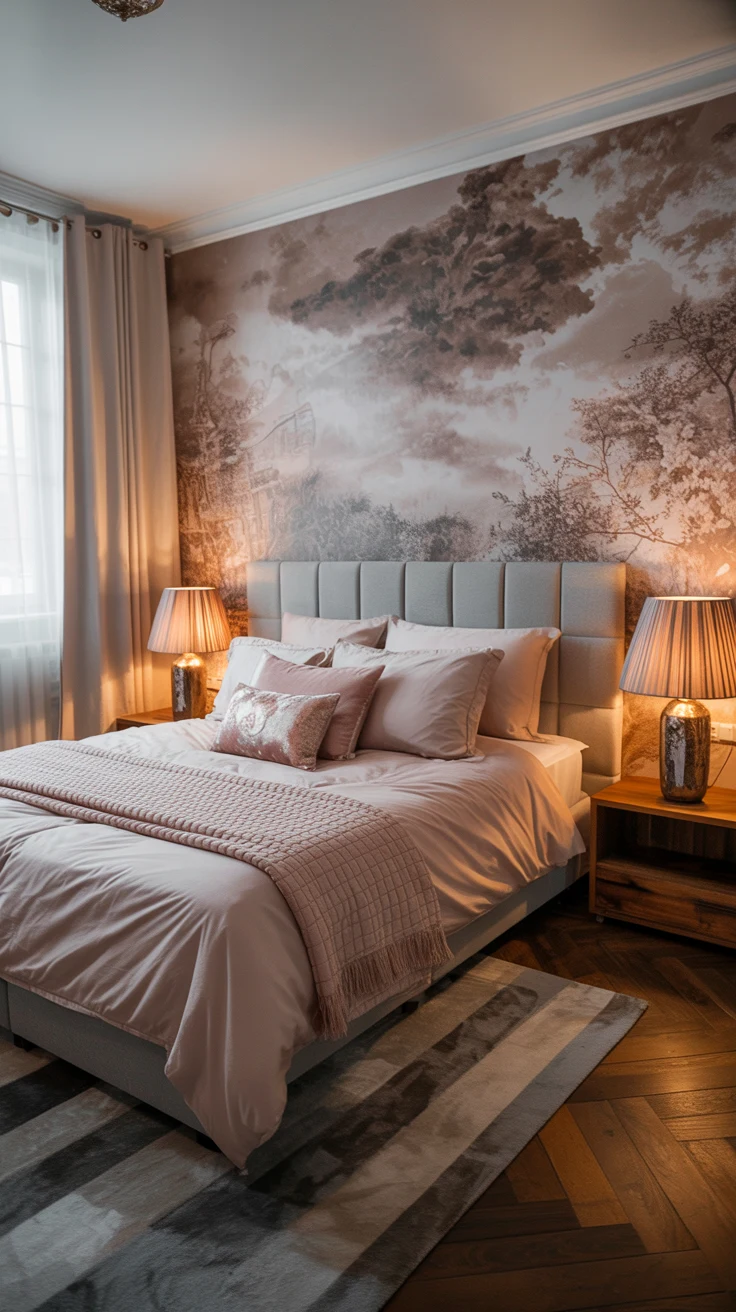
Walls had their moment; in 2026, the ceiling and the headboard wall are getting the attention. Painted or wallpapered ceilings in a soft tone, wood slat panels, and bold wallpaper on the single wall behind the bed are turning overlooked surfaces into the room’s talking point. A wallpapered headboard wall, in particular, gives the bed a finished backdrop without the cost or commitment of a new headboard.
Keep the pattern’s scale in proportion to the room. Large-scale botanicals and soft geometrics suit generous bedrooms; small, quiet patterns suit compact rooms, where a busy print can close the space in. If wallpaper feels permanent, peel-and-stick versions on the headboard wall give the same effect with an exit strategy, which makes this one of the most renter-friendly trends of the year. Pair a patterned headboard wall with plain bedding so the wall stays the star.
11. Smart, Hidden Storage That Disappears

Bedrooms in 2026 hide their storage instead of displaying it. Ottoman beds with lift-up bases, nightstands with hidden charging drawers, wardrobes with flush, handle-free fronts, and under-bed drawers that look like part of the frame are replacing open shelving and visible clutter. The goal is a room that looks serene because the practical stuff — chargers, medicines, off-season clothes — has somewhere invisible to go.
Invest in storage where it saves you daily friction: a nightstand drawer for chargers, an ottoman bed or under-bed bins for off-season bedding, and one closed wardrobe or dresser for everything that does not deserve display. Open storage still has a place — a single styled shelf or a book stack — but the bulk of a 2026 bedroom’s storage is closed, calm, and out of sight. A serene-looking room is usually just a well-hidden storage system.
💡 Pro Tip: Before buying hidden storage, list what actually clutters your bedroom surfaces. Buy storage for those specific things — charger drawers for cables, a lidded basket for laundry — instead of generic boxes that end up holding new clutter.
12. Hotel-Style Layered Bedding, Softened

Hotel-style bedding remains a 2026 favourite, but this year’s version is softer and less starched than the crisp white hotel look. Think washed linen or cotton in warm white, oatmeal, or soft sage, layered in the hotel order — sheets, duvet, coverlet, throw — but with a relaxed, slightly rumpled finish instead of military precision. The bed still looks abundant and intentional, but it also looks like someone actually sleeps in it.
The layering formula still matters. Start with quality sheets, add a duvet with some weight, fold a coverlet or quilt across the middle, and finish with a throw across the foot. Keep the palette tonal so the layers read as one inviting mass rather than a pile of competing patterns. This is a trend that costs nothing if your bedding is already good — it is a styling change, not a shopping trip — and it transforms the room’s centrepiece in ten minutes.
13. Biophilic Touches: Plants and Natural Materials

Bringing nature indoors is more than a 2026 trend — it is the thread running through almost every other trend on this list, from earthy colours to natural wood to linen bedding. In the bedroom, biophilic design means living plants, natural materials, and views of greenery treated as part of the decor: a tall olive tree or snake plant in the corner, a jute rug underfoot, rattan and cane details, and wooden furniture that shows its grain.
Choose plants that tolerate bedroom conditions — low to medium light, occasional neglect — such as snake plants, pothos, ZZ plants, or a hardy olive. One or two substantial plants beat a crowd of small ones, which can tip a calm room into clutter. If real plants are not realistic for you, natural materials alone — jute, rattan, wood, stone, linen — carry much of the same calming effect, and they never need watering. For rooms that need to feel both natural and restful, cozy bedroom inspiration often pairs plants with warm textiles to complete the retreat feeling.
14. Personal, Gallery-Style Walls Instead of Matching Sets

Matching bedroom sets are out; personal walls are in. In 2026, the wall above the bed or dresser is a small gallery of things that mean something — framed photographs, a print from a trip, a piece of art you chose rather than a set you bought. The frames do not have to match perfectly; a consistent frame colour or a consistent mat colour is enough to make a mixed collection read as intentional.
Start with one large piece as the anchor — roughly two-thirds the width of the furniture below it, hung with its centre at eye level — then add two or three smaller pieces around it if the wall allows. Leave breathing room between frames; a gallery wall crammed edge to edge feels busy in a bedroom, where calm is the goal. This trend costs little and changes a room’s feeling completely, because a personal wall is the difference between a room that looks decorated and a room that feels inhabited.
15. Quiet Luxury: Fewer, Better Pieces

The trend that ties all the others together is quiet luxury: fewer pieces, better quality, no logos, no shouting. A well-made wooden nightstand instead of two cheap ones, real linen instead of five polyester sets, one beautiful lamp instead of three forgettable ones. Quiet luxury is not about spending more overall — it is about spending the same money on fewer things that last longer, feel better, and age gracefully.
Apply it as a filter, not a budget. Before buying anything for the bedroom in 2026, ask whether it is the best version of that thing you can afford, whether you will still like it in five years, and whether the room genuinely needs it. If the answer to any of those is no, skip it. A bedroom built this way stays current longer than any trend-chasing room, because quality and calm do not date. For anyone starting from the beginning, bedroom decorating for beginners pairs well with this approach: start with the bed, the light, and one good palette, and let the rest follow slowly.
Common Bedroom Decor Trends 2026 Mistakes
Mistake 1: Adopting Every Trend at Once
Fifteen trends in one room is not a designed bedroom — it is a showroom explosion. Pick three or four trends that suit your room and your life, and let the rest go. A room with warm minimalism, layered lighting, and one curved chair looks current; a room with every trend competing for attention looks confused.
Mistake 2: Chasing Trends That Fight Your Room’s Light
A dark cocooning wall in a windowless basement bedroom, or a pale Japandi scheme in a room with harsh southern sun, will fight you every day. Trends must serve the room’s actual light, size, and architecture. Test colours and materials in your room’s real light before committing, and skip any trend that needs conditions your room does not have.
Mistake 3: Buying Cheap Versions of Quality Trends
Bouclé that pills in a month, a sculptural headboard that wobbles, linen that feels like plastic — cheap copies of 2026’s tactile trends backfire, because these trends are about touch and quality. Buy one good version of a trend rather than three poor ones, or skip the trend until the good version fits your budget.
Mistake 4: Forgetting That Bedrooms Must Function
A bedroom that looks like a magazine but has nowhere to charge a phone, nowhere to put tomorrow’s clothes, and a lamp too dim to read by has failed at its job. Every trend you adopt must pass a function test: can you sleep, read, dress, and store your things in this room? If not, adjust the trend until it works.
Mistake 5: Ignoring Scale in a Small Room
Oversized headboards, giant gallery walls, and bulky curved furniture can overwhelm a compact bedroom, even when each piece is beautiful. In small rooms, choose the smaller version of the trend — a slim curved headboard, one large art piece instead of a gallery, a compact barrel chair — and leave generous negative space. Scale is what makes a trend look expensive instead of crowded.
Frequently Asked Questions
1. Which bedroom decor trend is the easiest to try on a budget?
Warm minimalism and layered lighting are the cheapest starting points. Swapping to warm bulbs, clearing one surface, and adding a textured throw costs very little, and dimmers are inexpensive. Paint is the next step up: one earthy accent wall transforms a room for the price of a gallon of paint and a weekend afternoon.
2. Are dark bedroom walls really good for sleep?
Dark, cocooning walls help many people wind down because the room feels evening-like even during the day, and dark surfaces absorb light rather than bouncing it around. The key is balance: keep bedding light, use warm bulbs, and limit the dark colour to one wall so the room feels enveloping rather than cave-like.
3. Is bouclé practical, or will it look worn quickly?
Good-quality bouclé holds up well in a bedroom, where it gets less wear than a living-room sofa. Choose a tight, dense weave, keep it out of direct sunlight to prevent fading, and vacuum it with an upholstery attachment occasionally. Cheap, loose bouclé pills and flattens fast, so quality matters more than quantity here.
4. How do I mix vintage pieces into a modern bedroom without it looking messy?
Limit vintage to one or two pieces per room and keep everything else calm and contemporary. A consistent frame or finish colour ties mixed pieces together, and generous negative space around a vintage piece makes it look curated rather than accumulated. If a vintage piece does not earn its place functionally or visually, it belongs elsewhere.
5. Will Japandi style make my bedroom feel cold?
Not if you follow the 2026 version, which is warmer than the original. Use honeyed wood, warm whites, linen, and at least one soft texture — a knit throw, a wool rug — alongside the clean lines and clear surfaces. Japandi feels cold only when it is all pale grey and hard surfaces; warmth comes from wood and textiles.
6. Can small bedrooms handle 2026’s bigger headboards and curved furniture?
Yes, with scaled-down versions. Choose a tall but slim headboard, a compact barrel chair, and one curved accent rather than several large pieces. Tall elements draw the eye up and can make a small room feel taller, as long as the bedding stays calm and the floor stays mostly clear.
7. How long will these 2026 bedroom trends last?
The core ideas — warm neutrals, natural materials, layered lighting, and quality over quantity — are slow trends that should look good for years. The more specific expressions, like a particular colour or fabric, may fade faster, so invest in the slow ideas and try the fast ones cheaply with paint, throws, and cushions you can swap.
Conclusion
Bedroom decor trends 2026 point in one clear direction: warmer, softer, more personal bedrooms that are designed for rest rather than display. Warm minimalism, earthy colour, tactile textures, layered lighting, and quiet luxury are not separate fads — they are different expressions of the same idea, which is that a bedroom should feel like a retreat you actually live in.
Start with the trends that cost the least and change the most: warm light, a clear surface, one earthy colour, and a textured layer on the bed. Add one statement piece — a headboard, a curved chair, a personal wall — and stop there. A bedroom built this way will feel current in 2026 and, more importantly, will still feel like yours in the years after the trends move on.