12 Living Room Rugs That Tie Any Space Together (Under $200)
Introduction
A rug is the one purchase that can make a living room feel finished even when nothing else in the room has changed. It sits underneath your seating, pulls the sofa and chairs into one connected group, and gives the eye a single place to land — which is why designers call the rug the anchor of the room. Without it, furniture tends to look scattered, like a collection of pieces that happened to end up in the same space. With it, the same furniture suddenly looks like a plan.
The best part is that anchoring a room does not require a designer budget. Flat-weave constructions, washable designs, natural fibers, and vintage-look prints are all typically available under $200 in the sizes living rooms actually need. The trick is knowing which types deliver the look for the money — and which ones look cheap once unrolled on your floor.
This guide walks through twelve rug styles and approaches that genuinely work at budget prices, with honest notes on sizing, placement, and care for each. Whether your style runs modern, bohemian, traditional, or somewhere in between, there is a sub-$200 option here that can tie your whole space together.
1. The Classic Low-Pile Flatweave
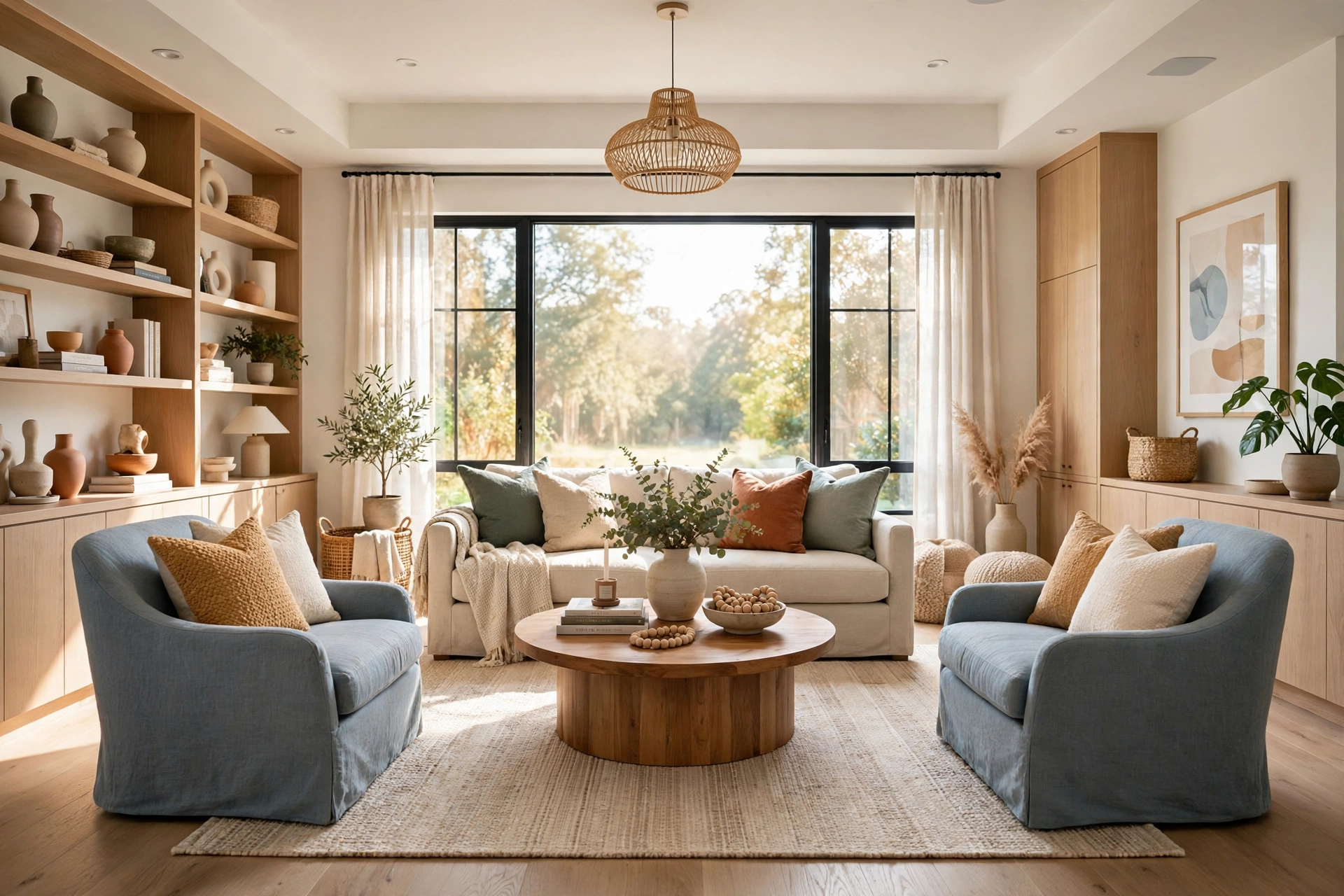
If you can only buy one rug for your living room, make it a low-pile flatweave. Flatweaves have almost no pile height, which means they slide under doors without jamming, stay put under heavy furniture instead of bunching, and clean up with nothing more than a vacuum and a quick spot treatment. They are typically the most affordable construction in large sizes, so an 8×10 flatweave often costs what a 5×7 of something plusher would — and that size jump alone transforms a room.
The aesthetic range of flatweaves is wider than the budget price suggests. You can find them in subtle herringbone weaves that read as solid from across the room, in tone-on-tone geometric patterns that add quiet interest, and in textured cotton weaves that give a relaxed, lived-in feeling. Because the surface is flat and unreflective, a flatweave never fights with the other textiles in the room; it simply grounds them. If you are not sure what style you want yet, this is the safest first move — it works under nearly everything.
2. Washable Vintage-Look Rug
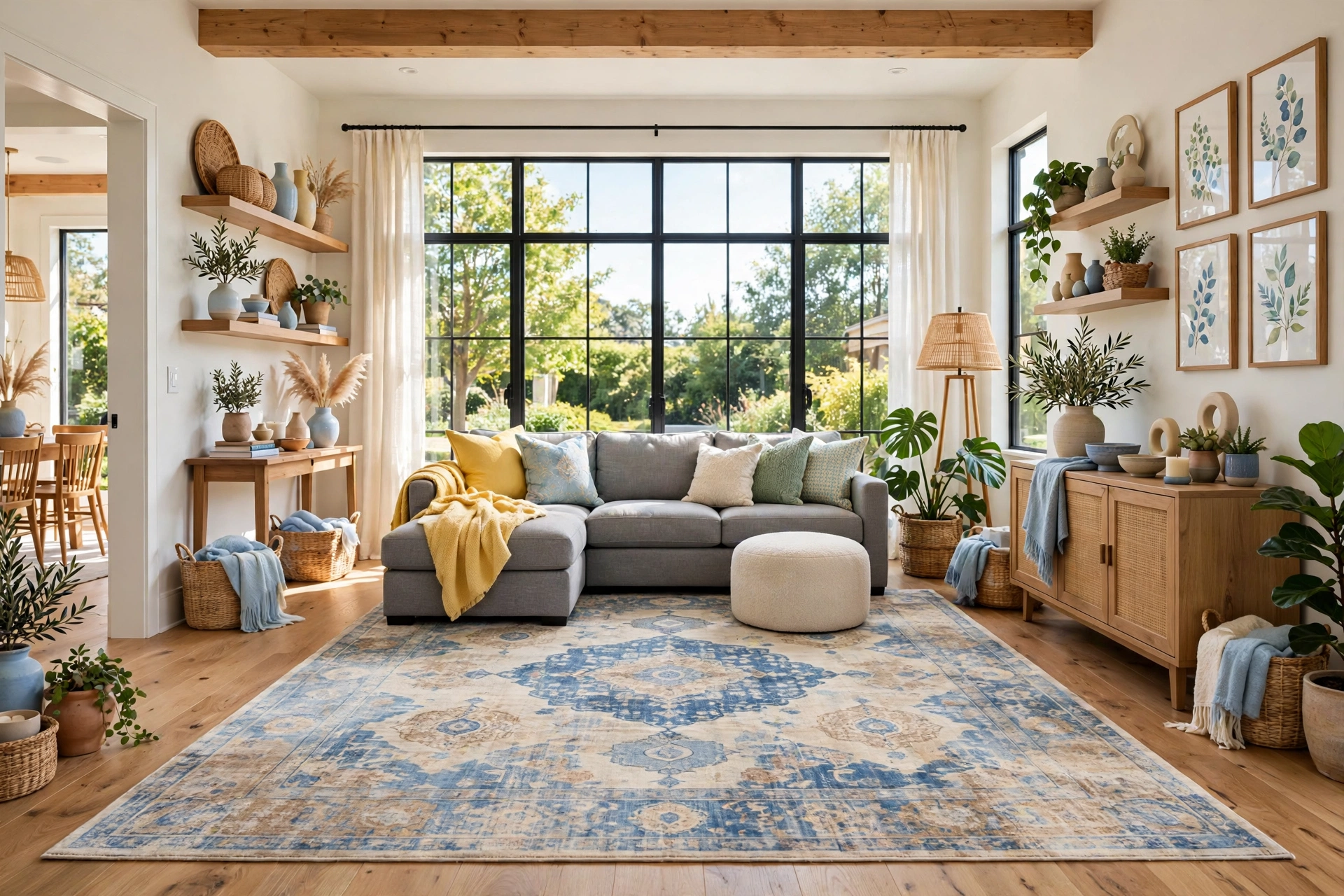
For households with kids, pets, or a habit of eating on the sofa, a washable rug changes the whole calculus. Modern washable rugs pair a vintage-inspired patterned top layer with a separate non-slip pad, so the whole thing can go through a washing machine when life happens. At budget prices, the vintage-look prints — faded Persian medallions, distressed oriental motifs, soft washed-out borders — are among the most convincing on the market, reading as storied and characterful rather than cheap.
The practical upside goes beyond stains. Washable rugs let you be braver with color and pattern, because you are no longer guarding the purchase against every spill. That faded terracotta medallion or soft blue Persian-style print that would feel risky as a hand-knotted investment becomes a low-stakes experiment at a fraction of the cost. Wash on a gentle cycle, line-dry or tumble low, and the rug comes back looking as good as the day it arrived — which is more than can be said for most budget rugs after a year of real life.
💡 Pro Tip: Before you shop for any rug, measure your seating zone and save the numbers in your phone. The front legs of your sofa and chairs should all rest on the rug, which usually means a bigger size than you expect. Our guide on how to choose the right rug size walks through the measuring process step by step, including the front-legs rule designers never skip.
3. Jute and Sisal Natural Fiber Rugs
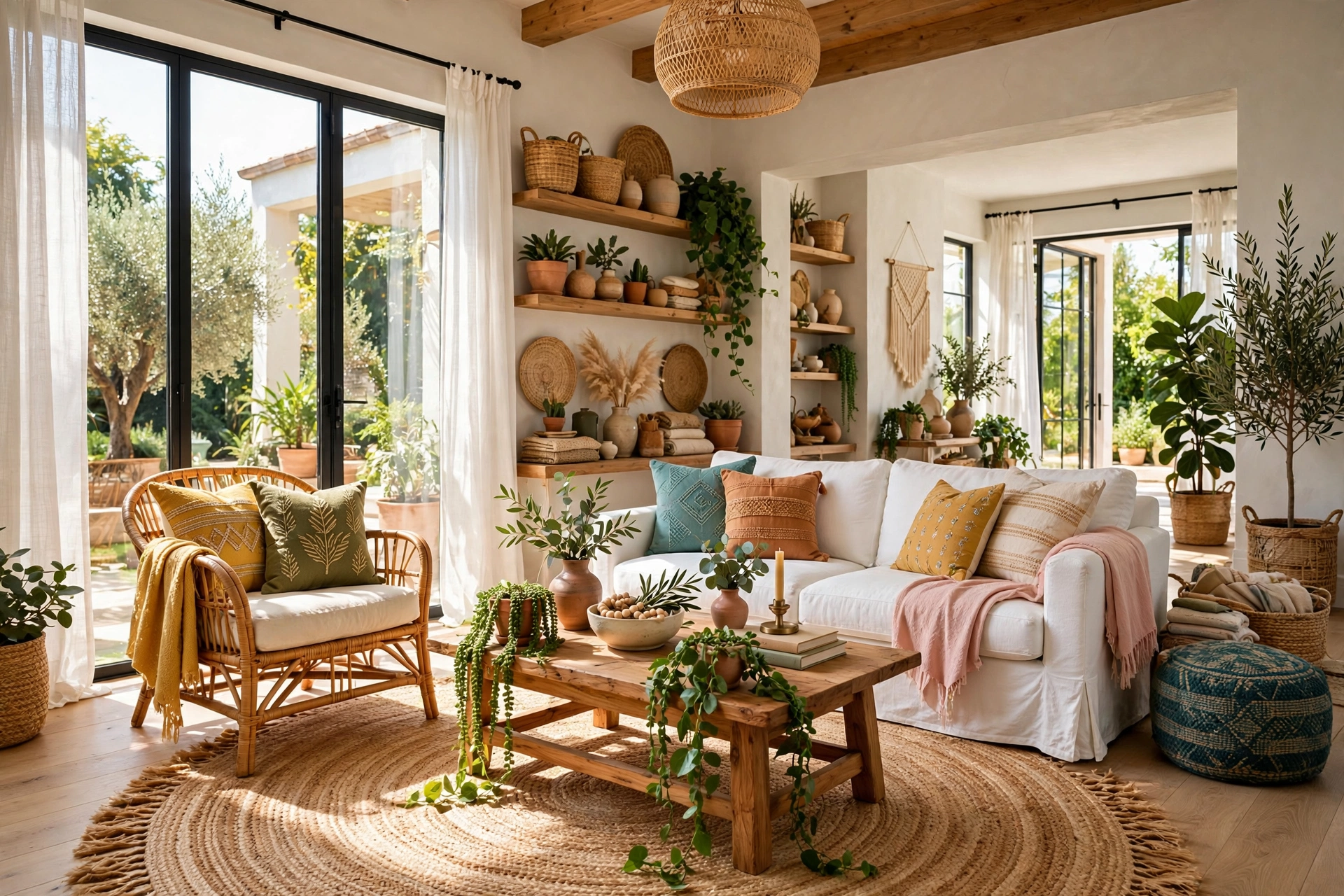
Few things warm up a living room faster than a natural fiber rug. Jute and sisal bring an organic, textured warmth that softens modern furniture, balances leather and metal, and instantly makes a room feel earthy and relaxed. They are typically available under $200 even in generous sizes, because the material itself is inexpensive — you are paying for the look of nature, not a complicated manufacturing process.
Jute is the softer of the two, with a warm golden tone and a slightly rustic weave that works beautifully in coastal, bohemian, and farmhouse-leaning rooms. Sisal is tougher and more structured, with a crisper weave and a more tailored appearance that suits modern and transitional spaces. Both can be tricky with spills — natural fibers absorb liquids and spot-cleaning is limited — so they are best in lower-risk zones or layered under a washable top rug where the seating actually happens.
4. Moroccan-Inspired Geometric Rug
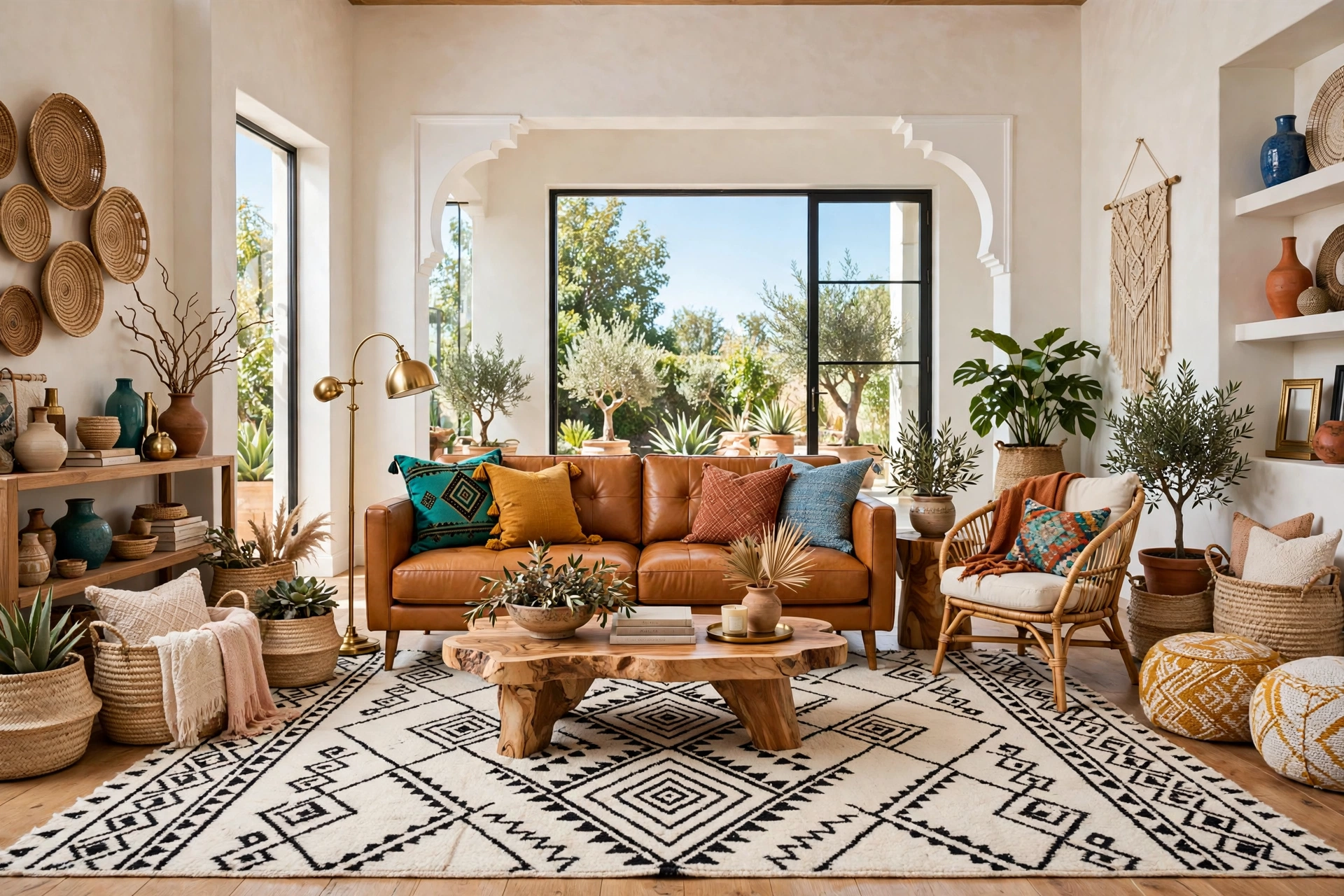
The Moroccan-inspired rug — creamy ivory backgrounds with bold black or charcoal geometric lines — has stayed popular for good reason: it adds graphic energy to a room without adding color commitments. The high-contrast pattern hides everyday wear remarkably well, which makes it a forgiving choice for busy living rooms. And because the design is essentially a printed pattern, budget versions look nearly as good as expensive ones from across the room.
This style shines in bohemian and eclectic rooms, but it also works as the one bold move in a calm neutral space. Pair it with warm wood tones, a few plants, and textured throws, and the room gets an instant collected-over-time feeling. If your existing furniture is plain, a Moroccan-style rug is the fastest way to give the room a point of view — and if your palette is undecided, our roundup of living room color schemes shows how to choose rug colors that anchor a room instead of just filling it.
5. Distressed Persian-Look Rug
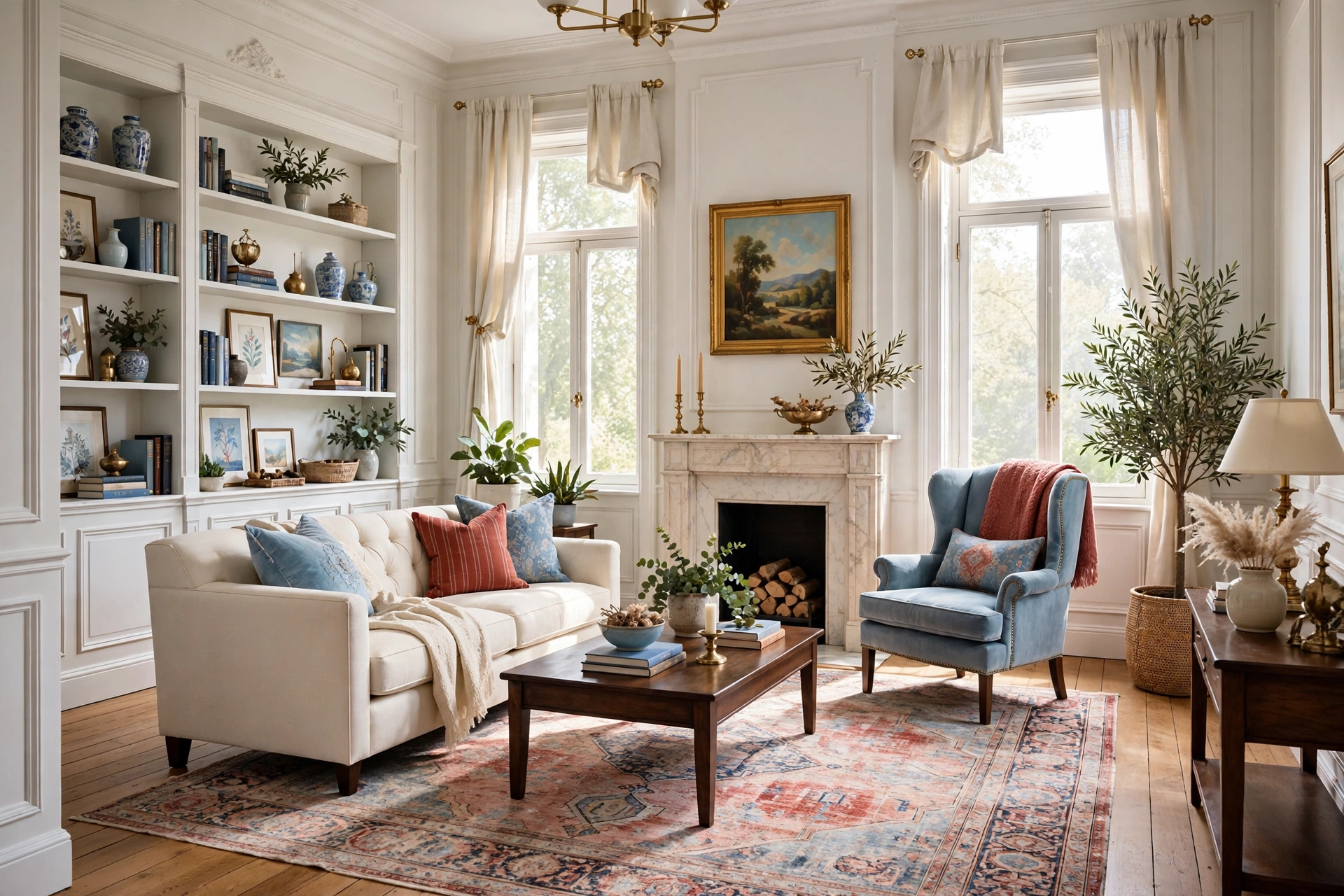
A distressed Persian-look rug brings instant history to a room — the faded medallions, worn borders, and softened reds and blues suggest a piece that has lived somewhere interesting for decades. Modern printing techniques reproduce this look convincingly at budget prices, and the intentionally faded finish is practical camouflage: the design already looks worn, so new wear from daily life simply blends in.
This style is a natural fit for traditional and transitional living rooms, but it also adds beautiful contrast in modern spaces where everything else is crisp and new. The key is to keep the rest of the room relatively calm — let the rug be the patterned statement and keep upholstery and curtains in solids or quiet textures. One thing to watch: very cheap versions can look plasticky up close, so check product reviews for comments about how the rug feels and looks in real homes before ordering.
6. The Solid Neutral Rug in Ivory or Greige
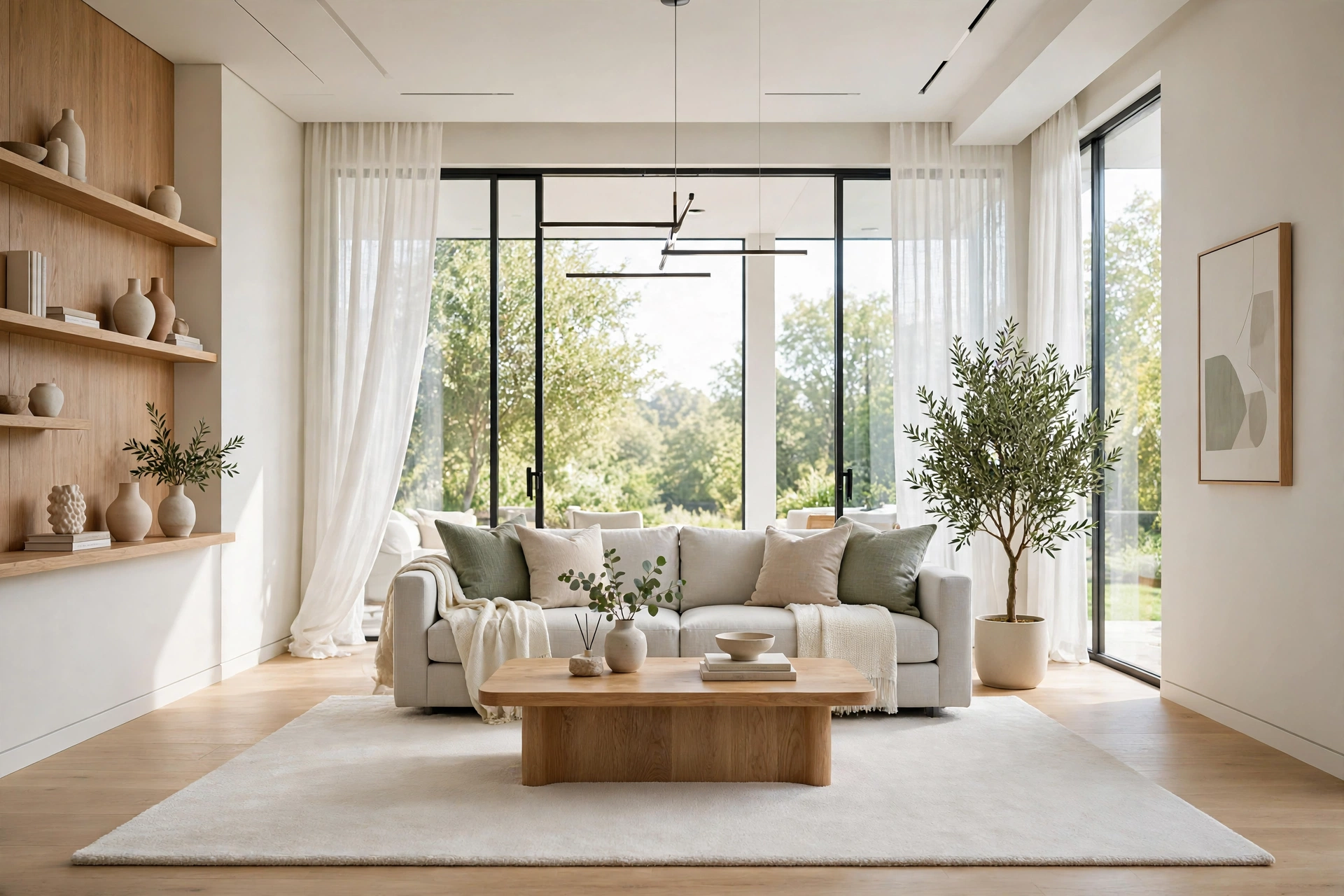
Sometimes the rug’s job is not to be seen — it is to make everything else look better. A solid neutral rug in ivory, oatmeal, or greige creates a calm, expansive floor plane that lets your furniture, art, and color accents do the talking. This is the choice for rooms that already have a lot going on visually: patterned curtains, colorful art, a statement sofa. The quiet rug underneath gives all of it room to breathe.
Solid rugs in warm neutrals also make small living rooms feel larger, since an unbroken light surface reads as one continuous space. Keep the texture interesting — a subtle weave, a nubby loop, a faint tonal variation — so the rug reads as intentional rather than blank. Neutral rugs are also the perfect canvas for layering: a smaller patterned rug on top turns the calm base into a designer moment for very little extra money.
📌 Important: When you are torn between two rug sizes, always size up. Designers repeat this like a mantra because nobody ever regrets a rug that is six inches too big — but almost everyone regrets the one that is six inches too small. An undersized rug chops the room into fragments and undoes all the grounding a rug is supposed to do.
7. Bold Geometric Pattern Rug
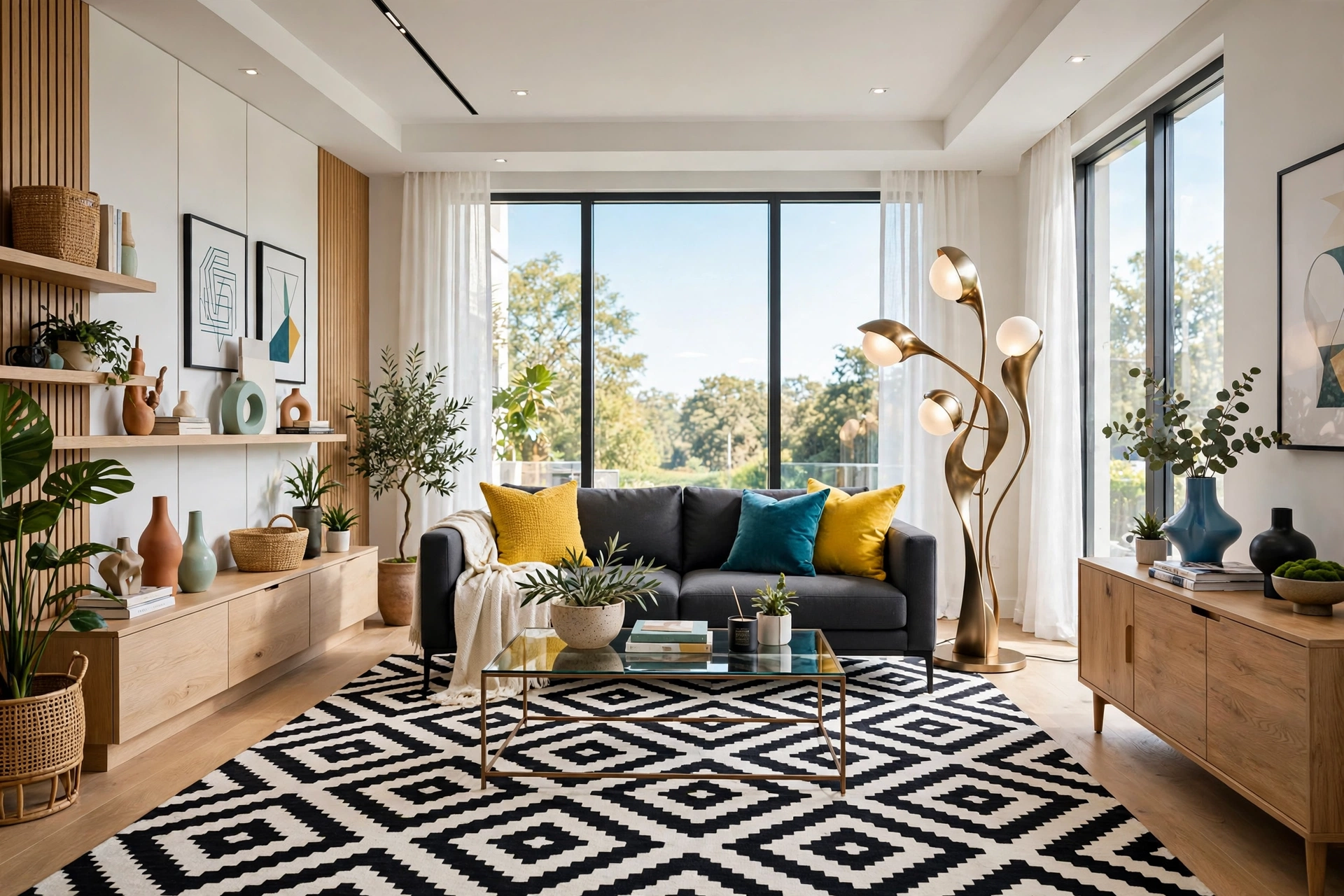
If your living room leans modern, a bold geometric rug is the pattern that speaks its language. Strong diamonds, chevrons, lattice lines, and oversized shapes echo the clean lines of contemporary furniture while adding the visual energy that flat neutrals lack. At budget prices, geometric designs are some of the sharpest-looking options available, because the crisp printed pattern does not depend on expensive materials to look intentional.
Scale the pattern to your room. In a small living room, a large-scale geometric can overwhelm, while a fine, tight pattern can read as texture from a distance — usually the better move. In a large open space, go bolder: the pattern needs enough presence to hold its own across a big floor. Keep the color palette tight, ideally pulling one or two tones from your existing upholstery, so the geometry feels like it belongs to the room rather than competing with it.
8. Striped Rug for a Classic, Orderly Feel
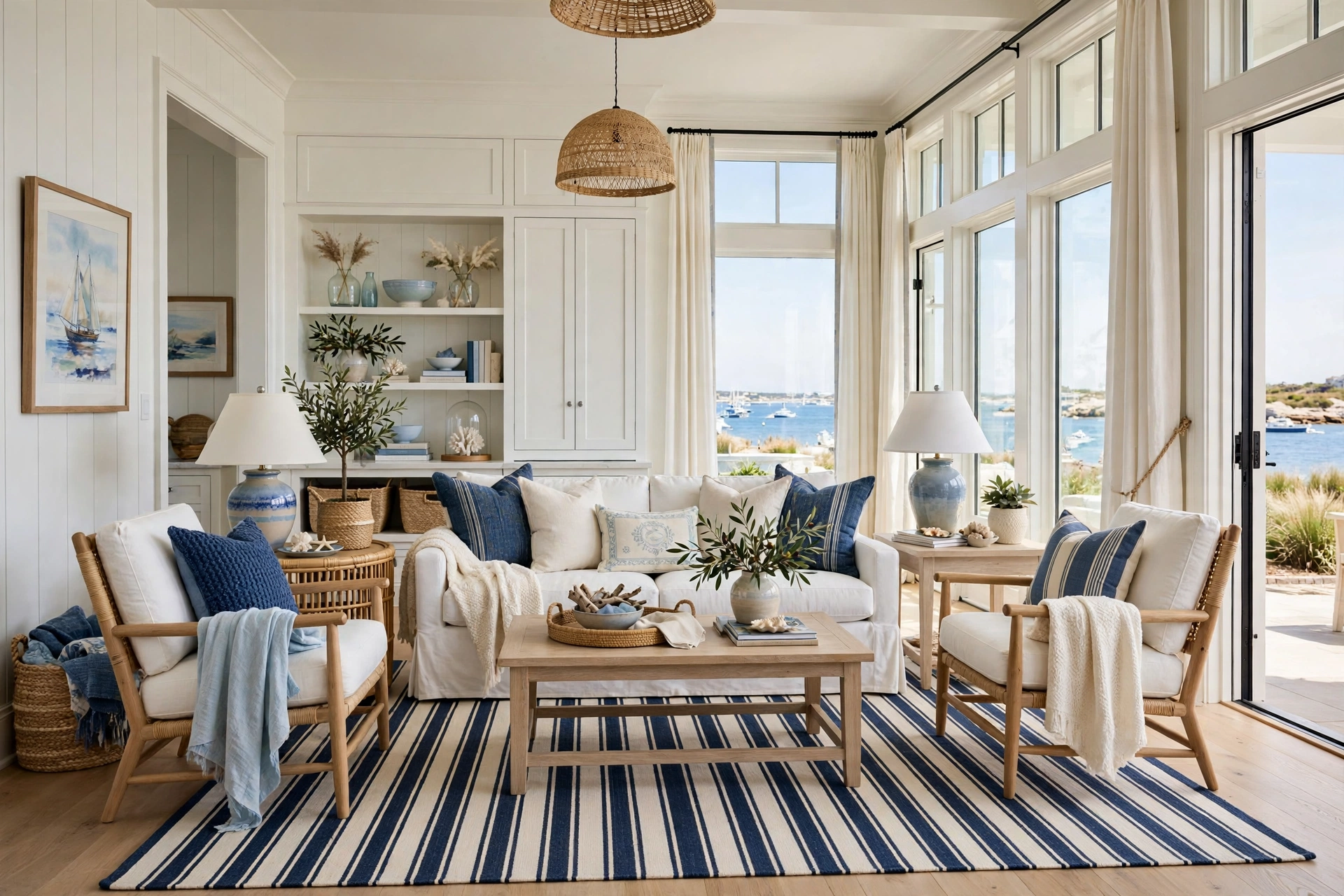
Stripes are the quiet overachievers of the rug world. They add pattern without busyness, structure without formality, and a sense of order that makes a whole room feel more composed. A striped rug in navy and ivory, charcoal and cream, or warm tan and white gives a living room a tailored, almost coastal-classic feel that works across styles from traditional to modern.
Stripes also do useful visual work: they can make a narrow room feel wider when the stripes run across the room’s short dimension, and they guide the eye along the seating arrangement in a way that feels intentional. Flatweave striped rugs are typically very affordable in large sizes, and the simple pattern means even the cheapest versions look crisp and deliberate. For a room that needs polish but not drama, stripes are hard to beat.
9. Round Rug for Awkward or Cozy Layouts
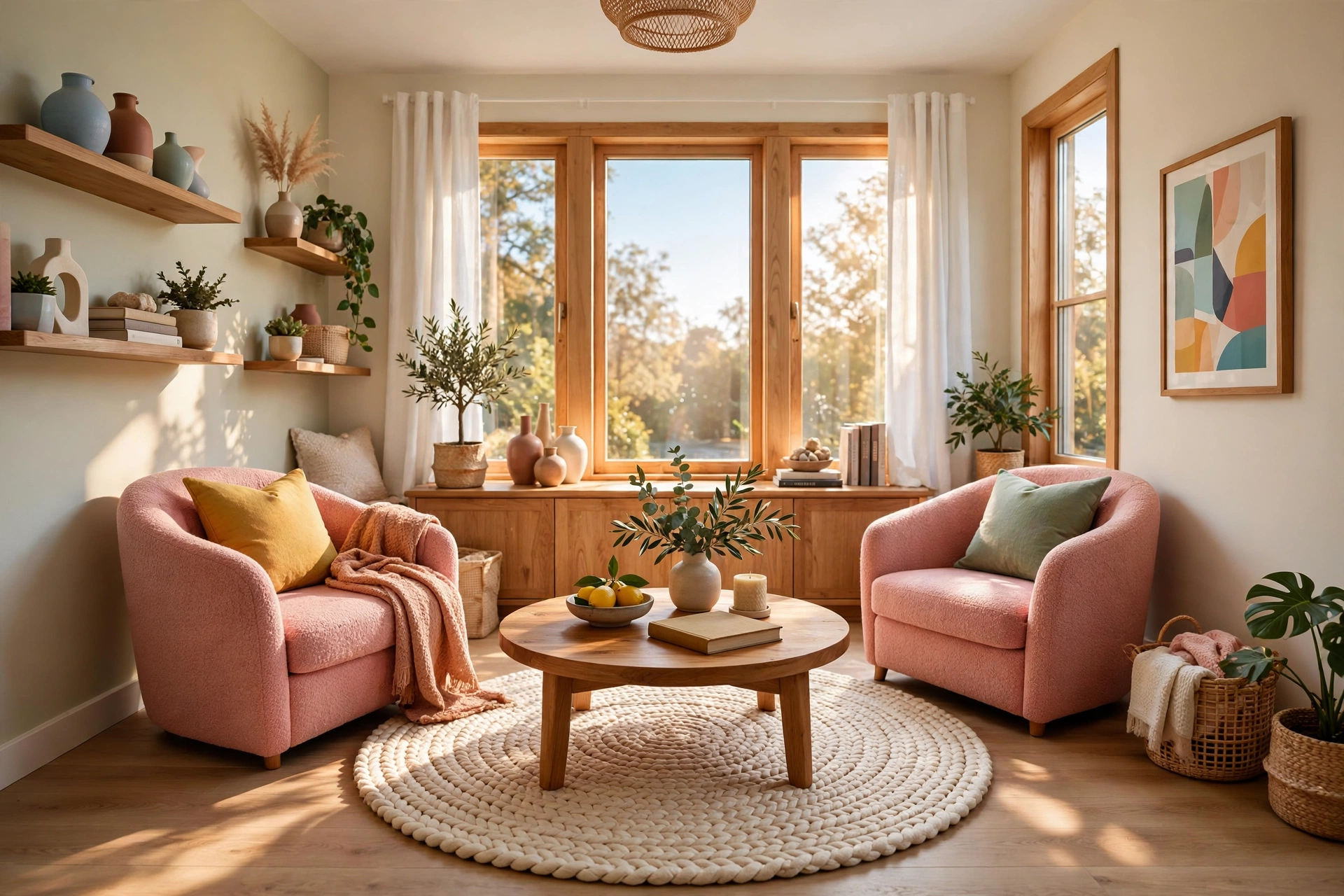
Not every living room is a rectangle with a sofa against the wall. For small square rooms, bay-window corners, and conversation nooks with chairs angled around a round coffee table, a round rug is often the better shape. It softens rooms full of hard rectangles, creates an intimate conversational pocket, and works beautifully in spaces where a rectangular rug would leave awkward corner gaps.
Round rugs are typically sold in smaller diameters than rectangular rugs are sold in lengths, which keeps them well within budget. The one rule: make sure the coffee table sits fully on the round rug with the chair front legs at least touching its edge, or the arrangement will feel like it is sliding off.
💡 Pro Tip: A round rug under a round coffee table with chairs angled inward is the coziest layout formula there is — it pulls everyone into a natural conversation circle. For more on arranging seats so people actually talk to each other, see our guide to living room furniture arrangement, which covers the distance and angle rules designers use in every room.
10. Kilim-Style Flatweave
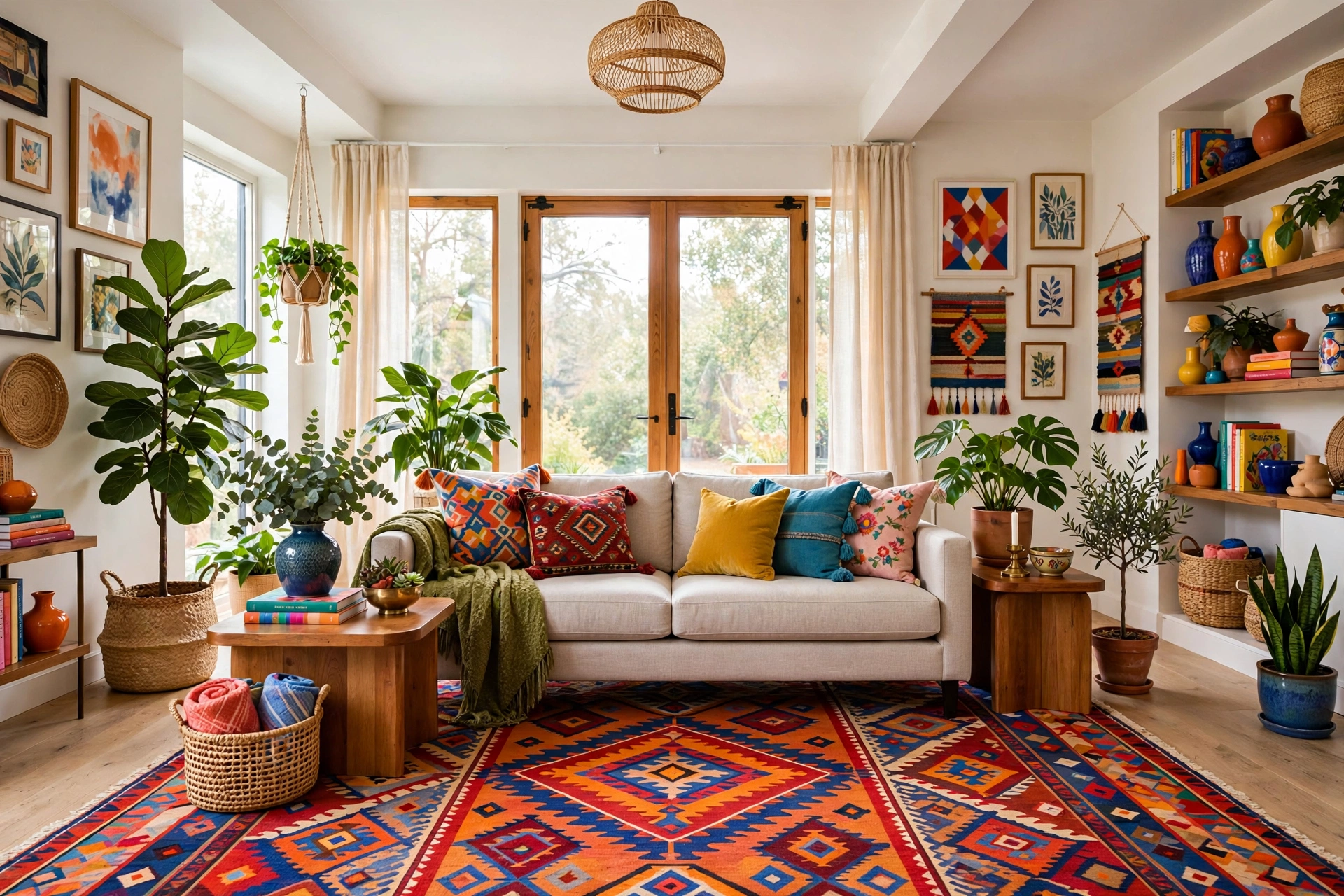
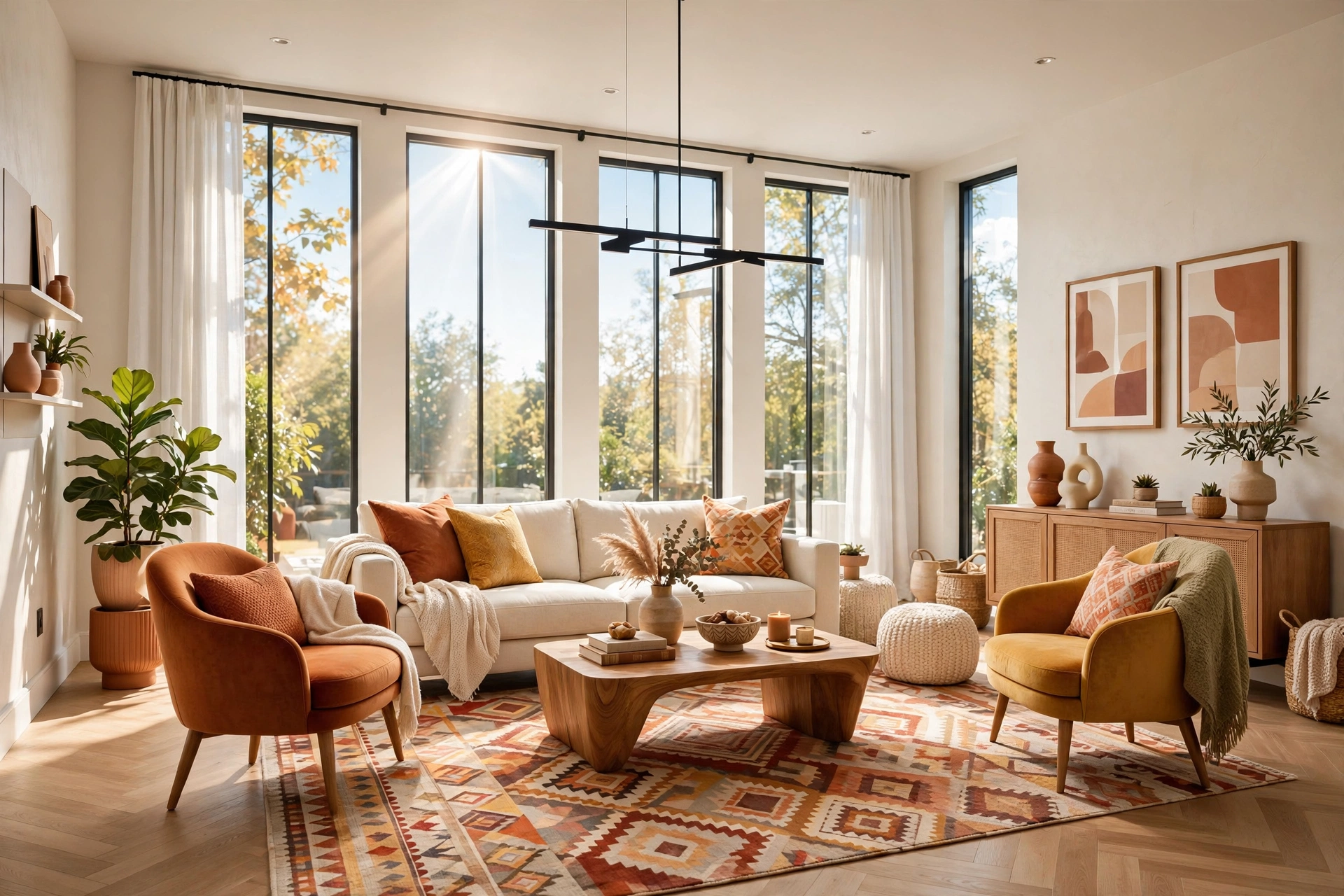
Kilim-style rugs — with their flat, colorful, tapestry-like geometric patterns — bring a collected, well-traveled energy to a living room. The traditional motifs in reds, oranges, blues, and creams add warmth and personality that plain rugs cannot match, and the flatweave construction keeps them affordable, durable, and easy to clean. They are the natural choice for bohemian, eclectic, and globally-inspired rooms.
Because kilim patterns are inherently busy and colorful, the rest of the room should give them space. Solid or near-solid upholstery, simple curtains, and a restrained color palette let the rug be the star without competition. If you love color but fear commitment, a kilim-style rug is one of the lowest-risk ways to try it — the whole experiment sits on the floor, and at this price point it can be swapped when your taste evolves. Pair it with a few warm wood tones and plants, and the room reads as curated rather than decorated.
11. Indoor-Outdoor Rug for Hardworking Spaces
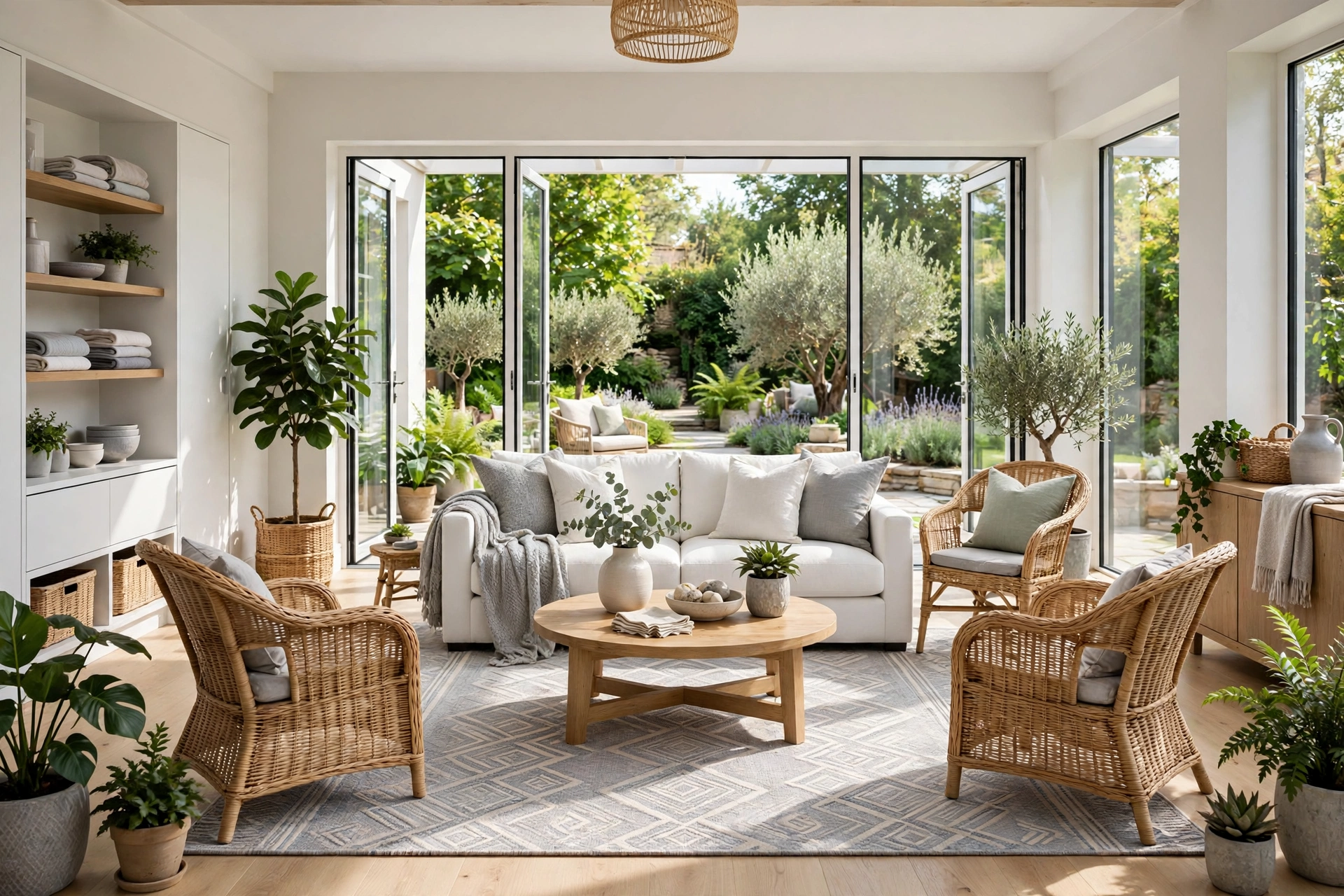
An indoor-outdoor rug is the workhorse option hiding in plain sight. Woven from durable synthetic fibers, these rugs resist stains, moisture, and sun fading, and many can be hosed down or scrubbed without damage. They are typically very affordable in large sizes, which makes them a smart pick not just for patios but for the hardest-working indoor living rooms — the ones with toddlers, dogs, and constant traffic.
The style range has expanded far beyond the old plastic-looking patio mats. Modern indoor-outdoor rugs come in convincing jute looks, soft geometric patterns, and even vintage-inspired prints that read perfectly fine in a styled living room. The trade-off is underfoot feel: the synthetic weave is flatter and less plush than a proper indoor rug. Fix that with a thick felt rug pad underneath, and most people will never know the difference — they will just notice that your rug still looks new.
⚠️ Warning: Always use a rug pad under your rug, no matter how affordable the rug is. A pad stops the rug from creeping and bunching on hard floors, protects the floor finish, adds cushioning underfoot, and extends the rug’s life. Buy the pad the same day as the rug — a rug without one is an unfinished installation, and sliding rugs are a genuine tripping hazard.
12. The Layered Rug Combo
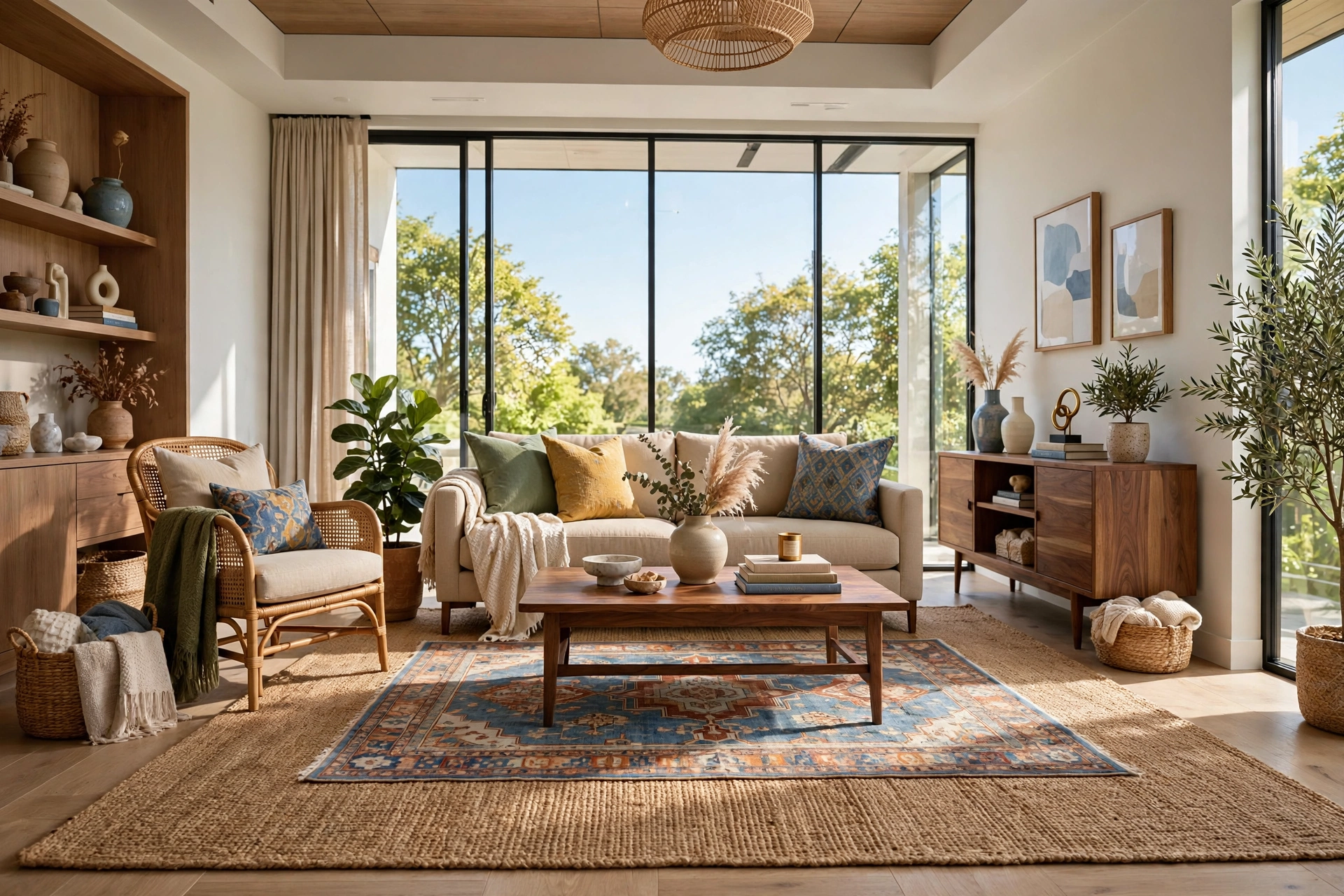
Layering — placing a smaller statement rug over a larger neutral base — is the designer’s trick for getting a large-rug look on a small-rug budget. Start with an inexpensive flat-weave base in the correct size for your seating area: jute, sisal, or a simple cotton flatweave, all typically affordable in 8×10 or 9×12. Then float the beautiful smaller rug you can actually afford on top, centered under the coffee table. From above, the two layers read as one generous, intentionally styled composition.
Layering also solves the too-small-rug problem that plagues so many living rooms. A rug you already own that is slightly undersized becomes perfect when it floats over a neutral base that extends to the front legs of all your seating. Keep the base flat and quiet so the top rug stays the star, and hide the top rug’s edges under the coffee table so the transition reads as design rather than compromise. This is also the best way to try a high-maintenance top layer — like a vintage-look rug — over a practical base that handles the traffic.
Quick Comparison: 12 Living Room Rugs by Cost and Effort
Living Room Rug Quick-Start Checklist
- ✅ Measure your seating zone (sofa + chairs + coffee table) and note the length and width before you shop.
- ✅ Size up when torn between two sizes — the front legs of all seating should rest on the rug.
- ✅ Check door clearance: interior doors need roughly three-quarters of an inch, so low-pile wins near swing doors.
- ✅ Buy a rug pad the same day as the rug and trim it about an inch smaller than the rug on every side.
- ✅ Test the size on the floor with painter’s tape and live with the outline for a day before ordering.
- ✅ Pull one or two colors from the rug into pillows or throws so the whole room reads as one scheme.
Common Living Room Rug Mistakes
Mistake 1: Buying a Rug That Is Too Small
The single most common rug mistake is sizing down to save money. A too-small rug floating in the middle of the floor chops the room into fragments — bare floor, rug, bare floor — and makes the seating look like it is drifting apart. The room reads as smaller and less intentional, which is the exact opposite of what the rug was supposed to do. Spend the size budget first and the style budget second; a plain rug in the right size beats a beautiful rug in the wrong size every time.
Mistake 2: Choosing Pattern Before Considering Lifestyle
A cream shag rug is gorgeous in a photo and a disaster under a muddy-pawed dog. Every rug type has a lifestyle it suits and one it does not: high-pile and light solids struggle with pets and kids, natural fibers struggle with spills, dark rugs show lint and pet hair. Be honest about how your living room actually gets used, then pick from the styles that survive that reality. Budget-friendly does not have to mean high-maintenance.
Mistake 3: Skipping the Rug Pad
It is tempting to treat the pad as an optional extra, especially when the rug itself was a bargain. It is not optional. Without a pad, rugs creep across hard floors, bunch under furniture legs, and wear out faster from grinding against the floor. On carpet, a pad keeps the rug from wrinkling. The pad is the unglamorous half of the purchase that decides whether the rug actually works — budget for it from the start.
Mistake 4: Ignoring the Room’s Existing Colors
A rug that clashes with the sofa, curtains, or wall color will fight the room every day, no matter how pretty it looked online. Before buying, pull together swatches or phone photos of your largest existing pieces and compare them against the rug in daylight, not just lamplight. The rug should share at least one tone with the room’s dominant colors — it does not need to match, but it needs to belong. If your palette is still undecided, start with a neutral rug and let the smaller accessories carry the color.
Mistake 5: Forgetting About Lighting
Rug colors shift dramatically between the store, your daylight, and your evening lamps. A rug that looked warm greige online can read as cold gray under cool daylight bulbs; a navy pattern can go nearly black in a dim corner. Check the rug’s tones in your room’s actual light before committing, and keep your bulb color temperatures consistent and warm. If your room already feels flat or cold, browse our cozy living room ideas for the lighting layers that make any rug look its best.
Frequently Asked Questions
1. What size rug should I get for my living room?
Start with your seating zone, not your room: measure the full footprint of the sofa, chairs, and coffee table. As a minimum, the front legs of the sofa and every chair should rest on the rug. Most living rooms land on 8×10 or 9×12 feet; compact apartment living rooms usually need 6×9. When torn between two sizes, size up — a slightly generous rug unifies the room, while a slightly small one chops it up.
2. Can I really get a good living room rug for under $200?
Yes — the under-$200 range is genuinely well stocked for the sizes living rooms need. Flatweaves, washable designs, natural fibers like jute, and printed vintage-look and geometric rugs are all commonly available under $200 in 5×7 through 8×10 sizes. What the budget does not buy is thick hand-knotted wool or silk blends, so set expectations accordingly: shop constructions that look good by design (pattern, weave, color) rather than by expensive materials, and the results will look far more expensive than they were.
3. How do I clean a budget living room rug?
Vacuum weekly without the beater bar on low-pile and flatweave rugs, and blot spills immediately — never rub, which spreads the stain. Washable rugs can go through the machine on a gentle cycle per their instructions. For spot stains, a small amount of mild dish soap in water handles most everyday marks; test any cleaner in a corner first. Natural fiber rugs like jute should be kept dry, so blot only and never steam-clean them. A rug pad underneath also reduces the dirt ground into the fibers from below.
4. Should the rug go under the sofa or in front of it?
At minimum, the front legs of the sofa should sit on the rug — this is the golden rule of rug placement. Having all four legs of every seat on the rug is the more luxurious version and works beautifully in larger rooms. What you want to avoid is the rug stopping short of the sofa’s front legs, which makes the seating look disconnected. If a full-size rug blows the budget, layering — a large inexpensive flat-weave base with a smaller statement rug on top — gets the front-legs rule covered for less money.
5. What is the best rug for a living room with pets?
Low-pile rugs with busy or dark patterns are the most forgiving: they hide pet hair between vacuumings and camouflage the inevitable small stains. Washable rugs are the top practical pick, since the whole rug can be laundered. Indoor-outdoor rugs are another strong choice — they resist stains and can be scrubbed. Avoid high-pile shag (it traps hair and claws) and light solid colors (they show everything). A patterned rug in a mid-tone is the honest sweet spot for pet households.
6. Do I need a rug pad on carpet?
Yes, though a thinner one. On hard floors a pad prevents sliding, bunching, and floor damage; on carpet it prevents the rug from wrinkling and creeping, and adds cushioning. Match the pad to the floor: thin rubber or felt-rubber pads for hardwood, felt pads for carpet-on-carpet. Keep the pad about an inch smaller than the rug on every side so it stays invisible, and factor a thick pad into your door-clearance math.
7. How do I make a cheap rug look expensive?
Three things elevate any budget rug: correct sizing, a rug pad, and styling around it. A properly sized rug with crisp edges, lying flat on a good pad, already looks intentional. Then give it context: styled coffee table, coordinated throw pillows that echo one rug color, warm lighting. Framing also matters — leaving a consistent border of bare floor (roughly 12 to 18 inches) around the rug makes it read as a deliberate zone rather than a mat. If you are refreshing the whole room on a budget, our budget living room makeover guide shows how to aim every dollar at the highest-impact moves.
Conclusion
A living room rug is not decoration — it is the foundation the whole room stands on. It anchors the seating, defines the conversation zone, hides imperfect floors, and pulls scattered pieces into a single intentional composition. And as this guide shows, you do not need a big budget to get that foundation right: flatweaves, washable designs, natural fibers, and printed vintage and geometric looks all deliver the anchoring effect for under $200.
Start with the practical decisions — measure your seating zone, size up rather than down, buy the pad — and then pick the style that fits your room and your life. Whether that is a crisp Moroccan geometric, a warm jute base, a washable vintage-look print, or a layered combo of both, the right rug at the right size will do more for your living room than almost any other single purchase. Measure twice, order once, and enjoy the room that finally feels finished.