10 Small Kitchen Appliances Worth the Counter Space in 2026
Introduction
Counter space is the most valuable real estate in a small kitchen, and every appliance sitting on it is paying rent. The trouble is that most kitchens collect appliances the way drawers collect old batteries: one useful purchase at a time, until the counter that should hold a chopping board holds a bread maker nobody has touched since spring, a juicer with three missing parts, and a blender the size of a small suitcase. Cooking gets harder, not easier, because there is nowhere left to actually cook. The question is not whether an appliance is good in general. It is whether it earns its footprint every single week.
The ten appliances below pass a strict test: they are used at least several times a week in a normal household, they replace more than one single-purpose tool, and they are small enough that keeping them out does not cost you your prep space. They are ordered by everyday payoff, starting with the workhorses that change weeknight cooking most, and ending with the quiet specialists that earn their spot by doing one job brilliantly. Like the best small kitchen decor ideas, the goal is a kitchen that works on a busy Tuesday, not a kitchen that only looks impressive in a photograph.
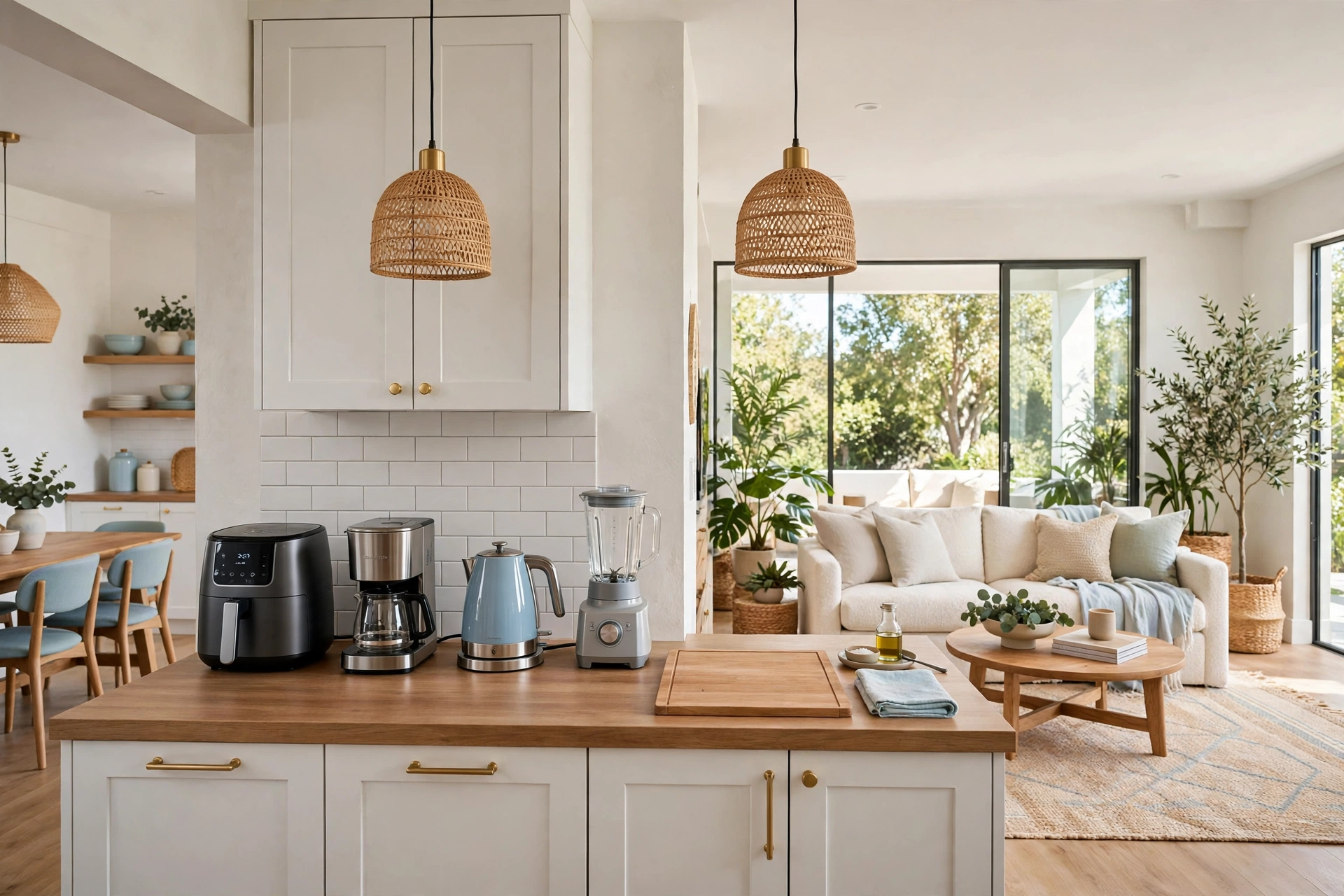
Before you buy anything, measure your counter honestly. Note the depth of the counter run, the clearance under the upper cabinets, and the distance to the nearest outlet, because a tall appliance that will not fit under the cabinets or a cord that will not reach is a return waiting to happen. Then apply the two-week test to what you already own: move any appliance you have not used in a fortnight into a cabinet, and if you do not miss it, it never needed to be on the counter at all. The ten picks below are the ones that survive that test in kitchen after kitchen.
1. Compact Air Fryer
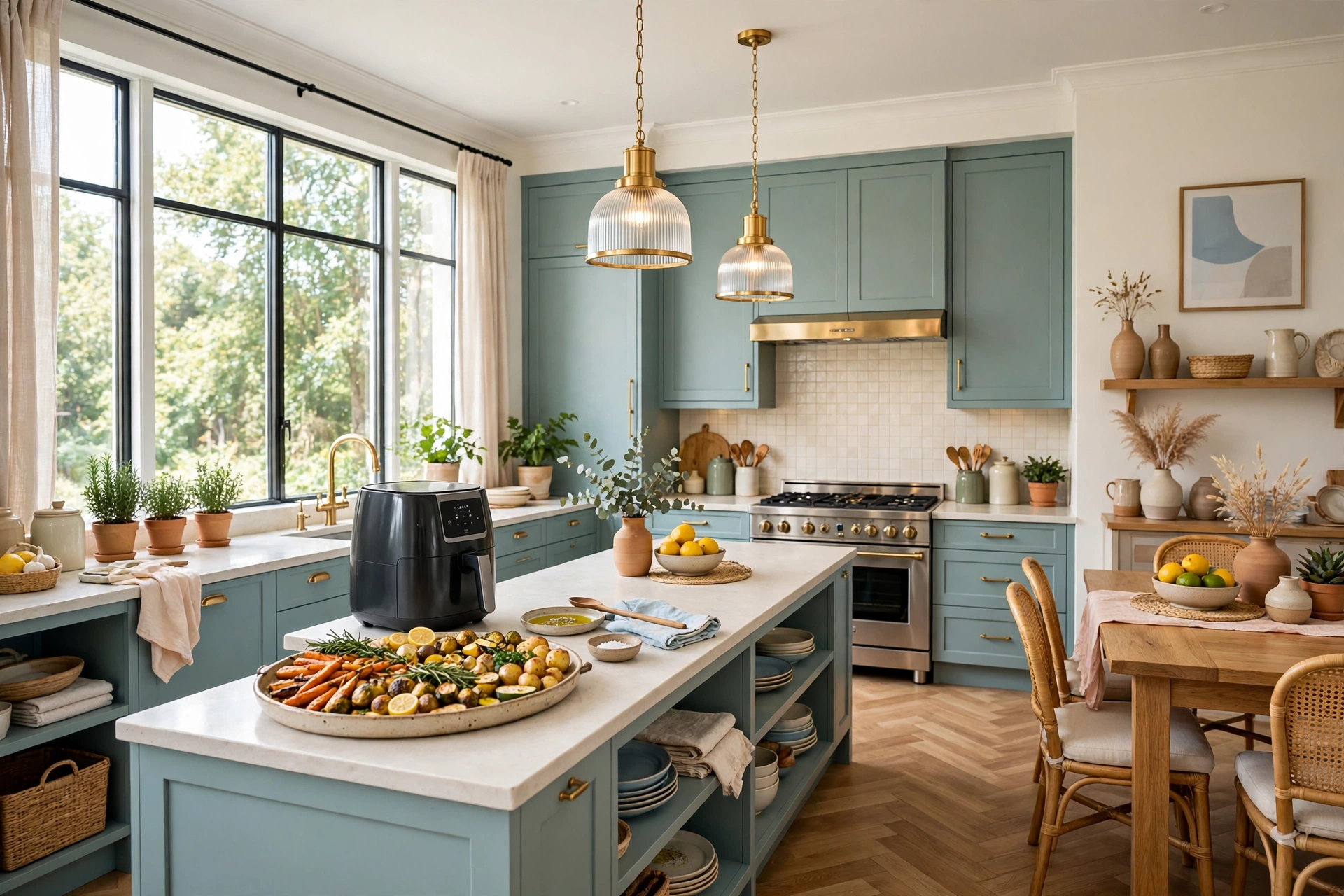
A compact air fryer is the single appliance most likely to change how often you cook at home, because it turns the jobs you used to avoid into ten-minute tasks. Crispy potatoes, roasted vegetables, reheated leftovers that actually stay crisp, and weeknight chicken all come out faster than the oven can manage, without heating the whole kitchen. For a small household, a 3 to 5 litre basket is the sweet spot: big enough for two generous portions, small enough to live on the counter without swallowing it. Look for a basket that lifts out with one hand and a drawer that goes in the dishwasher, because an air fryer that is annoying to clean is an air fryer that stops getting used.
Size matters more than features here. Measure the height under your upper cabinets, including the space needed to open the drawer fully, and choose a squat, wide model over a tall tower if your clearance is tight. Skip the extra presets you will never touch and prioritise a clear temperature dial or display, a timer you can read at a glance, and a non-stick basket that genuinely releases food. Used three or four times a week, a compact air fryer replaces the oven for most small meals, which is exactly the kind of daily payoff that earns permanent counter space.
2. Single-Serve Blender
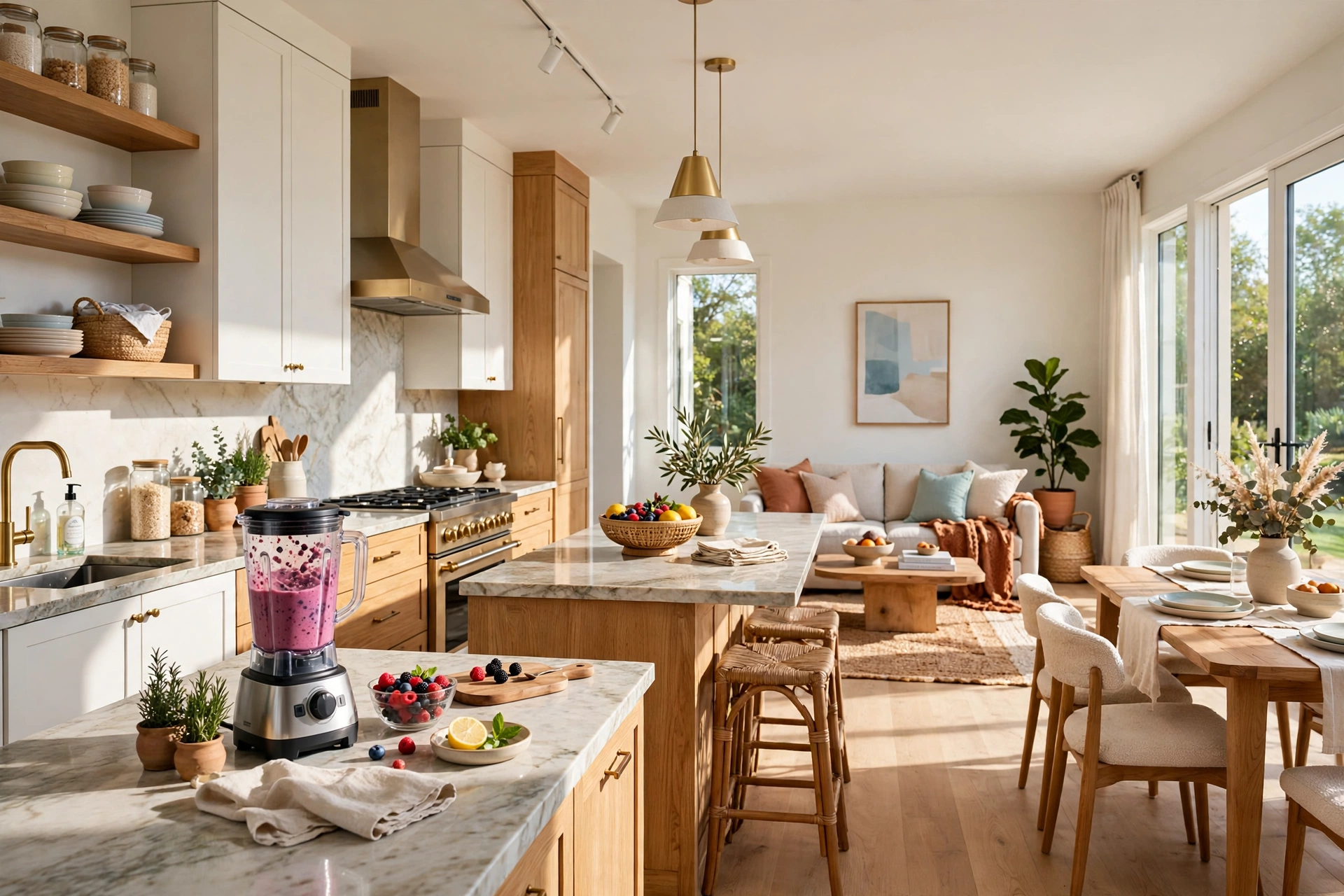
A full-size blender is a commitment: heavy, tall, and awkward to wash, which is why so many of them live in a cabinet and only come out for guests. A single-serve blender flips that logic completely. You blend straight into the cup you drink from, rinse the blade in seconds, and put it away in the time it takes a full-size blender to be assembled. For morning smoothies, protein shakes, salad dressings, and small batches of soup or sauce, it does the job of the big machine at a fraction of the footprint, and it is light enough to lift with one hand.
Choose a model with a sturdy base that does not walk across the counter, a cup size that matches your usual portion, and blades that handle frozen fruit and ice without stalling. If you blend daily, keep the base on the counter and the cups beside it in a cabinet; if you blend a few times a week, the whole thing fits in a single cabinet slot. Either way, it beats a large blender gathering dust, because the best appliance is the one you actually reach for. This is the same honest daily-use test behind the best kitchen organizers on Amazon: small, visible, and used beats big, impressive, and ignored.
💡 Pro Tip: Freeze fruit in single portions and keep the blender cup next to the freezer. When the whole routine takes under two minutes including rinsing, a smoothie stops being a project and becomes a habit.
3. Multi-Cooker
A multi-cooker earns its counter space by replacing at least four appliances at once: a slow cooker, a rice cooker, a steamer, and a pressure cooker, with yoghurt making and sautéing thrown in for good measure. On a busy day it is a slow cooker that starts dinner in the morning; on a rushed evening it is a pressure cooker that turns dried beans or a tough cut of meat into dinner in under an hour. One pot, one lid, one appliance to clean, and a whole shelf of single-purpose cookers freed up in the cabinet.
Pick the size for your household, not for your ambitions: a 5.7 litre model suits most families, while a 3 litre model is plenty for one or two people and far easier to store. Check that the inner pot is genuinely non-stick and dishwasher safe, and that the lid seal is easy to remove and wash, because a seal that smells of last week’s curry will put you off using it. Keep it on the counter only if you use it at least twice a week; otherwise it earns a cabinet slot and still beats owning four separate cookers. For small kitchens, that consolidation is the whole point.
Small Kitchen Appliances Quick-Start Checklist
- ✅ Measure counter depth, cabinet clearance, and outlet distance before buying any appliance
- ✅ Keep only appliances you use at least twice a week on the counter permanently
- ✅ Move anything unused for two weeks into a cabinet and see if you miss it
- ✅ Choose compact models that fit under upper cabinets with room to open lids and drawers
- ✅ Pick appliances that replace two or more single-purpose tools
- ✅ Keep daily appliances near the zone where you use them, not in one crowded corner
- ✅ Clean the appliance the day you use it so it stays ready for the next meal
4. Compact Coffee Maker
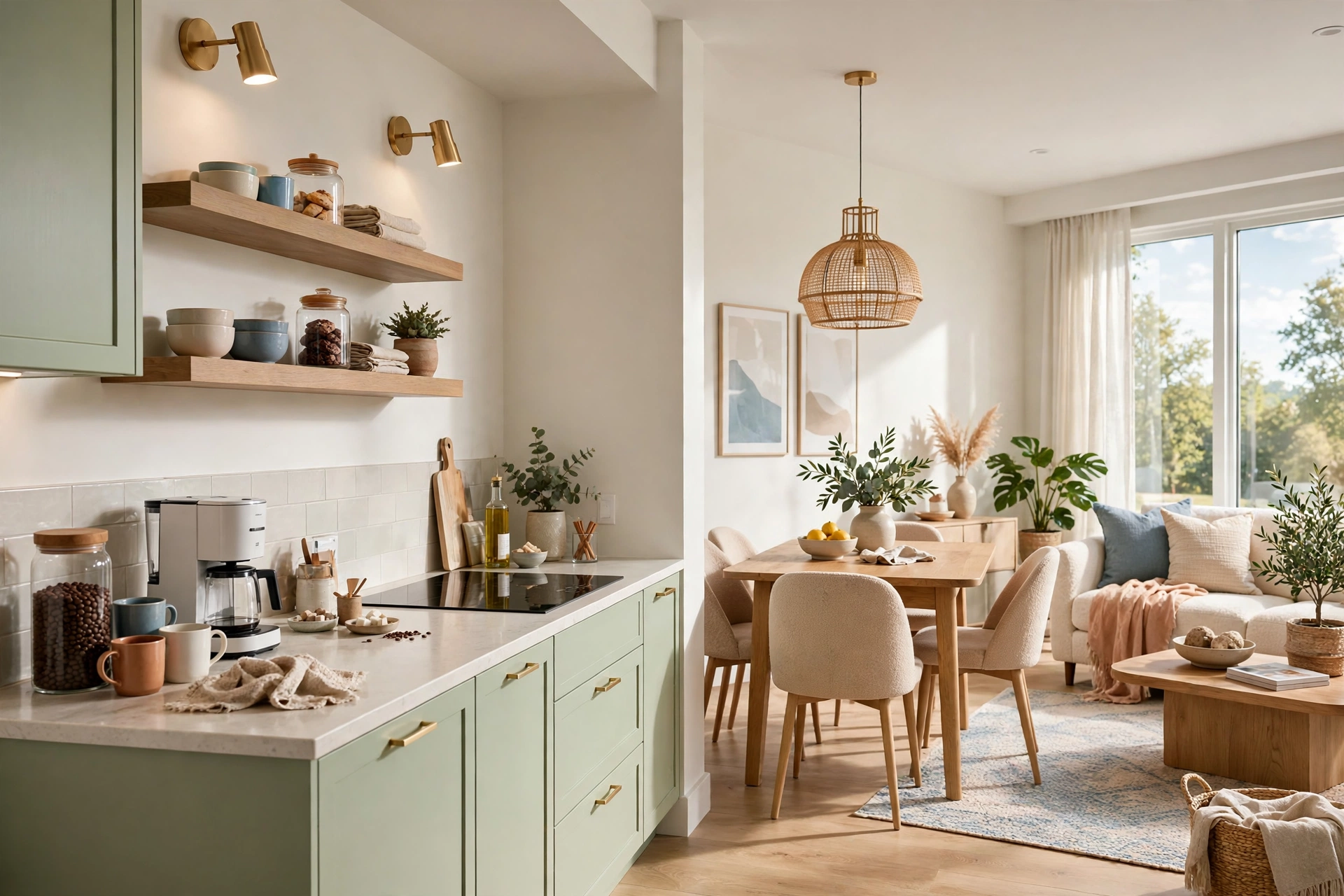
For households that drink coffee every morning, a compact coffee maker is not a luxury, it is the first appliance that should earn counter space. The key word is compact: a slim drip machine or a small pour-over setup that brews the amount you actually drink, rather than a wide machine built for a household twice your size. A good small coffee maker brews a proper pot or a single generous mug, keeps it hot without scorching it, and uses filters and parts you can buy anywhere, not a proprietary pod system that locks you into one brand’s prices.
Decide honestly how you drink coffee before you choose. If you drink one or two mugs a day, a single-serve or small drip machine beats a twelve-cup pot that brews more than you drink and wastes the rest. If you love espresso, a compact manual or stovetop option may earn its spot better than a bulky automatic machine that needs a whole counter run. Keep the coffee, filters, and mugs in the same corner, turning it into a small coffee zone, and the morning routine becomes a pleasure instead of a shuffle between three cupboards.
5. Immersion Blender
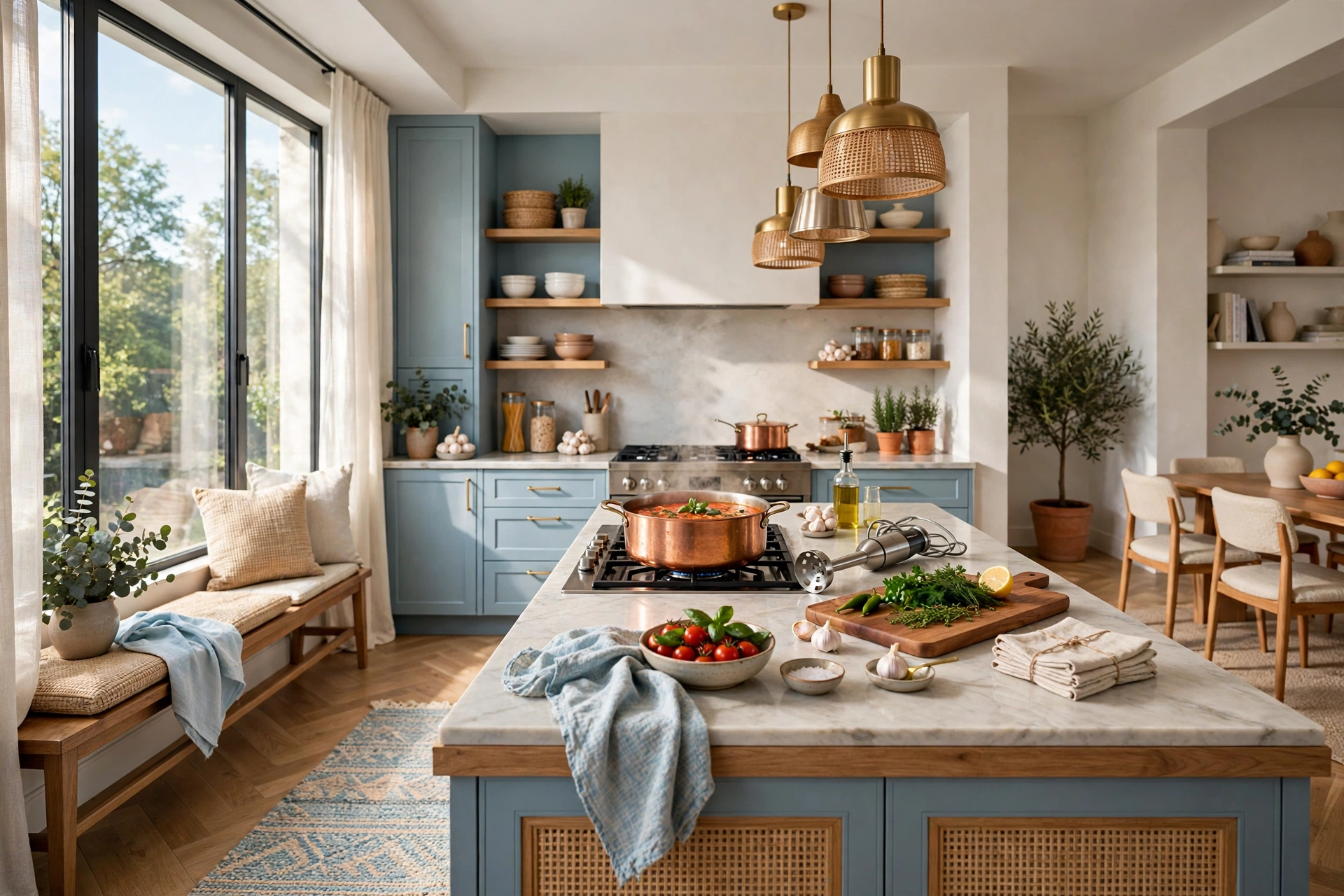
An immersion blender, also called a stick blender, is the quietest genius in a small kitchen, because it does the work of a blender and a food processor without either one’s footprint. It lives in a drawer or a tall jug, blends soup directly in the pot, whips cream in a measuring jug, makes salad dressing in its own jar, and rinses clean under the tap in ten seconds. No heavy jug to lift, no base to wipe down, no second appliance to store, and nothing to assemble before you can start.
Look for a model with a detachable shaft that goes in the dishwasher, a comfortable grip that does not vibrate your hand numb, and at least two speeds so you can start gently and avoid splashing hot soup across the stove. A whisk attachment adds real value if you bake, turning the same tool into a cream and egg whisk, but skip the chopper bowl attachment unless you genuinely have nowhere else to chop small amounts. For renters and tiny kitchens, an immersion blender is often the first appliance to recommend, because it asks for almost no space and gives back a surprising amount of cooking power.
📌 Important: Never lift a running immersion blender out of hot liquid, and always start it fully submerged. Lifting it while it spins sprays hot soup, and starting it above the surface splashes just as badly. Blend low, tilt slightly, and keep the head under the liquid until you switch it off.
Quick Comparison: Small Kitchen Appliances by Cost and Effort
6. Mini Food Processor
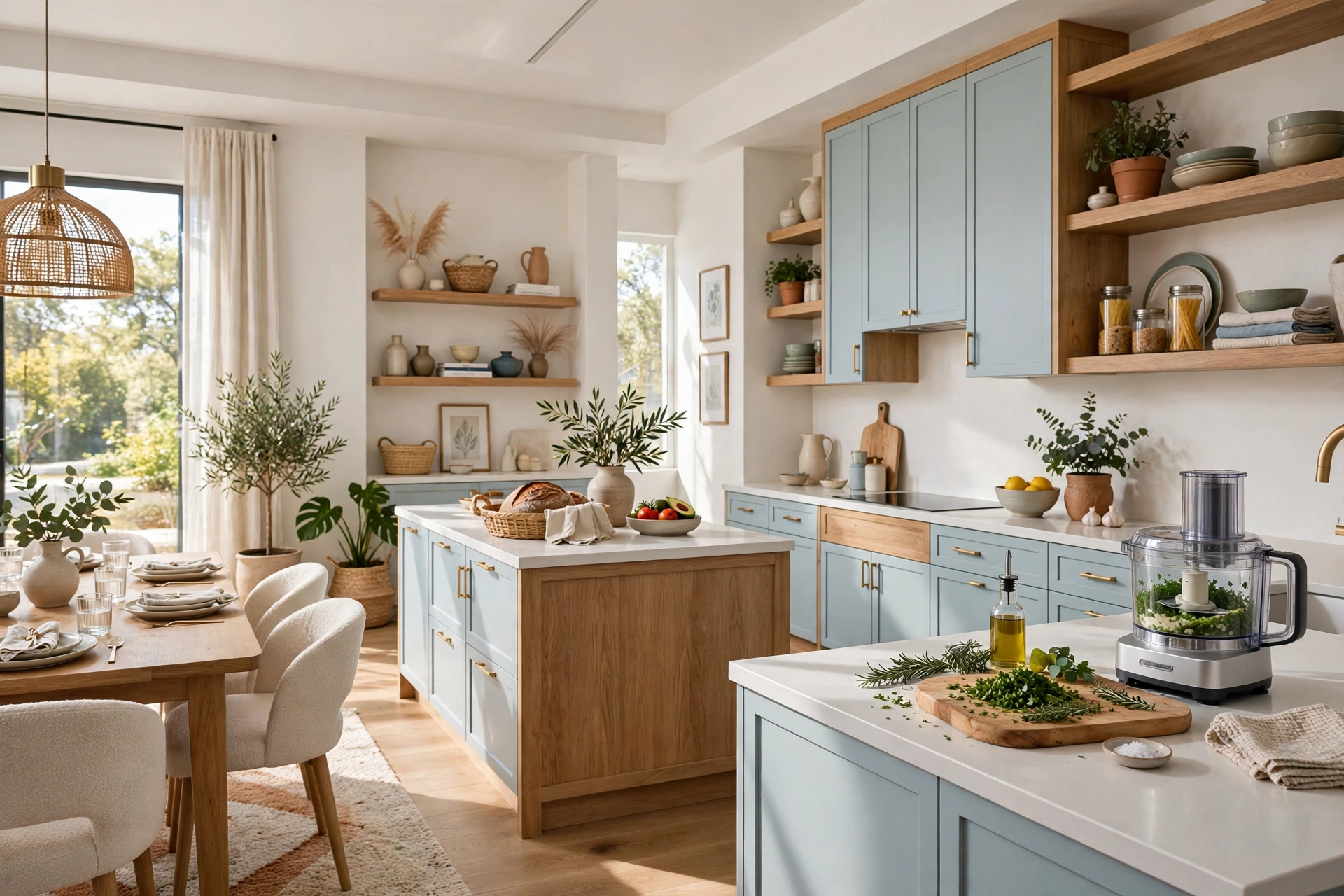
A full-size food processor is a wonderful machine that most small kitchens cannot justify, because its bowl, lid, and stack of discs need a whole cabinet shelf and its footprint eats a counter run. A mini food processor, usually 1 to 1.5 litres, solves that problem by doing the small jobs that actually come up daily: chopping an onion without tears, mincing garlic and herbs, making breadcrumbs, blitzing a small batch of pesto, or crumbing biscuits for a cheesecake base. It is light, it washes in seconds, and it stores in the space a mixing bowl used to take.
Choose one with a simple pulse button rather than a dozen settings, a bowl that locks on with one twist, and a blade that lifts out for washing without a wrestling match. If you cook for more than four people most nights, a mini processor will feel small, and a full-size model may be worth the cabinet space after all. But for one to three person households, and for anyone who chops small amounts most days, the mini version is the one that gets used, and a processor that gets used weekly beats a processor that lives in a cupboard. Keep it near the prep zone, beside the boards and knives, so it is part of cooking rather than an event.
7. Variable-Temperature Electric Kettle
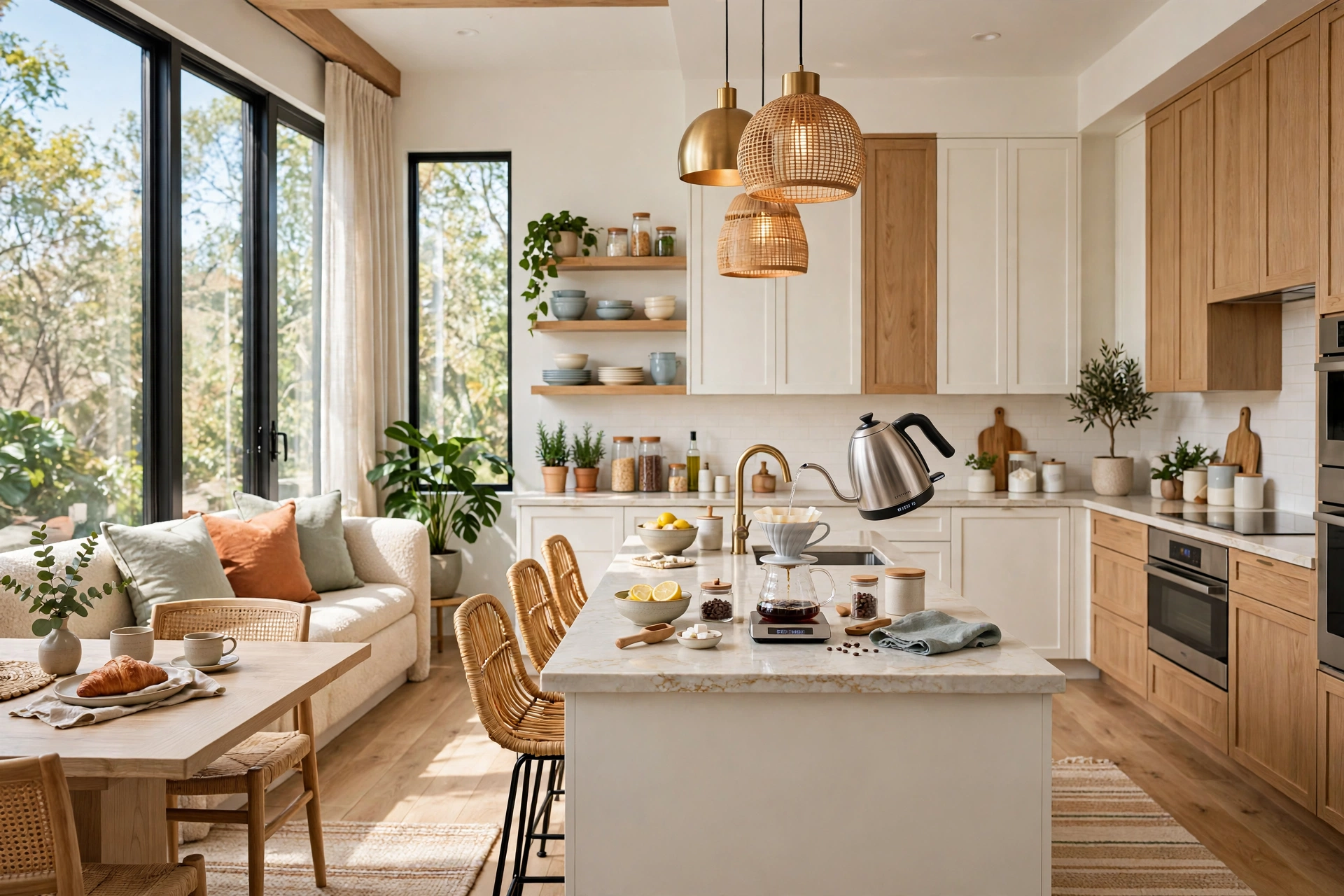
Every kitchen has a kettle, so the question is whether yours earns its counter space or just occupies it. A variable-temperature kettle earns it, because it does more than boil: it heats water to the right temperature for green tea, pour-over coffee, French press, and baby formula, without the guesswork of boiling and waiting. It also boils faster and more efficiently than a stovetop kettle, switches itself off, and keeps the counter safer than a whistling pot on a burner. In a small kitchen, one appliance that replaces both a kettle and a thermometer is a genuine space win.
Pick a gooseneck spout if you brew pour-over coffee, because slow, controlled pouring makes a visible difference to the result, and a standard spout if you mostly make tea. Look for a capacity that matches your household, usually around one litre, a base that stays put, and a handle that stays cool. Keep the kettle near the coffee or tea zone rather than beside the stove, where steam and splashes age it fast. It is a small upgrade, but it is one you will notice every single morning, which is the definition of counter-worthy.
💡 Pro Tip: Descale your kettle every month or two if you live in a hard-water area. A kettle full of scale boils slower, tastes worse, and dies younger, and a quick vinegar descale takes less time than making the tea.
8. Compact Toaster Oven
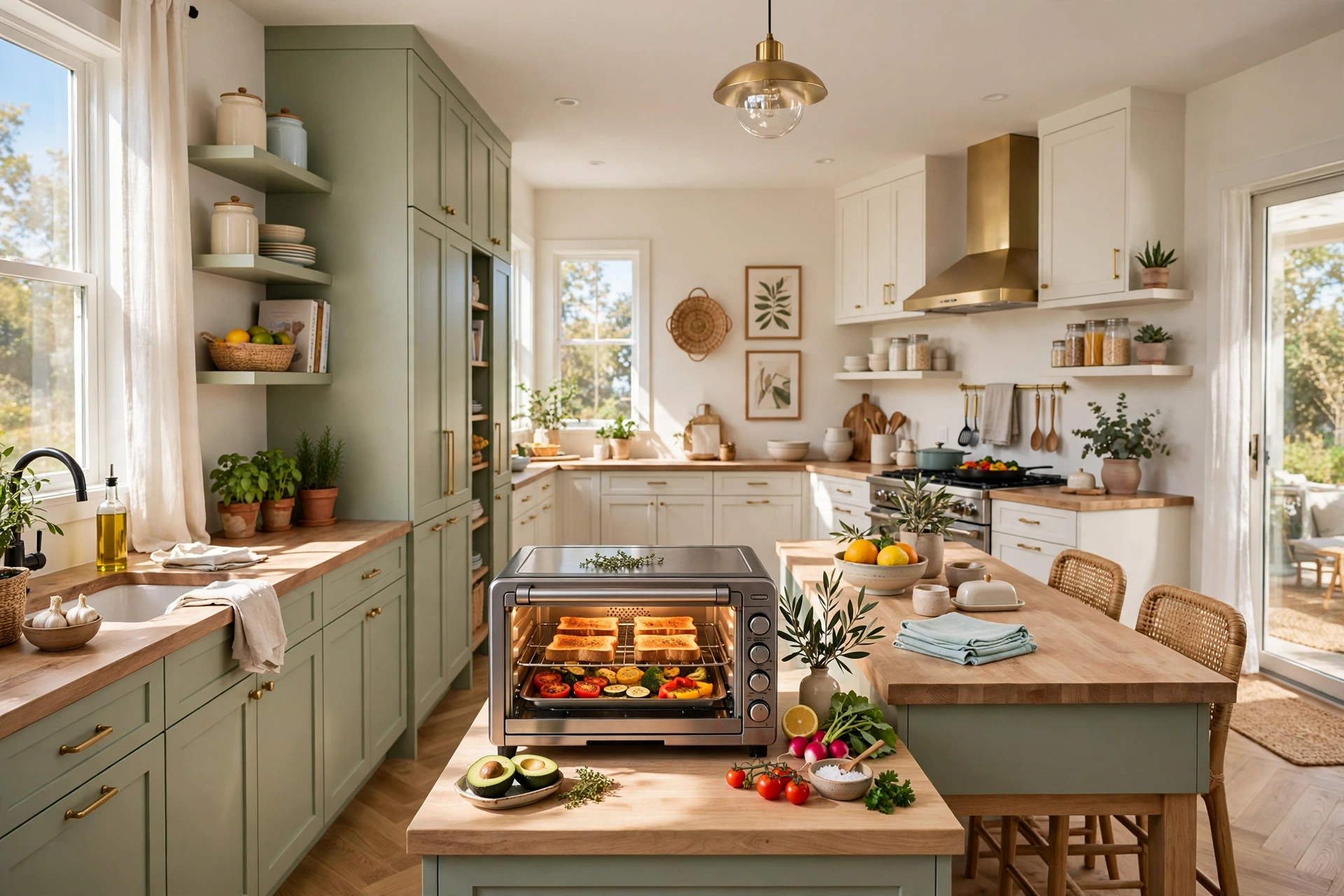
A compact toaster oven earns its place by doing the jobs that are too small for the main oven and too awkward for the air fryer: toasting bread properly, melting cheese on toast, baking a small tray of biscuits, reheating pizza so the base stays crisp, and roasting a tray of vegetables for two. Unlike a pop-up toaster, which does exactly one thing, a small toaster oven is a second oven that preheats in minutes and does not heat the whole kitchen in summer. For households that cook for one or two, it can replace the main oven for most everyday meals.
Size discipline matters here more than anywhere else, because toaster ovens grow quickly from compact to counter-hogging. Measure the width and height available, including the clearance needed to open the door and slide a tray out safely, and choose the smallest model that fits a standard baking tray or two slices comfortably. A model with a crumb tray that slides out, a timer with an automatic shut-off, and a rack that does not wobble is worth more than extra cooking modes. If you already own an air fryer, check for overlap before buying: many air fryers toast and bake well enough that a second oven is redundant, and one good appliance beats two that do the same job.
9. Compact Stand Mixer
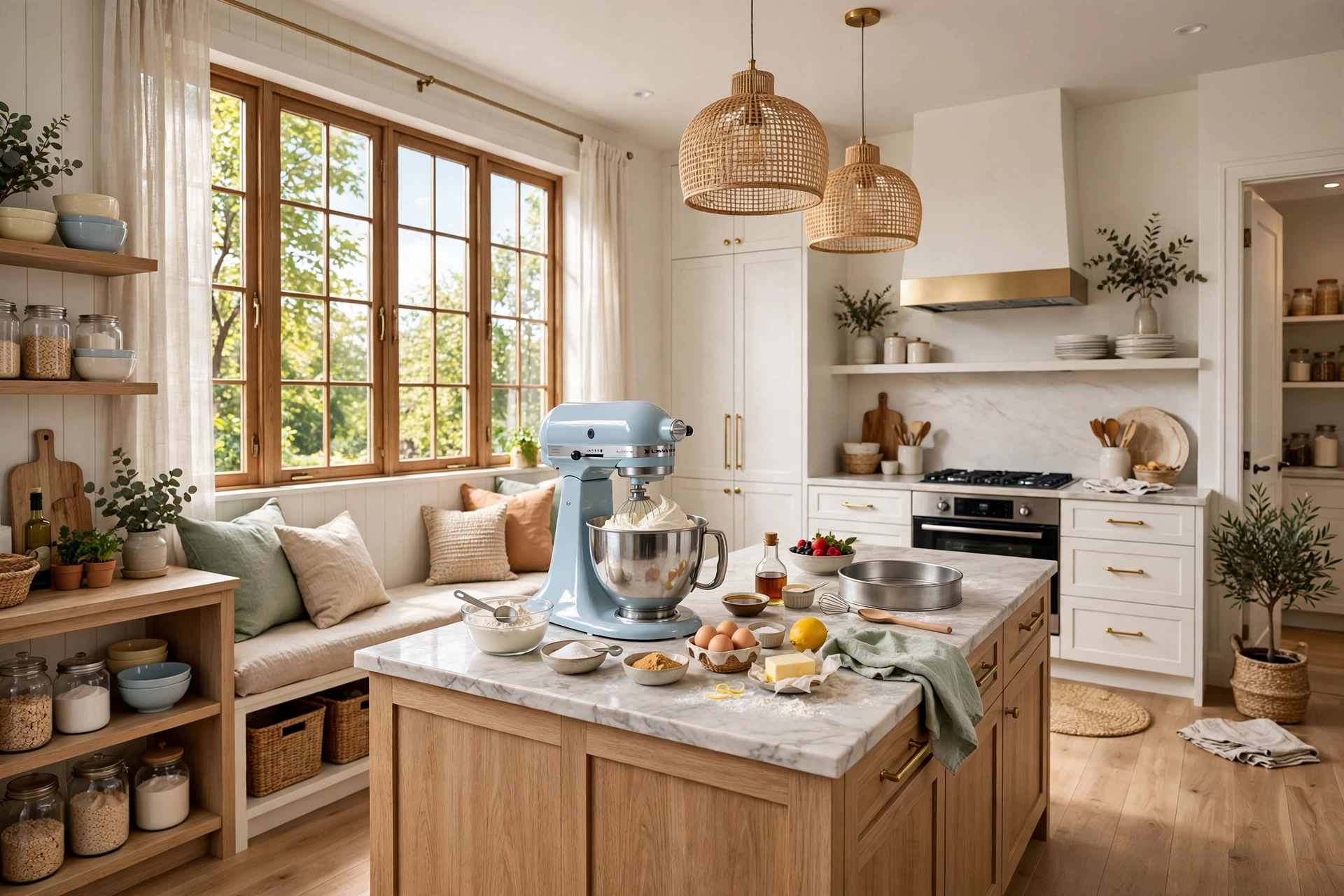
A stand mixer is the most debated appliance on this list, because a full-size model is heavy, tall, and expensive, and it can dominate a small kitchen. The compact version changes that calculation: a smaller bowl, a lighter body, and a footprint that fits on a standard counter run, while still kneading dough, whipping cream, and beating cake batter far better than a hand mixer. If you bake at least once a week, a compact stand mixer earns its spot by turning the hardest part of baking into a hands-free job, leaving you free to prepare tins and fillings while the dough kneads itself.
Be honest about your baking before you buy. If you bake monthly or less, a good hand mixer, which stores in a drawer, is the smarter choice, and the stand mixer should stay on your wish list rather than your counter. If you bake weekly, choose a compact model with a bowl size that matches your usual batch, a splash guard that actually stays on, and a weight you can lift safely onto a shelf if you ever need the counter back. Store attachments in the bowl when it is not in use, so the mixer stays one tidy unit rather than a machine plus a bag of parts. Bakers who use it weekly rarely give it up, which is the strongest recommendation any appliance can get.
10. Small Rice Cooker
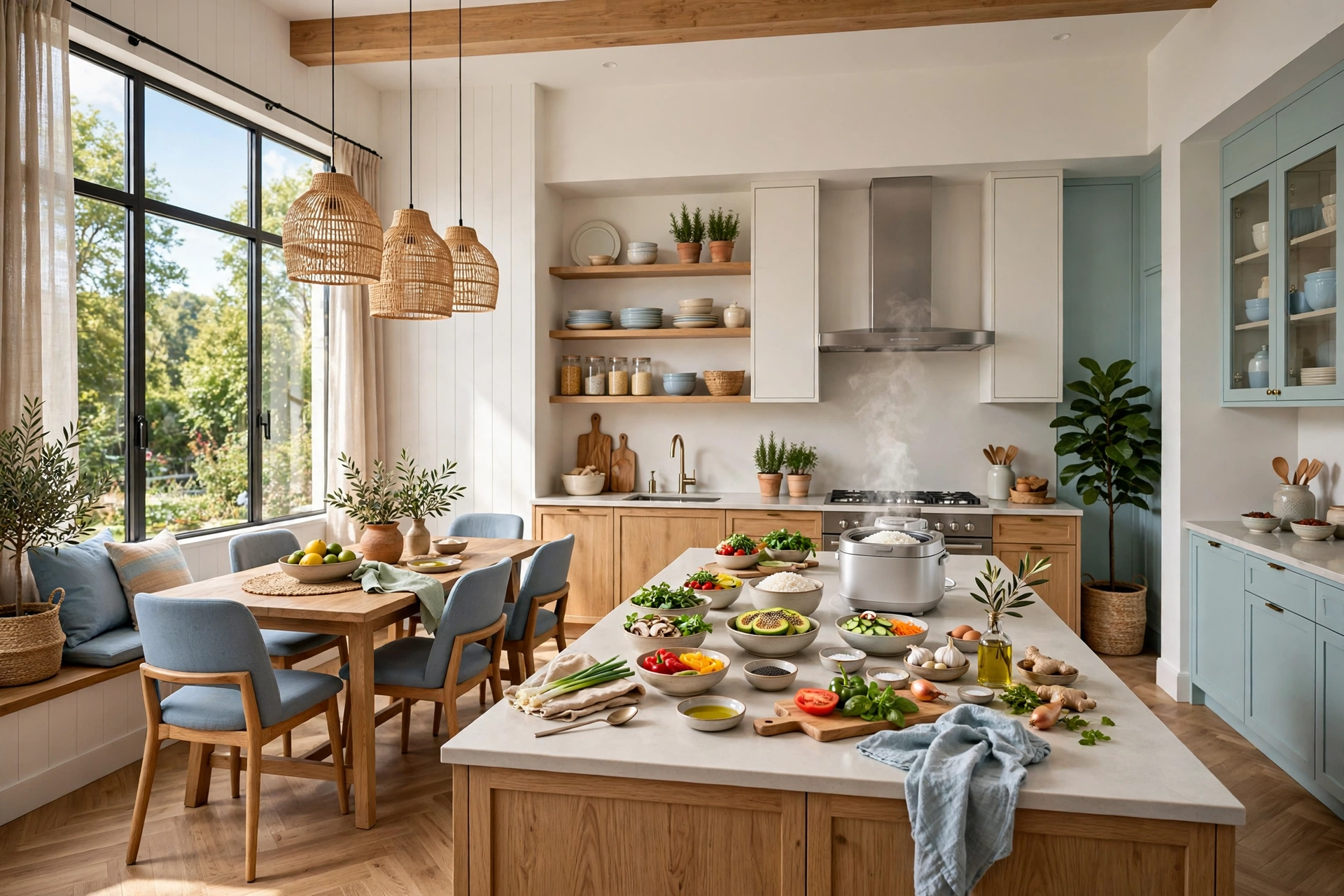
Rice is a weekly staple in many households, and a small rice cooker turns it from a pot you have to watch into a result you can trust. It cooks evenly, keeps rice warm without drying it out, and frees a burner and your attention for the rest of dinner, which matters most on nights when three things need cooking at once. A small 3-cup model suits one to three people, fits in a cabinet when it is not in use, and costs less than most of the appliances on this list, yet it is used more often than almost all of them in rice-eating households.
Choose a model with a non-stick inner pot that lifts out for serving, a simple one-button or fuzzy-logic control depending on how much you want to spend, and a lid that seals well enough to steam properly. Keep it near the multi-cooker zone or the pantry, and remember the same storage logic that makes pantry organization ideas work: an appliance that lives where its ingredients live gets used, while one stored across the kitchen gets forgotten. If rice appears on your table less than once a fortnight, skip this pick and use a pot; if it appears weekly, a small rice cooker is one of the cheapest counter wins available. Like the thinking behind vertical kitchen storage ideas, the win is not more space, it is the right tool in the right place, used without friction.
📌 Important: Never put a rice cooker, or any appliance, directly against a wall or under low cabinets while it steams. Hot steam damages cabinet fronts and paint over time, and it can trip a smoke alarm. Leave a hand’s width of clearance above and behind steaming appliances, and wipe the area dry after use.
Common Small Kitchen Appliance Mistakes
Mistake 1: Buying for a Fantasy Kitchen Instead of Your Real Cooking
The fastest way to waste counter space is to buy the appliance for the cook you wish you were, rather than the cook you actually are. A bread maker for someone who buys bread weekly, a juicer for someone who drinks juice monthly, and a pasta machine for someone who tried it once are all counter rent paid for a fantasy. Audit what you cooked in the last month, not what you aspire to cook, and buy only for the meals that already happen. The appliances on this list earn their place because they serve real, repeated cooking, not occasional ambition.
Mistake 2: Ignoring Clearance and Cord Length
An appliance that does not fit under your cabinets, cannot open its lid fully, or cannot reach an outlet is a return waiting to happen, no matter how good its reviews are. Measure height with the lid open, depth with the drawer or door open, and the distance to the nearest outlet before you order, including any splashback or skirting that eats into the space. A compact model that fits and gets used beats a larger model with better specifications that lives in a cupboard because it never fit the counter in the first place.
Mistake 3: Keeping Every Appliance on the Counter at Once
A counter with ten appliances on it is not a working kitchen, it is a showroom, and it leaves no room to chop, roll, or set down a hot tray. Keep only the daily and twice-weekly appliances out permanently, and store the rest in cabinets, grouped by use, so each one is reachable in one move. The same editing discipline that makes learning how to style kitchen counters work applies here: what stays out must justify its footprint every week, and everything else has a home behind a door.
Mistake 4: Choosing Size for Guests Instead of Your Household
Buying a twelve-cup coffee maker for a two-coffee household, a family-size air fryer for one person, or a full-size processor for a single cook wastes counter space, electricity, and washing-up time on every single use. Size appliances for the meals you cook on an ordinary weeknight, not for the largest dinner party you might host once a year. Guests can be served in batches, or with a second round, far more easily than a too-big appliance can be shrunk to fit a small kitchen.
Mistake 5: Skipping Cleaning Until the Appliance Stops Getting Used
Almost every abandoned appliance was abandoned because cleaning it became a chore. A blender with a jug that does not come apart, an air fryer basket that needs soaking, or a kettle full of scale all quietly stop getting used, and then they just occupy the counter out of guilt. Choose models with dishwasher-safe parts and removable seals, rinse or wipe them the day you use them, and descale kettles and coffee makers on a schedule. An appliance that is clean and ready is an appliance you reach for; one that needs cleaning first is one you avoid.
Frequently Asked Questions
1. What small kitchen appliances are actually worth buying?
The appliances most households use enough to justify counter space are a compact air fryer, a single-serve or immersion blender, a multi-cooker, a compact coffee maker, and a variable-temperature kettle. Each one is used several times a week in a normal kitchen, replaces at least one other tool, and fits a standard counter run. Start with the two or three that match your cooking, live with them for a month, and only then add the next one.
2. How many appliances should live on the counter permanently?
Most small kitchens work best with five to eight appliances out permanently, and the rest stored in cabinets. The exact number depends on your counter length, but the test is the same: an appliance stays out only if you use it at least twice a week and it is awkward to store elsewhere. If you cannot chop comfortably on a clear stretch of counter, too many appliances are out, no matter how useful each one is on its own.
3. Is an air fryer or a toaster oven better for a small kitchen?
It depends on what you cook most. An air fryer is better for crispy foods, roasting, and reheating, and it preheats fastest, while a toaster oven is better for toast, melting, baking small trays, and reheating pizza with a crisp base. Many households only need one, so check what your existing appliances already do before buying the second. If you already own an air fryer that bakes well, a toaster oven may be redundant.
4. Do small appliances use a lot of electricity?
Small appliances generally use less electricity per meal than a full-size oven, because they heat a smaller space for a shorter time. An air fryer or toaster oven preheats in minutes compared with ten or more for a main oven, and a kettle boils only the water you need. The saving is real for small meals, though it disappears if you run several appliances at once for a large meal that a single oven could have handled.
5. How do I choose the right size appliance for a small kitchen?
Measure your counter depth, the clearance under upper cabinets with lids and drawers open, and the distance to the nearest outlet, then size for your ordinary weeknight cooking, not for guests. A 3 to 5 litre air fryer suits one to three people, a 3 litre multi-cooker suits one or two, and a 1 litre kettle suits most households. When in doubt, choose the smaller model: a slightly small appliance that fits and gets used beats a larger one that crowds the counter.
6. Are multi-cookers safe to leave on the counter?
Yes, when used as directed. Keep the steam vent clear of cabinets and walls, never block the lid or the pressure release, and keep the seal clean and properly seated. Place the cooker where steam can escape safely, wipe the surrounding counter after use, and follow the manufacturer’s guidance on pressure cooking. A multi-cooker used correctly is one of the safest ways to cook beans, stews, and tough cuts quickly.
7. What should I do with appliances I no longer use?
Move them into a cabinet for two weeks first, because an appliance that is out of sight and unmissed is ready to go. Donate working appliances, pass them to someone who will use them, or sell them, rather than keeping them out of guilt. Freeing that counter space is worth more than the appliance’s resale value, because a clear counter makes every meal easier to cook, and that benefit arrives daily.
Conclusion
The best small kitchen appliances are not the ones with the longest feature list. They are the ones you reach for without thinking: the air fryer that crisps dinner in ten minutes, the blender that rinses in seconds, the kettle that heats water to exactly the right temperature, and the multi-cooker that turns a rushed evening into a proper meal. Each pick in this guide earns its counter space the same way, by being used often, by replacing more than one tool, and by fitting the kitchen you actually have, not the kitchen in the advertisement.
Start by clearing the counter completely, then let back only the appliances that pass the twice-a-week test, measured to fit your space and grouped by the zone where you use them. Add one new appliance at a time, live with it for a month, and keep only what survives real cooking. A kitchen with five well-chosen appliances and a clear stretch of prep space will always cook better than a kitchen crowded with twenty, because cooking needs room to happen, and the right tools, in the right place, are what give it that room.